




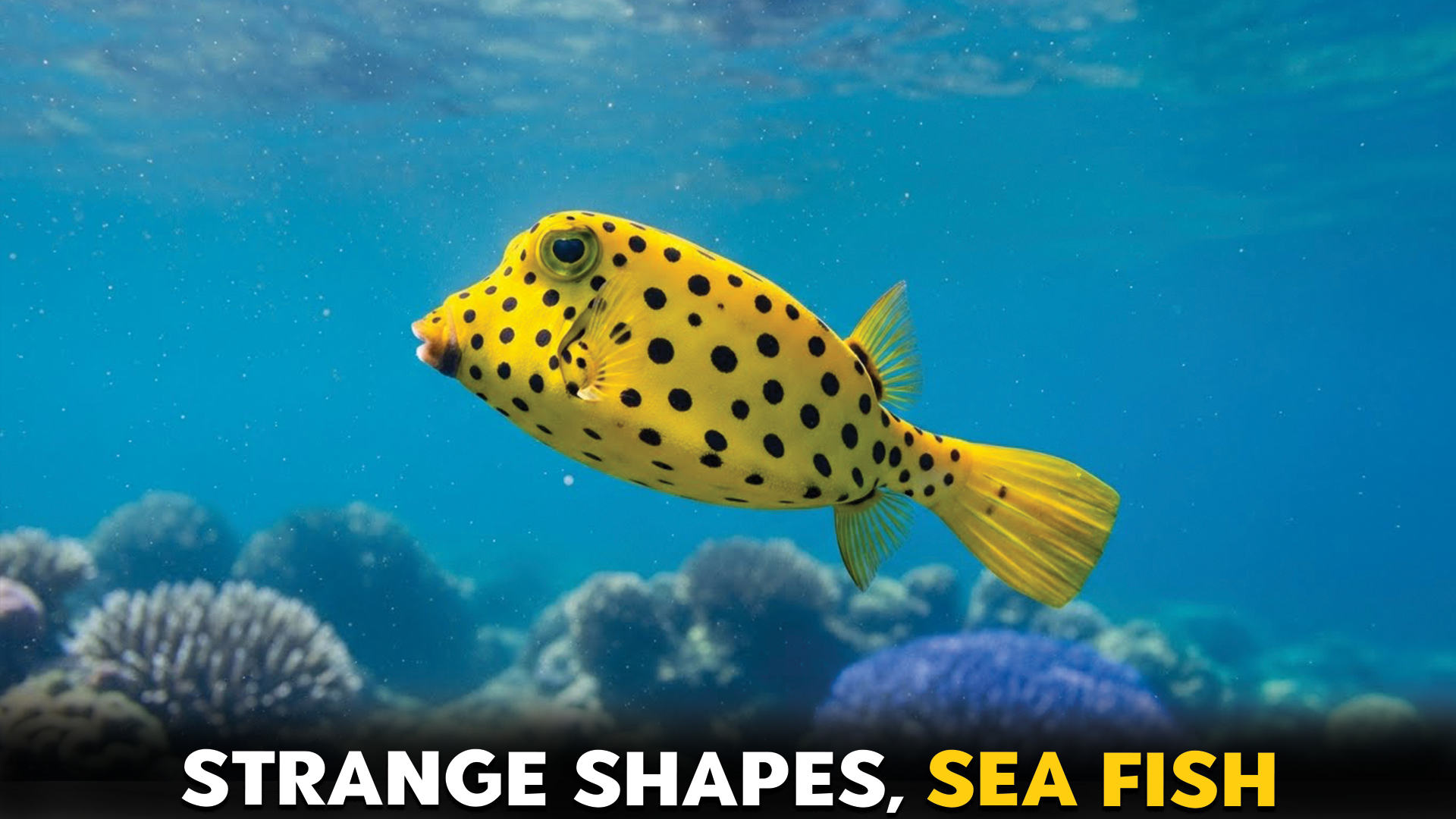
When you picture a fish, what comes to mind?
Probably something sleek, streamlined, and, well, fish-shaped.
But the vast, mysterious ocean is like nature’s experimental art studio, and let me tell you, some of its creations are downright bizarre.
Evolution has thrown the rulebook out the window, sculpting creatures so strange they look like they swam right out of a fantasy novel. These aren’t just slightly different; these are the ocean’s true oddballs, the rebels of the reef, the weirdos of the water.
We’re about to explore a lineup of fish with the most uncommon shapes you’ve ever seen. From living pancakes to walking rocks and creatures that look like they were assembled from spare parts, these animals redefine what it means to be a fish.
Forget what you think you know, and get ready to meet some of the weirdest fish swimming in the world’s oceans.
Fish with the Most Unusual Shapes
1. Ocean Sunfish
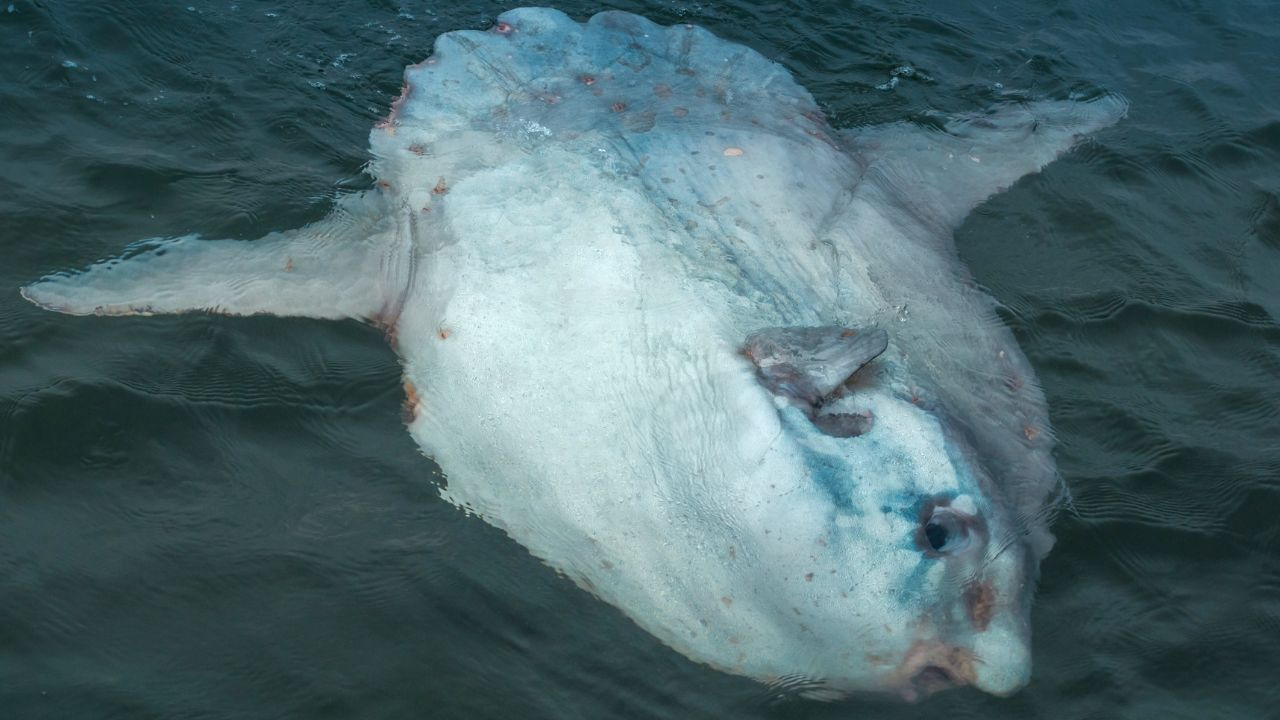
Ocean Sunfish, one of the strangest fish you could ever hope to see, is a floating, flattened giant that can reach lengths of over 10 feet and weigh more than a car.
The most striking feature of the sunfish is what it’s missing. It has no tail! Instead, the back fin that other fish use for propulsion has folded into a stiff, rudder-like flap called a clavus. To get around, this fish awkwardly flaps its enormous dorsal fin and anal fin in unison, like a clumsy bird trying to fly underwater. Its tiny pectoral fins flap frantically, primarily for steering, making it look perpetually confused as it navigates the open ocean.
Despite its massive size, it has a tiny, beak-like mouth that it can’t even close properly. It uses this specialized mouth to slurp up its favorite foods: jellyfish and other soft-bodied invertebrates. Oceana notes that this gentle giant is found in temperate, tropical, and subtropical waters around the globe, but its size doesn’t make it invincible.
This fish is a perfect example of how an unusual appearance is a ticket to survival. Its sheer size and tough, leathery skin make it a difficult meal for many would-be predators. It’s a slow, steady, and utterly strange marvel of the sea, a reminder that in the ocean, you don’t have to be fast to be successful—you have to be incredibly weird.
2. Yellow Boxfish
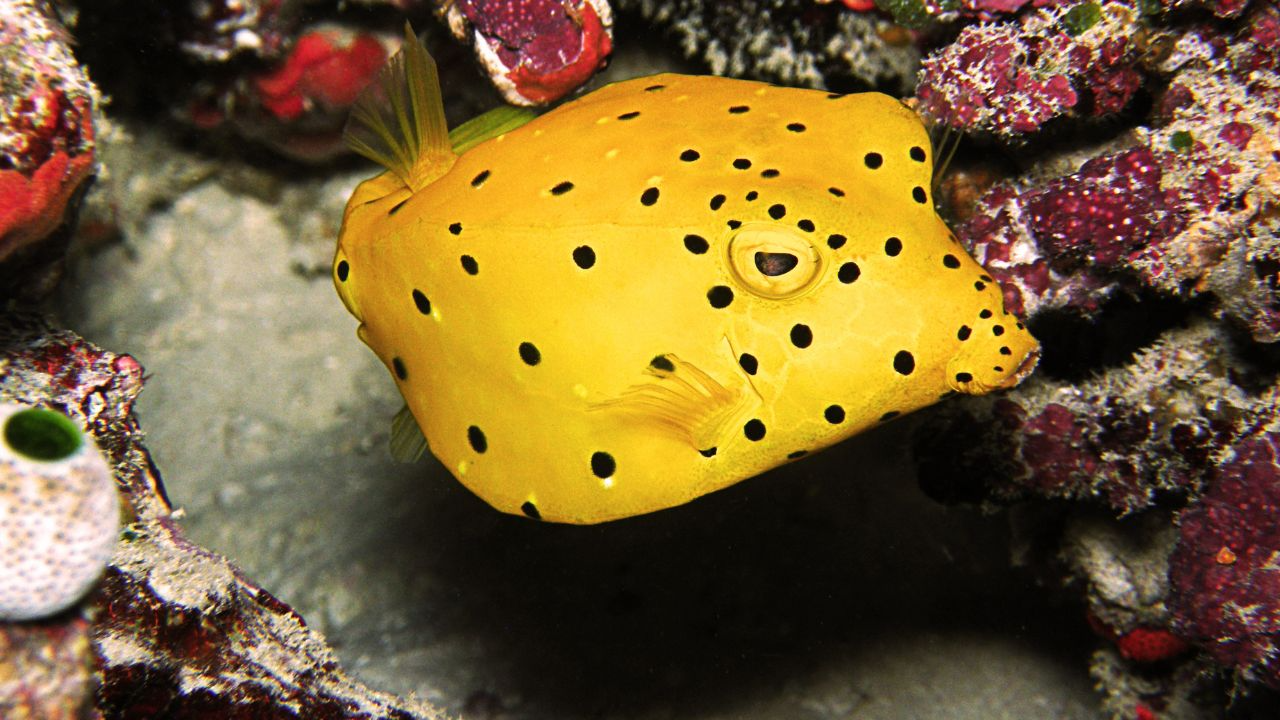
Found in the reefs of the Pacific Ocean, this fish is famous for its rigid, cube-shaped body. This isn’t just a quirky fashion choice; its entire body is encased in a solid, bony armor made of fused hexagonal scales called scutes, creating a protective box with holes for its eyes, mouth, and fins.
Because it’s built like a tiny armored vehicle, the boxfish can’t swim like other fish. It doesn’t undulate its body. Instead, it relies on its small pectoral fins, dorsal fin, and anal fins to paddle, allowing it to hover and make precise turns. This unique mobility is perfect for navigating the complex coral mazes of its habitat, and its strange shape even inspired engineers at Mercedes-Benz to design a concept car.
Don’t let its cute look fool you, though. That bright yellow color is a warning sign. When stressed, the Yellow Boxfish can release a potent neurotoxin from its skin that is lethal to any other fish in the vicinity. It’s like a tiny, floating chemical weapon. This defense mechanism, combined with its bony armor, means most predators have learned to leave this swimming cube alone.
3. Blobfish
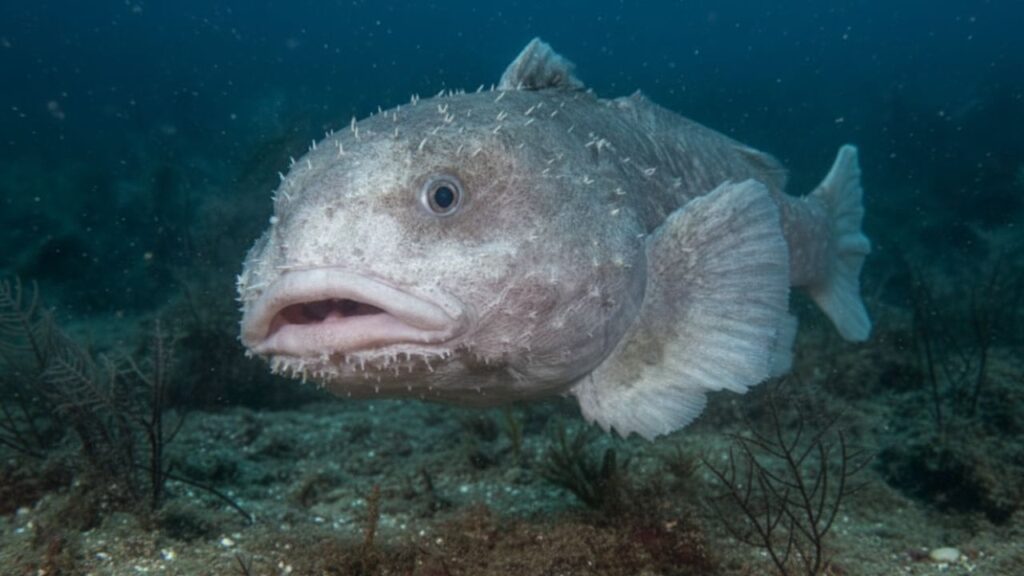
The gooey, saggy blob in those viral images is what happens when you take a deep-sea fish out of its high-pressure home. It’s like judging a human after they’ve been launched into space without a suit—it’s just not fair!
In its natural habitat, thousands of feet down in the deep waters off the coast of Australia, the blobfish looks completely different. Down in the crushing pressure of the cold depths, its gelatinous, fatty body is held together, giving it a much more typical, tadpole-like shape. It has a bulbous head, a tapered tail, and looks more like a grumpy old man than a melted mess.
This fish is the ultimate energy-saver, according to National Geographic. It doesn’t have a swim bladder, which would collapse under the immense pressure, nor does it have much muscle. Why waste energy swimming when you can hover with your mouth open? It simply drifts along, waiting for small invertebrates or other edible morsels to float by, making it a master of lazy living.
So, the next time you see a picture of that sad-looking blob, remember its proper form. The blobfish isn’t ugly; it’s a survivor. It’s one of the most fascinating fish with the most unusual shapes because its shape is entirely dependent on its environment. It’s a living lesson in pressure and a testament to the extreme adaptations required to live in the deep.
4. Leafy Seadragon
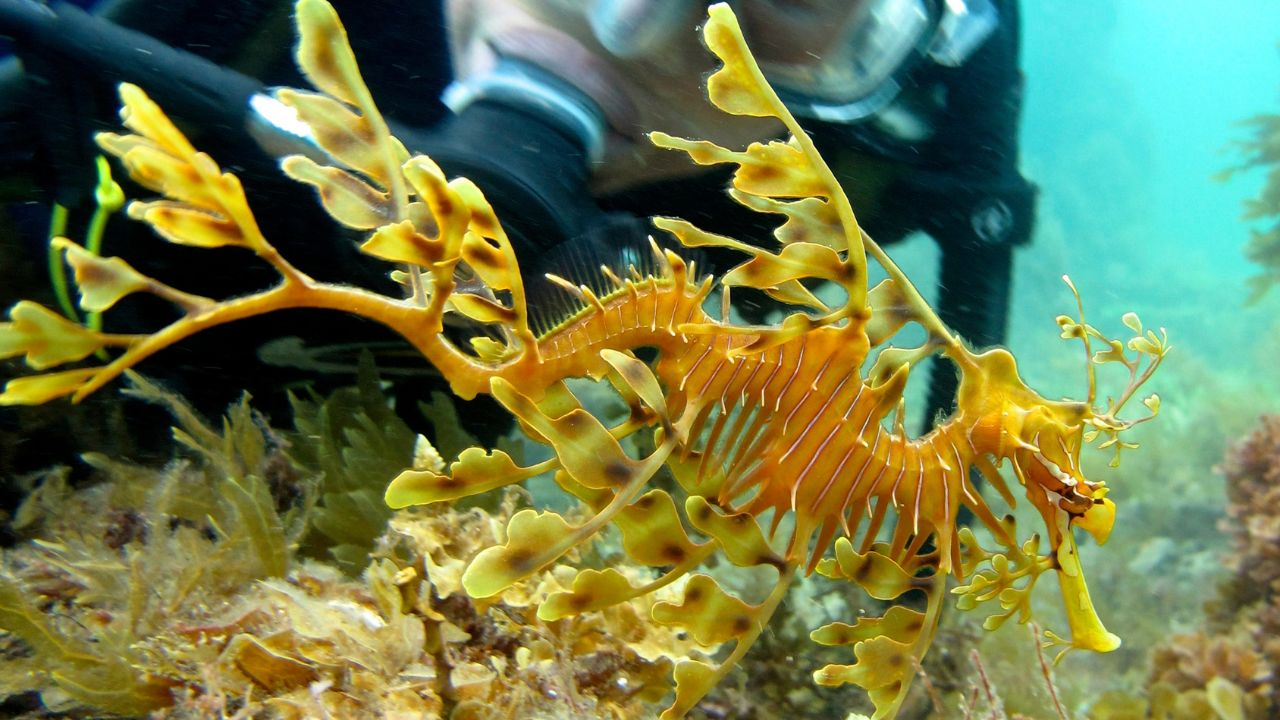
At first glance, you might not even realize you’re looking at a fish. With its elaborate, leaf-like appendages covering its entire body, it looks exactly like a piece of floating seaweed. This incredible camouflage is the key to survival in the kelp forests and seagrass meadows off the coast of Australia.
Every part of the seadragon’s unusual appearance is dedicated to the art of disguise. Those ornate, flowing protrusions aren’t used for swimming at all; they are purely for show. To move, the seadragon uses two tiny, almost completely transparent fins—one on its neck and a small dorsal fin on its back.
These fins ripple gently, propelling it through the water so slowly and gracefully that it perfectly mimics the swaying of marine plants, making it nearly invisible to both predators and its unsuspecting prey.
Unlike its close relative, the seahorse, which belongs to the same family, the leafy seadragon has a rigid body and cannot coil its tail. Its body is covered in bony plates under all that greenery, giving it a solid coat of armor. This limited mobility means it relies almost entirely on its camouflage to ambush its food, which consists of tiny crustaceans and plankton that it sucks up through its long, tube-like snout.
The Leafy Seadragon is a living, breathing work of art. It’s a rare species that shows how evolution can produce something both incredibly effective and breathtakingly beautiful.
5. Seahorse
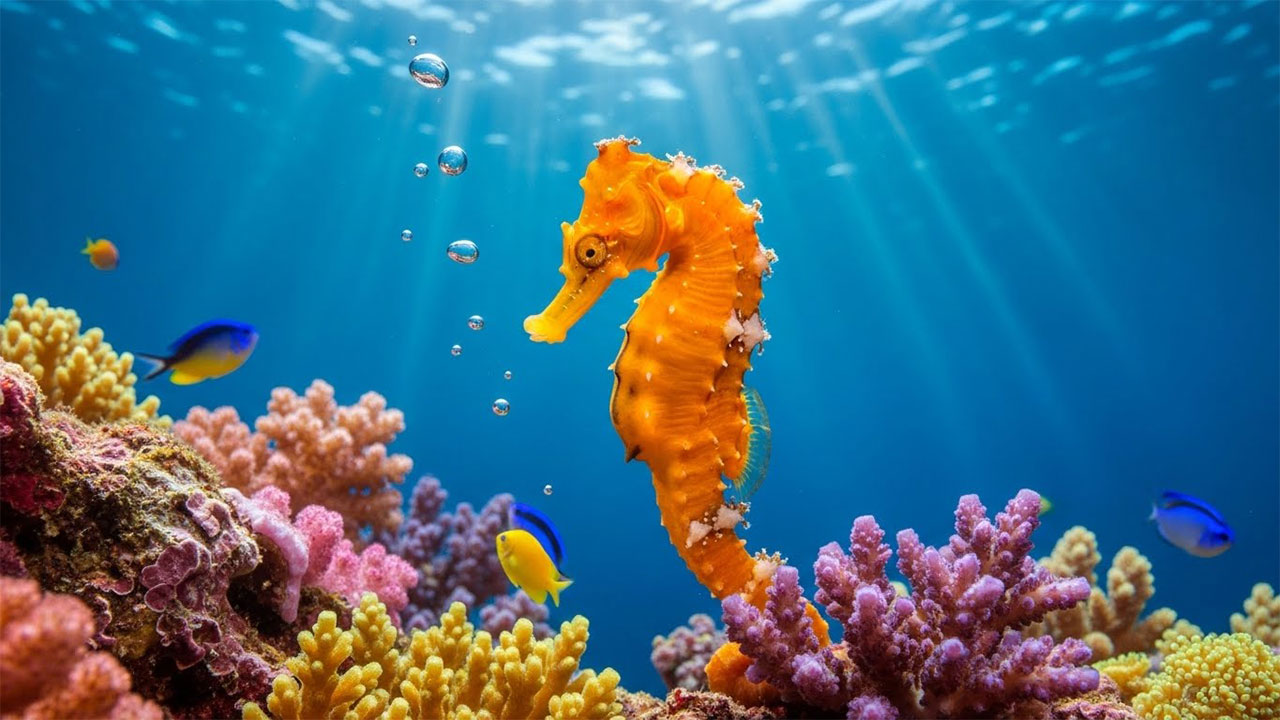
Everyone recognizes a seahorse, but have you ever stopped to think just how strange its body shape really is? With a head like a tiny horse, a body covered in bony armor, and a curly, prehensile tail, it’s one of the most iconic fish with unique shapes. This bizarre anatomy isn’t just for looks; every feature is a specialized tool for survival in its seagrass and coral reef homes.
Unlike almost all other fish, seahorses swim in an upright position. This posture, combined with their ability to change color to match their surroundings, provides them with excellent camouflage among vertical blades of seagrass. Their tail, which lacks a fin, is used like a monkey’s to grasp onto plants, preventing them from being swept away by currents.
The seahorse’s head is another marvel of evolution. Its long, tubular snout is designed for stealth. It allows them to get incredibly close to their prey—tiny crustaceans—and suck them up like a vacuum cleaner with minimal water disturbance.
Adding to their stealth, they can move each of their sensitive eyes independently, letting them look for food and watch for predators at the same time without moving their head.
6. Frogfish
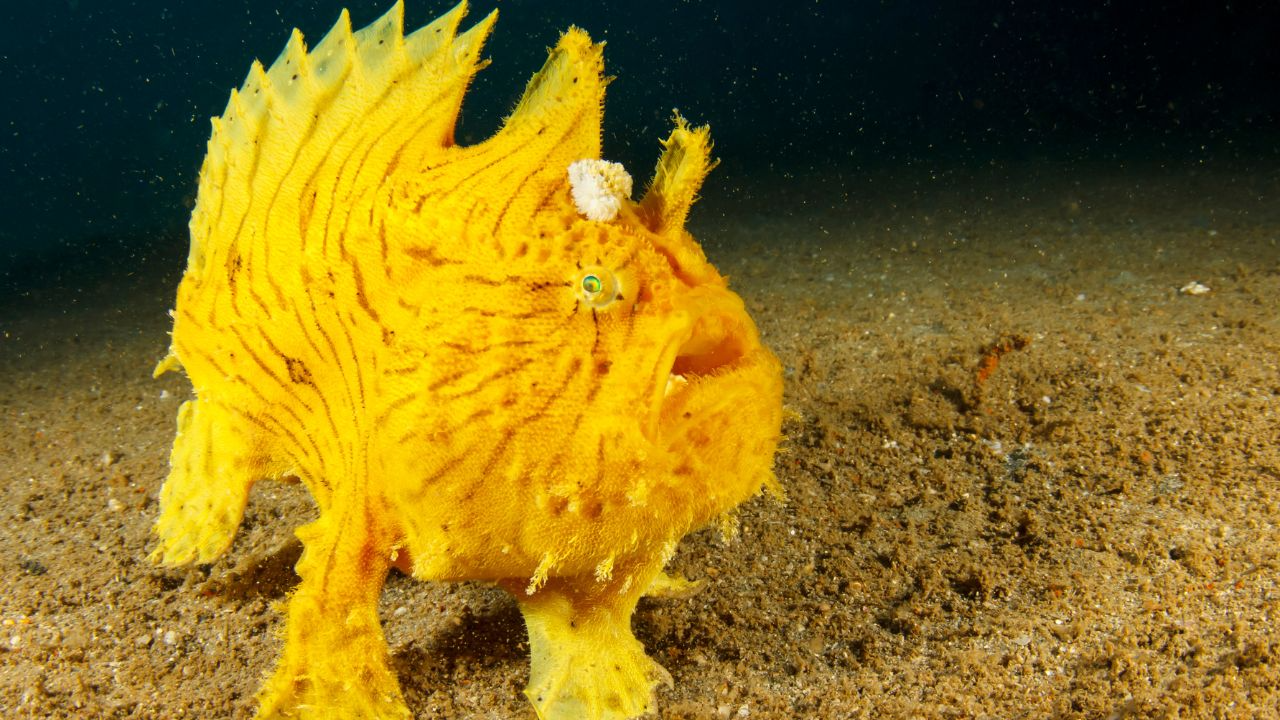
If you thought the blobfish was a master of sitting still, wait until you meet the frogfish. This lumpy, stocky creature is a type of anglerfish and a true master of disguise and ambush. Often resembling a colorful piece of coral or an algae-covered rock, its unusual shape is the key to its success as one of the most effective ambush predators on the seafloor.
The frogfish’s most bizarre feature is its modified fins. Its pectoral fins and pelvic fins are jointed and muscular, functioning more like legs than fins. This allows the frogfish to “walk” or clamber across the ocean floor, positioning itself perfectly for an attack.
Britannica mentions that its scaleless skin is often covered in warts, spines, or even hair-like appendages, like in the hairy frogfish, all to mimic its surroundings perfectly.
But the real trick is its built-in fishing rod. The frogfish has a modified first dorsal fin spine, called an illicium, with a fleshy lure at the tip. It dangles and wiggles this lure to attract unsuspecting prey, like small fish or shrimp.
The frogfish is a testament to the power of patience and deception. It doesn’t chase its food; it brings its food to it. By combining its incredible camouflage, its ability to walk, and its ingenious lure, this blob-like fish has perfected the art of the surprise attack.
7. Reef Stonefish
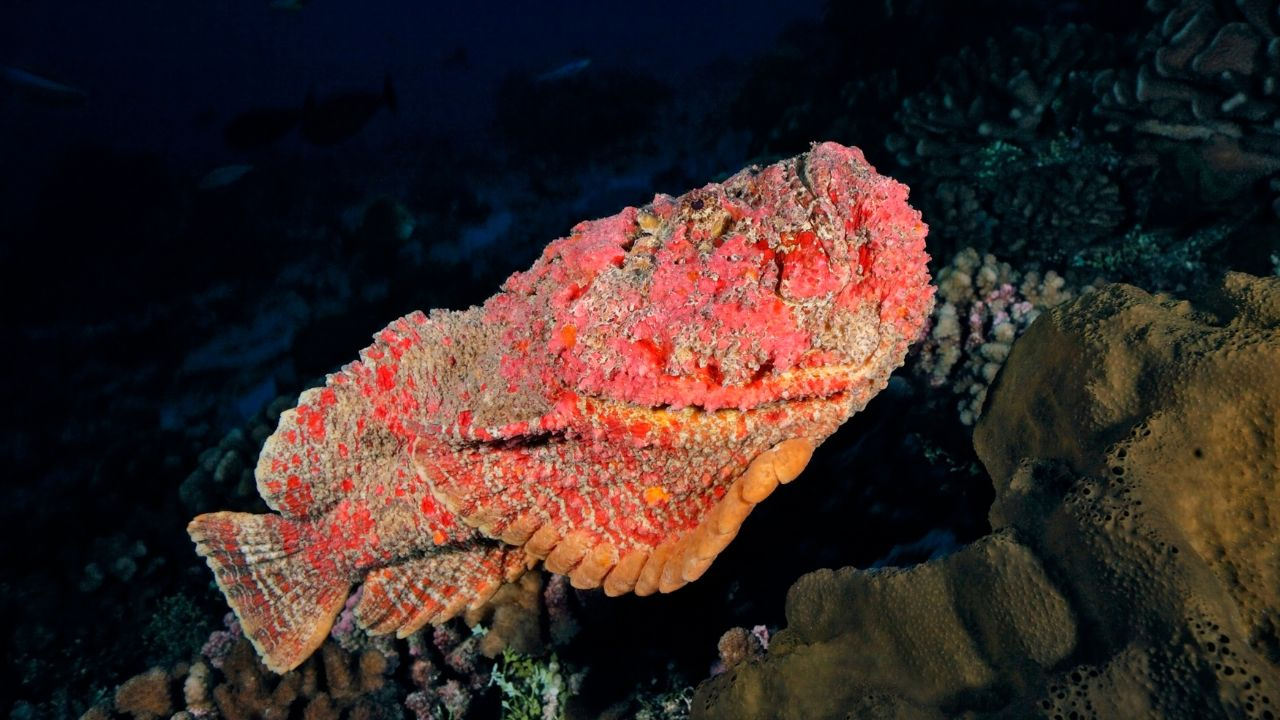
At first glance, the Reef Stonefish doesn’t even look like a living creature. It looks like a lumpy, algae-covered rock sitting innocently on the seafloor. This, of course, is precisely the point. Its unusual shape is the ultimate form of camouflage, making it nearly invisible. But beneath that rocky exterior lies the most venomous fish in the entire world.
The stonefish’s body is squat and broad, covered in warty, scaleless skin that perfectly mimics the texture of coral rubble. It often partially buries itself in the sand, with only its upward-facing eyes and mouth visible, waiting motionless for hours. This sedentary lifestyle is facilitated by its incredible disguise, allowing it to go completely unnoticed by both its prey and potential predators.
When a small fish or crustacean swims overhead, the stonefish strikes with lightning speed, its large, upturned mouth opening to engulf its meal in an instant. But its most famous feature is purely defensive.
Along its back is a row of 13 stout spines on its dorsal fin, each connected to a venom gland. If a predator or an unlucky human foot applies pressure, these spines act like hypodermic needles, injecting a potent neurotoxin.
8. Batfish
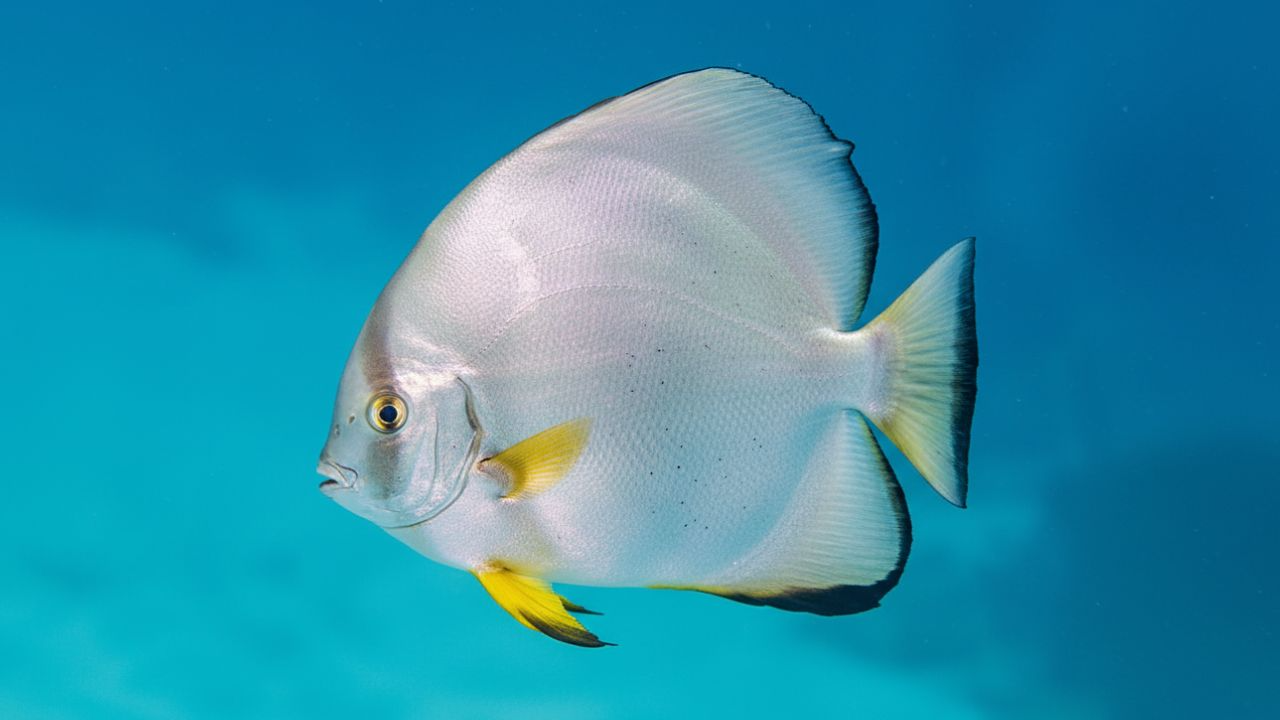
Found in the deep waters around the Galápagos Islands, the red-lipped batfish is particularly famous for its pouty, bright red lips, a striking feature whose purpose is still debated but may be used to attract mates.
Like the frogfish, the batfish is a terrible swimmer. Instead, it uses its thick, muscular pectoral fins and pelvic fins to walk or crawl across the ocean floor. Its body is broad and flattened, almost triangular, making it look more like a strange underwater ray than a typical fish. This flattened form is perfect for a life spent hugging the seafloor, where it hunts for small fish, shrimp, and other invertebrates.
As a type of anglerfish, the batfish also has a built-in lure. A modified dorsal fin on its snout, called an illicium, can be extended to attract potential prey. Its body is not covered in scales but in hard, bumpy tubercles, giving it a rough, armored texture. This combination of a flattened body, walking fins, and a luring apparatus makes it perfectly adapted to its environment.
The batfish is a genuine oddity, a creature that seems to defy all the standard rules of being a fish. Its ability to walk, its strange shape, and of course, those fabulous red lips make it one of the most memorable and unusual creatures of the deep. It proves that even on the dark ocean floor, there’s always room for a little bit of flair.
9. Ribbonfish
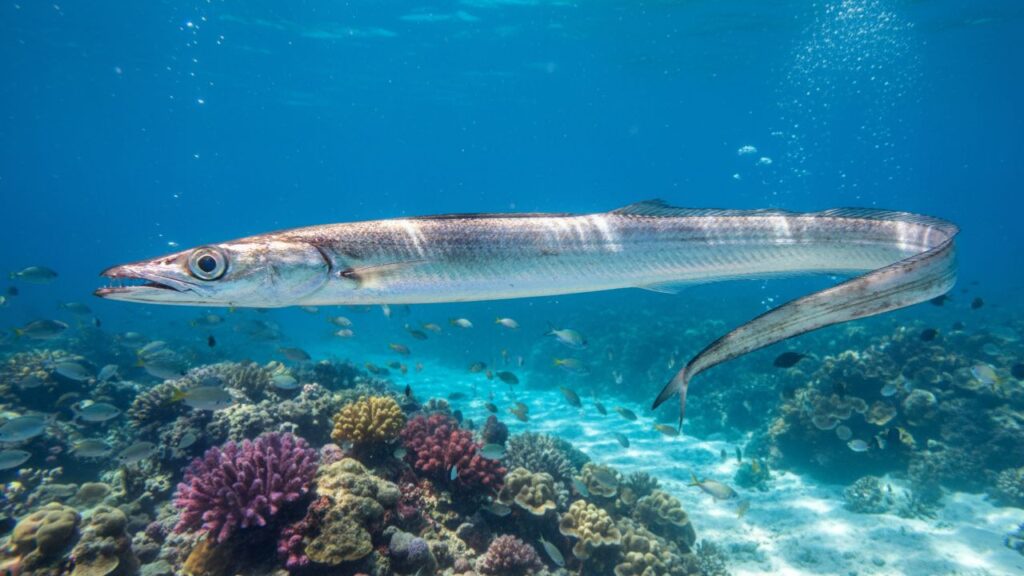
Often found in the deep sea, including the Atlantic Ocean, these creatures are as elegant as they are strange. The famous giant oarfish, a related species, is a legendary example of this body plan, known for its immense length.
Its skin is scaleless and has a brilliant, almost chrome-like metallic sheen. A single, continuous dorsal fin, often tinged with red, runs the entire length of its body, adding to its flowing, ribbon-like appearance as it moves. Most adult species lack pelvic fins and an anal fin, further streamlining their bizarre, elongated body.
But its shape is only half the story. The Ribbonfish has an equally unusual hunting behavior. Instead of swimming horizontally, it often hovers motionless in the water, tail down. From this stance, it can strike upwards with surprising speed to catch its prey, which includes small fish and squid.
The Ribbonfish is a creature of the mysterious deep, and its whole being is adapted for that environment. Its reflective skin and vertical posture are likely adaptations for hunting and hiding in the twilight zone of the ocean. It’s a sleek, strange, and beautiful example of how life finds unique solutions to thrive in one of Earth’s most challenging environments.
Conclusion
From the sunlit shallows to the crushing pressure of the deep sea, the ocean is filled with an absolutely mind-boggling diversity of life. As we’ve seen, the simple blueprint for a “fish” is merely a suggestion, one that evolution has gleefully ignored time and time again.
These fish with the most distinctive shapes show us that survival can mean looking like a rock, a leaf, a box, or even a half-finished creature. They walk on the seafloor, they carry their own fishing rods, and they turn themselves into living art.
These unusual creatures are more than just curiosities; they are masterpieces of adaptation, each with a body perfectly sculpted for its unique way of life. They remind us that beneath the waves, there’s a world far stranger and more wonderful than we can possibly imagine, filled with countless more of the weirdest fish waiting to be discovered.
