




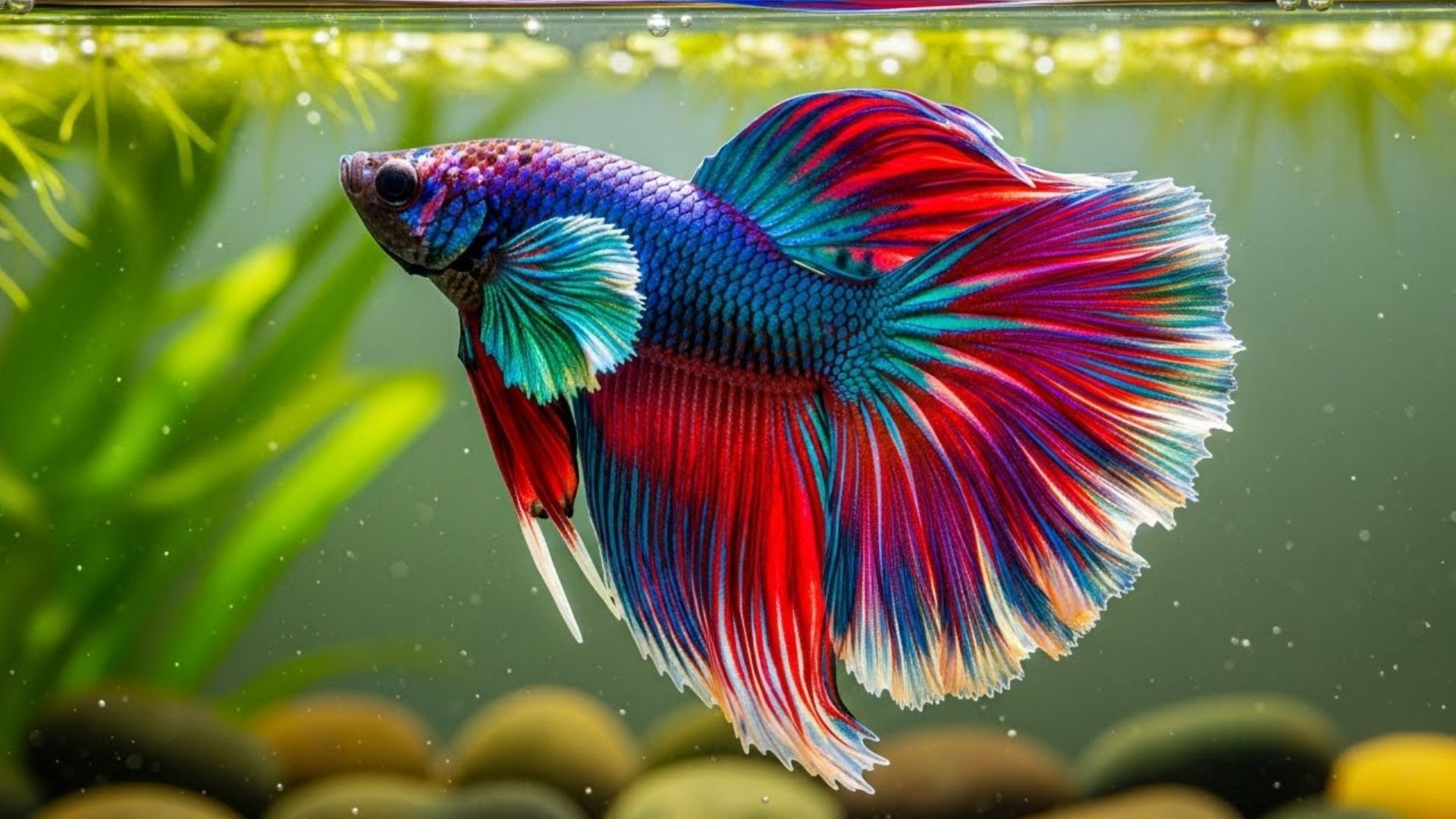
Some fish look like they were designed by a kid with a brand-new box of crayons — and honestly, that’s part of the charm. In the underwater world, color isn’t just for showing off. It can be camouflage, a warning label, a dating profile, or even a clever trick to confuse predators.
And while most fish lean into silvers, browns, and “please-don’t-notice-me” tones, a few bold stars go full neon and steal the spotlight.
In this blog, we’re diving into fish with the brightest colors — from flashy freshwater fish that rule the aquarium trade to dazzling marine fish that light up coral reefs like living confetti. You’ll meet tiny reef-cleaners with racing stripes, royalty-level dragonets with psychedelic swirls, and tank favorites that can shift shades depending on mood and water quality.
Color can come from genetics, specialized skin cells, diet, and even how light interacts with the body and fins. Some species are naturally bright in the wild, while others became famous thanks to selective breeding in the aquarium hobby. Either way, these are the kind of colorful fish that make you stop mid-scroll and go, “Wait… that’s real?”
Let’s meet the underwater VIPs — the ones that don’t just swim by… they announce themselves.
Fish with the Brightest Colors
1. Betta Fish
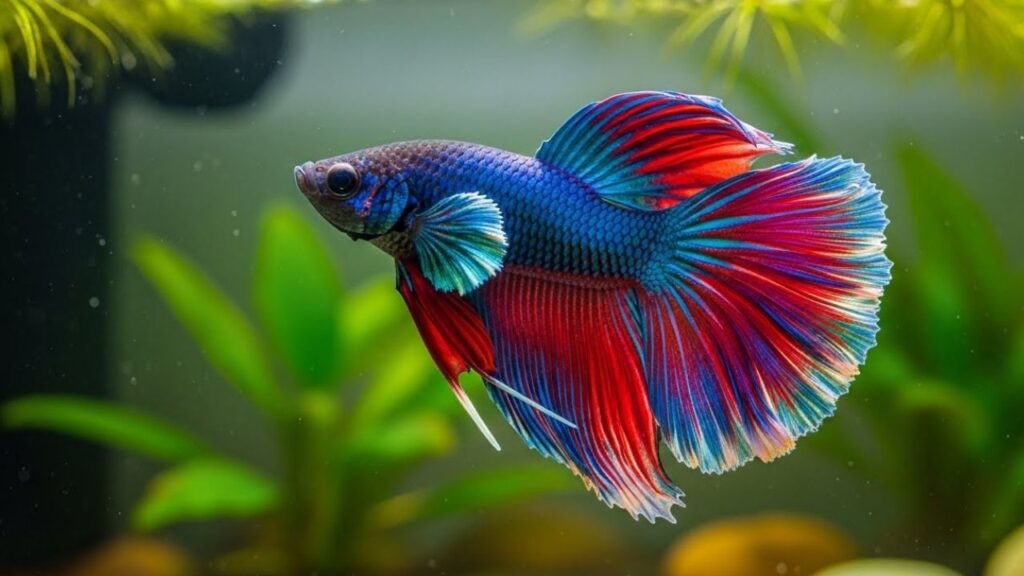
If there’s a trophy for “most dramatic glow-up in the fish world,” bettas would take it and pose for photos. Bettas — especially Betta splendens — are one of the most popular freshwater aquarium fish on the planet, and it’s easy to see why.
They’re basically living jewels: ruby red, icy blue, emerald green, purple, gold — sometimes all on the same body with long, flowing fins that look like they were styled for a runway.
A substantial reason bettas are so bright is selective breeding. Hobbyists have developed well over seventy recognized types and varieties focused on fin shape, color, and patterns. You’ll see everything from single-color “solid” styles to Butterfly (banded fins), Marble (spotted and patchy), and Koi (multi-colored like a tiny swimming painting). Compared to these superstar strains, wild bettas tend to look much more muted — like nature’s “default setting.”
But it’s not just genetics doing the heavy lifting. Bettas also have pigments in their scales that interact with light, which can make colors appear more intense or paler depending on their health and environment. When a betta is thriving, those tones often look more vibrant. When stressed, colors can dull — and that’s your cue to check comfort, space, and water quality.
They can also change color because of a genetic “marbling” effect, meaning a betta might literally upgrade its look over time. It’s like buying a fish and then discovering it’s also a surprise makeover show. Please keep them in a well-planned tank, and they’re one of the great-looking fish that can brighten any room without even trying.
2. Clownfish
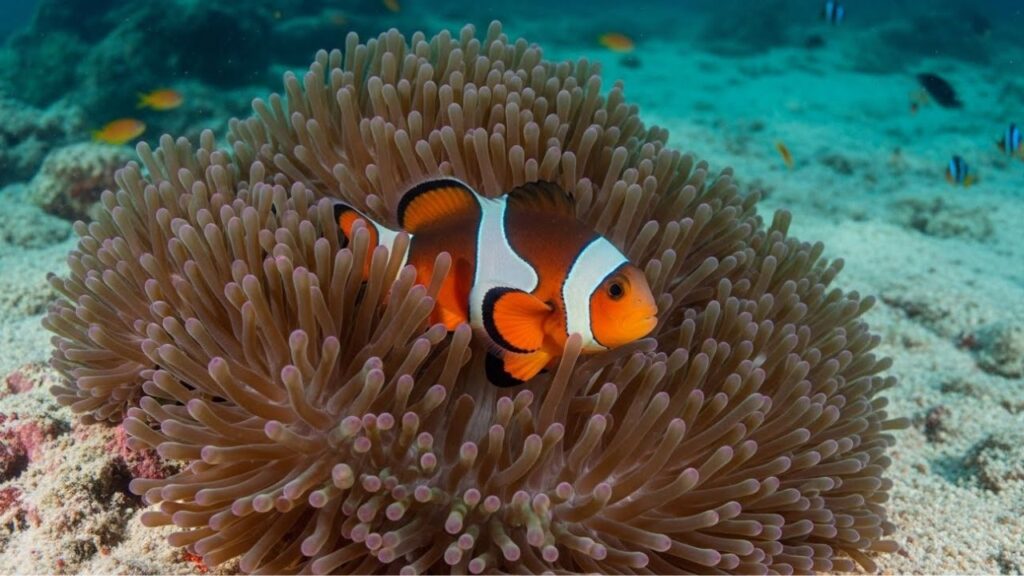
Clownfish are the celebrities of reefs — yes, partly because they’re adorable, but also because they’re impossible to ignore. That bright orange body, those crisp white bars, and that thin black outline look like a perfectly designed costume, as per National Geographic.
And here’s the fun twist: not all clownfish are orange and white. Their colors can range from yellow to red to deep black, depending on their species and where they live, making them feel like a whole wardrobe rather than a single look.
Their color story gets even cooler when you realize it’s tied to survival. Clownfish live in a tight partnership with sea anemones. The anemone’s venom helps protect it from predators, and the clownfish are protected from stings by a mucus layer on their bodies.
In return, clownfish defend their home and can even help lure other fish toward the anemone, which is not exactly great news for the “other fish,” but is very effective in a reef food chain.
Their patterns are iconic: a background in orange, red, brown, yellow, or black, with up to three white vertical bars. Some even have unusual markings — like species with a horizontal bar along the back or a saddleback type that skips bars altogether. Some black clownfish even start life with an orange face and darken as they mature. That change isn’t your tank lighting or your feeding schedule — it’s mostly genetics and time doing its thing.
Even though they’re small fish, they’re famously territorial around their anemone. They don’t just live there — they own it. Put that bold attitude together with radiant colors, and you get this coral grouper that looks like it was designed to be spotted from across the reef.
3. Discus
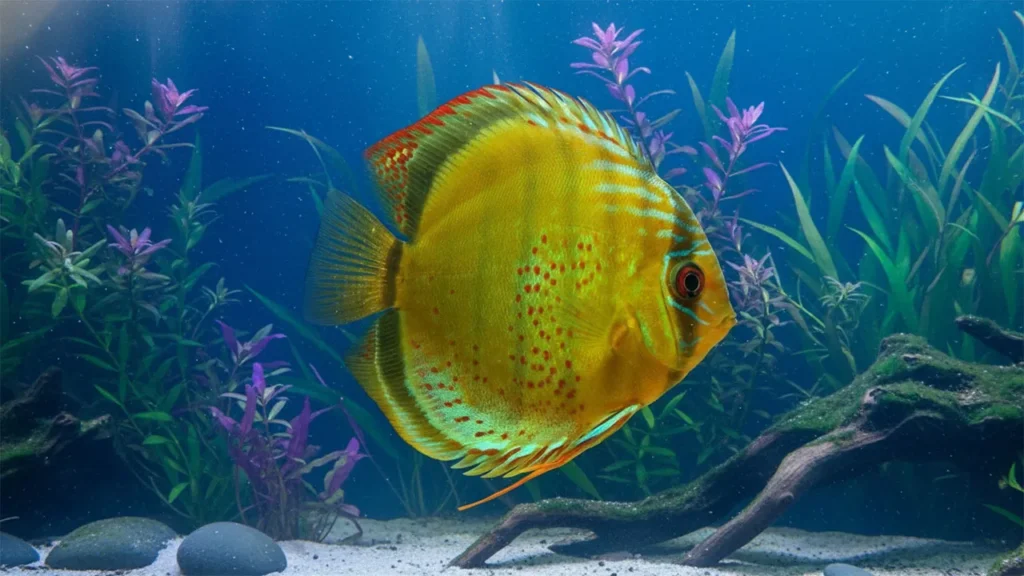
If the Betta is a jewel, the discus is a living stained-glass window. Discus are famous freshwater fish from South America, especially the Amazon basin region, and they’re known for their disc-shaped body and slow, regal swimming style.
In a calm, well-kept aquarium, they can look unreal — bright blues, greens, reds, and shimmering mixes that seem to glow under the right light.
Wild discus are typically grouped into major types based on color and pattern, including blue, brown, green, and Heckel discus. Here’s the funny part: the names can be misleading. “Blue” discus can include brown tones, and “green” discus often looks more yellowish than green. The red variants, though, usually win the “brightest” contest — the brightness that makes you double-check if your eyes are working correctly.
Their colors come from biological pigments stored in specialized skin cells called chromatophores — basically, tiny pigment containers that create those brilliant hues. That’s why a healthy discus is so visually striking. When their color darkens, patches appear, or they clamp their fins to the body, it can be a warning sign that something is off. In discus, beauty and wellness are closely linked, and the fish tends to show stress fast if conditions slip.
That’s why discus have a reputation for caring about their environment. They’re often happiest in stable setups with clean water and consistent routines — the kind of fish that really appreciates a well-managed home. Give them what they need, and they reward you with some of the most vibrant “wow” colors you’ll ever see in freshwater.
4. Yellow Tang
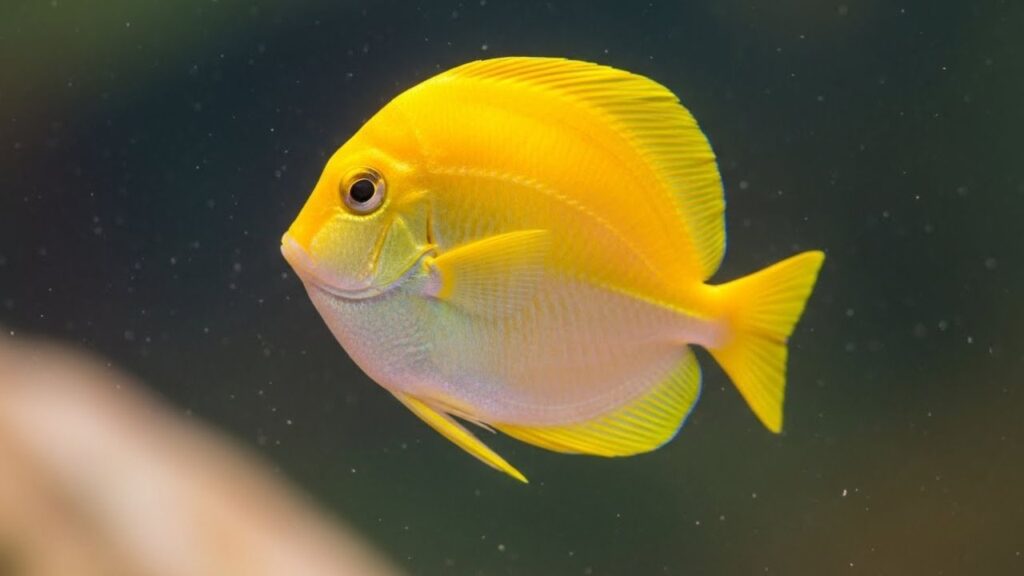
Let’s talk about the sunshine of the reef: the yellow tang. This fish is so bright that it looks like someone dropped a lemon into the ocean, and it decided to start swimming. The yellow tang, Zebrasoma flavescens, is famous for its solid, vibrant yellow tail and signature tang shape.
On Hawaiian reefs, it’s especially iconic because it’s the only solid yellow fish commonly seen there — basically the reef’s neon highlight marker.
And then it pulls a surprise move: at night, that bright yellow can shift to a darker, more subdued shade, and a pale lateral line becomes visible. It’s like the fish has “day mode” and “night mode.” Divers love spotting that change because it makes the same fish look different at different times.
This fish with a bright yellow body comes with built-in defense. Near the base of the tail is a sharp white spine — a real defense mechanism used against predators. It’s not a “mess with me” sign… It’s the “mess with me and find out” edition. Even though they look peaceful, they’re not helpless.
You’ll often find yellow tangs as a dominant fish in small groups on shallow reefs, but they can also be found in deeper areas, too. And while they pop brilliantly to human eyes, there’s evidence that at standard depths their coloration is closer to coral tones than you might expect — meaning they can still blend in more than we think. Bright, bold, and surprisingly strategic: classic yellow tang energy.
5. Bluestreak Cleaner Wrasse

Imagine being tiny, stylish, and brave enough to swim right up to bigger fish — even into their mouths — and live to tell the tale. That’s the bluestreak cleaner wrasse.
These small fish are famous for their cleaning service: they remove parasites from larger fish, which helps keep the reef community healthy. It’s like a mobile car wash, but for fish bodies.
Color-wise, they’re instantly recognizable. Their body features a bold black horizontal stripe running from the head through the eye, bordered by white that transitions into bright blue toward the tail — that signature “blue streak.” Even their dorsal fin and anal fin show dark accents, like someone outlined their outfit with a marker to make sure nobody misses them.
They’re also mood and age influencers. Young and adult wrasses can look different, and they can shift shades based on mood — so you might see subtle color changes in real time depending on what’s happening around them. And unlike some reef fish that vary in different locations, this species is known for consistent coloration across its range.
This is one of those coral reef fish that proves brilliant colors aren’t always about warning or romance — sometimes it’s branding. The stripe says, “I’m a cleaner, don’t eat me.” And amazingly, many larger fish actually cooperate, hovering patiently like they’re waiting their turn at the salon.
6. Guppy Fish

Guppies are tiny fireworks. In the aquarium hobby, guppies are loved for their radiant colors, quick swim style, and endless variety. They can be blue, red, yellow, black, green — basically anything you’d want if your goal is “make this community tank look alive.”
Some guppies are solid shades, but many are a mix of patterns, gradients, and shiny markings that shimmer as they move.
Here’s a fun fact about guppies: the males usually steal the show. In many guppy species, males are smaller but dramatically more colorful than females, which often have more subtle tones. Those luminous colors are deeply genetic, and breeders have developed stunning strains that look almost unreal — especially varieties like Moscow guppies, known for intense, solid coloration across the fish. Purple, blue, and green Moscow are especially sought after.
Because their look is so striking, guppies are a favorite for people building a lively home display. They’re often recommended for beginners too, since they can do well in smaller setups compared to large, demanding fish — though they still appreciate space, stable care, and a thoughtfully maintained environment. Pairing colors can create instant drama: fiery reds beside electric blue, or dark varieties contrasted with bright greens.
Guppies aren’t just pretty — PetMD claims they’re energetic little performers. They zip around the tank like they’re on a mission, adding motion to color. If you want colorful fish that are constantly in action, guppies are your cheerful, confetti-level answer.
7. Mandarin Fish
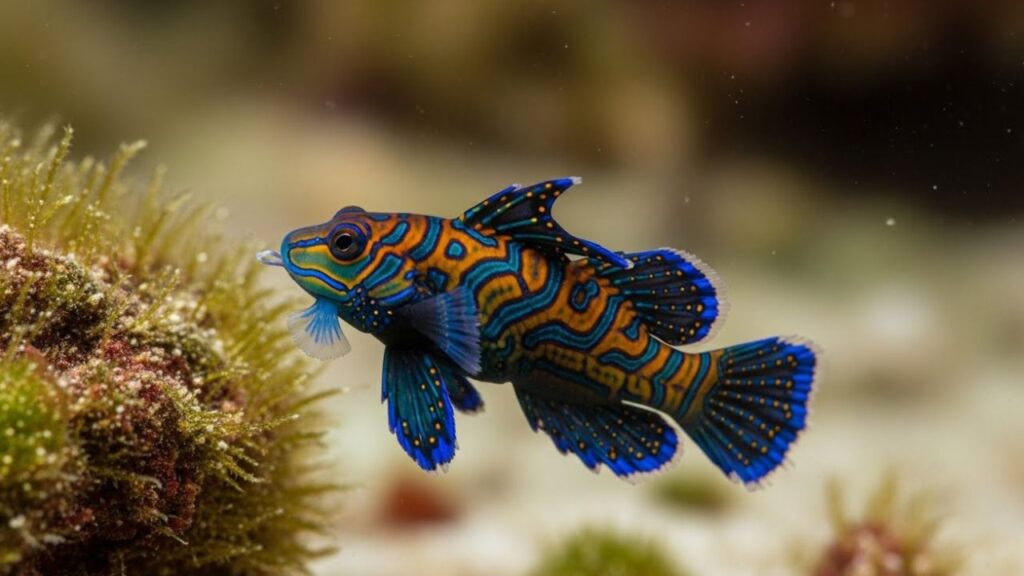
If someone told you a fish was nicknamed the “psychedelic fish,” you’d expect a lot. The mandarinfish delivers more.
With a blue-green body covered in wavy orange and red lines, plus hints of cyan and purple, this is one of the most instantly recognizable marine fish around coral reefs. It looks like it was painted by an artist who refuses to use neutral tones.
What makes the mandarinfish even more interesting is how it stays safe. TFH Magazine states that it doesn’t have typical scales. Instead, it’s coated in a layer of mucus that can be bitter and smelly, which likely discourages predators and helps protect against disease. That, combined with its flashy coloring, suggests a warning vibe — in the animal kingdom, bright often means “don’t mess with me.”
Size-wise, mandarins are small fish, often around a few inches long as adults. But they compensate for size with attitude and strategy. Males patrol areas alone and display their colors and fins as part of courtship behavior, turning the reef into a tiny fashion show with serious biological purpose.
This is one of those beautiful fish that makes you forget you’re looking at a real animal. Between the wild color palette, the scaleless design, and the slime-based protection, mandarinfish prove that reef life isn’t just survival — it’s style with a plan.
8. Threadfin Butterflyfish

Threadfin butterflyfish are like living origami with eyeliner. Their body is laterally compressed — flattened like a thin coin — which helps them maneuver through tight coral spaces. This shape makes them quick and agile around coral reefs, where slipping between coral heads and reef structures is part of daily life.
Color-wise, they’re bold and instantly recognizable. Adults have a white base with dark chevron-like markings, a strong dark band across the eye, and a dramatic eyespot toward the back of the body. The rear section also glows yellow, creating a striking contrast that helps them stand out — or, depending on the background, camouflage among reef textures.
One of their signature features is the “thread” — a filament trailing from the soft portion of the dorsal area in adults. It adds elegance and makes them look even more distinctive as they swim. They also have elongated snouts and small, sharp teeth, designed for picking at food in crevices.
Butterflyfish, in general, are considered small fish, rarely growing longer than about the length of a big dinner plate across. Their bright colors and patterns help them blend and hide among coral and shadows when danger passes by — a reminder that on a reef, being bright can still be a clever survival play.
9. Flame Angelfish
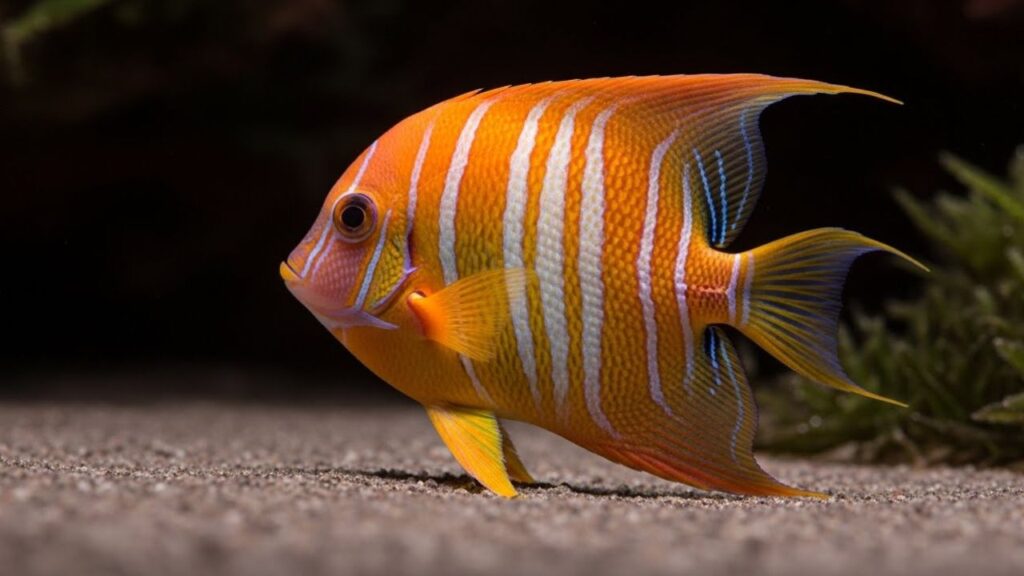
The flame angelfish appears as a spark with fins. Its body is luminous orange-red, decorated with dark bars and accented with purple-blue highlights on the fins. It’s one of the most dramatic reef fish you’ll ever see — the kind of fish that makes you feel like the reef turned on special effects just for your dive.
What’s especially cool is that flame angelfish can vary depending on where they’re collected. Some populations have thicker dark bars, others show different intensities in the reds, and some may even show a faint yellow tint in certain regions. Males are often slightly larger and can show brighter coloration, with more color in the tail and fin areas.
Their dorsal fin and anal fins can show gorgeous purplish-blue edging with short dark accents — like someone detailed the fin tips with a fine brush. It’s a color combination that feels both wild and classy, which is why angelfish are so popular in reef setups.
In the right reef environment, flame angelfish are a showpiece. They’re bright, bold, and full of personality — the kind of angelfish that reminds you why coral reef life is considered one of the most visually stunning ecosystems on Earth.
Conclusion
So what did we learn from all these underwater fashion icons (most of which make great frozen foods)? Fish with the brightest colors aren’t just pretty — they’re strategic. For some, bright shades are inherited and result from selective breeding. For others, the colors are natural tools for reef life: signaling, camouflage, partnership, and survival in the busy marine ecosystems of coral reefs.
Whether it’s a betta flashing jewel tones in a freshwater aquarium, guppies turning a tank into a living light show, or yellow tangs glowing like sunlight across a reef, the common theme is this: bright colors often reflect health, environment, and adaptation. While putting them in the same tank with some aquatic plants, keep conditions stable, respect each fish’s needs, and those vibrant tones can stay strong. Ignore basics like clean water and balanced care, and even the most beautiful fish can look dull fast — because color is often a visible clue about well-being and water quality.
And the best part? There are so many species out there — from coral cleaners to shy dragonets — that you can keep discovering new patterns, new hues, and new combinations of blue, green, purple, pink, yellow, and bright orange. It’s no surprise these fish dominate the aquarium trade and steal the spotlight on dives.
