




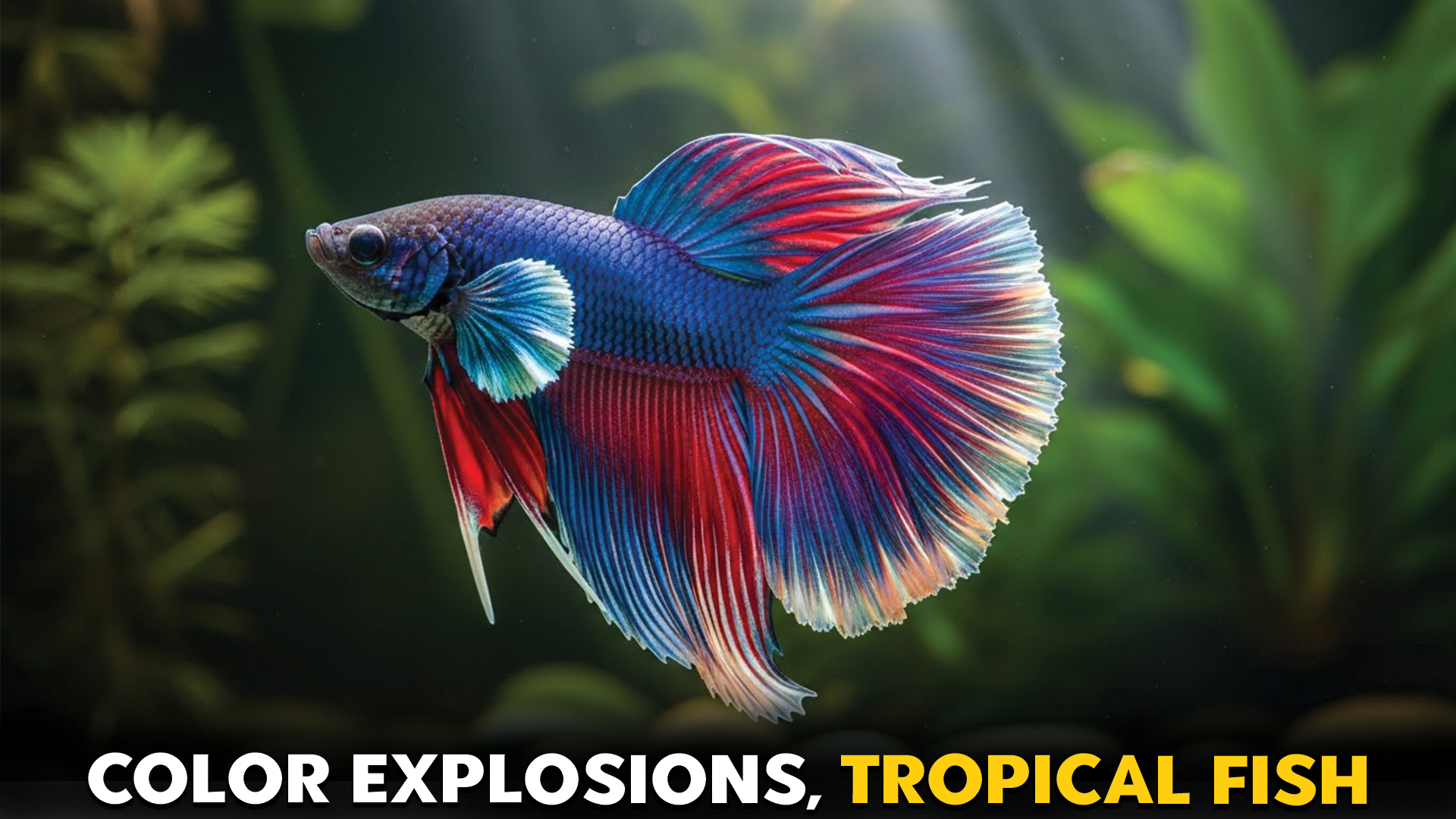
Let’s talk about adding a splash of literal life and colour to your space.
We’re diving deep into the world of fish that have the most fantastic color variations. These aren’t just your average swimmers; these are living, breathing works of art with more drip than a leaky faucet. From the vibrant coral reef to a carefully curated freshwater aquarium, these stunning fish are serving looks 24/7.
Forget boring pets; we’re talking about creatures that undergo wild transformations and rock patterns that would make a fashion designer jealous.
Whether you’re a seasoned pro with a massive aquarium or just curious about the underwater world, get ready to meet the planet’s most colorful fish. It’s time to explore the bold, the beautiful, and the straight-up bizarre.
Fish That Have the Most Amazing Color Variations
1. Stoplight Parrotfish
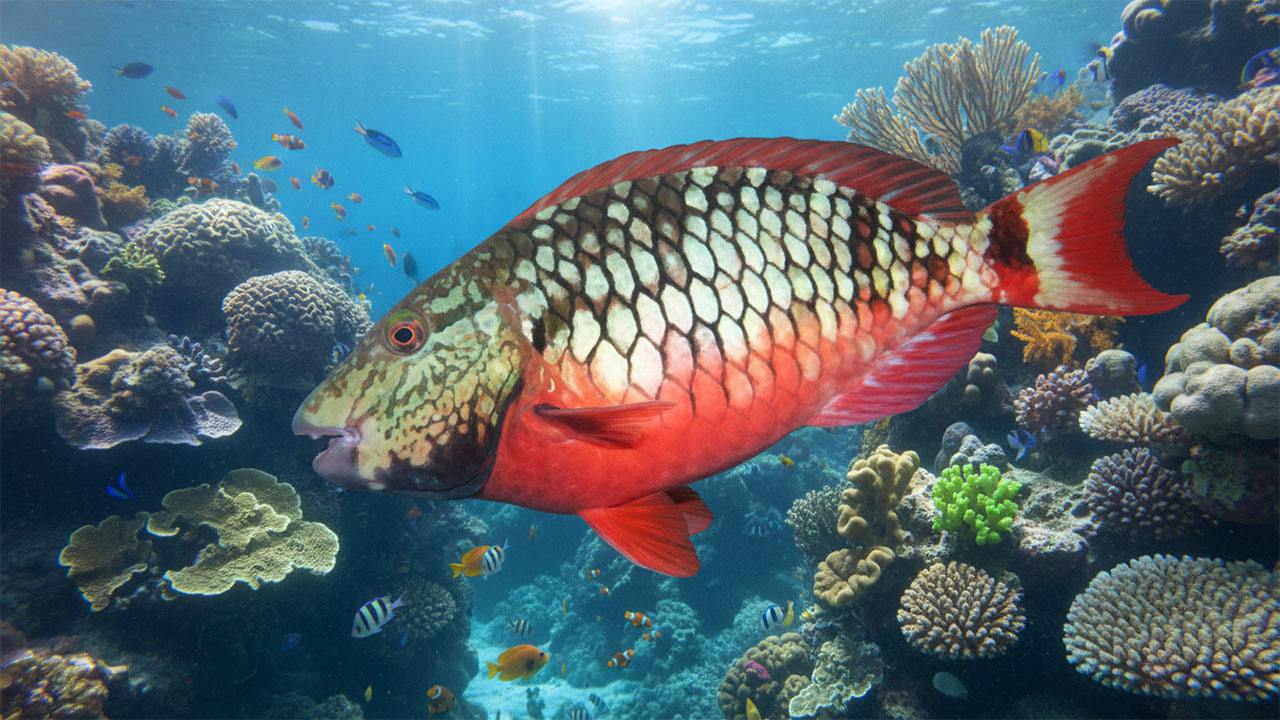
The Stoplight Parrotfish is the traffic controller of the coral reef, and its glow-up is legendary. This species has three main life stages, and its coloration changes dramatically in each one, just like a stoplight. It starts as a reddish-brown (the “red light” initial phase), often with some spots to blend seamlessly into the reef rubble.
But then, things get interesting.
As they mature, they enter an intermediate phase before the final boss level: the terminal male. This is where the magic happens. The terminal male is a jaw-dropping spectacle of vibrant colors, usually a bright green body with yellow and pink accents on its head and fins. This transformation isn’t just for looks; it signals dominance and readiness to lead a harem of females. Talk about a power move.
These guys are basically the gardeners of the Atlantic Ocean. They have a beak-like mouth that they use to scrape algae off corals and rocks. And here’s the tea: after they digest the good stuff, they excrete the rest as fine, white sand.
That’s right, a considerable amount of the beautiful sand on tropical beaches comes from parrotfish poop! You’ll probably never see this popular species in home pet stores, as they grow up to two feet long and need a massive habitat.
They are a perfect example of a fish best admired in its natural habitat.
2. Emperor Angelfish
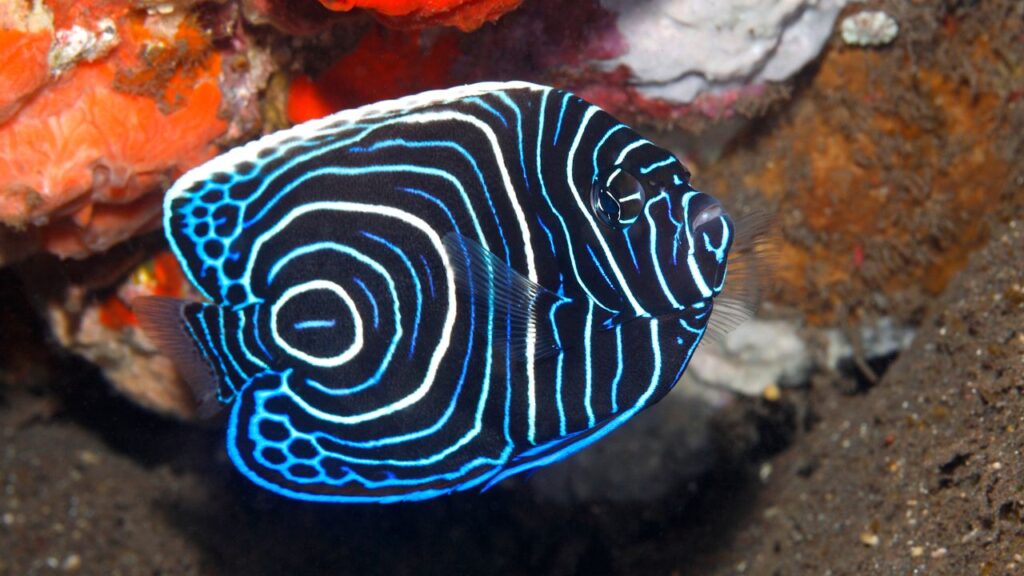
This angelfish is the definition of “extra,” and its transformation from juvenile to adult is so dramatic that, for a long time, people thought it was two completely different species.
The juvenile is a mood: a deep, dark blue body covered in concentric circles of white and electric blue. It looks like a hypnotic vinyl record, and these mesmerizing patterns help confuse predators.
Then comes the adult glow-up, and it is absolutely iconic. The circles morph into stunning horizontal stripes of bright yellow and blue that run the length of its body. It develops a black “mask” over its eyes, often outlined in blue, and its tail fin turns a solid, sunny yellow.
The change is so complete, it’s like watching a Pokémon evolve in real-time. This is easily one of the most beautiful fish in the ocean.
National Aquarium states that you can find this majestic fish gliding through the coral reef ecosystems of the Indo-Pacific region. In the wild, their diet consists of sponges and tunicates. This is also why they are a “look but don’t touch” resident for many reef aquarists—they will happily munch on your expensive corals.
If you want to keep an Emperor Angelfish, you’ll need a very large tank (we’re talking 180 gallons, minimum), and you’ll have to forget about keeping most corals.
3. Siamese Fighting Fish
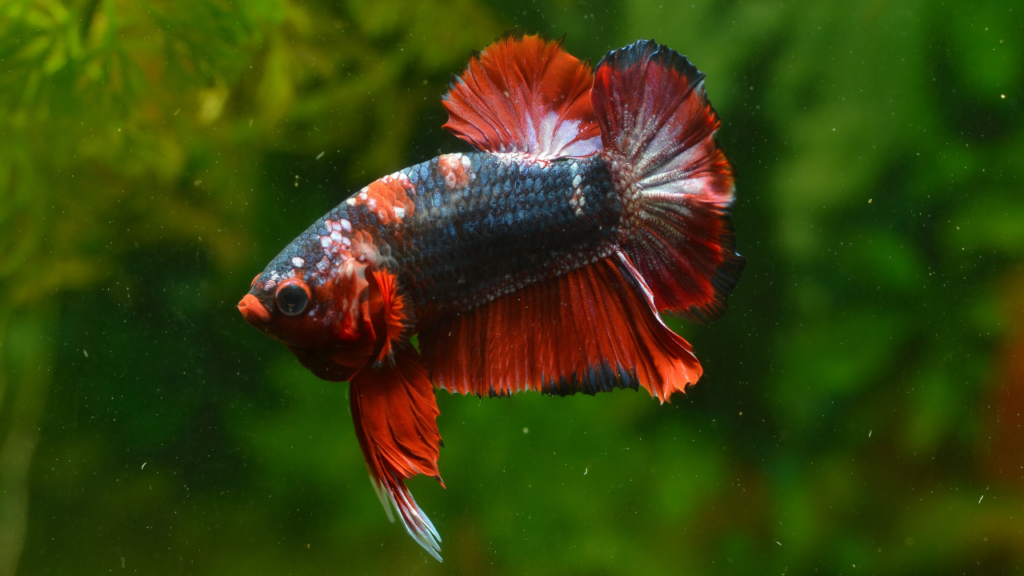
Okay, let’s talk about the icon, the legend, the one you can find in almost all pet stores: the Siamese Fish, or betta fish. These guys are the original influencers of the freshwater world. But here’s a fun fact: wild bettas are actually kind of drab, with short fins and a dull brownish-green colour.
And fabulous they became. Thanks to selective breeding, the betta fish now exists in a mind-boggling array of colors and forms. We’re talking deep, rich red, shimmering turquoise, solid blue, iridescent purple, and even patterns that mimic koi carp. The variety in tail shapes is just as wild, from the flowing veil tail to the spiky crown tail and the magnificent half-moon.
Now, about that name. They are called “fighting fish” for a reason. Males are highly territorial and will fight to the death, so you can never, ever keep two males in the same tank. This aggression is also what makes them display their fins so beautifully.
While they are tough, they are often misunderstood. Those tiny cups they’re sold in are not a vibe. A betta fish needs at least a 5-gallon aquarium with a filter and a heater to truly thrive and show off its stunning colors.
A betta can be the star of a community tank, but you have to choose their tank mates wisely. Avoid anything flashy that might get mistaken for another betta, and steer clear of fin-nippers. Slow-moving, peaceful companions like a Cardinal Tetra school are often a good match.
4. German Blue Ram
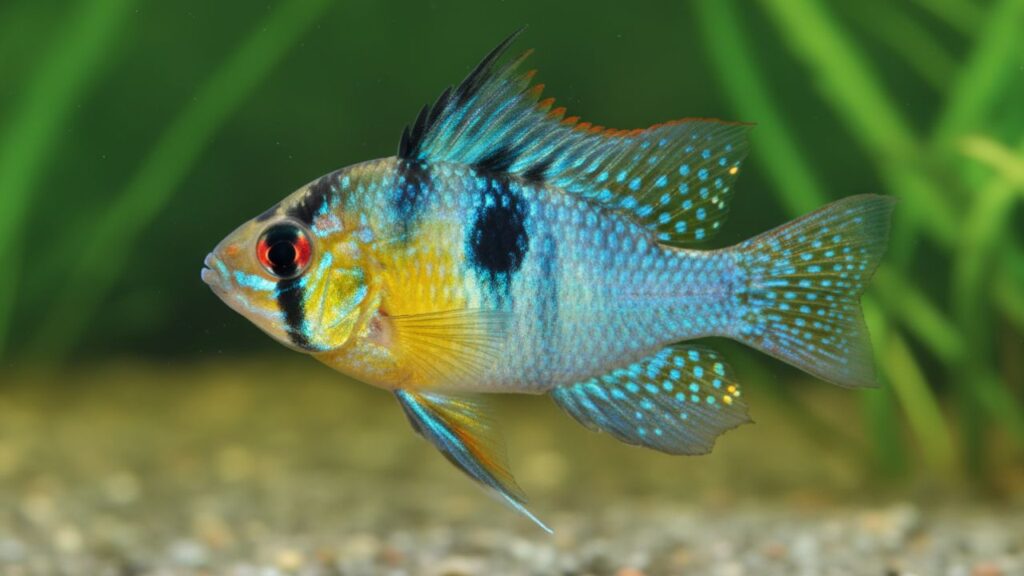
If you’re looking for a fish that packs a whole rainbow into a tiny package, look no further than the German Blue Ram. This little fish is one of the most popular dwarf cichlids for a reason.
It’s a freshwater creature from the warm, slow-moving waters of South America, and it’s basically a living jewel. They don’t get very big, usually only about 2-3 inches, but WebMD says their coloration is off the charts.
Let’s break down the look.
It has a base body of yellow and pearly white, overlaid with an incredible electric blue coloration that shimmers with every movement. They have a bold black stripe running through their fiery red eyes and often a splash of red on their bellies. The front rays of their dorsal fin are typically black and stand tall when they’re showing off.
It’s a complex and beautiful combination of colors.
Unlike many of their larger cichlid cousins (we’re looking at you, African Cichlids), it is a relatively peaceful community fish. They can be kept in a community tank with other chill fish, such as a Neon Tetra or a Cherry Barb.
They can be a little shy, so providing them with a well-planted freshwater aquarium with plenty of hiding spots among aquatic plants and driftwood will make them feel right at home.
5. Cinnamon Clownfish
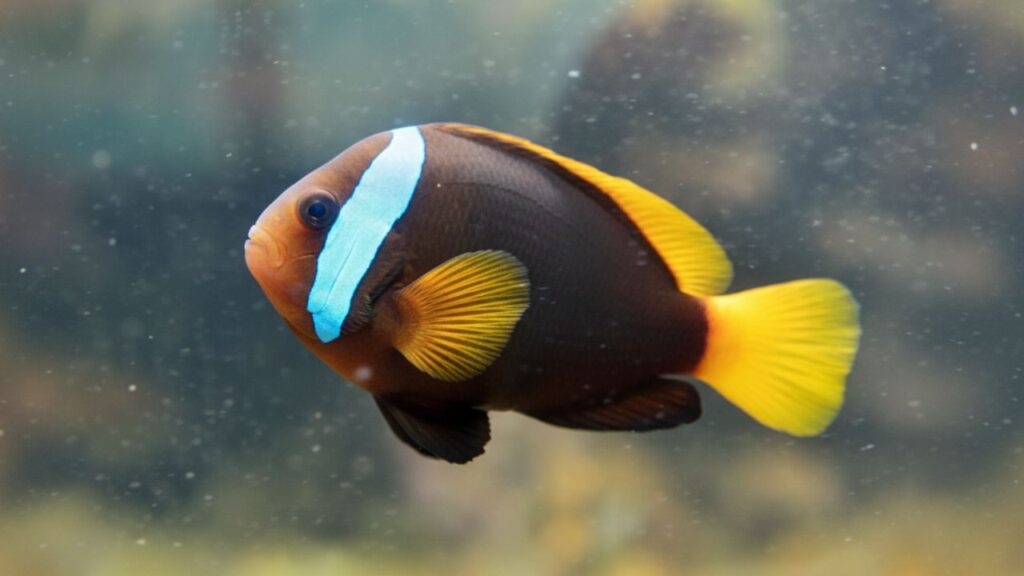
Cinnamon Clownfish takes the classic clownfish look and turns the intensity up to 11. Instead of a light, bright orange, this species boasts a deep, velvety maroon or red orange body that looks incredibly rich and dramatic against the backdrop of a sea anemone.
Their stripes are also different. While a common clownfish has three wide, bold white bars, the Cinnamon Clownfish has much thinner stripes, sometimes just one or two. The contrast between the deep maroon and the stark white is absolutely stunning.
And here’s a cool tidbit: the females of this species are significantly larger than the males and are the undisputed bosses of their territory. The males grow to be only a fraction of their size.
Like all clownfish, these guys have a fascinating symbiotic relationship with sea anemones in their natural habitat on the coral reef. The anemone’s stinging tentacles protect the clownfish from predators, and in return, the fish cleans the anemone and lures in food. In an aquarium, they are among the more aggressive clownfish.
Despite their feisty personality, they are a very popular fish in the saltwater aquarium trade because they are hardy and incredibly beautiful. Their deep, warm colour provides a different aesthetic than the more common orange varieties.
6. Discus
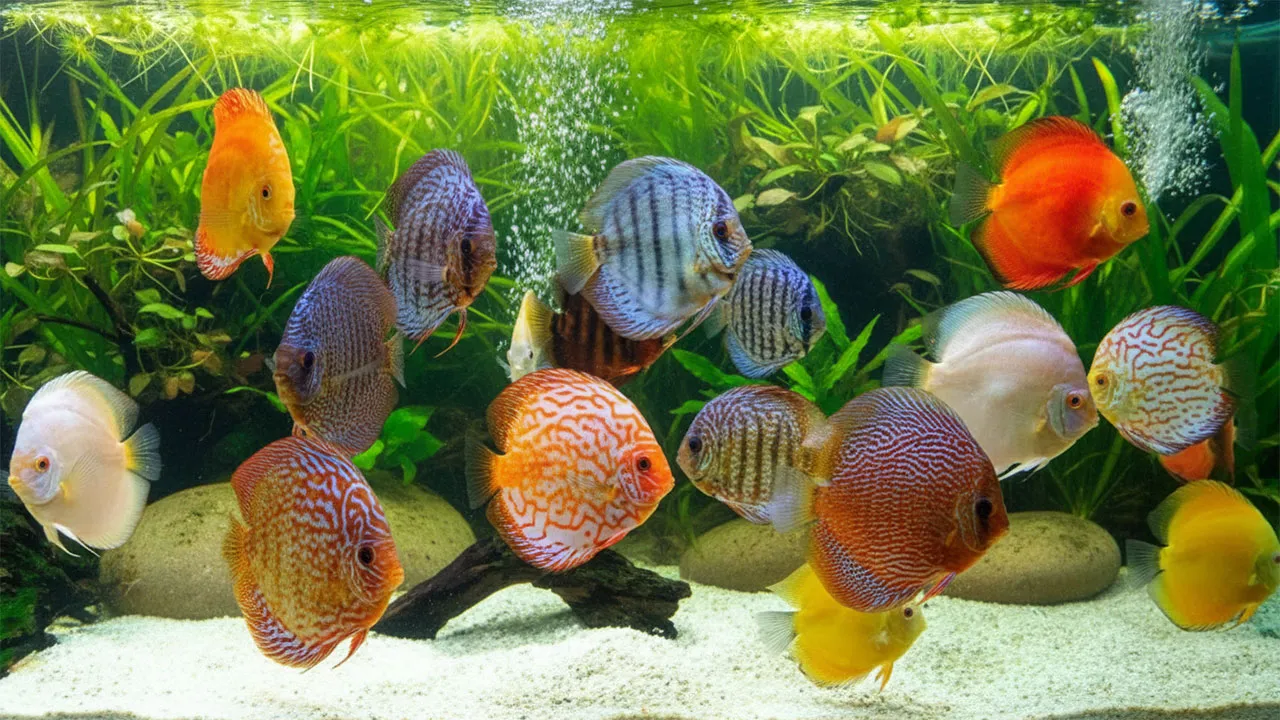
The Discus is often called the “King of the Aquarium,” and it’s a title well earned. These majestic, plate-shaped freshwater fish are native to the Amazon River basin in South America. In the wild, their coloration is more subdued to aid camouflage, often showing earthy tones of green, brown, and blue, with subtle vertical stripes that act as stress bars.
But in the aquarium world, all bets are off. Decades of intense selective breeding have unlocked a kaleidoscope of colour and patterns. You can now find Discus in nearly every shade imaginable: brilliant Pigeon Blood reds, solid Cobalt blues, dazzling Snakeskins with intricate patterns, and vibrant Leopard Spots. A school of high-quality Discus is one of the most breathtaking sights in the entire hobby, a proper living art installation.
However, royalty comes with demands. Discus are notoriously high-maintenance. They are known to be picky eaters, often requiring a varied diet of high-quality pellets and frozen foods. More importantly, they demand pristine water conditions.
Because they are a peaceful schooling fish, you can’t just have one. They need to be kept in a group of at least five or six in a large tank to feel secure and show their best colors.
7. Hogfish
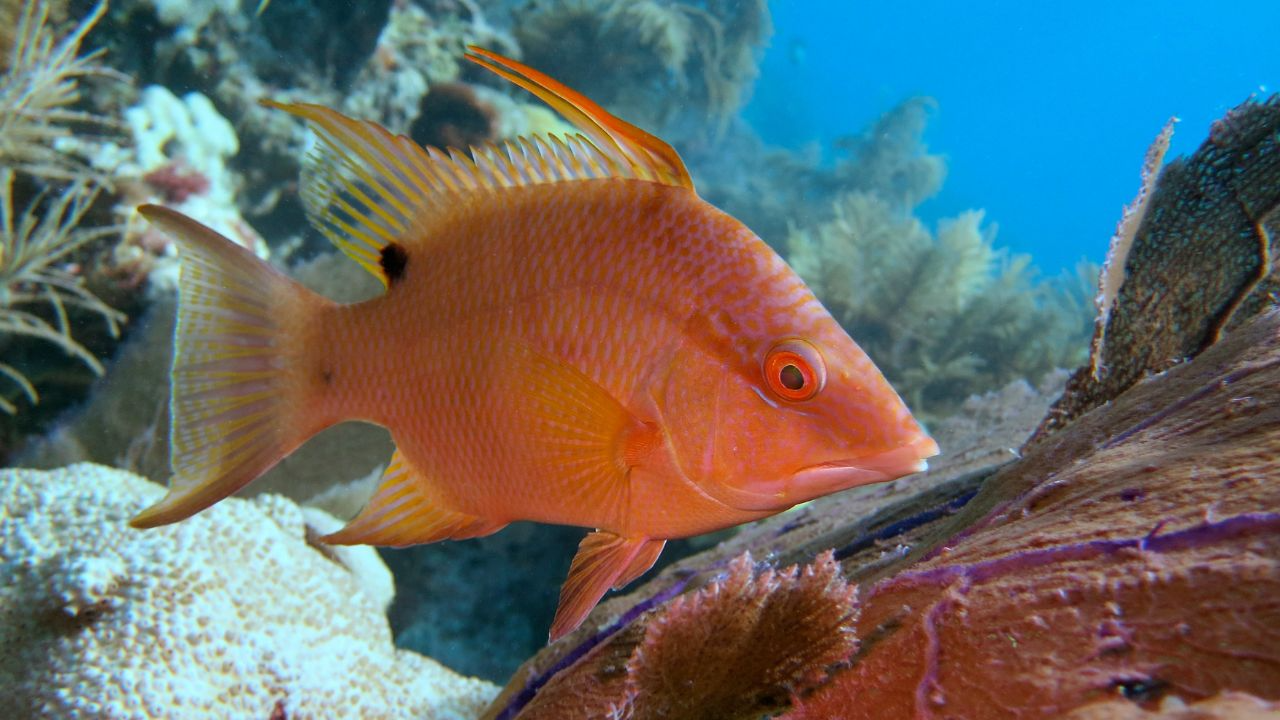
The Hogfish is a type of wrasse found in the Atlantic Ocean, and its colour tells a whole story about its life. Most Hogfish you see will be females or subordinate males, and they rock a pretty low-key look: a mottled, reddish-orange or brownish colour that allows them to blend seamlessly with the sandy bottoms and reefs they forage on.
But the real show begins when a male becomes the dominant “supermale” of a group. This triggers a mind-blowing transformation. His forehead develops a dark, mask-like band, his body turns a stark combination of white on the back half and deep red-orange on the front, and the first few spines of his dorsal fin grow into long, dramatic filaments.
As per the Florida Museum, these fish get their name from their long, pig-like snout, which they use to root around in the sand, searching for small crustaceans and mollusks to eat. They are a popular species for spearfishers and are considered a delicacy. Still, their incredible ability to change colour and even sex (they are sequential hermaphrodites) is what makes them truly fascinating.
While their impressive size (they can reach up to 3 feet!) makes them unsuitable for most home aquariums, they are a highlight for divers and visitors to public aquariums.
8. Scrawled Cowfish
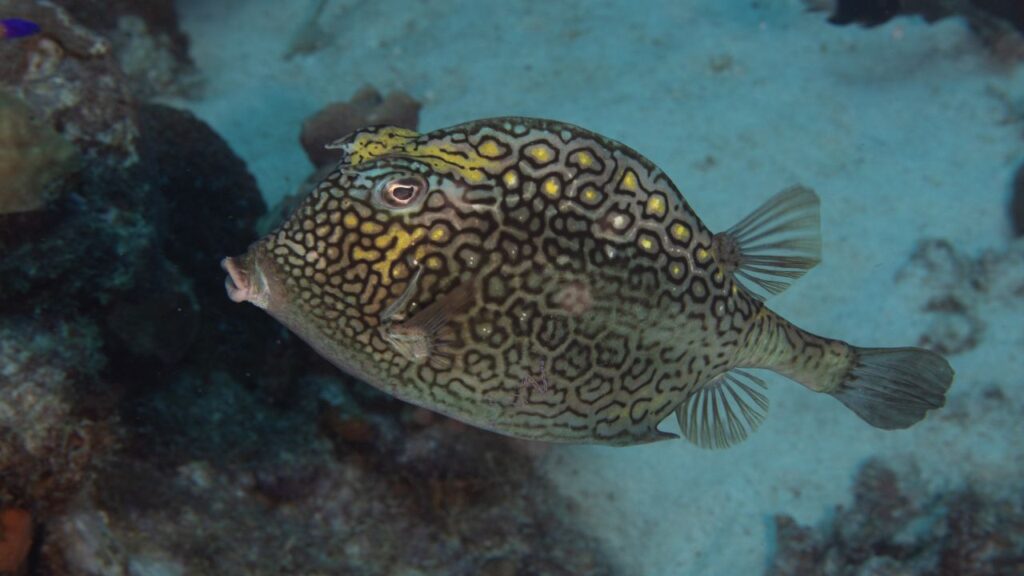
Scrawled Cowfish looks like a floating box that a toddler scribbled on with a neon crayon, and it is glorious. Part of the boxfish family, they have a rigid, bony structure that gives them their boxy shape, and two small “horns” over their eyes, which is where the “cowfish” name comes from. They are easily one of the most unique fish in the sea.
The coloration is where things get truly wild. The body can range from tan to yellow to green, but it’s completely covered in a network of vibrant, squiggly, electric-blue lines. These intricate patterns are unique to each individual, like a fingerprint.
This isn’t just for show; the pattern provides excellent camouflage among the seagrass beds and rubble of its natural habitat in the Atlantic Ocean.
But this quirky box is hiding a dark secret. When threatened or stressed, the Scrawled Cowfish can release a potent neurotoxin from its skin into the water.
In the wild, this warns off predators. In a closed system like an aquarium, this toxin can be lethal to every other fish in the tank, including the cowfish itself. It’s like a tiny, swimming chemical weapon, making them a risky choice even for experienced aquarists. Some might say they have venomous spines, but it’s their skin that’s the real danger.
9. Pajama Cardinalfish
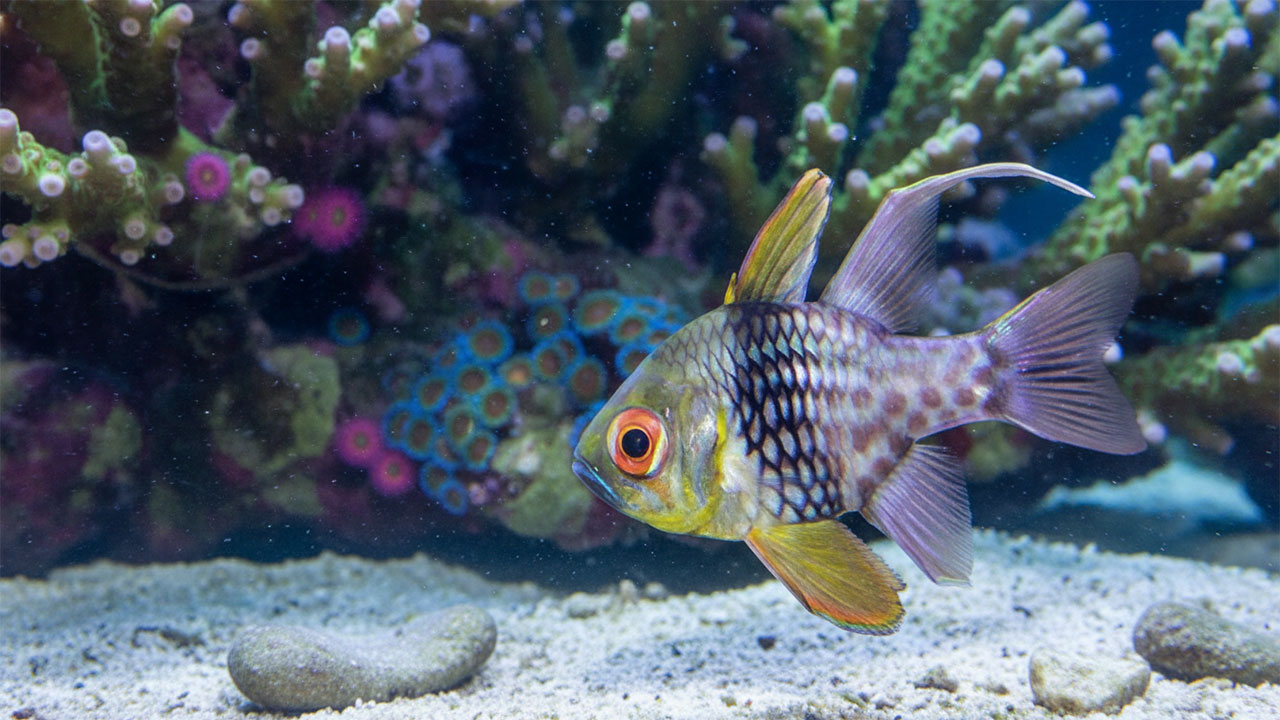
Let’s end on a note that is both incredibly stylish and unbelievably cute. Meet the Pajama Cardinalfish, a fish that is perpetually dressed for a slumber party. This little guy is one of the most peaceful and popular fish for saltwater beginners, and it’s easy to see why. Their look is a fashion statement, a perfect example of color blocking and pattern mixing.
Let’s break down the outfit. They have a greenish-yellow face with big, soulful, reddish eyes. Their midsection is wrapped in a thick, bold, dark band, like a belt. And the entire back half of their body is a silvery-white canvas adorned with red-orange polka dots. It’s a look that shouldn’t work, but it absolutely does. They are the definition of a cute little fish.
These guys are a nocturnal schooling fish hailing from the warm waters of the Indo-Pacific region. In an aquarium, they are incredibly chill tank mates. They are a great community fish that won’t bother anyone, preferring to hover in a calm spot in the tank, often near a long-spined urchin for protection. Their peaceful nature makes them a perfect addition to a saltwater community tank.
One of the coolest things about them is their parenting style. They are mouthbrooders, which means after the female lays the eggs, the male scoops them up and holds them in his mouth until they hatch. He’ll go for weeks without feeding to protect his babies.
Conclusion
From the royal Emperor Angelfish to the punk-rock betta fish, it’s clear that the underwater world is anything but boring. These species use colour for everything: to hide, to show off, to find a mate, and to climb the social ladder. Their bodies are canvases, painted with intricate patterns, bold stripes, and shimmering shades of every colour imaginable.
Whether you’re setting up a freshwater or saltwater aquarium, there’s a colorful friend waiting to bring some life and personality to your tank. The world is full of amazing creatures, and these fish are proof that sometimes, the most beautiful art is living art.
