





Ever stare into your aquarium or watch a nature documentary and wonder what’s going on in those little fishy brains? We often think of the underwater world as silent, but that couldn’t be further from the truth.
While they might not be chatting out loud, many fish are having complex conversations all the time. Their language? A dazzling, vibrant, and ever-shifting display of color.
Forget Morse code; this is a language of brilliant blues, warning reds, and sneaky camouflage. It’s a visual spectacle used for everything from shouting “This is my turf!” to whispering sweet nothings to a potential mate.
Today, we’re going to take a deep dive into some of the most amazing fish that can communicate through color. Get ready to see these aquatic creatures in a whole new light!
Fish That Can Communicate Through Colors
1. Betta Fish
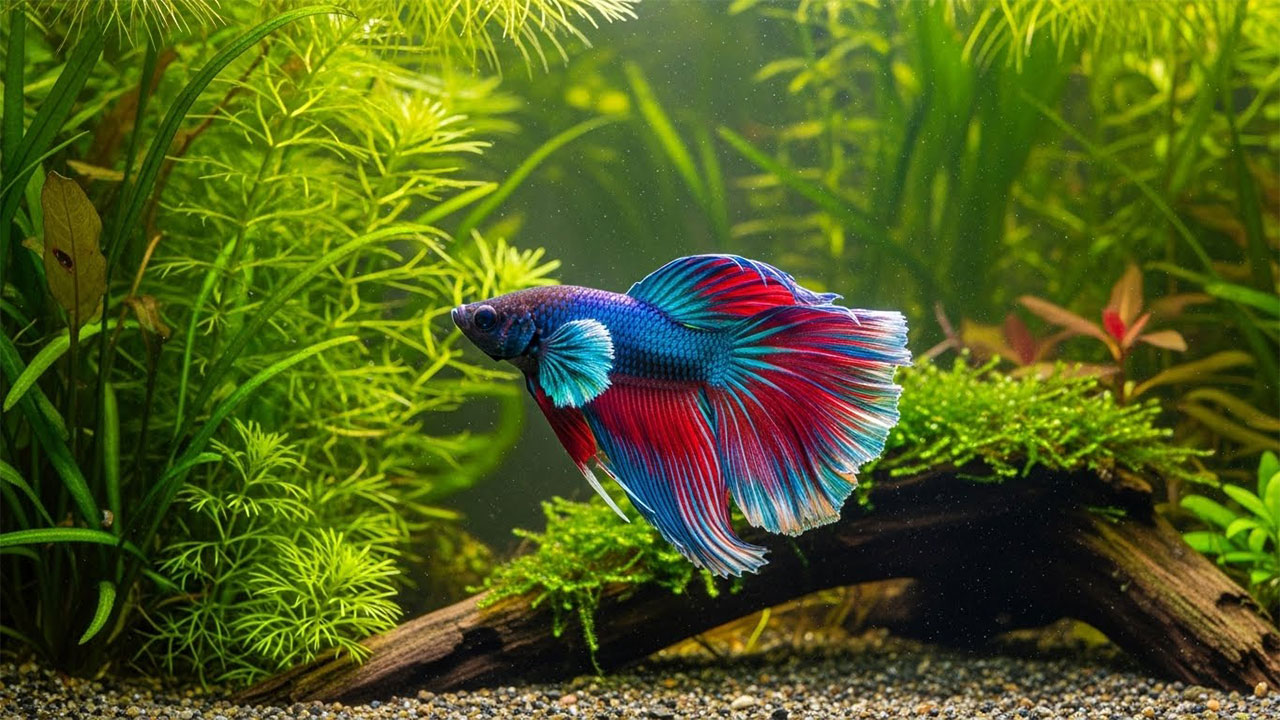
For a Betta, color is its primary social tool —a billboard that broadcasts its mood, intentions, and health to the entire world—or at least its corner of the aquarium.
It can actively detect light and change the intensity of its colors to send powerful signals. When a male feels aggressive or is defending his territory, he’ll flare his gills and fins, and his colors will blaze with an incredible vibrancy, especially his reds and brilliant blue hues.
It’s a clear warning to other fish to back off. On the flip side, during the mating season, a female might develop vertical stripes to show she’s ready to spawn, while the male uses his brightest finery to woo his chosen mate in an elaborate courtship display.
A Betta’s color is also a window into its soul—or at least, its health.
If your fish looks dull or pale, it’s often a sign that something is wrong. Stress from poor water quality, a bad environment, or illness can cause their colors to fade dramatically.
Females can even get horizontal “stress stripes.” This is why a balanced diet rich in protein is so important; good food helps them maintain those spectacular colors.
2. Clownfish
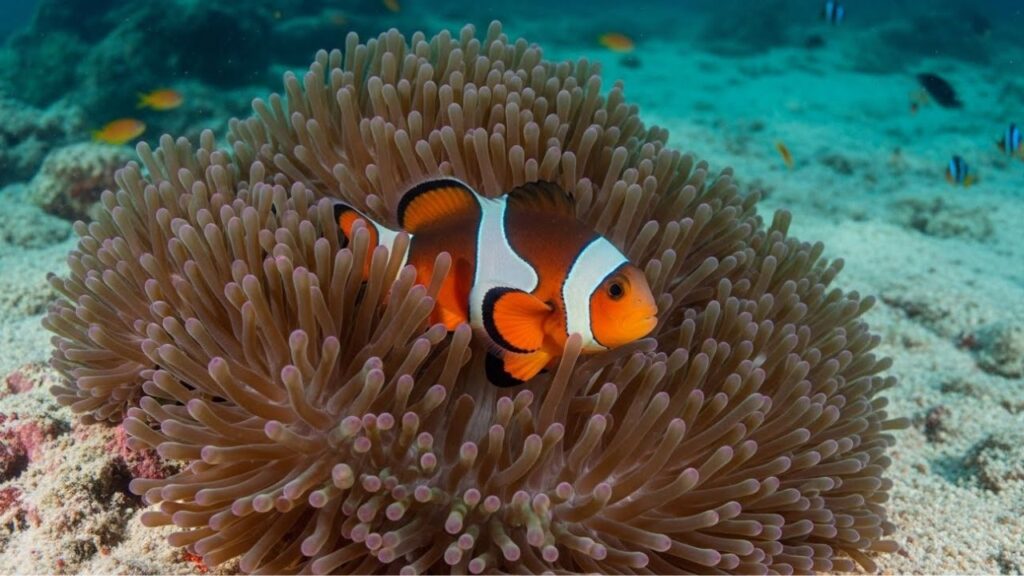
The iconic orange-and-white outfits of Clownfish are more than just a fashion statement. While they also communicate with sound, their permanent color patterns and a “secret” superpower—the ability to see ultraviolet (UV) light—are crucial for their social life on the reef.
Those bold white stripes are like a team jersey. Barrier Reef notes that the specific number and pattern help Clownfish recognize members of their same species, which is vital for their complex social structure.
A fascinating new study even suggests they might “count” the stripes on other fish to tell friend from foe! This helps maintain the strict social hierarchy within their anemone home, where the largest fish is the dominant female.
The brightness of their colors might even dim to show submission to a higher-ranking fish.
Now for their secret weapon: the UV light channel. This fish can detect blue light. The white stripes don’t just look cool to us; they also reflect ultraviolet light.
While most humans and many predators can’t see this part of the spectrum, Clownfish can! Their unique visual system, complete with specialized photoreceptor cells in the retina, allows them to detect these reflections.
Their bright coloration, paired with the anemone’s stinging tentacles, also serves as a warning to potential threats. It’s a multi-layered system that any marine biologist would agree makes the Clownfish one of the most interesting communicators in the ocean.
3. Stoplight Parrotfish
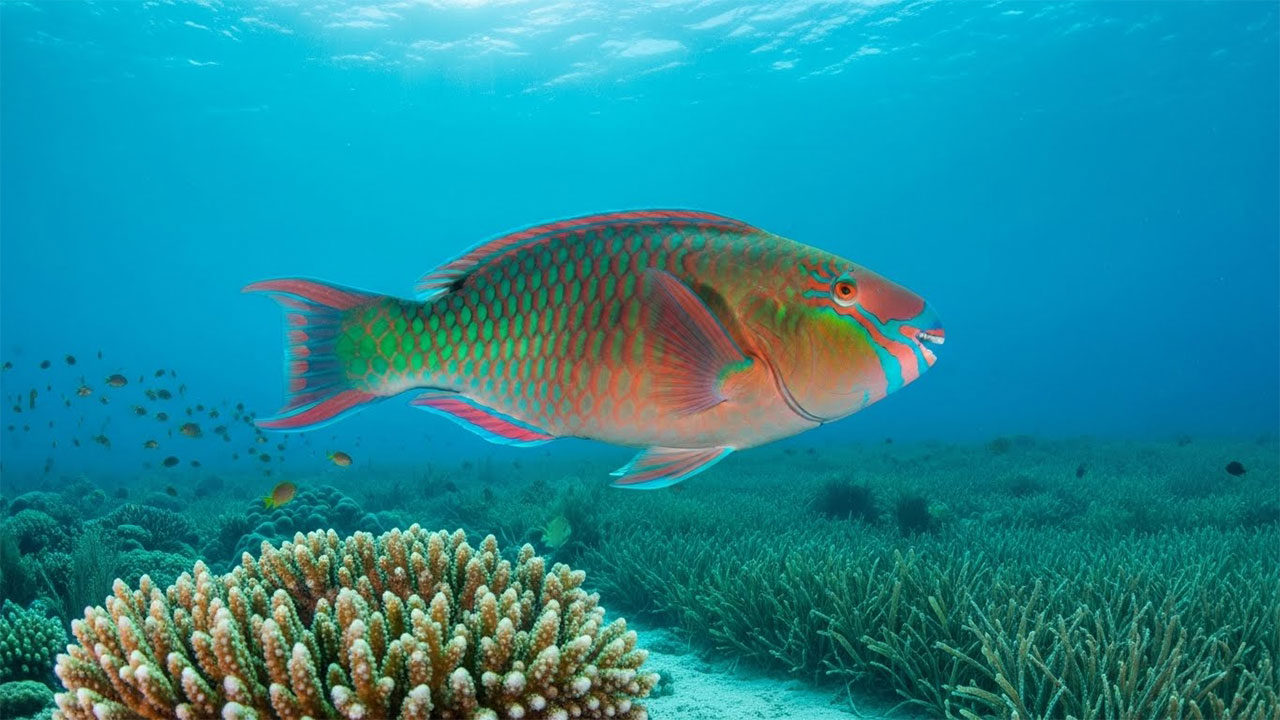
Stoplight Parrotfish are famous for using their beak-like mouths to eat coral. Still, their fundamental “stoplight” feature is their incredible ability to change color to signal their age, sex, and social status. They are a perfect example of how some species of fish wear their life story right on their skin.
Stoplight Parrotfish go through distinct color phases. As juveniles, they are a mottled brown and red, helping them blend in. As they mature, they enter the “initial phase,” retaining their reddish-brown color. But the real magic happens during their sex change.
As protogynous hermaphrodites, they can change from female to male. When this transition occurs, they enter the “terminal phase” and undergo a jaw-dropping transformation, becoming vivid green with a bright yellow spot on their tail.
This dramatic color change is a public announcement. The brilliant “supermale” coloration advertises his dominance and reproductive readiness to the entire group.
During courtship or when defending his territory, a male’s pigments can intensify even further, flashing brightly to attract mates and intimidate rivals. This is a crucial part of their social biology.
4. Rainbow Wrasse
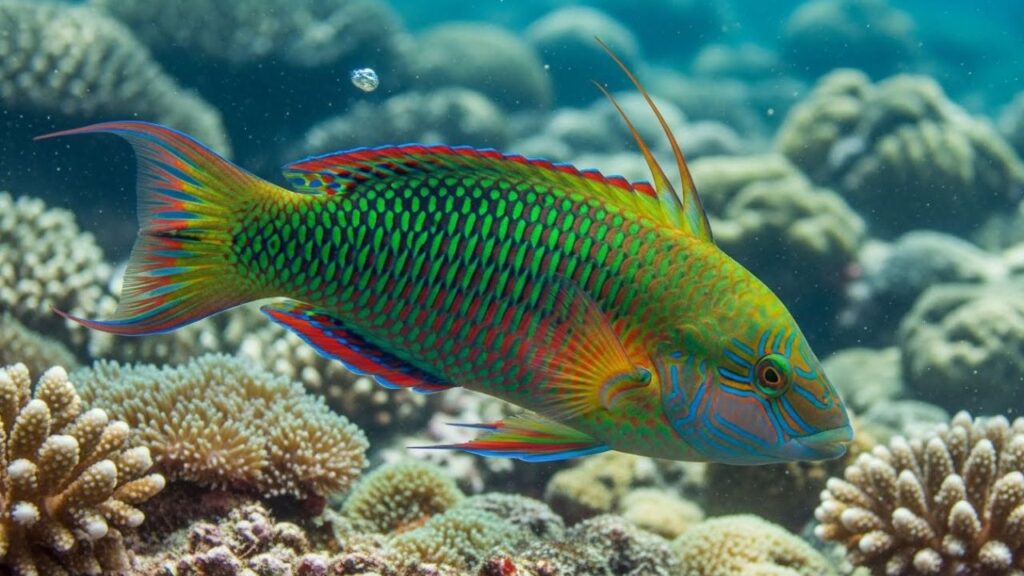
The Rainbow Wrasse is another dazzling resident of the reef that uses color as its primary language, especially during social drama. SDNHM mentions that many wrasses, including the well-known cleaner wrasse, are masters of visual communication, and the Mediterranean Rainbow Wrasse is no exception.
When it comes to a fight, male wrasses don’t pull any punches—or colors. They display specific long-wavelength (red and orange) color patterns, like an orange zigzag stripe, to mediate aggressive encounters. Researchers in the field of experimental biology have shown that resident males are far more likely to attack intruders when these specific hues are visible.
Like the Parrotfish, many wrasse species exhibit dramatic sexual dimorphism and are sequential hermaphrodites. This means males and females look very different, and individuals change tint completely when they transition from female to male, signaling their new sex and social role.
During courtship displays, males put on a real show, intensifying their vibrant hues and “flashing” their fins to attract females. In a diverse reef environment with many fish species, these unique and complex patterns are also essential for species recognition.
5. Flounder
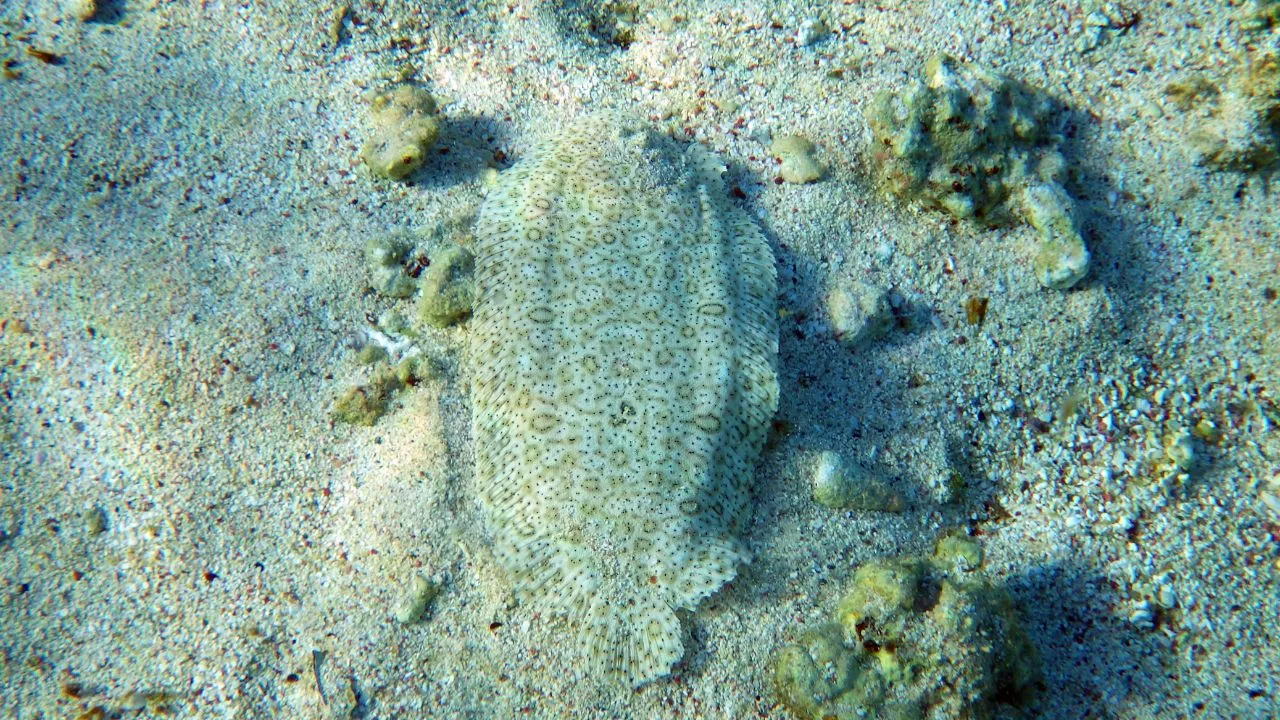
Now, let’s switch gears from flashy displays to the art of invisibility. The Flounder is a master of disguise, and its ability to change color is all about survival. Unlike the other fish on our list, the Flounder doesn’t want to be seen.
So, how does this master of camouflage pull off its disappearing act? It’s a brilliant process connecting its eyes, brain, and specialized skin cells. A Flounder uses its upward-facing eyes to scan the shades and textures of the seabed—be it sand, gravel, or shells. This visual data is sent to the brain, which then sends neural signals to millions of pigment-filled cells in its skin called chromatophores.
These chromatophores are like tiny, color-filled balloons. Under the brain’s control, they can expand or contract. When a cell containing a specific pigment (like black, brown, or yellow) grows, that color becomes more visible. When it contracts, the color is hidden.
By controlling thousands of these cells at once, a Flounder can paint a picture on its own back that perfectly mimics its surroundings. This process is so fast it can blend in almost instantly!
This incredible adaptation is purely for survival. It allows the Flounder to hide from predators like sharks and to ambush its own food without ever being seen. While a Betta screams for attention, the Flounder’s use of color is a masterclass in subtlety. It’s a stunning testament to how evolution has equipped different organisms to thrive in their unique niches.
6. Lionfish
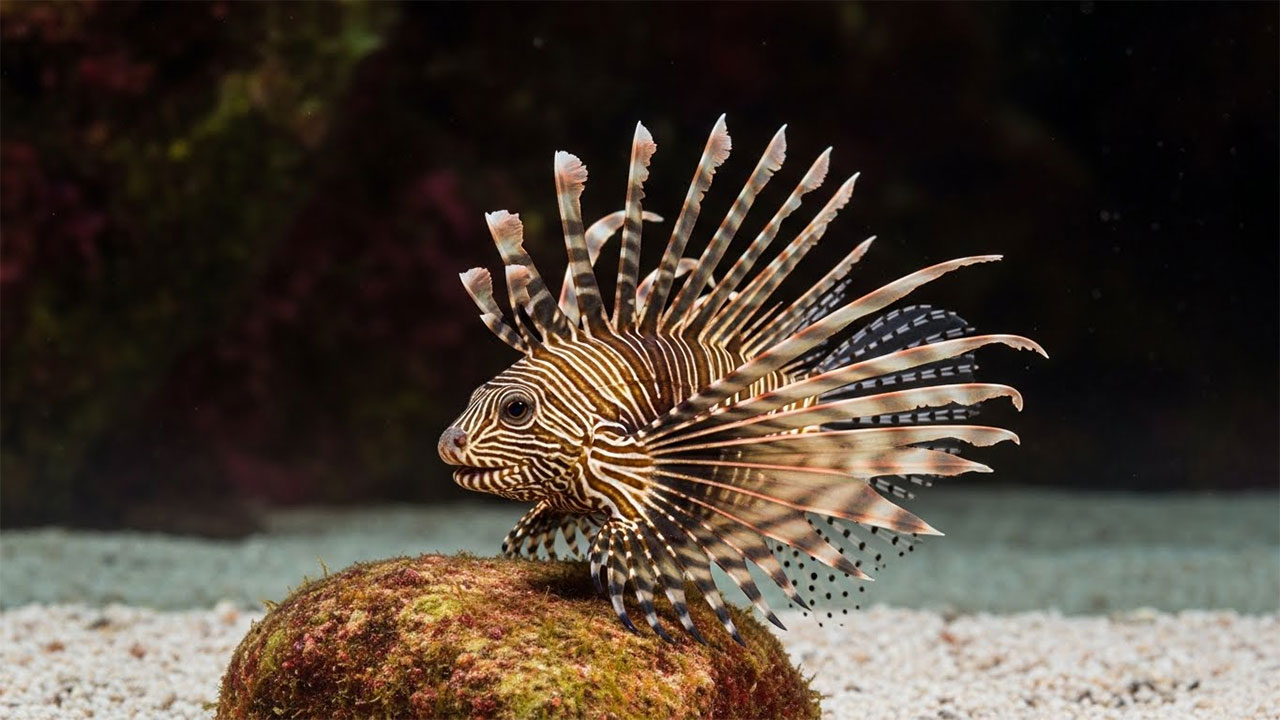
The Lionfish is a creature of breathtaking beauty and deadly defense, as per Britannica. Its dramatic red, brown, and white stripes aren’t for attracting mates in the traditional sense; they’re a bold warning sign. This is a classic example of aposematism—using bright pigments to advertise danger.
But there’s more to their story. Like the Clownfish, researchers believe Lionfish have a “secret” communication channel. Science suggests they can see UV light, and their white body parts reflect it. This may allow them to signal each other for species recognition or during courtship rituals without alerting most other animals that can’t see in the ultraviolet spectrum.
Lionfish also use dynamic color changes for social interactions. During the mating season, males become darker and more uniform, while females with eggs become paler, silvery white. This contrast helps them find each other, even in dark or murky water. It’s a clear visual cue that they are ready to spawn.
Aggression is also mediated by color. In a standoff between two males, the more dominant individual will turn a darker shade, asserting its status. The submissive male will often pale, fold its impressive fins, and swim away.
7. African Cichlid
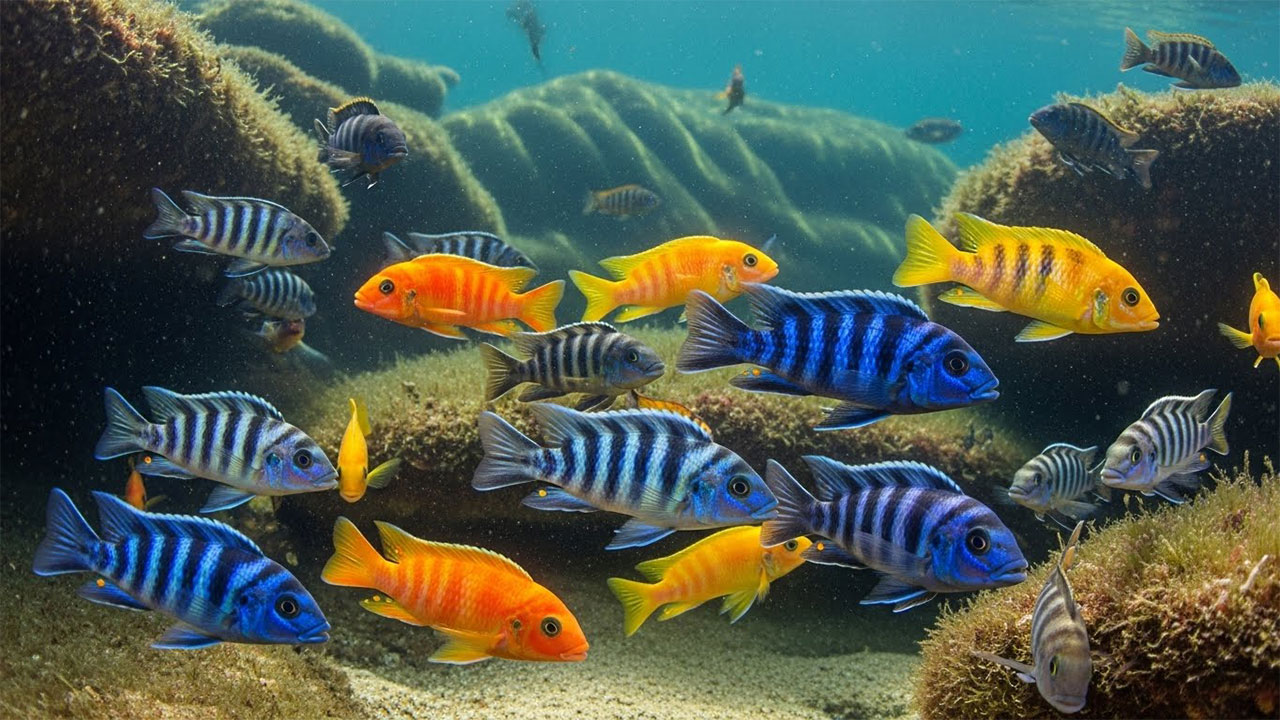
If you want to see evolution in hyperdrive, look no further than the African Cichlids of Africa’s Great Lakes. These fish are legendary among aquarium hobbyists for their explosive diversity and eye-popping colors. For them, pigment is everything—it’s their identity, their social status, and their ticket to finding a mate.
Sexual selection is the driving force behind their incredible coloration. Males are decked out in stunning combinations of electric blue, fiery red, and brilliant yellow. Females are the judges, and they consistently prefer the most intensely colored males, as this vibrancy is an honest signal of health and good genes.
This process explains why so many closely related species can live side-by-side, each with its own unique hue password to attract mates.
A Cichlid’s color is also its social resume. Dominant males are always the brightest, using their colors to defend territories and assert their rank. Subordinate males often adopt dull, female-like, or cryptic coloration to avoid getting beaten up.
This shade shift can happen in seconds. After a fight, the winner might blaze with color while the loser fades, signaling its submission. This is all controlled by the brain, sending signals to pigment cells in the skin.
Conclusion
From the aggressive flashes of a Betta to the masterful camouflage of a Flounder, fish that can communicate in their habitats through color tell incredible stories of life, rivalry, romance, and survival. Even in the deep sea, where it’s perpetually dark, some deep-sea fish have evolved to produce their own light to communicate, often using flashes of blue light that their specialized eyes can detect.
The science of animal communication is a field where scientists and other researchers continually make discoveries. From the photoreceptor cells in a fish’s retina to the complex neural pathways in its brain, we are only just beginning to understand the full depth of these visual languages.
The underwater world is far from silent—it’s just speaking a language that most humans are only now learning to interpret. And it’s a beautiful language, indeed.
