




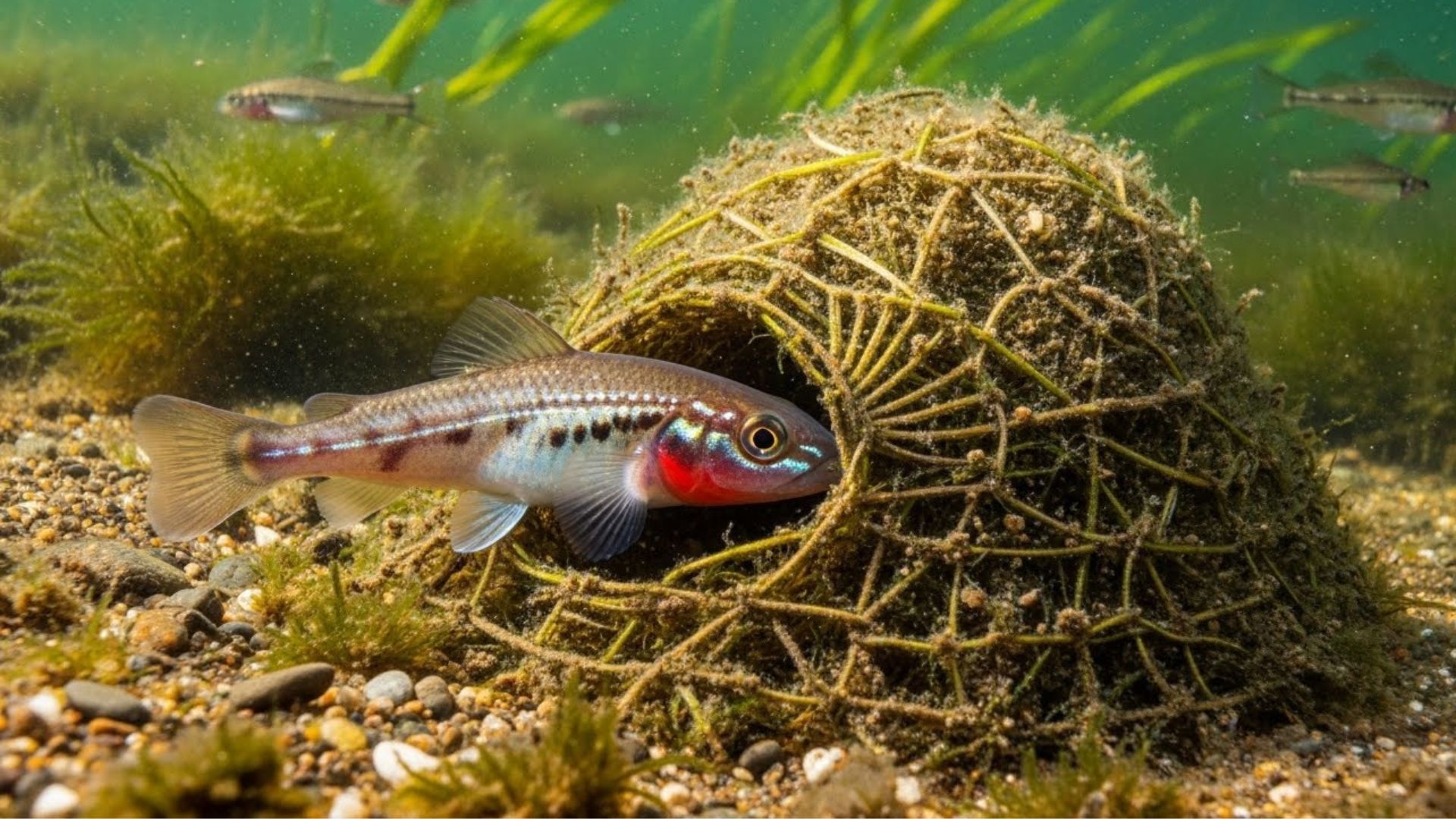
When you think of an architect, what comes to mind? A human in a hard hat? Maybe a beaver building a dam or a bird weaving a nest?
You probably don’t picture an animal with gills and fins. Well, get ready to have your mind blown! The aquatic world is filled with some of the most dedicated and creative builders on the planet. We’re diving deep into the world of Fish that build complex nests, proving that these underwater wonders are so much more than just pretty faces.
It’s a world driven by instinct, artistry, and the universal desire to create a safe home for the next generation. In many of these stories, it’s the guy fish who takes on the role of engineer, designer, and construction worker, all to attract mates and protect his legacy.
So, let’s swim through the gallery of nature’s most surprising builders.
9 Fish That Build Intricate Nests
1. Pufferfish
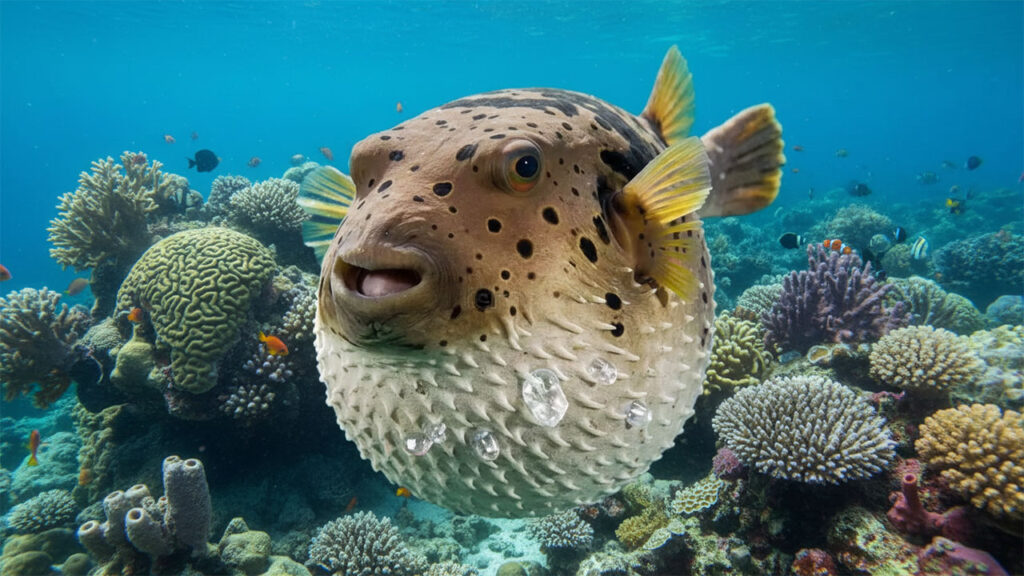
Stunning, geometrically ordered patterns, some stretching over 2 meters in diameter, are among the significant qualities of the nests made by the Pufferfish.
The creation of these structures is a Herculean task for the small male Pufferfish, mainly as it does it on the sea floor. For seven to nine days, it is involved in the outer ring construction. The industrious Pufferfish uses only its body and tiny fins. The excavation starts as he swims along the seabed, flapping his fins to sculpt the sand. The Pufferfish repeatedly excavates ditches and plows ridges in a perfect circle.
Through these simple actions of swimming back and forth, a breathtakingly complex circle pattern emerges, full of intricate ridges and valleys. He even brings in fine sand particles to the center to create a soft bed.
So, why go to all this trouble?
It’s the ultimate mating ritual designed to woo females. The intricate designs of the pufferfish nests are a testament to the male’s fitness. When a potential female partner arrives, she meticulously inspects the nest construction. She is drawn to the highest and most complex ridges of the outer ring. The valleys in the circular structure cleverly funnel fine sand and sediment toward the nest’s soft center, creating the perfect, protected spot for her to lay eggs.
After the female lays her eggs in the middle of the nest, the male fertilizes them, and his job shifts from artist to bodyguard. The female leaves, and the male stays to guard the precious cargo until the eggs hatch, which takes about ten days.
Scientists were so fascinated by this behaviour that they created a simulation program based on the male’s simple swimming movements. Incredibly, the simulation program and its data successfully reproduced the mysterious circle, confirming this little Pufferfish was indeed the sole architect. He may even decorate the outer ridges with seashells, adding a final artistic flourish to his sandy mandala.
2. Three-Spined Stickleback
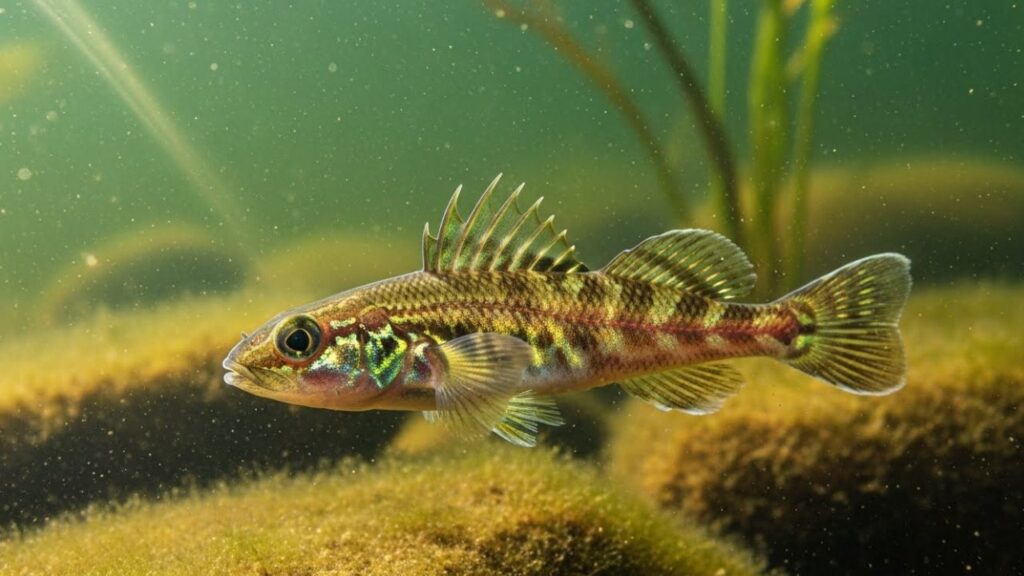
Found in fresh and coastal waters across the Northern Hemisphere, this little guy is one of the most studied animals in fish behavior, and for good reason. When it’s time to breed, the male undergoes a stunning transformation, developing a bright red belly and brilliant blue eyes, signaling that he’s ready to build a nest and find a partner.
His construction process is truly unique.
The male stickleback selects a territory on the bottom and begins to construct a nest using bits of vegetation and debris. But how does he get it all to stick together? He produces a glue-like substance called spiggin from his kidneys. He meticulously glues and weaves the plant matter together, creating a small, tunnel-like nest. He will press his body against it, poke it with his snout, and ensure it’s a solid and secure structure.
Once his home is complete, the real show begins. He performs a zigzag dance to attract a female. If she’s impressed, he’ll guide her into his tunnel nest. She will lay eggs inside, and then her job is done. She swims out the other end, leaving the male to fertilize the eggs and take over all parental duties. He is a fiercely protective father.
The male stickleback’s job is far from over. He becomes a full-time guardian, chasing away any potential predators that come near his precious eggs.
3. Betta Fish
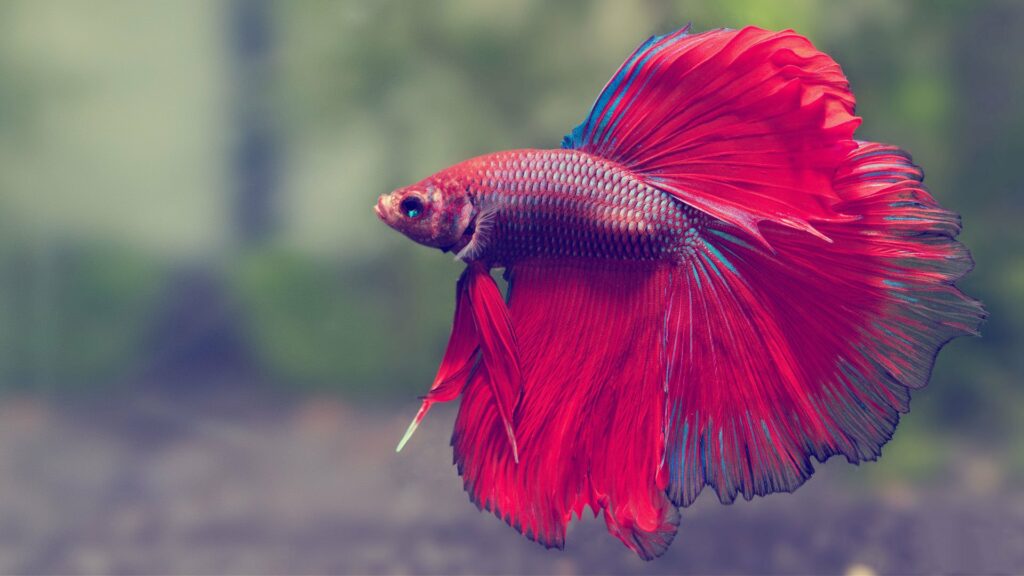
Creating an intricate nest is surely a forte of the Betta fish.
The process is a labor of love. The male Betta swims to the surface, gulps a mouthful of air, and then releases it underwater, coating each bubble with a layer of sticky saliva. This makes the bubbles stronger and helps them clump together.
He repeats this process hundreds of times, carefully arranging the bubbles into a floating raft, often anchoring it to a plant or the side of the tank. This floating structure is known as a bubble nest.
This beautiful creation is all about romance. The male builds his bubble nest to entice females. Once his nest is ready, he will try to court a female, flaring his fins and showing off his vibrant colors beneath his masterpiece. If she accepts, they engage in a unique “nuptial embrace” where she releases her eggs. The male catches the falling eggs, sometimes in his mouth, and carefully places each one into the safety of his bubble nest.
Once the eggs are secure, the male’s romantic demeanor vanishes. He sees the female Fish as a threat to his eggs and aggressively chases her away. From that moment on, he is the sole guardian.
4. Bluegill Sunfish
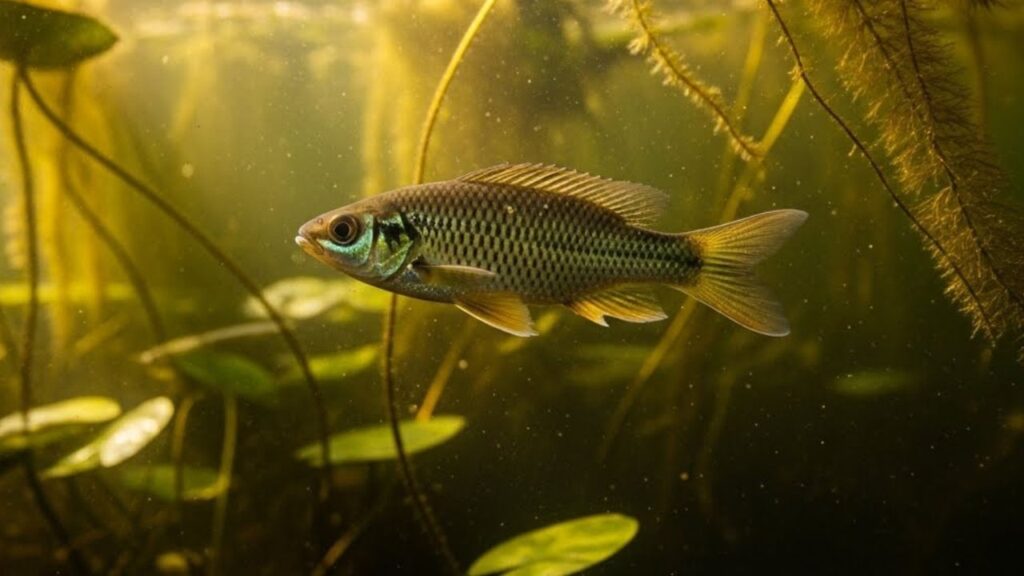
These popular North American freshwater fish are colonial nesters. During the breeding season, dozens or even hundreds of males gather in shallow, sandy areas and begin a massive construction project, creating a “bed” that resembles a collection of craters on the moon.
The male Bluegill is a powerhouse of excavation. Using his tail fin like a powerful broom, he sweeps away silt and debris to create a circular depression in the sand or gravel. This saucer-shaped pit can be up to two feet in diameter and about six inches deep.
This collection of nests created by the males serves as a giant advertisement to attract females. The females swim over the colony, inspecting the males and their handiwork. A male will try to court a passing female by grunting and swimming in circles. If she approves of his nest, she will dip down to lay eggs, and he will quickly fertilize them.
Living in a crowded subdivision has its perks. While males compete for mates, their proximity provides collective defense. A single nest is vulnerable to predators like bass or catfish. But when a predator approaches the colony, dozens of angry male sunfish will swarm to chase it away, ensuring the safety of the entire community’s young.
5. Tilapia
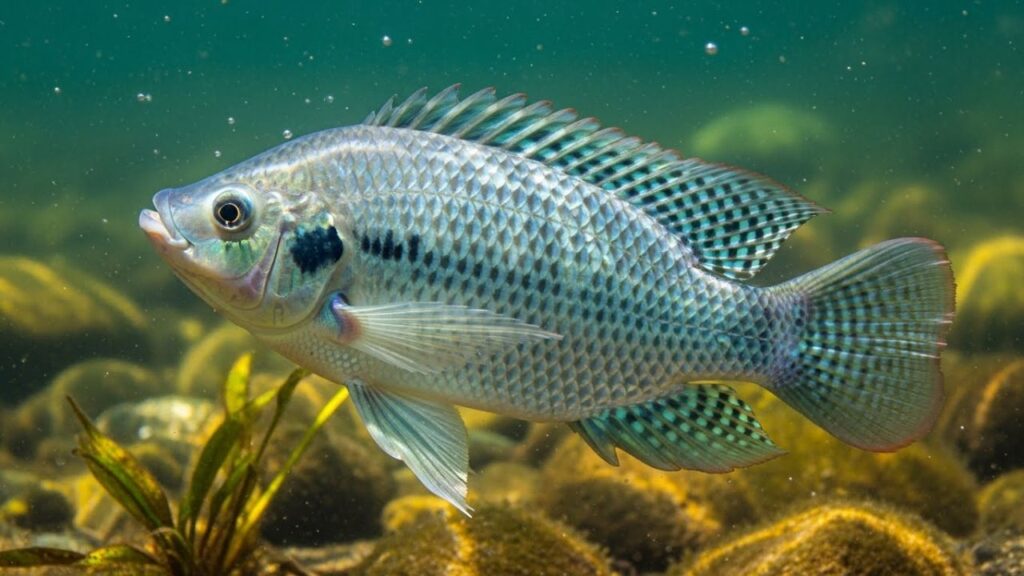
While many Tilapia are famous for being “mouthbrooders” (where the female holds the eggs and young in her mouth), the process often starts with a nest dug by the male.
Depending on the species, the male Tilapia will construct a pit-style nest. Much like the sunfish, he uses his mouth and body to move substrate, though his purpose may differ slightly. Some males dig a simple pit for the female to lay eggs in before she scoops them into her mouth. Others, like the Tilapia mariae, build incredibly elaborate, volcano-shaped nests that can take days to complete.
The primary purpose of this nest-building behavior is to initiate courtship. The male uses his nest to establish a territory and attract a potential female partner. He will guard this spot fiercely and perform displays to show off his strength and the quality of his chosen real estate.
Even for mouthbrooding species where the nest isn’t the final home for the eggs, it plays a crucial role in the mating ritual. It’s the designated spot for the female to deposit her eggs before the critical moment she takes them into her mouth for safekeeping.
6. Yellowhead Jawfish
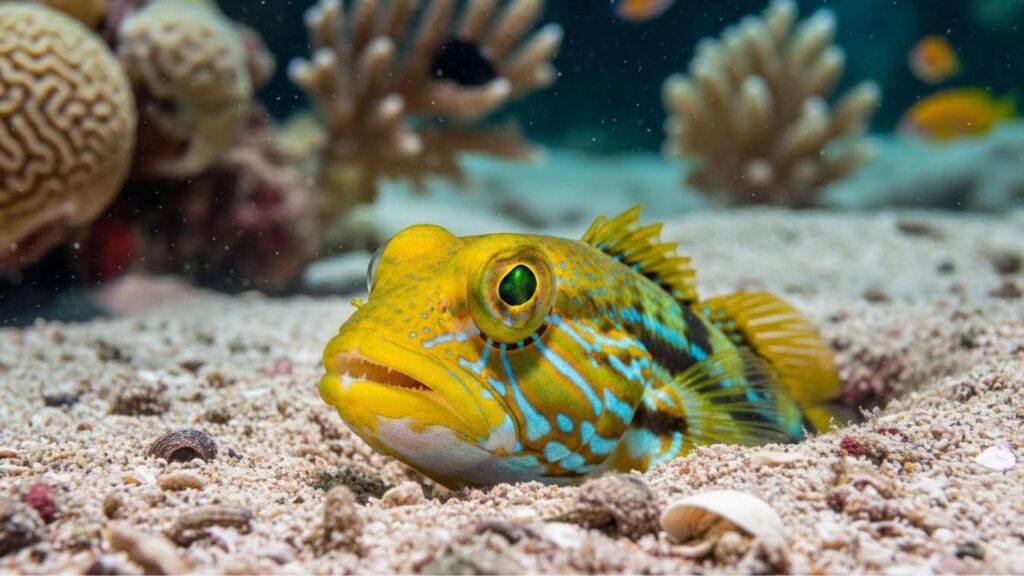
If there were an award for the most dedicated homebody in the ocean, the Yellowhead Jawfish would be a top contender. This small, colorful Fish lives its entire adult life in a burrow that it painstakingly excavates and maintains.
The Jawfish begins by digging a vertical tunnel in the sand, using its powerful jaws (hence the name) to scoop out mouthfuls of sand and spit them out. But a simple hole won’t do. The Jawfish is a master mason, reinforcing the entrance to its burrow with carefully selected pieces of coral, rubble, and beautiful sea shells.
This burrow is more than a nest; it’s a complete home. The Jawfish rarely strays far from its entrance, hovering vertically above it to catch passing plankton. At the first sign of danger, it darts back into the safety of its burrow, often pulling a rock or shell over the entrance like a door.
The burrow is also central to their family life. After courting, the female lays a clutch of eggs, but she doesn’t leave them in the burrow. In a fascinating twist, the male fertilizes the eggs and then scoops the entire mass into his mouth! He becomes a “mouthbrooder,” protecting the eggs by holding them in his mouth until they hatch.
7. Gourami

Gourami species are also masters of the bubble nest. The spruce pet mentions them to be popular aquarium fish, which share the same amazing ability to build a floating nursery from air, but often on a much grander scale.
The male Gourami is the architect, and he takes his job very seriously. He begins by gulping air from the surface and coating it in saliva to form durable bubbles. What sets many Gouramis apart is their incorporation of building materials. The male often weaves pieces of floating plants, leaves, and other debris into his bubble nest.
This elaborate, foamy raft is the centerpiece of his efforts to attract mates. A large, well-constructed nest signals to the female that he is a strong and capable partner. He will perform a courtship dance beneath his creation, and if the female is impressed, they will spawn directly under the nest.
After spawning, the male Gourami’s parental instincts go into overdrive. He becomes the sole guardian of the nest, chasing the female away and fiercely defending his territory against all other Fish. He constantly tends to the nest, repairing any damage and catching any eggs or newly hatched fry that might fall out.
8. Catfish
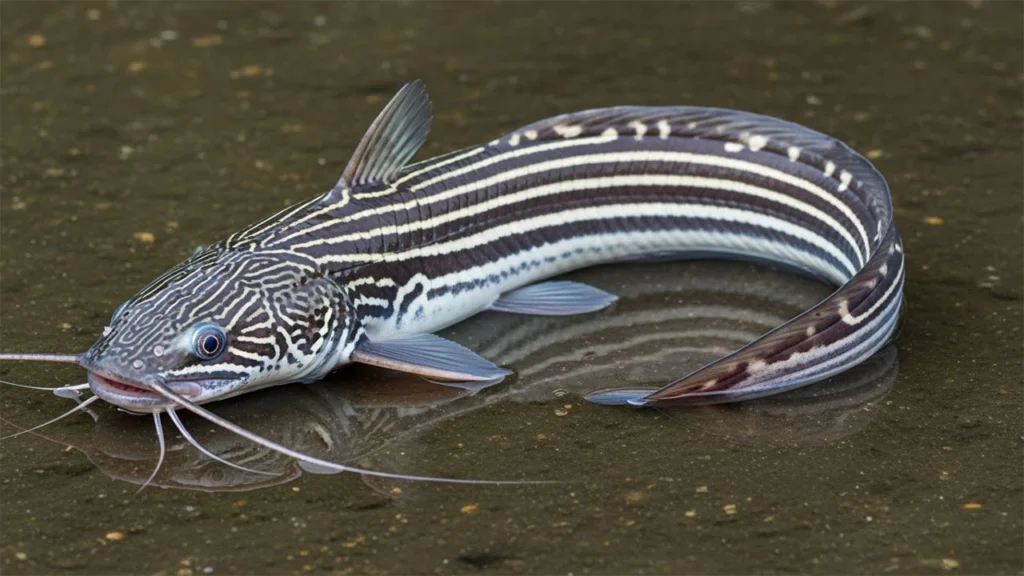
The Catfish family is enormous and incredibly diverse, with members living in a wide range of habitats worldwide. While not all catfish build nests, many species are dedicated excavators and parents. Instead of intricate patterns or bubble nests, these catfish prefer to construct sturdy, hidden shelters, such as caves and tunnels.
Many species, such as the Bristlenose Pleco, common in aquariums, are cave spawners. The male will find or create a suitable cave, often in a piece of driftwood, under a rock, or by digging into a clay bank. He is extremely picky about his location. He will spend a great deal of time cleaning it out, removing any debris, until it meets his standards. This cave becomes his territory, which he will defend vigorously.
The cave is the ultimate lure for a female. The male will try to trap a receptive female inside his chosen home to encourage her to lay eggs. Once she deposits her sticky eggs on the ceiling or walls of the cave, her role is complete, and the male takes over.
The male’s devotion is unwavering. He stays in the cave, constantly fanning the eggs with his fins to provide oxygen and keep them clean. He will not leave, even to eat, until the eggs hatch and the fry have absorbed their yolk sacs.
9. Wrasses
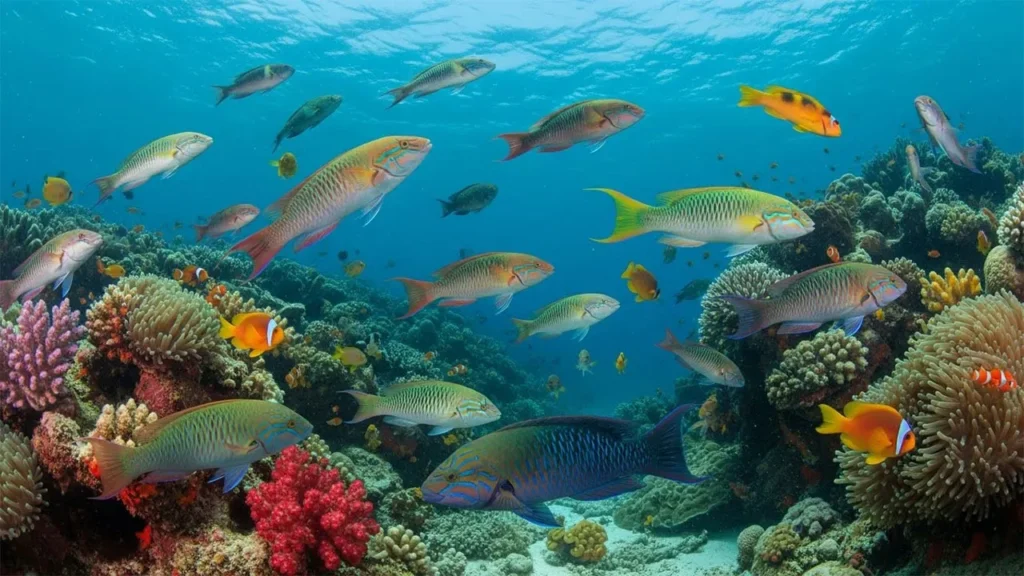
This last one is a bit different but too cool not to mention!
While most nests are built to raise young, some fish build structures to protect themselves. Enter the Wrasse family, a massive group of colorful reef fish, as per Britannica.
Each night, as the Wrasse prepares to sleep, it finds a safe crevice in the reef. It then begins to secrete a thick layer of mucus from a special gland in its head. It envelops its entire body in this gooey cocoon, a process that can take up to an hour. The result is a transparent, protective sleeping bag that the Fish will sleep inside of all night.
This mucus cocoon serves several vital purposes. First, it masks the Wrasse’s scent, making it harder for nocturnal predators with keen olfactory senses, such as moray eels, to find them.
It’s an olfactory invisibility cloak! Second, some scientific reports suggest it may act as a physical barrier against smaller parasites, such as blood-sucking isopods, which are active at night.
Conclusion
From the White Spotted Puffer fish creating its sandy mandala on the ocean floor to the Betta Fish blowing a floating bubble palace, the world of Fish that build intricate nests is a testament to the complexity and wonder of the aquatic realm.
These behaviors show that Fish are not just passive inhabitants of their environment; they are active shapers of it. They are artists, engineers, and devoted parents who go to extraordinary lengths to attract females, secure a future for their young, and protect themselves.
