




When you think of excellent navigators in the animal kingdom, your mind probably flies straight to migratory birds or majestic whales charting courses across the globe. And you’re not wrong! But what if we told you that some of the most brilliant, mind-boggling navigators are swimming right under our noses (and boats)? We’re talking about fish. Yes, fish!
Forget the cliché of the forgetful goldfish swimming in circles in its tank. Out in the wild, many fish species are performing navigational feats that would make the most seasoned human sailor blush.
These underwater adventurers don’t have Google Maps or a compass dangling from their fins. Instead, they’re equipped with a suite of biological “superpowers” that allow them to travel thousands of miles through dark waters with pinpoint accuracy.
Let’s dive into the world of these finned geniuses. Prepare to have your perception of fish intelligence completely blown out of the water.
Fish That Are Great at Navigating
1. Atlantic Salmon
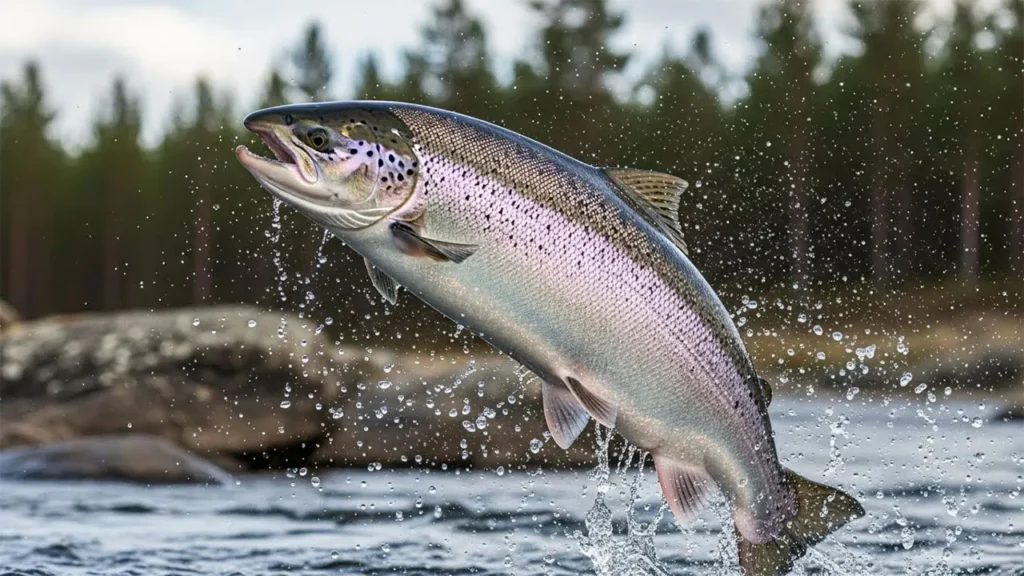
If there were a poster child for incredible fish migrations, the Atlantic salmon would be it.
Imagine leaving your childhood home as a tiny youngster, spending years traveling thousands of miles across the treacherous open ocean, and then, one day, deciding to return. You don’t have a map, a phone, or even a memory of the route, yet you manage to find your way back not just to your home country, not just to your home state, but to the exact little stream where you were born.
That’s the life of an Atlantic salmon.
So, how in the world do they pull off this miracle of nature?
For the long-haul, open-ocean part of their journey, salmon employ a skill called magnetoreception. Essentially, they have a built-in magnetic “GPS.” Their bodies, particularly in their head and nose area, contain tiny particles of a magnetic mineral called magnetite. This allows them to sense the Earth’s magnetic field—both its direction (like a compass) and its intensity.
It’s their version of navigating by continent.
This combination of a magnetic sense for the big picture and a super-sniffer for the fine details makes the Atlantic salmon one of the most reliable navigators on Earth. They also use other cues, like the position of the sun and the direction of ocean currents, to fine-tune their path.
Compared to other fish, National Geographic says their entire life is a testament to the power of instinct and an incredible, inherited ability to find their way home, ensuring the survival of their species against all odds.
2. European Eel
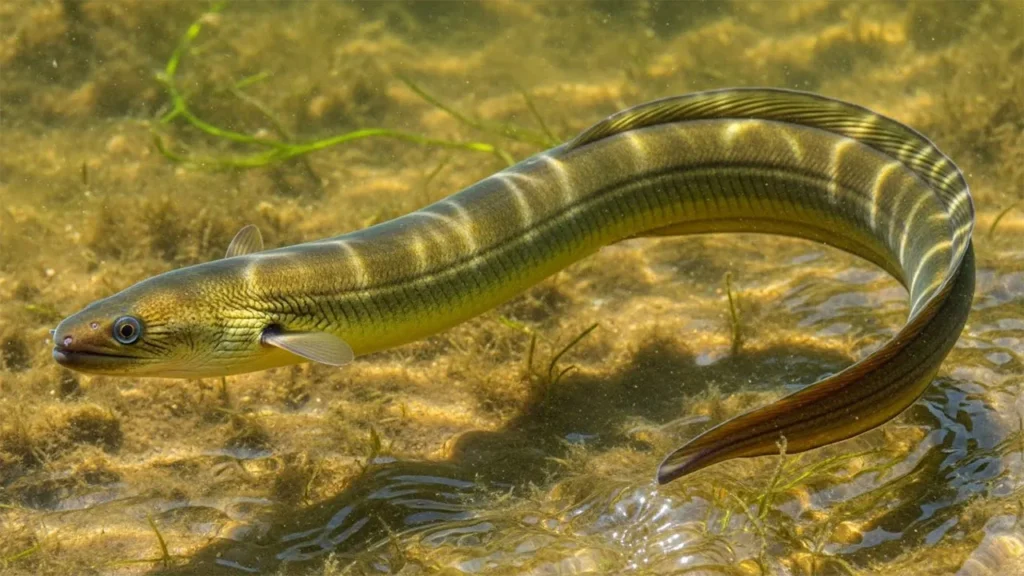
These slippery, snake-like fish undertake one of the most bizarre and epic migrations in the entire animal kingdom. For centuries, no one even knew where they came from.
The European eel’s primary navigation tool for this transoceanic voyage, like the salmon’s, is believed to be the Earth’s magnetic field. But the eels have a clever twist.
Their journey is a perfect circle. As tiny, transparent larvae, they are carried by the Gulf Stream and other currents from the Sargasso Sea towards Europe, a journey that can take up to three years. During this long drift, researchers believe they are “imprinting” on the magnetic signatures of the route.
After spending years, sometimes decades, growing into adults (known as silver eels) in freshwater rivers, something clicks, and they know it’s time to go home.
To get back, they play the recording in reverse. They use their magnetic sense to follow the path they learned as larvae, guiding them thousands of miles back across the open ocean to the Sargasso Sea, where they spawn and then die, completing their incredible life cycle. It’s a phenomenal feat of memory and orientation.
They aren’t just passively drifting; they have to actively swim and navigate to stay on course, especially once they leave the influence of coastal currents and enter the vast, featureless expanse of the ocean.
Their sensitive lateral line system helps them detect water flow and currents. But much of their life remains a mystery.
How do they all coordinate to leave at the same time?
How do they pinpoint the exact spawning location in the vastness of the Sargasso?
Scientists are still working to unravel the secrets of this incredible fish, a true master of long-distance, dark-water navigation.
3. Yellowfin Tuna
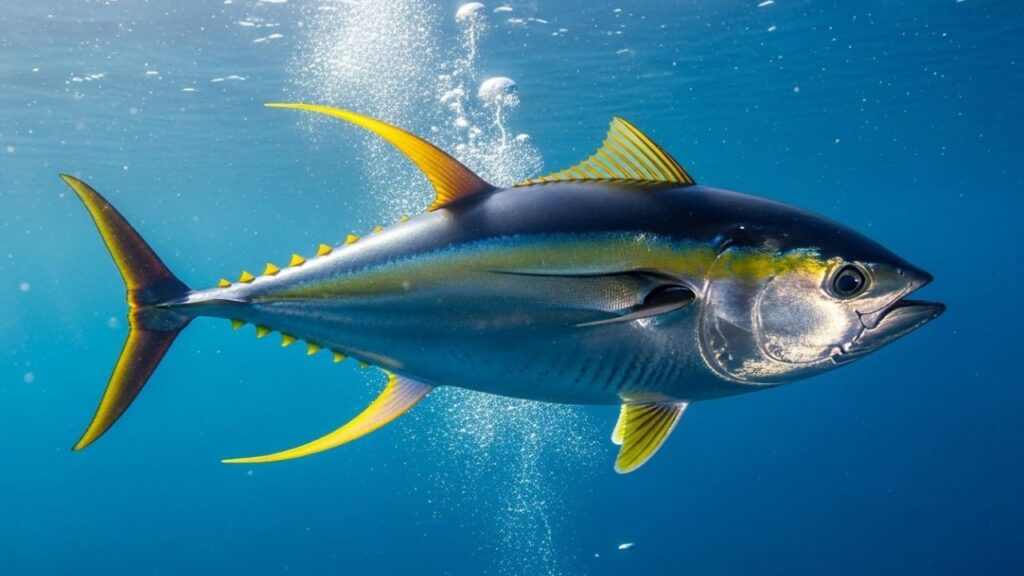
Now, let’s switch gears from the determined pilgrim and the mysterious wanderer to the high-octane sports car of the ocean: the Yellowfin Tuna.
These fish are built for speed and performance and have a good memory, according to Oceana. With their powerful, torpedo-shaped bodies, they can slice through the water at speeds up to 50 mph. They aren’t migrating to a single, sacred spot; they are constantly on the move, chasing food across entire ocean basins.
For the Yellowfin, navigation is less about a once-in-a-lifetime journey and more about a daily, high-speed commute on the oceanic highway.
A key part of their navigational toolkit is their highly advanced set of senses, perfectly evolved for a predator living life in the fast lane. They have excellent binocular vision, allowing them to focus both eyes on a target to get a 3D picture and accurately judge distance—crucial for hunting fast-moving prey. Unlike most fish, tuna are partially warm-blooded.
This allows them to keep their muscles, brain, and eyes warmer than the surrounding water, giving them the metabolic boost needed for incredible bursts of speed, sustained endurance, and faster information processing.
They also famously associate with drifting objects, such as logs or artificial Fish Aggregating Devices (FADs). These objects might serve as gathering points for prey, but they could also act as navigational aids, or “waypoints,” in the otherwise featureless ocean.
4. Scalloped Hammerhead
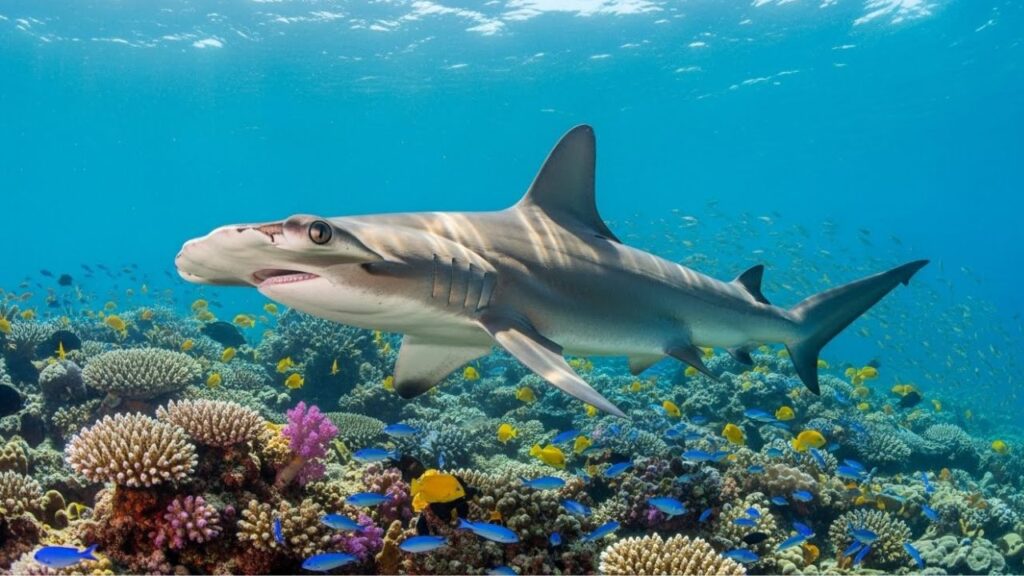
At first glance, the Scalloped Hammerhead shark looks like a bizarre experiment of nature. What is the deal with that head? You might think it’s just for show, or maybe to look more intimidating. Still, that distinctive hammer-shaped head (called a cephalofoil) is actually high-tech sensory equipment that makes this shark an exceptional navigator.
That wide, flat surface is packed with an incredible array of sensors that function like a built-in multi-tool GPS, making these fish among the most intelligent in the sea.
The primary function of the hammerhead’s head is for electroreception. The entire underside is covered in hundreds of tiny pores called the ampullae of Lorenzini. These jelly-filled pores are susceptible to faint electrical fields. This is great for finding prey, such as buried stingrays, by detecting the weak electrical signals generated by their muscle contractions.
But this sense does double duty. It’s also perfectly designed to detect the Earth’s magnetic field.
Scientists believe Scalloped Hammerheads use this ability to follow what they call “magnetic highways.” These are invisible lines of magnetic intensity along the ocean floor that connect seamounts and volcanic islands, which act as essential gathering spots for the sharks.
5. Atlantic Cod
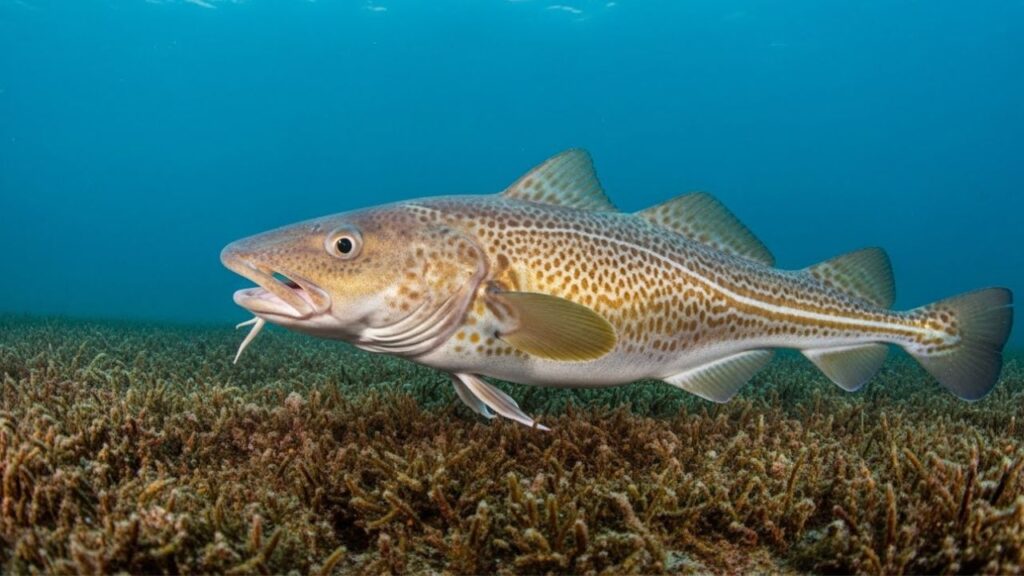
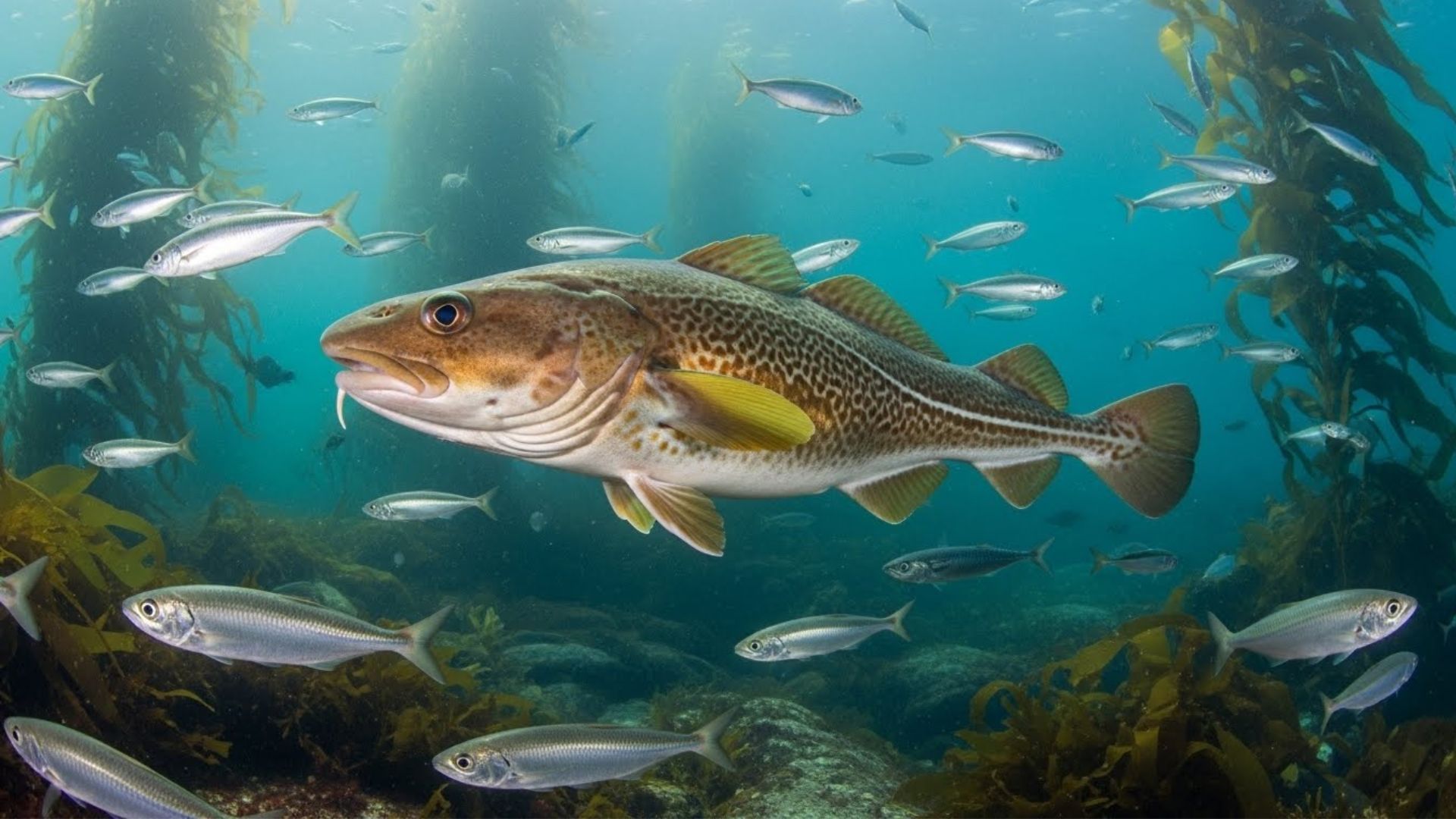
Atlantic cod are the seasoned commuters of the sea.
They undertake clear seasonal migrations, moving from their deeper, northern feeding grounds in the summer to shallower, southern spawning waters in the winter and spring. What’s truly remarkable is their precision. Individual cod exhibit strong spawning site fidelity, meaning they return to the very same spawning sites year after year.
How do they manage this? Research shows they are anything but passive drifters.
Active, Directional Swimming: Juvenile cod don’t just go with the flow. Studies indicate they engage in active, directional swimming, possessing an “intrinsic sense of their migration direction” that is independent of water currents. They know where they need to go.
To execute their precise seasonal migrations, fish like the Atlantic cod must expertly manage their buoyancy by regulating the gas within their swim bladder. As bottom-dwellers (demersal fish), cod are intimately familiar with the ocean floor’s topography. They use specific structures and “live bottom” areas as waypoints, demonstrating a keen memory for their physical environment, which they use to locate and return to preferred habitats.
6. Pacific Halibut
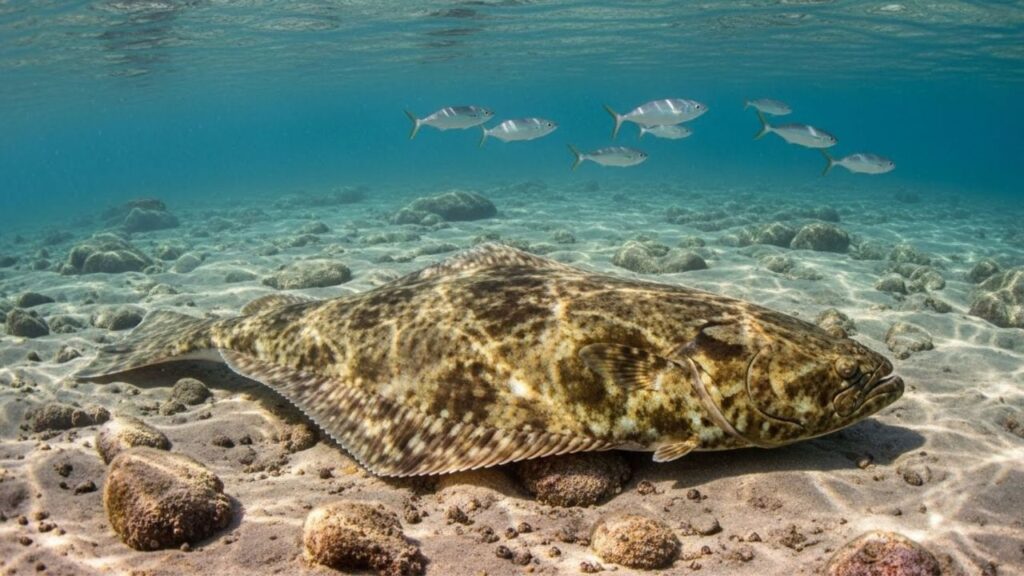
The Pacific halibut is a powerful swimmer capable of extensive and precise migrations that are staggering in scale.
Compared to many other ocean species, their navigational strategies adapt as they age.
Like cod, adult halibut make seasonal migrations from shallower summer feeding grounds to deeper winter spawning areas, often showing fidelity to the exact locations each year.
Young halibut (up to about 10 years old) perform a fascinating “counter-migration.” While eggs and larvae drift westward with the ocean currents, these young fish actively swim eastward and southward. This instinctual journey counteracts the passive drift, ensuring the population remains dispersed across its wide range in the Gulf of Alaska.
While capable of epic journeys, older and larger halibut tend to settle down. They establish smaller “home ranges” and exhibit less migratory behavior than their younger counterparts, remaining on familiar ground throughout the year.
7. Whale Shark
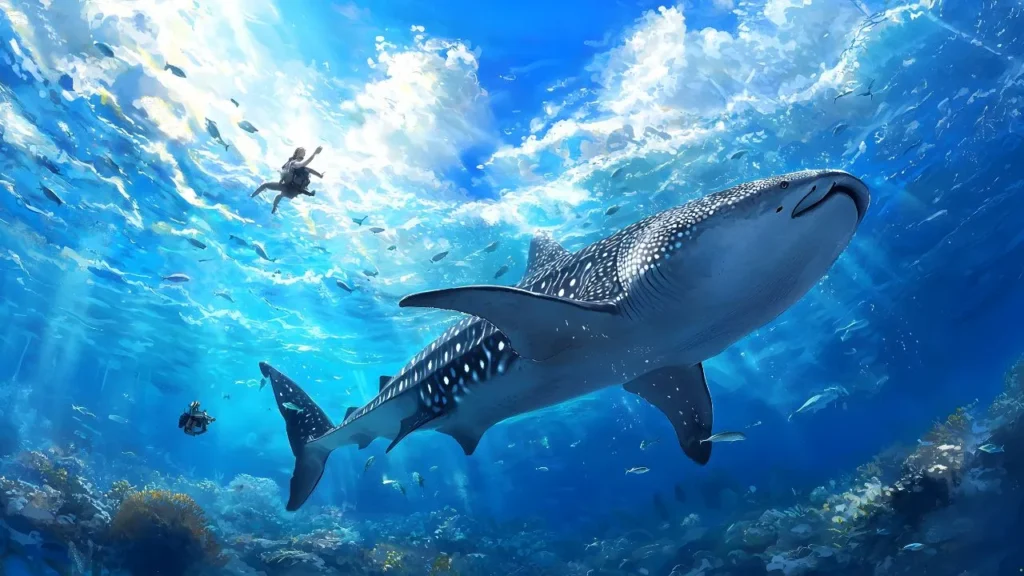
The whale shark, the most intelligent fish in the sea, is a true global traveler. These gentle giants exhibit incredible navigation skills, routinely journeying vast distances across entire ocean basins and returning to specific feeding and breeding sites with pinpoint accuracy.
Their internal GPS is a complex, multi-sensory system. Whale sharks are highly migratory, with some individuals traveling over 10,000 km (about 6,200 miles) in a single year. One famous tagged shark, “Rio Lady,” made extensive round-trip journeys, returning to the exact spot she was first tagged.
Whale sharks, like other shark species, navigate using a biological system that detects the Earth’s magnetic field. This sense provides them with a “magnetic map” of the ocean, allowing them to determine their position. Deep dives may help them get a better “positional fix” on these magnetic field lines for more accurate navigation.
In the open ocean, they don’t travel unquestioningly. They appear to orient towards natural features such as volcanic islands and seamounts, and even man-made structures such as oil and gas platforms, using them as waypoints on their journey.
Their ability to remember where and when is astounding. One whale shark was sighted off Utila, Honduras, and then spotted the very next evening 100 km away at Gladden Spit, Belize.
Conclusion
From the salmon’s unwavering drive home to the eel’s mysterious trans-Atlantic quest, and from the tuna’s high-speed chases to the hammerhead’s magnetic mapping, it’s clear that the fish world is filled with navigational geniuses. These animals have evolved an incredible suite of tools to conquer the vast, and often featureless, expanses of our planet’s oceans and rivers. They demonstrate a level of intelligence and awareness that we are only just beginning to understand.
We’ve seen how they use magnetic fields, a super-powered sense of smell, social learning, mental maps, and a deep connection to the subtle cues of their environment—currents, temperature, and even the sun. These fish are not just passively drifting through life. They are active, thinking explorers, making decisions and performing feats of memory and orientation that rival any in the animal kingdom.
So, the next time you see a fish, whether it’s in an aquarium or on a documentary, take a moment to appreciate the complex world it represents. There is no doubt that these creatures are far more than simple animals; they are sophisticated survivors, brilliant navigators, and a constant source of wonder for scientists and nature lovers alike.
