




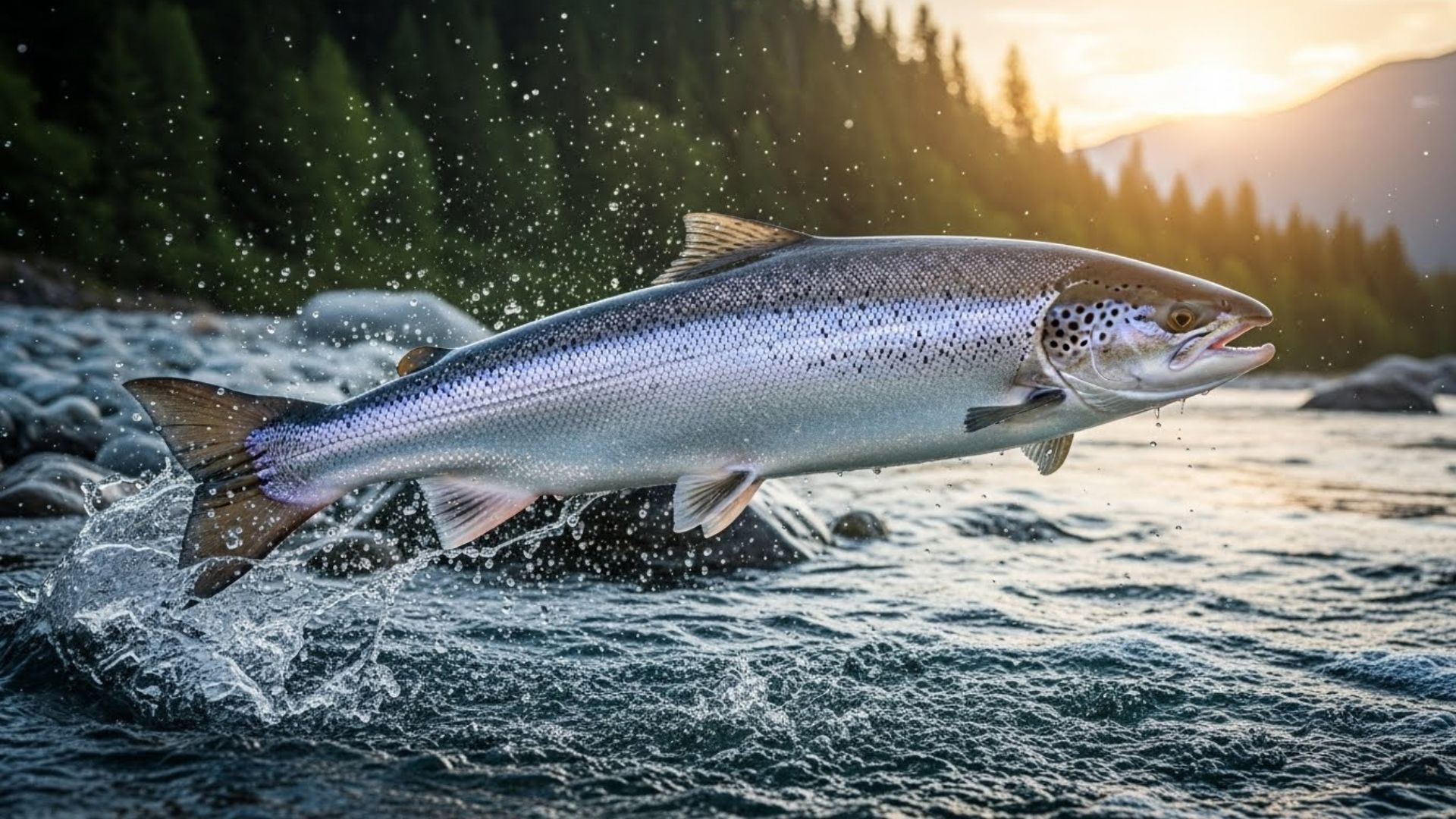
Welcome to the lives of migratory fish! These swimmers pull off cross-ocean marathons, upriver climbs, and even “back-to-the-birthplace” quests that make human gap years look lazy.
While we complain about legroom in economy class, these underwater travelers are dodging sharks, leaping over waterfalls, and navigating thousands of miles of open ocean without a single map.
Today, we’re meeting seven all-star travelers who redefine what it means to commute. We aren’t just talking about a quick swim down the stream; we are talking about epic, life-or-death journeys that span continents.
Fish Known for Their Incredible Migrations
1. Atlantic Salmon
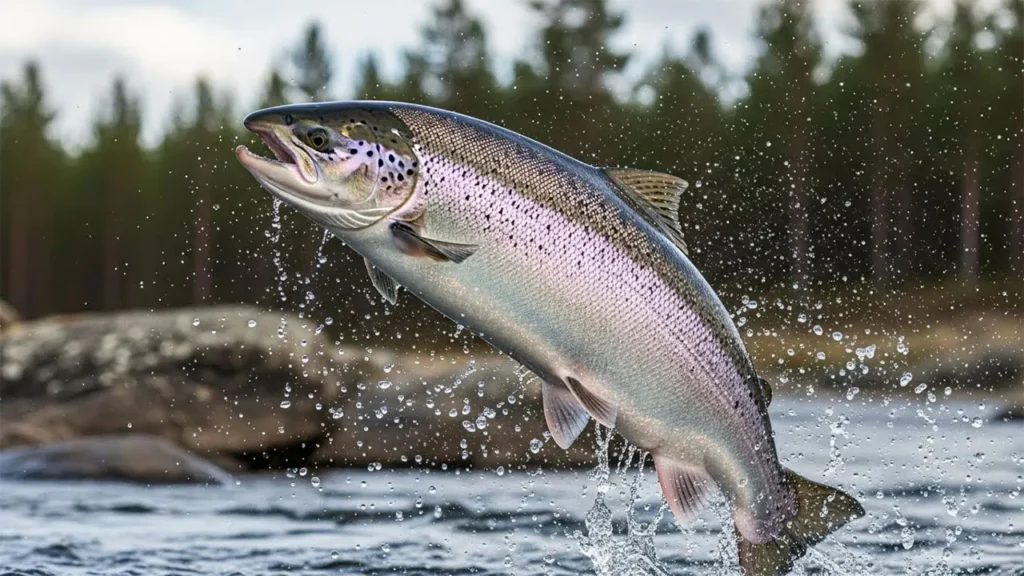
The Atlantic salmon starts life as a freshwater baby, becomes a saltwater teen, and eventually returns to a freshwater adult. It’s basically the kid who goes off to college in the big city to find themselves, gets a corporate job, but eventually keeps moving back into their parents’ basement because nothing beats home cooking.
They are the ultimate dual-citizens of the water world, perfectly adapted to handle both salt and fresh water, which is a biological superpower in itself.
After living one to four years in a river, the salmon undergoes a massive physical change and surfs the Atlantic Ocean, sometimes swimming all the way to the icy waters off Greenland. They clock 3,000+ miles on this journey, dodging seals and fishing nets along the way.
But the real magic happens when romance calls. Also known as salmo salar, they boomerang back to the exact river—and often the exact stream bend—where they hatched years ago. They don’t use GPS or Google Maps; they use “nose power,” smelling the unique chemical signature of their home stream from miles away in the ocean.
They change bodies just as the Pacific Salmon do. In saltwater, they wear a silver “city suit” to blend in with the bright ocean reflections. Once they hit the river, everything changes. They stop eating entirely, living off stored fat.
They turn dark and colorful to match the riverbed, the males grow terrifying hooked jaws called “kypes” to fight rivals, and their skin thickens. It is essentially extreme wedding prep, transforming them from sleek ocean racers into rugged river warriors.
Humans run marathons on spawning grounds for shiny medals and bragging rights. Salmon run marathons in the fish passage against the current, leaping up waterfalls, to make babies. Then, exhausted and depleted, most of them die immediately after spawning, their bodies feeding the river ecosystem for the next generation. Talk about commitment to the cause.
2. Atlantic Bluefin Tuna
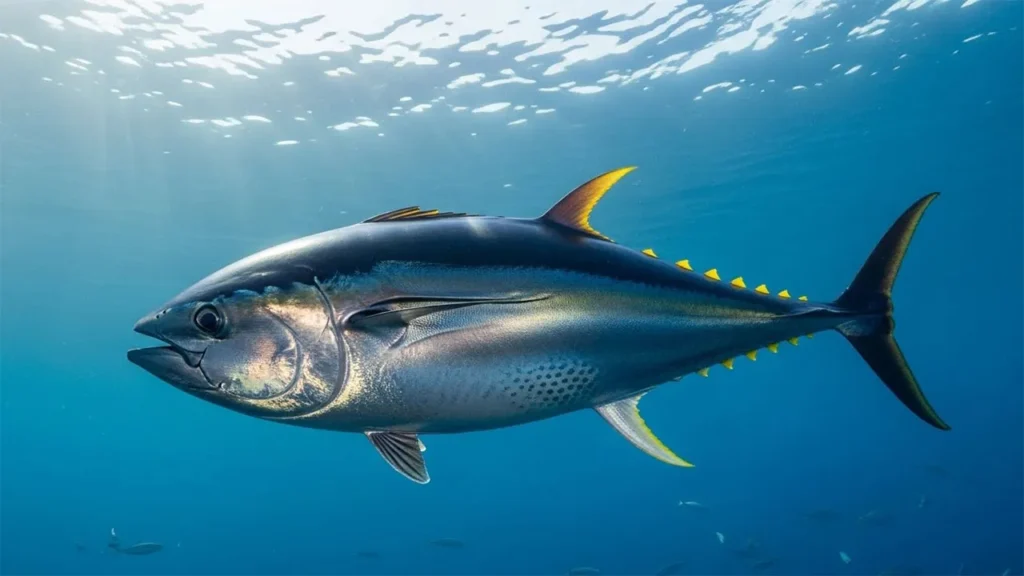
These aren’t your average goldfish; they are apex predators built for speed and endurance. Their bodies are perfectly hydrodynamic, shaped like a bullet to slice through the water with zero drag.
There are two main squads of these giants, according to Oceana: western fish that spawn in the Gulf of Mexico and eastern fish that spawn in the Mediterranean. But they don’t stay put. Both squads cross the Atlantic Ocean like it’s the neighborhood pool—multiple times a year.
They cruise comfortably at 40 mph but can kick it into high gear, reaching 50 mph in bursts while chasing prey. That’s faster than a small speedboat, meaning if you tried to race one on a jet ski, you might actually lose.
They’re warm-blooded-ish, which is incredibly rare for a fish. Most fish are at the same temperature as the water they swim in, which makes them sluggish in cold water. Not the Bluefin. By heating their core through a specialized blood vessel system, bluefins keep their eyes, brain, and muscles toasty.
This allows them to hunt with top-gear precision even in the freezing depths of the North Atlantic. It’s like having built-in heated seats that help you sprint faster.
When we talk about the journey of this fish, we aren’t just talking about a single stream. These resilient fish rely on the health of the entire river system, from the smallest gulf stream to the vast, rolling estuarine waters where fresh water meets the sea.
A single giant Bluefin once sold for $3.1 million at a Tokyo auction. Imagine being worth more than a Bugatti just for existing and swimming around. It highlights how rare and prized they have become due to overfishing.
3. European Eel
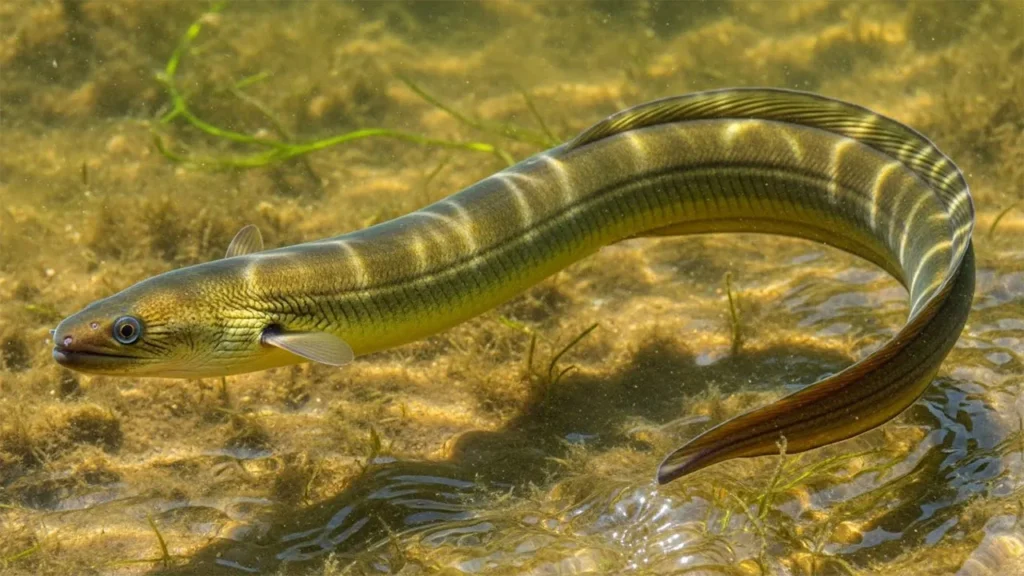
Imagine a long, slimy spaghetti noodle with a poker face.
The European Eel looks slippery and straightforward, but its life history is so complex that it baffled scientists for centuries. For a long time, people thought glass eels grew from horsehairs dropped into the water because nobody could find their babies.
Born in the Sargasso Sea, a calm patch of ocean south of Bermuda, baby eels (called leptocephali) look like transparent willow leaves. They drift 4,000 miles to Europe on ocean currents—basically a four-year Uber pool where they don’t have to drive.
They grow up in European rivers for decades. Then, in a final act of drama, the adults turn silver, their stomachs dissolve, and they swim all the way back to the Sargasso to spawn and die. The craziest part? Nobody has ever filmed this final party. It’s a secret level that is still locked to humans.
These eels are the parkour masters of the fish world. If they hit a blockage in a river, like a dam or a weir, they don’t just give up. On wet, rainy nights, they can actually leave the water and slither over damp grass and mud to get around the obstacle and back into the river on the other side.
4. American Paddlefish
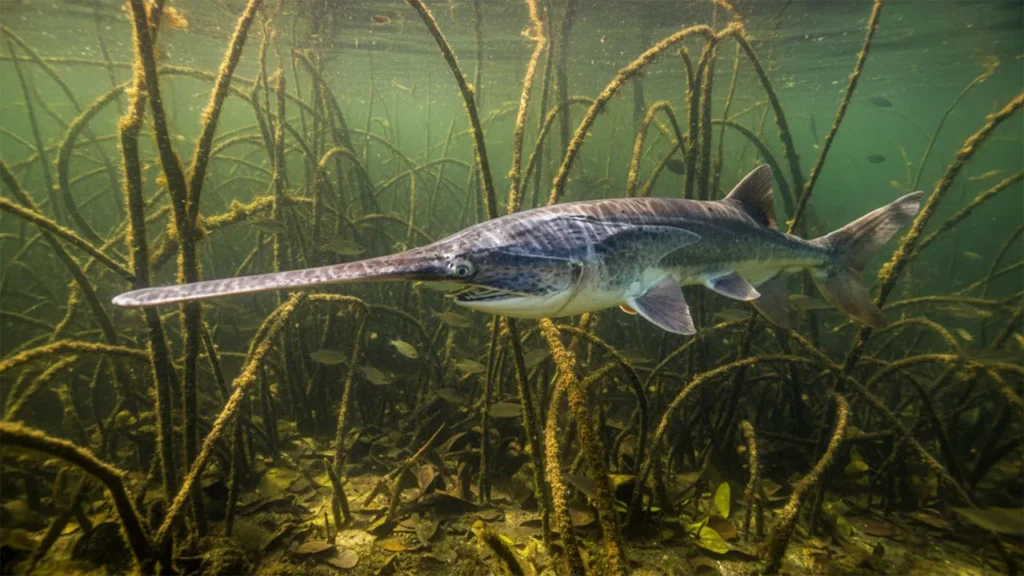
A chill river giant with a snout shaped like a selfie stick. The American Paddlefish has a gray body, no scales, and a pure prehistoric vibe. They look like something that should be swimming with dinosaurs, mainly because they actually did.
Britannica says paddlefish cruised the Mississippi River and its massive network of branches freely. They would migrate hundreds of miles upstream to find specific, quiet gravel bars to spawn during spring floods.
However, the modern world hasn’t been kind to their travel plans. Dams, locks, and low water levels often block their ancient highways, meaning modern paddlefish must play a high-stakes game of real-life Frogger with man-made walls to reproduce.
That giant paddle on their nose isn’t for digging; it is a mega Wi-Fi antenna. It is stuffed with tens of thousands of sensory receptors called electro-receptors. These allow the paddlefish to detect the weak electrical fields produced by swarms of plankton in the murky river water.
Think of it like having AirPods, but instead of playing music, they tell you exactly where your dinner is hiding in the dark.
They are filter feeders, which means they don’t have to hunt or bite. When hungry, the fish opens its massive mouth, cruises forward, and lets the water and plankton flow in through its gills—nature’s never-ending Slurpee. It’s the ultimate lazy buffet strategy: swim with your mouth open and let the food come to you.
5. Beluga Sturgeon
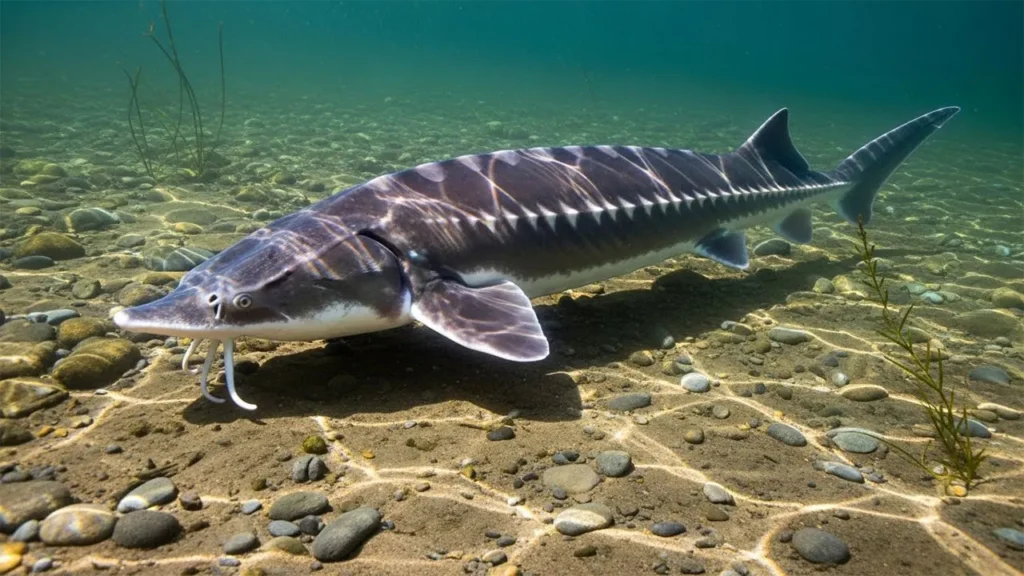
Meet the dinosaur of this list—an 11-foot body, bony armor plates instead of scales, and a face only a roe lover could adore. This is the species that produces the world’s most expensive and luxurious black caviar.
They look ancient because they are; sturgeon have been around for 200 million years, surviving meteors and ice ages, only to meet their biggest challenge: luxury food markets.
Belugas roam the brackish waters of the Caspian and Black Seas, eating smaller fish. But when spring hits, they push hundreds of miles up the Danube, Volga, or Ural Rivers to spawn on clean, fast-moving gravel beds.
It is an exhausting journey. Because it takes so much energy, a female might not make the trip again for 10 or more years—she needs a decade of recovery time to build up the energy to drop a million eggs again.
They can live longer than your grandma’s grandma. These fish can survive for over 100 years. That means a fish swimming today might have been born before television, the internet, or airplanes were invented.
A single giant Beluga caught in the past weighed 3,400 pounds. That is bigger than a Honda Civic—and way harder to parallel park. Imagine trying to reel in a fish that weighs as much as a car. It puts the “monster” in river monster.
6. Mekong Giant Catfish
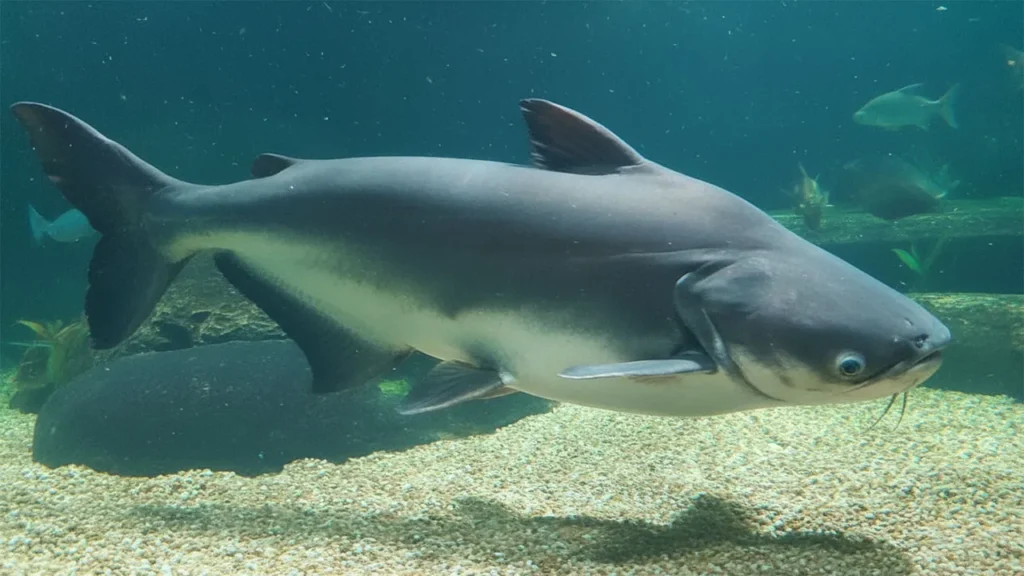
Unlike the catfish you might catch in a local pond, these things are behemoths. This fish species lacks the sharp teeth of other river predators and has eyes that are oddly low on its head, giving it a perpetually sad, droopy expression.
Born in the headwaters of Thailand and Laos, juveniles drift downstream for years, fattening up in the nutrient-rich waters of the lower Mekong and Tonle Sap Lake. As adults, they feel the urge to head home and swim hundreds of miles back upstream toward the Golden Triangle to spawn in deep, fast pools.
Unfortunately, hydropower dams and sand mining now make the path a heartbreak obstacle course, threatening to cut off their route forever.
National Geographic says they are some of the fastest-growing fish in the ocean!
It can weigh up to 650 pounds—making it one of the largest freshwater fish on Earth—yet it’s a total vegan. As adults, they live primarily on algae and plants stripped from rocks. It is the ultimate “Hulk body, salad diet” situation. It proves you don’t need to eat steak to get absolutely massive; you need to eat a whole lot of green slime.
7. Blueback Herring
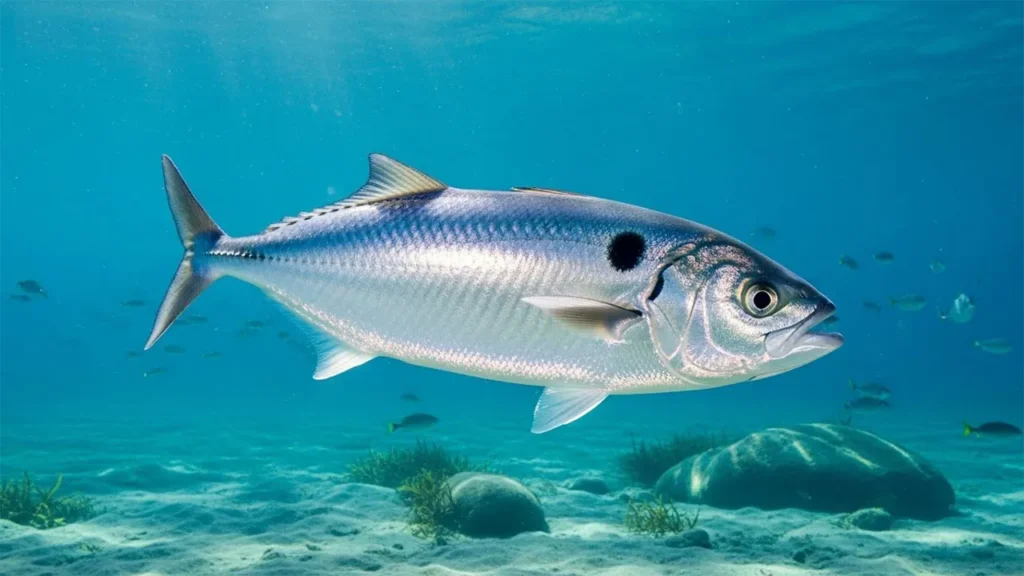
They are small, shiny, and travel in massive crowds. While a single herring might not look impressive, a school of them is a shimmering force of nature. They are the essential “prey” fish, the battery pack that powers the rest of the ecosystem.
Every spring, millions of them leave the Atlantic coast and zoom up East Coast rivers from Florida to Canada. It is a frantic race, often with other fish species.
Some swim 300 miles inland during the fish migration strategy, dodging striped bass, otters, ospreys, dams, and weekend kayakers just to lay their sticky eggs in quiet freshwater pools. It’s like an obstacle course where everything is trying to eat you, and the only way to win is to outnumber the enemy.
These fish were once so plentiful that early U.S. presidents and colonists used the herring runs as free fertilizer for their crops. They would literally shovel the fish out of the brooks and bury them in the cornfields. The fish commute all that way, only to become plant food—talk about multitasking for the sake of the food chain.
Conclusion
From salmon that leap waterfalls to eels, these seven fish prove the planet is laced with liquid highways. Their travels keep ecosystems healthy, feed towns, and inspire jaw-dropping reactions from anyone who learns the story. Also include Coho salmon, Sea lamprey, American eels (anguilla rostrata), and gilded catfish among the most iconic travelers known for extended migrations.
Raising awareness of blocked pathways, climate change, ocean pollution, and habitat loss is the core mission of World Fish Migration Day, a global reminder that free-flowing rivers are essential to the survival of fish populations. When we block a river, we aren’t just stopping water; we are stopping a cycle of life that has turned for thousands of years.
So next time you cross a bridge, sip sushi, or see a river in your feed, give a mental fist bump to the fish still out there grinding out their epic journeys. Safe travels, finned friends—may your GPS (and gills) never fail you.
