




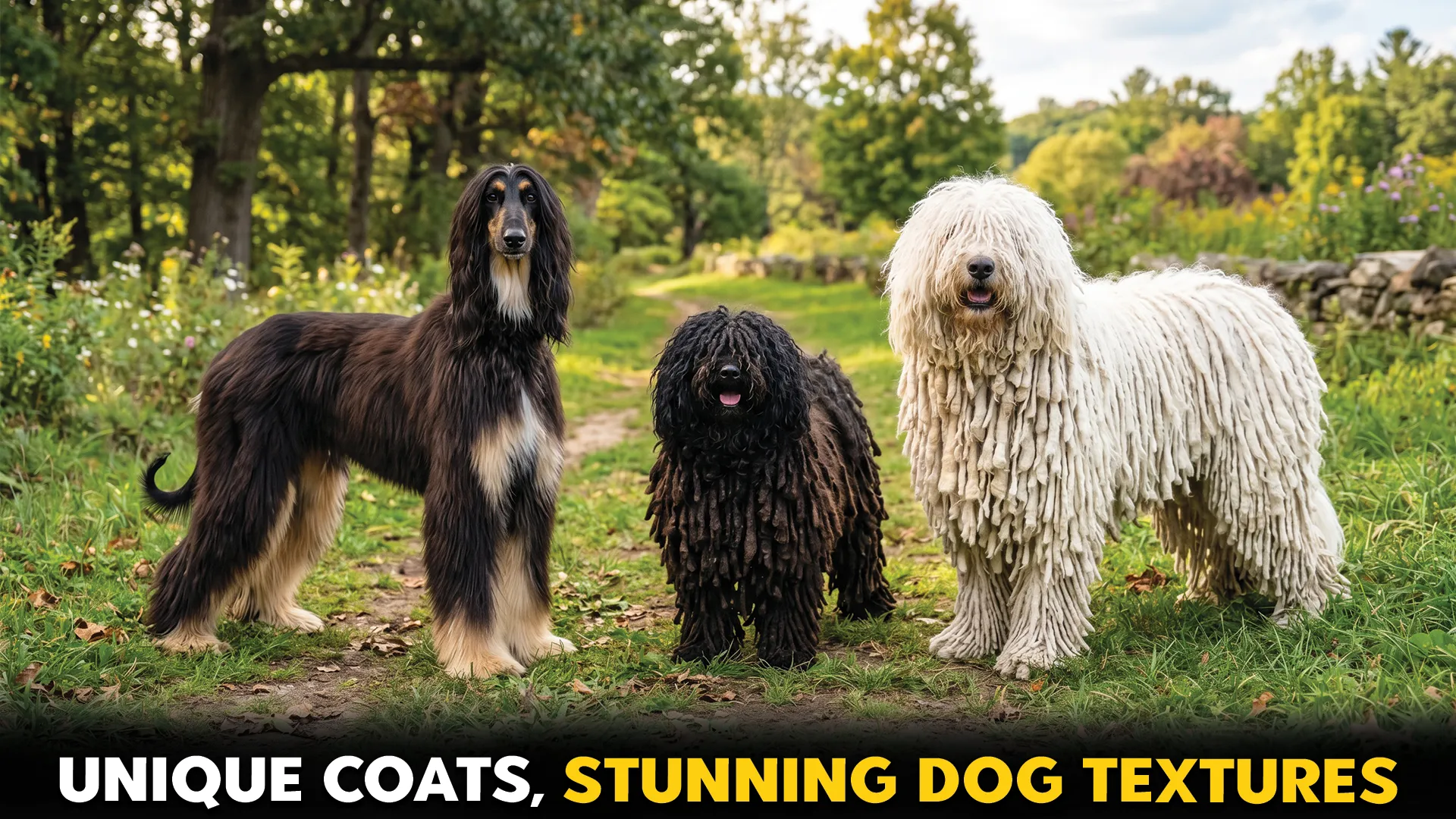
If you love dogs, you already know—it’s never just about how they look. It’s the way they greet you like you’ve been gone for years, the random bursts of energy, and those quiet moments when they curl up beside you. Still, let’s be honest… some dogs have coats so stunning, they grab your attention instantly.
From silky, flowing fur to tight curls, cords, waves, and even unique patterns, dog coats are far more than just “fluffy” or “short.” Each texture has a purpose—some were developed to protect dogs from harsh weather, others to help them work in water, snow, or rugged terrain.
But beauty comes with responsibility. Many of these distinct coats need proper care, regular grooming, and sometimes even special attention to prevent health issues. That’s why choosing a dog isn’t just about falling in love with how they look—it’s about understanding what comes with that unique coat.
In this article, we’re diving into some truly wonderful, fluffy dog breeds known for their distinct coat textures—the ones that don’t just look different, but feel, move, and shine in their own unforgettable way.
Key Takeaways
Explore dogs with coats that range from silky and flowing to curly, corded, and fluffy, each with a unique purpose and story.
Meet beautiful companions like Maltese, Afghan Hound, and Bichon Frise that stand out for both looks and loving nature.
Discover working breeds like Komondor, Puli, and Bergamasco Sheepdog with rare coats built for protection and endurance.
Learn what grooming and care these coats need so you can choose a dog that truly fits your lifestyle.
Wonderful Dog Breeds with Distinct Coat Textures
1. Maltese
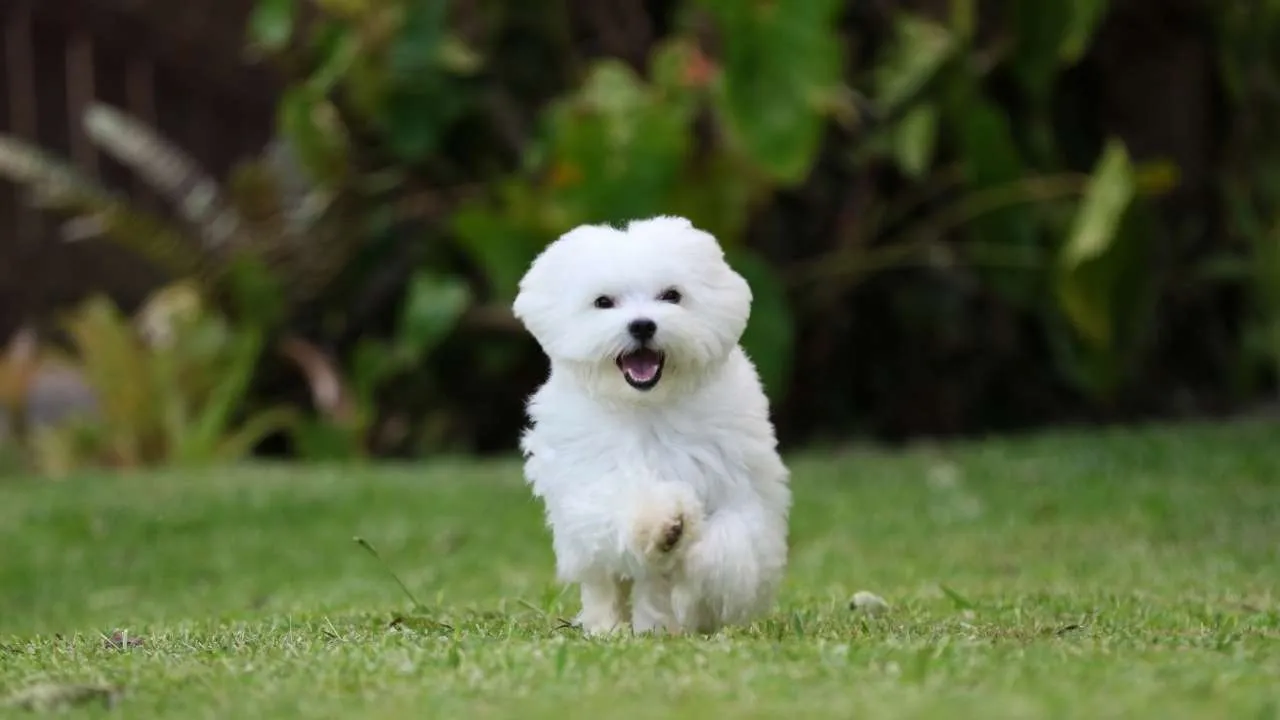
The Maltese is a perfect example of how coat texture can define a dog’s charm. Known for its long, silky, flowing coat, this breed looks almost like it’s floating as it walks.
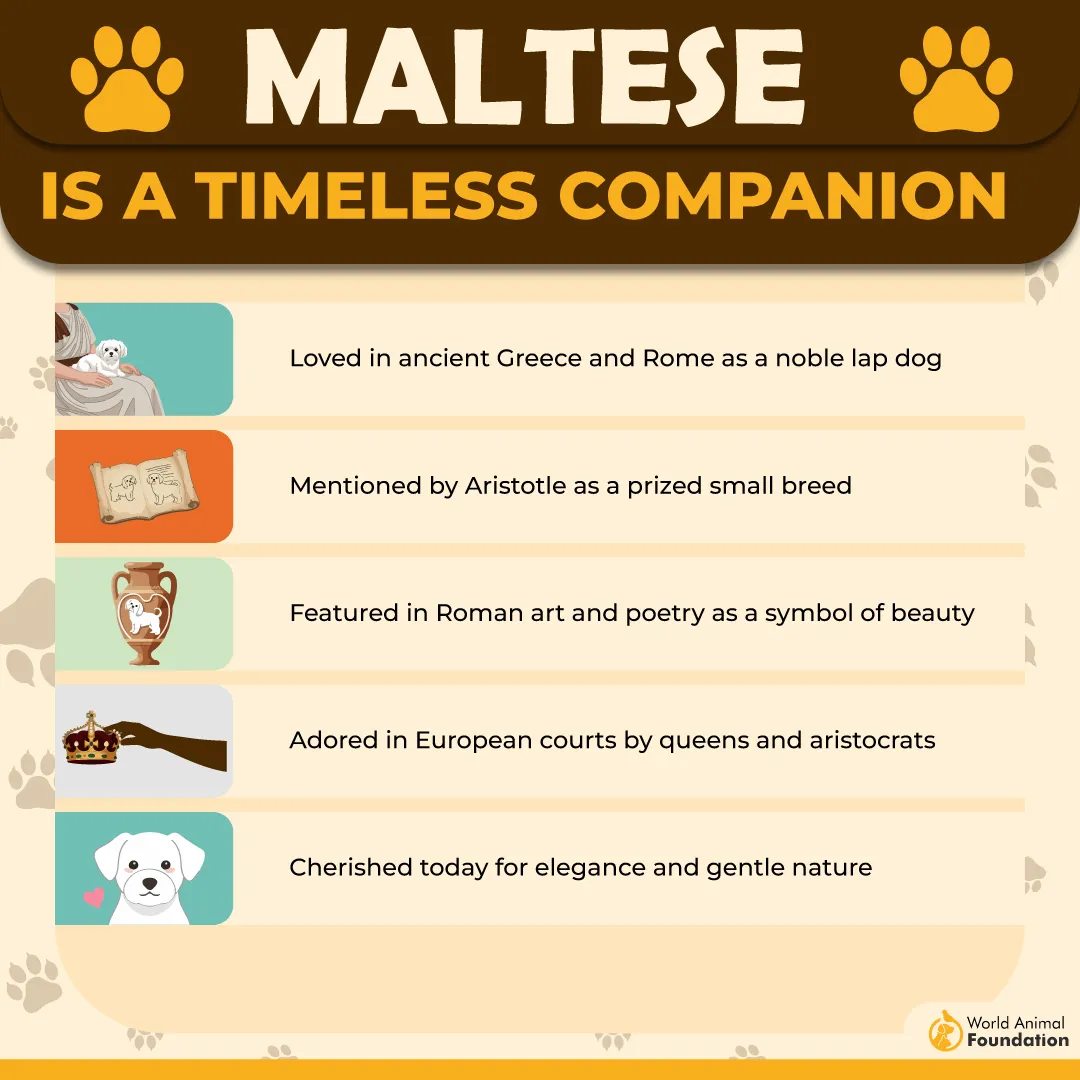
Originating from the Mediterranean island of Malta, it has been a beloved companion for centuries, even mentioned in ancient Greek and Roman writings. Despite its elegant look, this dog is playful, friendly, and highly adaptable, making it a wonderful companion for many homes.
What Makes Their Coat Special
Their coat is long, straight, and incredibly silky to the touch.
The bright white color gives them a clean, elegant appearance.
They are often called “hypoallergenic,” though no dog is completely allergen-free.
The coat needs daily grooming to prevent tangles and matting.
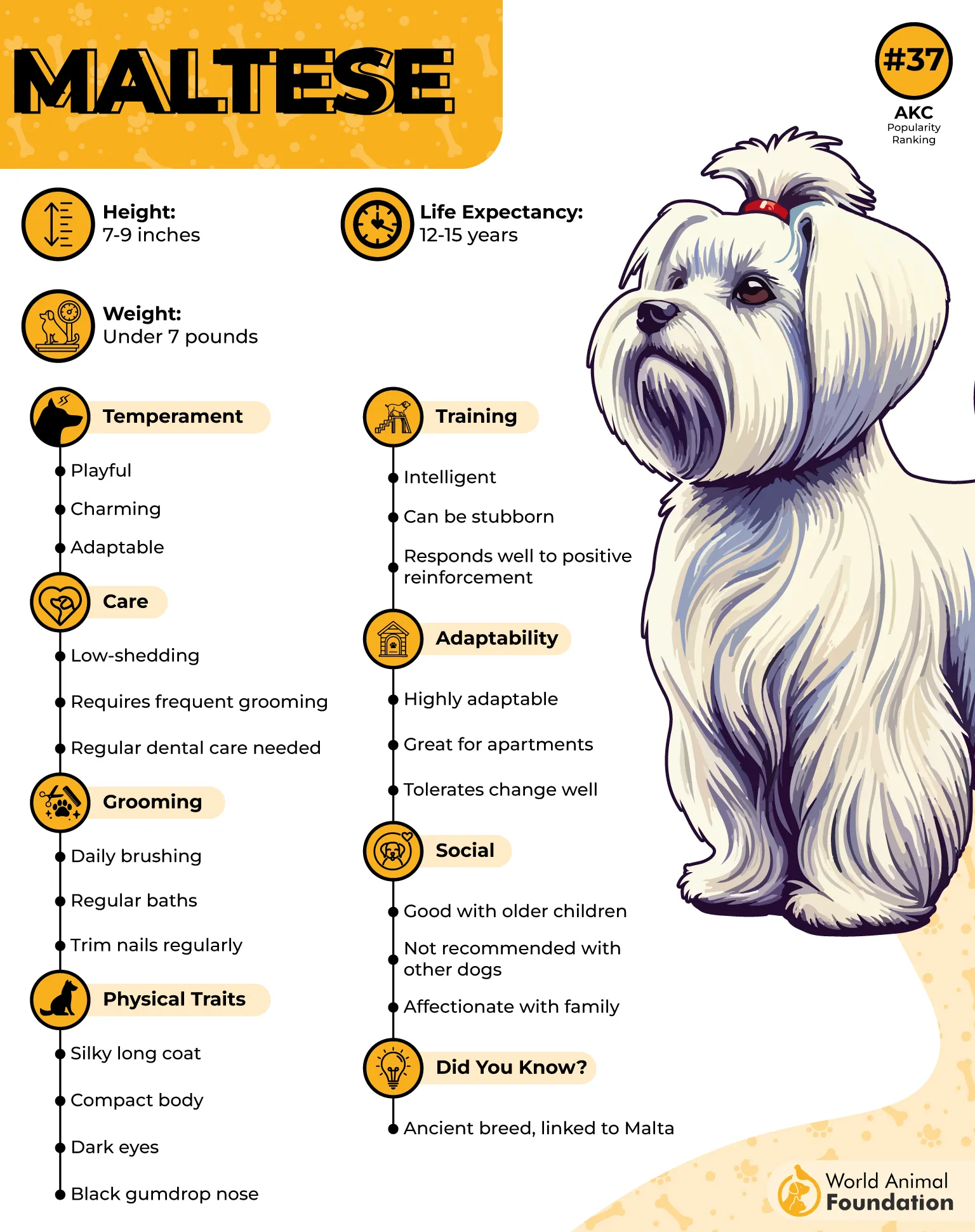
Caring for this beautiful, smooth coat takes commitment. Daily brushing is essential, along with regular baths to keep the fur clean and healthy. If not maintained, the coat can mat and even lead to skin infections.
Some owners choose shorter haircuts for easier upkeep, but that means regular grooming appointments. Proper drying after baths is also important to avoid irritation.
Along with grooming, this breed needs attention in other ways, too. Training and socialization should start early, using positive reinforcement. They are energetic but don’t need heavy exercise, making them suitable for busy families. Their personality is affectionate, playful, and sometimes a bit stubborn.
2. Komondor
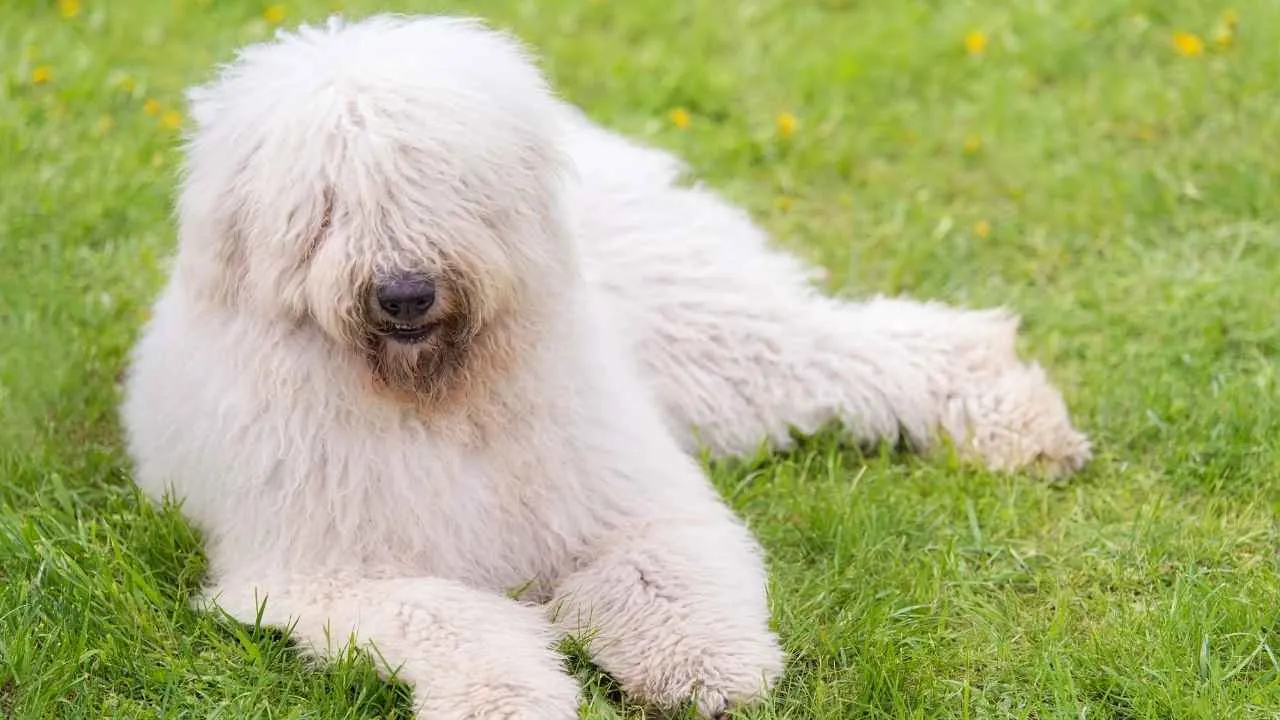
The Komondor is one of the most instantly recognizable dogs in the world, thanks to its dramatic corded coat that looks like natural dreadlocks. Originally from Hungary, this powerful flock guardian was bred to protect livestock in open fields.
According to WebMD, its thick white cords helped it blend in with sheep while also shielding it from harsh weather and predators. Despite its heavy build, this dog moves with surprising agility and confidence.
What Makes Their Coat Unique
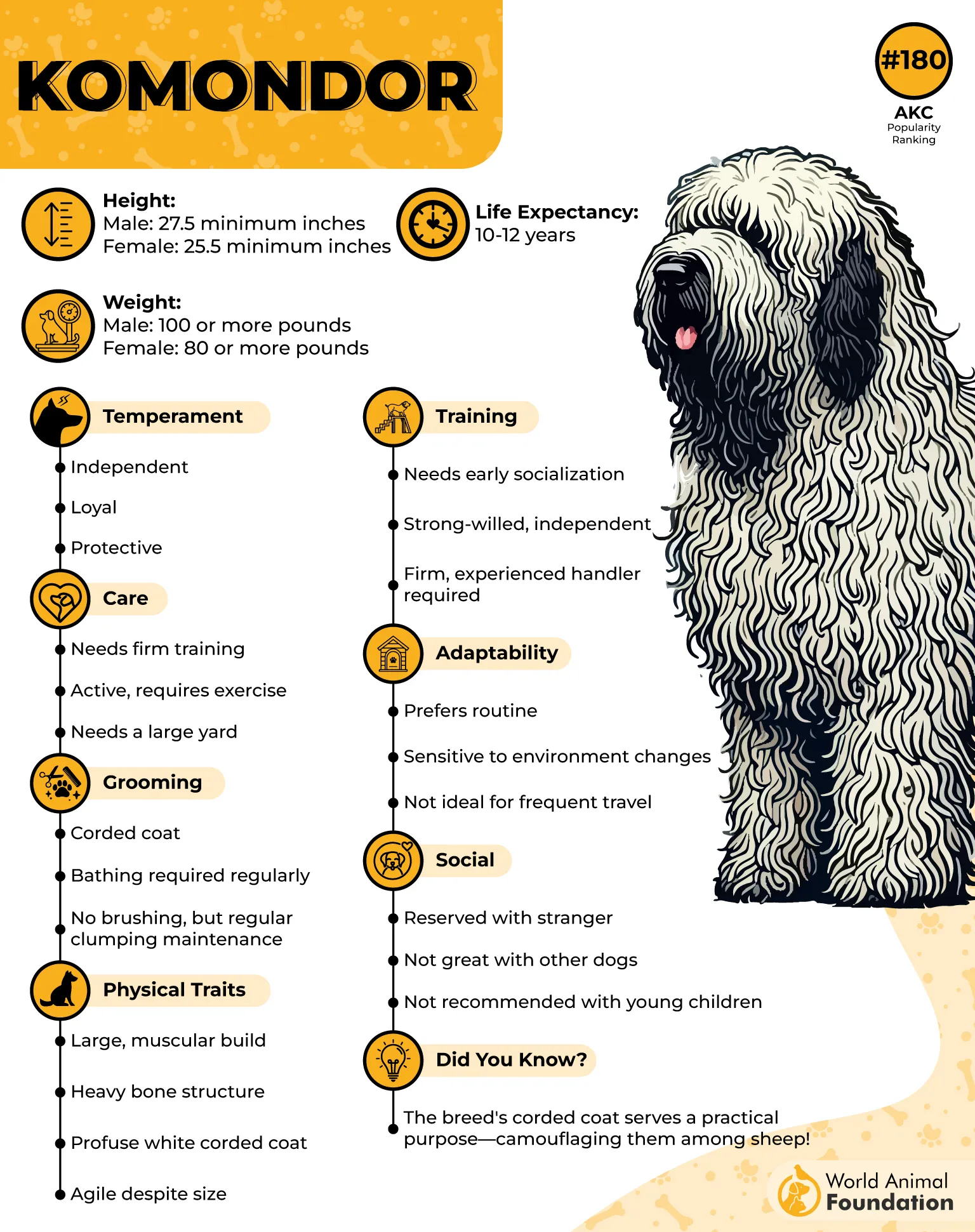
The coat forms long, rope-like cords from head to tail.
It has a soft undercoat and a coarser outer coat that naturally tangle together.
Cords begin forming around 8–10 months and fully develop by about 2 years.
The white color helped the dog camouflage among the sheep.
This coat requires serious commitment. As the cords form, they must be separated by hand to prevent large mats. Weekly maintenance keeps them neat, while twice a year, the shedding undercoat needs extra attention.
Bathing is important but time-consuming, especially drying, which can take hours. Many owners trim the cords shorter to make care easier, though the iconic look can also be shaved if needed.
Beyond its coat, the Komondor is known for its strong protective instincts. It is loyal, watchful, and naturally wary of strangers. This independence comes from its history of making decisions while guarding herds, which can make training challenging for inexperienced owners.
Still, with the right handling, it becomes a devoted family companion that stays close to its loved ones and takes its role as a protector very seriously.
3. Puli
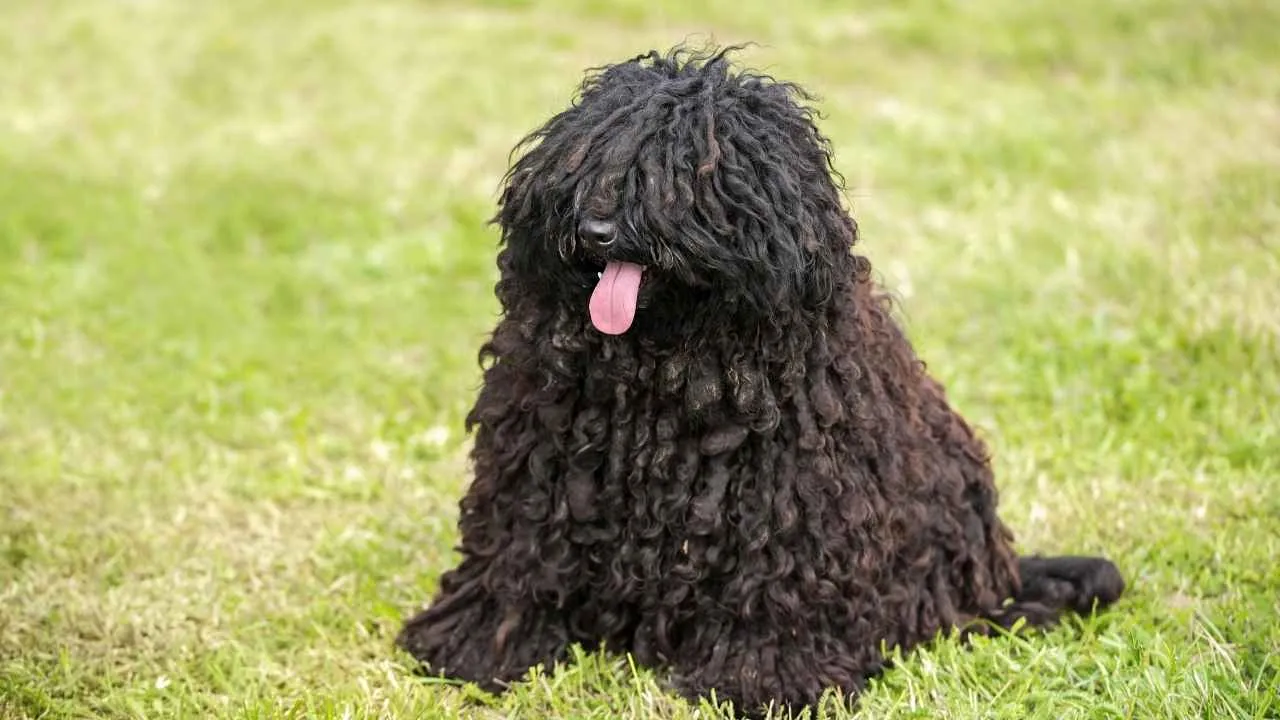
The Puli is one of the most eye-catching dogs, famous for its naturally forming corded coat that covers its body from head to tail. Originally from Hungary, this compact yet powerful herding dog worked closely with humans and was known for its speed, agility, and intelligence.
Often called the “acrobat of the dog world,” according to the American Kennel Club, it moves quickly and lightly despite its heavy coat. Its playful nature and strong bond with family make it both a hardworking dog and a loving companion.
What Makes Their Coat Unique
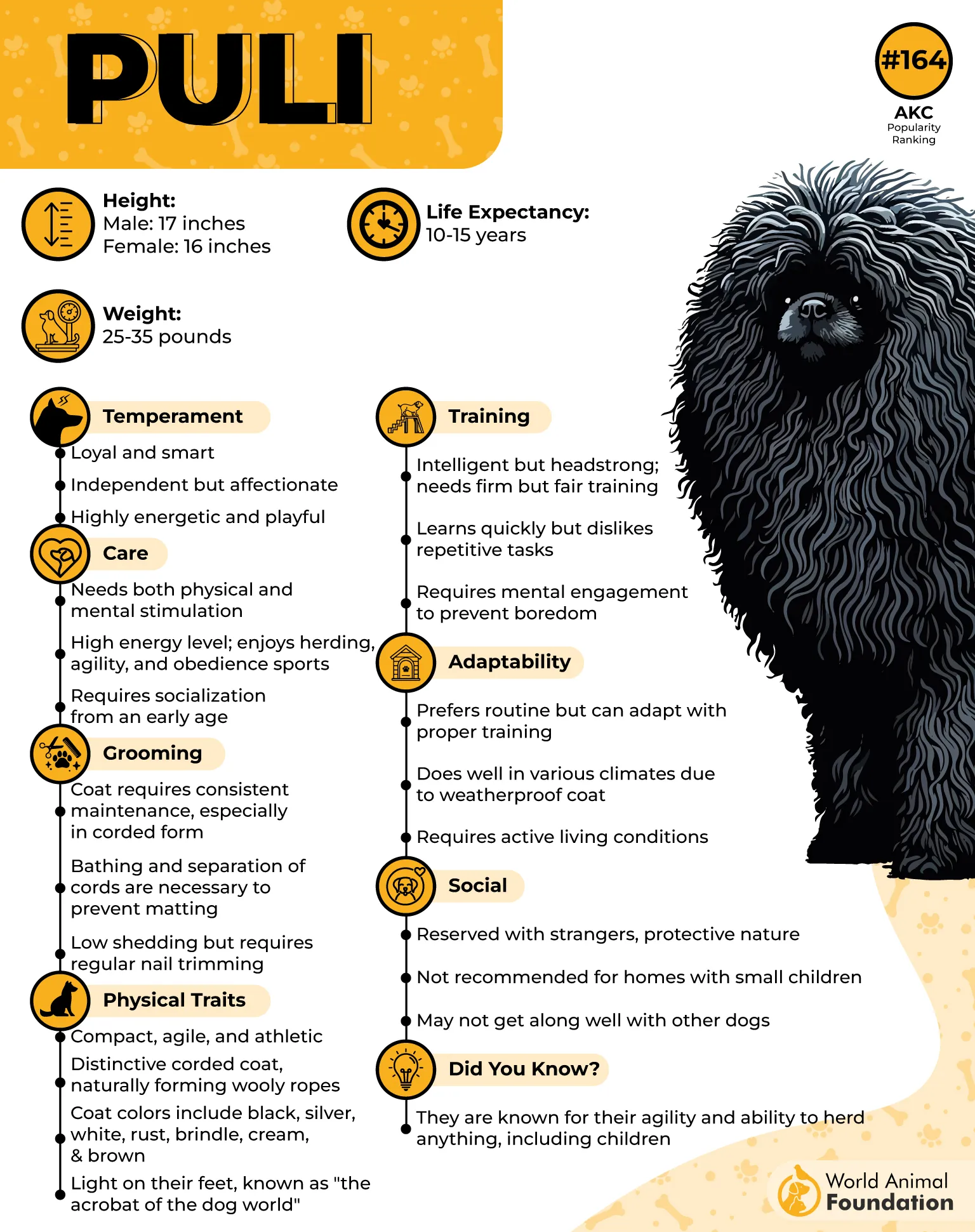
The coat forms dense, woolly cords that resemble dreadlocks.
It has a soft undercoat and a wavy or curly outer coat.
Cords begin forming around 8–10 months and grow longer with age.
The coat is weather-resistant and does not shed much.
It comes in colors like black, white, gray, and rusty shades.
This distinctive coat needs regular care. The cords must be managed daily to prevent excessive matting and dirt buildup. When wet, the coat becomes heavy and takes time to dry.
Because of its density, the dog can overheat in hot weather, so shade and fresh water are important. Grooming takes effort, but with a consistent routine, it becomes manageable.
Beyond its coat, the Puli is energetic, intelligent, and full of a bold personality. It needs daily exercise and mental stimulation to stay happy. This breed is loyal and protective, often acting as a watchdog and staying close to its family.
Early training and socialization are important, as it can be reserved with strangers and may try to herd children or other pets. With the right care, it becomes a playful, devoted, and highly entertaining companion.
4. Afghan Hound
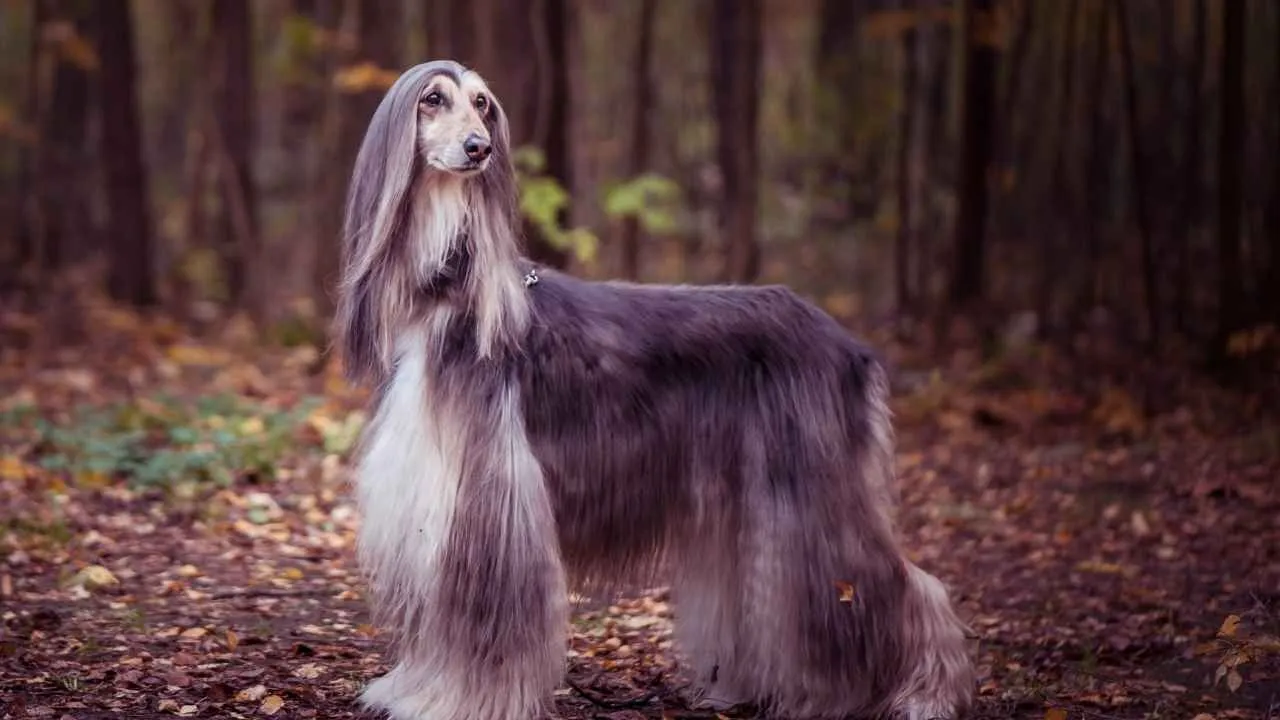
The Afghan Hound is the definition of elegance, known for its long, silky coat that flows beautifully with every step. As a puppy, it has short, curly hair, but this transforms into a fine, luxurious coat as it grows.
Originating from the mountainous regions of Afghanistan, this stunning coat wasn’t just for looks—it protected the Afghan Hound from harsh weather while it hunted across rough terrain. With its dignified presence and graceful movement, it often looks like a living work of art.
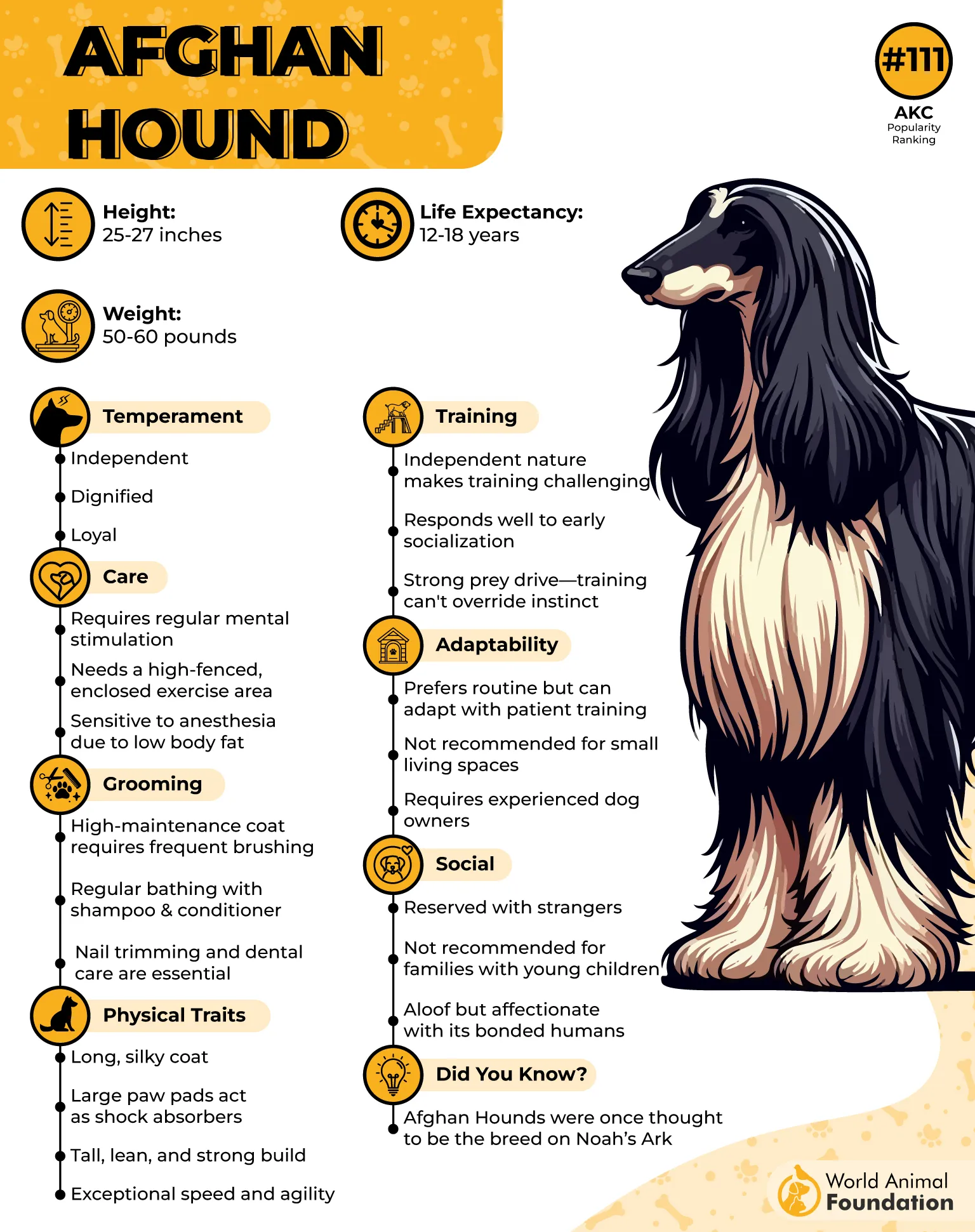
What Makes Their Coat Unique
The coat is long, fine, and silky with a natural shine.
Hair is shorter on the back (called the “saddle”).
A topknot of long hair frames the face and ears.
Comes in many colors like black, cream, red, silver, and brindle.
Puppies start with short coats that grow longer over time.
This beautiful long coat needs serious care. It should never be brushed dry—lightly misting with water and conditioner is important before grooming. Frequent brushing helps prevent tangles, while bathing every week or two keeps the coat clean and healthy.
Drying takes time, and many owners rely on blow-drying or even professional groomers. Tools like pin brushes, combs, and even a snood (to keep hair clean during meals) are often used.
Beyond its looks, the Afghan Hound is intelligent, independent, and deeply loyal. This silky-coated dog was bred as a sight hound, using sharp vision and speed to hunt, as stated by PetMD.
Though it may seem reserved, it has a playful and even silly side with its family. With proper grooming and care, this breed offers both breathtaking beauty and a unique, devoted companionship.
5. Bedlington Terrier
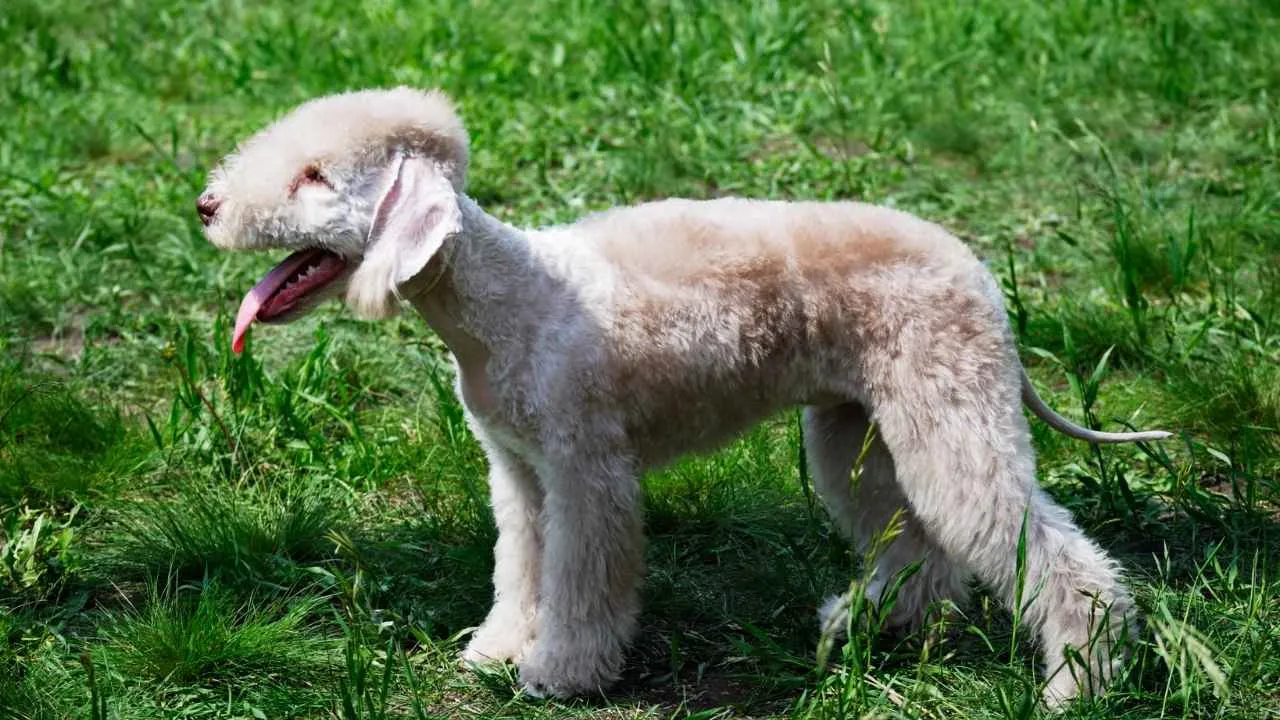
The Bedlington Terrier is truly one of a kind, often described as looking like a little lamb in dog form. Originally bred in England, this graceful terrier combines elegance with energy.
Its arched back, light step, and unique outline make it instantly recognizable. Despite its soft appearance, it is an active, alert, and courageous dog that loves being the center of attention and forms strong bonds with its family.
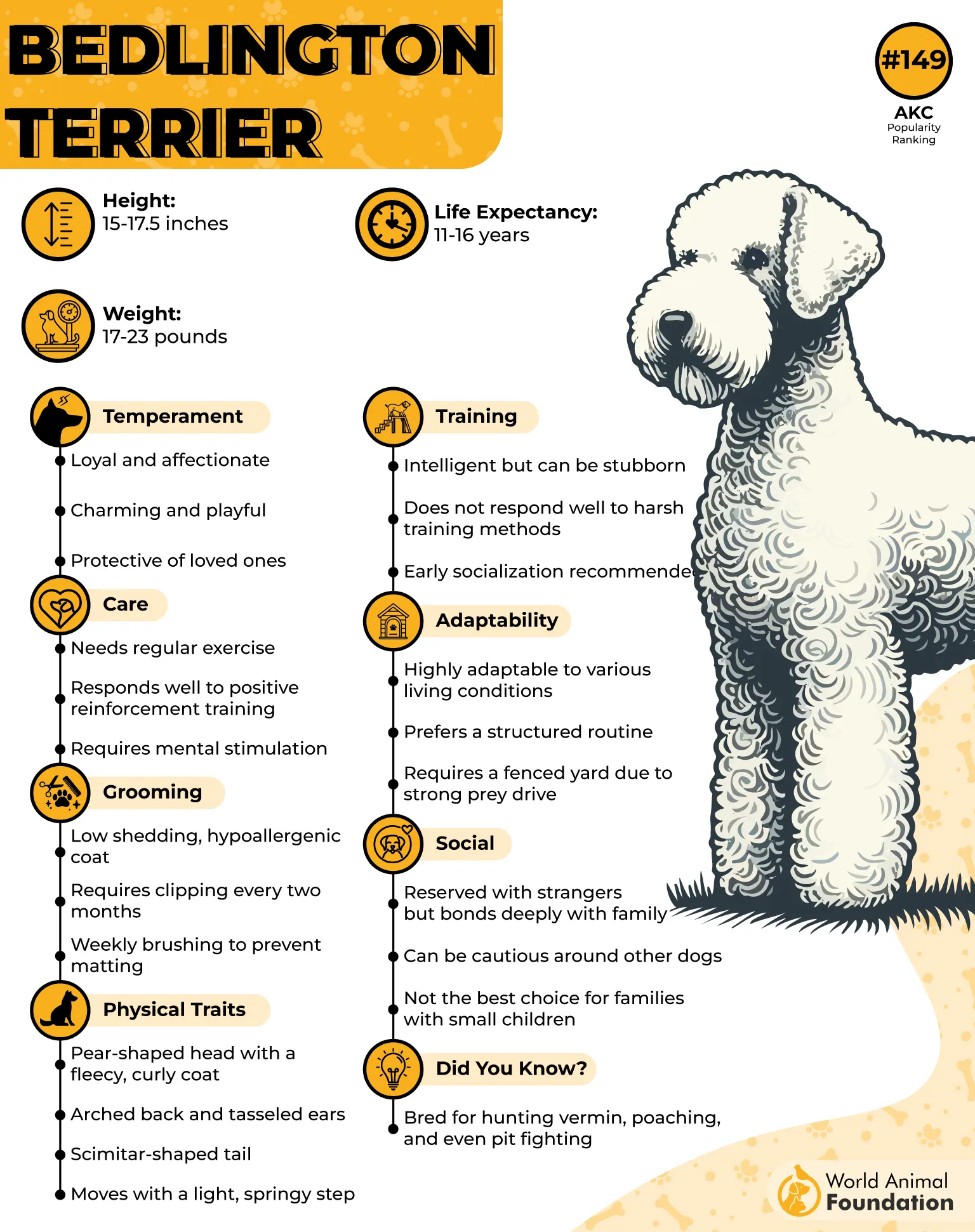
What Makes Their Coat Unique
The coat is crisp and curly with a mix of soft and hard hair.
It gives a lamb-like appearance, especially around the face and body.
The pear-shaped head with soft tufts adds to its distinct look.
Coat colors include blue, sandy, liver, tan, and combinations.
It sheds very little, often considered suitable for allergy sufferers.
This distinctive coat needs regular care to stay in shape. It doesn’t shed much, but it requires weekly brushing and clipping to maintain its neat appearance.
The texture can thicken in certain areas, especially around the legs and face, so proper grooming is important. With the right routine, the coat stays soft, clean, and well-defined.
Beyond its coat, the Bedlington Terrier is playful, affectionate, and full of personality. It is loyal to its family, good with children, and friendly with familiar people, though it can be cautious or reactive at times.
As an active dog, it needs regular exercise and mental stimulation to avoid boredom. With the right balance of activity and care, this charming and lively companion fits well into many homes—even apartments.
6. Bergamasco Sheepdog
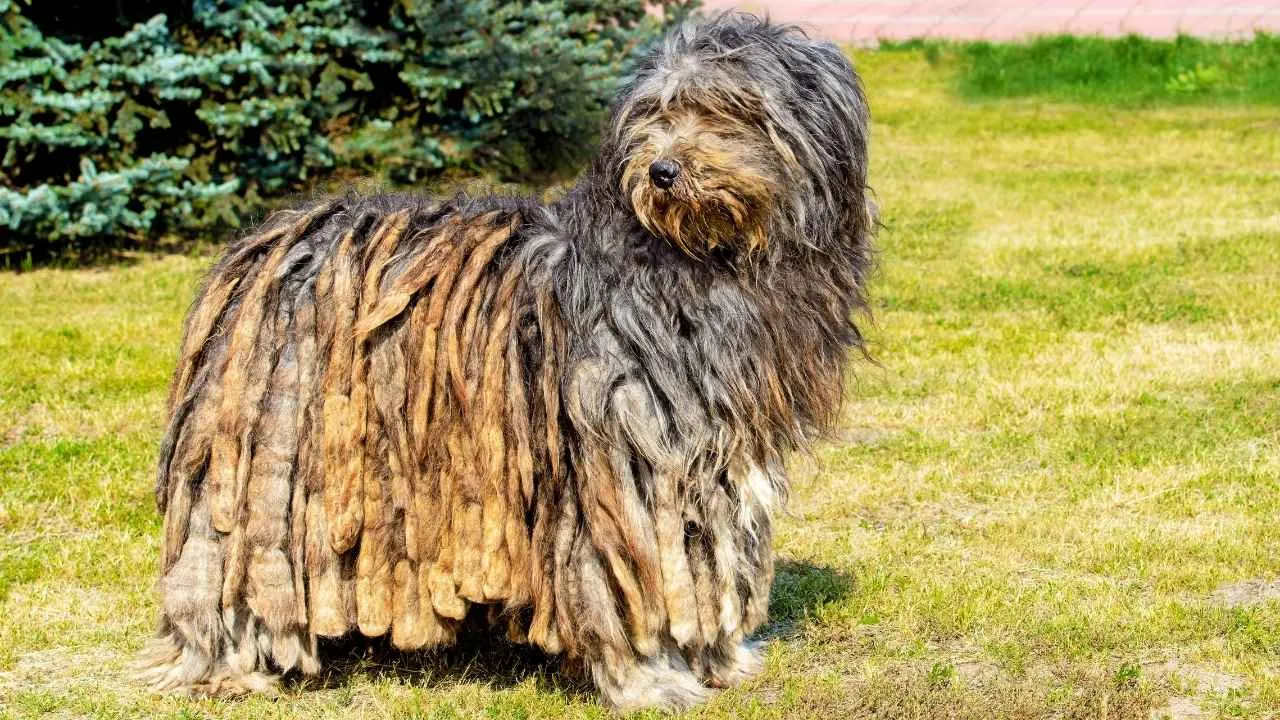
The Bergamasco Sheepdog introduces you to the fascinating world of naturally “flocked” coats. Originating from the Italian Alps, this calm and hardy herding dog was built to handle rough terrain and extreme weather.
Its coat isn’t just unique—it’s functional, protecting the dog from cold, heat, and even injury. With a patient and loyal nature, this breed is both a dependable worker and a devoted companion.
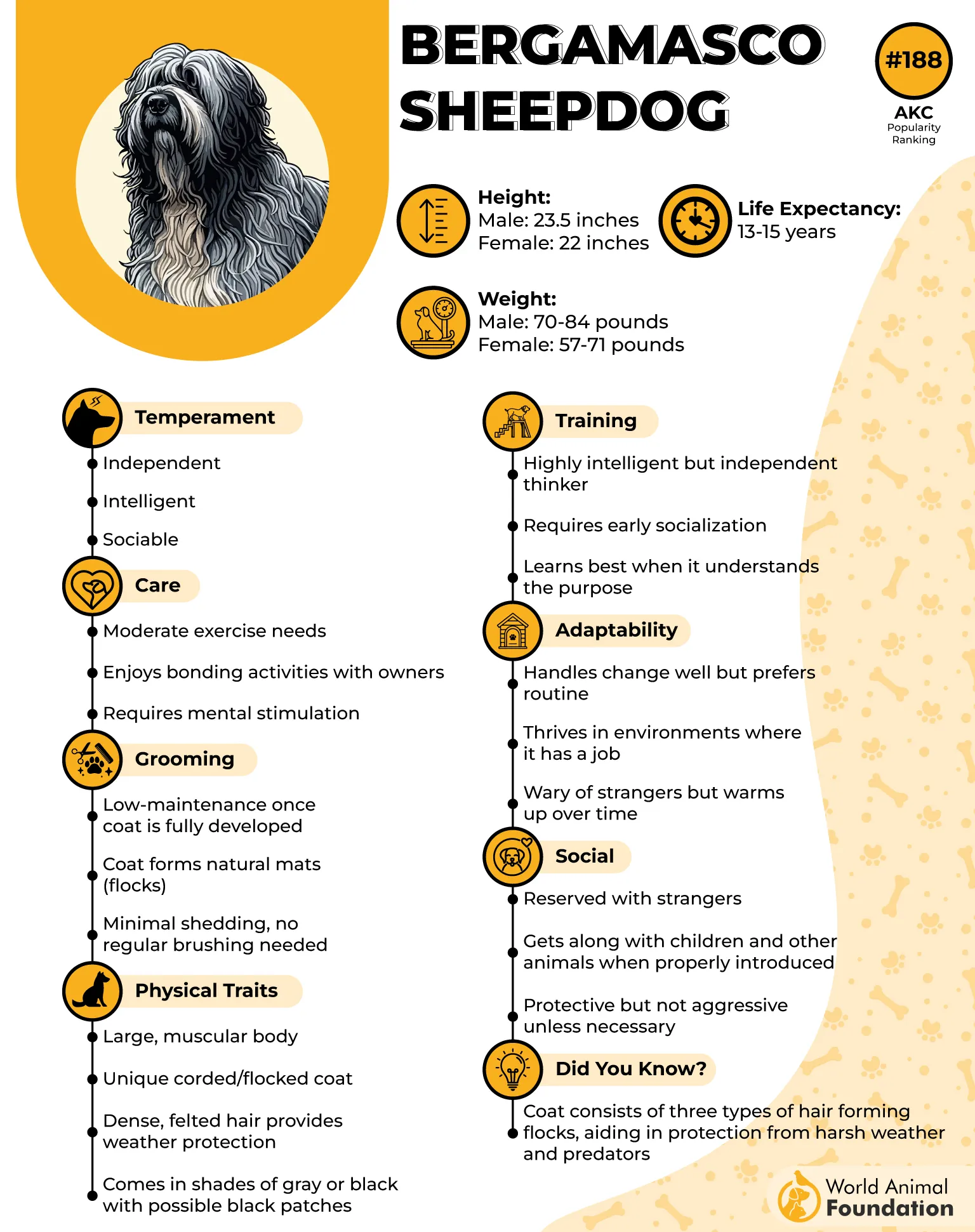
What Makes Their Coat Unique
The coat forms loose mats, called “flocks,” not tight cords.
It has three hair types: dog (soft), goat (coarse), and wool (fuzzy).
Flocks begin forming around one year of age.
The coat is low-shedding and becomes low-maintenance over time.
It should never be shaved or trimmed close, as it helps regulate body temperature.
Caring for this coat is easier than it looks—but only after the initial work. Around the first year, the coat must be separated by hand to form the flocks, a one-time process that can take a few hours.
After that, the coat requires minimal brushing and very little upkeep. Bathing is occasional, and swimming is not ideal because the coat becomes heavy when wet.
Beyond the coat, the Bergamasco is intelligent, independent, and eager to please. It enjoys having a job, whether herding, training, or playing interactive games. Regular exercise and early training are important, as this breed has strong working instincts.
Calm with family and good with children and other pets, it is protective yet gentle—making it a unique and reliable companion with a truly one-of-a-kind coat.
7. Bichon Frise
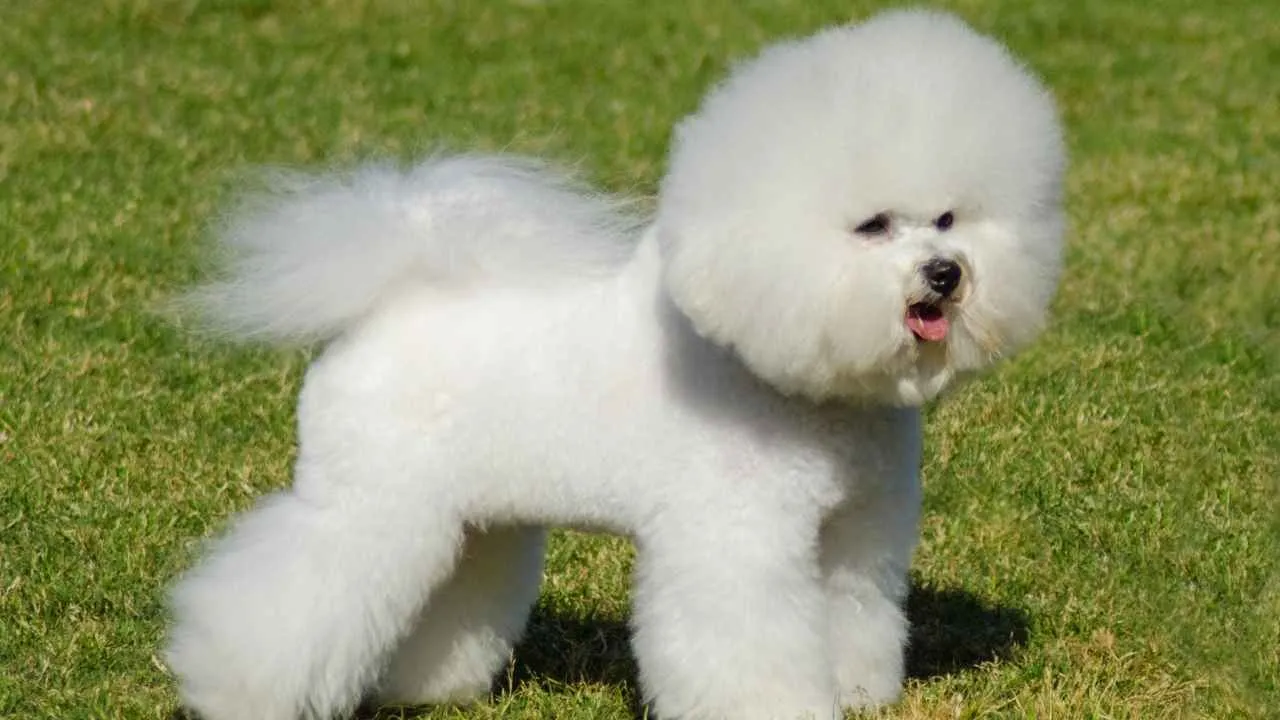
The Bichon Frise is a small dog with a big personality and an instantly lovable look. Known for its fluffy white coat and cheerful nature, this breed has been winning hearts for centuries with its charm and playful energy.
Often described as a “living teddy bear,” it is friendly, sociable, and fits well into families of all sizes. Whether with kids, adults, or seniors, this affectionate companion thrives on attention and loves being around people.
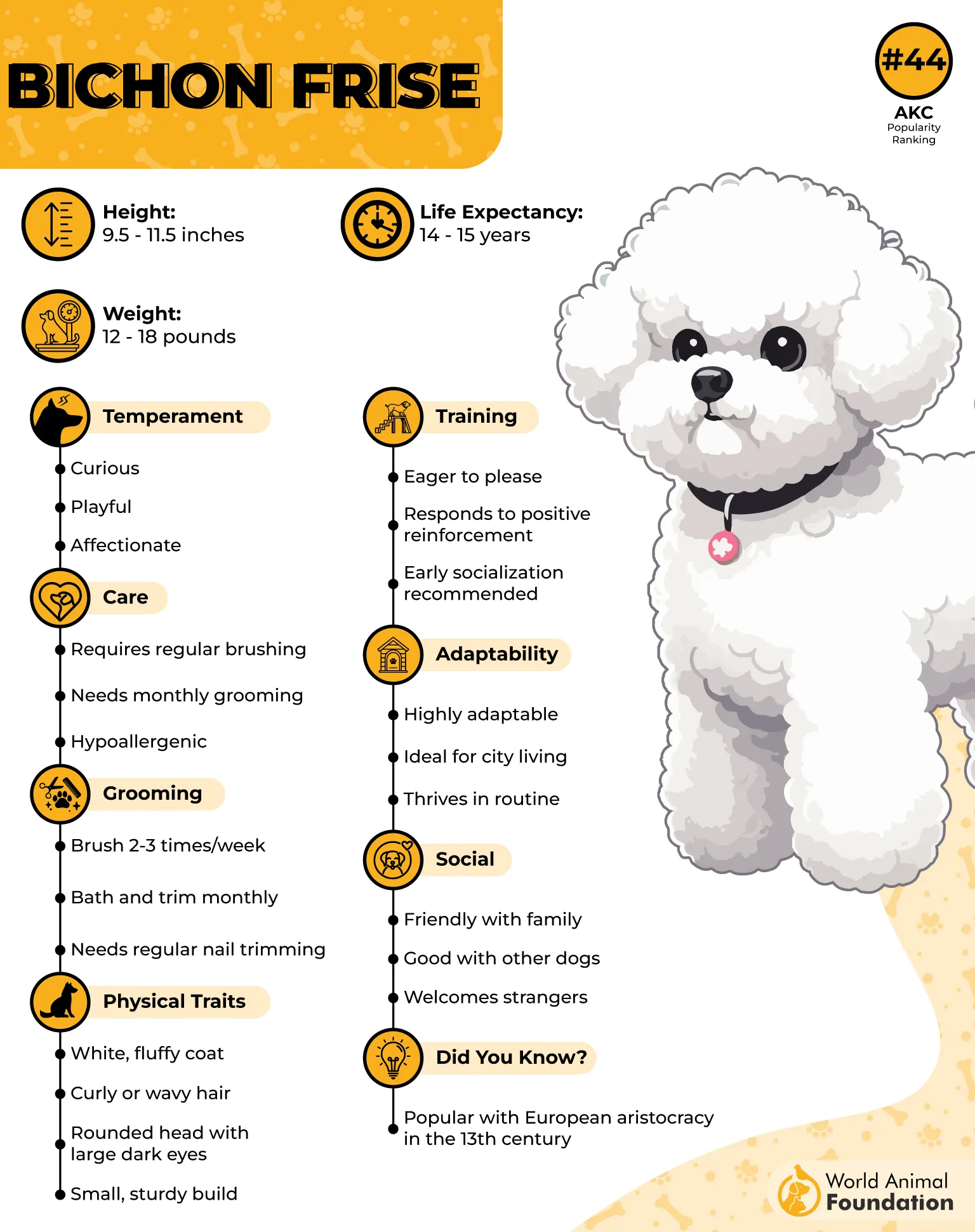
What Makes Their Coat Unique
The coat is soft, curly, and forms a plush double layer.
It has a velvety, “powder puff” texture.
Mostly pure white, sometimes with cream or light shades.
Low shedding, often considered suitable for allergy sufferers.
The rounded grooming style enhances its teddy-like appearance.
This beautiful coat needs regular care to stay clean and tangle-free. Daily brushing helps prevent mats, while regular bathing keeps it fresh.
Many owners prefer shorter trims for easier maintenance, but professional grooming is usually needed every few weeks. Along with coat care, routine ear cleaning and nail trimming are important parts of their grooming routine.
Beyond its looks, the Bichon Frise is lively, curious, and full of joy. It enjoys daily walks and playtime to stay active and mentally stimulated.
This breed is easy to train and loves performing for its family. Confident and friendly, it sees everyone as a friend rather than a threat, making it a loving companion, especially for active families.
Conclusion
In the canine kingdom, dogs with distinct coat textures are truly something special. From silky hair and flowing strands to tight curls, cords, and soft, fluffy layers, each coat tells a story of purpose, history, and personality.
These unique textures aren’t just about looks—they reflect how these dogs lived, worked, and adapted over time. But as beautiful as they are, they also come with specific care needs, reminding us that choosing the right dog means understanding both their appearance and their lifestyle.
The right match isn’t just about what looks stunning—it’s about what fits your routine and commitment level. When you find that balance, you don’t just get a beautiful dog—you gain a loyal companion whose uniqueness makes every moment a little more special.
Looking for more options? You can also check out the Irish Setters, Great Danes, Cardigan Welsh Corgis, Poodles, and Australian Shepherds.
