




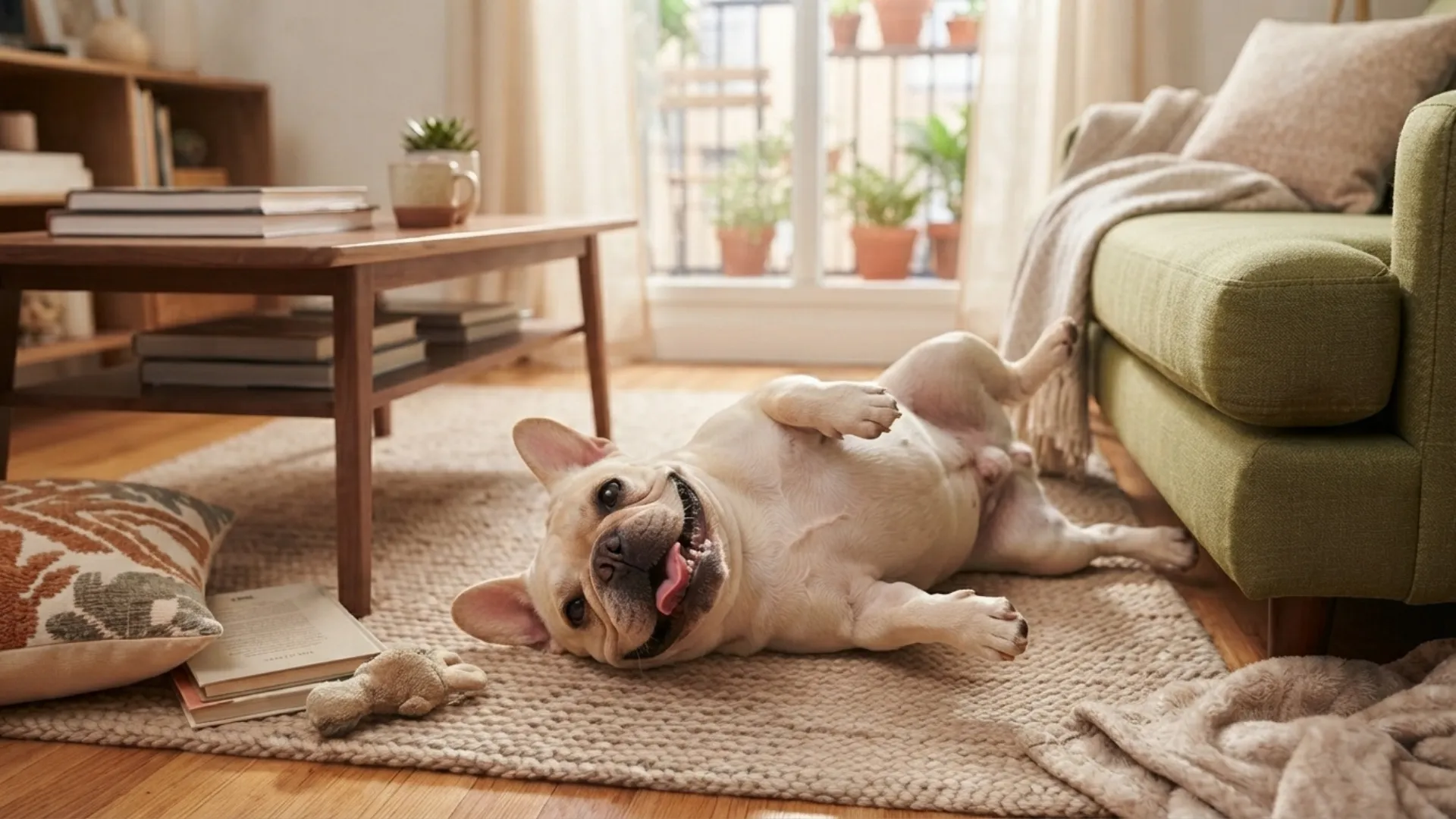
Where you live should never stand in the way of your dream of owning a dog, but let’s be honest, sometimes it does.
Keeping a large breed in a small home, especially a rented one, usually means dealing with strict lease approvals, landlord weight limits, breed restrictions, and no real yard to speak of. And even if you manage to make it work, it’s not really fair to the dog. Big breeds need room to run and burn off energy, and a cramped apartment just can’t offer that kind of mental and physical stimulation.
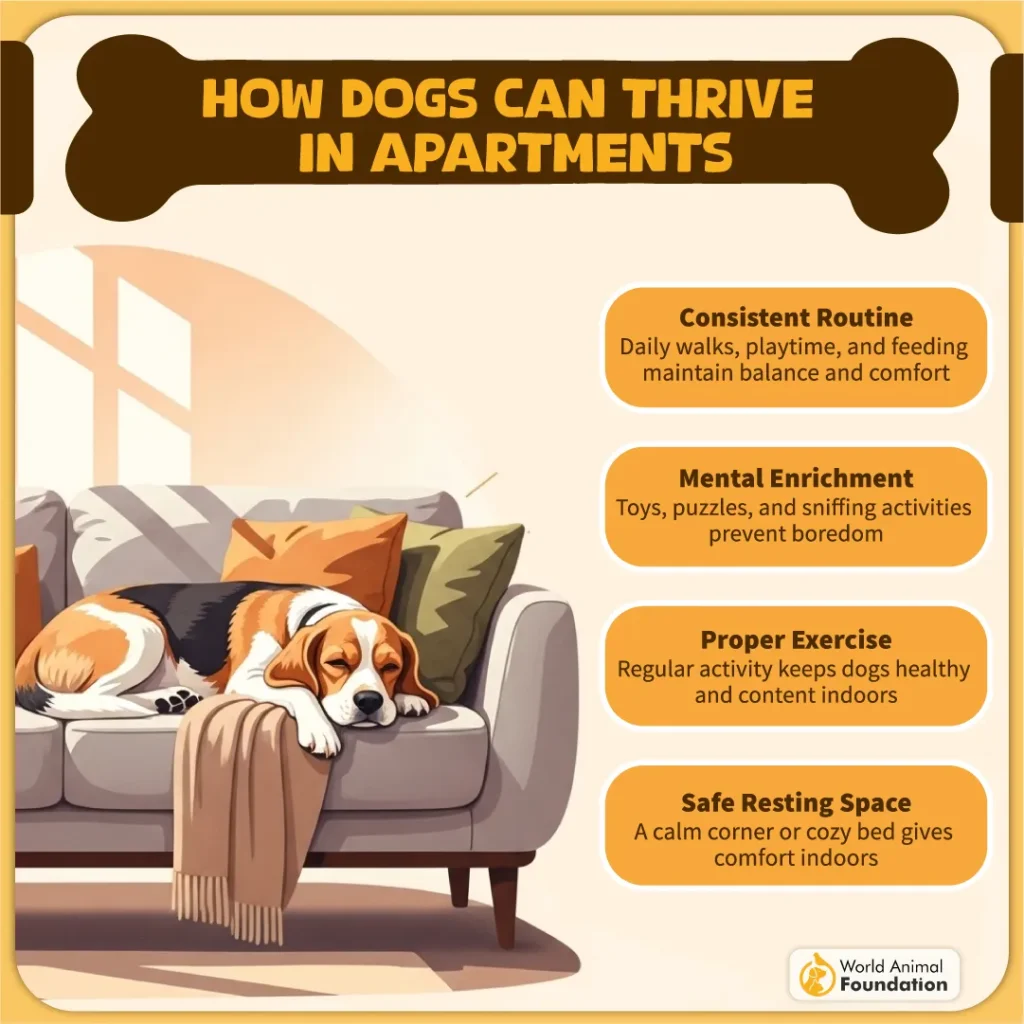
That’s where small dog breeds come in. For the roughly 40 million people living in apartments, they’re often the only realistic way to become a dog owner. These little pups don’t need sprawling yards, just a good amount of space in your heart, and that’s really all they ask for.
So instead of stressing over lease approvals and weight restrictions, why not choose a dog that lets you experience all the loyalty, warmth, and joy of ownership within the space you already have?
Here are 7 small breeds that are a great fit for first-time owners and apartment dwellers alike. Each one brings something different in terms of temperament, behavior, personality, and exercise needs.
Wonderful Dog Breeds to Enjoy in Small Homes
1. Cavalier King Charles Spaniel

Cavalier King Charles Spaniels are gentle, affectionate, and easygoing toy dogs. Originally bred purely for companionship, their polite, laid-back nature makes them a great fit for apartment living and smaller homes.
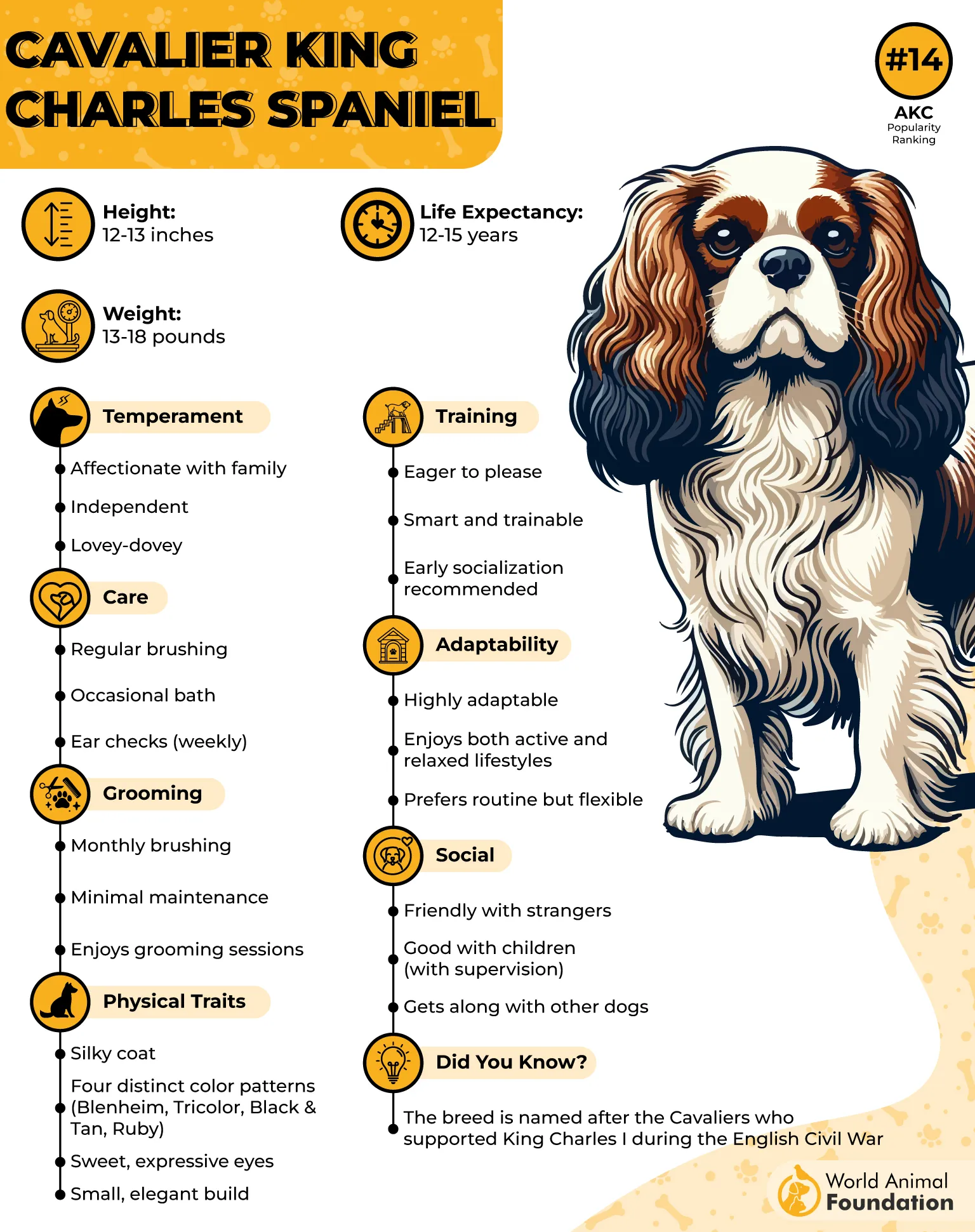
They’re highly adaptable, just as happy curling up on the sofa while you work as they are quietly lounging in a compact living room. According to PetMD, these small dogs rank 14th among the AKC’s most popular breeds. They’re also a solid choice for first-time owners, since they only need about 30-45 minutes of light activity a day.
On top of that, Cavaliers are highly trainable thanks to their eager-to-please attitude, and they respond best to gentle, positive reinforcement. Their coat is medium-length and silky, with feathering on the ears, legs, and chest. It sheds moderately and needs regular brushing to stay in good shape.
2. French Bulldog
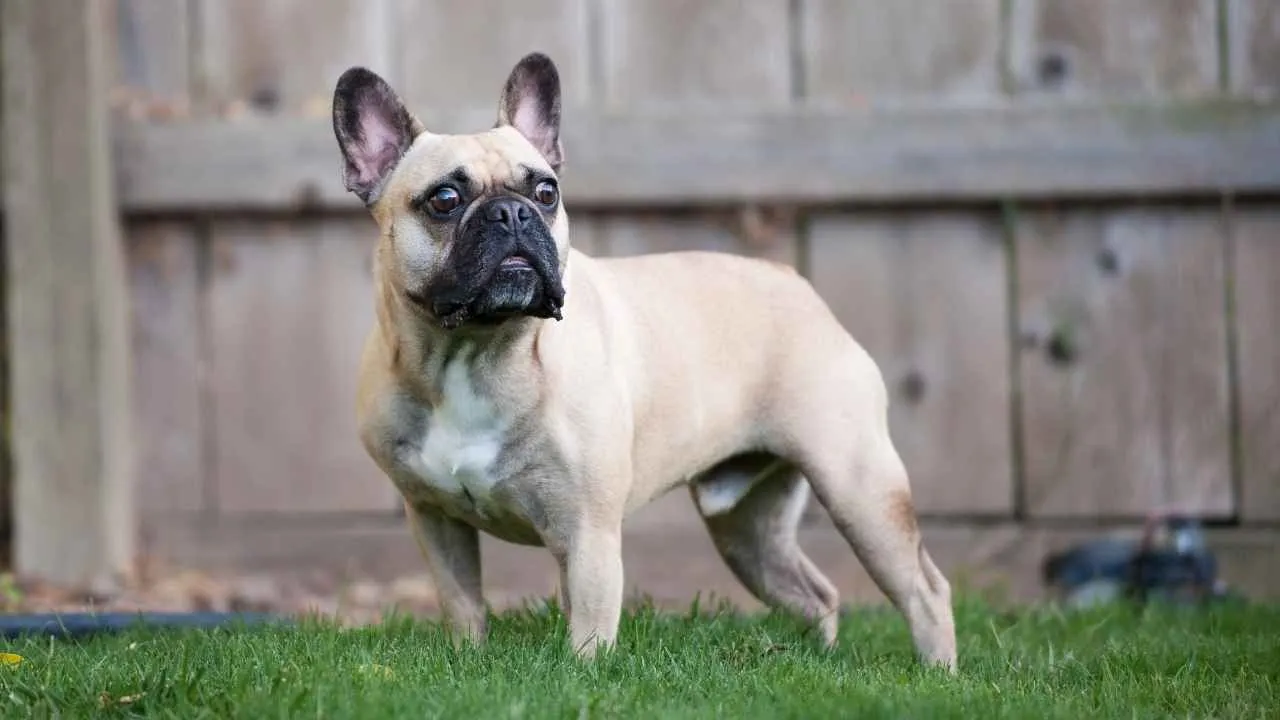
French Bulldogs are playful, patient, and famously easygoing, with a wonderfully quiet demeanor for such a fun-loving breed. These small dogs were bred specifically to be affectionate lap companions, and they rarely bark unless something really catches their attention, which also makes them great around kids.
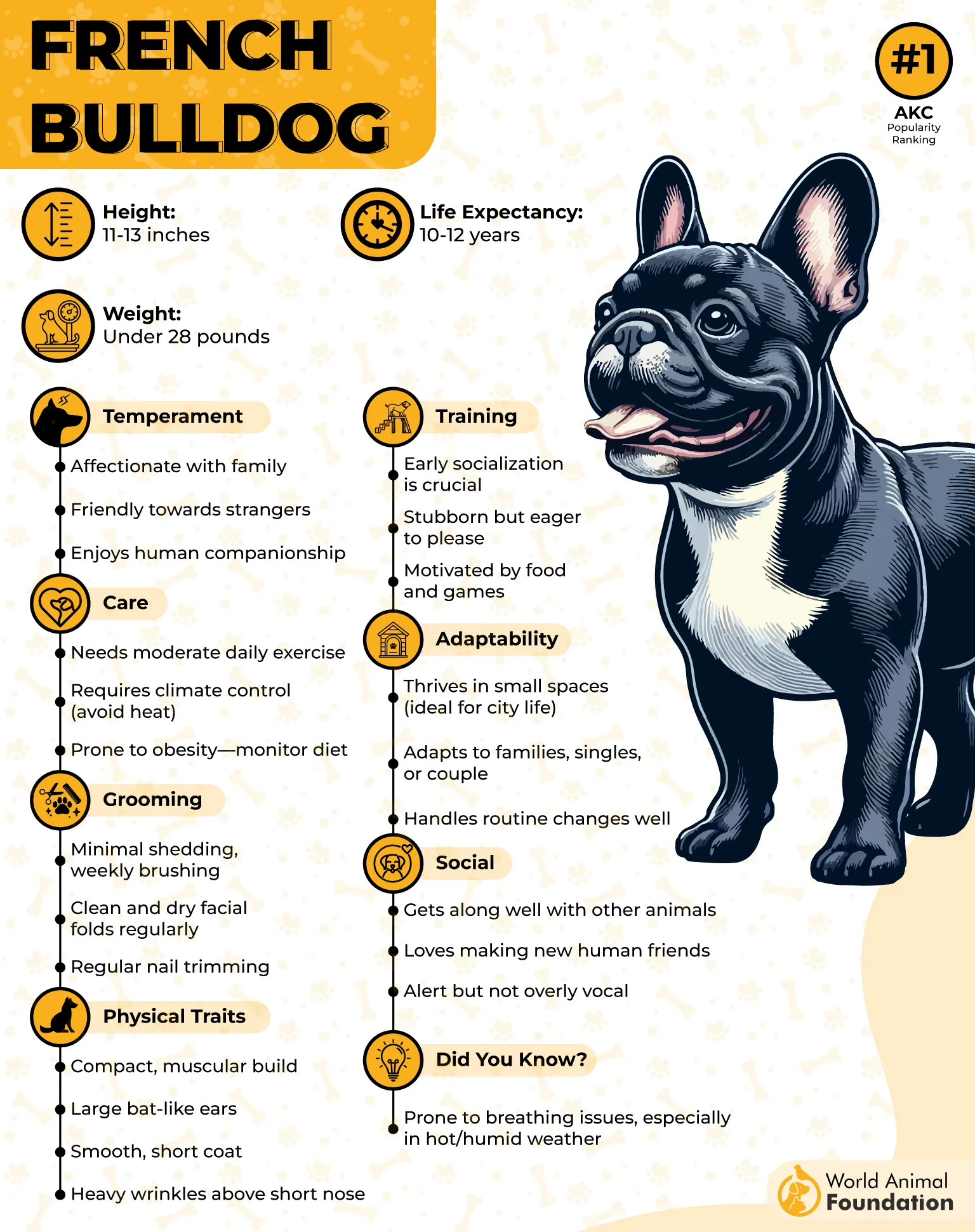
Their compact, low-slung build tends to fall well within most landlord weight limits, so apartment living usually isn’t an issue. Frenchies only need about 20-30 minutes of daily activity, think short neighborhood walks paired with some indoor playtime — to stay mentally satisfied and burn off their energy.
They also make surprisingly good watchdogs and have that classic eager-to-please streak. That said, Frenchies can be a bit stubborn at times, so reward-based training with plenty of treats works best to keep them motivated. As for grooming, their short coat sheds moderately and just needs a weekly brush to stay in shape.
3. Shih Tzu
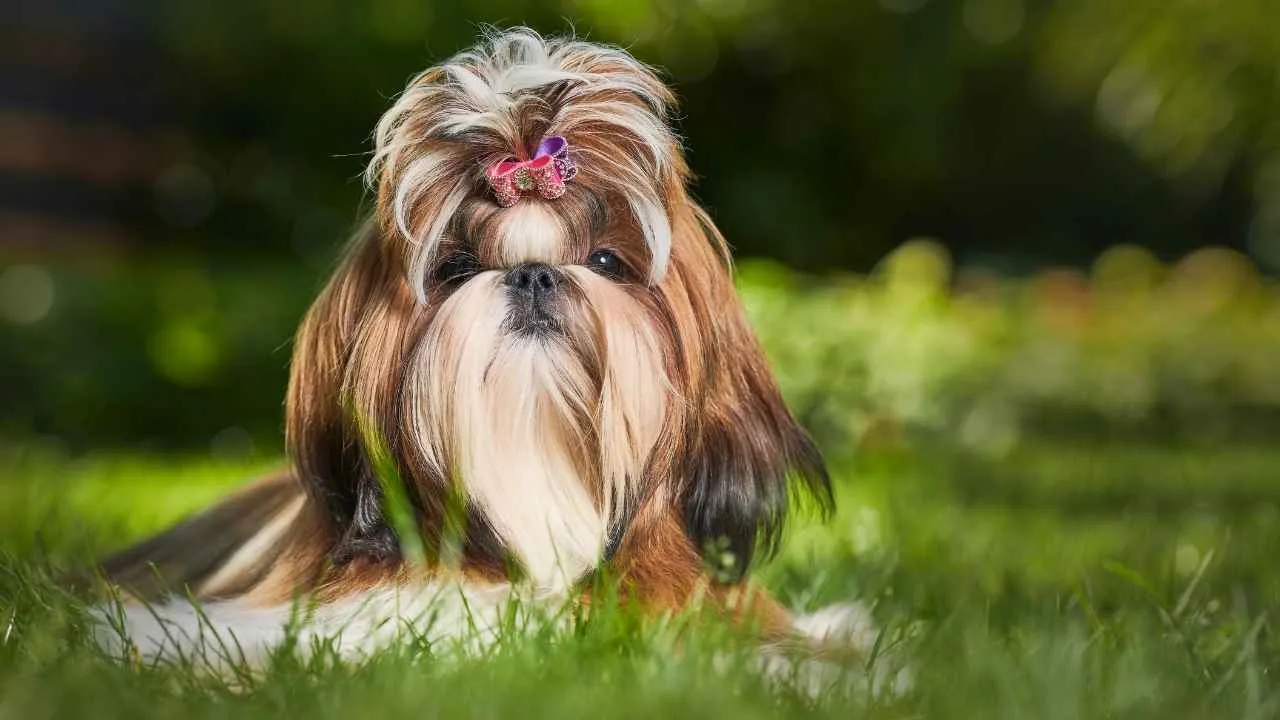
Shih Tzus are affectionate, happy-go-lucky, and remarkably peaceful little dogs. As the AKC notes, they’re often called “little lions” because they were bred to resemble one, though personality-wise, they’re anything but fierce. They’re naturally warm and welcoming, not just to family, but to guests too.
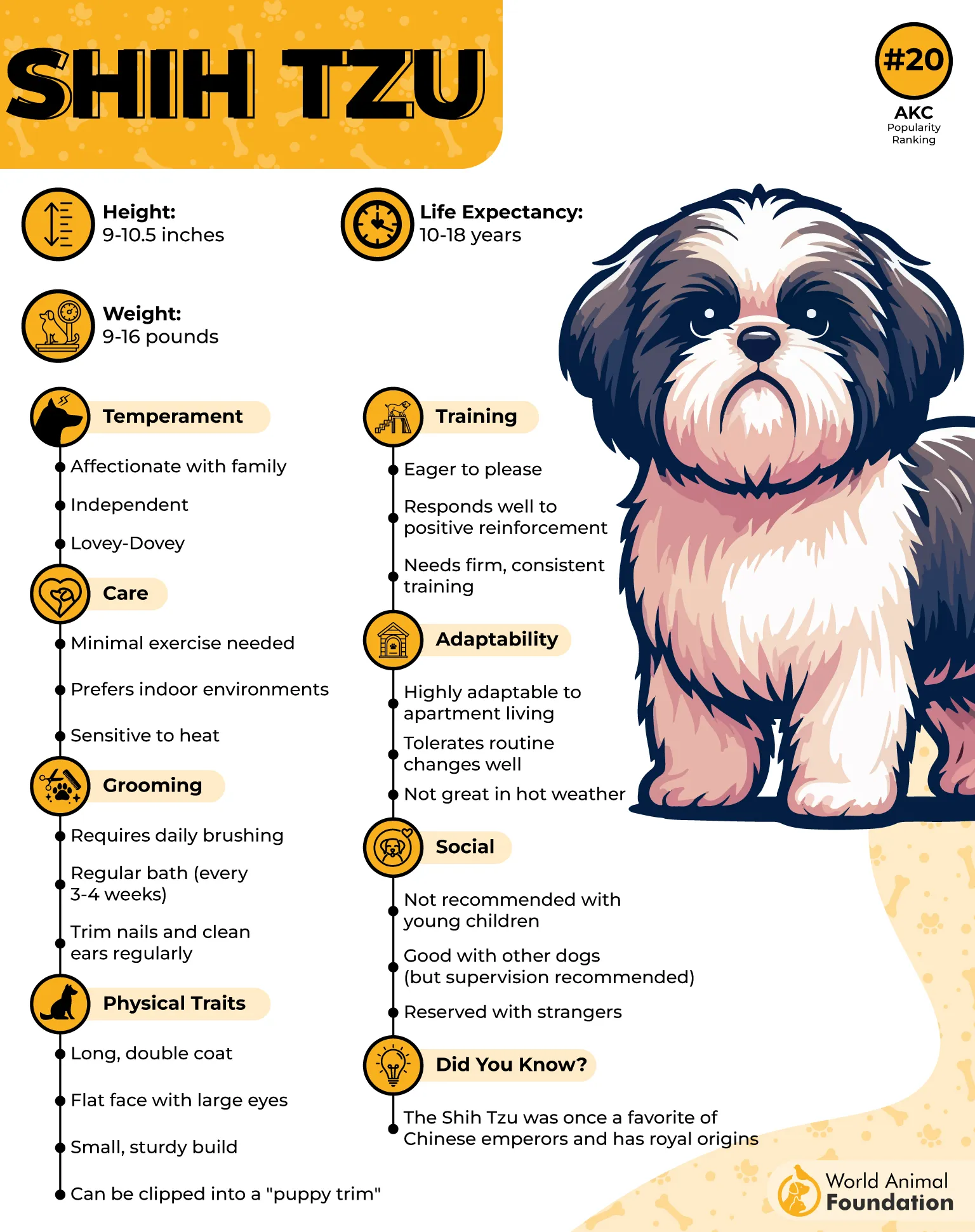
These small dogs are alert and adapt easily to compact homes and apartments. They also have a low noise profile, which is a real plus if you’ve got close neighbors or live in a shared building. On the exercise front, about 30 minutes of walking a day is enough to keep them mentally satisfied.
Shih Tzus are eager to please, though they do carry a mild stubborn streak, so positive reinforcement and treats work best when teaching them basic apartment manners. As for their coat, it’s long, double-layered, and hypoallergenic, but it does need daily brushing along with regular professional trims to stay healthy and tangle-free.
4. Havanese
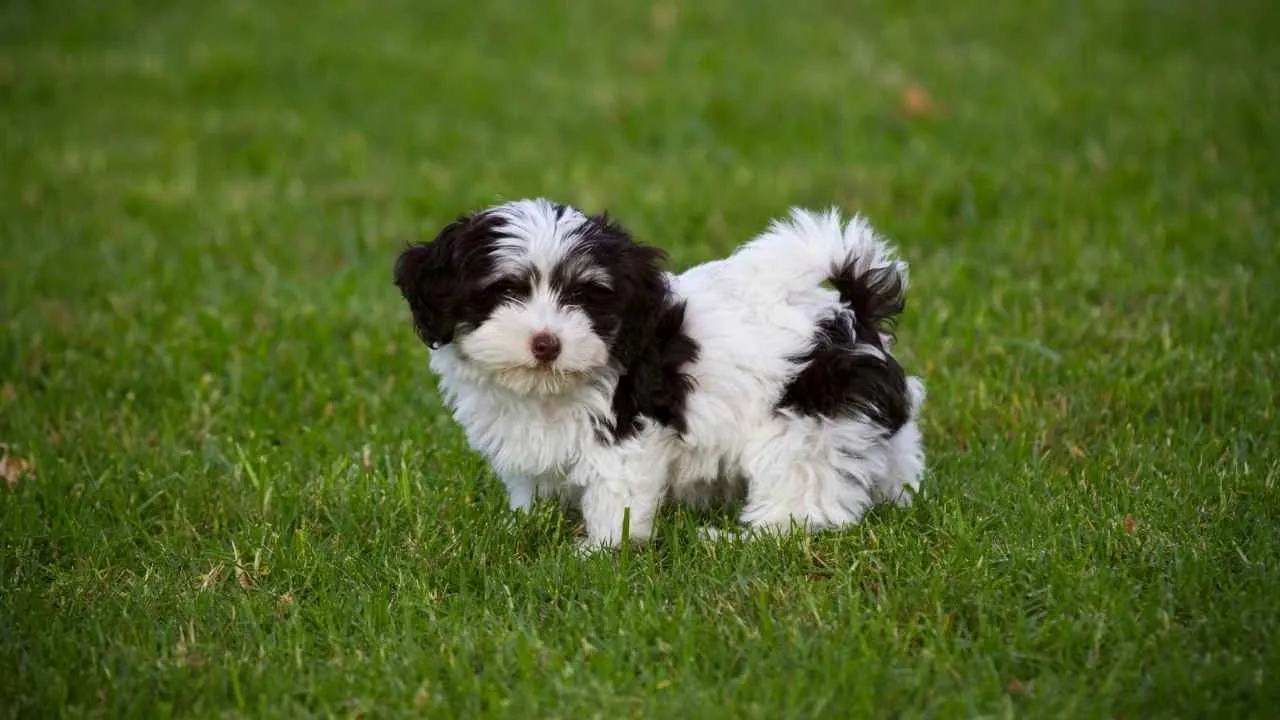
Havanese dogs are well suited for small homes thanks to their sturdy yet compact frame. Their moderate exercise needs also make them easy to satisfy for apartment dwellers, even without access to a big yard. Interestingly, Havanese are actually the national dog of Cuba.
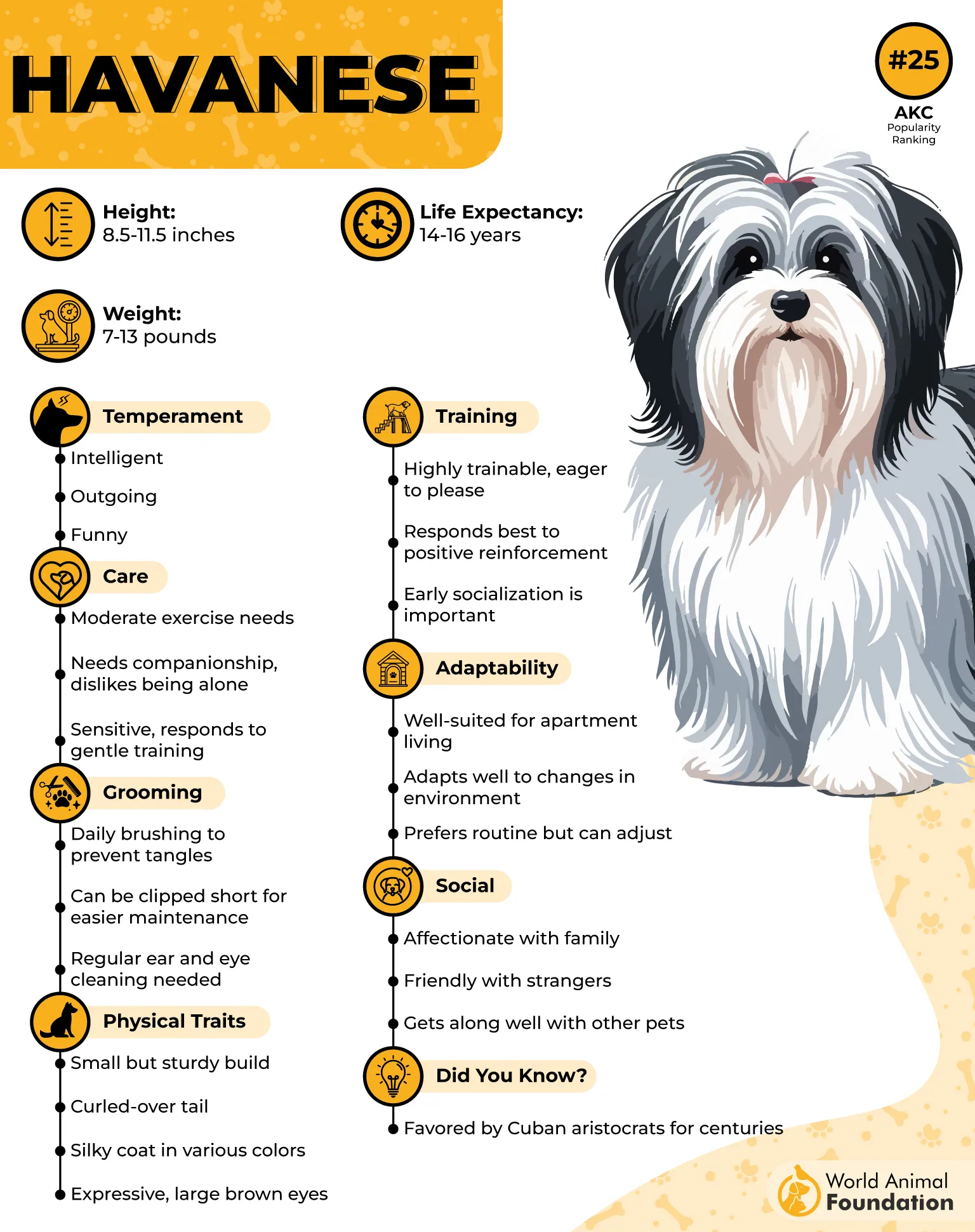
As Omlet points out, they even worked as circus performers at one point, which explains their cheerful, outgoing, and downright comedic personality. Havanese are true velcro dogs; they’ll follow you from room to room, and their friendly nature means they tend to get along with just about everyone.
These little lap dogs are intelligent, sensitive, and eager to please, so gentle guidance goes a long way in training. One thing to watch for is excessive barking, a leftover from their watchdog instincts, so it’s worth putting some focus on managing that early on. As for grooming, Havanese barely shed, but if you keep their coat long, daily brushing is a must.
5. Coton de Tulear

Coton de Tulears are famously happy, adaptable, and gentle dogs with a sweet, witty personality. They’ve earned the nickname “Royal Dogs of Madagascar,” having been bred on the island specifically to provide affection and companionship.
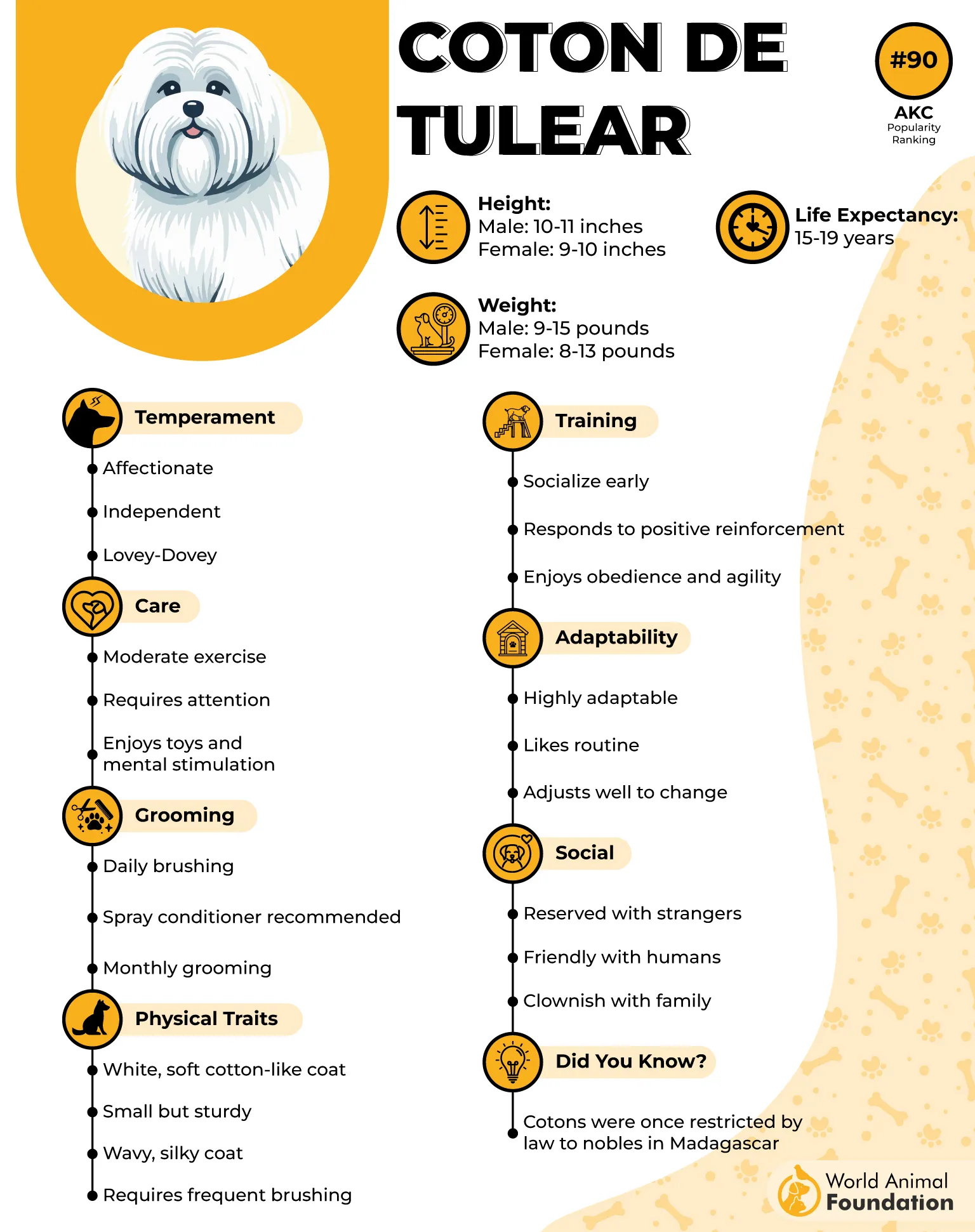
These small dogs are fairly low-maintenance overall, making them a great fit for apartment life. They also rarely bark without good reason, which is a real plus in buildings with shared walls. Their name, fittingly, comes from the cotton-like texture of their fluffy coat.
Speaking of which, that coat is hypoallergenic and doesn’t shed much, though it does need regular brushing to stay soft and tangle-free. These white dogs need about 30-45 minutes of exercise a day to stay mentally engaged, along with gentle, praise-based training. Since they’re naturally sensitive and eager to please, Coton de Tulears tend to be fairly easy to train.
6. Japanese Chin
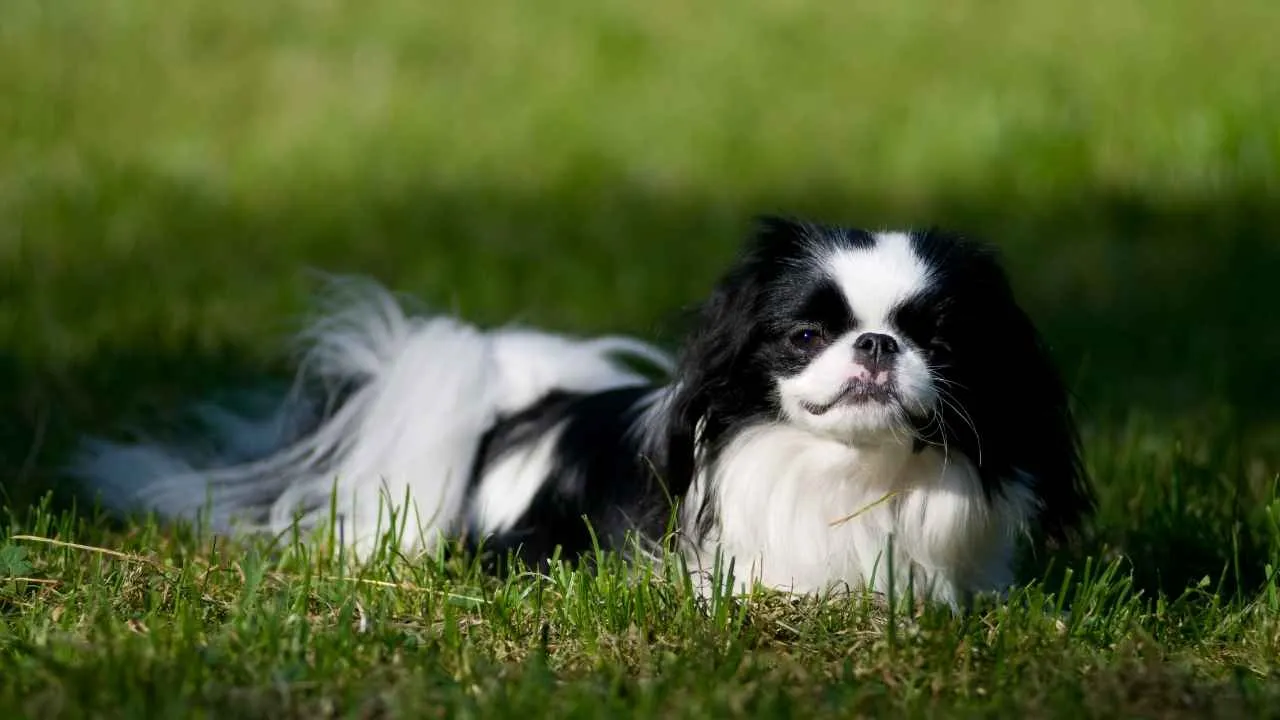
Japanese Chins are graceful, affectionate, and almost cat-like in personality. Mild-mannered and a bit reserved, they’re known for their calm presence indoors. Originally bred as lap dogs for Japanese royalty, they naturally adjust well to smaller spaces like apartments.
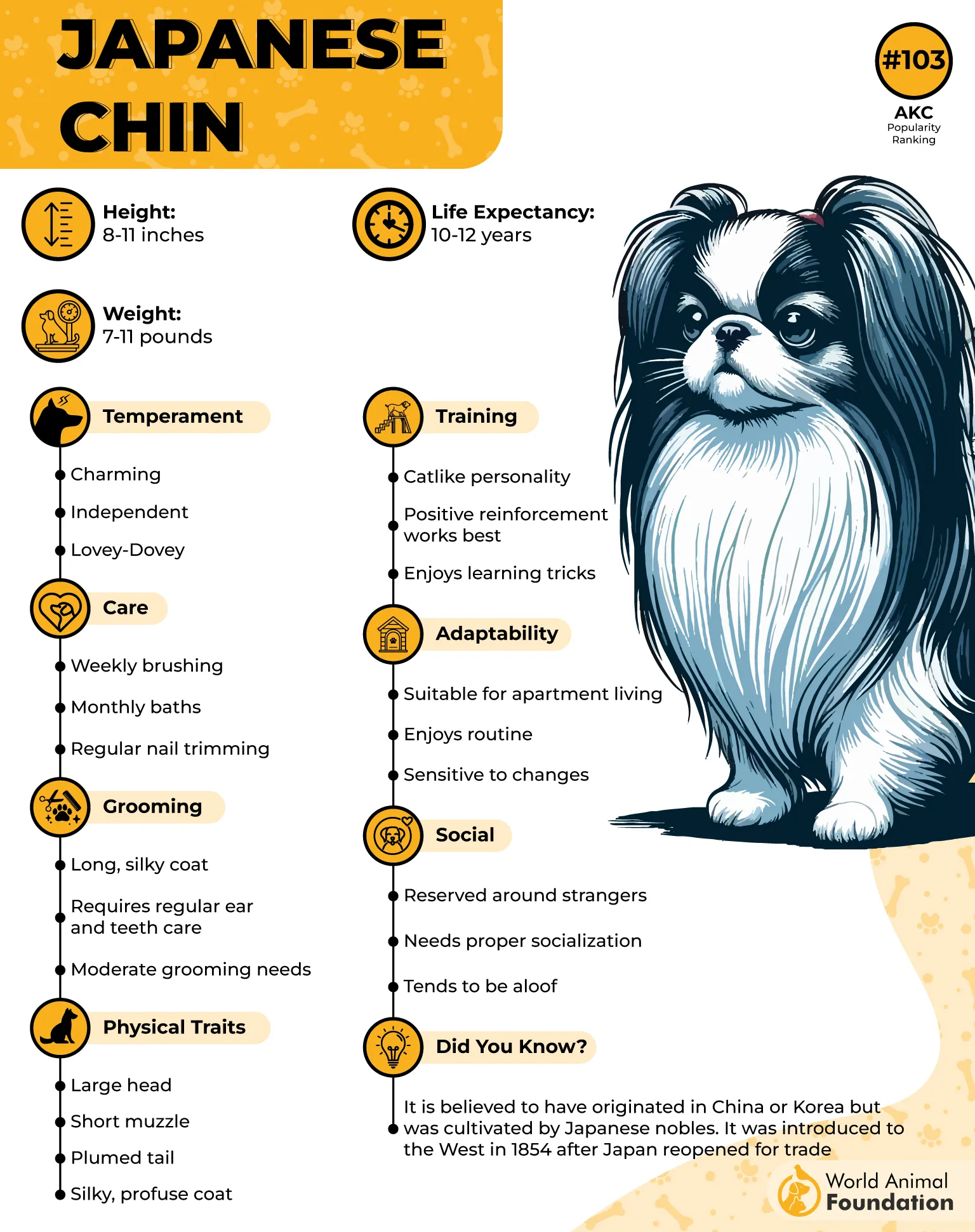
They only need about 20-30 minutes of light activity a day; short walks around the block are plenty to keep them mentally satisfied. One fun quirk worth mentioning: as Chewy describes, Japanese Chins are known for their “Chin Spin,” an adorable little dance they break into when excited.
They’re generally easy to train thanks to their sensitive, eager-to-please nature, though they do have a bit of an independent streak. Gentle, positive reinforcement works best with this breed. As for grooming, Japanese Chins have a single coat that does shed and benefits from regular brushing.
7. Pug
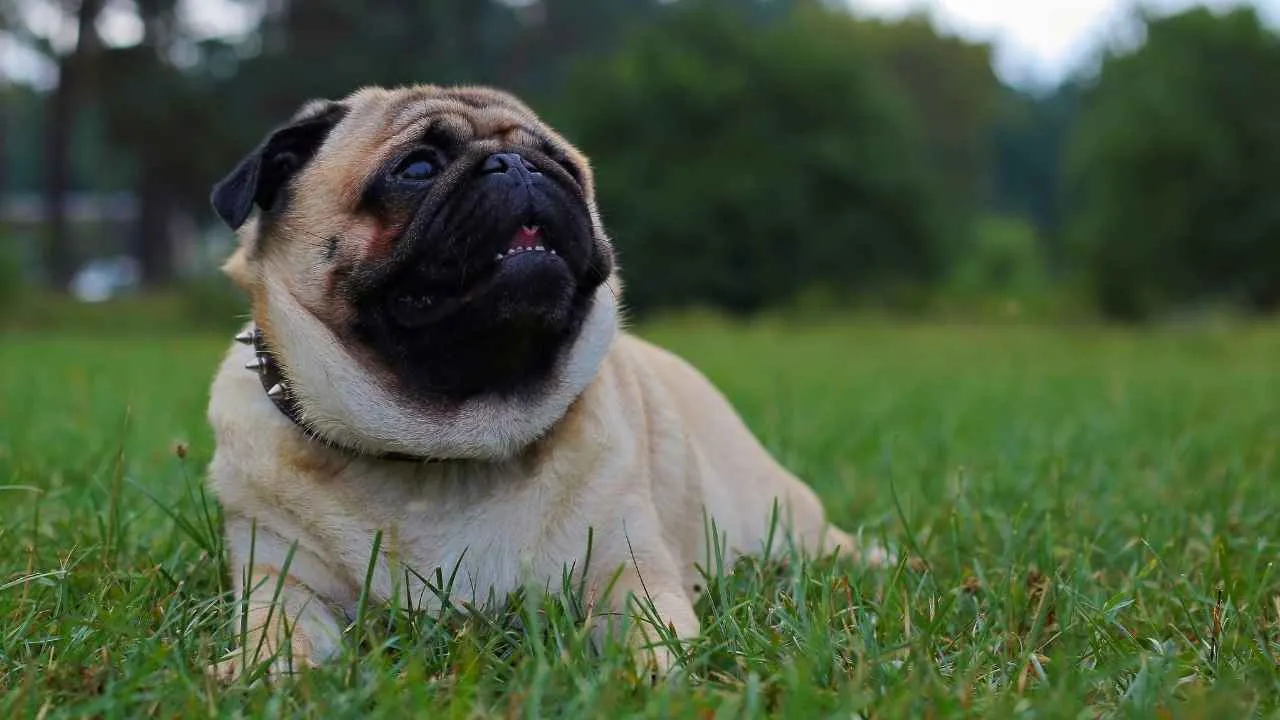
Pugs are loving, charming, and endlessly mischievous, with an affectionate nature packed into a compact little frame. Bred as lap dogs, they genuinely love staying close to their humans. These calm dogs are well suited for small spaces, thanks to their relaxed indoor nature and generally quiet disposition.
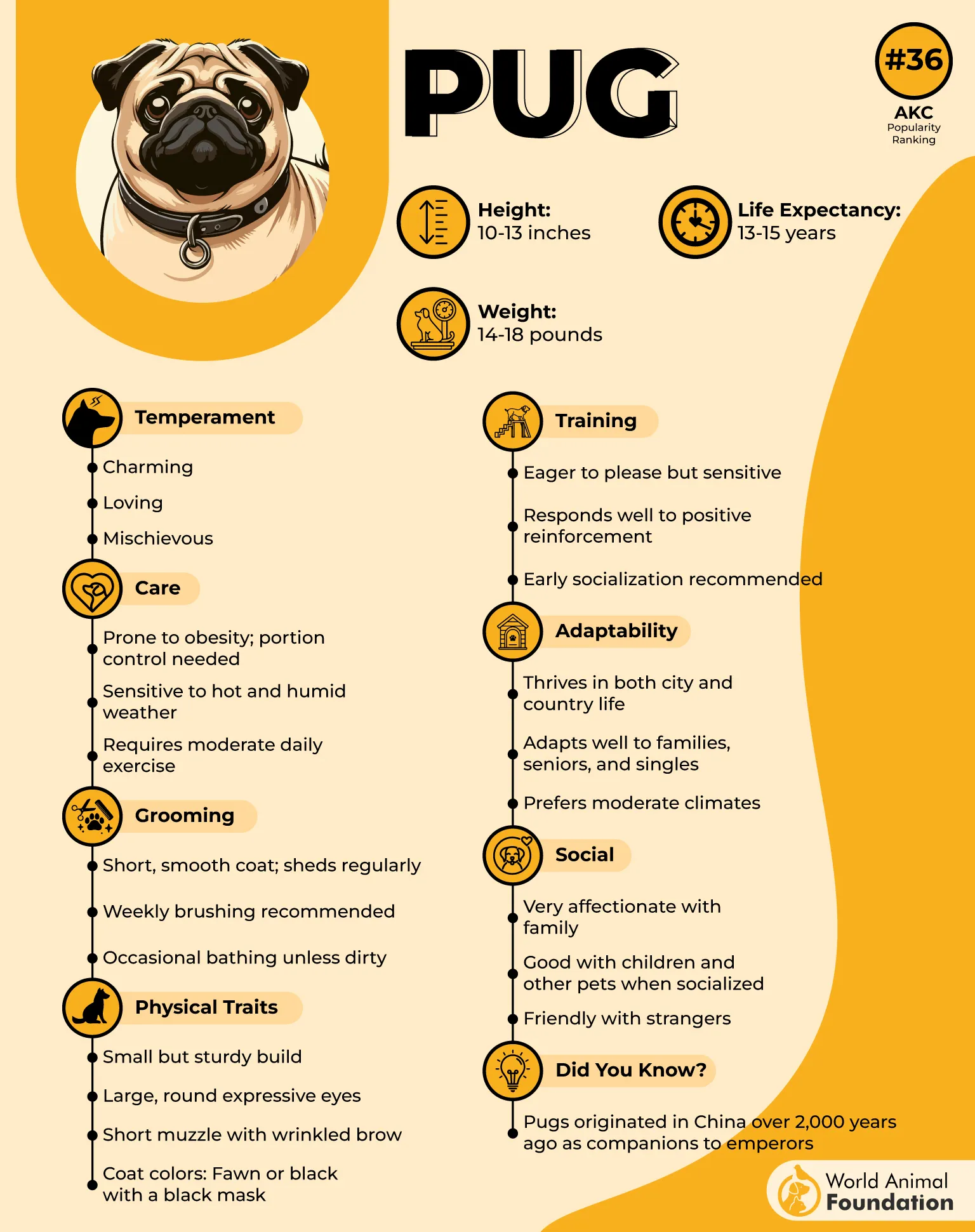
Their exercise needs are low; just 20-30 minutes of strolling is usually enough to keep them happy. That said, Pugs are prone to overheating in hot weather, so it’s best to plan walks for the morning to help them avoid breathing trouble.
They’re easily motivated by affection and treats, though they do have a bit of a stubborn side. Staying consistent with positive reinforcement usually does the trick when training them. As for grooming, Pugs have a short coat, but don’t let that fool you; they shed heavily year-round and need frequent brushing to keep the hair under control.
Conclusion
All the best small dog breeds covered above are petite, apartment-friendly, and generally spare renters the usual headaches, weight limits, breed restrictions, and lease approval battles.
That said, they’re not all the same when it comes to exercise, training, and grooming needs. So take a moment to go through those details before deciding, because if you’re short on time or patience, picking the best apartment dog breed that matches your lifestyle — whether that means less shedding or less stubbornness — makes all the difference.
