




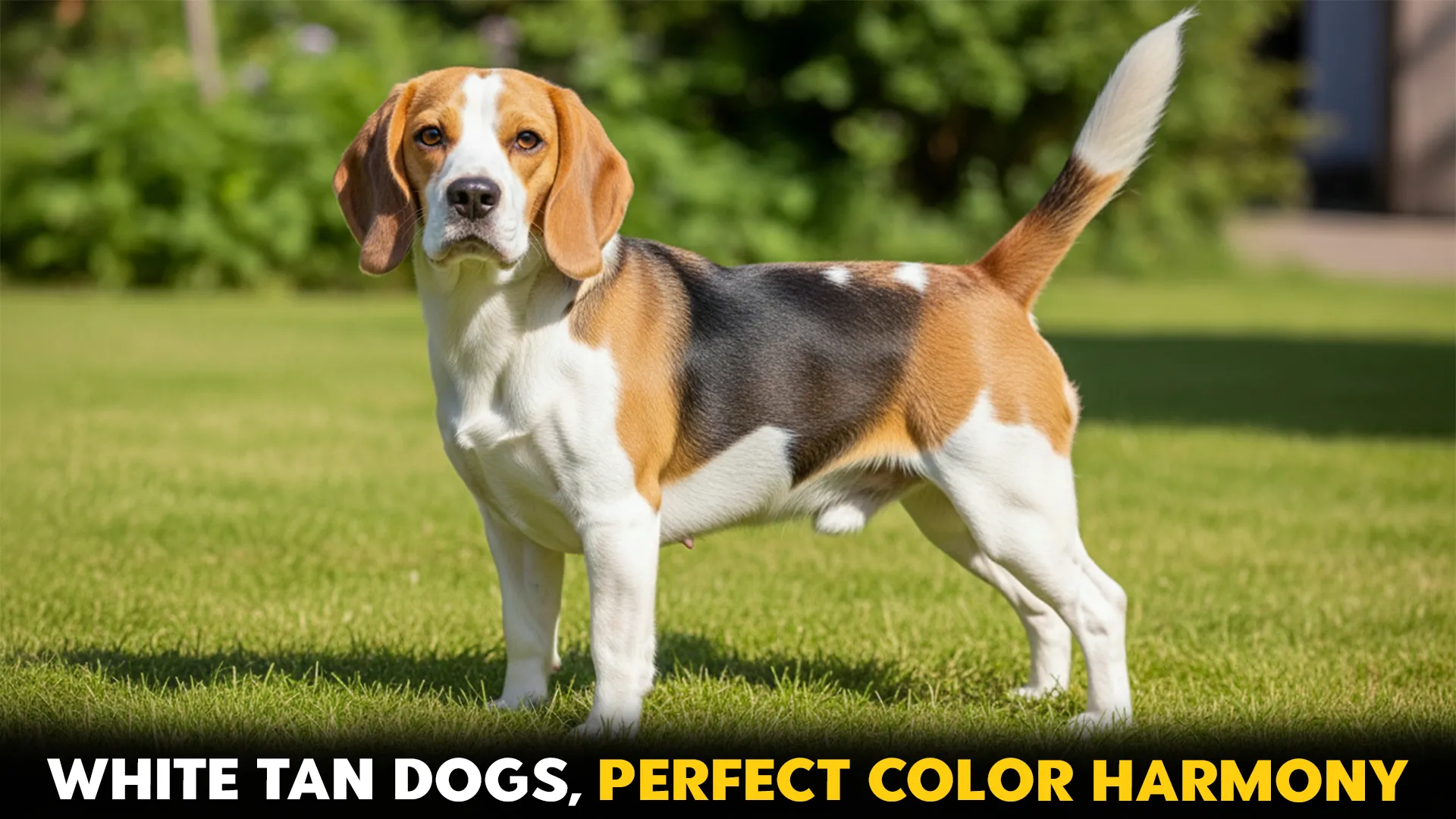
White and tan dogs often catch attention immediately, but what keeps people interested goes beyond that first impression. There is something about this color combination that feels balanced without being plain, noticeable without being overwhelming.
Yet, not every dog with this coloring looks or behaves the same. Small differences in shade, coat texture, and pattern placement can completely change how the dog is perceived. This is where many people get surprised.
What seems like a simple preference turns into a more detailed decision once you start looking closely. Some coats stay cleaner-looking for longer, while others require more upkeep to maintain that contrast. These details are not obvious in photos or quick descriptions. Once you understand them, your perspective shifts.
Ahead, you will explore how white and tan dogs differ in structure, coat behavior, and the kind of presence they bring into a home.
Key Takeaways
Some coat colors stand out immediately, and white paired with tan has a way of doing that without feeling loud.
Beagles carry this look with their curious, nose-led world, while Saint Bernards wear it across a massive frame that feels calm and steady.
Then you have breeds like the Shiba Inu and Jack Russell Terrier, where sharp contrast meets alert movement and constant energy.
As you move through the list, each breed shows how these colors aren’t just about looks; they connect deeply with how these dogs behave and live.
White and Tan Dog Breeds: A Delightful Mix of Colors
1. Beagle
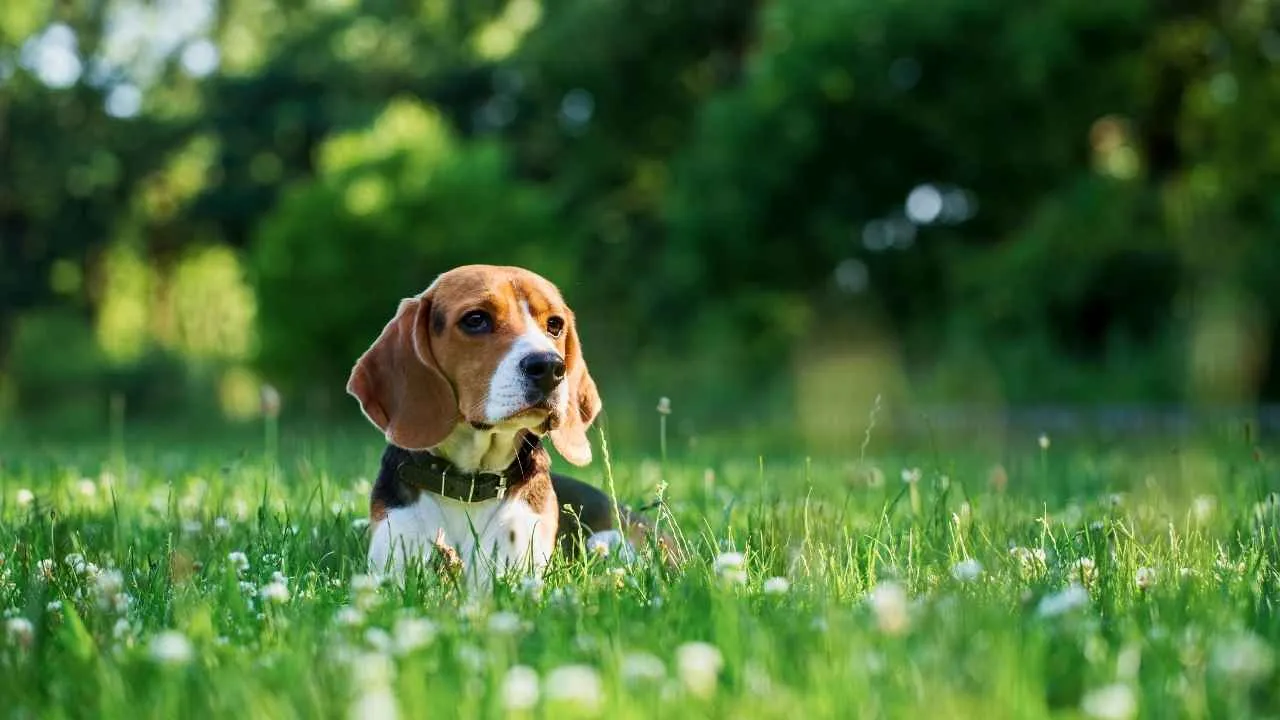
Beagles were originally bred as traditional pack hounds, shaped by hunting in groups where cooperation and tracking defined their role.
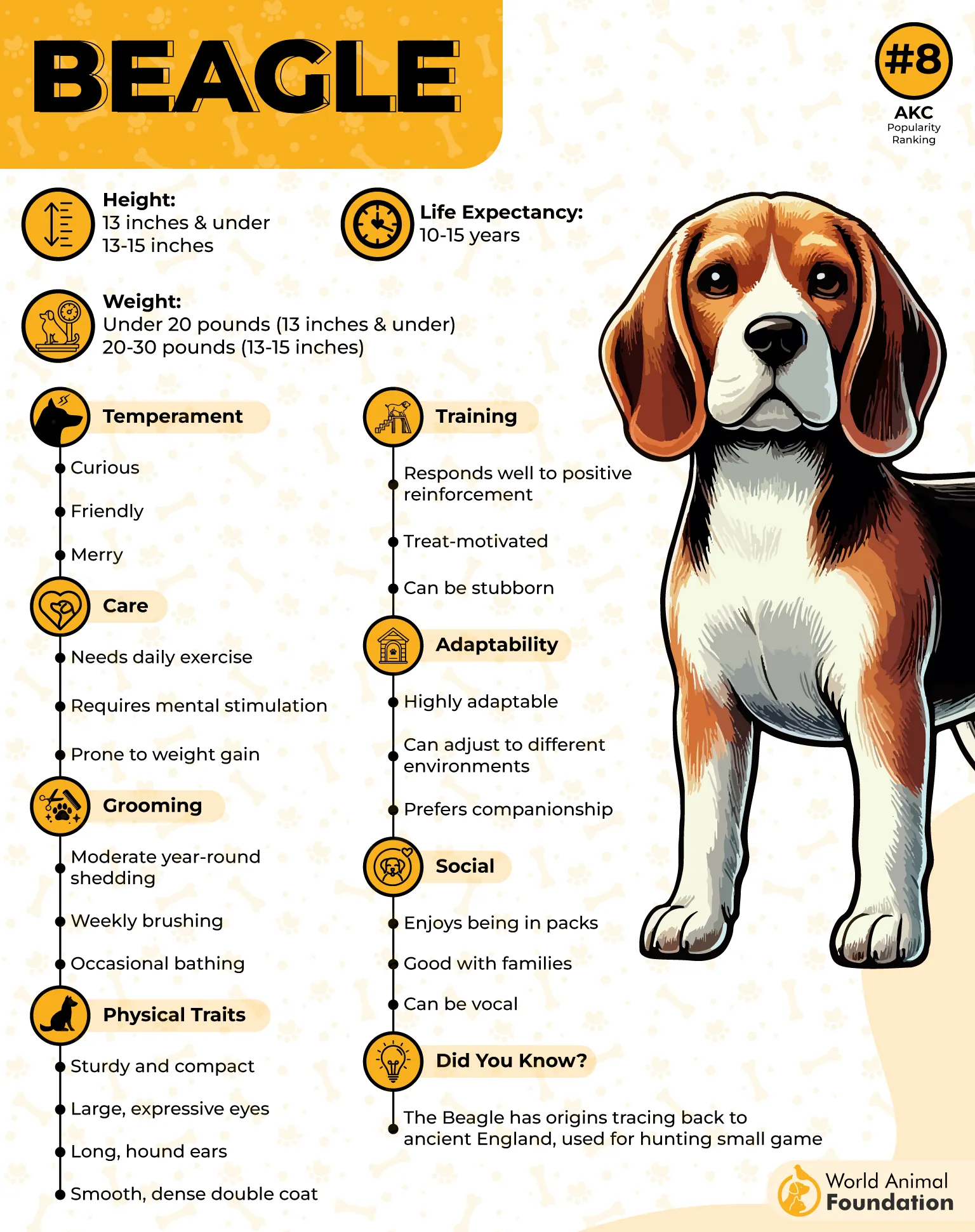
Its behavior is guided by scent focus, often prioritizing nose-led exploration over visual cues. This working background forms a dog that stays engaged through continuous environmental scanning.
Expression shaped by appearance and behavior
They are recognized through their low-set ears, broad head, and expressive eyes that reflect alert curiosity during movement. As per NBC, its coat shades range from pale cream to deeper tan tones, with white markings often blending into the overall pattern.
These features connect clearly to everyday traits:
Uses scent over sight during exploration
Shows a strong response to group presence
Maintains curiosity-driven movement patterns
Social behavior within groups
This ease in social settings reflects their history of pack hunting, where cooperation shaped behavior. It remains comfortable in shared environments and interacts naturally with both people and other dogs. This group-oriented mindset reduces isolation-driven behavior.
2. Saint Bernard
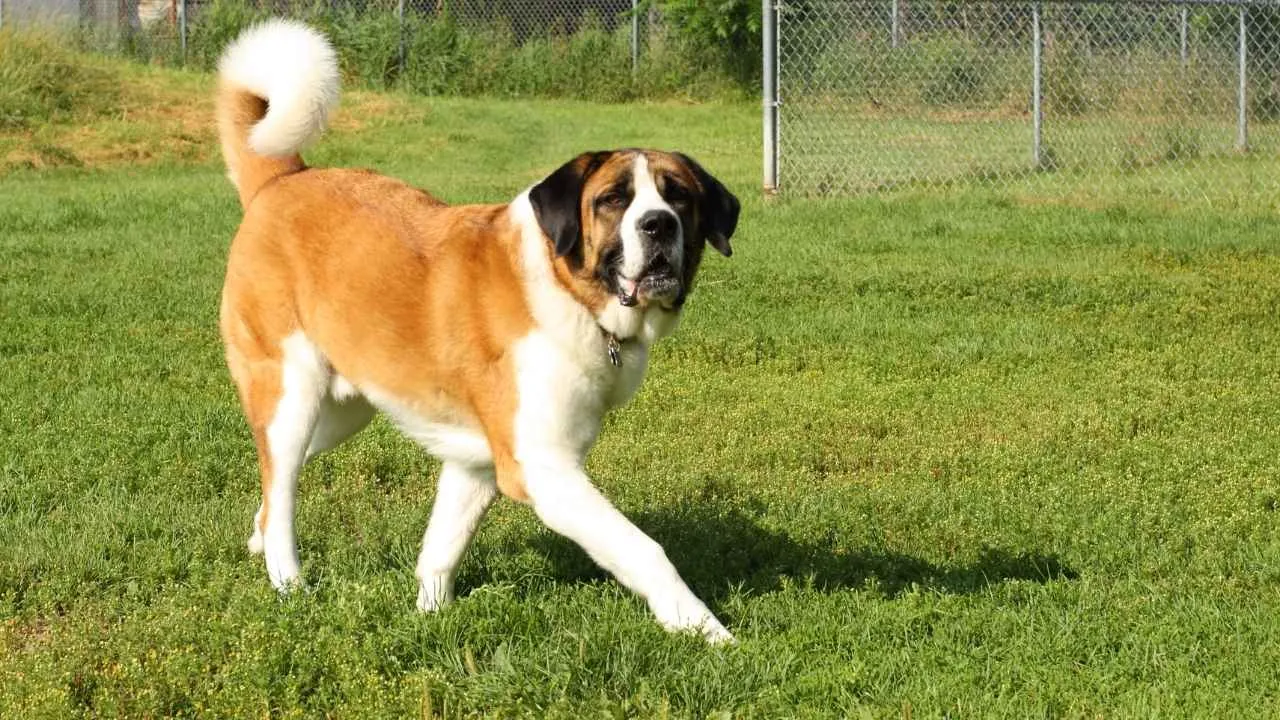
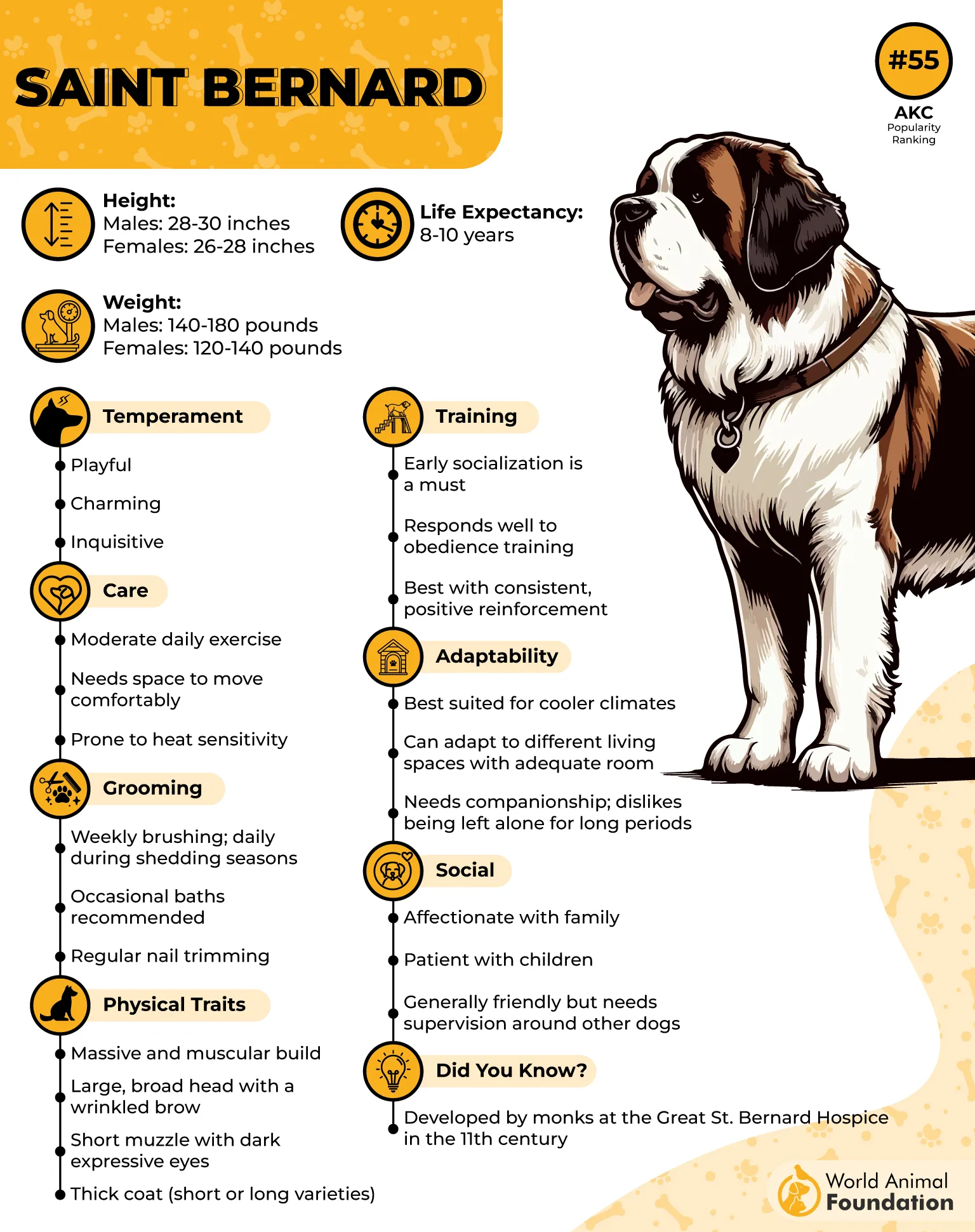
Saint Bernard shows a distinctive mix of white with orange, red, or brown shades, where the orange tone often dominates.
As per Britannica, this coloration comes from pheomelanin, the same pigment behind gold, tan, and cream hues. Their dense coat never appears as a single solid color; it always forms visible patterns.
Structure behind the giant frame
This large dog presents a massive, heavily muscled body described through terms like powerful and imposing in its standard. Its size reflects strength built for demanding alpine conditions rather than appearance alone.
This physical makeup is defined through key traits:
Dense muscle across the body
Broad, weight-bearing structure
Large, commanding overall frame
Temperament in daily life
Saint Bernard shows a patient and watchful nature, often remaining calm as it observes its surroundings. Its behavior with children reflects tolerance and steadiness rather than quick reactions. This controlled temperament shapes how it interacts within a home environment.
3. Treeing Walker Coonhound
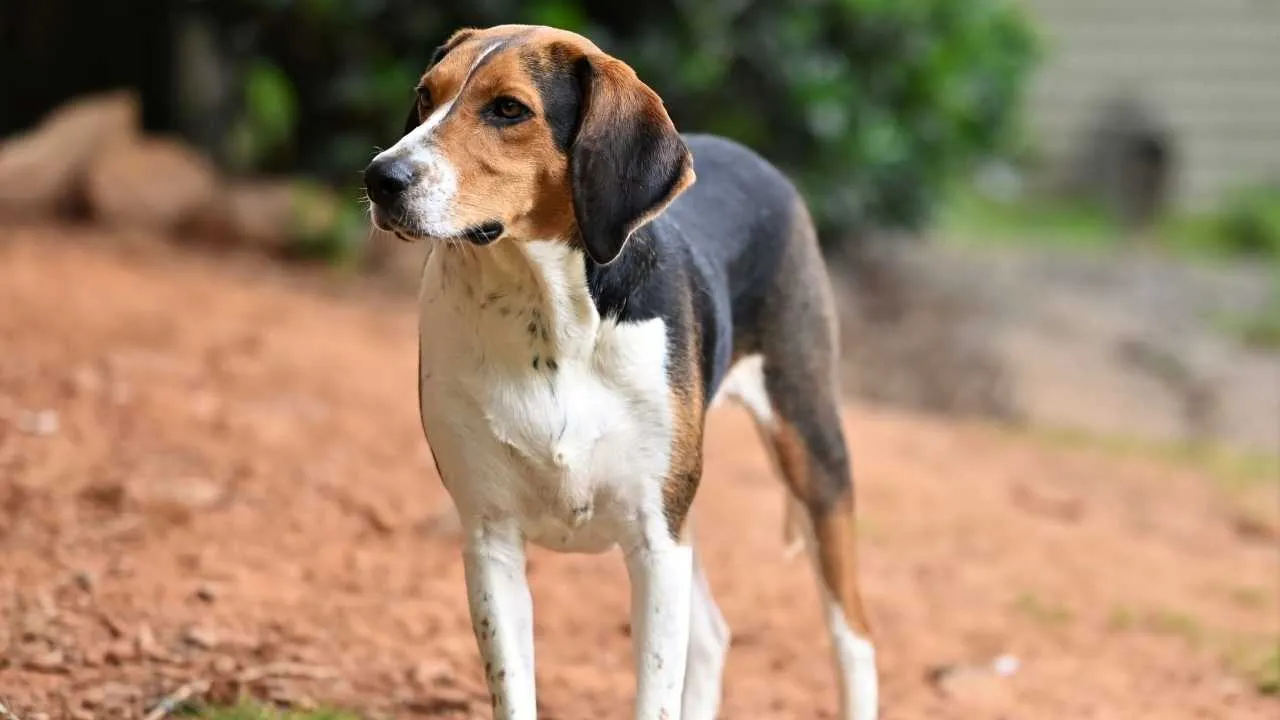
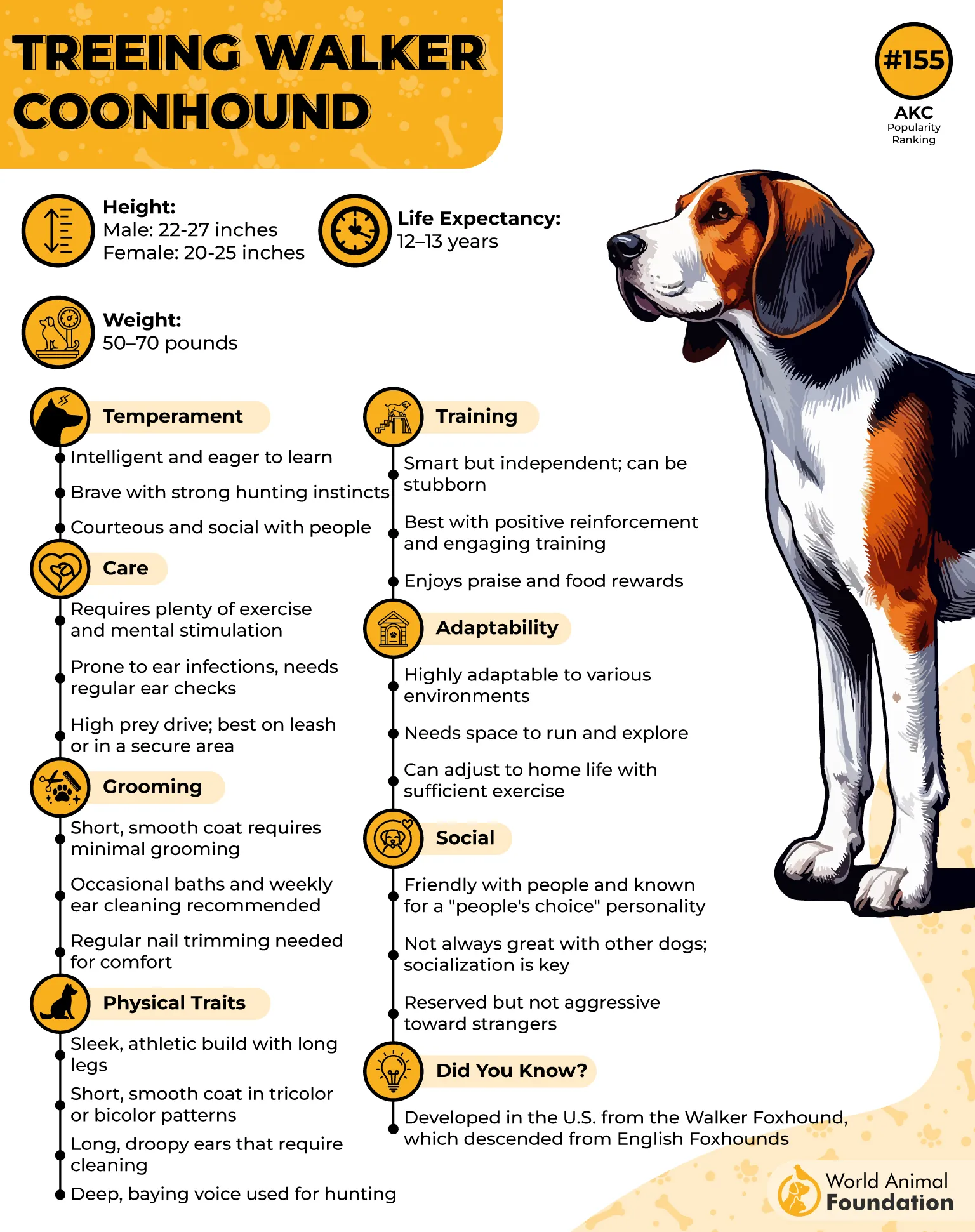
Treeing Walker Coonhound shows its identity through long, muscular legs and a streamlined frame built for covering ground quickly. Its running style reflects efficiency, where strength and stride work together without wasted effort. This physical design creates a fast, fluid presence during pursuit.
Structure behind that speed
They rely on powerful hindquarters that drive their forward motion with steady force across open terrain. Its build allows continuous tracking without frequent breaks, keeping pace during extended hunts.
That efficiency comes from clear physical features:
Long legs supporting an extended stride length
Muscular hindquarters provide propulsion
Streamlined frame reducing drag during movement
Coat and color in outdoor work
This Coonhound displays a tricolored coat of white, black, and tan, sometimes appearing in two-tone variations. Its short, smooth coat naturally repels dirt and mud, reducing the need for frequent cleaning. This makes it practical for rough outdoor conditions.
4. Chihuahua
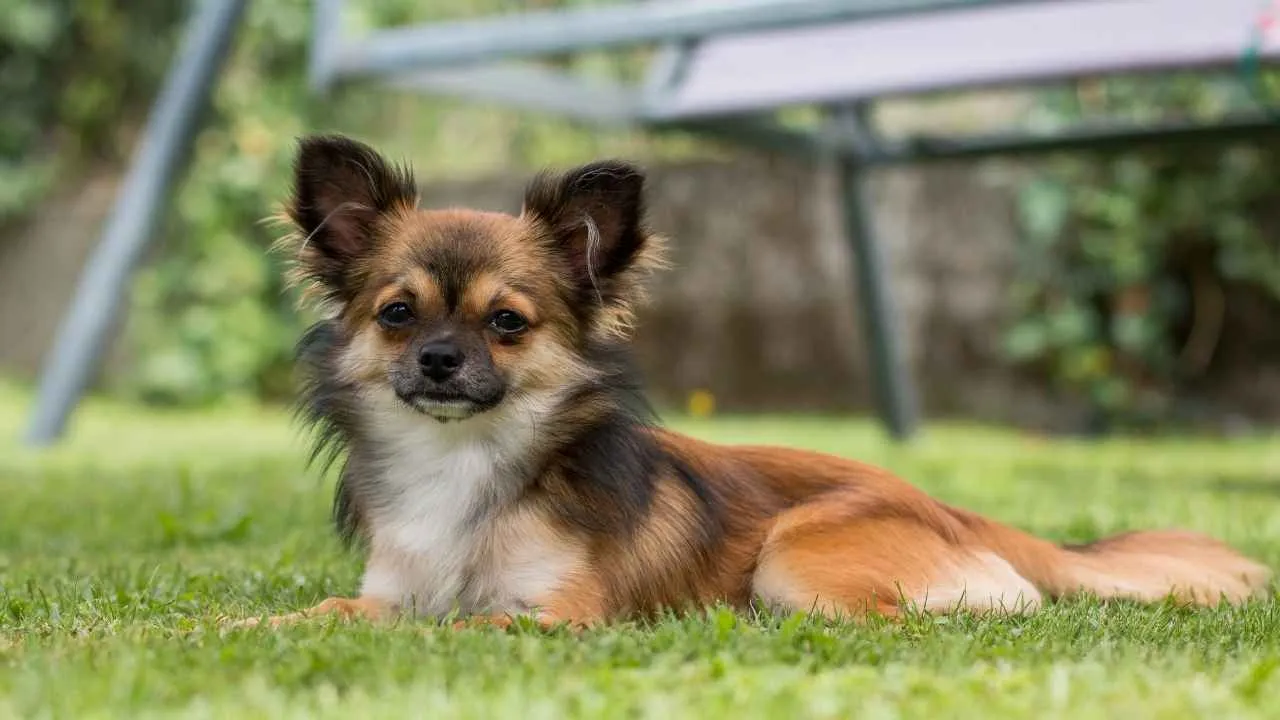
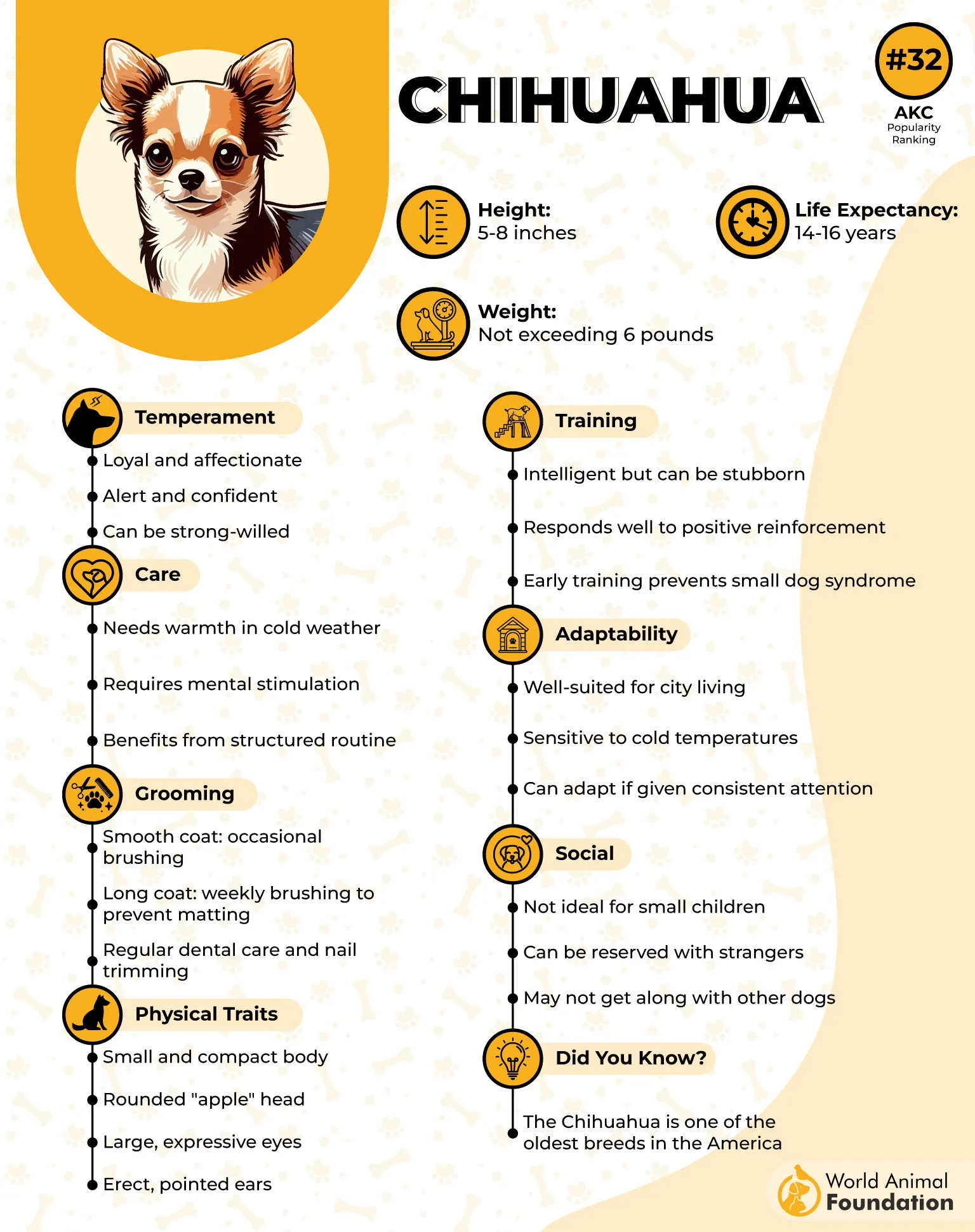
Chihuahua appears in a wide range of coat patterns, from solid white and fawn to mixes of tan, black, or spotted variations, as stated in Purina.
Both short-haired and long-haired types present this variety with noticeable contrast in texture and finish. This visual range gives the breed a distinct presence despite its small size.
Vocal nature and alert behavior
This breed reacts quickly to changes in its surroundings, often using its voice to signal unfamiliar activity or visitors. Its alertness is tied closely to how it perceives new environments and people.
That behavior becomes easier to read through patterns like:
Barks to signal an unfamiliar presence
Stays watchful around new faces
Shows protective reactions in close spaces
Bonding style and social limits
They form a close attachment to one or two people, showing constant attention and curiosity within that small circle. Its behavior shifts noticeably outside this bond, where unfamiliar interactions may trigger hesitation or tension. Early exposure influences how it handles wider social settings.
5. Jack Russell Terrier
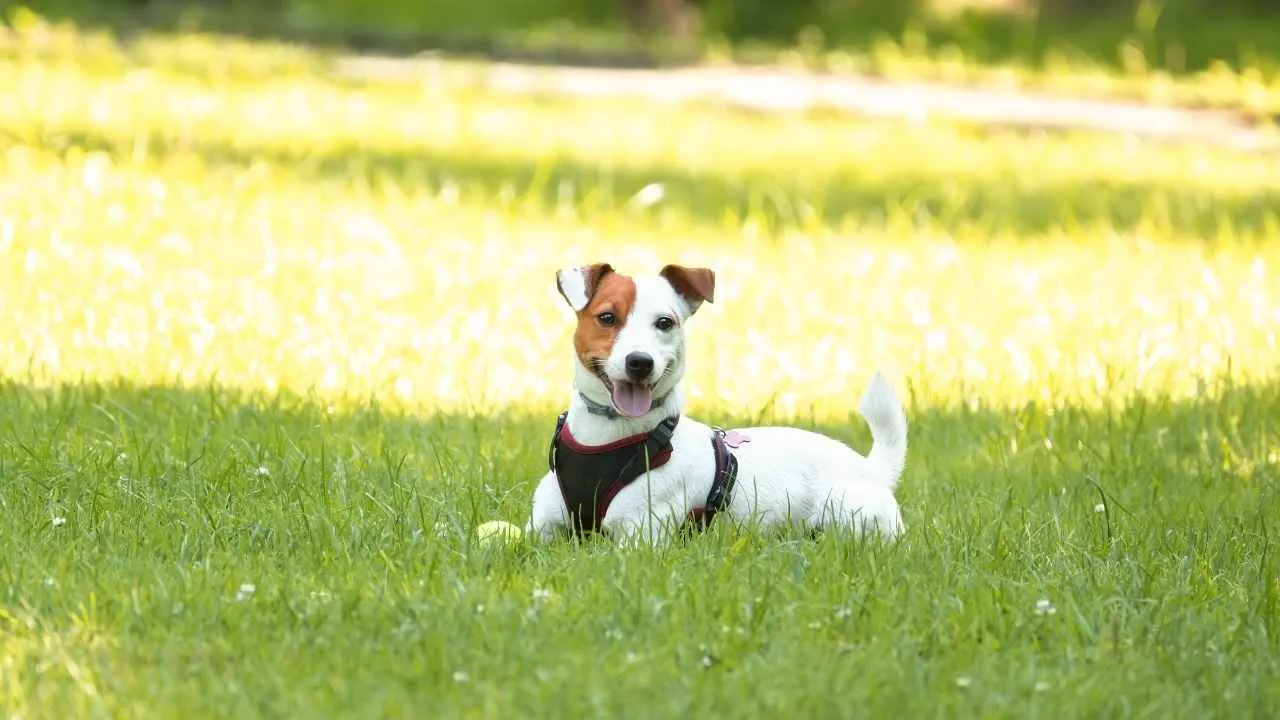
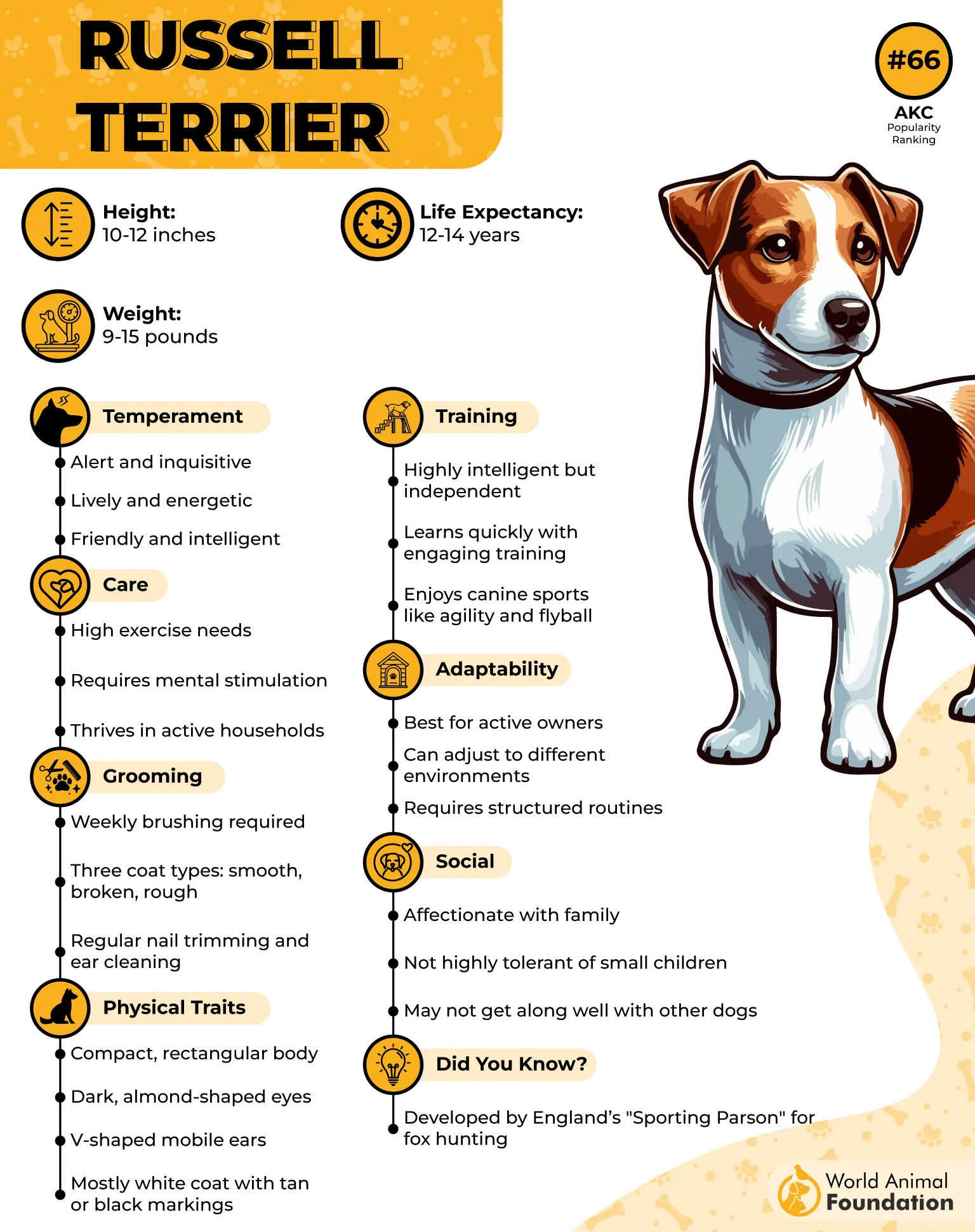
The Jack Russell Terrier presents a small yet muscular body, built low to the ground with a compact, sturdy form. According to Hills Pet, its coat combines a white base with black, tan, or brown markings that remain clearly visible even in motion.
However, the short coat, whether smooth or rough, keeps the overall appearance clean and defined.
Coat and physical detail
This little white dog breed has variations in coat texture while maintaining the same strong outline and tight build. Its physical structure supports agility, with a body designed for quick directional shifts during activity.
A closer look highlights these details:
Short coat in smooth or rough texture
White base with distinct darker markings
Compact, muscular frame for agility
Energy expressed through action
JRT’s show constant readiness for activity, often engaging in playful movement and vocal interaction. Its stamina and determination appear during extended play or focused tasks. This level of energy creates a fast-paced rhythm in daily life.
6. Shiba Inu
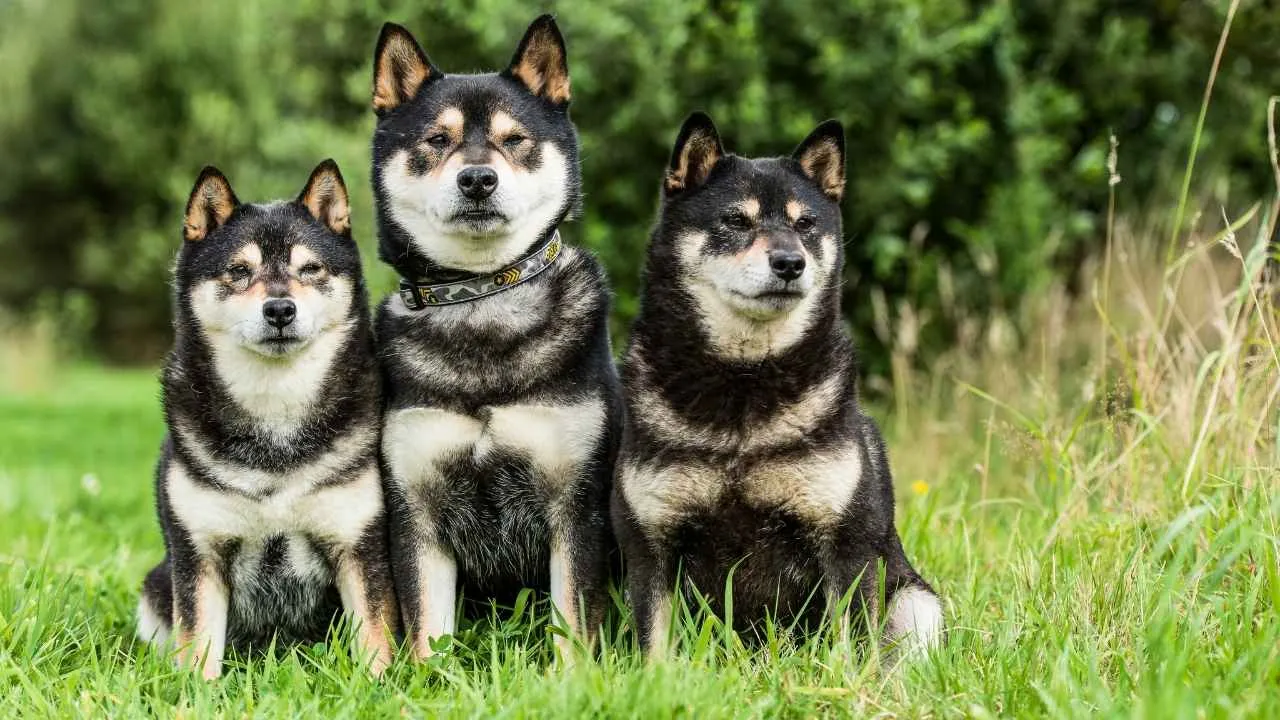
Shiba Inu catches attention with a compact, muscular frame paired with sharp white markings layered over red, sesame, or black and tan coats.
Its alert expression and smooth stride give it a foxlike appearance that feels both refined and watchful. The visual contrast between coat colors creates a clean, defined look.
Hunting roots in a compact form
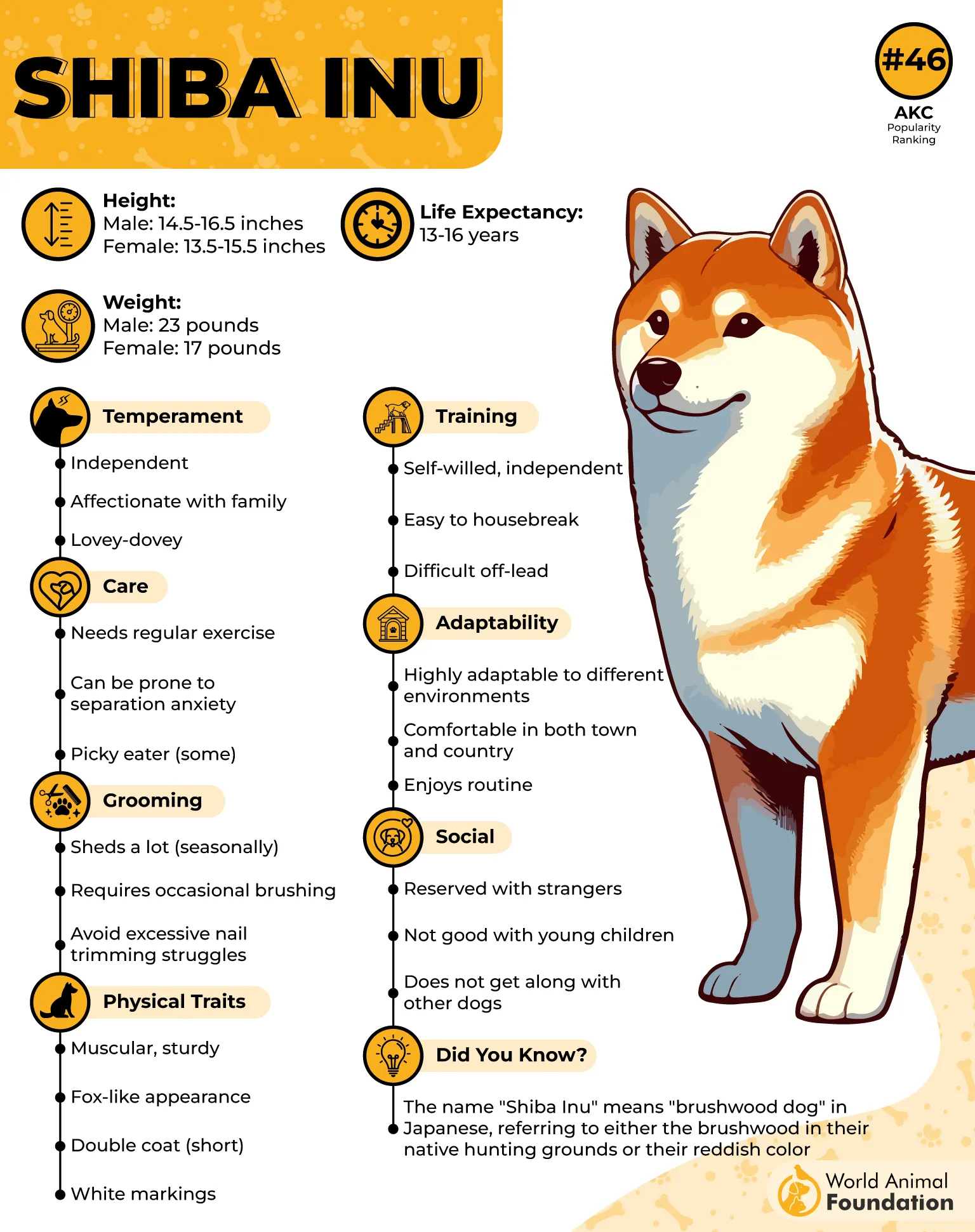
This muscular dog began as a small game hunter in Japan, using its sturdy build and awareness to work through varied terrain. That background shaped a dog that stays attentive while navigating both open and confined spaces.
These traits are reflected clearly in its structure:
Muscular body suited for quick directional shifts
Compact size for movement through dense areas
Alert posture linked to hunting awareness
Adaptability across living spaces
They fit comfortably into both rural and urban settings, adjusting without losing their composed nature. Its presence remains steady whether in a quiet home or a more active environment. This flexibility reflects its long-standing role as both worker and companion.
7. Smooth Fox Terrier
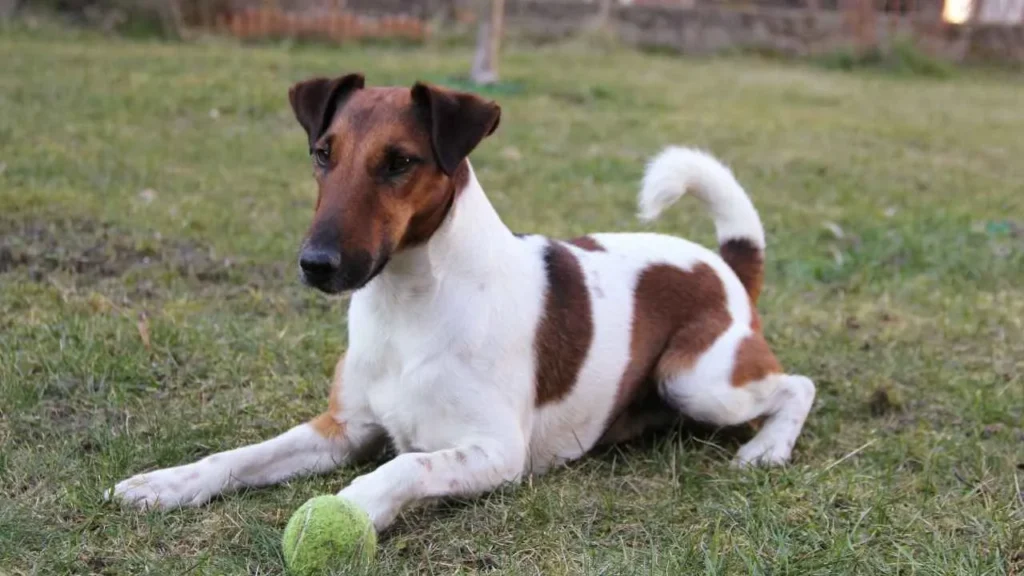
Smooth Fox Terrier is recognized for its predominantly white coat marked with black or tan, a coat shaped for visibility during traditional foxhunts. Its compact, balanced frame reflects a dog built for precision rather than bulk. The V-shaped head adds to its sharp, alert expression.
Field movement with controlled rhythm
These terriers work with a steady, pendulum-like gait, showing consistency in how it covers ground during pursuit. Its structure supports both stamina and coordination in active settings.
That working rhythm becomes clearer through:
Symmetrical body built for balanced motion
Short back supporting quick directional changes
Strong frame without heaviness
Temperament shaped by hunting roots
They have a lively and outgoing personality, often engaging actively with their surroundings. Its background in foxhunting reflects a bold attitude paired with curiosity during exploration. This energy stays directed rather than scattered.
Conclusion
White and tan dogs show how appearance connects with function in ways that are not always obvious at first. The breeds in this list highlight how coat patterns, structure, and behavior come together to shape everyday life. Some bring calm steadiness, while others carry energy that keeps movement constant, something experienced pet parents often notice early.
These differences become clearer the longer you live with them. What begins as a simple preference for color, whether a fluffy white dog or one with a low-shedding coat, often turns into a better understanding of what suits your home. When the balance feels right, the dog’s presence fits naturally, adding character and familiarity without creating unnecessary effort or disruption over time.
