




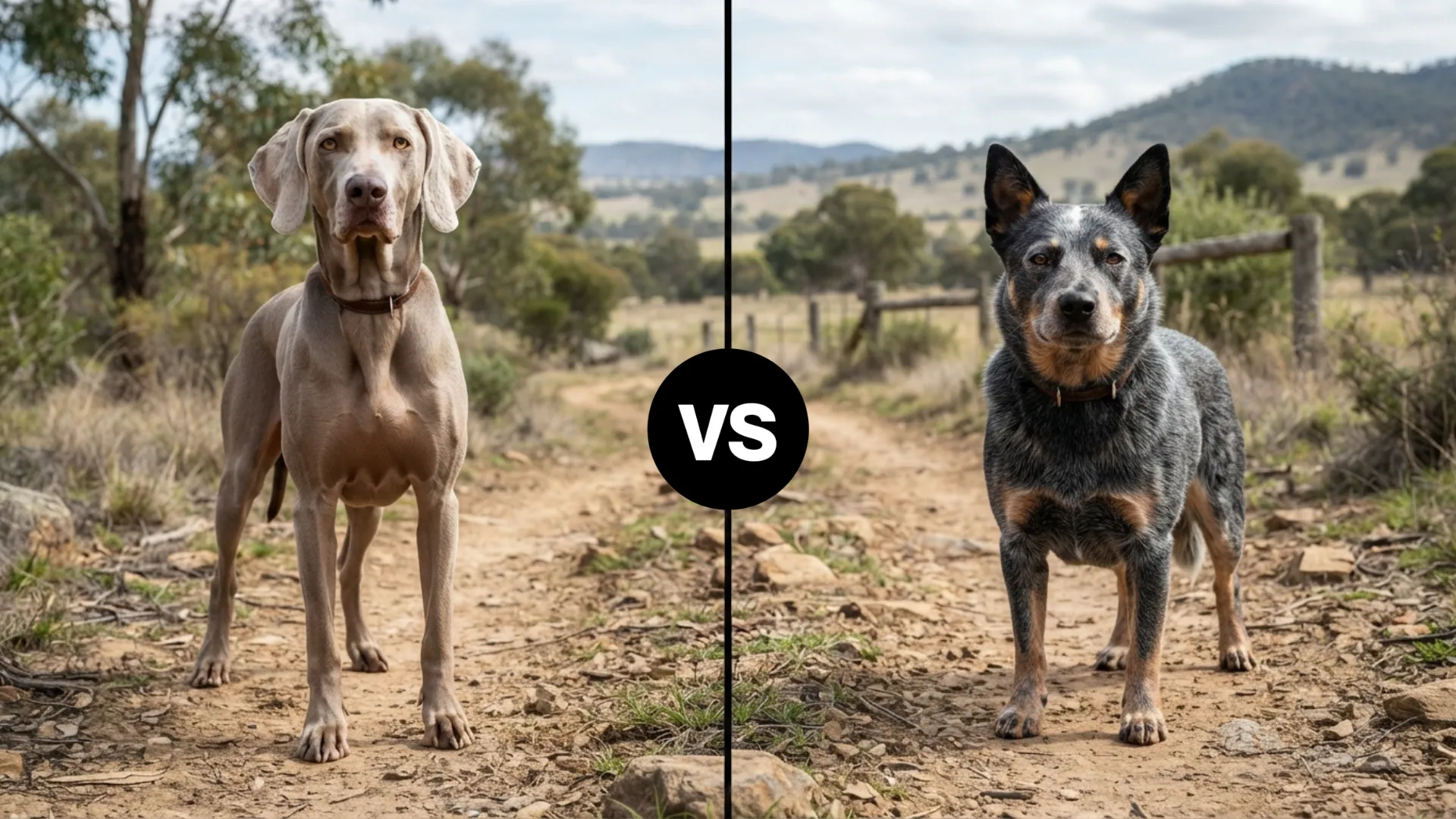
On the surface, the Weimaraner and the Australian Cattle Dog seem like two versions of the same idea: an athletic, intelligent, energetic dog built for an active owner.
They’re not.
The Weimaraner is a sleek, sporting-type breed built for companionship and hunting. The Australian Cattle Dog is smaller and more compact, with instincts wired toward herding cattle, and it was bred to work on rough, unforgiving terrain.
One thrives on running, retrieving, and fieldwork. The other is happiest when it has a job to do.
That difference matters.
Neither breed will be satisfied with just a big yard. Both need real training and real interaction. Your lifestyle will ultimately decide which one is the better fit: a sporting dog or an independent herding dog.
Weimaraner vs. Australian Cattle Dog: Key Differences Every Owner Should Know
Here’s a simple comparison of the major differences between the Weimaraner and the Australian Cattle Dog. It will help you understand which breed may be a better fit for your home and lifestyle.
Origins & Purpose
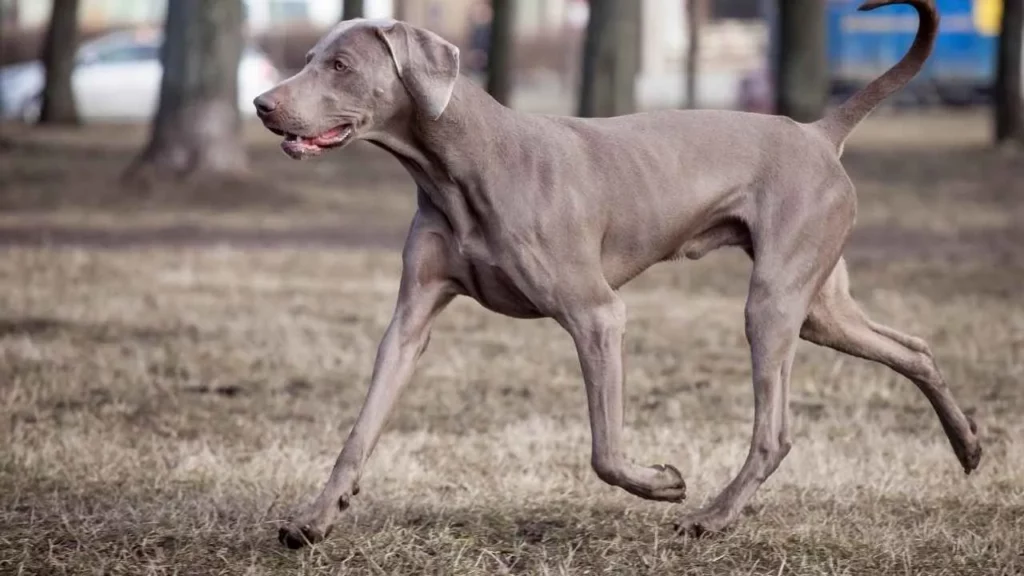
Known as the “Gray Ghost” by the American Kennel Club, the Weimaraner is a German breed developed for hunting. Early Weimaraners were used for big game, and later breeding shifted their focus toward bird work and retrieving. That history still shows today in their body structure, stamina, and tracking instincts.
The Australian Cattle Dog was bred for a completely different purpose. Australian stockmen needed a tough, rugged dog that could round up cattle across huge properties, one that was alert, courageous, and self-reliant.
That legacy still shapes its behavior today. This breed also goes by the names Queensland Heeler and Blue or Red Heeler, and true to the nickname, it has a habit of nipping at cattle’s heels to drive them forward.
When it comes to taking action, a Weimaraner will typically look to its owner for guidance. An Australian Cattle Dog, on the other hand, tends to size up a situation on its own before acting.
That’s one of the biggest differences between the two.
Size & Build
The Weimaraner is the larger of the two. Males typically stand 25-27 inches at the shoulder and weigh 70-90 lbs, while females range from 23-25 inches and 55-75 lbs. Their bodies are slender, muscular, and built for speed.
Australian Cattle Dogs are noticeably smaller, usually standing 17-20 inches tall and weighing around 35-50 lbs. Despite their size, they’re surprisingly sturdy and well-muscled.
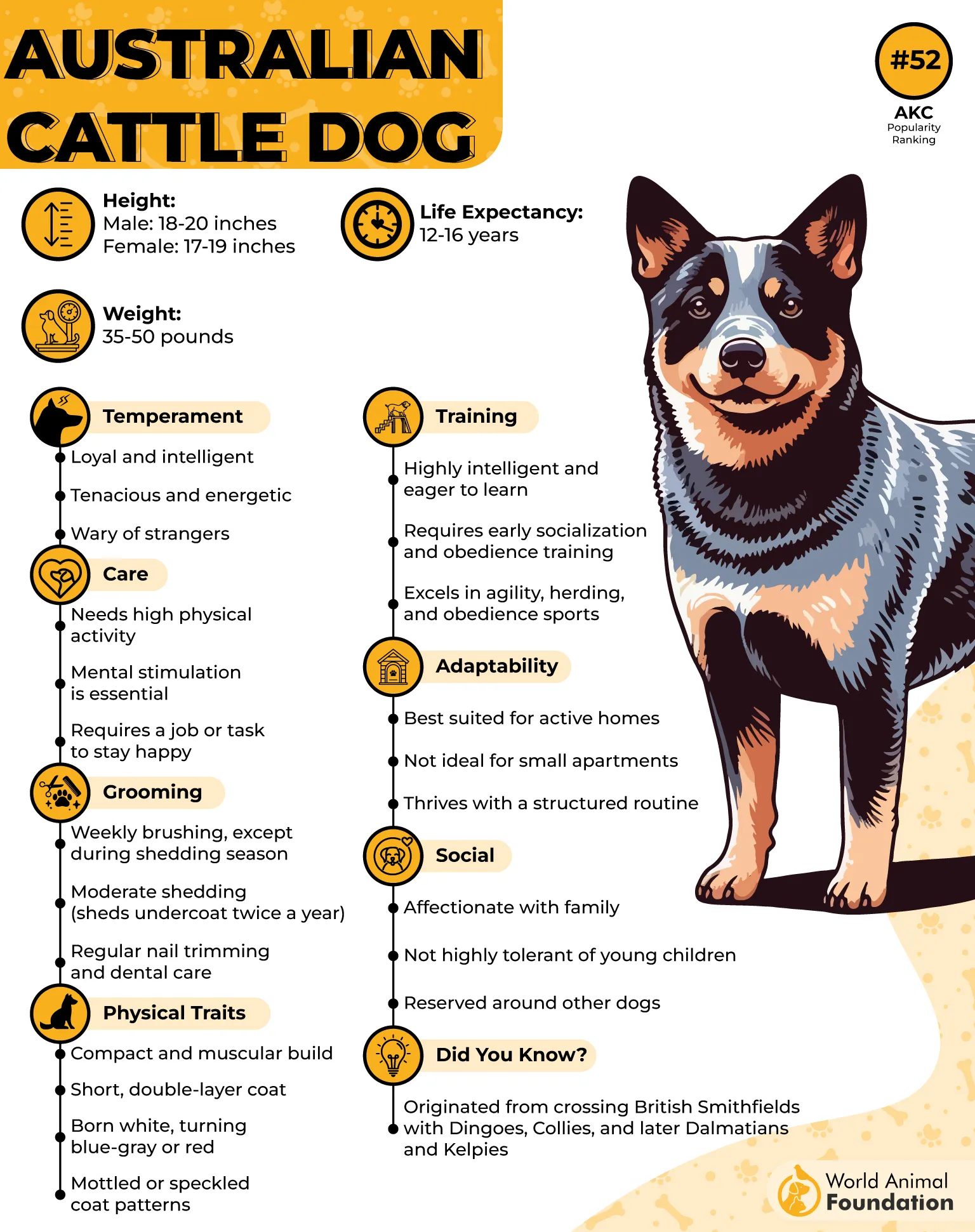
The visual difference is easy to spot. The Weimaraner has a long-legged, streamlined build, while the Australian Cattle Dog has a low-set, compact, working-dog frame.
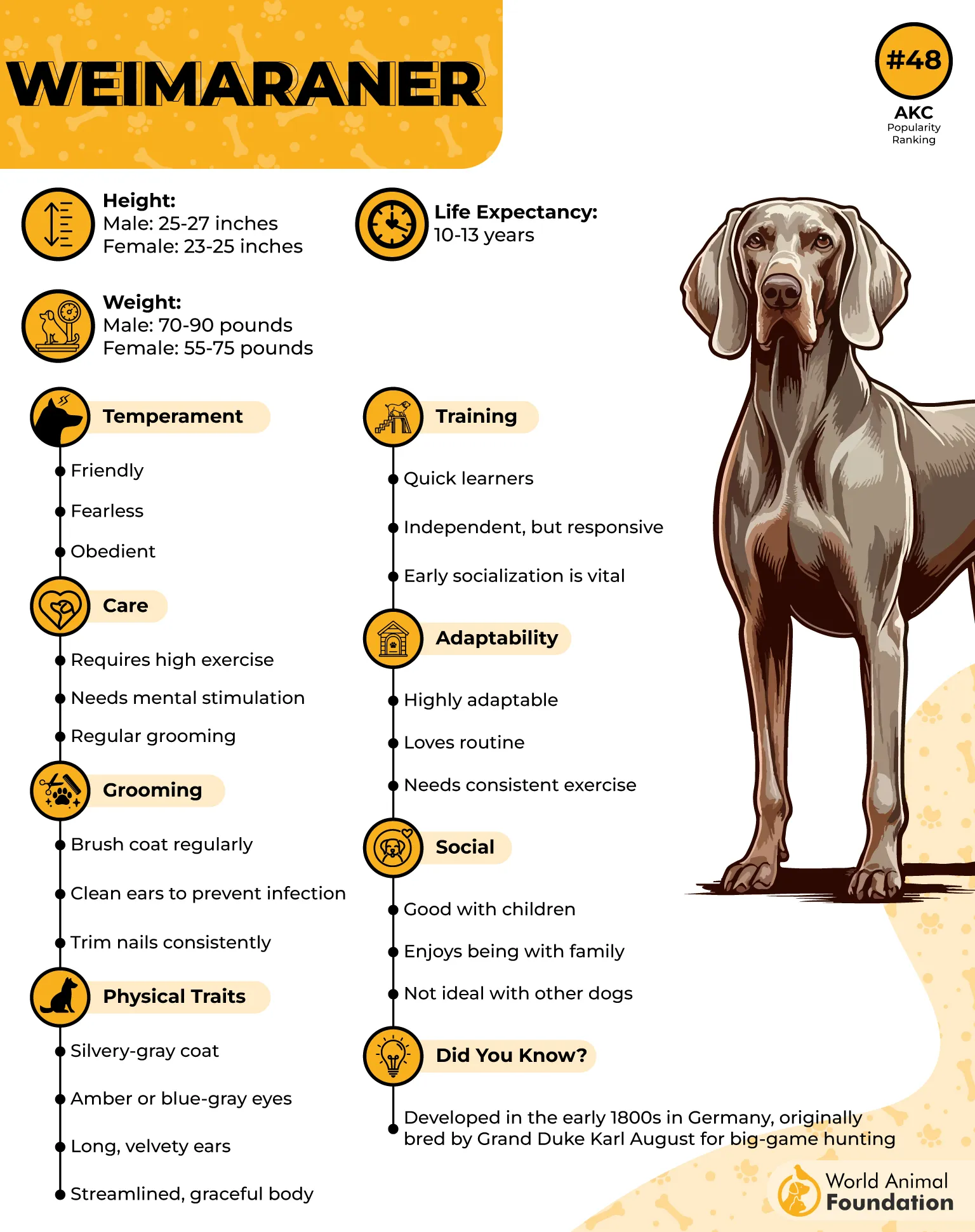
If you want a running partner with a longer gait, the Weimaraner has the edge. If you’d prefer a smaller, ruggedly built breed, the Australian Cattle Dog might suit you better.
Pricing & Availability
A purebred Weimaraner puppy generally costs between $800 and $2,200
An Australian Cattle Dog costs anywhere from $50 to $3,000 upfront
The price you’ll pay can vary quite a bit from breeder to breeder, depending on location, pedigree, health testing, and demand. Neither breed comes with a uniform price tag.
Since the Weimaraner has a long history in the United States, it tends to be a bit easier to find through established sporting-dog breeders.
Australian Cattle Dogs are also well known, but litters can be smaller, and it’s not uncommon to end up on a waiting list for a puppy.

Whatever you do, resist the urge to just go with whichever one’s cheaper.
Both breeds call for careful health screening, so only work with breeders who provide written guarantees on the parents’ health. For Australian Cattle Dogs, look for genetic testing along with hip, elbow, eye, and hearing evaluations. For Weimaraners, responsible breeders often test hips, heart, eyes, thyroid, and certain genetic conditions.
A lower upfront price can end up costing you far more down the line if responsible breeding practices weren’t followed.
Temperament & Personality
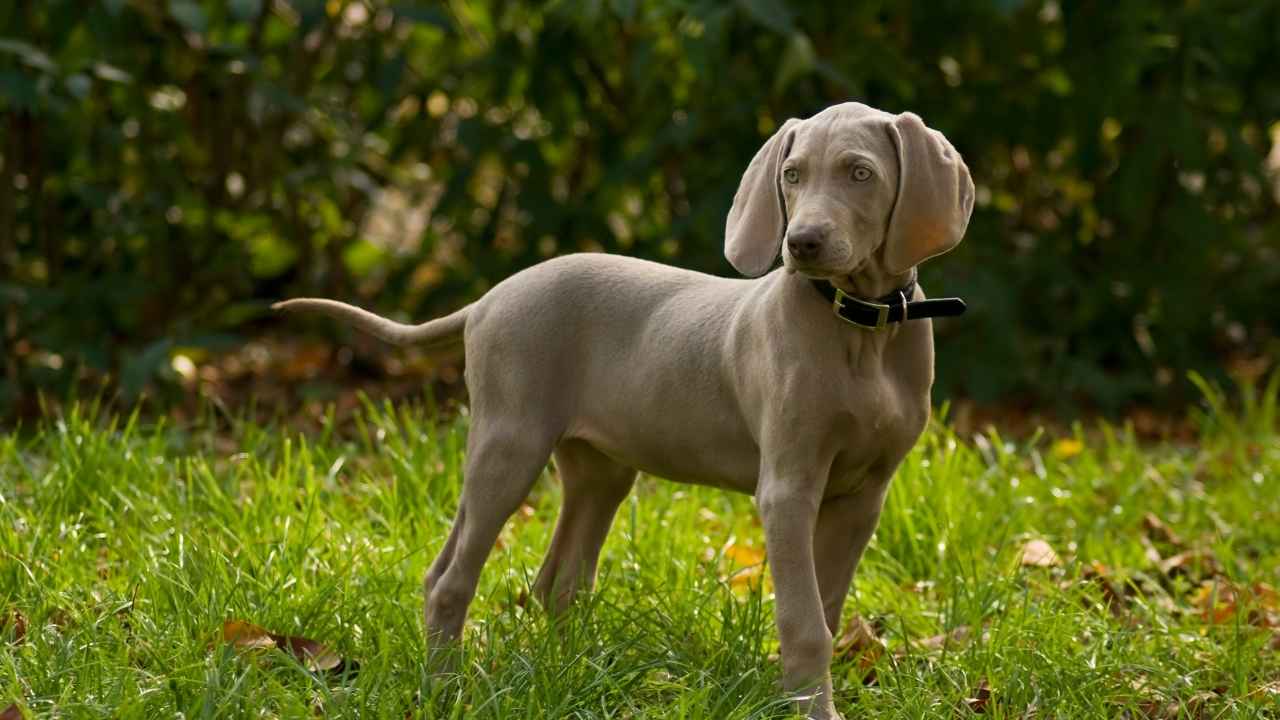
According to PetMD, Weimaraners are friendly and fearless by nature, and they often want to be right in the middle of whatever their owner is doing.
That makes them great for active families, though their intensity can be a lot for some family members to handle. Weimaraners can also be prone to separation anxiety, and some develop separation-related issues if they aren’t gradually taught how to cope with being alone.
Australian Cattle Dogs tend to be more independent. They stay close to their families but can be wary of strangers.
Their herding instinct is also worth keeping in mind. An Australian Cattle Dog may try to control movement around it, which can look like chasing or nipping at kids, bikes, or other moving animals. A Weimaraner, on the other hand, is more likely to chase or hunt out of instinct.
Neither breed is the laid-back, passive type.
Energy Levels & Exercise Needs
Both breeds are highly energetic, though they gravitate toward different kinds of activity.
The Weimaraner is built to move. Running, hiking, swimming, retrieving, tracking, and dog sports all make great outlets for their energy.
Australian Cattle Dogs also need plenty of exercise, but simply tiring out their legs isn’t enough. They need mental stimulation just as much. Obedience training, agility, herding, scent work, and problem-solving games all give an Australian Cattle Dog a real sense of purpose.
Trainability & Obedience
Both breeds are smart, but smart doesn’t automatically mean easy to train.
Weimaraners pick things up quickly; unfortunately, that includes bad habits too. Consistency is key, and early socialization, puppy training, and creative ways to keep them engaged all go a long way.
Purina describes the Australian Cattle Dog as an agile, highly responsive breed capable of learning complex routines thanks to its working heritage. That said, their independent streak can be tricky for an inexperienced owner to manage.
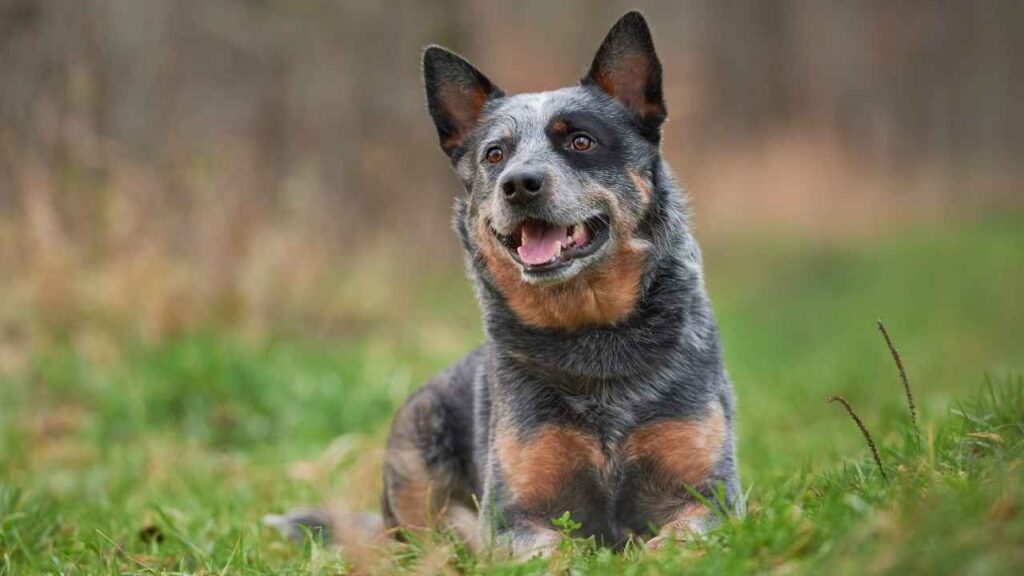
Short training sessions tend to work better than repetitive drills, and reward-based training makes the most of their natural problem-solving instincts.
Early, consistent training matters for both breeds. The difference is in mindset: a Weimaraner generally wants to work alongside you, while an Australian Cattle Dog wants to understand why the job matters in the first place.
Grooming Needs & Shedding
Grooming-wise, the Weimaraner is about as low-maintenance as it gets. As a short-haired dog, it needs regular brushing to remove dead hair, along with routine nail care and ear cleaning.
The Australian Cattle Dog is also fairly easy to groom. Its smooth double coat protects it from the elements and typically only needs brushing once a week, though shedding picks up during seasonal changes, so a bit more brushing helps during those stretches.
Both breeds are low maintenance overall. The main difference is that Australian Cattle Dog owners will notice more shedding, while Weimaraner owners mostly deal with short hairs that occasionally turn up on furniture and clothing.
Outdoor Adventure & Exploration
The Weimaraner makes an amazing partner for long-distance running, swimming, hiking, or a full weekend of field activities. As a sporting dog, it’s built to stay active for extended stretches and genuinely enjoys doing it alongside its owner.
The Australian Cattle Dog, on the other hand, has a strong drive to herd and may try to control the movement of objects or animals around it. Solid recall training is a must before letting one off-leash in an unsecured area. This breed also shines in agility and other technical disciplines that call for quick changes of direction.
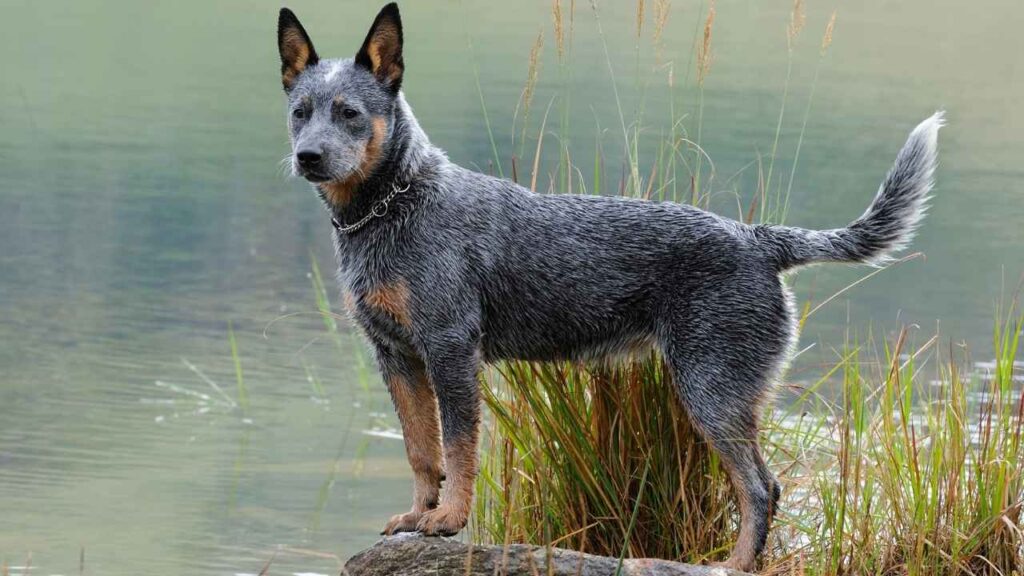
So when it comes to raw endurance, the Weimaraner takes the win, while the Australian Cattle Dog excels at structured, high-focus work where speed, accuracy, and discipline matter most.
Health & Lifespan
The average Weimaraner lives 10-13 years. One major health concern for the breed is gastric torsion, a medical emergency where the stomach dilates and rotates, which can quickly turn life-threatening. Owners should know the warning signs and get to a vet immediately if they appear.
Australian Cattle Dogs tend to live a bit longer, typically 12-16 years, though this can vary. Responsible breeders screen for several inherited conditions, including progressive retinal atrophy, hip dysplasia, and other eye issues. Recommended testing includes hearing tests along with ophthalmic and orthopedic exams.
All of this is another good reason to vet your breeder thoroughly. DNA testing can also help flag any pre-existing health conditions early on.
Weimaraner vs. Australian Cattle Dog: Which Active Dog is Best for You?
If you want a dog that can keep up with long runs, hikes, fieldwork, and outdoor adventures, the Weimaraner is the stronger pick.
If you’re after a smaller dog with an all-out working drive, the Australian Cattle Dog is the better fit.
Your home life matters here too. Someone working long hours away from home may struggle to meet a Weimaraner’s need for closeness and companionship. Meanwhile, an Australian Cattle Dog’s energy and herding drive could easily overwhelm someone hoping for a more laid-back dog.

Either way, both breeds need owners genuinely willing to make activity, training, and engagement a real part of daily life.
Conclusion
Both the Weimaraner and the Australian Cattle Dog are ready for adventure; they just have very different ideas of what that adventure should look like.
One was shaped by the hunting field, the other by cattle stations and years of hard livestock work. One tends to shadow its owner everywhere, while the other is deeply loyal but carries a more independent streak.
That distinction becomes especially clear once puppyhood is over.
If you want a devoted sporting companion, the Weimaraner is your dog. If you want a clever, tough working dog, the Australian Cattle Dog is the right call.
Match the right dog to the right role, and you’ll set yourself up for a great life together.
