




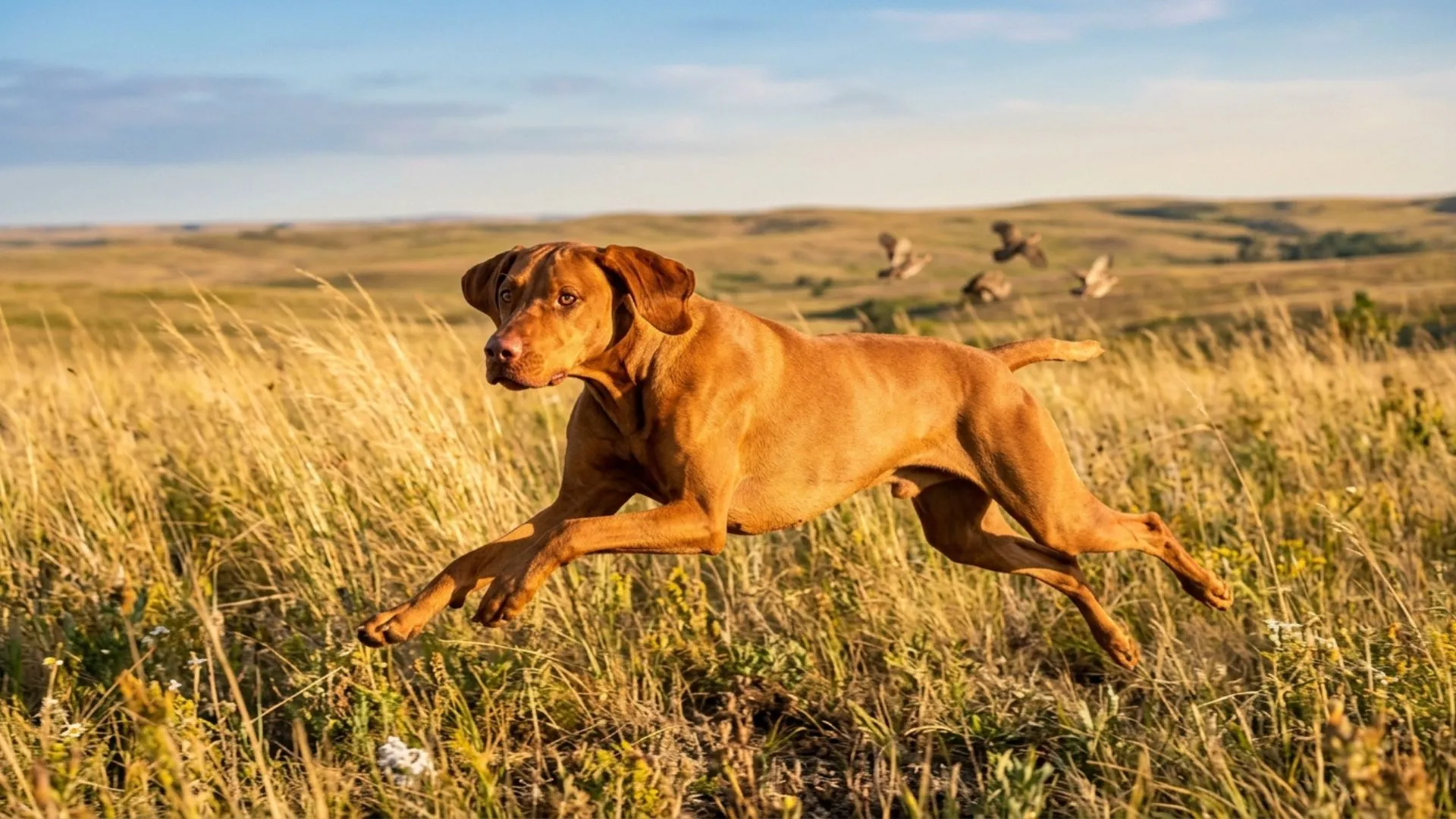
Bird hunting looks effortless when a skilled dog glides through a field, catches a faint scent, freezes on point, and waits for the handler to approach. Behind that polished performance is a finely tuned sequence involving smell, movement, self-control, communication, and generations of selective breeding.
The breeds below were developed for different landscapes, including open plains, thick upland cover, wetlands, icy bays, and agricultural fields. Some range widely, some remain close to the handler, and others wait patiently until the bird is in the air or has fallen.
Their shared talent is the ability to turn intense prey drive into coordinated work rather than uncontrolled bird-chasing chaos.
Versatile Dog Breeds That Chase Birds Across Wide Plains
1. English Setter
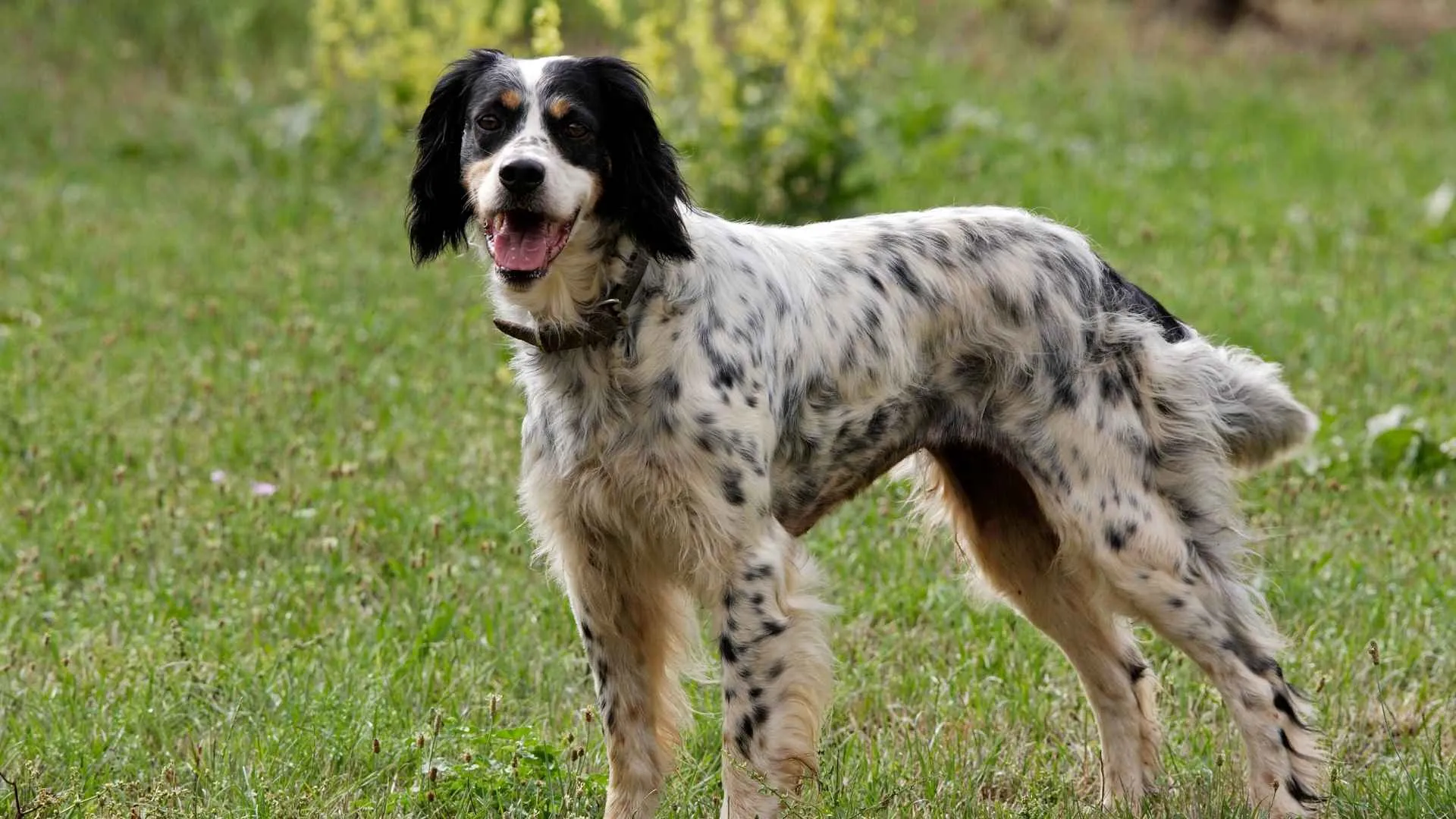
The English Setter has spent more than four centuries helping hunters locate birds such as grouse, pheasants, and quail across the British countryside, as noted by the AKC.
Its name comes from the distinctive “setting” posture the dog assumes when it finds bird scent. Rather than rushing forward and scattering the quarry into the next county, the Setter lowers its body and remains focused in the bird’s direction.
Some of the most popular dog breeds out there, they work by ranging in front of the handler and moving across the wind in broad, efficient patterns. Their feathered coat helps protect them from vegetation, although it also collects burrs, seeds, and enough woodland debris to start a small craft project.
These hunting companions are intelligent and eager to cooperate, but birds can make ordinary obedience suddenly feel like a real choice. Consistent reward-based training should develop recall, steadiness, directional control, and the ability to remain still after a bird takes flight.
Their Bird Chasing Process
Wide-ranging search: The English Setter moves ahead in sweeping patterns, placing its nose across changing air currents to locate hidden upland birds.
Scent-to-set transition: Once the odour strengthens, it slows, lowers its body, and freezes while facing the bird’s position.
Controlled flush: After the handler arrives, the dog advances on command so the bird takes flight, then remains steady instead of chasing uncontrollably.
2. German Shorthaired Pointer
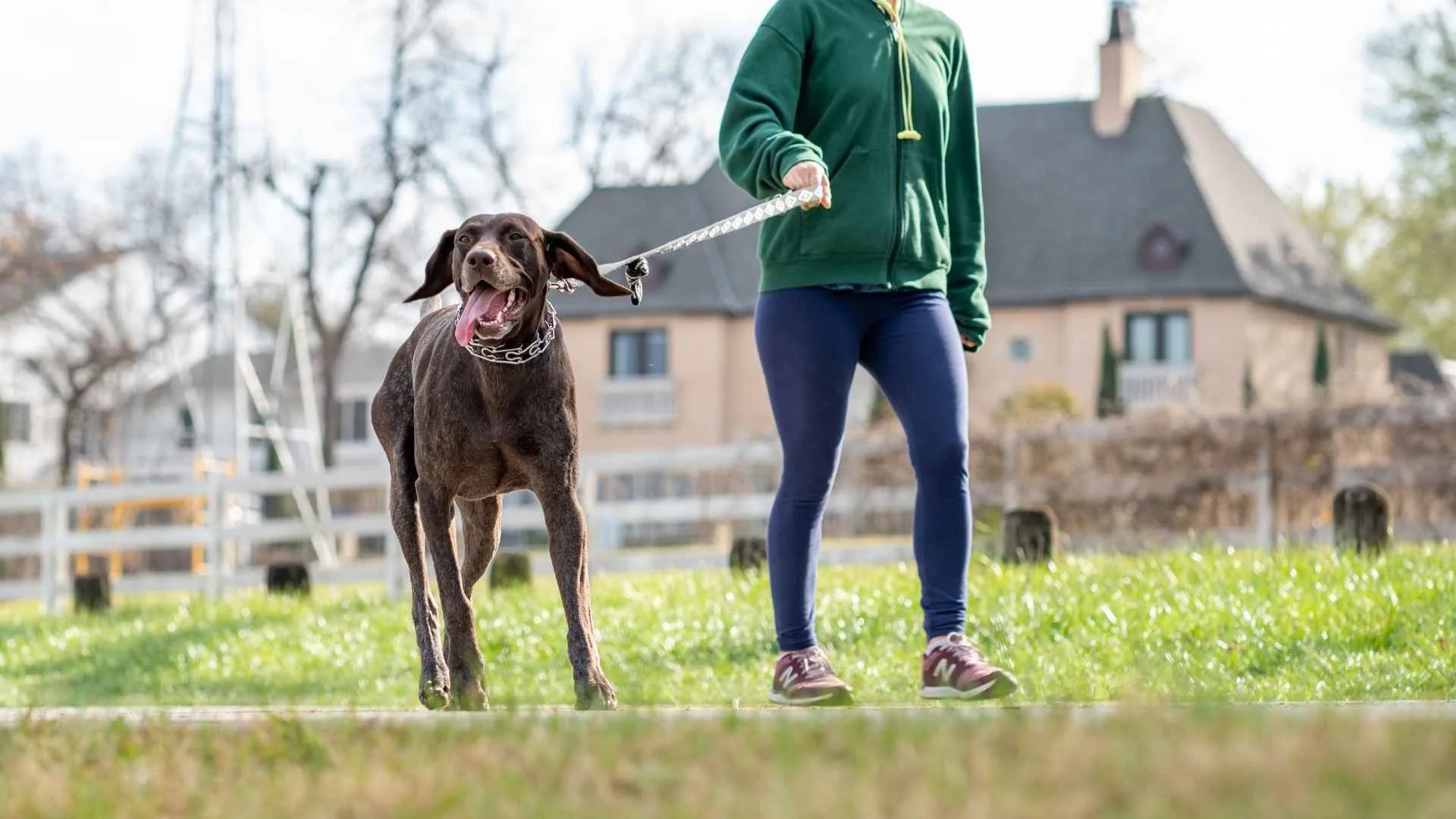
The German Shorthaired Pointer is a multipurpose hunting dog developed to search, point, track, chase, and retrieve across varied terrain. Its athletic frame, deep muzzle, open nostrils, and powerful movement let it cover fields quickly while continuously analysing scent.
These Pointer dogs commonly work farther and faster than many close-ranging gun dogs. They quarter across the breeze, moving from side to side so airborne bird scent has a better chance of reaching their noses.
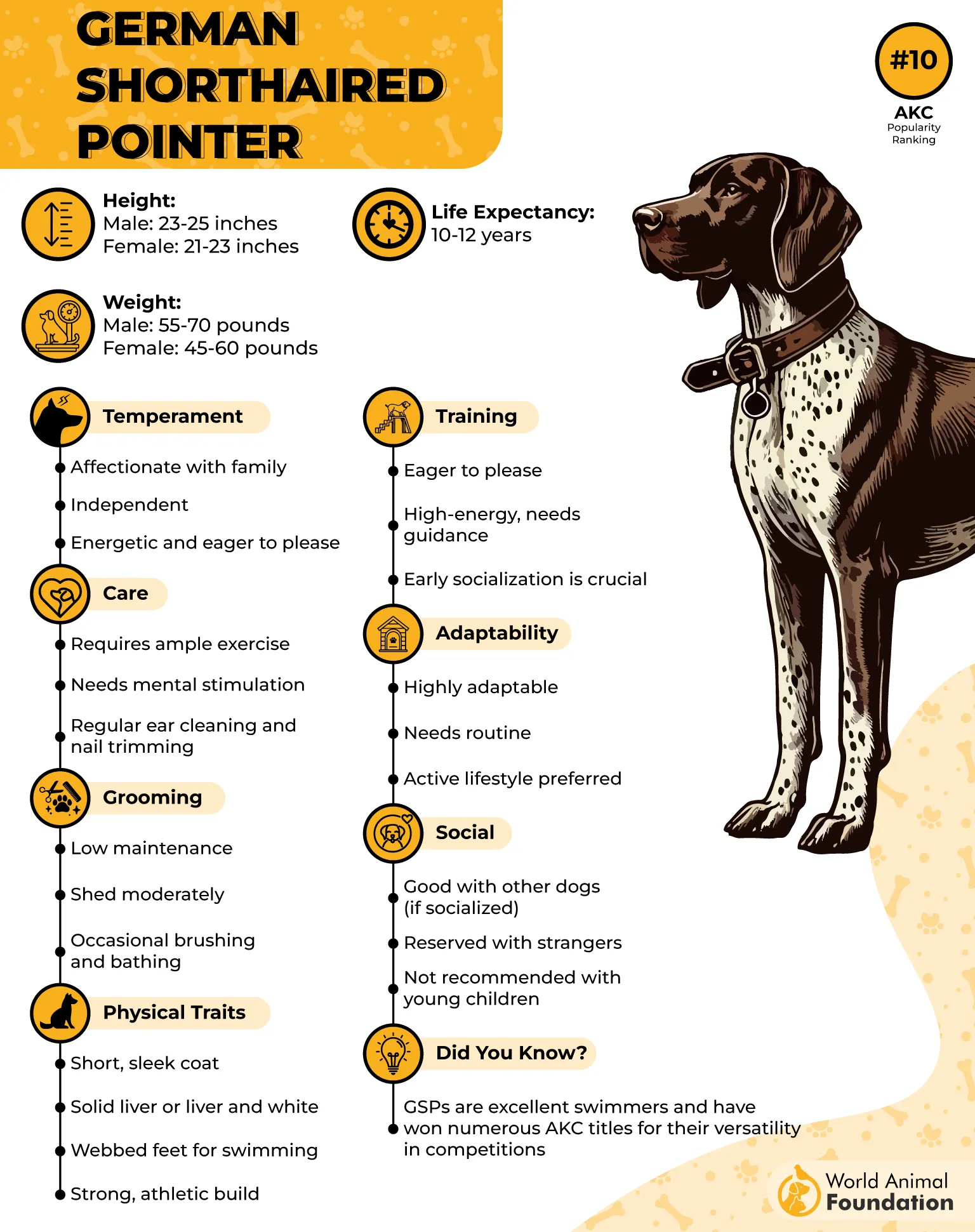
A classic GSP point involves a rigid body, intense stare, extended neck, and sometimes a raised front paw. This posture tells the handler that a bird is nearby while preventing the dog from flushing it too early.
The moment can look like a wildlife painting, except the subject may be internally screaming, “Bird detected, permission to become unhinged?” Their prey drive can easily be redirected towards backyard birds, cats, rabbits, and any smell that appears more exciting than the handler.
Their Bird Chasing Process
Fast quartering: The GSP crosses open ground in broad arcs, using speed to sample scent over a much larger area than a walking handler could search.
Precise pointing: It narrows the scent cone, stops before reaching the bird, and holds a rigid position that gives the hunter time to approach.
Flush-and-retrieve sequence: When directed, the dog may push the bird into flight, remain steady through the shot, and then recover the fallen quarry.
3. Vizsla
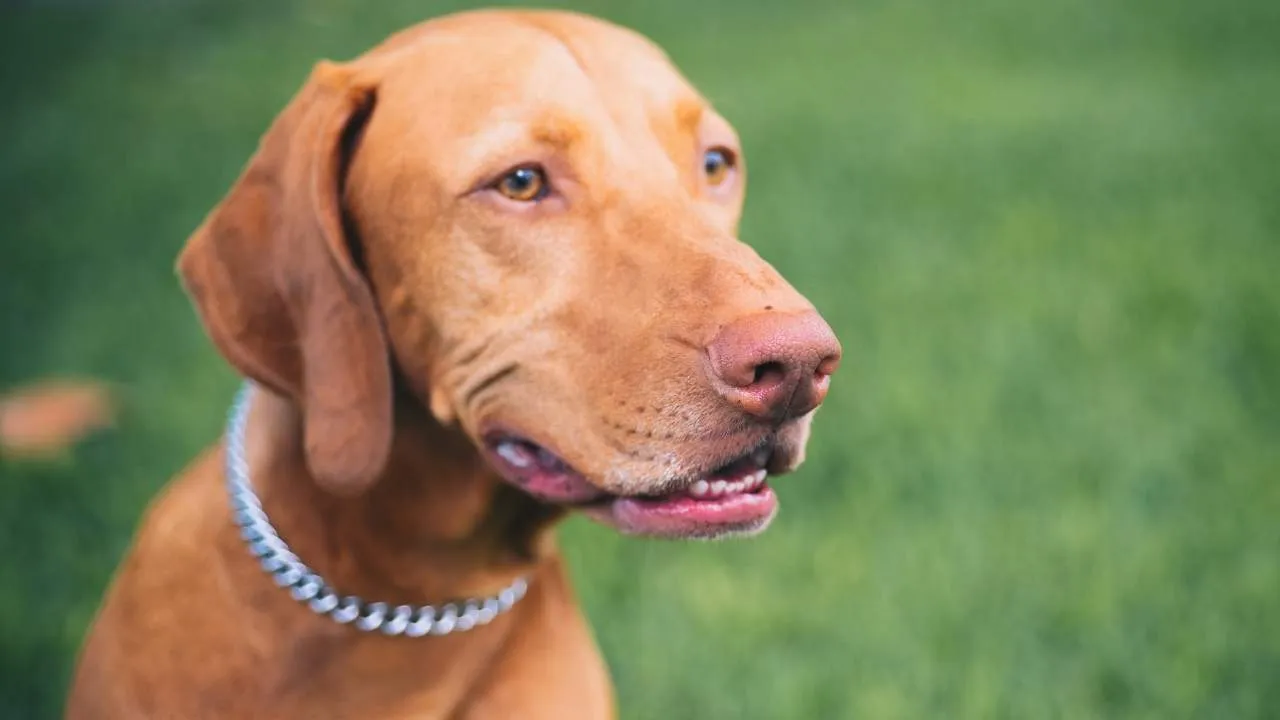
The Vizsla developed in Hungary as a versatile bird dog capable of working closely with hunters travelling on foot or horseback. Its role demanded speed, stamina, scenting ability, and enough awareness to remain connected with the person directing the hunt.
This hunting dog breed is usually closer-ranging than some wide-sweeping pointers, which makes it especially useful in broken cover and smaller hunting areas. It moves rapidly but frequently checks the handler’s position, allowing the team to adjust direction without constant shouting.
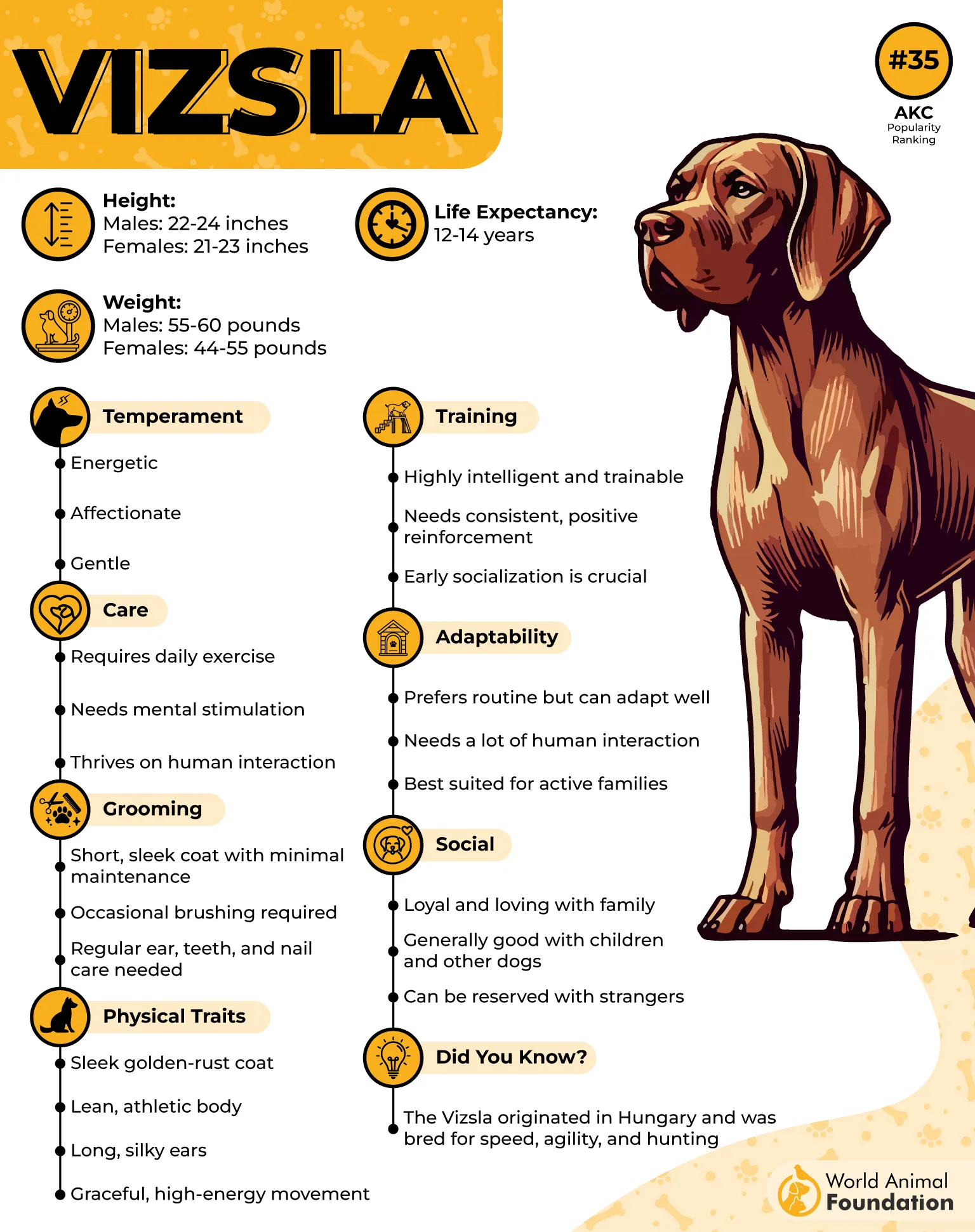
When this pointing dog locates bird scent, it slows, raises its head, and carefully identifies where the odour is strongest. The body then stiffens into a point, often with the tail held level and the gaze fixed towards the hidden bird.
This popular dog breed has tremendous endurance and may continue running or playing long after sensible energy budgeting has left the chat.
Their Bird Chasing Process
Handler-connected search: The Vizsla covers ground at speed but regularly checks back, keeping its hunting pattern coordinated with the person carrying the gun.
Close scent confirmation: It follows airborne odour towards hidden birds, gradually tightening its movement until it can identify the exact location.
Point, flush, and recover: After indicating the bird, it advances when asked and can retrieve the downed quarry on land or from shallow water.
4. Labrador Retriever
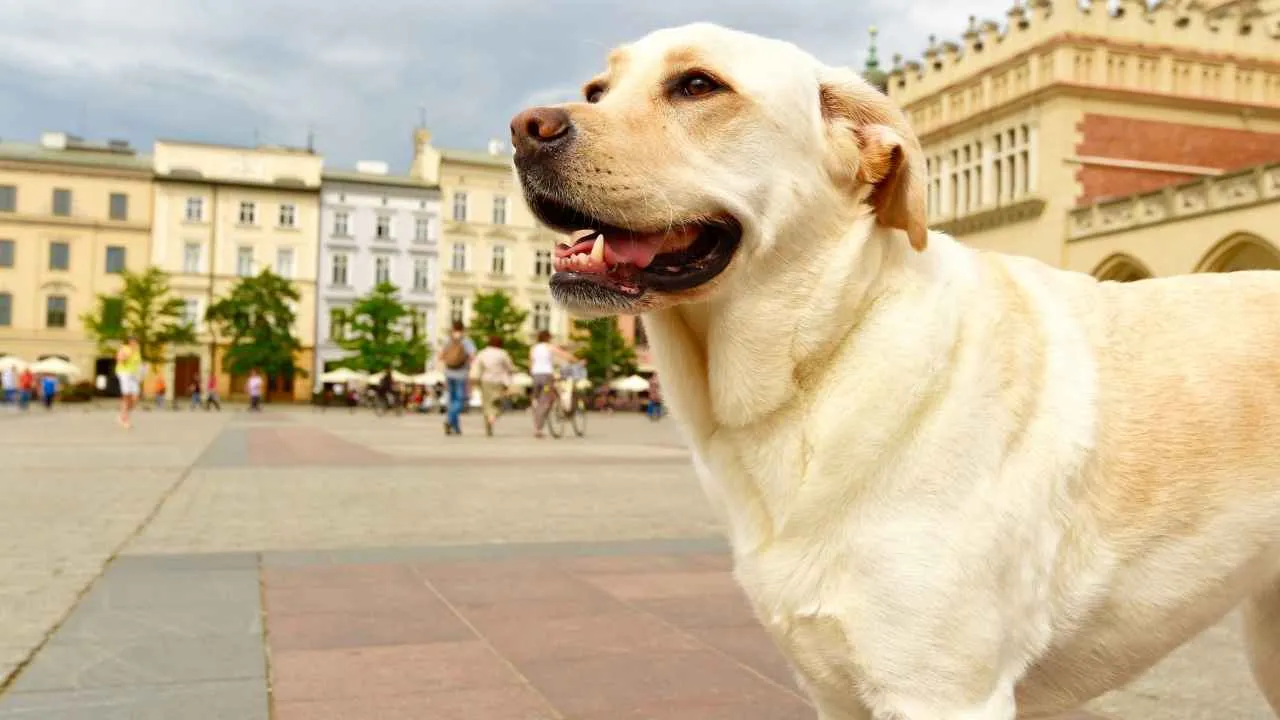
The Labrador Retriever was developed to recover fallen birds rather than locate and pursue healthy quarry across wide plains. Its job begins when ducks, pheasants, or other game birds are flushed and shot, requiring the dog to remember where they fell and bring them back without damaging them.
A trained Labrador uses its eyes to mark a bird’s fall, particularly in field-trial work where multiple birds may land at different distances.
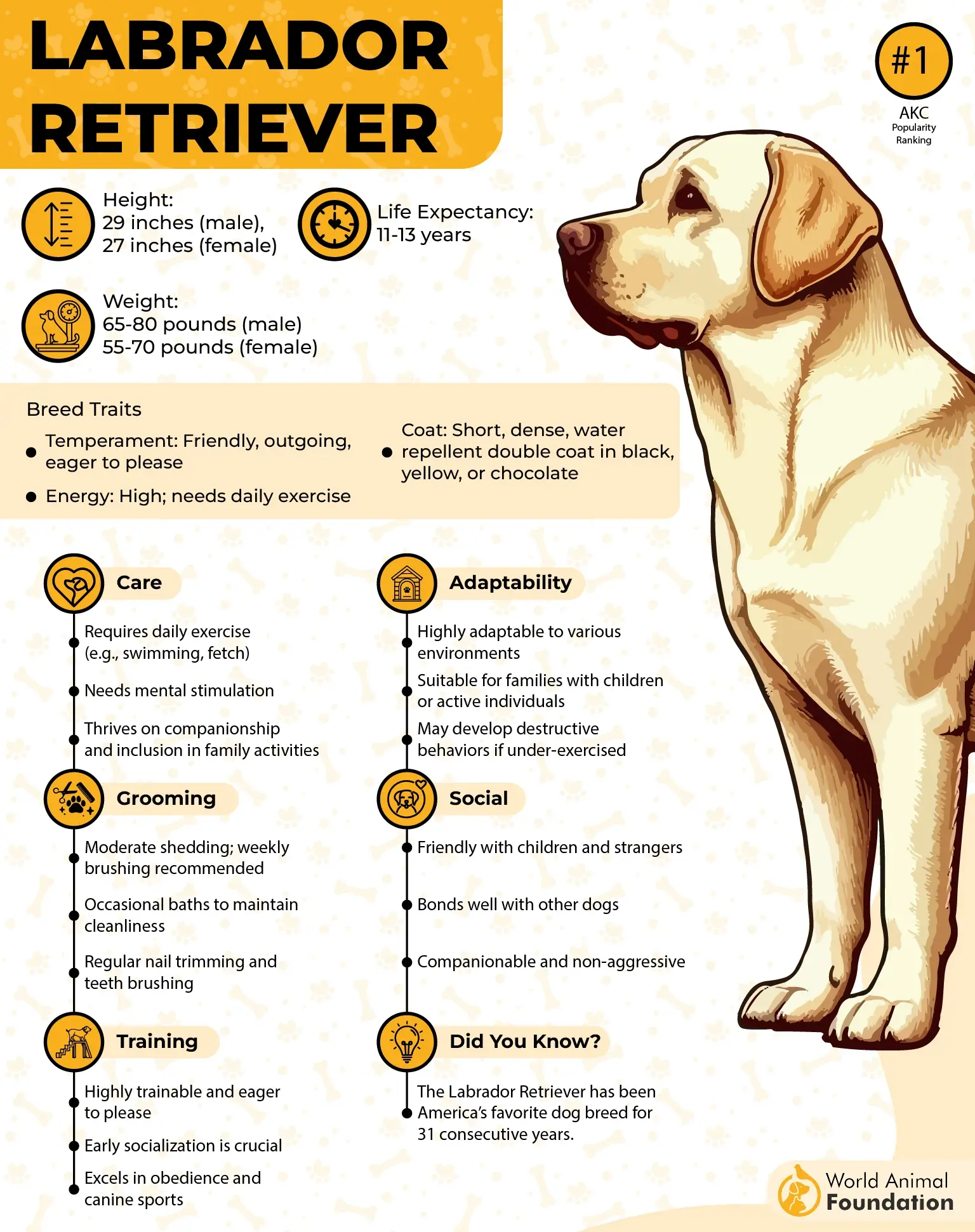
If the bird is no longer visible, the Labrador switches from memory and eyesight to scent. It searches the surrounding area in a compact pattern, using wind and ground odour to locate the exact position.
Steadiness is essential because an uncontrolled Labrador may chase the moment a bird rises. These dogs are taught to sit quietly through flushing, gunfire, and falling birds until the handler sends them by name or command.
Their Bird Chasing Process
Visual marking: The Labrador watches a flying bird and memorises where it lands, sometimes tracking several separate landing points.
Straight-line delivery: Once released, it runs or swims directly towards the marked area rather than pursuing birds still flying overhead.
Scented recovery: Near the fall, it uses a focused nose search, gently lifts the bird, and returns it to hand with minimal damage.
5. Nova Scotia Duck Tolling Retriever
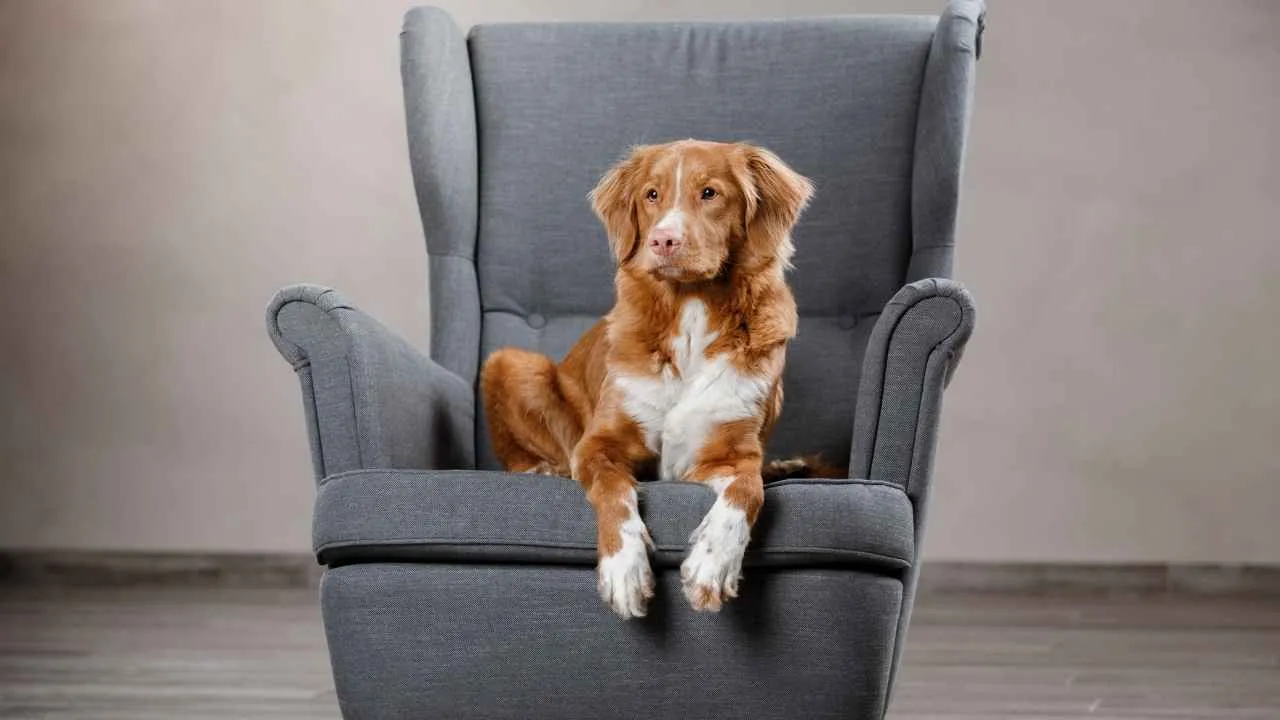
The Nova Scotia Duck Tolling Retriever performs one of the most unusual jobs in the bird-dog world. It uses animated movement near the shoreline to attract curious ducks within range of a concealed hunter.
During the tolling sequence, the handler repeatedly throws a stick or ball along the water’s edge. The Toller darts, jumps, disappears behind cover, and reappears with its white-tipped tail flashing against the shoreline.
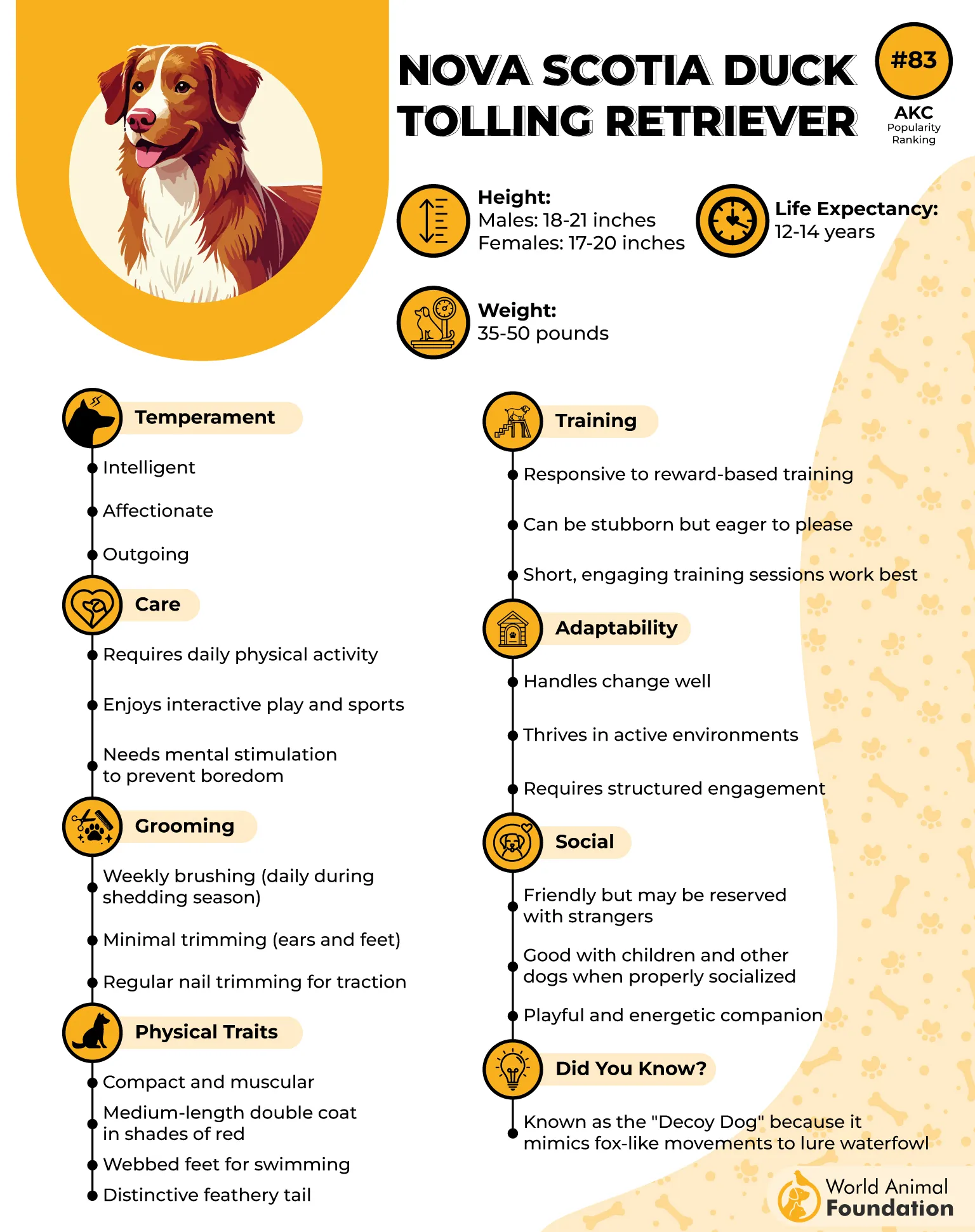
After the birds take flight and fall, this high-energy dog’s role changes completely, says PetMD. It stops being the energetic decoy and becomes a focused water retriever capable of swimming through cold conditions.
The Royal Kennel Club says that this breed standard calls for intense interest in birds and a strong desire to retrieve. Tollers are clever, food-motivated, energetic, and usually happiest when training feels like an interactive game rather than repetitive drilling.
Their Bird Chasing Process
Shoreline tolling: The Toller repeatedly runs, jumps, and retrieves toys near the water while remaining partly visible to curious ducks.
Flight initiation: Once the birds approach, the dog returns to cover, and the hunter rises, causing the waterfowl to take flight.
Cold-water retrieval: After the shot, the Toller enters the water, follows the bird’s location or scent, and brings the quarry back to shore.
6. Brittany
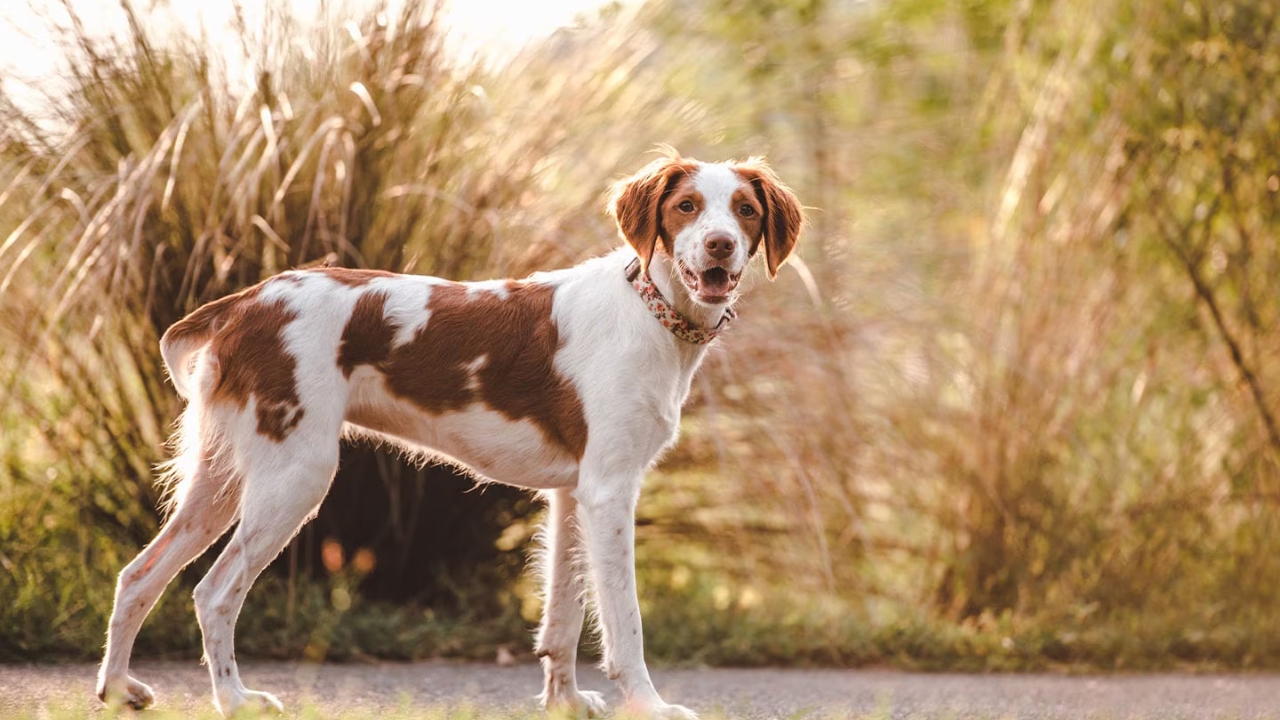
Brittany’s efficient size, quiet working style, and ability to operate independently earned it the nickname “the poor man’s hunting dog.” That title was not an insult; it reflected a breed capable of doing several jobs without requiring an aristocratic hunting estate.
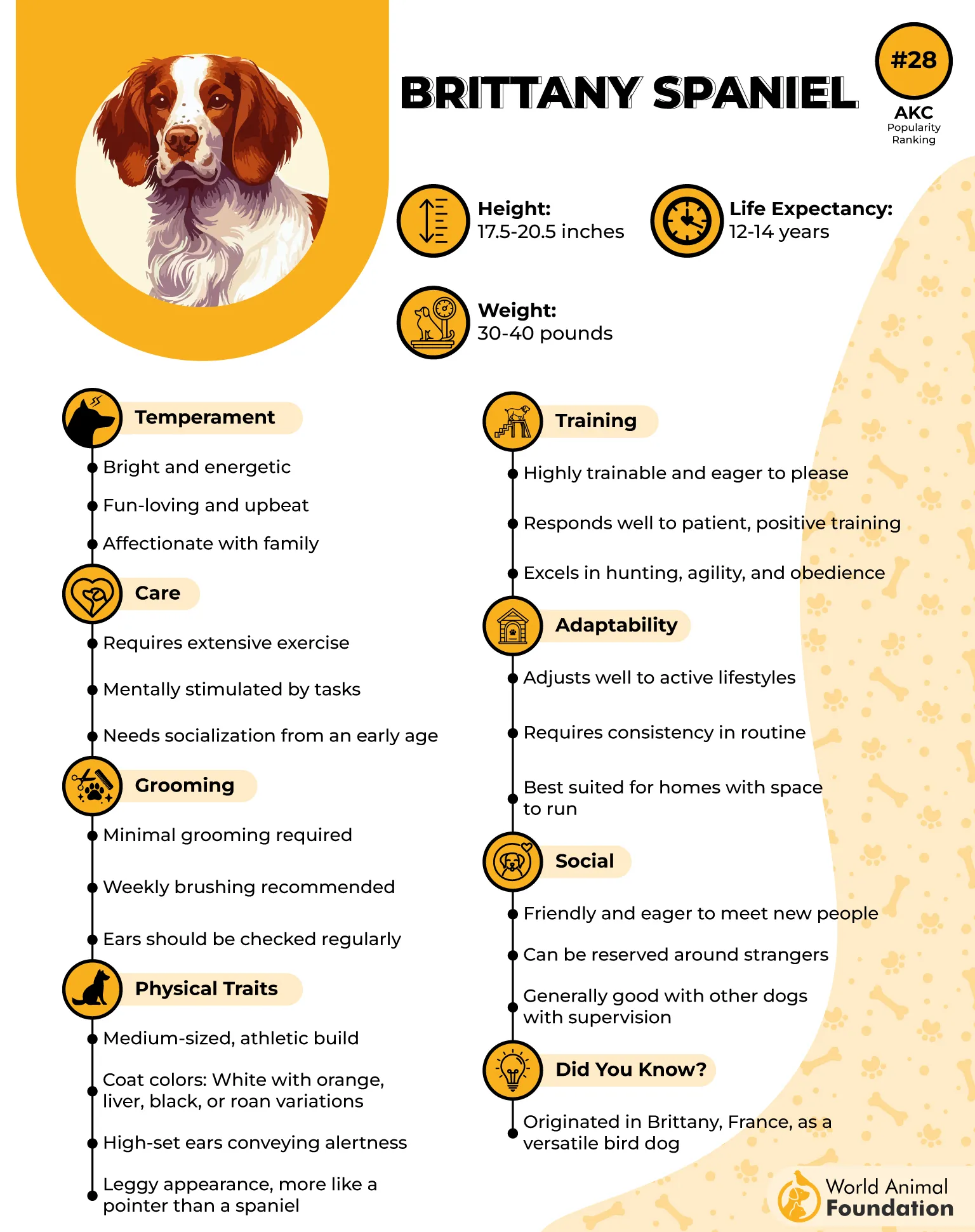
When a Brittany reaches strong bird odour, its playful energy disappears into intense stillness. The head, body, tail, and eyes align towards the quarry, creating a dramatic point that experienced handlers describe as unforgettable.
The breed’s eagerness to please usually supports positive training, but its prey drive can override ordinary recall around birds and small animals.
Secure spaces, long-line work, stop cues, and repeated steadiness exercises help prevent dangerous running near roads or livestock.
Their Bird Chasing Process
Efficient range work: The Brittany rapidly checks fields and cover while remaining close enough to respond to whistles, hand signals, or changes in direction.
Intense bird point: Once scent becomes clear, it locks its entire body towards the hidden quarry and waits for the handler.
Fast transition to retrieval: After the flush and shot, the dog shifts from stationary control to active searching, locating and carrying the fallen bird back.
7. Chesapeake Bay Retriever
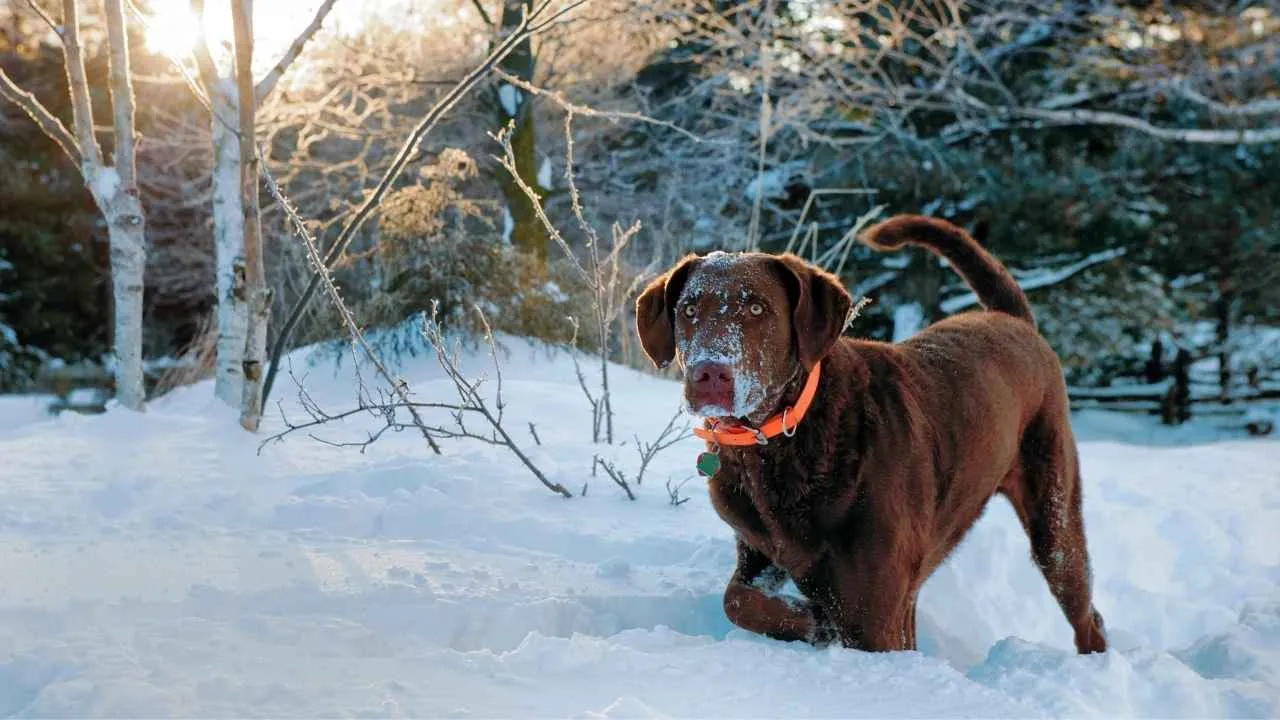
The Chesapeake Bay Retriever was developed along the waters of Maryland and Virginia as a powerful market-hunter’s dog. It retrieved ducks, geese, and swans in rough seas, icy surf, high tides, and freezing temperatures that would convince most ordinary pets to submit an immediate resignation letter.
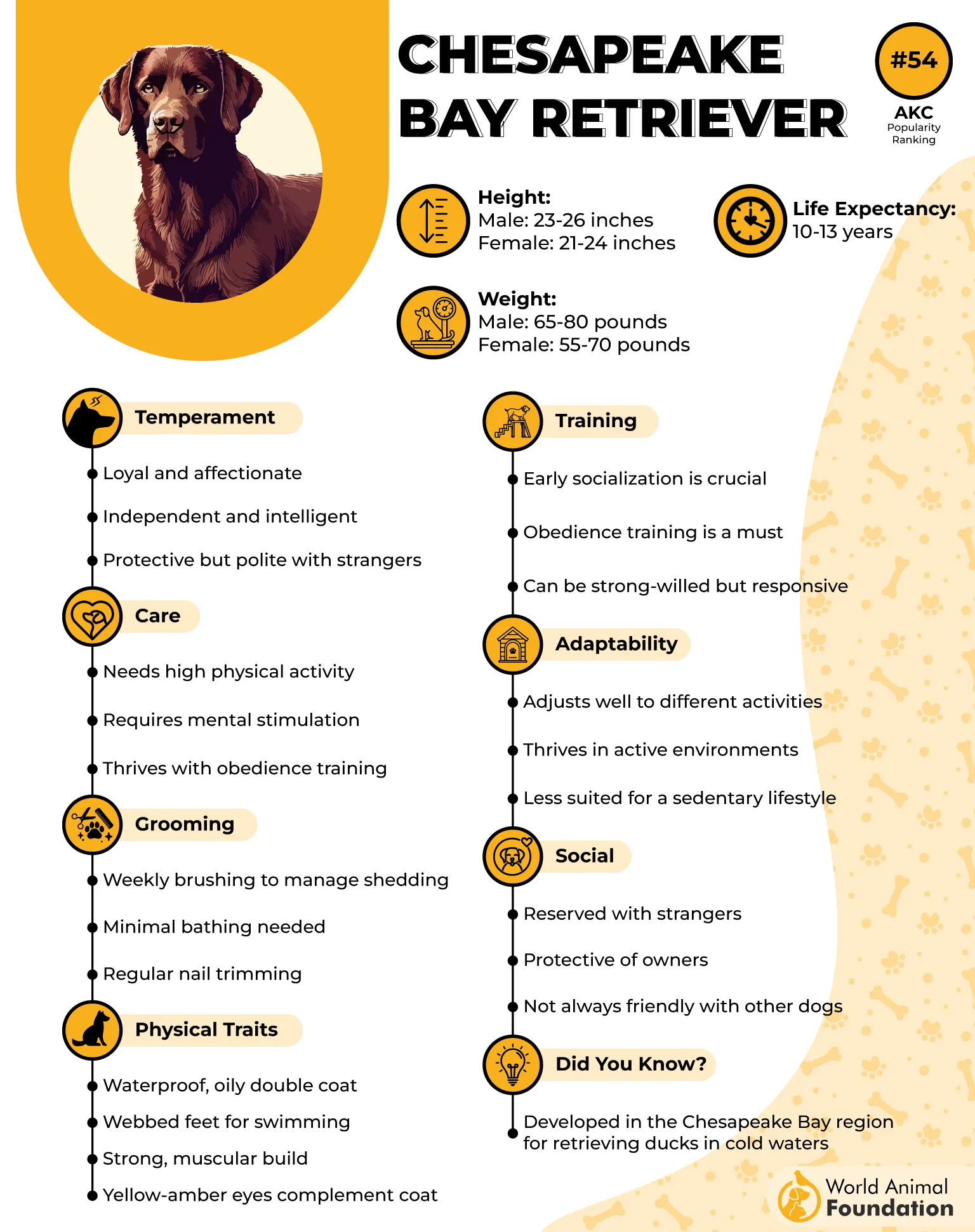
Once sent, the Chessie launches into the water with strength and purpose. Its oily, dense double coat resists moisture, while powerful limbs and webbed feet help it push through cold waves and difficult currents.
Near the fall area, this bird dog breed uses sight, memory, and scent to locate dead or wounded birds.
It may need to search reeds, dive through floating vegetation, or follow a moving bird that landed alive and attempted to escape.
Their Bird Chasing Process
Patient marking: The Chesapeake remains beside the hunter, studies flying waterfowl, and memorises where each bird enters the water.
Powerful water pursuit: After release, it swims directly through waves, cold water, and vegetation towards the marked location.
Persistent finishing search: If the bird moves or disappears, the dog follows scent and water disturbance until it can secure and return the quarry.
Conclusion
What unites these versatile hunting dogs is not uncontrolled chasing but disciplined instinct. The most impressive bird dog knows how to search enthusiastically, stop immediately, remain steady through flight, and work closely with the handler.
German Wirehaired Pointer, Golden Retriever, Cocker Spaniel, and English Springer Spaniel are also some great dogs with strong retrieving instinct that point and retrieve efficiently.
Give these dogs sufficient exercise, clear communication, humane instruction, and a legal outlet for their natural abilities. In return, they can demonstrate athleticism, scenting ability, and teamwork that have supported hunters for generations.
