




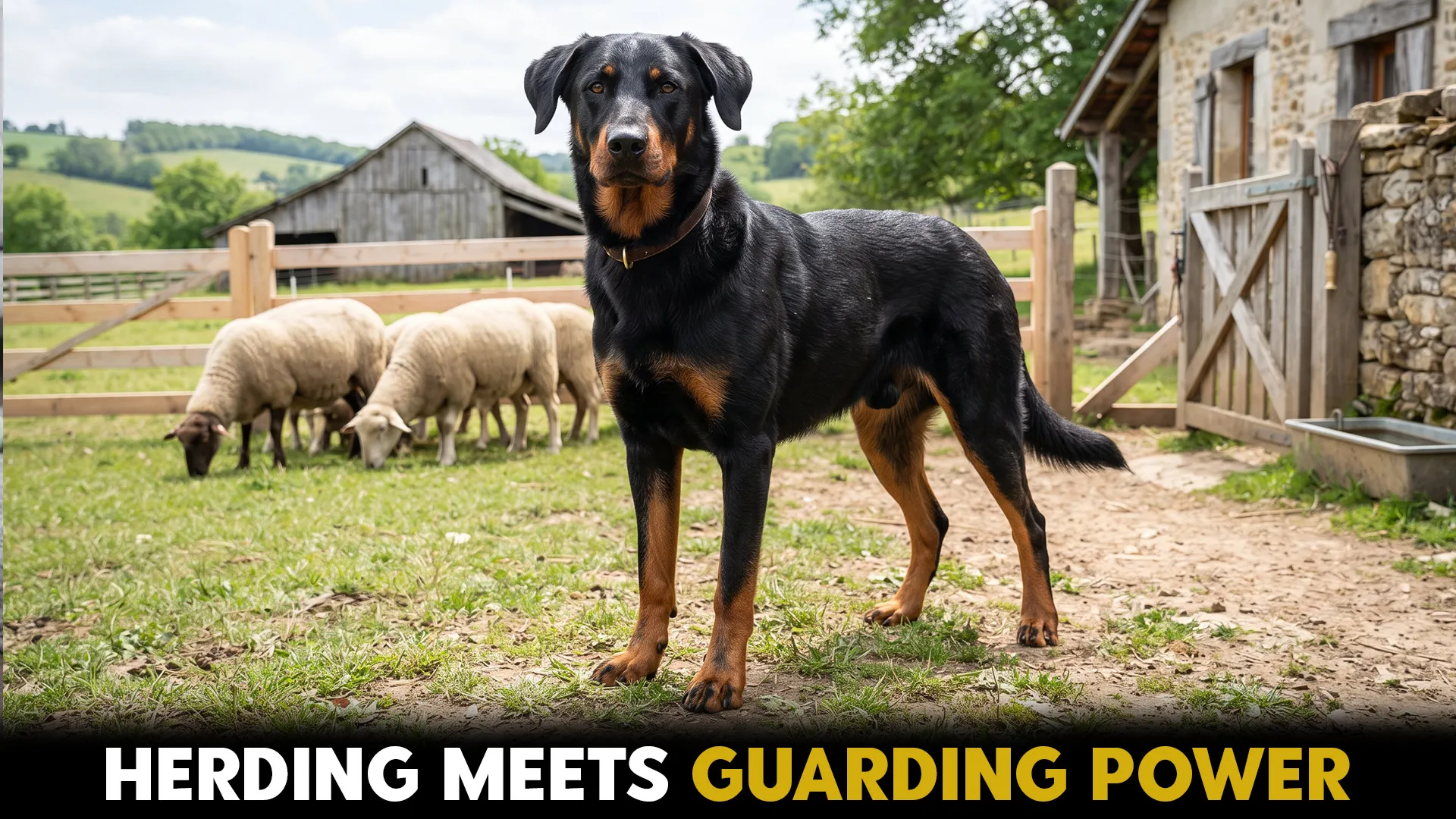
A dog that can herd livestock in the morning and keep a watchful eye over the property later needs far more than energy. Herding requires controlled movement, responsiveness, awareness, and enough confidence to work around animals without causing unnecessary chaos.
Guard work adds another layer, calling for sound judgment, territorial awareness, courage, and the ability to recognize genuine threats. The combination creates a demanding job description for any dog. Some working dogs are skilled at directing livestock but lack the temperament for protection duties.
Others are natural watchdogs yet lack the control and agility needed around moving animals. The most useful all-purpose workers sit somewhere between these roles, bringing physical ability and a steady temperament to both tasks. That balance can make life easier on farms, ranches, and large properties.
Ahead, you’ll find the dogs best suited to this combination, plus the qualities that make each one worth considering.
Key Takeaways
What kind of dog can guide a herd in the morning and guard the property later? That takes a rare mix of control, courage, and sharp judgment.
German Shepherds were bred for herding and flock protection, which helps explain why they later became trusted in police, military, and rescue work.
Belgian Malinois and Beaucerons take that working ability even further, combining strong herding instincts with the focus needed for demanding protection tasks.
The other breeds bring their own surprising histories and working skills, including one that could reportedly replace several men on horseback.
Versatile Dog Breeds Perfect for Herding and Guard Work
1. German Shepherd
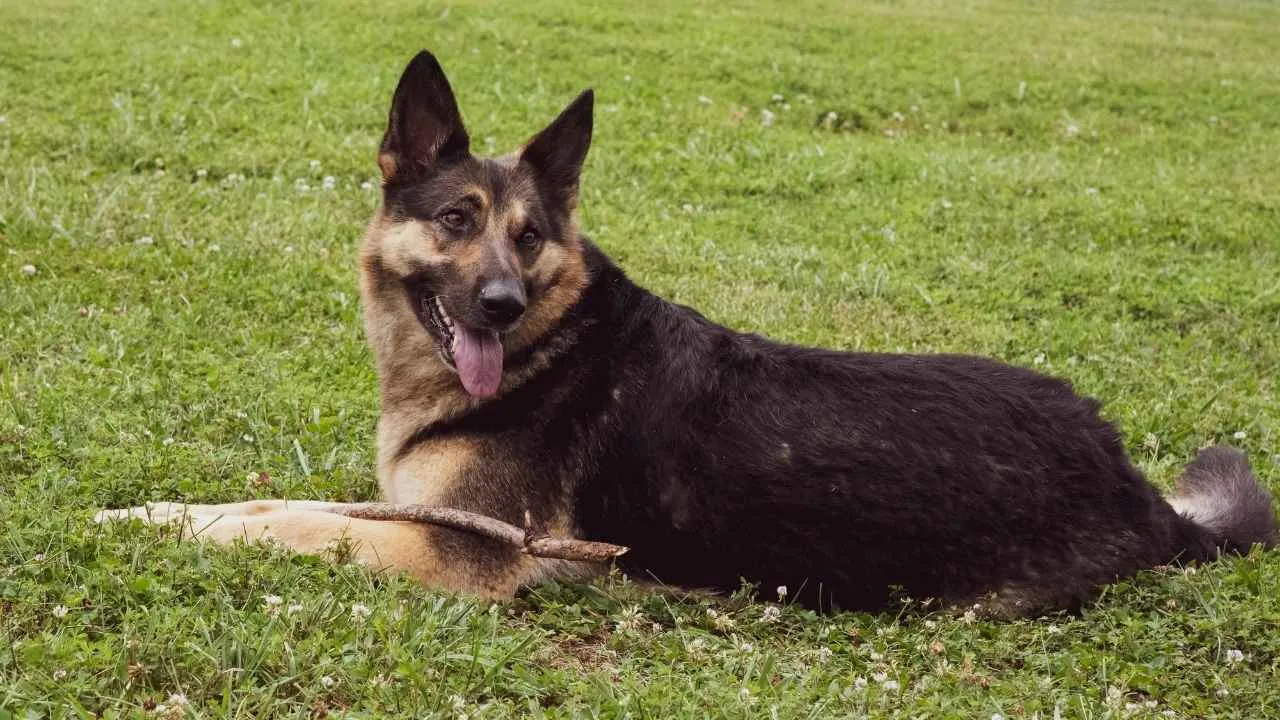
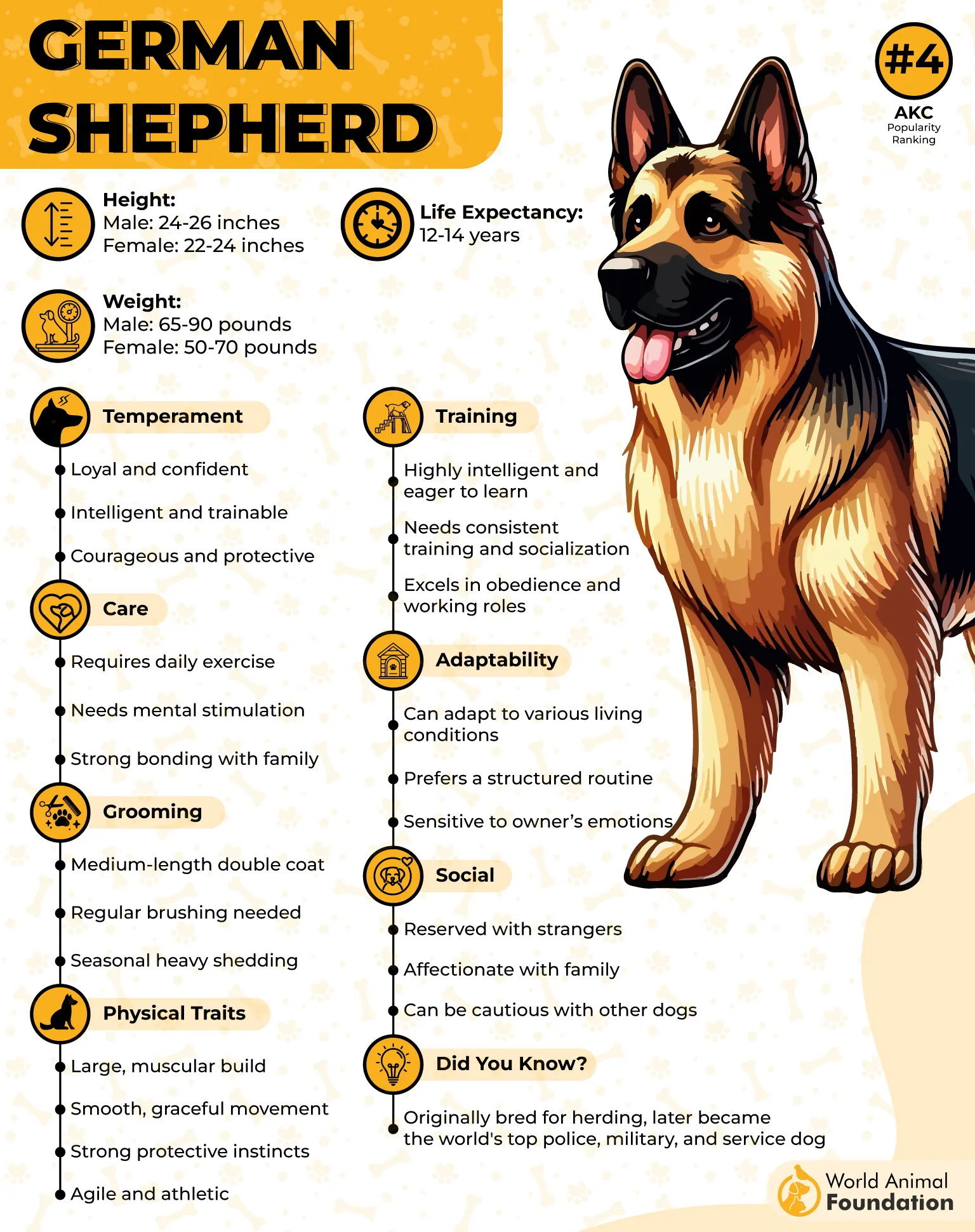
German Shepherd was originally bred in late 19th-century Germany as a sheep-herding and flock-protection dog, built for demanding work across varied terrain. The need for a hardworking, intelligent dog capable of managing large flocks shaped the breed’s early role.
A Working Multi-Tasker
This versatile herding breed can shift from herding duties to police patrols, military work, bomb detection, search and rescue, and watchdog duties. Its strong protective instinct pairs with a willingness to learn, giving trained dogs a wide range of practical jobs.
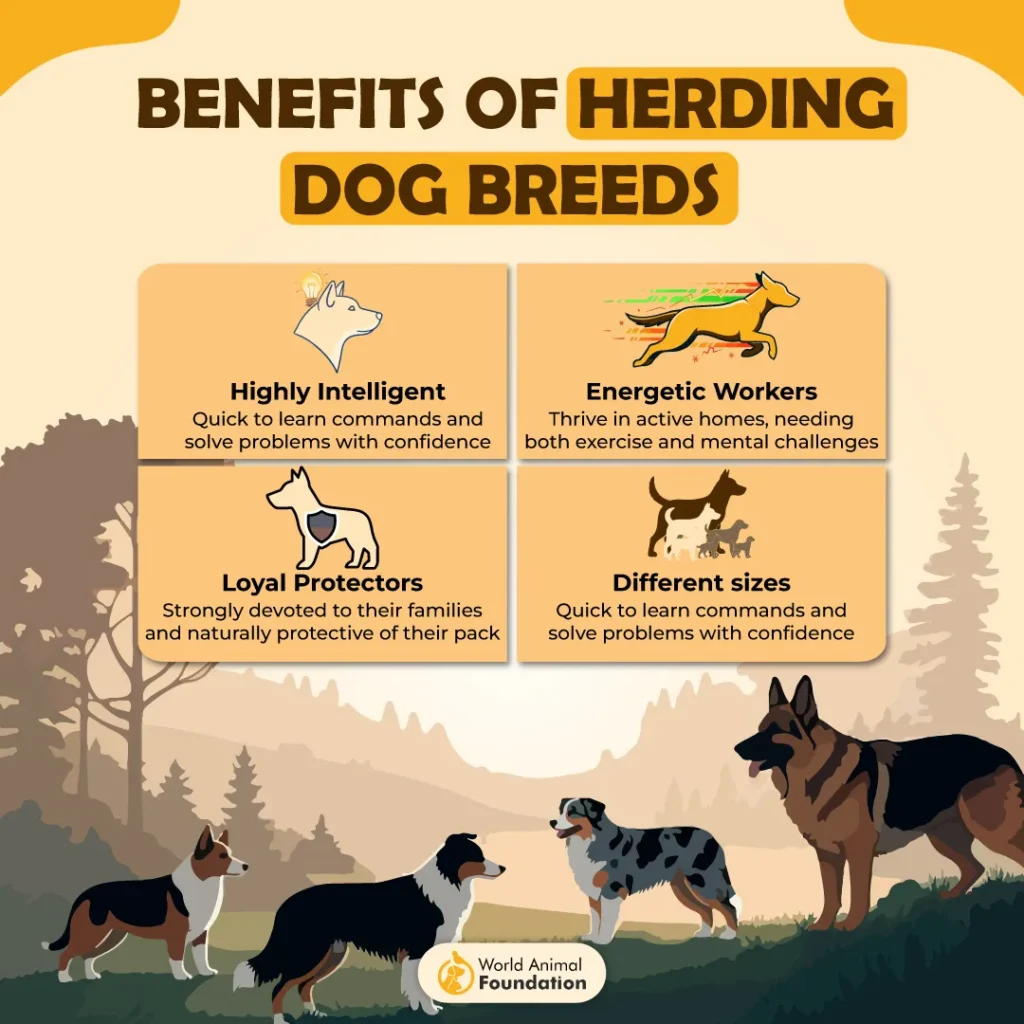
The following working outlets put that versatility to use:
Tracking and nose work
Agility and dock diving
Search and fetch games
Sensitive Underneath
German Shepherd forms deep connections with its family and can be highly responsive to changes in people’s moods, as Showsight Magazine reported. Changes in routine or surroundings may also unsettle this sensitive breed, making consistency and reassurance important parts of daily life.
2. Belgian Malinois
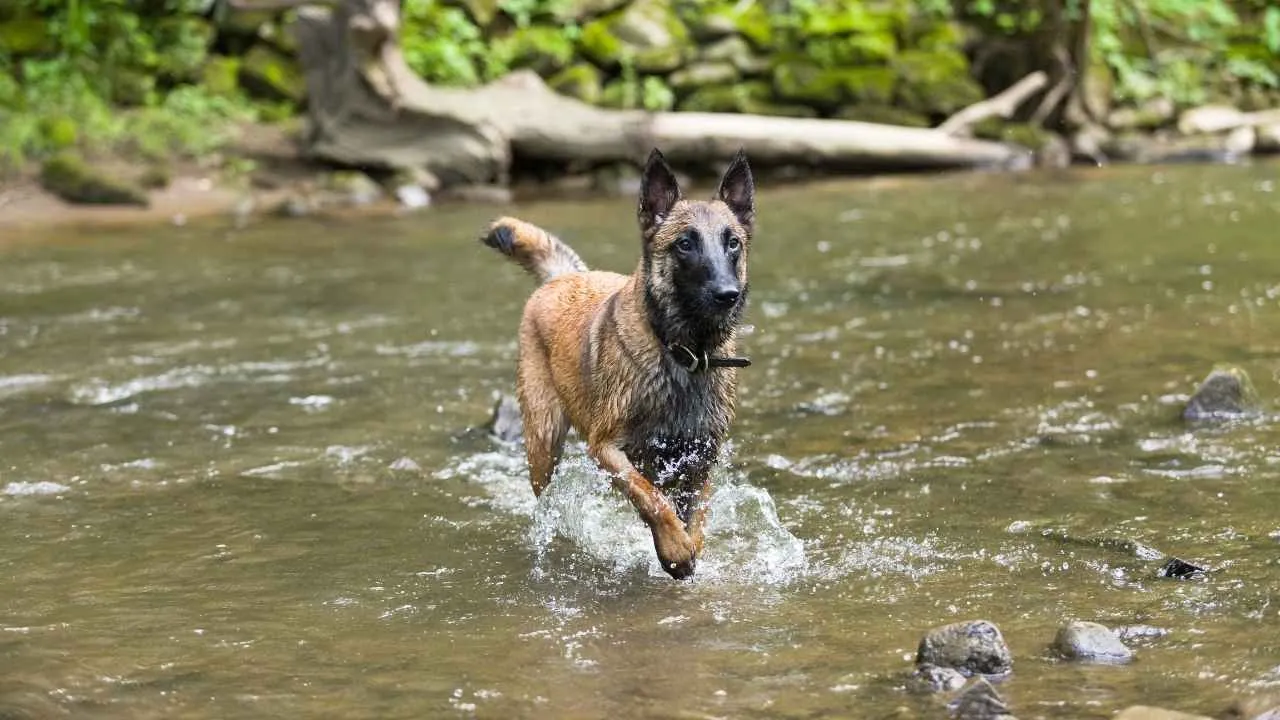
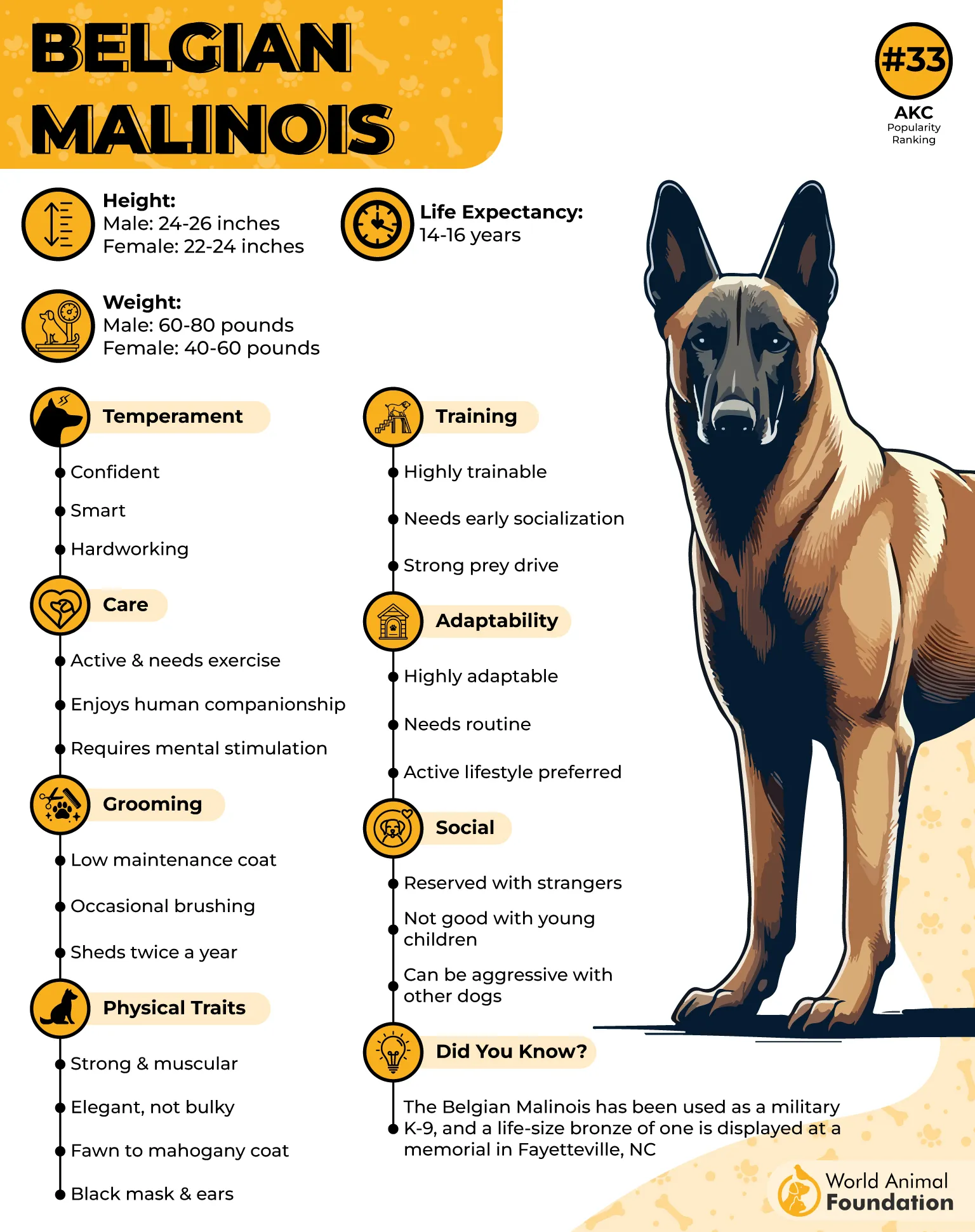
Belgian Malinois started out as a herding dog breed in Belgium, helping farmers guide livestock while keeping an eye on the property. Its lean frame, short coat, and strong work ethic made sense for a dog expected to stay busy and handle demanding jobs with purpose.
A Job to Do
Belgian Malinois is at its best when given purposeful work that demands focus, making it a best fit for police K9, military, protection sports, tracking, and search-and-rescue roles, as per Hill’s Pet. Its workload can include agility, obedience, herding, scent work, or protection exercises.
That working drive also shapes life at home:
Strong herding instinct around moving objects
Reliable leash handling is important
Tall, sturdy fencing supports safe active play
Training With Purpose
These excellent companions respond well to structured training that keeps their minds involved and gives their energy a clear direction. The breed is sensitive to tone and responds better to positive reinforcement than harsh corrections, with varied tasks helping prevent destructive or anxious behavior.
3. Bouvier des Flandres
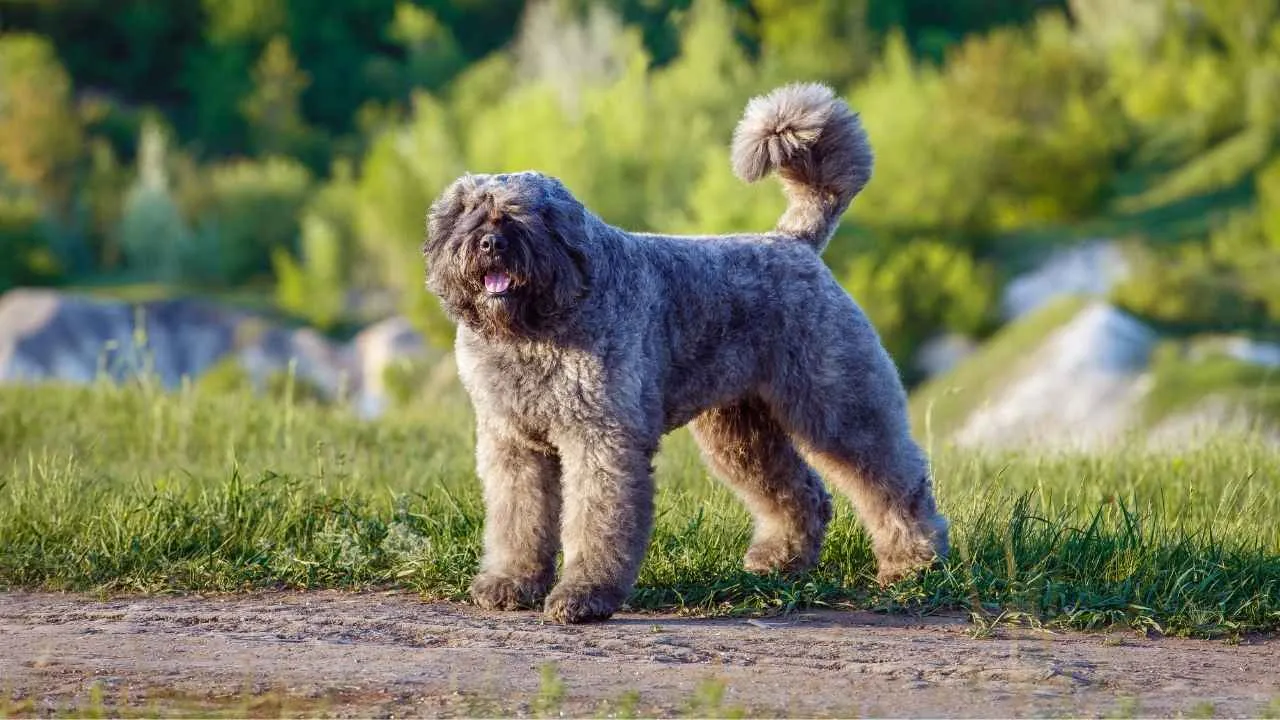
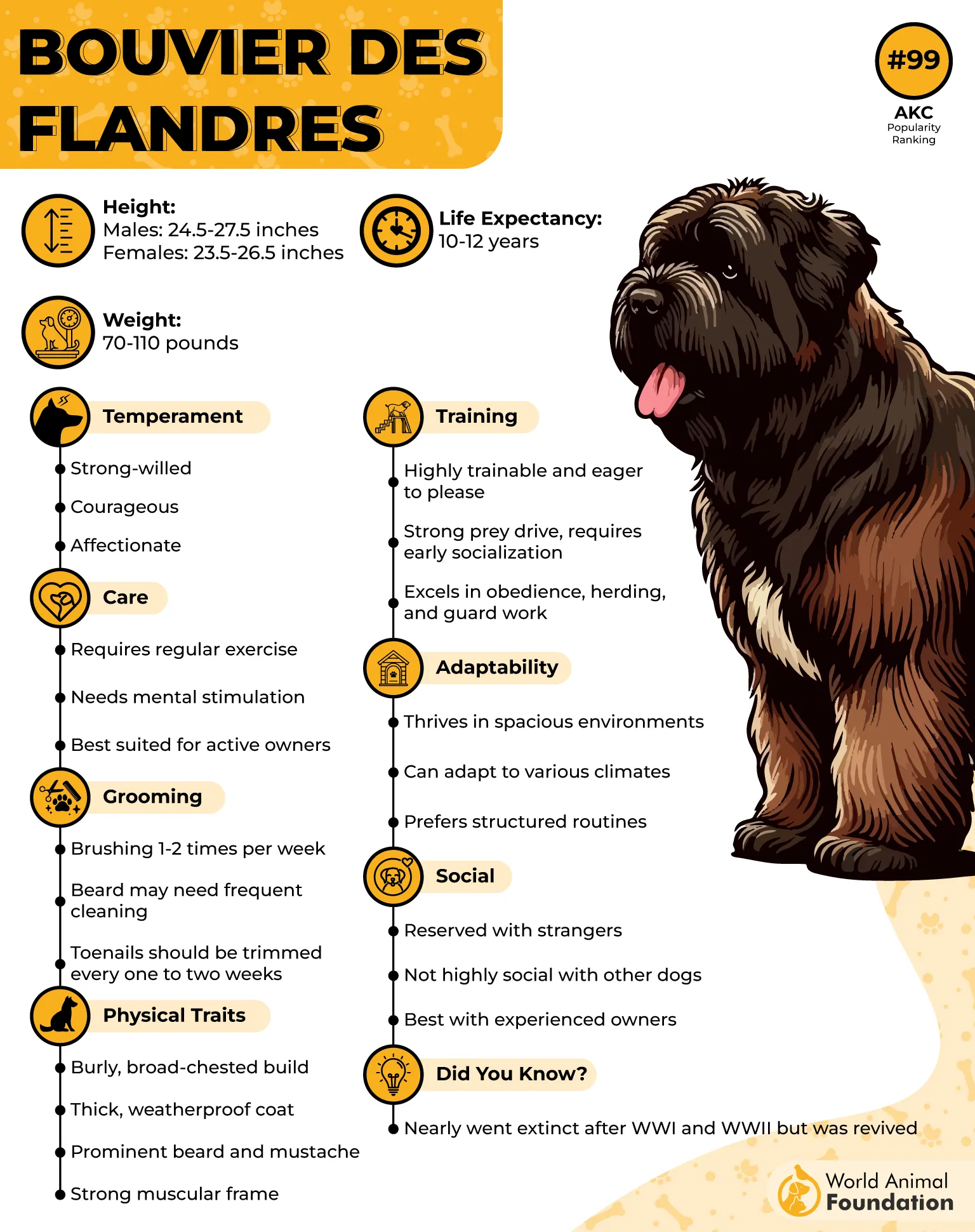
Bouvier des Flandres comes from the Flanders region spanning parts of Belgium and France, where agricultural work shaped its early role. Its name means “Cowherd of Flanders,” reflecting a life spent herding cattle, pulling carts, and watching over farm property.
A Working All-Rounder
They combine strength with sharp problem-solving ability, making them useful for demanding jobs that require both physical effort and concentration. Their working range now includes activities such as search and rescue, tracking, nose work, and service duties, as noted in Zealandia Pets.
That versatility opens up more roles:
Even seen as a therapy dog
Herding trials and barn hunt
Police and guide dog work
A Full Schedule
This farm dog breed needs substantial daily activity once fully grown, with around two hours of walking and running alongside training, games, and puzzle solving. Puppy exercise requires more care because its heavy adult build puts different demands on a young body.
4. Beauceron
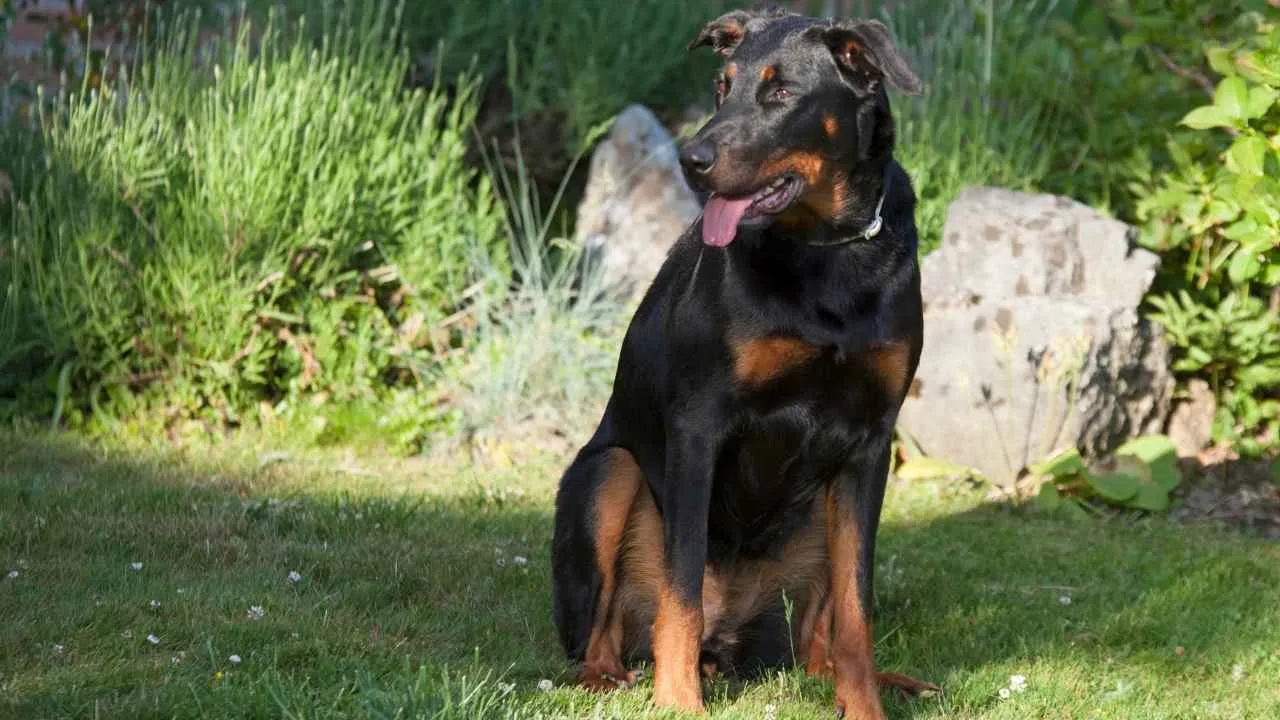
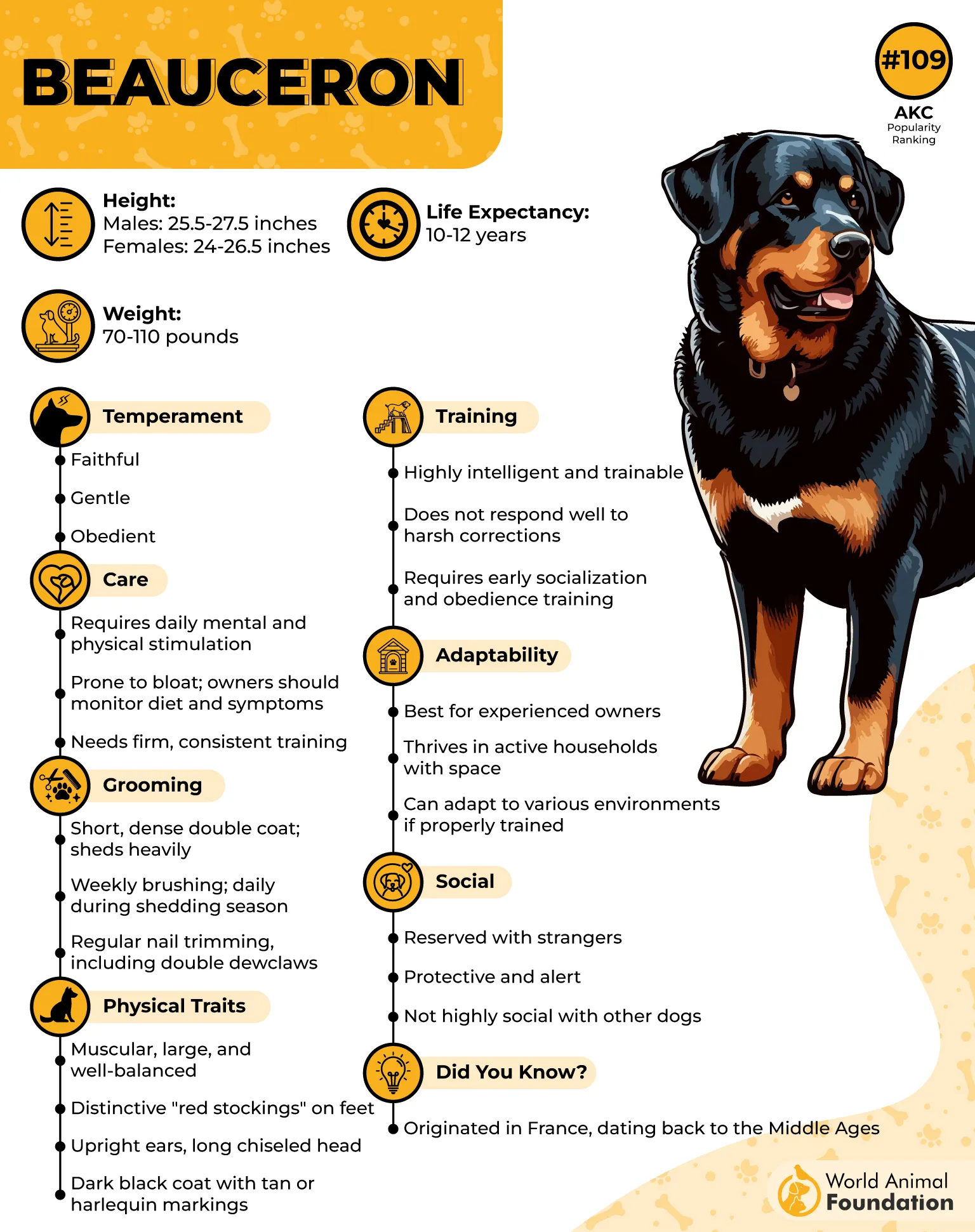
Beauceron emerged from France’s old shepherding traditions, where versatile dogs were valued for managing livestock and protecting farm property. As nomadic shepherding declined during industrialization, this powerful breed increasingly took on guarding duties around farms and rural homes.
A Two-Sided Working Role
This breed brings unusual versatility to herding and protection work, using body positioning, shoulder blocks, and controlled forward pressure when directing livestock. It can also be trained for protection sports, agility, Schutzhund, carting, mushing, and skijoring.
These working details reveal how broad that skill set can be:
Circles boundaries during patrols
Uses pressure to guide livestock
Can learn chained commands quickly
Military Service
Beauceron served French military units during both World Wars, taking on demanding jobs that included message delivery, mine detection, and troop support. Its intelligence, nerve, and trainability also suited later service, search-and-rescue, avalanche, and disaster work.
5. Briard
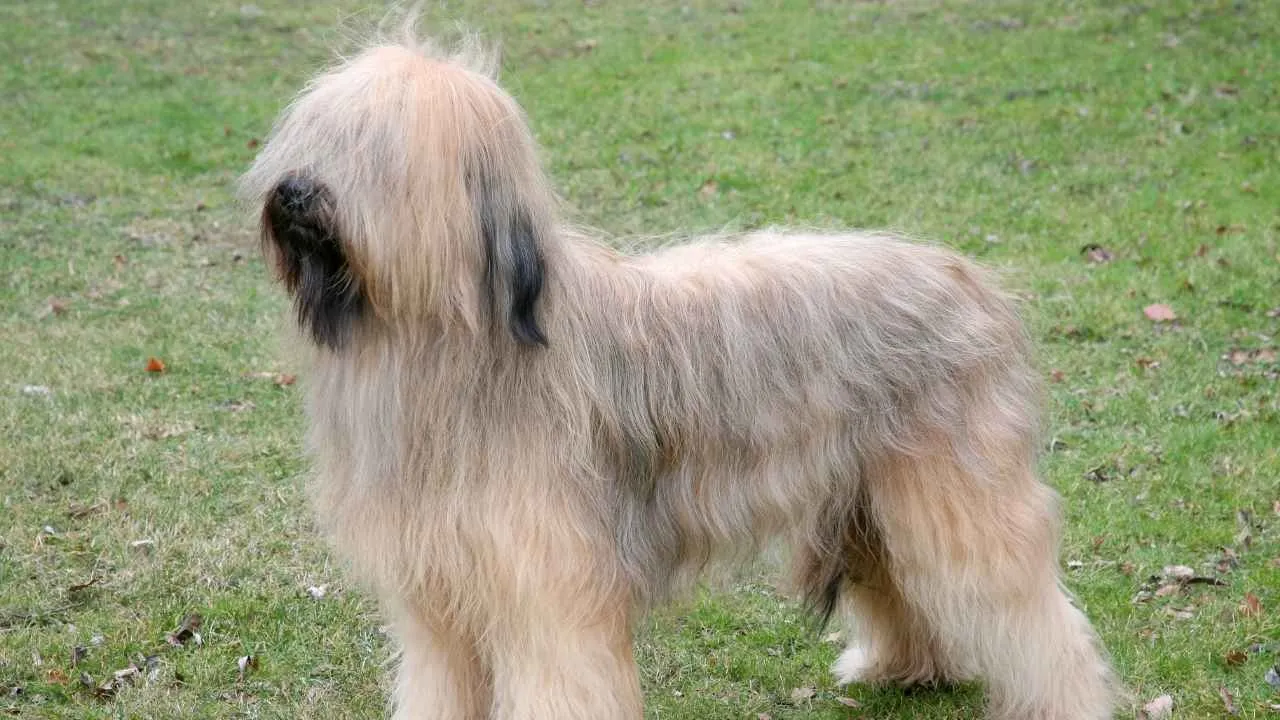
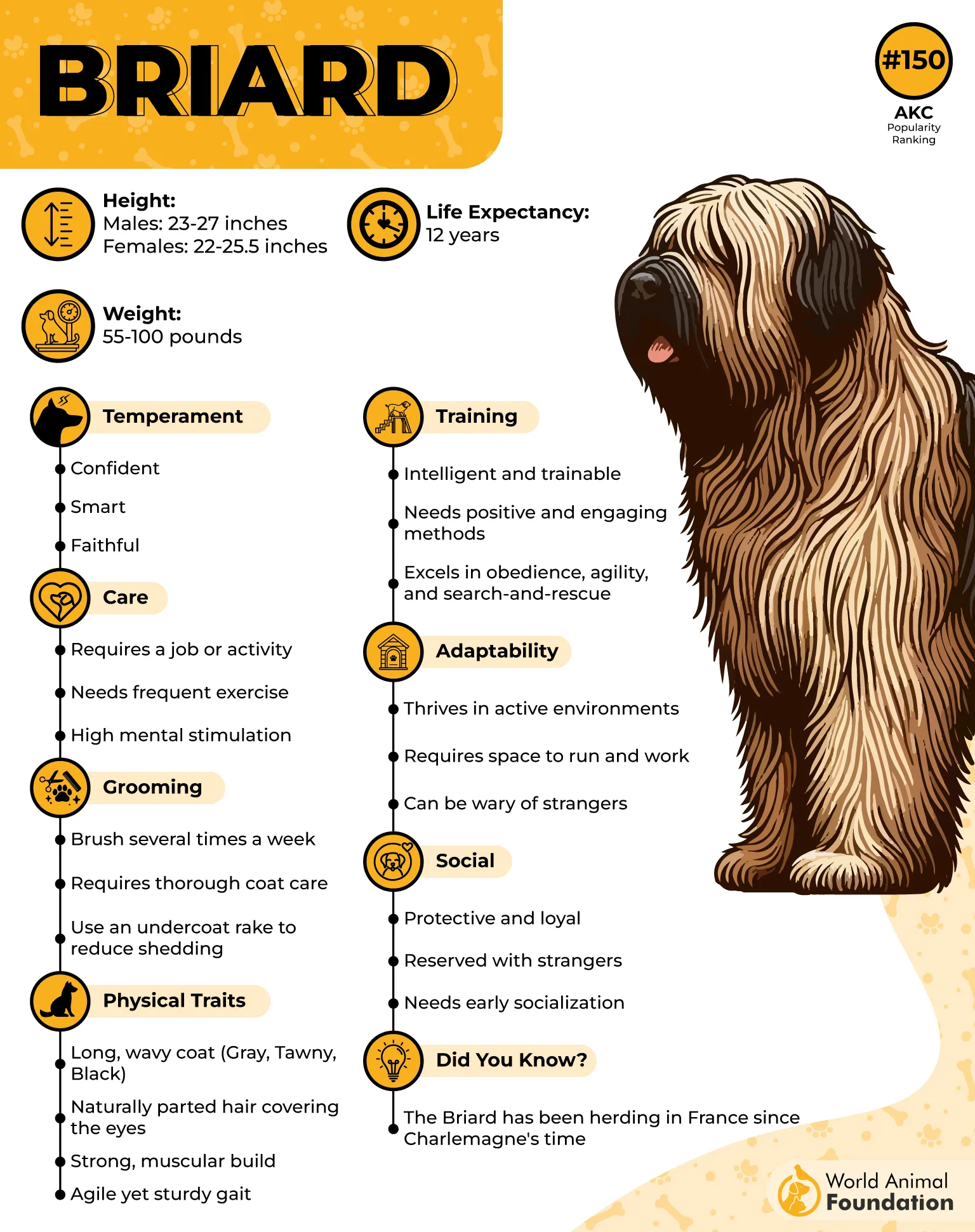
Briard is among France’s oldest shepherd dogs, with descriptions of similar dogs appearing in records as far back as 1387. The name “Chien de berger de Brie” came into use in 1785, and the breed later made its first appearance at a dog show in 1863.
A Working All-Rounder
Briard’s working role extended well beyond herding, with the breed also guarding estates and livestock across the French lowlands. Its intelligence and protective instincts later suited military duties, including messenger, sentry, patrol, and search-and-rescue work.
Three details give that working record more context:
Official breed standard appeared in 1897
Served during both World Wars
Also worked as a medical dog
Built for Active Homes
Briard needs substantial daily involvement, with long nature walks, jogging, cycling, tracking, rescue training, and dog sports all fitting its energetic nature. Its strong family attachment can also make long periods alone difficult, so early separation practice is important.
6. Australian Cattle Dog
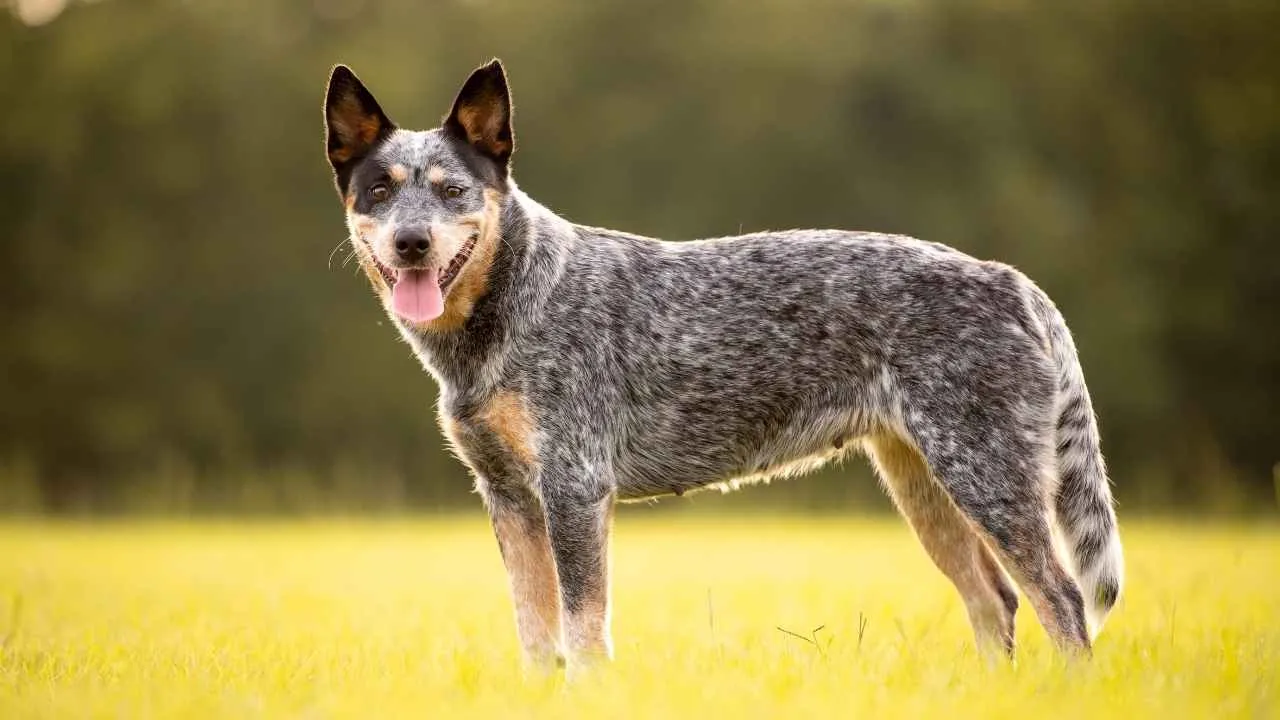
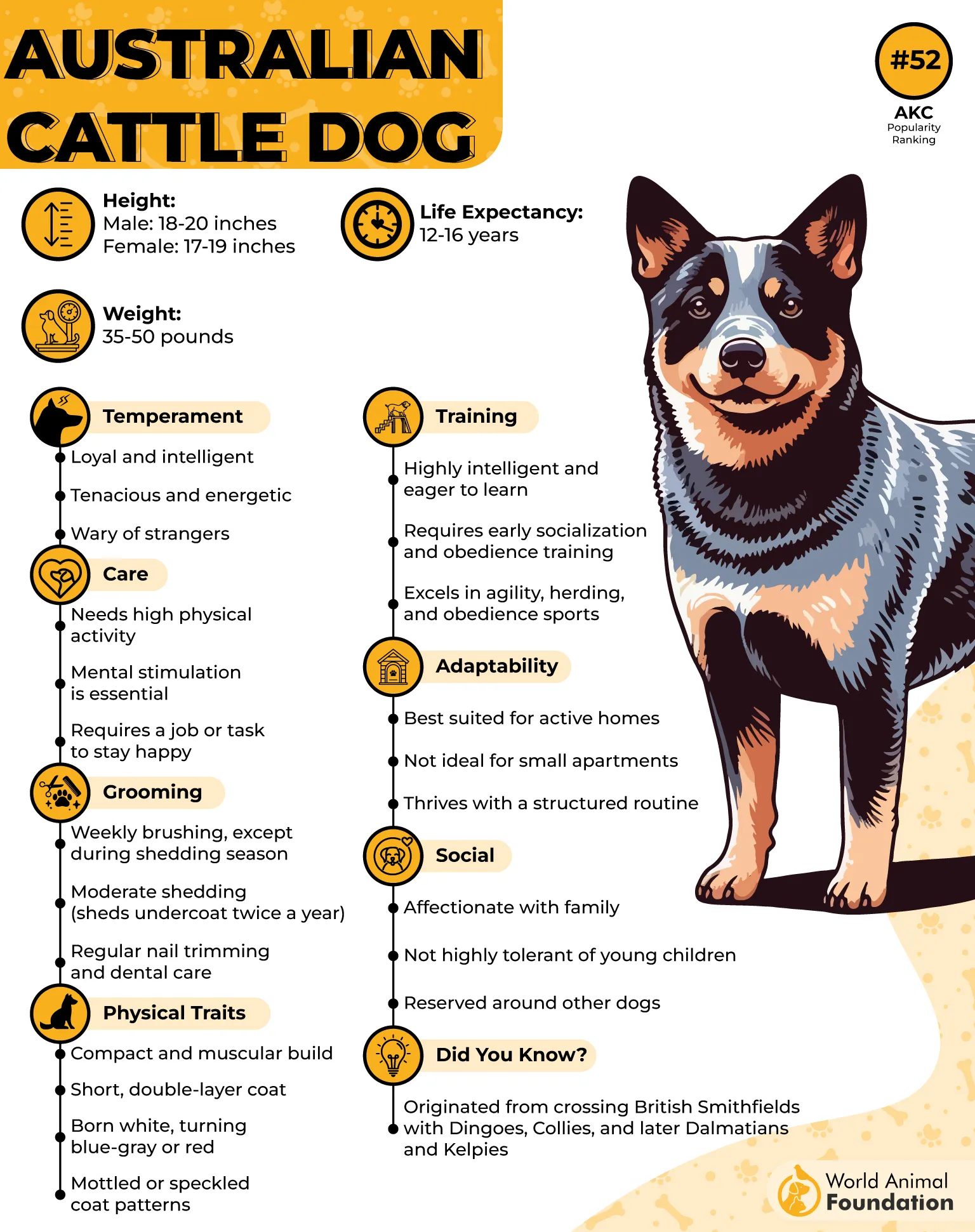
Australian Cattle Dog took shape in 19th-century Australia, where it was expected to guide cattle across long stretches of rugged country. Its work alongside Australian ranchers demanded stamina, quick decisions, and the ability to handle difficult terrain for extended periods.
A Serious Working Mind
ACD can learn routine farm tasks after only a few exposures, and a well-trained dog has been described as capable of replacing two or three men on horseback. Its intelligence also suits advanced obedience, herding trials, agility, flyball, and tracking work.
These traits reveal how broad its working range can be:
Heels cattle to direct their movement
Locates missing people in difficult terrain
Can perform mobility-assistance tasks
Purpose Matters
This family dog needs meaningful work and mental challenges to use its sharp problem-solving ability. Puzzle feeders, scent games, tracking exercises, and interactive toys can help prevent boredom-related behaviors such as digging, chewing, chasing, and excessive barking.
7. Old English Sheepdog
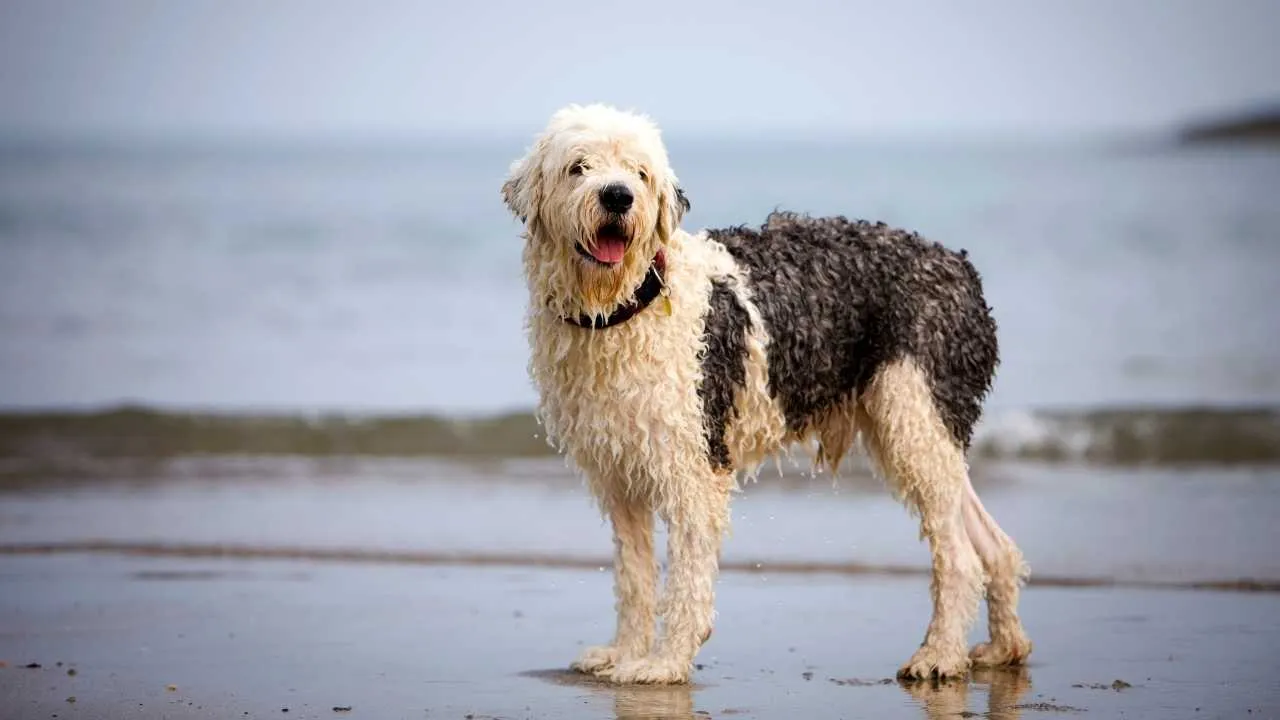
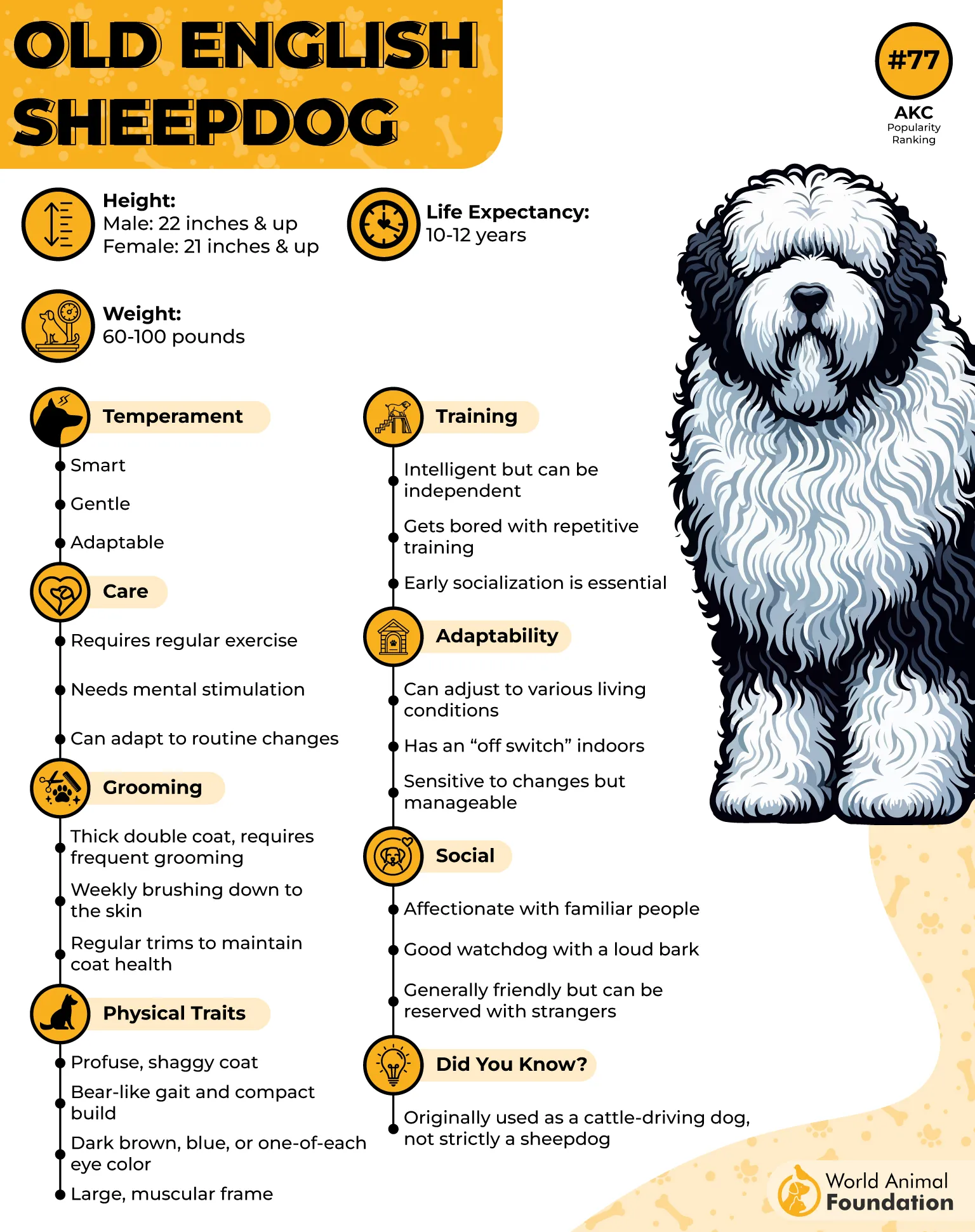
Old English Sheepdog originated in England during the early 19th century as a drover’s dog, guiding cattle and sheep toward market. Its name can be misleading, since the breed likely came from crosses involving Bearded Collies and European herding dogs rather than ancient British sheepdogs.
Farm-Built Strength
This breed was valued by farmers for stamina, a weather-resistant coat, and the instinct to drive livestock where they needed to go. Its working versatility also extended into protection work, weight pulling, and other tasks requiring strength and direction.
Those instincts call for thoughtful handling:
Early socialization is important for large working dogs
Reward-based training supports reliable obedience
Controlled exposure helps with unfamiliar people and animals
A Mind of Its Own
Old English Sheepdog is intelligent and affectionate, yet its independent streak can make training an exercise in patience and quick thinking. Consistent leadership, leash manners, and positive reinforcement can help channel that strong personality into more manageable behavior.
8. Icelandic Sheepdog
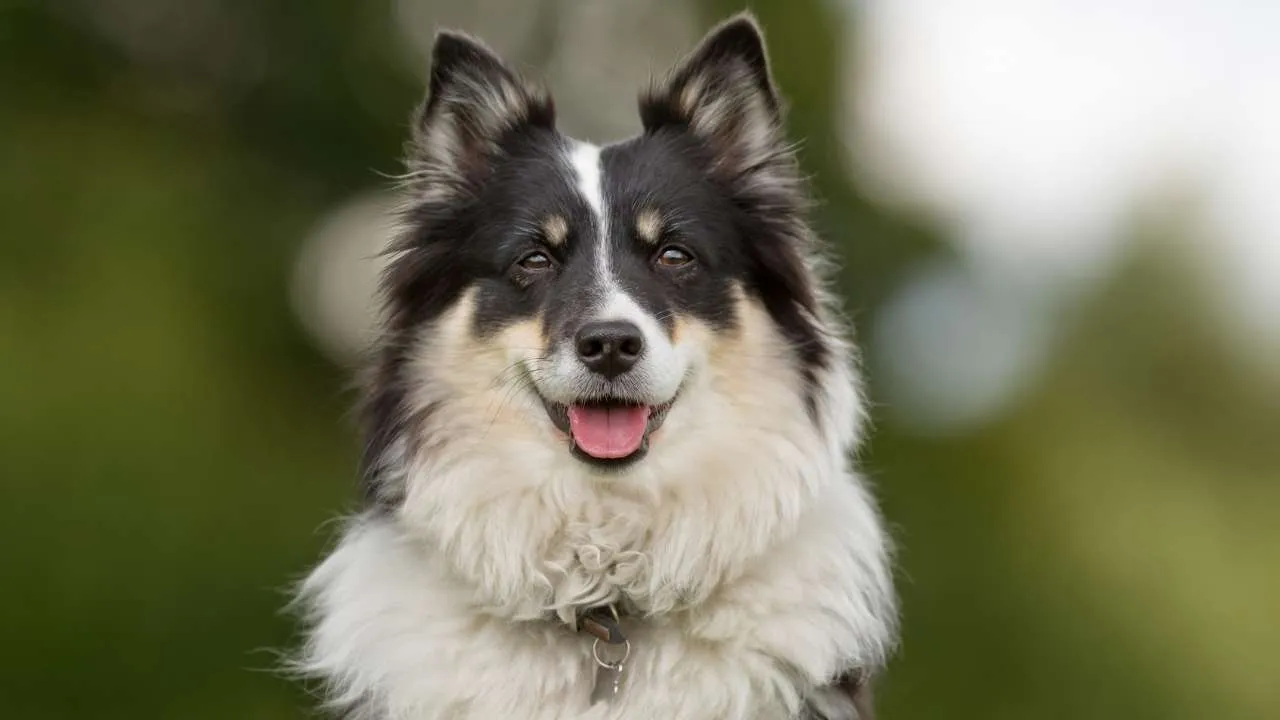
Icelandic Sheepdog is Iceland’s only native dog breed and one of the world’s oldest, with roots linked to spitz-type dogs brought by Vikings more than 1,000 years ago.
Its ancestors became part of life in Iceland’s mountainous regions, where herding livestock demanded agility, sure-footedness, and quick understanding.
Made for Herding
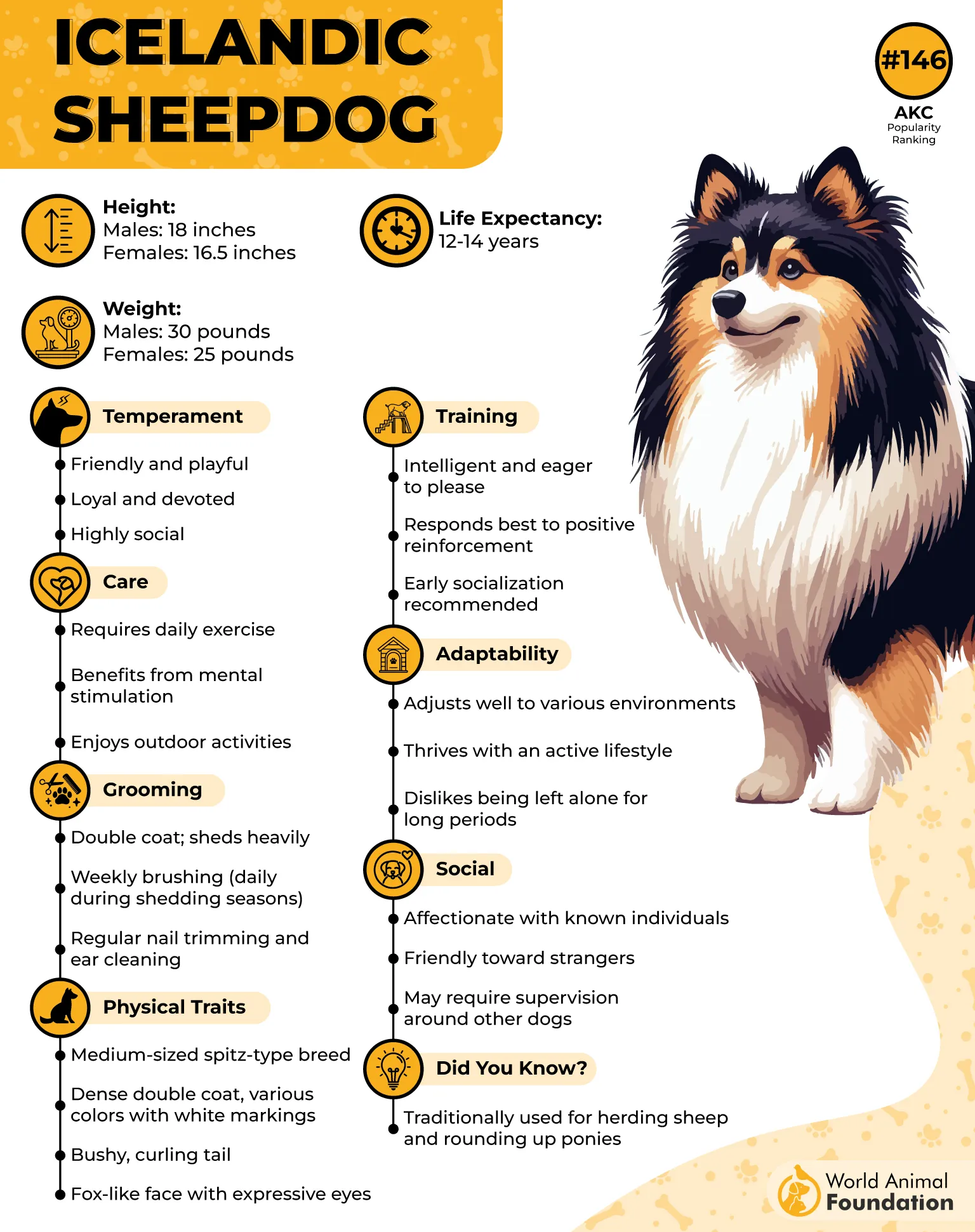
Icelandic Sheepdog brings sharp herding instincts to active work, with the agility and footing needed for uneven ground and demanding outdoor tasks. That working ability can be seen in activities such as herding, agility, obedience, flyball, and frisbee.
The following characteristics make its working style especially practical:
Quick to respond during training
Naturally alert around moving objects
Strong aptitude for herding sports
People Matter
These dogs prefer active involvement with their human family and can become bored, stressed, or destructive when left alone for long periods.
Positive training suits its intelligent, willing nature, while early socialization helps it learn appropriate behavior around people, dogs, children, and cats.
9. Dutch Shepherd
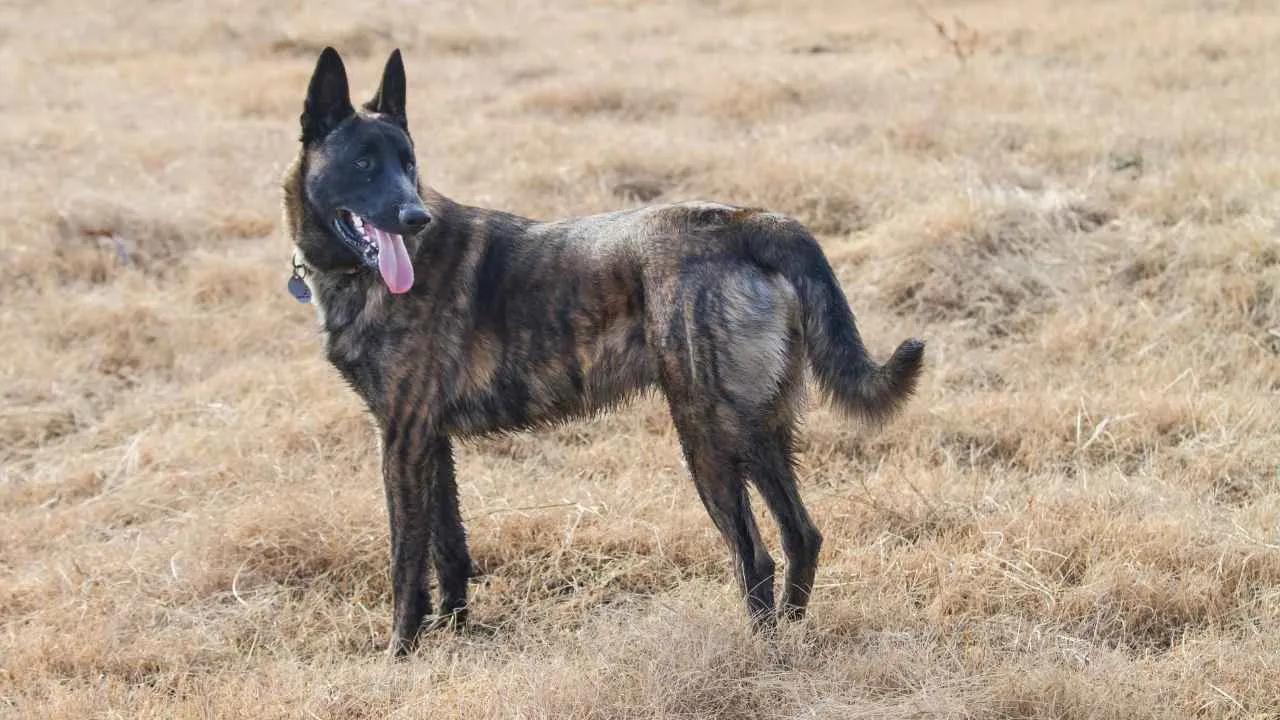
Dutch Shepherd was shaped as an all-around farm dog in rural Dutch areas during the 18th century, helping farmers herd sheep, guard property, pull carts, and control pests. Its wide range of duties required a dog capable of switching between different jobs throughout a working day.
Working Drive
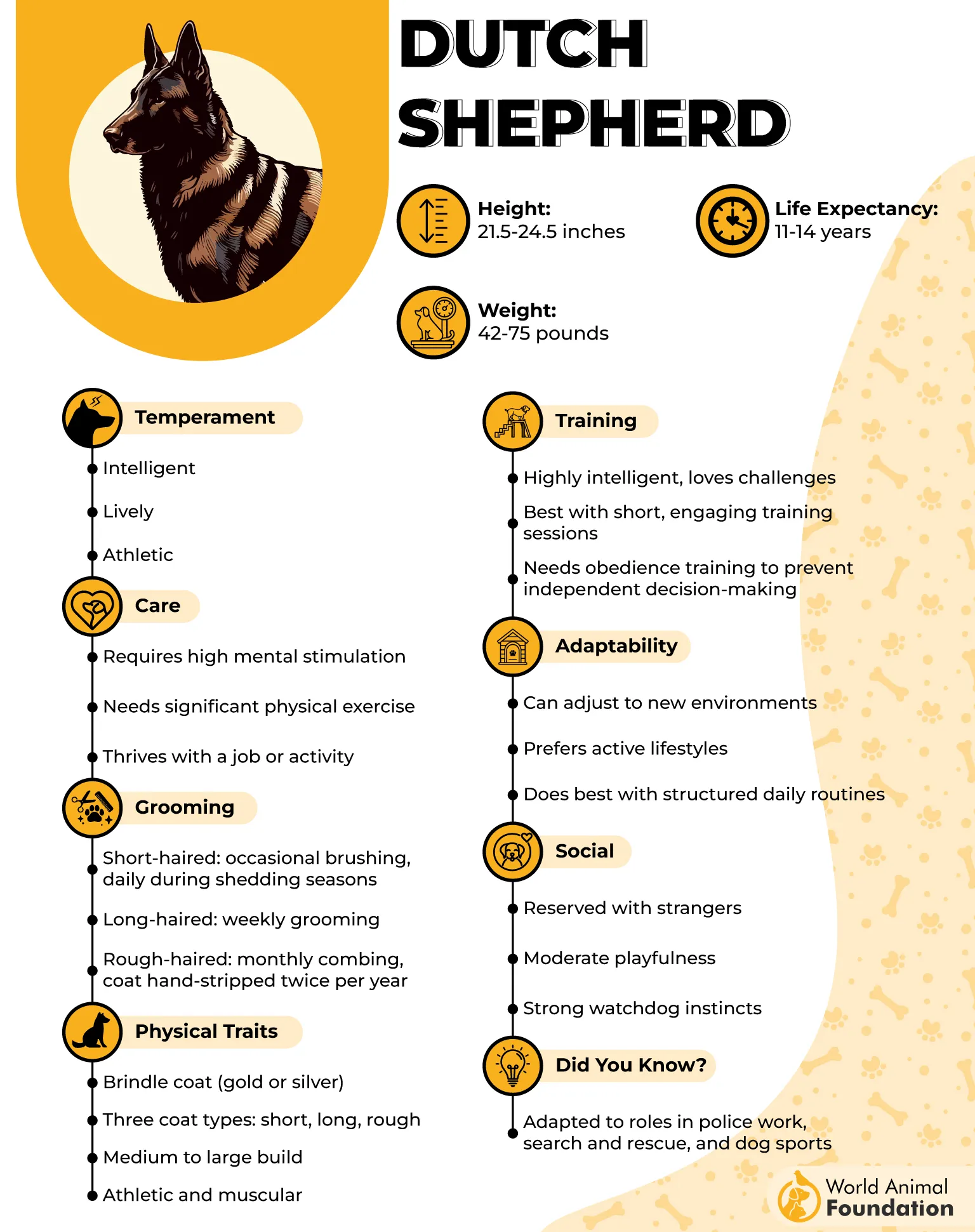
They bring a strong herding instinct to practical work, with behaviors such as circling, eyeing livestock, and gently blocking animals or people to guide their direction. That same instinct can also be directed toward structured herding trials and farm work.
These specific working qualities add another layer:
Checks in closely with its handler
Tracks hidden scents with persistence
Can patrol property boundaries naturally
Quick Learner
Dutch Shepherd learns rapidly and often picks up complex tasks with impressive speed, which has made it useful in detection, search-and-rescue, police, and protection work. Clear, consistent cues matter because the breed can also learn unwanted habits quickly when training lacks structure.
Conclusion
A truly versatile working dog does not need to be reminded that there is a job to do. Herding livestock, watching boundaries, responding to unfamiliar activity, and working closely with a handler can all become part of its daily routine. That combination requires more than physical strength.
Intelligence, confidence, responsiveness, and steady judgment matter just as much when conditions become difficult. These dogs also need experienced handling because strong instincts can become challenging without structure and consistent training.
For the right owner, though, that working drive can become a valuable advantage, turning everyday responsibilities into a partnership built around trust, purpose, and reliability.
