




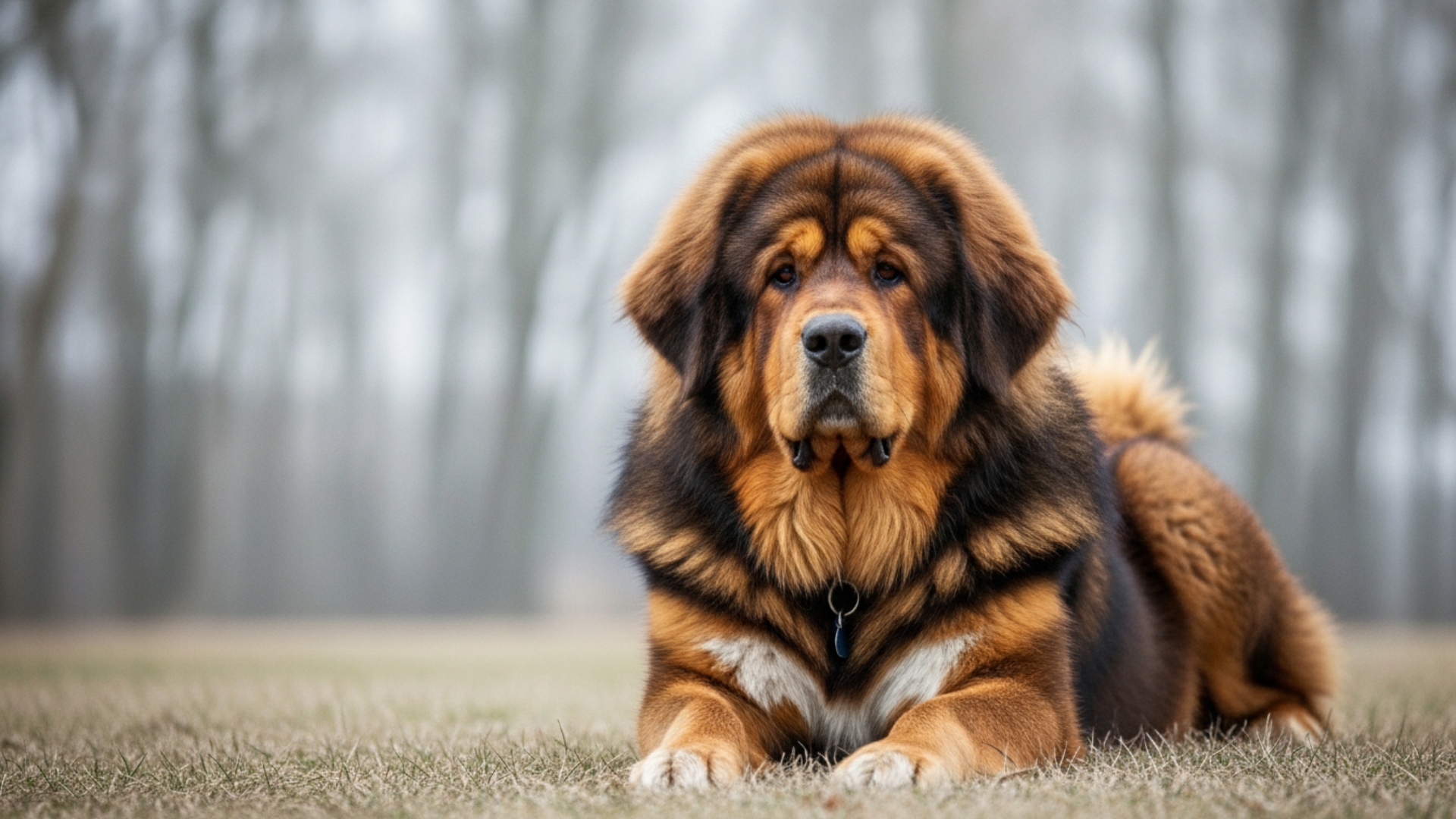
Some dogs are big. Then there are the ones that walk into a room, and suddenly the room feels… smaller. Giant dogs have a way of doing that. They stretch across couches, fill doorways with fluffy enthusiasm, and somehow still act like oversized puppies who forgot how large they’ve become.
But giant dogs are not just about size. Many of them come with unusual looks, quirky features, and fascinating histories that make them stand out even among other large breeds. Living with one can feel a bit like sharing your home with a gentle, slightly clumsy legend.
So if you are curious about the rare giants that truly break the mold, you are in for a fun ride.
Did you know?
Giant dogs tend to stay in their puppy phase longer than most breeds. Their bodies and minds mature slowly, which means their growing joints need careful exercise while they are still young and developing.
Unusual Giant Dog Breeds: A Deep Dive into Rarity
1. Leonberger
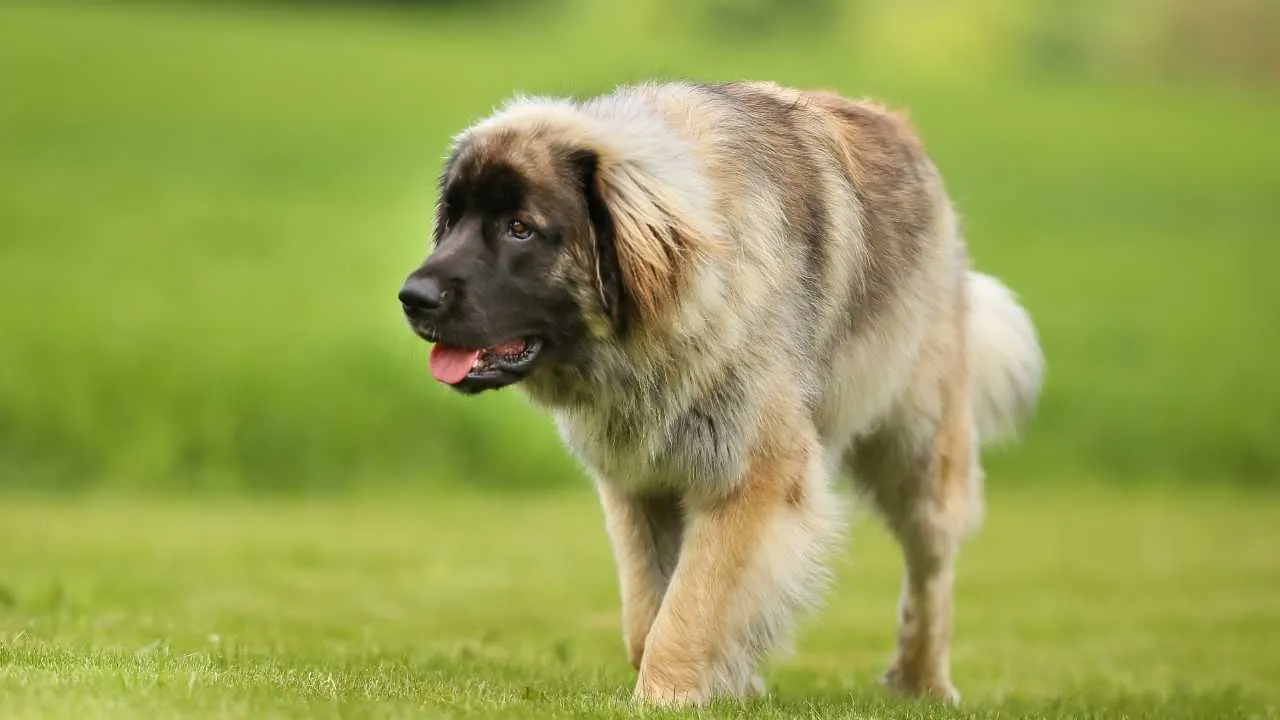
The Leonberger stands out for its rare and majestic presence. This German companion was originally bred for royal courts, giving the breed a reputation that still feels impressively unique today.
Part of the Leonberger’s unusual appeal is how elegance and strength share the same body. A lion-like mane, dark facial mask, and sweeping coat create a dramatic look, yet the movement stays smooth and balanced instead of clumsy.
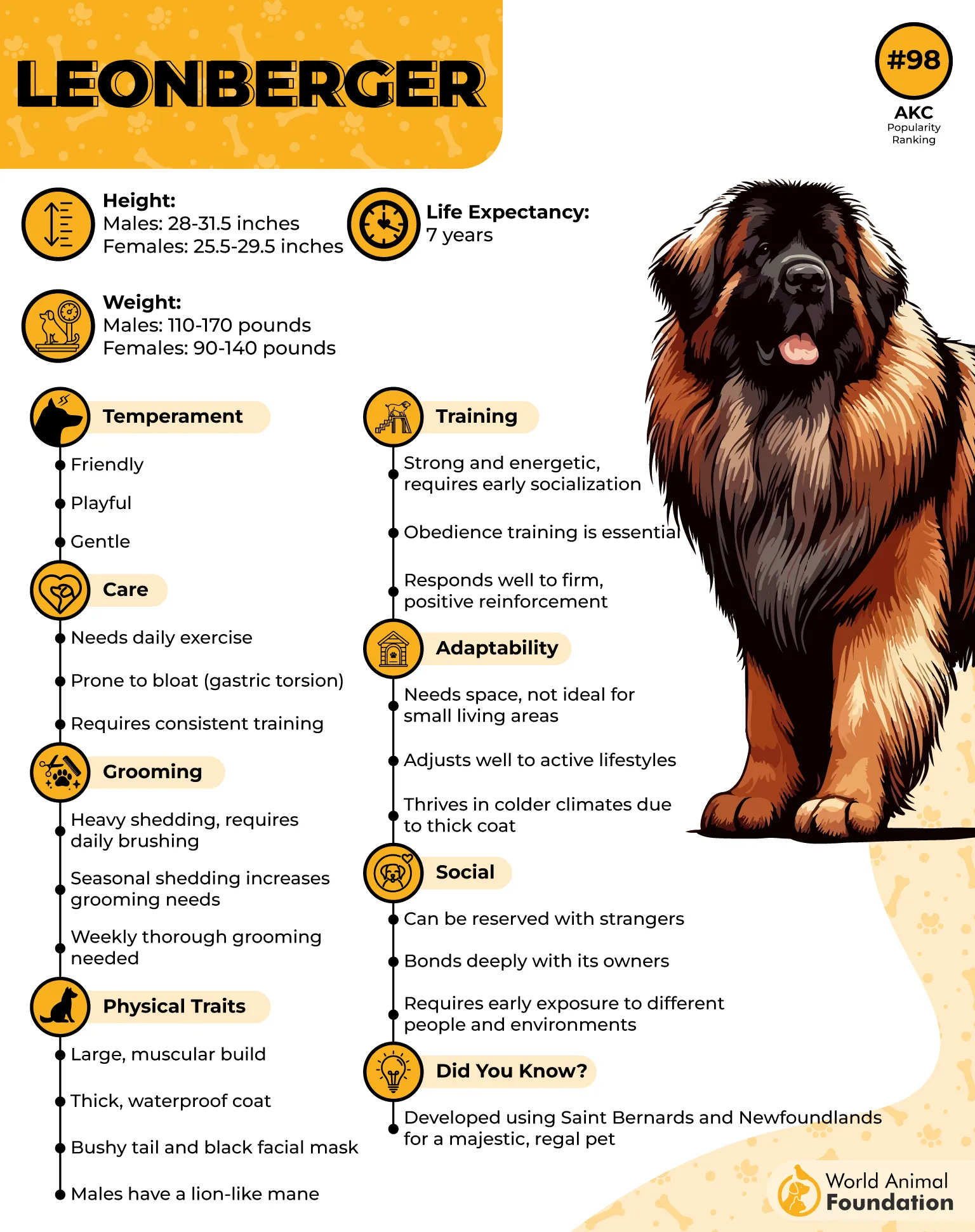
Leonbergers usually make good family dogs, as sharing the house often feels like living with a calm, gentle giant. They enjoy being near their people and easily settle into family routines, happily spending time wherever household activity occurs.
Special Considerations For this Breed
Daily brushing is often needed because the long coat sheds heavily and tangles easily around the ears and back legs.
Owners should learn the warning signs of stomach twisting and gas buildup, a condition sometimes seen in large breeds.
2. Irish Wolfhound
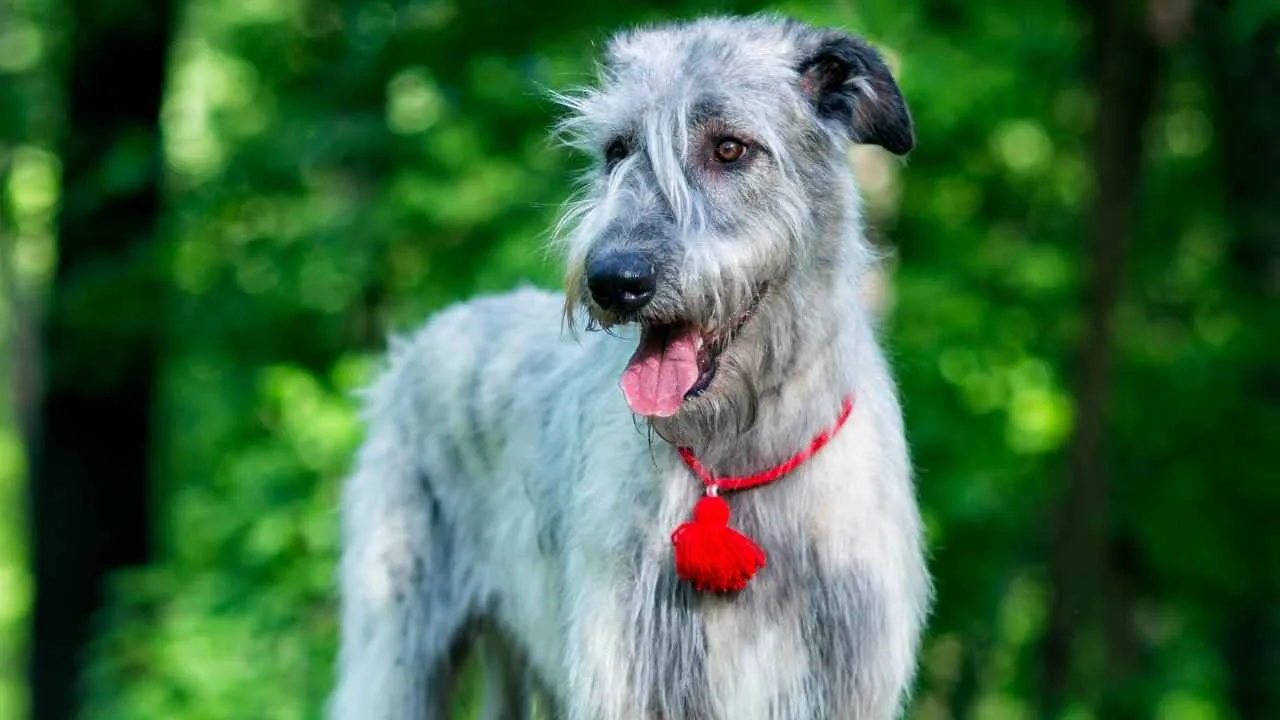
The world of unusual giant dogs includes some truly memorable characters, and the Irish Wolfhound easily earns a spot on that list. This giant breed carries a quiet dignity that feels ancient, almost like a piece of living folklore wandering into modern life.
Among giant dogs, the Irish Wolfhound holds a remarkable distinction. The American Kennel Club (AKC) recognizes it as the tallest dog breed, giving it a long, striking silhouette that immediately grabs attention the moment this calm hound strolls by.
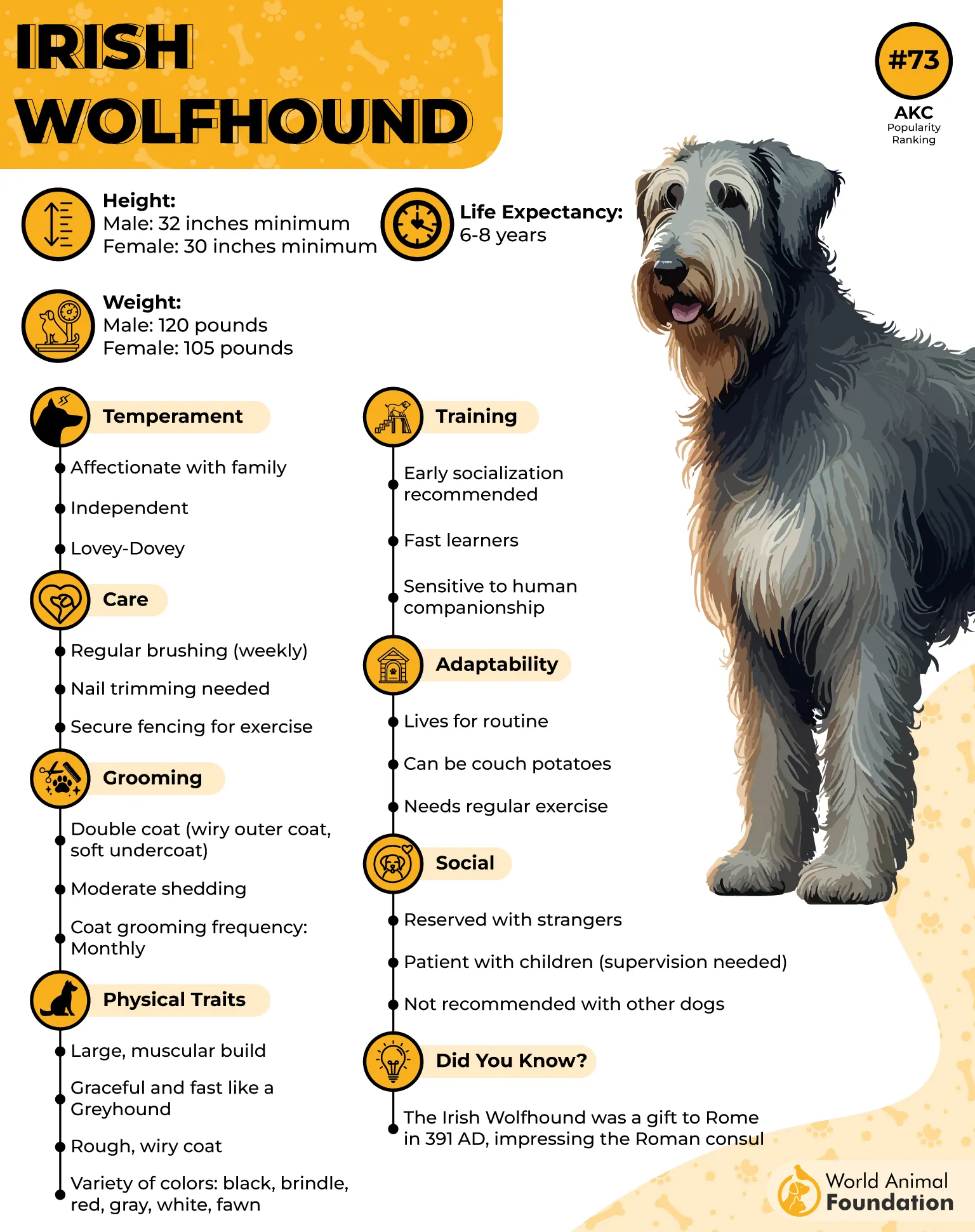
Space matters more than people often expect. Those long legs need room to stretch out comfortably, and a secure fenced yard helps prevent sudden wildlife chases sparked by the breed’s historic hunting instincts.
Special Considerations For this Breed
Their strong prey drive means smaller animals such as cats or squirrels may trigger chasing behavior.
Some individuals develop separation anxiety if left alone for long stretches of time.
3. Tibetan Mastiff
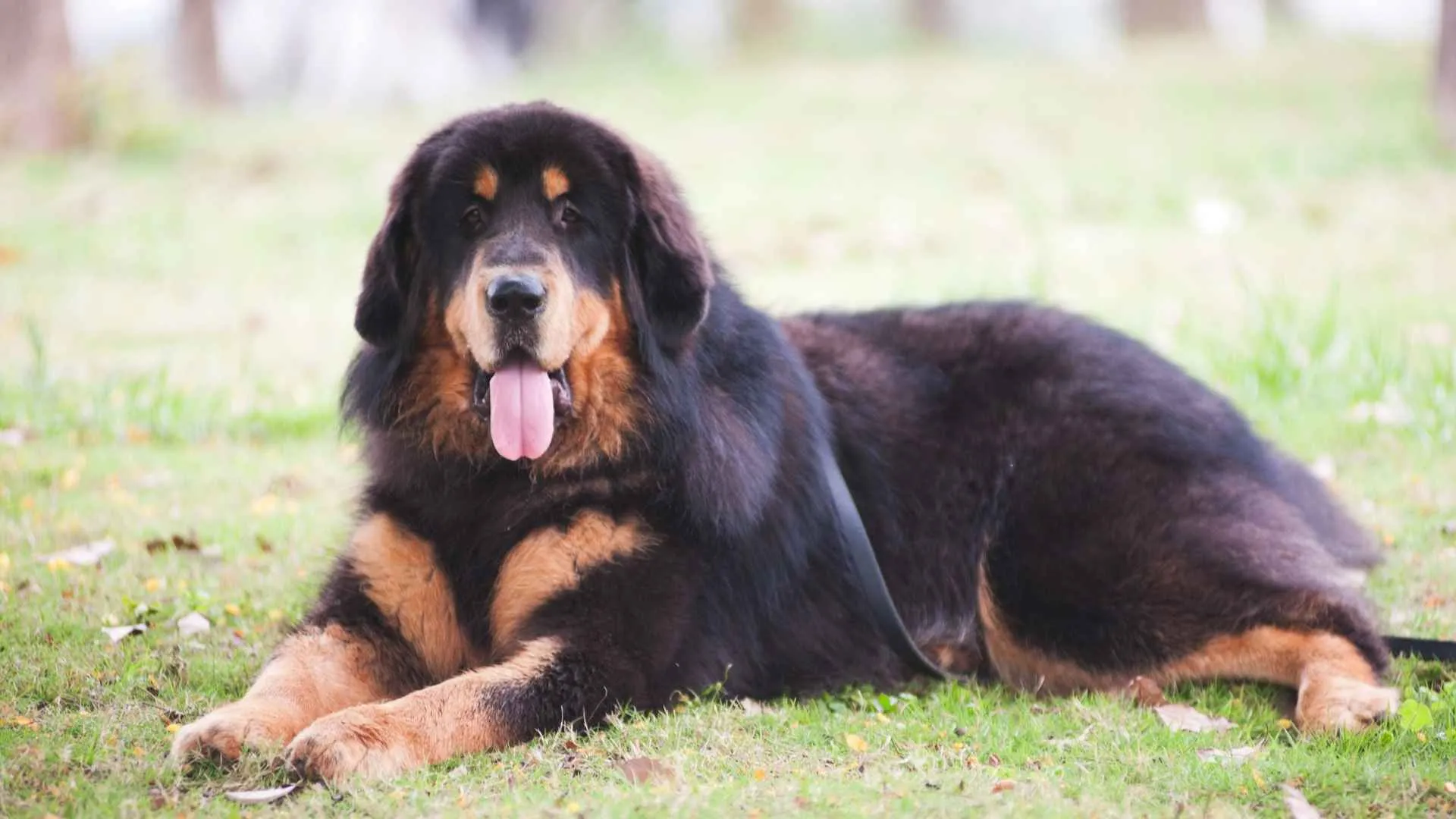
The Tibetan Mastiff feels almost mythical. Stories about massive guardian dogs in the mountains of Central Asia stretch back thousands of years, giving this breed an ancient presence that makes modern dog lovers stop and stare.
Guarding instinct runs deep here. For centuries, these powerful dogs watched over monasteries and property, quietly observing their surroundings and reacting when something unfamiliar approached their territory.
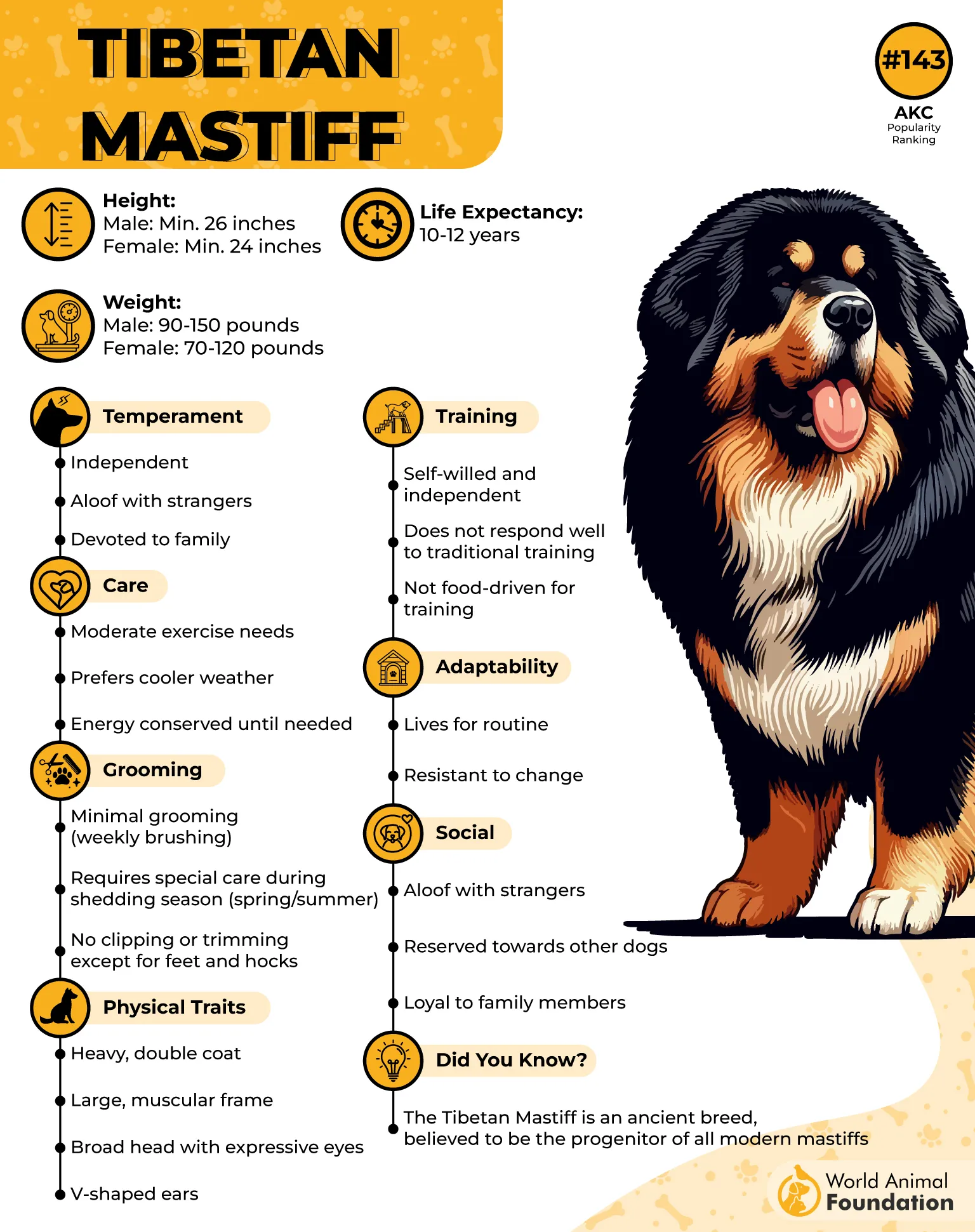
And visually, this guard dog breed is pure drama. A thick double coat, flowing mane around the neck, and deeply watchful eyes create a bold silhouette that looks powerful, noble, and just a little mysterious.
Special Considerations For this Breed
Socialization from an early age helps them adapt more comfortably to unfamiliar people.
Exercise for young dogs should stay gentle because large frames develop slowly.
4. Caucasian Shepherd Dog
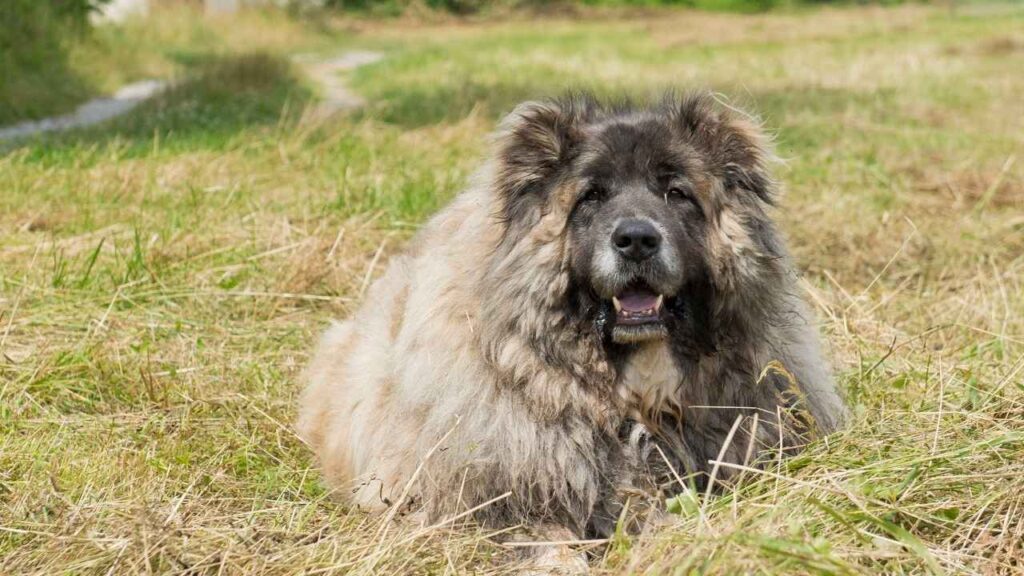
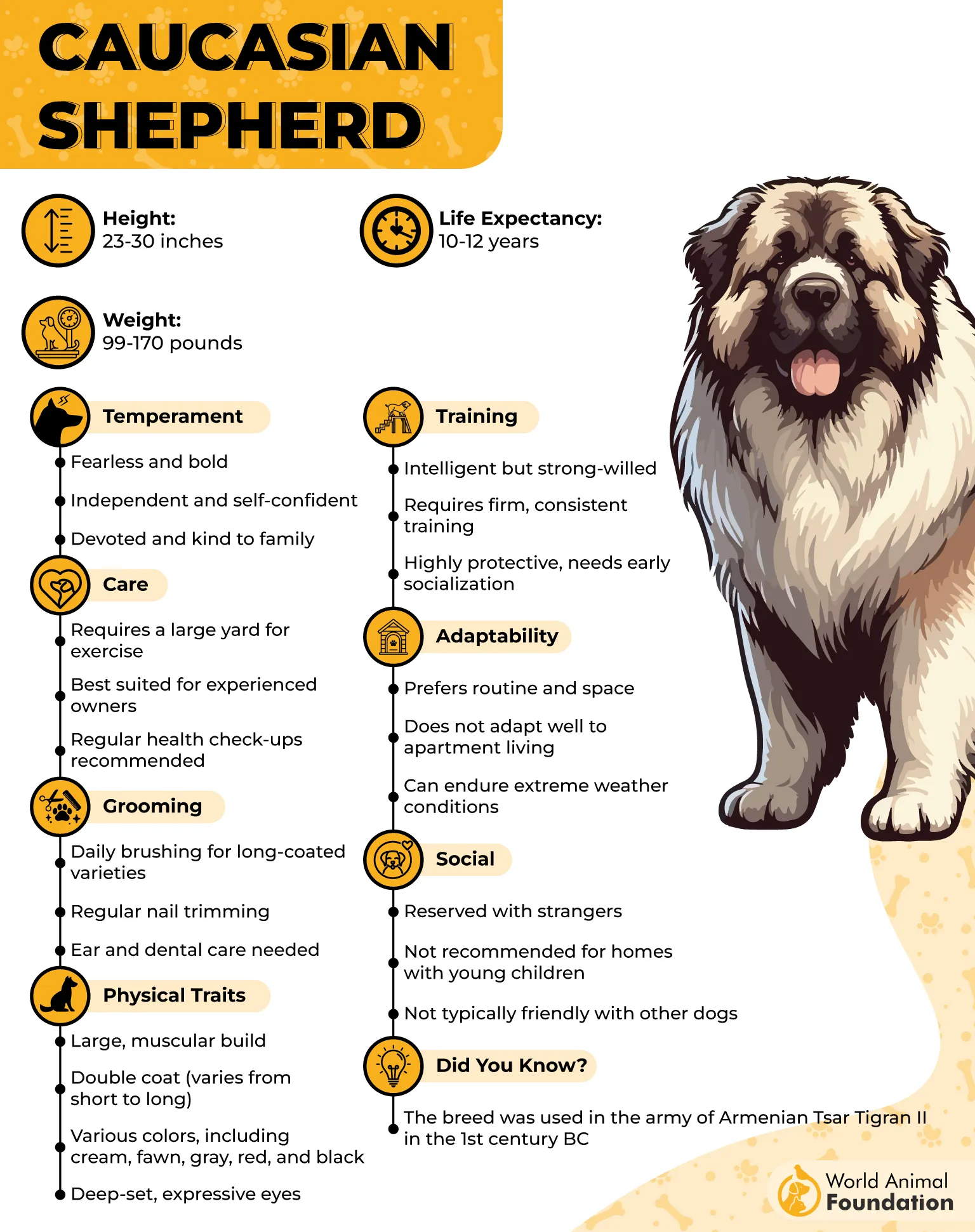
The Caucasian Shepherd Dog is known for its impressive size and history as a mountain guardian. This breed originated in the Caucasus region, where it spent centuries defending livestock and property in rugged, challenging landscapes.
This breed carries a strong protective instinct that comes from generations of guarding work. Strangers are usually met with caution, while trusted family members receive steady loyalty and calm companionship once the dog understands its role in the household.
According to PetMD, this breed needs dedicated time for proper socialization. Slow, consistent exposure to new sounds, people, and environments helps puppies grow into well-adjusted adults. They thrive best in calm homes with patient owners.
Special Considerations For this Breed
Thick coats can trap debris easily, so regular brushing helps keep the fur clean and manageable.
Secure fencing helps prevent the dog from expanding its guarding territory beyond the property.
5. Boerboel
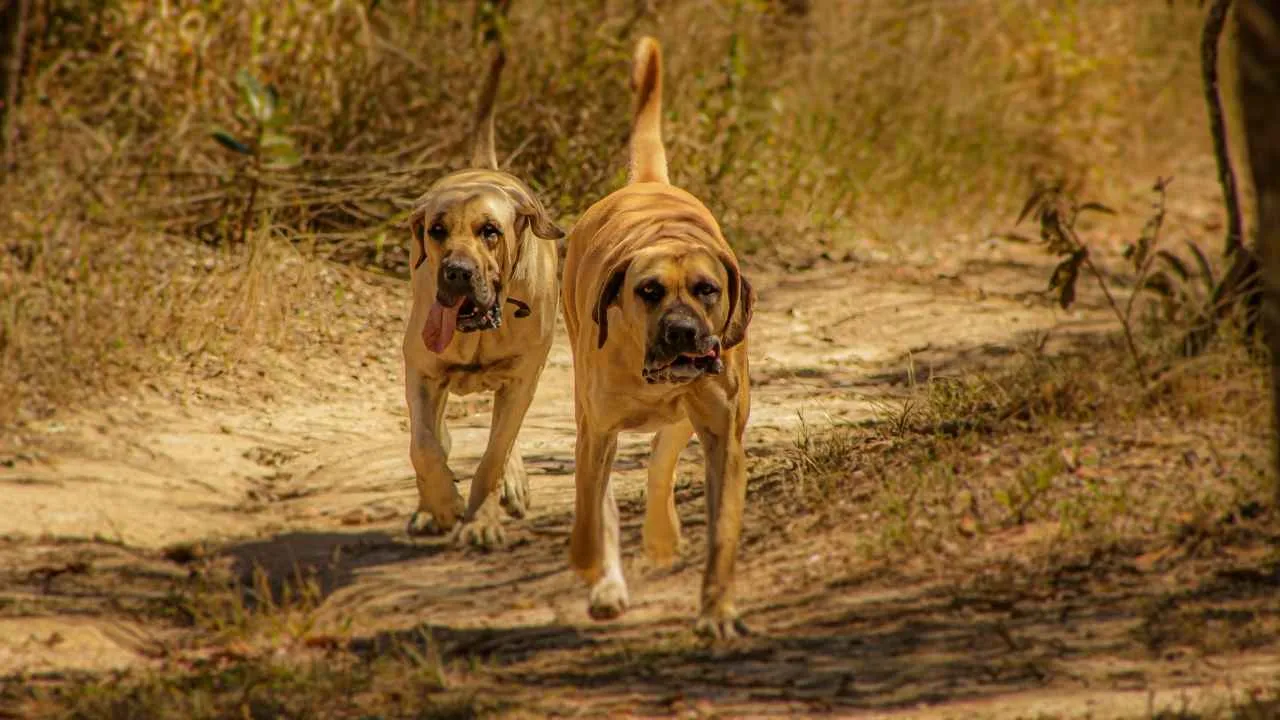
The Boerboel is a confident, intelligent, and calm guardian, devoted to protecting home and family. With its powerful build, broad head, and natural presence, this impressive breed easily captures attention while staying loyal to those it loves.
Boerboels are known for their attentive awareness of their surroundings. They often watch everything happening in the household, calmly studying movement and routine as if they are quietly taking notes on who belongs and who does not.
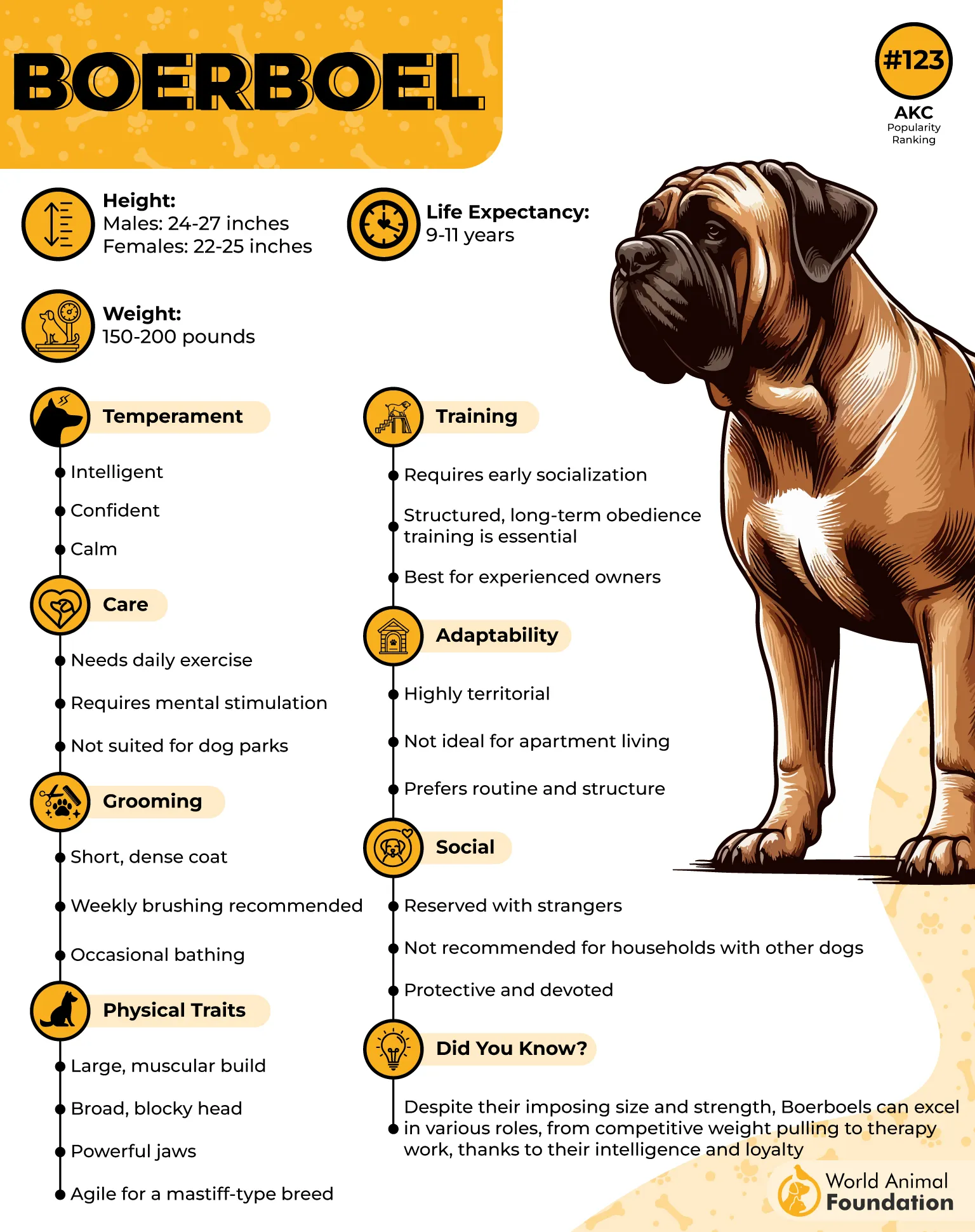
The athletic Boerboel thrives on daily walks, playtime in a secure yard, and mental challenges with their owner. Off-leash time and dog parks aren’t ideal, but they love activities like obedience, agility, and protection sports.
Special Considerations For this Breed
Structured training routines help channel the breed’s natural confidence into polite household behavior.
Consistent leadership from owners prevents stubborn habits from developing over time.
6. Kangal
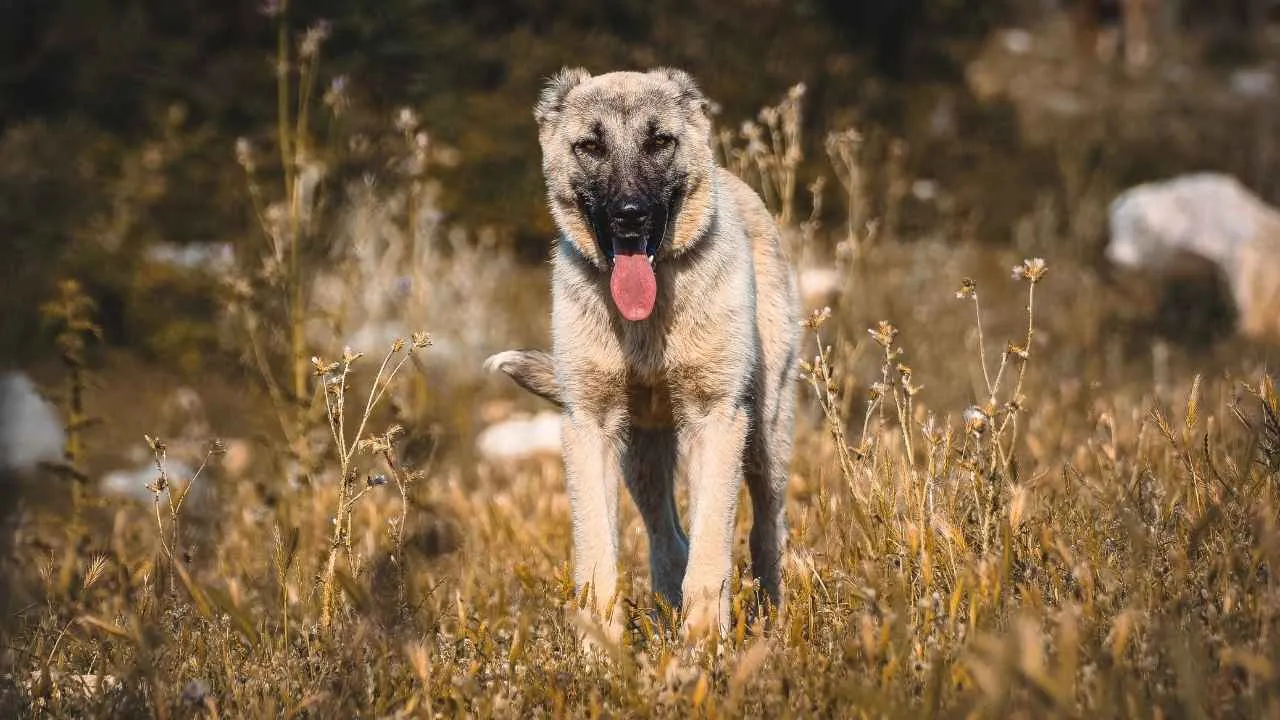
The Kangal is a Turkish powerhouse, bred to watch over flocks with serious focus. Independent, quick-thinking, and a little larger-than-life, this giant guardian knows how to get the job done while keeping a low-key, cool vibe.
Unlike many guardian breeds that rely on loud warnings, the Kangal often works with calm awareness. It watches carefully, responds with precision, and tends to avoid unnecessary noise unless something truly demands attention.
Living with this breed can feel surprisingly peaceful. Kangals often spend long periods resting or quietly surveying their surroundings, conserving energy while remaining alert to anything unusual happening around the home or property.
Special Considerations For this Breed
Daily mental stimulation helps prevent boredom in this intelligent working dog.
Slow introductions to unfamiliar animals help maintain harmony in multi-pet households.
7. Dogue de Bordeaux
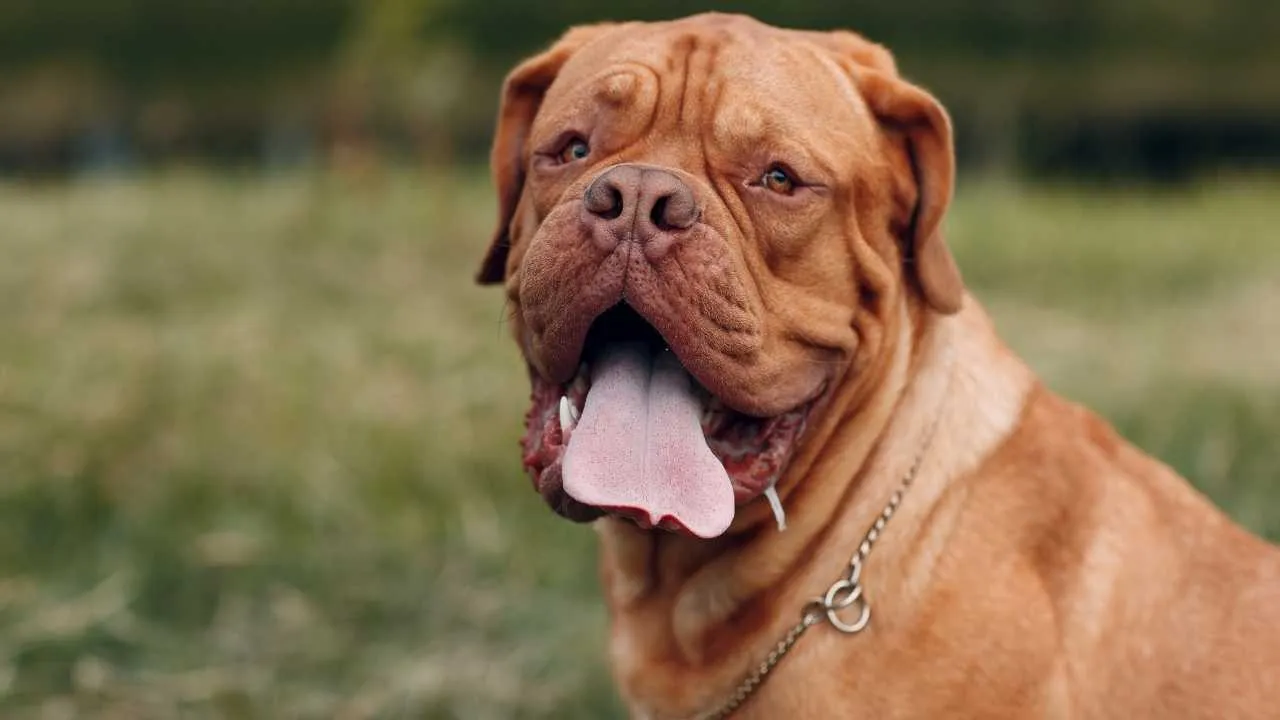
The Dogue de Bordeaux stands out with a story that reaches far into ancient history. This powerful French guardian existed long before modern France formed, carrying centuries of loyalty, courage, and protective instinct within one unforgettable dog.
Sweetness often surprises people who meet this breed. Beneath the serious appearance lives a sensitive dog deeply devoted to loved ones. Loyalty runs strong, though stubborn streaks sometimes appear when firm and consistent guidance is missing.
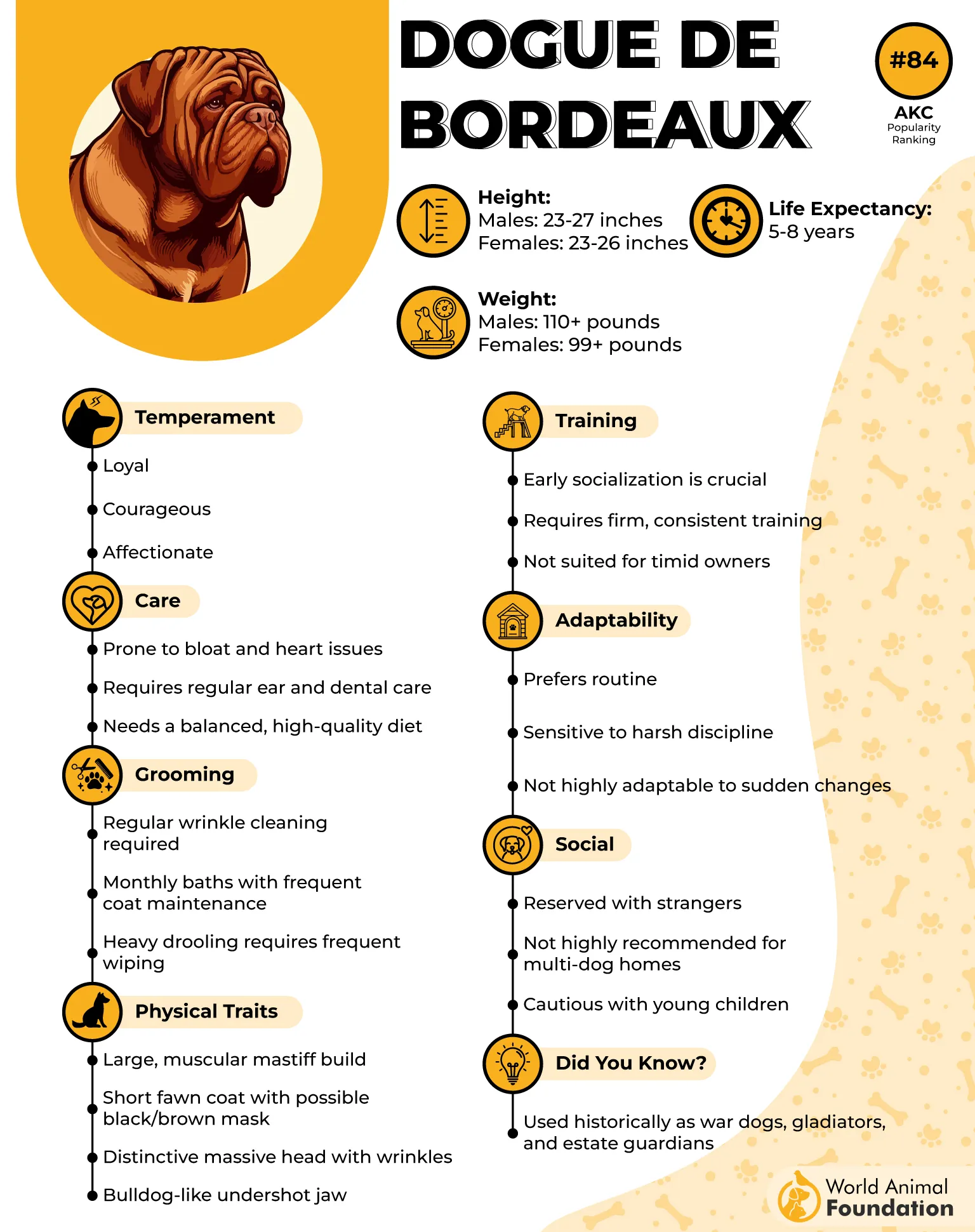
As mentioned by Purina, patience is important with this slow-maturing breed. Grooming stays fairly simple, but drool cleanup can become part of daily life. Large beds, space, and steady training also help keep this big, goofy companion comfortable and well-mannered.
Special Considerations For this Breed
Young dogs should avoid intense activity or jumping while bones and joints are still developing.
Regular ear checks and consistent tooth brushing help prevent common hygiene problems.
8. Scottish Deerhound
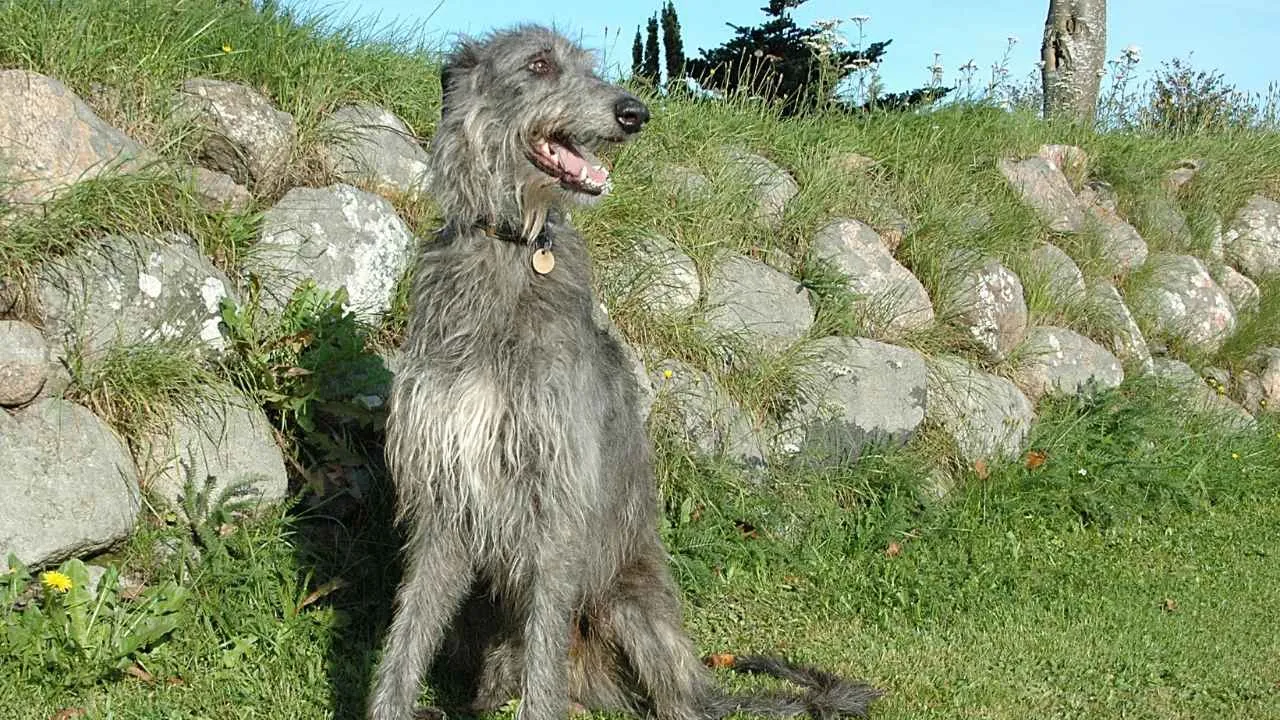
The Scottish Deerhound is basically a gentle giant in sleek disguise, a towering, blue-gray speedster who loves stretching around. With a regal neck and graceful stance, this hound turns every stroll into a mini runway show.
Historically, this breed worked as a hunter built for chasing deer across wide terrain. The name itself reflects that original purpose, and the breed’s agility and endurance once played a key role during traditional hunting pursuits.
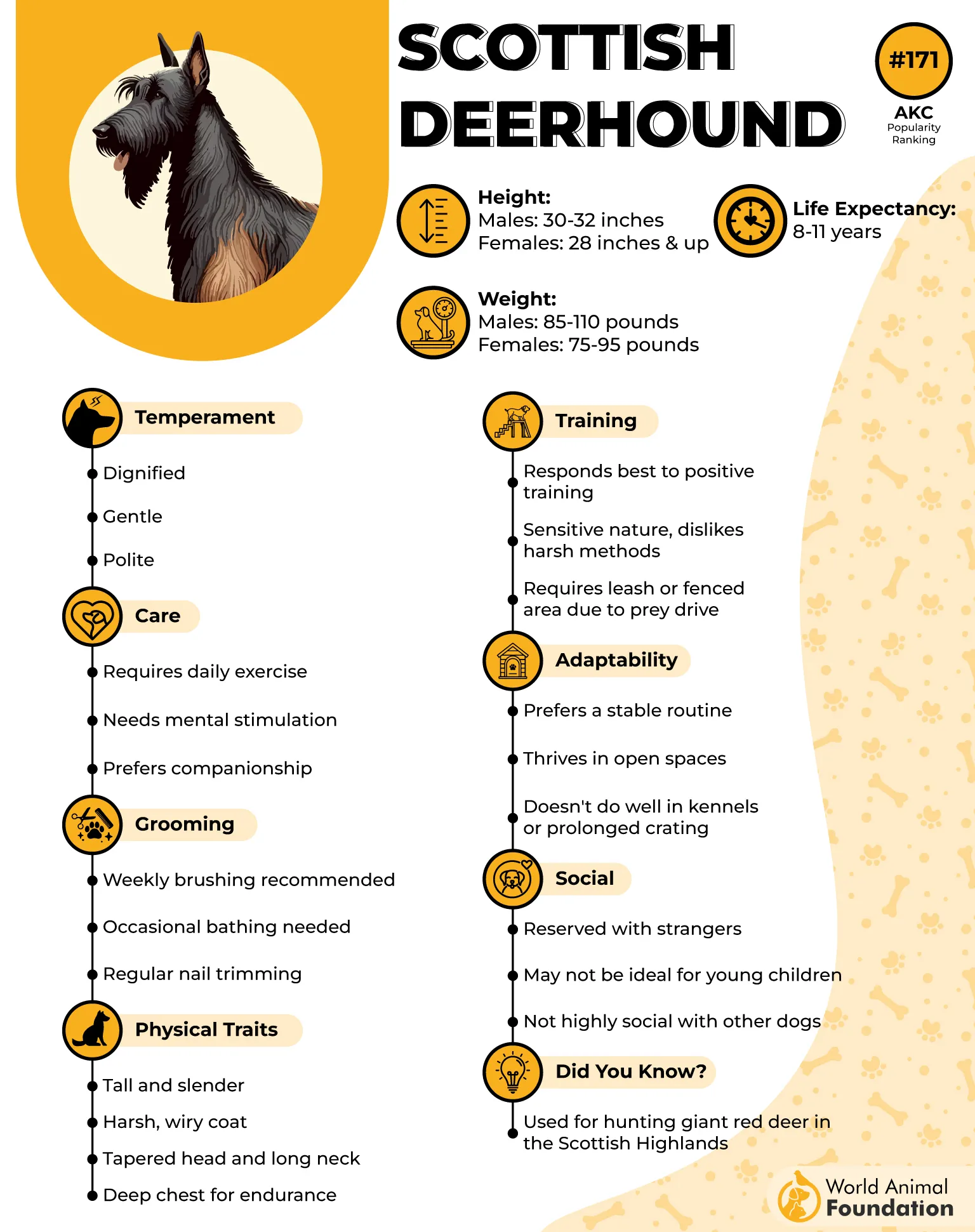
Positive reinforcement works best with this intelligent but independent dog. Praise, treats, and encouragement help keep training enjoyable. Patience matters because stubborn moments can appear, and reliable recall training is especially important when distractions like wildlife appear nearby.
Special Considerations For this Breed
Exercise opportunities in safe, enclosed areas reduce the risk of chasing wildlife.
Feeding balanced meals suited to age and activity levels helps maintain overall health.
9. Pyrenean Mastiff
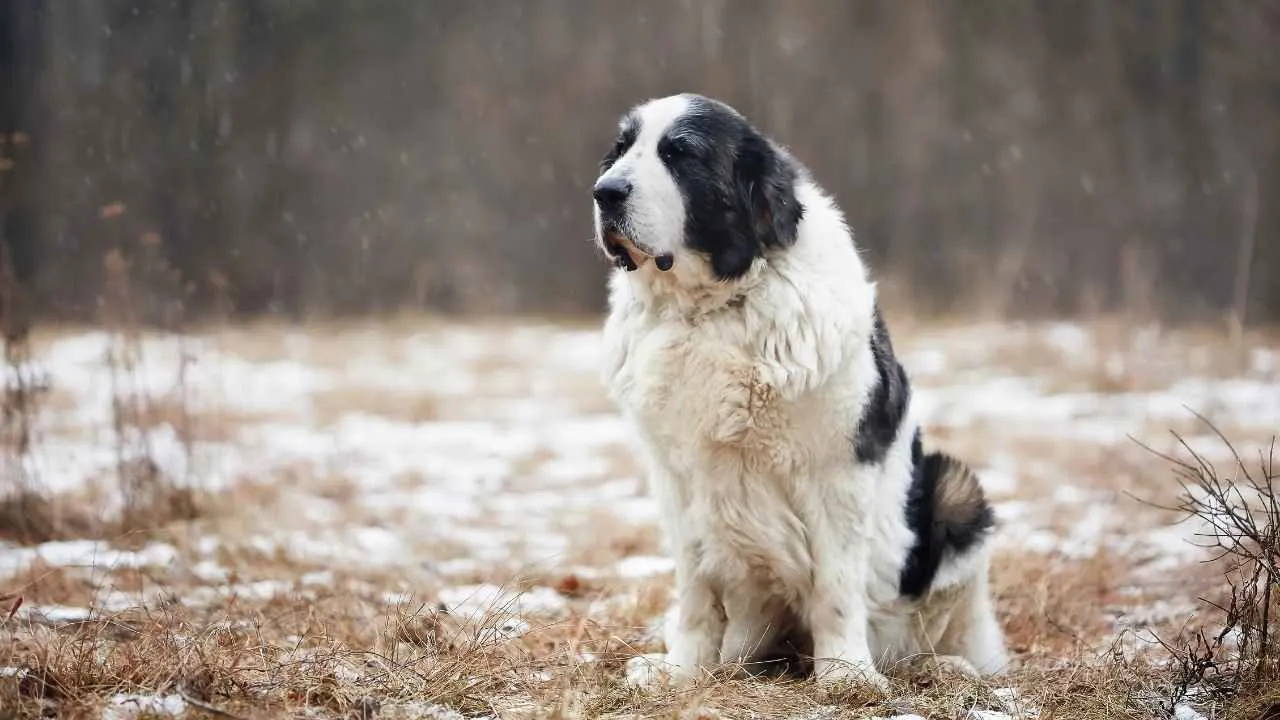
Calm, loyal, and deeply devoted, this Spanish guardian exudes a quiet confidence, moving through life with steady assurance, making it an ideal companion for families seeking a gentle yet protective presence.
One trait that makes this breed fascinating is its balance of gentleness and alertness. Around family members and familiar pets, the behavior stays calm and affectionate. Strangers, however, are watched carefully until the dog decides everything feels safe.
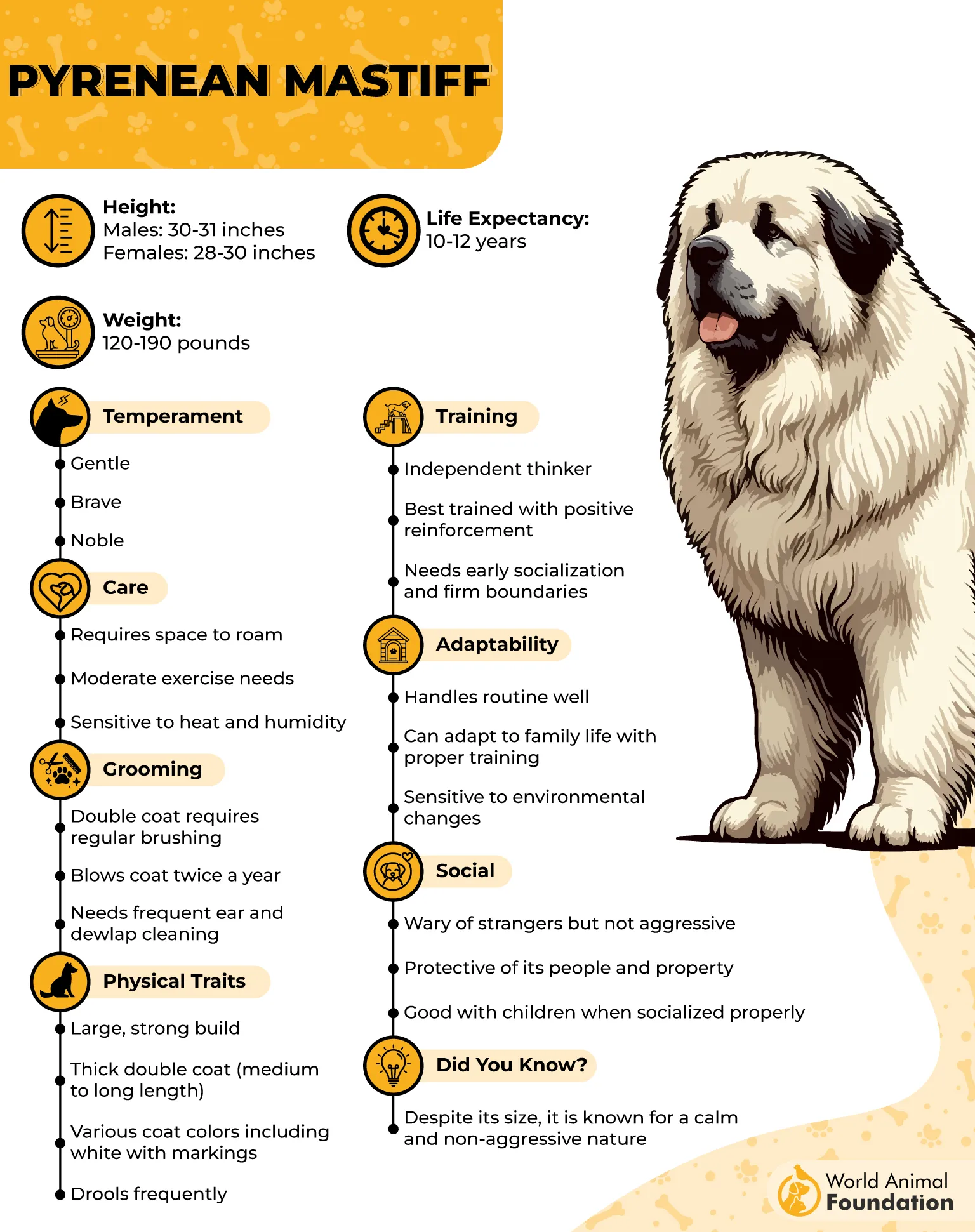
Life with other animals often works smoothly for this breed. Centuries of livestock guarding have shaped a dog comfortable sharing space with different animals, and with proper socialization, they generally coexist peacefully with dogs, cats, and other family pets.
Special Considerations For this Breed
Dense coats require frequent brushing to control heavy shedding throughout the year.
Long periods alone may lead to boredom, so gradual independence training can be helpful.
Conclusion
Some dogs simply stand out, and unusual giant dog breeds do exactly that. Their presence fills a home in a way few animals can. Calm companions one moment and quiet guardians the next, they bring personality, loyalty, and fascinating history into everyday life.
Living with one of these remarkable dogs requires patience, space, and thoughtful care, but the reward can be truly special. When the right match happens, these gentle giants become wonderful companions who quietly leave a very big mark on your life.
