




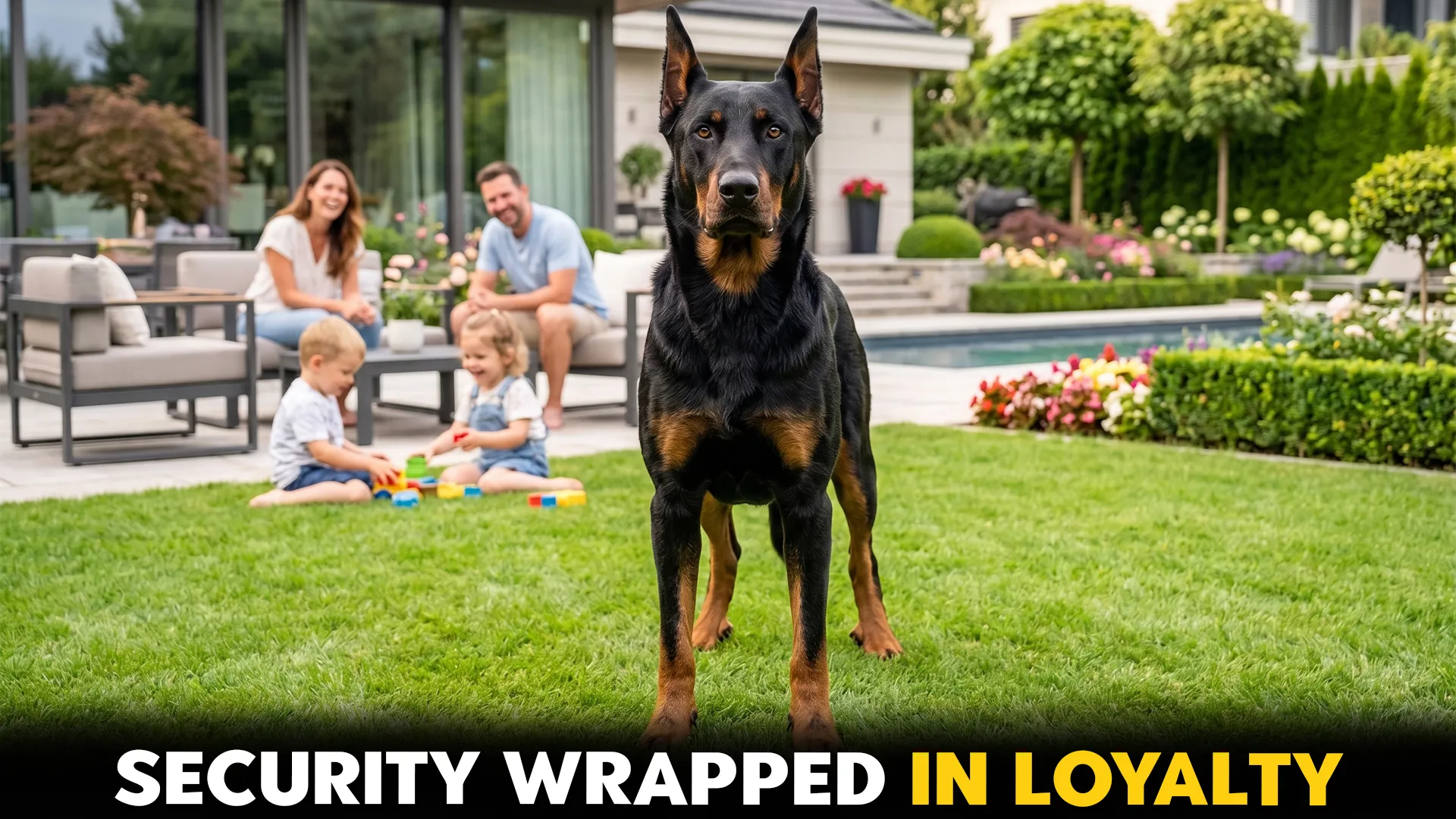
Not every dog is built to guard a home, but some have an instinct to watch over the people they love. These dogs are more than loyal companions. They’re alert, confident, and always paying attention to what’s happening around them.
The most dependable family protectors aren’t simply big or powerful. What truly sets them apart is their intelligence, courage, loyalty, and ability to stay calm under pressure.
With proper training, early socialization, and responsible ownership, these dogs can tell the difference between a friendly guest and a genuine threat. That balance makes them reliable guardians without being unnecessarily aggressive.
If you’re searching for a four-legged companion that offers both unwavering loyalty and an extra sense of security, you’ve come to the right place.
In this article, we’ll introduce some of the best guard dog breeds that keep your family safe, explore what makes them such trusted protectors, and help you find the one that best matches your home, lifestyle, and experience level.
Key Takeaways
Meet 7 unstoppable guard dog breeds and discover what makes them trusted family protectors.
Compare breeds like the German Shepherd, Rottweiler, and Belgian Malinois to find your perfect match.
Explore loyal guardians, from the Australian Cattle Dog to the Beauceron and Old English Sheepdog.
Learn the training, exercise, and care these protective breeds need to thrive.
Unstoppable Dog Breeds That Keep Your Family Safe
1. Australian Cattle Dog
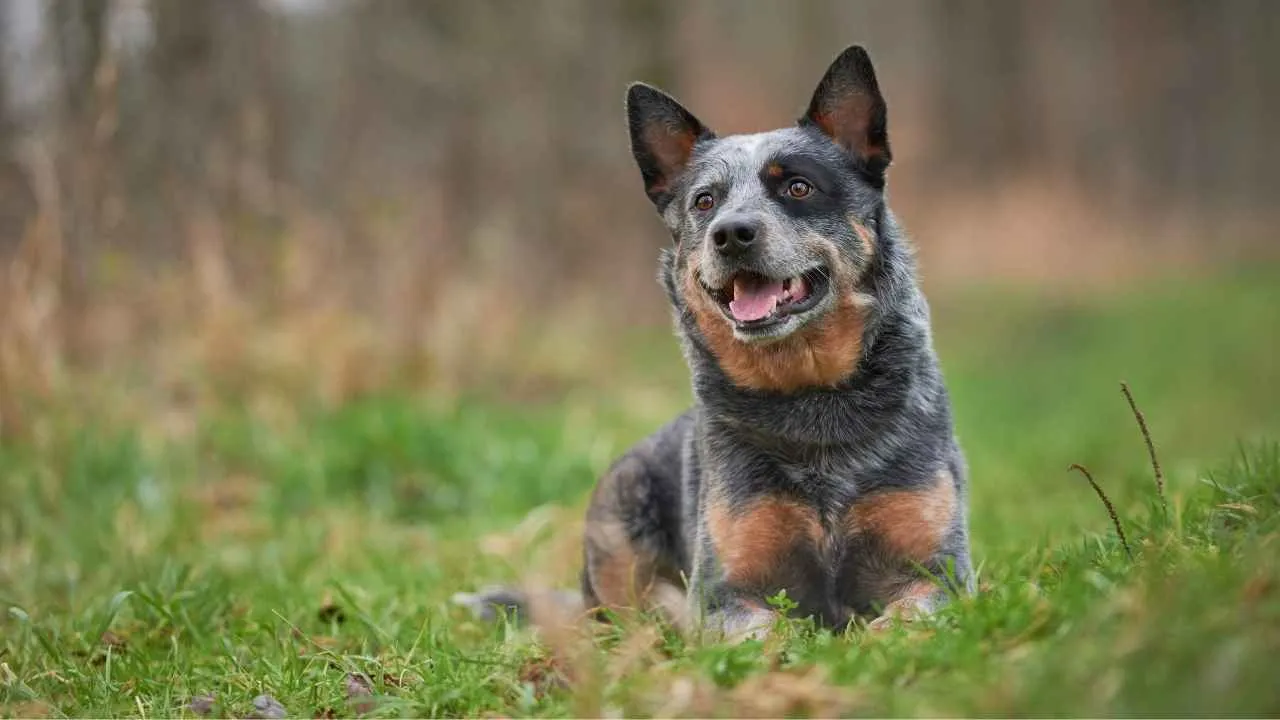
Australian Cattle Dogs were originally bred in Australia to herd cattle across rugged terrain. Their hardworking nature, quick thinking, and natural protective instincts made them valuable working dogs. They are loyal to their families and naturally watch over their home and property.
Instead of barking at everything, they usually alert their owners only when they sense something is wrong.
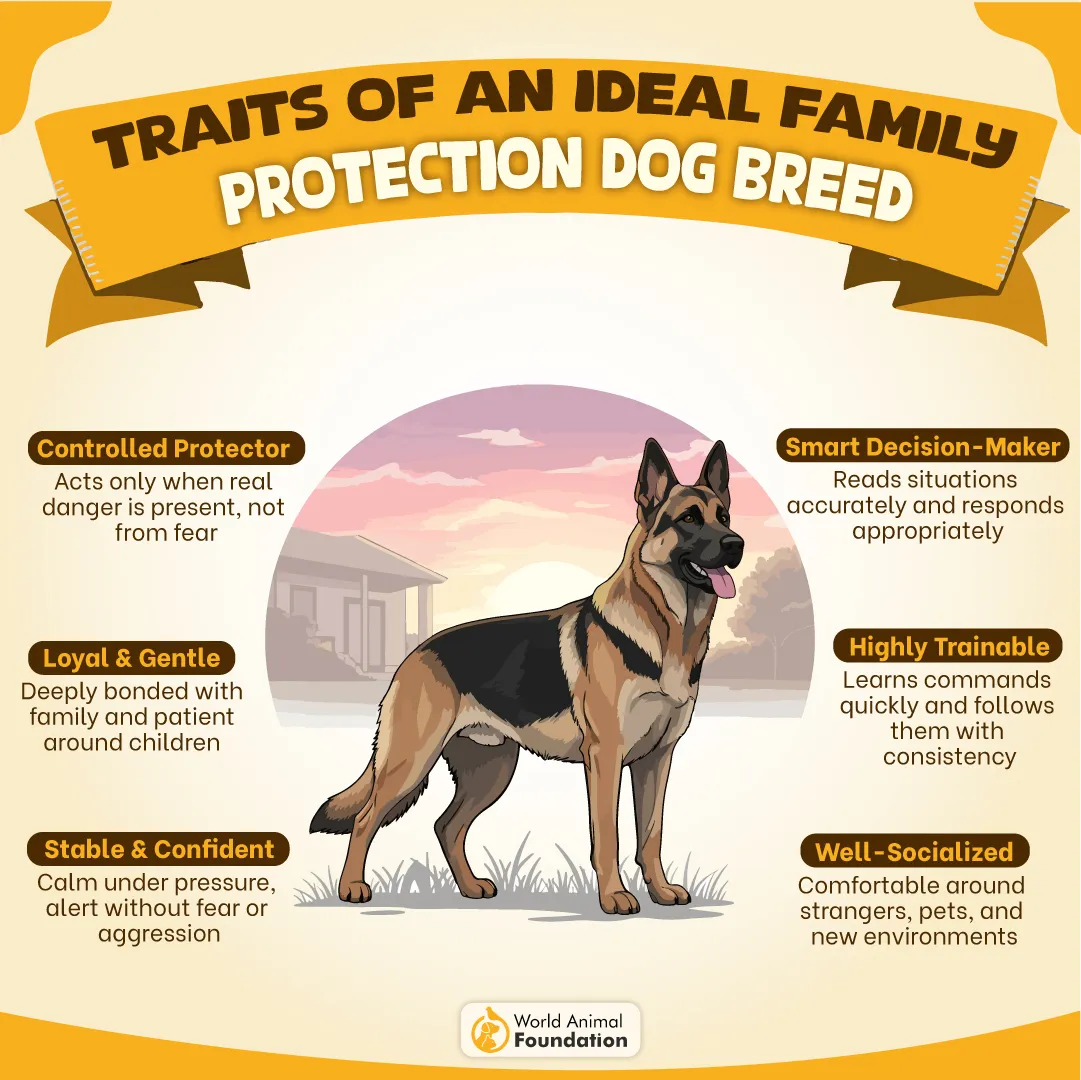
Australian Cattle Dogs are highly intelligent and full of energy. They learn quickly and do best with early training and socialization. Herding, obedience, agility, and other active tasks keep them mentally and physically satisfied.
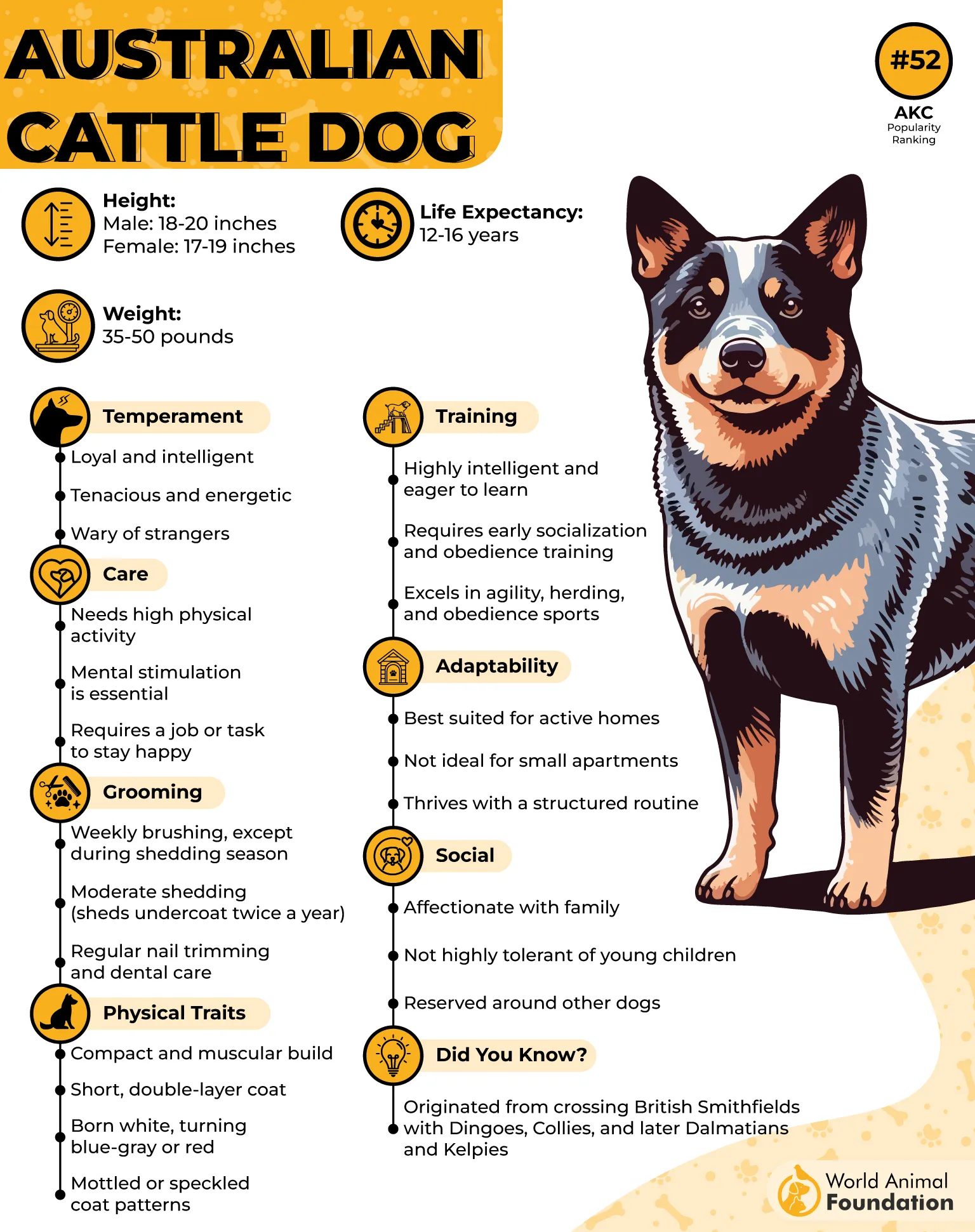
They need more than a daily walk and thrive with regular exercise, outdoor adventures, or dog sports. Without enough activity, they can become bored and develop unwanted behaviors.
Things to Consider
Their double coat needs weekly brushing and more frequent grooming during seasonal shedding.
They require plenty of daily exercise and mental stimulation to stay happy.
They are best suited for experienced owners who can provide consistent training and early socialization.
The breed is generally healthy but can be prone to inherited conditions such as hip and elbow dysplasia, progressive retinal atrophy (PRA), deafness, luxating patellas, and skin problems.
2. Belgian Malinois
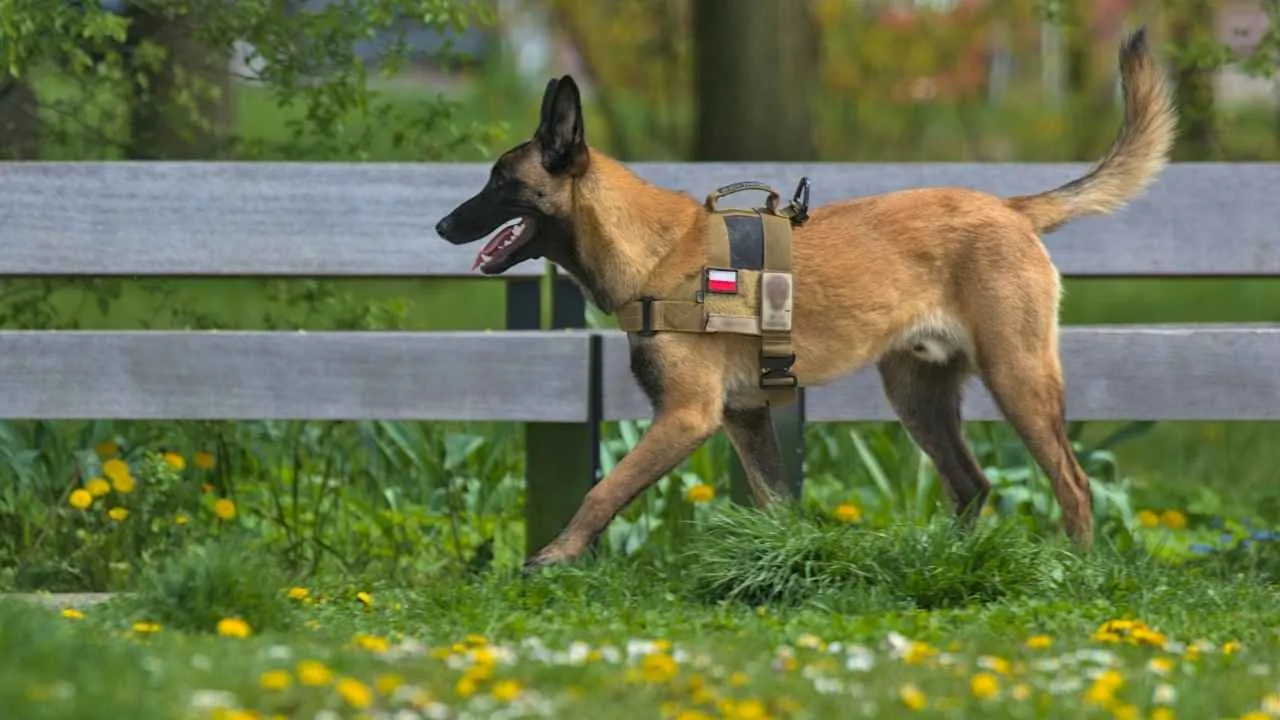
Belgian Malinois were originally bred in Belgium to herd livestock, but their intelligence, confidence, and strong work ethic quickly made them top choices for police, military, search-and-rescue, and protection work. They are deeply loyal to their family members and naturally stay alert to their surroundings.
With the right training, they become great guard dogs that form incredibly strong bonds with their owners.
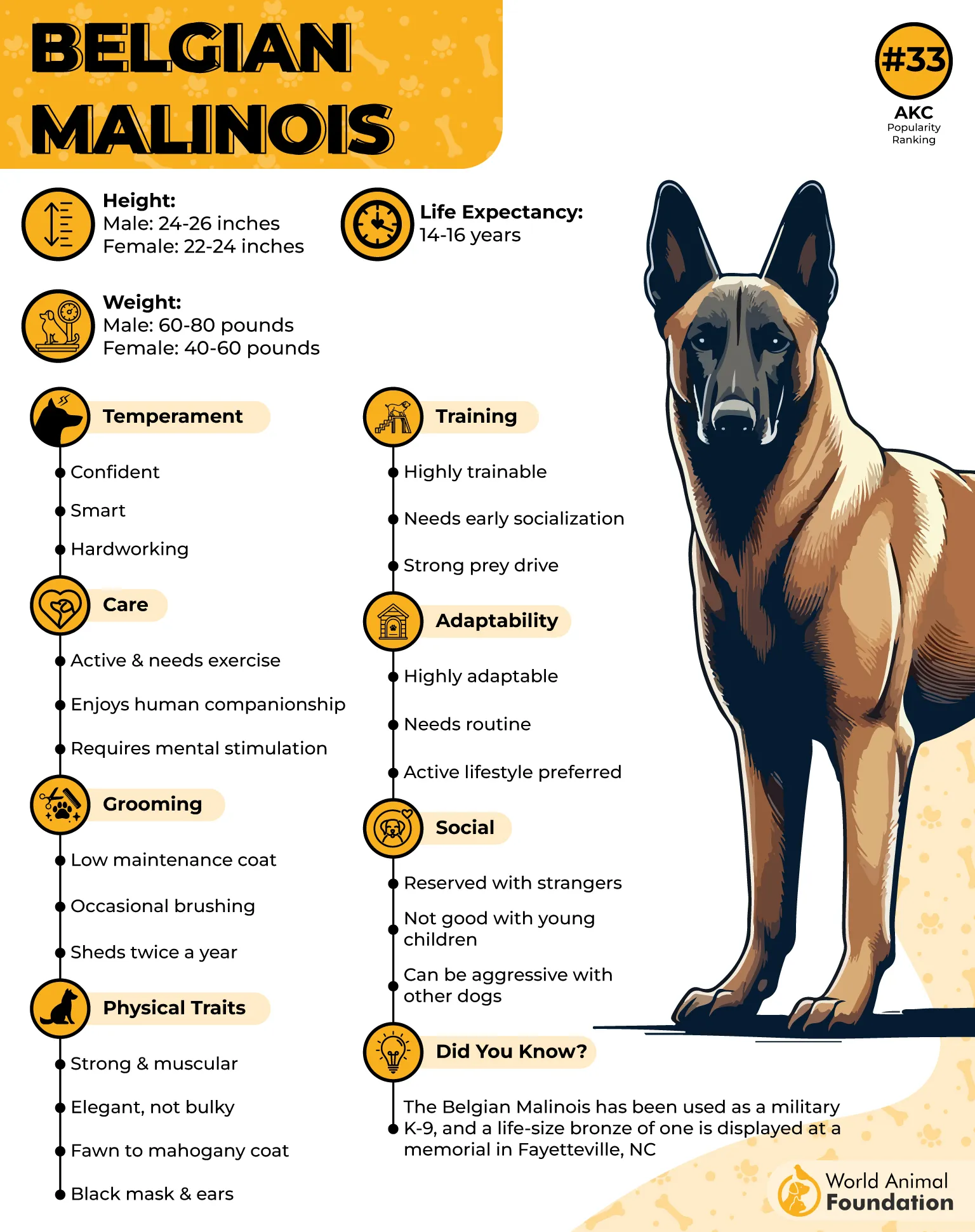
These dogs are among the smartest and most energetic breeds. They need consistent training, early socialization, and plenty of mental and physical challenges to stay happy. Long runs, hikes, agility, tracking, obedience, and other working activities are ideal for them.
Without enough exercise or attention, they can become bored and develop destructive behaviors such as chewing, digging, or chasing moving objects, as mentioned by Orvis.
Things to Consider
They need intensive daily exercise and ongoing training throughout their lives.
Early socialization is essential to help them behave confidently around strangers and other animals.
Their short, weather-resistant coat is easy to maintain but sheds heavily during seasonal coat changes.
The breed is generally healthy and long-lived, though regular veterinary care and year-round parasite prevention are recommended.
3. Beauceron
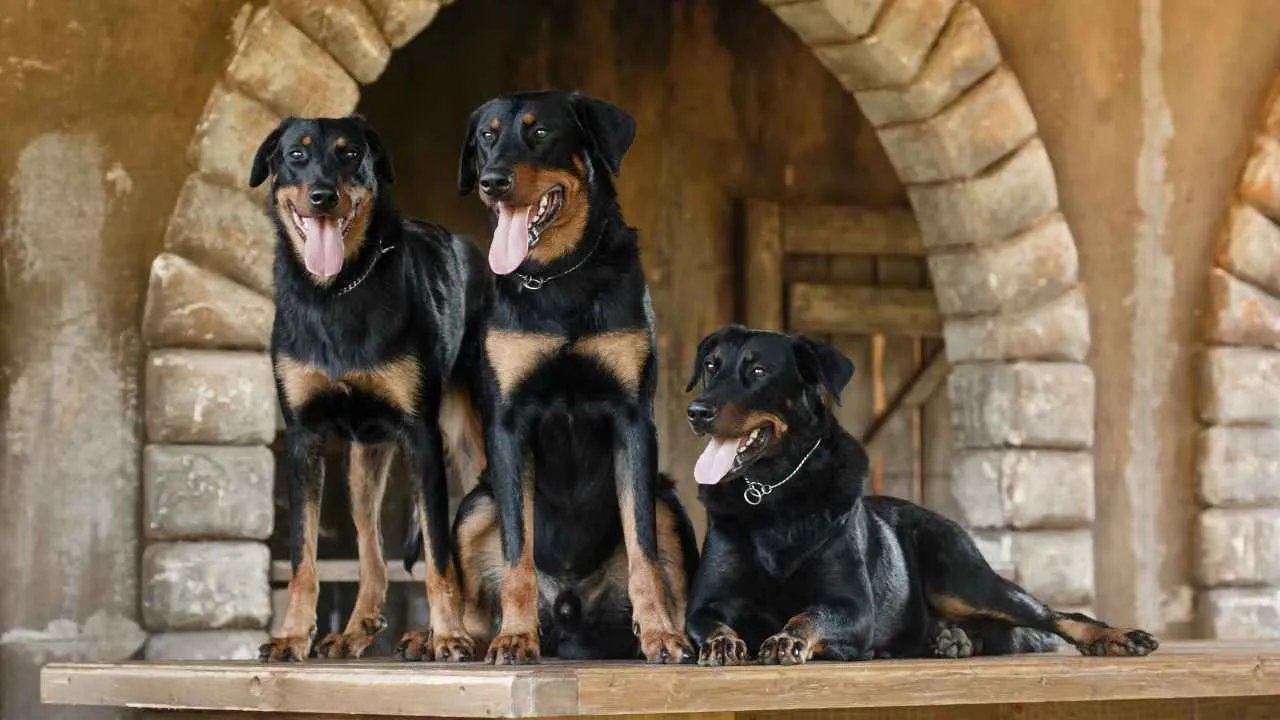
Beaucerons are powerful working dogs that were developed in France to herd and guard livestock. Their intelligence, confidence, and natural protective instincts also made them valuable in police, rescue, and protection work.
They are deeply loyal to their families and are known for staying calm, watchful, and ready to defend the people they love when needed.
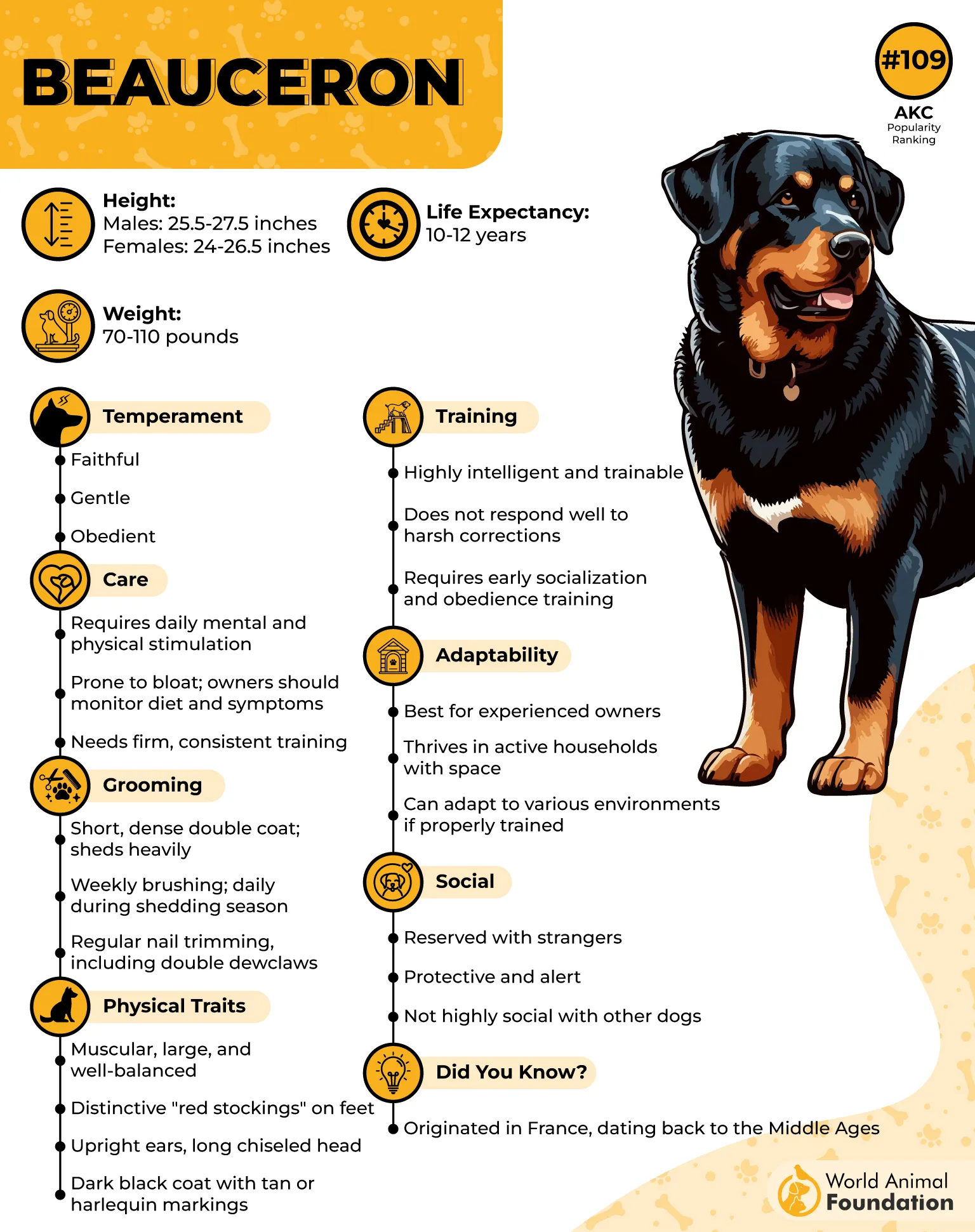
These dogs are happiest with experienced owners who enjoy an active lifestyle. They need daily physical exercise and plenty of mental stimulation to stay balanced. Hiking, running, agility, herding, and other challenging activities are excellent outlets for their energy.
They are quick learners and respond best to firm, consistent training and early socialization. Without enough activity, they can become bored or develop unwanted behaviors.
Things to Consider
They need daily exercise and mental challenges to prevent boredom.
Early training and socialization are essential, especially around other pets and new people.
Their short double coat is easy to maintain but sheds year-round, with heavier seasonal shedding.
They are best suited for experienced owners and homes with plenty of space to stay active.
4. Bouvier des Flandres
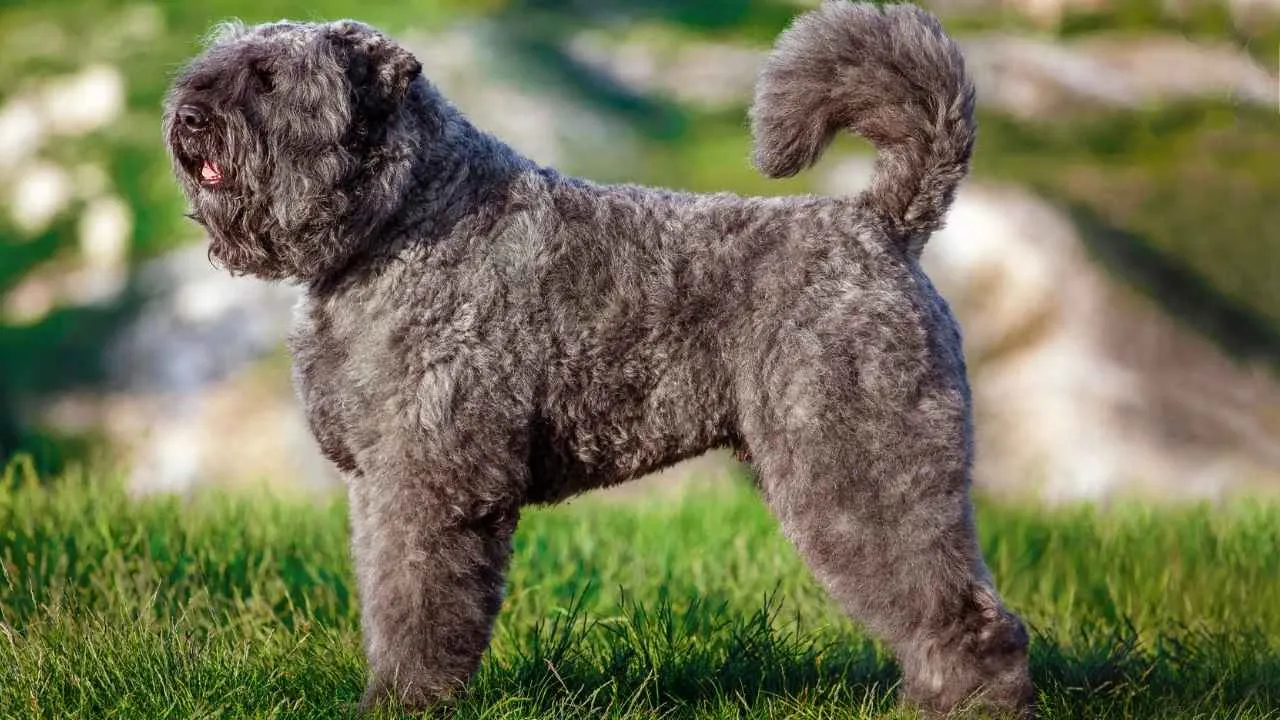
Bouvier des Flandres were originally bred in Belgium as all-purpose farm dogs that could herd livestock, guard property, and pull carts. Their courage, loyalty, and steady temperament later made them valuable as military, police, rescue, and service dogs.
Calm yet fearless, they are naturally protective and are always ready to keep a watchful eye on their family and home.
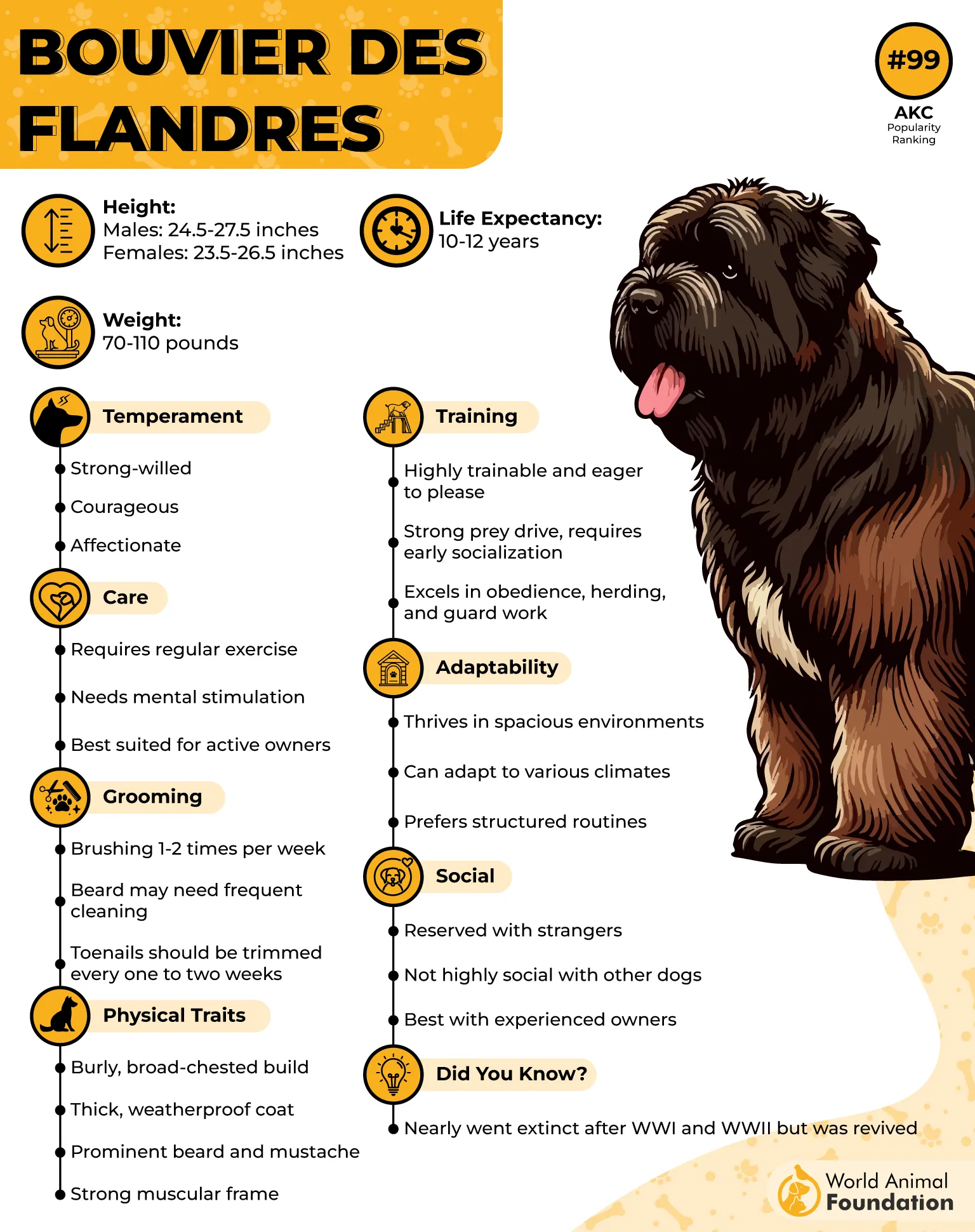
These intelligent working dogs are happiest when they have a job to do. They need daily exercise, mental stimulation, and consistent training to stay well-behaved. Hiking, obedience, herding, search and rescue, and other dog sports are great ways to channel their energy.
They are eager to please and learn quickly, but early socialization is important because they can be reserved around strangers and dominant with other dogs.
Things to Consider
They need regular exercise and mental challenges to prevent boredom and destructive behavior.
Early training and socialization help them become confident family companions.
Their thick, weather-resistant double coat requires brushing once or twice a week, along with regular beard and nail care.
The breed is generally hardy but can be prone to hip and elbow dysplasia, eye conditions, hypothyroidism, and certain heart problems.
5. German Shepherd
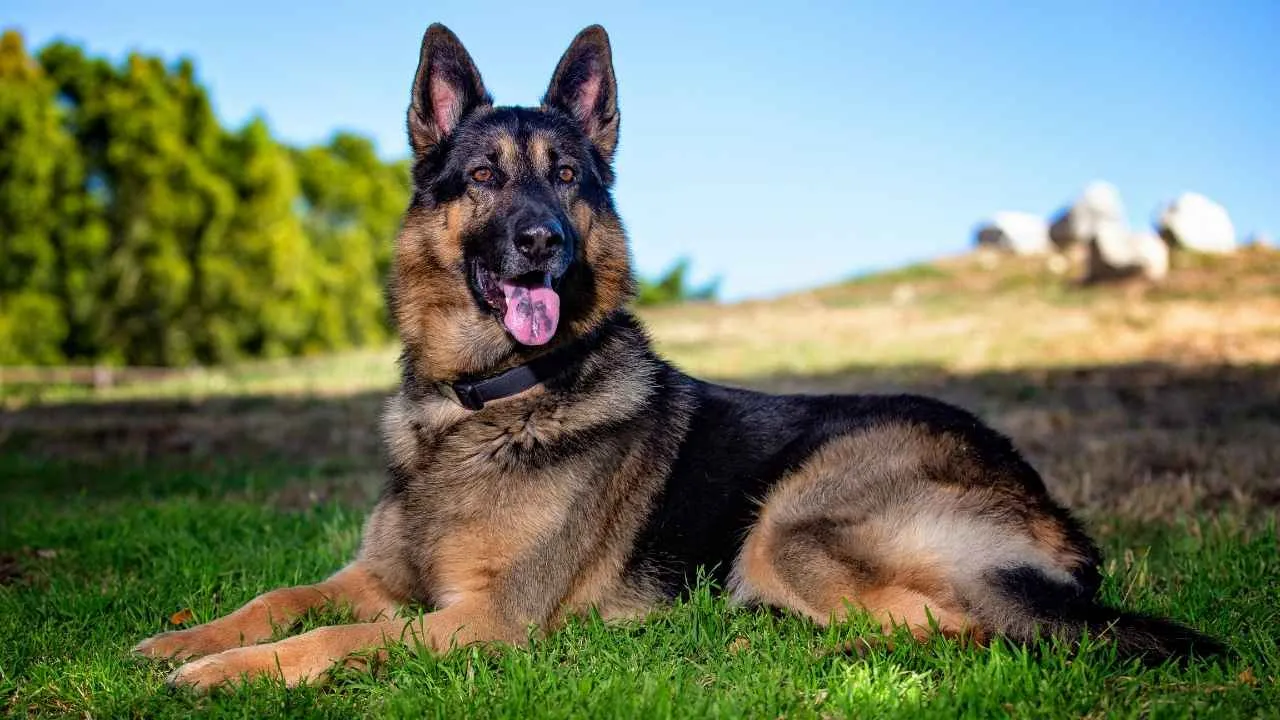
German Shepherds were originally developed in Germany as hardworking herding dogs, but their intelligence, courage, and loyalty quickly made them one of the world’s most trusted working breeds. Today, they serve in police, military, search-and-rescue, guide dog, and protection roles.
They are naturally alert and devoted to their families, making them outstanding guardians when properly trained and socialized.
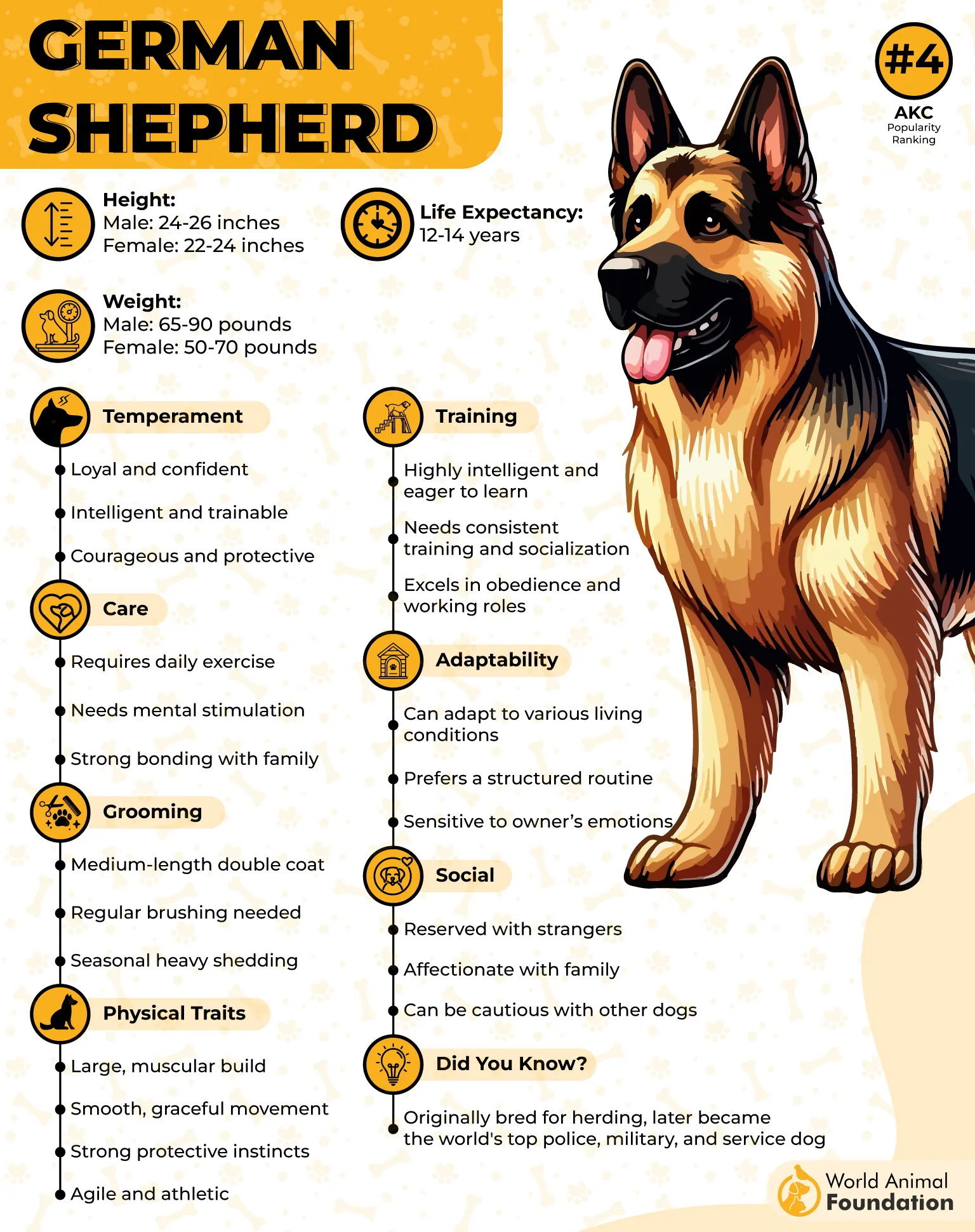
These highly intelligent dogs thrive when they have both physical and mental challenges. Daily exercise, obedience training, tracking, agility, hiking, and scent work help keep them happy and well-behaved.
They learn quickly and respond well to consistent, positive training. Without enough activity or guidance, they can become bored and develop unwanted behaviors. Early socialization is also essential to help them grow into confident and well-mannered family companions.
Things to Consider
They need one to two hours of daily exercise along with regular mental stimulation.
Early socialization and training are important to develop balanced protective instincts.
Their thick double coat sheds heavily, especially during seasonal coat changes, and needs regular brushing.
The breed can be prone to hip dysplasia, degenerative myelopathy, and gastric dilatation-volvulus (GDV), so regular veterinary care is important.
6. Old English Sheepdog
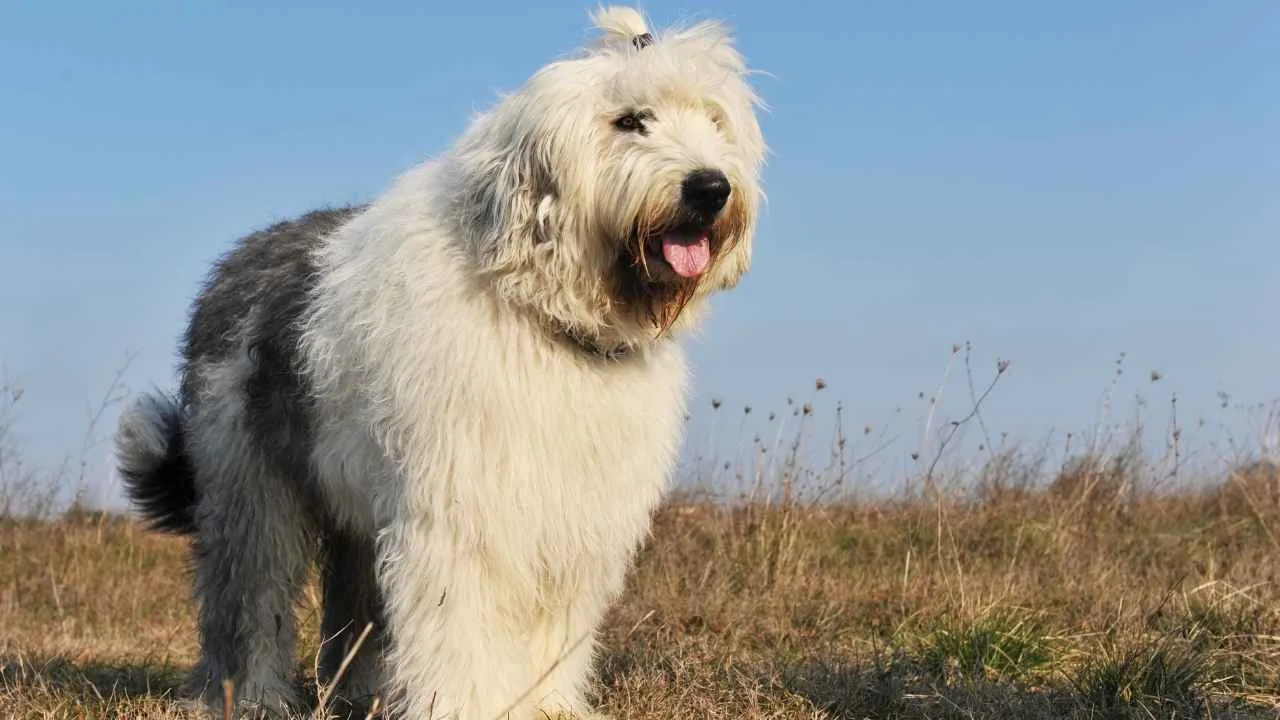
Old English Sheepdogs were originally bred in England to herd cattle and sheep and drive livestock to market. Behind their famous shaggy coat is a strong, athletic working dog with plenty of stamina and intelligence.
They are affectionate with their families and are known for being watchful, courageous, and protective when the situation calls for it, making them dependable family companions.
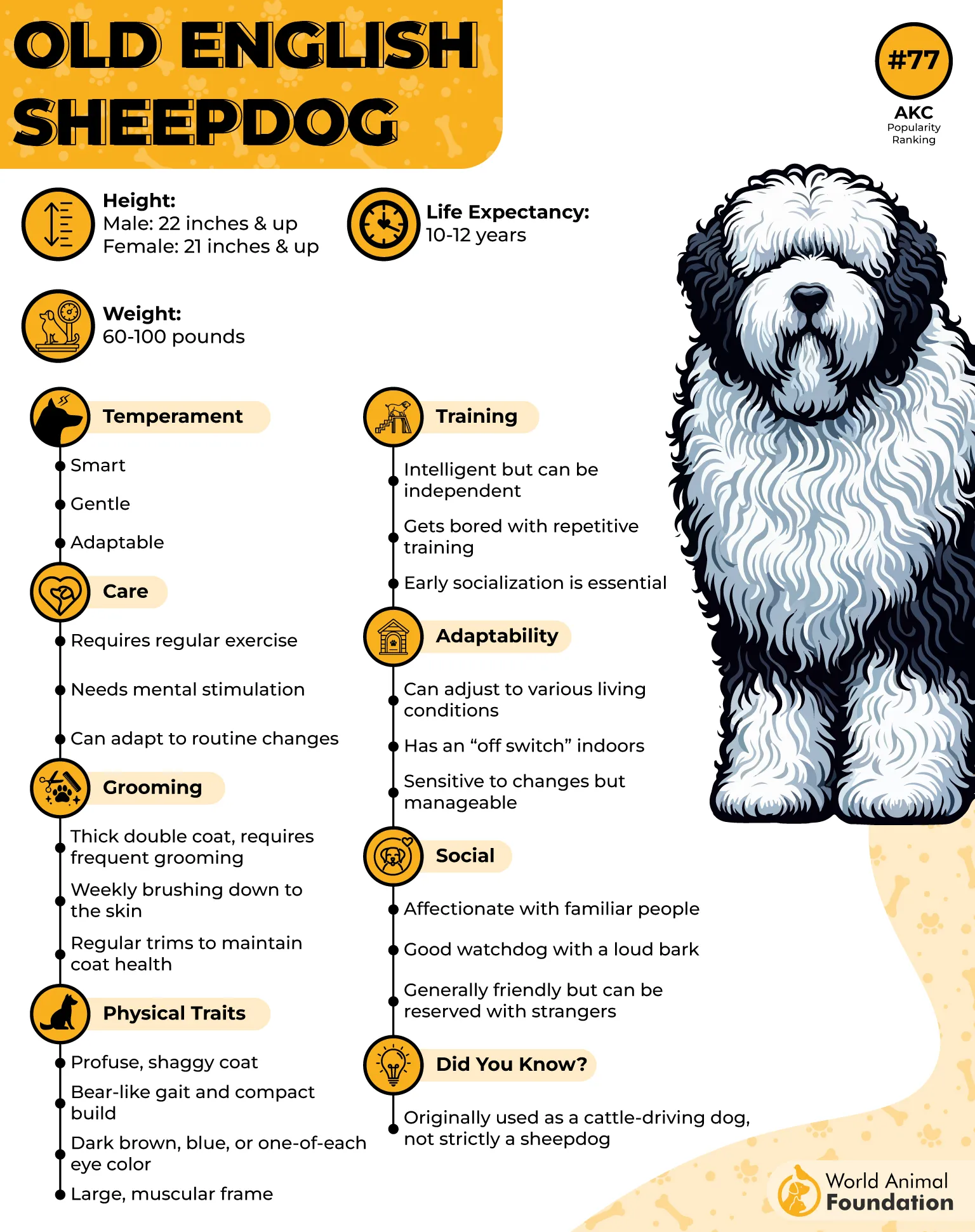
These energetic dogs enjoy having a job to do and need regular physical exercise and mental stimulation. Daily walks, games, herding activities, and obedience training help keep them happy and well-behaved.
Hill’s Pet says they are intelligent but independent dogs, so consistent training and early socialization are important. They respond best to positive, reward-based training that keeps sessions fun and engaging.
Things to Consider
They need daily exercise and regular mental challenges to stay balanced.
Early training and socialization help them become confident, well-mannered family dogs.
Their thick double coat requires frequent brushing and regular grooming to prevent mats and tangles.
They can be prone to excessive shedding and may become bored or destructive without enough activity.
7. Rottweiler
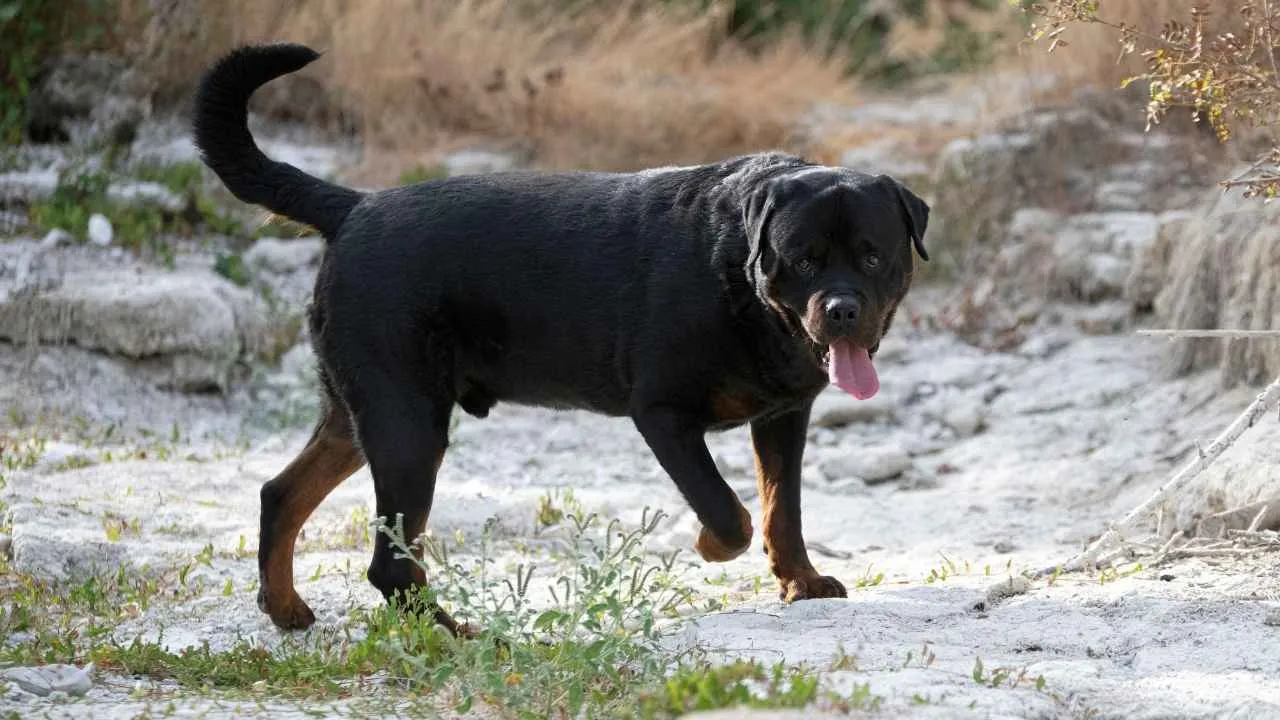
Rottweilers are powerful working dogs descended from the mastiffs of ancient Rome. Originally used to herd livestock and guard property, they are now respected as dependable family protectors, police dogs, and service animals, as noted by the AKC.
Calm, confident, and naturally watchful, they are deeply devoted to their families and have strong protective instincts without being unnecessarily aggressive when properly trained.
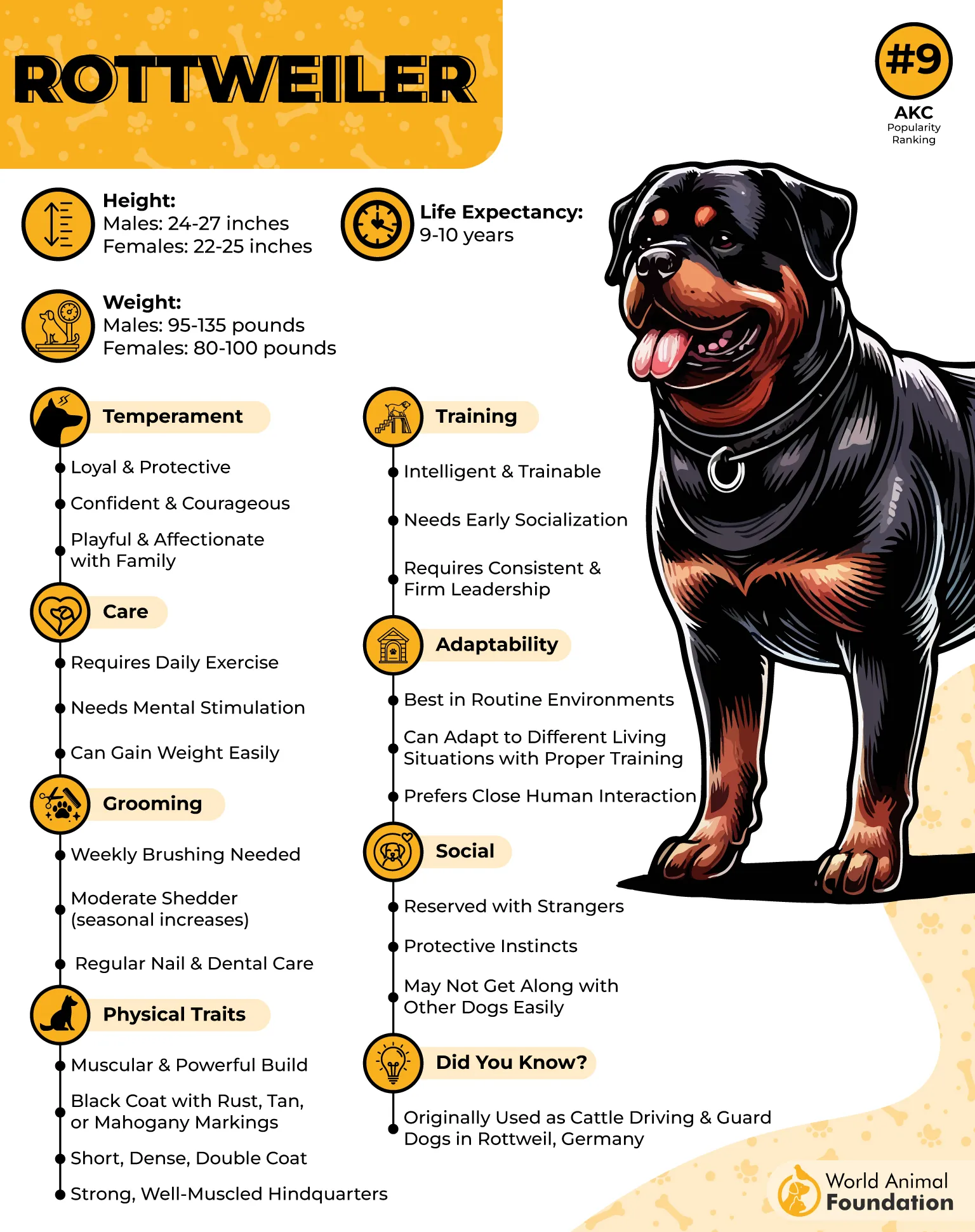
These intelligent dogs thrive with structure, leadership, and daily activity. They enjoy long walks, hiking, swimming, tracking, obedience, agility, and other working tasks that challenge both their body and mind.
Early training and socialization are essential to help them grow into well-mannered, wonderful family pets. They are eager to please but can also be stubborn, making them better suited to experienced owners who can provide firm, consistent guidance.
Things to Consider
They need at least an hour of daily exercise and plenty of mental stimulation.
Early socialization and consistent training are essential to develop balanced protective behavior.
Their short coat is easy to maintain but sheds throughout the year and benefits from weekly brushing.
The breed can be prone to hip dysplasia, gastric dilatation-volvulus (GDV), and other inherited health conditions, so regular veterinary care is important.
Conclusion
The best guard dogs offer more than protection—they become loyal companions that will always stand by your family’s side. Every breed on this list has its own strengths, so choosing the right one comes down to your lifestyle, experience, and the time you can dedicate to training and care.
With early socialization, consistent training, and plenty of love, these unstoppable dogs can grow into confident, dependable guardians. Pick the breed that fits your home best, and you’ll gain both a faithful friend and a lifelong protector.
Looking for more excellent guard dog breeds that also make loving family pets? You can also check out the Great Pyrenees, Doberman Pinscher, Giant Schnauzer, Australian Shepherd, Bullmastiff, and Staffordshire Bull Terrier.
