




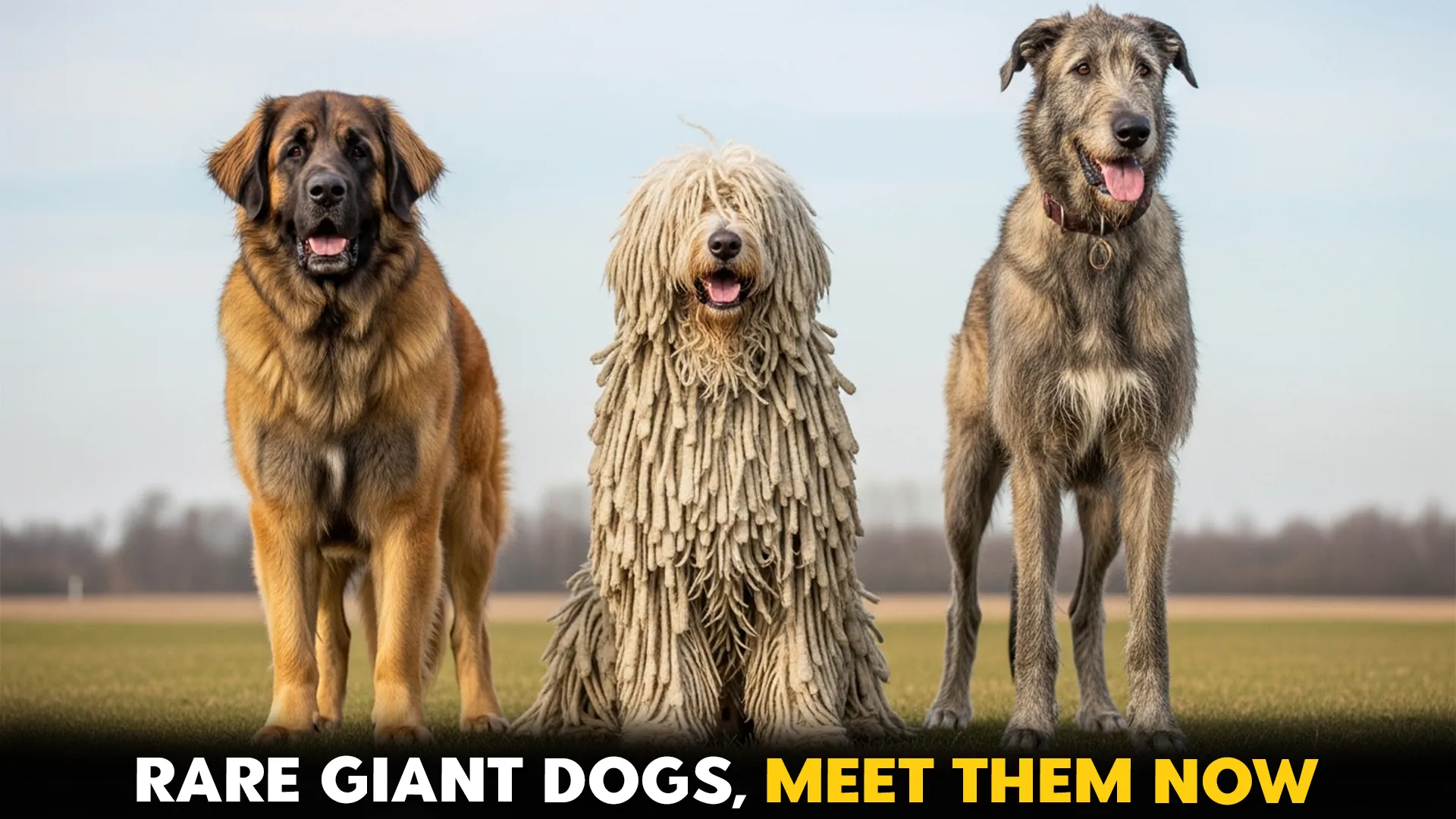
Have you ever seen a dog so large and unusual that it made you stop and stare for a moment? Not the everyday pets you usually see, but rare giant dogs that almost feel like they belong in a different world.
These incredible animals are more than just big in size—they often have unique appearances, calm yet powerful personalities, and fascinating histories that go back hundreds of years.
Many of these dogs are not commonly kept as pets because they need extra space, proper training, and regular care. Still, despite their massive size, they are often known for being gentle, loyal, and surprisingly affectionate with their families.
In this article, we’ll explore some of the most unique and rare giant dog breeds you don’t see every day—but once you do, they’re impossible to forget.
Key Takeaways
Meet rare giant dogs like the Leonberger, Komondor, and Tibetan Mastiff that stand out for their size, looks, and history
Discover why the Irish Wolfhound and Scottish Deerhound are gentle giants despite their powerful pasts
Learn what makes breeds like the Neapolitan Mastiff and Swissy loyal protectors and family companions
Find out what it really takes to live with these giants—the space, care, and training behind their calm nature
Unique and Rare Giant Dog Breeds: Meet Them Now
1. Leonberger
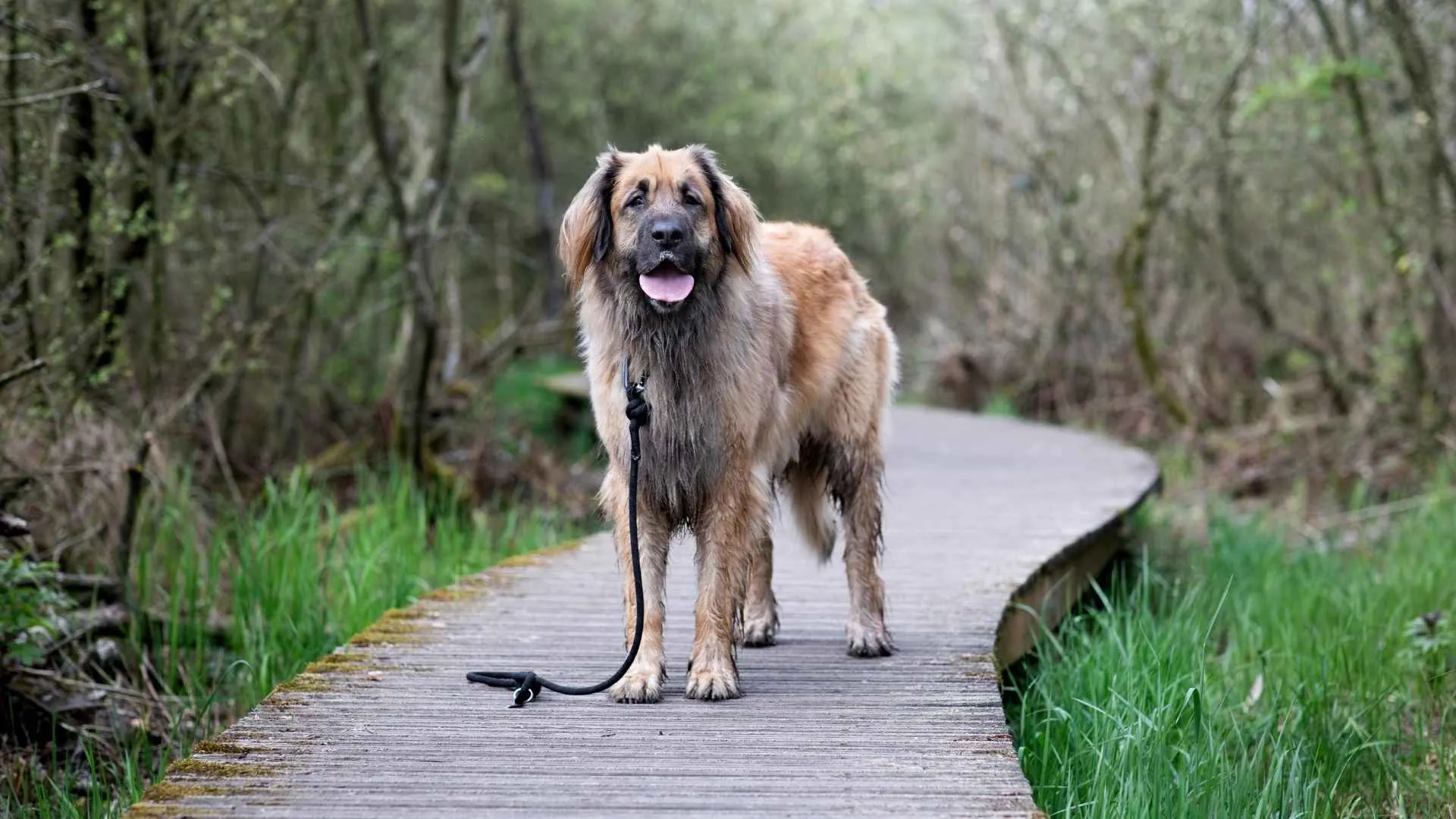
Among rare giant dog breeds, the Leonberger stands out instantly. With its sandy-golden coat and thick, lion-like mane, it has a truly regal and unforgettable appearance. But behind this majestic look is a dog with a calm, gentle, and deeply intuitive nature.
It is known for forming strong bonds with its family and showing great patience, especially with children. This combination of strength and softness makes it one of the most admired gentle giants.
The Leonberger was developed in Germany as a companion dog, carefully bred to combine elegance, intelligence, and loyalty. It quickly gained popularity among historical figures, including Napoleon III, Tsar Alexander II, and the Prince of Wales.
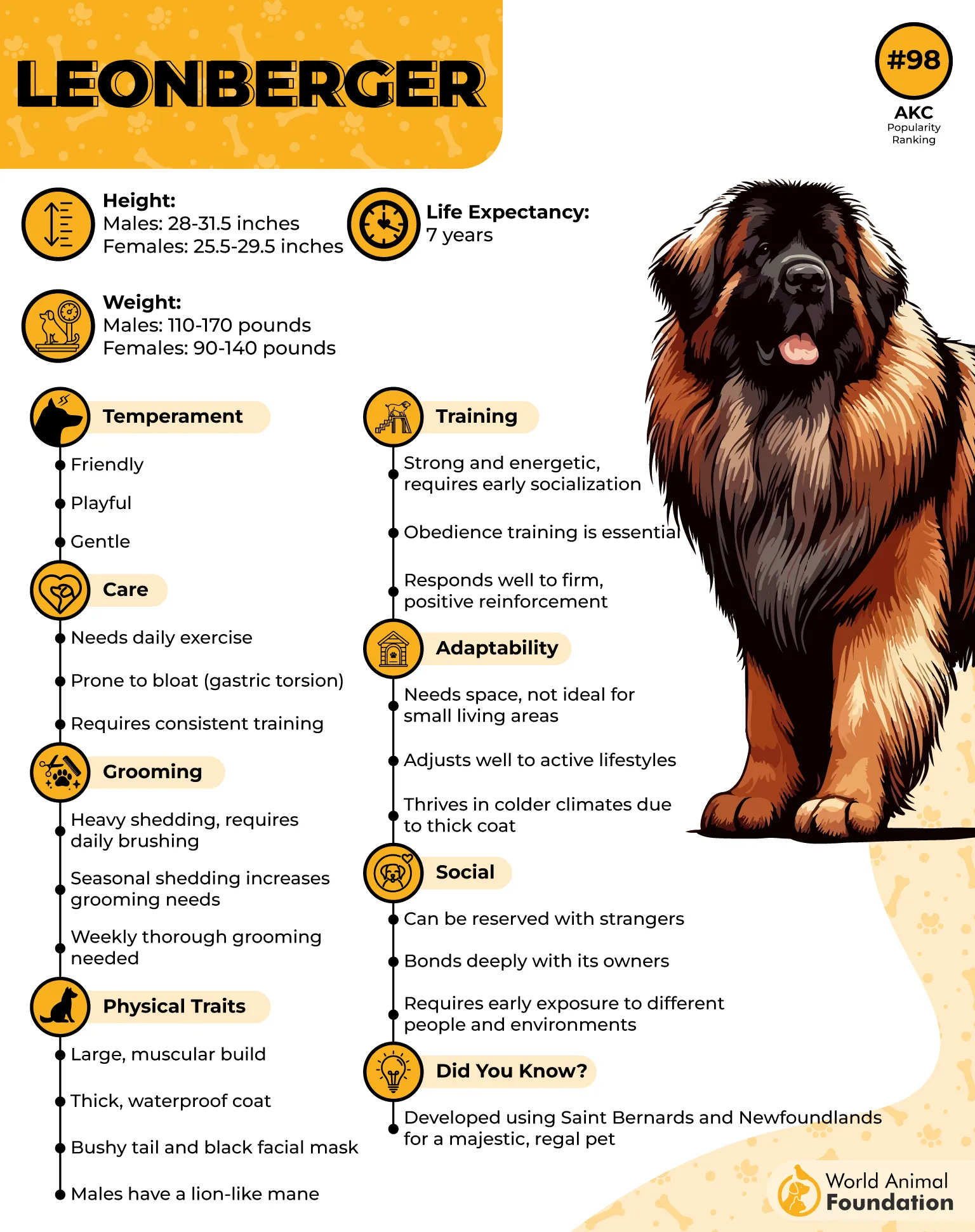
While it carries a noble and graceful presence, it is also a hardworking and alert breed. It can act as a reliable watchdog and is known for its intelligence and balanced judgment. It also enjoys outdoor tasks like tracking, herding, and other active work.
Calm, quiet, and affectionate with family
Very patient and gentle with children
Intelligent but can be slightly stubborn at times
Needs regular brushing a few times a week
Loves swimming, hiking, and other outdoor activities
Thrives with training and early socialization
The Leonberger enjoys staying close to its people and does not like being left alone for long periods, as mentioned by Hill’s Pet. It is active and playful outdoors but calm and relaxed indoors, making it a well-balanced family companion.
Best For
- Families looking for a gentle and affectionate giant dog
- Homes with enough space indoors and outdoors
- Owners who enjoy walks, hiking, or outdoor activities
- Families with children who want a patient companion
- People who can manage regular brushing and grooming
Not Best For
- Small apartments or homes with limited space
- Owners who are away from home for long hours
- People looking for a low-maintenance dog
- Very hot climates without proper cooling care
- Owners who cannot handle a large, strong dog
🎧 Dogcast
Episode 37 — Why Dogs Stay Close without Touching
If you don’t hear sound, tap the button above to enable audio.
2. Komondor
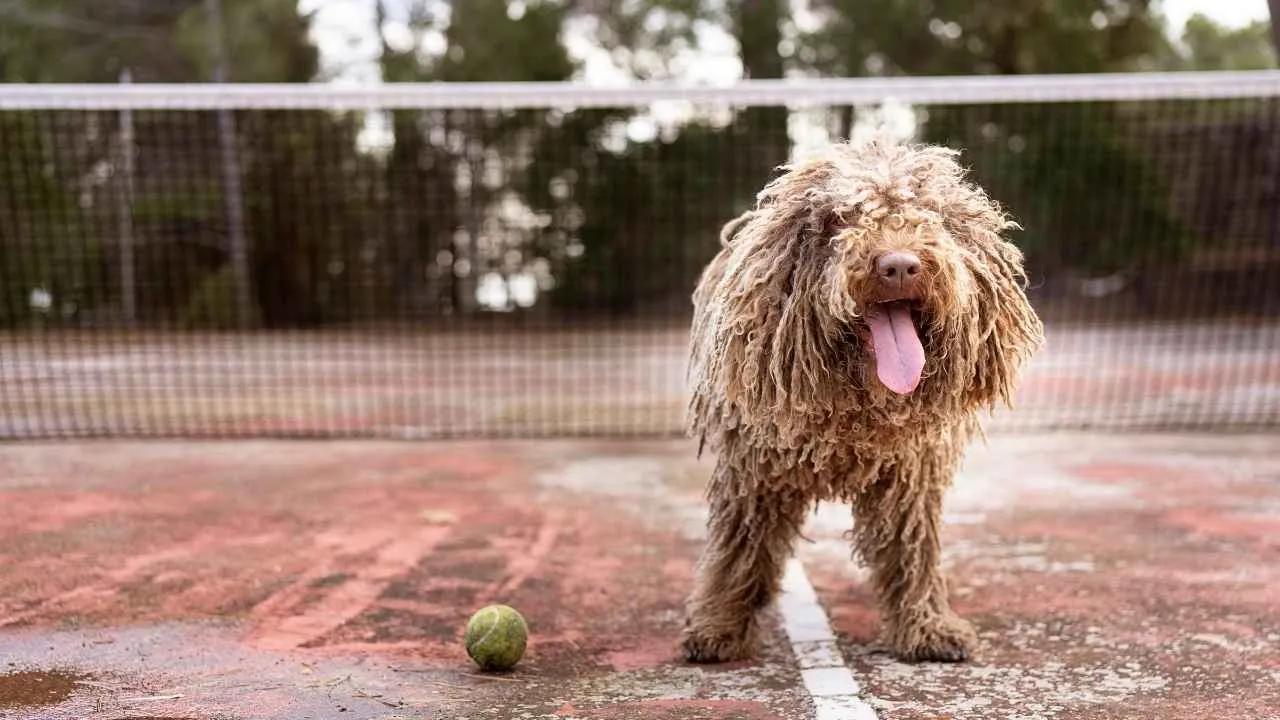
The Komondor is one you simply can’t miss. Its long, white, corded coat gives it a unique mop-like look that makes it one of the most recognizable dogs in the world.
But this unusual coat isn’t just for appearance—it was developed to protect the dog from harsh weather and predators. Originating in Hungary, the Komondor was bred to guard sheep, and its coat helped it blend perfectly into the flock.
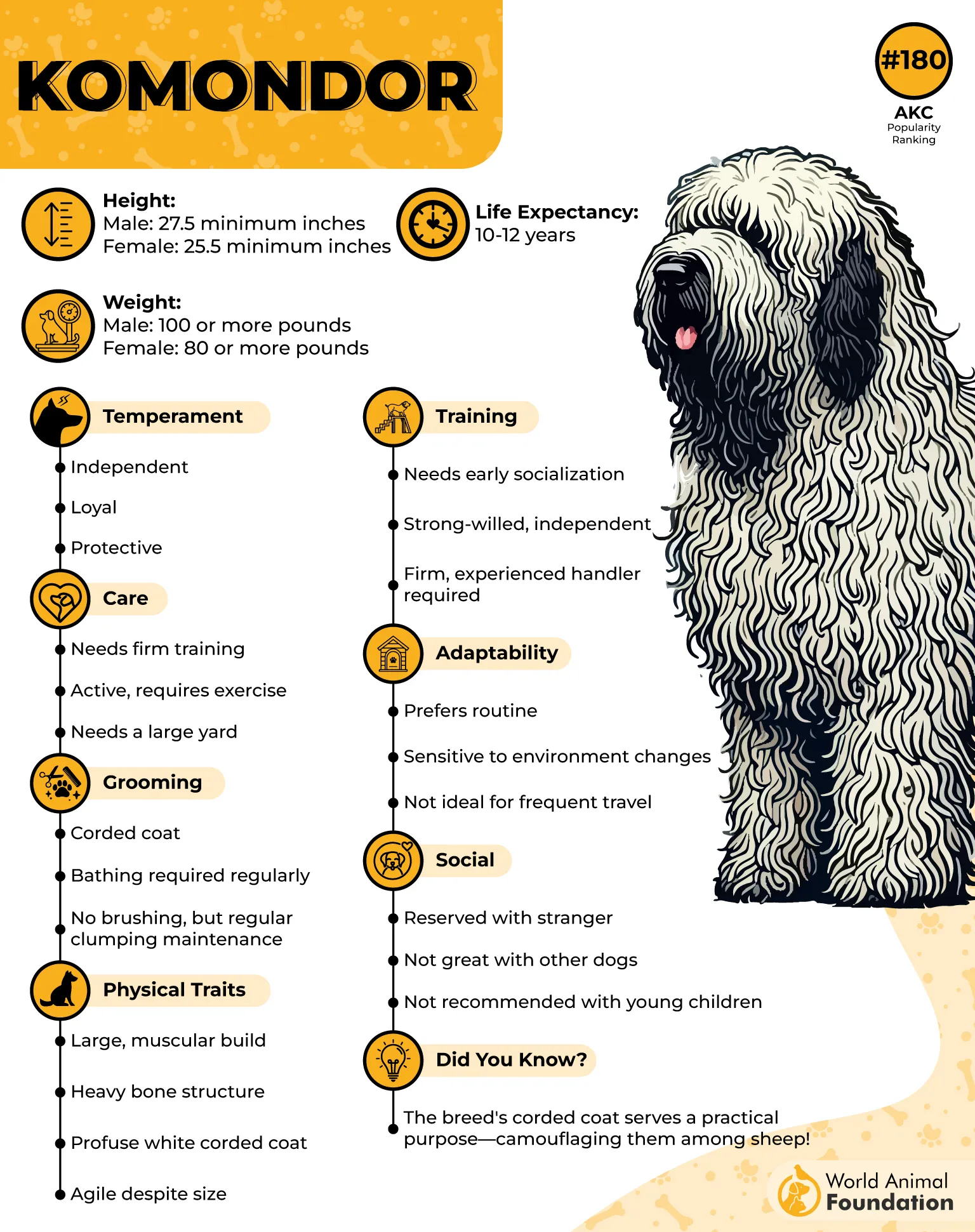
This breed is powerful, brave, and highly protective by nature. It is calm and quiet most of the time, but quickly becomes alert when it senses danger. The Komondor is deeply loyal to its family and often keeps a close watch on its “human flock.”
However, it can be independent, defensive, and sometimes stubborn. Because of this, it needs a confident and experienced owner who can provide firm and consistent training from an early stage.
Strong, loyal, and protective guardian
Independent thinker with a stubborn side
Calm indoors but alert to danger
Can be considered hypoallergenic
Needs consistent training and a firm owner
Good with family and can adapt to other pets
The Komondor thrives in a home where it has clear guidance and space to move. It does not suit every household due to its strong personality and guarding instincts. However, in the right environment, it becomes a devoted and dependable companion.
Best For
- Experienced owners who understand guardian breeds
- Homes with secure fencing and open space
- Families wanting a loyal and protective watchdog
- Owners who can provide firm, consistent training
- People who can manage its unique corded coat
Not Best For
- First-time dog owners
- Small apartments or crowded homes
- Homes with frequent visitors and little structure
- Owners who want an easy-to-train, obedient dog
- People who cannot commit to special coat care
3. Irish Wolfhound
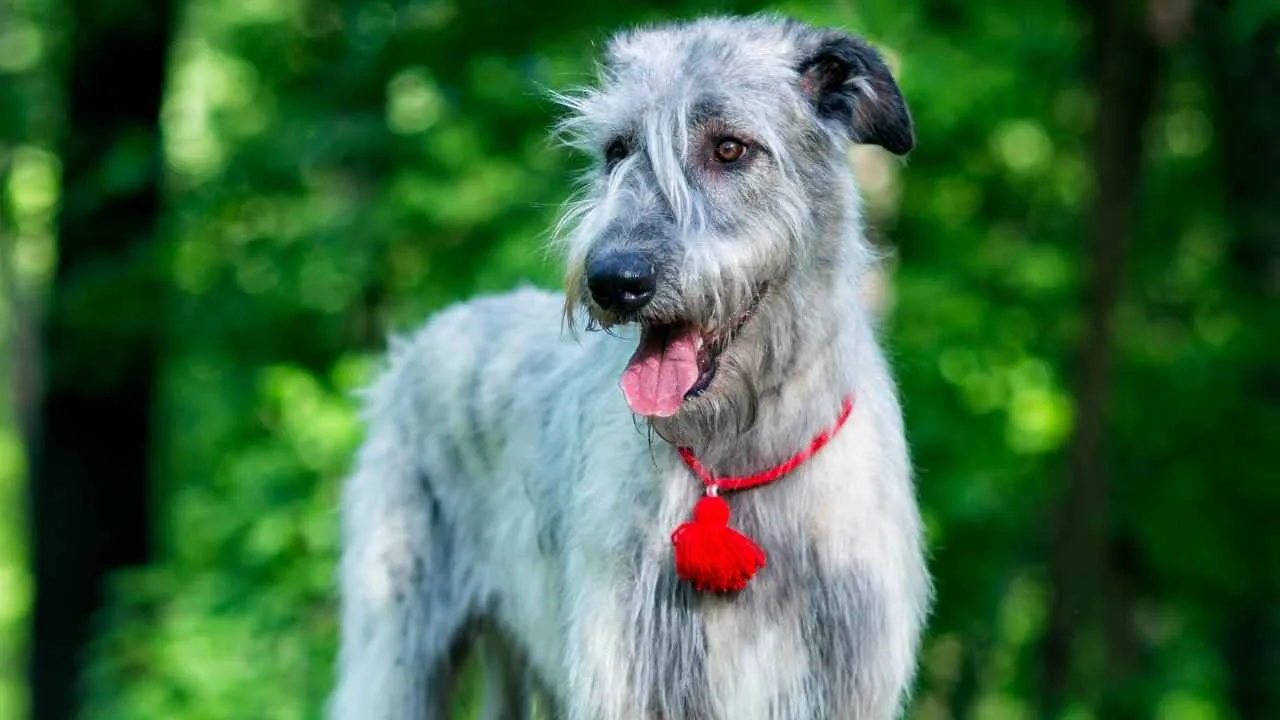
Among rare giant dog breeds, the Irish Wolfhound is truly unforgettable. Known for its towering presence and shaggy, rugged look, this breed carries both strength and grace.
Despite its size and powerful build, it has a calm and gentle nature that surprises many people. Its soft eyes and relaxed personality make it one of the most lovable giants, especially for families looking for a loyal and affectionate companion.
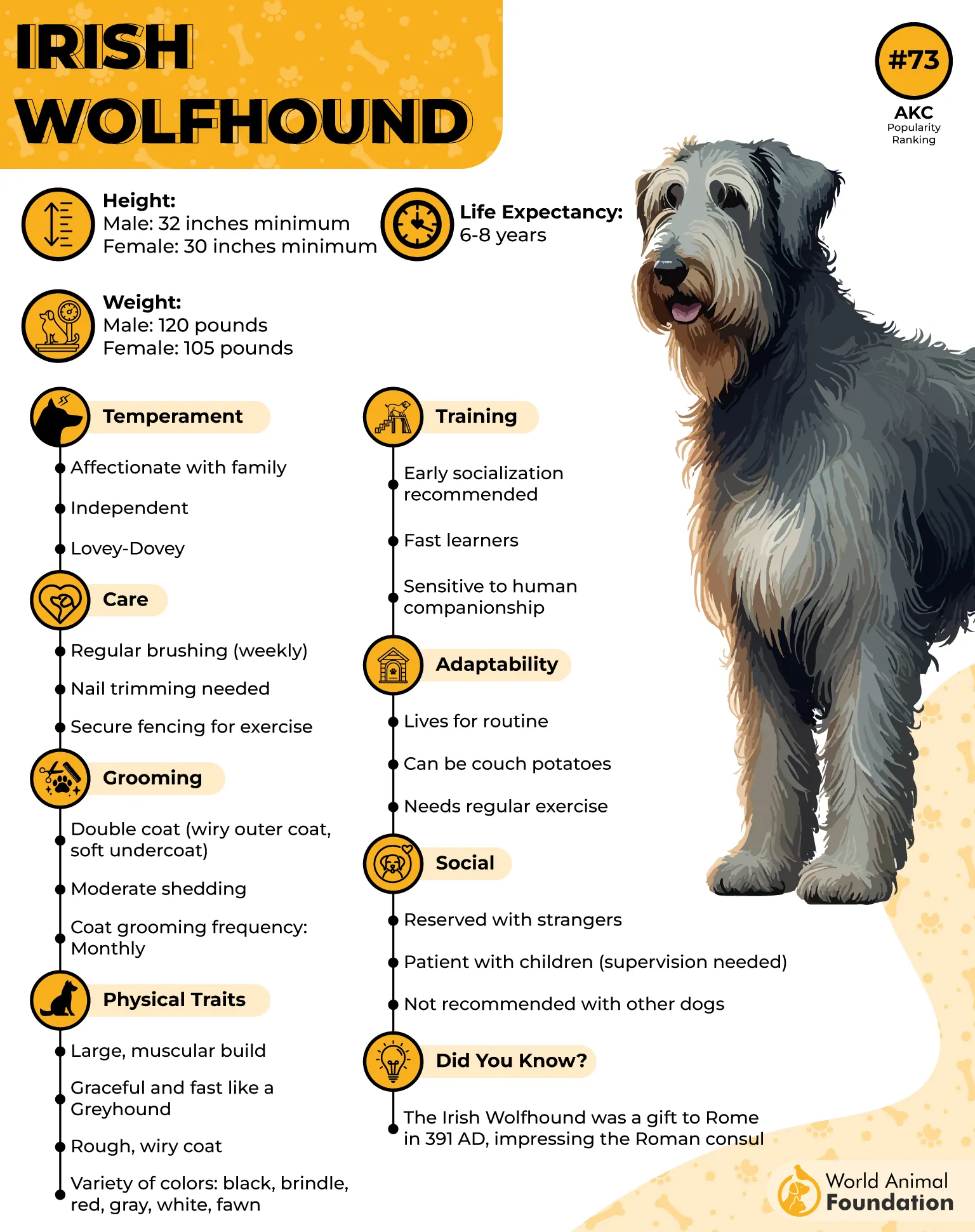
This breed has a long and fascinating history. According to PetMD, it was originally developed by crossing large hounds from the Middle East with local dogs in Britain. In ancient times, it was used for hunting wolves and even in wars to pull men from horses and chariots.
Over time, its role changed from fierce hunter to peaceful companion. Today, it is known more for its kindness and patience than its strength, although its size alone is enough to deter intruders.
Calm, gentle, and easygoing temperament
Very affectionate and great with children
Needs regular walks and exercise
Can have a strong instinct to chase smaller animals
Usually quiet but alert when needed
Sensitive and responds well to positive training
The Irish Wolfhound is a true gentle giant at heart. It moves slowly and calmly at home, but still needs regular activity to stay healthy.
It gets along well with other dogs and can adapt to family life when properly socialized. However, due to its size and natural hunting instincts, supervision is important around smaller animals.
Best For
- Families wanting a calm and gentle giant
- Homes with enough room for a very tall dog
- Owners who prefer a quiet and affectionate breed
- Families with children, with proper supervision
- People who can provide daily relaxed walks
Not Best For
- Very small homes or cramped apartments
- Owners looking for a strong guard dog
- People wanting a high-energy exercise partner
- Homes with small pets running freely
- Owners unprepared for giant-breed care needs
4. Neapolitan Mastiff
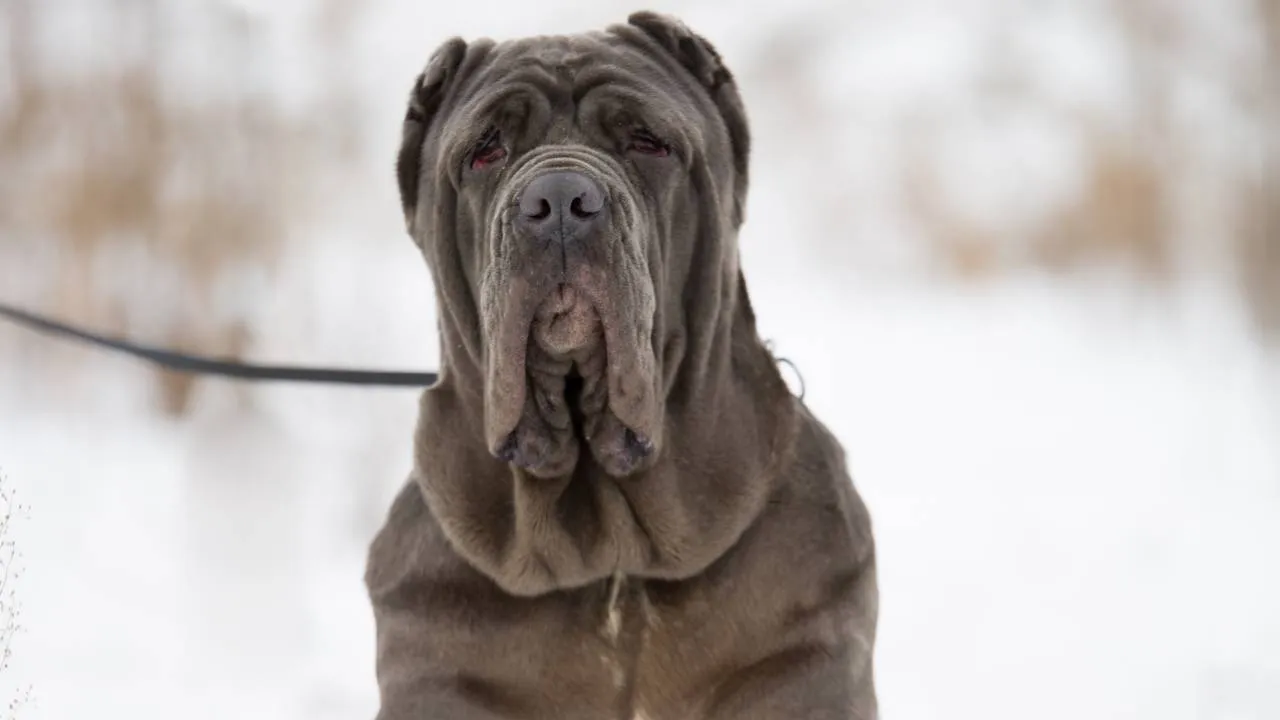
The Neapolitan Mastiff is impossible to ignore. With its deeply wrinkled face, loose skin, and heavy build, it has one of the most distinctive looks in the dog world.
This unusual appearance wasn’t by accident—it was designed to protect the dog during attacks and even to intimidate intruders. Originating from Southern Italy, this breed dates back to ancient times and was even used as a war dog by the Roman Empire.
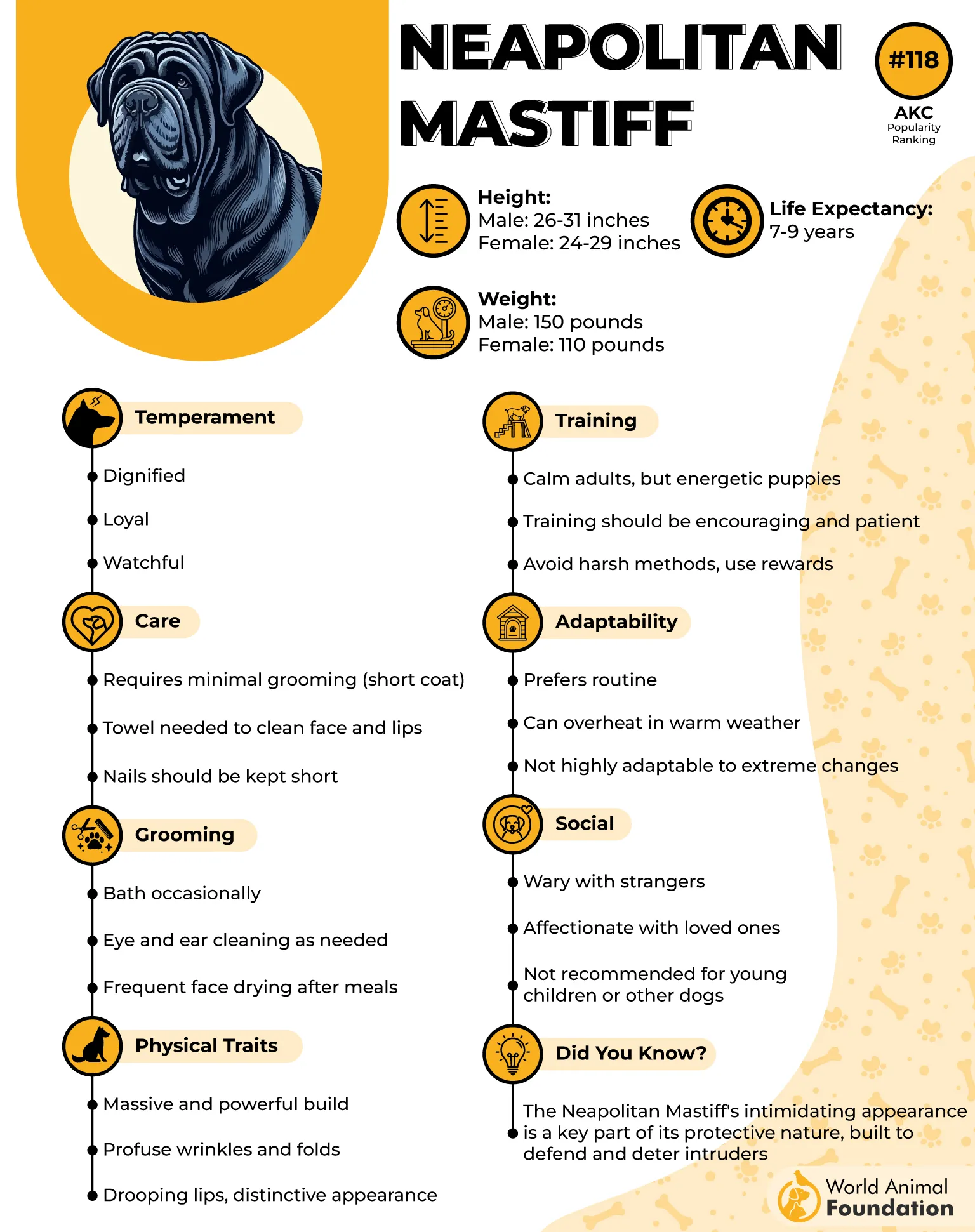
Despite its fierce and powerful look, the Neapolitan Mastiff is calm, quiet, and deeply loyal to its family. It is naturally protective and makes an excellent watchdog, always alert to strangers. However, with loved ones, it is gentle, placid, and affectionate.
This breed thrives on human companionship and prefers staying close to its family. While it may seem intimidating, it is often described as a gentle giant that enjoys relaxing at home more than anything else.
Strong, loyal, and highly protective
Calm, quiet, and affectionate with family
Wary and reserved around strangers
Needs early training and socialization
Prone to drooling due to loose jowls
Can overheat easily in warm weather
The Neapolitan Mastiff is a true homebody that enjoys lounging around and staying near its owners. It does not require intense activity but still needs regular walks and mental stimulation to stay healthy.
Training can be challenging due to its independent nature, so it suits experienced owners who can provide patience and consistency. With proper care and attention, this rare giant becomes a loving, protective, and devoted companion.
Best For
- Experienced owners who can handle a powerful dog
- Families wanting a calm and loyal protector
- Homes where the dog can stay close to family
- Owners who prefer a relaxed, low-energy companion
- People who can provide early training and socialization
Not Best For
- First-time dog owners
- People who dislike drooling or loose skin folds
- Small apartments with limited moving space
- Very hot climates without careful cooling
- Owners unable to manage a strong, heavy dog
5. Scottish Deerhound
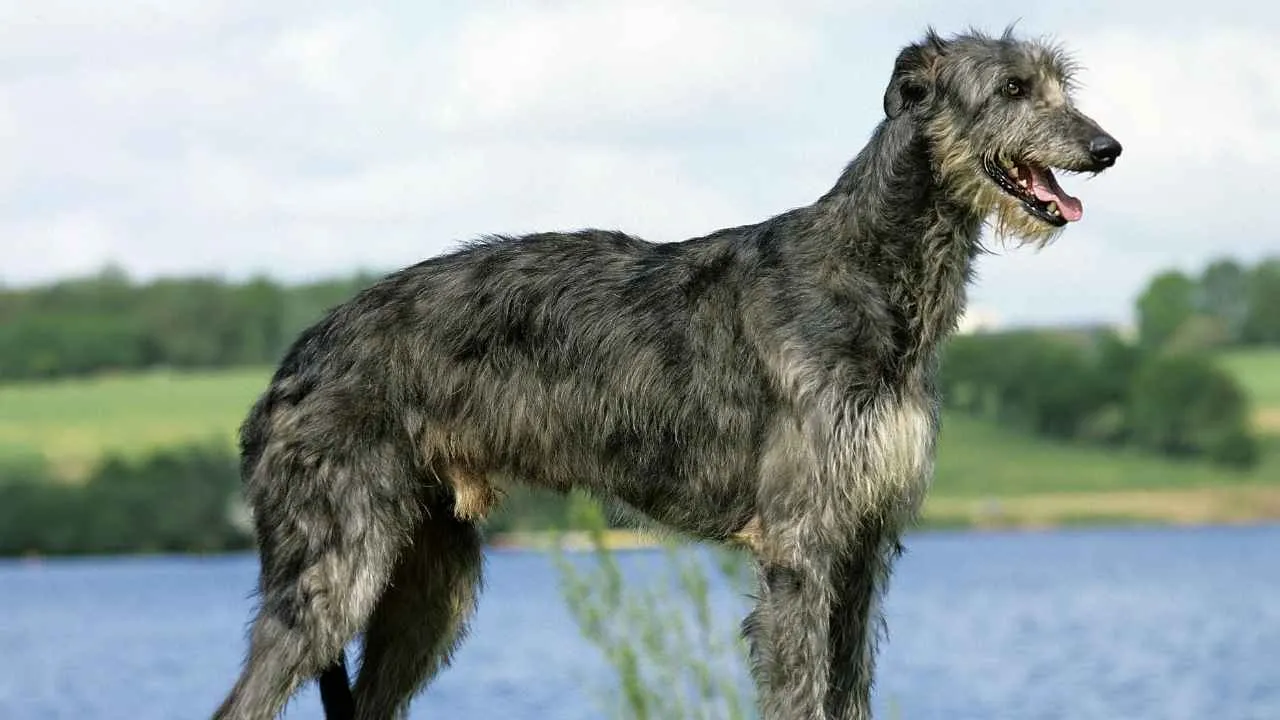
The Scottish Deerhound has a quiet charm that’s hard to ignore. Often called the “Royal Dog of Scotland,” this giant breed has a long history dating back to the 1500s, when it was used to hunt deer in the Scottish Highlands.
With its wiry coat and lean, greyhound-like build, it carries a noble and elegant presence. Despite its impressive size, it is known for being friendly, gentle, and kind-hearted.
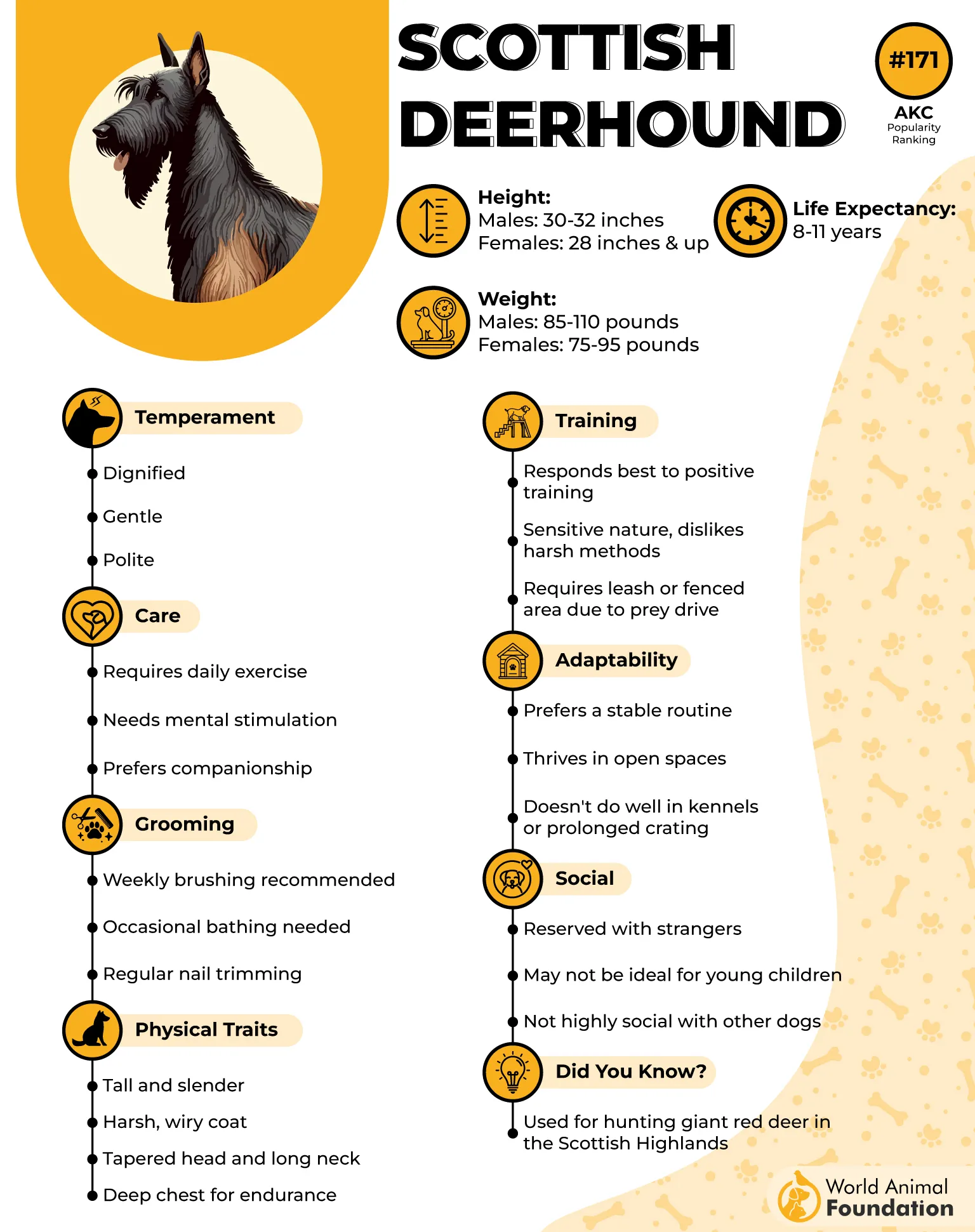
The Scottish Deerhound is a classic, gentle giant. It loves to relax and can spend most of the day napping on a comfortable sofa. However, it still needs enough exercise to stay healthy, including daily walks and time to run freely in a safe, fenced area.
As a sighthound, it can run at high speeds and has a strong instinct to chase moving animals. While puppies can be energetic and a bit challenging, they usually become calm and easygoing as they mature.
Gentle, friendly, and affectionate nature
Loves lounging and long naps
Needs daily exercise and space to run
Strong prey drive—may chase smaller animals
Responds best to positive reinforcement training
Generally good with children and people
The Scottish Deerhound is calm and laid-back at home, often switching between deep rest and bursts of energy outdoors. It forms a close bond with its family but may not always be eager to obey commands, as it was bred to work independently.
Best For
- Calm homes with gentle and patient owners
- Families wanting a quiet, affectionate companion
- Homes with secure outdoor space
- Owners who can provide daily walks
- People who appreciate independent but loving dogs
Not Best For
- Homes without secure fencing
- Families with small pets running loose
- Owners who expect perfect obedience every time
- Very small apartments or crowded homes
- People unable to provide safe exercise space
6. Greater Swiss Mountain Dog
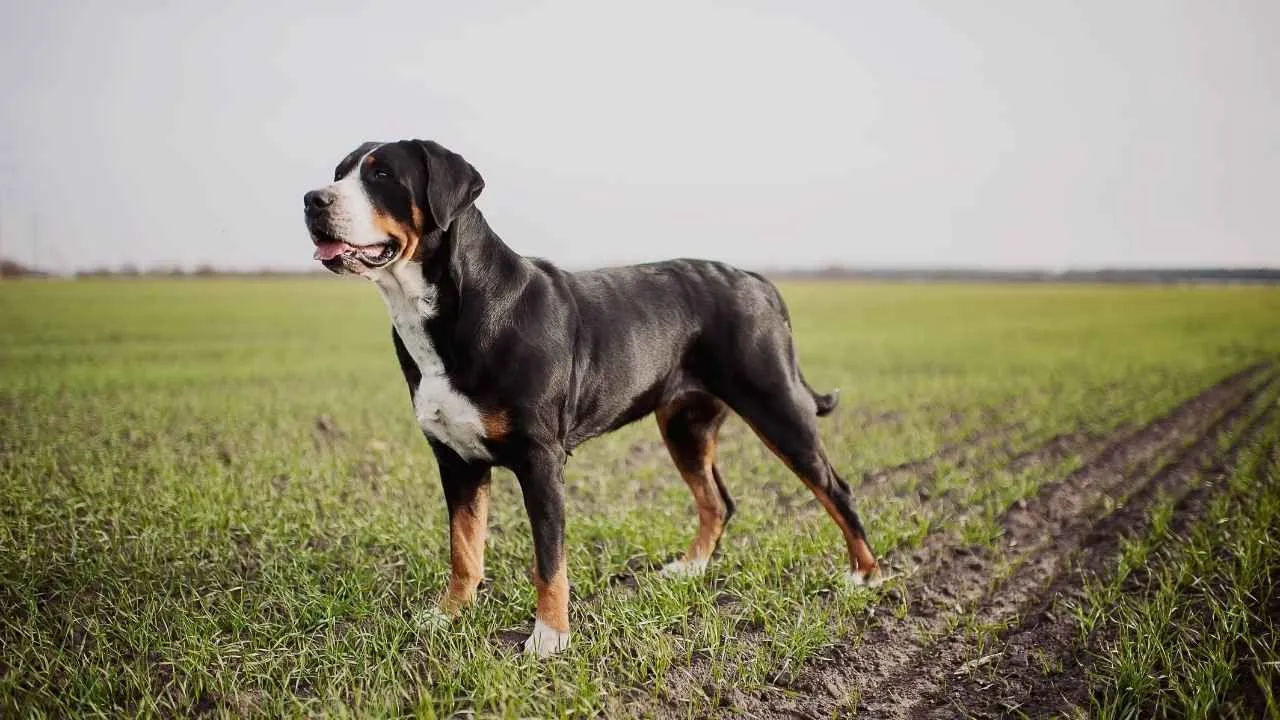
The Great Swiss Mountain Dog stands out as a powerful yet friendly companion. Often called “Swissies,” these dogs were originally bred in Switzerland to herd cattle, pull heavy loads, and guard farms.
With their strong, muscular build and striking black, red, and white coat, these large dogs have a bold and majestic appearance. Despite their strength, they are known for having a happy, gentle nature and a deep love for their families.
Swissies are hardworking dogs that enjoy staying active and having a purpose. They don’t do well in small spaces like apartments, as they need room to move and explore.
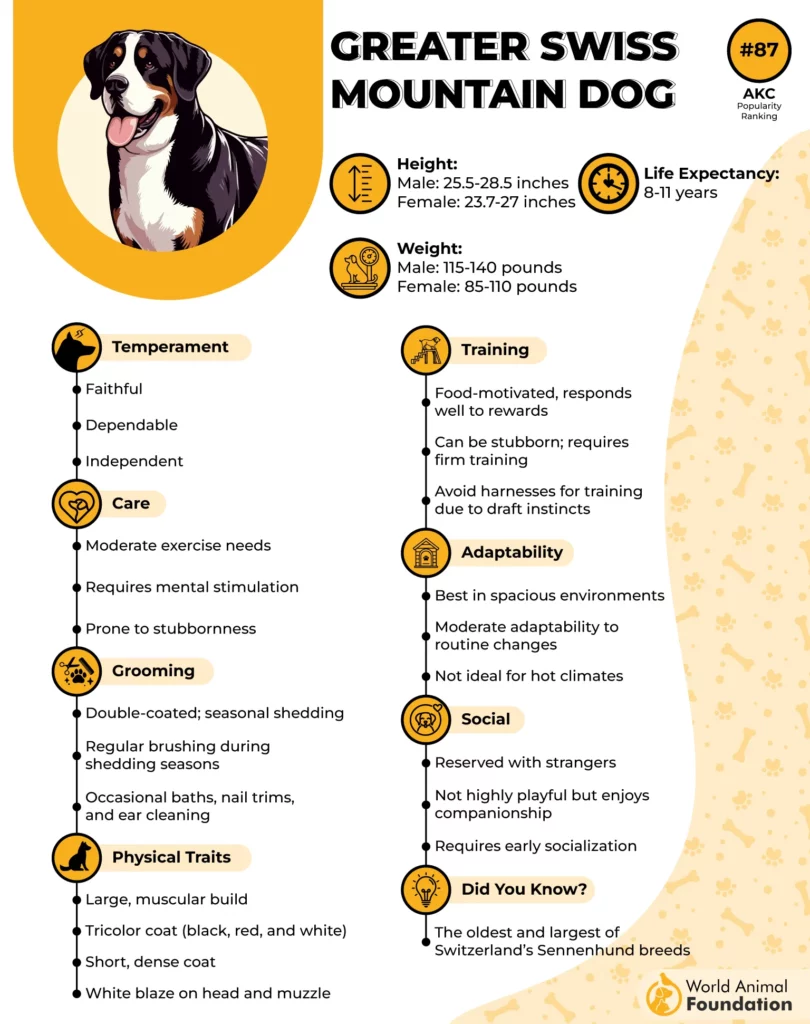
While they are generally calm when exercised properly, they have bursts of energy and a loud, deep bark that makes them excellent watchdogs. They are very people-oriented and prefer being involved in family activities rather than being left alone or kept in kennels.
Strong, loyal, and dependable working dog
Friendly, gentle, and great with families
Needs space and regular physical activity
Has a loud, deep bark and a natural guarding instinct
Slow to mature and may act like a puppy for longer
Requires early training and socialization
The Great Swiss Mountain Dog thrives in a home where it can stay active and close to its people. It forms strong bonds and loves being part of everyday life, whether that means working outdoors or relaxing with the family.
However, its independent nature and slow maturity mean training requires patience and consistency. With the right care and environment, this rare giant becomes a loyal, affectionate, and hardworking companion.
Best For
- Active families with enough living space
- Rural or suburban homes with room to move
- Owners wanting a loyal and hardworking companion
- Families who enjoy outdoor activities
- People who can provide regular training and structure
Not Best For
- Apartment living or very small homes
- Inactive owners
- People away from home most of the day
- Owners who cannot handle a large, strong dog
- Families who dislike loud barking
7. Tibetan Mastiff
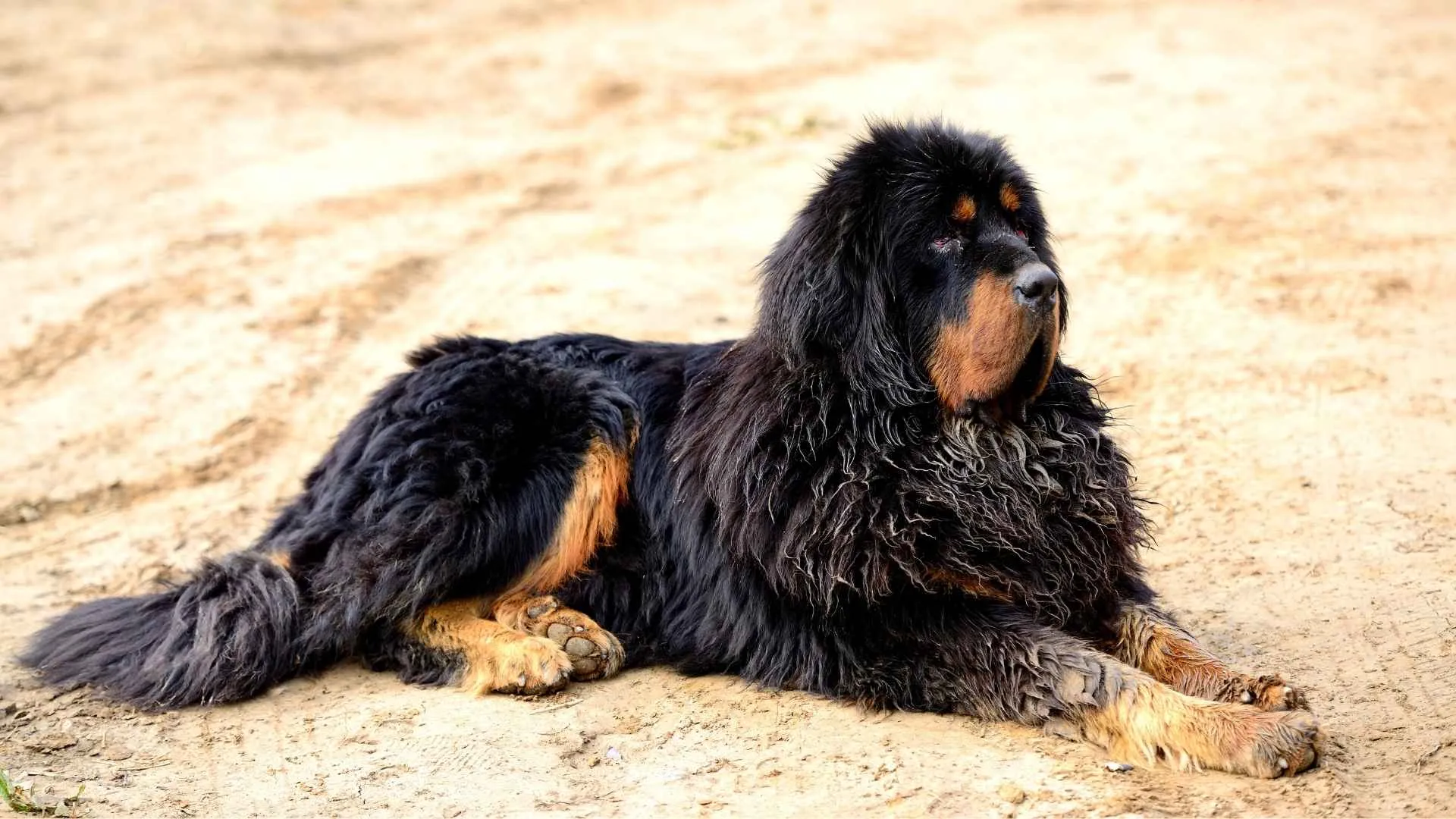
The Tibetan Mastiff stands out as a powerful and majestic guardian. With its massive build and thick double coat, it has a striking, lion-like appearance that sets it apart from other mastiff-type dogs.
Originating from Tibet and the Himalayan regions, this ancient breed was used for thousands of years to guard livestock and homes. Even today, it carries the same strong protective instincts and watchful nature.
The Tibetan Mastiff is deeply loyal and forms a strong bond with its family. It is calm and affectionate at home but naturally aloof and territorial with strangers. This makes it an exceptional guard dog, always alert and ready to protect.
However, its independent and strong-willed personality can make training challenging. It does not always like to take direction, so early training and proper socialization are very important, especially since it can be wary of new people and environments.
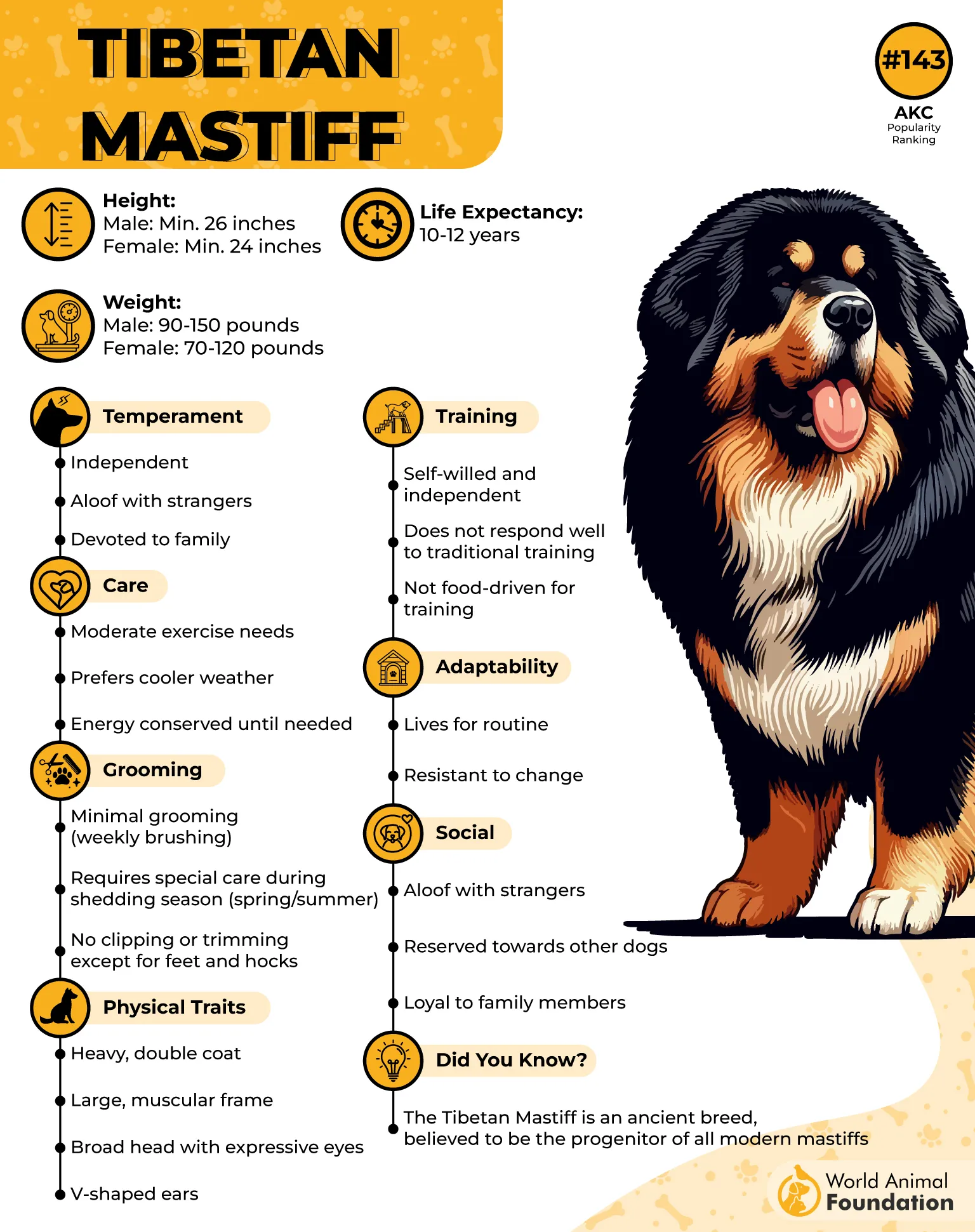
Strong, protective, and highly territorial
Aloof and reserved with strangers
Intelligent but very independent and stubborn
Needs early training and consistent rules
Requires regular brushing due to thick coat
More active in cool weather with short bursts of exercise
The Tibetan Mastiff does best in a spacious home where it can move freely and carry out its natural guarding role. It is more active during cooler times and may bark loudly, especially at night, when its guarding instincts are strongest.
The Greencross Vets says that this breed is best suited for experienced owners who can handle its size and personality. With the right care, training, and environment, this rare giant becomes a devoted, watchful, and impressive companion.
Best For
- Experienced owners familiar with guardian breeds
- Spacious homes with secure boundaries
- Cooler climates suited to a thick-coated dog
- Families wanting a loyal and protective companion
- Owners who can provide firm rules and socialization
Not Best For
- First-time dog owners
- Apartment living or busy neighborhoods
- Homes with frequent strangers or visitors
- Owners wanting an easy-to-train dog
- Hot climates without proper shade and cooling care
Conclusion
Rare giant dog breeds are more than just their impressive size—they each carry a unique story, purpose, and personality. From gentle, couch-loving companions to powerful guardians with ancient roots, these dogs prove that being big doesn’t mean being intimidating.
If one of these incredible large-breed dogs has caught your attention, take the time to truly understand their needs before bringing one home. They require space, training, and commitment—but in return, they offer unmatched loyalty and companionship.
Choosing the right dog isn’t just about size or looks; it’s about finding a companion that fits your lifestyle. And if you’re ready for it, one of these rare giants might just become the most unforgettable part of your life.
