




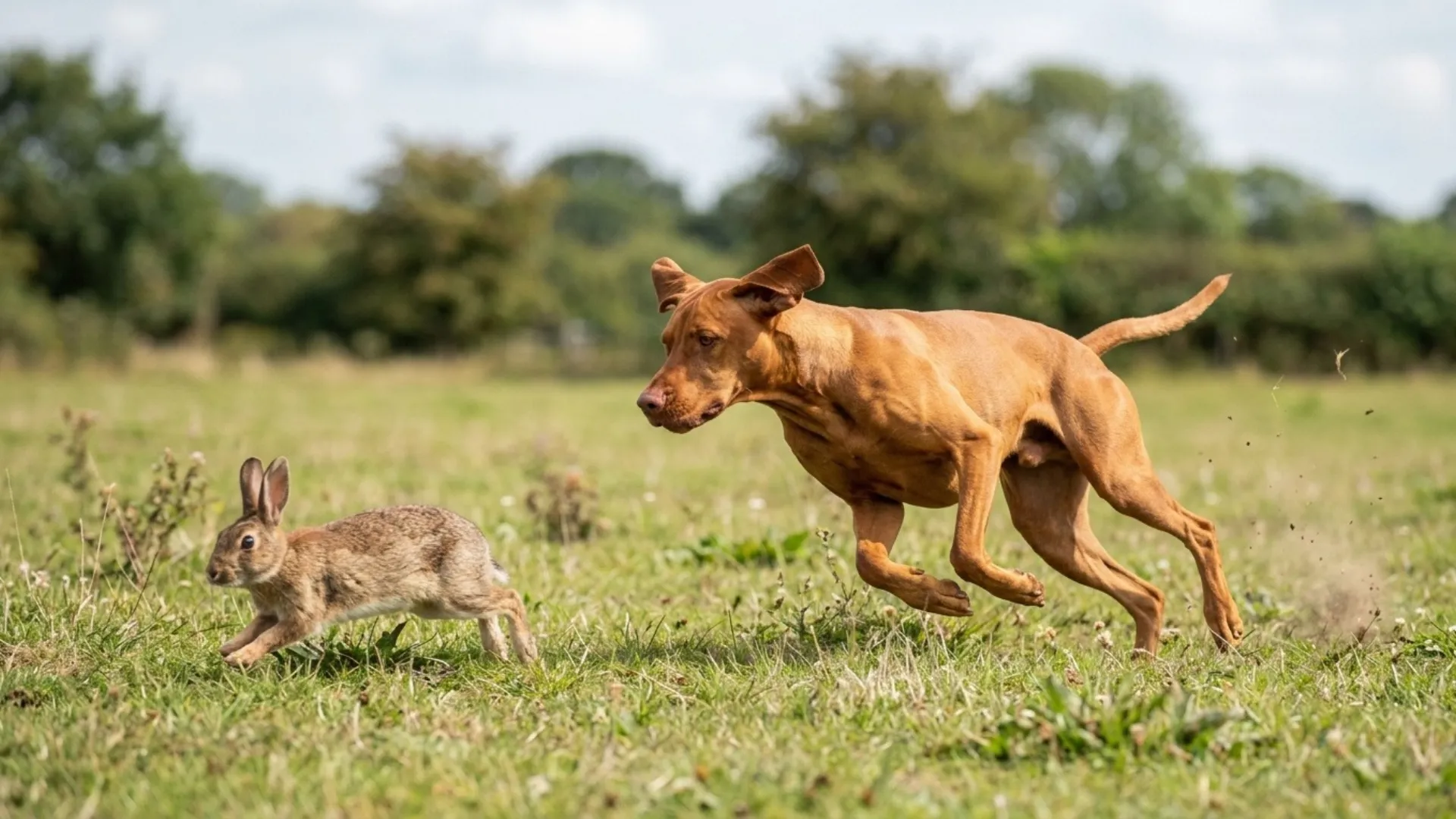
Prey drive is one of the most misunderstood dog behaviors. A dog with a high prey drive isn’t necessarily aggressive. Prey drive is simply the instinct to see, track, chase, stalk, or capture prey.
This trait shows up differently from breed to breed, and the difference comes down to selective breeding. Dogs were developed for specific tasks, and breeders kept the parts of the predatory sequence that were useful for the job. Some breeds stalk without attacking, while others were bred to follow game over long distances.
It’s important to understand that distinction when choosing a companion. Prey drive can affect how a dog interacts with cats, rabbits, birds, squirrels, livestock, and even fast-moving objects like bicycles.
Here are some dog breeds with a high prey drive and their different hunting styles.
Dog Breeds with a High-Prey Drive: What You Need to Know
1. Border Collie
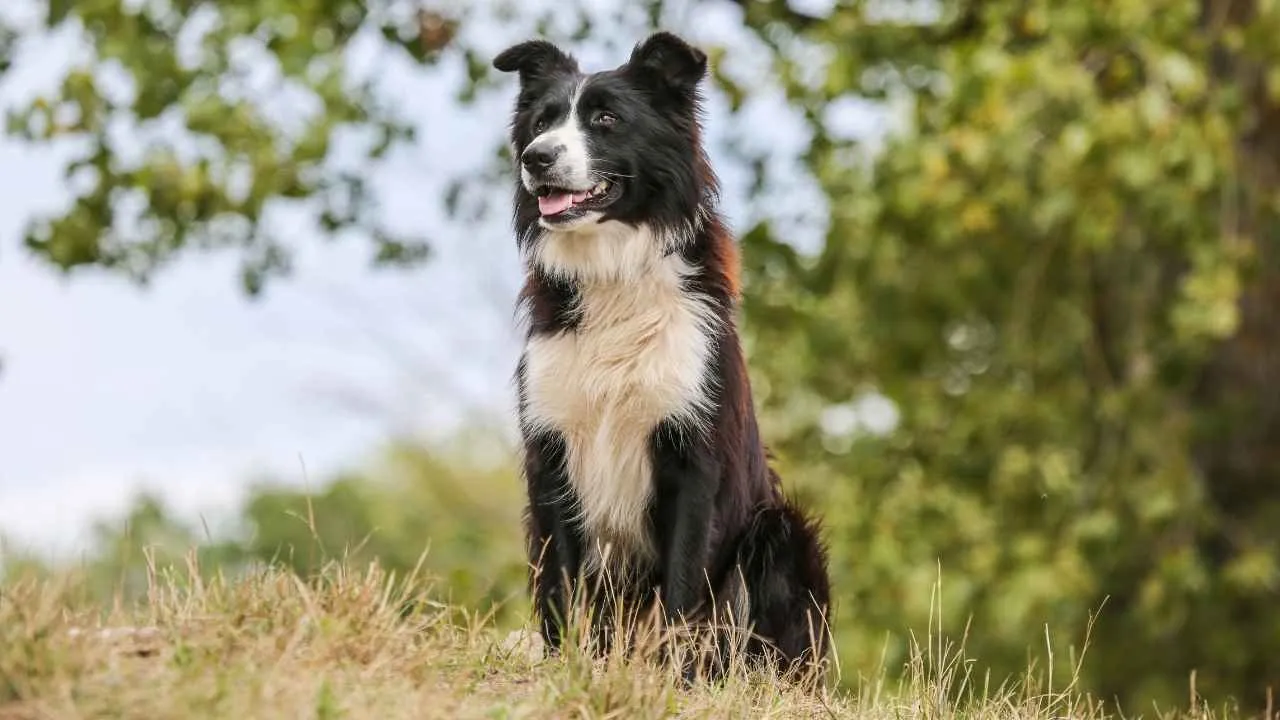
The Border Collie is one of the most common names on any high prey drive list. These dogs were bred to herd livestock and are known for their intense focus, stealth, and stalking skills. A Border Collie may try to chase running children, chase moving objects, circle other dogs, and fixate on anything that moves quickly.
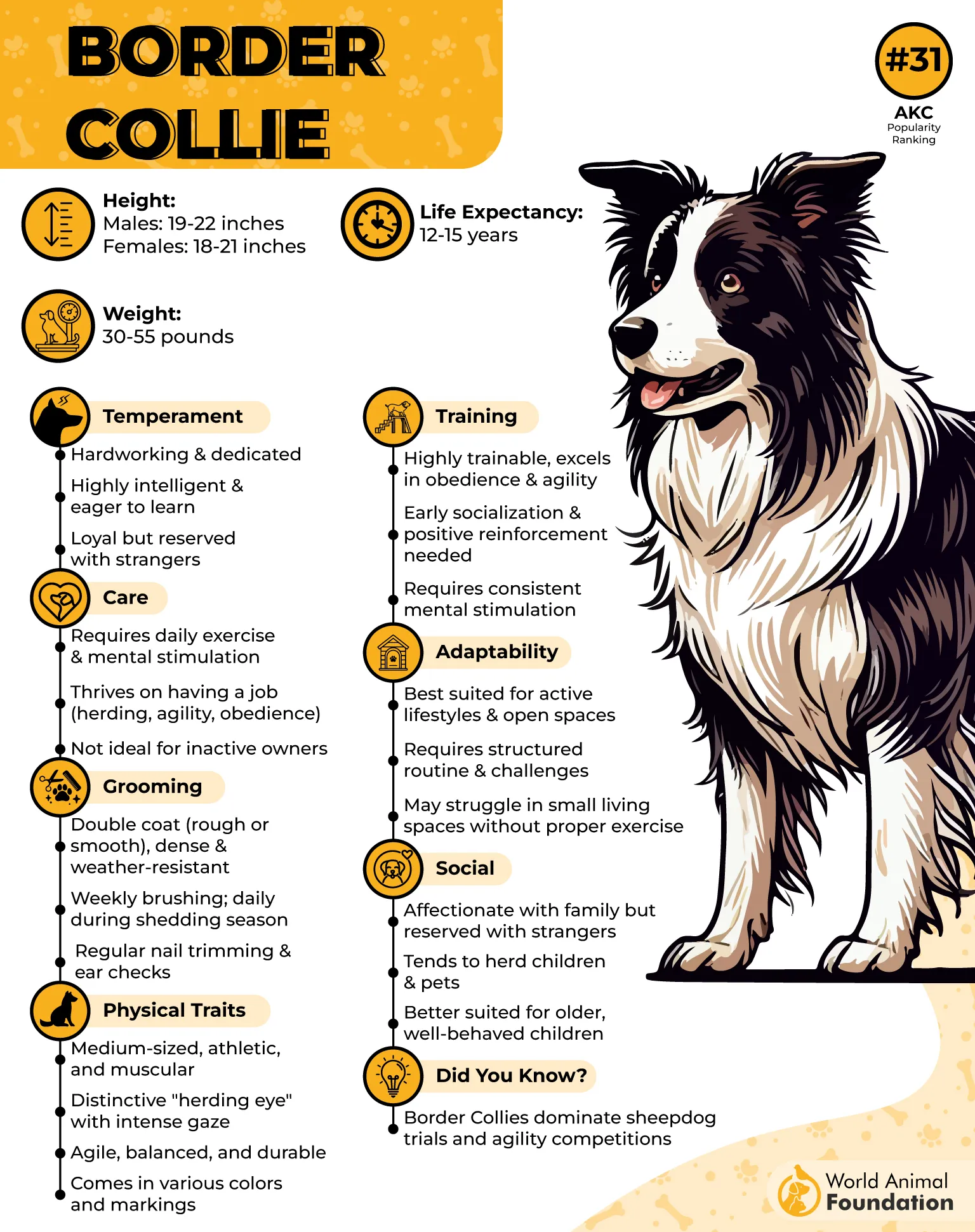
Any motion can trigger an inborn working response in these dogs, and their build helps them do the job. They’re slender, move quickly, change direction in an instant, and cover large stretches of pasture fast.
According to the American Kennel Club, these dogs should be given a job every day. Without one, they can become hard to control and destructive.
2. Rhodesian Ridgeback
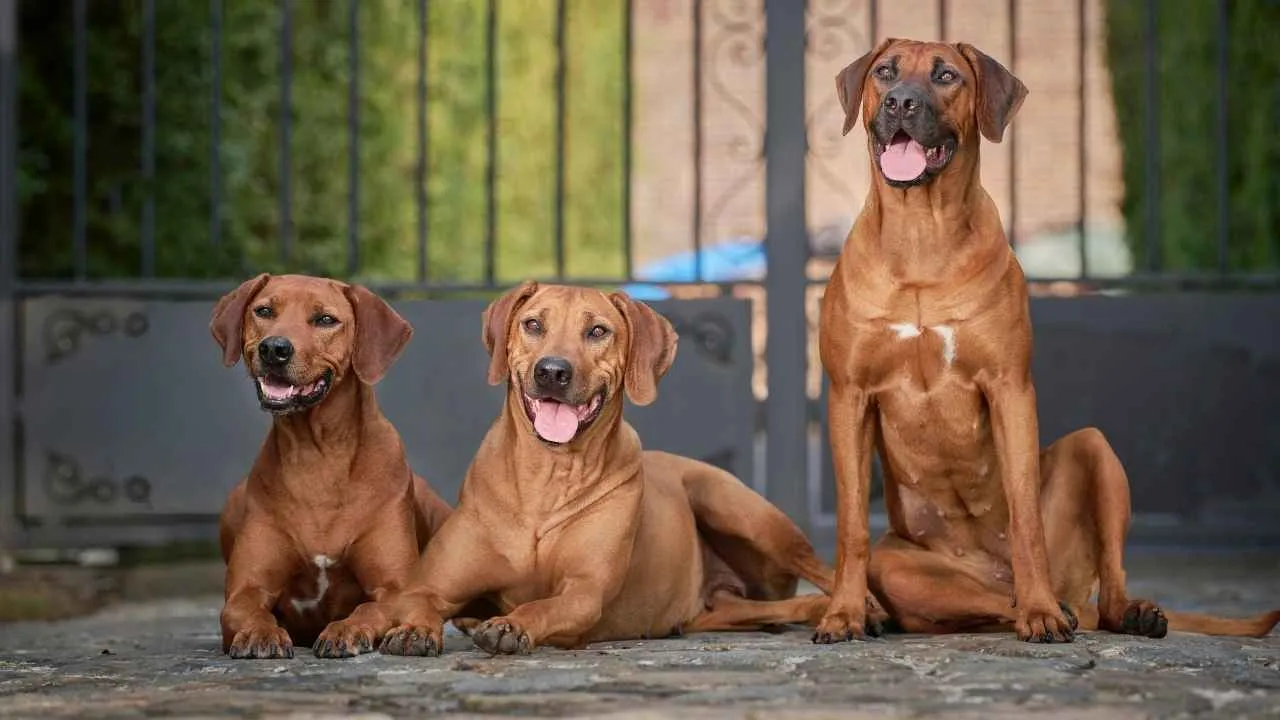
The Rhodesian Ridgeback brings a lot more physical strength to the prey drive picture. These dogs were originally bred in Southern Africa to track and hold big game, including lions. They had to be brave, athletic, and enduring, and they couldn’t simply rush in on dangerous animals.
That heritage gave them a muscular, athletic body that can handle tough terrain.
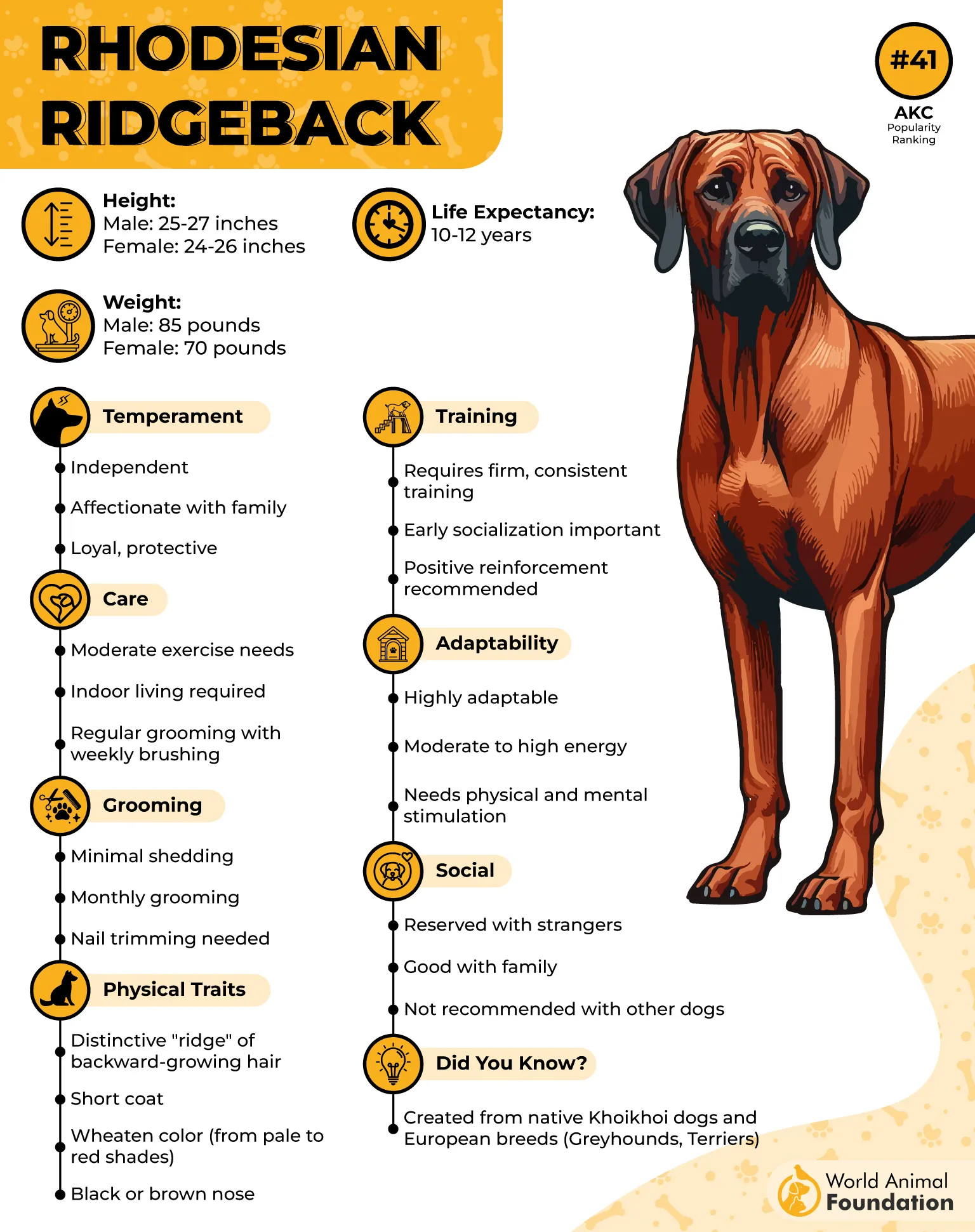
Modern Ridgebacks still have an innate urge to chase smaller animals. That matters to owners because a Ridgeback is much larger than a terrier or toy breed, so it has far more physical power.
According to Hill’s Pet, their hunting heritage means they may not do well living with small pets and are often better suited to homes where they are the only animal.
3. Weimaraner
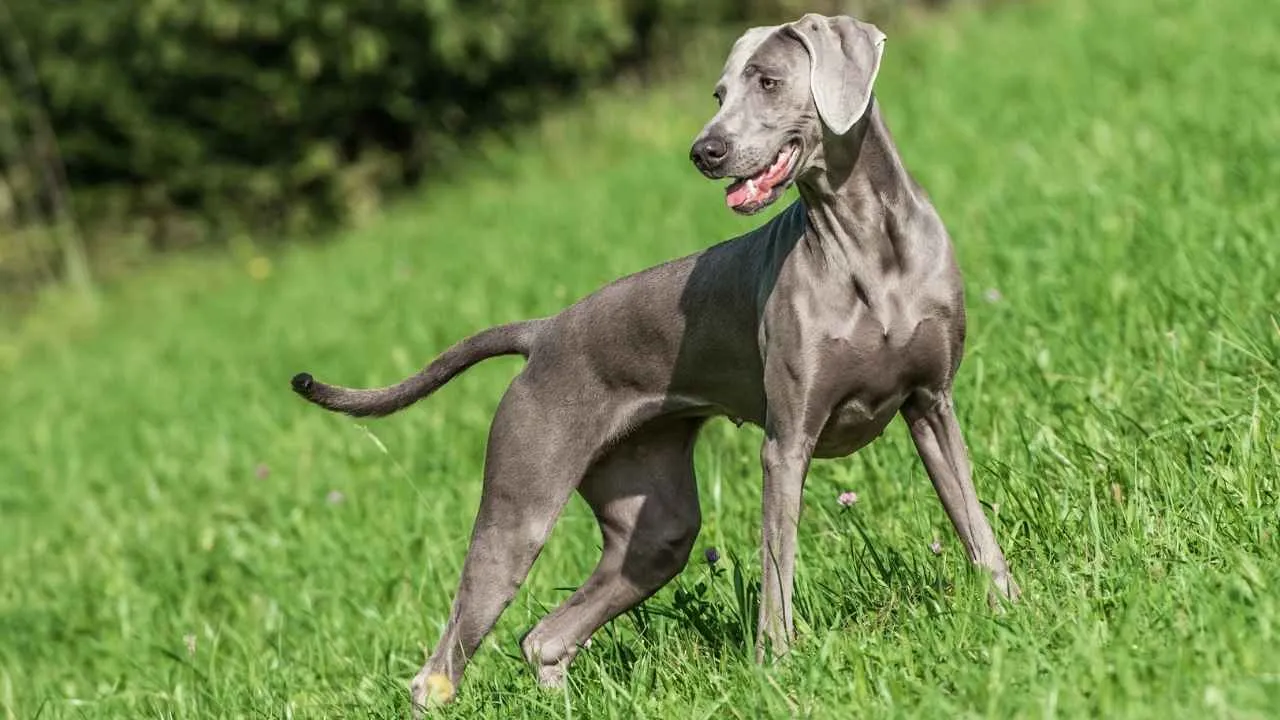
The Weimaraner is a strong prey drive dog that belongs to the sporting group. These dogs were bred as hunting companions that could search for game and work alongside hunters. Today’s Weimaraners still have a strong hunting instinct, and they may not do well in homes with small pets.
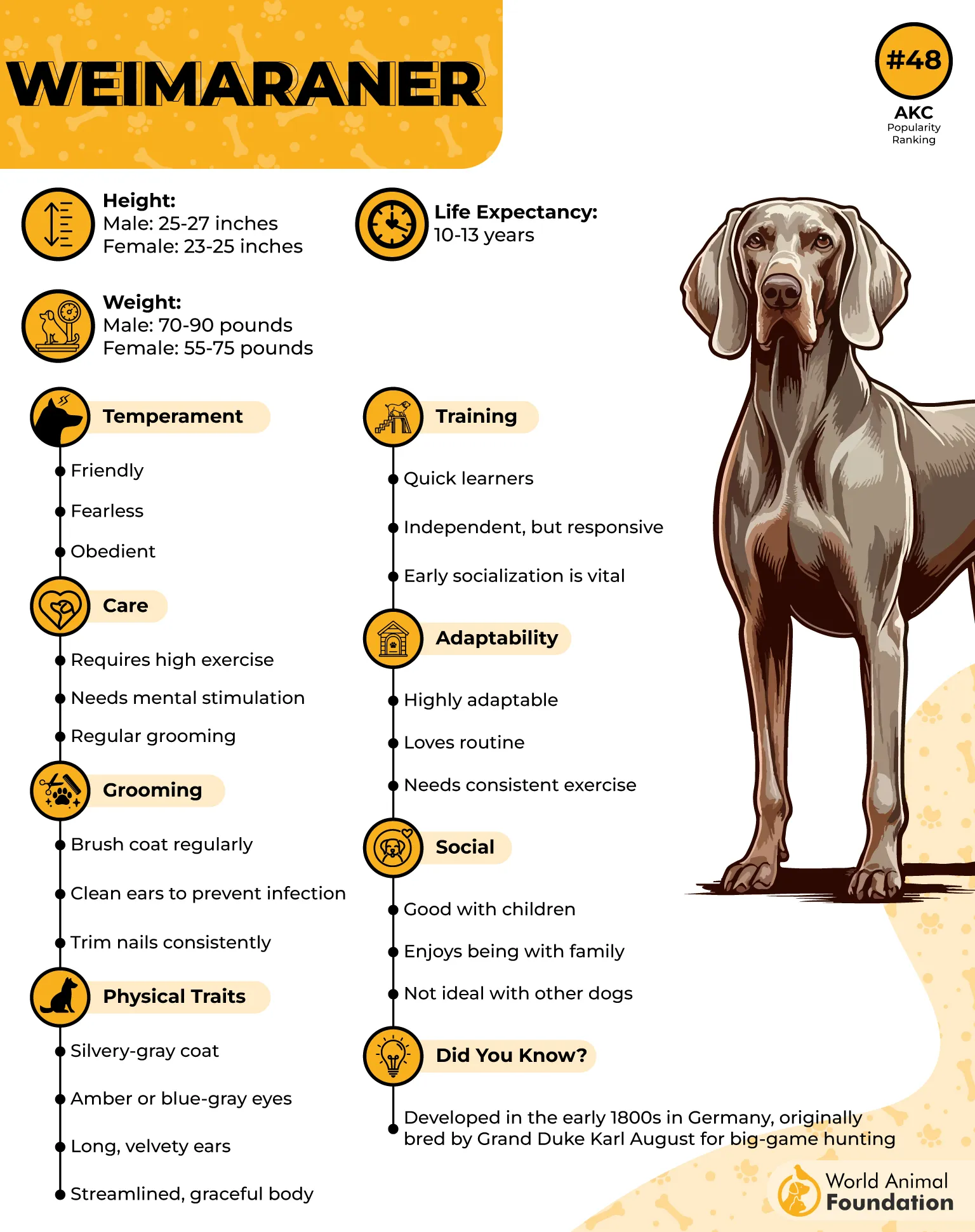
This breed has an exceptional sense of smell and relies on its nose, more than sight or hearing, to investigate its surroundings. It has a large, muscular build, and its long legs help it move quickly across a field.
Weimaraners can be hard to manage in small homes, and Chewy recommends them mainly for owners with large yards or farms.
4. Vizsla
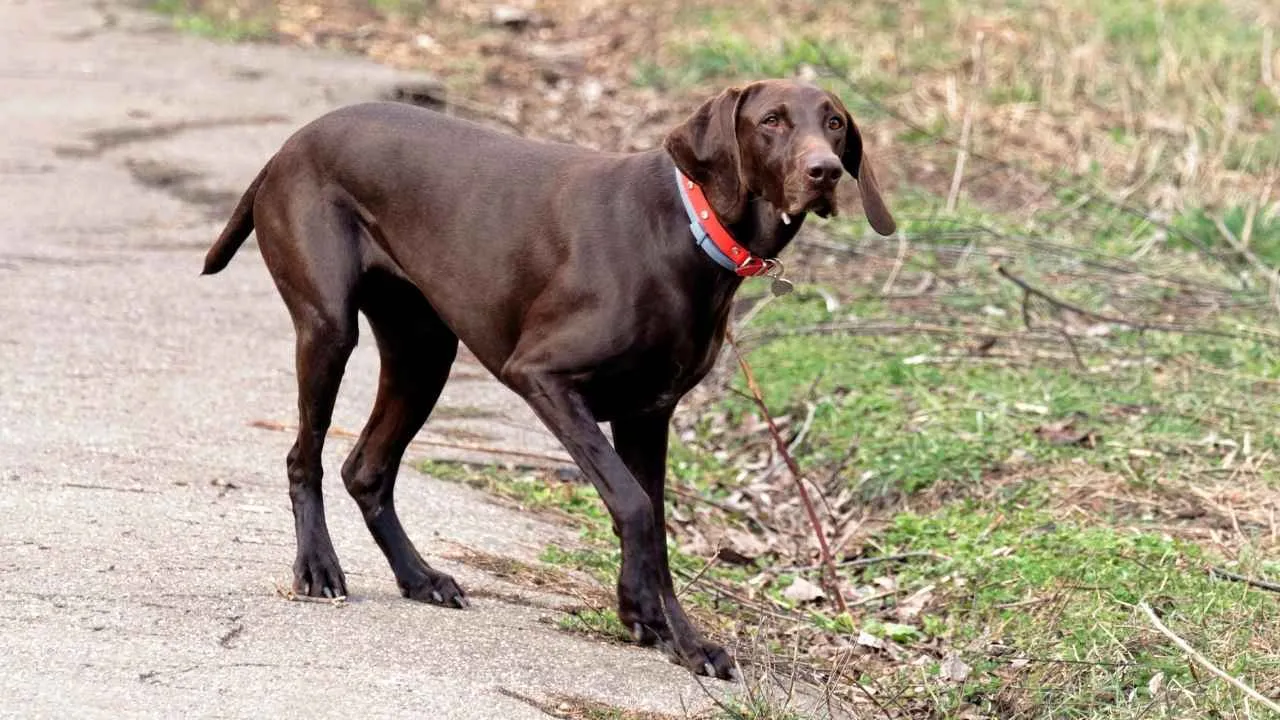
Another hunting breed, the Vizsla has a strong prey drive, with a focus on pointing and retrieving. It was developed in Hungary as a general-purpose hunting companion, tasked with tracking down game birds and letting the hunter know where they were by pointing.
The breed is known for its high energy and need for mental stimulation, which means a great deal of exercise.
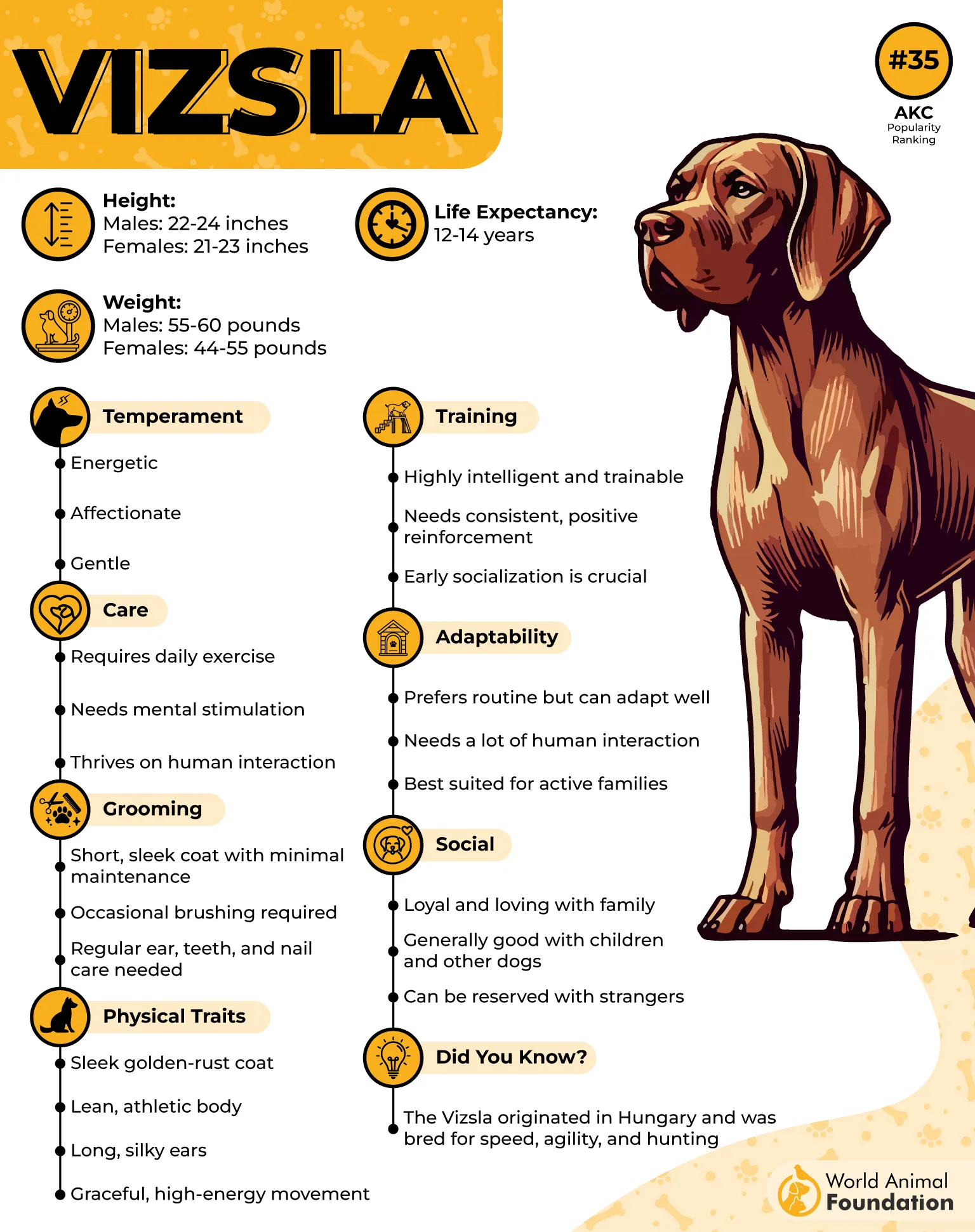
Vizslas rely mainly on their noses to point toward prey. They have a lean, athletic build made for covering fields, not for brute confrontation. They excel at endurance, responsiveness, scenting, and working alongside the handler’s other dogs.
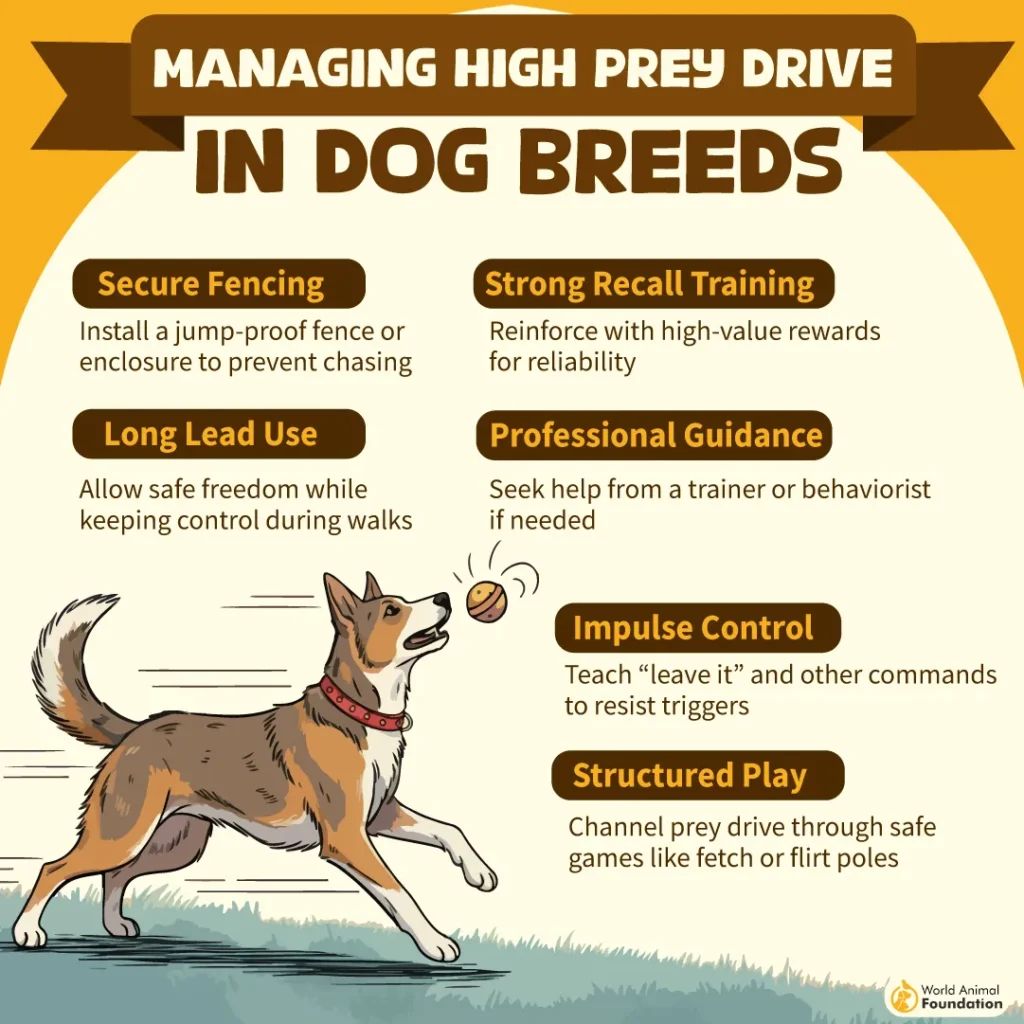
That’s why early training and socialization matter so much. They help a Vizsla learn to work well with other dogs and with its handler.
5. Greyhounds
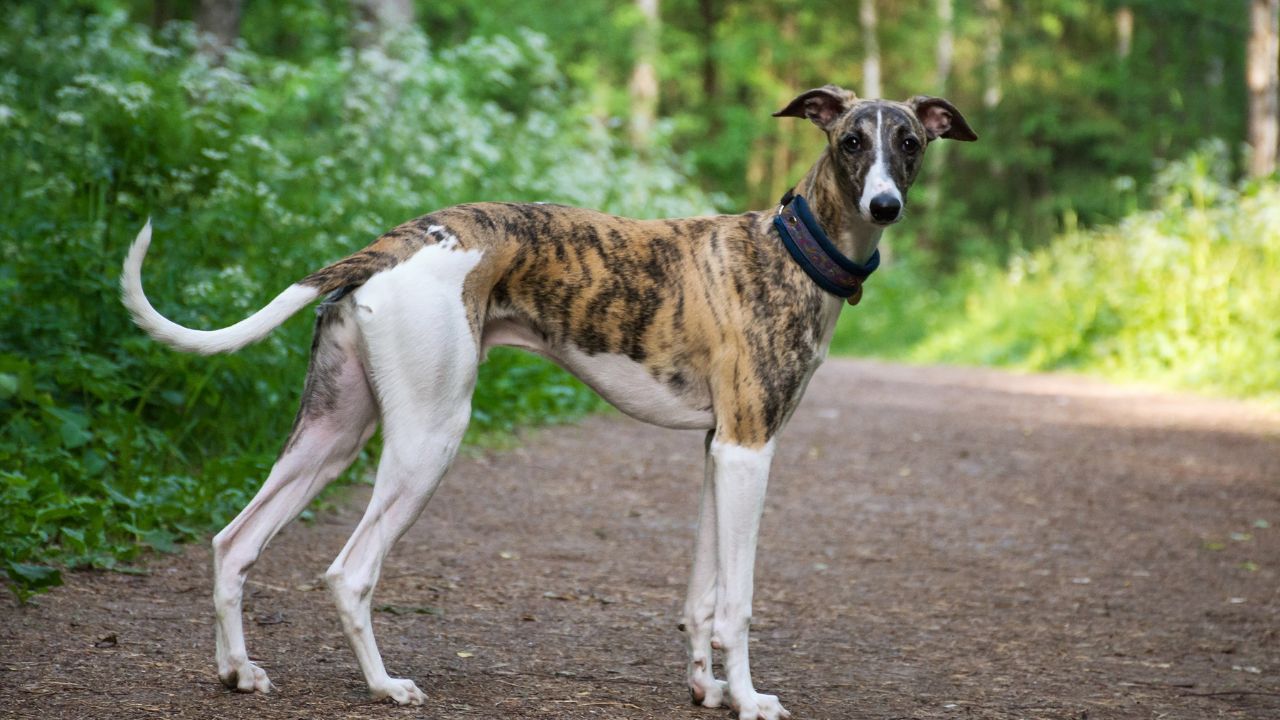
Greyhounds are among the best hunters on this list, and their ability to pursue prey by sight is second to none. They were bred to spot moving prey and chase it down, unlike scent hounds, which were bred to follow a scent trail. Their wide field of vision lets them pick up movement from far away, and their long legs and flexible bodies then carry them off at high speed.
Greyhounds can get bored with repetitive training sessions, so they do best with walks and a variety of activities. Greyhound racing is something these dogs are also known for.
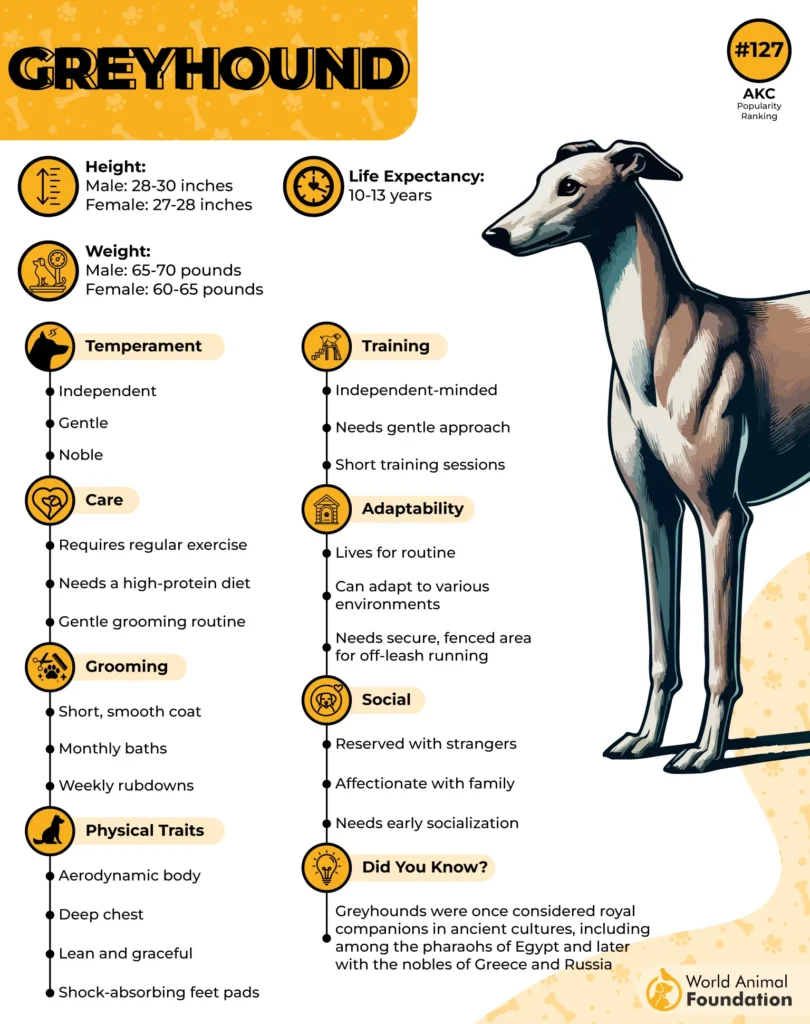
Greyhounds are generally gentle and non-aggressive, but their chase instinct can kick in when they spot something small and fast. If you want to keep one as a family dog, it helps to read up on tips for managing prey drive.
Recall can be a weak spot for the breed, so Greyhounds should always be on a leash outdoors, or they may take off after something. They can chase wildlife and small animals like cats, and in some cases they may injure or kill them. For that reason, some owners use a muzzle on walks as a safety measure.
6. Saluki
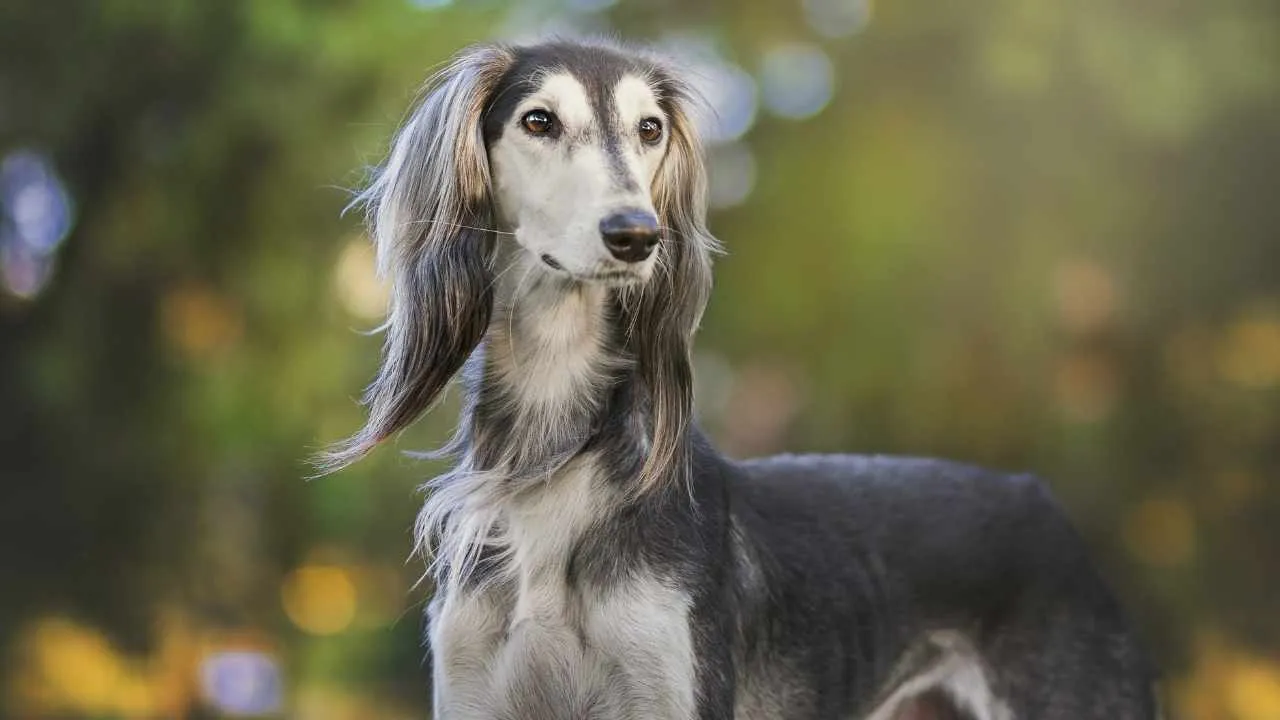
The Saluki is one of the oldest breeds, with roots that PetMD traces back to 329 BCE. It was bred to chase down fast-moving prey over rough terrain, especially in the Middle East.
Salukis were known for pursuing game like gazelle, and their build reflects that. They have long legs, a deep chest, a flexible back, and a lightweight, athletic frame, all of which help them move efficiently at speed.
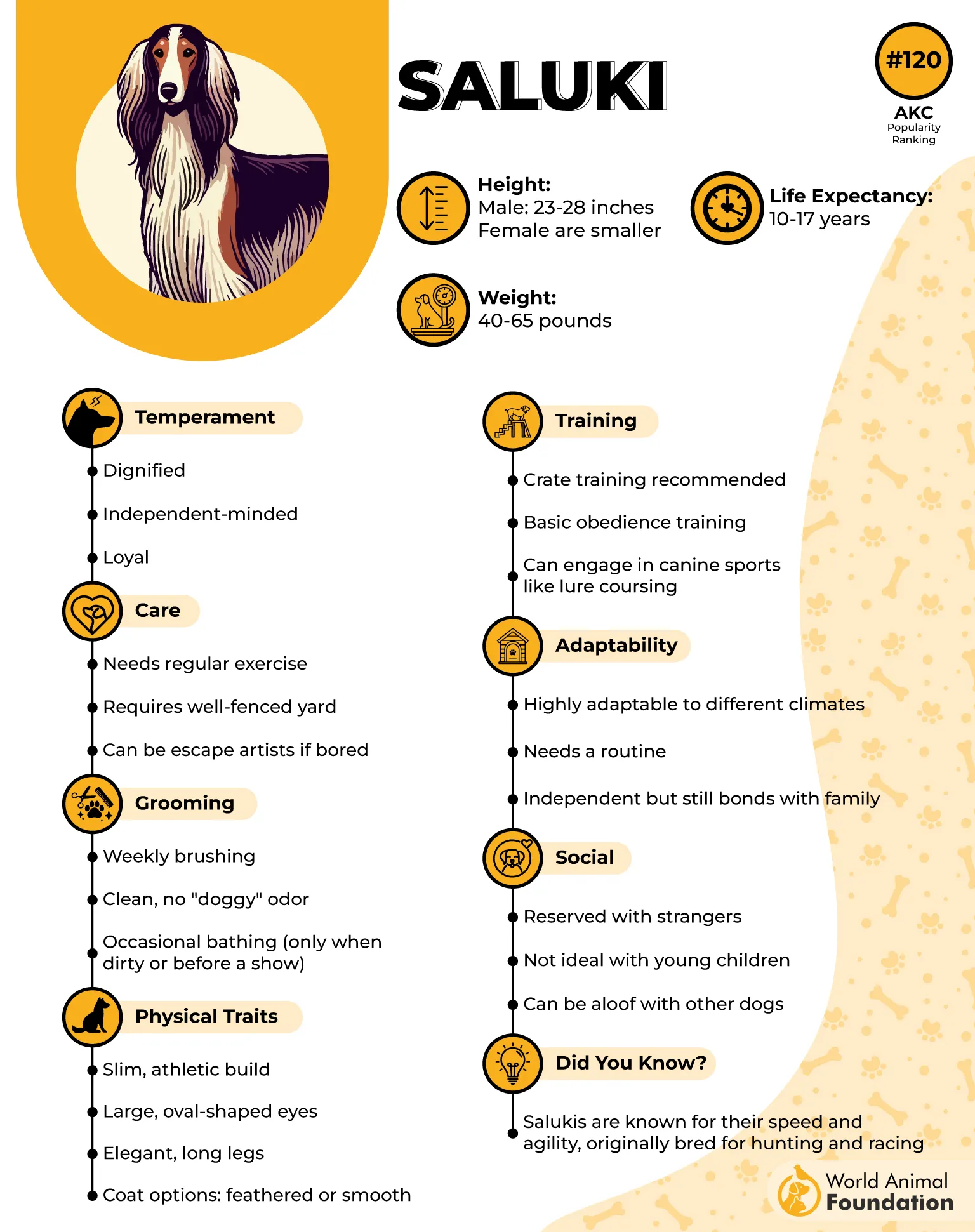
These hunting dogs can be quite independent. They tend to think for themselves, so they don’t always follow commands, which is why recall training should start in early puppyhood. Salukis can also be escape artists, so they need supervision when playing in the backyard.
Activities like lure coursing, flyball, and agility give a Saluki a safe outlet for its chase instinct and can help reduce its urge to hunt in public spaces.
7. Afghan Hound
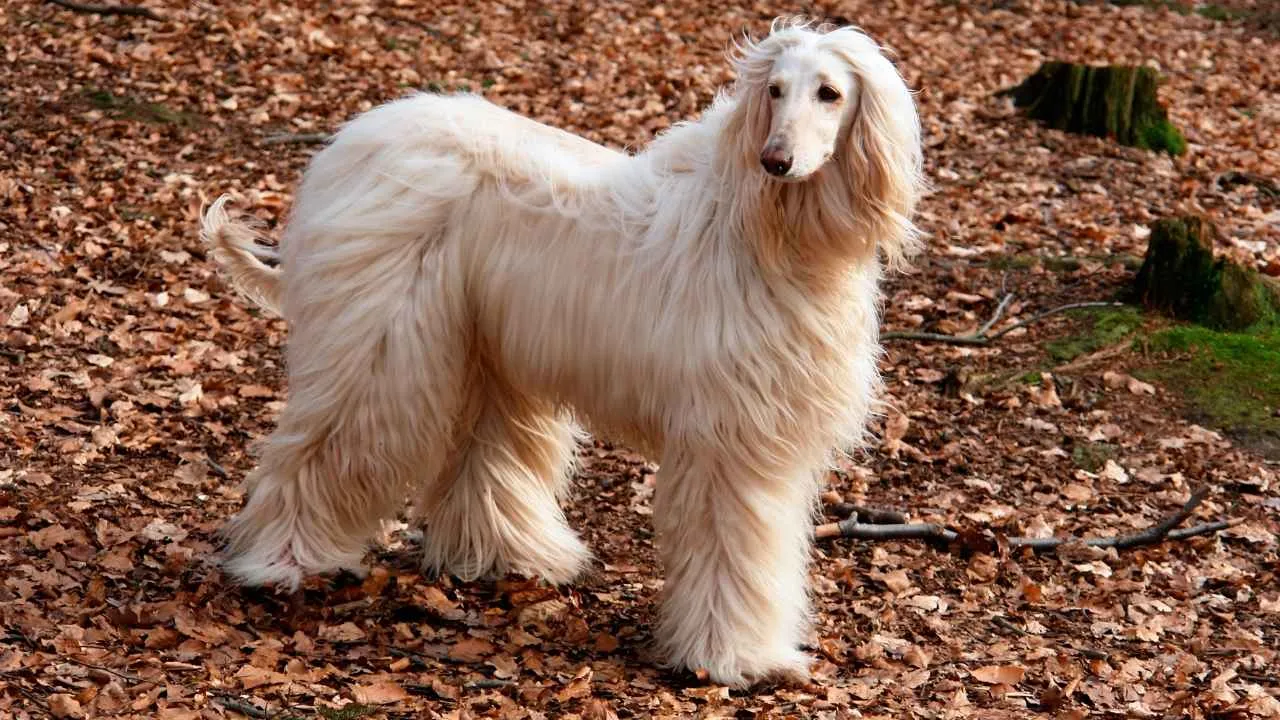
The Afghan Hound may look like a show dog because of its glamorous coat, but at heart it is a serious hunter.
Afghan Hounds were bred as sighthounds in the mountainous regions of Central and South Asia, where they chased down quarry with speed and agility. With consistent training, they can learn to work with their handlers, but their strong chase instinct means they don’t always stay focused on the person at the other end of the leash.
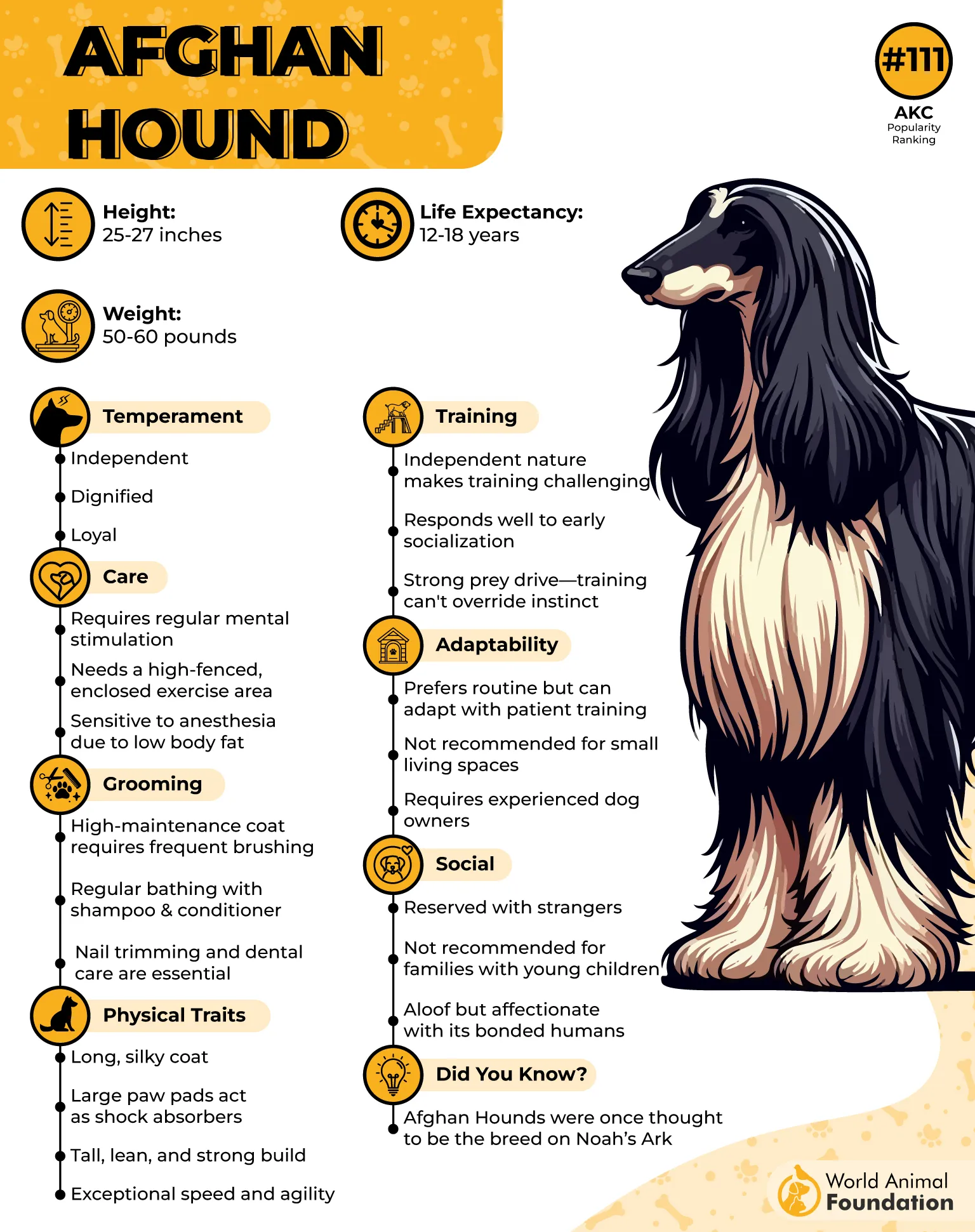
Many owners say that no amount of training fully stops these dogs from running after small animals. Spotting prey is a favorite pastime for them, and their prey drive is high. Still, positive reinforcement methods can go a long way in shaping their behavior.
Good care matters for this breed, too. Many breed clubs advise careful attention to diet and feeding habits, since Afghan Hounds can be prone to issues like bloat.
Conclusion
This guide offers an in-depth overview of dog breeds with a high prey drive. It’s important to know as much as you can about a pet before bringing one home.
An untrained dog with strong instincts can put your family and other animals at risk, and training has a major influence on how these dogs behave. With the right guidance, experienced owners can turn them into well-behaved pets.
A high prey drive doesn’t automatically make a dog dangerous. These dogs love to chase and hunt small animals, and some will even alert you to outside threats, which is a real plus for many hunters.
