




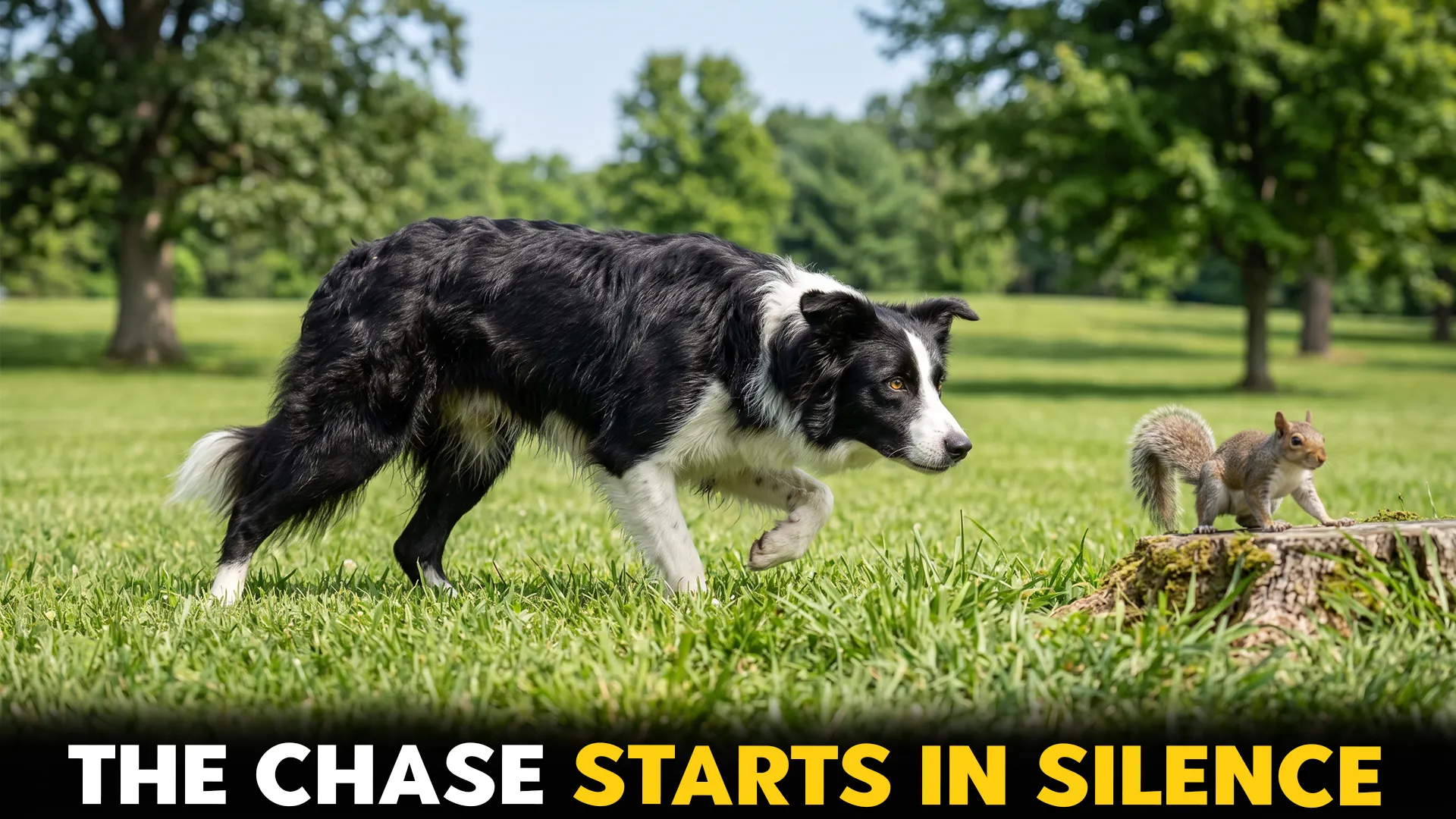
Suddenly freezing at the sight of a squirrel. Glaring with laser focus at a rustling bush. Bounding relentlessly after a rabbit that had the nerve to exist nearby. Or that slow, crouched stalk the moment your dog spots the neighbour’s orange tabby; head low, eyes locked, completely in another world.
If any of this sounds familiar, you have a uniquely wired dog on your hands. One that might make you briefly question your life choices.
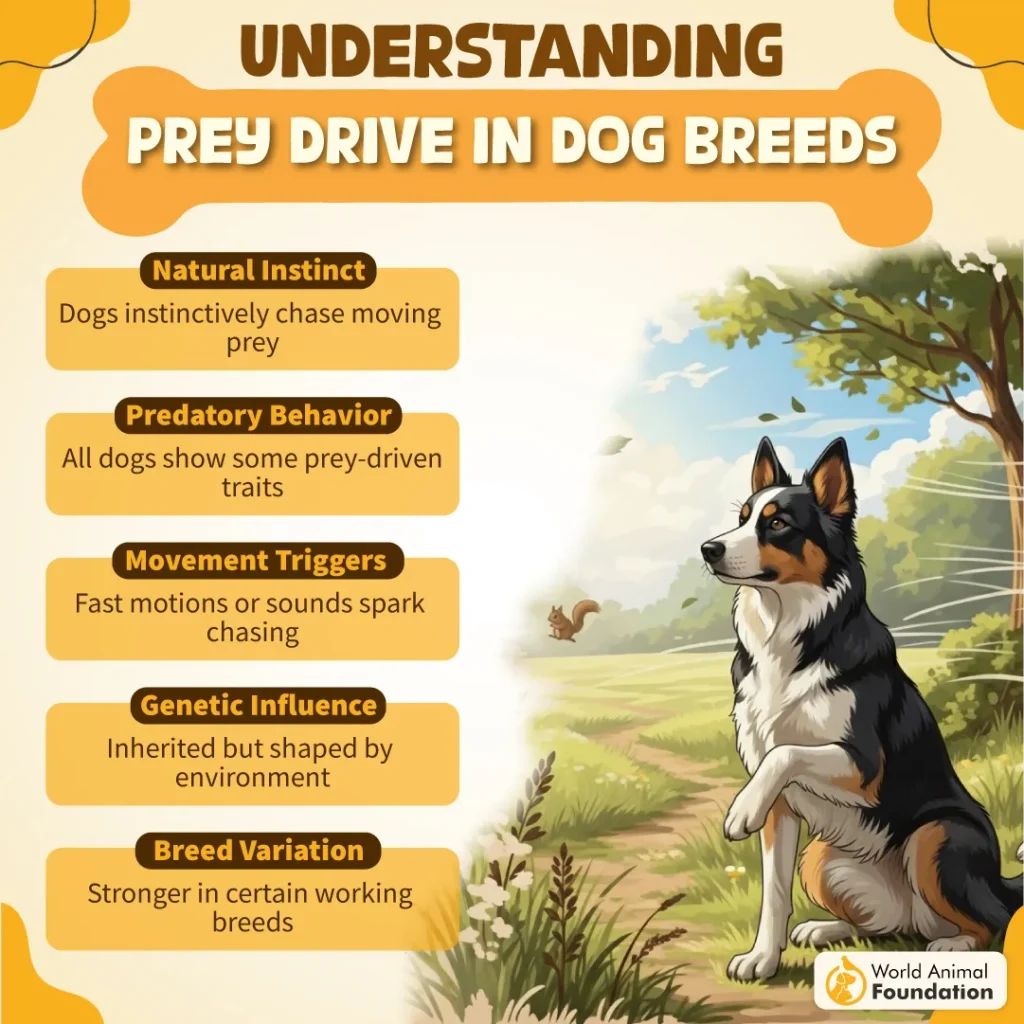
But before you spiral into conclusions, let us explain why your sweet pup occasionally channels its inner wolf. The answer is simpler than you’d think: your dog has a high prey drive and low impulse control. That relentless fixation, the selective deafness when you call their name, the launching themselves toward anything that moves- it all traces back to deeply ingrained hunting instincts.
The good news? A high prey drive doesn’t mean an untrainable dog. Once you understand what prey drive actually is and what level your dog is operating at, managing and redirecting that energy becomes much more straightforward. Let’s get into it.
Top Dog Breeds with Intense Prey Drive Explained
1. Australian Cattle Dog
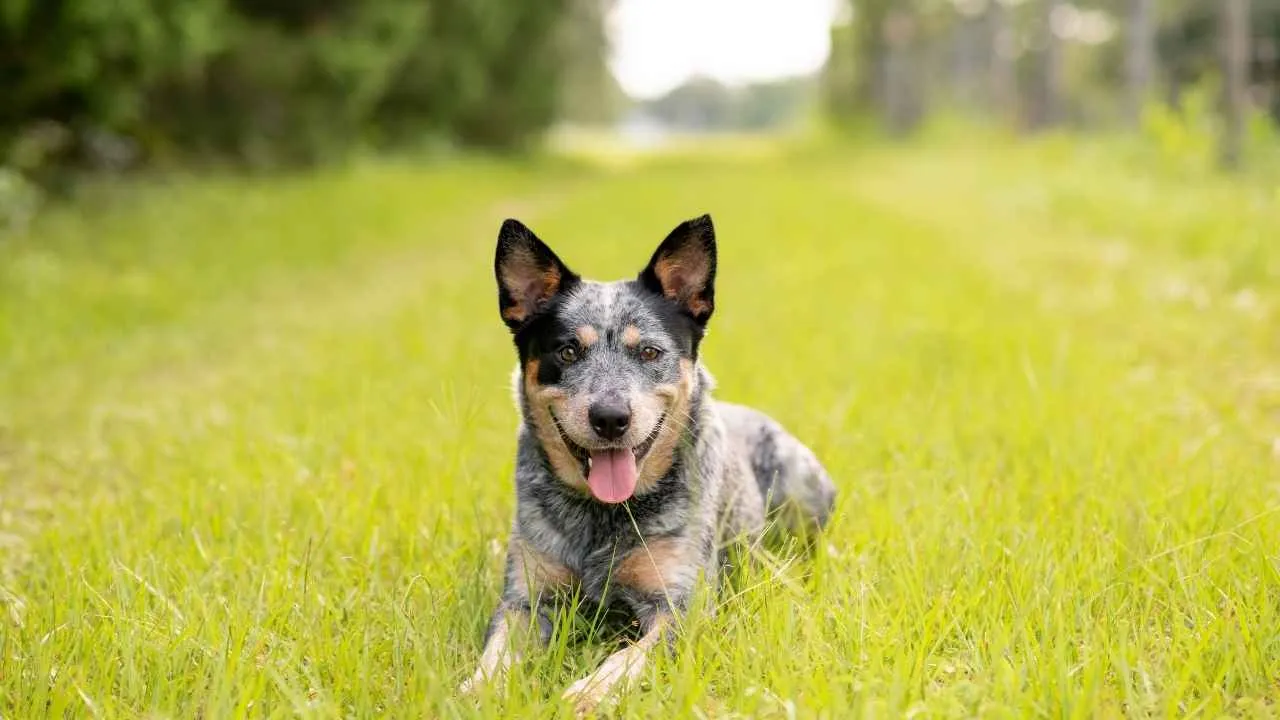
The Australian Cattle Dog is the product of selective breeding in the mid-1800s, purpose-built for the demands of cattle herding in the harsh Australian outback. The breed emerged from crossing British herding dogs with native dingoes, producing the iconic speckled red or blue heeler capable of handling rough terrain and stubborn livestock with equal determination.
As Purina US notes, this is an effective working dog with endless stamina and a natural flair for adaptability. Born to run, herd, and chase, the Australian Cattle Dog is unmistakable in both looks and temperament.
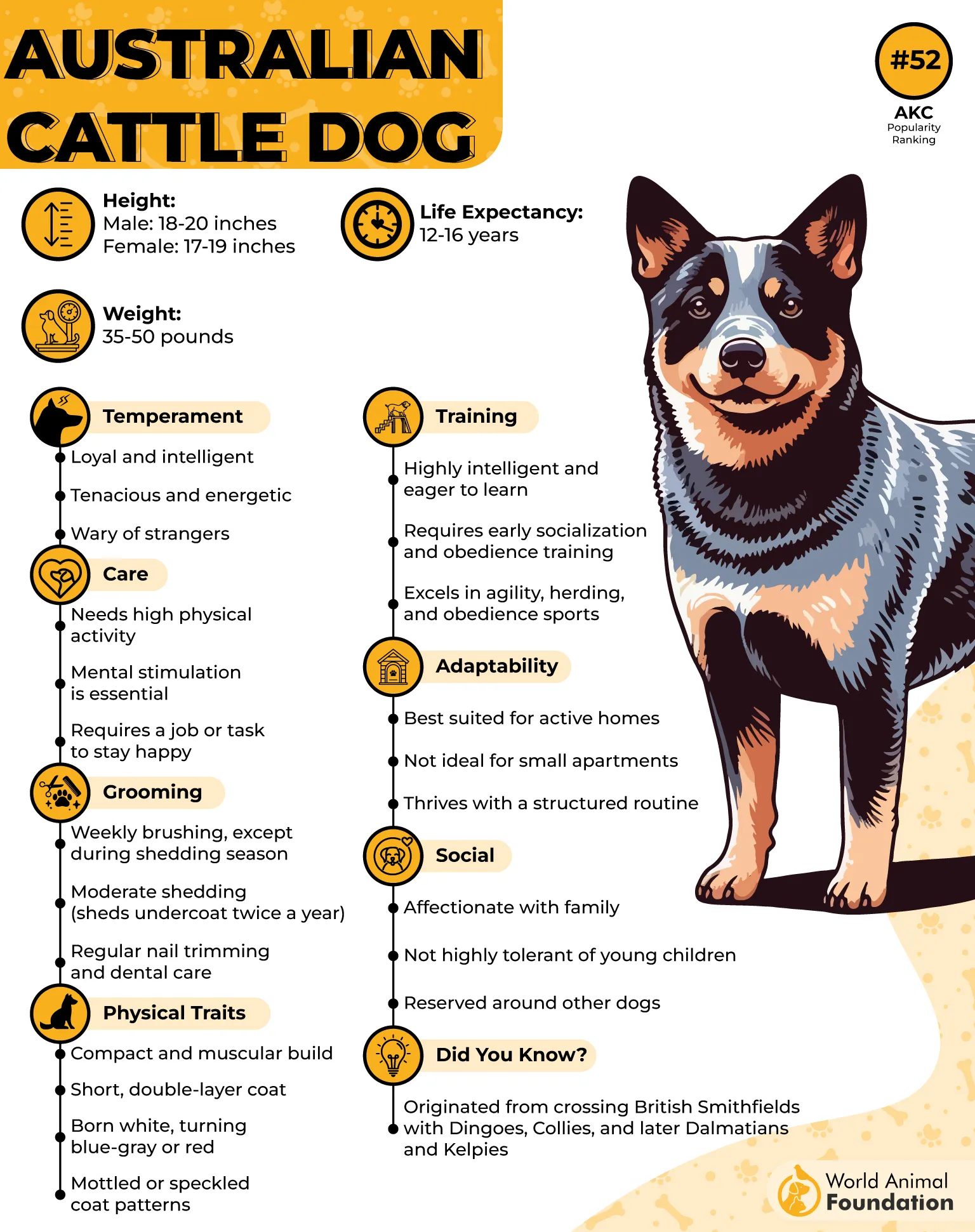
It’s not the best fit for families with small children or toddlers, but older kids who know how to treat a dog respectfully can build a strong bond with this dingo descendant. Early socialization and consistent training go a long way in shaping positive behavior, and as one of the most intelligent dog breeds, it picks up commands and tricks readily. Challenging canine sports also make an excellent outlet, keeping its sharp mind engaged and its prey drive productively redirected.
2. Afghan Hound
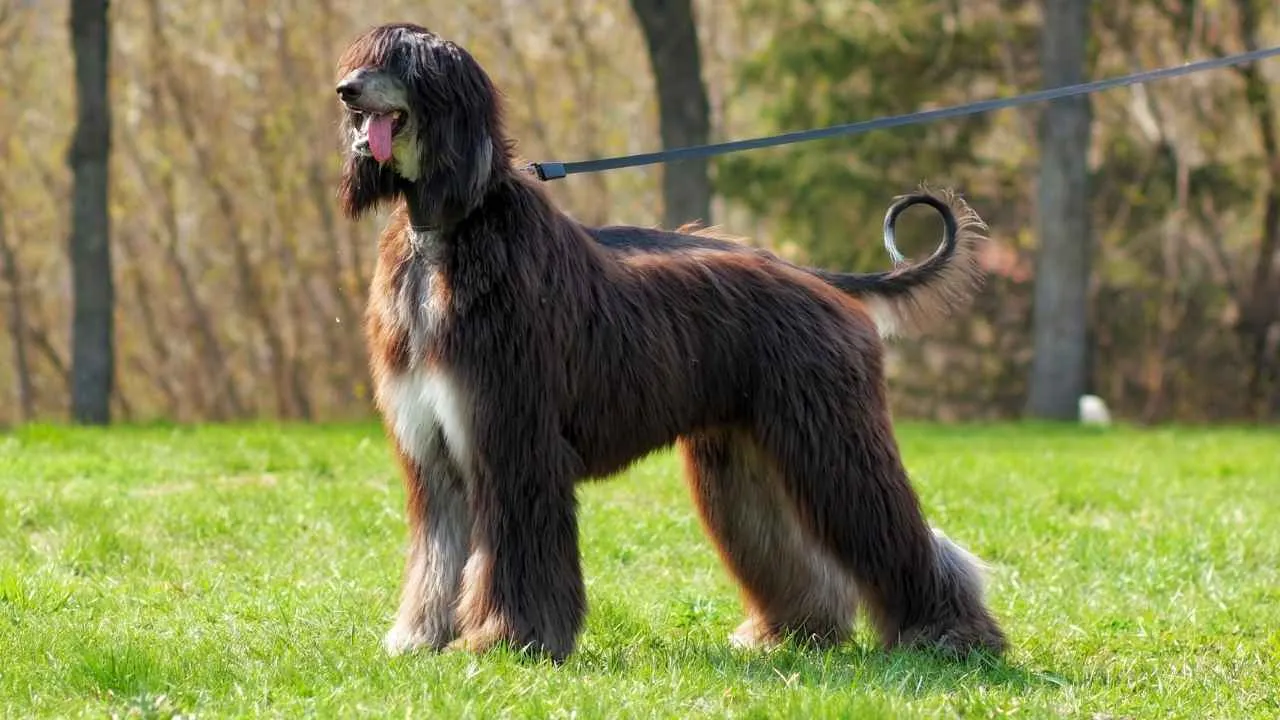
Glamorous, confident, and impossible to miss, the Afghan Hound carries itself with a regal elegance that has made it a fixture in the show world. But beneath that flowing coat and aristocratic poise lies one of the most intensely driven sighthounds in existence.
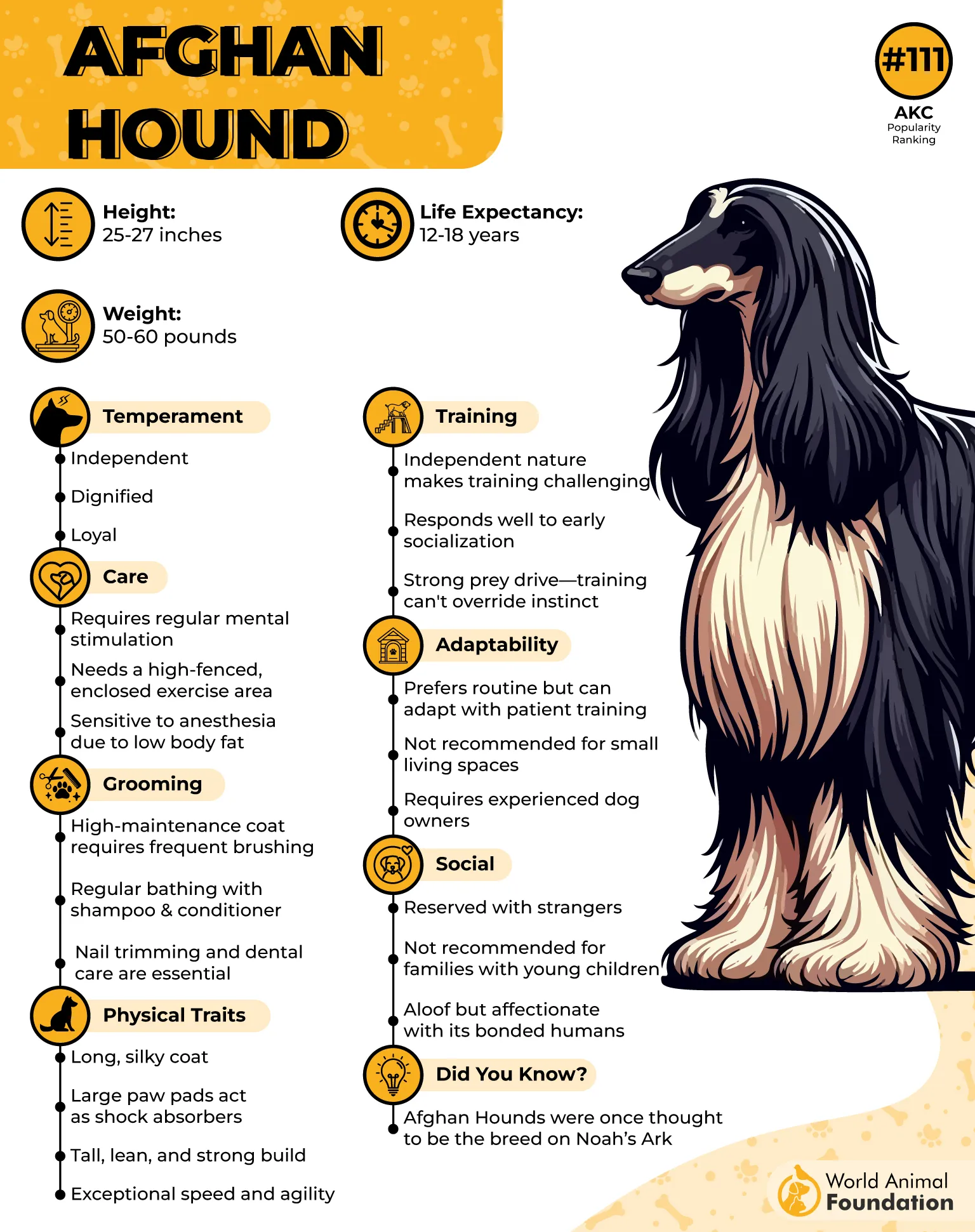
Hailing from the rugged terrain of Afghanistan, this is an ancient breed with a working history stretching back centuries. As Orvis notes, the Afghan Hound is fast, independent-minded, and naturally aloof, and is still used by native hunters today to pursue prey including Bactrian deer, bezoar ibex, and gazelles.
That prey drive is no joke. The Afghan Hound is a genuinely challenging breed, not because it’s aggressive, but because it operates on its own terms.
For owners expecting an obedient, easygoing companion, this is a tough adjustment. For experienced owners who appreciate its independence and beauty, it’s an extraordinary dog.
3. Border Collie
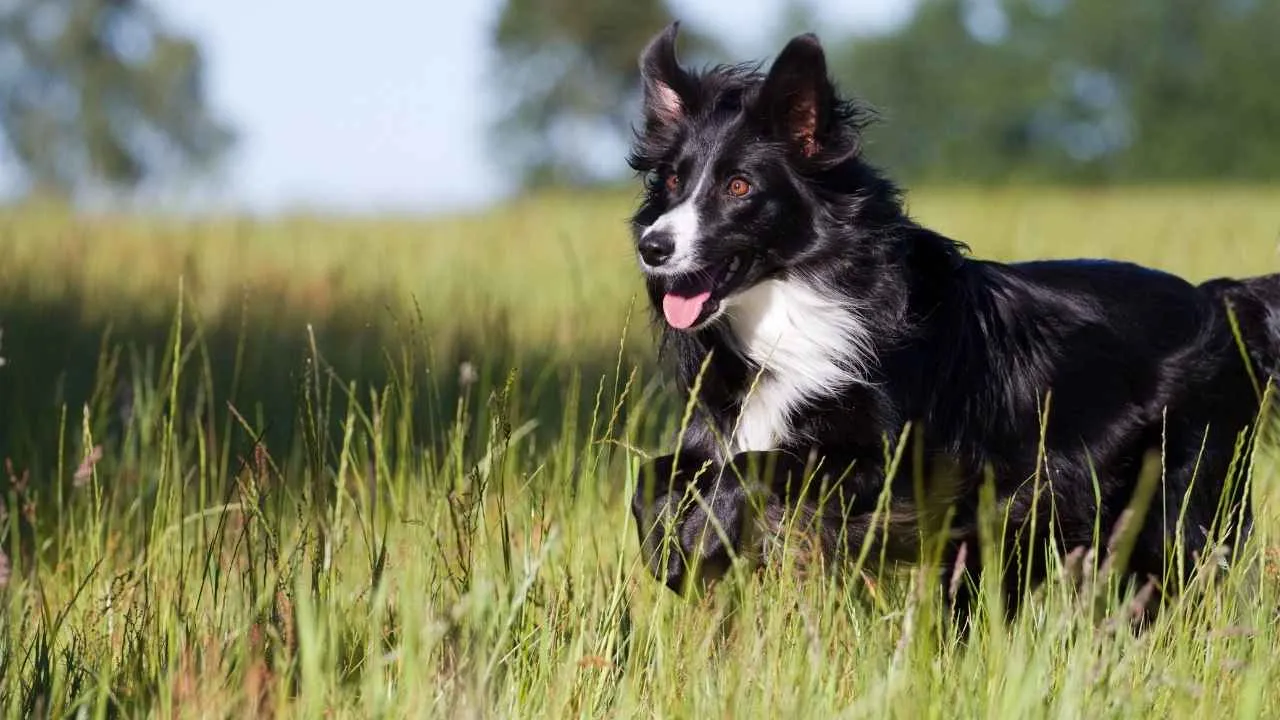
The Border Collie comes highly recommended for owners looking for a herding dog, but if you choose one purely for its reputation as the most intelligent dog breed, you may be in for a surprise.
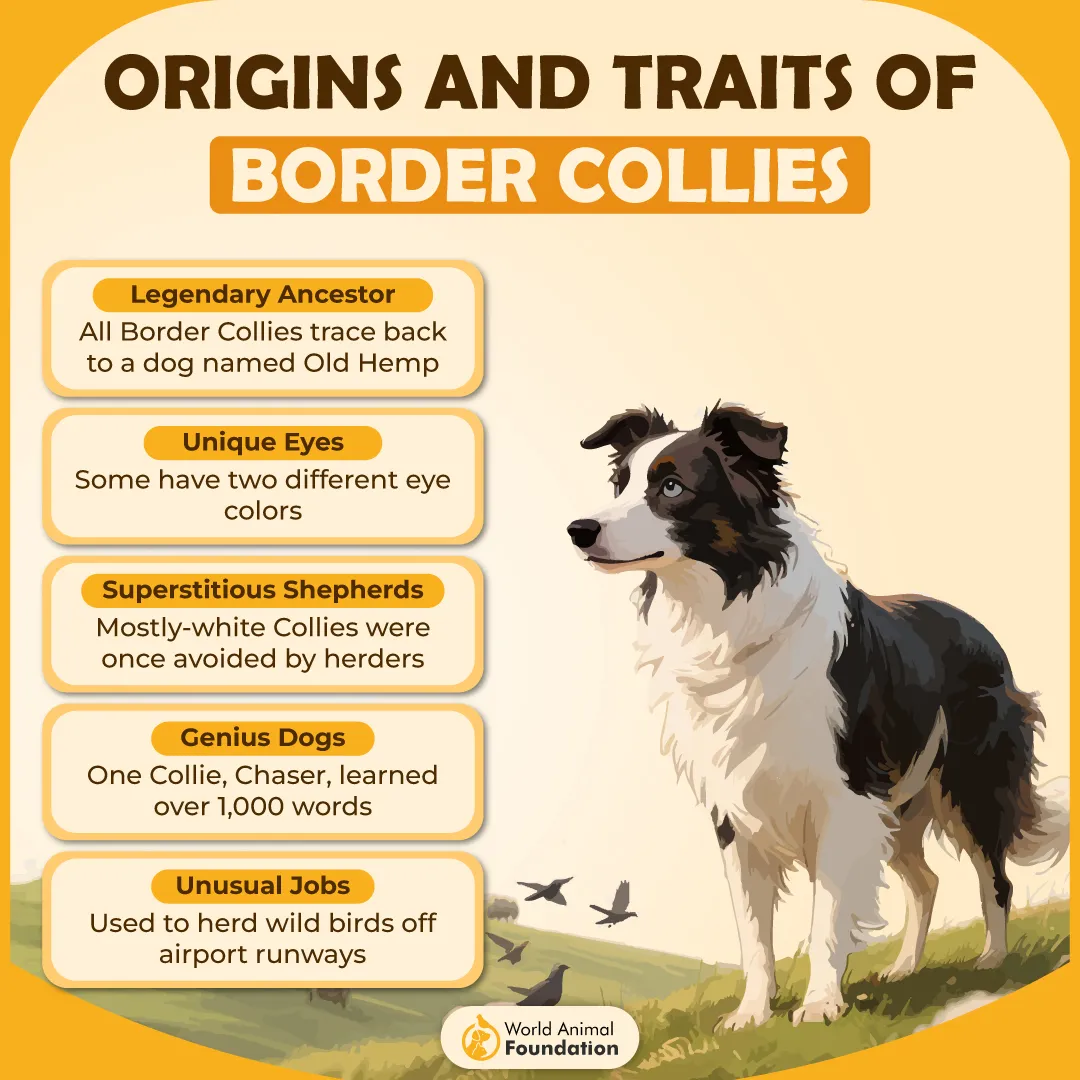
That intelligence comes bundled with an obsessive instinct to herd. Border Collies will fixate on anything unpredictable or out of order: moving children, other pets, even rolling objects, and won’t hesitate to stare, chase, and nip to bring things under control. Managing this lightning-fast, laser-focused breed is no small feat.
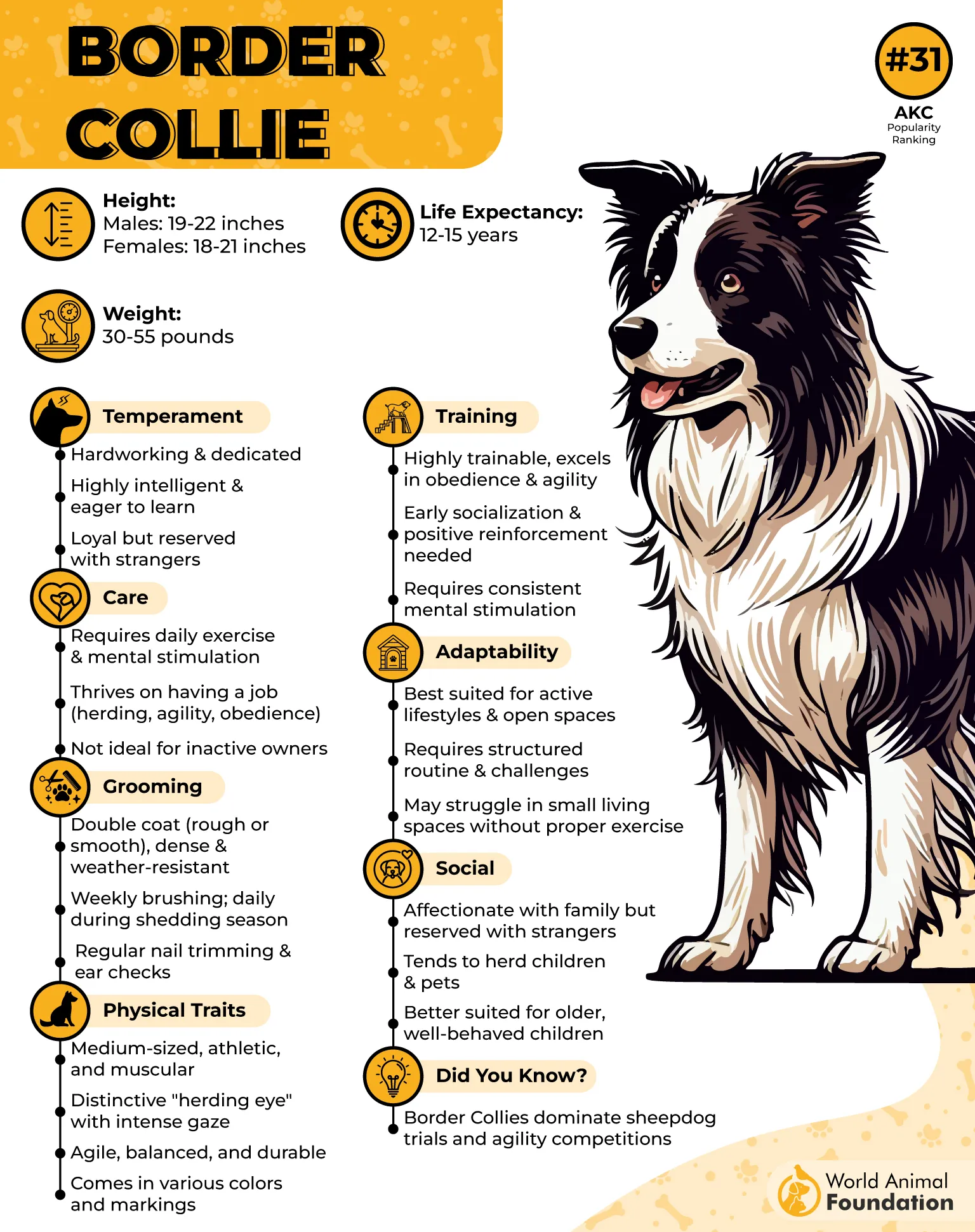
Constant mental stimulation, structured training, and regular high-intensity activity are non-negotiable for a Border Collie. Without an outlet for that drive, their energy turns inward, and that’s when problems start. If you already have small pets or animals at home, this breed may not be the right fit.
4. Greyhound
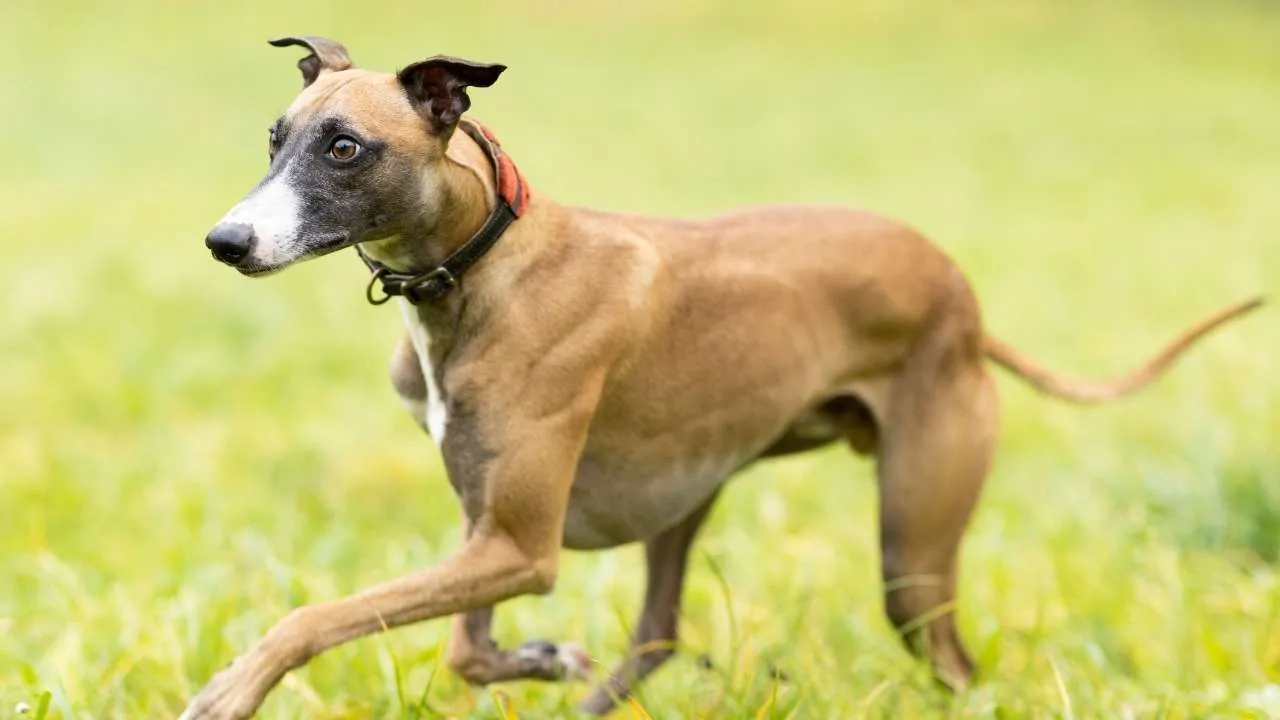
This full-speed racehorse or Ferrari of the dog world is yet another sighthound that was bred centuries ago for chasing down rabbits and hares. Depicted in the hunting scenes since the days of ancient Egyptians and Greeks. This favoured floof of the elite and upper class is a dynamo.
Blessed with exceptional eyesight that can detect motion in split seconds and an aerodynamic build that helps it reach 45 mph, this greyhound is a whole different vibe.
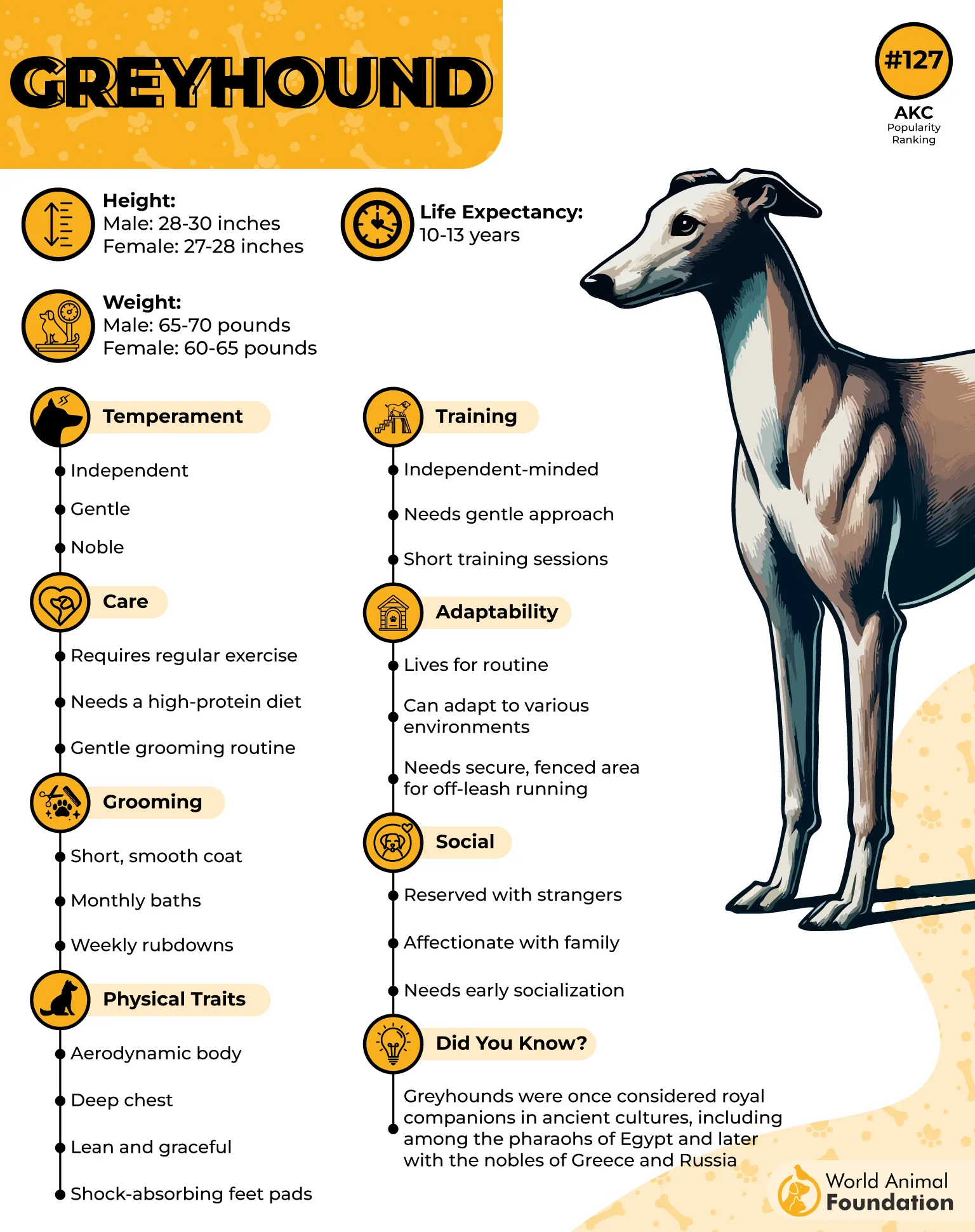
VCA Animal Hospitals says it is elegant and noble, but this sprinting track star is not an ideal choice for a multi-pet household. Even though other dogs that are gentle companions might live happily beside your numerous other pets. But this dog’s prey drive will prove to be a humongous curveball for your multi-pet ownership dream.
Hence, if you can’t keep up with this sassy pup of the canine kingdom, then you better not pick this from the many dogs available at your local shelter. Moreover, for those who love a challenge, leashes and enclosed yards are absolutely essential for the safety of these turbocharged speedsters.
5. German Shepherd
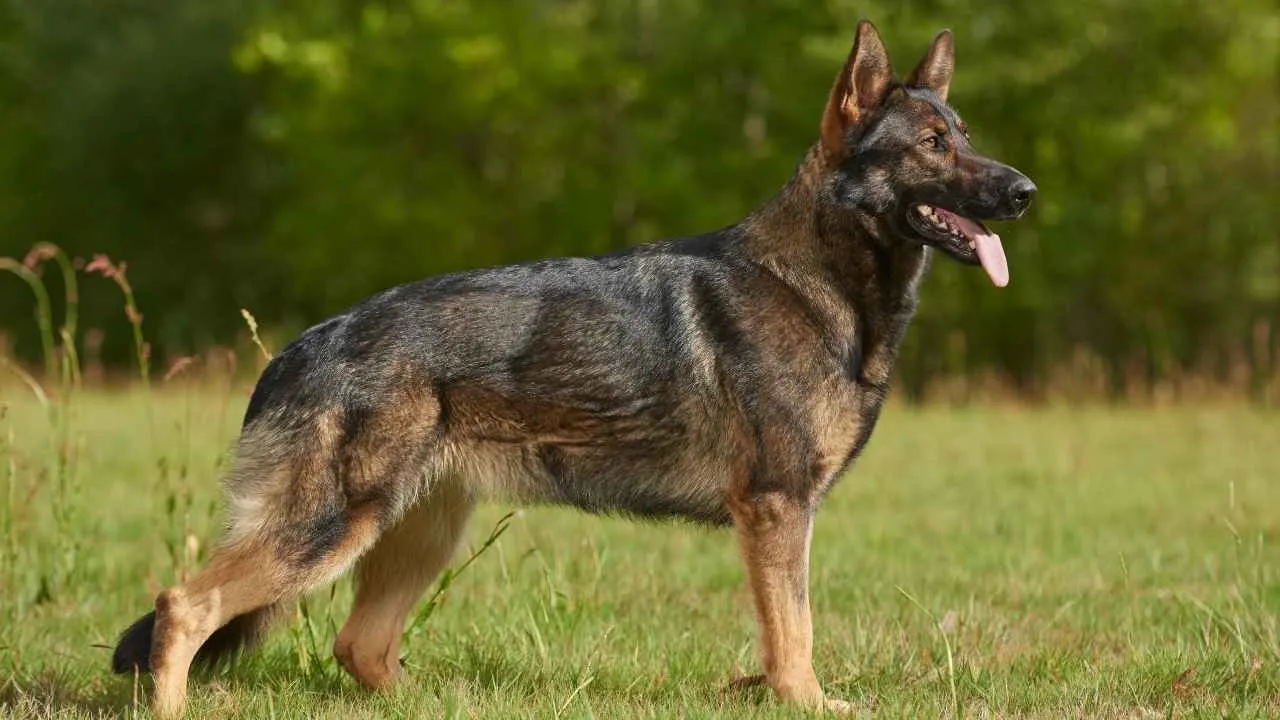
The German Shepherd is one of the most capable and versatile dog breeds in the world, and one of the most demanding to own. A legendary K-9 officer and guard dog, this breed is an overachiever by nature, with a strong prey drive and an intelligence that keeps it perpetually several steps ahead.
Serious and deeply dedicated, the German Shepherd thrives when it has a job to do. It can endure hours of demanding work without tiring, leading search and rescue missions, assisting law enforcement, hiking all day, and still having energy to spare.
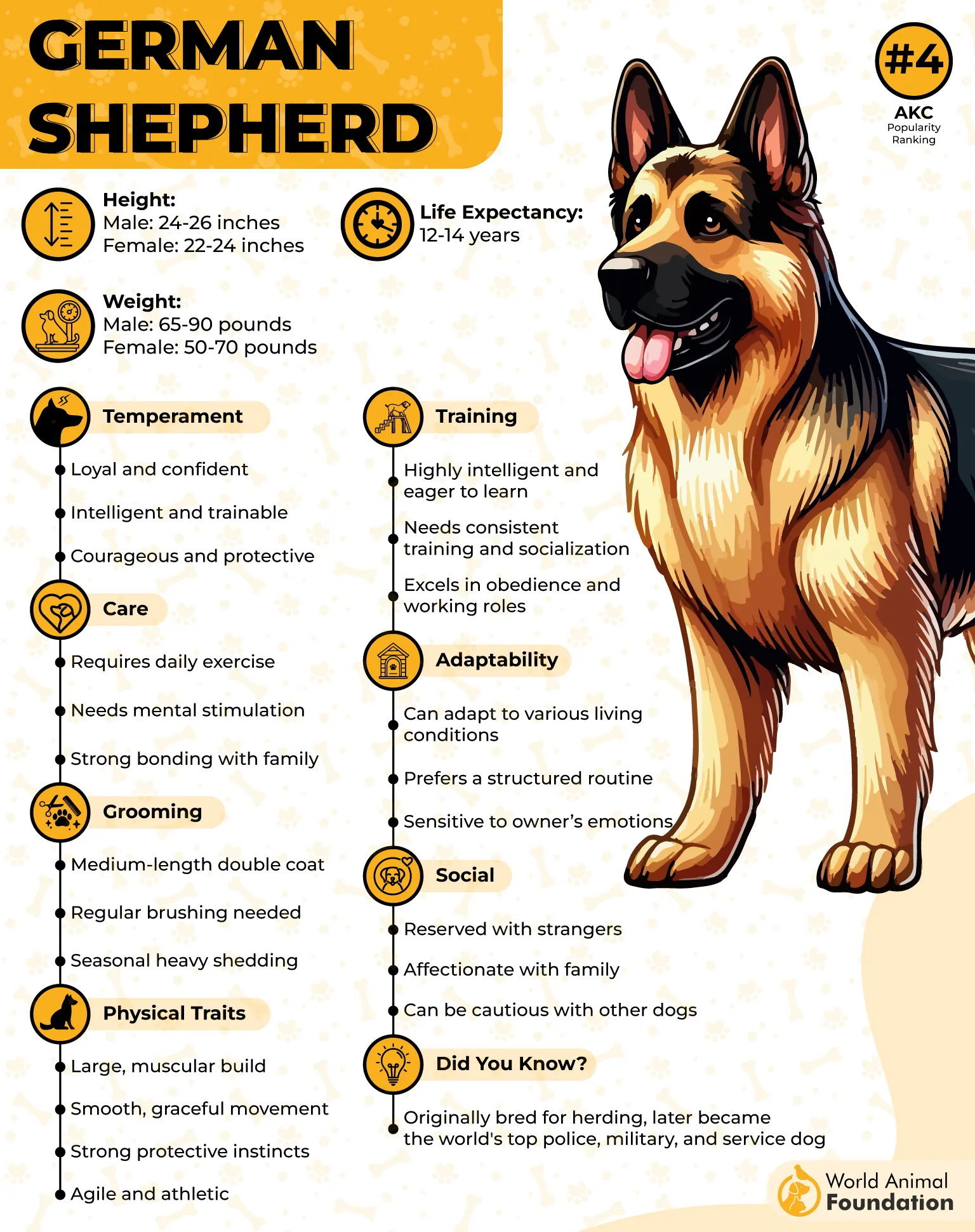
As the Continental Kennel Club notes, it is deeply devoted and affectionate toward its family, but its naturally protective instincts mean professional training is not optional.
Originally bred as a herding dog, the German Shepherd can become frustrated, anxious, and destructive without proper training, early socialization, and a consistent outlet for its energy. Boredom manifests in ways that are hard to ignore: chewing, digging, house soiling, and excessive barking are all common results.
6. Siberian Husky
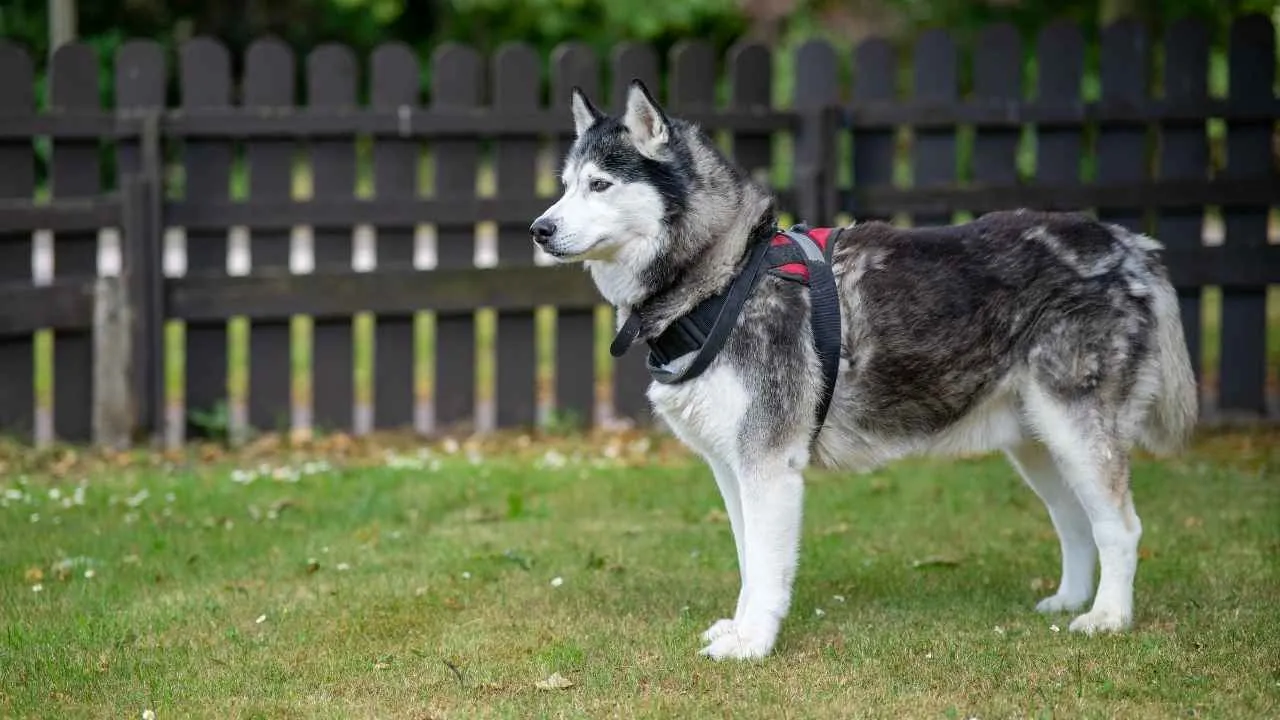
Long ago in Northeast Asia, the indigenous Chukchi people developed the Siberian Husky as a sled-pulling companion, and its striking wolf-like appearance makes that heritage unmistakable. Today, the breed is wildly popular for its extroverted, goofy, and playful personality.
It’s easy to see why the Husky wins hearts instantly. The piercing blue eyes, the wolfish looks, the endearing howling- it’s a lot to resist. But for new or inexperienced dog owners, the Siberian Husky comes with a serious caveat.
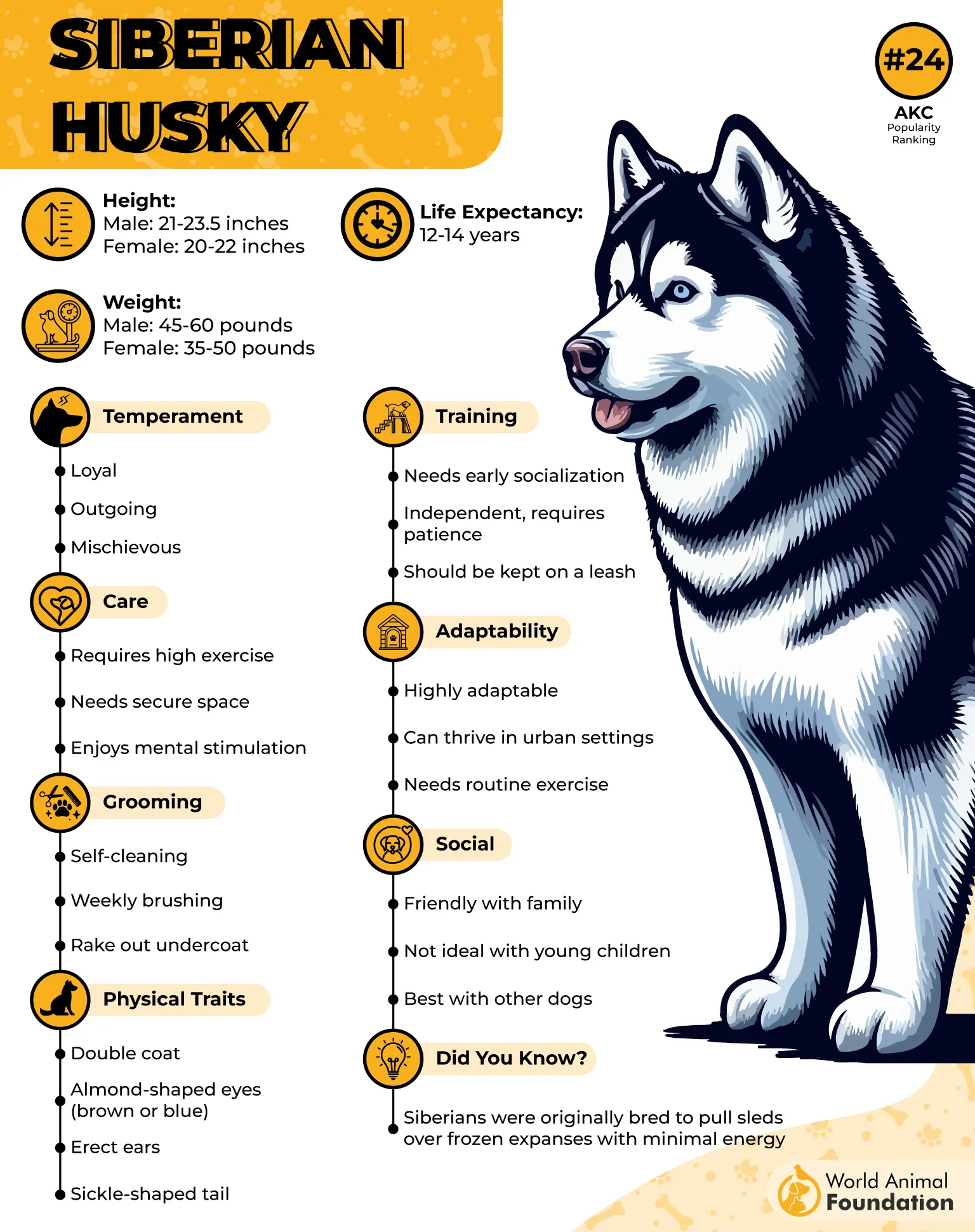
This is an escape artist with a powerful prey drive. Without a securely fenced yard, consistent training, and plenty of vigorous exercise, a Husky will find its own entertainment: digging under fences, jumping over them, and taking off after anything that moves. Left unchecked, that instinct can pose a real risk to neighbourhood cats and local wildlife alike. Leashing in public spaces is non-negotiable.
The Husky is an extraordinary dog, but it needs an owner who can match its energy and commitment. Underestimating that is where most people go wrong.
7. Rhodesian Ridgeback

The Rhodesian Ridgeback was literally developed for hunting and tracking lions across the African savannah, and everything about this breed reflects that heritage. Bold, fearless, and physically imposing, the Ridgeback is not a dog for the faint-hearted or the inexperienced.
Built for the chase, this powerful and indomitable breed carries a dignified, athletic presence and a rich indigenous African ancestry. Like most dogs with an intense prey drive, it needs a confident, experienced owner it can respect, someone who can provide firm, consistent leadership without resorting to harsh methods.
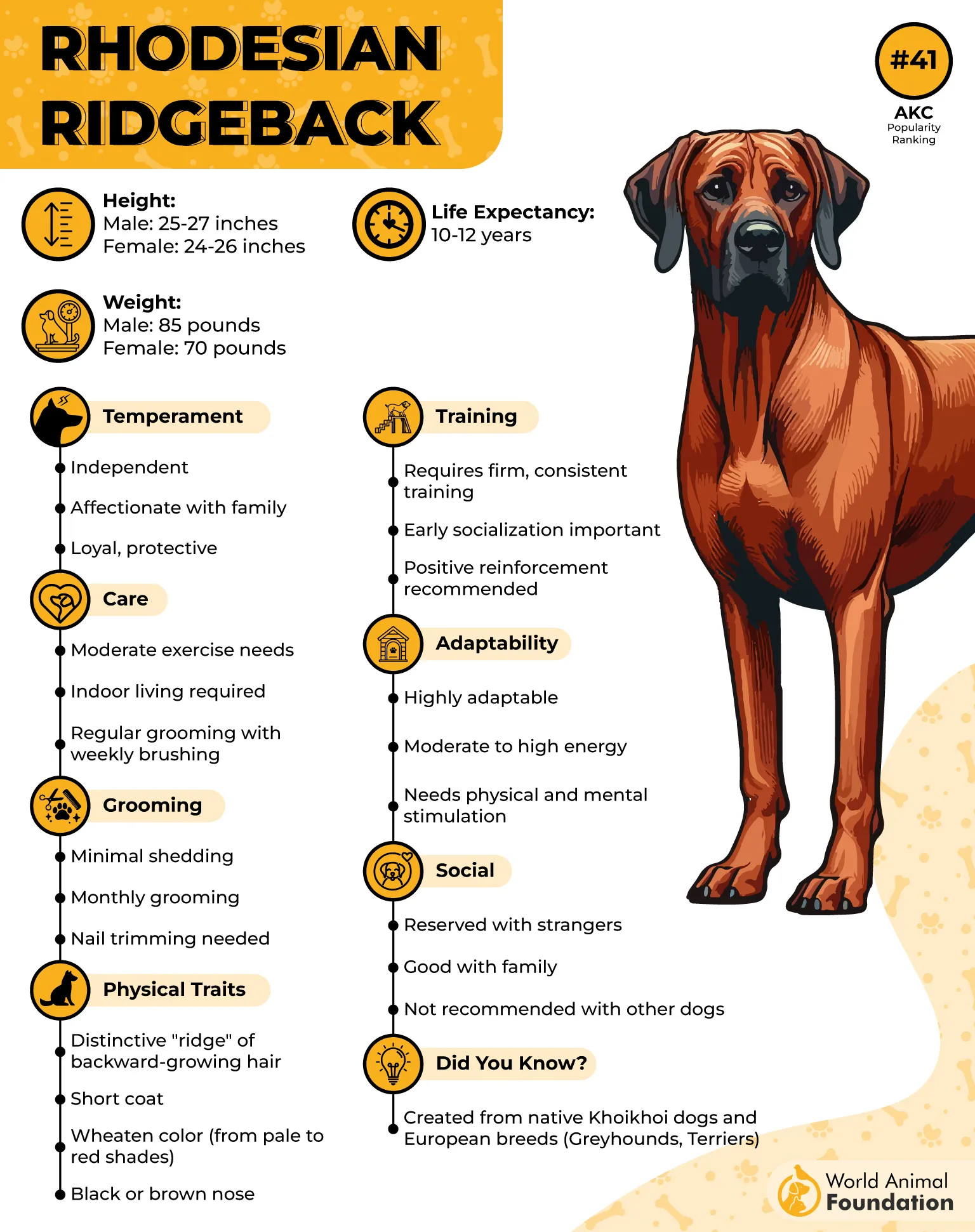
Ridgebacks are adventurous and vigilant by nature, thriving on physical challenge and mental stimulation. A committed owner who can provide structured training, professional guidance when needed, and plenty of outlets for that energy will find a deeply loyal and rewarding companion. An owner who can’t match that commitment will find the opposite.
If you don’t yet understand what a high prey drive looks like in practice, the Rhodesian Ridgeback is not the place to start.
Conclusion
To wrap up, prey drive exists on a spectrum, from subtle hints of hunting behaviour to an almost uncontrollable compulsion to chase. Breeds selectively developed for herding, retrieving, pointing, vermin control, or scent tracking will naturally sit higher on that spectrum than your average lap dog. That’s not a flaw; it’s simply what they were built for.
No dog with a high prey drive should be left unsupervised around small animals or young children. The most effective approach is redirection; channelling that instinct constructively through games of fetch, tug of war, dog sports, or structured tasks that give the drive a productive outlet.
Consistent training, adequate physical exercise, and mental stimulation are what keep predatory instincts manageable day to day. The right environment matters just as much as the right training. And starting early makes all the difference, because how a dog’s prey drive shows up in everyday life has everything to do with how it’s shaped from the beginning.
