




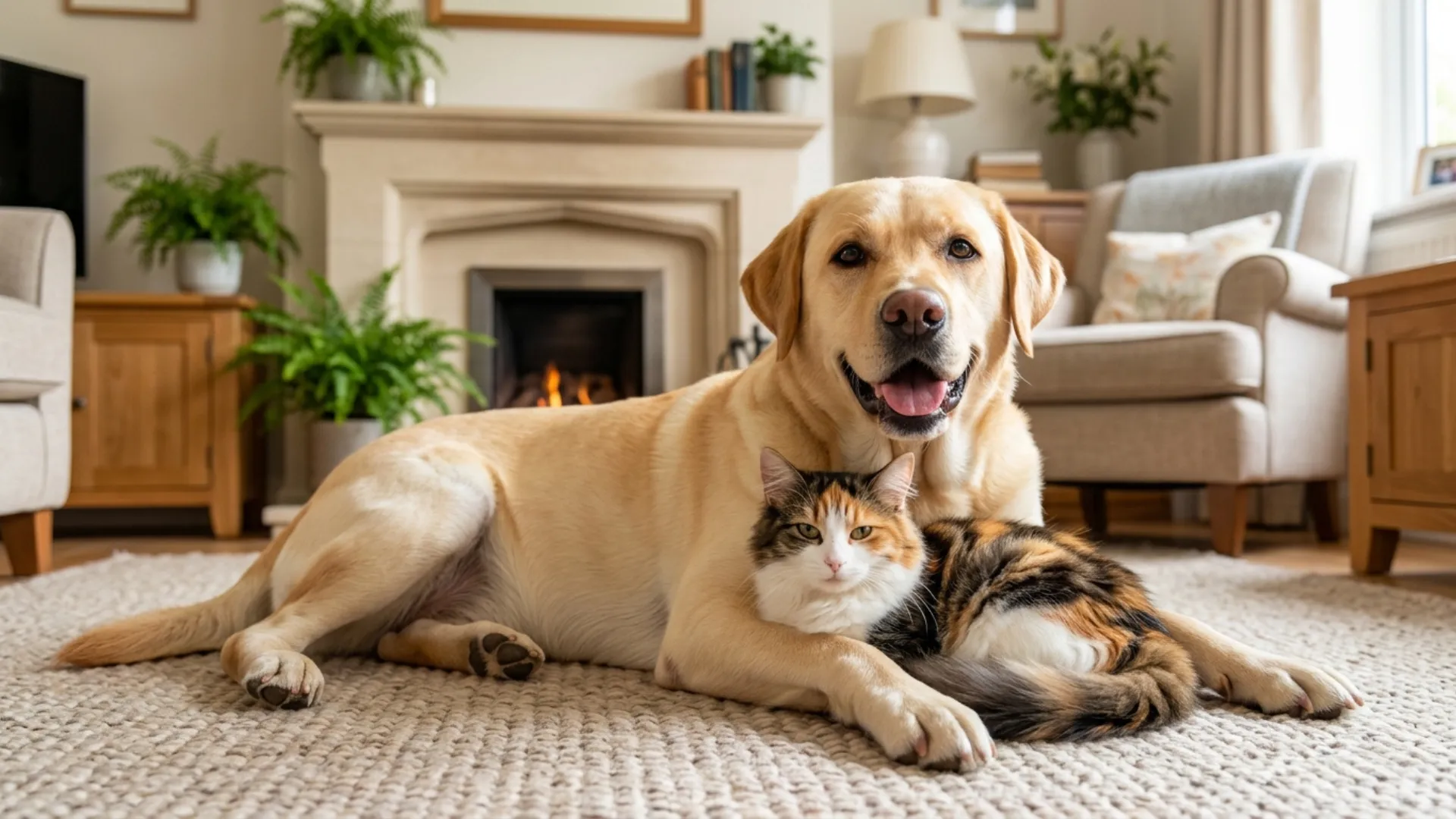
A peaceful home with both a cat and a dog isn’t just a fantasy; it’s genuinely achievable when you pick a breed with the right social traits for your household and take the time to introduce both animals carefully. Some dogs are naturally easygoing around other animals, while others may end up chasing anything that moves.
Certain dog breeds do tend to get along better with cats, and that usually comes down to the dog’s temperament, energy level, and overall social nature. That said, breed alone is never a guarantee of friendship.
Every dog and cat has its own personality, and the goal here isn’t instant cuddling; it’s building enough trust that both pets can share a room or a couch without starting a full-blown furry civil war.
Note: Cats or dogs that have already been raised around other pets tend to adapt more quickly to change, and the same goes for puppies and kittens, who are naturally more adaptable and can even grow up treating each other like siblings if introduced early enough.
If you already have a cat at home and you’re thinking about adding a dog, choosing the right breed will go a long way toward building a genuinely harmonious relationship between the two.
Dog Breeds That Live in Harmony With Cats
1. Labrador Retriever
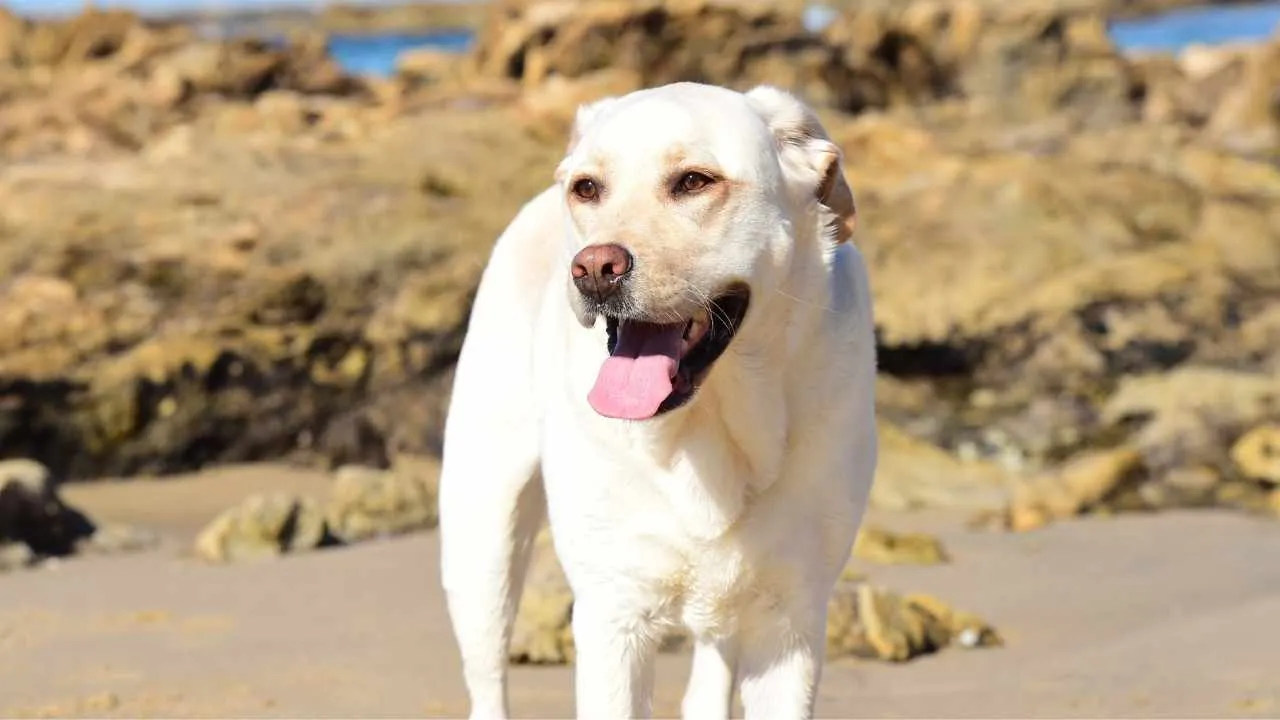
Descended from the now-extinct breed, the St. John’s Water Dog in Canada, the Labrador has a retrieving history. Its primary purpose was to haul nets for the fishermen. It has a soft mouth and carries objects without physically damaging them, according to Chewy.
Because of its low prey drive, it is non-aggressive towards other animals. With its high level of trainability, it can quickly learn obedience training. It remains unbothered by the cat’s assertive presence; it backs off rather than retaliating
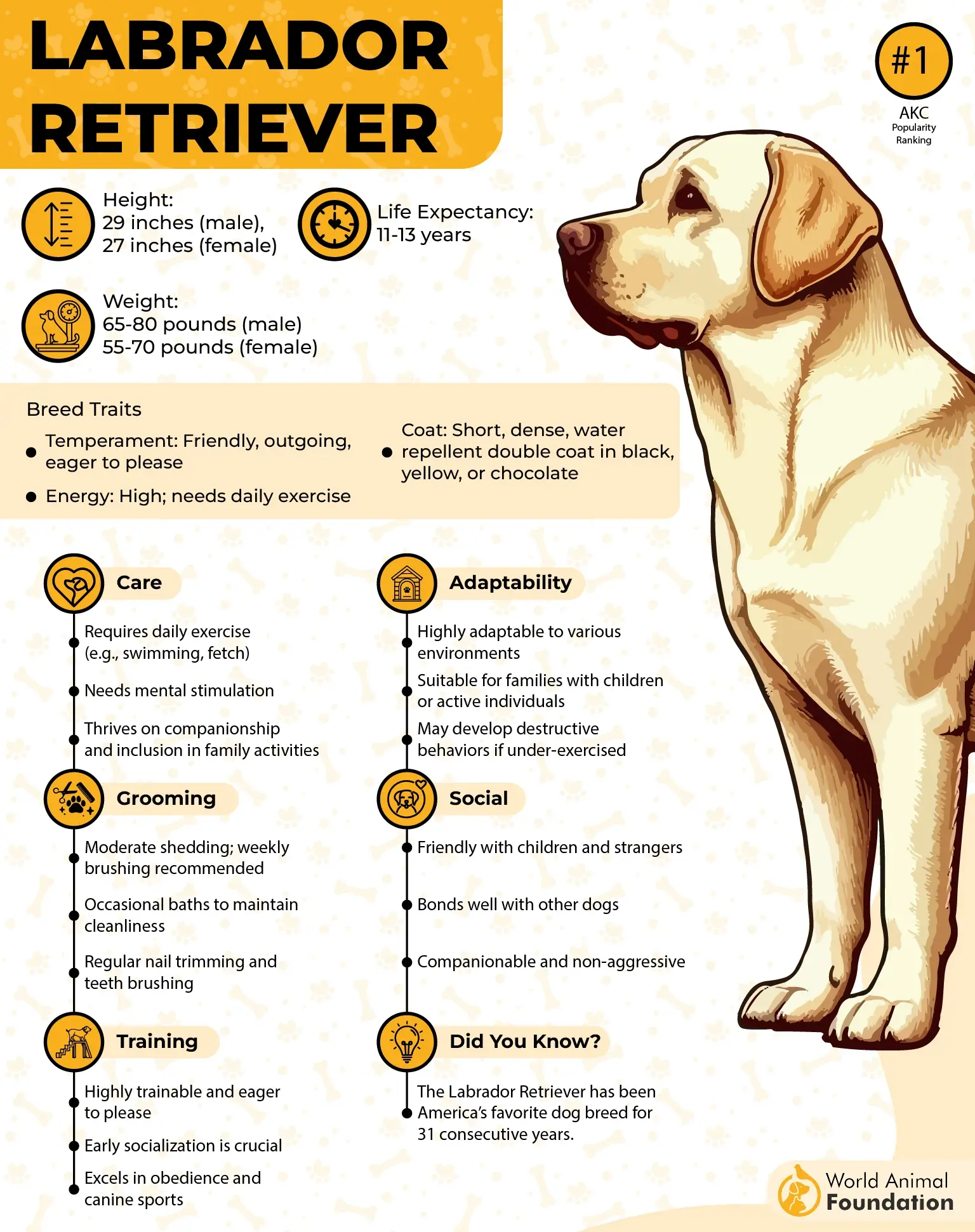
It has a calm neurophysiology that registers the sudden dash of the cat across the room as a playful prompt. The breed lacks biological drive to dominate space.
2. Beagle
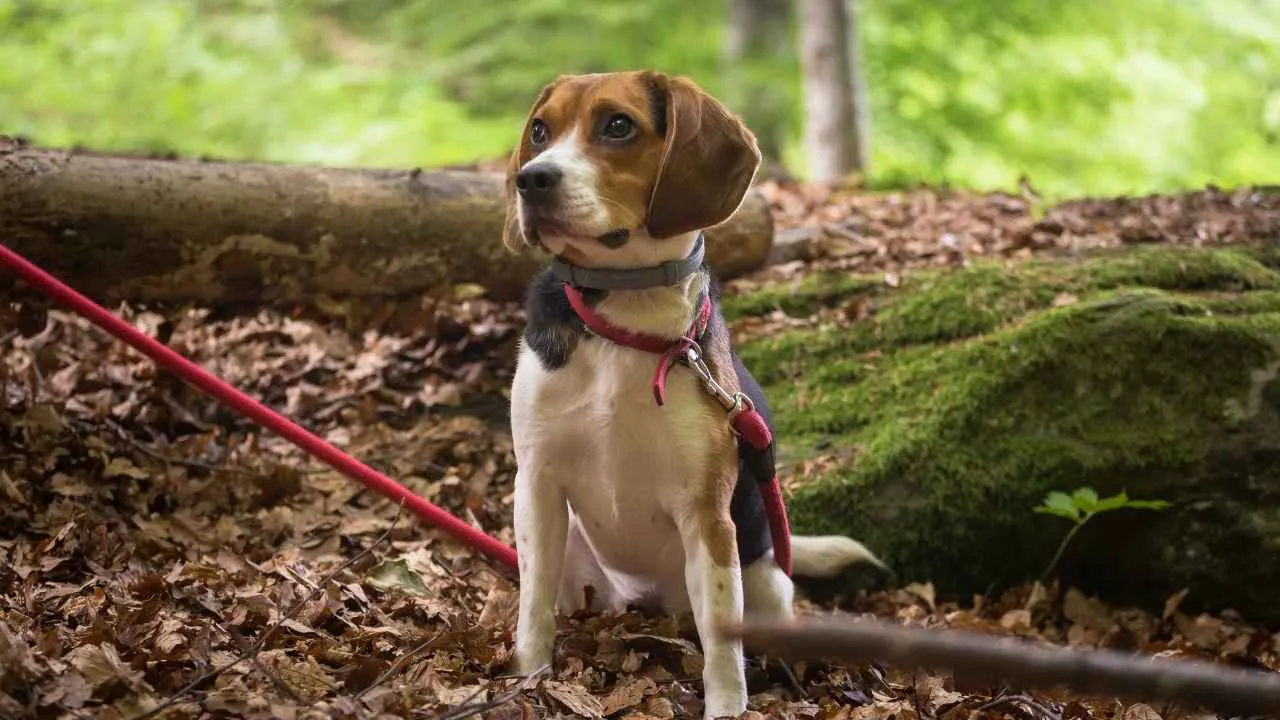
The history of this ancient breed dates back to Greece in 400 BC as a hunting dog. Then, it was interbred with the local British hounds. The modern-day Beagle is the result of crossing the small Bloodhound, the Foxhound, and the Harrier. This cat-friendly dog breed is known for its strong sense of smell and stamina.
With its pack mentality, it considers a cat a family member if socialized early. It maps out and accepts a cat’s individual scent. Because of its chasing instincts, it may run after cats, which can be controlled by basic obedience training. However, it was built for low-speed tracking, making it less prone to reactive lunges.
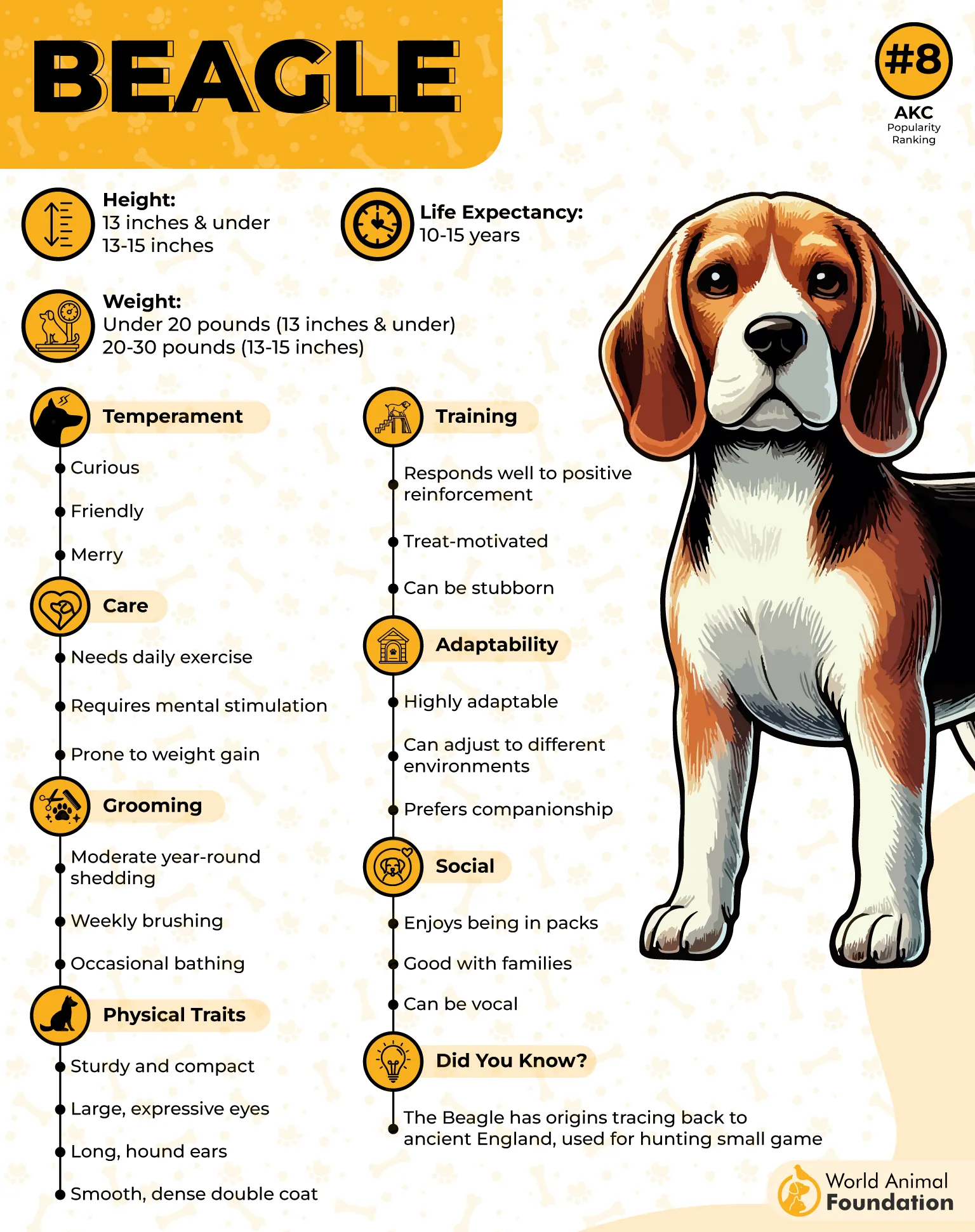
Food motivation helps it be introduced to cats at an early age. Scent familiarization first is important before introducing them face-to-face. Make the cat feel safer and let it choose its favorite spot in the house.
3. Golden Retriever
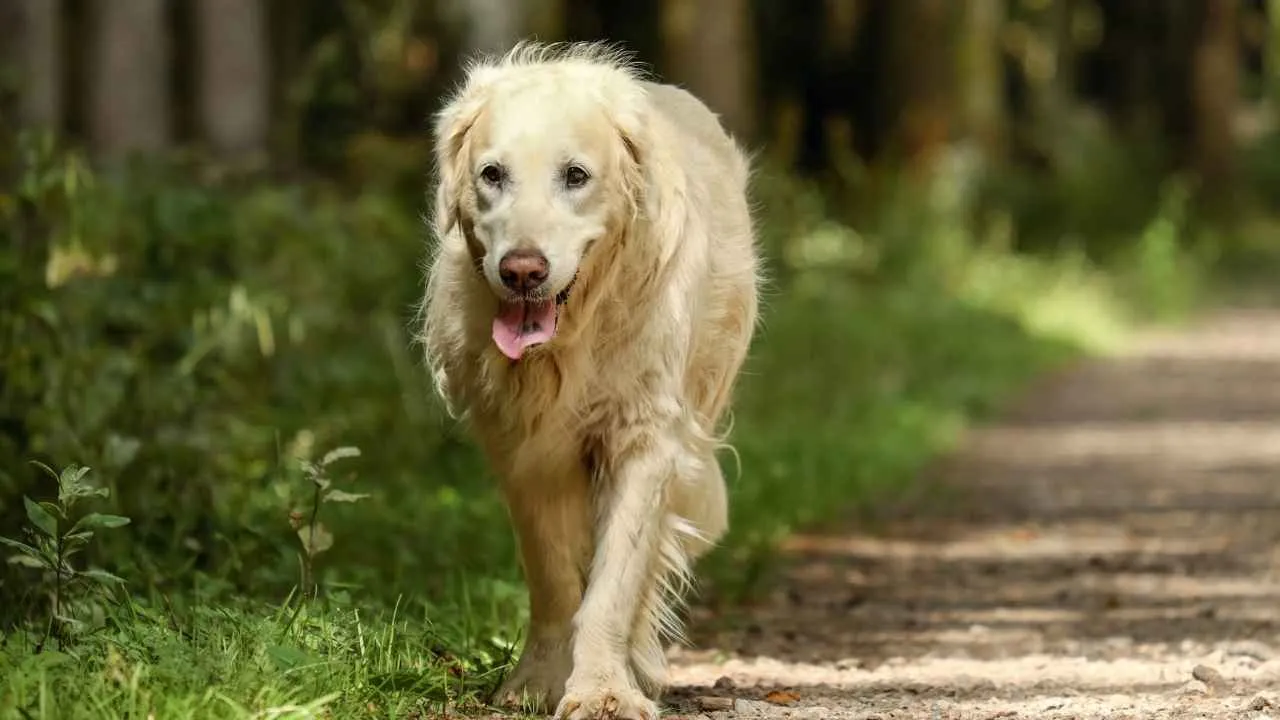
This medium-to-large dog was originally bred in Scotland as a retrieving dog by Sir Dudley Marjoribanks in the 19th century. The breed was developed by crossing the Flat-coated Retriever and the Tweed Water Spaniel. Today, the dog is widely kept as a companion dog, as reported by Wikipedia.
It has a high emotional intelligence and quickly picks up a cat’s micro-expressions (flattened ears and flicking tail). It relaxes its muscles, lowers its body, and assumes a non-threatening posture when a cat displays discomfort or claims a shared space.
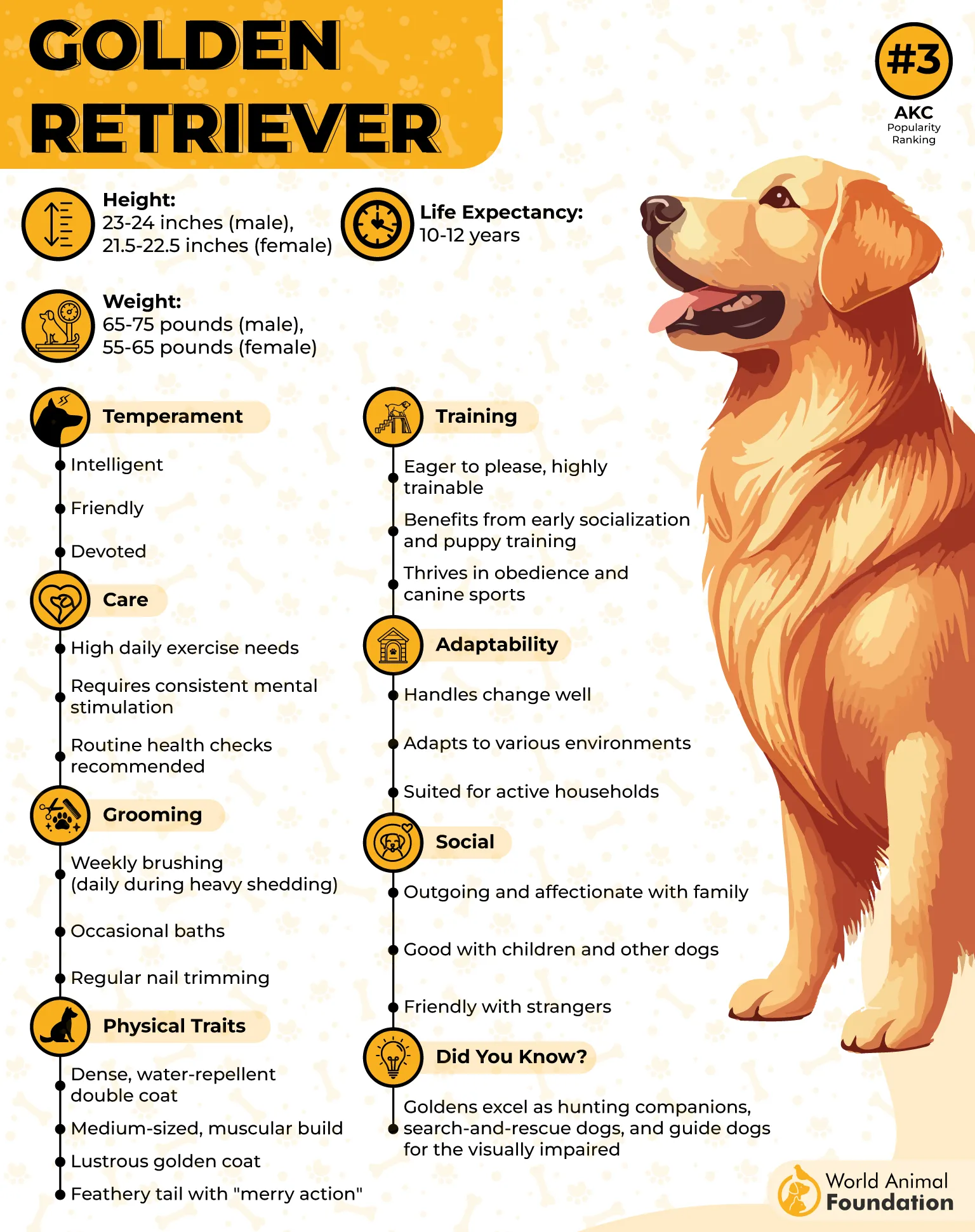
Start introduction at puppy and kitten level. Establish a dog-free sanctuary since cats may want some alone time at some part of the day. Feed your cat and dog separately. Scent swapping is another good approach.
4. Pug

Descended from Mastiffs, the Pug was developed centuries ago and gained popularity in the Tibetan monasteries and arrived in China in the 18th century. The name comes from a Latin word, ‘Pugnus,’ which means fist, as its head resembles a clenched fist.
This smaller dog breed is a velcro breed and has cat-like behavior: requires alone time, values home comfort, and enjoys relaxed cohabitation. This aligns perfectly with the cat’s personality. Because of its low-to-moderate metabolic energy and is prone to quick exhaustion that matches the cat’s resting patterns.
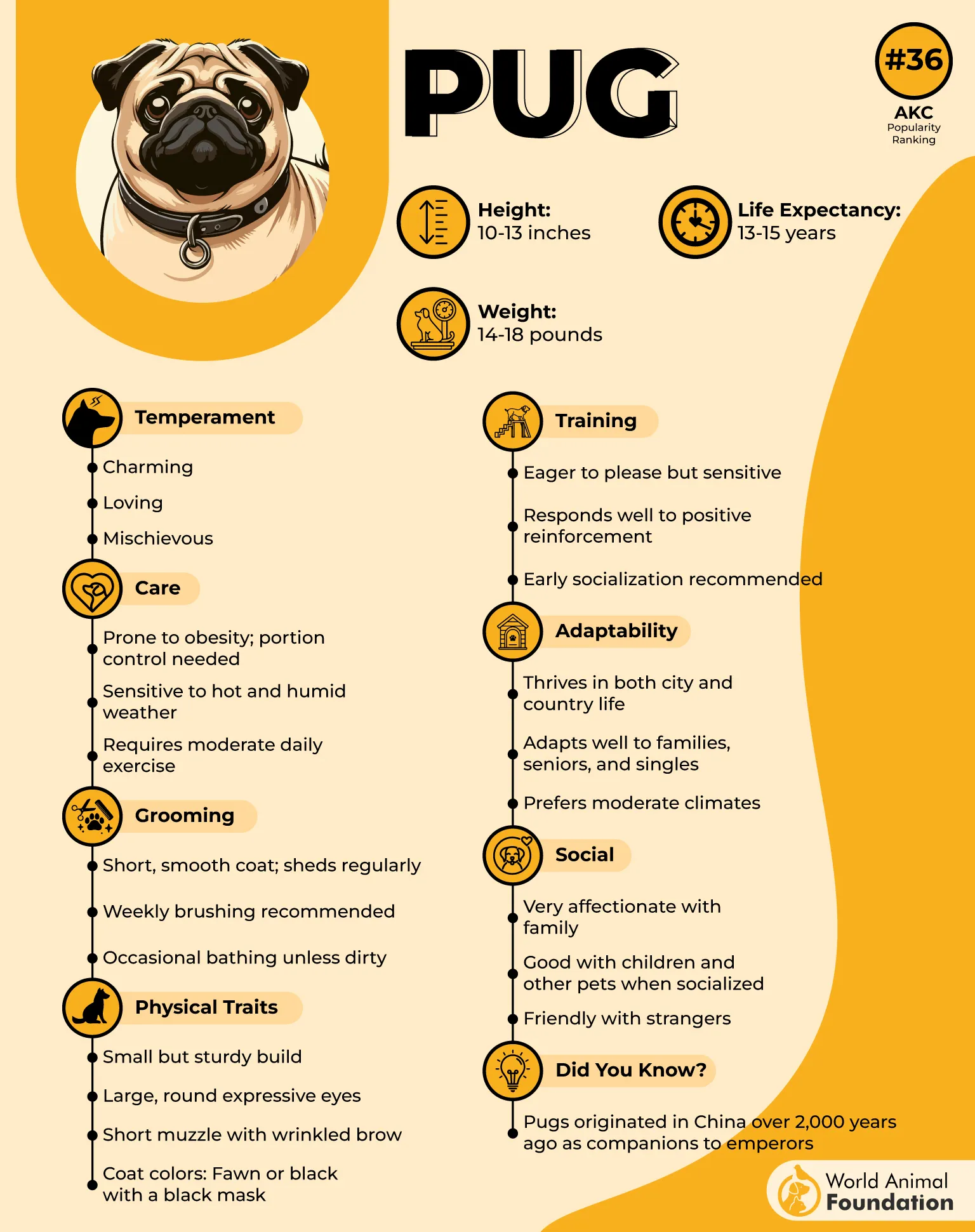
Specify a personal space for cats from the beginning. Start introductions at a slow pace and allow both animals to see each other in a controlled manner. This small dog may be fearful or excited around cats that may lead to chasing when there is no proper socialization.
5. Maltese
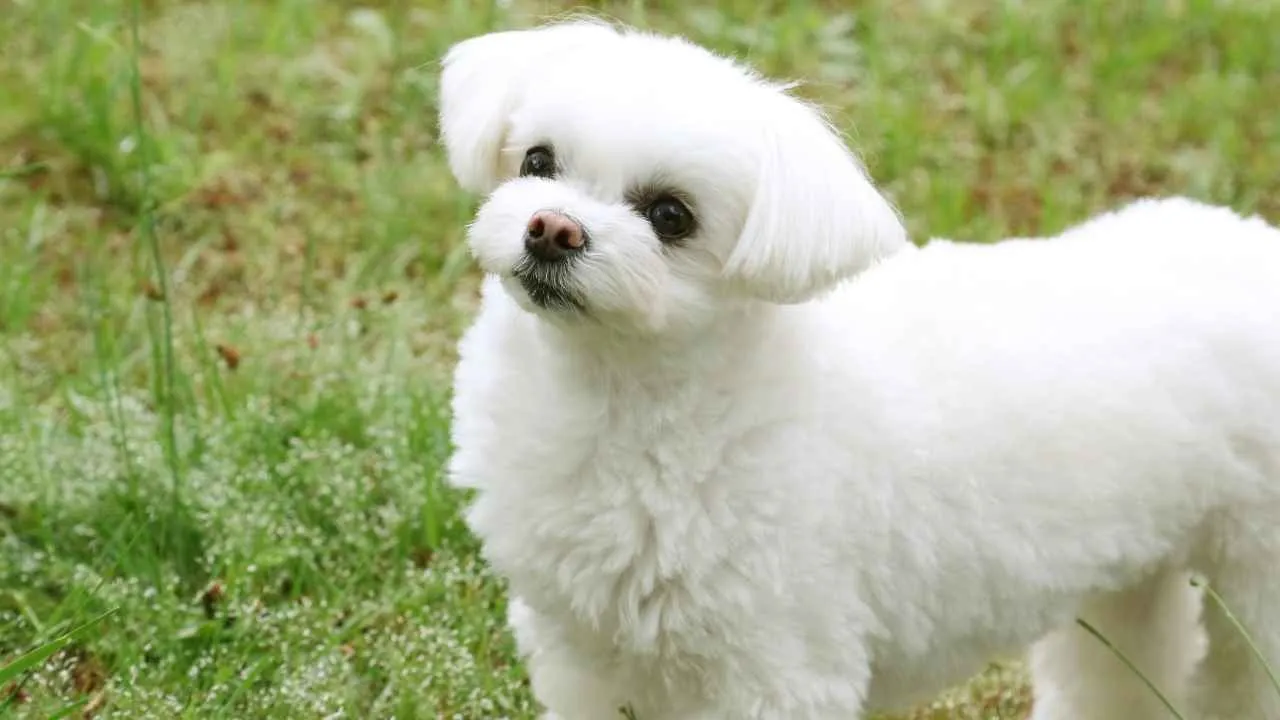
Originally bred in the Maltese region of the Mediterranean Sea, the breed was loved by the Greeks during the 4th and 5th centuries. Once a status symbol among Italian royals, the Maltese was revived in China when it was crossed with native breeds. Later, it was adopted by European royalty, including the Queen of Scots and Marie Antoinette, as per CKCUSA.
Since the breed weighs under 7 pounds, it is almost equal to or smaller than the feline companion. A well-socialized Maltese tends to back off when a cat raises its paw or asserts its boundary. Bred strictly as a lap dog, the breed lacks a pronounced hunting instinct. However, it may investigate out of curiosity initially.
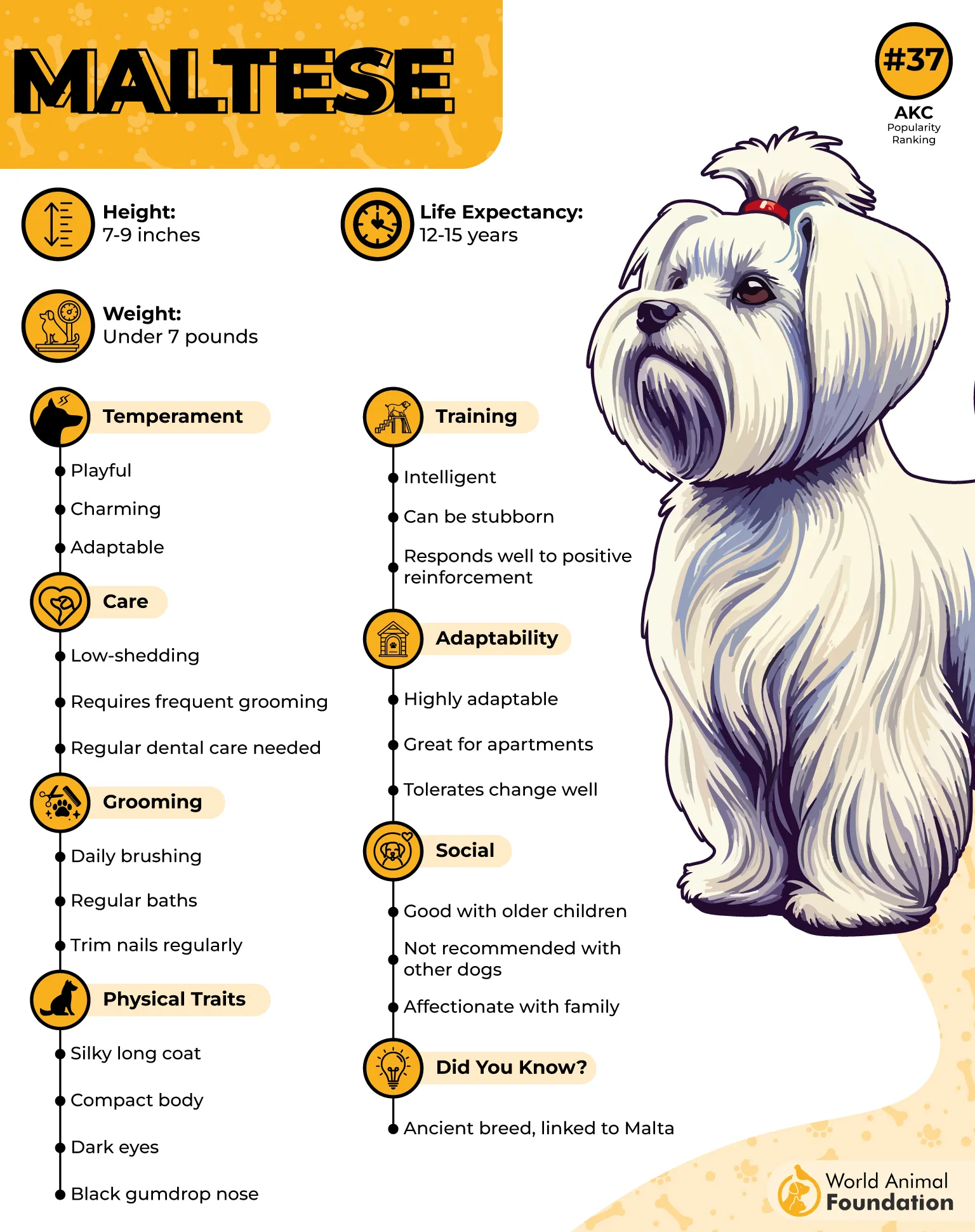
This best dog thrives on human companionship and does not carry aggressive posturing, such as dominant mounting, staring, or stiffened legs. It shows short bursts of energy followed by a prolonged resting phase.
6. Boston Terrier
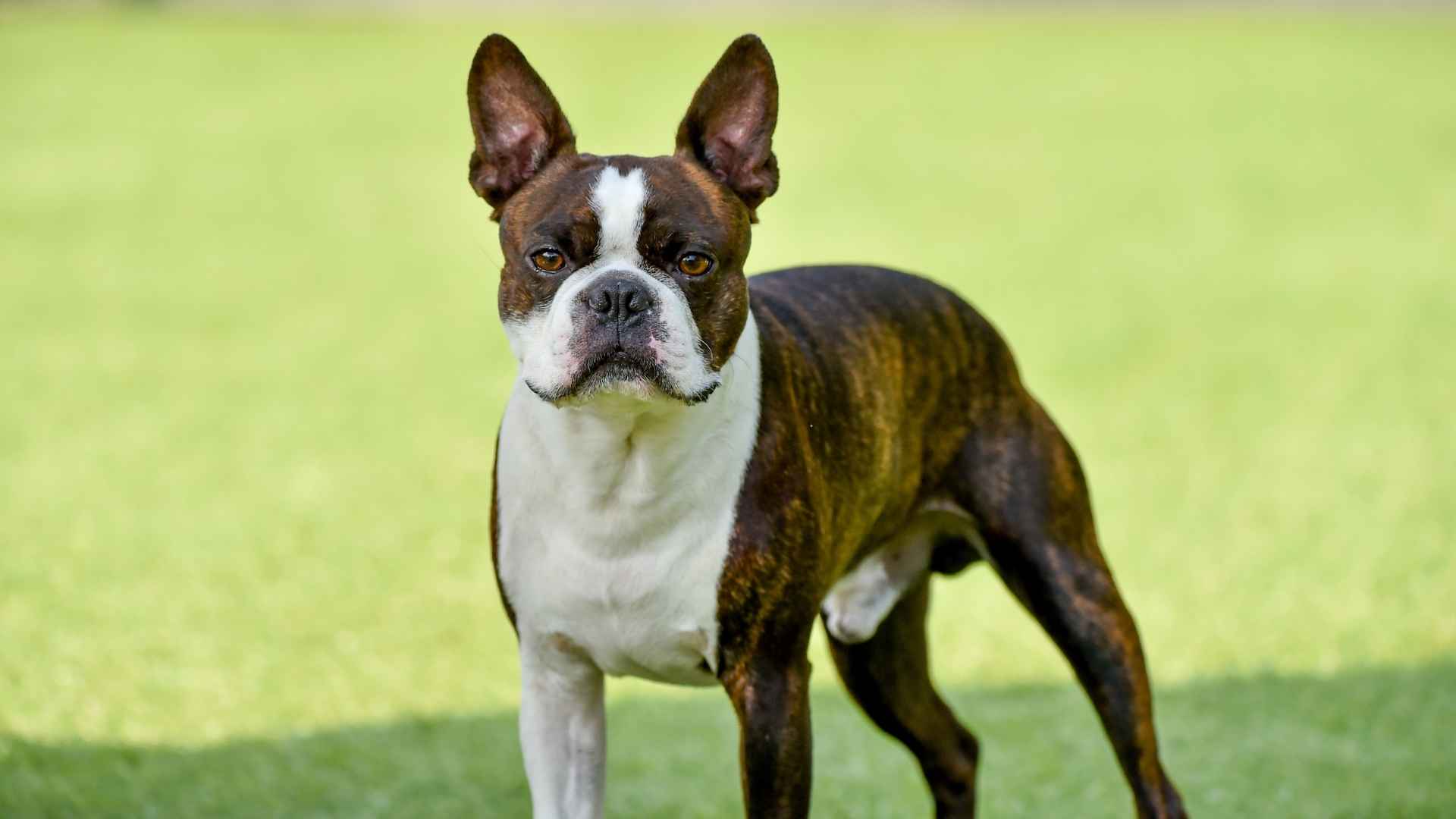
Robert C. Hooper is credited with developing the breed from a White English Terrier and a Bulldog mix breed. This dog was interbred with a small, white Bulldog-type female dog. This resulted in a white dog with a dark tuxedo on the chest, the Boston Terrier, also known as the ‘American Gentleman.’
The chasing behavior towards cats is solely a play-driven motivation rather than hunting instincts. Because of its gentle disposition, the dog respects the boundaries of the housemates. Being brachycephalic in nature, the sociable breed may get tired easily after a short activity.
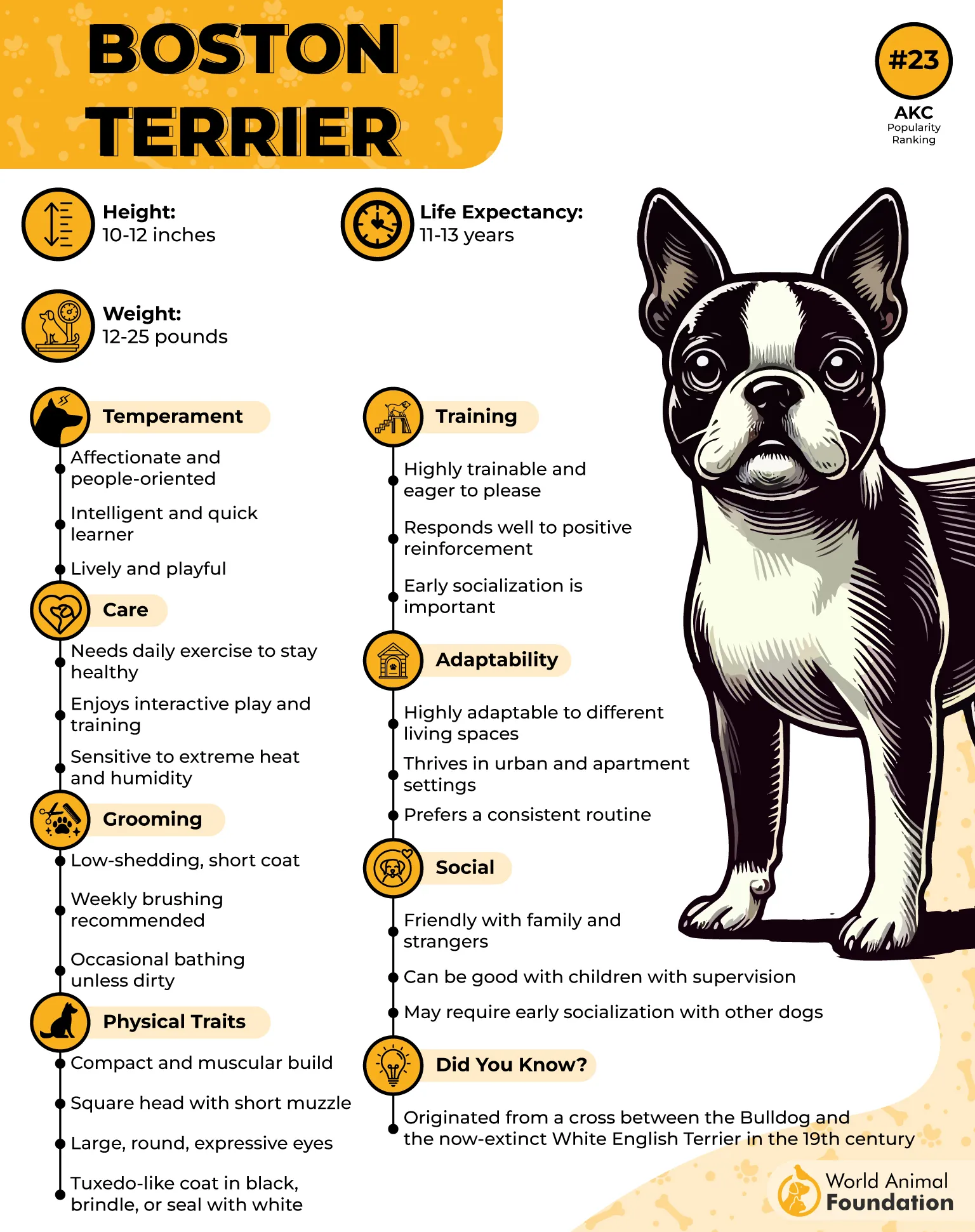
It has an easygoing nature and responds well to positive reinforcement. Keep the dog and cat separated initially. Keep the gate between them unless both are comfortable with each other.
7. Basset Hound
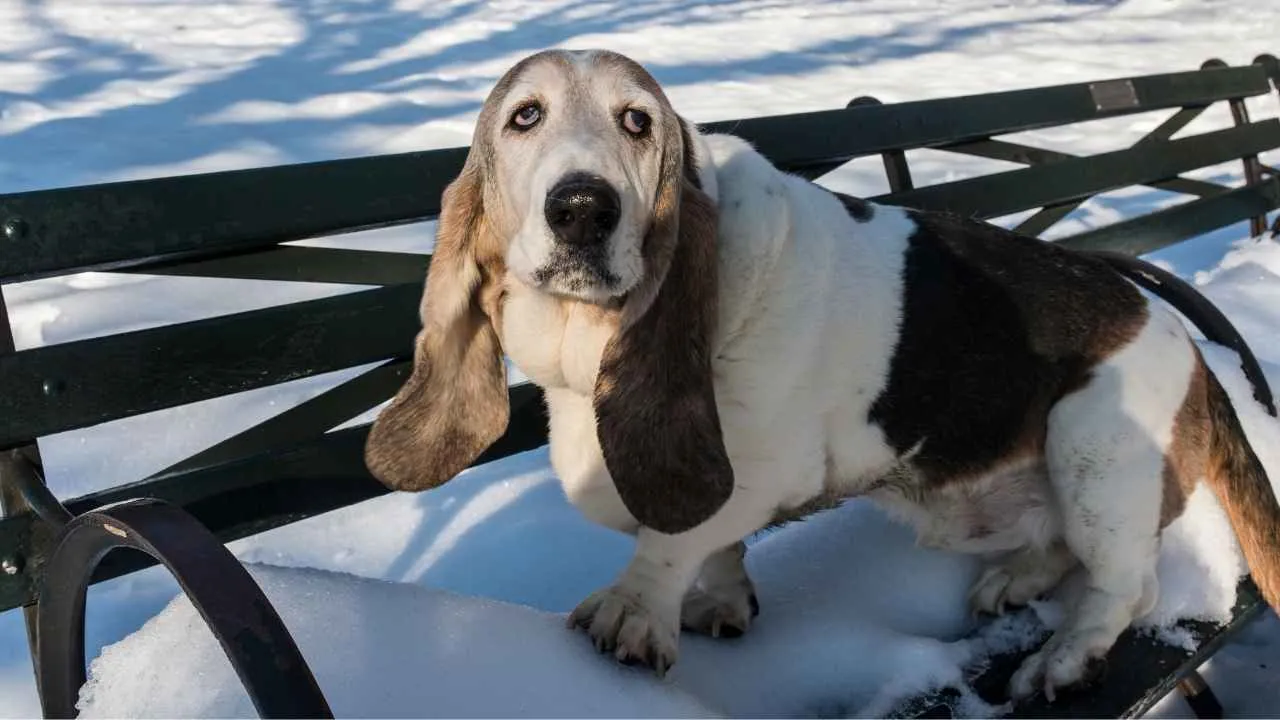
The short-legged scent hound was originally developed in Britain from now-extinct French basset breeds. The primary purpose was to hunt rabbits and hares using its strong sense of smell and slow pace. The name literally translates to ‘low breed,’ because of its low-slung body.
Because of these biological reasons, the breed has unhurried movements indoors. Hence, it does not swiftly dart or bound across the room. It possesses a distinct behavioral “off switch” and has a gentle temperament, allowing it to coexist peacefully. Despite having a hunting history, the breed was not built to catch, attack, and kill prey.
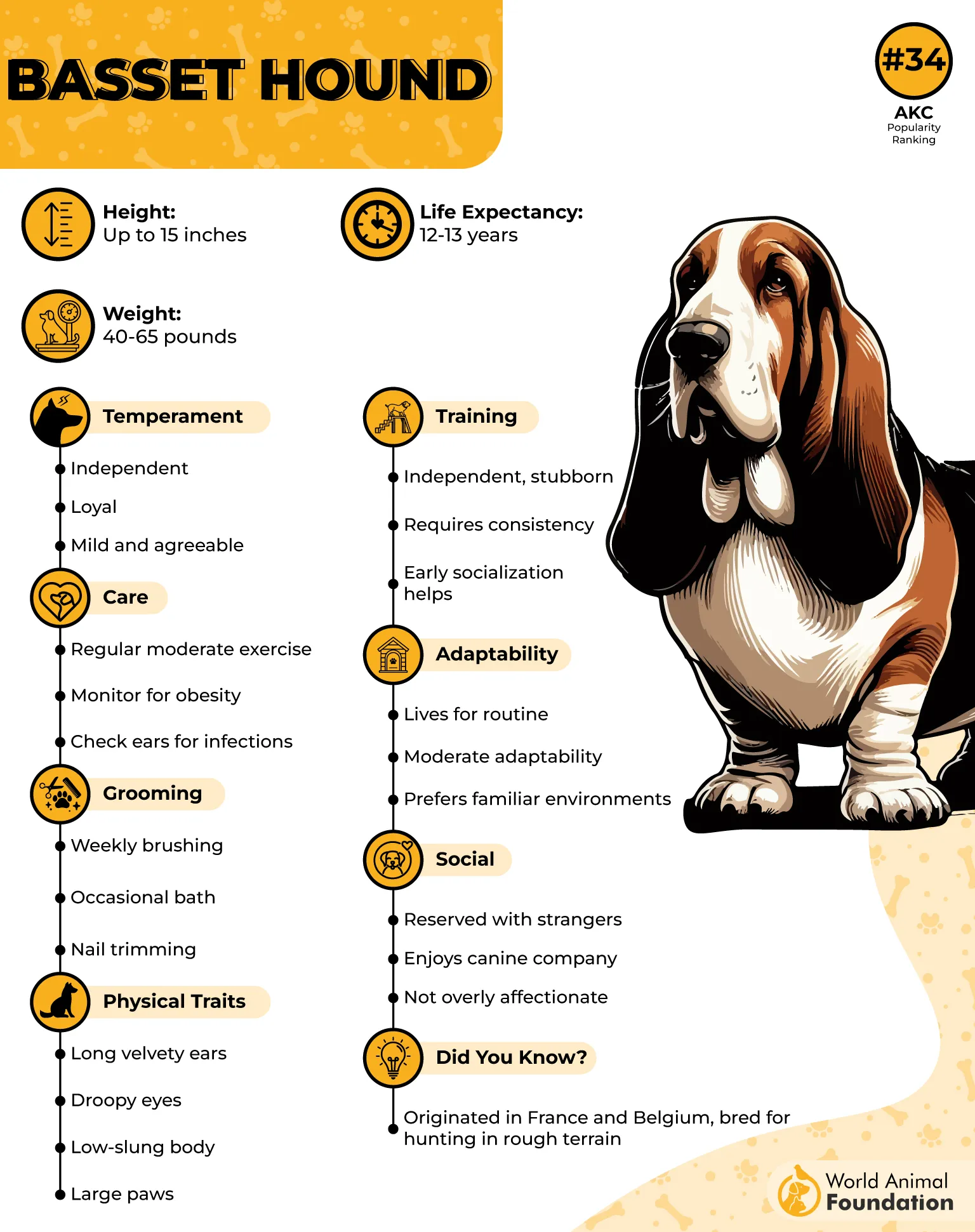
The short and heavy bones legs make it a dwarf breed, and it can not exhibit high-velocity sprinting. It has high tolerance for minor stressors, making it resilient against a cat’s hissing, swatting, or territorial behavior.
Conclusion
Living with a cat does not mean giving up on having a dog. The right match can turn a mixed-pet home into a sweet little team. Labrador Retrievers and Golden Retrievers bring friendly, social energy, while Beagles often enjoy company. Pugs, Maltese, and Boston Terriers offer smaller companion-dog personalities, and the Basset Hound can bring a calmer presence.
But harmony is built, not guaranteed by a breed label. Give your cat safe spaces, manage early meetings, reward calm behavior, and let both animals set the pace. Some pairs become inseparable. Others simply learn to respect each other’s space. That counts as success too. In a happy home, peace may look less like cuddling and more like everyone napping under one roof.
