




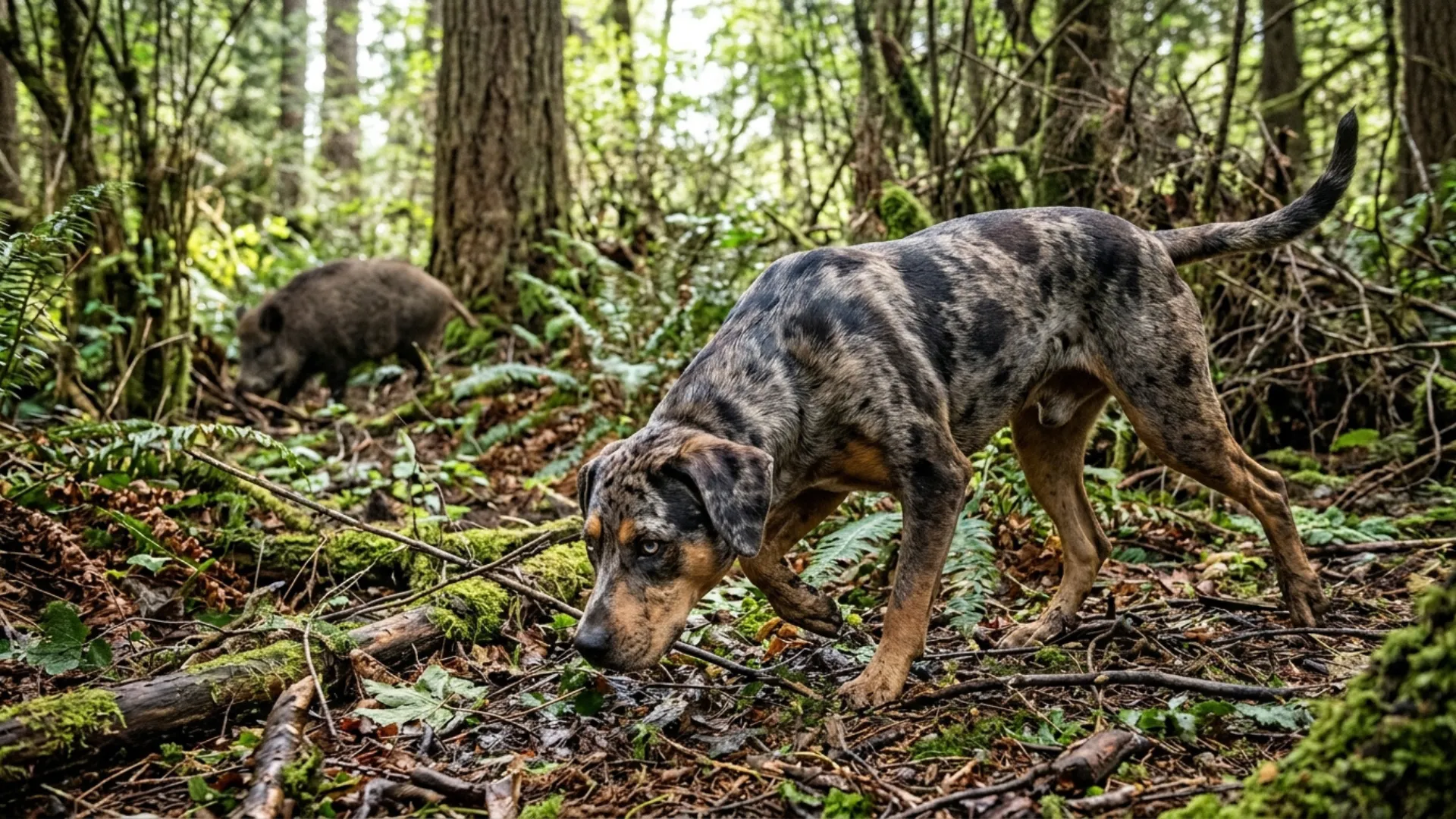
A muscular dog may look perfectly suited to wild boar hunting, but appearance tells only a small part of the story. Finding a powerful animal is one thing.
Following its scent through difficult terrain, responding to commands, and handling an unpredictable encounter require a much wider range of abilities. Wild boars have tough bodies, sharp tusks, and defensive instincts that make close contact particularly dangerous for dogs. A hunting companion therefore needs more than physical strength.
A keen nose helps it locate the animal, stamina supports long tracking sessions, and a steady working temperament helps it remain responsive. Different hunting breeds bring different combinations of these qualities, depending on their original working roles and training. Some are particularly useful for tracking, while others are valued for locating and holding game at a distance.
Here, we’ll examine seven superior dog breeds and the specific abilities that make them valuable partners during wild boar hunts.
Key Takeaways
What does it take for a dog to face a wild boar in its own territory? A powerful build, a keen nose, and the courage to stay focused when the animal pushes back.
One breed on this list can climb trees while chasing game, a fascinating skill linked to its mountain-hunting background.
Another was specifically bred to grip and hold large prey, while certain hounds rely on their voices to guide hunters through thick woodland.
Read till the end to discover all seven breeds and the remarkable hunting abilities behind their reputations.
Superior Dog Breeds That Excel at Wild Boar Hunts
1. Dogo Argentino
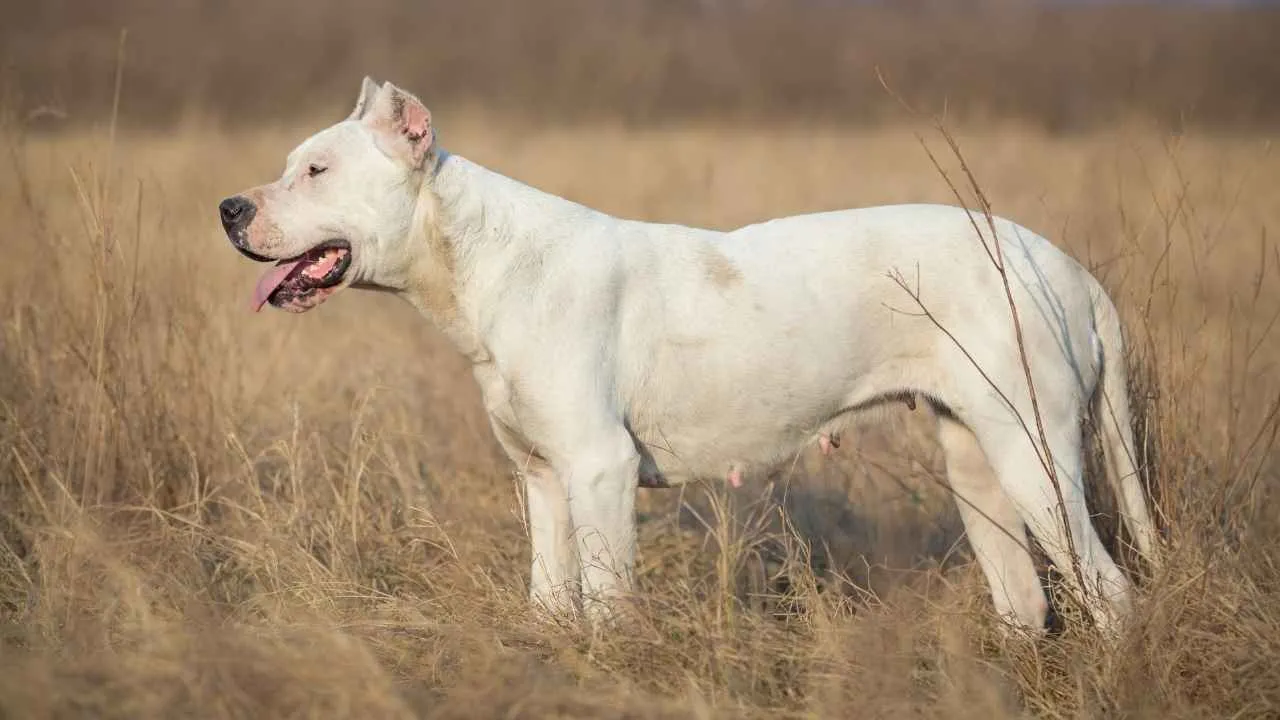
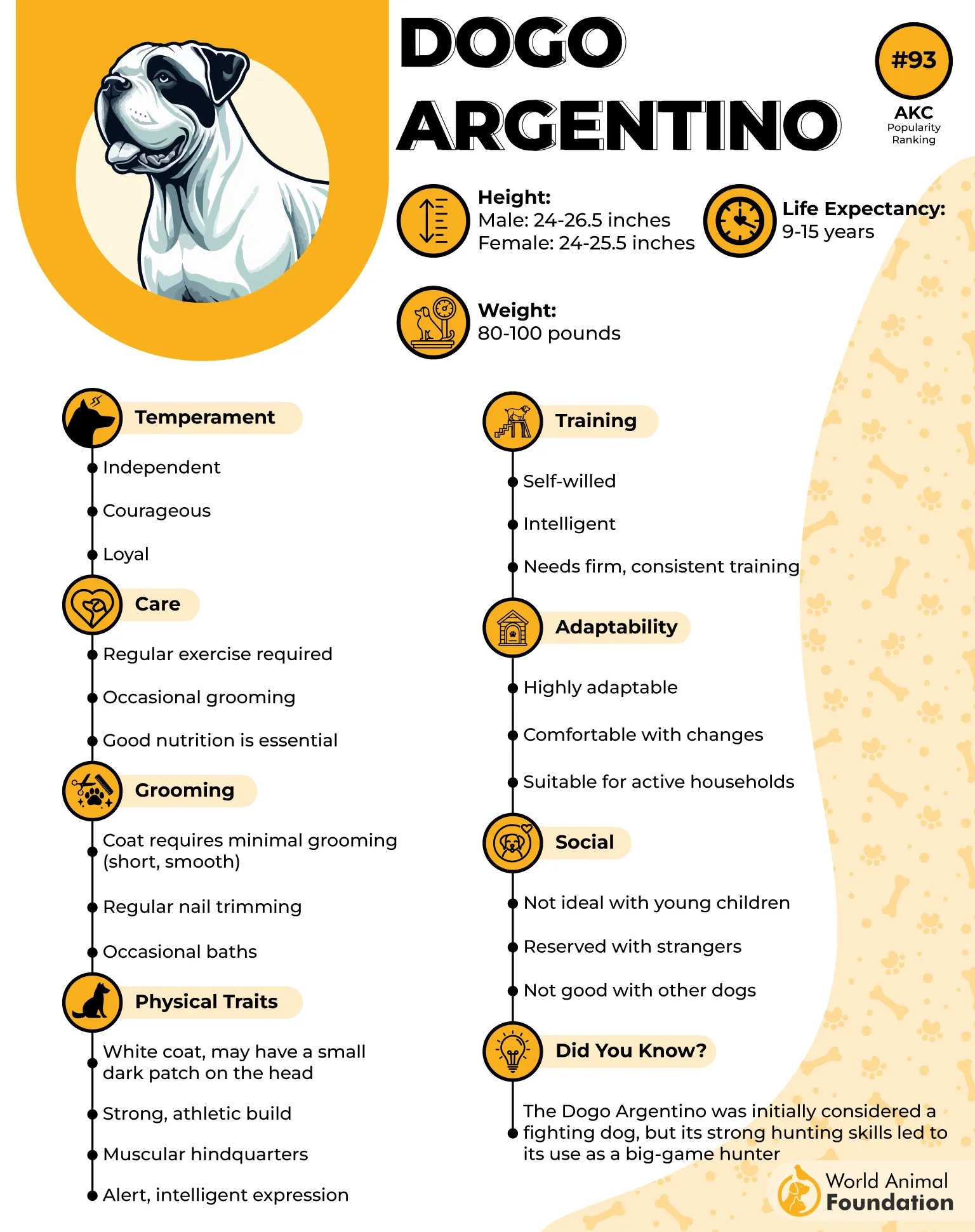
The Dogo Argentino originated in Argentina in 1928, with its ancestry combining a local Córdoba hunting dog and several European breeds, including the Great Dane, Pointer, Boxer, and Bull Terrier.
Its original purpose was to hunt large game, which shaped the powerful build and determined nature seen in the breed today.
Power Behind the Pursuit
A Dogo Argentino has the muscular frame and explosive strength needed to chase, catch, and hold large prey. Its hunting style relies on intense scent focus, powerful bursts of speed, and a firm grip, while its stamina helps it keep pace during longer pursuits.
These features also serve a practical purpose in the field:
The white coat helps hunters spot the dog in thick vegetation.
Short, tight coat is less likely to snag in dense brush.
Broad head and strong shoulders support its gripping ability.
Confident Around Its People
At home, the Dogo Argentino is deeply devoted to its family and often follows its favorite person from room to room, as Hill’s Pet claims.
It can be watchful around unfamiliar animals and strangers, while rough play with other dogs makes careful introductions and early socialization especially important.
2. Catahoula Leopard Dog
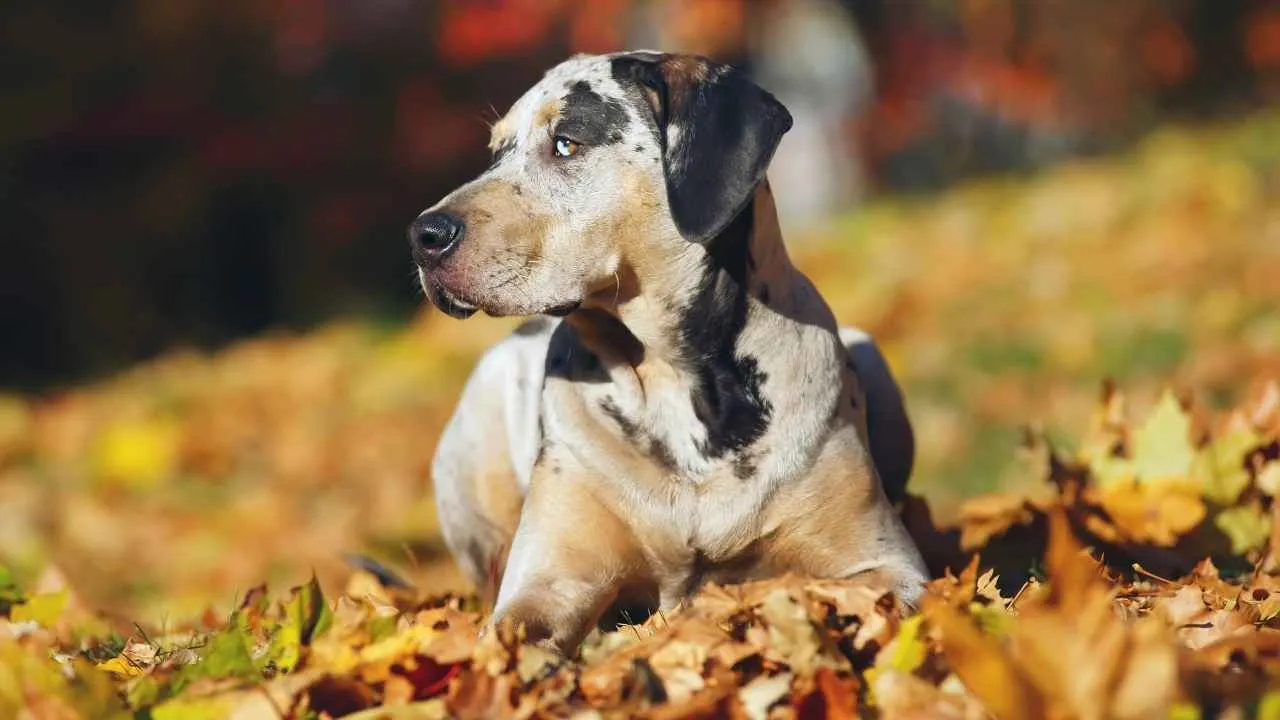
The Catahoula Leopard Dog developed near Catahoula Lake in Louisiana, where settlers relied on these dogs to manage livestock and track wild hogs during the 1800s. Their early work on Southern farms and ranches shaped their reputation as determined, capable working dogs.
A Skilled Hog Tracker
When following hogs, this best dog breed relies heavily on its nose to pick up fresh scent trails. Once it locates its quarry, it may use a loud baying voice to keep the animal at a distance or corner it against an obstacle until the handler arrives.
Its physical build brings several practical advantages to demanding terrain:
Muscular shoulders and hips support quick turns.
Webbed feet help with footing in muddy, swampy ground.
Strong stamina suits long hours of fieldwork.
Independent and Intensely Loyal
Catahoulas form close attachments to their families, although they often express affection by following people and keeping watch over their surroundings.
Their independent nature and reserve around strangers call for consistent, positive-reinforcement training and early socialization, particularly when introducing them to other animals.
3. Plott Hound
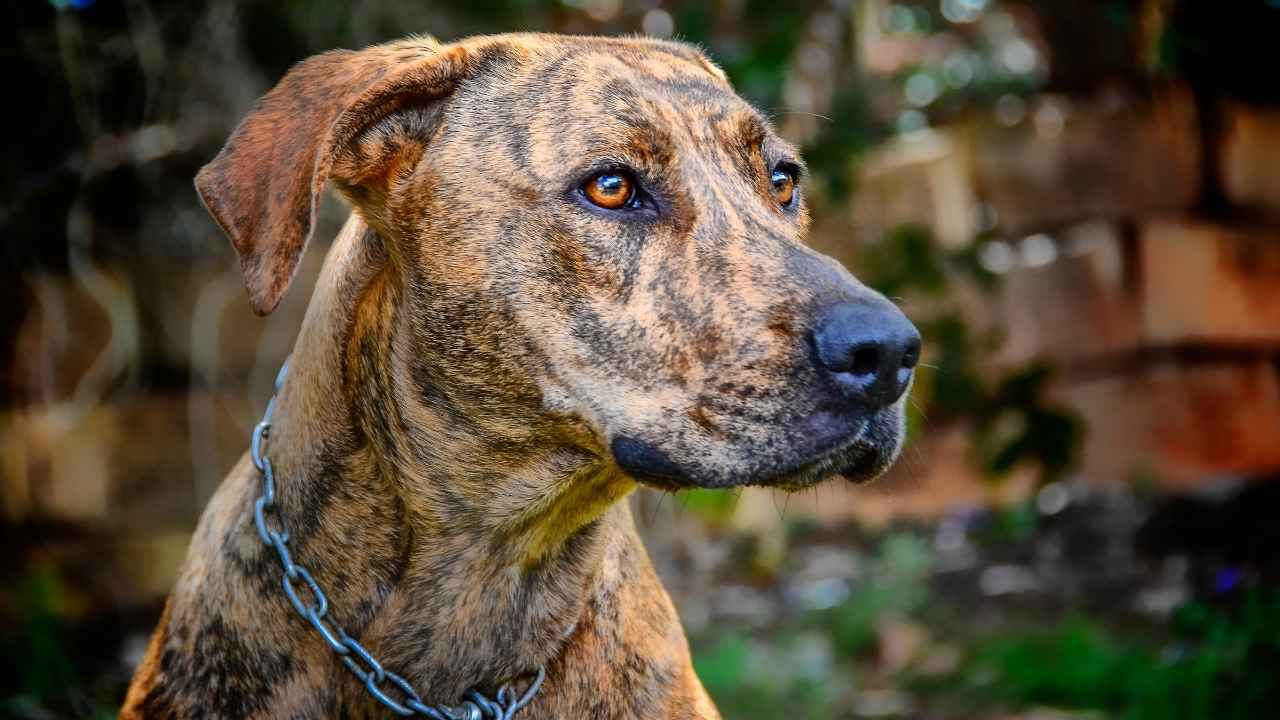
The Plott Hound has a distinctly American history, with its roots in a German family who brought their dogs to North Carolina in the mid-1700s. The breed became closely associated with the Great Smoky Mountains, where neighboring farms also used these dogs as guardians.
A Nose for Difficult Trails
Plott Hounds were selected to follow older scent trails through rugged, mountainous country, making their tracking ability especially valuable during big-game hunts, as mentioned by the Continental Kennel Club.
Their muscular build and efficient gait help them cover rough ground, while their determination allows them to pursue demanding trails for long periods.
Their hunting style includes some fascinating details:
Uses a side-to-side scent search to recover lost tracks.
Works cooperatively with other hounds through vocal signals.
Can concentrate intensely on one scent, even around distractions.
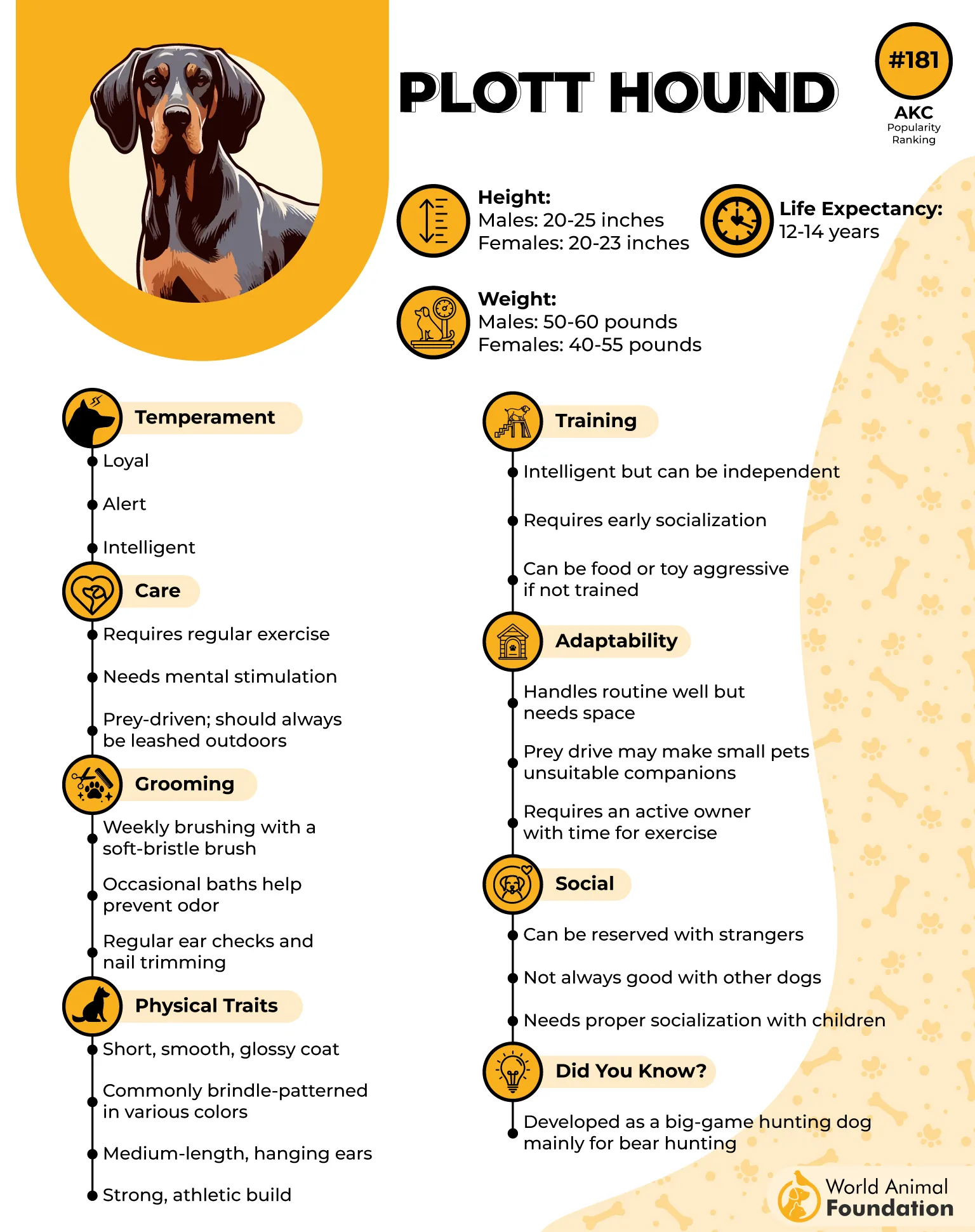
An Adventurous Family Companion
Away from the hunt, the Plott Hound is lively, curious, and devoted to its family. It enjoys outdoor activities and has plenty of energy for active days, yet often becomes more relaxed at home afterward.
According to the AKC, its affectionate nature and reported patience with children also make family interaction an important part of its life.
4. Black Mouth Cur
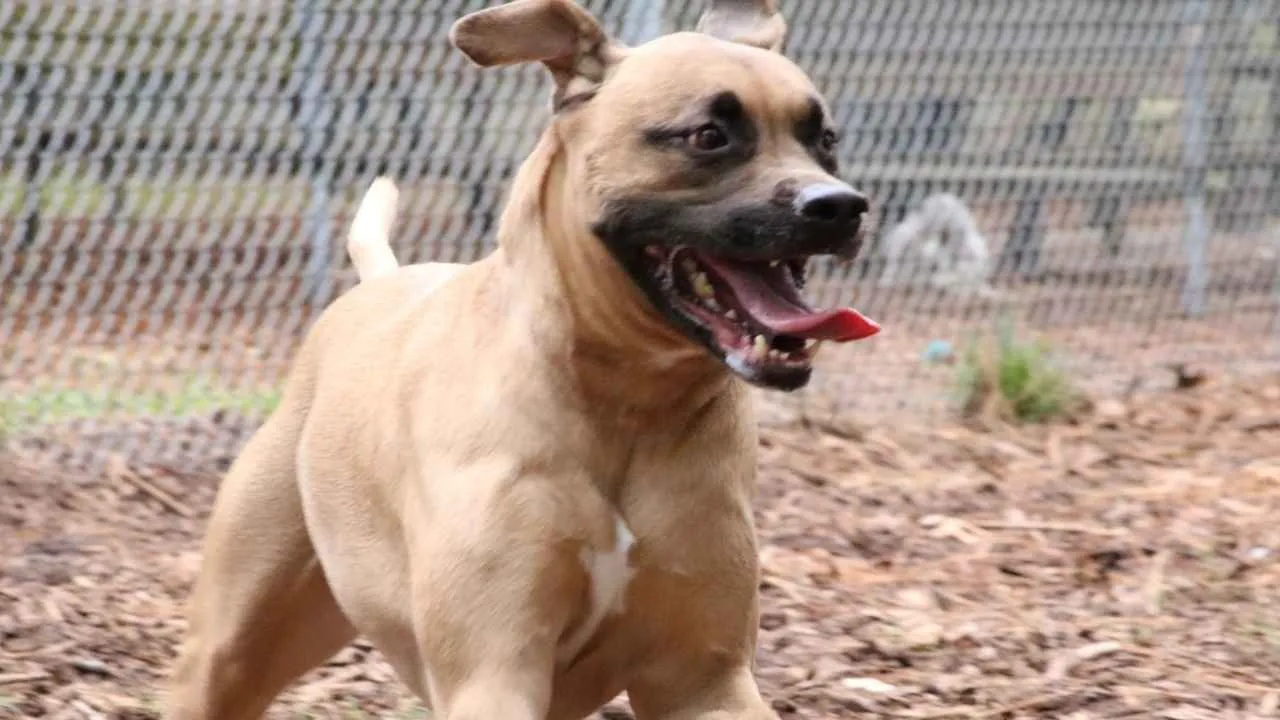
Early accounts of the Black Mouth Cur place the breed among working dogs of the southern United States, but its ancestry has never been fully established. Farmers and settlers depended on its hunting skills, protective instincts, and ability to help with demanding ranch work.
A Vocal Approach to Wild Boar
When working hogs, the Black Mouth Cur uses baying and body positioning to keep game at bay rather than simply chasing it through the woods. Its voice helps hunters locate the dog and the animal, especially when thick vegetation blocks their view.
Its working style also involves several useful physical qualities:
Searches independently before checking back with its handler.
Has high pain tolerance and physical grit.
Handles hot, humid conditions with its short coat and athletic build.
A Bright, Energetic Worker
Friendly, lively, and loyal, the Black Mouth Cur has a strong desire to stay involved in purposeful work. Its combination of prey drive, handler focus, and defensive confidence can make it a demanding dog to manage. Some individuals also display stock-working habits, including heel-nipping, which require appropriate direction.
5. Alano Español
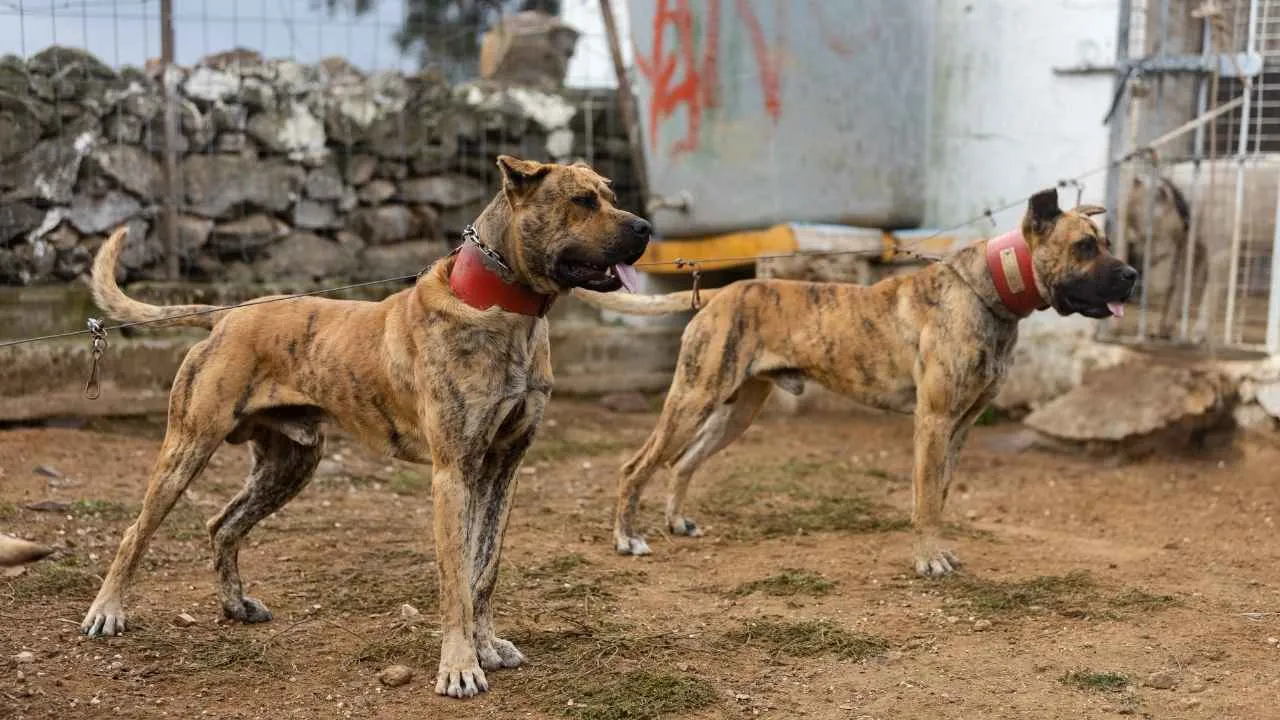
The Alano Español has a history linked to the Alans, who entered the Iberian Peninsula in 406 AD. Their dogs are believed to have influenced several European mastiff-type breeds, but Spain is the only place where this ancient lineage survived for more than 1,500 years.
A Powerful Grip in the Hunt
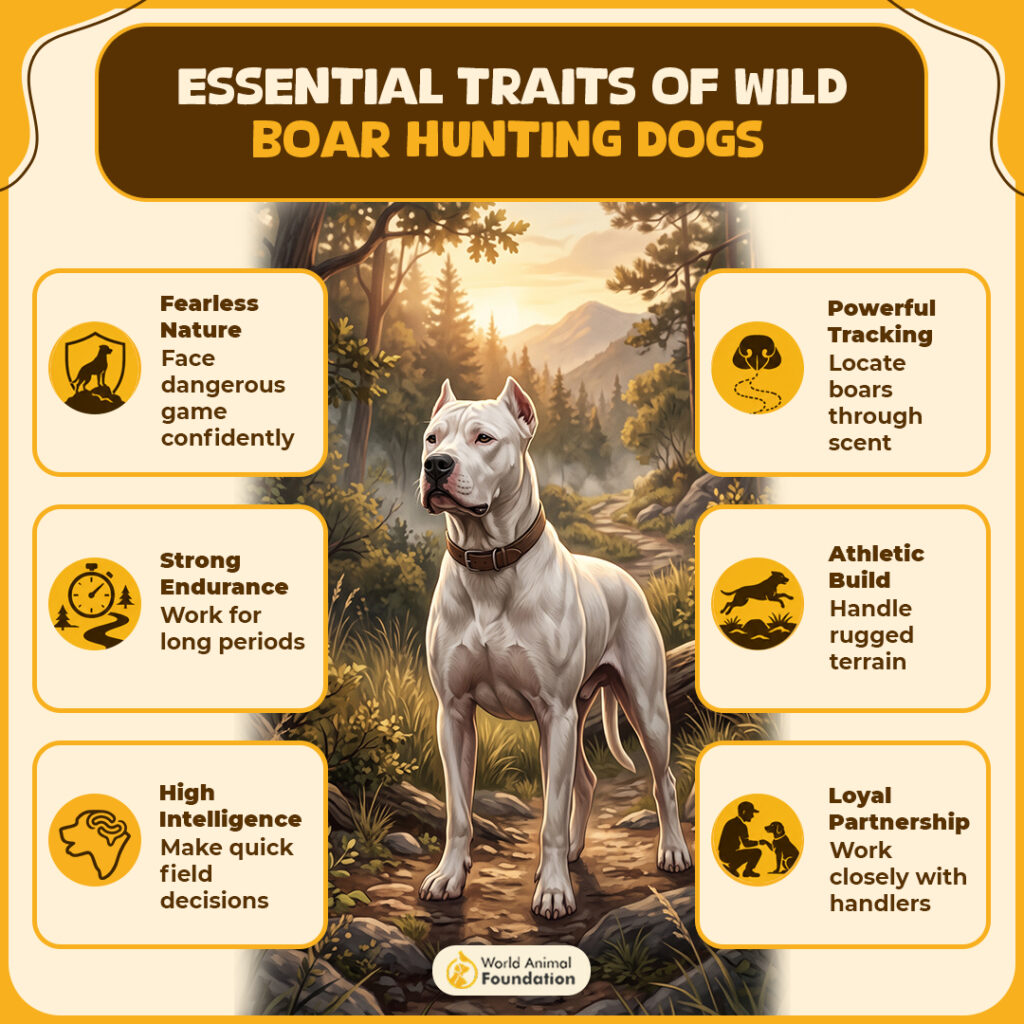
When pursuing wild boar, the Alano Español relies on remarkable determination and a powerful jaw grip. Once it catches an animal, it can hold on despite pain or resistance, continuing its task until released by its handler or the job is complete.
Its working abilities include several other impressive qualities:
Works alongside other dogs in a hunting pack.
Has remarkable endurance during long working sessions.
Moves with surprising agility for its large, muscular build.
Serious at Work, Affectionate at Home
The Alano has a confident, composed temperament and forms strong attachments to familiar people. It is patient with children and generally sociable with other dogs, although it will stand its ground if another dog challenges it. Unfamiliar people may receive a cautious reception.
6. American Bulldog

The American Bulldog descends from Bulldogs that worked alongside butchers in 17th-century England. After reaching the southeastern United States, these dogs became valuable farm workers.
The breed nearly disappeared during the World Wars, but John D. Johnson and Alan Scott helped preserve it after World War II.
The Catch Dog in a Boar Hunt
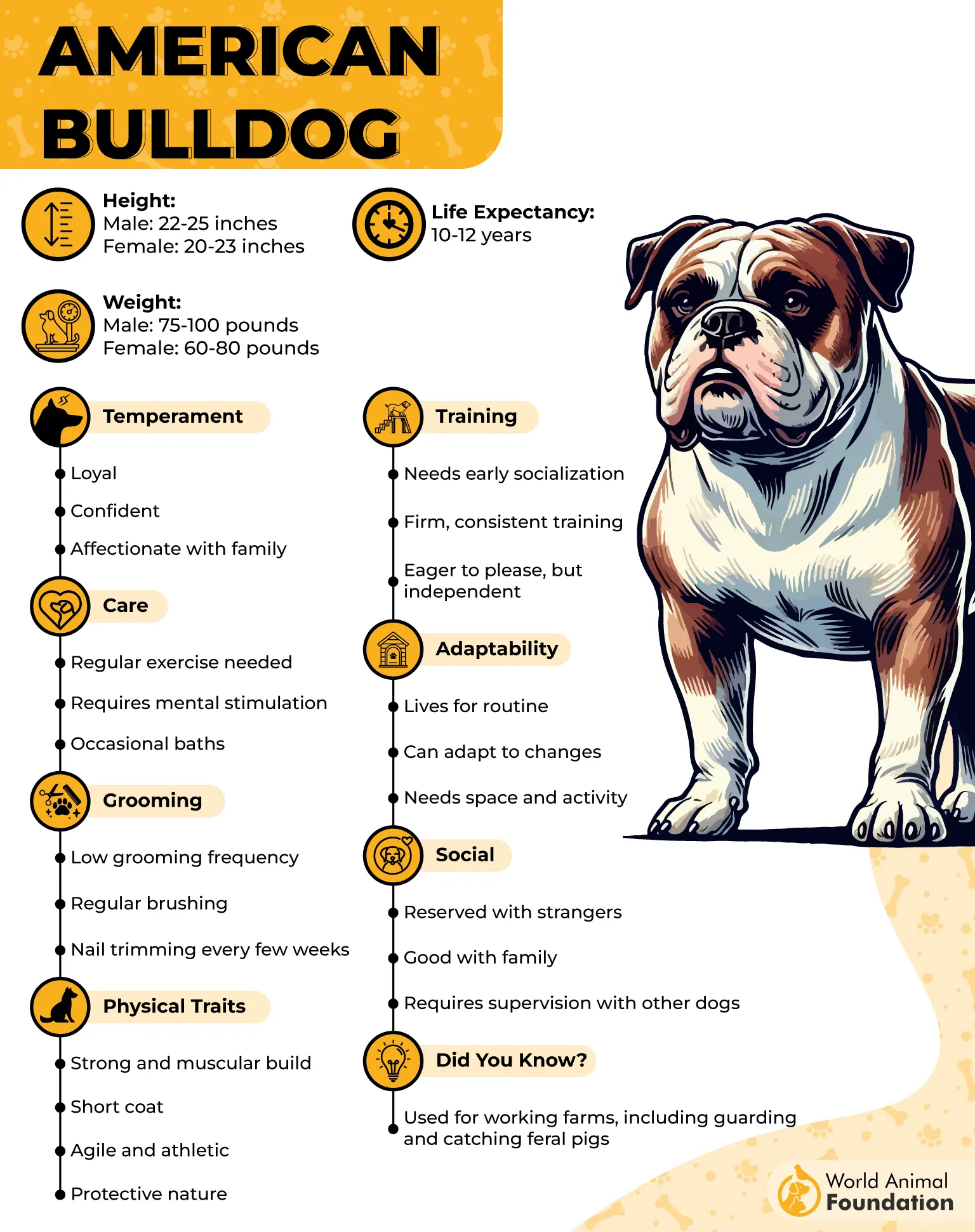
During a wild boar hunt, the American Bulldog takes on the demanding job of physically stopping the animal. Once bay dogs locate and corner the hog, this powerful dog moves in, grips it around the head, snout, or ear, and holds it until the handler can approach.
Three physical advantages help it perform this task:
Powerful jaws and a high tolerance for pain.
Strong, muscular build suited to gripping and holding.
Longer legs and greater stamina for rough woodland terrain.
A Confident Family Character
At home, the American Bulldog has a bold personality with a playful, sometimes clownish side that often keeps family life lively. It generally gets along well with children and babies, although it may take time to warm up to unfamiliar people before becoming friendly.
7. Kai Ken
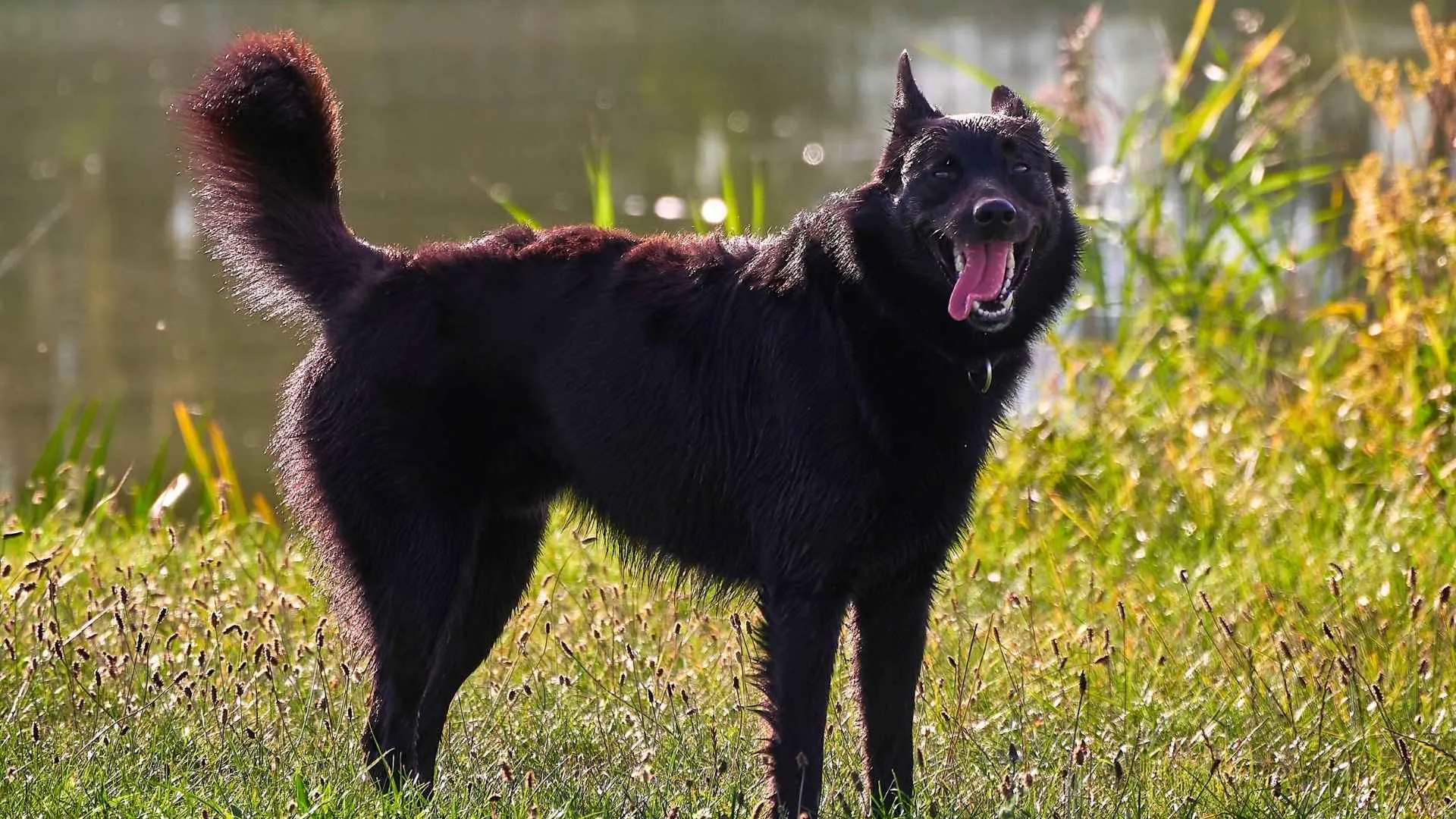
The Kai Ken emerged in Japan’s Kai province near Mount Fuji, where local hunters valued its ability to pursue game across rugged terrain. Japan recognized the breed as a Natural Monument in 1934, giving it protected status as an important part of the country’s canine heritage.
Built for the Chase
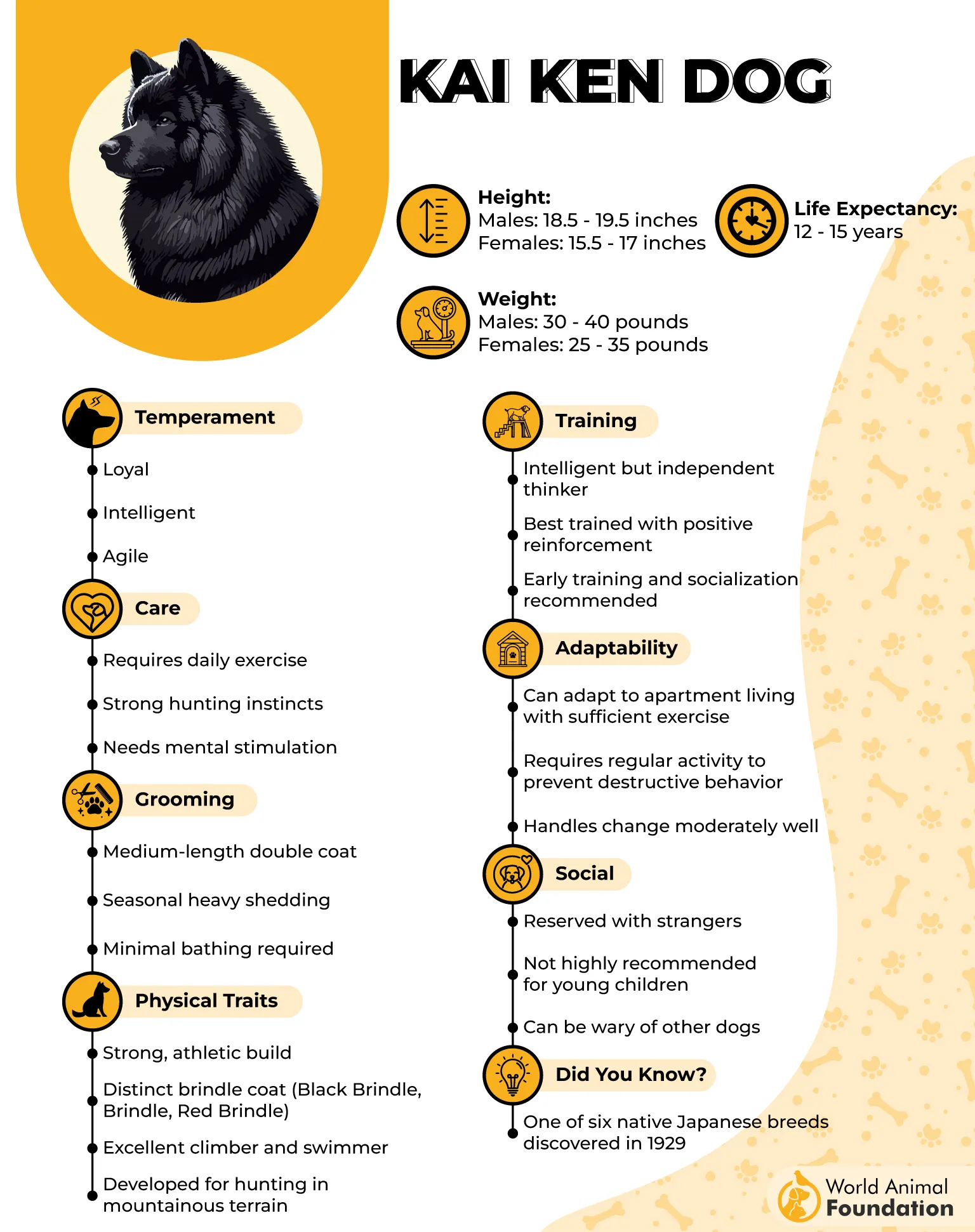
The Kai Ken has a long hunting history, with its stamina and strong prey drive making it useful for pursuing different types of game, from pheasants to bears.
These instincts remain important when considering its suitability for demanding hunting work, including hunts that require persistence and close attention to moving prey.
Its mountain-hunting background comes with some remarkable abilities:
Brindle markings help it blend into wooded surroundings.
Can climb trees while pursuing game.
Frequently checks the wind and follows scents outdoors.
Two Traditional Body Types
The Kai Ken has two recognized lines: the stockier, bear-like Kaikuro and the slimmer, longer-bodied Dairo. Both have the strength, speed, and agility needed to navigate uneven mountain ground, with a compact athletic build that supports quick turns and steady footing.
Conclusion
Wild boar hunting places serious demands on a dog’s strength, scenting ability, stamina, and control. A capable hunting companion must work through difficult terrain, follow a trail, and respond to its handler when conditions become unpredictable.
Each dog brings a different set of qualities, shaped by the work it was originally bred to perform.
However, physical ability alone cannot make these hunts safe. Wild boars can cause severe injuries with their tusks, so proper training, experienced handling, and suitable protective equipment are essential. Understanding a dog’s working style helps hunters make more informed decisions before entering the field.
