




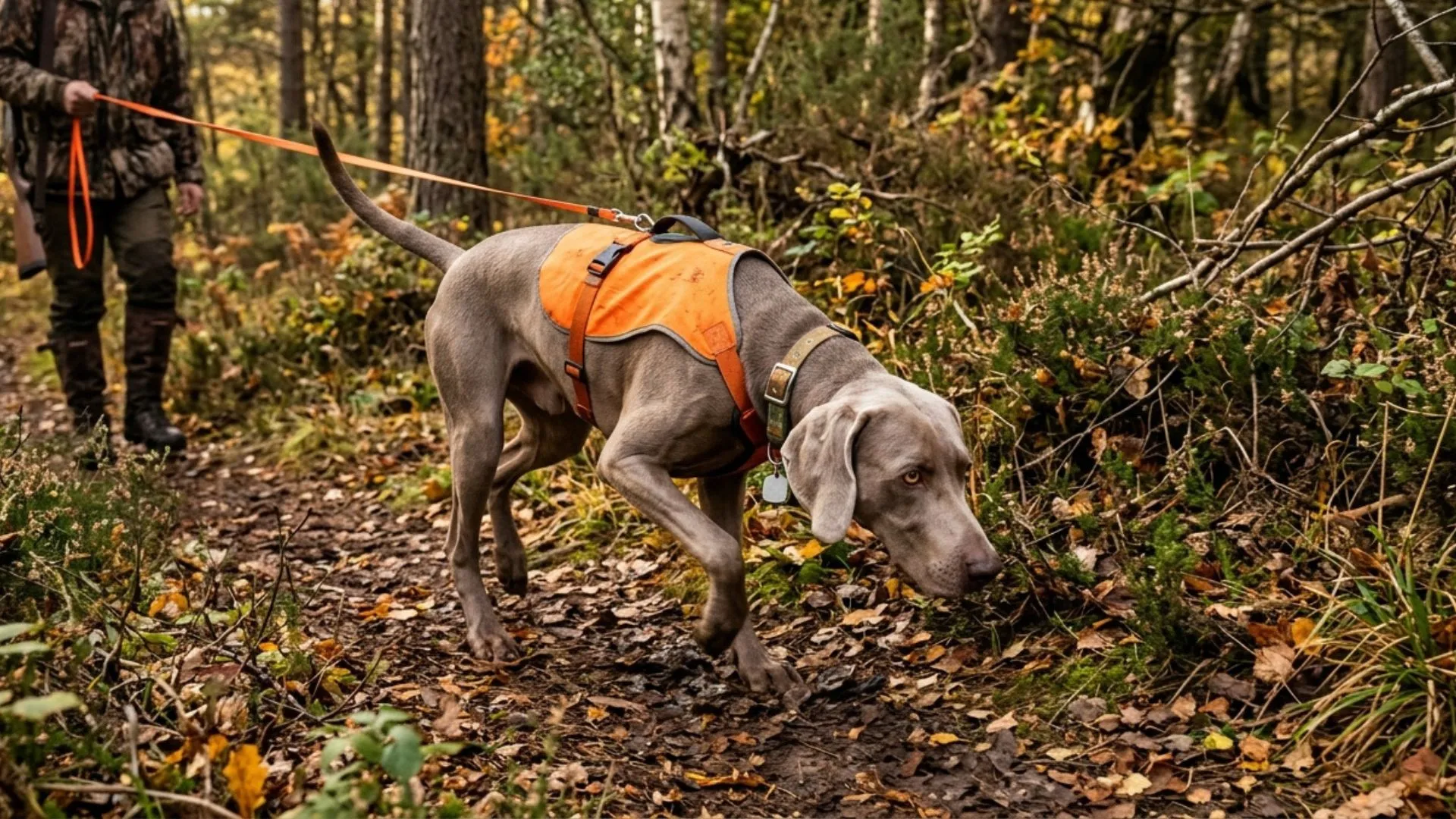
For centuries, people and dogs have worked side by side in the field, building a partnership based on trust, instinct, and teamwork.
A great hunting dog does far more than follow its owner around. With their highly developed noses, they can pick up faint scents, navigate challenging terrain, locate hidden game, and stay focused when the action begins.
But what makes one dog better suited for hunting and tracking than another? The answer goes beyond having a strong prey drive. The best companions often combine stamina, intelligence, sharp senses, athleticism, and a willingness to work closely with their handler.
In this article, we’ll explore the top dog breeds for hunting and tracking, the skills that make them stand out, and what to consider before bringing one into your hunting routine. Get ready to discover some seriously capable, thorough, and reliable four-legged partners.
Key Takeaways:
Meet good hunting dogs built for speed, stamina, tracking, pointing, and retrieving.
German Shorthaired Pointer brings versatility to the field with sharp instincts and endless energy.
Labrador Retriever excels at retrieving game, especially in water, while staying a friendly family companion.
Bluetick Coonhound and Treeing Walker Coonhound follow scents for miles with powerful noses and determination.
Superior Dog Breeds for Hunting and Tracking
1. German Shorthaired Pointer
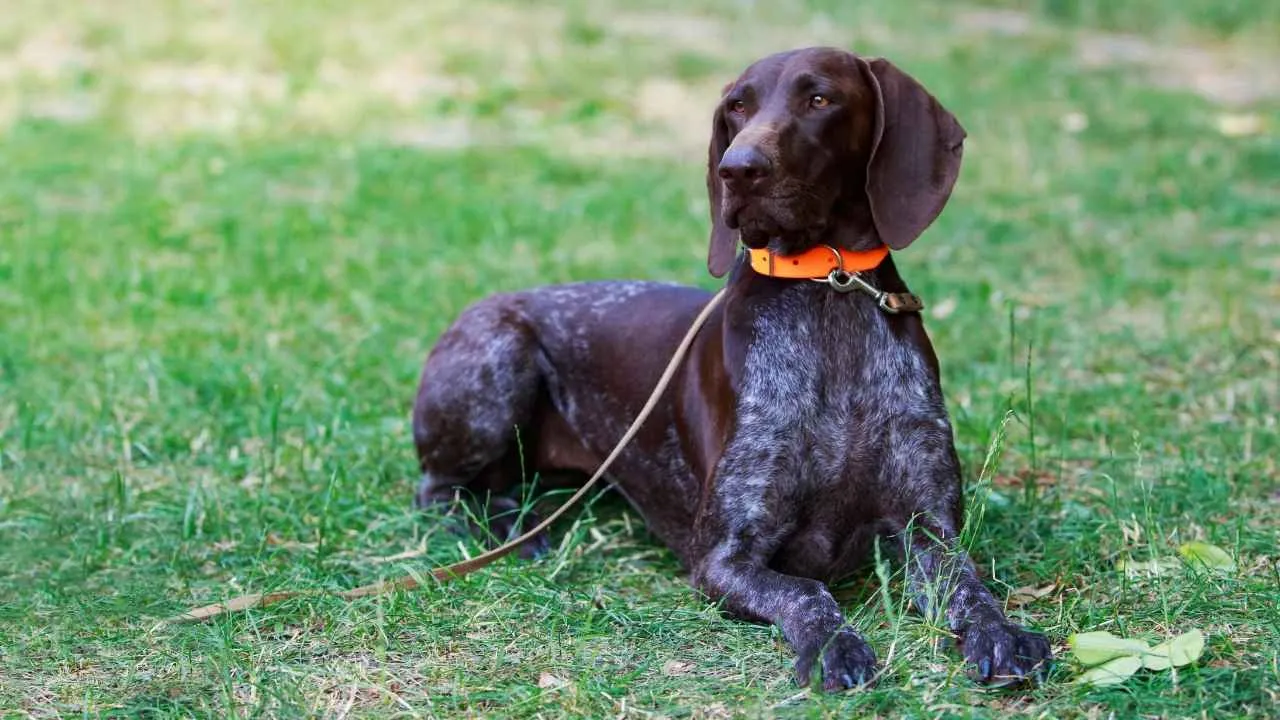
German Shorthaired Pointers are versatile bird dogs with a natural talent for hunting and tracking. They are known for their speed, endurance, and sharp sense of smell.
When they detect game birds, they can stop and point toward the scent, helping hunters locate their target. Their athletic bodies and strong instincts also allow them to work across fields, forests, and rough terrain.
Hunting Skills and Temperament
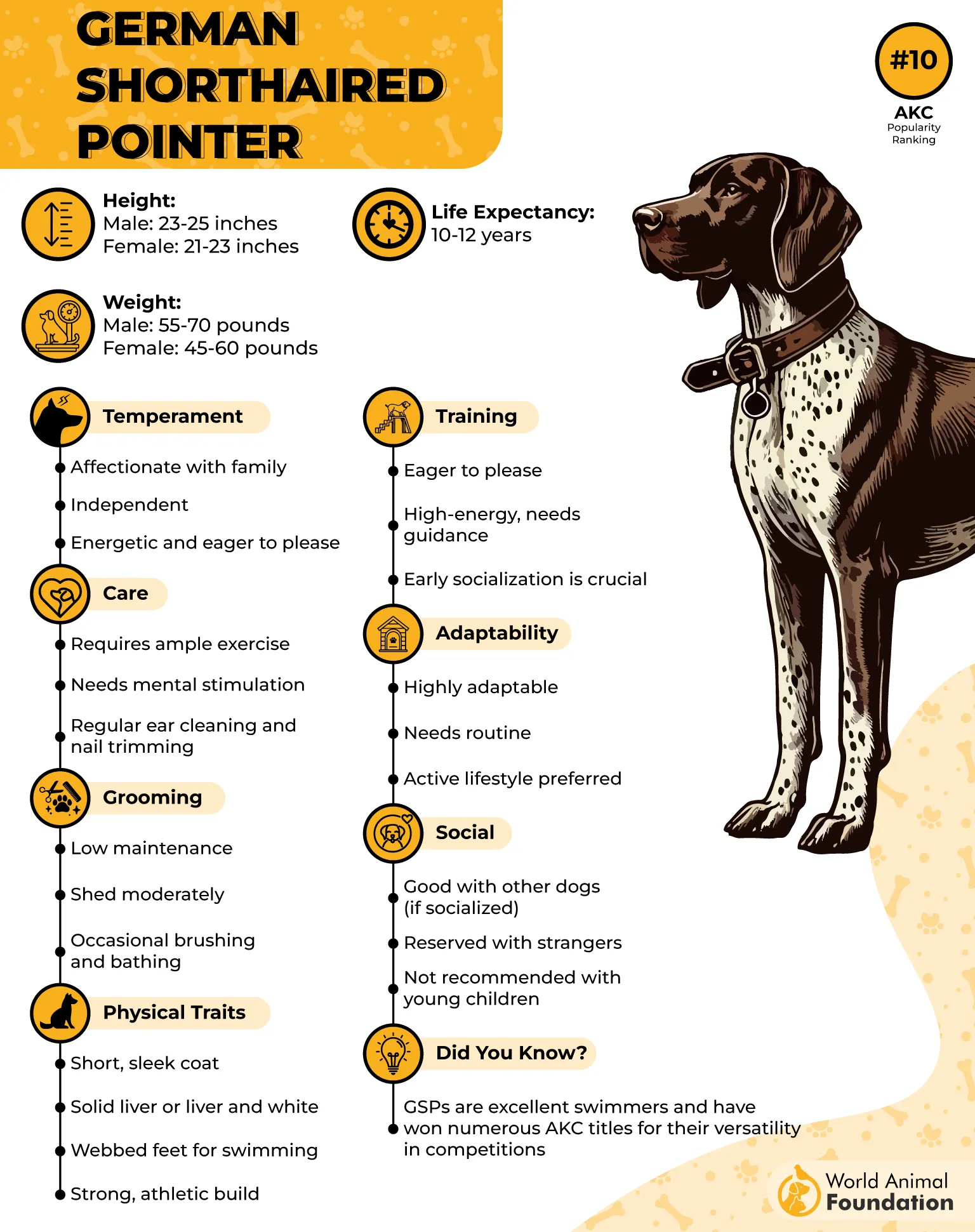
These dogs are intelligent, adventurous, and eager to work. They learn commands quickly, although their strong hunting instincts can sometimes make them easily distracted.
PetMD mentions that they also have a high prey drive, so homes with small pets or birds may not be the best fit.
Their energy levels are very high, and they need plenty of exercise and mental stimulation to stay happy and well-behaved.
Care and Family Life
German Shorthaired Pointers can be playful and affectionate family companions when their needs are met.
They generally do well with children and other dogs and enjoy outdoor activities with their families. Their short, smooth coats are easy to maintain and need only regular brushing.
2. English Springer Spaniel
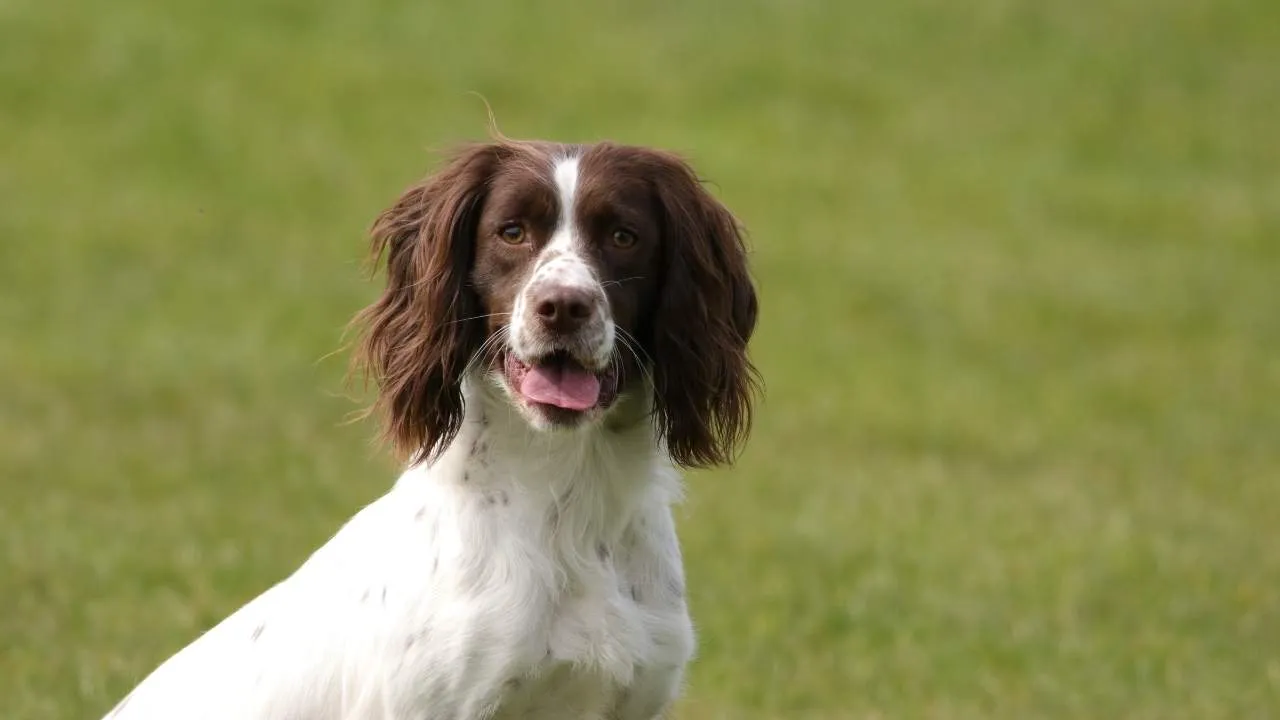
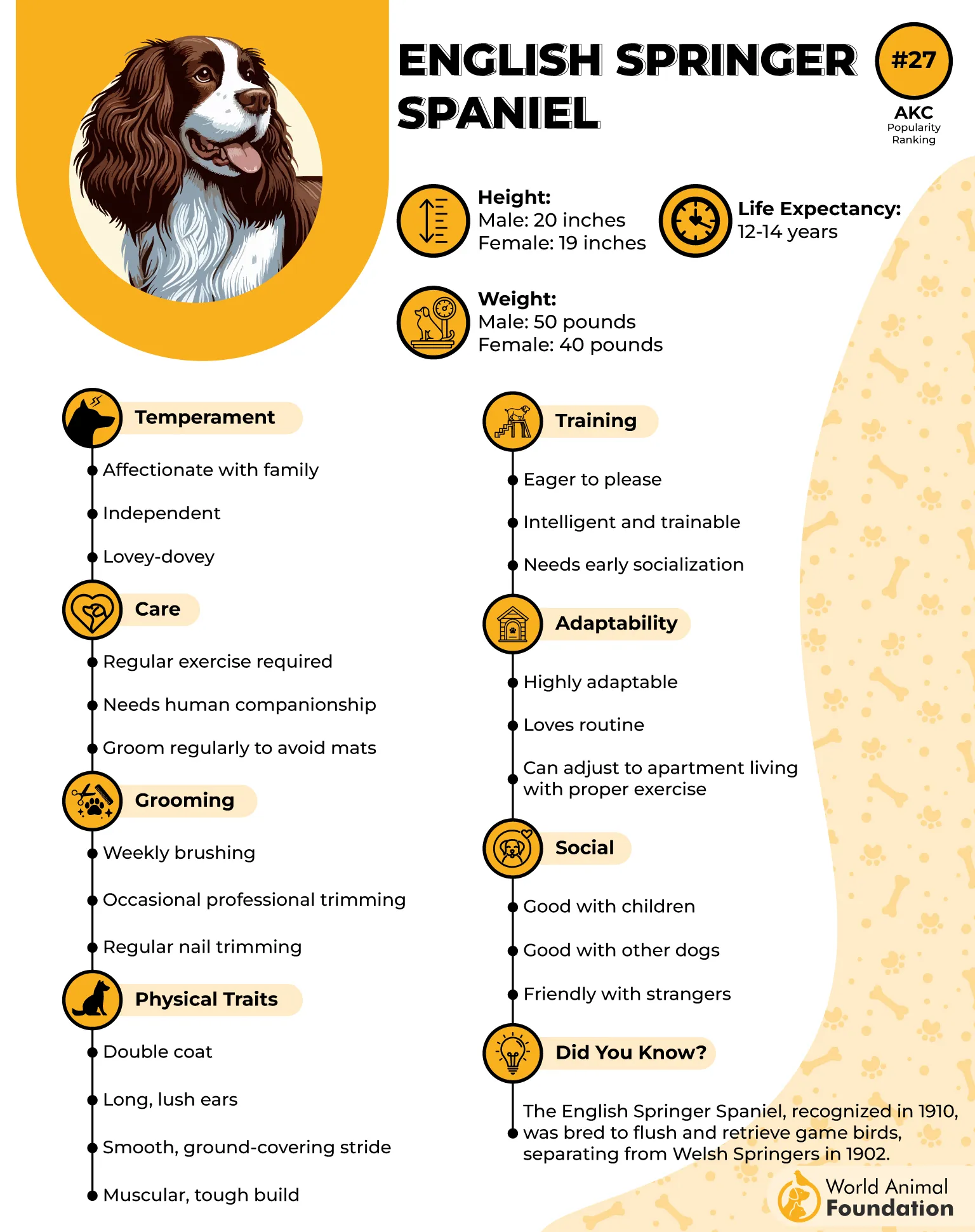
English Springer Spaniels are classic flushing dogs with a natural talent for finding and moving game birds. Their name comes from their ability to “spring” game from cover, sending birds into the air for hunters.
They are energetic, sturdy, and quick on their feet, making them better suited to rough ground and active hunts. Their strong retrieving urge also makes them useful after the shot.
Hunting Skills and Temperament
These dogs are intelligent, eager to please, and happiest when they have a job to do. They can excel at hunting, tracking, retrieving, agility, and other activities that keep them busy.
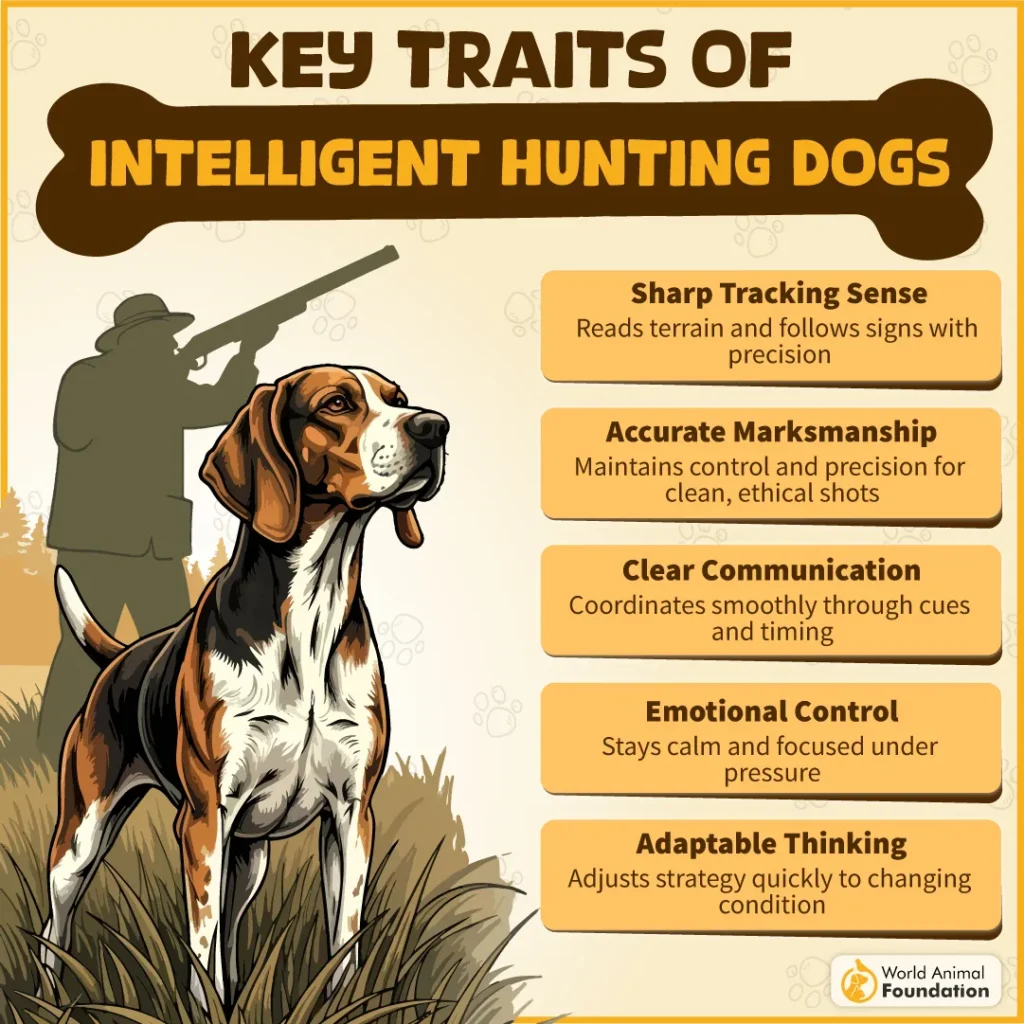
Their close-working nature helps them stay connected to their handlers in the field. Early socialization and training are important, as bored Springers may develop unwanted habits such as digging or chewing. They also enjoy water work and swimming.
Care and Family Life
English Springer Spaniels are friendly, affectionate dogs that enjoy being around their families. They can do well with children when properly raised and socialized, but they may struggle in homes where they are left alone for long periods.
Their medium-length, sometimes wavy coat needs regular brushing to prevent mats, while their long, furry ears need frequent cleaning because they can be prone to ear infections.
3. Weimaraner
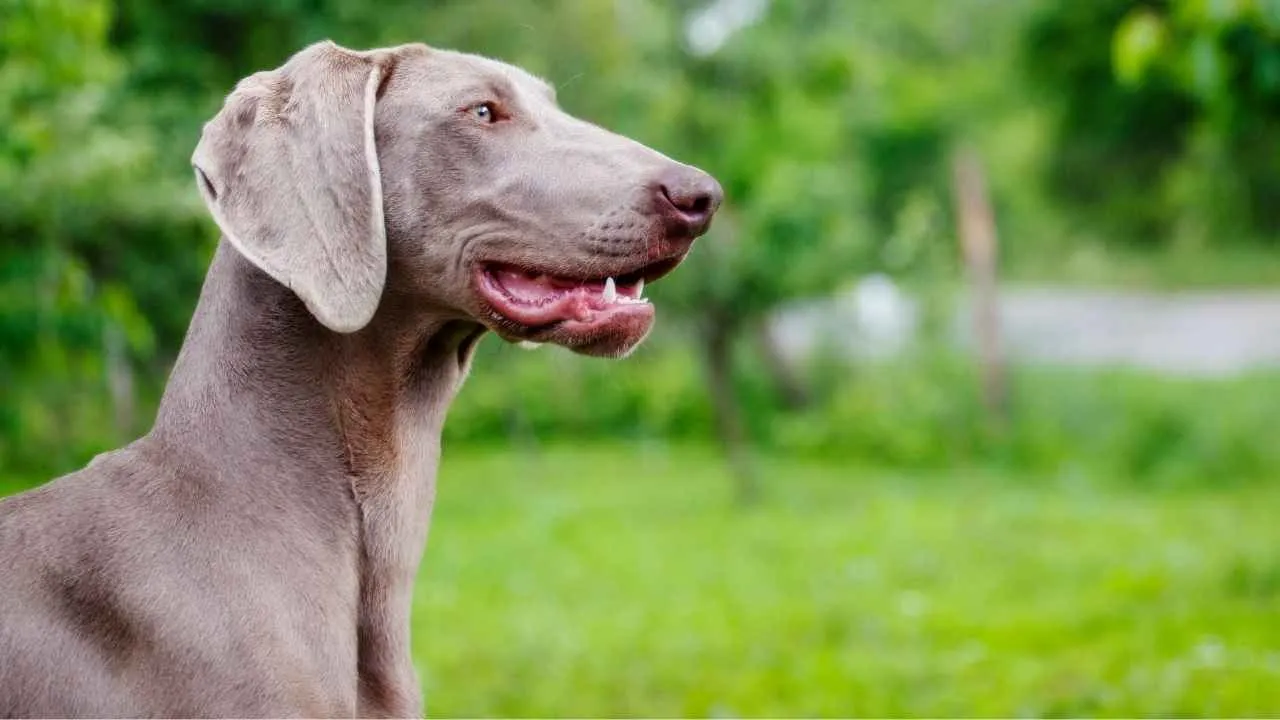
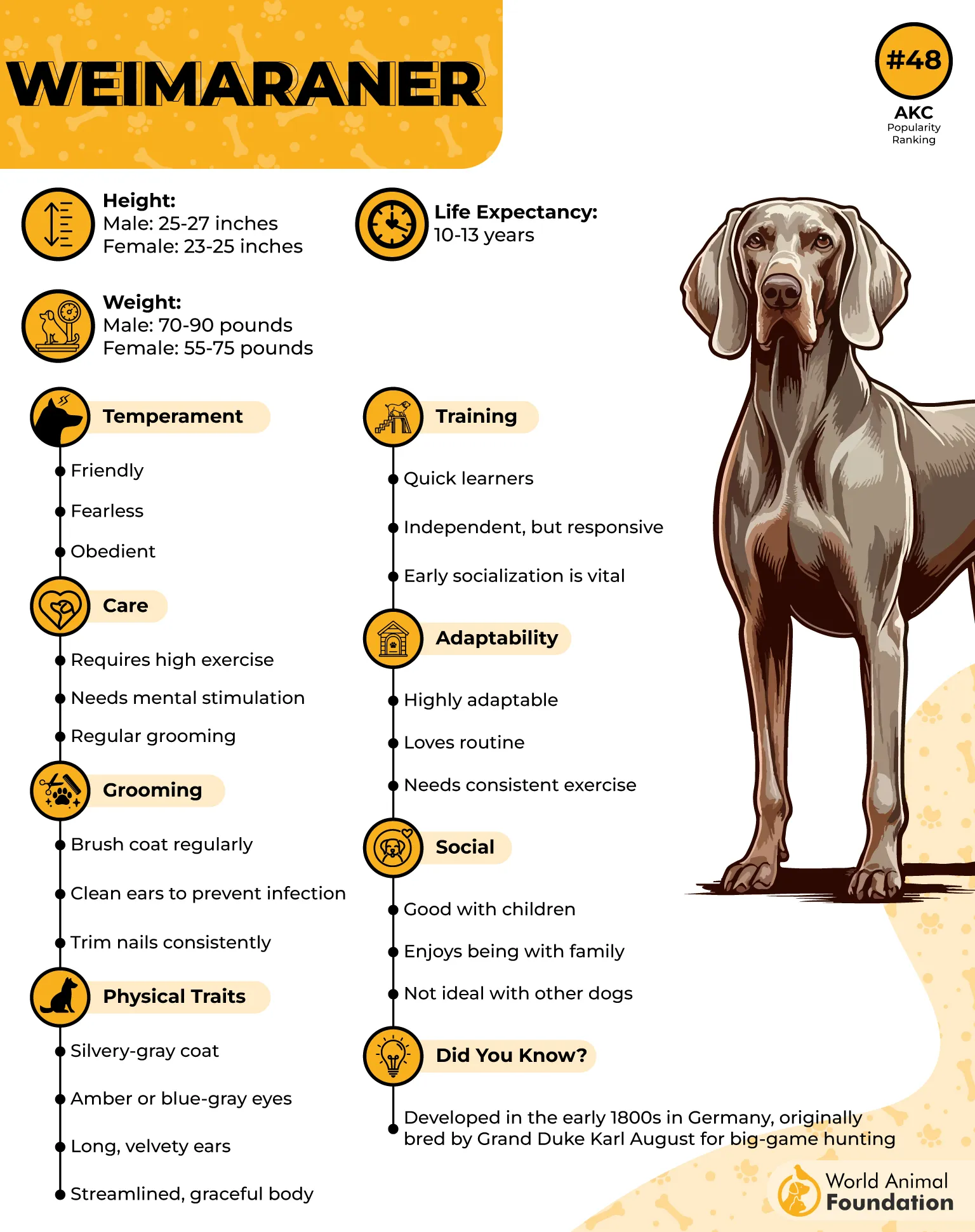
Weimaraners are powerful sporting dogs with a strong history as versatile hunting companions. Developed in Germany, they were bred to track and pursue game of different sizes.
Their speed, courage, endurance, and sharp tracking ability make them well-suited to demanding hunts.
They can work for long periods and are especially valuable for seasoned hunters who need an athletic dog with both stamina and determination.
Hunting Skills and Temperament
These dogs are intelligent, fearless, loyal, and highly trainable. They have a strong prey drive and naturally want to chase moving animals, so careful training and supervision are important around smaller pets and birds.
Weimaraners are quick learners but can be strong-willed and stubborn. They respond best to patient, regular, and consistent training rather than harsh methods.
Their close bond with their owners also means they need regular human companionship and may struggle when left alone for long periods.
Exercise and Care
Weimaraners need plenty of physical and mental activity, often at least two hours of vigorous exercise each day. Running, hiking, hunting, swimming, fetch, and agility can help keep them satisfied.
Without enough activity, they may become bored and destructive, with behaviors such as digging, chewing, barking, or trying to escape. Their short, smooth coat is easy to maintain with weekly brushing, while their floppy ears need regular cleaning.
4. Labrador Retriever
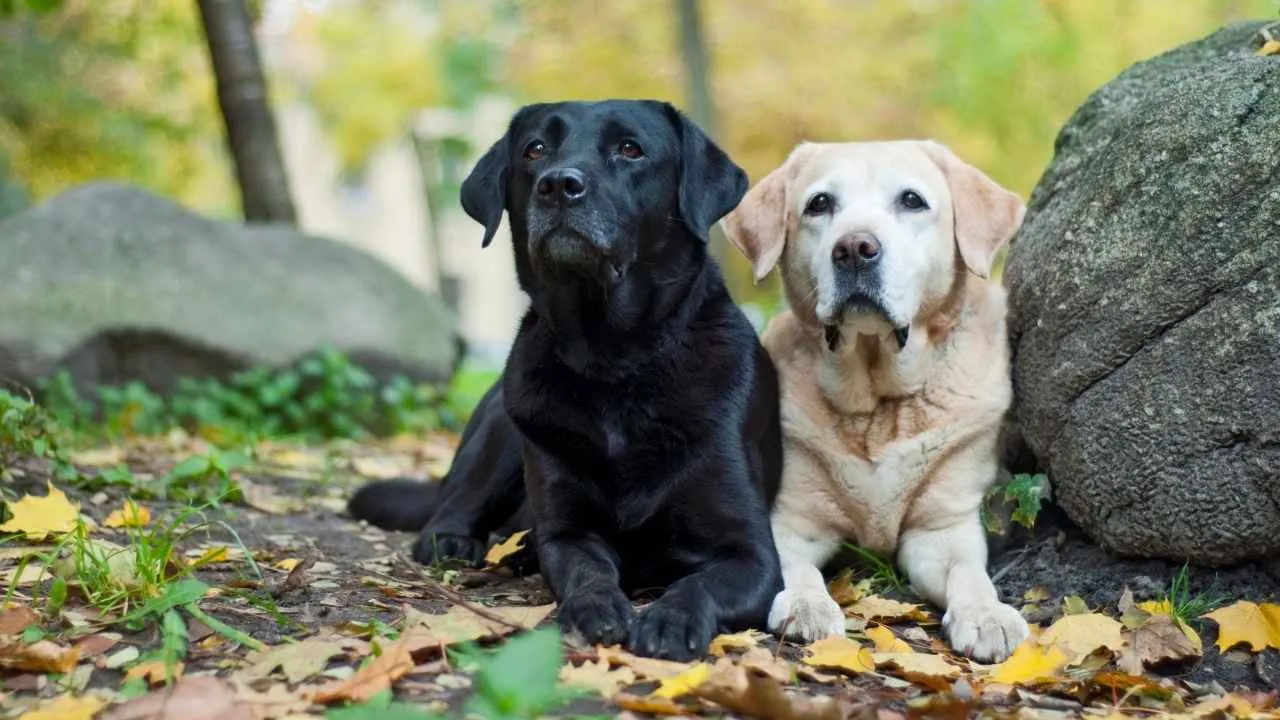
Labrador Retrievers are classic retrieving dogs and one of the most dependable choices for hunting and tracking.
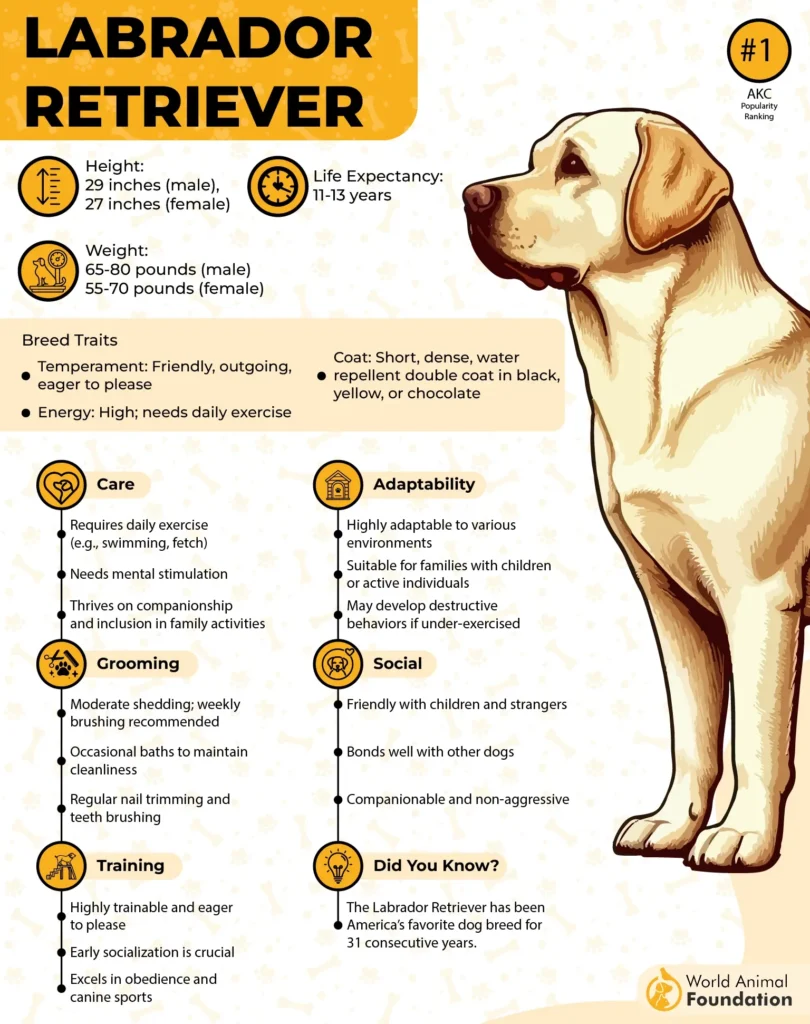
They were developed to work alongside hunters, especially in water, and their water-repellent double coats, webbed feet, and strong tails help them handle wet conditions with ease.
Their natural retrieving instinct is one of their greatest strengths, allowing them to bring back game while working closely with their handler.
Hunting Skills and Temperament
Labradors are intelligent, eager to please, and highly responsive to training. They have plenty of energy and enjoy having a job to do, whether that means retrieving, tracking, scent work, or working in the field.
They are also friendly and generally get along well with people, children, and other dogs. Early obedience training is important, as their enthusiasm can make them strong and excitable.
Without enough activity, they may become bored and develop habits such as chewing, digging, or excessive barking.
Exercise and Care
These dogs need regular exercise and do especially well with active owners who enjoy hiking, swimming, running, and outdoor adventures. Field-bred Labradors can have even greater energy and may need more demanding activity.
Their short, dense coats are easy to maintain but shed heavily, so brushing several times a week helps manage loose hair. Their floppy ears should also be cleaned regularly, especially after swimming.
5. Pointer
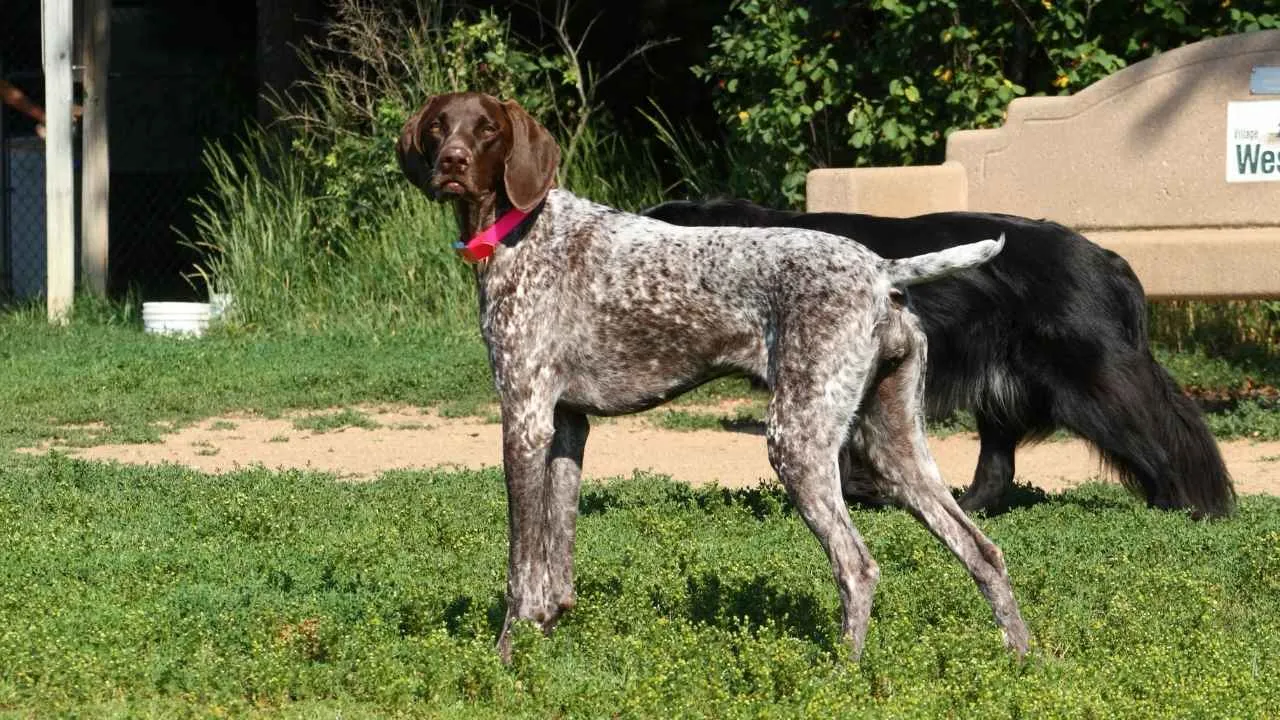
Pointers are athletic hunting dogs known for their speed, endurance, and remarkable ability to locate and point toward game. Originally developed in England, they were bred to work closely with hunters by using their powerful sense of smell to find hidden birds.
Their distinctive pointing stance, standing still with their nose directed toward game, makes them valuable partners in the field. Their lean build, agility, and high energy also allow them to handle demanding outdoor activities.
Hunting Skills and Temperament
Pointers are intelligent, eager to please, and naturally focused when working. They have a strong prey drive and may instinctively follow interesting scents, so secure fencing and reliable leash training are important.
They generally enjoy being around people and other dogs, especially when socialized from an early age. Their energetic and playful nature makes them best suited to active families.
Exercise and Care
These dogs need plenty of daily exercise, often around one to two hours or more, depending on their age and activity level. Running, hiking, swimming, fetch, agility, tracking, and other outdoor activities are excellent ways to keep them engaged.
Their short, smooth coats are relatively easy to maintain, with weekly brushing helping control moderate shedding.
6. Bluetick Coonhound
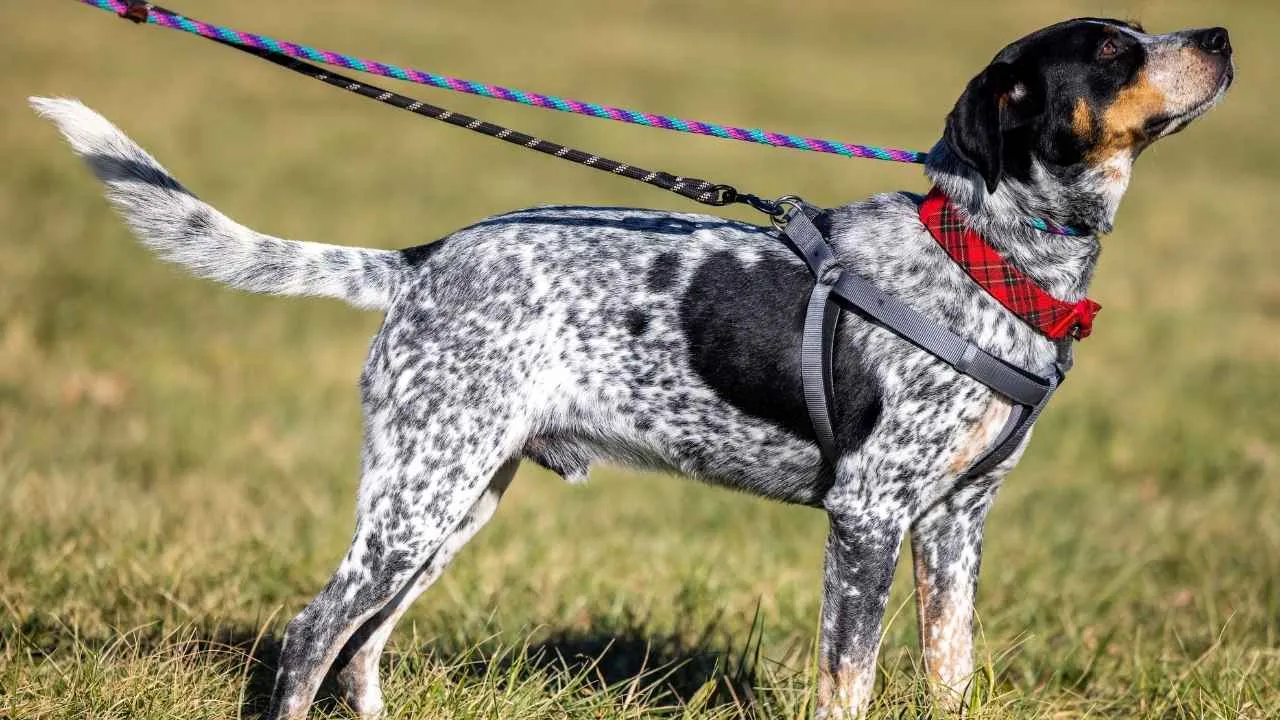
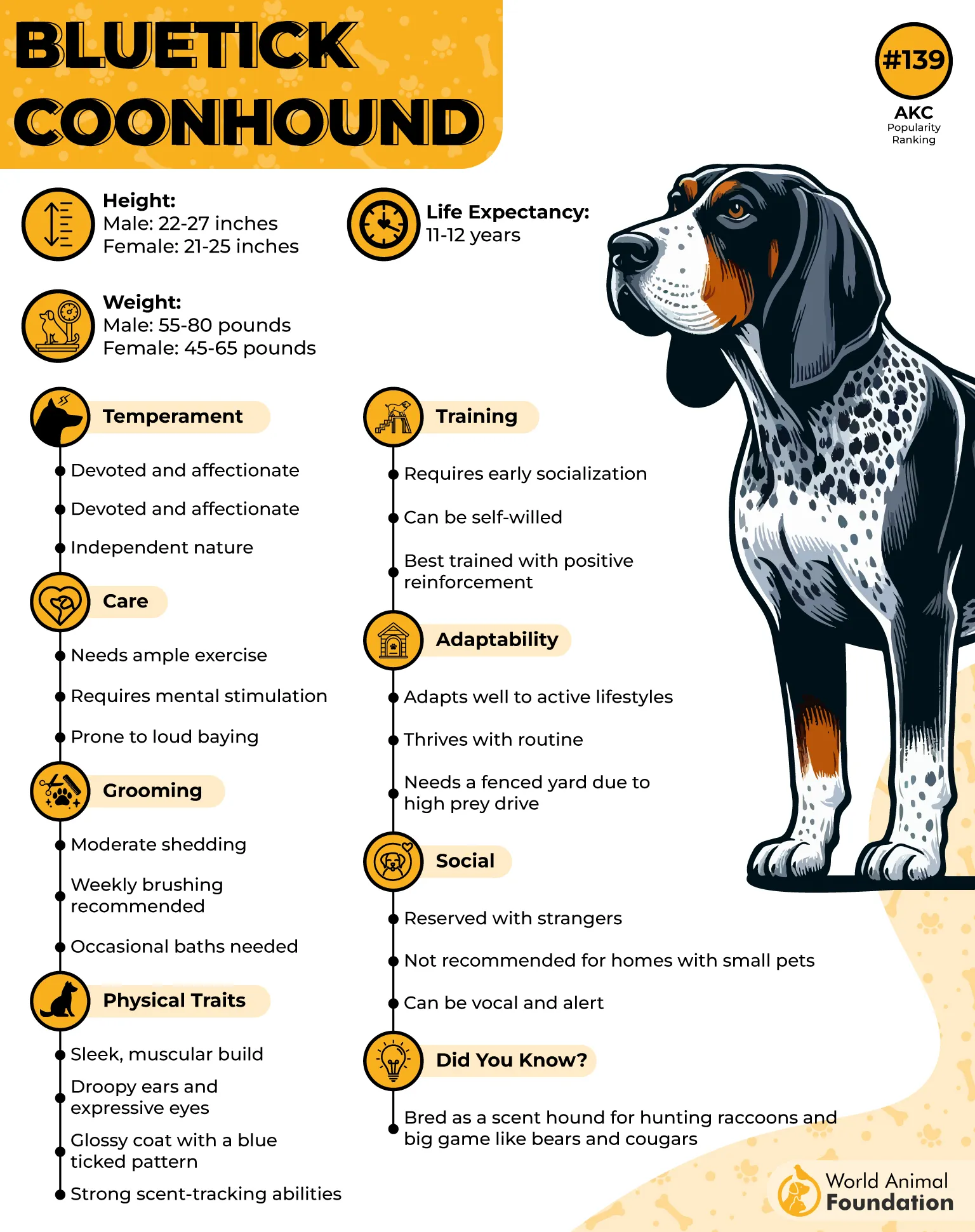
Bluetick Coonhounds are powerful scent hounds bred to track game over long distances.
Their excellent noses, endurance, and strong prey drive make them loyal hunting companions, while their affectionate and loyal nature allows them to become devoted family dogs.
Hunting Skills and Temperament
Bluetick Coonhounds are intelligent, energetic, and determined dogs with an exceptional sense of smell. They were developed to track raccoons and larger game, often working in packs, and they naturally love following interesting scents.
Their strong hunting instincts can make them difficult to redirect once they pick up a trail, so leash training and a securely fenced yard are important.
Exercise and Care
Chewy says these high-energy dogs need around 60-90 minutes of exercise every day, with activities such as hiking, running, long walks, tracking, agility, and scent work being excellent choices.
They need both physical exercise and mental stimulation to prevent boredom and destructive behaviors. Because they are driven to follow their noses, outdoor activities should take place on a leash or in a securely fenced area.
7. Treeing Walker Coonhound
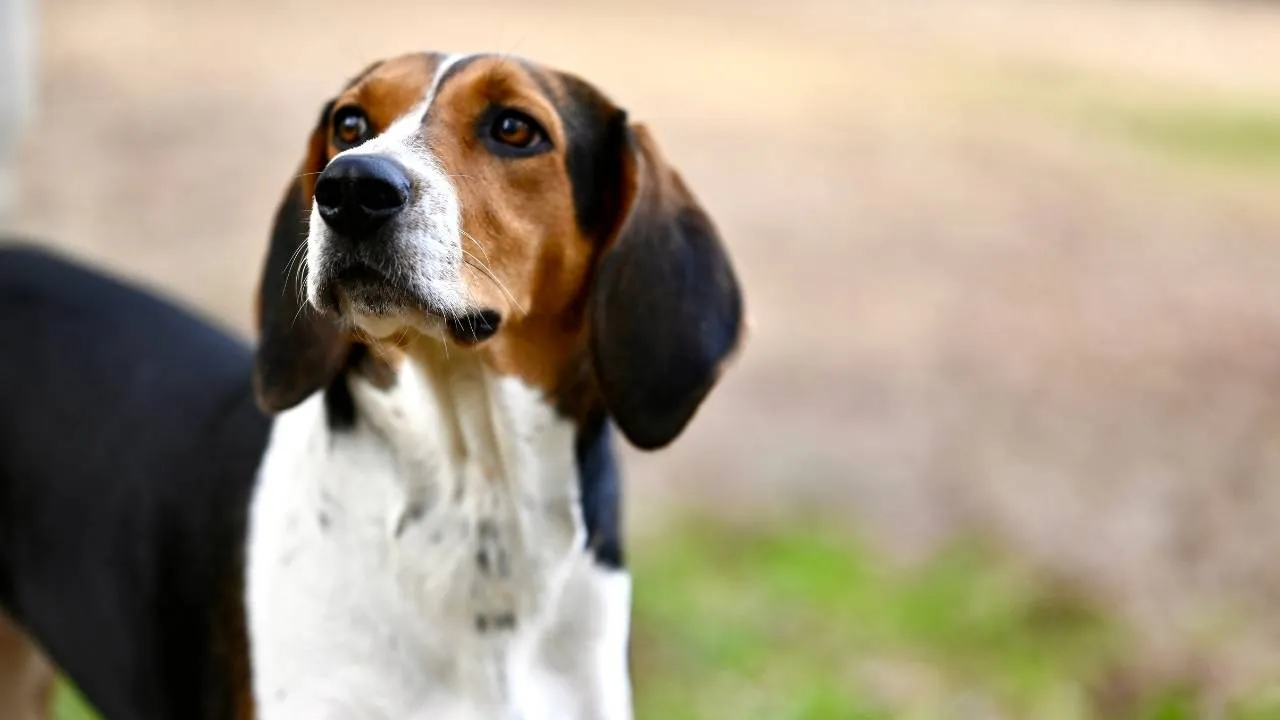
Treeing Walker Coonhounds are energetic scent hounds and skilled hunting dogs known for their speed, endurance, and superior noses.
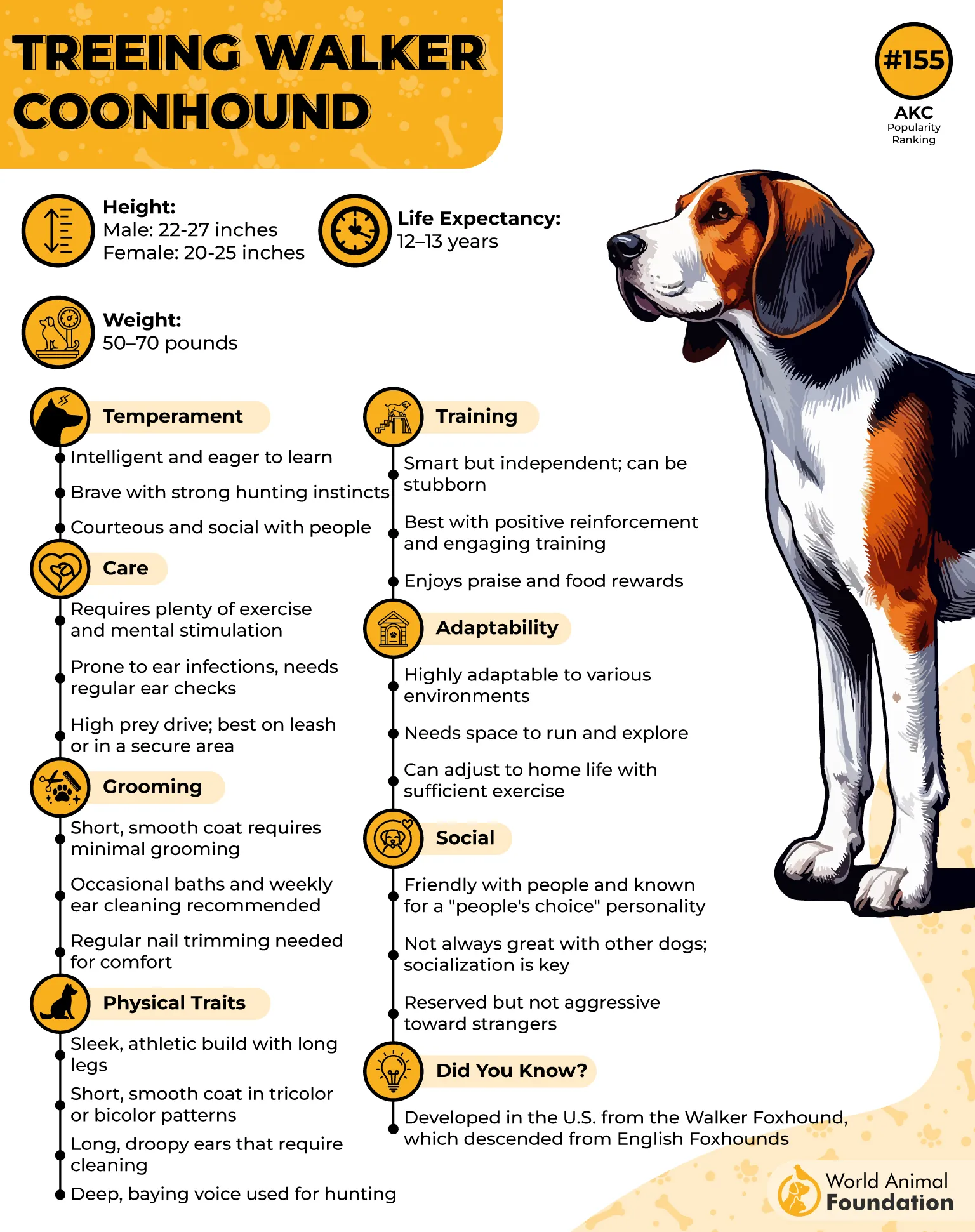
Developed to track and tree game, especially raccoons, they are capable of following fresh trails over long distances and work independently in diverse terrains. Their athletic build, strong drive, and distinctive baying voice make them dependable hunting companions.
Hunting Skills and Temperament
Treeing Walker Coonhounds are intelligent, eager to work, and highly motivated by their natural tracking behavior. They have plenty of energy and enjoy having a job to do, whether that means hunting, tracking, field trials, nose work, or agility.
They are generally friendly with people and other dogs when properly socialized, although their strong prey drive can make smaller animals tempting to chase. They are also highly vocal, with a loud bay that may not suit homes with close neighbors.
Exercise and Care
These treeing dogs need plenty of daily exercise and do best with active owners who enjoy hiking, running, long walks, hunting, or other outdoor activities.
At least an hour of active exercise each day is a good starting point, with scent-based games and tracking activities providing valuable mental stimulation.
According to Hill’s Pet, their strong nose means they should be kept on a leash or in a securely fenced area, as they may take off when they catch an appealing scent.
Conclusion
The best hunting dogs are more than skilled workers. They are loyal partners with the instincts, endurance, and trainability to thrive in the field.
The best breed depends on your hunting style, activity level, training experience, and the kind of companionship you want at home.
Before choosing a hunting dog, take time to understand the breed’s exercise, training, grooming, and temperament needs.
A well-matched canine can become an incredible hunting companion, but also a trusted member of the family. When the right dog and the right owner work as a team, every adventure can become a little more rewarding.
