




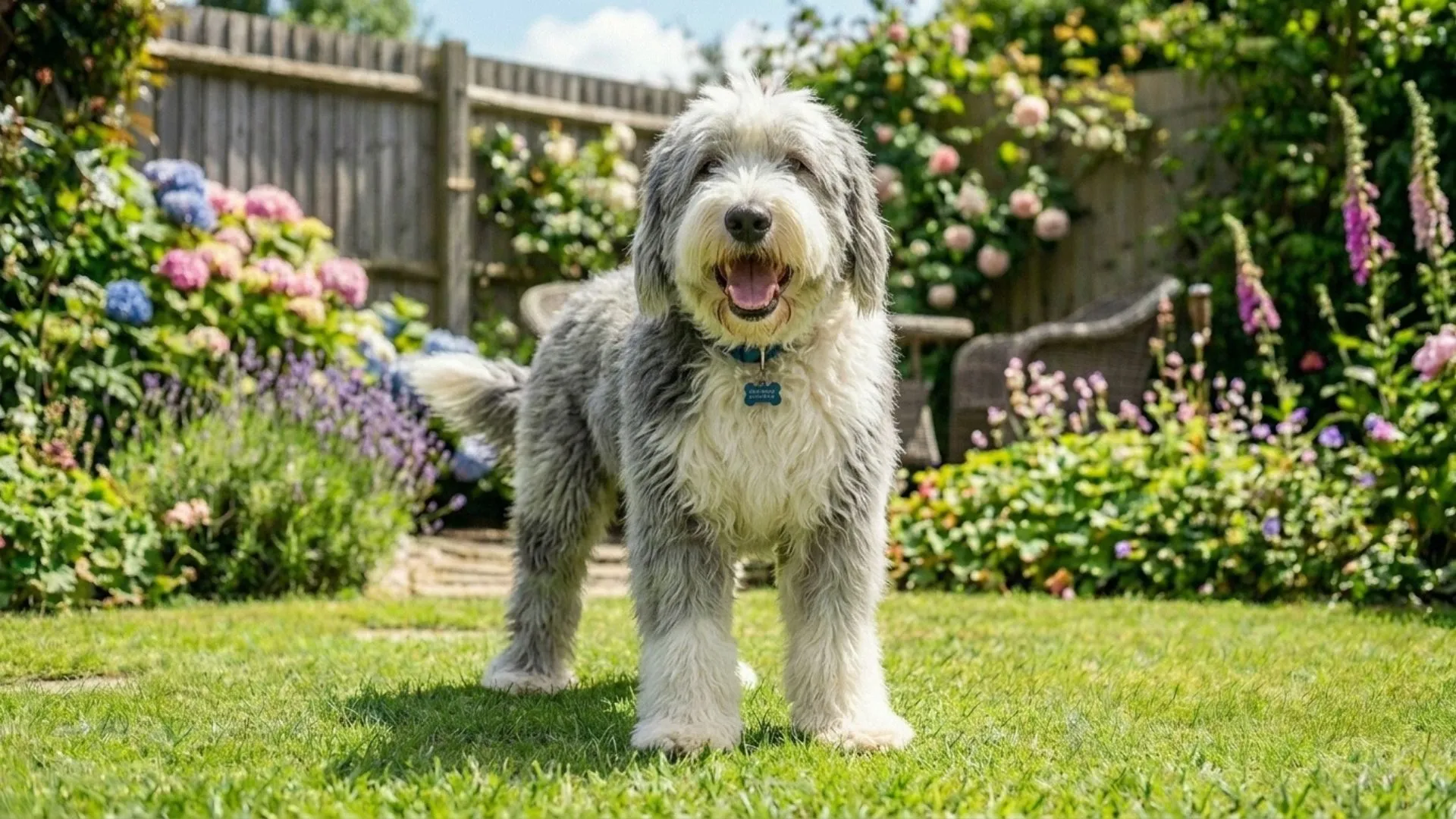
Some dogs walk into a room and steal the show, not by barking, but just by existing. Their coats are so ridiculously fluffy, you momentarily forget your own name. That is not a charm. That is a superpower.
Fluffy dog breeds have been captivating hearts for centuries. The APPA study shows nearly 71 million U.S. households own at least one dog, and appearance often plays a role in choosing.
Behind every cloud-like coat is the real personality, a real history, and a dog with quirks worth knowing. This is not just about pretty faces. Every breed has something genuinely fascinating hiding under all that fluff.
Stick around; this one is worth every scroll. Here is the list of 10 top stunning breeds when it comes to fluffiness.
Most Stunning Dog Breeds with Naturally Fluffy Coats
1. Pomeranian
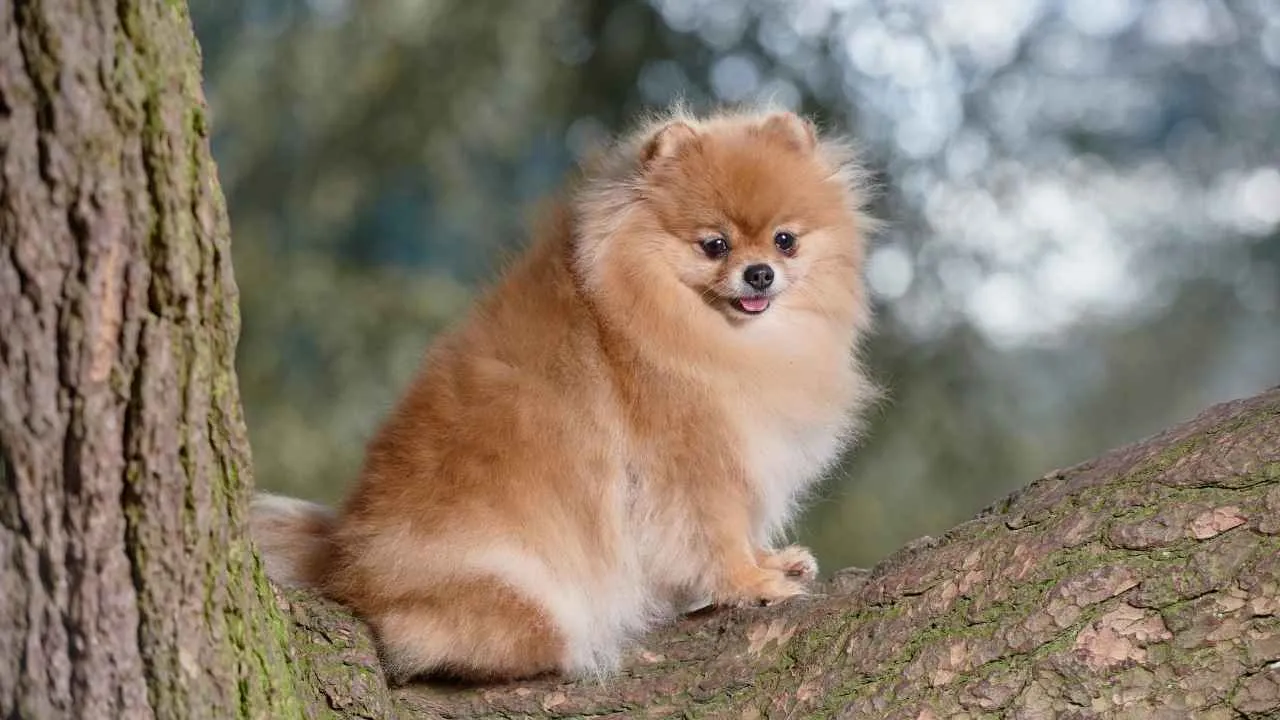
Originally bred as an Arctic sled dog, this affectionate and friendly dog is a cross of the Keeshond, Norwegian Elkhound, and the Samoyed. It was also adopted by Queen Charlotte, and was much heavier than it is today, according to Purina UK.
The double coat consists of two layers: the long, straight, weather-resistant, and harsh outer coat, and a soft and woolly undercoat that regulates temperature. The outer coat grows exceptionally on the neck region, giving it a lion’s mane appearance. The coat comes in solid colors: cream, red, black, orange, and white.
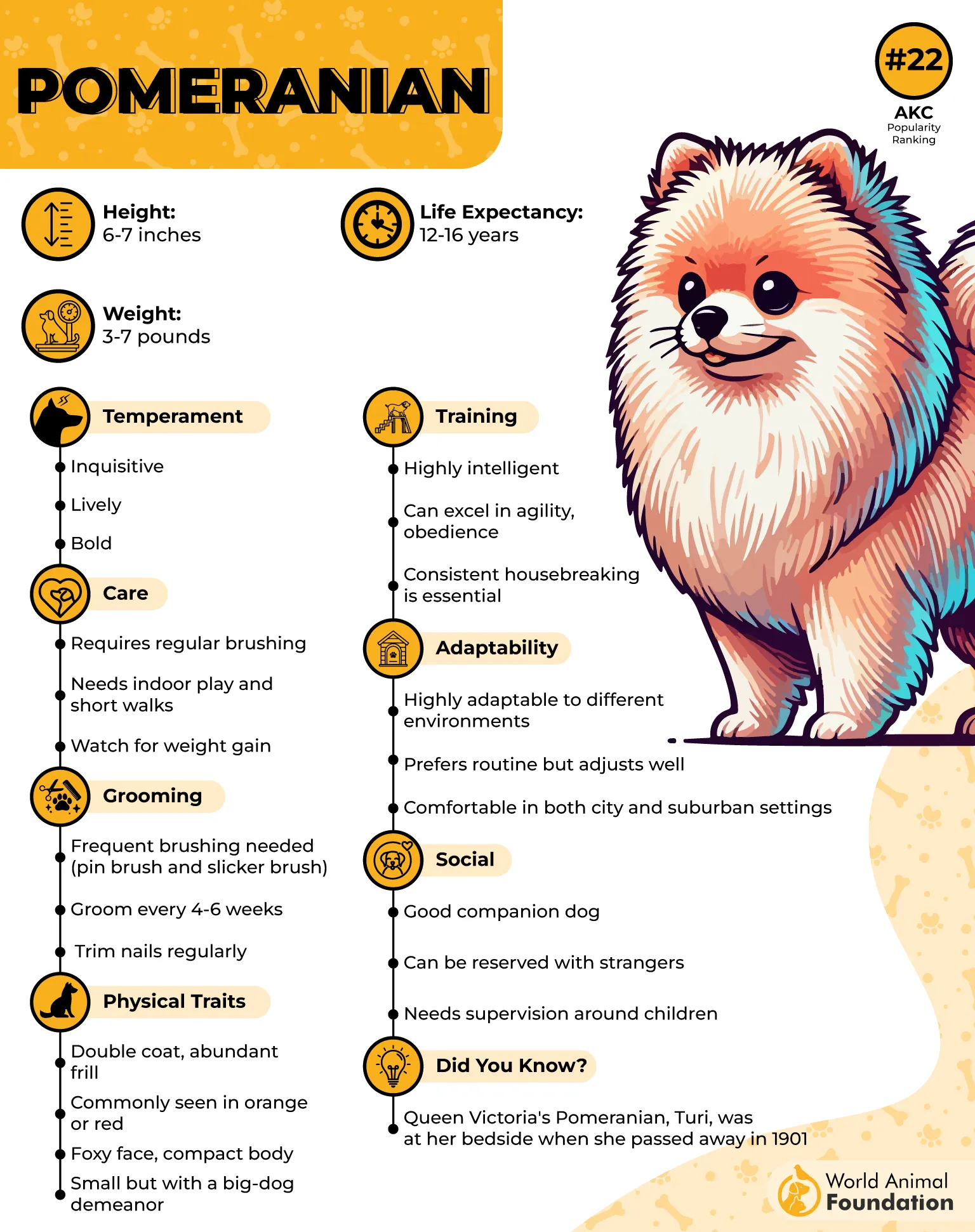
The elegant coat may also have color patterns: brindle, merle, sable, parti-color, and tri-colors. The coat has regular grooming needs: brushing 2-3 times a week (daily during shedding season), nail clipping after 4-6 weeks, and bathing after 1.5-2 months. Shaving the breed completely can lead to Alopecia X.
2. Coton de Tulear
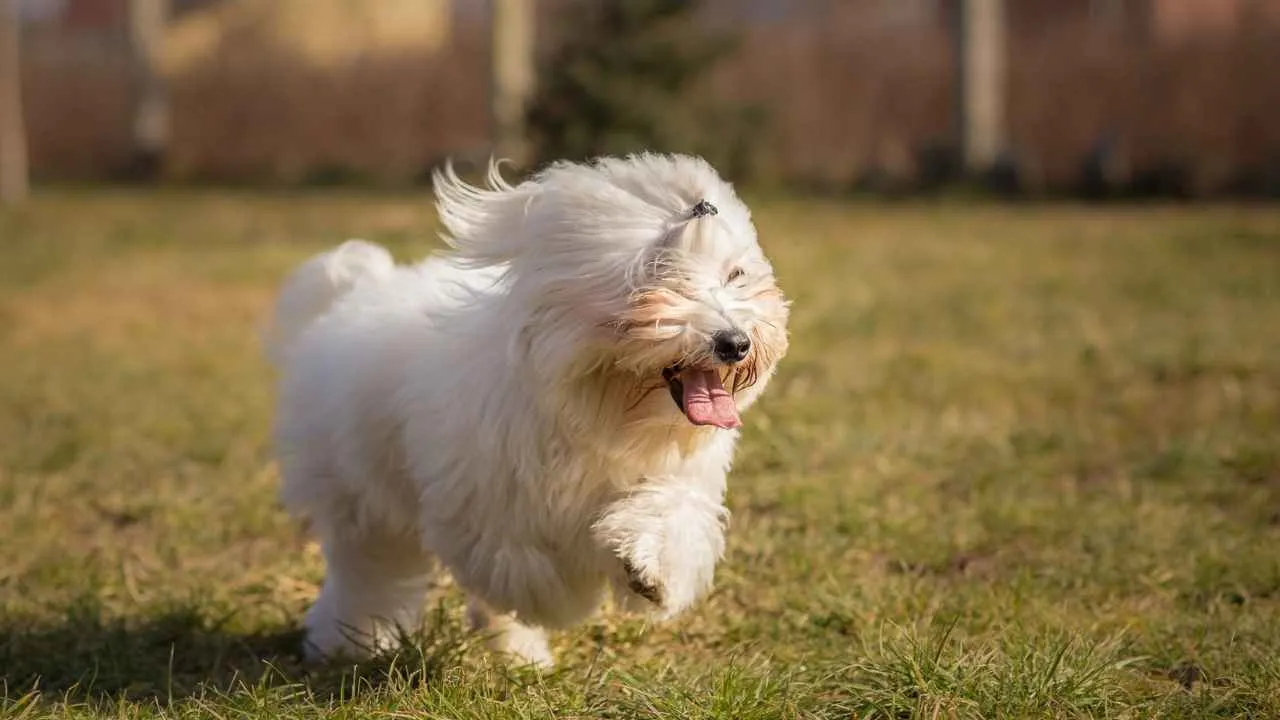
This small dog was developed in the city of Tuléar, Madagascar. It is known for its cotton-like coat; thus was given the name. It may sometimes come with grey, tan, black, and tri-color markings. It weighs around 7.7-18 pounds and stands 8.7-11.8 inches tall.
The slightly wavy coat consists of hair instead of fur. The coat is usually soft and should not feel woolly, silky, or coarse. It lacks an undercoat and grows 4-6.5 inches.
The long hair furnishings form a beard, mustache, and heavy feathering on the chest, legs, underside, and tail, making it look super fluffy. The astonishing coat is predominantly white; however, it comes in grey, red roan, and fawn highlights.
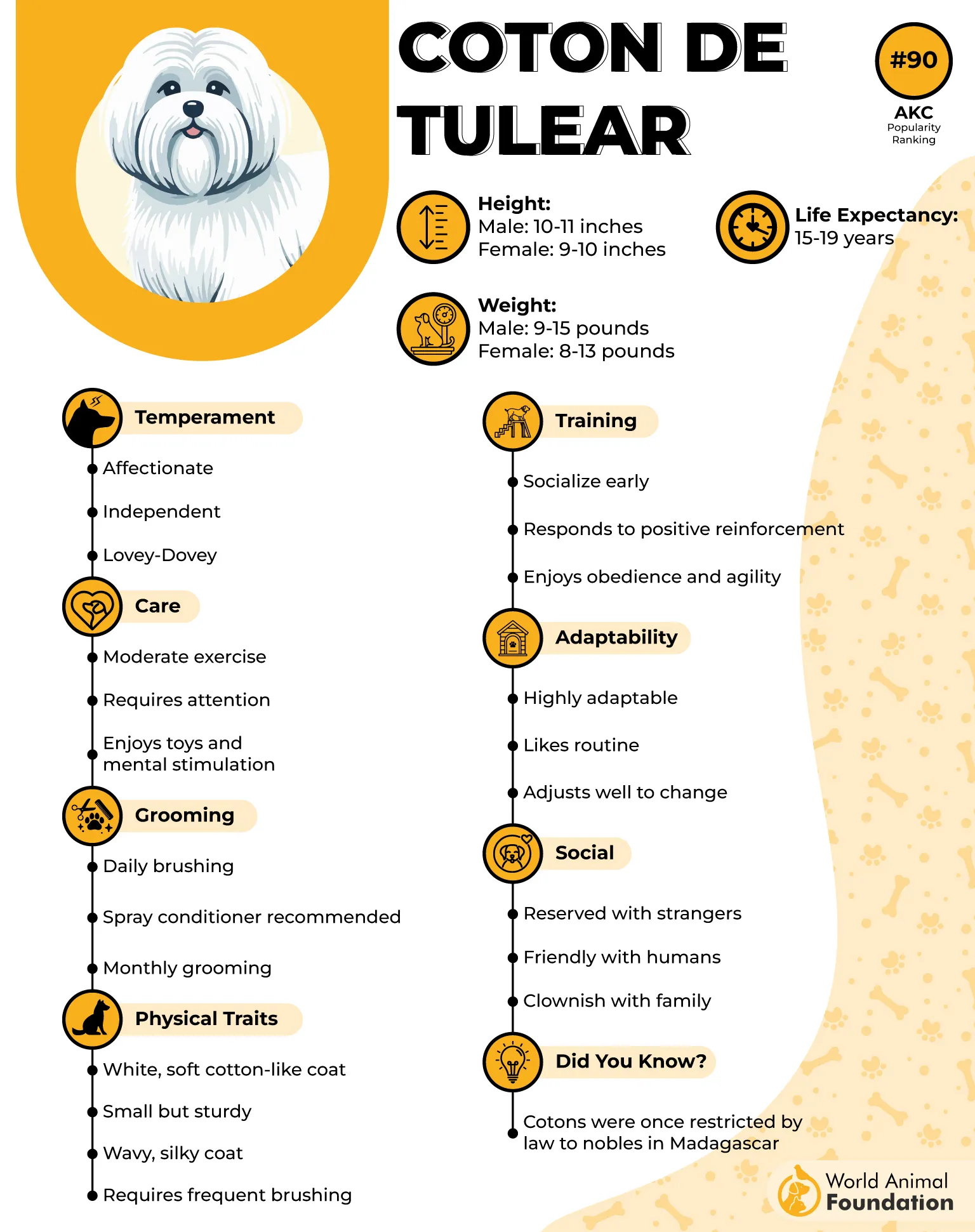
The hair contributes to low maintenance. The grooming routine must have 5 pillars: brushing (bi-weekly) to prevent matting and skin issues, monthly bathing, hair trimming (after 4-6 months), regular ear and eye checkups, and nail trimming after 1-2 weeks.
3. Chow Chow
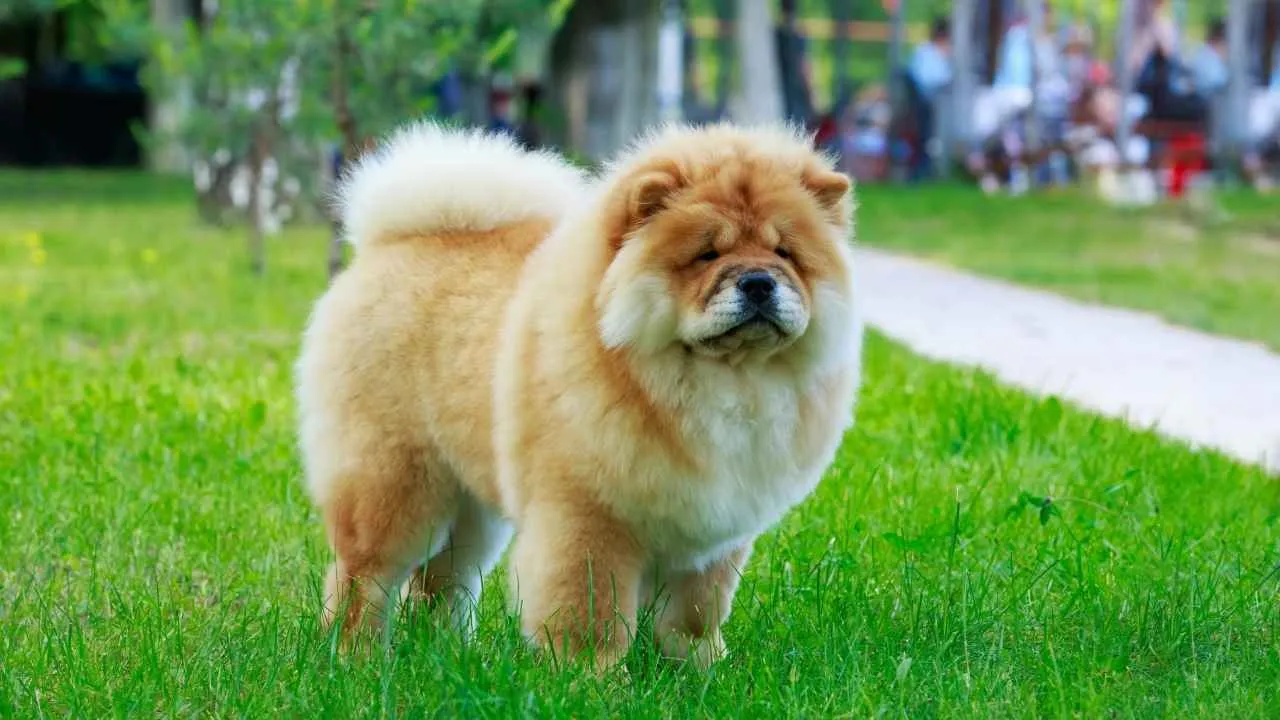
This is one of the oldest dog breeds and was developed in China, with a history dating back to 206 B.C. DNA studies revealed that the dog has roots from the Shar-Pei, Shiba Inu, and Akita. Queen Victoria played an important role in populating the breed when the breed club was formed in England in 1895.
The breed has 2 distinct coat types: rough and smooth. The rough coat consists of a straight outer coat and a woolly undercoat. The fur stands off the body, giving it a lion-like appearance.
The smooth coat is relatively shorter and does not have a pronounced ruff. The coat comes in 5 different colors: cinnamon, cream, blue, black, and red.
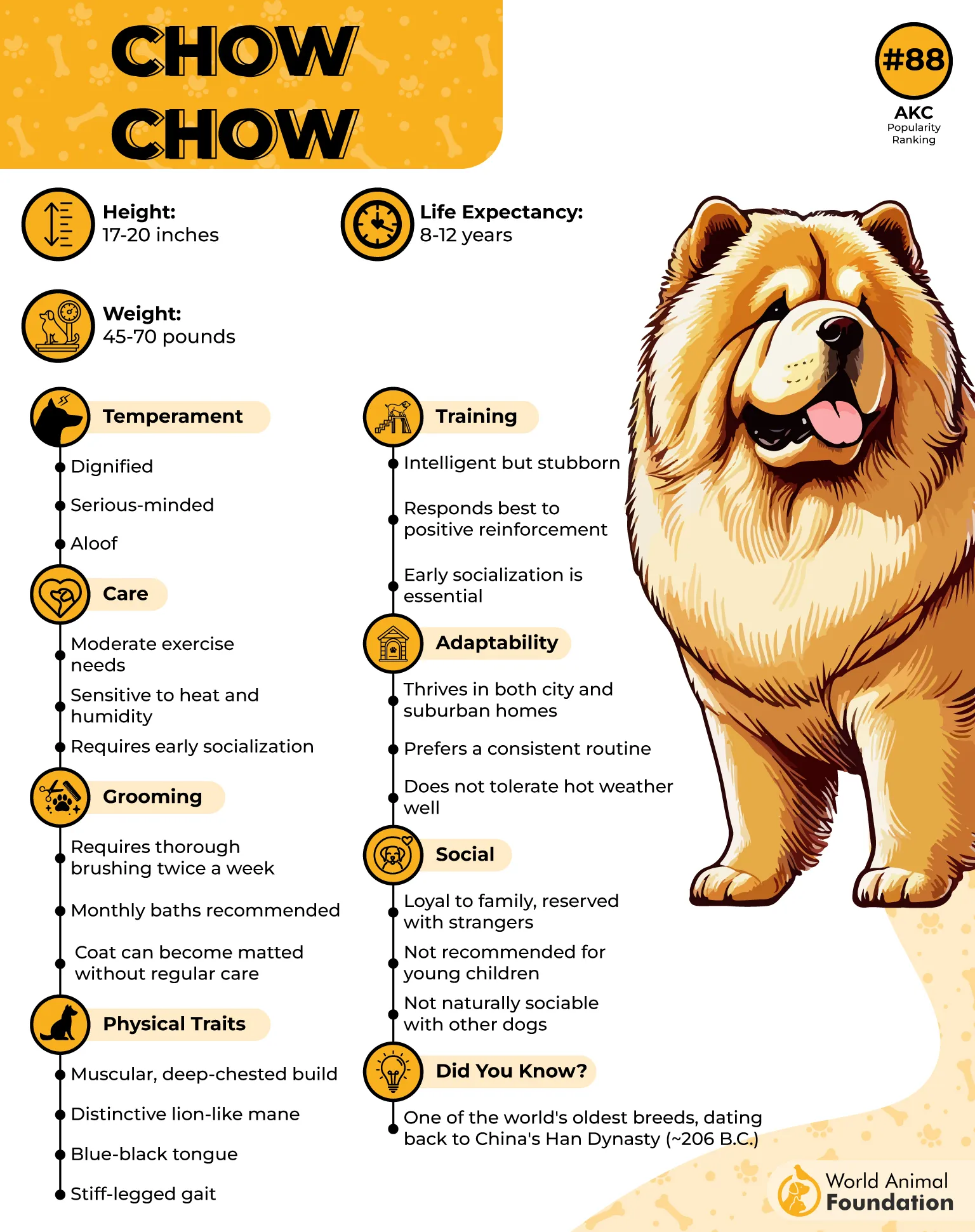
Its unique feature is having a black/blue tongue. It has a deep muzzle, almond-shaped eyes, triangular, erect ears, and a curly tail. Use a long-pin slicker brush, steel comb, undercoat rake, and a dog force dryer for grooming. Always adopt the ‘line brushing’ technique and never dry brush to prevent breakage.
4. Samoyed
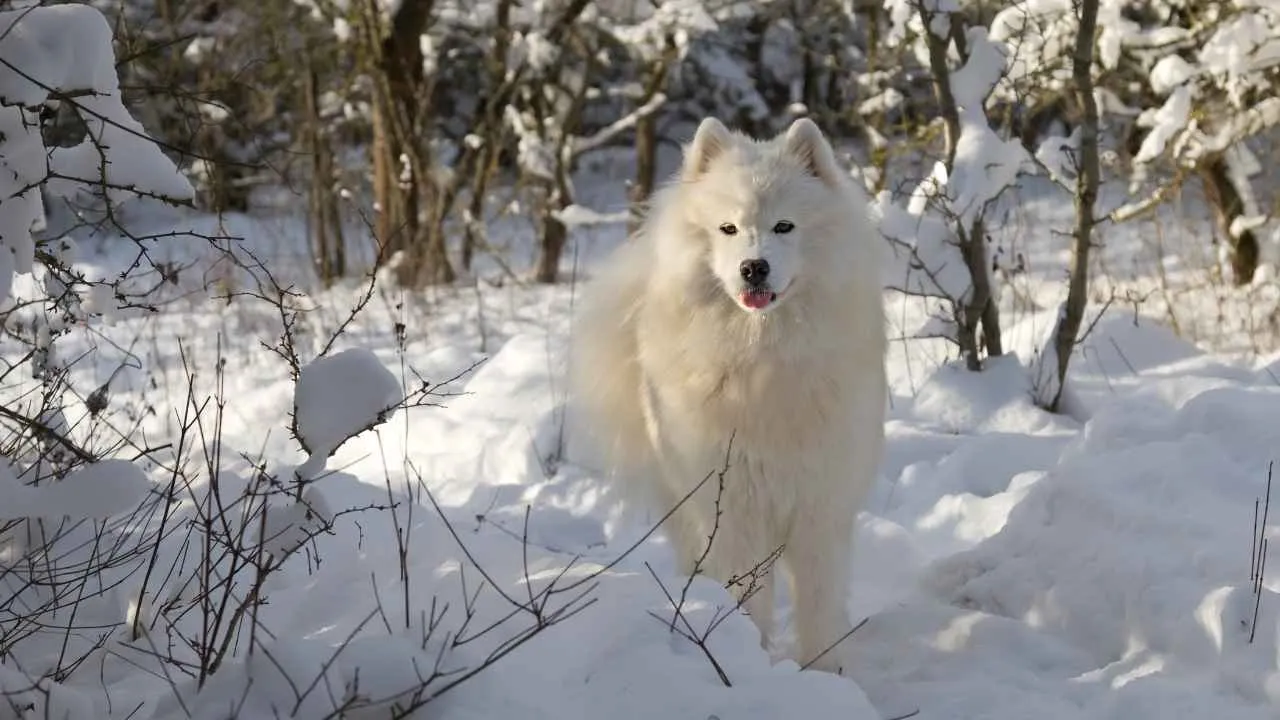
This spitz-type herding dog was bred in Russia and got its name from the Samoyedic peoples of Siberia. This great family dog is widely used in protection, hunting, herding, and sled-pulling. It has a white and thick double coat, which is naturally water repellent, as per Wikipedia.
The thick and weather-resistant double coat was designed for the cold climates of the Arctic region. The coat color comes in pure white, white and biscuit, cream, or all biscuit. It has a famous ‘Sammy smile,’ where its lips are upturned, exposing teeth. This adaptation prevents icicles from forming around the mouth.
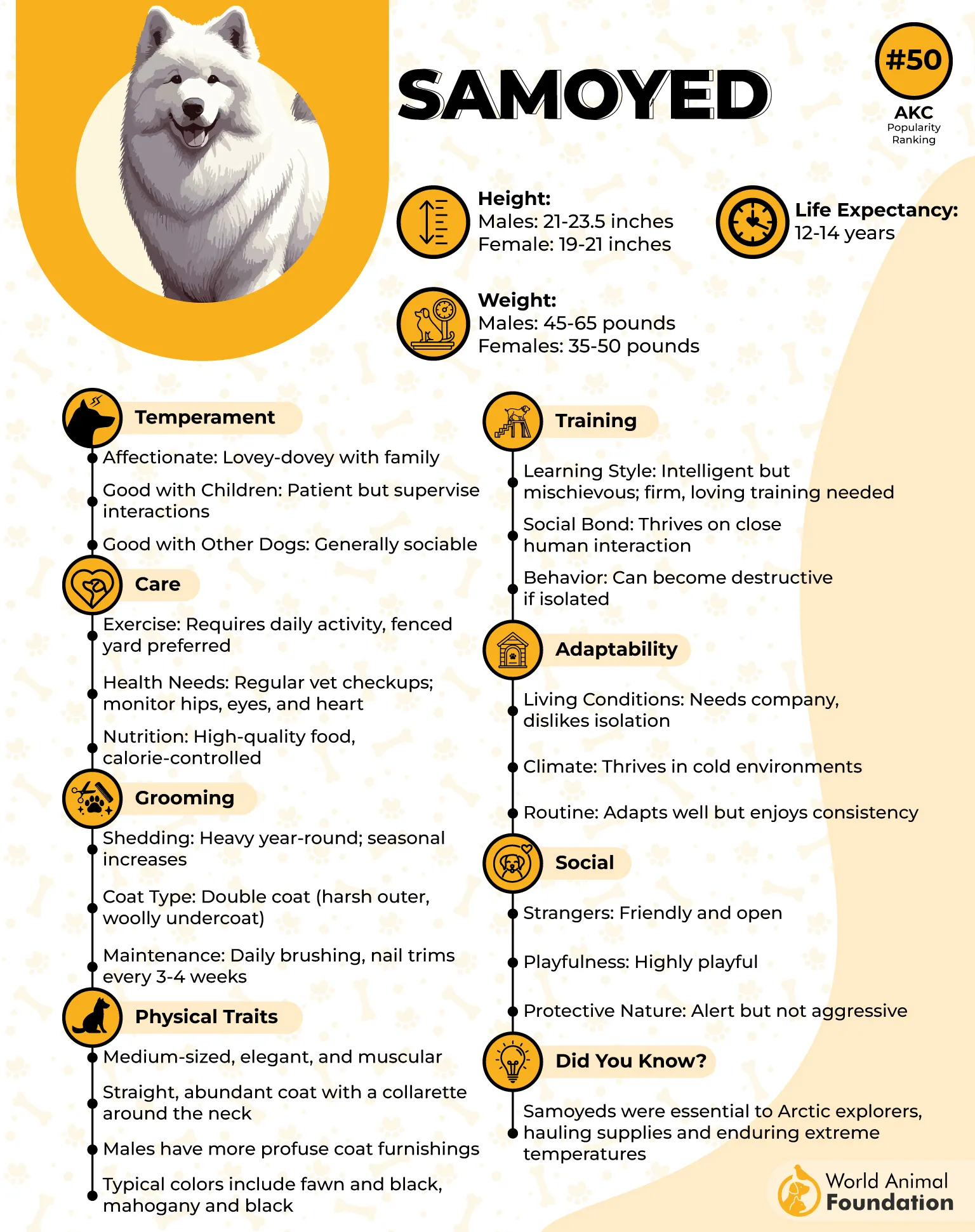
Its guard hair has natural oils that make the coat dirt and water repellent. The coat sheds year-round and needs regular brushing (3-5 times a week), bathing (after 2-3 months), and professional grooming after 2-3 months.
5. Keeshond
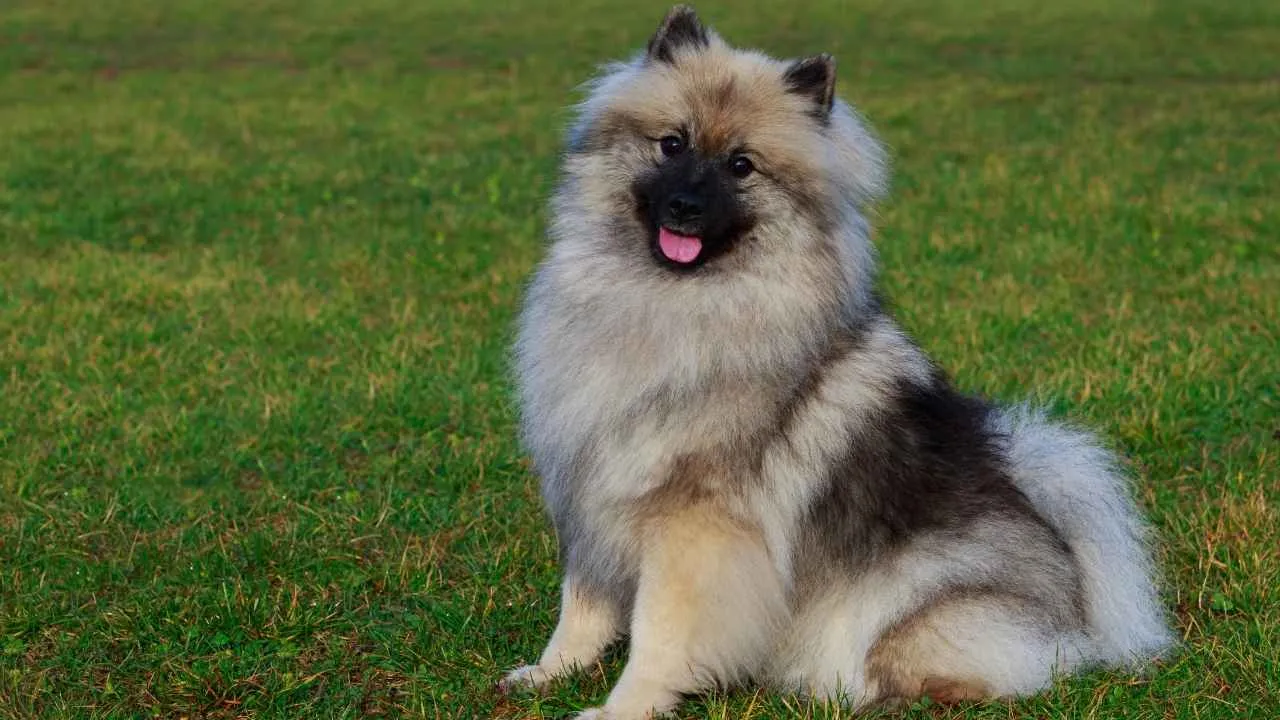
Previously known as the Dutch Barge Dog, the Keeshond is a medium-sized German Spitz dog. It is considered a symbol of the Patriot faction in the Netherlands during political unrest in the French Revolution. With its strong reflexes and jumping ability, it is eager to please and an excellent entertainer.
It has a prominent neck mane and feathered ‘trousers,’ and long-haired head and ears. The thick fur protects the delicate skin from certain skin issues, including scratches, sunburns, and insect bites. It has a minimal or zero dog odor because of fewer oil-producing glands.
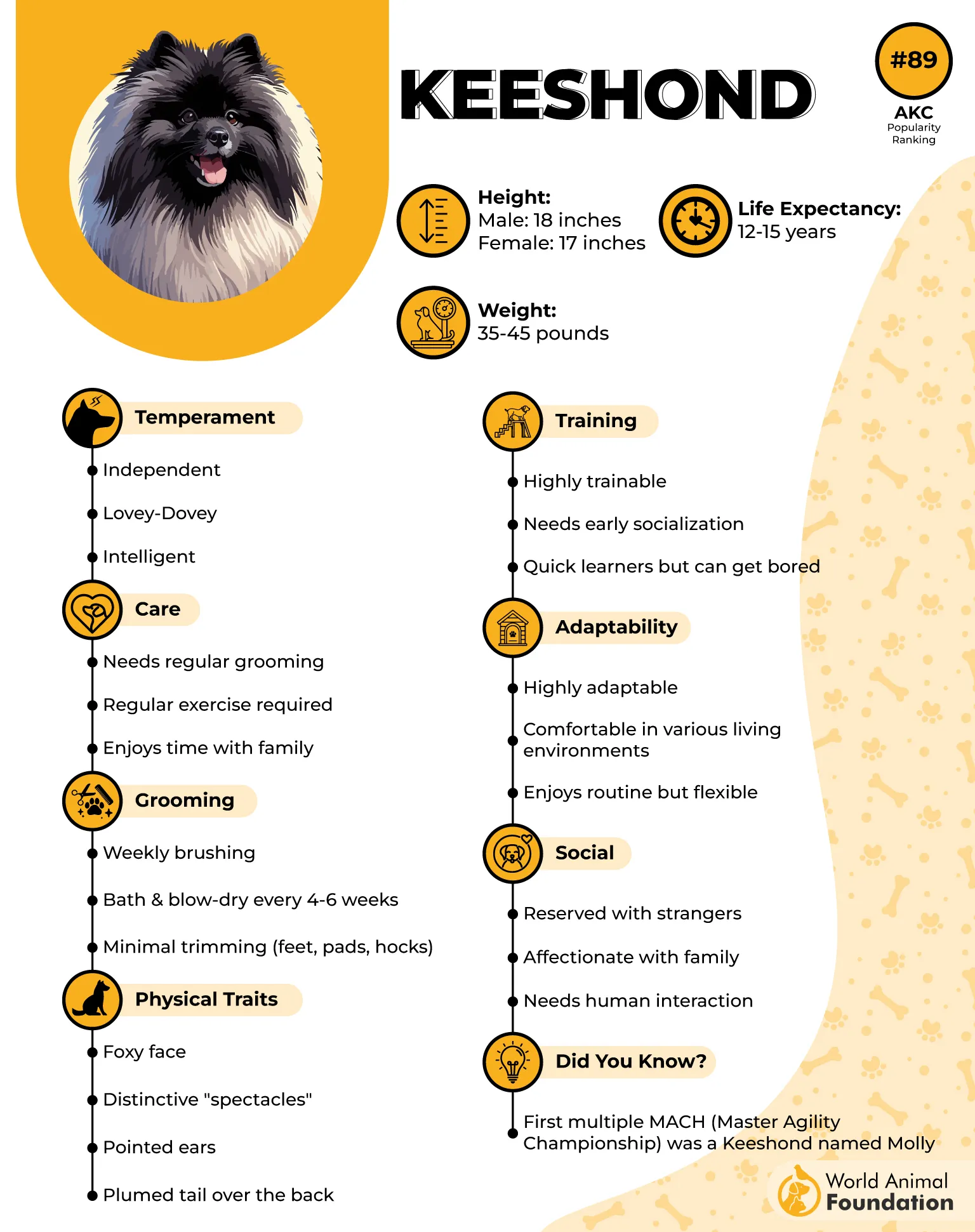
Brushing the coat properly circulates air in the skin. If there are any mats or tangles left, they can house moisture and heat, leading to skin issues. The color palette consists of wolf-gray, black, and cream color combinations. Use a high-velocity dryer to blow away loose hair.
6. American Eskimo Dog
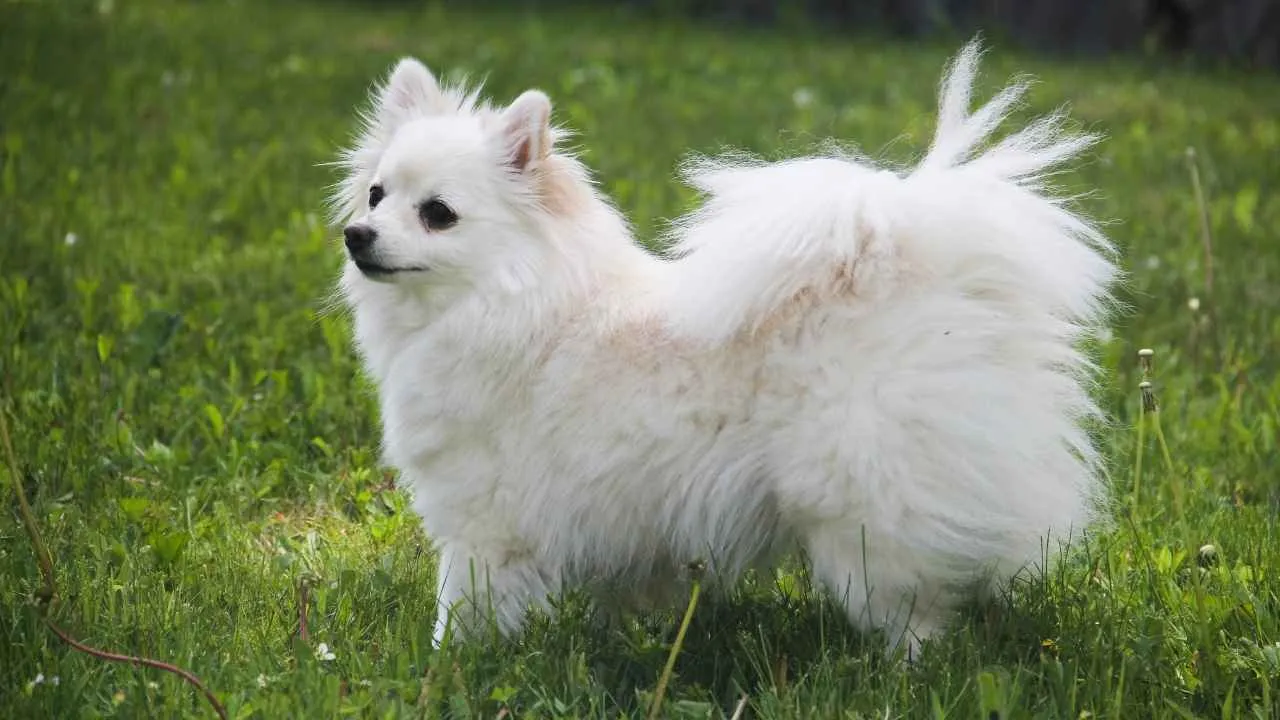
This gentle giant was developed originally in Germany, and the primary goal was to serve as a companion and a watchdog. It was also used as a circus performer between the 1930s and 1940s. The American Eskimo Dog comes in three different sizes: toy breed, miniature, and standard.
The dual-layered coat is an excellent thermoregulator: trapping air in winter and shielding skin from scorching summer. The back of the front legs is well feathered. The muzzle has short and smooth hair. It has black pigment around the eyes, lips, and nose.
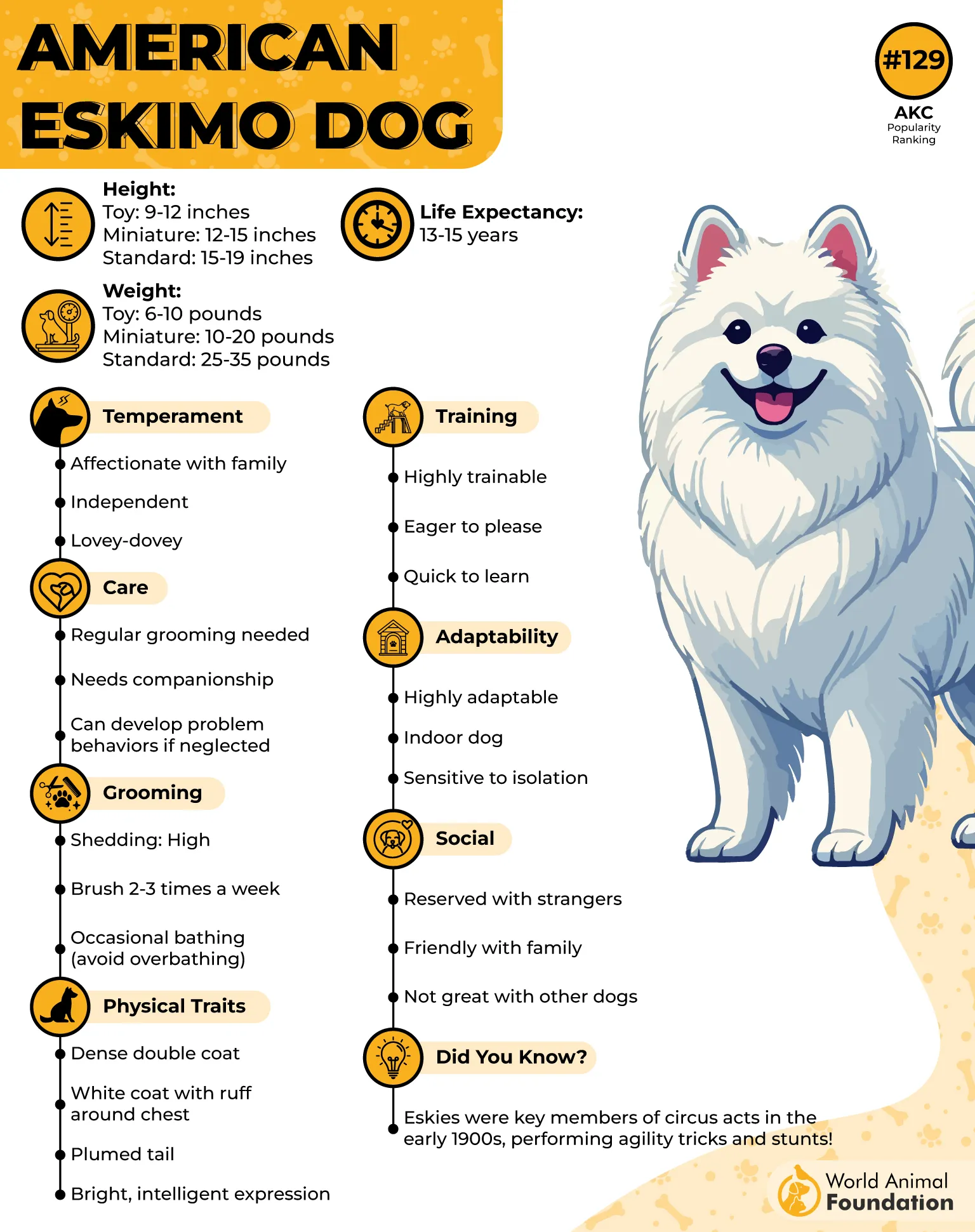
Use an undercoat rake to thoroughly remove loose hair from the undercoat and evenly distribute natural oils. Regular bathing is required after 1-3 months. Always dry the coat completely before brushing to prevent skin irritation, hot spots, and bad odor.
7. German Spitz
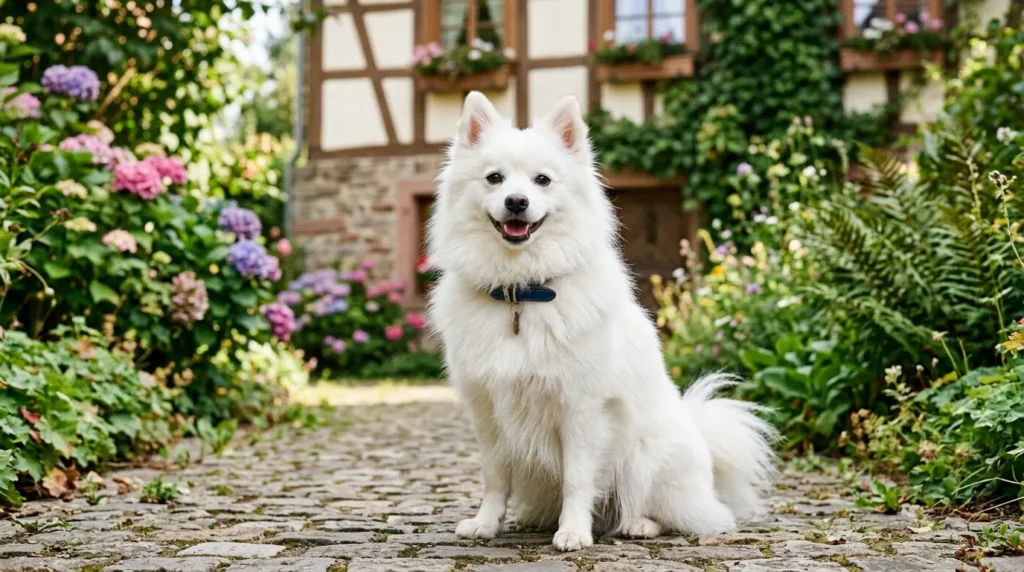
The oldest breed in Central Europe, dating back 6,000 years, the German Spitz has been found in the Netherlands, Germany, Denmark, England, and Ireland. The ‘Spitz’ in its name derives from an old Dutch word that literally means ‘pointed peaks.’ It was originally bred as a watchdog to control vermin, says the American Kennel Club.
The plumed and curly coat protects the face and nose from freezing air while sleeping curled up. Because of its working dog history in cold climates (farm, herding, and guarding tasks), the coat is designed to survive in sub-zero temperatures.
Shaving the coat entirely affects the temperature-regulating property of the breed. Use a pin brush, steel greyhound comb, slicker brush, and an undercoat rake to brush the coat weekly. You need to brush the breed ‘the opposite way,’ unlike most breeds. Comb the coat from back to front to reach the roots and remove dead undercoat.
8. Japanese Spitz
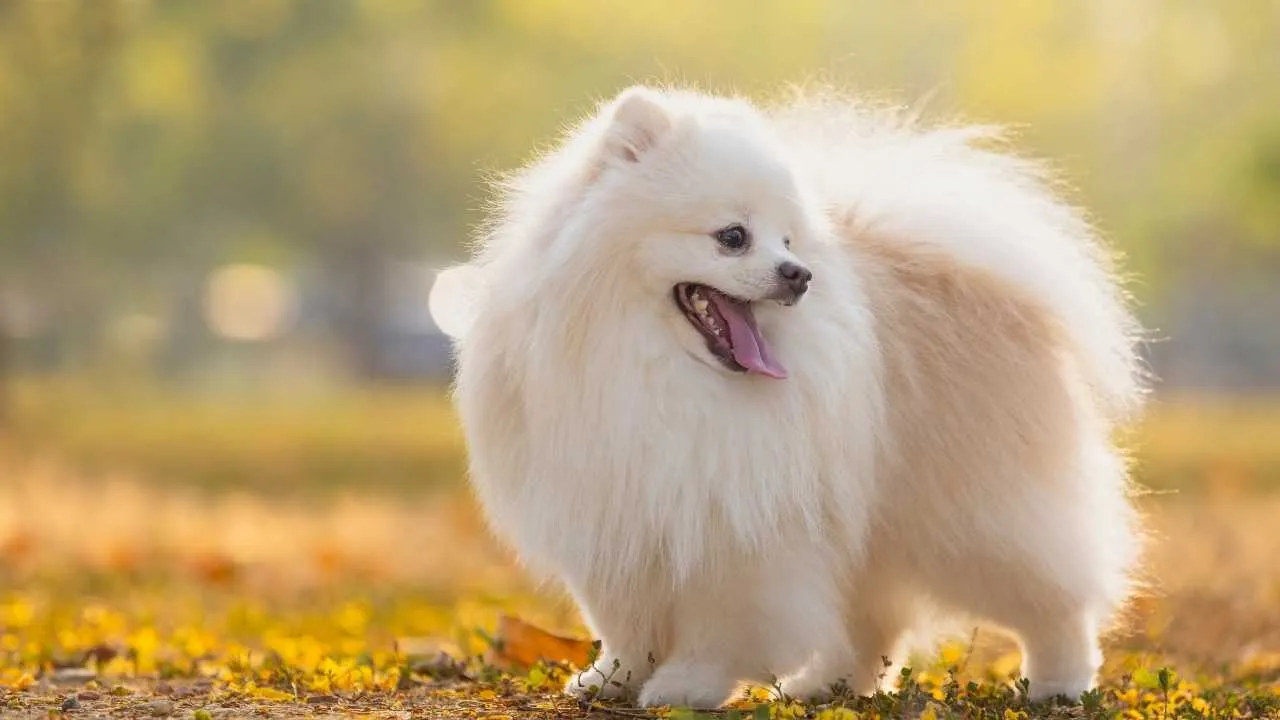
This small-to-medium breed is similar to its cousin, the Pomeranian. This great family pet was developed in Japan by crossing various Spitz-type breeds. Though it is a companion dog, it is an excellent watchdog. It tends to bark at strangers when they enter its territory.
The dog’s hair has a ‘ Teflon-like’ texture, with jet-black eyes, nose, eye rims, lips, and black paws enhancing the grace of the white coat. It has a cat-like personality and cleans its coat by licking its paws and coat to remove dirt and debris. The hard outer coat forces water to run off, preventing it from reaching the skin. This avoids moisture and, thus, prevents skin infections.
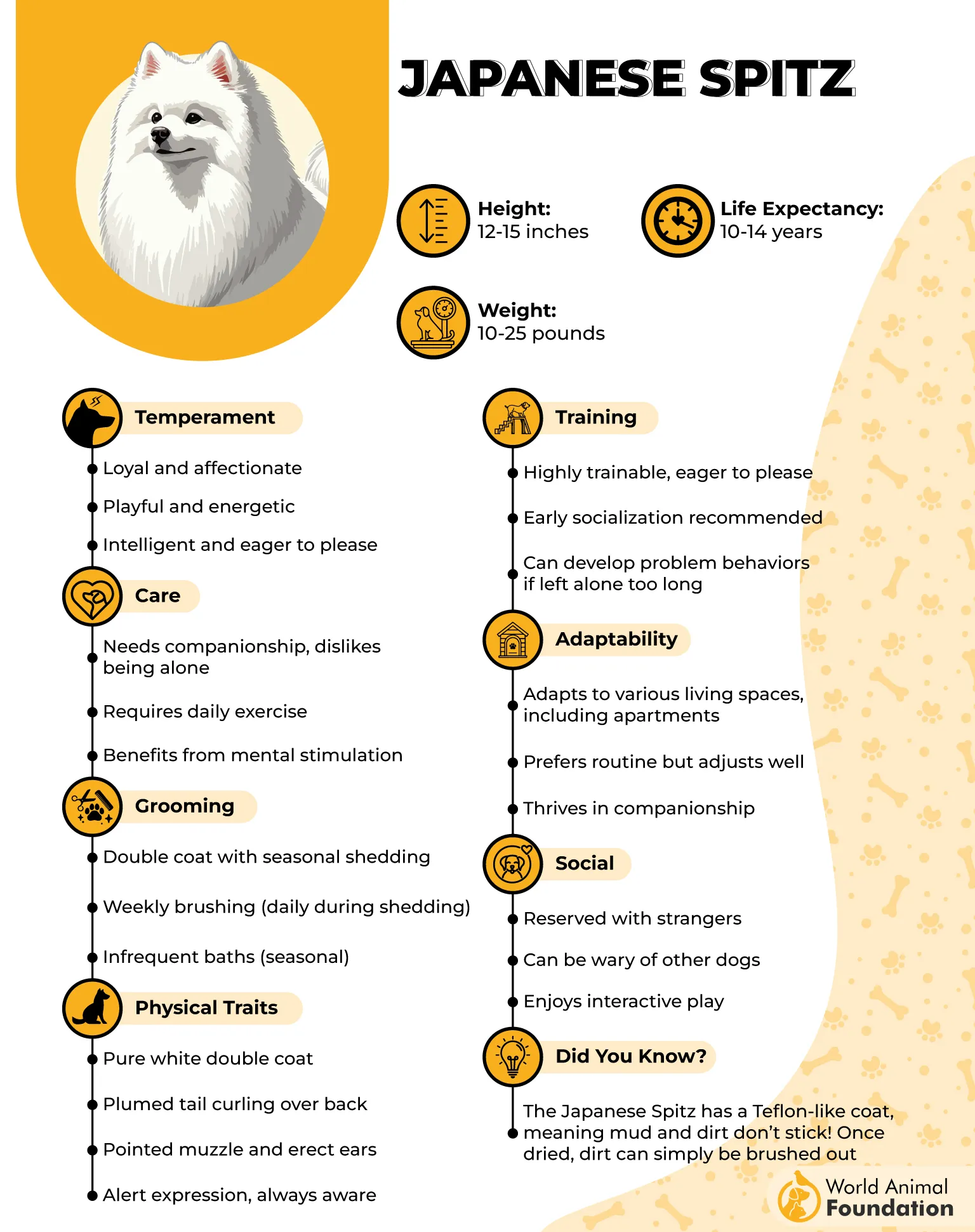
Use a slicker brush and a metal comb to check for tangles behind the ears and hind legs. Overgrown hair between paws needs to be trimmed regularly using grooming scissors. It needs 30-60 minutes of daily exercise: fetching, running, walks, and agility training.
9. Old English Sheepdog
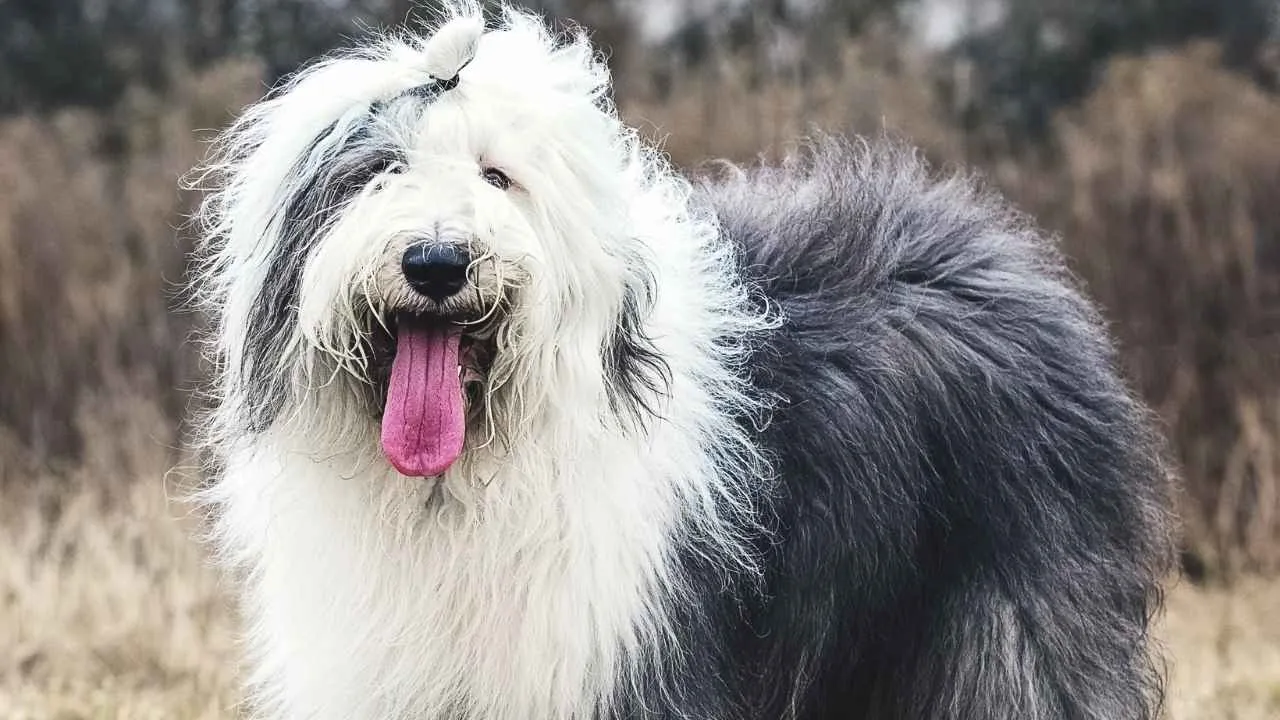
The history of the breed started some 200 years ago in the west of England. This woolly work dog was used to herd cattle and sheep from the farm to the market. It has a panda-like body covered in shag carpet. Despite being heavy (60-100 pounds), the fluffy friend loves lying on the couch all day.
This dog has a hard-to-touch and shaggy coat that is neither straight nor curly. It comes in various colors: blue, blue merle, grizzle, and grey combined with white markings. The coat provides a cushion around the musculoskeletal frame, protecting the dog from injuries.
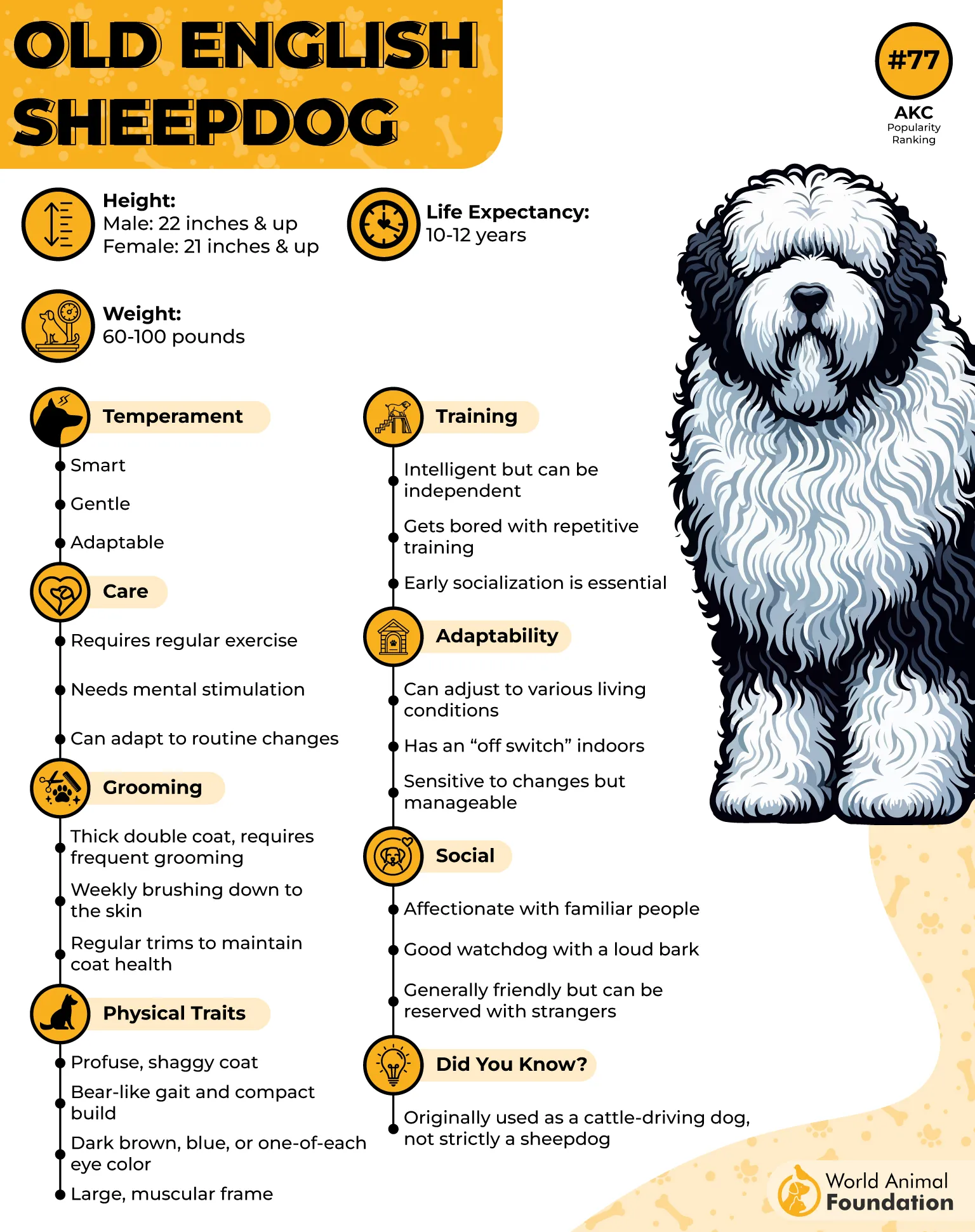
Daily brushing is ideal to keep the coat healthy. Puppy cut is recommended after 6-8 weeks by a professional groomer. Hair around the ears and eyes is trimmed weekly to prevent infection. The breed is not suggested for first-time dog owners since it has high exercise requirements (1-2 hours daily).
10. Newfoundland
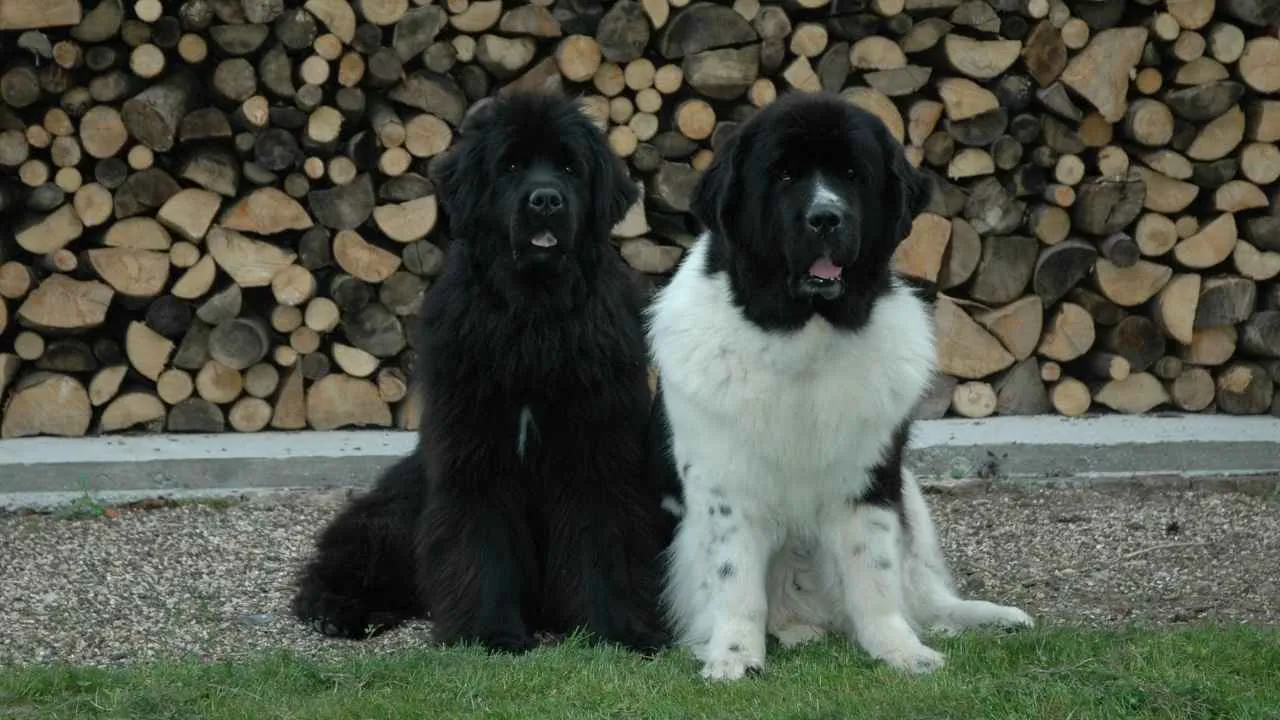
This is a large working dog breed from Newfoundland and comes in different coat colors: black, brown, grey, or black and white. It was developed for fishermen to rescue people because of its muscular build, webbed paws, thick coat, and swimming abilities. It weighs around 143-176 pounds and stands 22-30 inches tall.
The lustrous coat comes in various shades: sheep black sheen, brown and grey (rich chocolate shades and charcoal tones), landseer (white base with black markings), and irish markings. The outer coat is naturally oily. The buoyancy coat traps air, acting as a floating coat, making it an excellent swimmer.
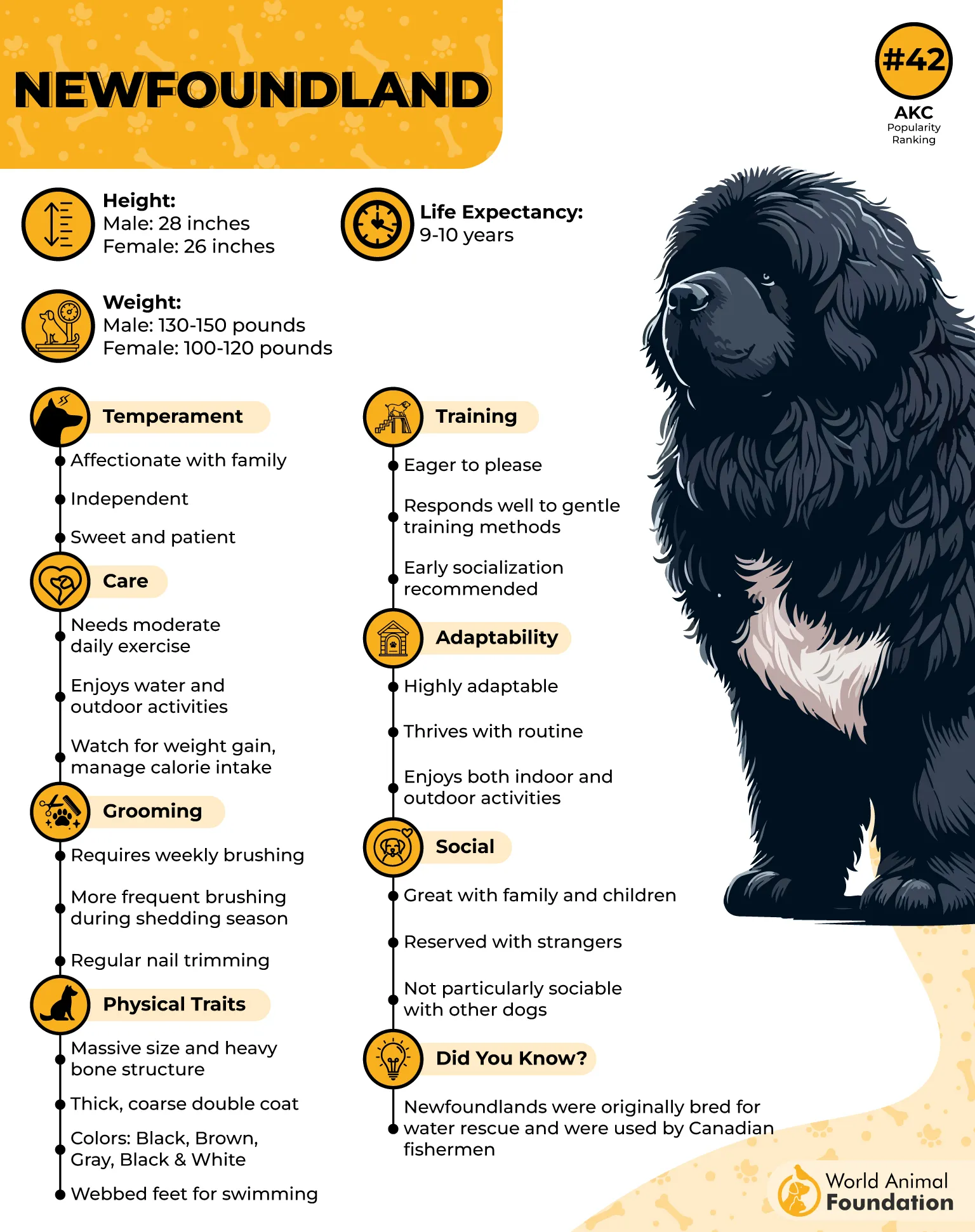
Use a pin brush for ‘line brushing’: part the fur on the skin, and brush the hair downwards into small sections. It is habitual to drool. Thus, keep a ‘slobber towel’ to gently wipe the chin and chest. Monthly nail trimming is highly recommended.
Conclusion
From a theatrical Pomeranian to the ocean-going Newfoundland, the big fluffy dog breeds are anything nut one-dimentional. Every single one carries a working purpose and a personality that runs far deeper than how they photograph on a sunny afternoon. These breeds make life better in ways that are hard to put into words.
If any dog on this list stopped you mid-scroll, that is no coincidence. The right breed has a way of finding you before you have officially decided anything. That instinct is usually worth trusting.
