




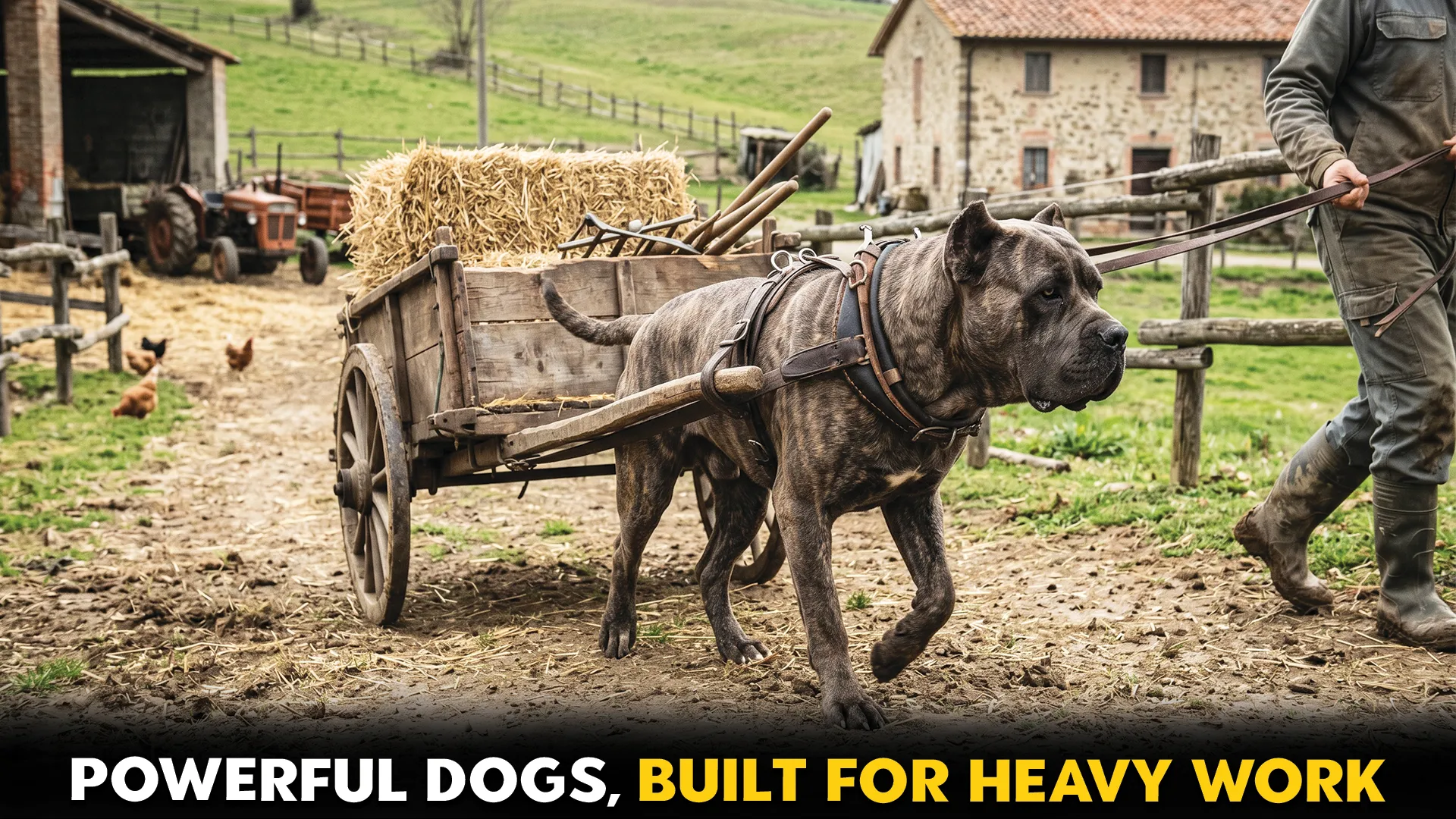
Farms don’t run on silence—they run on movement, instinct, and the nonstop energy of animals and the people (and dogs) managing them. When the day starts early and the workload never seems to end, strong, dependable dogs become the real backbone of rural life.
These hardworking companions help control livestock, protect property, and keep chaos from taking over wide-open fields. Whether it’s guiding cattle, keeping sheep in line, or standing watch against predators, their presence makes a real difference in daily farm routines.
Across different regions, many powerful and intelligent dog breeds have been originally bred for tough outdoor jobs. Their natural instincts, high energy, and sharp awareness make them ideal for long hours of demanding work.
With proper training and socialization, these dogs turn into reliable partners who not only assist farmers but also form strong bonds with the land, animals, and people they protect every day.
Strong Dog Breeds for Heavy-Duty Farm Jobs
1. Great Pyrenees
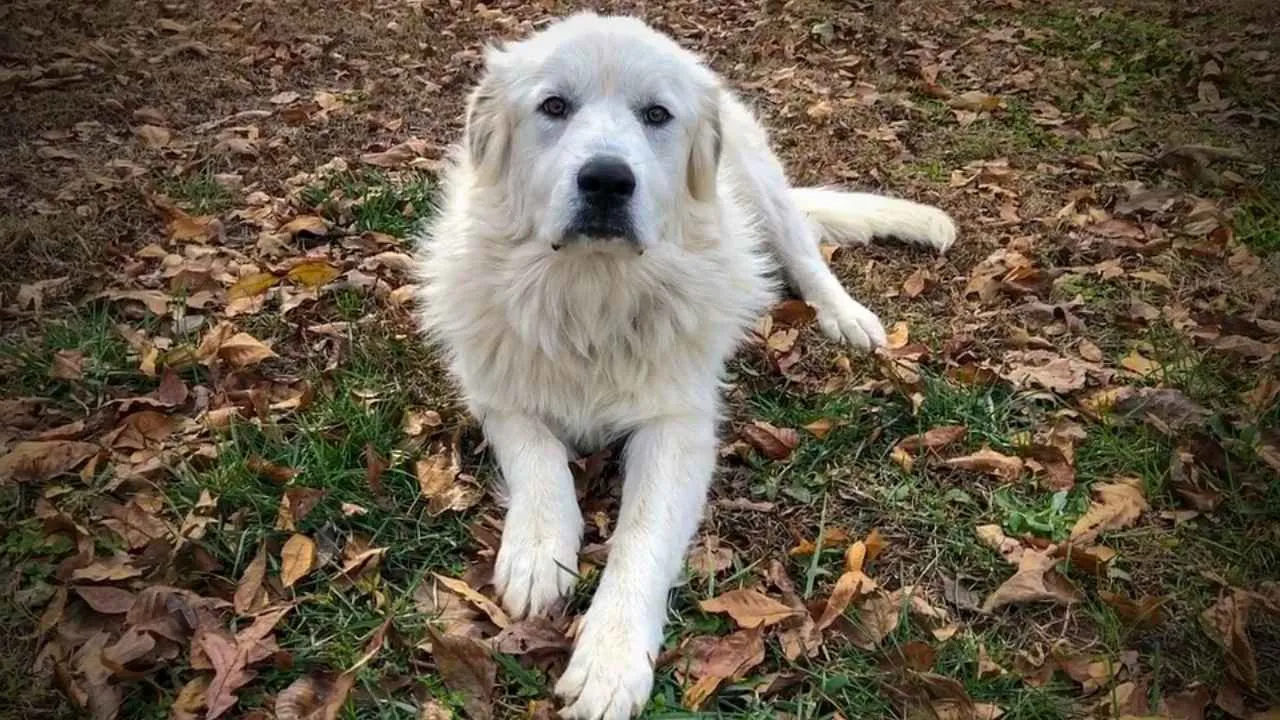
Built like a living snow wall with a calm stare that says “I’ve seen things,” this mountain dog was developed to stand between livestock and danger on harsh terrain.
Despite its massive frame and thick coat, this working breed moves with surprising ease when duty calls. Most of the time, it prefers a slow, thoughtful patrol, conserving energy like a professional in break mode until something feels off, as per AKC.
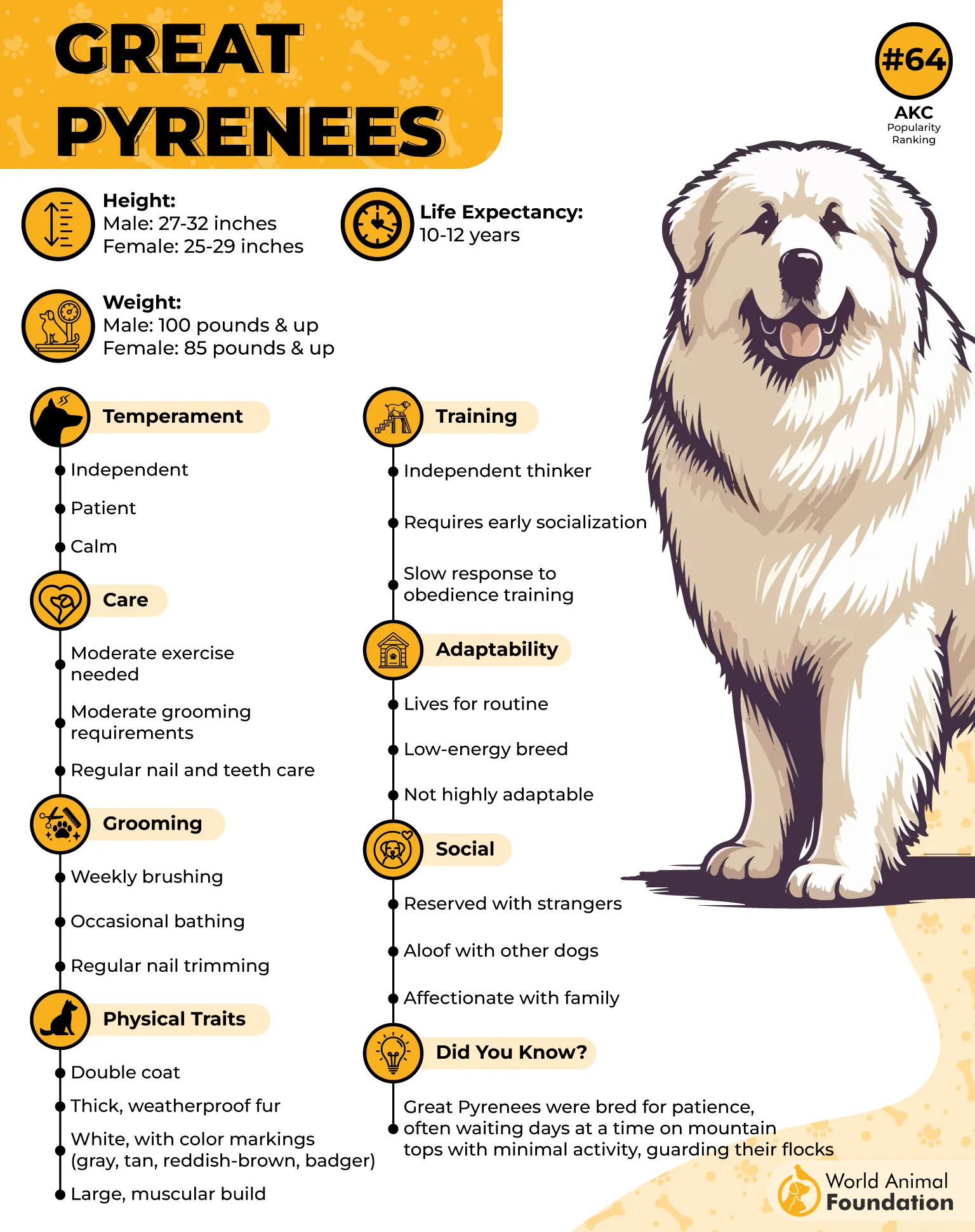
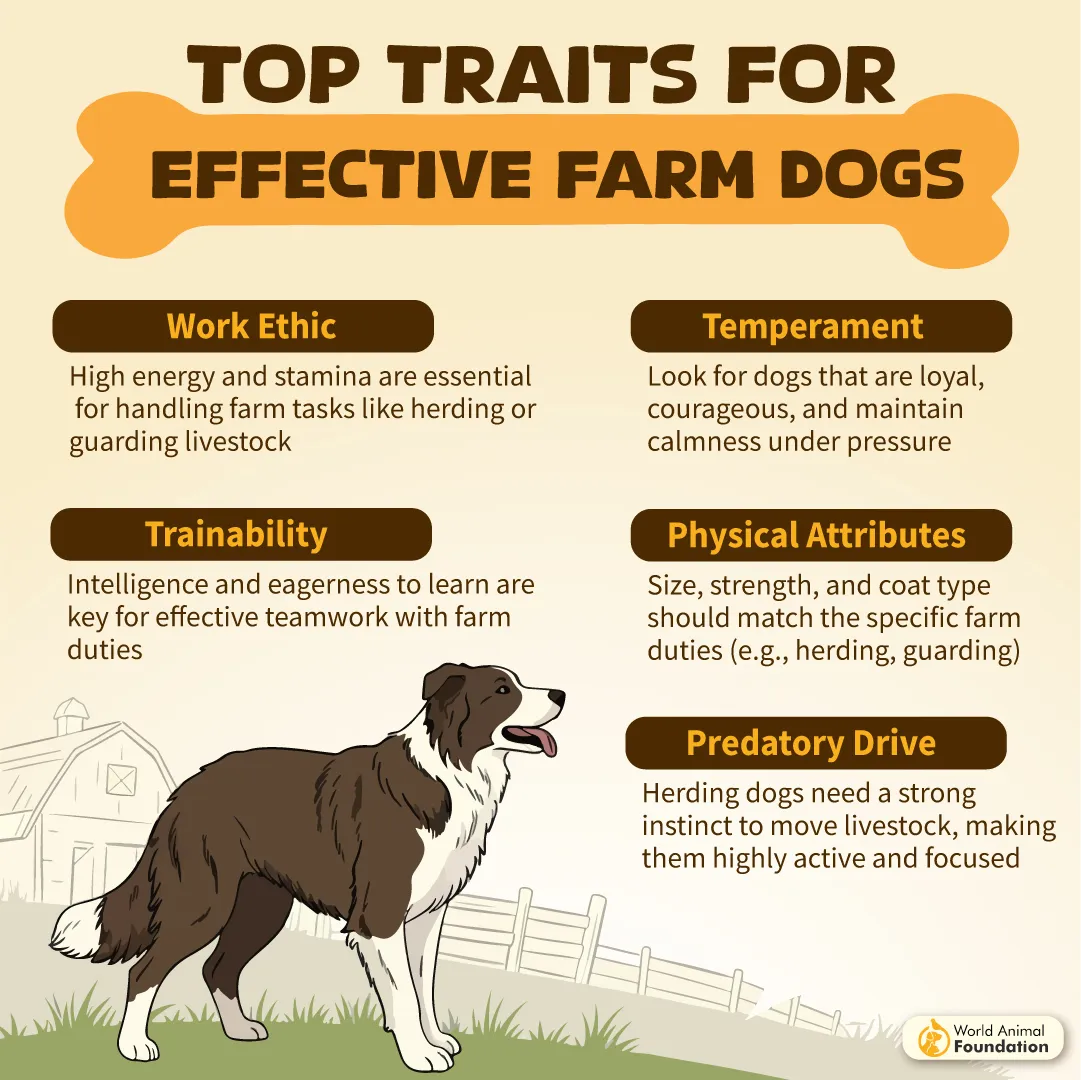
When placed on a farm, this perfect farm dog becomes part of a larger team of hardworking dogs that handle everything from herding sheep to guarding across open land. Different working roles demand different temperaments, and this one brings patience, awareness, and quiet confidence to the field.
Did you know? It can look like a fluffy cloud of relaxation… until it decides your “suspicious +bush” is actually a five-star emergency worth investigating instantly.
2. Maremma Sheepdog
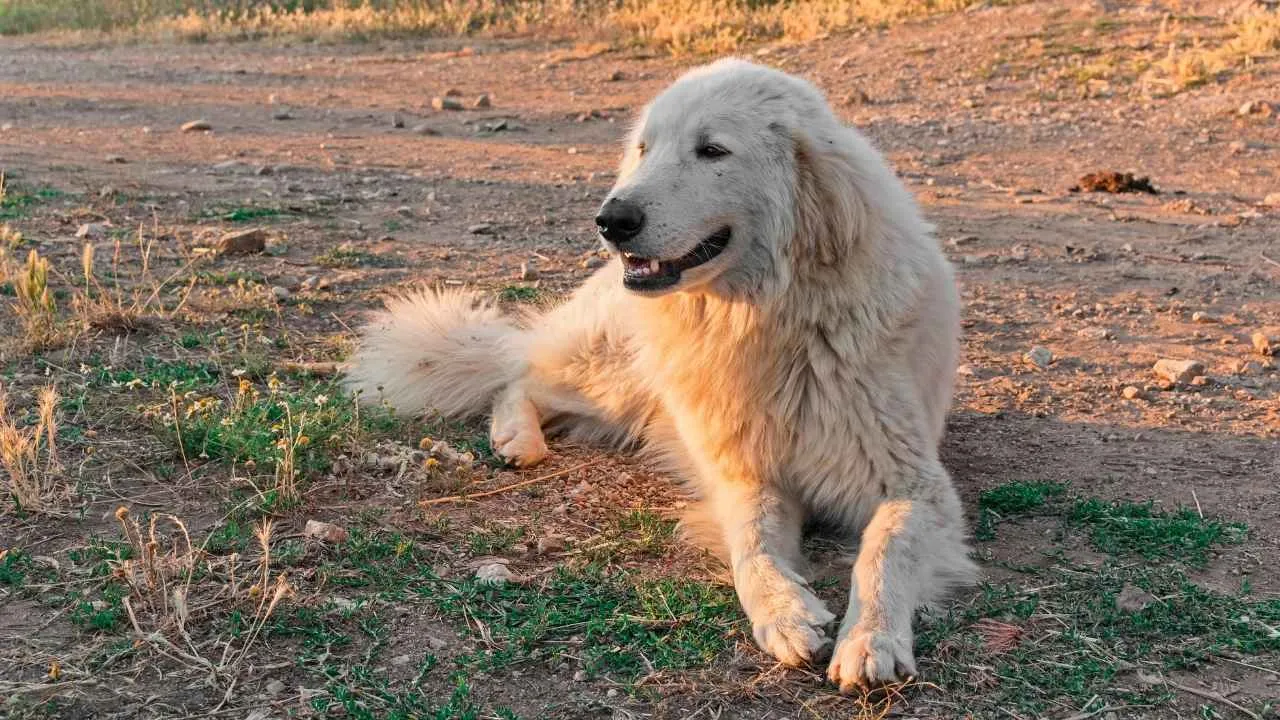
This Italian livestock guard dog comes from the rugged regions of central and southern Italy, where it was shaped by centuries of work closely with shepherds. It was originally bred as a livestock guardian to guard sheep in wide, open landscapes, standing between flocks and wolves or other predators.
With its strong build, thick white coat, and calm expression, it looks peaceful—but it is always alert beneath that quiet exterior, as per Wikipedia.
In farm life, this dog is valued for steady protection rather than constant movement. It patrols livestock areas with patience, conserving energy until real danger appears. Its independence means it often makes decisions on its own, which is useful in large rural spaces.
Early training and socialization help this working dog breed adjust to different environments and animals. Over time, it becomes a dependable guardian that blends into daily farm routines.
Did you know? It can look like a fluffy statue… until it suddenly remembers it’s the boss of the entire field.
3. Komondor
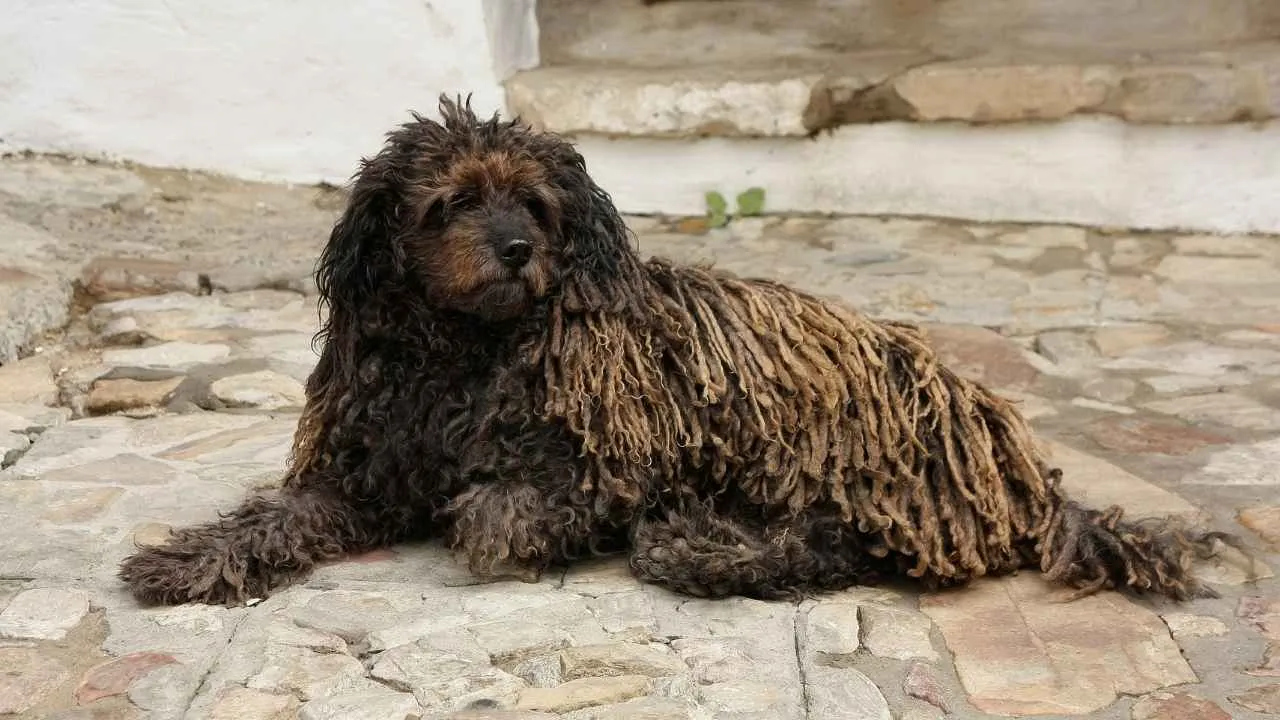
This Hungarian livestock guardian dog looks like it walked straight out of a comedy sketch, but its job is anything but funny. With its heavy corded white coat and powerful build, it was developed centuries ago to protect livestock and sheep from wolves and intruders across open land.
Despite its mop-like appearance, it is strong, alert, and deeply independent, often making decisions without waiting for instructions.
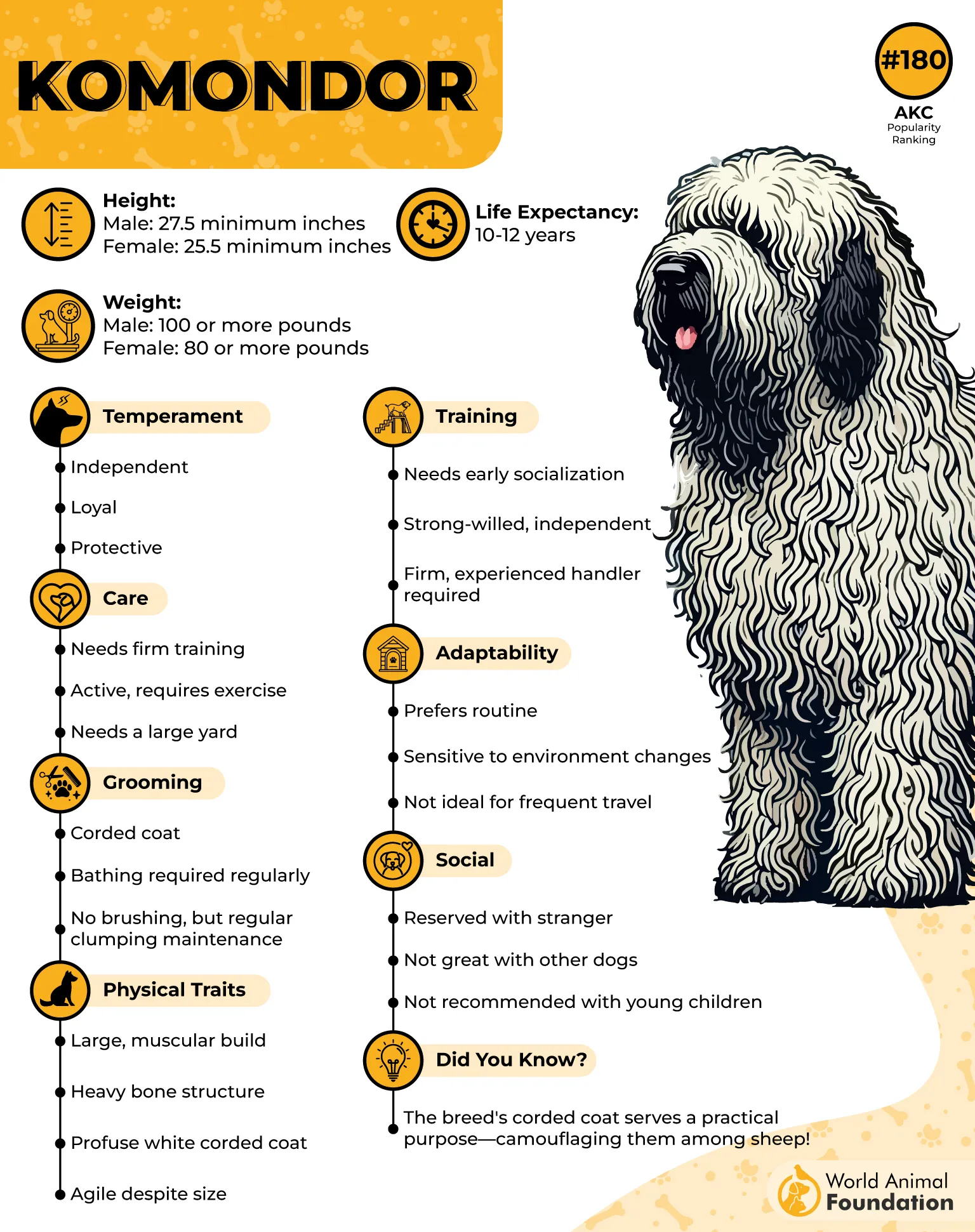
On farms, this breed acts as a full-time livestock protector rather than a herder. It stays directly with sheep or cattle, using its presence to deter predators before any attack happens. It also patrols open fields and fence lines, especially during night hours when threats are more likely.
In larger farms, it may work in groups with other guardians, creating layered protection across wide grazing areas. It is also highly effective in monitoring newborn livestock, staying close during lambing or calving seasons when animals are most vulnerable.
Did you know? Behind that “walking mop” look is a fearless security system that doesn’t need batteries… just a reason to take its job way too seriously.
4. Kuvasz
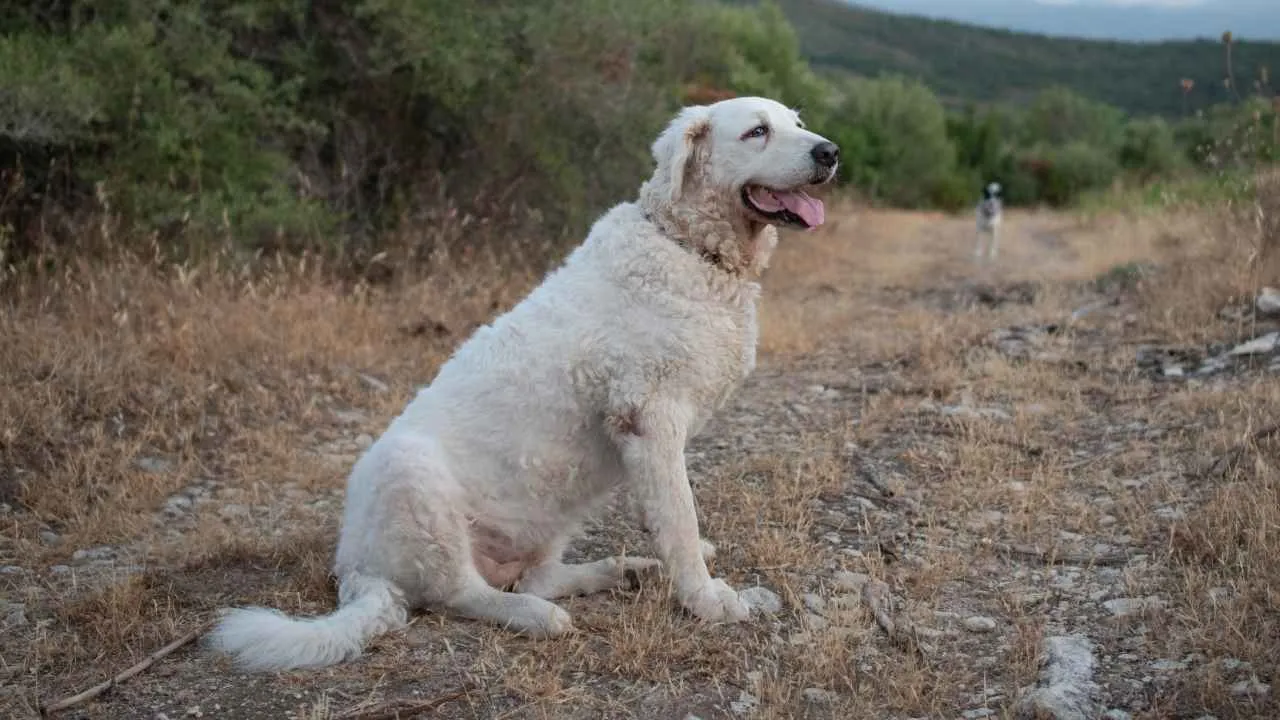
This ancient Hungarian livestock guardian dog has long been linked with nobility, strength, and unwavering protection. Originally bred to guard sheep and later trusted by royalty, it earned a reputation as a fearless yet loyal defender of both livestock and home.
On farms, the Kuvasz works as a wide-ranging livestock guardian, but its style is more like a roaming security patrol than a static bodyguard. It moves across open fields, checks distant corners of the property, and regularly scans boundaries for anything unusual.
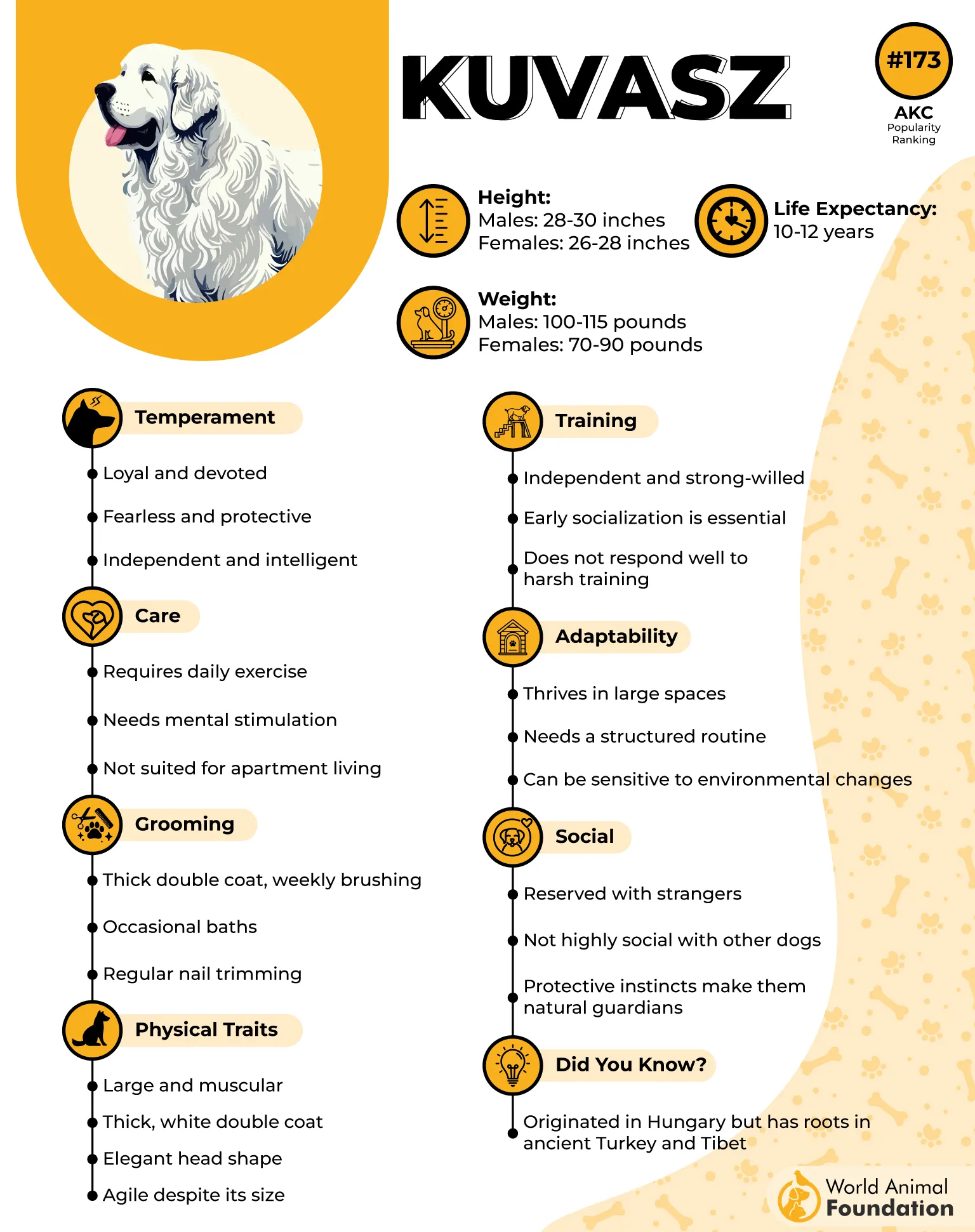
Instead of staying glued to the flock, it takes responsibility for the bigger picture—watching over sheep, cattle, and grazing zones from a slight distance while constantly circling back to ensure safety.
Did you know? Nearly lost after World War II, fewer than 30 remained—but dedicated breeding brought this legendary protector back from the edge of extinction.
5. Caucasian Shepherd
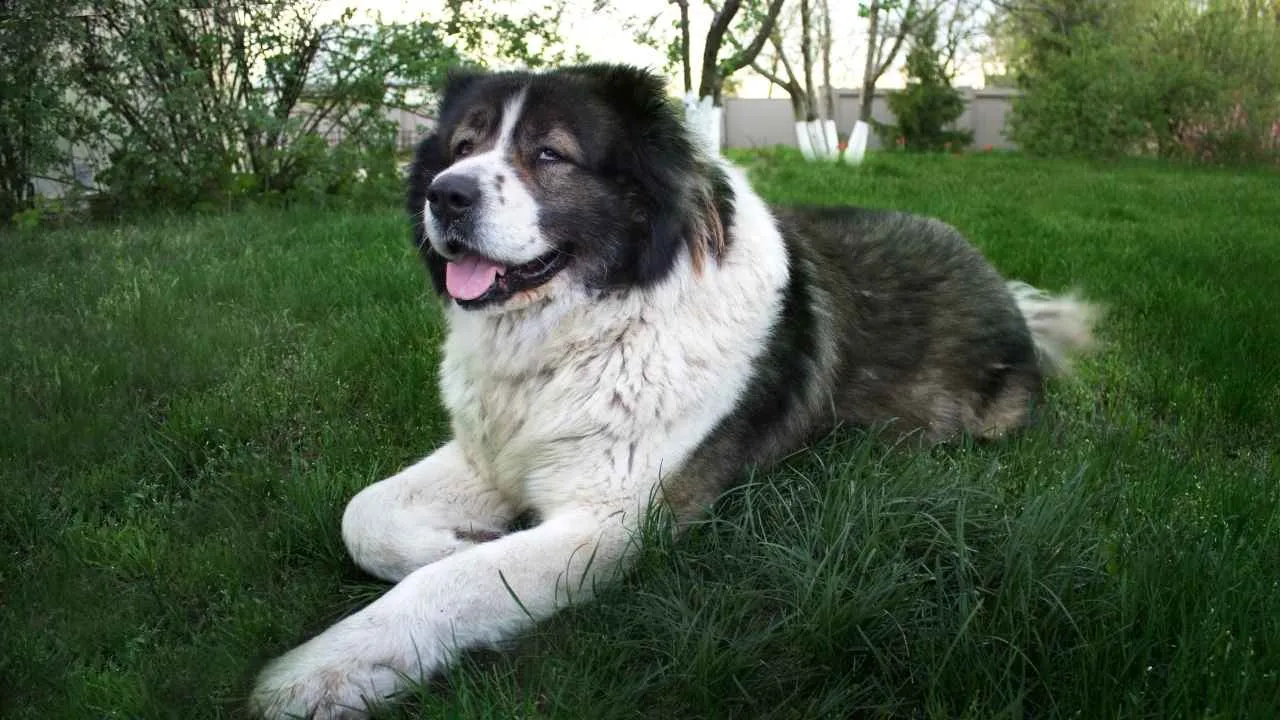
This powerful guardian breed from mountainous regions was developed for one clear purpose—protection at any cost. Large, strong, and deeply confident, it was traditionally used to guard livestock and property from predators and intruders across rough terrain.
At home, it behaves very differently. Calm, steady, and loyal, it forms strong bonds with its family and can be surprisingly gentle with familiar people and other pets.
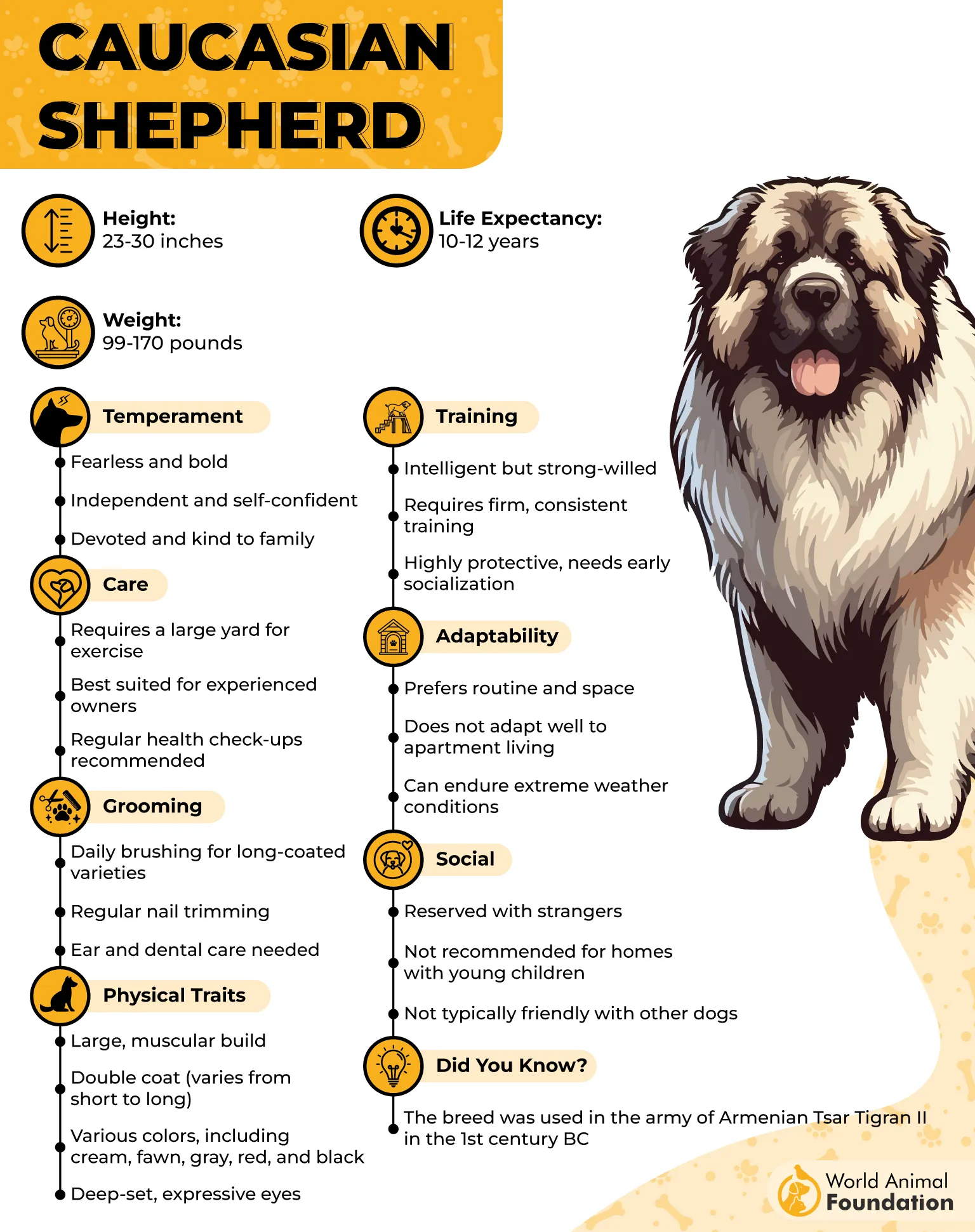
On farms, the Caucasian Shepherd works as a frontline livestock defender and territory controller. It patrols large, rugged areas such as mountains, open fields, and remote farm boundaries, actively monitoring for predators or intruders.
It is often placed where threats are more likely, acting as a strong first layer of protection before danger reaches the herd. During nighttime, it becomes especially alert, guarding livestock resting areas and securing perimeters without human supervision.
In multi-dog setups, it may also coordinate space with other guardians, covering high-risk zones independently.
Did you know? This quiet giant can look completely relaxed for hours… but it’s always mentally “on duty,” like a security guard who never actually takes a break.
6. Entlebucher Mountain Dog
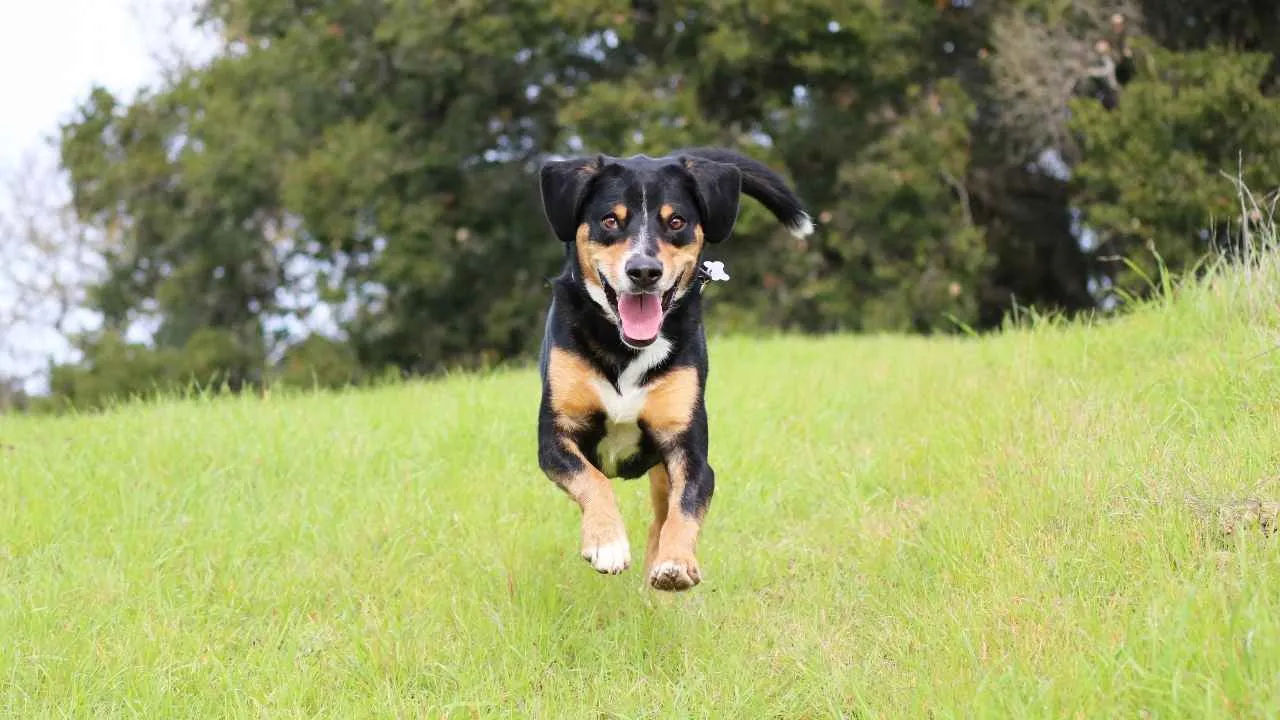
Bred as herding breeds to herd cattle across the rugged Swiss Alps, this energetic working dog combines agility, strength, and sharp intelligence. Known for its striking tri-colored coat and lively personality, it may be the smallest of the Swiss mountain breeds, but it brings big energy to farm life.
Highly active and alert, it thrives on both physical exercise and mental challenges. Whether guiding livestock or assisting with daily farm routines, it prefers staying busy and involved.
On farms, it typically works as a herding and control dog, helping move cattle between fields, keeping animals organized in enclosed spaces, and responding quickly to handler commands during fast-paced work, as per PetMD.
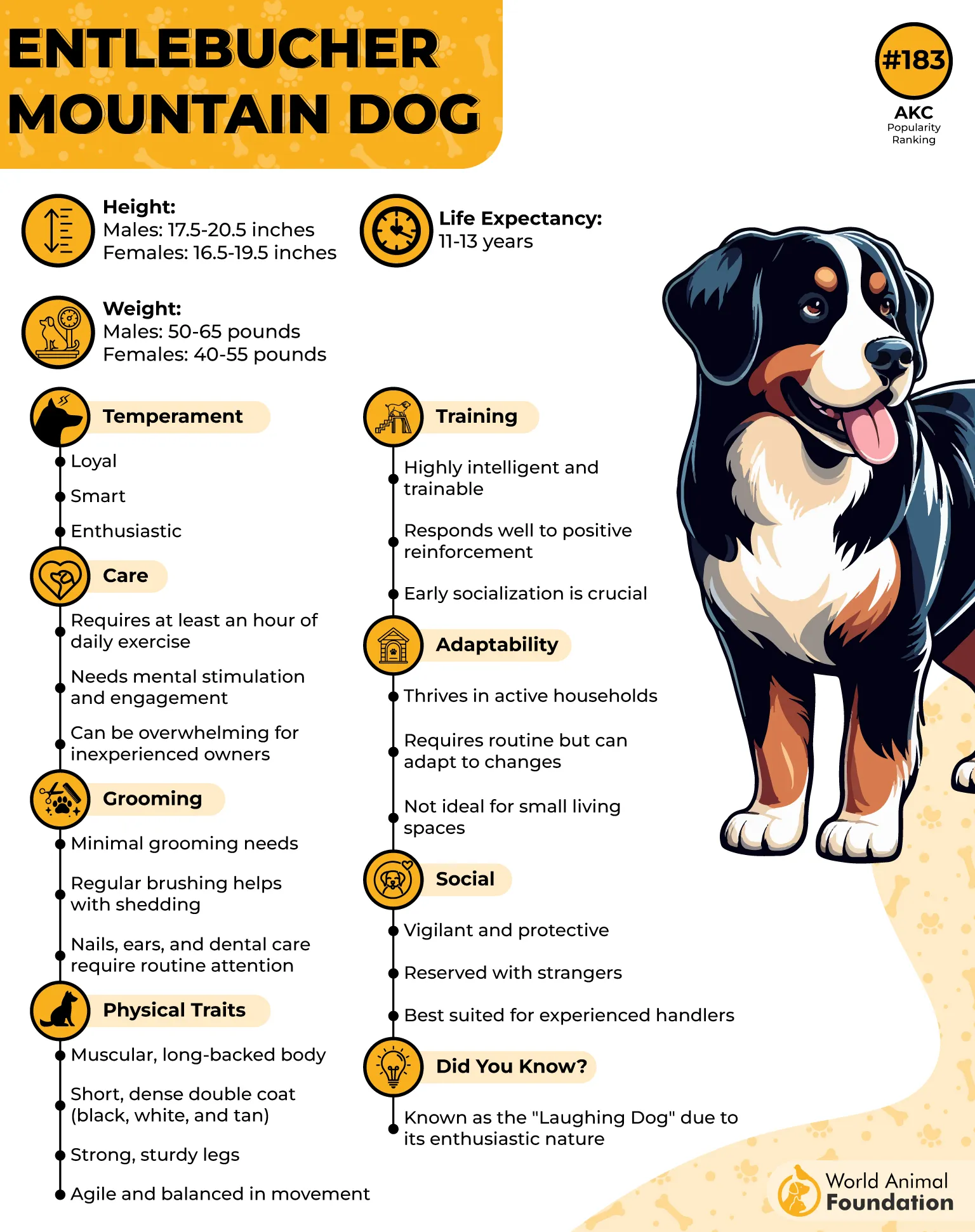
With family, it is loyal, playful, and affectionate, often earning the nickname “laughing dog” for its cheerful nature. It may take time to warm up to strangers, but early socialization helps build a balanced temperament.
Did you know? If bored, this “laughing dog” might create its own job… and you may not always like what it chooses!
7. Beauceron
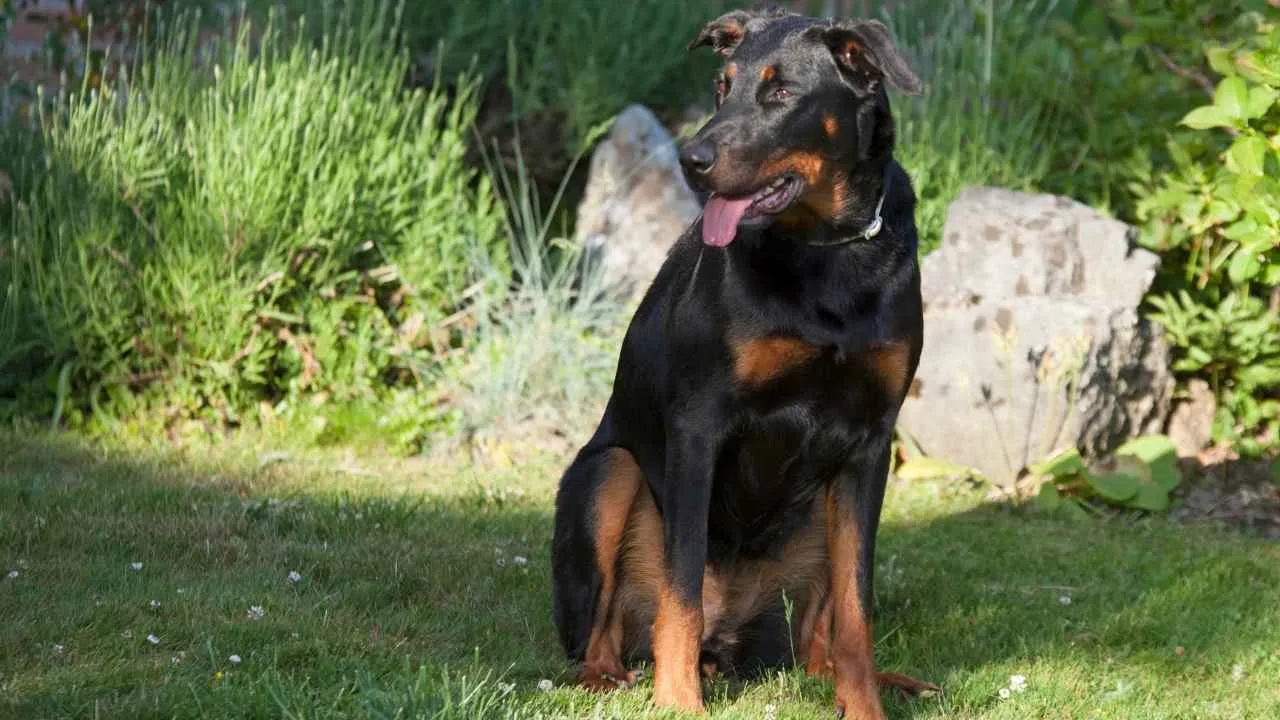
Straight from the plains of France, the Beauceron is a powerful, no-nonsense farm dog built for serious work. Also known as the “red stockings” due to its unique markings, this breed blends strength, intelligence, and calm confidence into one dependable partner.
Originally used for herding livestock, it quickly proved its value as a guardian and protector. Fearless when needed, yet gentle with its family, the Beauceron keeps a watchful eye on both livestock and home. Strangers may get a cold welcome, but loyalty to its people runs deep.
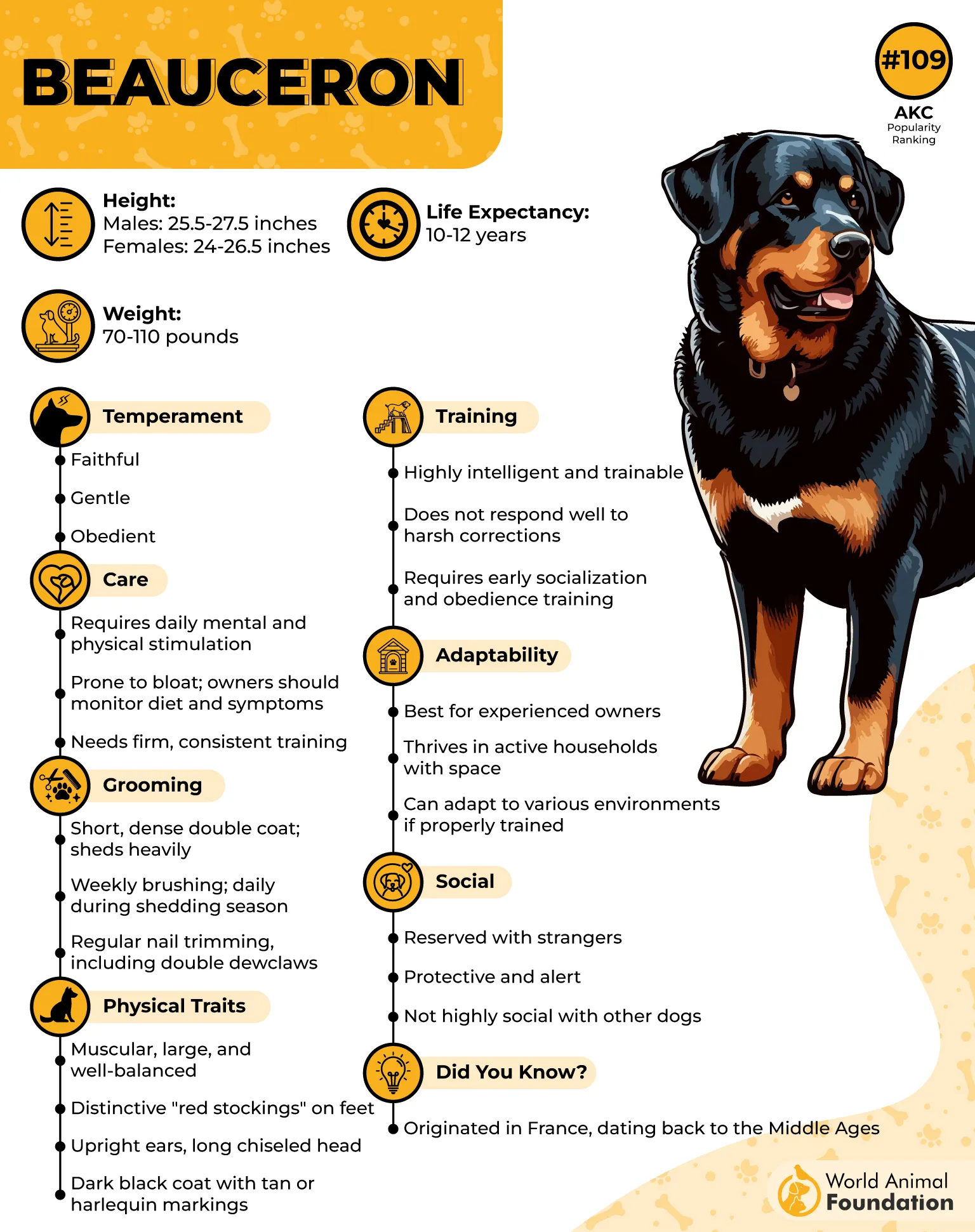
This breed thrives on purpose. This dog requires regular activity, mental stimulation, and structured training to stay balanced. Though eager to learn, it matures slowly, so patience is key during training.
Did you know? Despite its tough exterior, this herding dog secretly enjoys short play sessions more than long training drills!
8. Puli
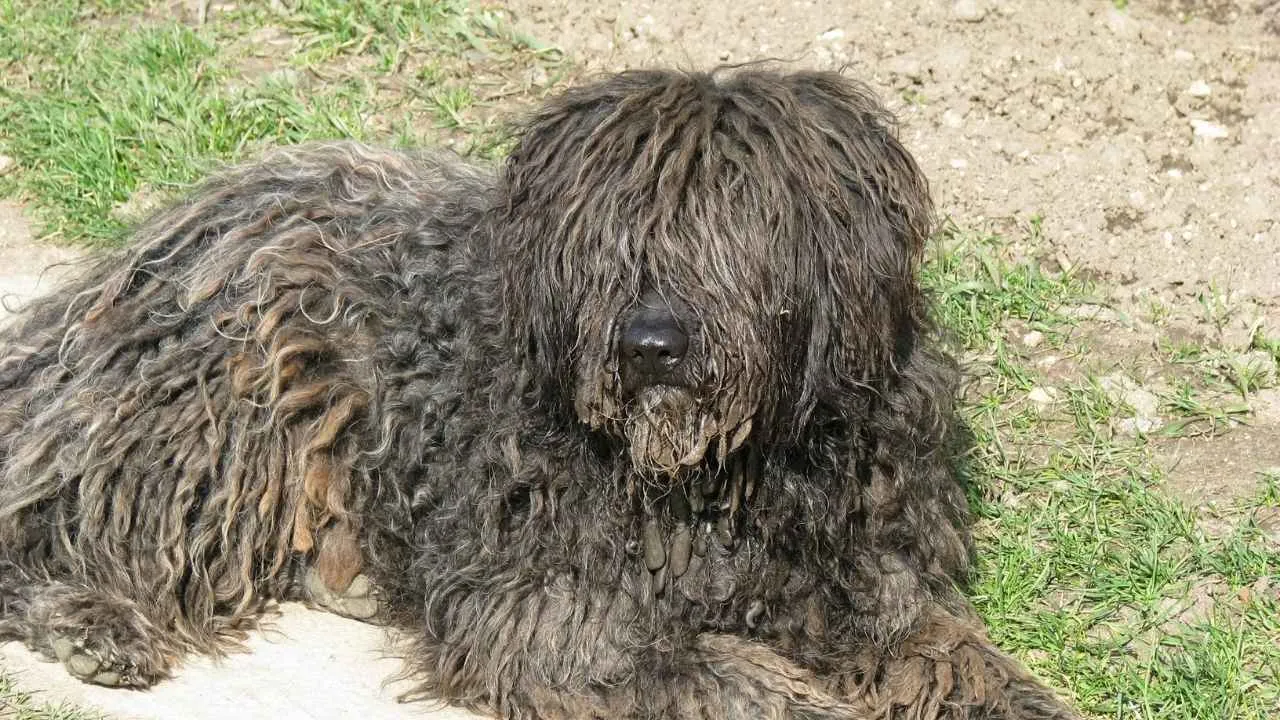
Instantly recognizable and impossible to confuse, the Puli is a compact herding dog wrapped head-to-tail in unique, natural cords. Beneath those signature “dreadlocks” is a powerful, agile worker known as the acrobat of the dog world.
On farms, the Puli acts as a fast-response herding assistant, helping control and redirect sheep or cattle during movement. It is especially useful for tight control work, where quick turns, speed, and precision are needed in smaller spaces like pens, gates, or loading areas.
It can also assist in keeping livestock grouped together, preventing stragglers from breaking away during herding.
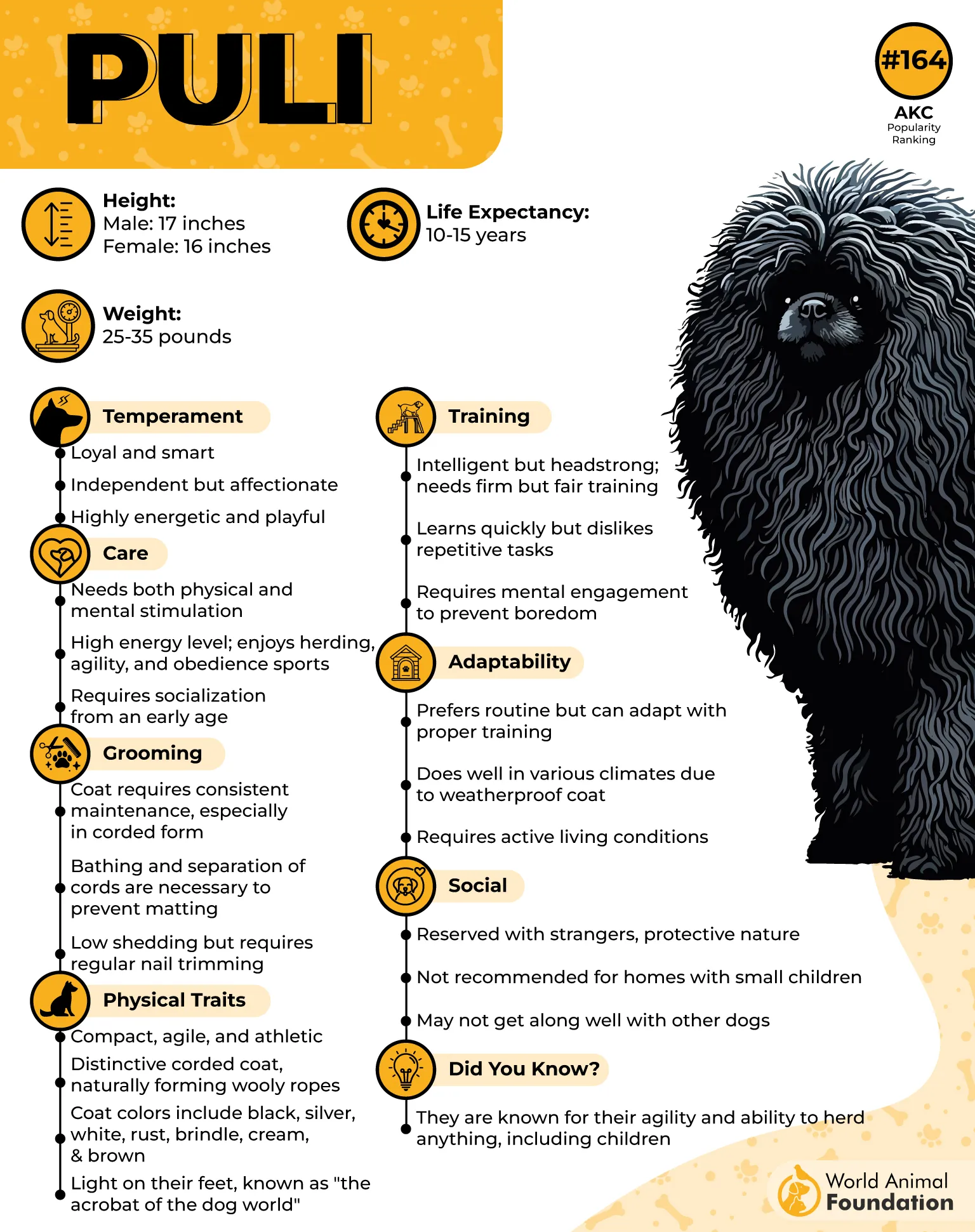
Best suited for active owners, the Puli is a lively, devoted companion dog that brings both energy and character to any working environment.
Did you know? The Puli’s corded coat isn’t just for looks—it helped protect them from harsh weather and predator bites while herding livestock.
9. Bouvier des Flandres
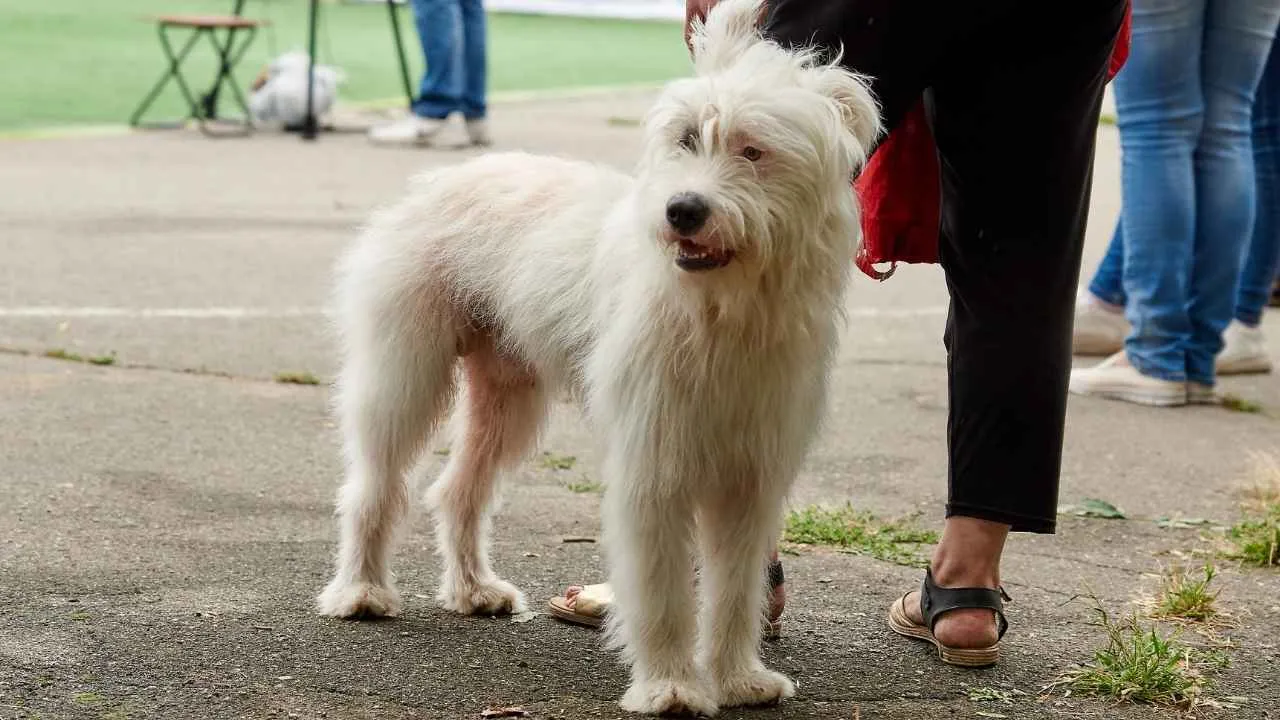
Strong, rugged, and full of character, the Bouvier des Flandres is a powerful working dog built for tough farm life. Its rough, shaggy coat and dense undercoat provide excellent protection against harsh weather, while its large head—framed by a beard, mustache, and bushy eyebrows—gives it a bold, unmistakable look.
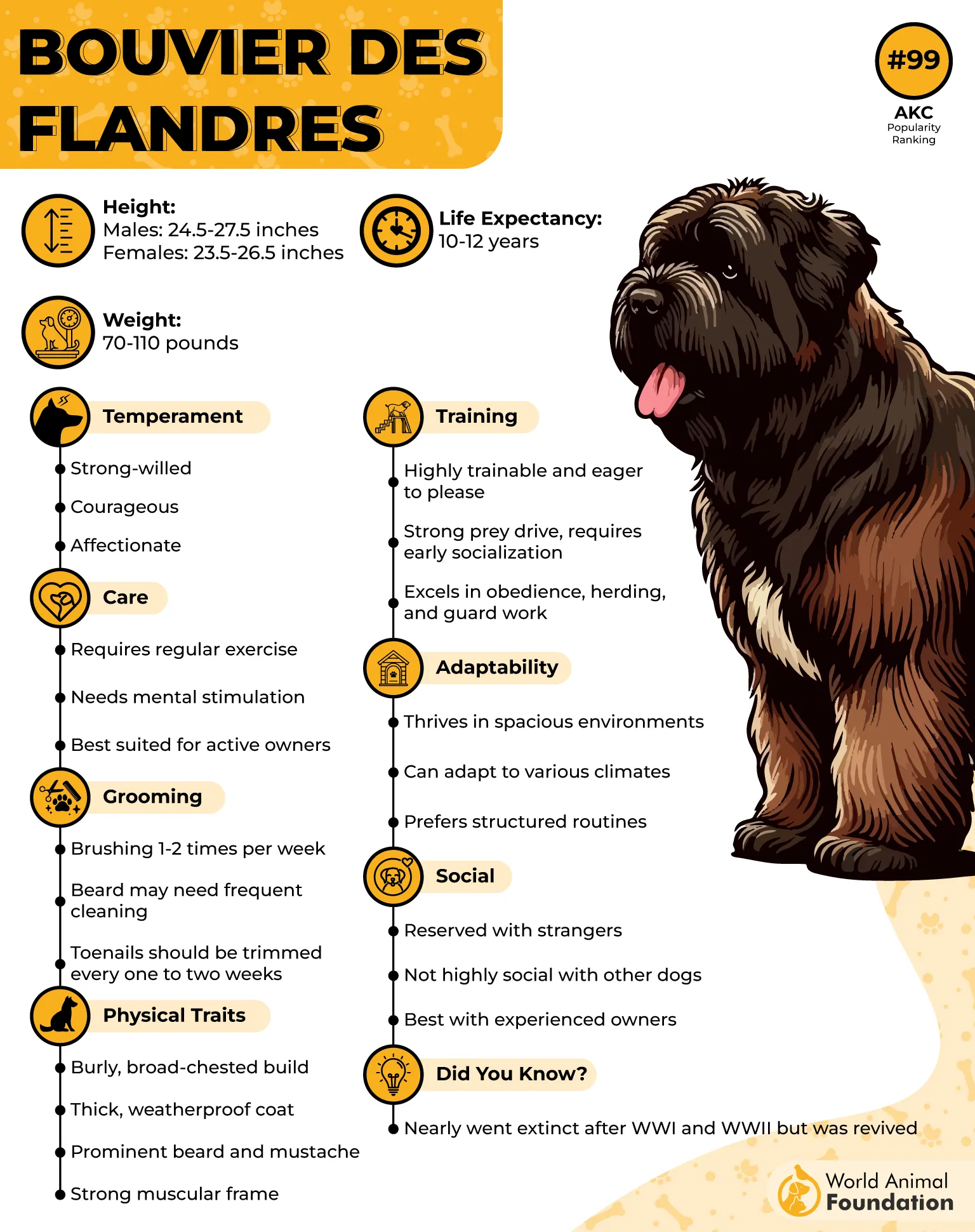
On farms, the Bouvier works as a versatile cattle-handling and utility dog, helping move cattle between fields, assisting with general farm driving tasks, and maintaining control in busy livestock areas. It can also serve as a watchful property dog, staying alert around barns, yards, and equipment zones.
Because of its strength and steady temperament, it is often used where calm control is needed rather than fast, high-energy herding.
As per Hill’s pet, originally bred in Belgium and France for herding cattle, the Bouvier also served bravely during World War I. Today, it excels as a watchdog, service dog, and loyal partner.
Did you know? The Bouvier once nearly disappeared after World War I, but was saved thanks to dedicated breeders.
10. Old English Sheepdog
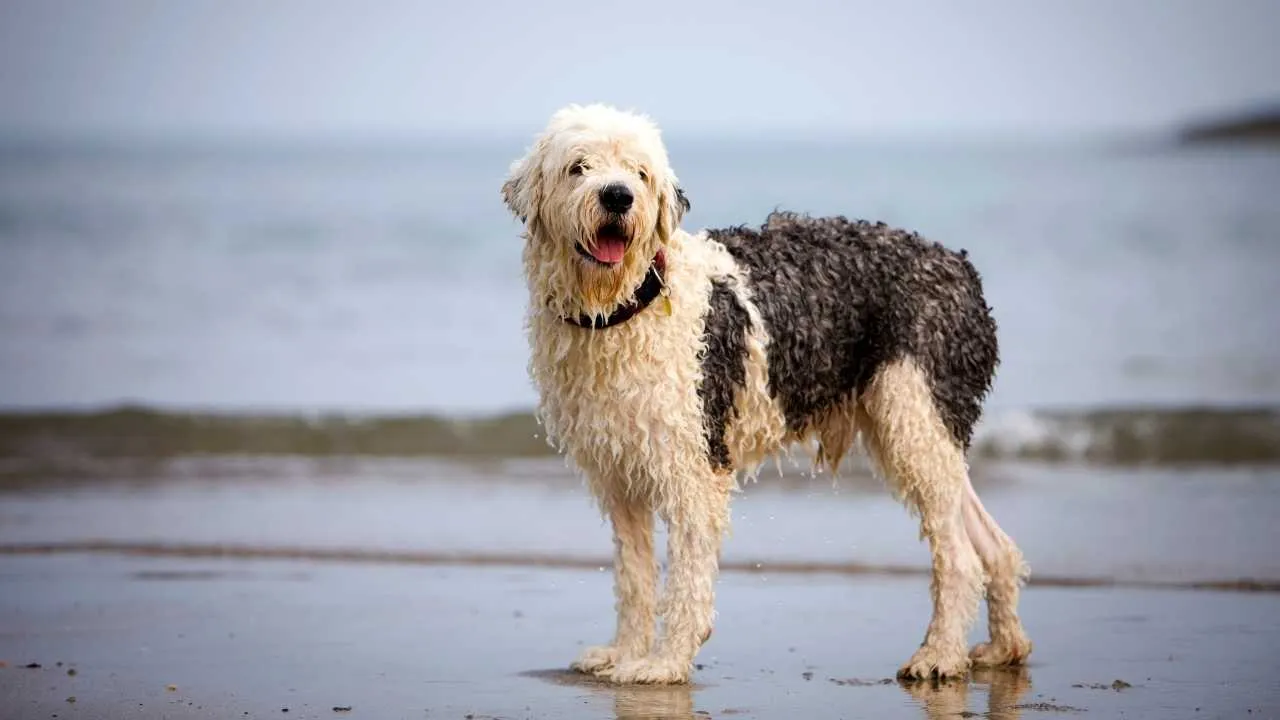
Big, fluffy, and full of personality, the Old English Sheepdog is a lovable classic with roots in West England dating back to the late 1700s.
As per Omlet, originally bred as a drover’s dog, it helped herd and protect sheep and cattle. Its docked tail once signified a working dog, though this practice is now restricted in many places.
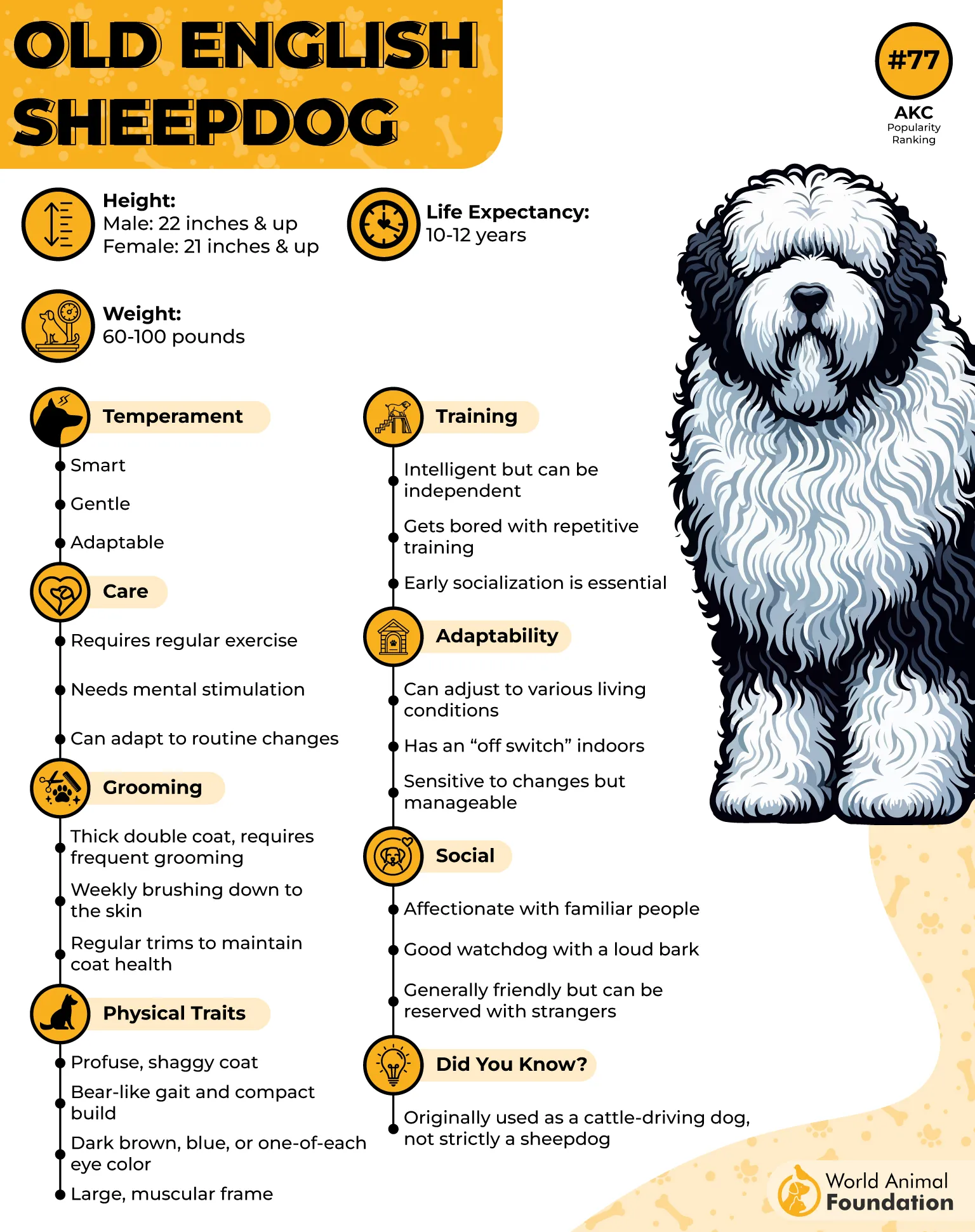
Known for their sweet and playful nature, these dogs are true family companions. They love attention, often acting like cheerful clowns, and enjoy relaxing just as much as playing. Despite their laid-back side, they are energetic enough to need daily walks and mental stimulation.
Early training is important, as they can be strong-willed and boisterous. With proper guidance, they excel in obedience, agility, and herding. Regular grooming is essential due to heavy shedding.
Did you know? Old English Sheepdogs often forget their size and will happily try to sit in your lap!
Conclusion
Choosing the right dog breed is about more than looks—it’s about finding a companion that fits your lifestyle, energy level, and expectations. From hardworking herders to loyal family protectors, each breed brings unique qualities that can enrich your daily life.
Proper training, early socialization, and consistent care are key to raising a well-behaved and happy dog. Take time to understand a breed’s needs before making a decision.
When matched with the right home, these dogs don’t just perform roles—they become trusted partners and beloved family members, adding purpose, security, and joy to everyday living.
