




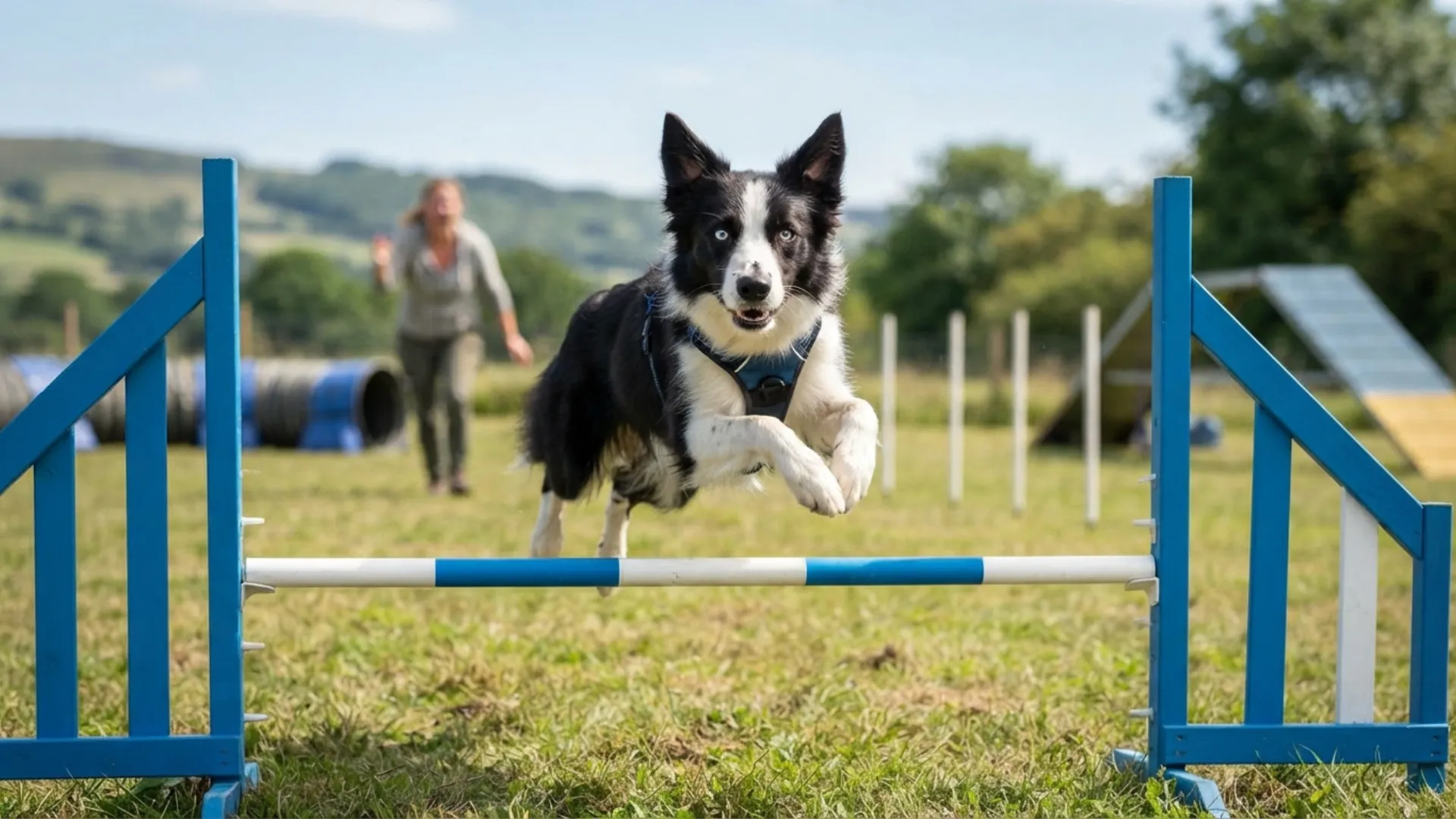
Smart dogs are amazing, but let’s be real: living with one can feel like sharing your house with a furry little mastermind. These breeds do not just “learn commands”; they study your routine, notice your weak spots, and sometimes act like they read the family group chat before breakfast. That is why training an intelligent dog can be both wildly rewarding and slightly humbling.
Researchers and dog experts often talk about different types of canine intelligence, including instinctive intelligence, adaptive problem-solving, and working obedience. Stanley Coren’s well-known rankings focused mostly on how quickly breeds learn from humans and how reliably they respond to commands.
So, if you are dreaming of a dog who can learn tricks, follow cues, read the room, and maybe emotionally judge your life choices, this list is for you. Let’s meet the smartest dog breeds, explore training challenges, and learn about rewards.
Smartest Dog Breeds: Training Challenges and Rewards
1. Border Collie
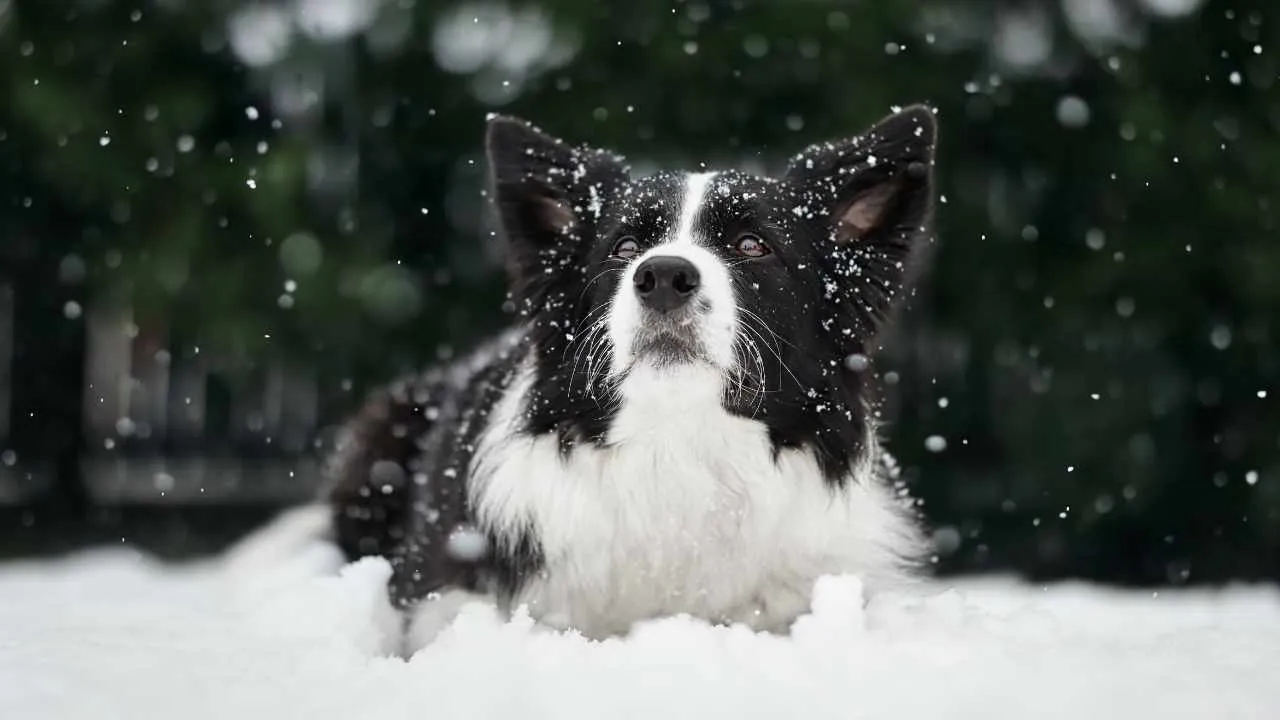
The Border Collie is basically the valedictorian of the dog world, but with more zoomies and a stronger opinion about sheep. This breed is famous for its intense focus, quick learning, and almost scary ability to understand patterns.
Originally bred for herding, this intelligent dog breed was developed to work closely with humans and make quick decisions in open fields.
That background explains why it is so responsive to cues, body language, whistles, and tiny changes in direction. Their intelligence is not lazy couch intelligence; it is active and needs to stay engaged.
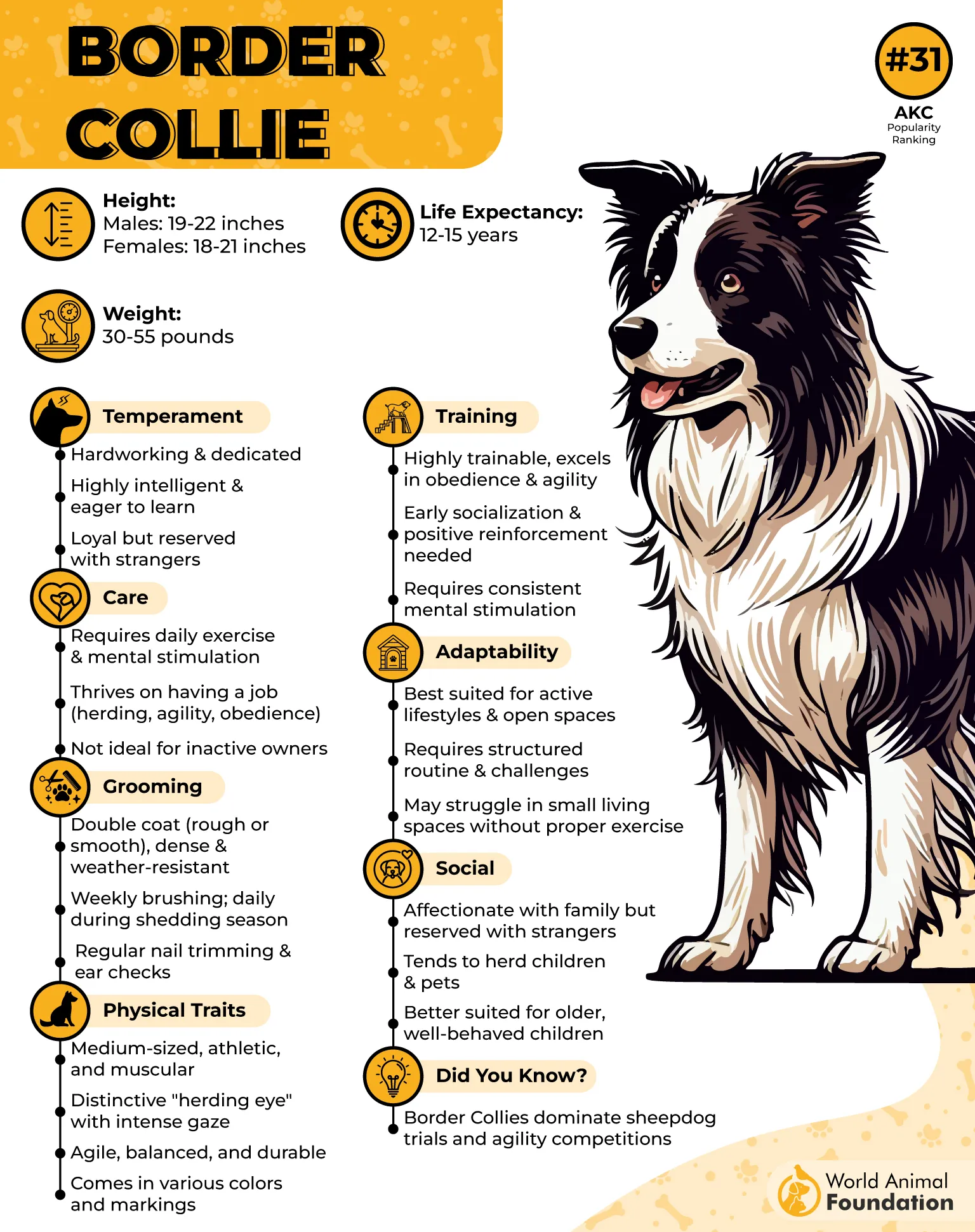
The training reward is huge because they can excel in agility, obedience, flyball, herding trials, advanced tricks, and complex routines. Many owners say the bond feels deep because these dogs are constantly watching, learning, and trying to predict what comes next.
The challenge is that a bored Border Collie can become a full-time drama department. Without enough exercise and mental work, they may chase shadows, herd children, nip at ankles, obsess over balls, or become restless indoors.
This breed is best for people who enjoy obedience training, movement, and daily engagement rather than casual ownership. This most intelligent dog breed in the dog world does not need endless pressure, but they do need purpose, variety, and calm leadership.
Specific Tips For This Breed’s Training
Turn training into mini missions, such as weaving through cones, finding hidden toys, or learning chained commands in short sequences.
Teach an “off switch” early with mat training, calm rewards, and quiet rest periods so the dog learns that relaxing is also a skill.
Avoid repetitive drilling because Border Collies learn quickly and may become frustrated when the lesson feels too basic.
2. Poodle
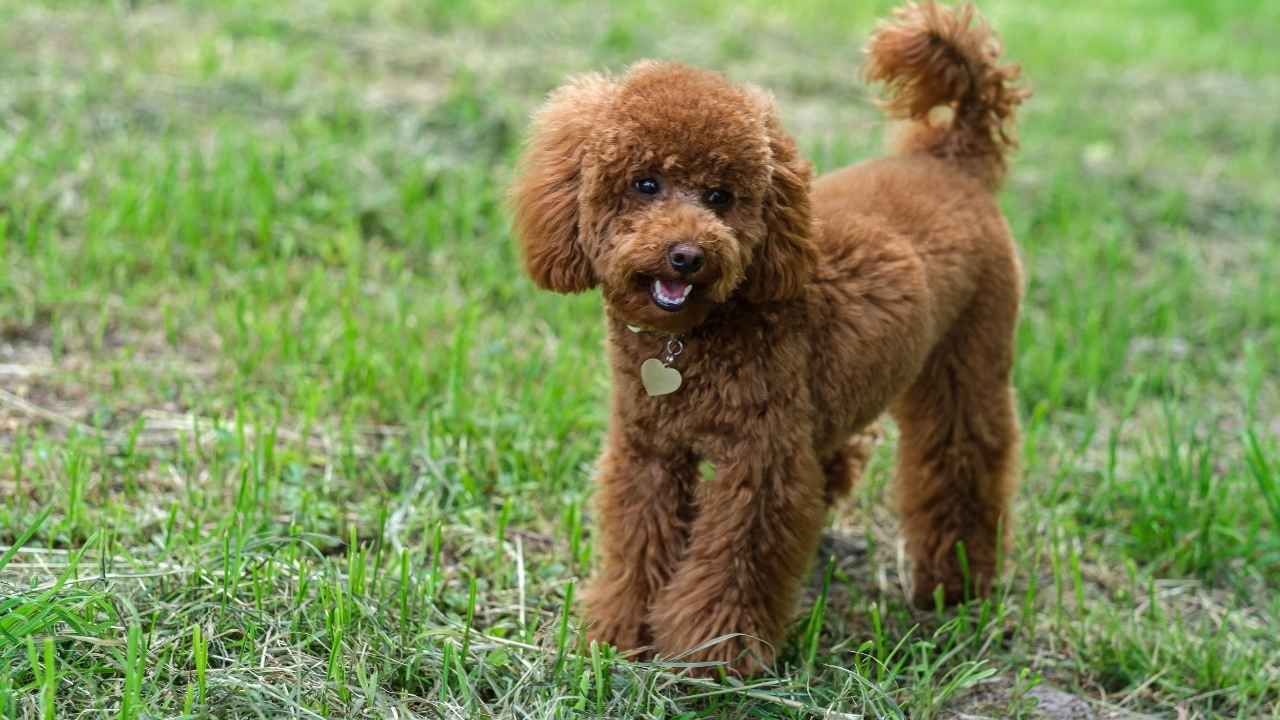
The Poodle is proof that fancy hair and serious brainpower can absolutely live in the same dog. Whether Standard, Miniature, or Toy, Poodles are clever, athletic, and often shockingly fast learners. Behind the stylish coat is a working dog brain that loves solving problems.
Poodles were originally developed as water retrievers, especially the Standard Poodle. Their intelligence, trainability, and athletic builds made them useful working dogs long before they became famous for elegant grooming.
The reward of training this dog with a gentle temperament is how creative and responsive they can be. They often pick up routines, patterns, words, and household expectations quickly. Many owners love that Poodles can be both playful clowns and focused students depending on the moment.
The challenge is that Poodles may become bored, dramatic, or mischievous when under-stimulated. The AKC claims that some can be sensitive to tone, so heavy-handed training may shut them down or make them anxious. Their cleverness also means they may train the humans without anyone noticing.
This popular dog breed needs mental enrichment, grooming tolerance, socialization, and positive training that keeps things fresh. It enjoys variety, so mixing obedience with tricks, puzzle toys, scent games, and movement can keep them engaged.
Specific Tips For This Breed’s Training
Rotate lessons often because Poodles thrive when training feels fresh, clever, and slightly theatrical.
Practice grooming-related handling with rewards so brushing, bathing, ear checks, and trims become normal routines.
Teach problem-solving games like toy-name games, hide-and-seek, and scent searches to satisfy their curiosity.
3. German Shepherd
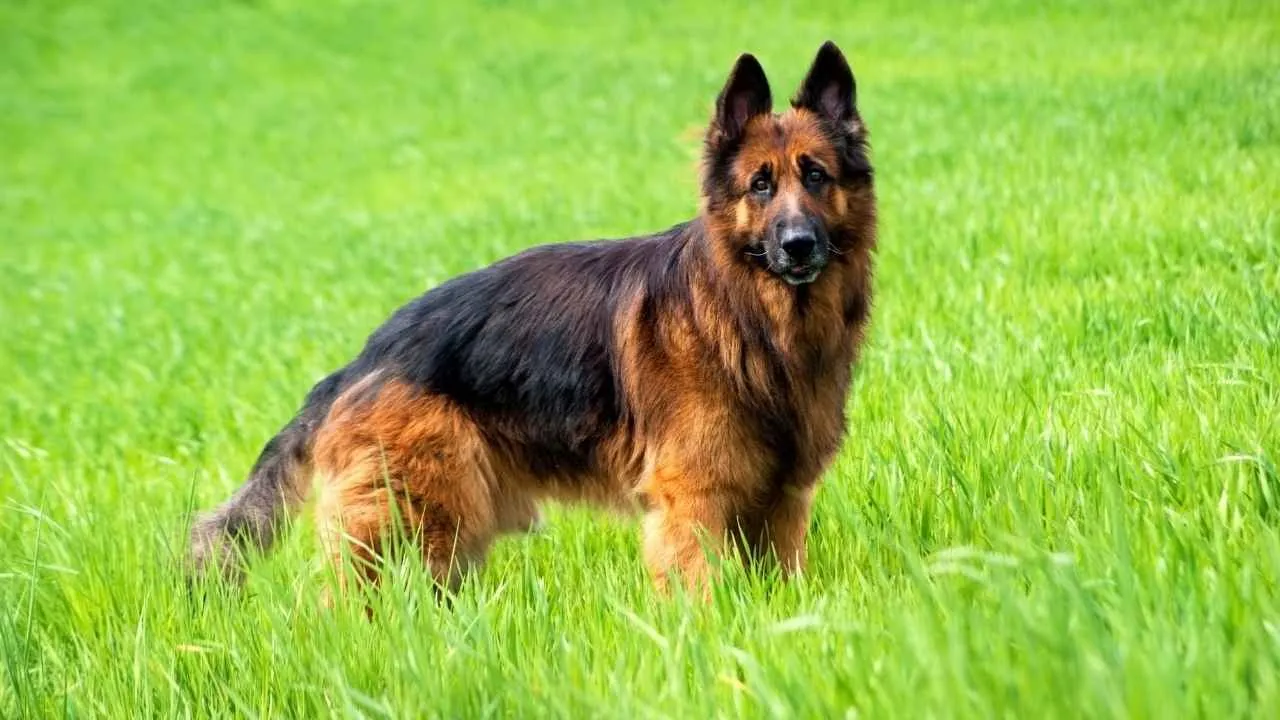
The German Shepherd is the serious overachiever that shows up early, checks the exits, and somehow knows who is acting suspiciously. This breed is famous for police, military, protection, search-and-rescue, guide, and service work because it combines intelligence with courage and loyalty.
They were originally developed as herding and working dogs, which explains their stamina, alertness, and desire to work. They are quick to learn commands, but they also read tone, posture, and emotional energy very closely. This makes them incredibly trainable, but it also means unclear handling can confuse or stress them.
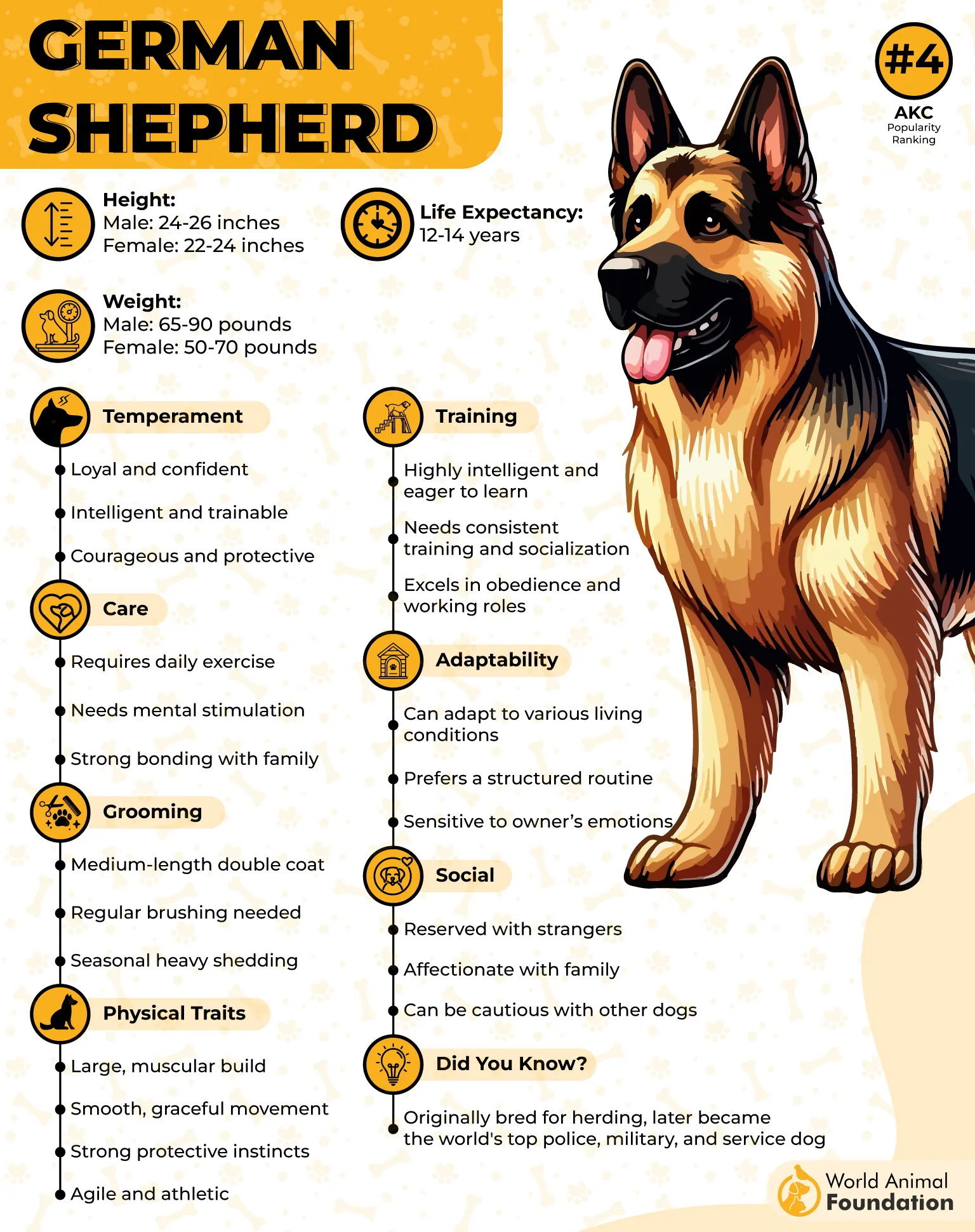
The reward of training these intelligent dogs is that they can become one of the most reliable dogs in the world. They often love structure, routines, obedience work, scent games, tracking, and task-based training. When they trust their handler, they can perform with confidence and impressive precision.
The challenge is that their protective instincts need careful guidance, not hype. If socialization is weak or training becomes harsh, a German Shepherd may become reactive, overly suspicious, or difficult to manage. They need exposure to people, places, sounds, surfaces, and normal daily life so their confidence grows in a balanced way.
This breed suits owners who are calm, consistent, and active without being overly intense. German Shepherds do not need someone yelling commands like a movie drill sergeant; they need fair leadership and clear communication.
Specific Tips For This Breed’s Training
Prioritize early socialization with calm exposure to visitors, vehicles, children, other dogs, and public environments.
Use obedience as confidence-building, not control only, by rewarding focus, calm greetings, and relaxed behavior around distractions.
Add scent work, tracking games, or task training to satisfy their working brain without creating unnecessary guarding behavior.
4. Golden Retriever
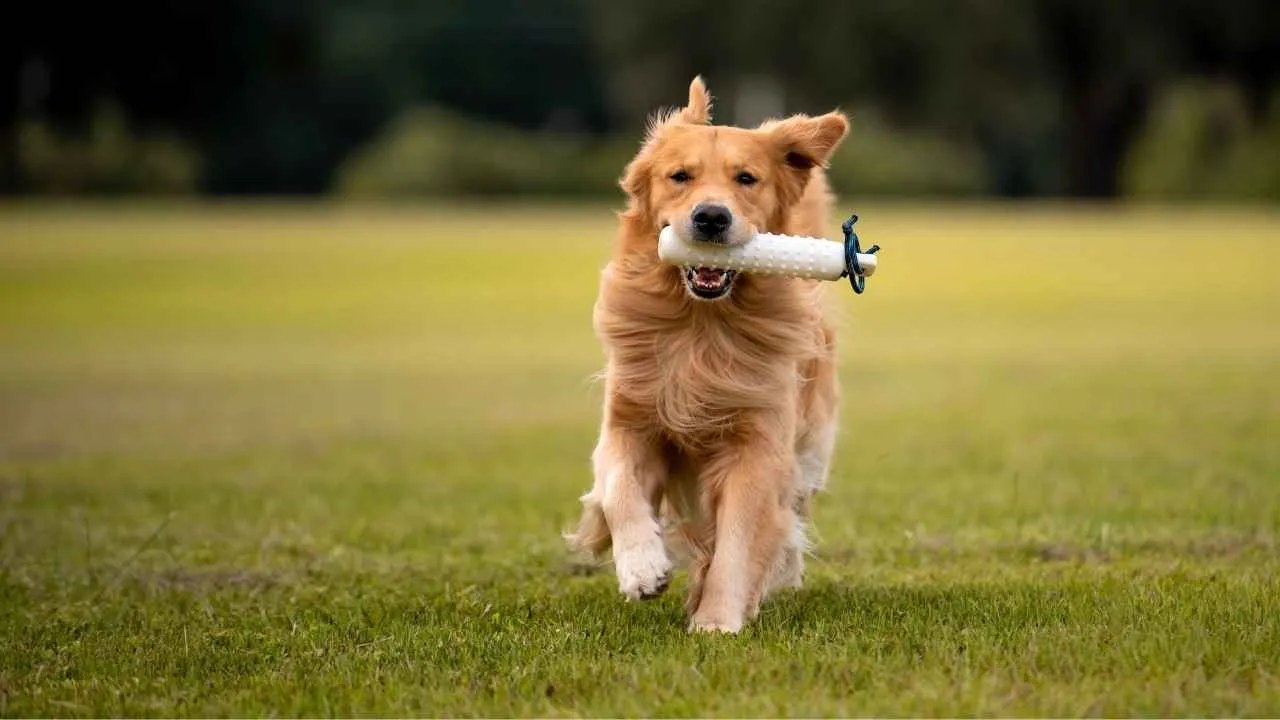
The Golden Retriever is the lovable honor student who wants good grades, snacks, and emotional validation from every human in the room. This breed is smart, friendly, and famously eager to please, which makes training feel joyful for many families. Goldens often learn quickly because they genuinely enjoy working with people.
Originally bred as sporting dogs, Golden Retrievers were developed to retrieve game gently and cooperate closely with hunters. That history helps explain their soft mouth, patience, and strong desire to bring things back. In modern homes, the same traits show up as toy-carrying, helpfulness, and a hilarious need to be involved in everything.
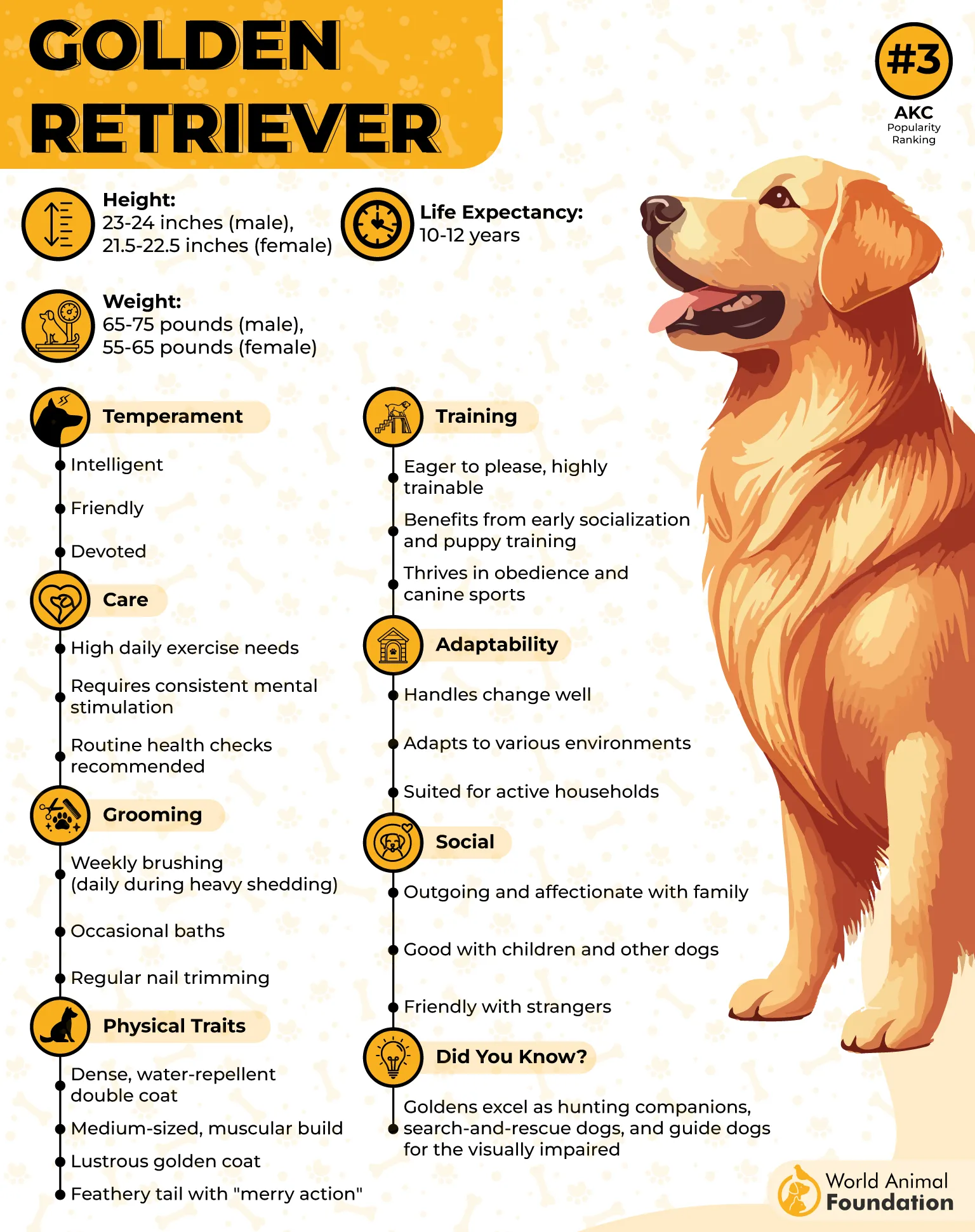
The reward with Goldens is that they usually respond beautifully to positive reinforcement. Food rewards, praise, toys, and happy voices can make them light up like someone just announced a surprise party. Their friendly temperament also makes them common choices for therapy, assistance, and family companionship.
The challenge is that Golden Retrievers can be goofy, mouthy, and distractible, especially when young. They may jump on guests, steal socks, carry random objects, or act like every stranger is their long-lost bestie. Their intelligence needs direction, but their enthusiasm needs manners.
Training a Golden is less about forcing obedience and more about shaping all that sunshine into polite behavior. Teach greetings, loose-leash walking, recall, drop-it, and calm settling early.
Specific Tips For This Breed’s Training
Practice polite greetings daily, because their friendly energy can turn into jumping, licking, or happy body slams.
Use retrieving games as training rewards by asking for a cue before tossing a toy or starting a fetch session.
Teach “drop it” and “leave it” early because many Goldens explore life by picking things up first and asking questions later.
5. Doberman Pinscher
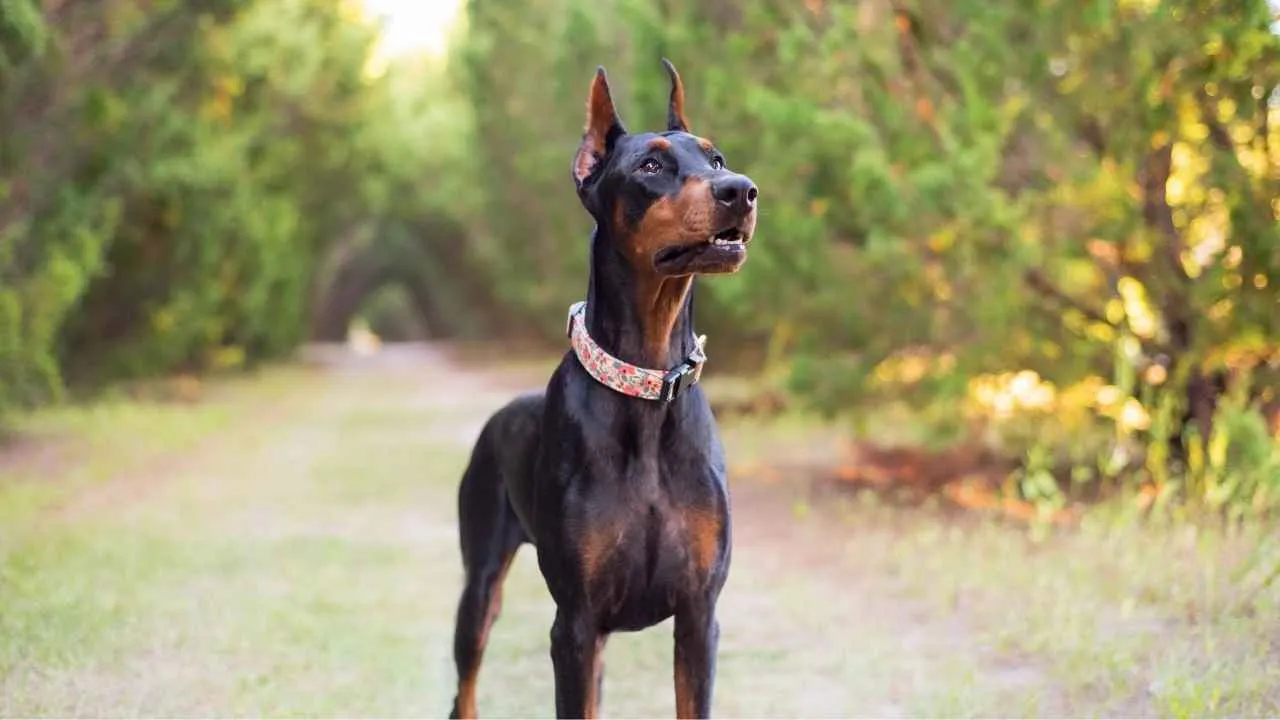
The Doberman Pinscher is sleek, sharp, and built like it knows it has main-character energy. This breed is intelligent, loyal, athletic, and highly responsive when trained with fairness. Dobermans often learn quickly because they are people-focused and tuned in to what their handler wants.
Originally developed as protection and working dogs, Dobermans carry confidence, alertness, and a strong sense of loyalty. They are not just tough-looking dogs; they are sensitive, clever, and emotionally connected to their families.
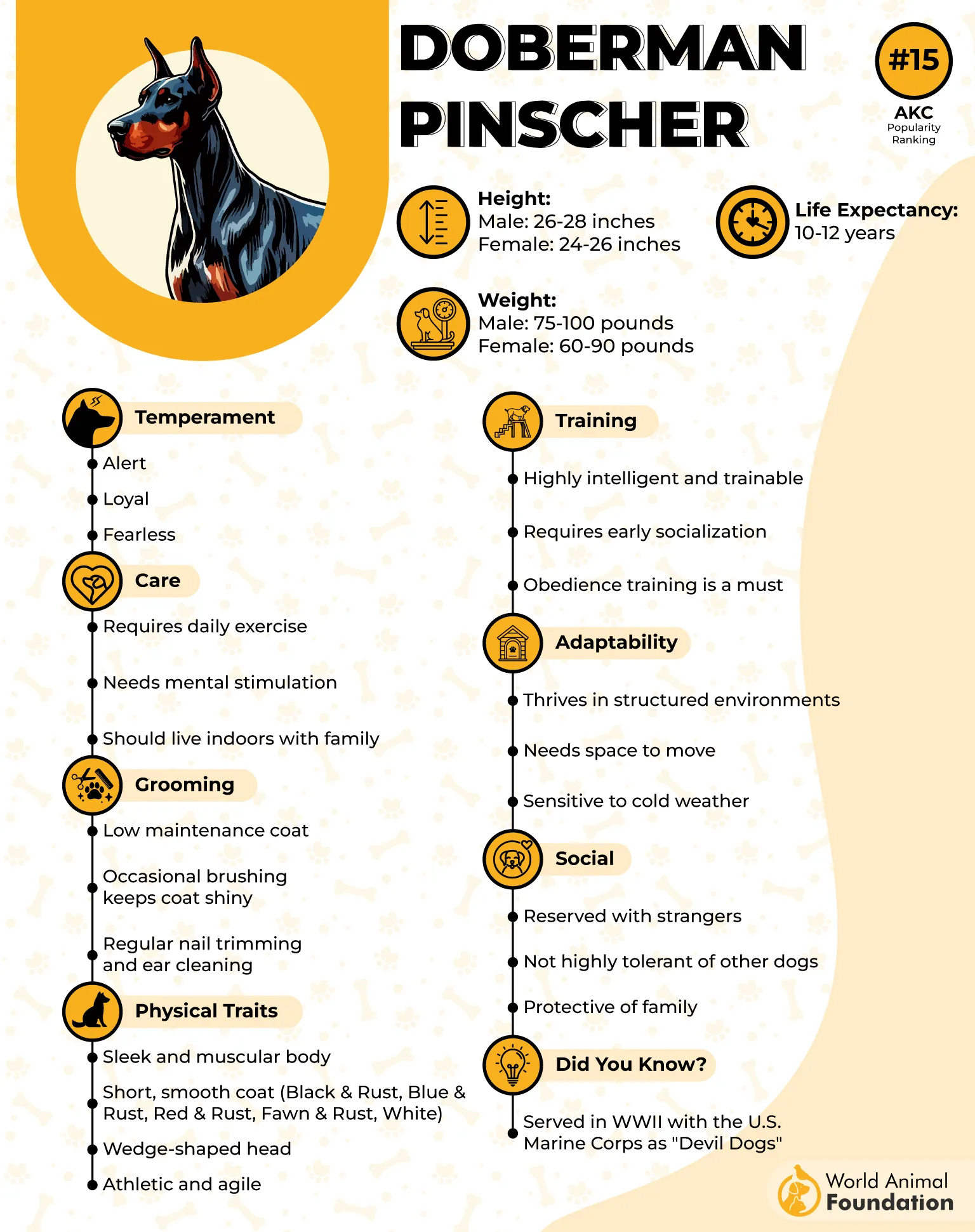
The reward of training a Doberman is the speed and elegance with which they learn. Obedience, protection sports, agility, rally, scent work, and advanced manners can all suit the breed when introduced responsibly.
A trained dog will obey you, stay in the yard, and be affectionate inside the home.
The challenge is that this breed can become pushy, anxious, or overly protective if training is inconsistent. They need confident handling, but harsh methods can damage trust and create stress. Their intelligence means they notice loopholes, and yes, they will absolutely test them.
Dobermans do best with owners who provide daily structure, socialization, physical outlets, and calm leadership. They need to learn when to be alert and when to relax, because not every delivery driver is a national emergency. When raised well, a Doberman is loyal, brilliant, athletic, and surprisingly sweet.
Specific Tips For This Breed’s Training
Reward calm focus around strangers so alertness does not turn into unnecessary suspicion.
Combine obedience with body-control exercises like heelwork, pivots, stays, and controlled releases.
Keep sessions confident but kind because Dobermans respond best when they trust the person guiding them.
6. Shetland Sheepdog
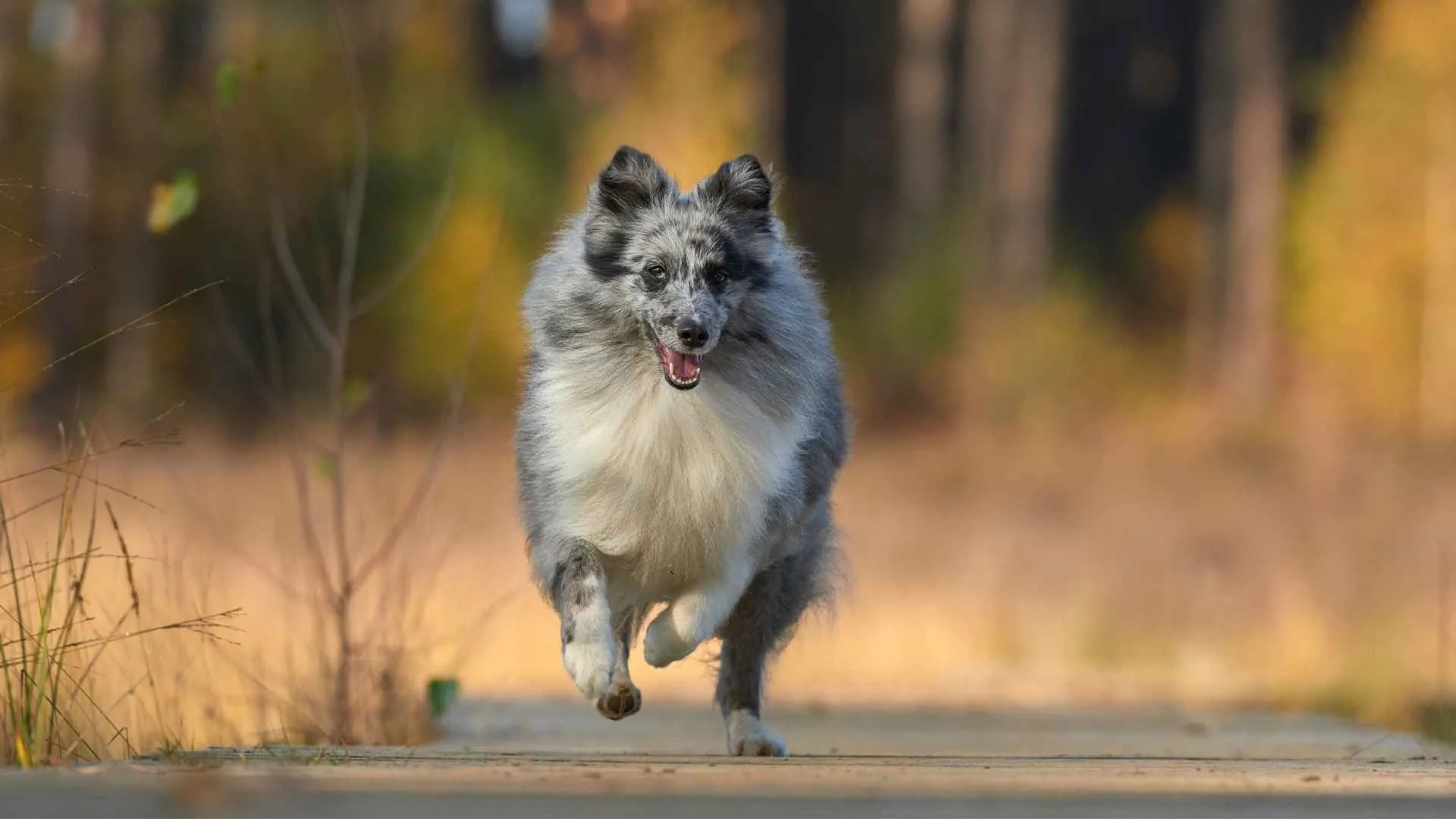
The Shetland Sheepdog, or Sheltie, looks like a tiny, elegant cloud with a full-time job in management. This breed is smart, sensitive, quick, and often very tuned in to human emotions. Shelties can learn commands fast, but they also notice every sound, mood shift, and household pattern.
Bred for herding in the Shetland Islands, these dogs were designed to be alert, agile, and responsive. Their working background gives them a strong desire to watch movement and react quickly. That is why they often shine in obedience, agility, rally, and trick training.
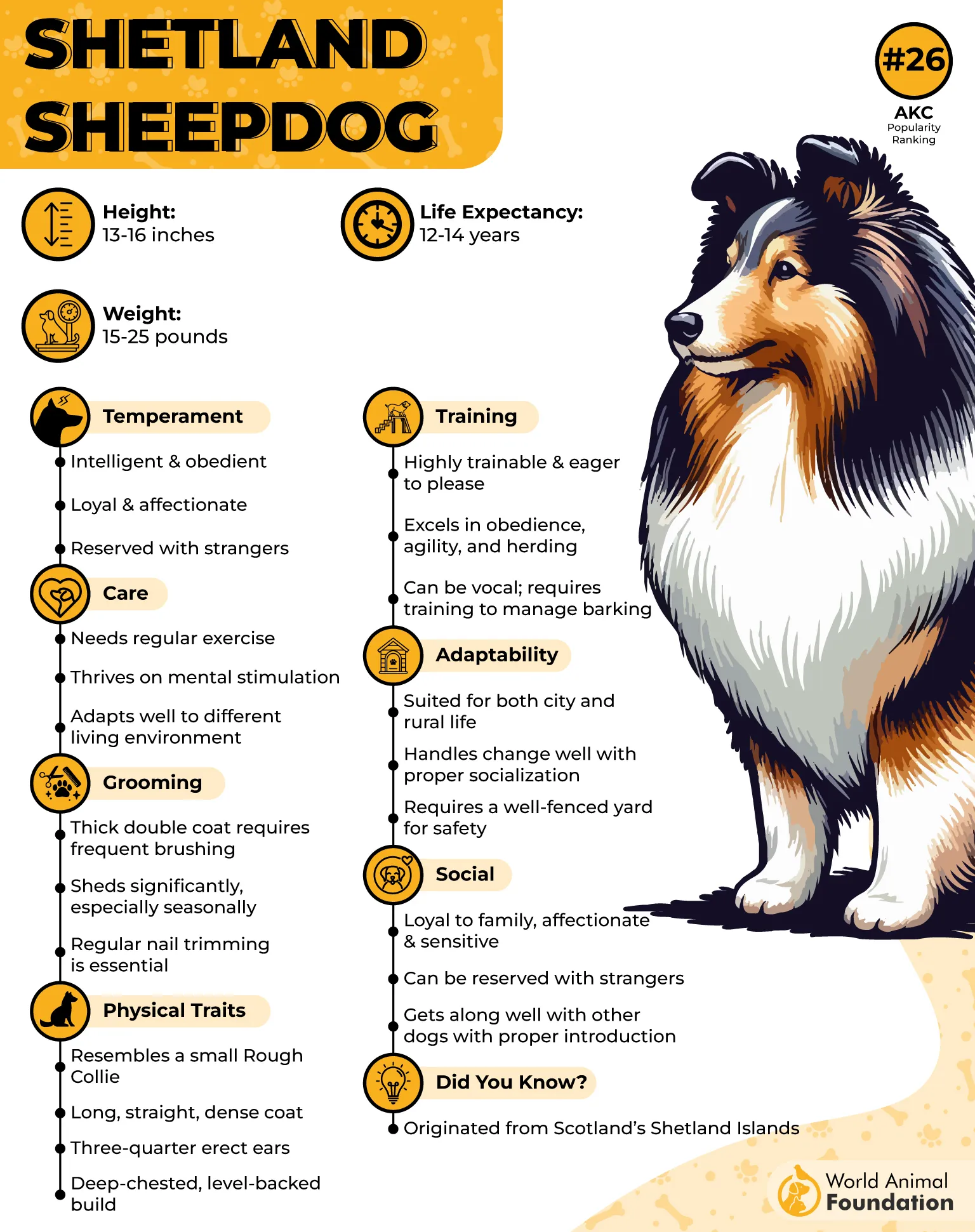
Ezydog says that the reward of training a Sheltie is their beautiful combination of brains and willingness. They often enjoy learning detailed cues and can become wonderfully precise when guided patiently. Their smaller size also makes them manageable for people who want a smart dog without the body of a large working breed.
The challenge is that Shelties can be vocal, shy, or easily overstimulated if not socialized well. Their alert nature may turn into barking at doorbells, passing cars, neighbors, birds, leaves, or honestly the concept of sound itself. They need confidence-building as much as command training.
This excellent family pet does best with gentle, consistent training and carefully planned exposure to the world. They should be rewarded for calm observation, quiet behavior, and bravery in new situations.
Specific Tips For This Breed’s Training
Reward quiet behavior before barking becomes a habit, especially around windows, doors, and outdoor noises.
Use gentle confidence games such as exploring new surfaces, meeting calm people, and practicing easy wins in new places.
Keep training upbeat and soft-toned, as Shelties often respond better to encouragement than to pressure.
7. Labrador Retriever
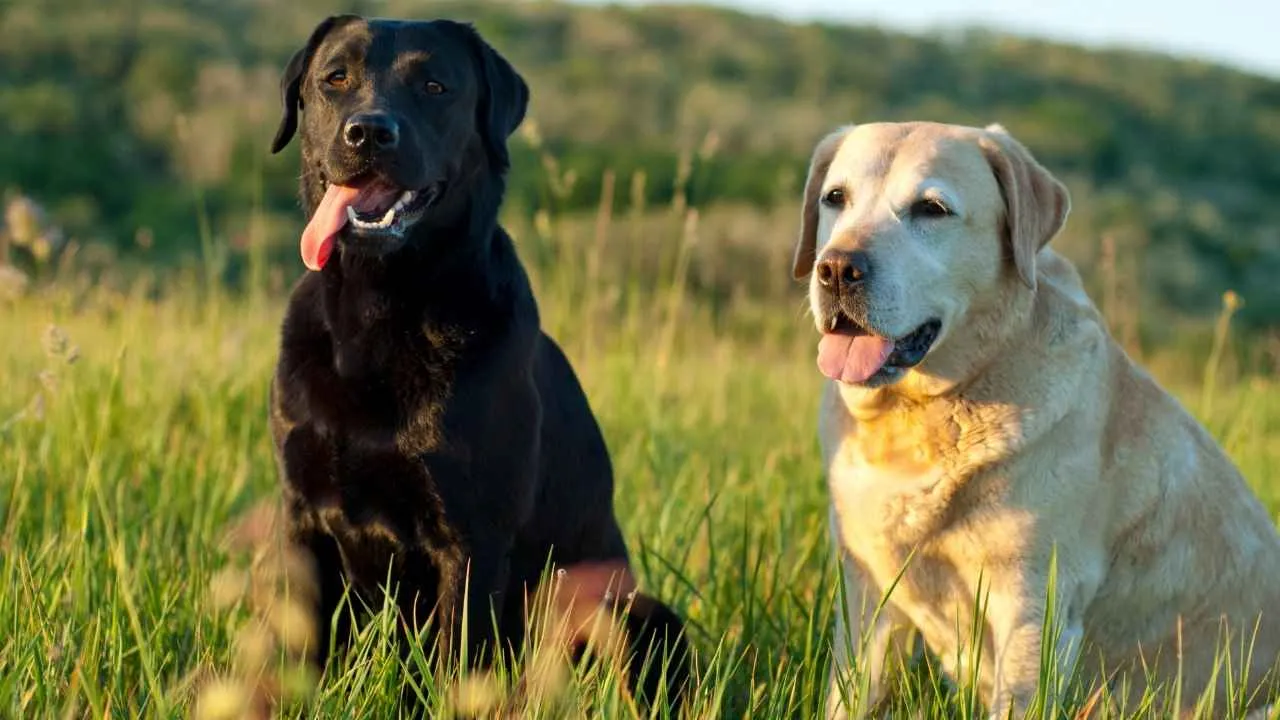
The Labrador Retriever is the popular kid in the dog world, and honestly, the hype isn’t random. Labs are intelligent, social, food-motivated, and usually excited to participate in training. They combine friendliness with working ability, which is why they are often seen in service, detection, therapy, and family roles.
Labradors were bred as retrieving dogs, so cooperation and stamina are baked into their personality. They often enjoy carrying, fetching, swimming, searching, and solving simple tasks for reward. Their love of food boosts their trainability, but that same love can also become a training challenge.
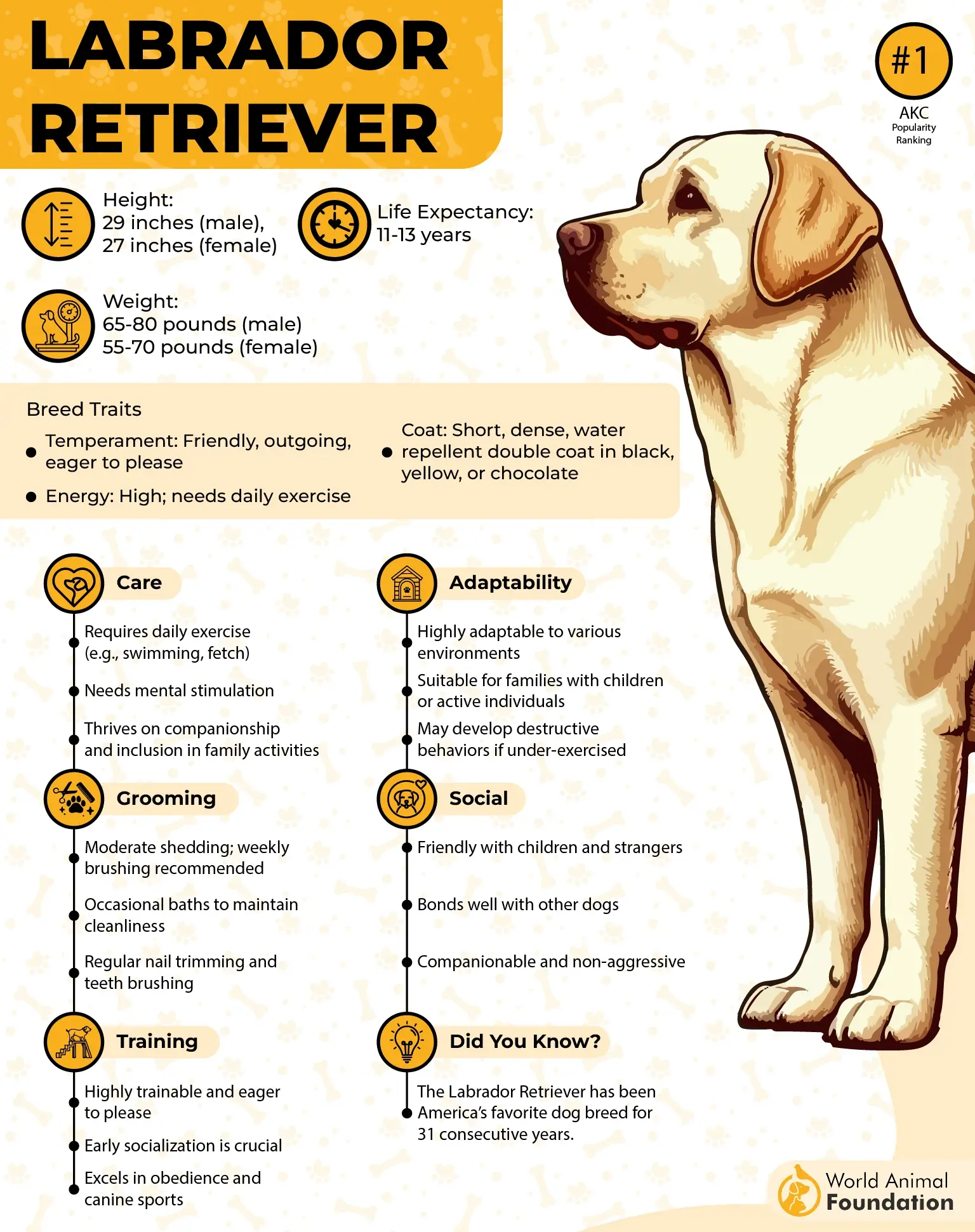
The reward of training a Lab is that they are usually forgiving and enthusiastic learners. They often bounce back from mistakes quickly and keep trying because the experience itself feels fun to them. For first-time owners who are committed, a Lab can be a wonderful introduction to intelligent breed training.
The challenge is that young Labs can be absolute chaos muffins. They may pull on leash, jump, chew, counter-surf, inhale food, and act like personal space is a myth. Their brains are bright, but their bodies can be bouncy and strong, so early manners matter a lot.
A Labrador needs structured exercise, clear boundaries, and steady training that channels energy into useful habits.
Specific Tips For This Breed’s Training
Use food rewards wisely by keeping treats small, counting calories, and mixing praise or toys into the reward system.
Start loose-leash walking early because Labs can become strong pullers when excitement takes over.
Build impulse control through wait, stay, settle, and doorway manners before expecting calm behavior in busy places.
8. Papillon
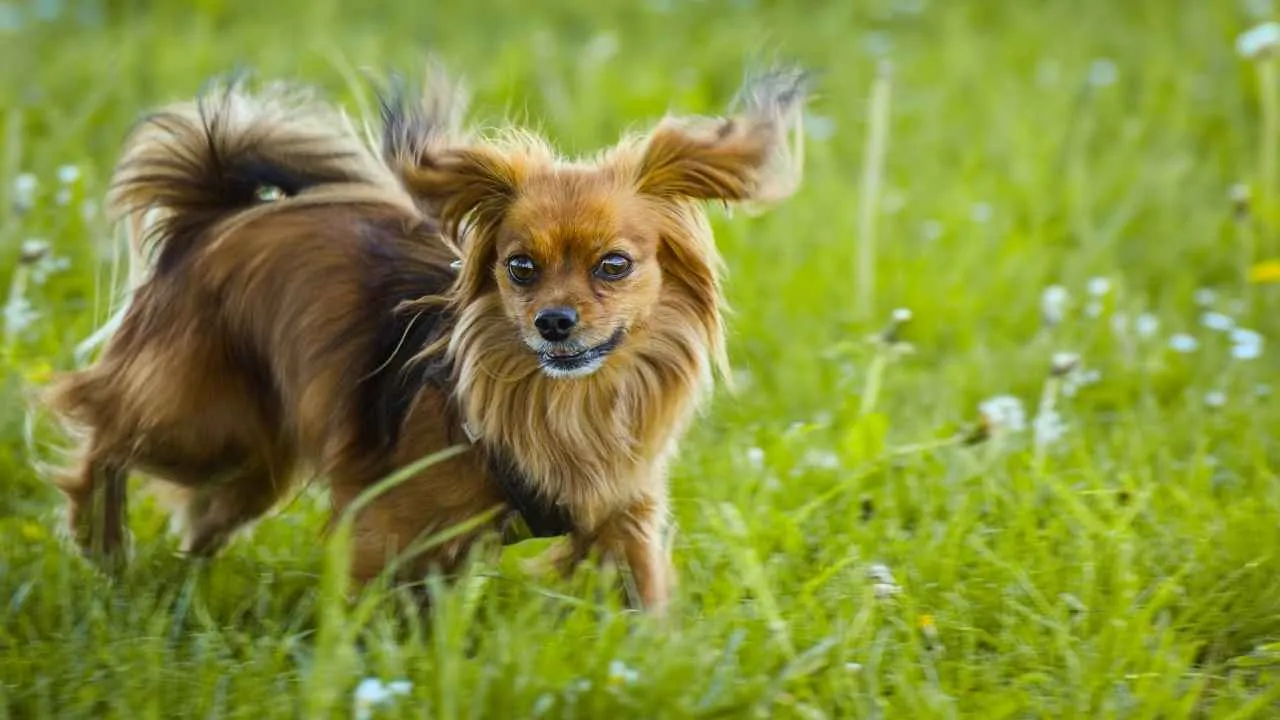
The Papillon is tiny, elegant, and secretly a little genius wearing butterfly ears. Do not let the small size fool you because this breed is lively, quick, and highly trainable.
The name “Papillon” comes from the French word for butterfly, inspired by the breed’s distinctive ear shape. Historically, these little dogs were treasured companion dogs, but they are far from lazy lap ornaments.
They are bright, curious, and playful. Their ability to learn quickly and, along with their obedience and intelligence, makes training feel like a game.
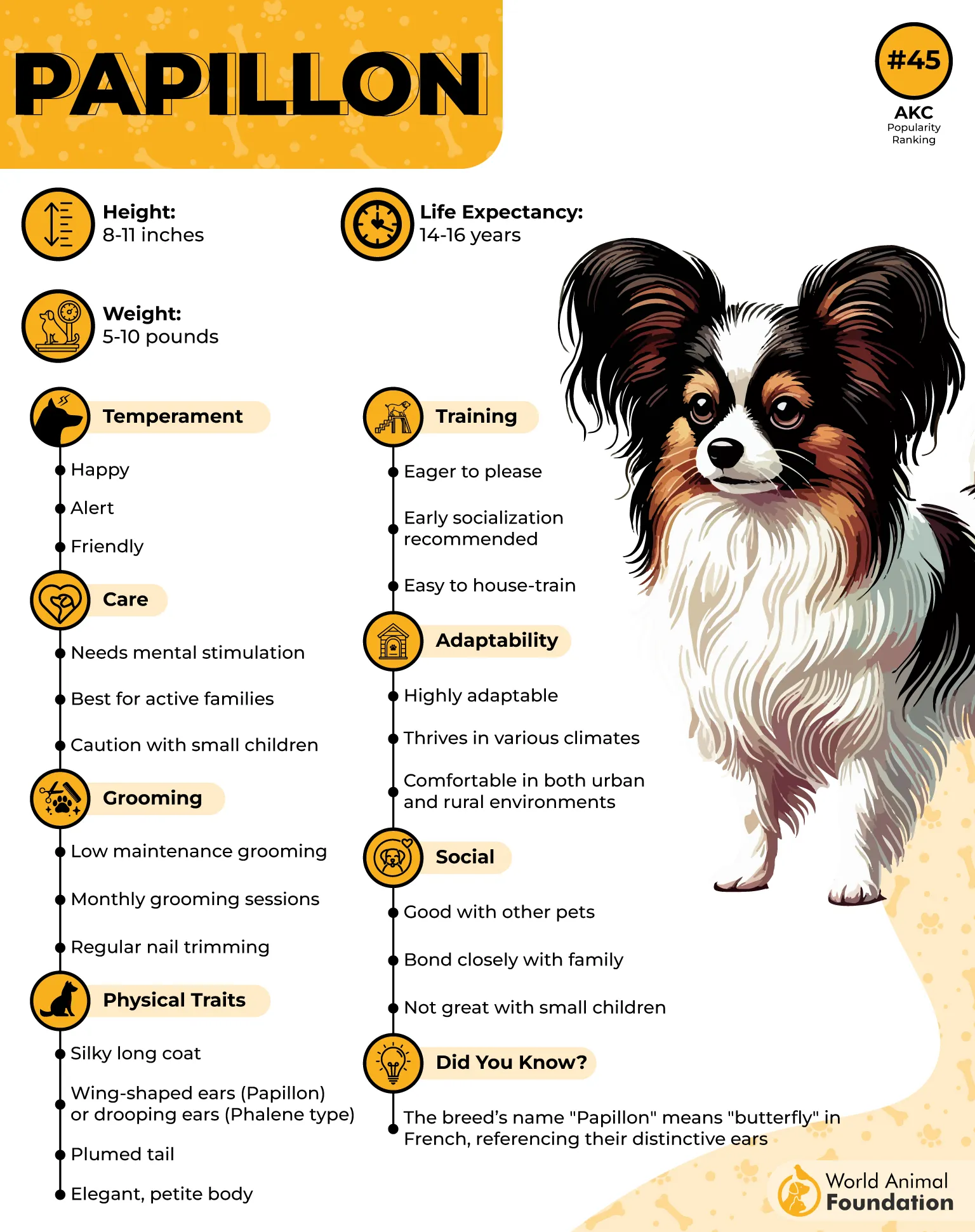
They are often fast, responsive, and eager to interact with their humans. Their size also makes them convenient for indoor trick training, travel practice, and small-space mental games.
The challenge is that people sometimes underestimate them and skip real training because they are small. That is a mistake because an untrained Papillon can become demanding, barky, clingy, or overly bold. Small dogs still need manners, confidence, recall, and boundaries.
Papillons thrive when treated like capable dogs, not fragile decorations. They need positive reinforcement, gentle handling, and safe outlets for their energy. Train them well, and you get a tiny superstar with a huge brain and even bigger sparkle.
Specific Tips For This Breed’s Training
Teach big-dog manners in a small-dog body, including recall, polite greetings, leash skills, and settling.
Use low-impact agility-style games like tunnels, tiny jumps, spins, and platforms to build confidence safely.
Avoid carrying them through every challenge, as controlled independence helps their clever minds grow.
9. Rottweiler
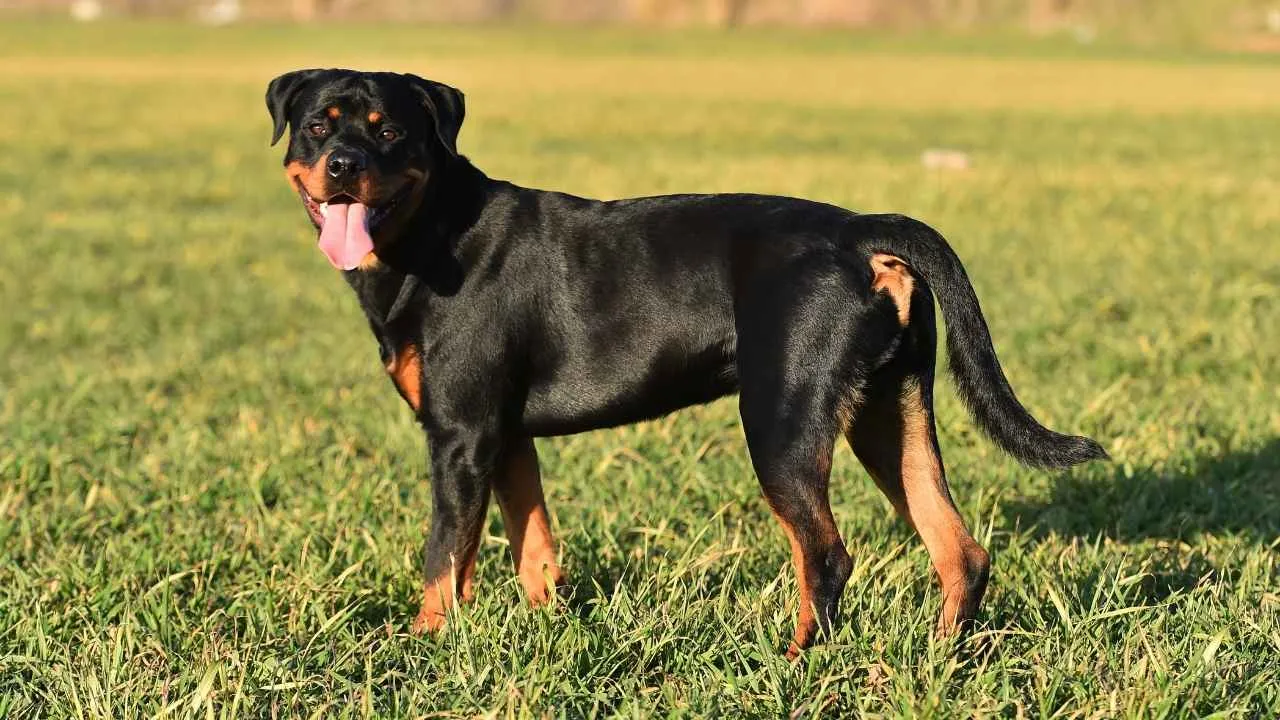
The Rottweiler is powerful, intelligent, and way more emotionally soft than its tough appearance suggests. This breed can be calm, loyal, confident, and deeply devoted when raised with structure. Rottweilers are smart enough to learn quickly, but they also need owners who take training seriously.
Historically, they were used to drive cattle, guard property, and pull carts. That working background created a dog with strength, endurance, decision-making ability, and natural confidence.
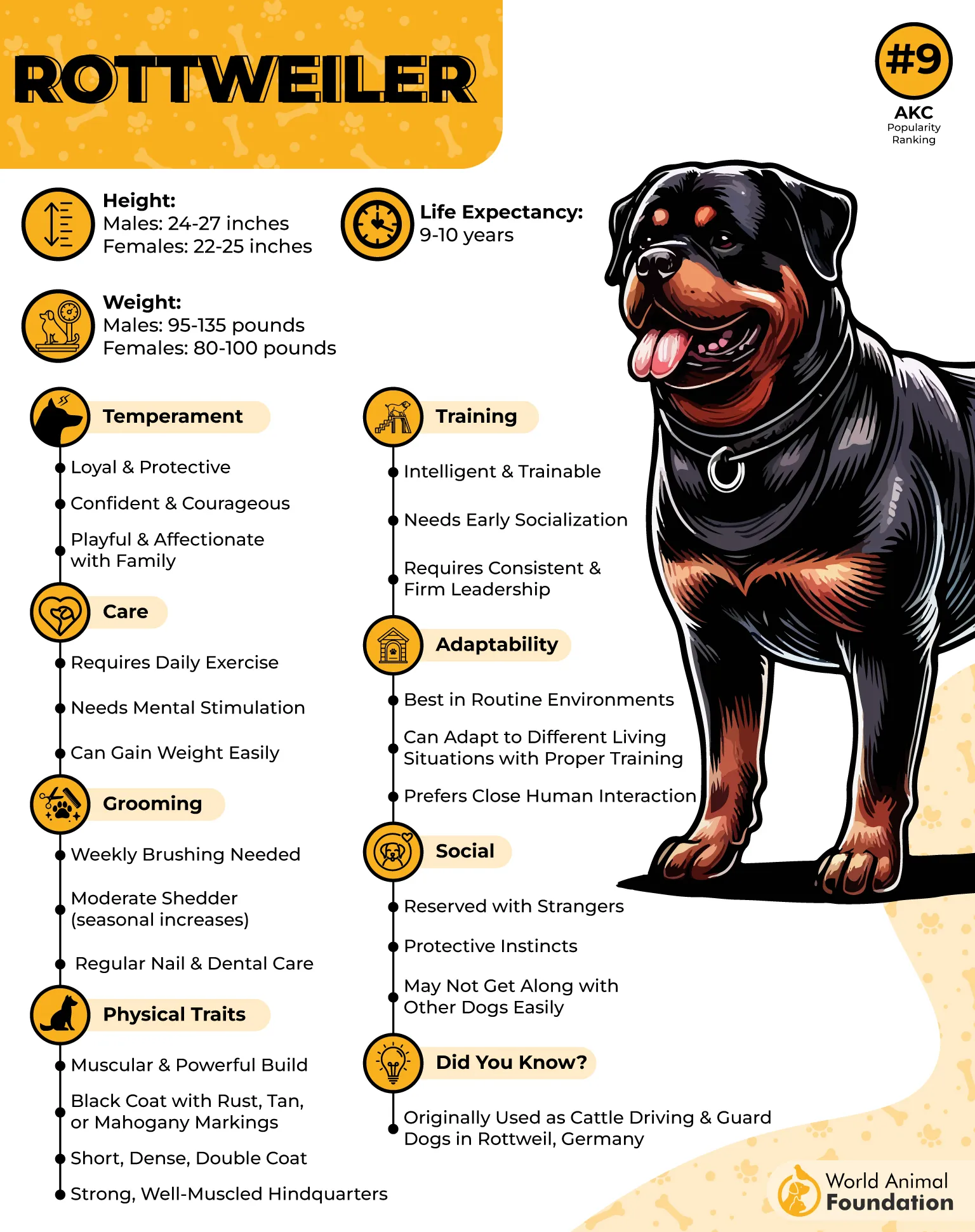
A well-trained Rottie can be composed, affectionate, obedient, and impressive without needing to act dramatically. They often bond strongly with family and enjoy task-based training that gives them a sense of purpose.
The challenge is that their size and strength leave very little room for lazy training. Pulling, jumping, guarding, or rude greetings are not cute when the dog is built like a furry tank. Early socialization, impulse control, and respectful handling are essential.
These popular dogs are a good choice for first-time dog owners, as they respond well to positive structure rather than intimidation. They respond well to clear rules, reward-based teaching, and calm confidence from their owner. With responsible training, a Rottweiler becomes a loyal, intelligent, and grounded companion with a serious heart.
Specific Tips For This Breed’s Training
Start impulse-control work early so strength is paired with patience, not pushiness.
Practice calm greetings with people and dogs because manners matter extra when the breed is large and powerful.
Give them useful jobs like carrying items, scent games, obedience drills, or structured walks to channel working instincts.
10. Australian Cattle Dog
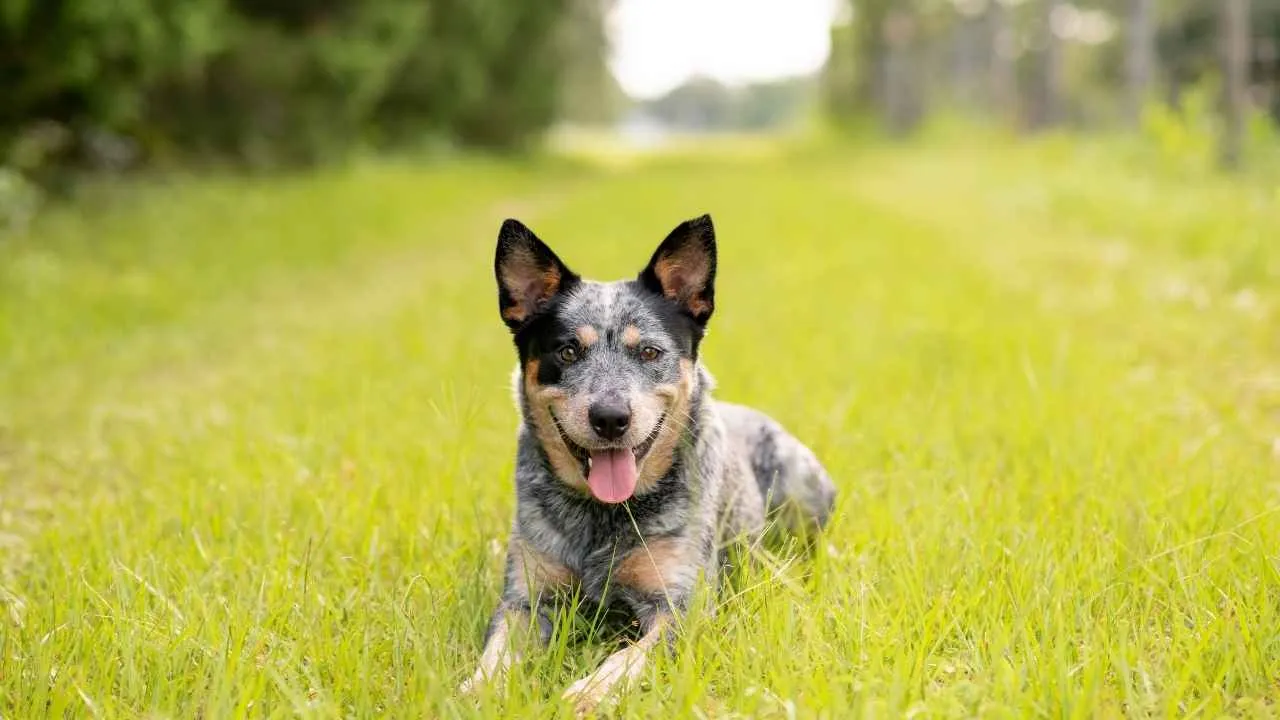
The Australian Cattle Dog is often considered one of the smartest dog breeds, and anyone who has lived with one can understand why. This is a dog that watches, remembers, problem-solves, and quickly figures out patterns, sometimes before you even realize you have created one.
That intelligence can be incredibly rewarding, but it also brings training challenges. A bored Cattle Dog may invent its own entertainment, which can lead to barking, chewing, chasing, nipping, or trying to “herd” children, pets, or moving objects.
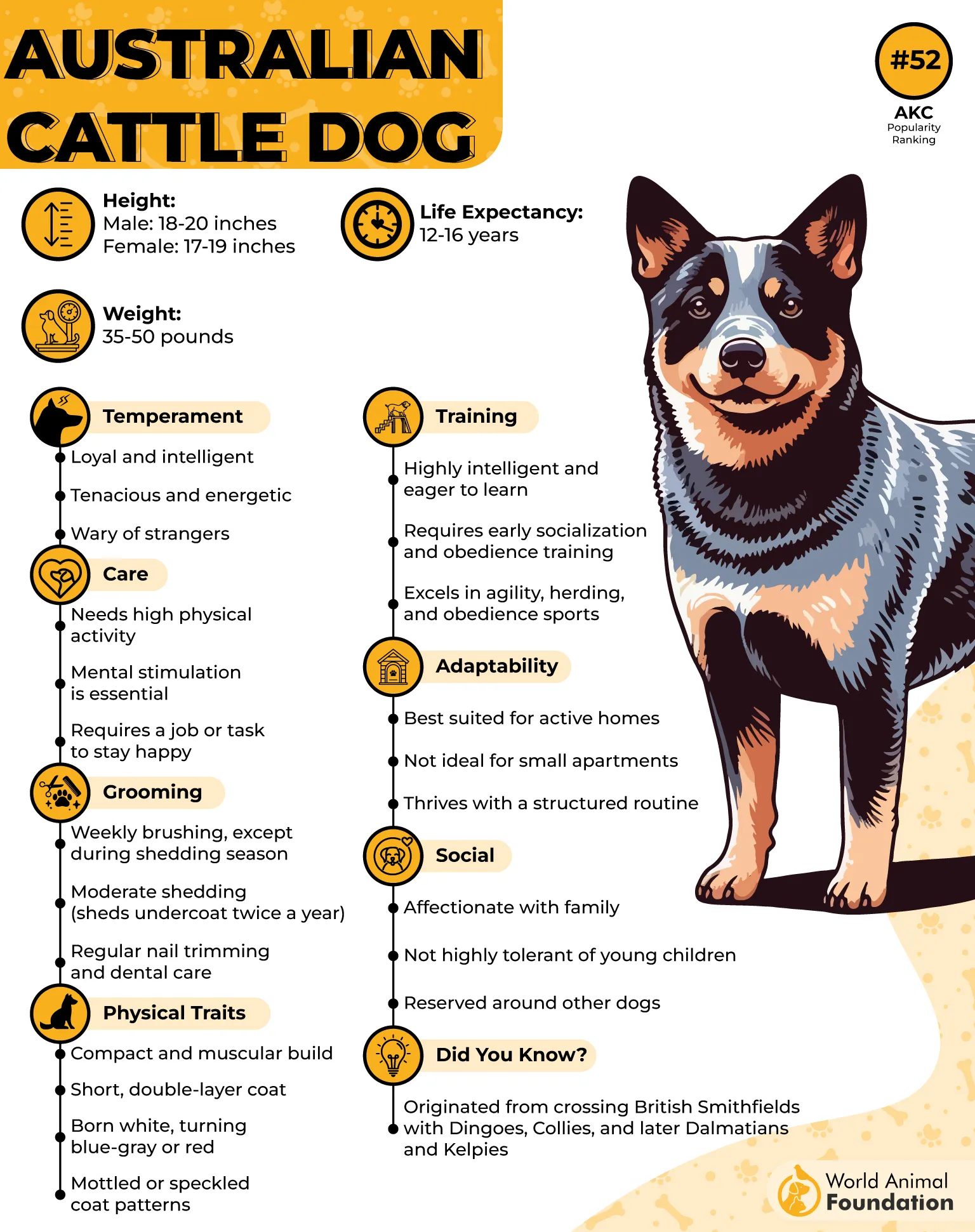
They respond best to clear rules, consistent routines, positive reinforcement, and training that keeps them mentally engaged instead of simply repeating the same command over and over.
The reward, however, is huge for owners who put in the effort.
Once it trusts you and understands what you want, it can become an amazingly loyal, responsive, and hardworking companion. With the right mix of exercise, structure, patience, and brain games, this breed turns its intense intelligence into obedience, confidence, and a bond that feels truly special.
Specific Tips For This Breed’s Training
Teach a reliable “quiet” cue by rewarding silence after one or two alerts instead of waiting for a barking marathon.
Use scent games and food puzzles to satisfy their ratting-dog instincts in a home-friendly way.
Keep boundaries consistent because this breed notices when rules become optional.
Conclusion
Smart dogs are not automatically easy dogs, and that is the plot twist many new owners miss. A brilliant breed can learn “sit” in minutes, but it can also learn how to open doors, manipulate routines, or ignore you when something more interesting appears.
Australian Cattle Dog, Doberman Pinscher, Poodle, Labrador Retriever, and Rottweiler are also considered among the smartest breeds in the dog world.
The real reward is the relationship you build along the way. When a smart dog trusts you, learns with you, and starts choosing good behavior because training makes sense, the bond feels incredibly special. These breeds can become athletes, helpers, guardians, therapy partners, performers, or simply unforgettable family companions.
