




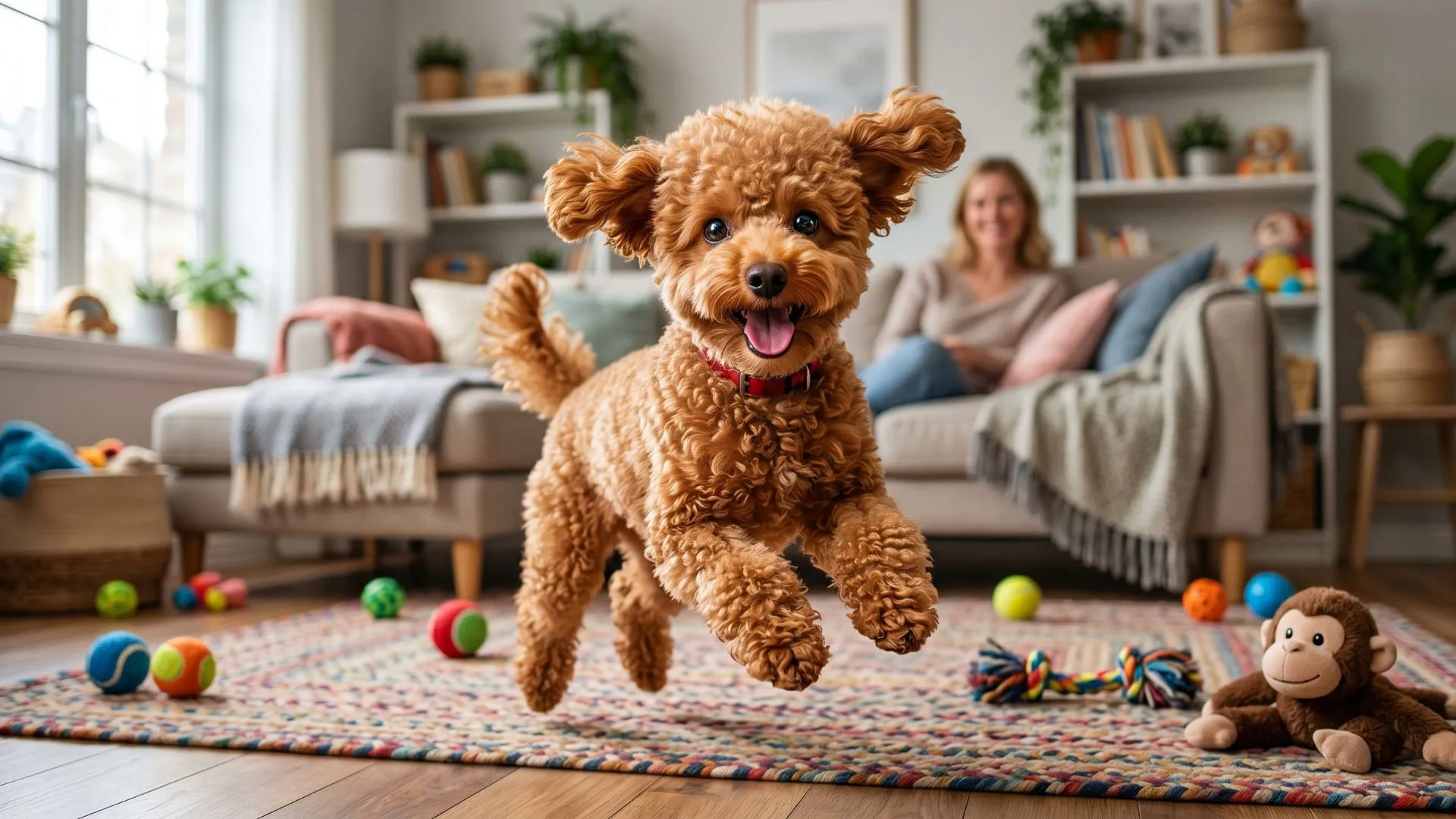
You know what they say: big things come in small packages. Nobody warned you, though, that they would also come with this much chaos. Small dogs do not just sit on your lap and look pretty; they zoom, they bark at nothing, and they develop very strong opinions about your future.
These breeds are beloved for their cheerful temperaments and deep emotional connections with their humans. Some are bold and high-energy, while others are calm and gentle indoors. That versatility makes them a natural fit for apartments, family homes, and first-time owners alike; really, anyone looking for a warm and lively companion.
According to the American Pet Products Association, roughly 71 million U.S. households own at least one dog, and small breeds are climbing that list every single year. Whether you live in a studio apartment or a farmhouse, the right small dog will fit right in, and immediately take over.
Here are nine tiny breeds that are way more fun than their size suggests.
Adorable Small Dog Breeds That Are Full of Surprising Playfulness
1. Papillon
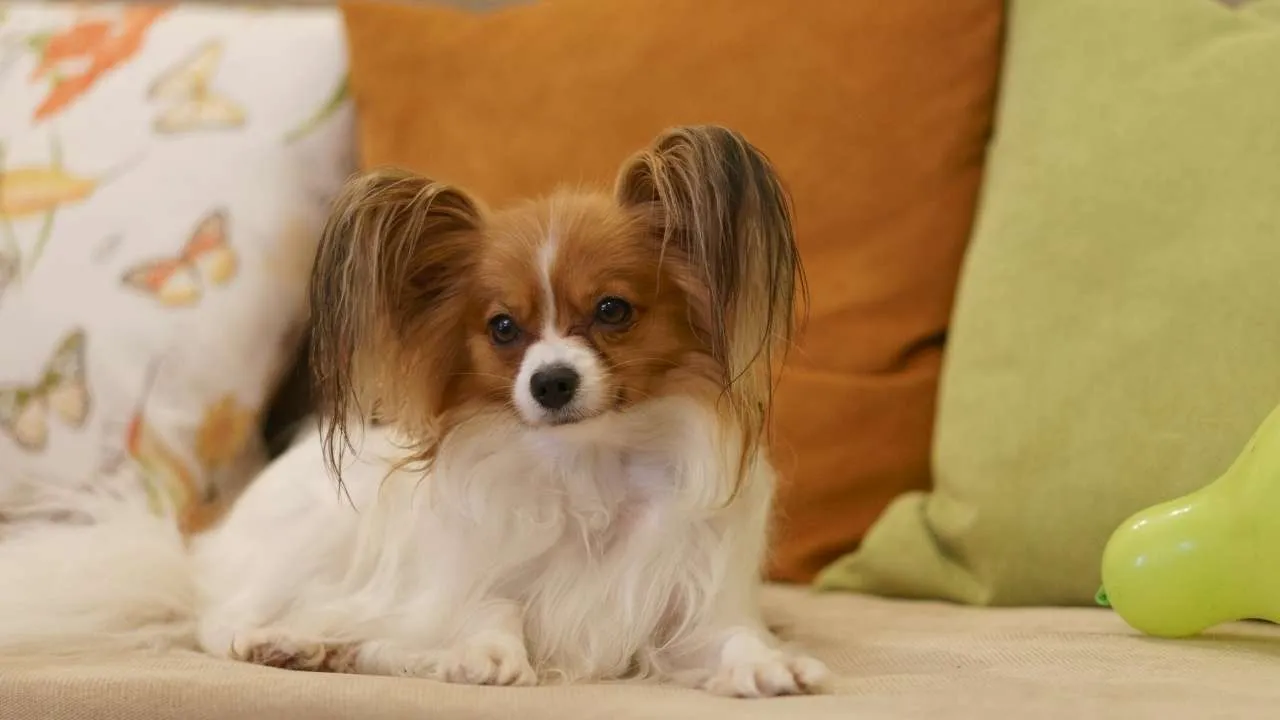
Originally bred in France, the Papillon takes its name from its most distinctive feature: its butterfly-shaped ears. Known as the dwarf spaniel as far back as the 13th century, the breed gained widespread popularity across Spain and Italy after appearing in royal portraits, according to Omlet UK.
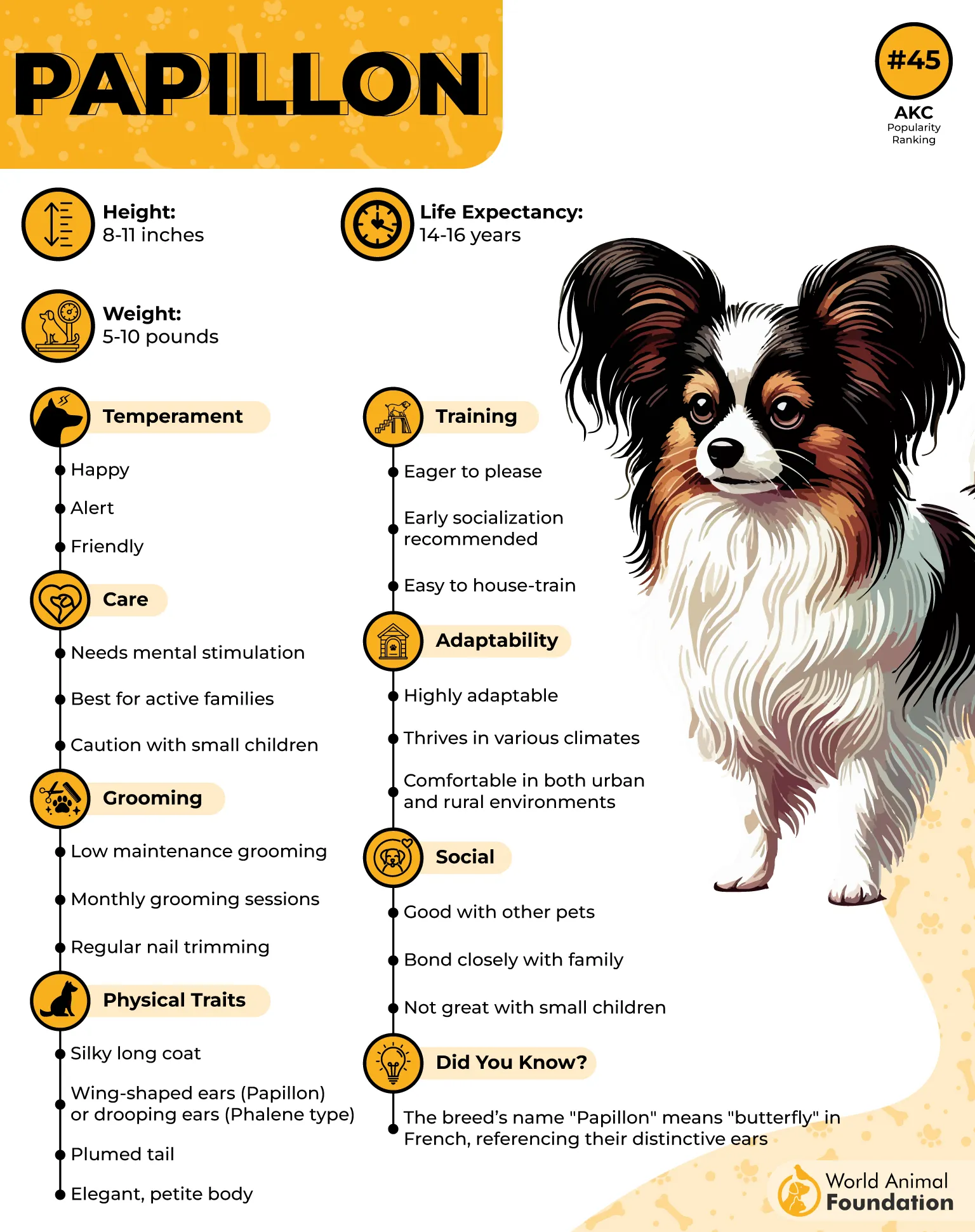
Light-footed and full of personality, the Papillon tends to bounce and dance on its toes. The breed weighs between 6 and 10 pounds and stands 8 to 11 inches tall. Thanks to its spaniel heritage, it has a strong prey drive and loves to chase small animals, and will often stand on its hind legs to get a better view of its surroundings.
The Papillon also has distinctly cat-like tendencies, bathing itself, licking its paws, and kneading blankets. Its plumed tail wags freely as an expression of happiness. To stay healthy and stimulated, the breed needs around 45 to 60 minutes of daily exercise, ideally split across two or three short walks, indoor play, and obedience training sessions.
2. Miniature Poodle
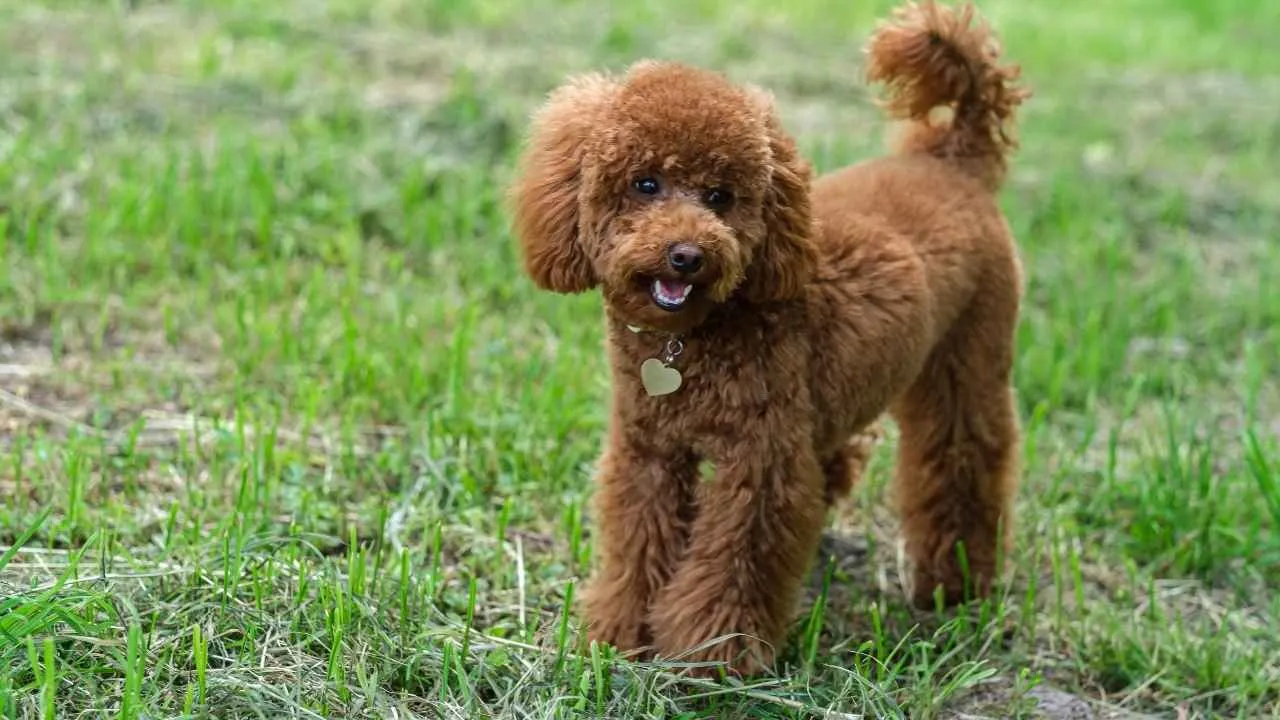
The Poodle was originally developed in Germany, where it earned its name from the word Pudelin — meaning “to splash,” a nod to its original role as a water retriever. Today, it is widely ranked as the most intelligent of all dog breeds.
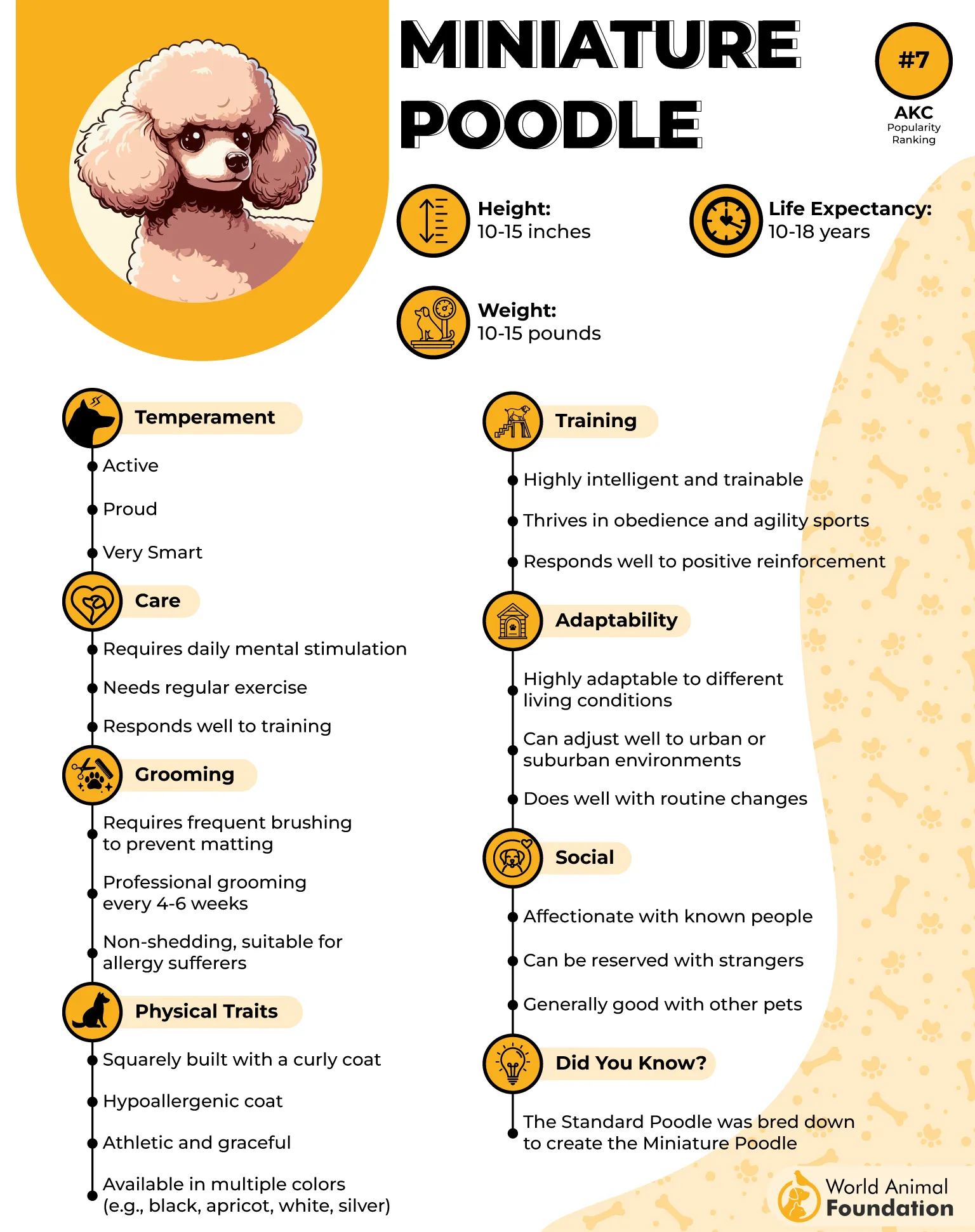
Of the three Poodle sizes, the Miniature Poodle sits right in the middle. It weighs between 10 and 15 pounds and stands 10 to 15 inches tall. Quick to learn, it can pick up as many as 400 human words. The Miniature Poodle also bores easily and has a well-known habit of “stealing” harmless items like shoes and socks to keep itself entertained.
Highly expressive in appearance, the breed features a chiseled muzzle, tight-fitting lips, and dark oval eyes. Its fast metabolism gives it continuous short bursts of energy, and it tends to carry its playful, puppy-like nature well into adulthood. Active families will find this breed a wonderful match; it needs between 45 and 90 minutes of daily exercise to stay physically and mentally satisfied.
3. Jack Russell Terrier
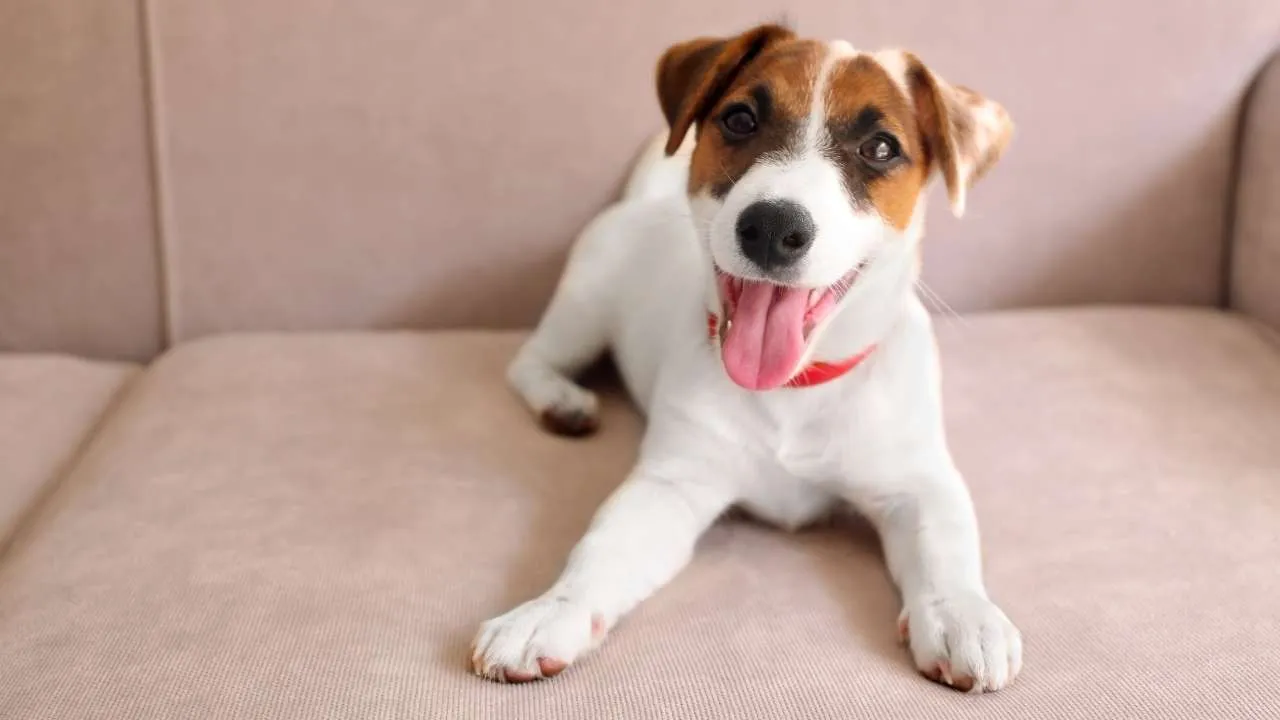
The Miniature Fox Terrier was bred in Britain during the 19th century as a fox hunting dog. That hunting history runs deep; it loves to burrow, and will happily dig up your backyard if boredom sets in. It is also a remarkable jumper, capable of clearing heights over 5 feet thanks to its impressive vertical leap.
One of its most charming quirks is the so-called “ghost walk,” a slow, deliberate creep beneath low-hanging fabric like bed sheets and curtains. It also has a habit of burrowing its head deep into blankets, making low grunting sounds as if asking to be tucked in tighter.
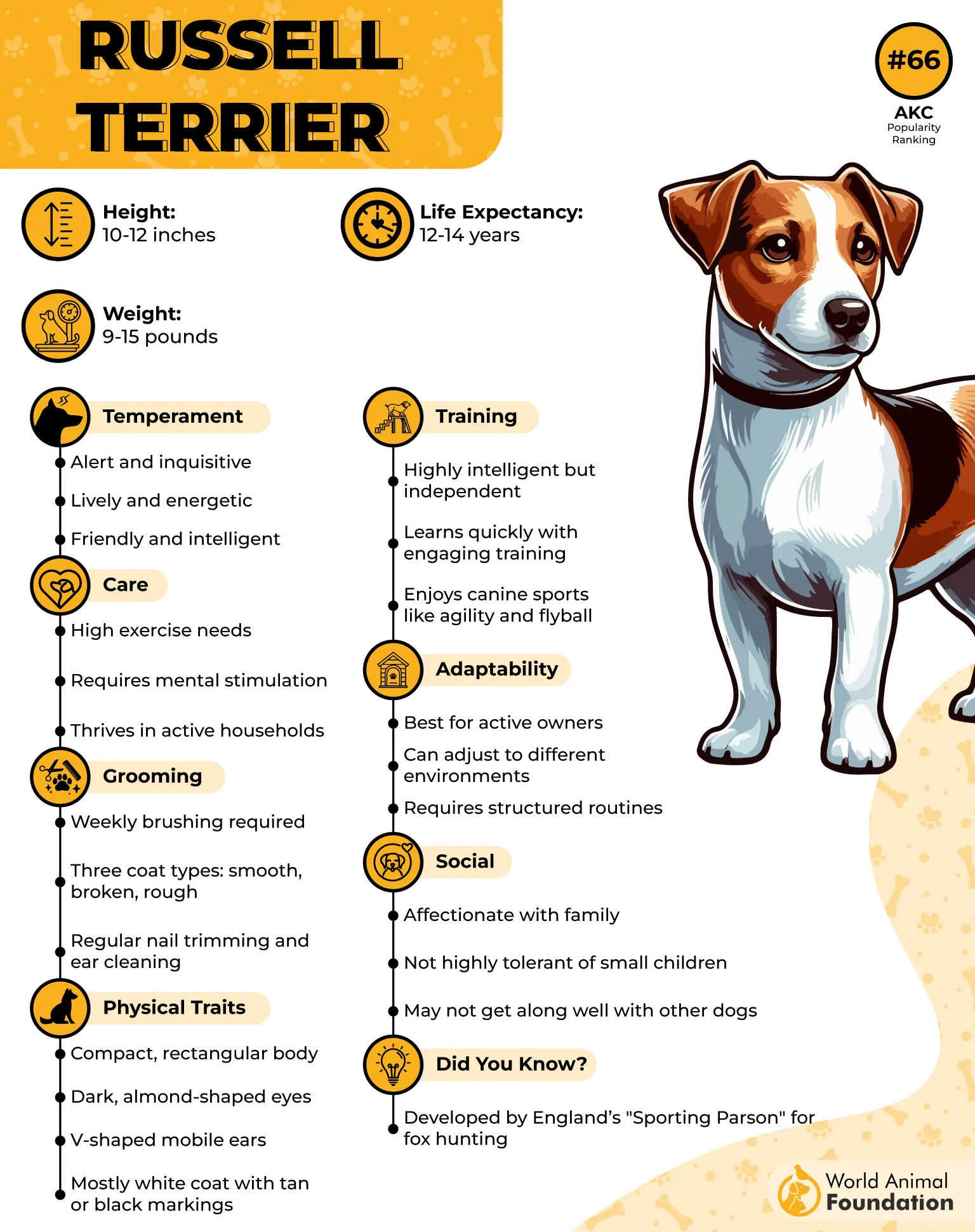
Its almond-shaped eyes give it a permanently alert expression, and that natural curiosity makes it an enthusiastic candidate for outdoor adventures.
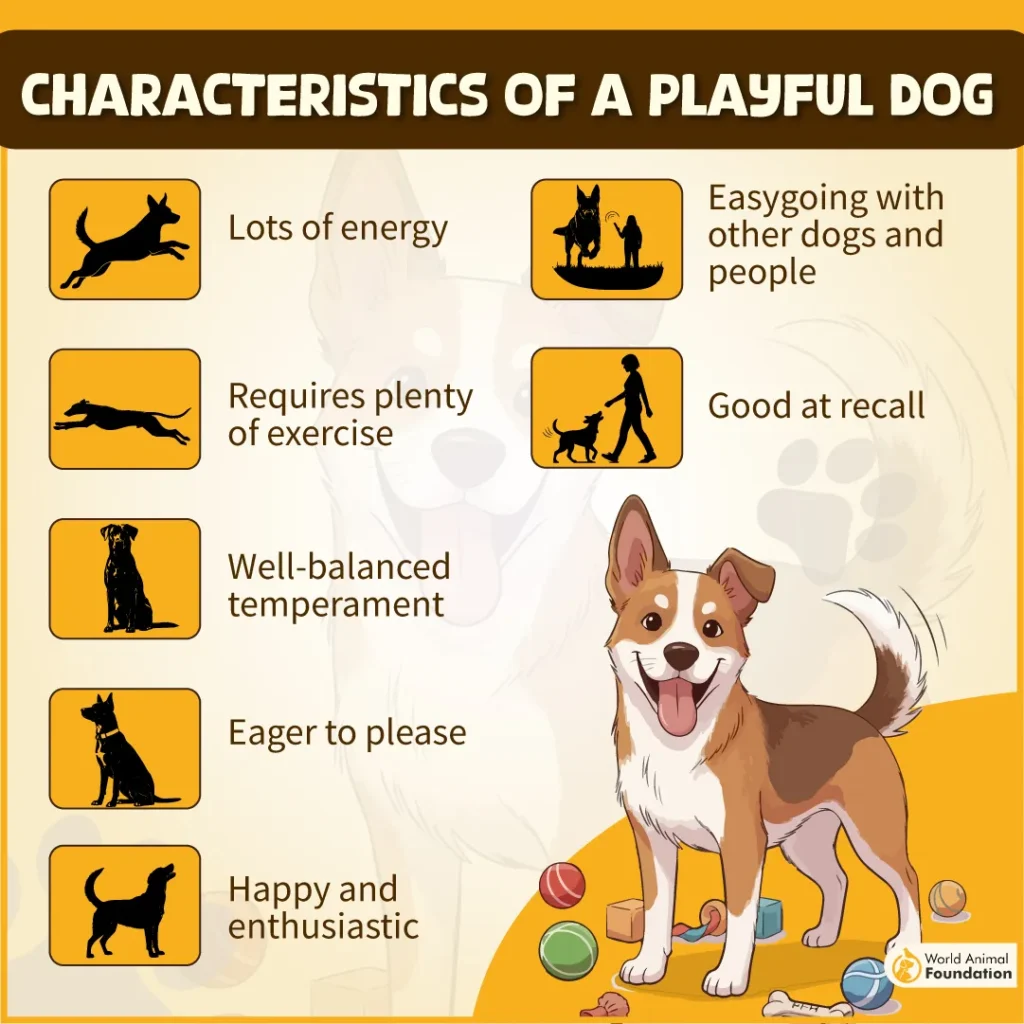
The breed is easily recognized by its upright tail, expressive ears, and lively presence. Widely used for companionship, canine sports, vermin control, and entertainment, it needs at least one to two hours of daily physical activity to stay happy. Weekly brushing keeps its coat healthy by removing loose hair and evenly distributing its natural oils.
4. Bichon Frise
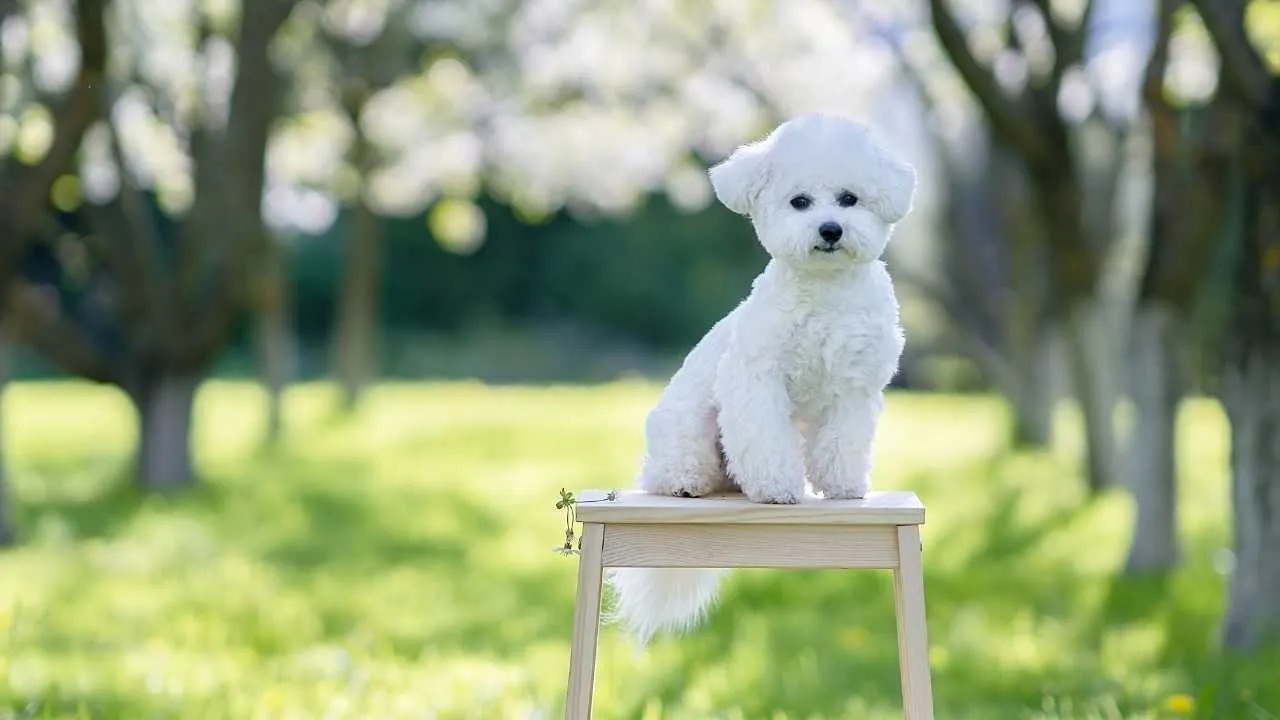
Sailors from the Mediterranean are thought to have brought Bichon-type dogs to Europe in the 14th century. The breed quickly became a status symbol, appearing in French and Spanish artwork, as noted by Purina UK. After the French Revolution, however, it was displaced from the castles and had to earn its keep performing on the streets.
The Bichon Frise is famous for the “Bichon Blitz,” a sudden burst of energy where it zooms and bounces around the room for five to ten minutes before settling back into its usual calm.
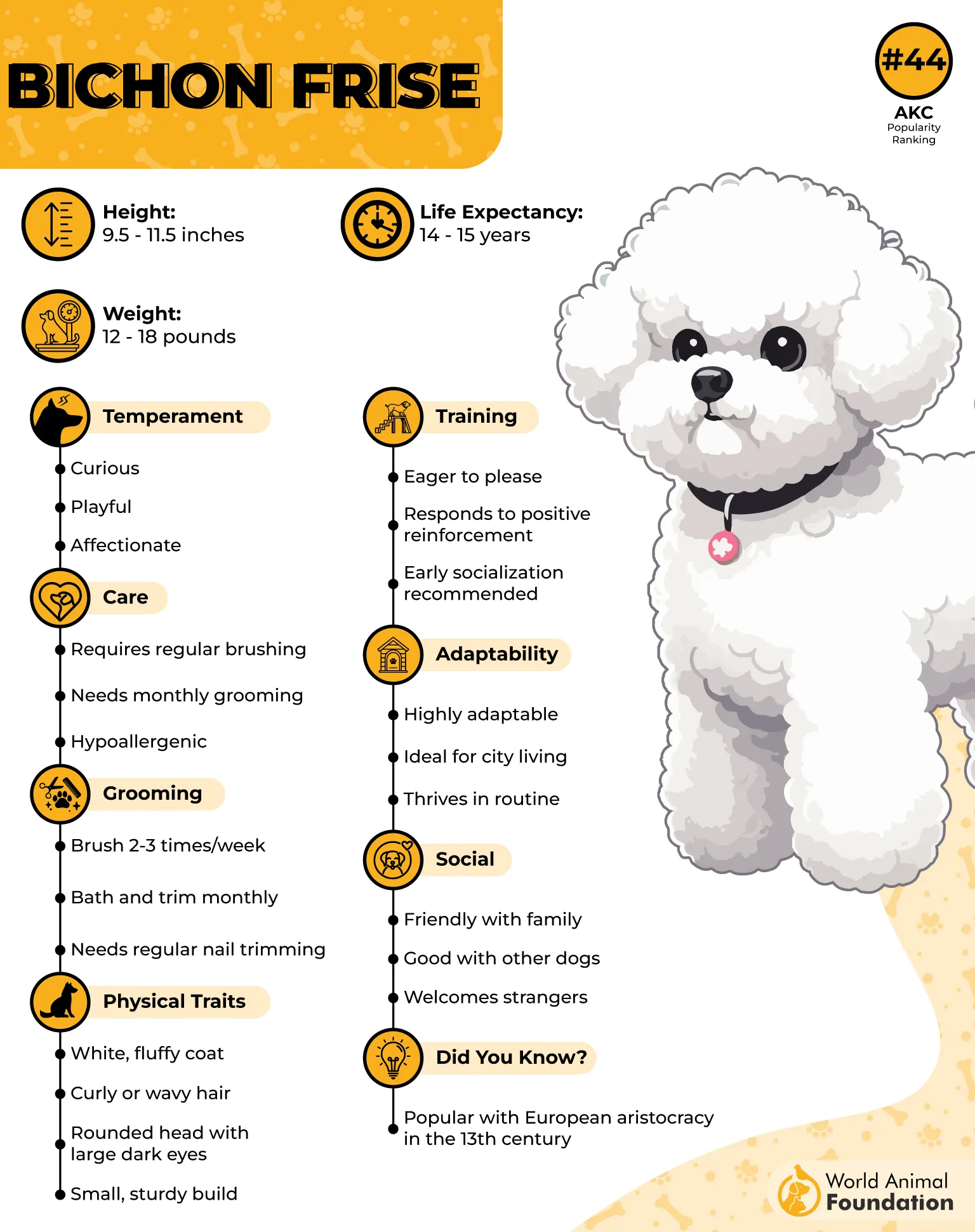
It also has an endearing habit of curling its lips into what looks remarkably like a smile, showing its teeth as a sign of happiness. With the right treat-based training, it can walk on its hind legs, dance, and even skateboard.
Its hypoallergenic double coat features a softer inner layer beneath a coarser, curlier outer coat; low-shedding and well-suited to allergy-sensitive households. The Bichon Frise gets along wonderfully with family members, young children, and other dogs. That said, its deep attachment to its family means it can develop separation anxiety if left alone for extended periods.
5. Havanese
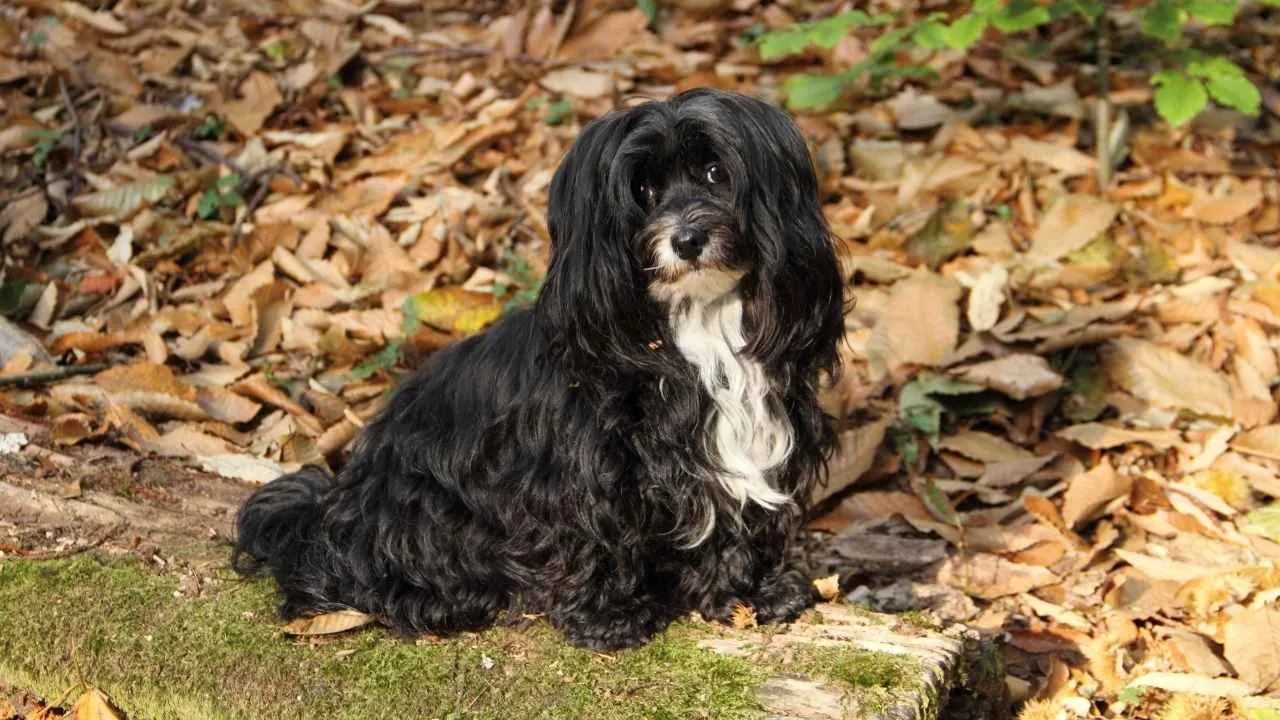
The Havanese is the national dog of Cuba and belongs to the Bichon family of breeds. It was developed by crossing the now-extinct Blanquito de la Habana, a pure white dog, with other Bichon-type breeds, including the Poodle. Today, it is widely used as an assistance dog, therapy dog, and signal dog.
This loyal companion has a strange fascination with paper; it will gleefully shred and chew any piece it can find. Its shorter front limbs and stronger back legs give it a distinctively springy, bouncing gait. The Havanese is also remarkably perceptive, able to read its owner’s body language and facial expressions with impressive accuracy. Its keen nose has even made it useful in termite detection and tracking.
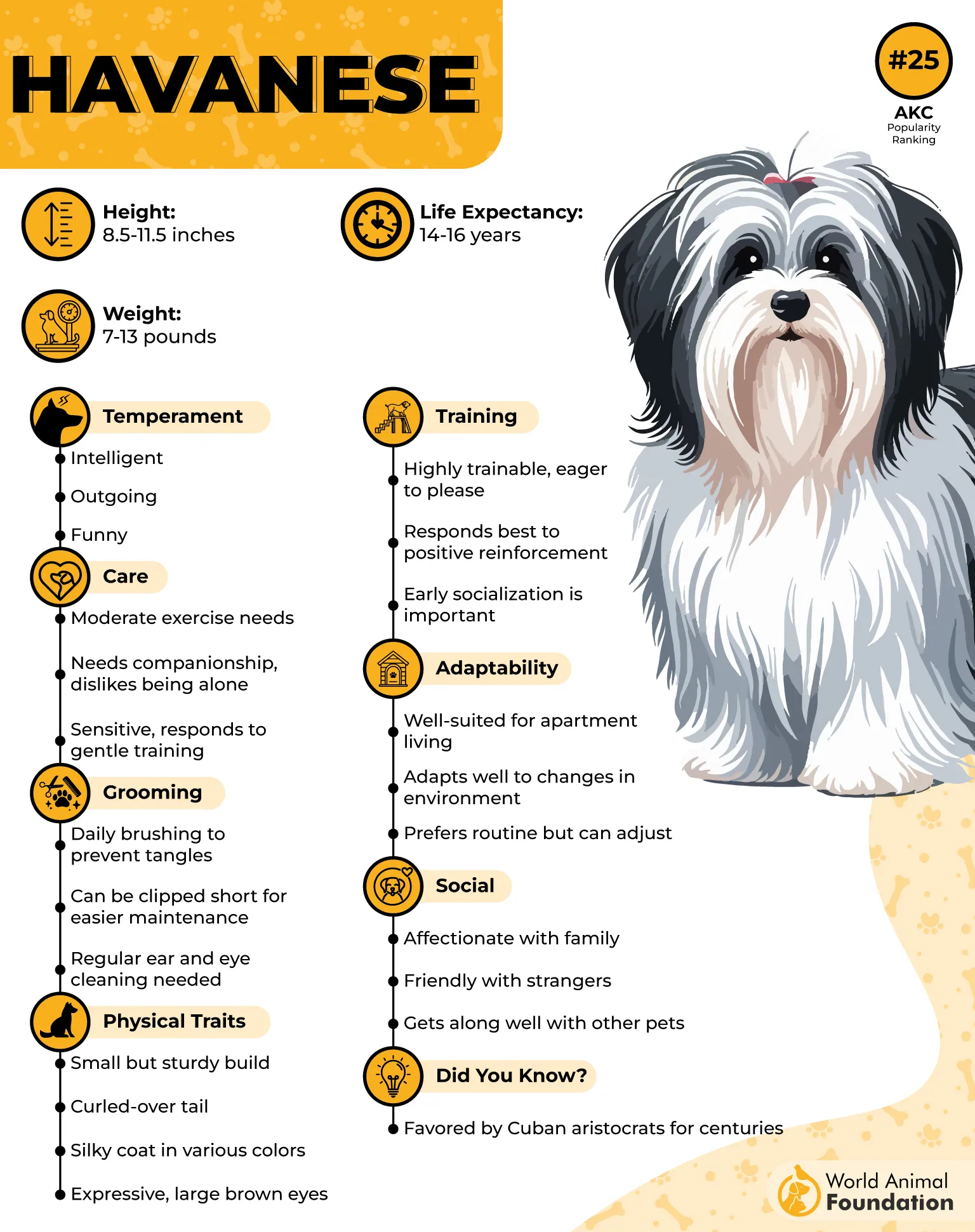
The breed has a single-layered, silky coat that requires weekly brushing with a pin brush and metal comb. Many owners opt for a “teddy bear cut” as a practical alternative to maintaining a floor-length coat.
It needs 30 to 45 minutes of daily exercise, and puppies should have their workouts gradually increased by five minutes each month until they reach two years of age, an approach that helps protect their developing joints.
6. Dachshund
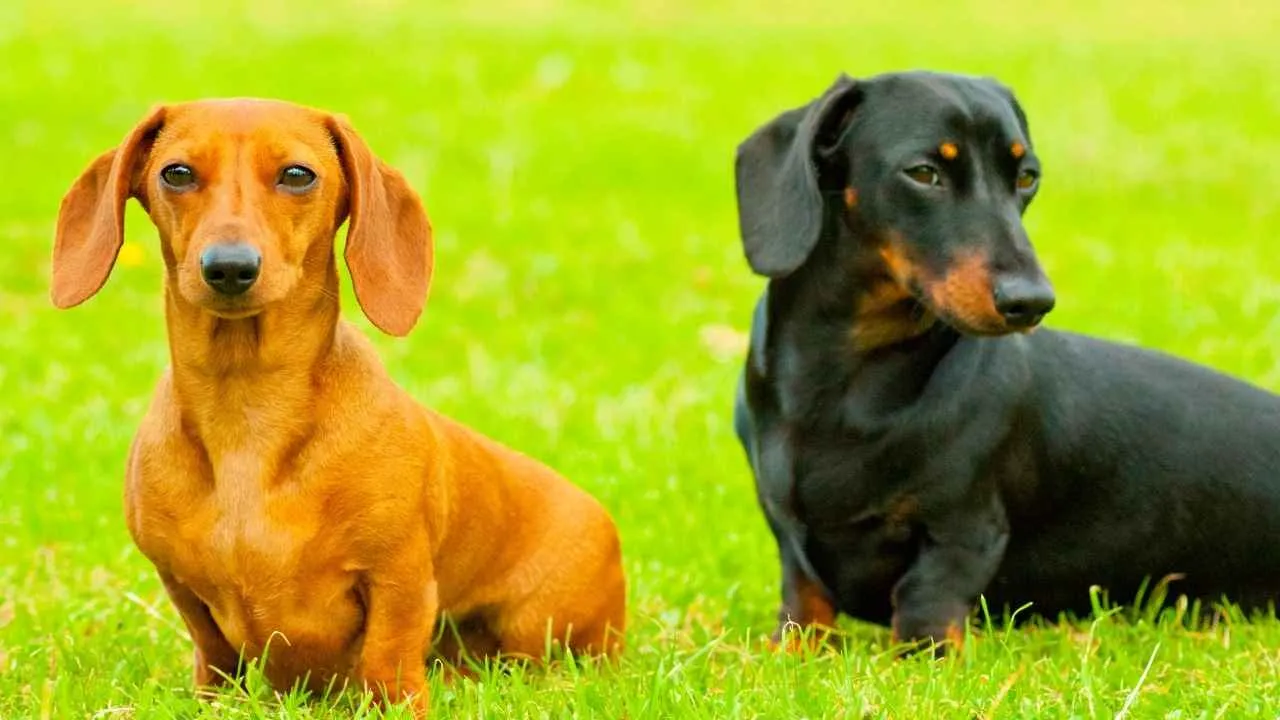
The Dachshund was originally developed in Germany, not France, for badger hunting. Its name combines two German words: Dachs (badger) and Hund (dog). Its elongated body and short legs were purpose-built for burrowing, which also explains why it will enthusiastically burrow into your blankets, pillows, and lap at every opportunity.
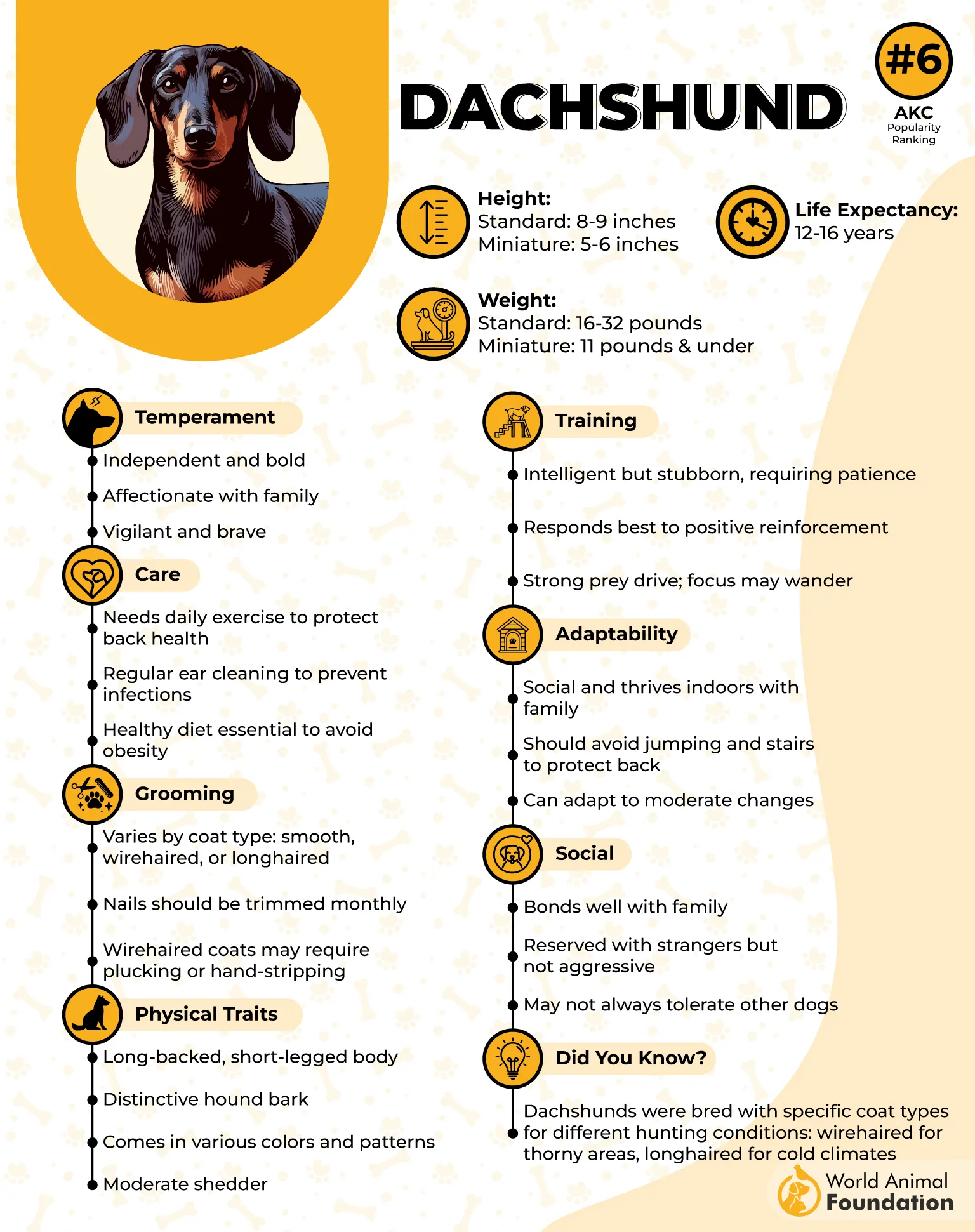
This sun-obsessed companion will actively track a patch of sunlight across the room, flipping onto its back to soak up as much warmth as possible. Bred originally as a watchdog, it also comes equipped with a surprisingly deep, explosive bark. And if it disagrees with you? Expect a dramatic sigh, a piercing death stare, and a full refusal to move.
Its ears drop forward when it is happy or curious, and its affectionate nature means it will curl up as close to its owner as physically possible. Despite its hunting roots, the Dachshund’s strong prey drive and athletic ability have made it a surprisingly capable competitor in canine sports.
7. Boston Terrier
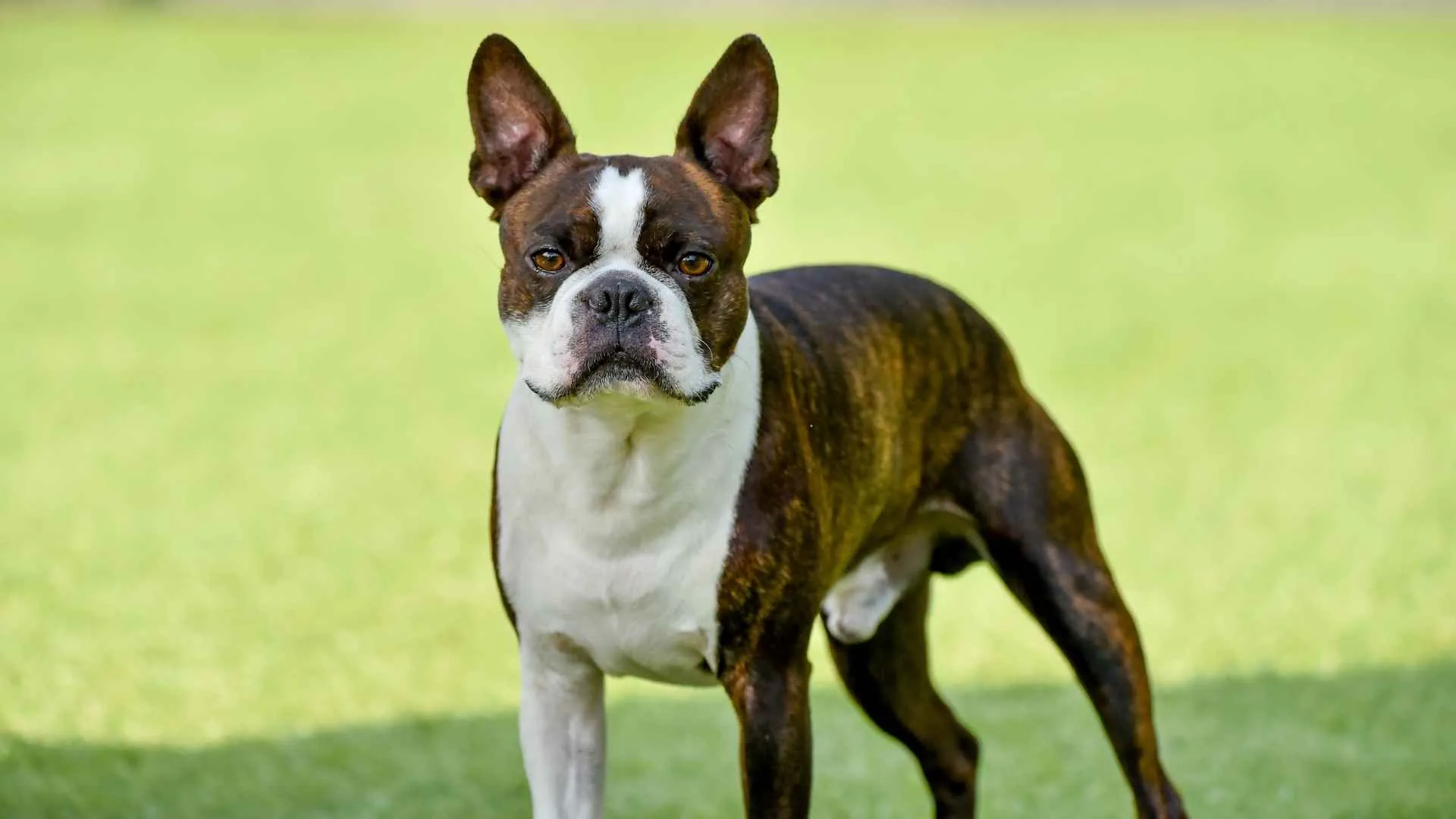
Also known as the American Gentleman, the Boston Terrier was originally bred in the United States and accepted by the AKC in 1893 as a non-sporting breed, according to Wikipedia. Its signature “tuxedo coat” features a white base with dark markings across the chest, giving it that perpetually well-dressed look.
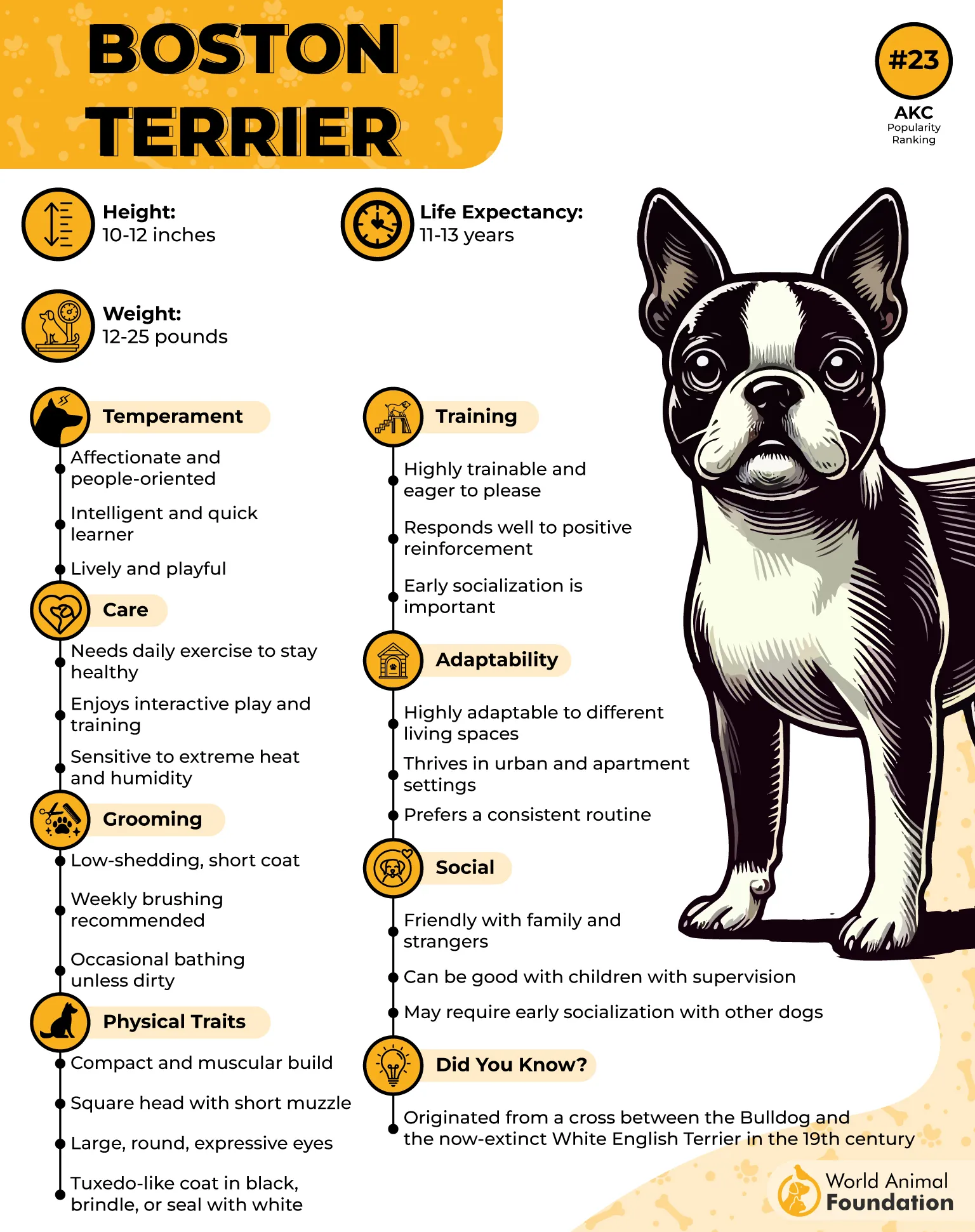
The Boston Terrier is a brachycephalic breed, meaning it has a flat face and narrowed airways. This can lead to breathing difficulties and a repertoire of loud, endearing sounds during sleep. It communicates its needs through wide, expressive eyes and perked-up ears, and greets everyone it meets with an enthusiastic full-body bounce, all four paws leaving the ground at once.
Weighing between 15 and 25 pounds, this breed is as affectionate as it is smart. During World War I, the American Army made use of the Boston Terrier’s keen nose and watchful instincts to help locate wounded soldiers on the battlefield, a remarkable chapter in the breed’s history that often goes unnoticed.
8. Miniature American Shepherd
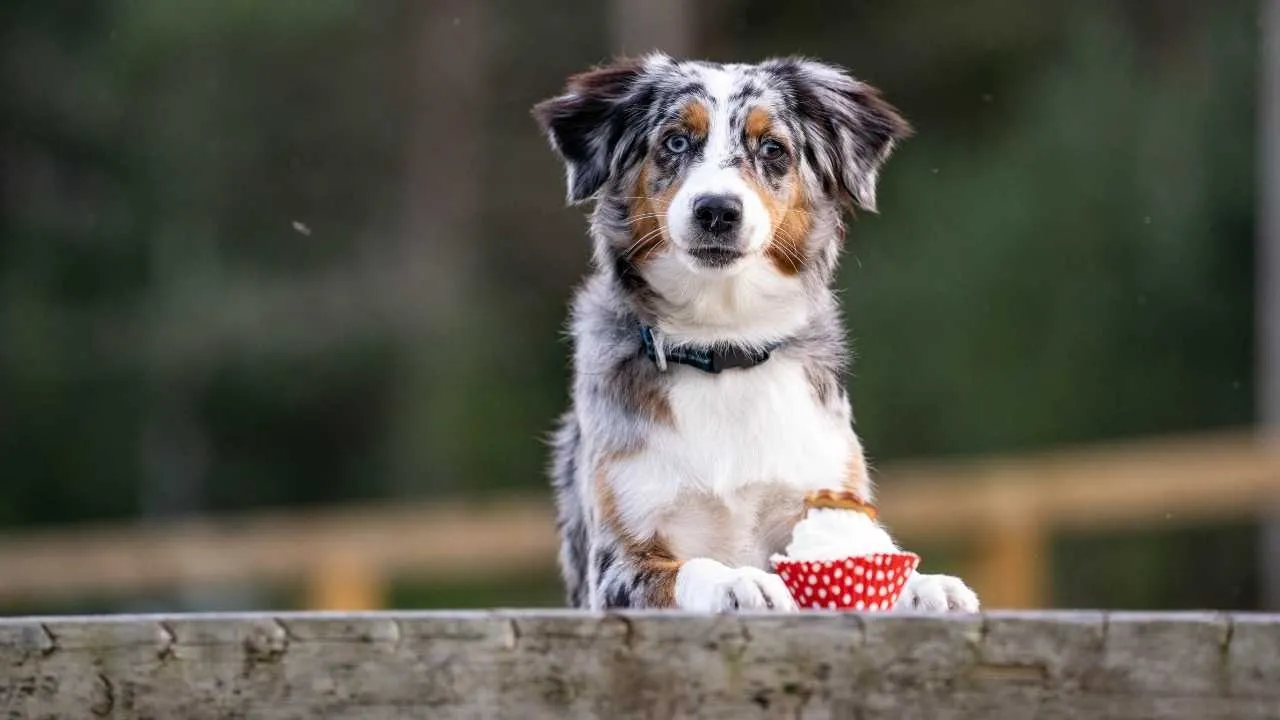
The Miniature American Shepherd was developed in California in the 1960s with the goal of producing an intelligent, compact dog with strong herding instincts. Originally called the Miniature Australian Shepherd, the name was officially changed to Miniature American Shepherd in the 1990s.
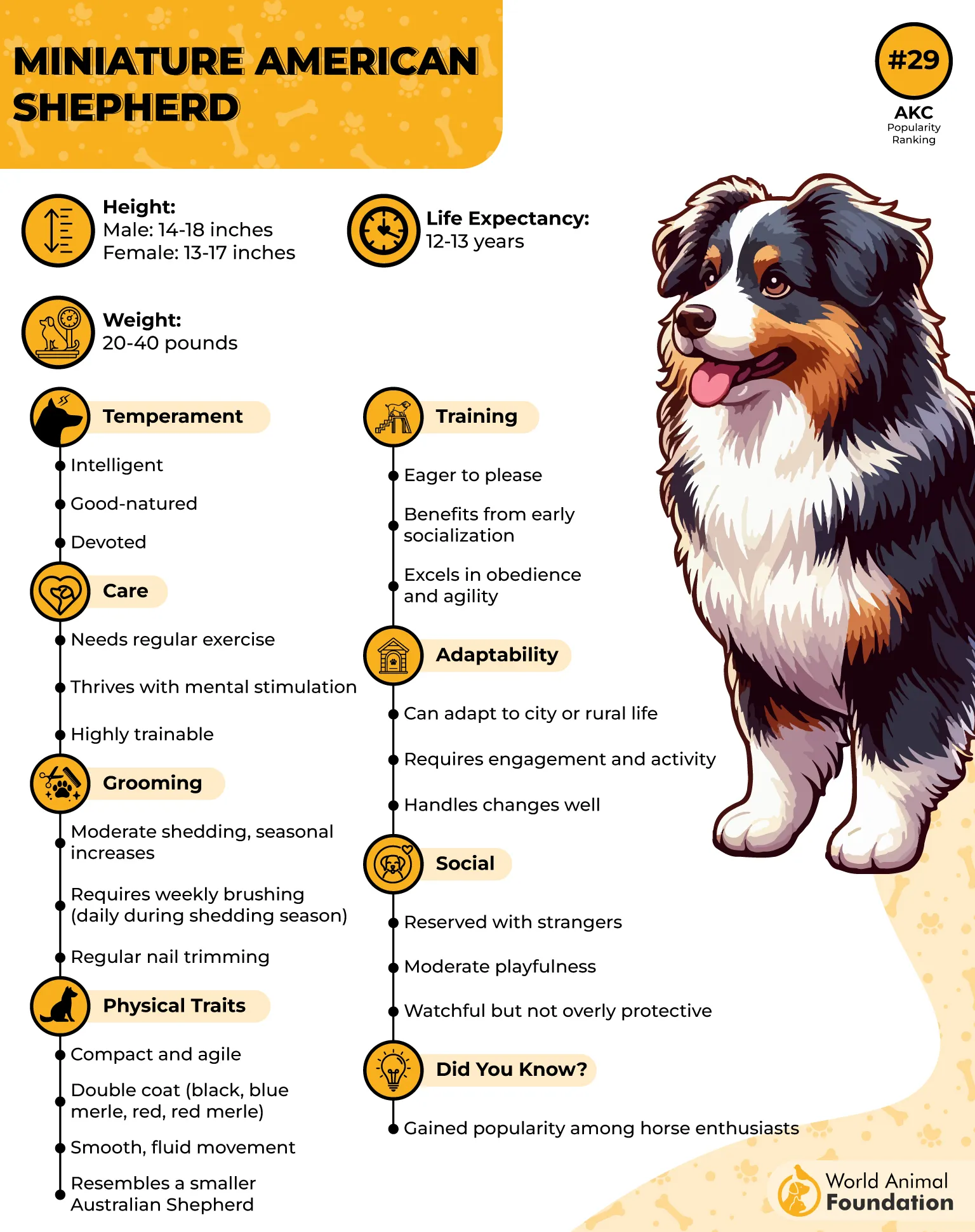
One of its most endearing traits is its full-body wiggle; when happy, it twists and wags with its entire back half, not just its tail. A true Velcro dog with natural nanny instincts, it loves to keep things in order and will happily herd children to keep them out of harm’s way. The breed weighs between 20 and 40 pounds and stands 13 to 18 inches tall.
It excels at farm and ranch work: herding, managing, and moving medium-sized livestock, and is a natural competitor in canine sports like flyball, tracking, and rally. Don’t let the small size fool you: this breed needs one to two hours of vigorous daily exercise, including fetch, jogging, brisk walks, and mentally challenging games to stay truly satisfied.
9. Miniature Pinscher
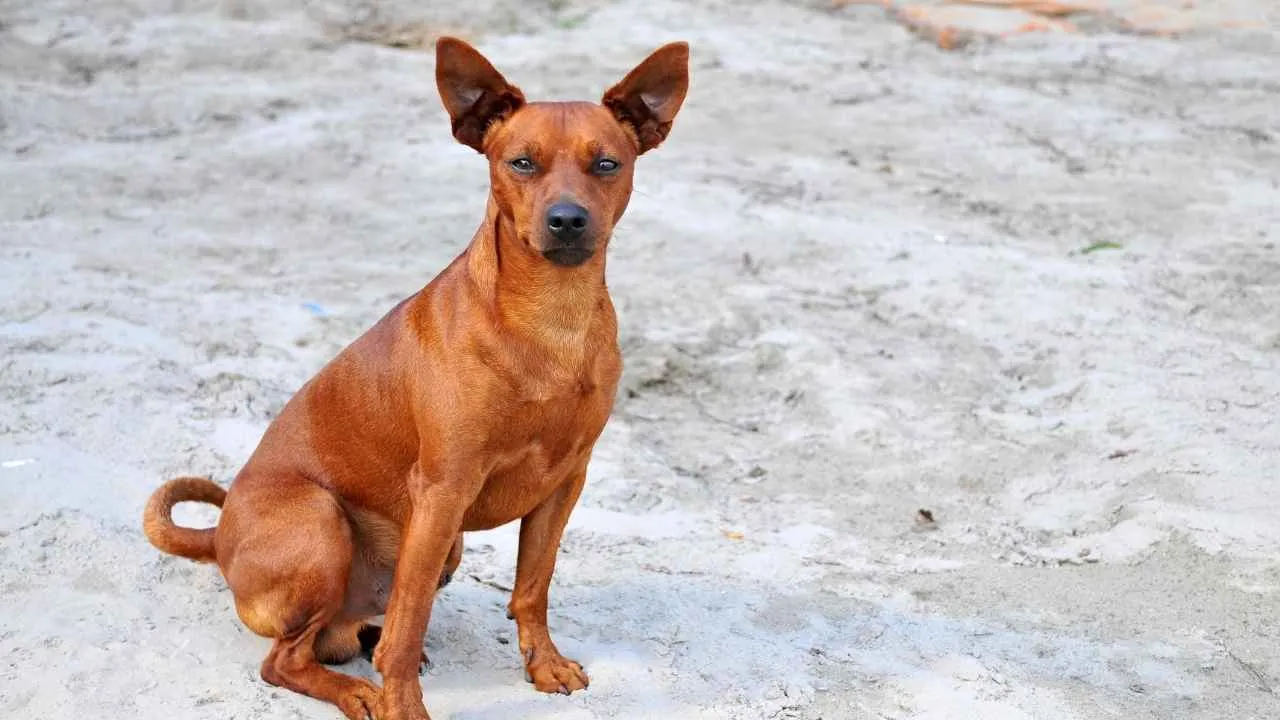
Also known as the Min Pin, the Miniature Pinscher was bred in Germany centuries ago to hunt vermin in stables. It was developed by crossing the Italian Greyhound, the German Pinscher, and the Dachshund. One of its most distinctive traits is its high-stepping, theatrical trot; a prancing, Hackney horse-like gait that gives it an air of outsized confidence.
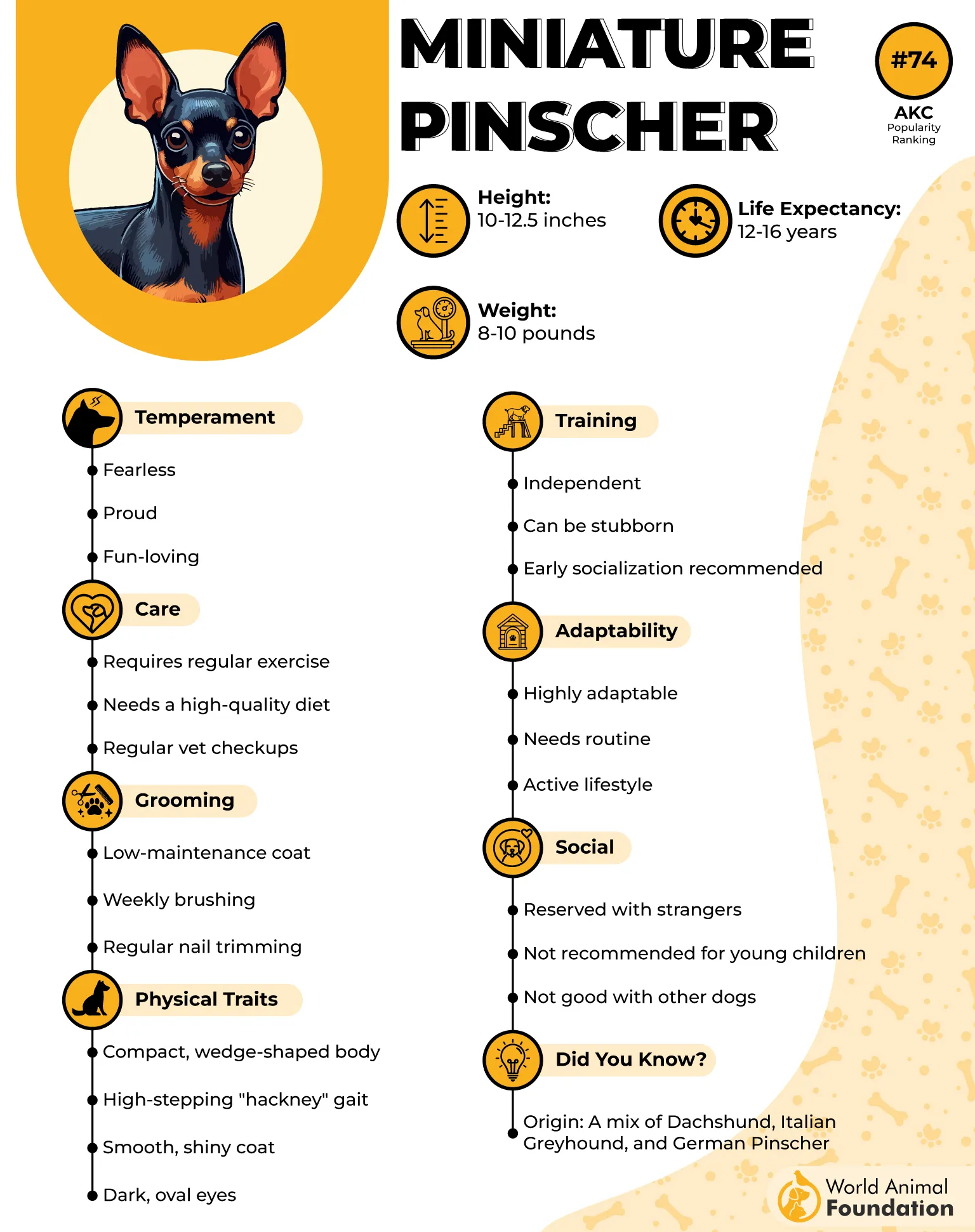
Despite weighing just 8 to 10 pounds, the Min Pin is bursting with energy and loves to patrol its surroundings. It makes an excellent watchdog, barking loudly the moment it detects a threat. Its hunting heritage also makes it highly protective of its territory and the people it loves.
The breed does have an independent streak, which can translate into stubbornness, making early training and proper socialization non-negotiable. It needs 30 to 60 minutes of moderate exercise daily, and a simple grooming routine of monthly baths and weekly brushing with a hand glove or bristle brush keeps its short coat in great condition.
Conclusion
Small dogs are not a compromise. They are a deliberate choice. These nine breeds prove that energy, intelligence, and personality have absolutely nothing to do with size. Whether it is the Papillon’s butterfly athleticism or the Min Pin’s unapologetic strut, there is a tiny dog built for exactly the kind of life you want to share.
With most U.S. households already living alongside a dog, more people than ever are discovering what small breed owners have quietly known all along. A small dog delivers the same depth of love, just in a more manageable (and slightly more dramatic) package. Pick the breed that matches your energy. Just know: they will end up running the show regardless.
