




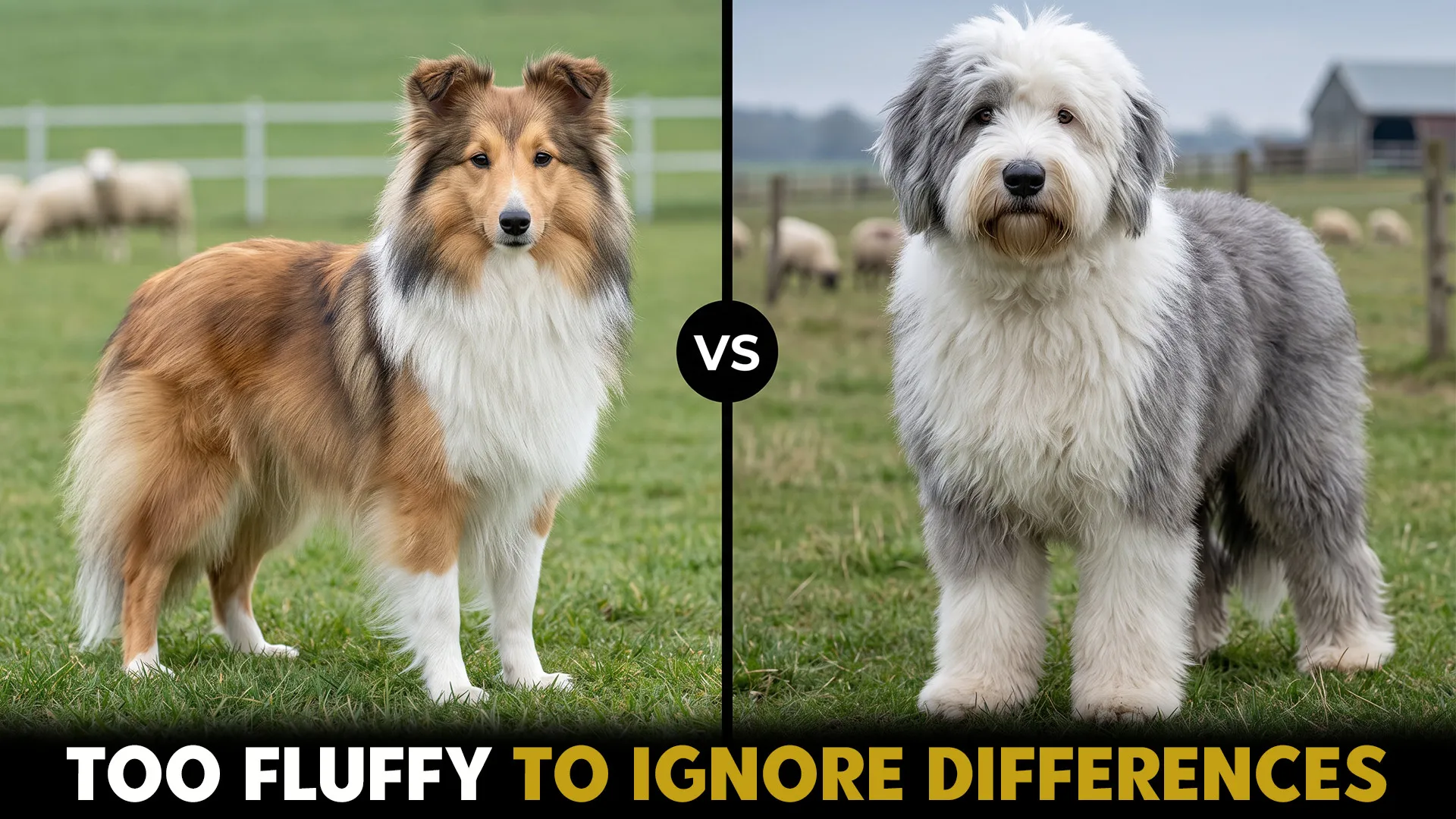
Choosing between a Shetland Sheepdog and an Old English Sheepdog is a bit like choosing between a clever pocket-sized coach and a shaggy, gentle giant. Both come from herding roots, both adore their people, and both can turn heads at the park, but their daily needs are miles apart. The Sheltie is quick, alert, and likely to announce every delivery truck like it is breaking news.
The Old English Sheepdog, meanwhile, brings big-hearted charm, a bear-like walk, and enough fur to make your vacuum earn its paycheck. Think Lassie’s bright little cousin versus the lovable mop from a classic family movie.
This guide breaks down the traits that truly separate these two memorable breeds.
Shetland Sheepdog vs. Old English Sheepdog: Top Traits Differentiating
The Shetland Sheepdog and Old English Sheepdog are two lovable herding breeds with fluffy coats, sharp minds, and unique personalities. Let’s explore their key differences in size, temperament, grooming, and energy levels to see which one suits your lifestyle best.
Origins & Purpose
Both are herding breeds but have different approaches, origin history, and geographic roles.
Shetland Sheepdog: Also known as Sheltie, the herding dog was originally bred in Scotland and was initially named the Shetland Collie. The small dog was recognized by the Kennel Club in 1909. Today, it is widely kept as a family pet and a working dog, according to Wikipedia.
Old English Sheepdog: The history dates back to the 18th century, when the breed was developed in West England. It is believed to be a cross between the Border Collie and the local drover dogs. It was then exported to America and was adopted for show ring. However, its primary purpose was to protect livestock from large predators, such as wolves.
Size & Physical Build
The Shetland Sheepdog is a light-framed and small dog, while the Old English Sheepdog is a large, heavy-boned, and athletic breed used for protection.
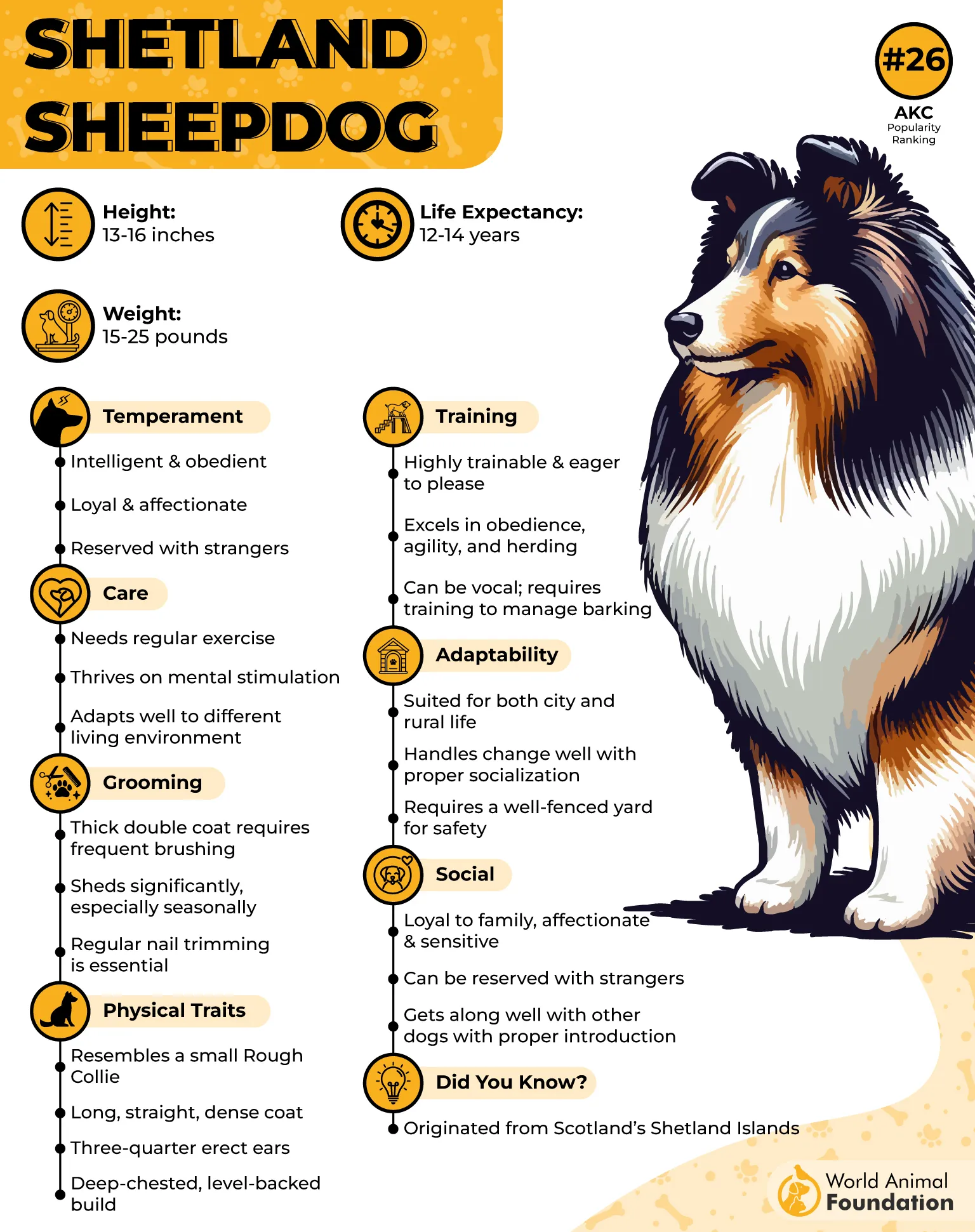
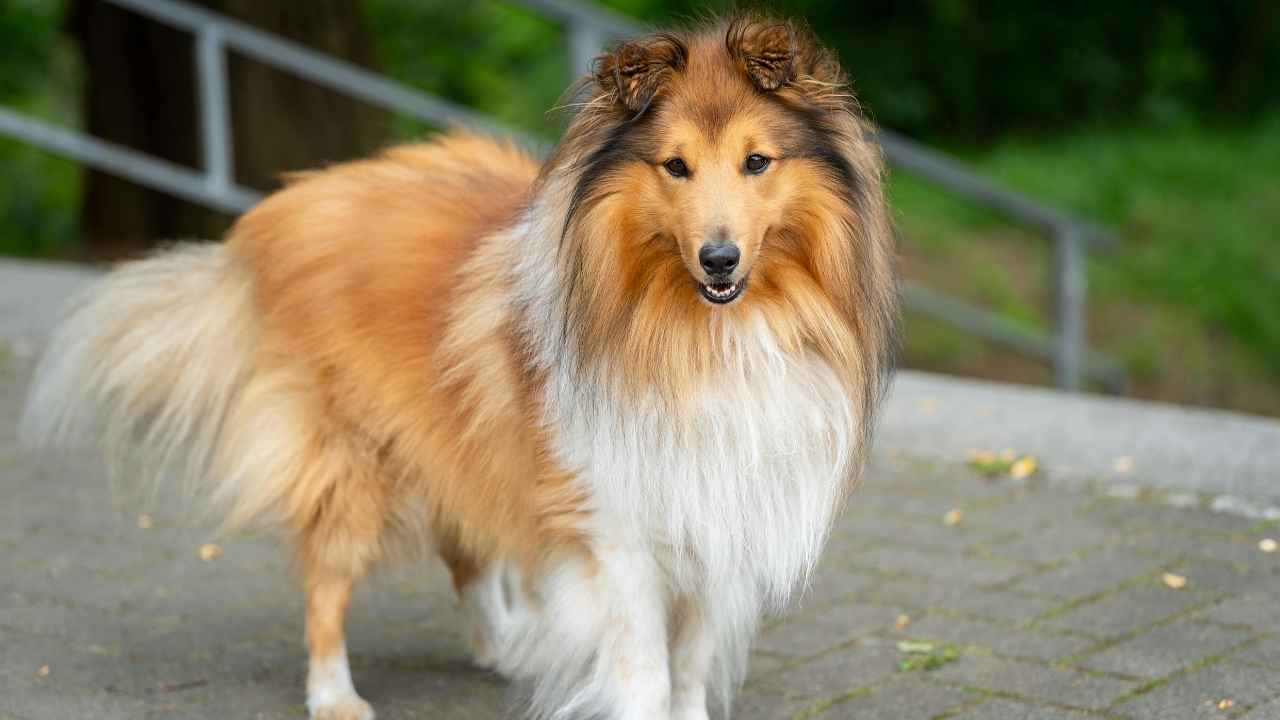
Shetland Sheepdog: The herding breed stands around 13-16 inches tall and weighs around 15-25 pounds. It has a rectangular physique with strong muscles built for speed and agility. The prominent wedge-shaped head is tapered from the ears to the black nose.
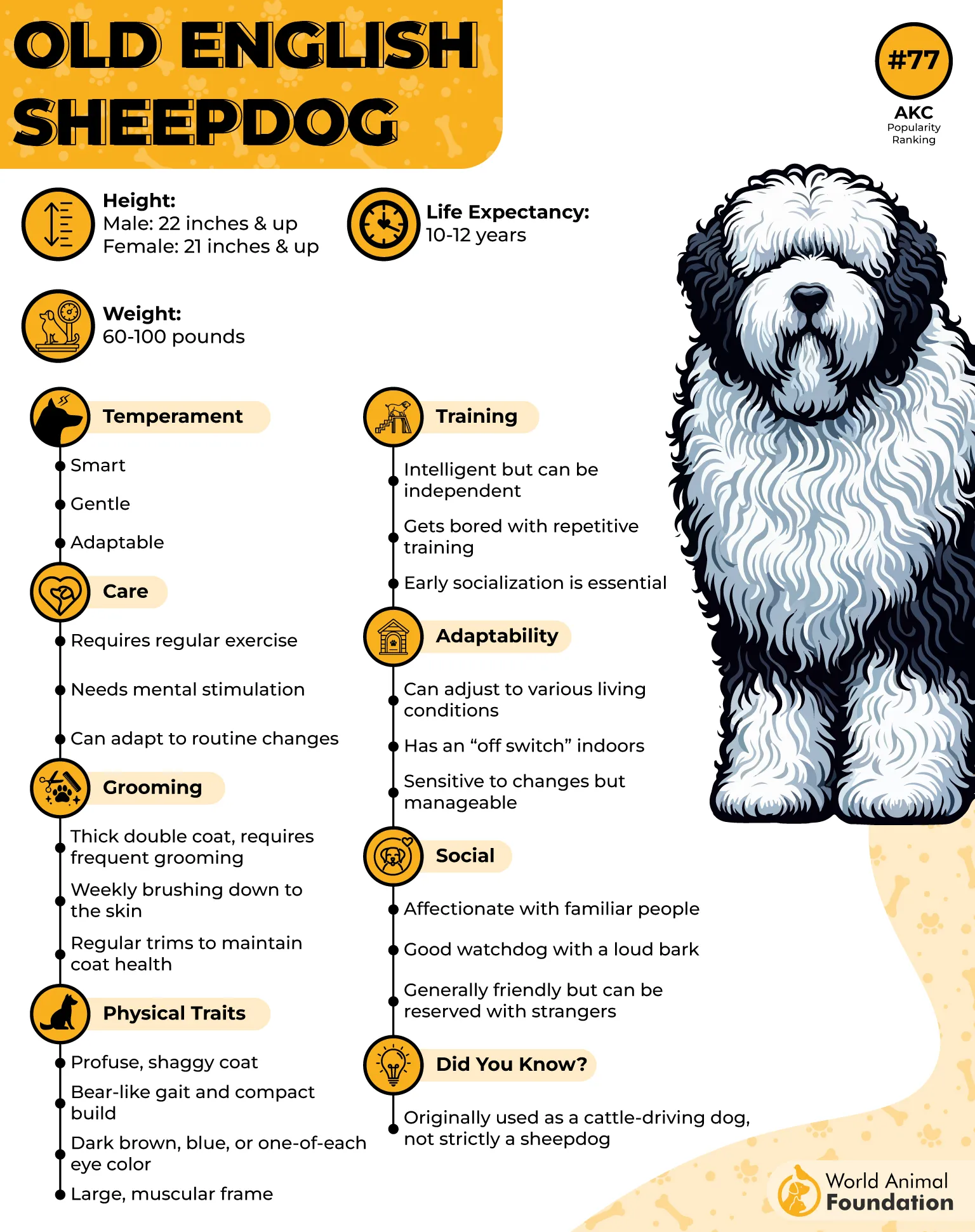
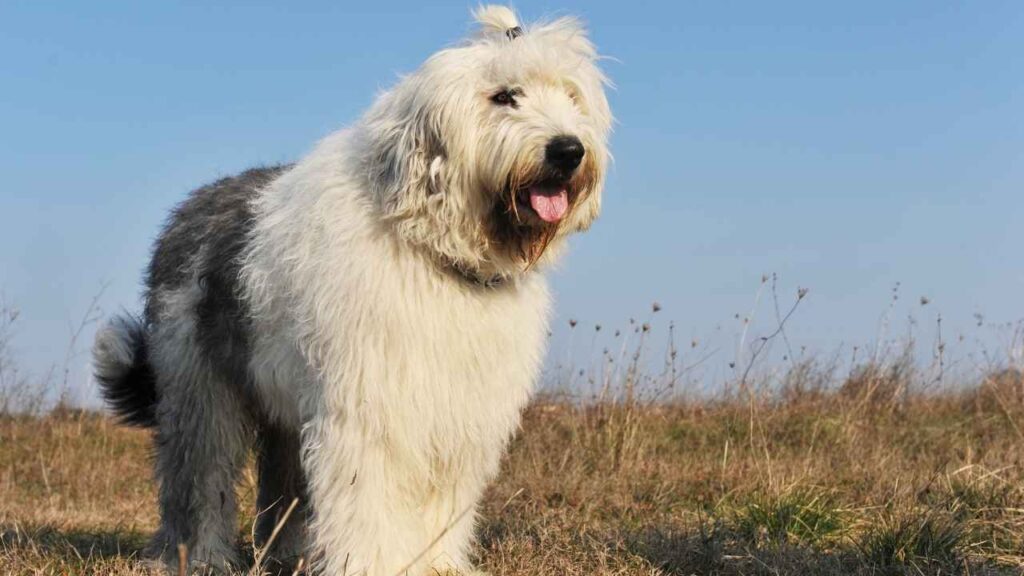
Old English Sheepdog: The adult dog stands 21-22 inches tall and weighs around 60-100 pounds. It is slightly lower at the shoulder with a long and low-set furry tail. It has medium-sized ears, and the square head is covered with hair. The deep chest and well-sprung ribs provide a large lung capacity.
Temperament & Personality
While both are smart herding dog breeds, the Sheltie is a sensitive and vocal dog, while the OES is an independent athletic companion.
Shetland Sheepdog: Being a velcro dog, it is highly attuned to human emotions, but may be reserved around strangers. Because of strong herding instincts, it is highly observant of its surroundings and produces a high-pitched bark to alert the owner despite having a sweet temperament. It may develop separation anxiety when left alone for too long.
Old English Sheepdog: It has a remarkable sense of humor and retains its puppy-like nature into adulthood. It shows joy and excitement with its bear-like gait. Despite being highly patient with children and other breeds, it has strong protective instincts, says the American Kennel Club (AKC).
Exercise & Energy Levels
Both are active breeds and have high energy levels, but each has different endurance needs, daily exercise needs, and size, making exercise routines different.
Shetland Sheepdog: The active mind paired with an athletic physique needs at least 1-2 hours of daily exercise and mental stimulation: daily walks, flyball, agility, off-leash running, and obedience training. The fast-twitch muscles are designed for short and explosive sprints.
Old English Sheepdog: It moves in a bear-like shuffle; however, the large dog is highly bouncy, athletic, and agile. The breed may develop destructive behaviors, such as excessive barking when under-exercised. It has 1-2 hours of daily exercise needs: swimming, hiking, jogging, brisk walks, herding trails, and agility training.
Training & Intelligence
While both possess sharp instincts, their working styles and learning rates vary significantly according to baseline metrics.
Shetland Sheepdog: The breed ranks 6th in terms of intelligence. It understands new complex commands within 5 repetitions. Because of strong herding drive, it tends to nip at the heels of children. This needs to be controlled by command training. Induce reward-based training to deal with the sensitive side of the breed, says PetMD.
Old English Sheepdog: It possesses strong autonomous problem-solving skills as a drover dog. The breed has an independent streak and is prone to stubbornness with no consistent training and early socialization. With its flock mentality, it tends to take charge of the ‘pack,’ which can be controlled by obedience training.
Coat Maintenance
While both have thick double coats, each has a different coat texture, color, and grooming needs.
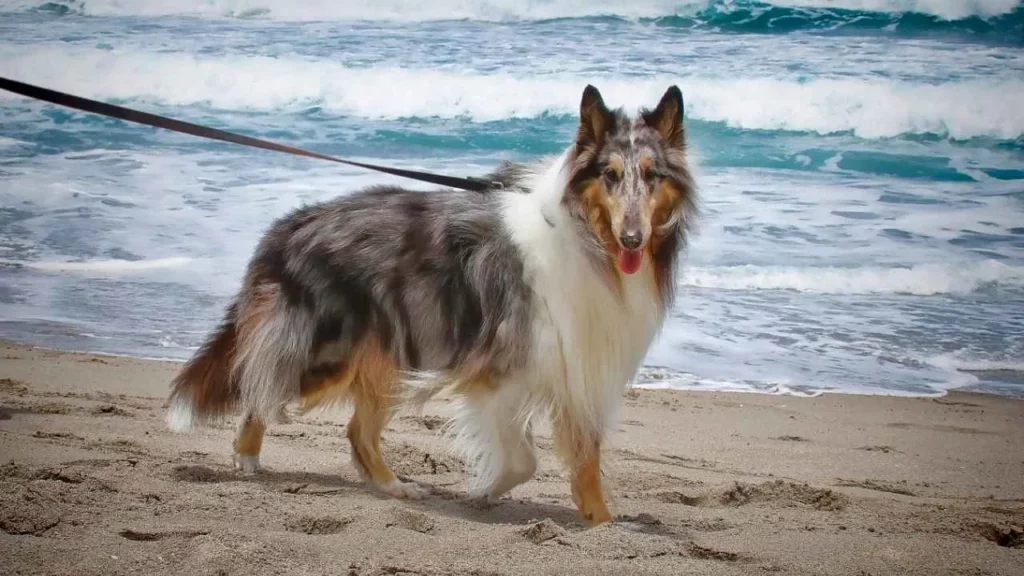
Shetland Sheepdog: The outer coat has harsh guard hair that protects the skin from debris, water and external stimuli, while the undercoat is soft, furry, and has a “standoff” (fluffy) quality, acting as a thermoregulator.
Use a line-brushing technique for weekly brushing (2-3 times a week). Pay close attention to the rear legs, elbows, under the front legs, and behind the ears. Bathing is recommended after a month.
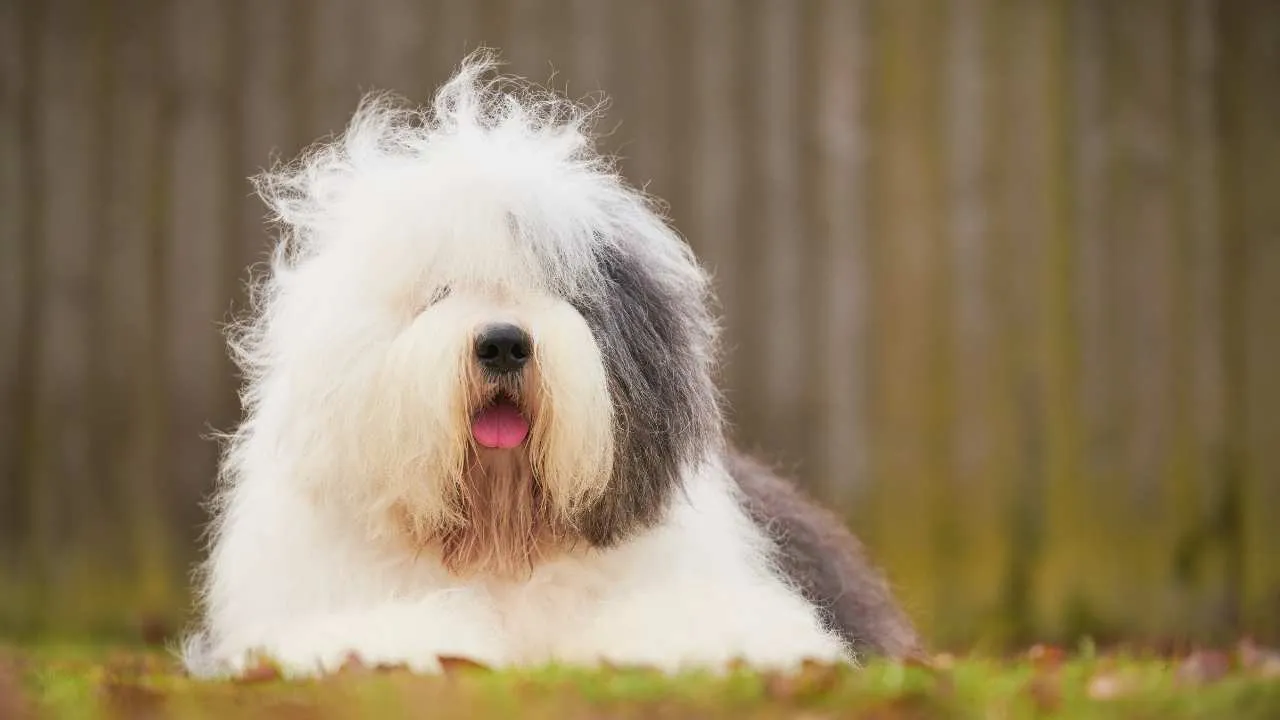
Old English Sheepdog: This shaggy dog breed has a curl-free, shaggy coat that sheds little to none. The loose hair traps inside the coat and can be removed weekly using a pin brush.
The hypoallergenic breed requires brushing 2- 3 times a week and bi-weekly to monthly baths. Or you can go for a puppy-cut (trimming the coat from 1 to 2 inches).
Health & Lifespan
The Sheltie lives slightly longer (12-14years) than the OES (10-12 years), while both have distinct genetic health problems.
Shetland Sheepdog: The breed is prone to ophthalmological conditions, autoimmune disorders, Von Willebrand’s disease, hypothyroidism, hip dysplasia, and luxating patella. High-quality dog food, a reliable breeder, and regular medical screening are some factors that could ensure a healthy life for the breed.
Old English Sheepdog: The breed is highly susceptible to bloating, hip and elbow dysplasia, PRA, hereditary cataracts, neural and genetic conditions, and cardiac defects. Improper coat care can lead to acute moist dermatitis (hot spots) and chronic bacterial ear or paw infections.
Shetland Sheepdog vs. Old English Sheepdog: Suitability as Family Pets vs. Guard Dogs
Both have different lifestyles, temperament, and exercise needs and thus, require owners with different life routines/
|
Features |
Shetland Sheepdog |
Old English Sheepdog |
|
Care Needs |
It may bark frequently and needs regular coat care, especially in shedding seasons. |
Needs extensive brushing and professional grooming. It has intense exercise needs. |
|
With Children |
Gentle and forgiving. May nip at the heels; may respond negatively to loud noises. |
The gentle giant is affectionate with kids. However, it may accidentally knock down toddlers. |
|
Watchdog Instincts |
Because of its highly alert nature, it notifies the owner of a stranger approaching the property. |
Unlike a Sheltie, it has moderate guarding instincts/ Though a good watchdog, it may be more welcoming towards guests. |
Conclusion
The best choice comes down to your home, schedule, and tolerance for fur on basically everything. A Shetland Sheepdog suits someone who enjoys training, regular activity, and a watchful little companion with a busy mind. An Old English Sheepdog may fit a family looking for a larger, affectionate dog with a softer, clownish side and plenty of room to stretch out.
Neither breed is low-maintenance, just in different ways. One keeps your brain busy with lessons and games; the other keeps your grooming tools busy like it is their full-time job. Choose the dog whose real-life needs match your routine, not only the one that makes you say, “Aww, what a floof.”
