




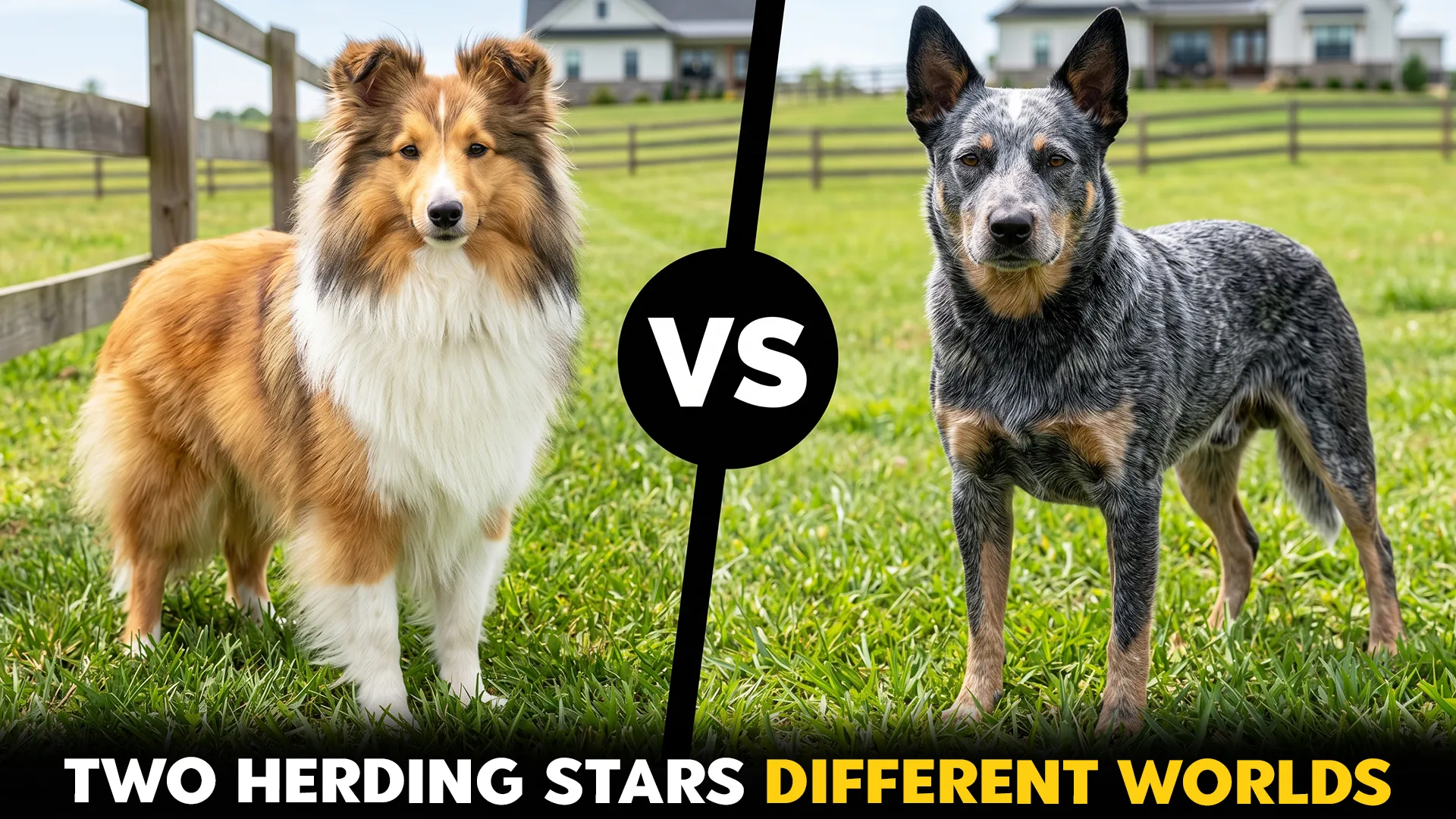
Shetland Sheepdogs and Australian Cattle Dogs were both originally bred as herding dogs. Sharing the same working purpose, the two breeds have a great deal in common when it comes to behavior and drive. However, they differ considerably in appearance and personality.
Shetland Sheepdogs, affectionately known as Shelties, are small, active, and agile herding dogs that bear a striking resemblance to miniature Collies. Hailing from Scotland, Shelties are widely recognized for their exceptional intelligence, which sets them apart in the dog world.
Australian Cattle Dogs, also known as Blue Heelers, Red Heelers, or Queensland Heelers, are medium-sized herders celebrated for their strength and agility. Their “heeler” nickname comes directly from their working style; they drive cattle by nipping at their heels, a technique that made them invaluable on Australian ranches.
With those introductions in mind, let’s explore some of the key differences between the Shetland Sheepdog and the Australian Cattle Dog.
Shetland Sheepdog vs. Australian Cattle Dog: Differences Explained
Choosing between these two active dogs depends on your lifestyle: the affectionate Sheltie thrives on gentle family companionship and agility, while the independent Blue Heeler requires an experienced owner and a demanding daily job. Let’s find out more about them:
Origins, Background & Purpose
As mentioned earlier, both Shetland Sheepdogs and Australian Cattle Dogs were developed specifically for herding work.
Shetland Sheepdogs were primarily developed in the remote and rugged Shetland Islands of Scotland during the 1800s. According to Omlet, breeders most likely crossed native Scottish herding dogs with Collies to produce a compact, capable herder well suited to the island’s harsh terrain and conditions.
Australian Cattle Dogs, by contrast, were bred in the 19th century to move and manage cattle across the unforgiving landscapes and demanding conditions of the Australian Outback.
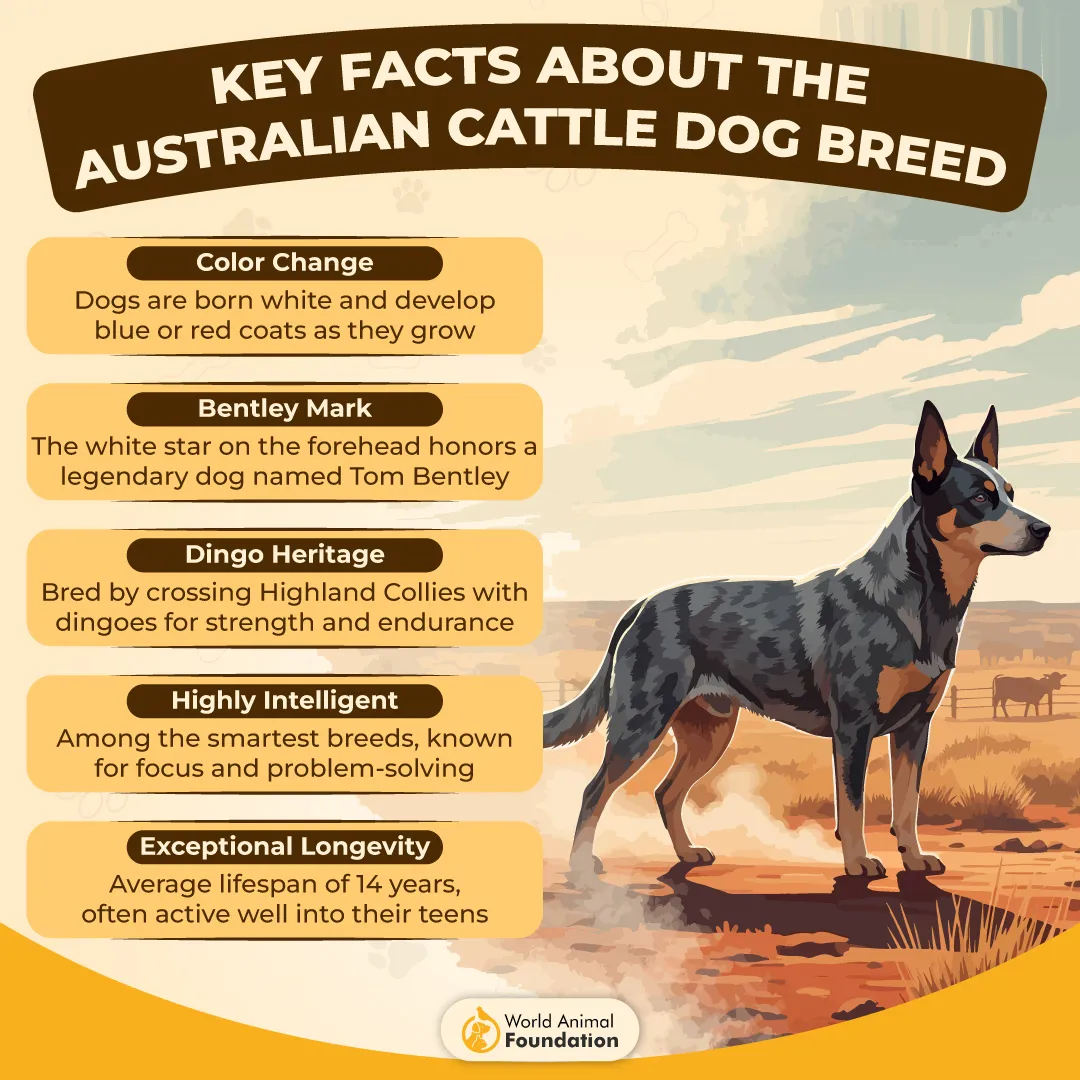
To produce a dog tough enough for the job, breeders crossed Australia’s iconic wild dog, the Dingo, with blue merle Collies, resulting in the resilient and hardworking breed known today as the Australian Cattle Dog.
Size & Physical Build Differences
Shetland Sheepdogs and Australian Cattle Dogs differ considerably in size and physical appearance.
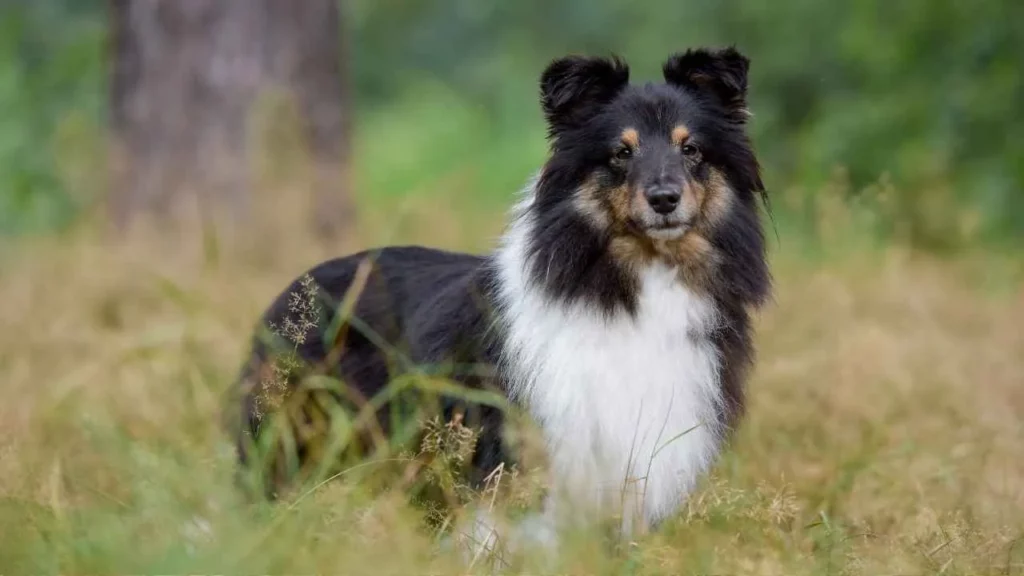
Resembling a miniature version of the Rough Collie, Shelties are small dogs with a long wedge-shaped head, erect ears, and a deep chest. Their compact size is a direct response to the harsh, rocky landscape of the Shetland Islands, where sparse vegetation made food scarce.
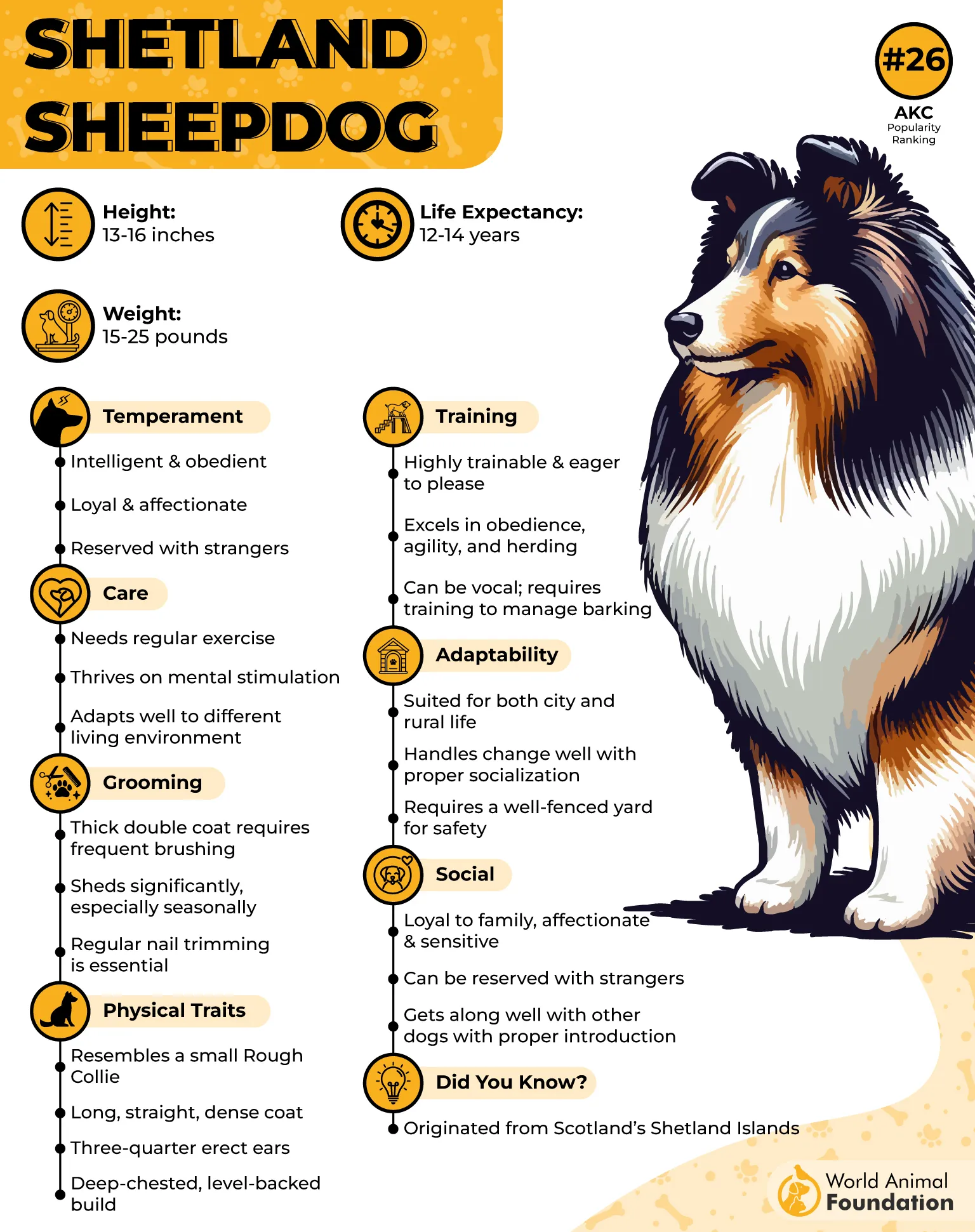
As a result, Collies and other breeds brought to the islands were intentionally bred smaller so that they required less food than larger herding breeds.
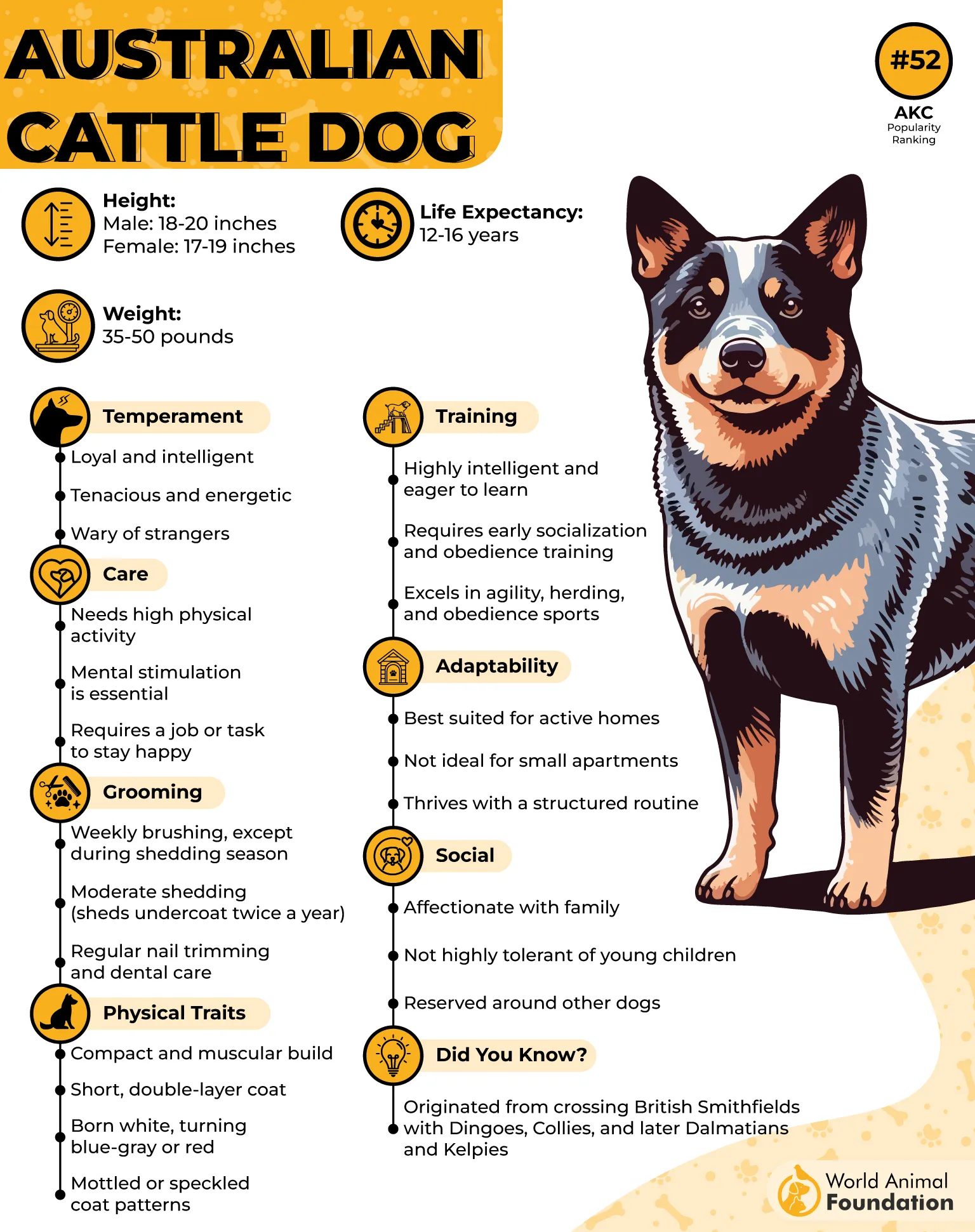
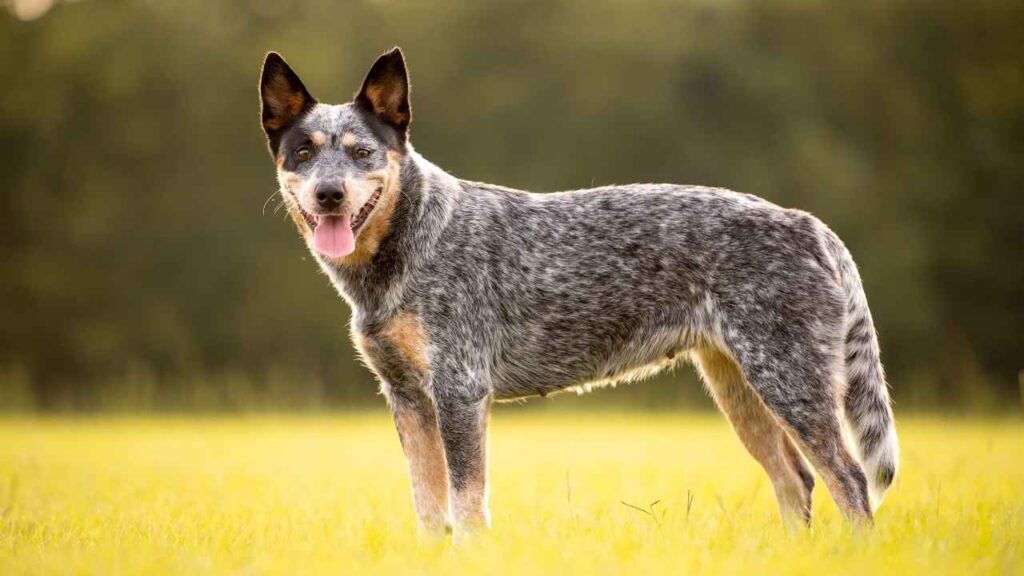
Australian Cattle Dogs, by contrast, are sturdy medium-sized dogs with an alert expression and pricked ears. Their muscular build reflects the strength and agility the breed was designed for, allowing them to navigate rough terrain with ease while managing livestock.
Coat Types & Overall Maintenance
Both the Australian Cattle Dog and the Shetland Sheepdog possess a thick, double-layered coat that not only gives each breed a striking appearance but also provides protection against harsh weather conditions.
Shetland Sheepdogs have a long, straight, and somewhat coarse outer coat that forms a distinctive lion-like mane around the neck and shoulders, complemented by luxurious feathering along the legs and tail. Coat colors include black, blue merle, and sable, typically accompanied by white markings.
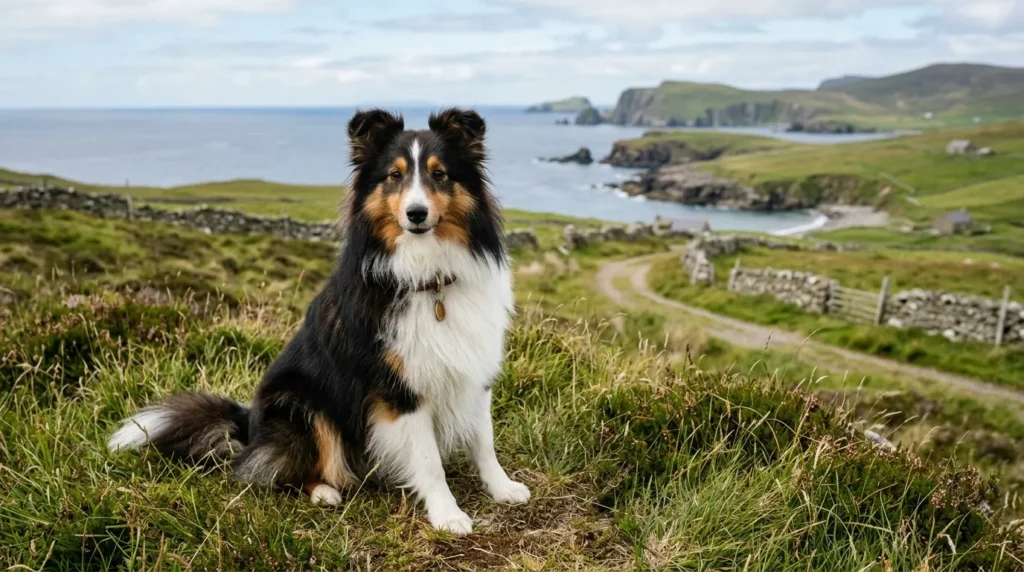
According to Purina, the Sheltie’s coat is fairly high maintenance. It requires daily brushing to prevent mats and tangles, and bathing every few weeks helps keep it looking its best.
Australian Cattle Dogs have a dense undercoat paired with a short, hard outer coat. The hair is shorter around the head, legs, and feet, and slightly longer around the neck and under the belly. ACDs are born with a white coat that gradually turns either blue-gray or red as they mature, which is the origin of their well-known nicknames: the Blue Heeler and the Red Heeler.
Both coat colors may feature distinctive mottling or speckling patterns. The ACD coat produces no odor or oily residue and requires only weekly brushing to stay in good condition. Occasional baths are sufficient to keep it clean and tidy.
Temperament, Personality & Behavioural Traits
Both breeds also differ in temperament and personality. Shelties tend to be more family-oriented and sociable than ACDs.
Shetland Sheepdogs are known for their gentle, sweet, and affectionate nature. They are playful and eager to please, forming strong bonds with their owners and getting along well with other pets and people of all ages.
Being highly sensitive dogs, they pick up on their owners’ moods and emotions with ease. This deep attachment does come with a downside: Shelties can develop separation anxiety when left alone for extended periods. They also make reliable watchdogs.
Australian Cattle Dogs are equally devoted to their owners and tend to be intensely protective. While they are friendly by nature, they can become aggressive if they feel threatened.
ACDs are naturally curious and a little wary of strangers, but share the Sheltie’s eager-to-please attitude. These courageous dogs can be stubborn at times, and they are definitely not the right fit for a sedentary lifestyle.
Intelligence, Trainability & Responsiveness
Both the Shetland Sheepdog and the Australian Cattle Dog are highly intelligent and responsive to training, though Shelties rank a little higher on the American Kennel Club’s list of smartest dog breeds.
Shelties come in at 6th place on the AKC’s list. They pick up new commands quickly, are eager to please, and are known for their sharp problem-solving skills; all of which make them a joy to train. They also thrive in a variety of dog sports, including agility, herding, and obedience, and many Shelties serve as therapy dogs.
Australian Cattle Dogs aren’t far behind, ranking 10th on the same list. Like Shelties, they pick up new commands quickly and have a strong desire to please their owners. As natural herding dogs, ACDs also enjoy canine sports such as agility, obedience trials, and fetch.
They respond well to training overall, though their strong-willed streak can occasionally make things a little more challenging.
Energy Levels, Activity Needs & Work Drive
Both breeds are energetic and need daily exercise for physical and mental stimulation, but Australian Cattle Dogs take it up a notch, with higher energy levels and a stronger work drive than Shelties.
Shetland Sheepdogs are moderately energetic, scoring four out of five on the energy scale. PDSA recommends at least an hour of daily exercise for the breed, which can include walks, runs, and a good game of fetch.
Australian Cattle Dogs score a full five out of five on the energy scale. They need between 1.5 and 2 hours of daily exercise to stay fit and mentally satisfied. Daily runs and participation in canine sports are great ways to channel their high work drive and keep them happy.
Health Concerns, Average Lifespans & Durability
Both breeds are generally healthy, though Australian Cattle Dogs tend to have a longer lifespan than Shelties.
Shetland Sheepdogs live for 12 to 14 years on average. While they are hardy dogs overall, they can be prone to certain health conditions, including hip dysplasia, Collie eye anomaly, Sheltie skin syndrome, thyroid disease, Von Willebrand disease, and epilepsy.
Australian Cattle Dogs have a slightly longer lifespan of 12 to 16 years. They are also generally healthy but can be susceptible to hip dysplasia, heart disease, eye problems, and deafness.
Herding Instincts & Ideal Working Roles
Both breeds carry strong herding instincts and a natural urge to chase moving objects, though ACDs tend to have the stronger herding drive of the two.
Beyond herding livestock, Shetland Sheepdogs also work as service dogs. Their sensitivity to the mood of those around them makes them excellent therapy dogs, and their alertness makes them reliable watchdogs.
Australian Cattle Dogs, with their high stamina and sharp responsiveness, are also well suited to working roles. They excel in tasks that involve physical assistance, such as retrieving objects and supporting mobility.
Lifestyle Suitability & Family Compatibility
Thanks to their intelligence and strong drive, both Shelties and ACDs thrive in homes where they get plenty of exercise to burn off their energy. Due to their herding instincts, both breeds are better suited to households with older children.
Shetland Sheepdogs are highly adaptable and can do well in the city, as long as their physical and mental needs are consistently met. They are a great match for owners who enjoy the hands-on side of dog ownership; think regular grooming sessions and active daily routines.
Australian Cattle Dogs are better suited to active owners. They are an ideal fit for someone living rurally, spending their days outdoors and working alongside their dog.
Conclusion
Australian Cattle Dogs and Shetland Sheepdogs were both bred to herd, but they differ quite a bit in appearance and temperament. ACDs sport a blue-gray or red coat with a mottled or speckled pattern, while Shelties come in sable, black, and blue merle, typically with white markings.
ACDs are the larger and more energetic of the two, with greater exercise demands. Shelties, on the other hand, are highly adaptable and family-oriented. Both breeds are generally healthy and long-lived, though ACDs tend to have the edge in lifespan.
If you are looking for an intelligent, adaptable companion that fits well into family life, the Shetland Sheepdog is a wonderful choice. If you are an active owner, farmer, or rancher who wants a tireless working partner, the Australian Cattle Dog might be the perfect match.
