




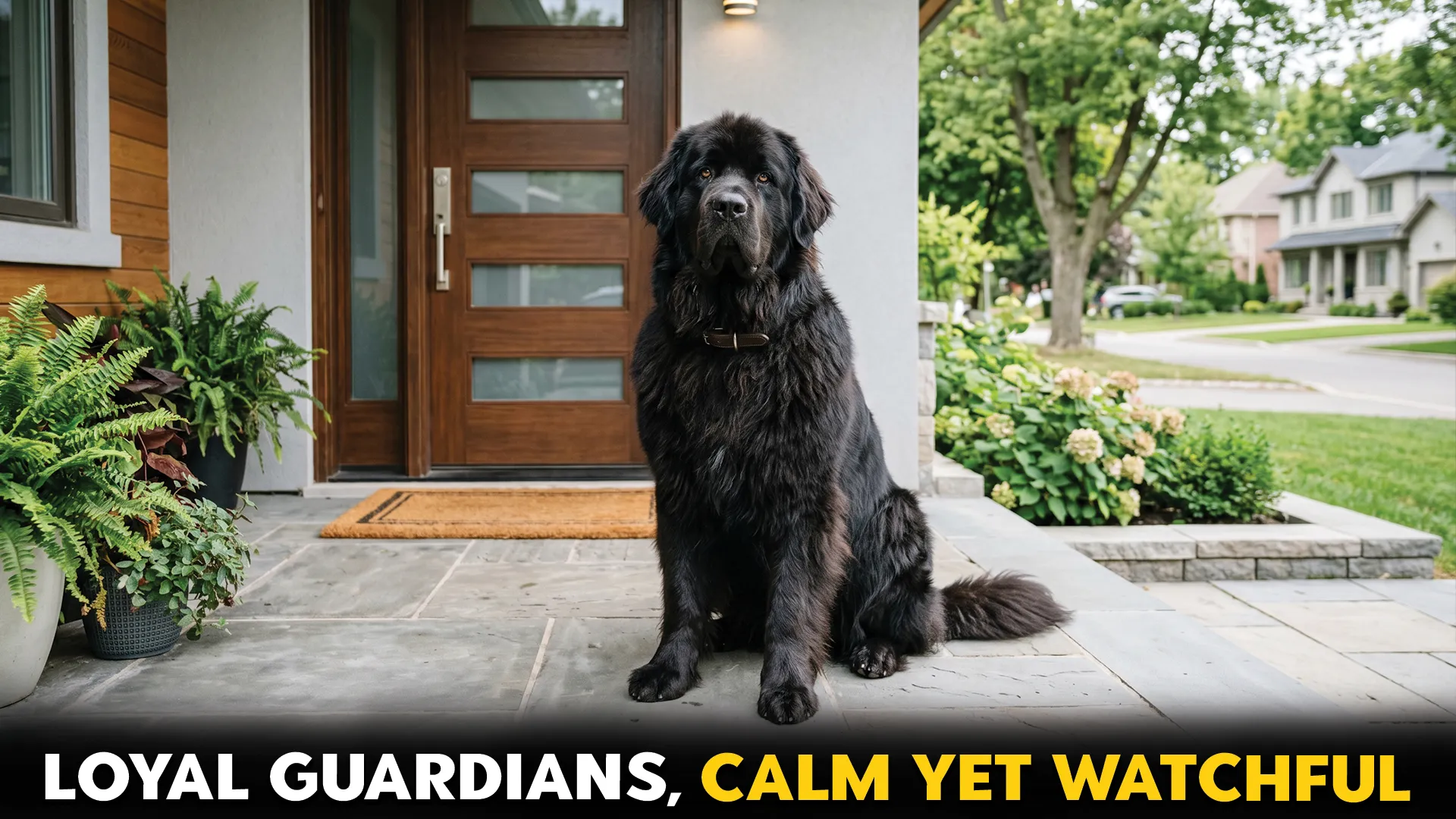
Most people think a guard dog means a snarling, fence-charging beast that treats every postman like a personal enemy. But here is the thing: some of the most effective guard dogs are also the most laid-back creatures you will ever meet. Some dogs will sleep through your Netflix binge but wake up the second something feels off.
As Christopher Morley said, “No one appreciates the very special genius of your conversation more than a dog does.” They will sit calmly beside you and listen to every single word coming from you. Not only listen, but they also understand and learn commands as if they were verses from the Bible.
Think of them as a silent bodyguard of the canine world. They are not dramatic. They do not need to bark constantly to prove a point. They just show up, calm, loyal, and completely unshakable. Here are seven serene guard dogs that bring protection and peace to your home.
Serene Guard Dog Breeds: Calm, Loyal, and Alert
1. Newfoundland
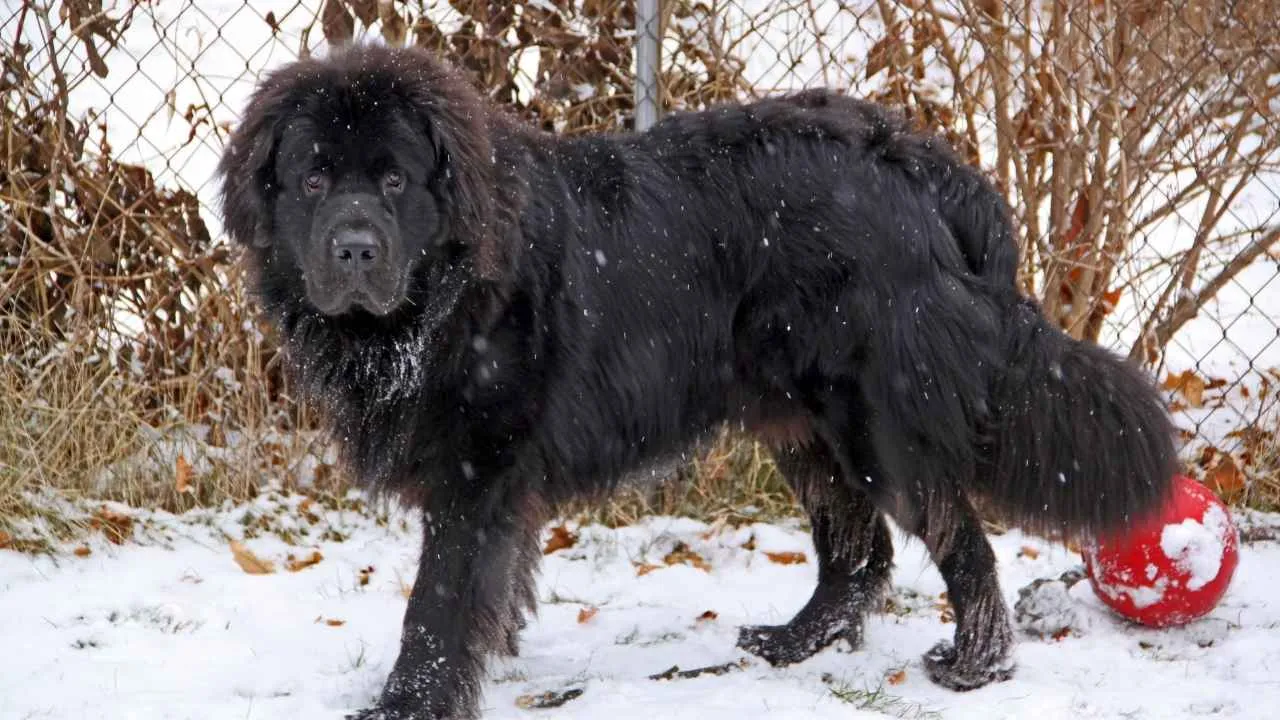
This working dog breed was originally bred for the fishermen in Newfoundland in the early 1880s.
There were two working breeds in the country back then: the Newfoundland (heavy built, longish coat, and active water dog) and the lesser Newfoundland or St. John’s water dog (the smaller breed), according to Wikipedia. Both breeds mirror human emotions and maintain a therapeutic presence in homes (reducing anxiety and depression).
The primary role of the breed was to rescue lives in maritime emergencies, working on icy and dangerous waters. Despite its intense hard work, it is usually considered docile, calm, and less aggressive. Also known as the “nanny dog,” it is careful and loving around family members, children, and other pets.
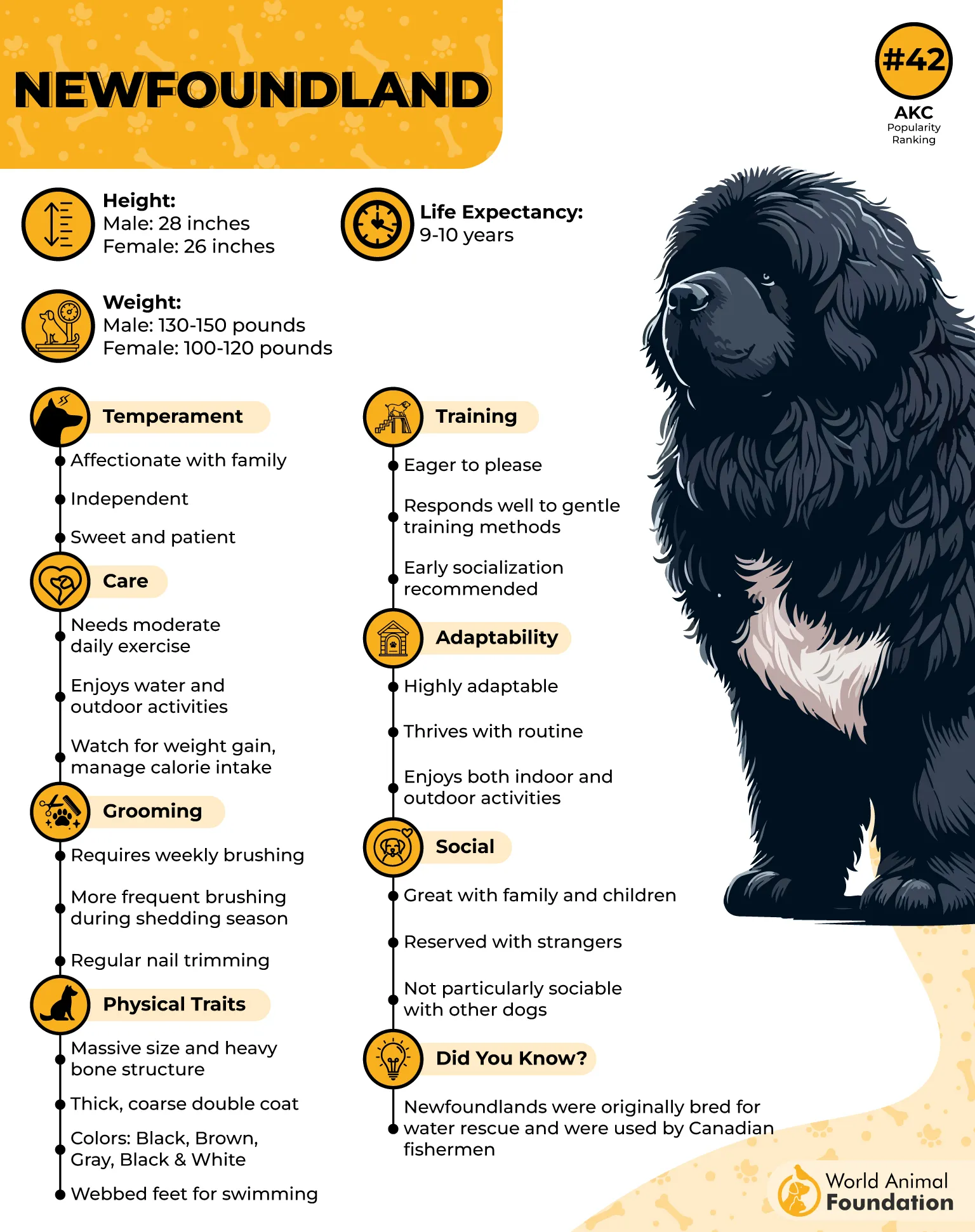
It is known for having strong natural guarding instincts and even watches you quietly while you sleep. Weighing around 130-150 pounds, this breed excels in carrying loads and hauling nets. It physically positions itself between the owner and the intruder for deterrence. It nudges family members or makes a deep bark to alert the family of a strange activity, fire, or attacker.
2. Great Pyrenees
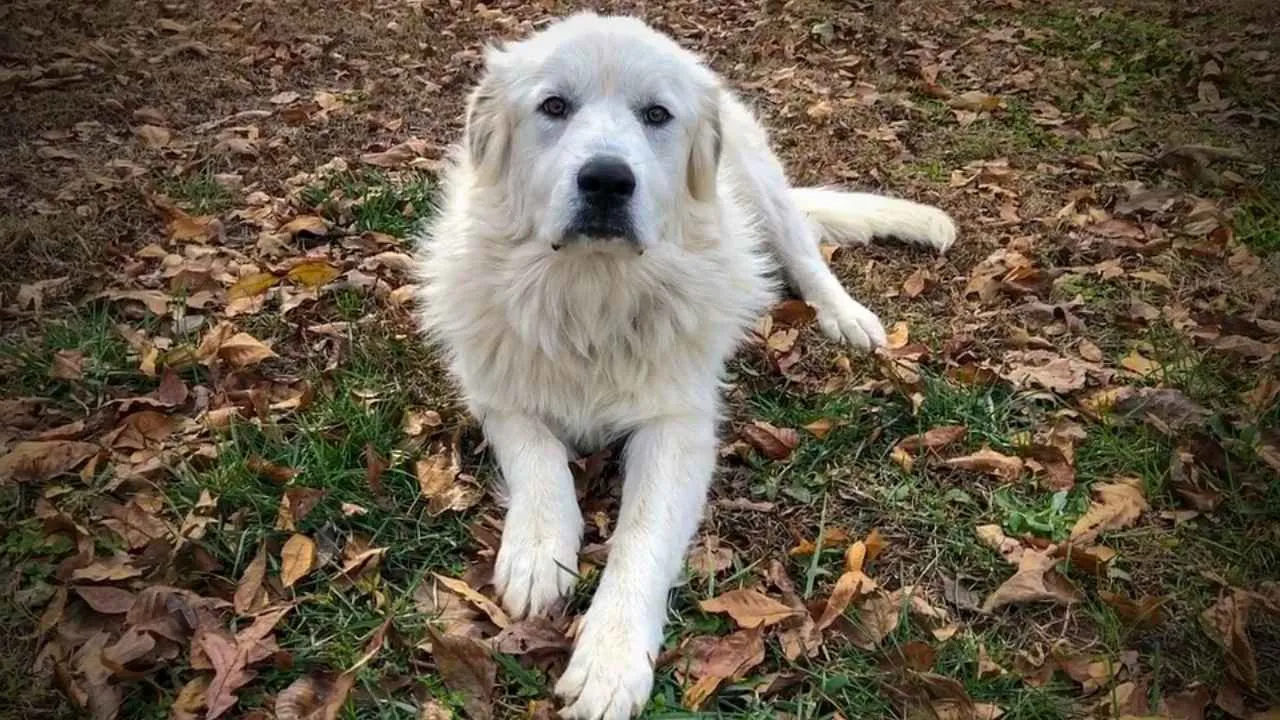
This excellent guard dog was developed in the Pyrenees mountains of France and Spain to guard livestock against bears and wolves. King Louis XIV named this breed the “Royal Dog of France” in the 17th century. The wolf collar is studded with long nails for safety while fighting with wolves. It matures slowly and takes 2-3 years to mentally reach adulthood.
The breed quietly sits at a corner and observes the herd for hours, conserving energy in case of any attack. Being an independent thinker, it usually makes its own decisions without taking commands. This can make it stubborn; hence, proper training and early socialization are non-negotiable. It remains calm during the day and active and vocal at night.
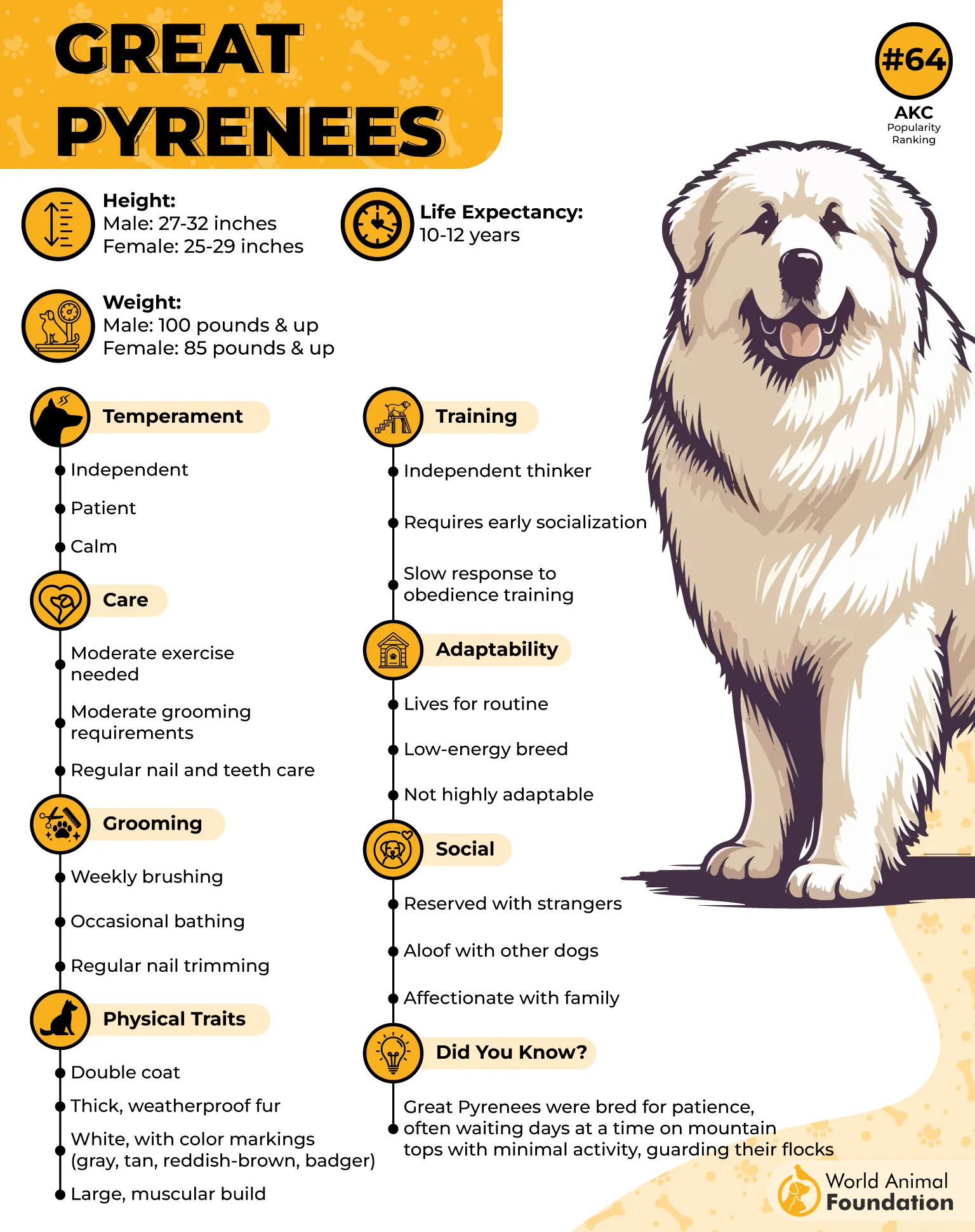
Its herding instincts make it think its family as its “pack,” thus, the strong bonds make it a great guard dog. This protective dog avoids physical engagement first and tries to deter the threat using its giant size. Its bite force is 500 PSI, making it one of the strongest breeds that can tear your muscles apart and break your bones.
3. Boerboel
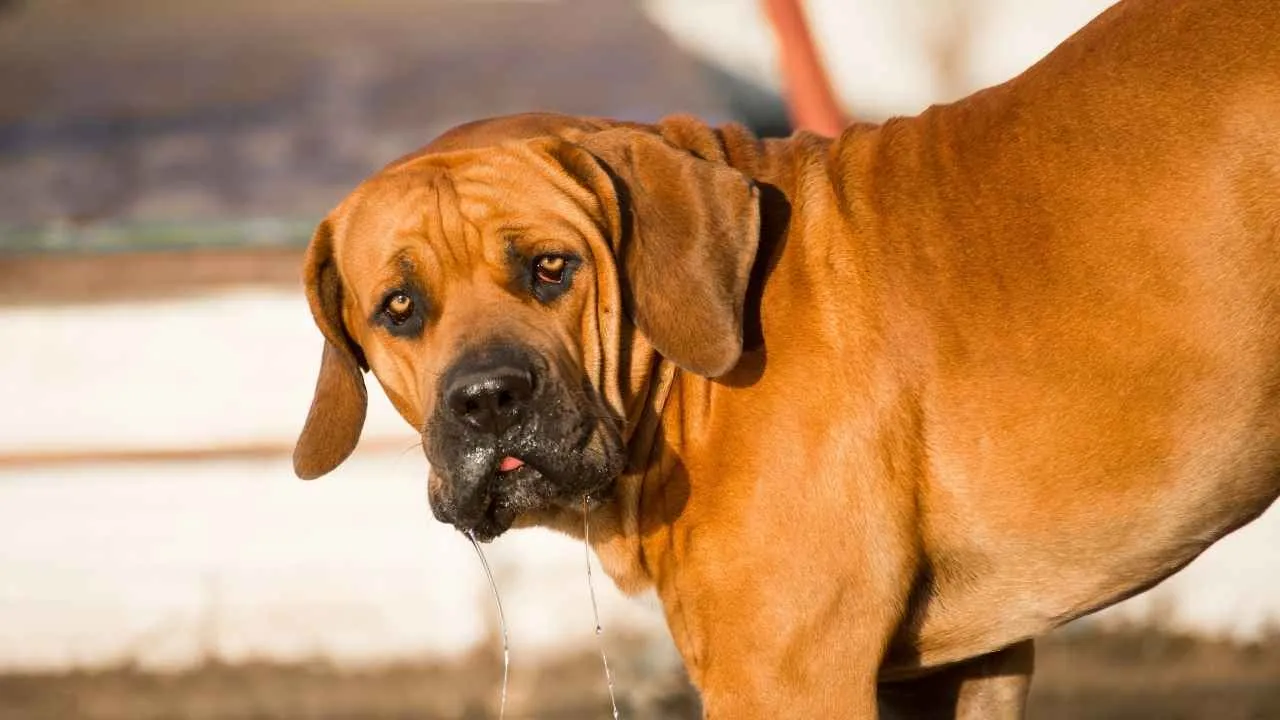
This incredibly loyal companion was bred to protect the South African farms from hyenas and lions, and is also known as the South African Mastiff, as per PetMD. Despite having a strong bite force of 800-850 PSI, this right guard dog is usually quiet and non-aggressive. It has a balanced temperament; friendly indoors with family, kids, and other animals, and alert, defensive, and protective outdoors.
Being naturally independent, it can show rude behaviors; thus, it needs proper socialization and early training. This smartest breed can read the owner’s emotions and body language, helping it to make sudden and precise decisions and differentiate between a normal visitor and an actual threat. This “silent sentinel” has natural protective instincts and can guard you without formal training.
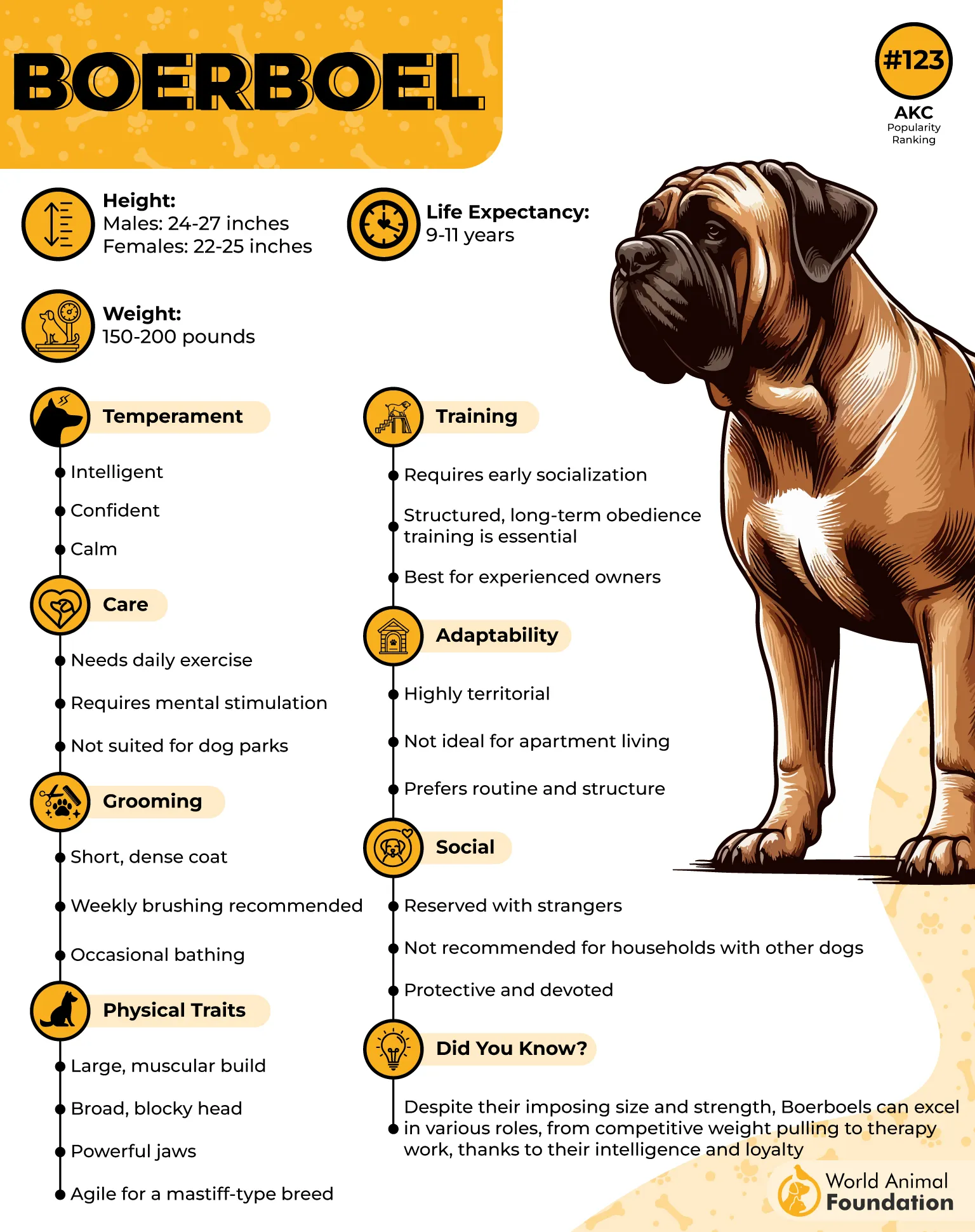
Being a nocturnal breed, it remains active at night, making it an ideal home security guard. It has intense exercise needs (1.5-2 hours) for mental stimulation that includes: long walks, agility training, and weight pull activities, etc. The Boerboel is aloof around strangers and sees them as a threat. So, active families who can commit to a consistent training schedule are perfect for this gentle giant.
4. Rhodesian Ridgeback
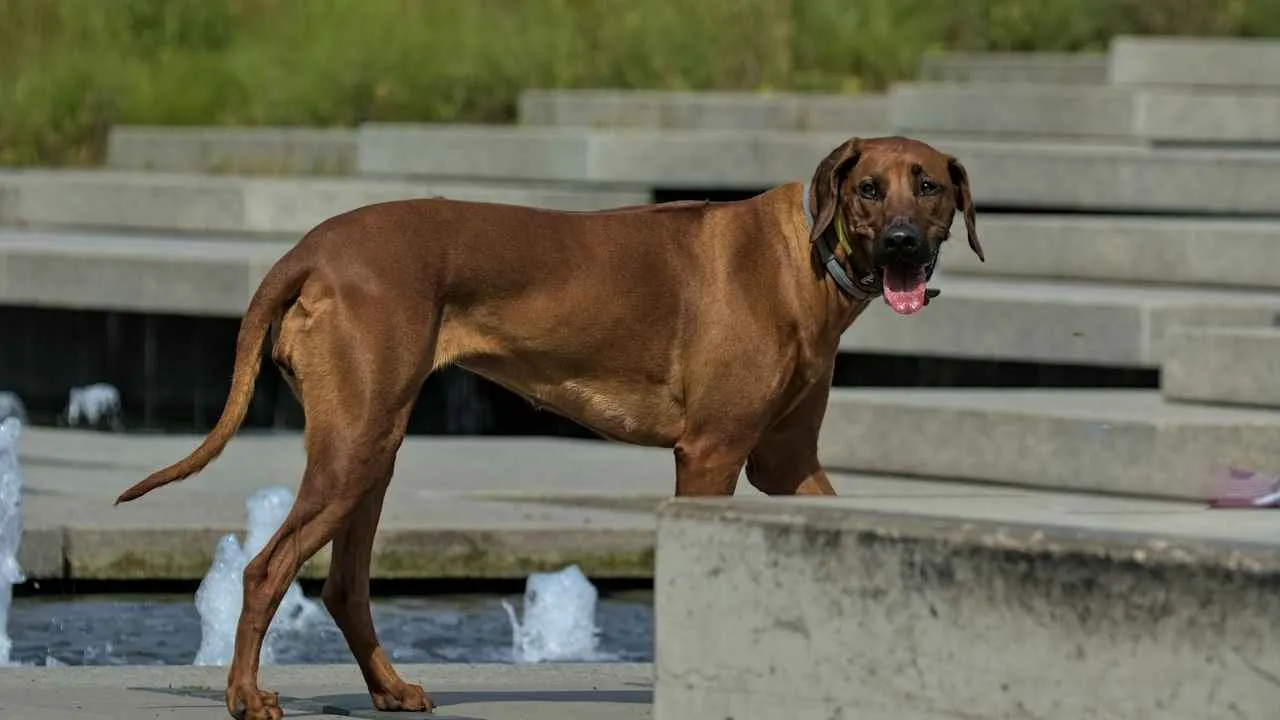
Originally bred in Southern Africa, the standard breed was first drafted by F.R. Barnes in Southern Rhodesia in 1922. Though naturally wary of strangers, this muscular build should not be confused with unnecessary aggression. This breed welcomes gentle and just training, and despite being an energetic dog, it is not hyperactive indoors.
The selective barking makes it a good alert dog. The puppies tend to be exuberant but become calm and composed as they age. Bred to endure the intense heat of South Africa, the Rhodesian Ridgeback has a calculated reactiveness. The breed needs regular exercise and mental stimulation for 1-2 hours daily; long walks, hiking, running, and scent work must be included.
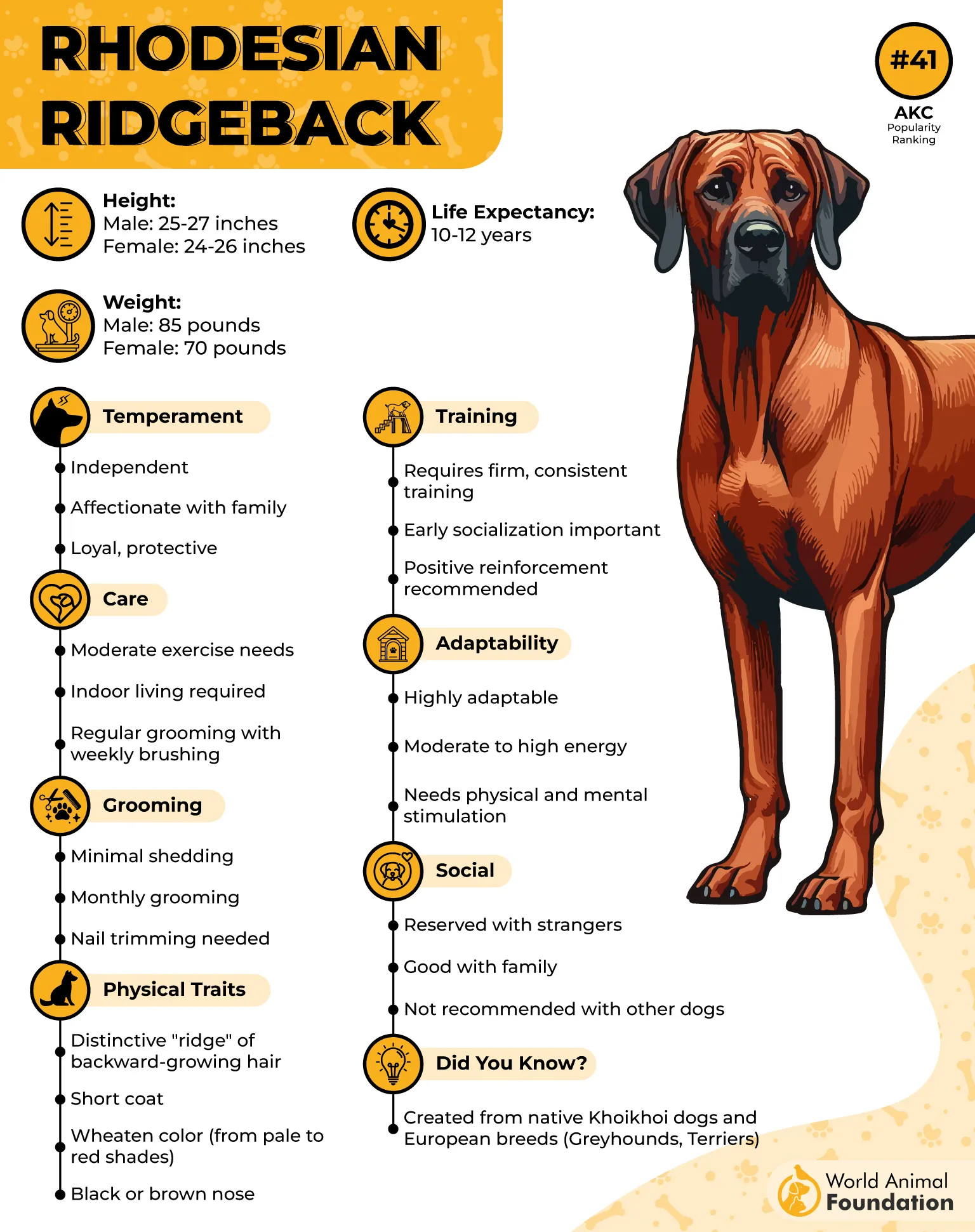
This loving companion prefers living indoors; however, it is not recommended for first-time dog owners. This highly trainable breed can walk up to 20km a day without getting tired. This exceptional protector has a wheaten-colored coat that blends perfectly with the wheat fields, creating perfect camouflage for predators.
5. Bernese Mountain Dog
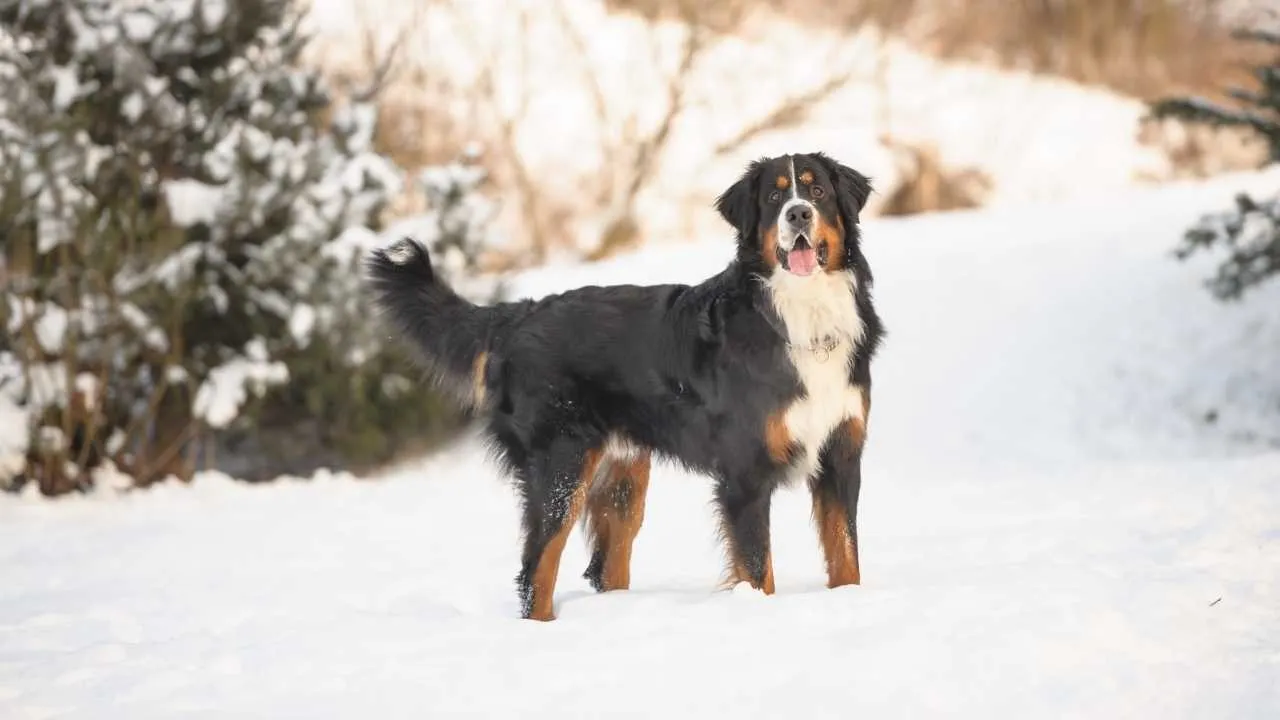
This deeply devoted and gentle companion was bred for the farms of Switzerland. The long and dense coat consists of a variety of colors: clear white, jet black, and rust. Since it was developed to endure the freezing cold mountains, the thick coat and webbed feet help to walk on ice, swim in cold water, and provide protection against chill winds, writes the AKC.
Being a perfect “nanny dog,” it is extremely patient and forgiving with children. It is non-aggressive and simply walks away from a play if it is too noisy or chaotic. This versatile breed can pull up to 10 times its weight and is used for cattle herding, pulling carts, and as a flock guardian.
More than an alert dog than a guardian, it barks to alert the owner of the threat, and calms down as soon as it is sure that everything is fine.
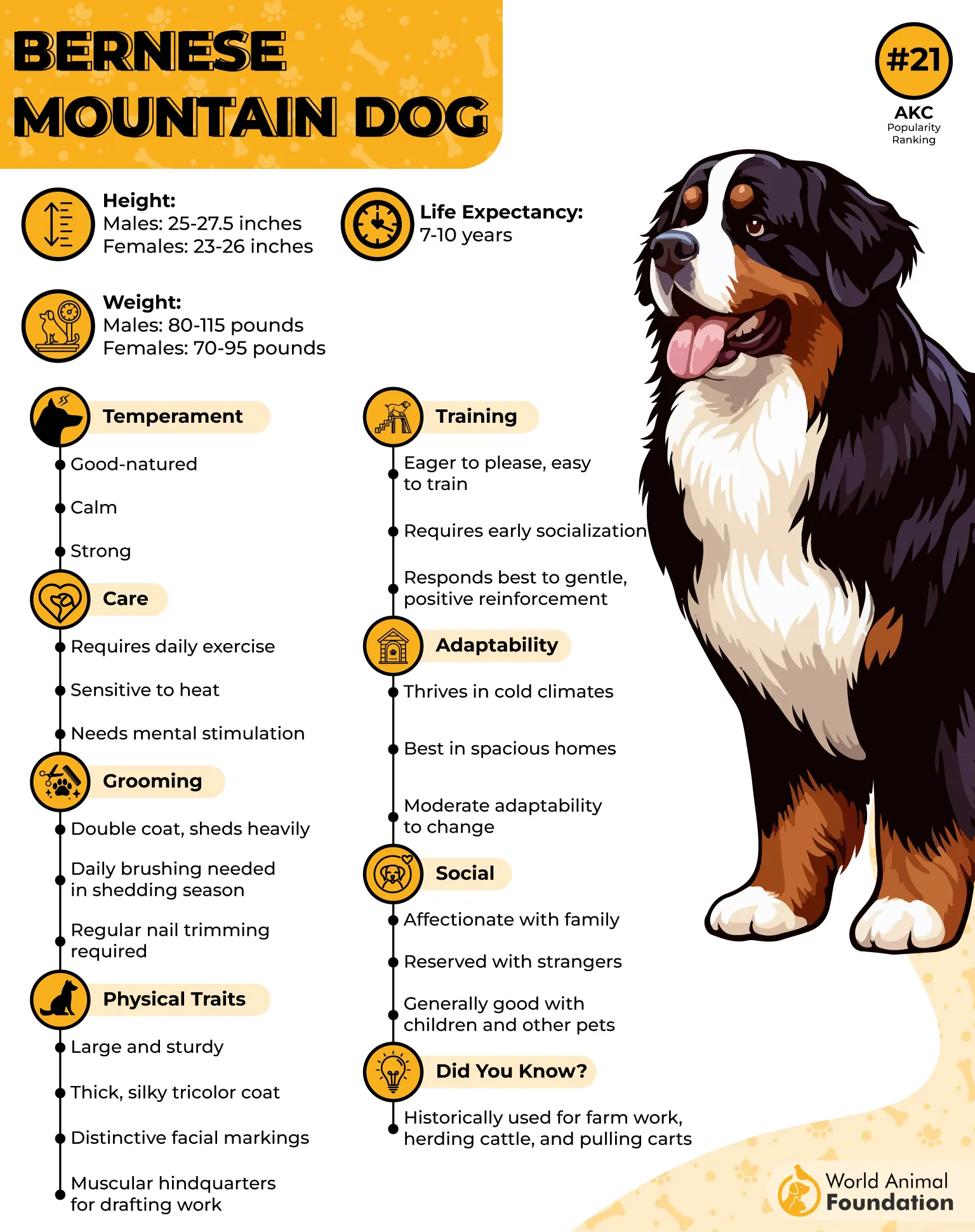
Since it was bred for cold environments, overheating and outdoor activities on hot days must be avoided. It is a velcro dog and can develop separation anxiety when left alone for too long. This breed has a constant need for a “job” as a historic working dog. Because of emotional intelligence, it is medically and psychiatrically alert, and it can instantly detect seizures, low blood sugar levels, and anxiety.
6. Mastiff
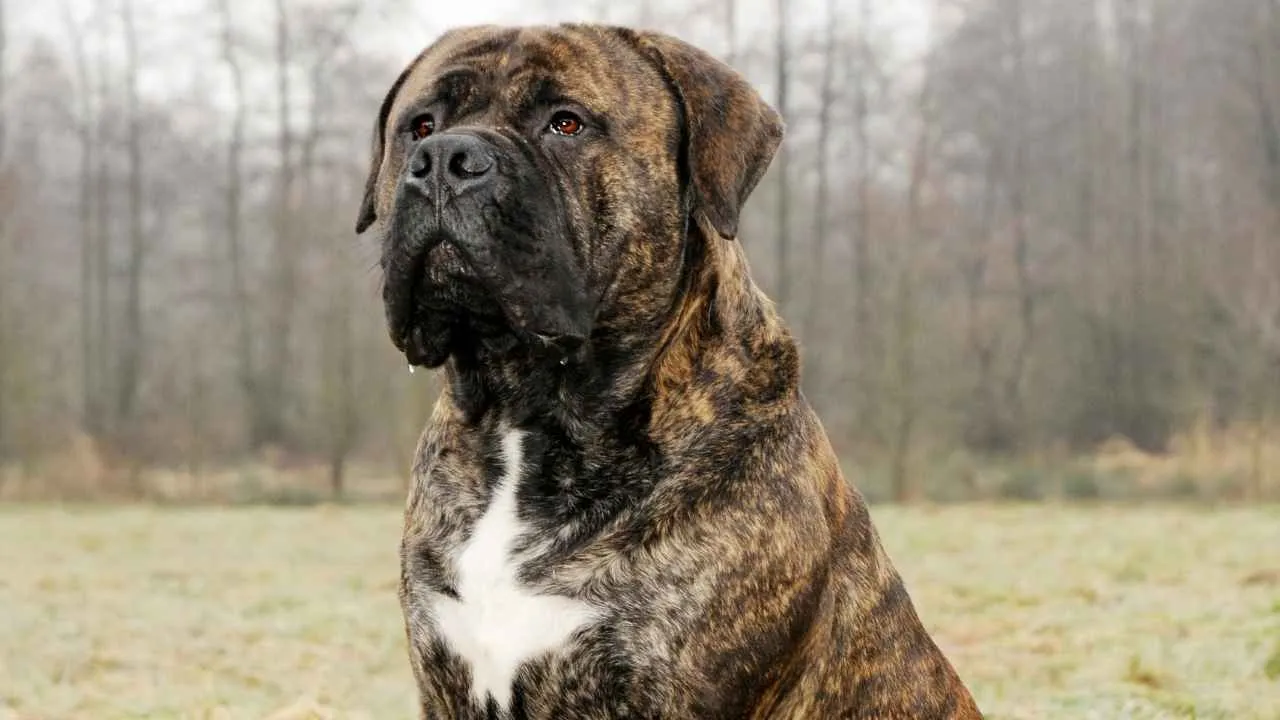
One of the largest and oldest dog breeds (dates back to 3,000 years), the Mastiffs were originally developed for protection, police work, hunting, bull baiting, and guarding estates. Weighing around 120-130 pounds, these loyal dogs have a low energy level and a low prey drive, making them couch potatoes.
Historically, the English Mastiff was kept “chained” during the day and left open at night to protect the property. This developed a need for a calm breed that can conserve energy for a longer period of time. Hence, the selective breeding led to the development of a breed with strong guarding instincts and minimal barking.
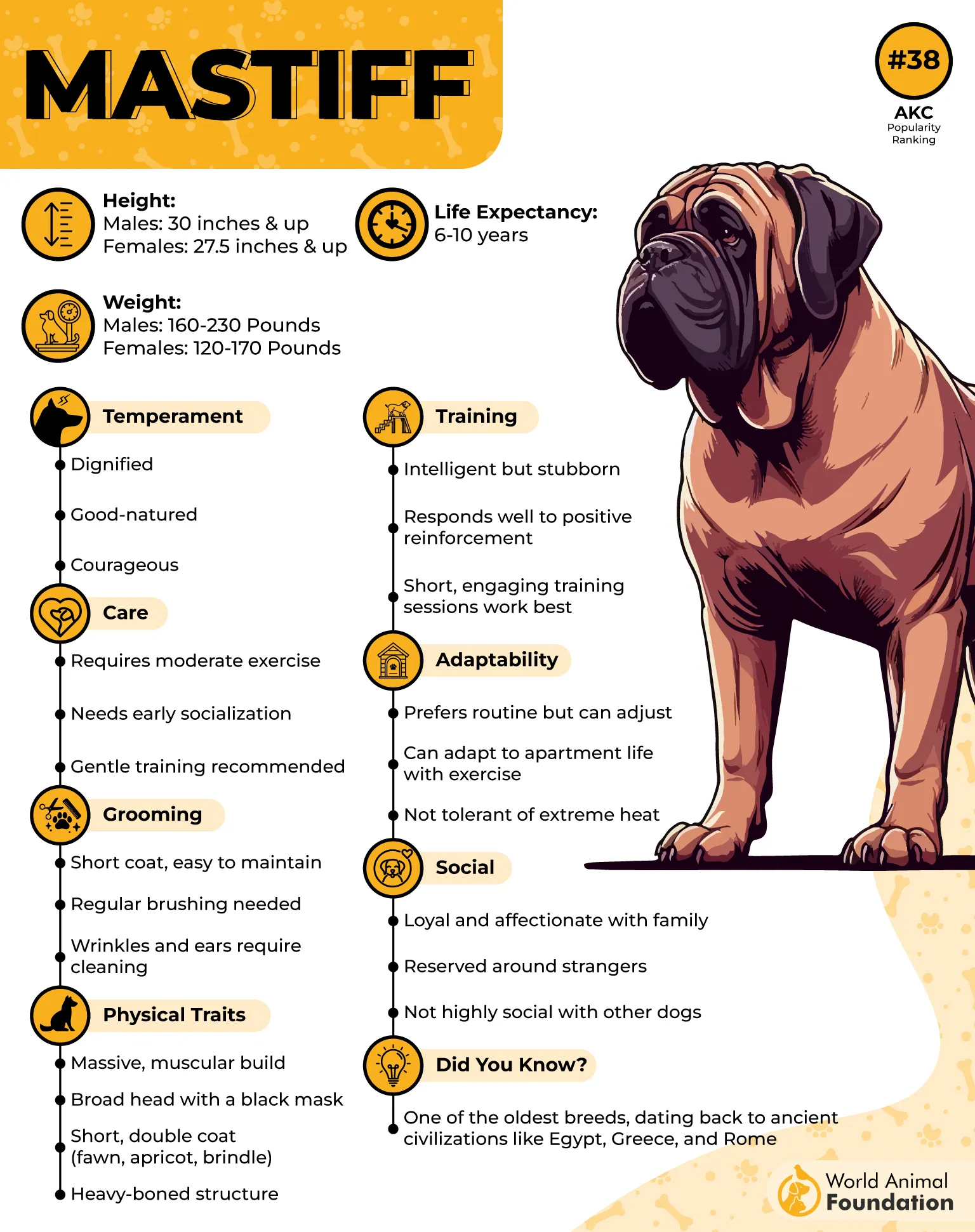
This loving family pet has a docile nature and acts sensibly in a chaotic environment. A properly trained Mastiff is more confident and secure. The breed is a perfect therapy dog and tends to sit in your lap or gently places its head on your shoulders to console you. Despite being a gentle giant of 200 pounds, the Mastiff requires moderate exercise (60-90 minutes) to stay healthy.
7. Great Dane
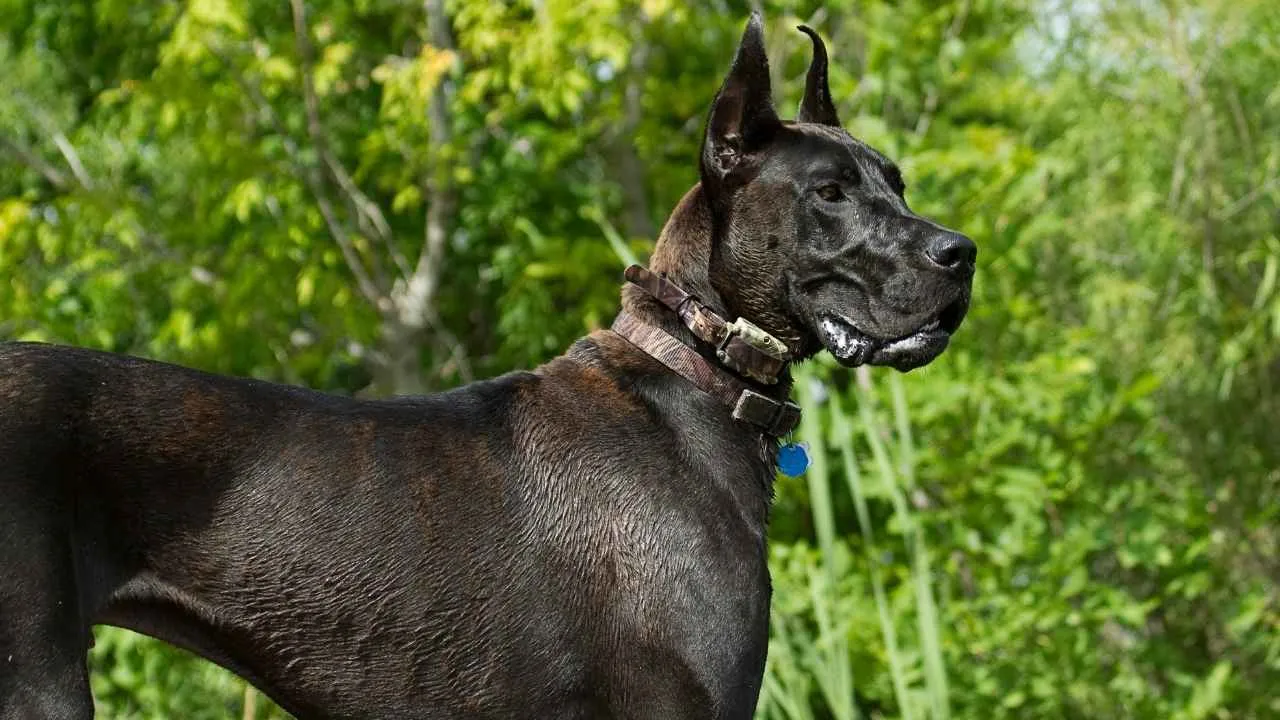
This mastiff-sight hound was developed in Europe in the 16th century for the nobility. It has also been used as a guard dog for the German nobility. Not only that, but this is one of the tallest dog breeds (a Great Dane Zeus was recorded to be the tallest breed ever: 44 inches to the shoulder).
The dog was originally named “Deutsche Dogge” in German, but as war tensions arose, it led to the name shift to the French “Grand Danois,” where the modern name of the dog comes from.
Weighing around 90-200 pounds, this large breed is unaware of its large size and can accidentally hit small children or pets; thus, it needs to be supervised. The Great Dane remains low energy indoors and, hence, is perfect for apartment living. Since it is eager to please and highly intelligent, it is quite easy to train it.
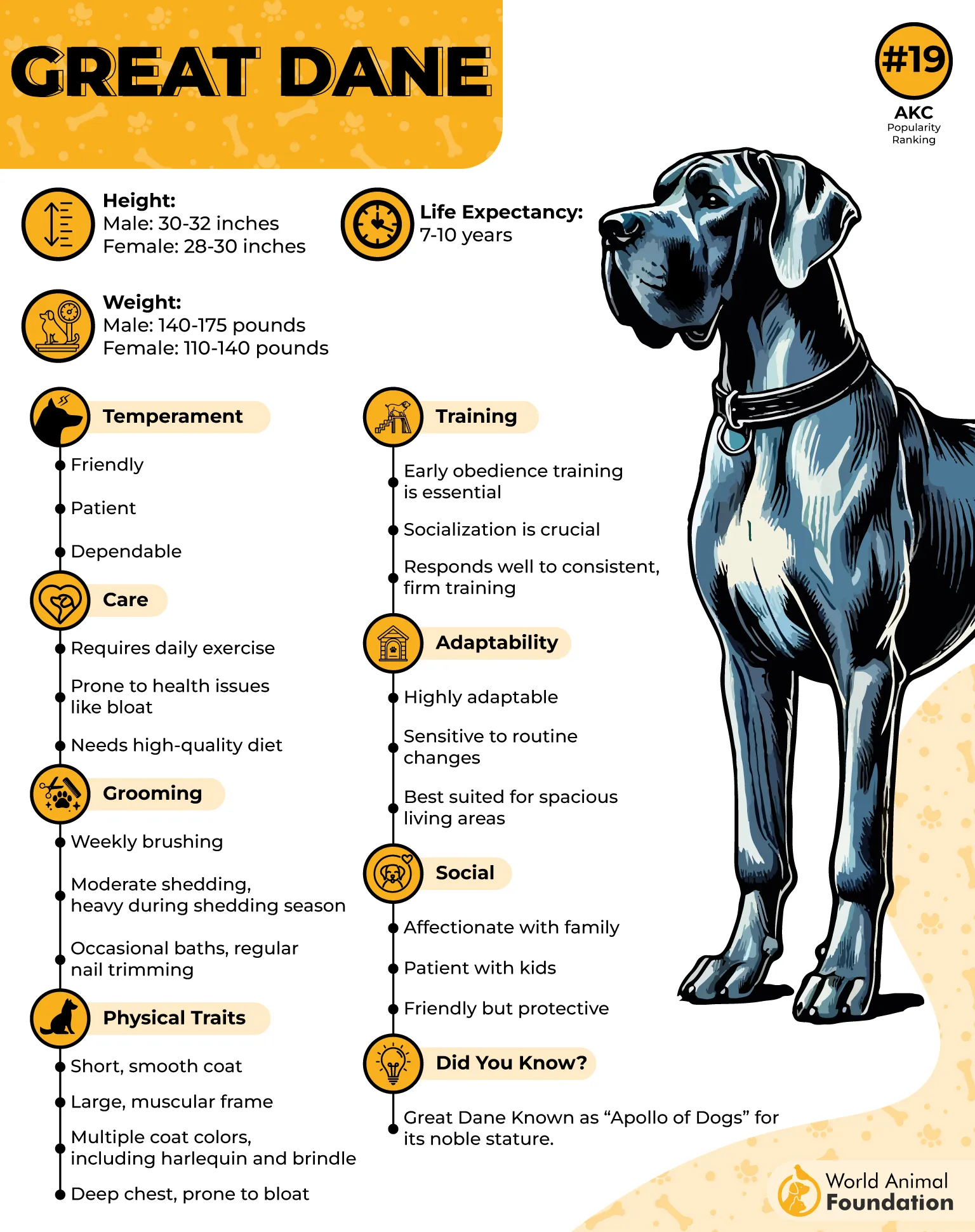
This breed has natural guarding instincts and alertness because of its estate guarding history. This dog is also known as the “30 mph couch potato,” as it almost floats in the air while chasing the prey, but as soon as it enters a safe space, the hunting instinct turns off.
Conclusion
The best guard dog is not always the loudest one in the yard. The breeds above prove that calm and protective are not opposite; they go hand in hand. Whether it is a Mastiff’s quiet dominance, a Newfoundland’s steady loyalty, or a Great Dane’s sheer “do not even think about it” presence, these dogs offer something truly valuable: security that does not come with chaos.
If you are looking for a dog that will protect your home, your family, and your peace of mind all at once, any of these breeds is a solid, four-pawed answer. Choose the one that fits your lifestyle, give them the love they deserve, and they’ll guard you with everything they have got, loyalty, and without asking for much in return.
