




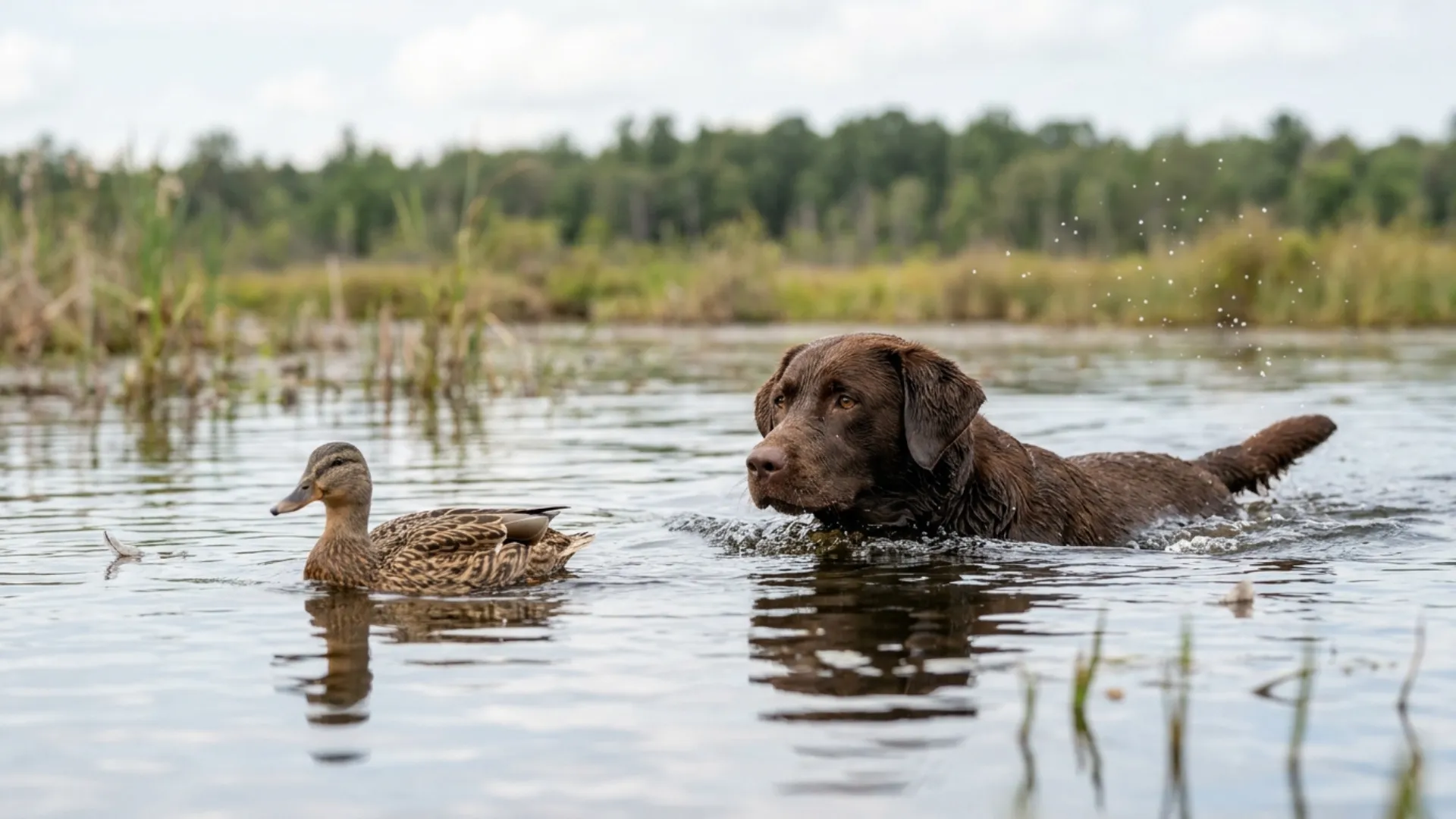
Waterfowl hunting requires dogs that can work confidently around lakes, rivers, marshes, and wetlands. These specialized hunting companions help locate fallen birds, retrieve them from cold water, and navigate challenging terrain while remaining responsive to their handlers. Their swimming ability, stamina, and retrieving instincts make them valuable partners in the field.
However, not every dog is equally suited to waterfowl work. Some breeds excel at retrieving ducks from open water, while others are particularly effective in dense cover, shallow marshes, or difficult conditions. Instincts provide a useful foundation, but proper training, physical conditioning, and a strong working relationship are essential for reliable performance.
From established hunting companions to versatile sporting dogs, the following seven breeds are recognized for their abilities around water. Each offers distinctive strengths that can benefit hunters seeking an effective and dependable retrieving partner.
Remarkable Dog Breeds Specialized in Waterfowl Hunting
1. American Water Spaniel
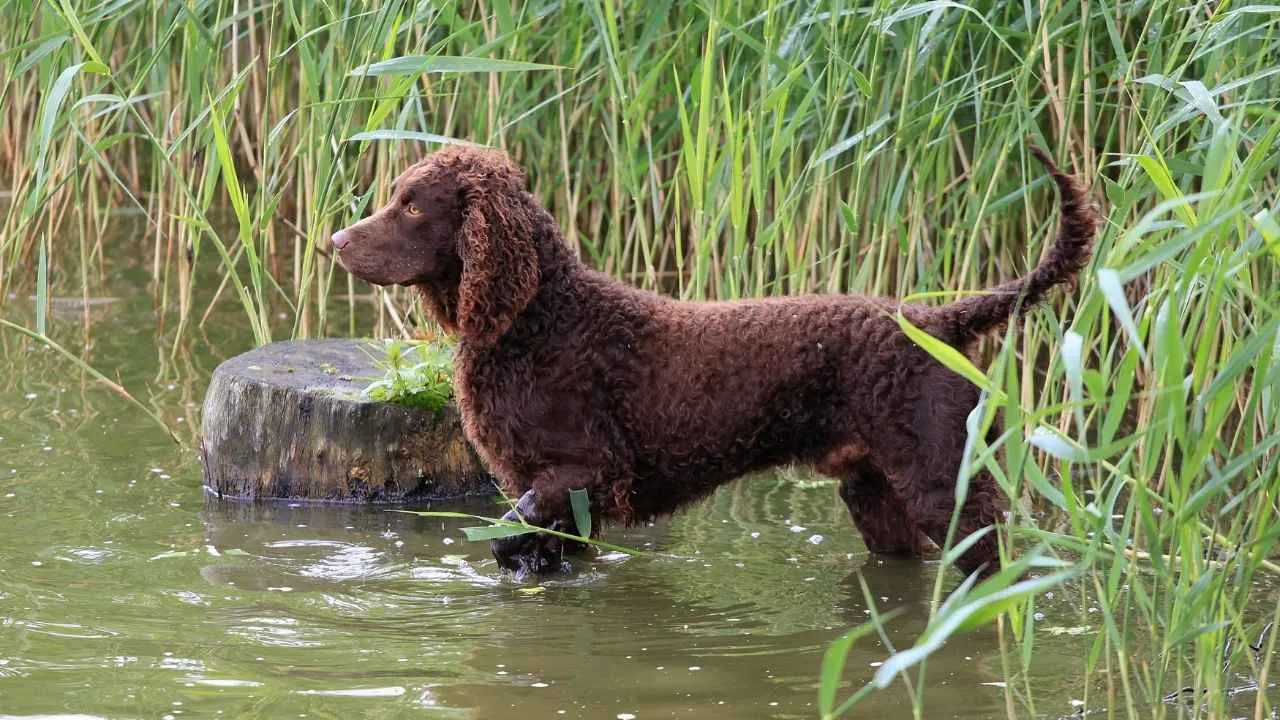
The American Water Spaniel is a compact, energetic sporting dog developed for hunting in the lakes and wetlands of the United States, as per the AKC. Its combination of swimming ability, retrieving instincts, and eagerness to work makes it particularly suitable for waterfowl hunting. The breed’s manageable size also helps it navigate thick vegetation and small boats.
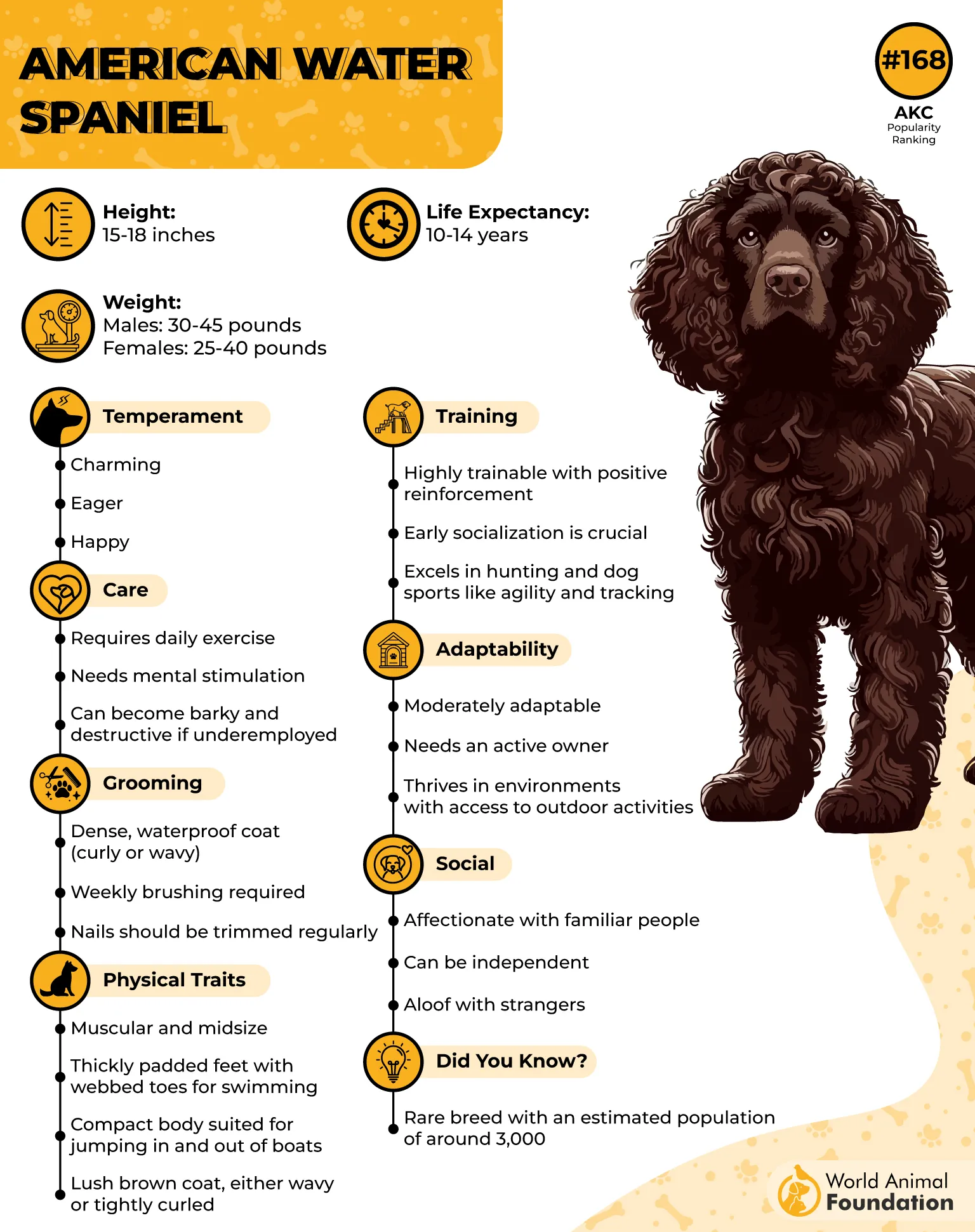
Developed for American Wetland Hunting
The American Water Spaniel originated in the Great Lakes region, where hunters needed a versatile dog capable of retrieving birds from water and working through challenging shoreline cover. Its curly or wavy coat offers protection against wet conditions, while its athletic build supports swimming and sustained activity. The breed was developed to perform several hunting tasks without requiring a large dog.
A Versatile Retriever for Smaller Hunting Areas
American Water Spaniels can be effective in marshes, wooded waterways, and smaller hunting locations where agility matters. Their intelligence and willingness to cooperate support training in retrieving, marking fallen birds, and responding to whistle commands. Regular exercise and consistent practice help maintain their enthusiasm while developing the control needed for productive hunting sessions.
2. Irish Water Spaniel
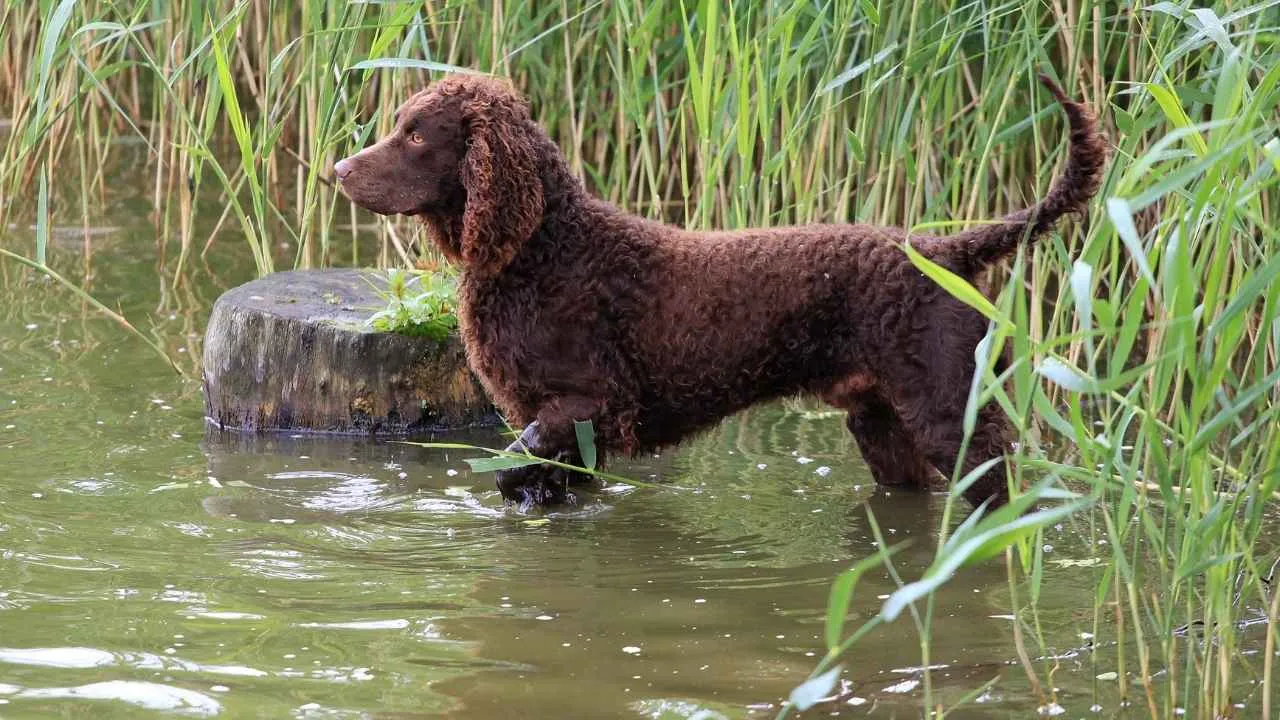
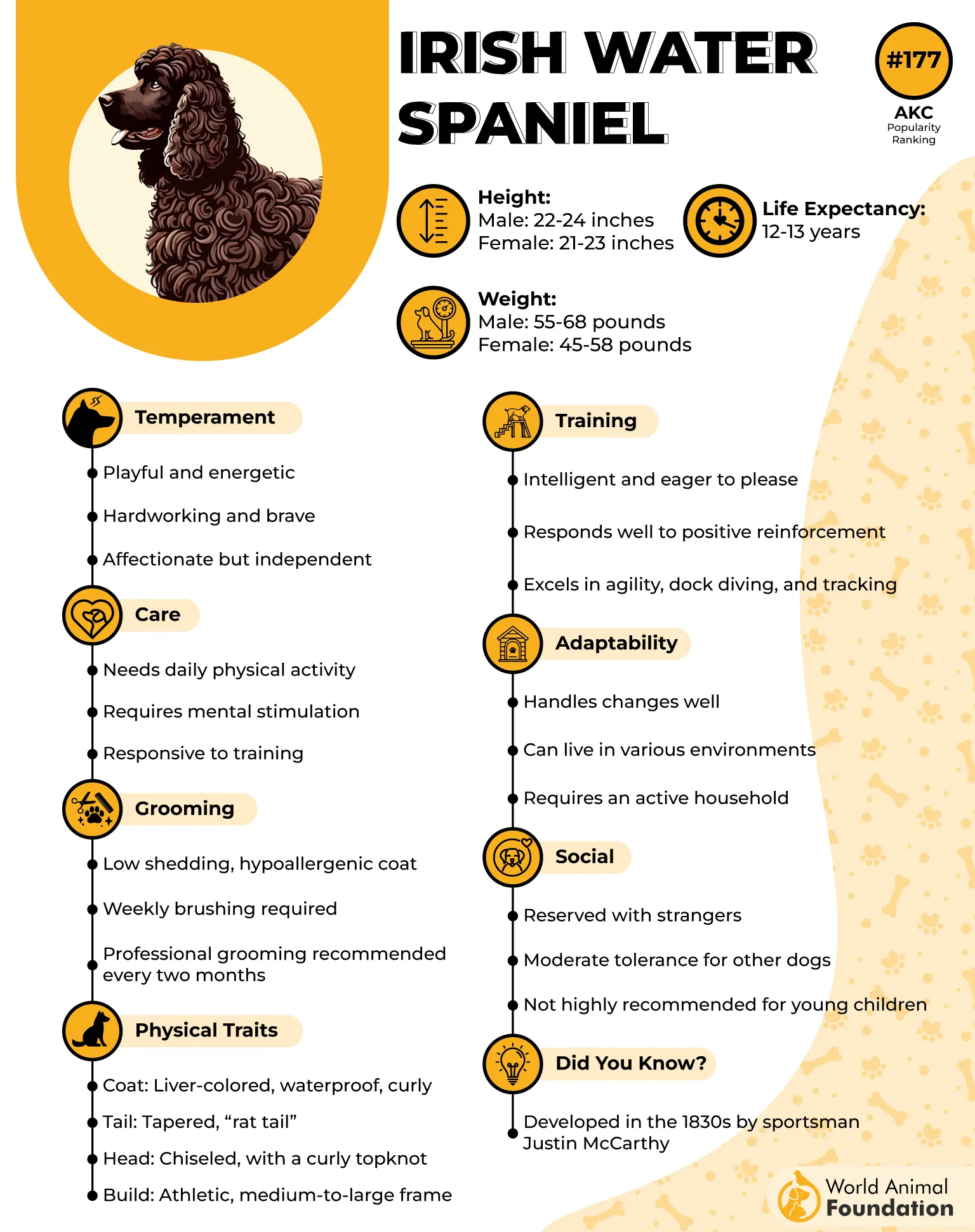
The Irish Water Spaniel is a distinctive sporting breed known for its dense, curly coat, strong swimming ability, and enthusiasm for retrieving. Its webbed feet and powerful hindquarters help it move efficiently through water, including chilly conditions. These qualities make it a capable partner for hunters pursuing ducks and other waterfowl in suitable environments.
A Historic Sporting Dog From Ireland
The Irish Water Spaniel developed in Ireland as a water-retrieving dog valued for its stamina and ability to work in difficult conditions, as per Hill’s Pet. Its tightly curled coat helps provide insulation and protection while swimming, and its long, athletic body supports movement through water.
Over generations, selective breeding strengthened its reputation as a specialized sporting companion.
Building Reliable Water-Work Skills
Irish Water Spaniels benefit from training that gradually introduces longer retrieves, varied water conditions, and distractions commonly encountered during hunting. Their intelligence can help them learn complex tasks, although individual dogs may display independence.
Consistent reinforcement, careful introductions to gunfire, and positive experiences around water help build confidence and dependable performance.
3. Labrador Retriever
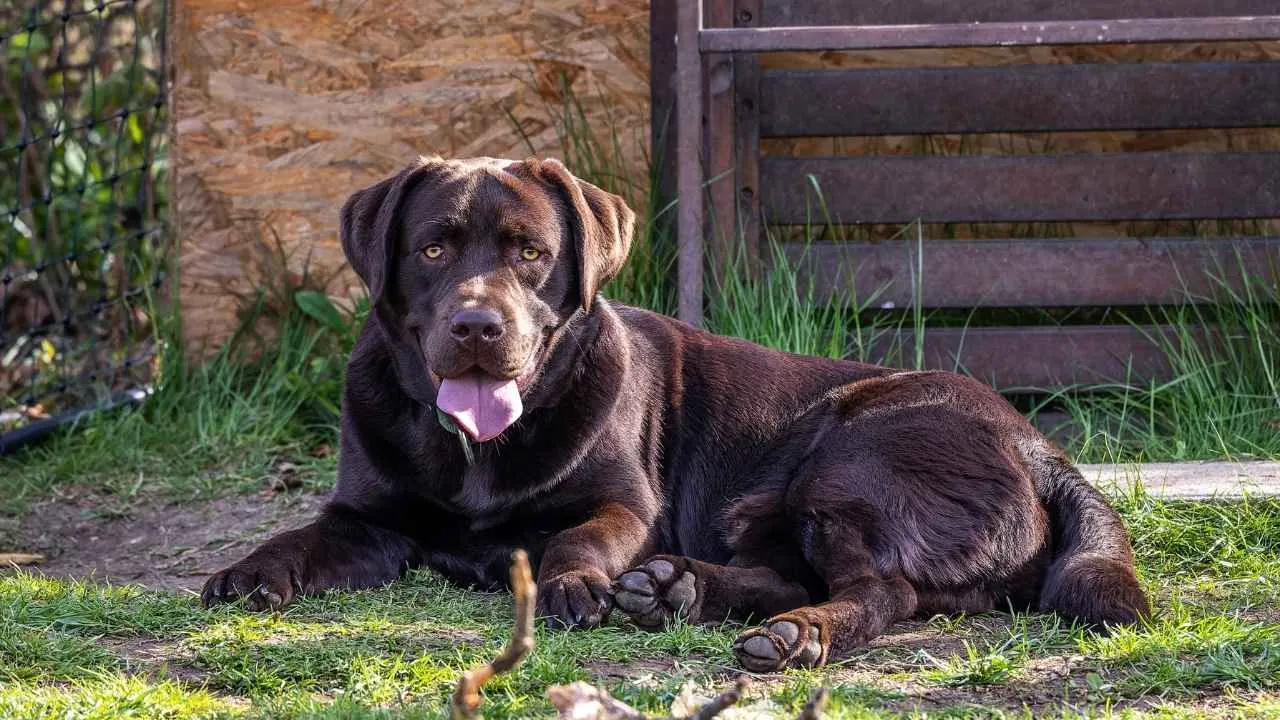
The Labrador Retriever is one of the most widely used breeds for waterfowl hunting because of its strong retrieving instincts, excellent swimming ability, and cooperative temperament. Its enthusiasm for carrying objects, combined with its stamina and trainability, makes it suitable for retrieving ducks across ponds, rivers, and larger wetlands.
Newfoundland Origins and British Sporting Development
The Labrador Retriever traces its ancestry to working water dogs from Newfoundland, Canada, where dogs assisted fishermen by retrieving objects and working around cold water. The breed was later developed in Britain into a dependable sporting retriever.
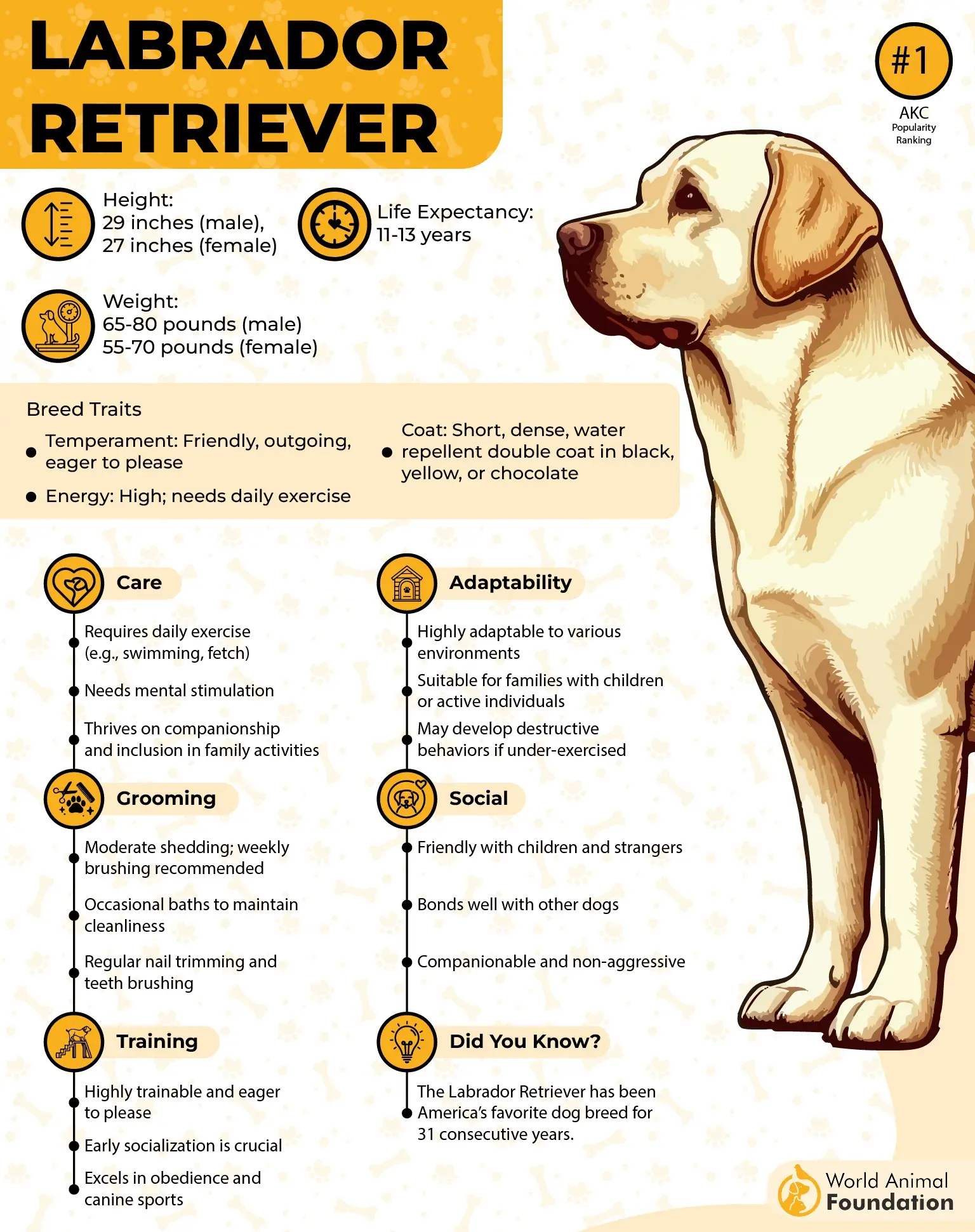
Its dense, water-resistant double coat and strong build support swimming, while its natural desire to retrieve makes it especially useful in hunting, as per VCA.
Dependable Performance in the Field
Labradors can learn to mark falling birds, retrieve on command, remain steady while waiting, and deliver game gently to their handlers. Their willingness to cooperate makes them suitable for both experienced hunters and newcomers prepared to invest in training. Regular exercise, obedience practice, and controlled exposure to hunting environments help channel their enthusiasm into reliable field behavior.
4. Boykin Spaniel
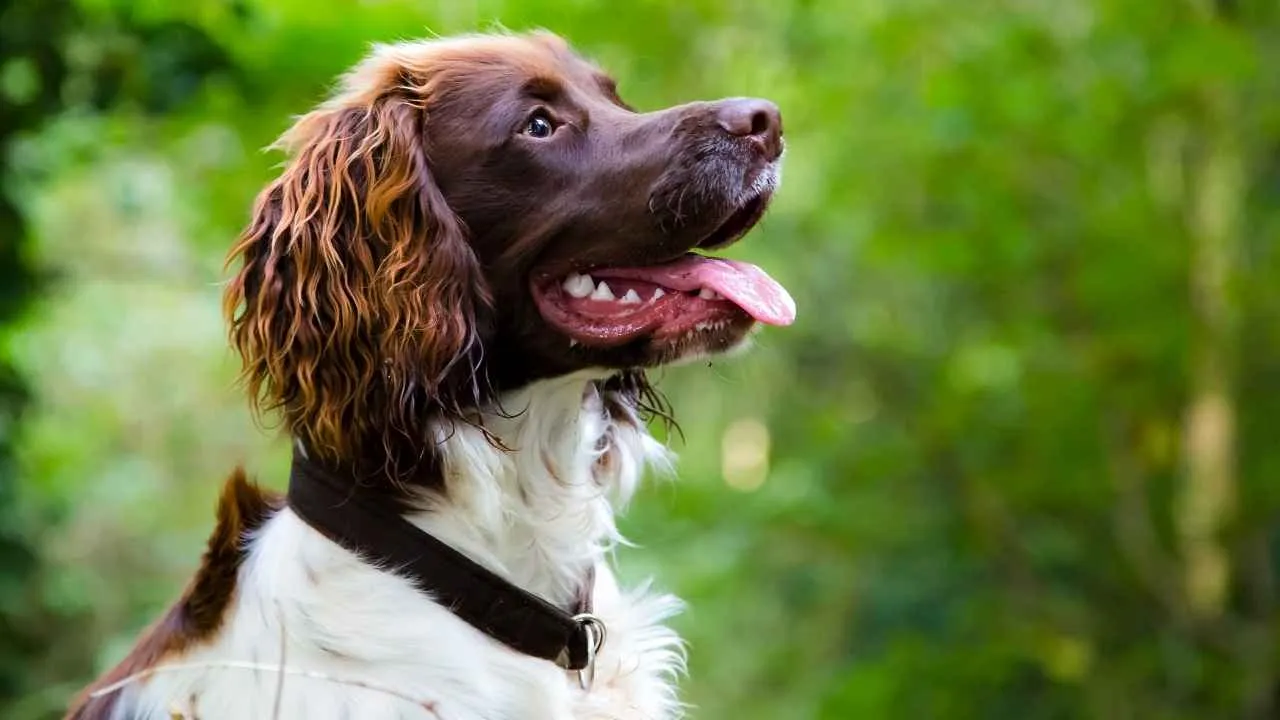
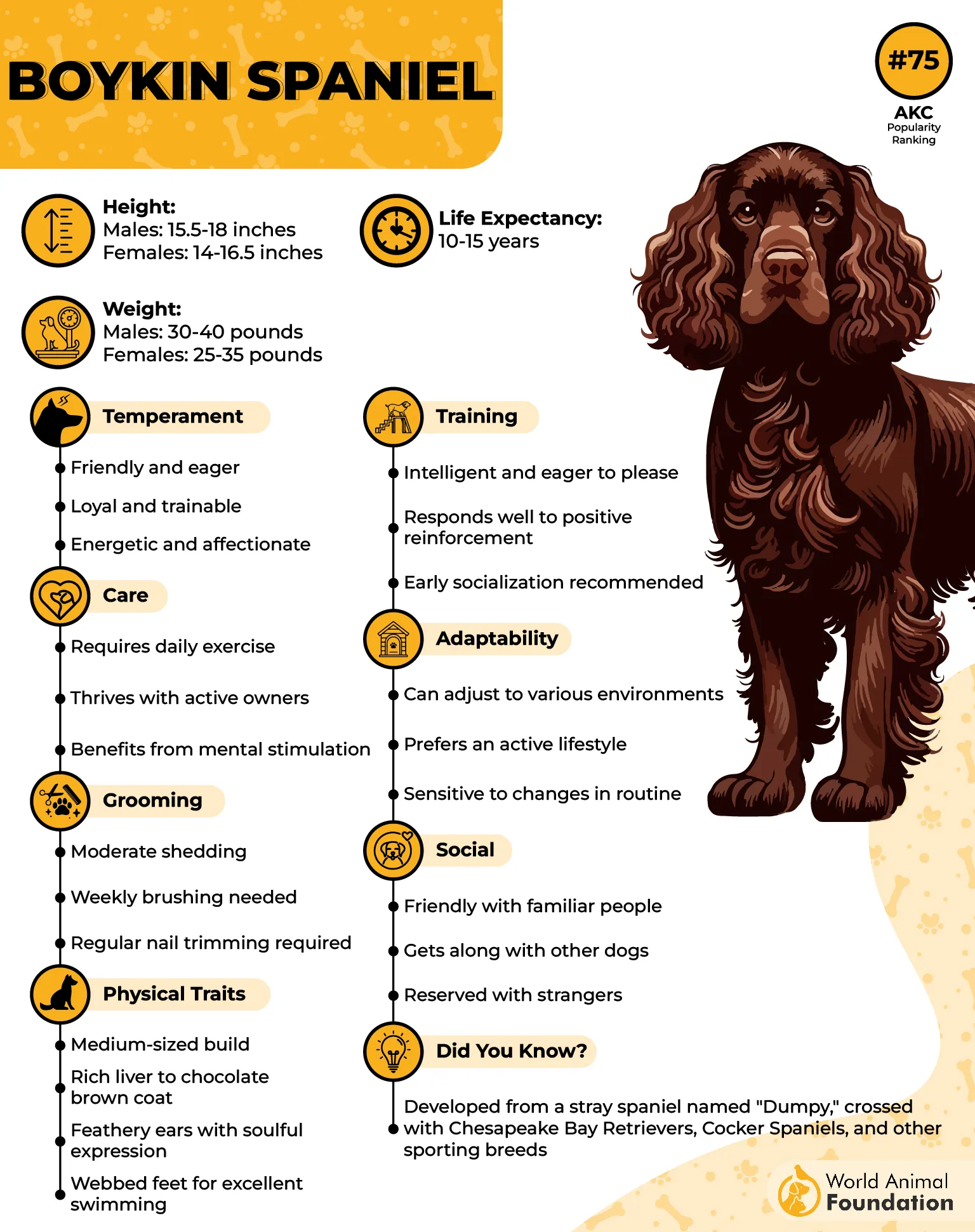
The Boykin Spaniel is a medium-sized sporting dog known for its energy, compact build, and willingness to work in water. Originally developed for hunting in South Carolina, it is particularly well suited to retrieving waterfowl in swamps, ponds, and narrow waterways. Its manageable size can also be advantageous when hunting from small boats or navigating dense cover.
A Southern Sporting Breed With Practical Strengths
The Boykin Spaniel was developed in South Carolina during the early 20th century to help hunters retrieve wild turkeys and waterfowl and work in local wetlands. Its breeding emphasized versatility, endurance, and an eagerness to cooperate. The breed became especially associated with the state’s varied waterways and remains valued as a practical hunting dog.
Energy and Focus for Challenging Retrieves
Boykin Spaniels often excel when training combines retrieving drills, scent work, and controlled exposure to water. Their enthusiasm and agility help them work through vegetation and reach birds in areas that may be difficult for larger dogs. Teaching steadiness, reliable recall, and gentle delivery is important for turning their natural drive into consistent hunting performance.
5. Standard Poodle
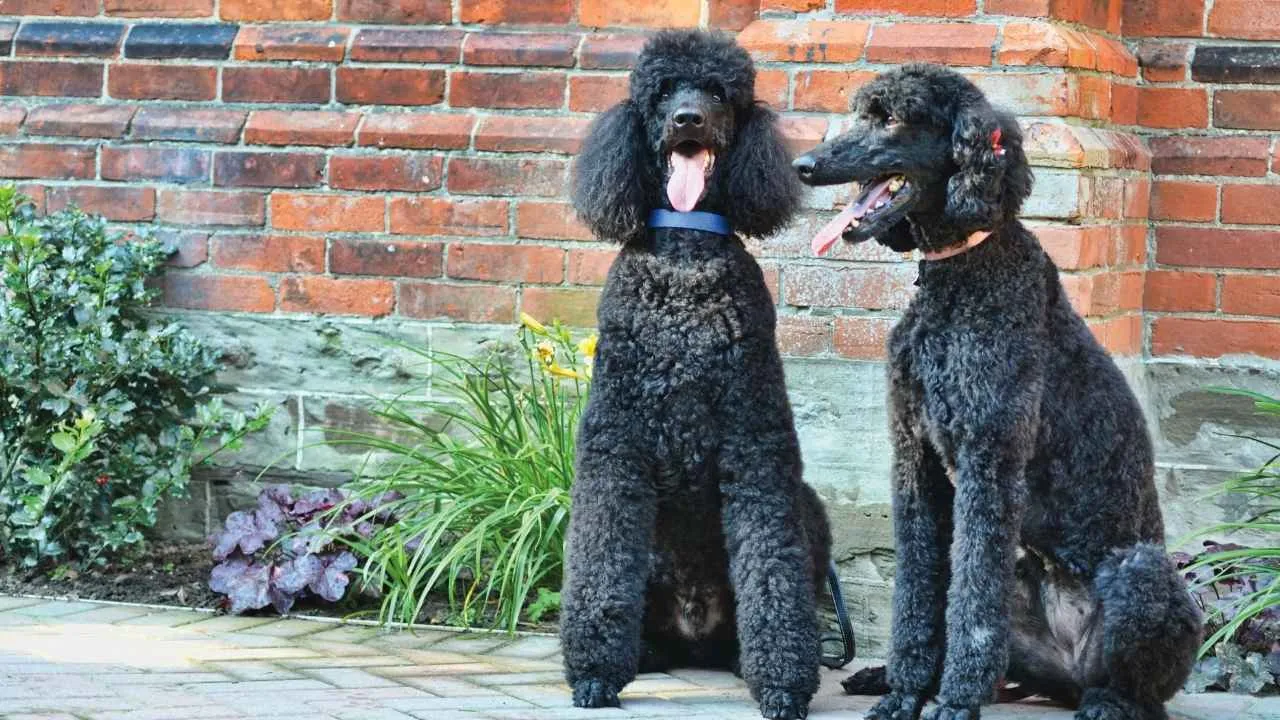
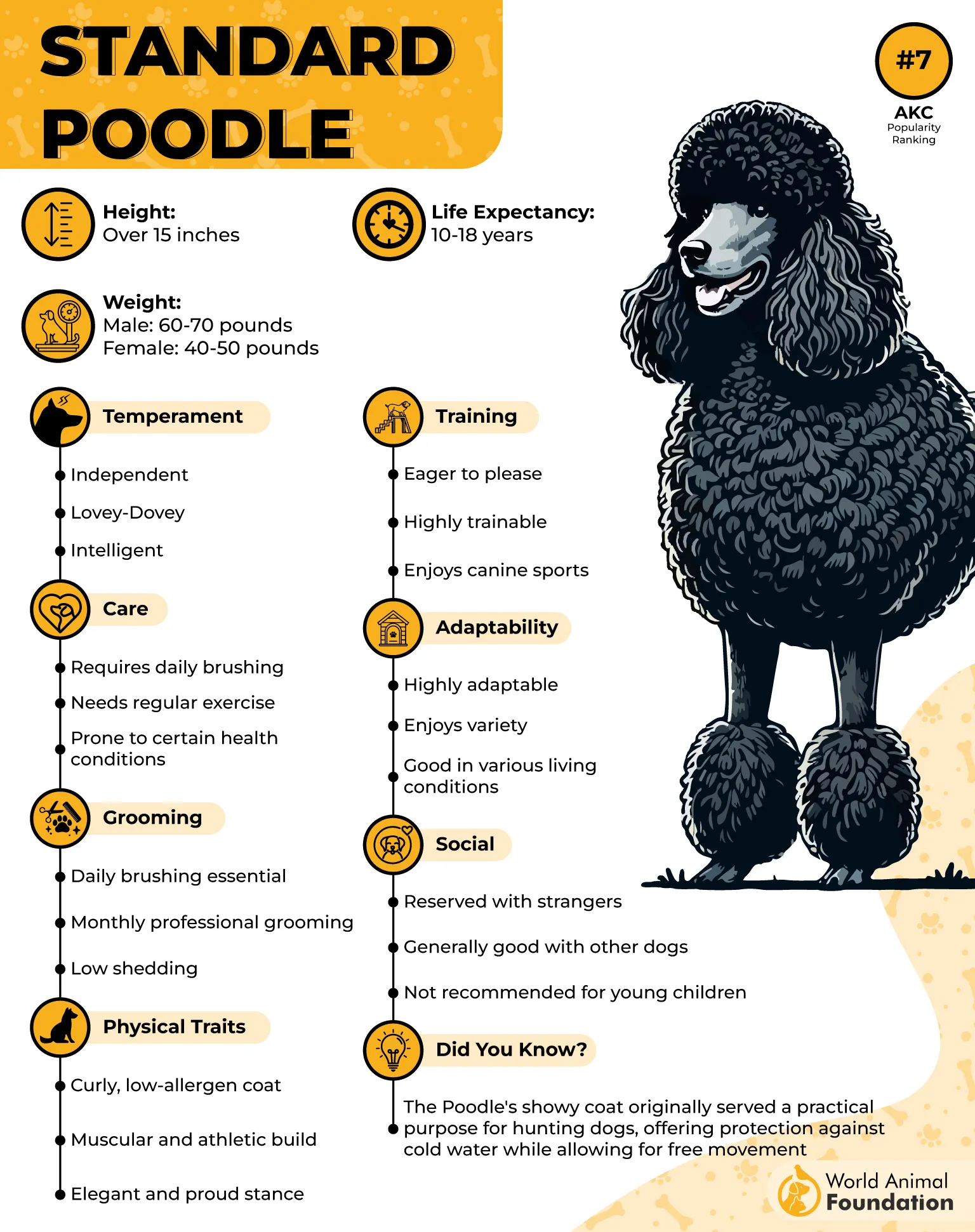
The Standard Poodle is an athletic, intelligent dog with a long history of water retrieving. Although often associated with companionship and show rings today, the breed’s original working abilities include swimming, carrying retrieved game, and responding closely to human direction.
Its stamina and problem-solving skills can make it a capable waterfowl hunting partner when developed through appropriate training.
European Roots in Water Retrieving
The Poodle’s history is closely linked to European water-retrieving traditions, particularly in Germany and France. Its original work involved recovering game from water, requiring swimming strength, concentration, and cooperation with hunters. The Standard variety’s larger frame and athletic build make it especially suitable for demanding outdoor activities compared with the smaller Poodle varieties.
Intelligence That Supports Advanced Training
Standard Poodles can learn complex retrieving sequences, directional cues, and whistle commands through patient, reward-based instruction. Their intelligence helps them adapt to different environments, although they still require careful conditioning and consistent practice.
A suitable working coat, regular grooming, and gradual exposure to cold water are important considerations when preparing one for waterfowl hunting.
6. Nova Scotia Duck Tolling Retriever
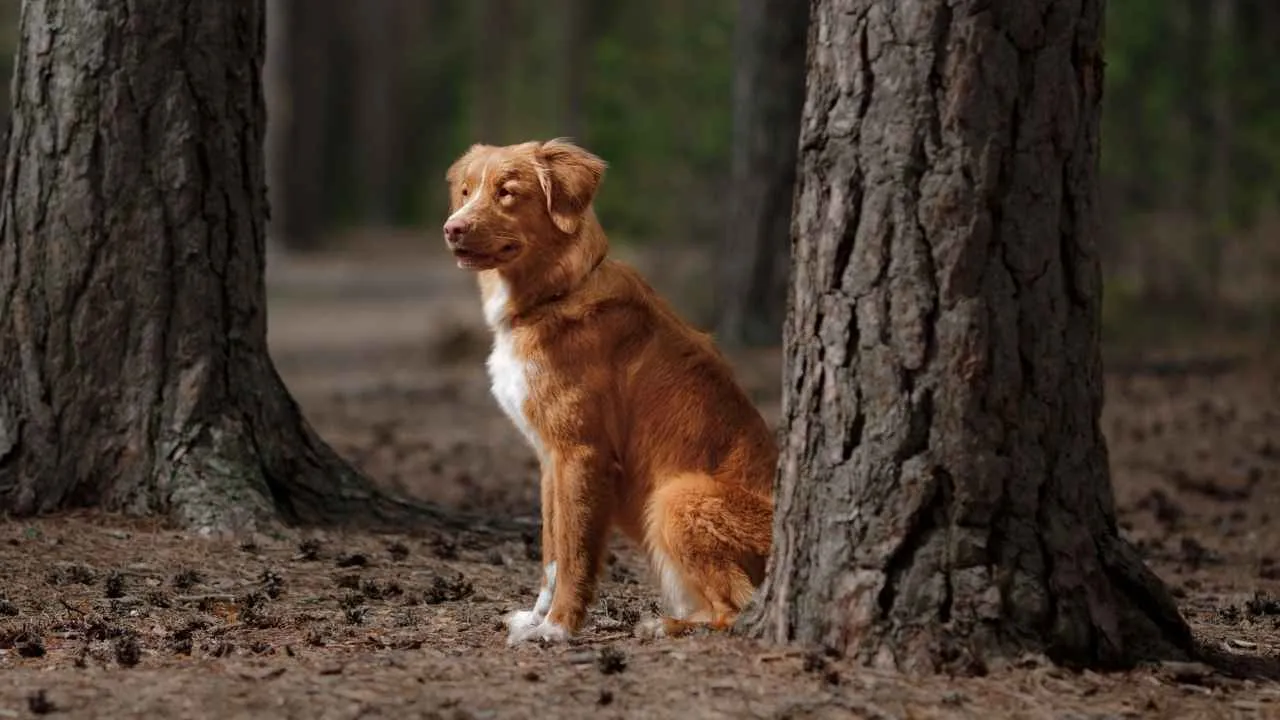
The Nova Scotia Duck Tolling Retriever is a lively sporting breed recognized for its distinctive ability to attract waterfowl through movement along the shoreline. Once birds approach within range, the dog can retrieve those that are shot. Its compact athletic build, dense coat, and strong swimming ability make it well suited to active work around lakes and coastal wetlands.
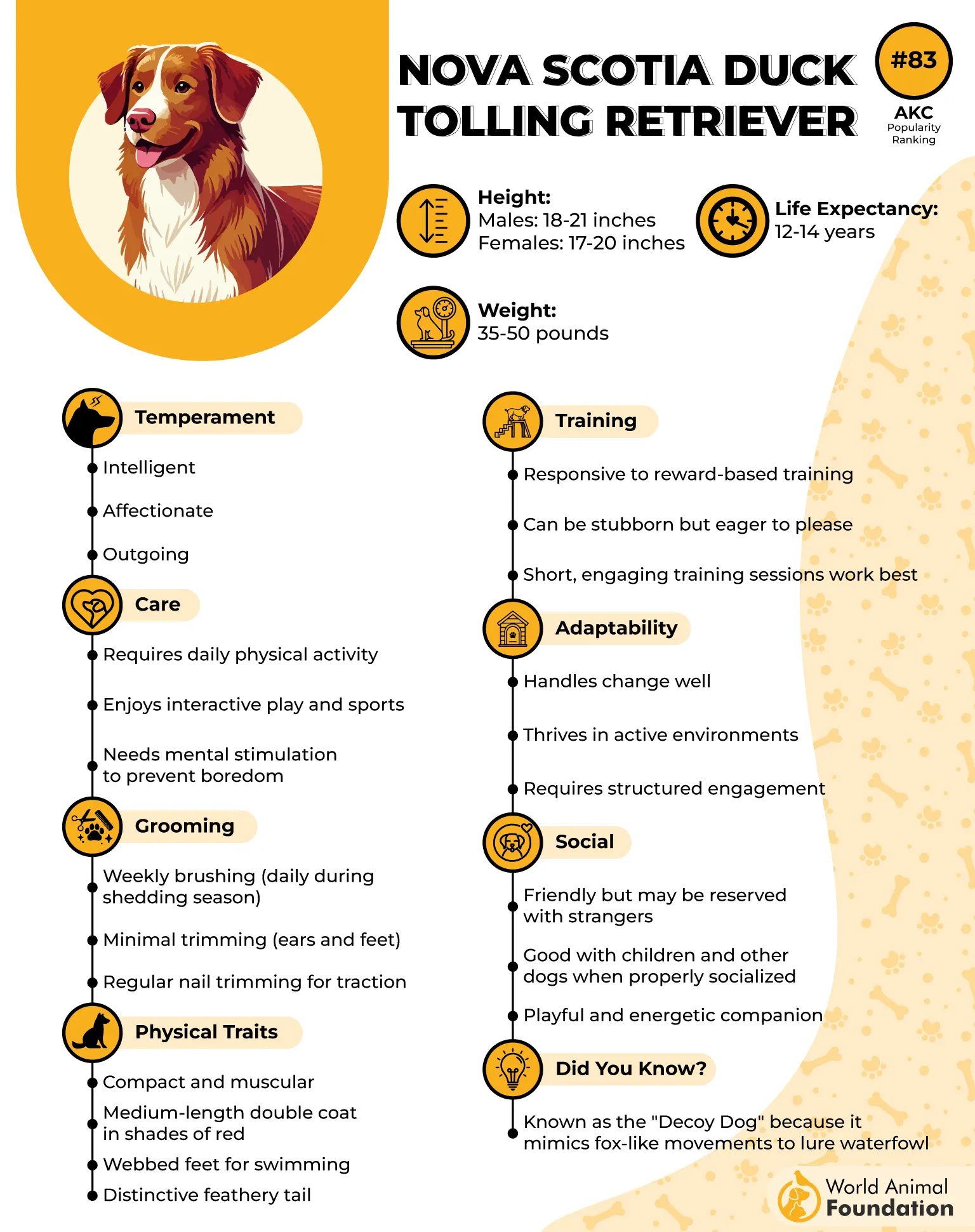
A Canadian Breed With a Unique Hunting Method
The Nova Scotia Duck Tolling Retriever was developed in Nova Scotia, Canada, to assist hunters in attracting and retrieving waterfowl. Its name refers to tolling, a technique in which the dog’s playful movements near the water can draw curious ducks closer to shore. The breed’s working heritage emphasizes agility, alertness, endurance, and a strong desire to retrieve.
Combining Shoreline Work With Water Retrieval
Tollers can be trained for marking, retrieving, whistle responses, and controlled behavior while waiting for a hunter’s signal. Their energy and curiosity make engaging training sessions especially important, while their natural retrieving instincts support productive fieldwork. Early socialization and gradual exposure to hunting sounds help develop confidence without overwhelming the dog.
7. Curly-Coated Retriever
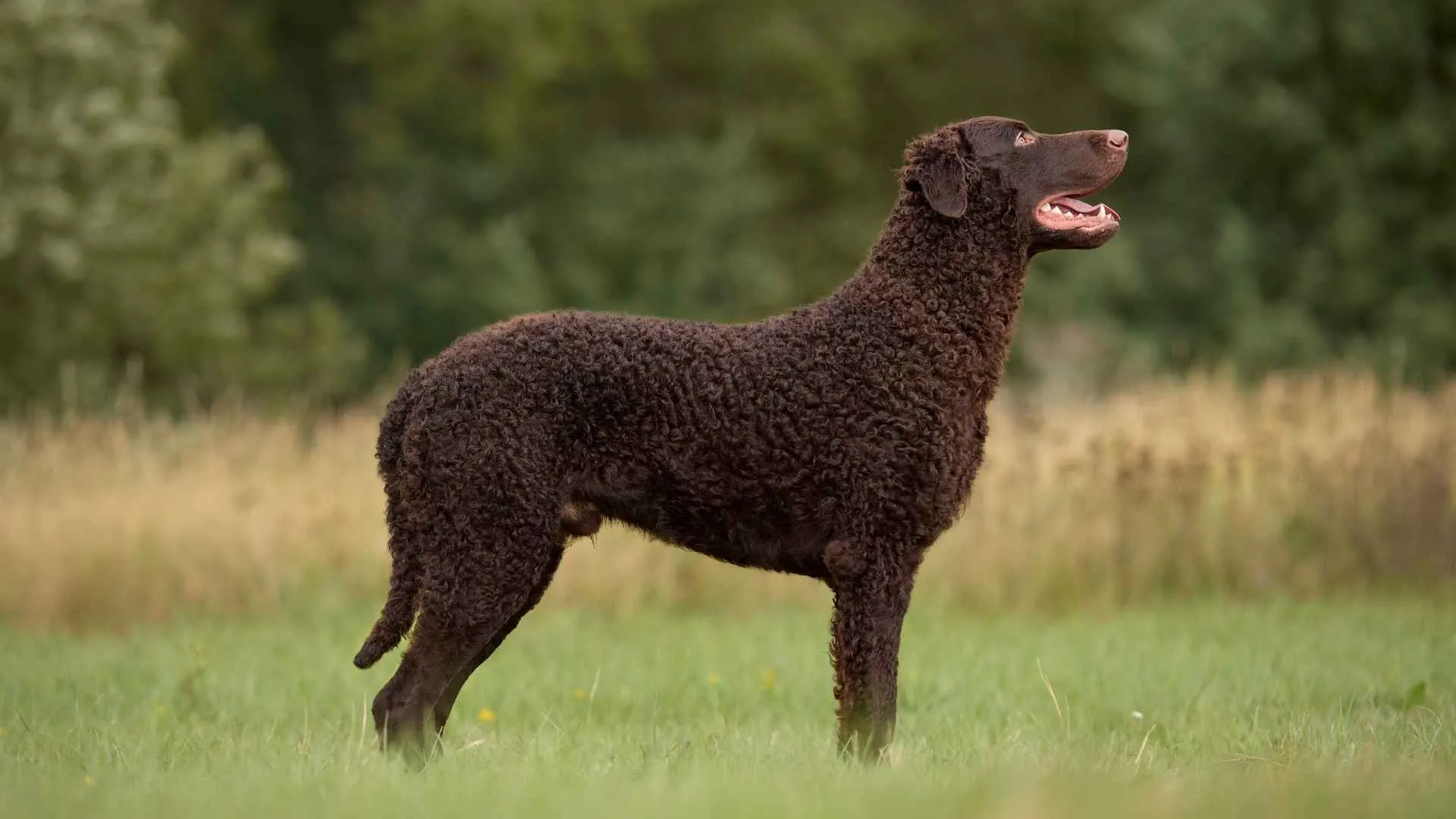
The Curly-Coated Retriever is a large, muscular dog distinguished by its tight, water-resistant curls and independent working style. Bred for retrieving game from land and water, it combines stamina with a strong desire to work outdoors. Its coat provides practical protection in wet environments, while its size and endurance can support demanding retrieves in open water.
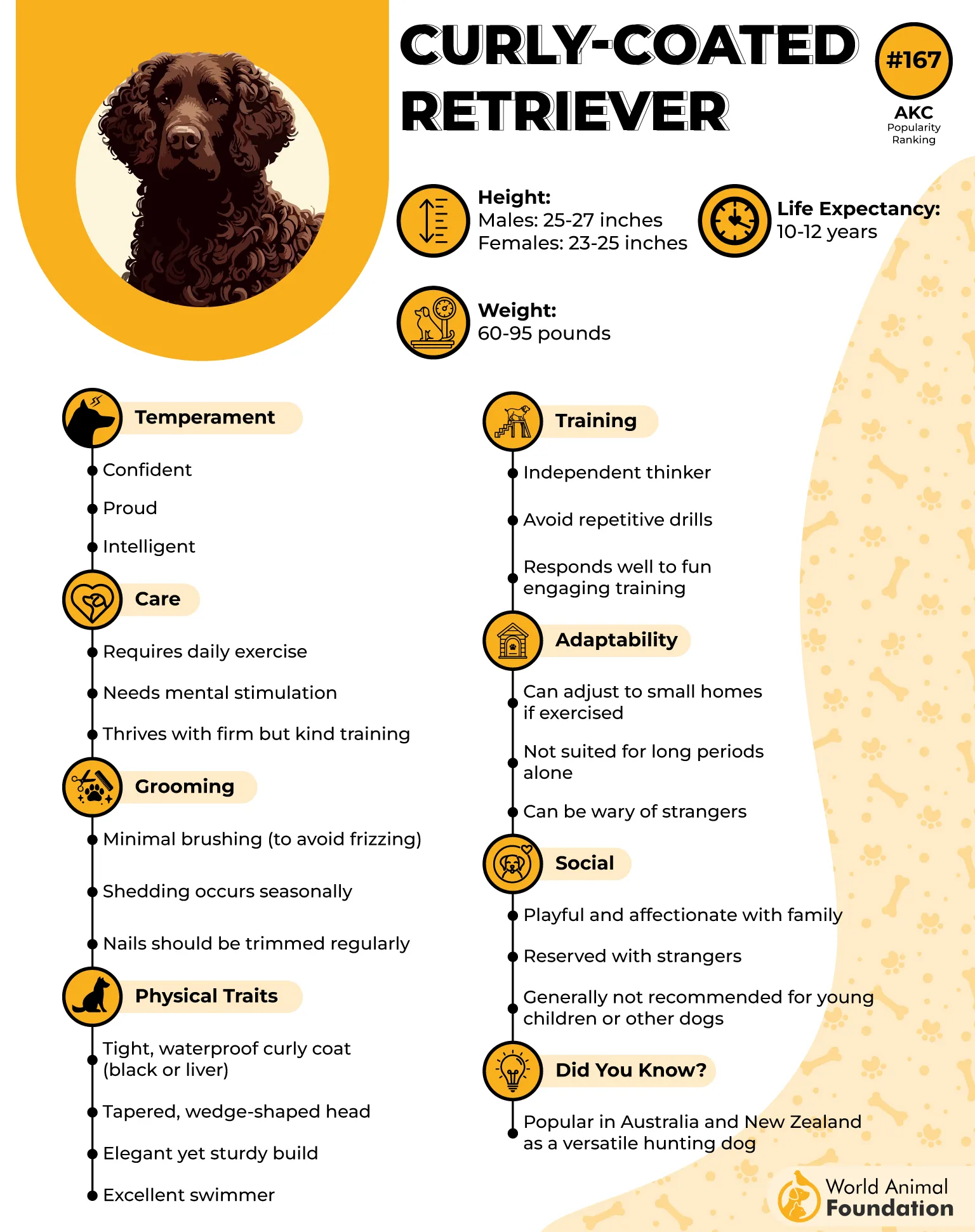
An Old Retriever With Strong Water Skills
The Curly-Coated Retriever is among the older established retriever breeds, with development in Britain dating back to the 18th and 19th centuries. Breeders selected dogs for retrieving ability, swimming strength, and resilience in challenging terrain. Its distinctive curly coat helps protect the body during wet work and distinguishes it from other popular retrieving breeds.
Independence Matched With Purposeful Training
Curly-Coated Retrievers can perform well in waterfowl hunting when training develops reliable recall, steadiness, and consistent delivery of retrieved birds. They may be more independent than some other retrievers, making patience and clear expectations particularly valuable. Regular swimming, physical conditioning, and varied retrieving exercises help maintain their fitness and working enthusiasm.
Conclusion
All the above dog breeds bring valuable qualities to waterfowl hunting. Their swimming ability, retrieving instincts, stamina, and responsiveness help them work across a variety of wetlands and waterways.
However, breed alone does not determine hunting performance. Individual temperament, health, conditioning, and the quality of training all influence how effectively a dog works in the field. Even naturally gifted retrievers need practice with marking, steadiness, recall, and the safe recovery of game.
Before choosing a waterfowl hunting dog, consider your usual hunting environment, the amount of training you can provide, and the dog’s exercise requirements. Introduce water and hunting sounds gradually, use positive and consistent training methods, and prioritize safety around firearms and cold water.
With suitable preparation and responsible handling, these remarkable breeds can become capable hunting partners and loyal companions.
