




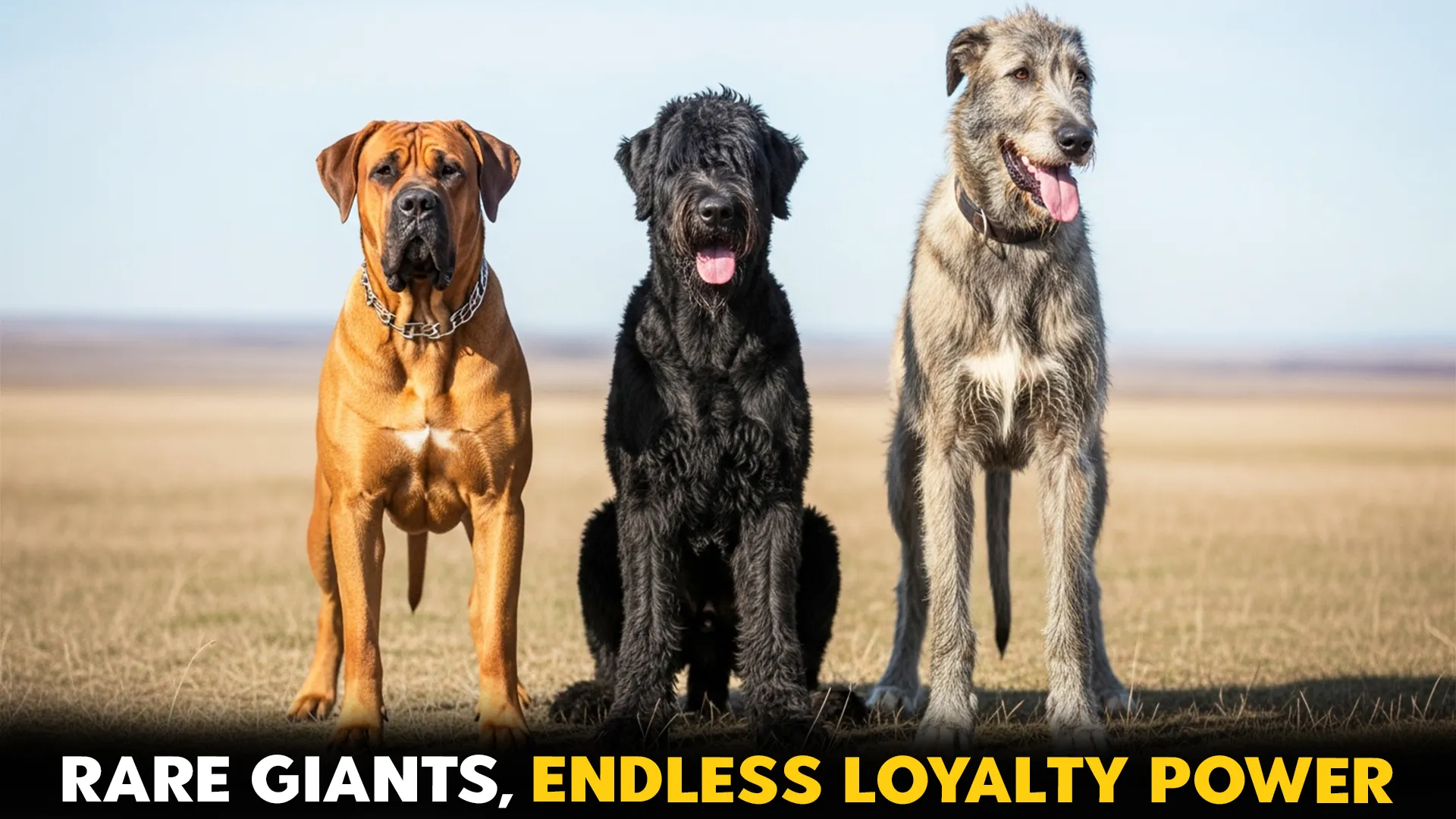
Something is fascinating about seeing a dog that doesn’t look like the usual ones you pass every day. While some popular large dog breeds often steal the spotlight, there’s a whole world of rare, large dogs that stand out for their strength, stamina, and deep loyalty.
Many of these lesser-known giants were never bred for trends or appearances. Instead, they were developed for tough, real-world tasks like guarding livestock, traveling long distances, or working in harsh environments alongside humans. This is why endurance comes naturally to them—it’s built into their history.
Despite their remarkable abilities, these breeds remain rare. Some require experienced owners, while others simply never became widely popular. But those who have them know just how special they are—loyal, resilient, and deeply connected to their humans.
If you’re curious about dogs that combine power with unwavering devotion, these rare large breeds have plenty to offer. Let’s explore some rare dog breeds with remarkable endurance and loyalty.
Key Takeaways
Discover rare giant dogs like Boerboels and Spanish Mastiffs, built for strength and loyalty.
See how Neapolitan Mastiffs and Komondors became devoted family dogs and protectors.
Meet Irish Wolfhounds and Black Russian Terriers, powerful yet gentle companions.
Learn the history and traits that make these rare giants unforgettable.
Rare Large Dog Breeds With Amazing Endurance and Loyalty
1. Boerboel
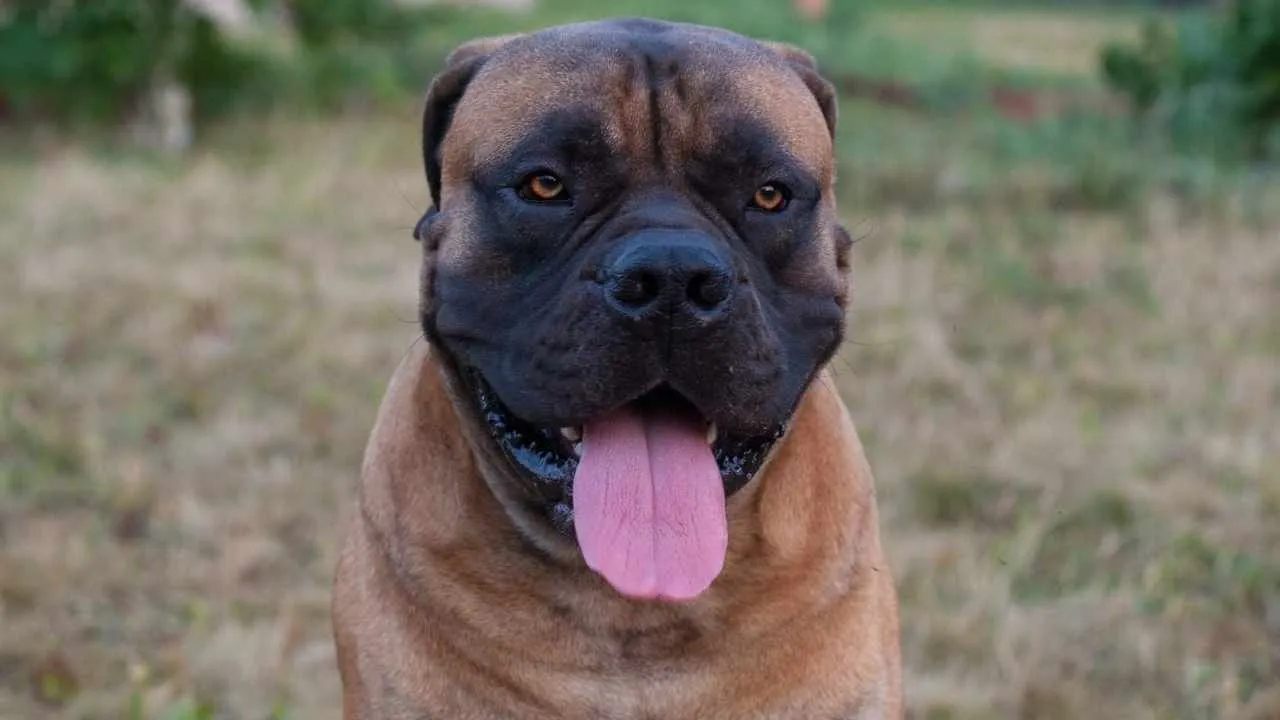
The Boerboel is a rare, large dog known for its strength, endurance, and deep loyalty. Originally used to guard farms and even diamond mines in South Africa, this breed was built to protect.
Today, that same devotion is focused on its family. Despite its tough image, the Boerboel is affectionate and loves being close to its people. It forms strong bonds and is especially gentle with those it trusts.
Personality & Behavior
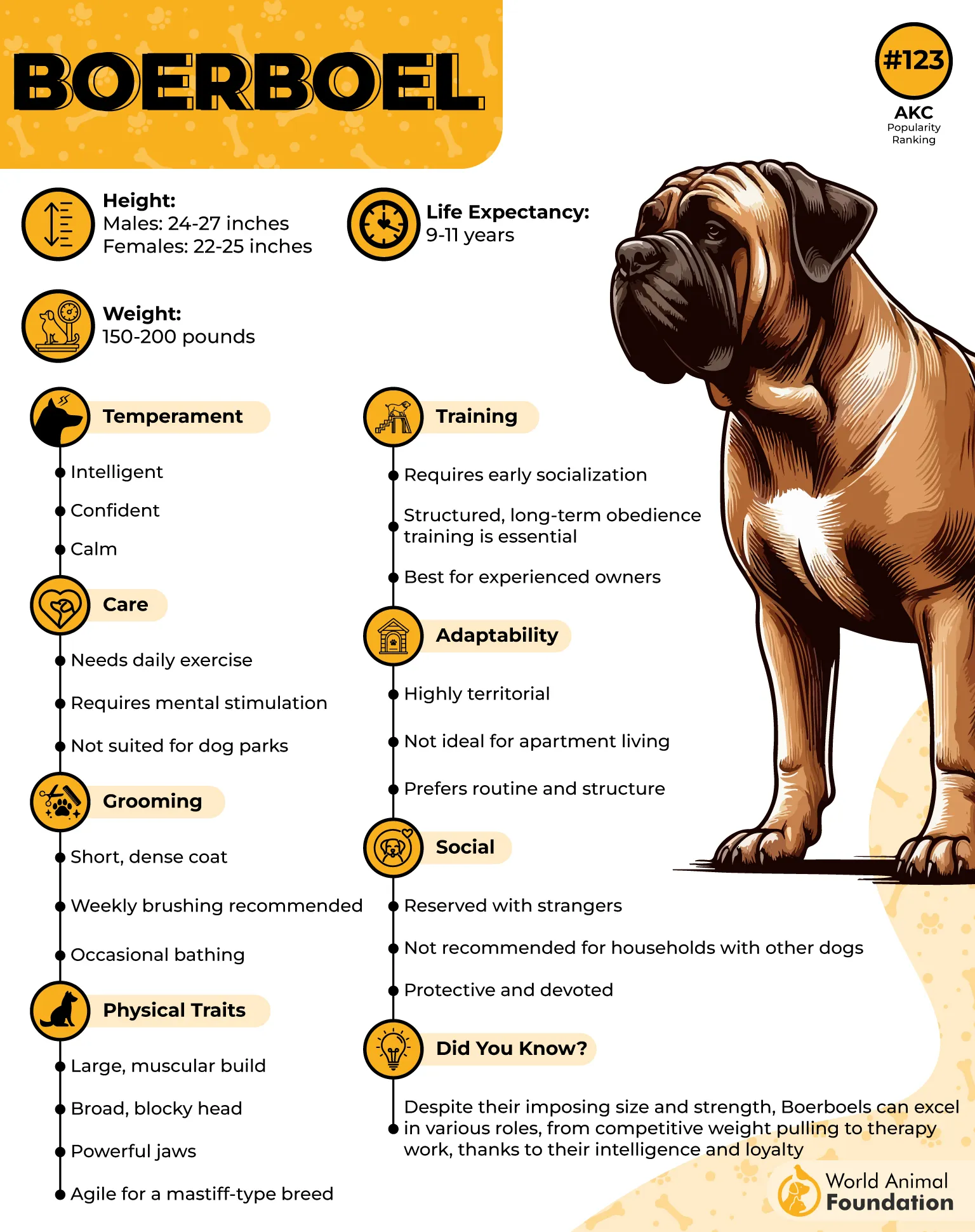
Boerboels are calm at home but always alert. They are naturally protective and can be reserved around strangers. With proper introductions, they learn to accept guests. These dogs are intelligent and eager to learn, but they need early training and socialization.
They also have a playful and silly side, making them good companions for older children. However, supervision is important during playtime. They need regular physical stimulation and mental exercise to stay happy, or they may become destructive.
History & Care
The Boerboel’s history goes back to the 1600s when European settlers brought large dogs to South Africa. These dogs were bred with other types, including mastiff-like breeds, to create a strong and reliable guardian. The breed was officially recognized by the American Kennel Club in 2014.
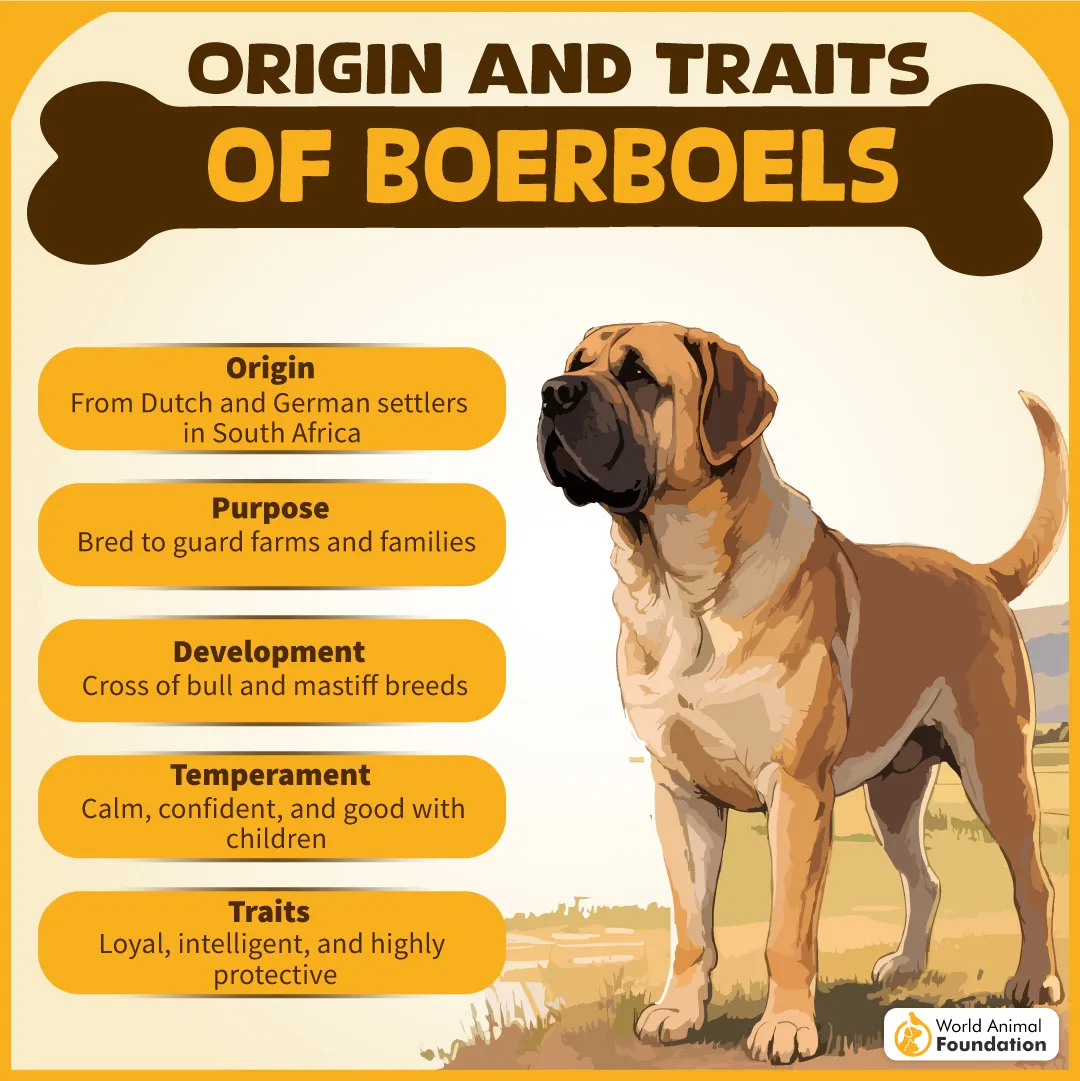
Boerboels do best with experienced dog owners who can provide structure and training. They are confident and dominant, but with consistency and care, they become loyal and dependable companions.
2. Black Russian Terrier
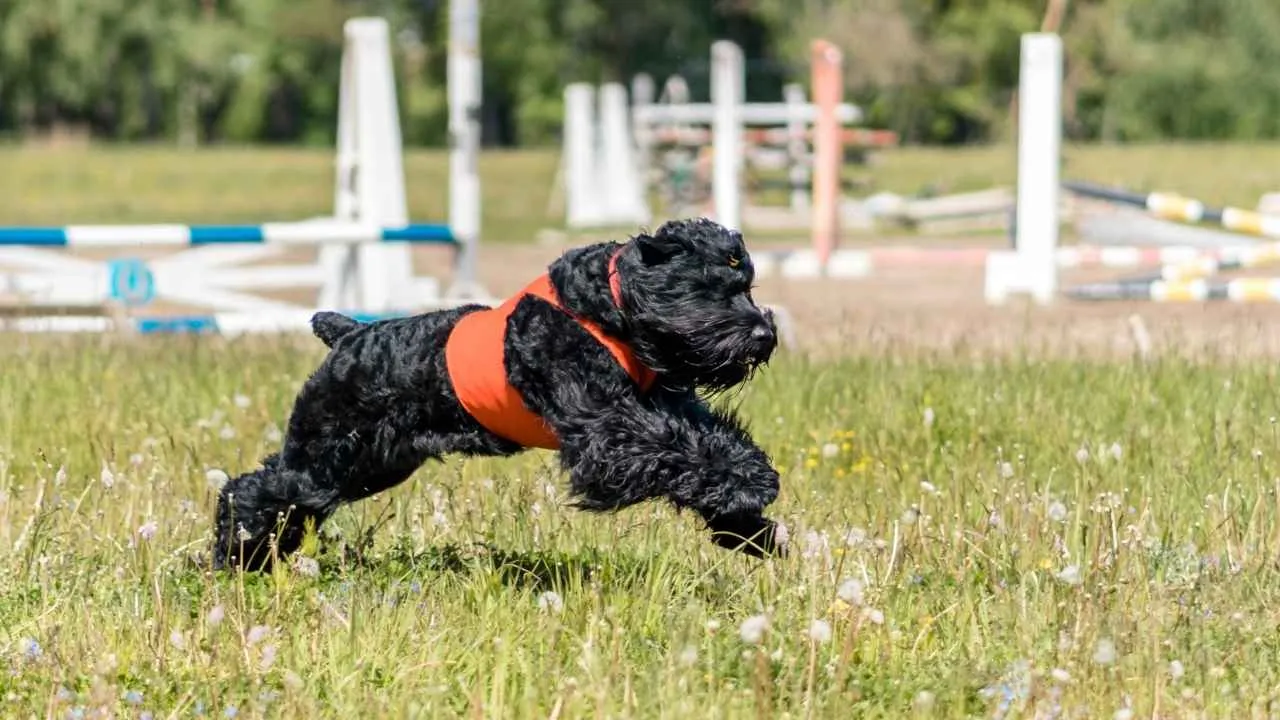
The Black Russian Terrier is a rare, large working dog known for its strength, endurance, and intelligence. Developed for demanding tasks, this breed thrives when given a job to do. It is confident, calm, and highly trainable.
But without enough activity, it can get bored and become destructive. These dogs are natural guardians. They are brave, alert, and do not bark without reason, making them excellent watchdogs.
Personality & Behavior
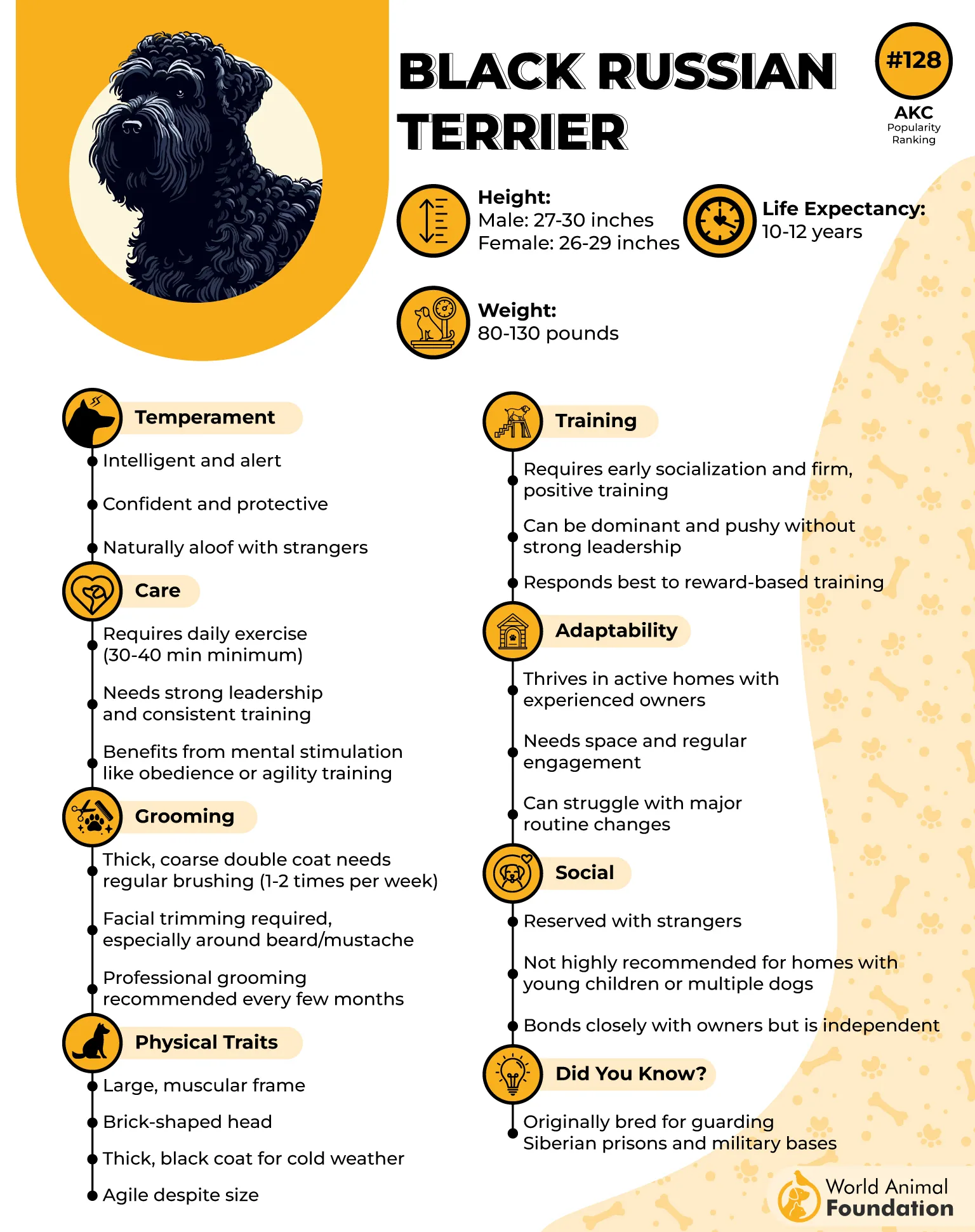
This breed is loyal and deeply attached to its family. It can be very affectionate and often follows its owners everywhere. Black Russian Terriers do not like being left alone for long and need constant companionship. They are usually gentle with respectful children, but should always be supervised.
Around strangers, they are reserved and cautious, so early socialization is important. Omlet mentions that they can live with other pets if properly introduced, but may not get along with dominant dogs. Regular exercise, playtime, and activities like obedience or agility help keep them balanced and happy.
History & Care
The Black Russian Terrier was developed in Russia after World War II as a versatile service and guard dog. It was created by crossing several large breeds to handle harsh climates and tough tasks. Despite the name, it is not a true terrier but a powerful working dog.
Their thick coat needs regular grooming to prevent matting, though shedding is low. They are generally healthy but may face joint issues. With consistent training, structure, and attention, this breed becomes a loyal and dependable companion with impressive endurance.
3. Irish Wolfhound
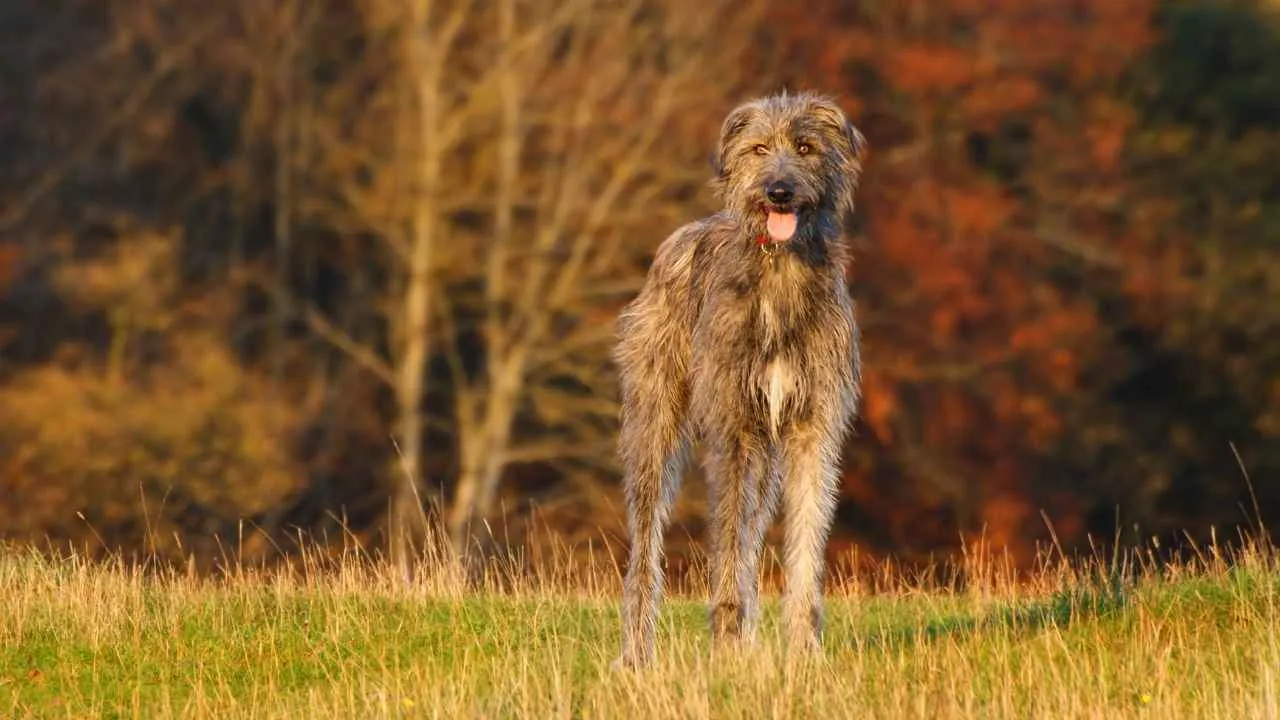
The Irish Wolfhound is one of the tallest and most striking dog breeds, yet it is known for its calm and gentle nature. Despite its massive size, this breed is friendly, kind, and incredibly loyal to its family.
It has an athletic build and was once a powerful hunter, capable of chasing and taking down large prey. Today, it is more of a peaceful companion—but its endurance and strength are still part of its nature.
Personality & Behavior
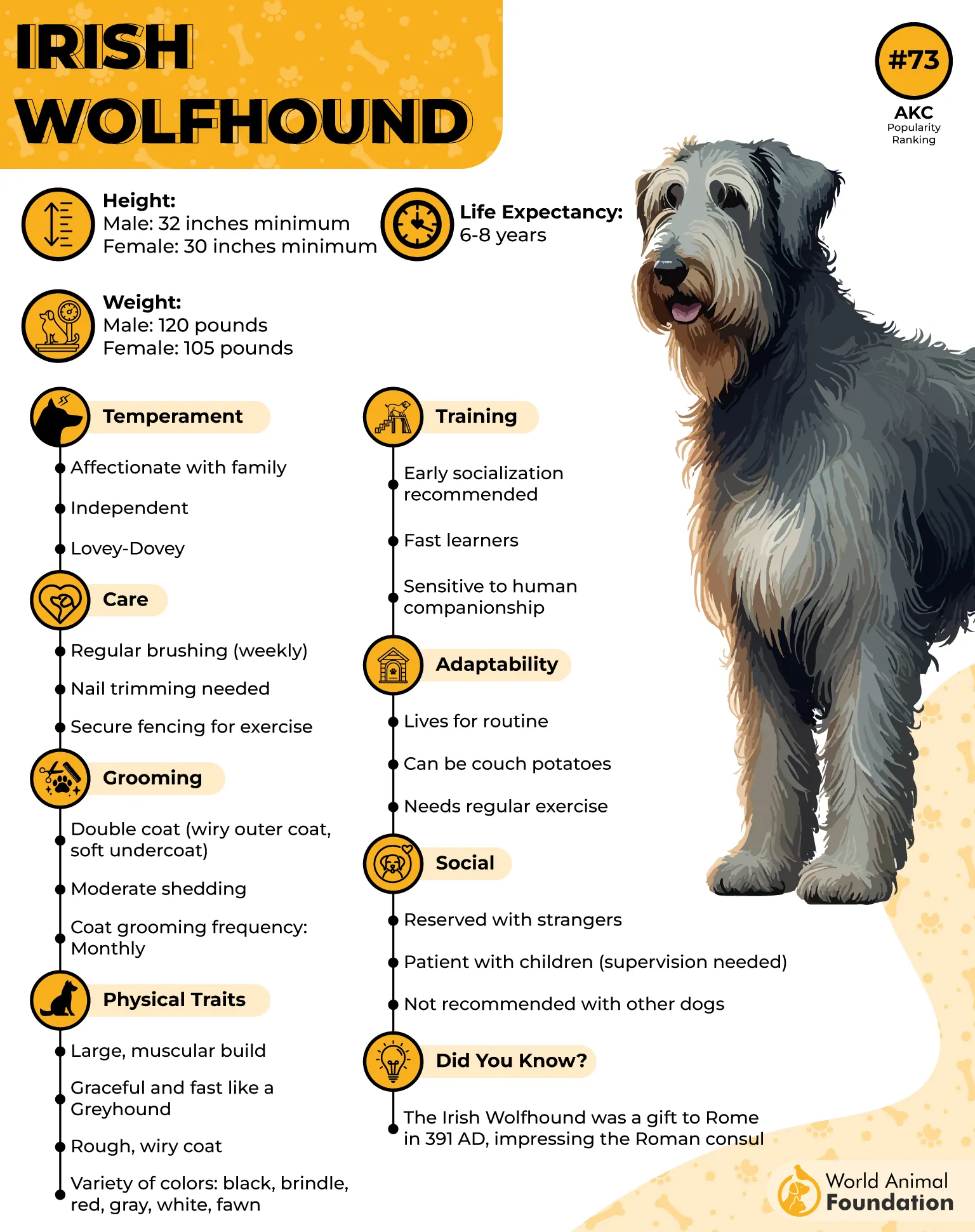
Irish Wolfhounds are often called “gentle giants” for a reason. They are affectionate, patient, and usually get along well with people and other dogs. However, young dogs can be energetic and a bit clumsy, so supervision is important around small children.
They are not aggressive guard dogs, but their size alone can deter intruders. This breed enjoys company and may develop separation anxiety if left alone for too long. They are easygoing but still need regular exercise and space to move freely.
History & Care
This energetic breed has a long and fascinating history dating back centuries. It was originally developed by crossing Middle Eastern hounds with local dogs in Ireland. Irish Wolfhounds were used to hunt large animals, including wolves, which is how they got their name.
Over time, they nearly became extinct but were later revived through careful breeding. Today, they are valued for their calm temperament and loyalty. They respond well to gentle training and need early socialization to grow into well-balanced companions.
4. Caucasian Shepherd Dog
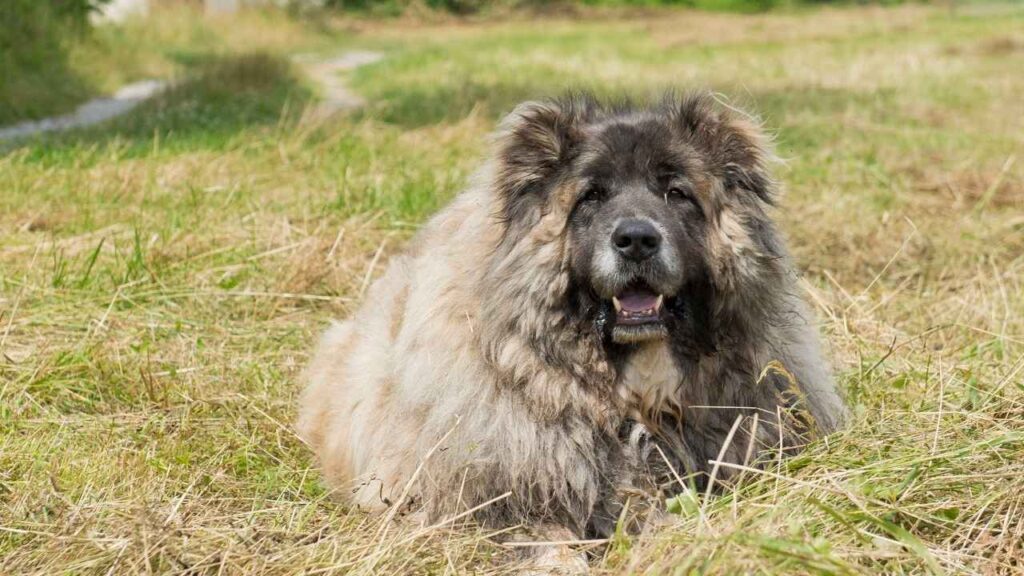
The Caucasian Shepherd Dog is a rare, powerful guardian known for its courage, endurance, and deep loyalty. Bred for centuries to protect livestock and property, this dog does not back down from danger.
It is bold, fearless, and highly confident when facing a threat. Yet at home, it shows a completely different side—gentle, devoted, and affectionate with its family. This strong contrast is what makes the breed so unique.
Personality & Behavior
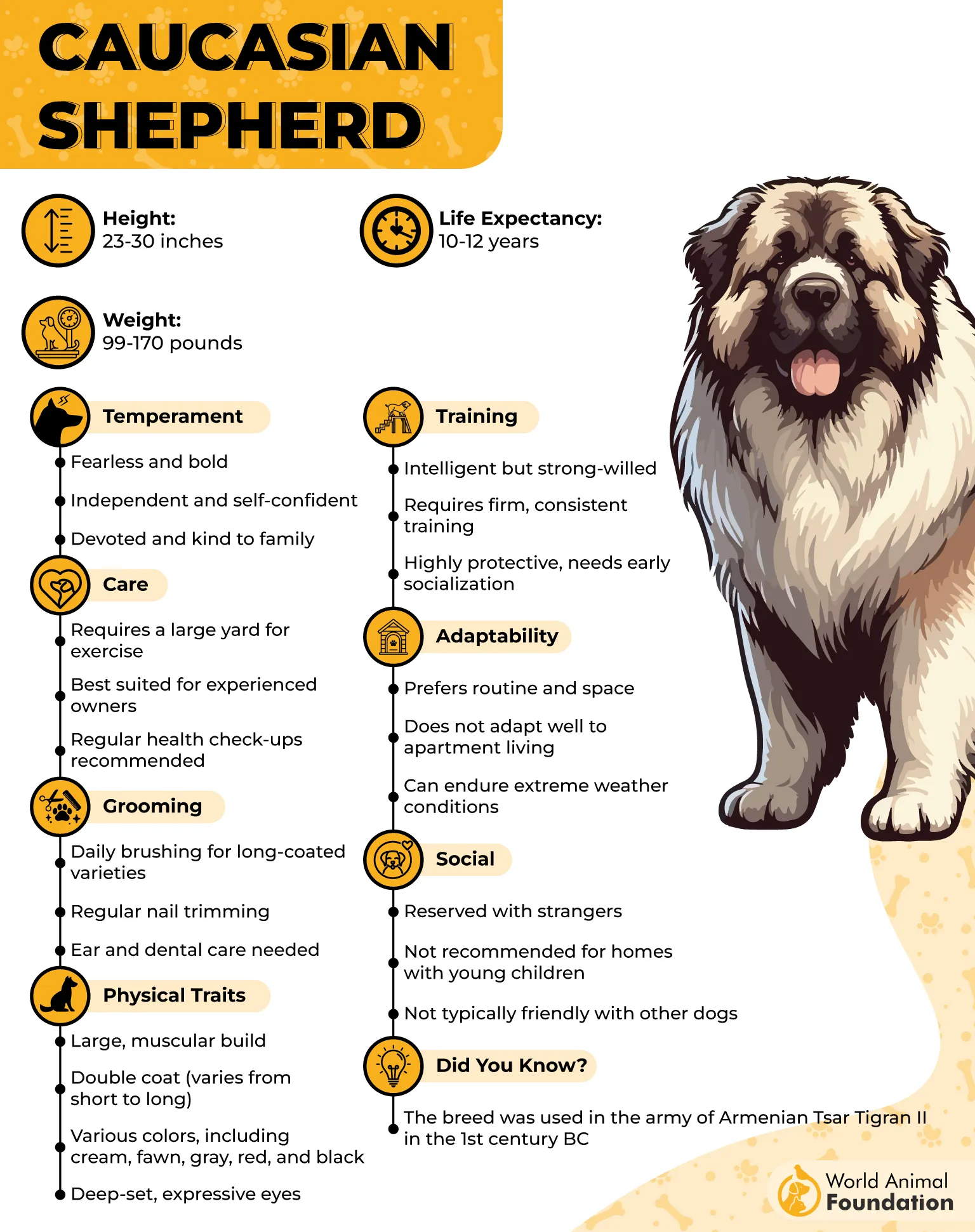
This breed is extremely protective and naturally wary of strangers. It does not trust easily, which makes early socialization very important. With its family, it is kind, loving, and even endearing. However, it is also independent and strong-willed, so it needs an experienced owner.
The Caucasian Shepherd prefers space and does not do well in small homes. It may not be ideal for families with young children or multiple pets. Regular training, structure, and a calm environment help bring out its best behavior.
History & Care
The Caucasian Shepherd Dog comes from the mountainous regions between Europe and Asia, where it guarded livestock from predators like wolves and bears. There are two main types: the heavier mountain type and the lighter steppe type.
The breed was further developed in the Soviet Union for strength, sharp senses, and a weather-resistant coat. Today, it remains rare and is still valued for its guarding ability. With proper training, care, and space, this dog becomes a loyal and dependable protector with incredible endurance.
5. Neapolitan Mastiff
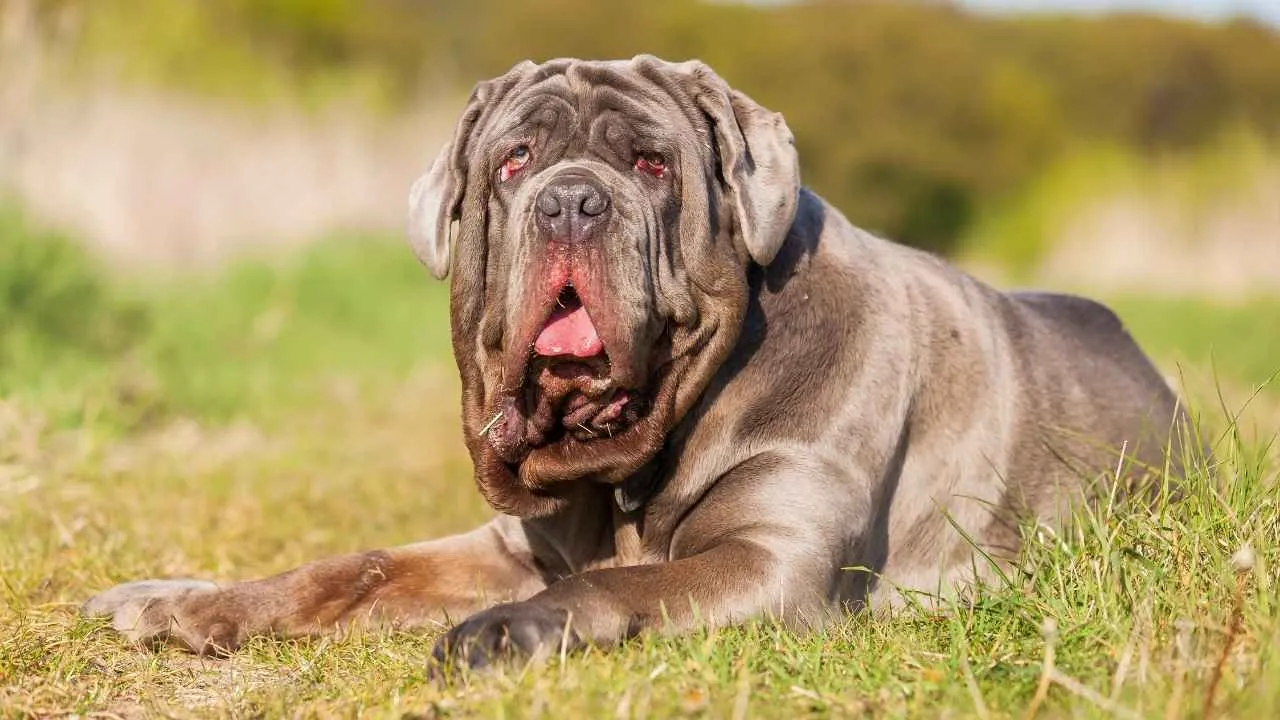
The Neapolitan Mastiff is a rare, powerful dog with a history that goes back to ancient Rome. It is believed these dogs once marched with Roman armies, built to intimidate enemies with their massive size and fierce presence.
Over time, they became trusted estate guardians in Italy. Today, these affectionate dogs are known for their loyalty and protective nature, making them dependable companions with strong guarding instincts and quiet endurance.
Personality & Behavior
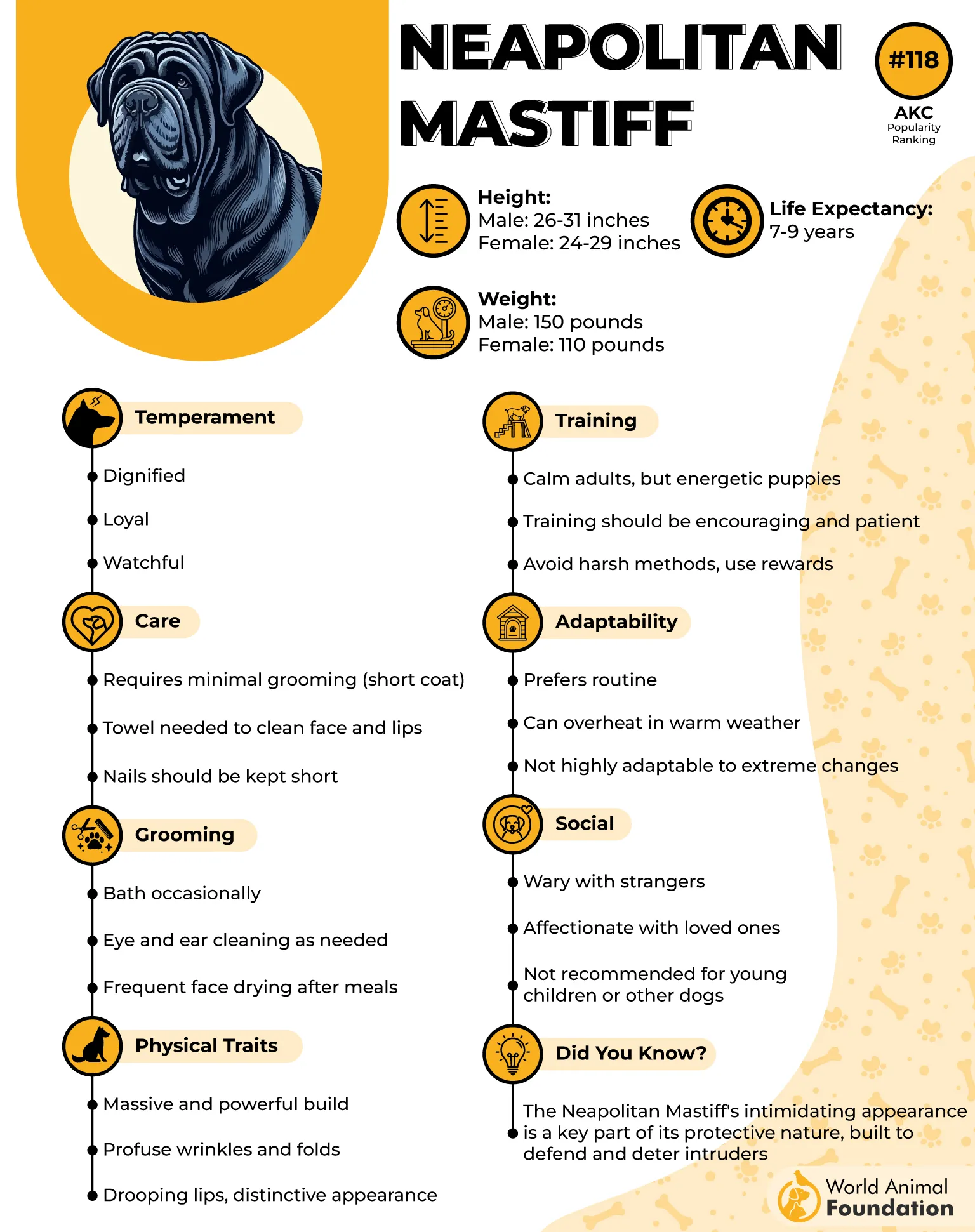
Despite their intimidating look, Neapolitan Mastiffs have a gentle disposition and are calm at heart. They are deeply loyal to their families and form strong bonds with their owners. Around strangers, they can be reserved and watchful, which reflects their guarded background.
These dogs enjoy a relaxed lifestyle and are often happy lounging at home, though they still need regular exercise and mental stimulation. They can be affectionate, playful, and even a bit goofy with loved ones, but their large size means supervision is important around small children.
History & Care
The modern breed was refined in Italy, with efforts to preserve its unique traits while improving health and structure. It gained recognition after appearing in dog shows in Naples and later became more widely known through films.
Neapolitan Mastiffs require early training and consistent socialization, as they can be strong-willed and independent. They need space, regular care, and committed owners. With the right guidance, they grow into calm, loyal guardians with a long history of strength and devotion.
6. Komondor
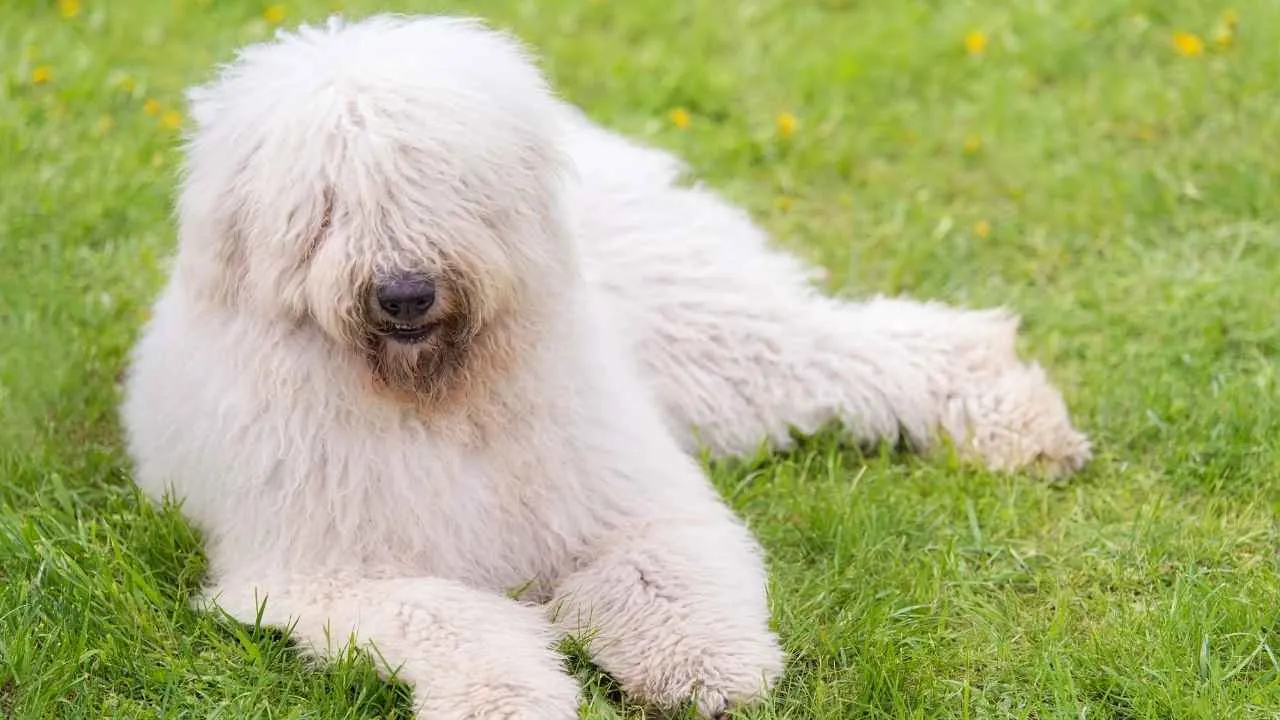
The Komondor is one of the most recognizable and rare large dog breeds, known for its striking corded coat that looks like long white dreadlocks.
But this unique and intimidating appearance isn’t just for show—it was designed to protect the dog from harsh weather and predators, as mentioned by WebMD. This breed originated in Hungary as a livestock guardian and combines strength, agility, and endurance, making it a powerful and reliable protector.
Personality & Behavior
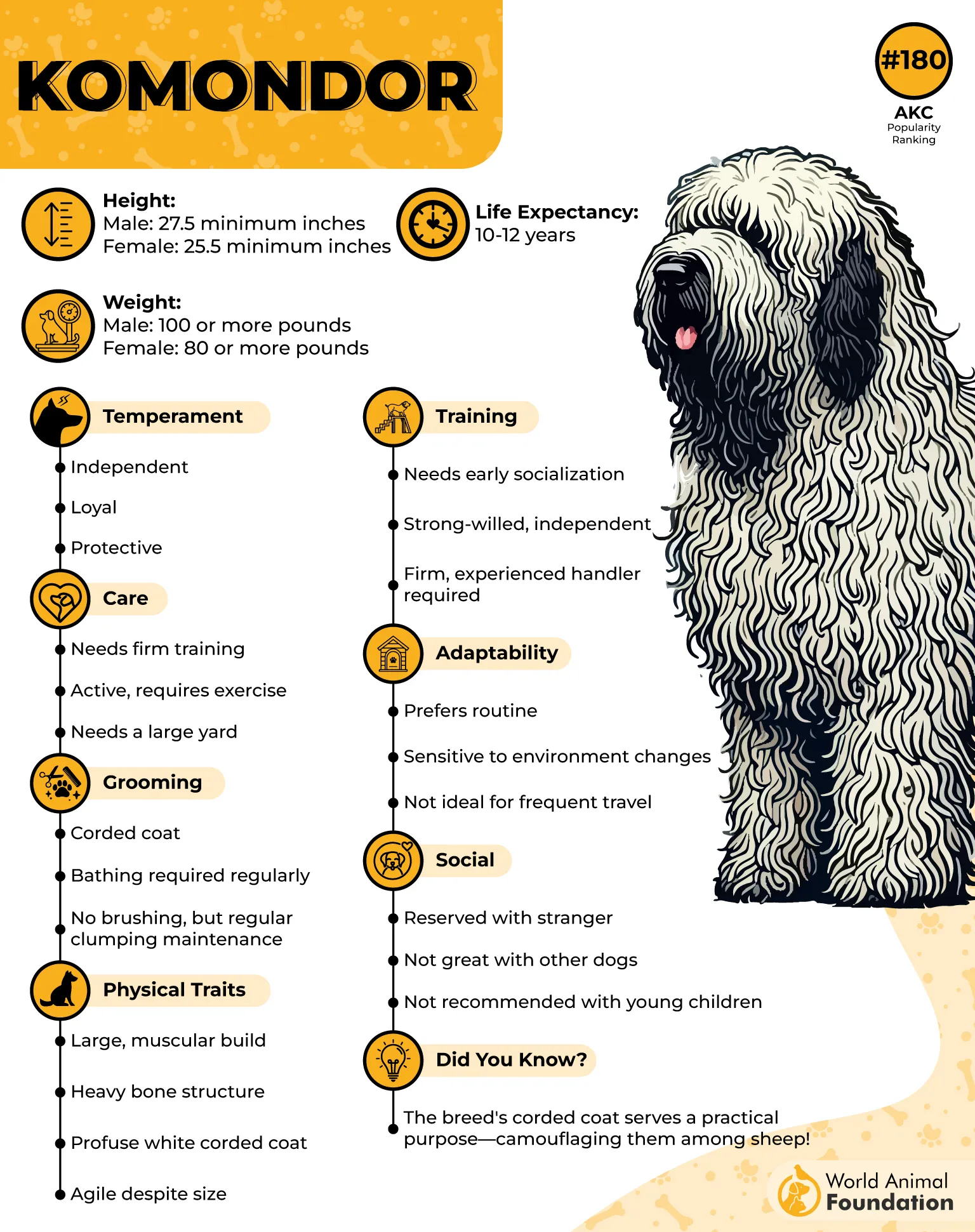
Komondors are calm and quiet most of the time, but they quickly switch into protection mode when needed. They are naturally wary of strangers and fiercely loyal to their family. This breed is independent and used to making decisions on its own, which can make training a challenge.
However, with early socialization and firm guidance, they become devoted companions. They often like to stay close to their owners and can be affectionate with family members, including children, when raised properly.
History & Care
This ancient breed dates back centuries and was used by Hungarian herders to guard livestock from predators like wolves and bears. Their white corded coat helped them blend in with sheep while offering protection.
Komondors were even used as guard dogs during wartime, but nearly disappeared after World War II. Today, they remain rare worldwide. They need regular grooming to maintain their cords, along with proper training and space to thrive.
7. Spanish Mastiff
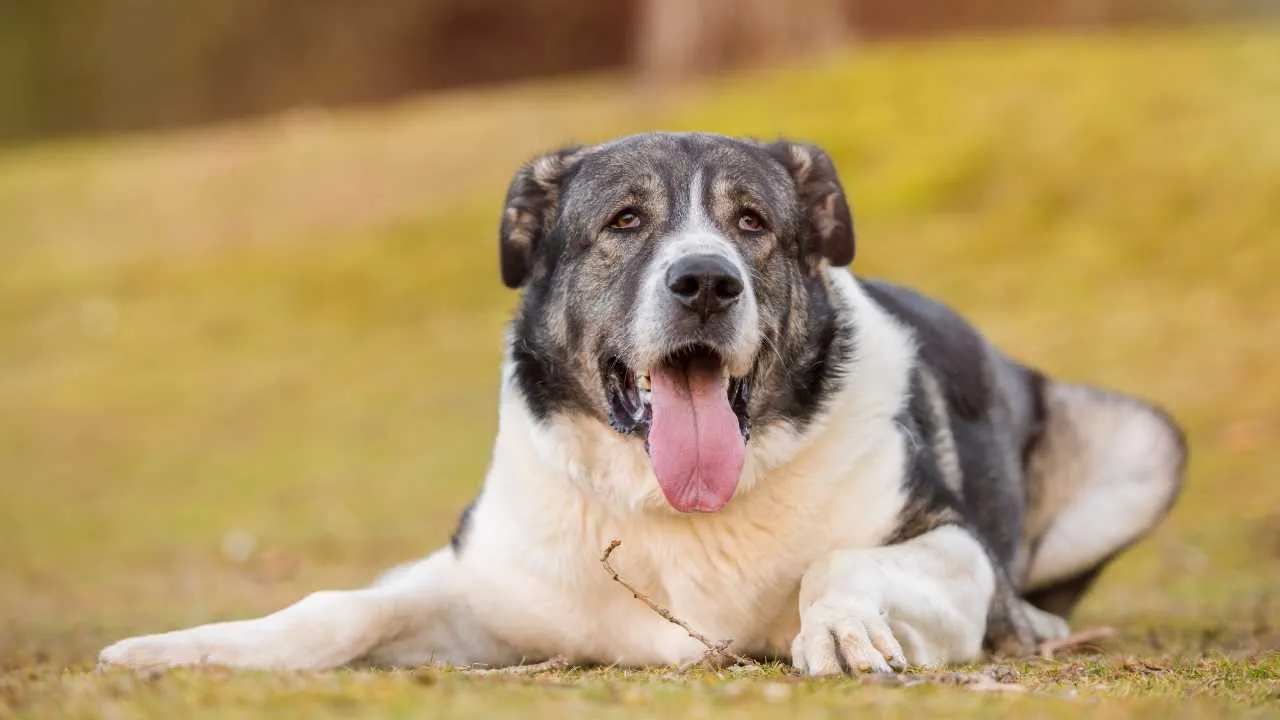
The Spanish Mastiff is a rare, massive dog breed known for its strength, endurance, and quiet confidence. For centuries, it has been closely linked to the movement of livestock, especially sheep, protecting them during long seasonal journeys.
This history shaped a dog that is not only powerful but also highly resilient. Calm, noble, and deeply loyal, the Spanish Mastiff is a natural protector that takes its duties seriously.
Personality & Behavior
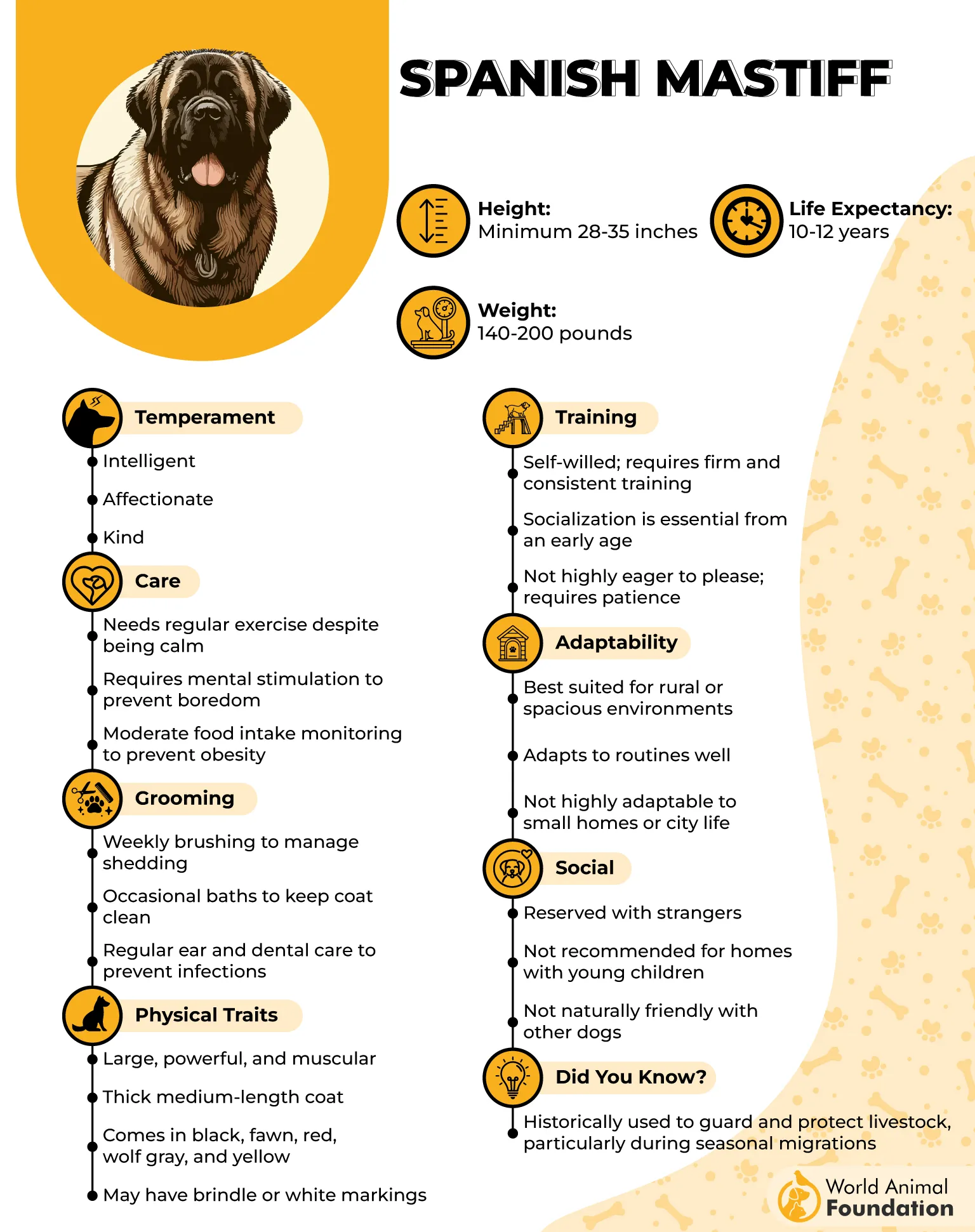
This rare breed is incredibly gentle and affectionate with its human family, but cautious around strangers. It is naturally protective and will stand its ground when facing threats. Spanish Mastiffs are intelligent but independent, which can make training a bit challenging.
They are usually calm and low-energy at home, preferring to relax, but will quickly become alert if something seems wrong. Their deep, powerful bark is used to warn rather than intimidate without reason.
History & Care
With a history going back over 2,000 years, the Spanish Mastiff was bred to guard livestock from predators like wolves during long migrations. It played an important role in protecting flocks across Spain, especially during the Middle Ages.
Even today, it is used for guarding farms and property. This breed needs space, early training, and proper socialization to thrive. With the right care, it becomes a loyal, steady companion with impressive endurance and a strong protective instinct.
Conclusion
Rare large dog breeds are more than just impressive in size—they carry history, purpose, and traits that have been shaped over centuries. While they may not be as common, their strength of character and strong bond with their families make them truly unforgettable companions.
If one of these rare giants has caught your attention, take the time to learn about their needs, training, and lifestyle requirements before bringing one home.
These dogs thrive with the right environment and experienced care. But when given that, they don’t just become family pets—they become devoted protectors and lifelong partners you can always rely on.
Looking for more options? You can also check out the Saint Bernard, Thai Ridgeback, Pyrenean Shepherd, Catahoula Leopard Dog, English Foxhound, Biewer Terrier, Bedlington Terrier, and Cesky Terrier.
