




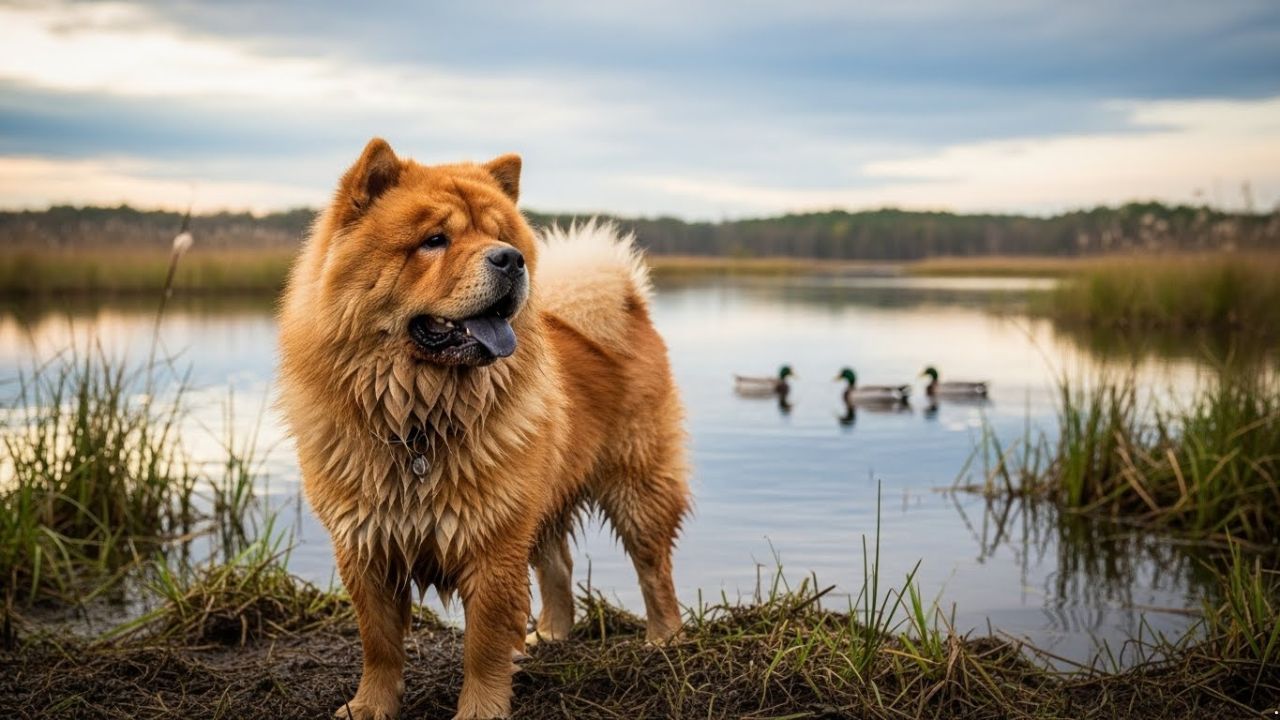
Some dog breeds aren’t just beloved—they’re prized. Whether for their stunning looks, rare bloodlines, exceptional skills, or rich histories, these breeds often come with a sense of prestige. But with that prestige comes a realistic truth: owning a prized dog requires more than admiration.
It requires commitment, preparation, and a clear understanding of the long-term costs. From grooming needs and training expenses to medical care and lifestyle adjustments, the price of ownership goes far beyond the initial adoption or purchase fee.
These dogs are cherished for good reason. Many offer remarkable companionship, intelligence, and loyalty. Others captivate dog lovers with their elegance, rarity, or specialized abilities. But with their special qualities often come specific needs—whether dietary, environmental, or health-related.
Here, we’ll take a closer look at some of the most prized dog breeds and what it truly costs to own them. Whether you’re dreaming of a majestic show-stopper or a rare companion with a fascinating lineage, understanding the full picture ensures your future pup gets the care and love they deserve—and that you’re fully prepared for the journey ahead.
Quick Insight: High-value dog breeds often come with higher long-term costs due to specialized grooming, breed-specific health care, and limited breeding lines.
Prized Dog Breeds and the Costs of Ownership
1. Samoyed
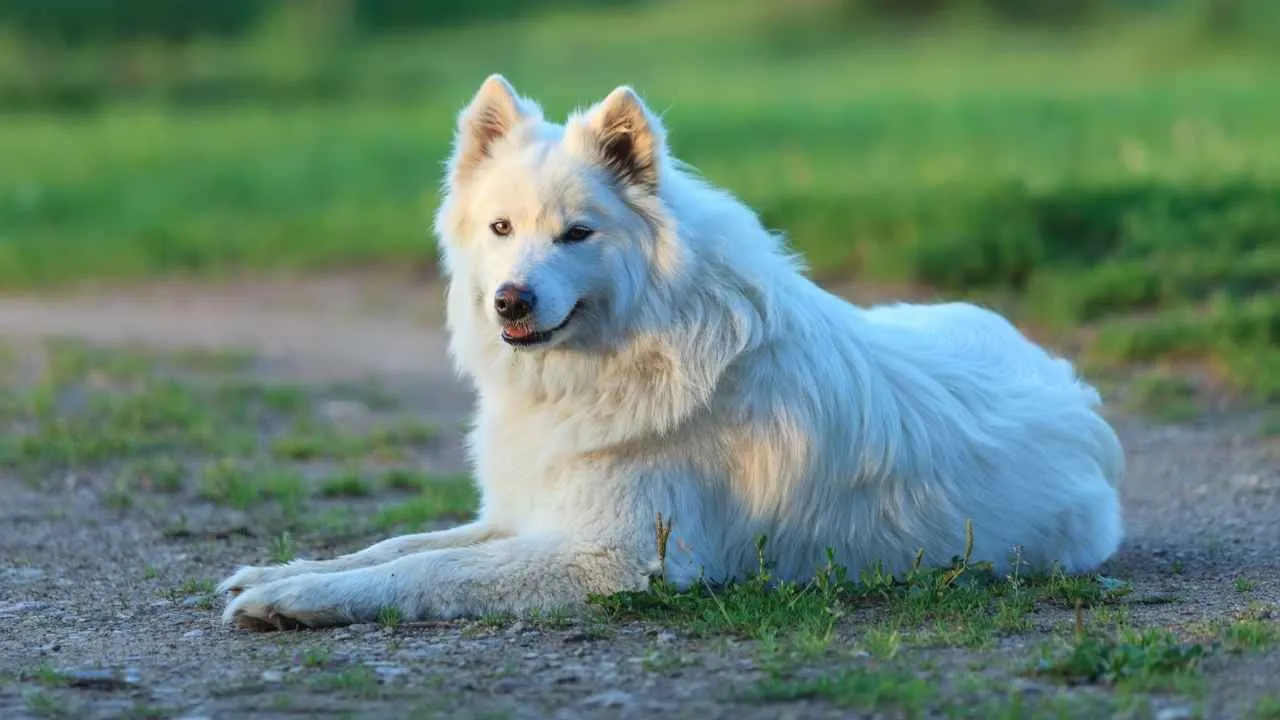
- Average Cost: $14,000
Taking the crown as the world’s most expensive dog breed in the world, this snow-white superstar hails from the icy reaches of Siberia, where temperatures casually dip to a cozy minus-60 degrees. (Meanwhile, most of us start complaining the moment the thermostat hits 50), according to the American kennel club (AKC).

The Samoyed—nicknamed “the Smiling Sled Dog”—has a grin that could melt permafrost. But don’t let that charming face fool you; behind the smile is a dog with Olympic-level stamina and a passionate dream of running… everywhere… all the time.
Leave the gate cracked open, and your Samoyed might simply decide to “explore the continent.” This is a dog that believes every neighborhood is its neighborhood. They’re the full package: brilliant, mischievous, endlessly social, and convinced that the world is their stage.
✅ Need space? Too bad.
✅ Thinking about not petting them for five minutes? Illegal.
✅ Want privacy? Not in a Samoyed household.
Fortunately, they adore kids, families, and pretty much anyone who looks their direction—making them fluffy extroverts of the canine world.
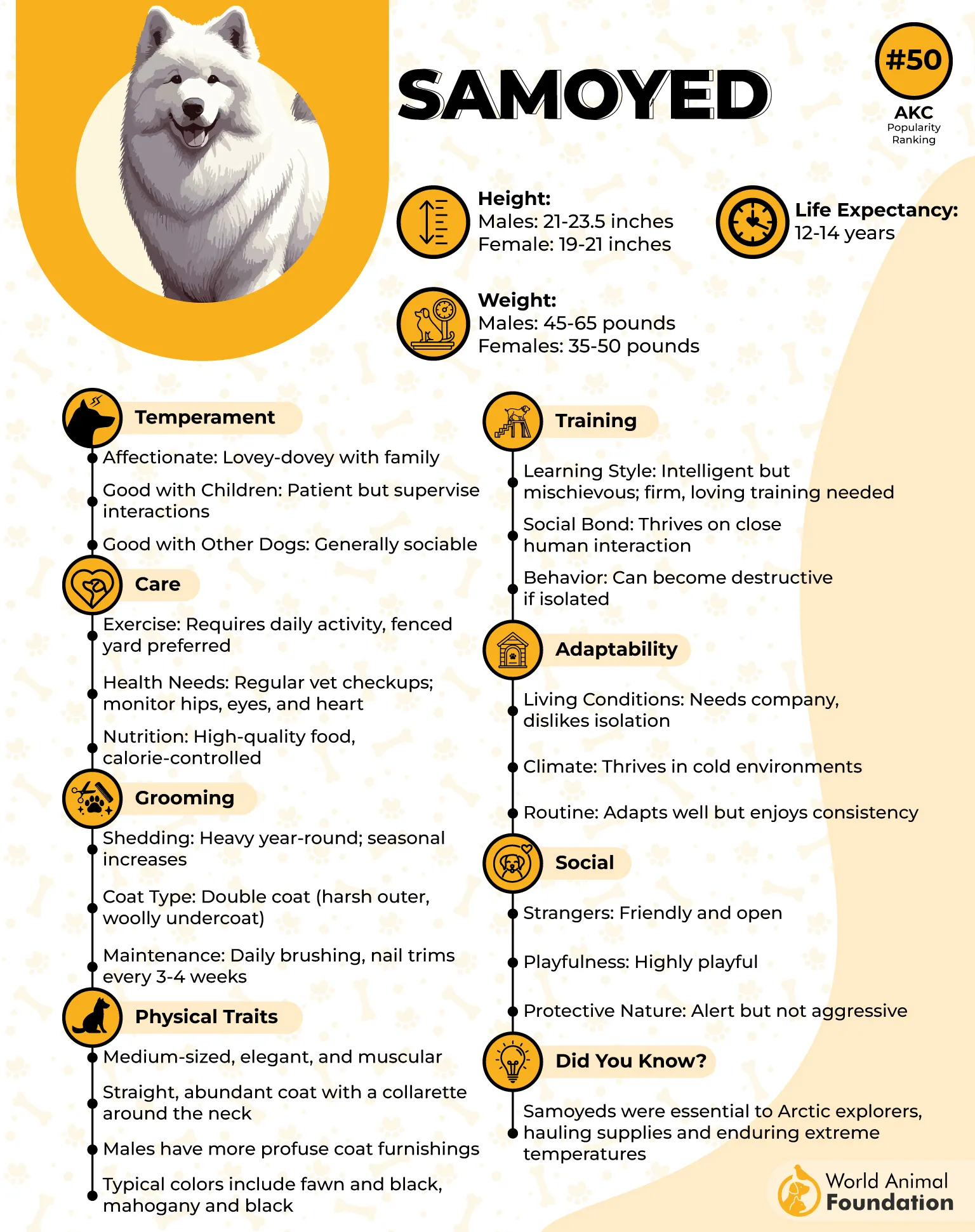
Their vet bills can be equally attention-grabbing. Samoyeds are prone to conditions like corneal dystrophy, autoimmune disorders, and cardiac issues—problems that can bring a vet bill of up to $5,000.
Still, it’s hard to resist a creature that looks like a snow cloud with legs and acts like your personal happiness ambassador. If you dream of a loyal companion who radiates cheer, thrives in sub-zero weather, and occasionally forgets that walls exist, the Samoyed just might be your perfect match.
2. Löwchen
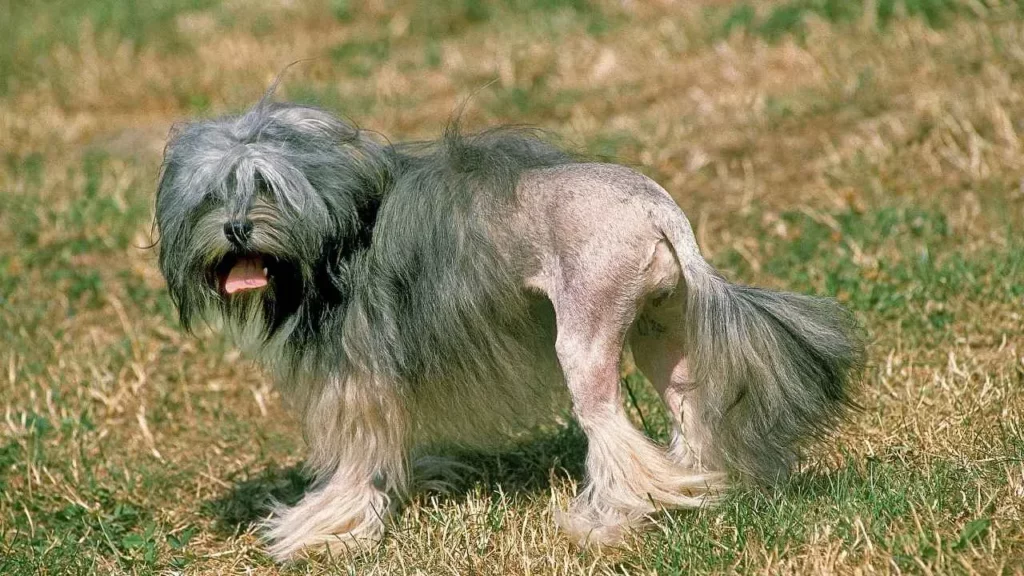
- Average Cost: $12,000
Say hello to the Löwchen, the “little lion dog” that proves you don’t need a mane—or even weigh more than a sack of flour—to rule the household. Originating in France and beloved in Europe for more than 500 years, the Löwchen comes with centuries of charm, sass, and a haircut that screams, “I woke up fabulous.”
This pint-sized monarch was once the rarest dog on Earth. In the late ’60s and early ’70s, their numbers dipped so low (think 40 dogs in existence low) that they practically needed a witness protection program, says Purina.
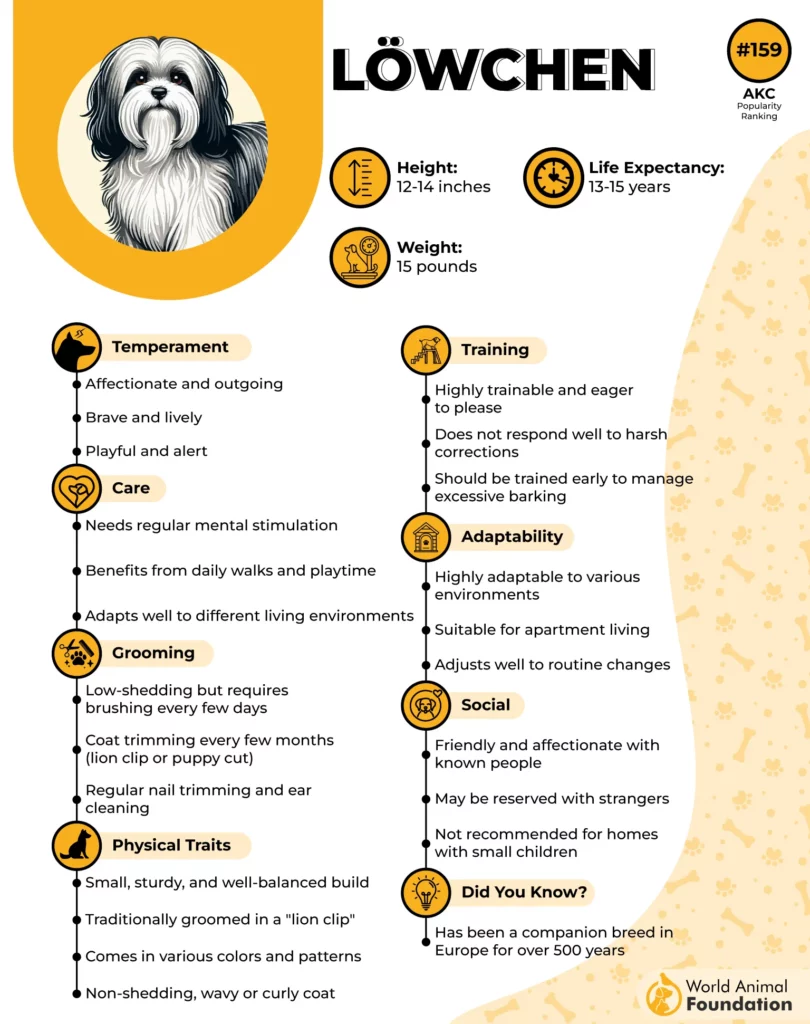
Although their population has risen, they’re still rare, with only around 300 new pups registered worldwide each year. Owning a Löwchen is basically like having a living, barking collectible—but fluffier.
They’re one of the most outgoing breeds you’ll ever meet—playful, affectionate nature, and always ready to star in the family talent show. If a Löwchen could talk, it would probably greet you with, “Hello! I’m here! Let’s do things!”
But there’s one catch: these dogs want attention. Not occasional attention. Not “pat on the head and go about your day” attention. We’re talking full-time, emotional-support-human-type attention. Leave them alone too long, and they’ll look at you like you’ve committed a personal betrayal.
On the bright side, Löwchens are remarkably healthy. For a breed as rare and regal as this, you’d expect a laundry list of medical issues and vet bills that require a second mortgage—but nope! They’re hardy little fluffballs.
Add their impressive 13–15 year lifespan, and you’ve got yourself a high-value companion: a living lion-lookalike who will shower you with affection for well over a decade.
3. Chow Chow

- Average Cost: $11,000
If you’ve ever wanted a dog that looks like a teddy bear, walks like a lion, and judges you like a Victorian grandmother, allow us to introduce the Chow Chow—one of the world’s oldest and most distinctive dog breeds.
Originating in northern China, this fluff-coated legend with blue black tongue has been around for thousands of years, guarding temples, pulling carts, and perfecting the art of the silent side-eye. The price tag for a Chow Chow can hit around $11,000, and honestly… that’s just the opening ceremony.
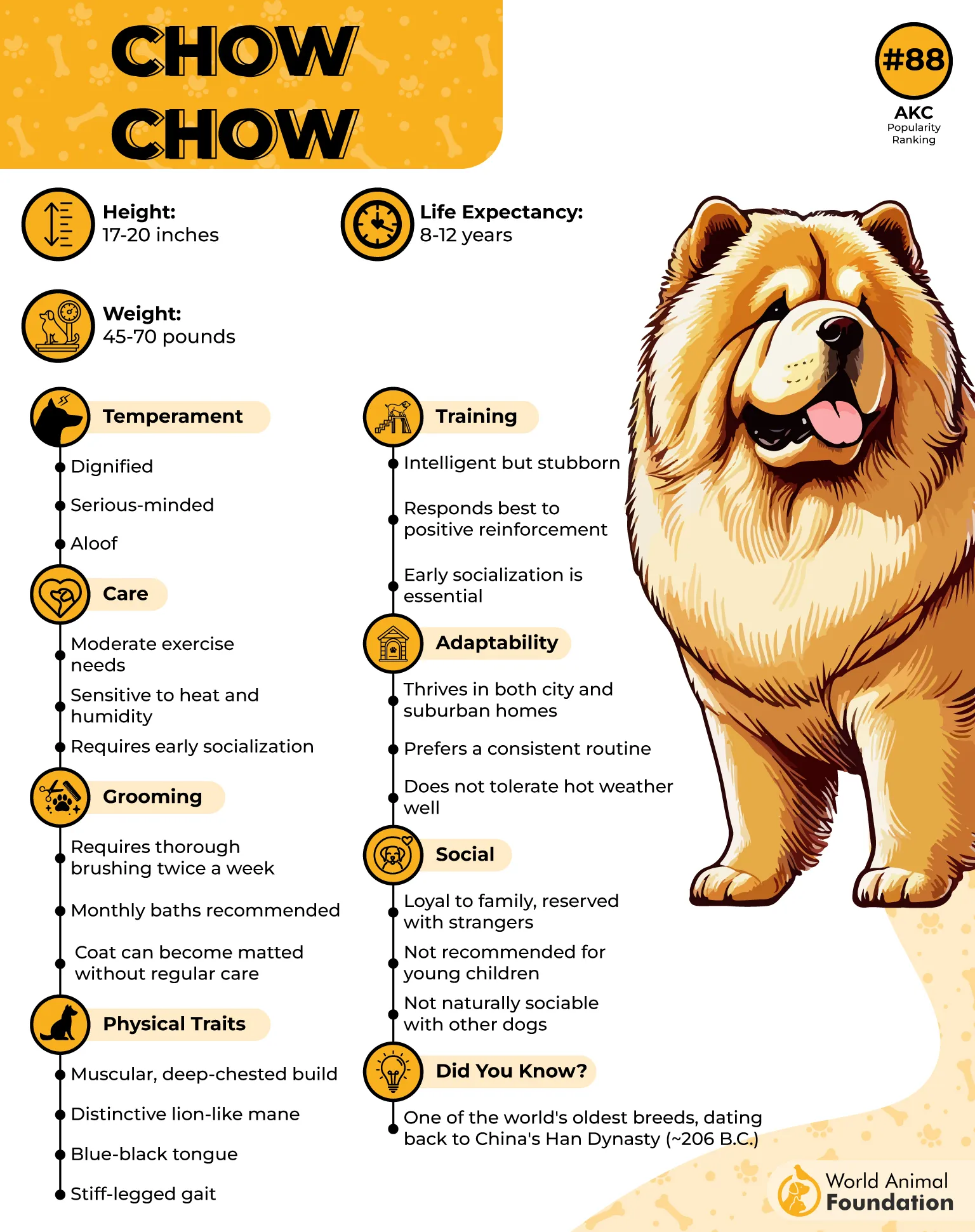
After that, prepare for the real financial marathon: high-quality food (because this fluff demands gourmet), monthly treats, routine grooming needs, specialized veterinary care, and the occasional “Why is this bill so high?” moment. By the end of their life, the total cost of ownership can comfortably land around the same number as their purchase price—another $11,000 or more.
Now, let’s talk personality. Chow Chows are famous for being independent, which is a polite way of saying “stubborn enough to negotiate with.” You don’t train a Chow Chow—you enter a partnership where both of you pretend the other is in charge. Want them to sit? They’ll think about it. Maybe. If the vibes are right.
These dogs also require quite a bit of exercise—around four or more walks a day—despite looking like sleepy clouds who should be napping on silk pillows. But don’t let their plush appearance fool you: a bored Chow Chow becomes a creative Chow Chow, and that usually means trouble.
Health-wise, they come with a few health risks baked in: eyelid entropion, hip and elbow dysplasia, allergies, and thyroid issues are among the most common. Their average life expectancy is 8–12 years, but with excellent care, regular check-ups, and maybe a little bribery in the form of treats, they can live longer, healthier lives.
Despite the costs, quirks, and mild stubborn streak, Chow Chows are incredibly loyal companions who bond deeply with their families. They may not be the type to fetch your slippers or do agility tricks, but they’ll keep watch over your home with dignity, poise, and a tongue the color of blueberry popsicles.
4. Tibetan Mastiff
- Average Cost: $10,000
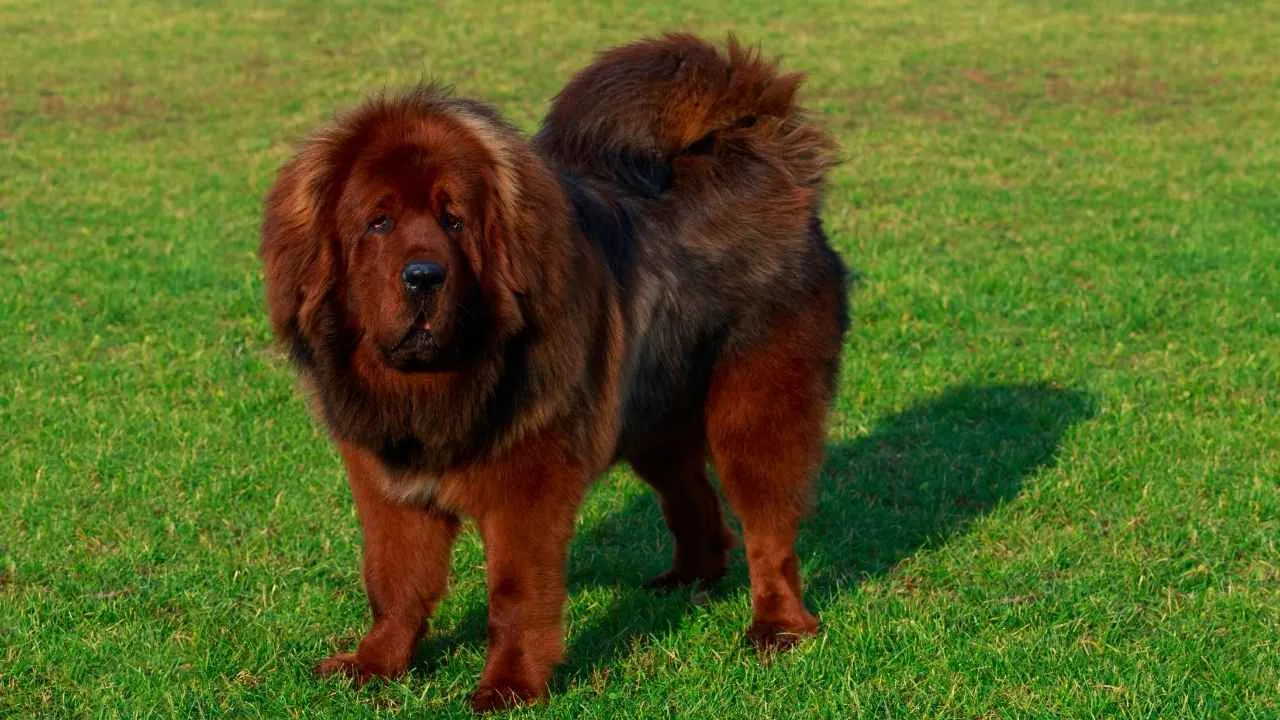
If you’ve ever dreamed of owning a dog so majestic, so powerful, and so massive that it could stare down a wolf without blinking—meet the Tibetan Mastiff. This isn’t just a dog; this is a legend wrapped in fur.
Originally from Tibet, these colossal fluff-titans were bred to guard sheep from predators like wolves, leopards, and the occasional bear who thought he could sneak a midnight snack.
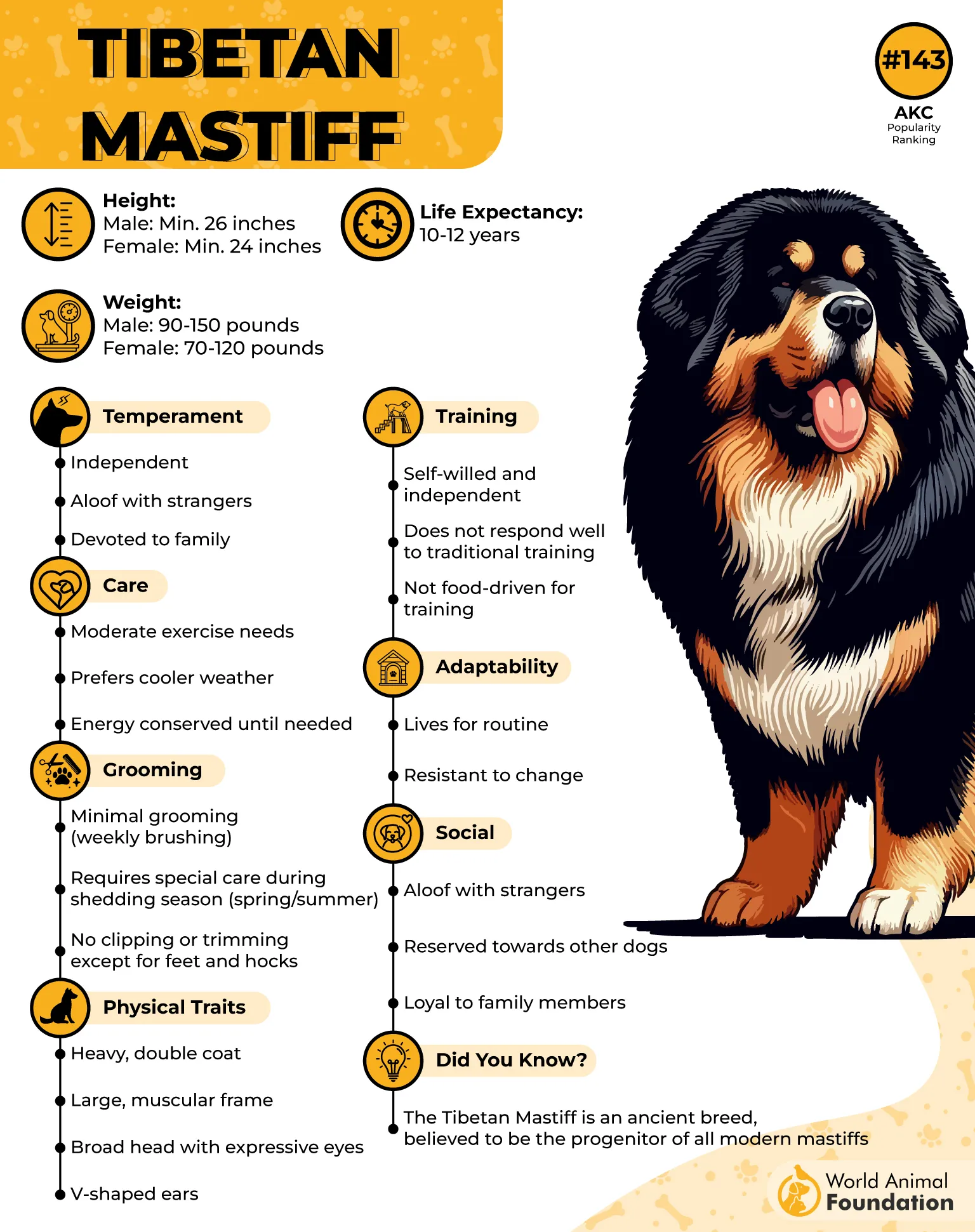
Spoiler: he could not. A full-grown male Tibetan Mastiff can tip the scales at over 150 pounds, which means he’s heavier than most small humans and has a bark that can send tremors through your soul.
When these dogs arrived in America, people quickly realized two things:
✅ They’re incredible protectors.
✅ They’re also incredible… expensive.
Their upkeep became so costly in their native regions that the breed gradually vanished from daily use—and in modern times, they’ve been crowned one of the world’s high-priced dog breeds.
As guardians, they’re unmatched. Tibetan Mastiffs are hyper-alert, always watching, always analyzing, always ready to defend your family from threats—be it an actual intruder or the mailman who dared to exist. They’re noble, loyal, and protective to their core.
Health-wise, they’re fairly sturdy for such a large breed, but can be prone to a few hereditary health issues like hip dysplasia, hypothyroidism, and eye anomalies. Regular checkups are recommended—not only to keep them healthy, but because convincing a 150-pound dog to cooperate at the vet is an adventure in itself.
A Tibetan Mastiff isn’t for the faint of heart. It’s for those who want a companion, a guardian, a status symbol, and possibly a furry bodyguard who will stand between you and danger without hesitation.
5. Dogo Argentino

- Average Cost: $8,000
If dogs had gym memberships, the Dogo Argentino would be the guy who lifts twice his body weight, drinks protein shakes for fun, and somehow still has time to help everyone move furniture.
Originally bred in 1928 for big game hunting, this powerhouse canine was designed to take on wild hogs across South America and Asia—basically, the kind of prey that makes other dogs say, “Yeah… I’ll sit this one out.”
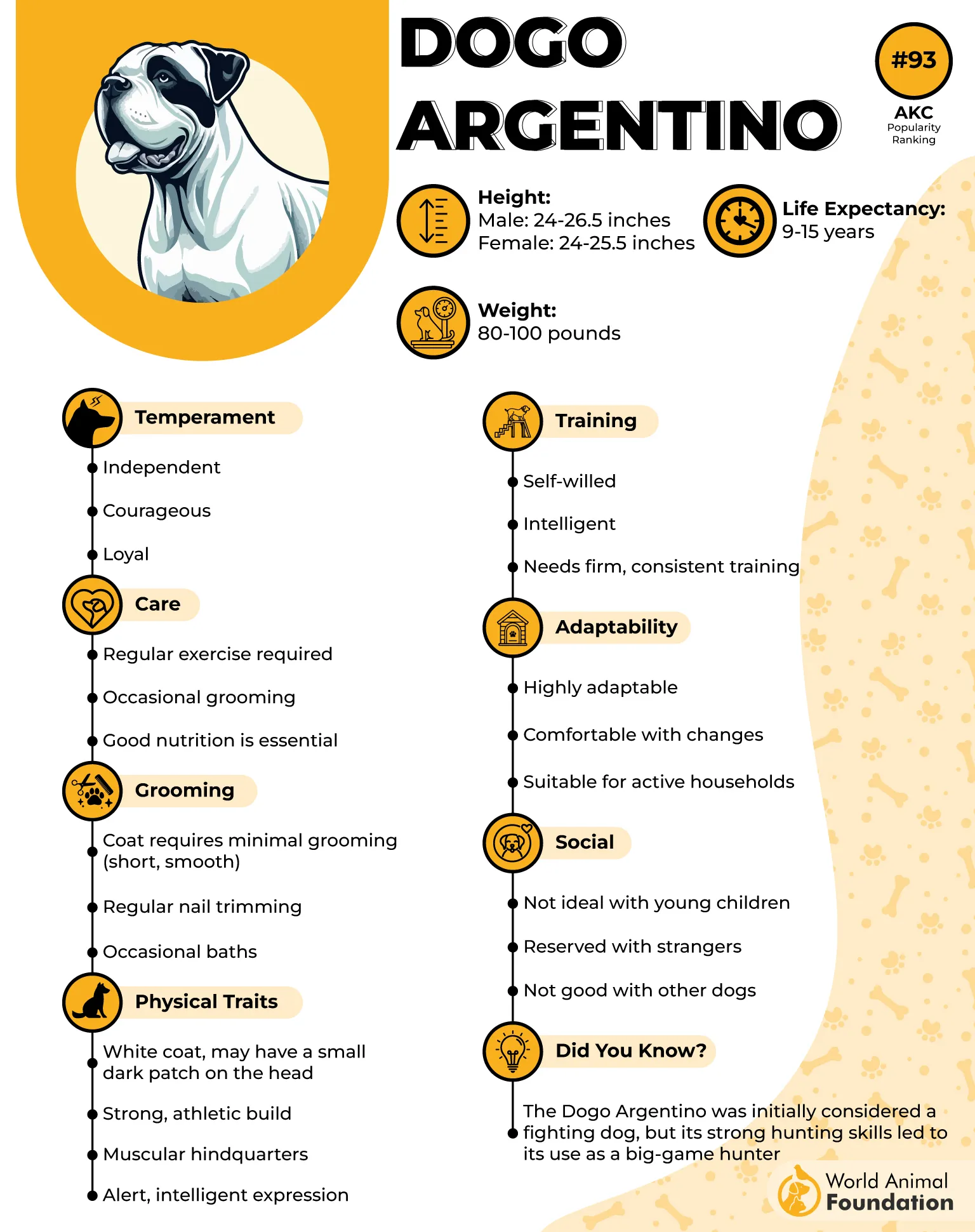
The Dogo Argentino descends from some serious heavy-hitters: the now-extinct Cordoba Fighting Dog and the mighty Great Dane. Combine those genes, and you get a breed that’s muscular, athletic, brave, and built like it was carved out of granite.
Because of their imposing physique and strong protective instinct, the Dogo Argentino is actually banned in places like the UK, Colorado, and New York City. Apparently, some cities looked at this dog and said, “We love you, but… maybe from a distance.”
But here’s the twist: behind the superhero muscles and intense reputation, the Dogo Argentino is shockingly sweet. They’re loyal, affectionate, gentle with their families, and—when properly trained—make incredible companions.
With an average life expectancy of 12–14 years, they’re relatively long-lived for such a powerful breed. But like many athletic dogs, they can suffer from hip dysplasia and congenital deafness, which can lead to vet bills pushing $1,600 or more.
And here’s the important part: exercise is non-negotiable. This is not a dog who’s satisfied with one leisurely walk. Without daily workouts—think running, training, hiking, and maybe a motivational speech—they can face more health issues.
6. French Bulldog

- Average Cost: $1,500 – $5,000
If there were an award for “Most Likely to Make You Laugh Without Even Trying,” the French Bulldog would win every year—probably while wearing a tiny sweater. With an average price tag of $5,000, these most popular dog breeds know they’re expensive, and they act like it. Honestly, if Frenchies could talk, every sentence would start with, “Excuse me, peasant—more treats, please.”
Known for their iconic bat ears, smushy faces, and swagger that could rival a celebrity on a red carpet, French Bulldogs have become one of the most popular (and priciest) companion dogs in the world.
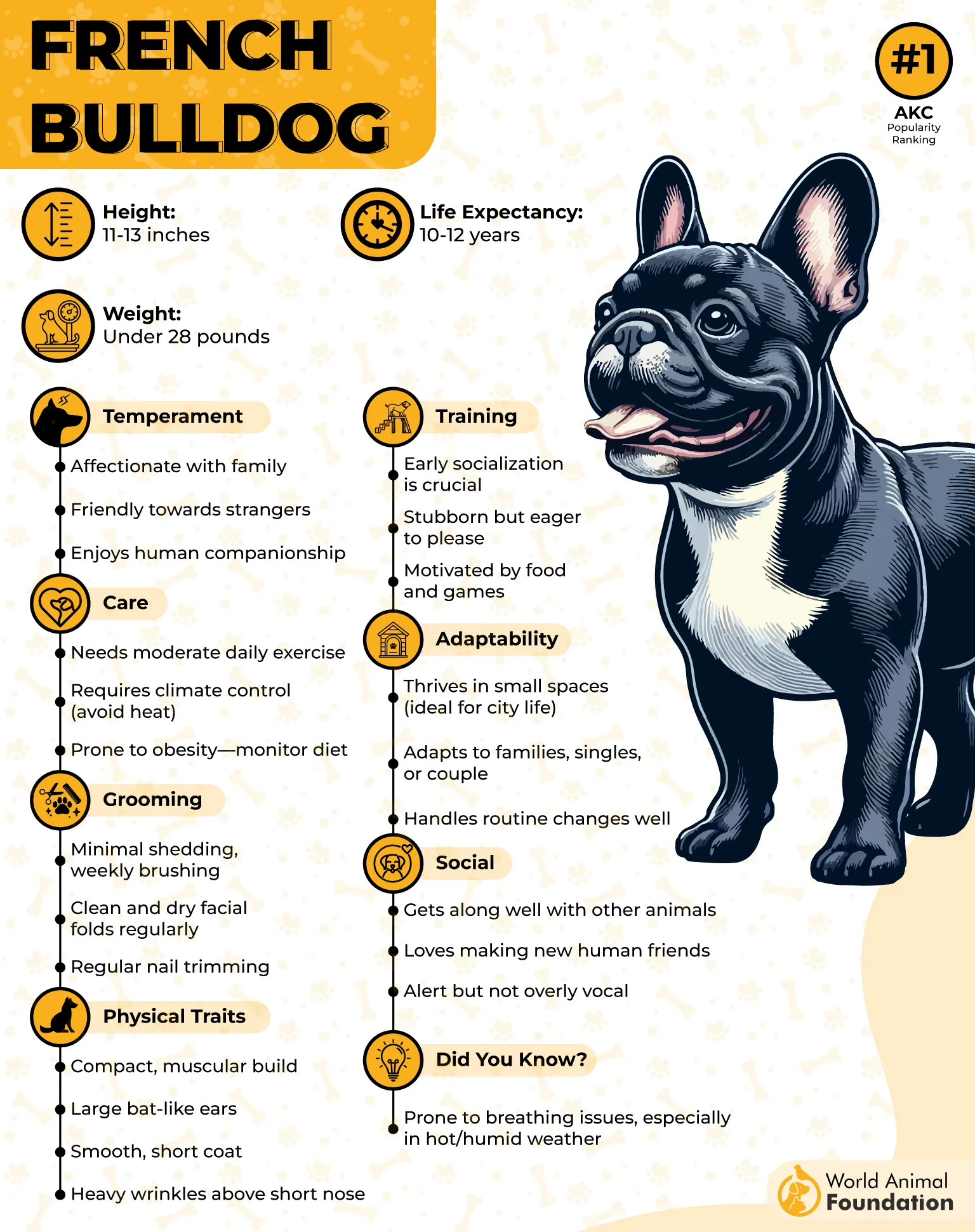
Their small size and adaptable nature make them perfect city dwellers, couch dwellers, and, frankly, attention dwellers—they thrive on being adored. Despite their tiny stature, Frenchies have big personalities.
They’re playful, goofy, expressive, and more dramatic than a soap opera character. Drop a snack? They’ll act like it’s a national emergency. Tell them “no”? They’ll give you a look that says, “You’ll regret this.”
While they make fantastic companions, Frenchies aren’t exactly low-maintenance. They can be prone to health issues, especially respiratory problems, thanks to that adorable squishy nose. They may require extra vet visits, high-quality food, and climate-controlled comfort.
Still, despite the costs, the French Bulldog remains one of the most beloved breeds worldwide—and for good reason. They’re loyal, affectionate, endlessly entertaining, and perfectly content to binge-watch TV with you for hours.
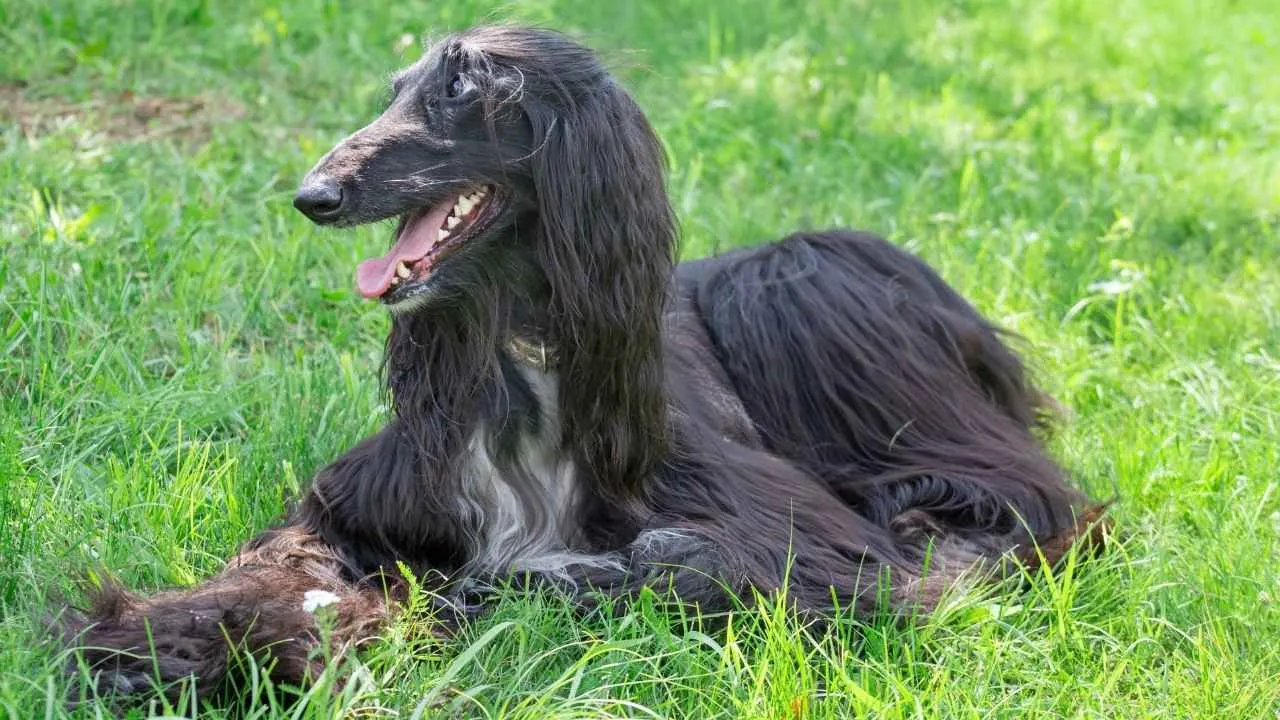
7. Afghan Hound
- Average Cost: $7,000
If dogs had runway shows, the Afghan Hound would be the undisputed supermodel—gliding past the crowd with slow-motion hair flips and an attitude that says, “Don’t touch the coat.”
Originating from the rugged mountains of Afghanistan, these dogs were once fierce hunters… but with that silky, flowing fur and majestic posture, you’d think they spend more time at high-end salons than chasing prey.
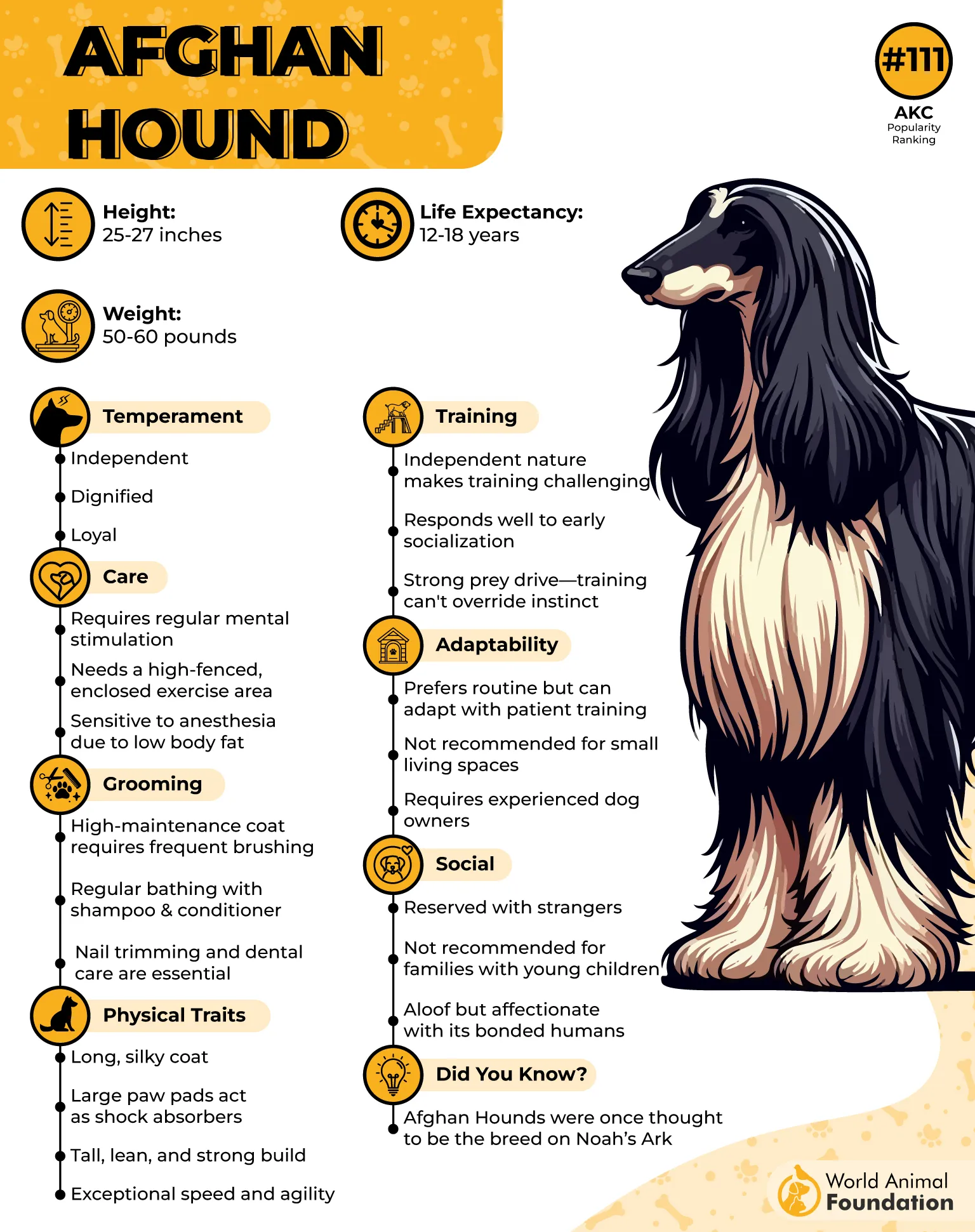
Costing around $7,000, the Afghan Hound is considered one of the most beautiful—and high-maintenance—breeds on the planet. Their long, flowing coats are stunning, but they tangle faster than headphones in a pocket.
With a life expectancy of 10–14 years, these elegant hounds bring years of beauty, companionship, and occasional comedic moments (they may look regal, but they definitely have goofy streaks). However, their health can add to the cost of ownership.
They’re predisposed to cataracts and hypothyroidism—conditions that can cost up to $3,000 in vet bills. Their vet receipts may not be as glamorous as their fur, but it’s all part of the Afghan Hound experience.
Afghan Hounds are independent, aloof, and a little dramatic—like a celebrity who pretends they don’t recognize their fans, even though they secretly love the attention. They’re playful, loyal, and surprisingly fast; they move with effortless grace, as if they were born to star in slow-motion chase scenes.
Owning an Afghan Hound is like living with a fashionable, slightly high-maintenance roommate who always looks camera-ready and expects you to keep up. But with their beauty, charm, and unmistakable style, they’re absolutely worth the glam.
Conclusion
Prized dog breeds, especially when considering purebred dogs, rare breeds, and those with small populations, such as the Canadian Eskimo Dog, Pharaoh Hound, and even beloved companions like the Cavalier King Charles Spaniel, Yorkshire Terrier, Portuguese Water Dog, Bernese Mountain Dog, and English Bulldog.
These dogs often come with a high cost due to breeding costs, unique traits, pedigree, and the rarity or popularity of the expensive breed. Beyond the upfront cost, owners must consider ongoing costs, including pet insurance, specialized diets, regular grooming, and potential health conditions, which can be significant depending on the breed’s average lifespan and care needs.
While some common breeds like the Labrador Retriever, German Shepherd, Rottweiler, and Cocker Spaniel are more accessible, their muscular body, playful natures, and gentle demeanor still require consistent training and responsible pet ownership. For those on a budget, adopting shelter dogs from animal shelters is a meaningful alternative to purchasing from a reputable breeder, offering loving companions without the expense of rare or purebred lines. Understanding the true expense of ownership ensures every dog receives proper care and a lifelong home.
