




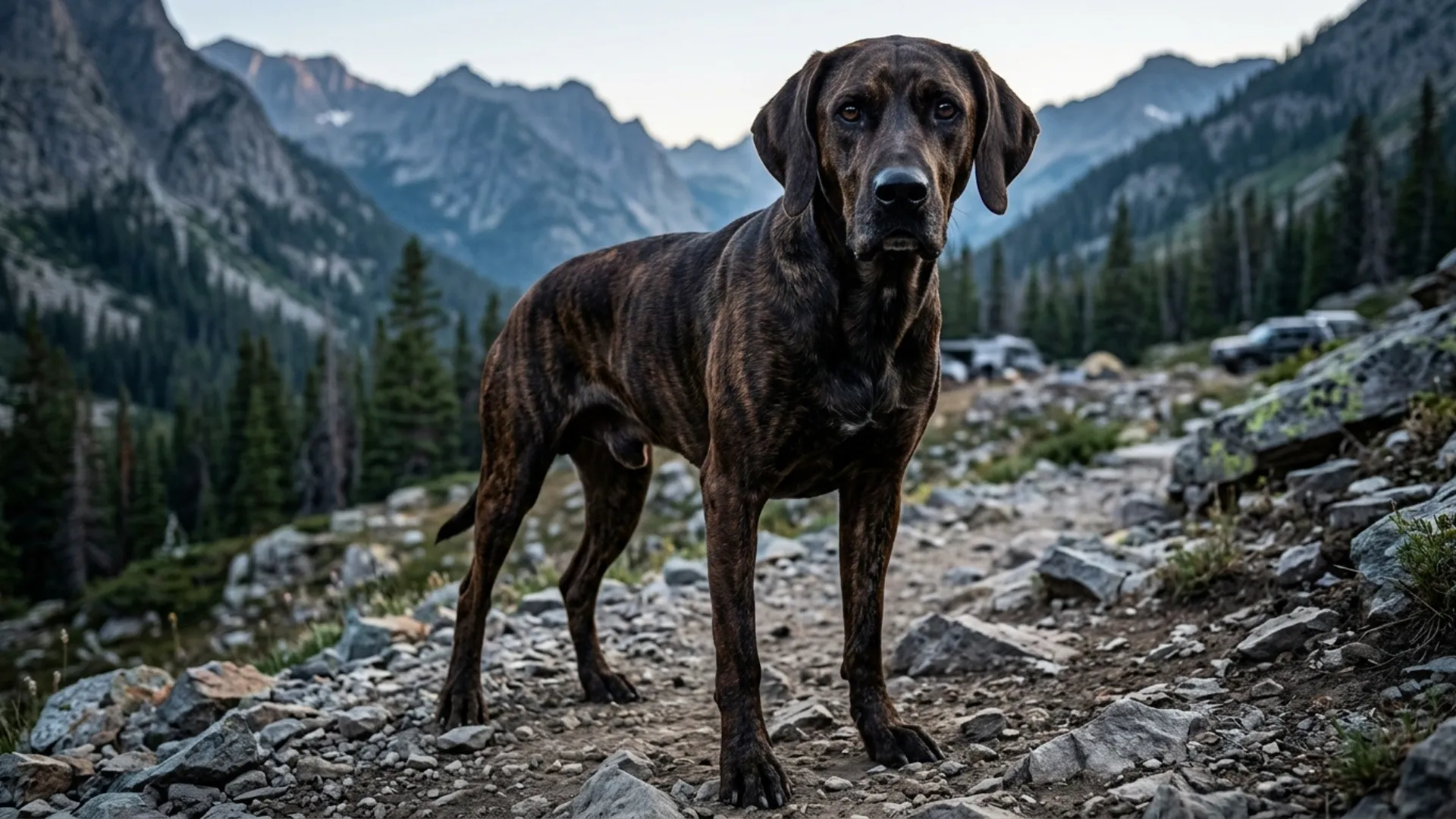
A successful big-game hunt is rarely just about the hunter. For generations, dogs have shared the work, using their instincts, stamina, and determination to locate, track, flush, or hold quarry.
Some were shaped for rugged forests and mountains, while others learned to work through thick cover or follow a scent over long distances.
Their roles may differ, but the bond between dog and hunter remains remarkably strong. The best working dogs are not simply following commands; they bring natural drive, focus, and courage to demanding situations. Yet powerful hunting ability also comes with responsibility.
Proper training and control are essential, both to protect the dog and to prevent unnecessary harm to wildlife. From tracking large game to helping hunters locate wounded animals, these remarkable breeds demonstrate just how deeply dogs have been woven into the history of hunting.
Their strength is impressive, but their instinct and unwavering partnership make them truly remarkable.
Key Takeaways
Big-game hunting requires dogs with strength, courage, stamina, and determination.
Many working breeds were developed specifically to track, chase, drive, or hold large game at bay.
Strong scenting ability can help dogs locate and follow quarry through challenging terrain.
Agility and quick movement allow hunting dogs to work around powerful animals more effectively.
Independence is valuable in situations where dogs must make decisions while working away from handlers.
Powerful Dog Breeds for Big Game Hunting Tasks
1. Dogo Argentino
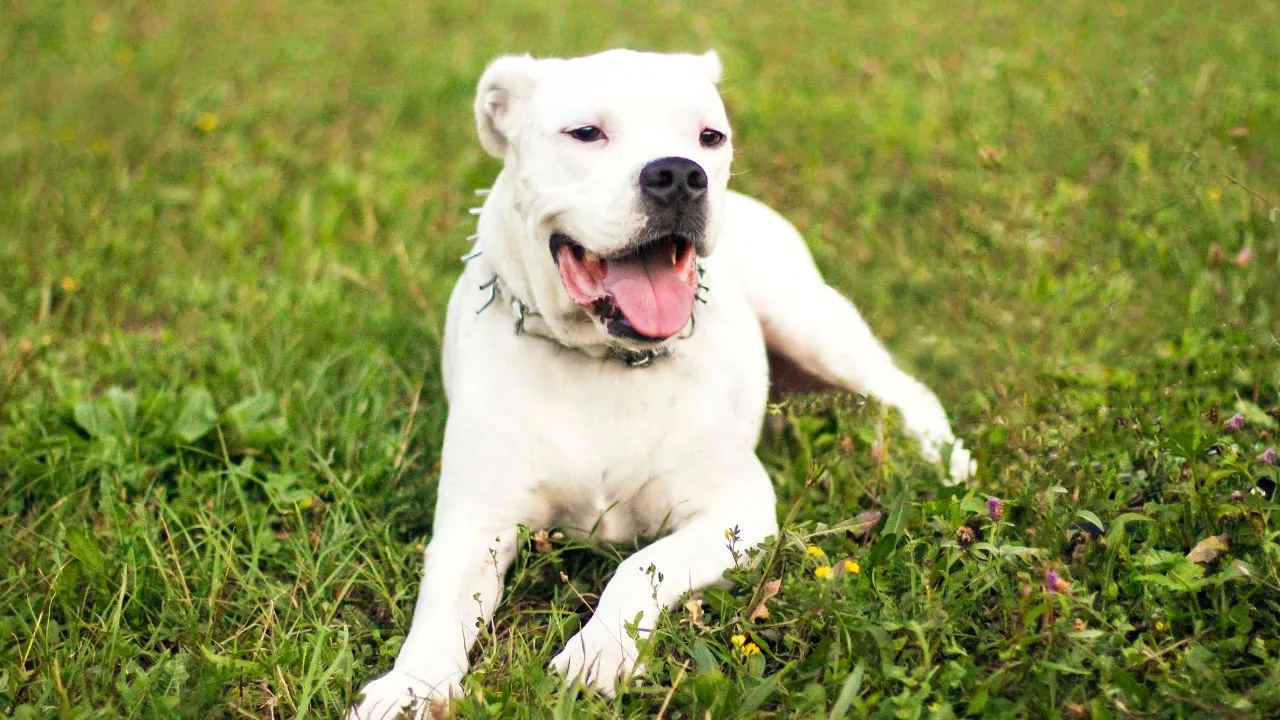
Built for demanding hunts where strength, courage, and determination matter, the Dogo Argentino is a powerful working breed with a clear purpose.
Developed in Argentina for pursuing big game such as wild boar and puma, this muscular, athletic dog combines impressive physical power with intelligence, stamina, and a keen nose.
Its balanced build allows it to move with surprising agility despite its substantial strength, while its strong jaws and determined nature make it well suited to the challenges of big-game hunting.
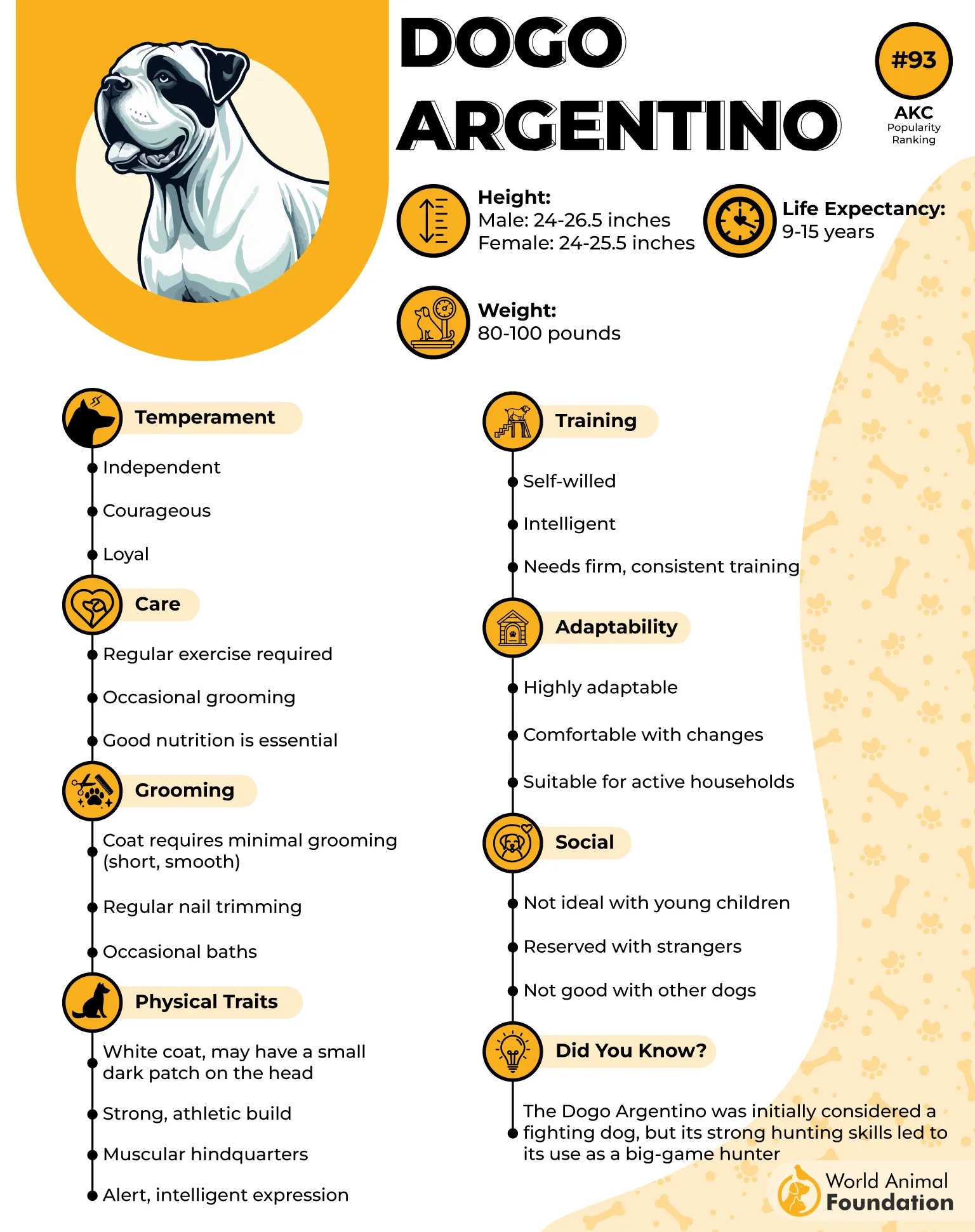
The Dogo Argentino’s short, smooth white coat gives it a distinctive appearance, sometimes marked by a dark patch near the eye, according to the American Kennel Club.
Beyond hunting, its intelligence and versatility have allowed it to take on roles in search and rescue, police and military work, and other demanding tasks.
However, this energetic breed needs consistent training, early socialization, regular exercise, and an experienced owner who understands its strength and working instincts.
2. Plott Hound
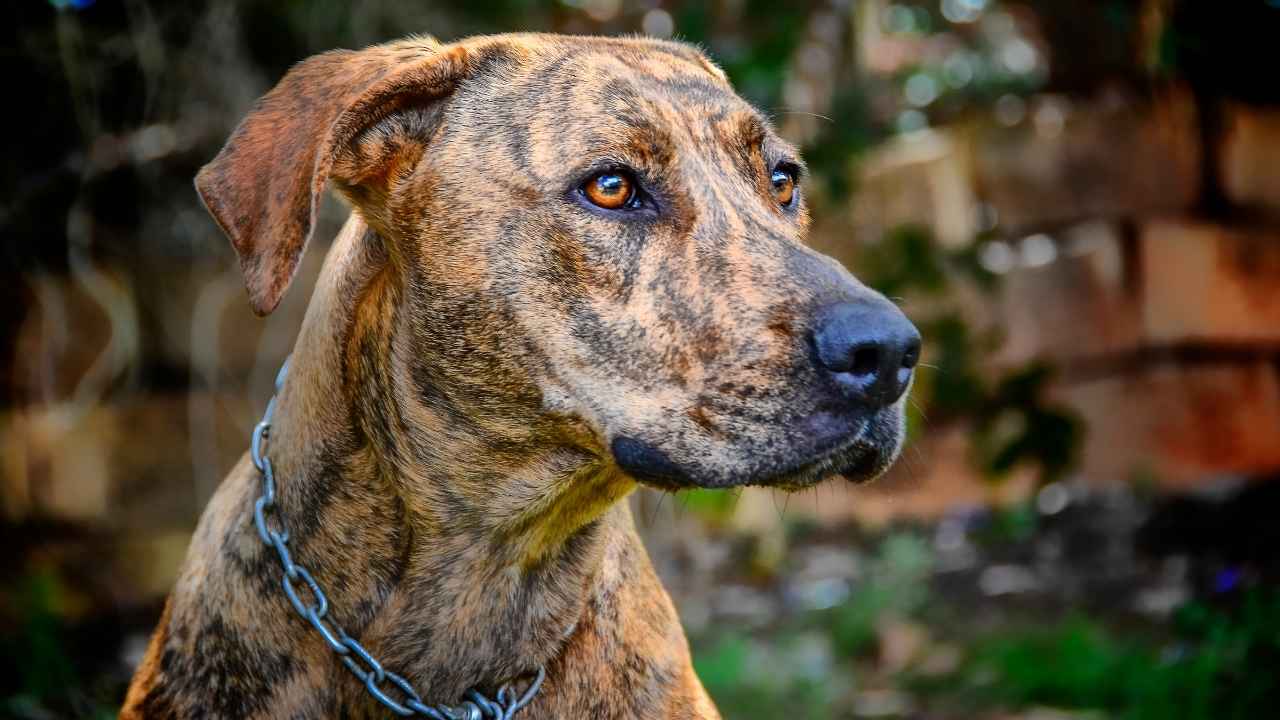
For big-game hunting, a dog needs more than speed; it needs grit, stamina, confidence, and the determination to keep working when the trail becomes difficult.
The Plott Hound brings all of these qualities to the field. Originally developed in the mountains of North Carolina for hunting boar, this powerful scent hound is known for its strong nose, relentless tracking ability, and distinctive voice.
Plott Hounds can follow both fresh and older trails and have been used to track and bay challenging game, including boar, bear, and mountain lion.
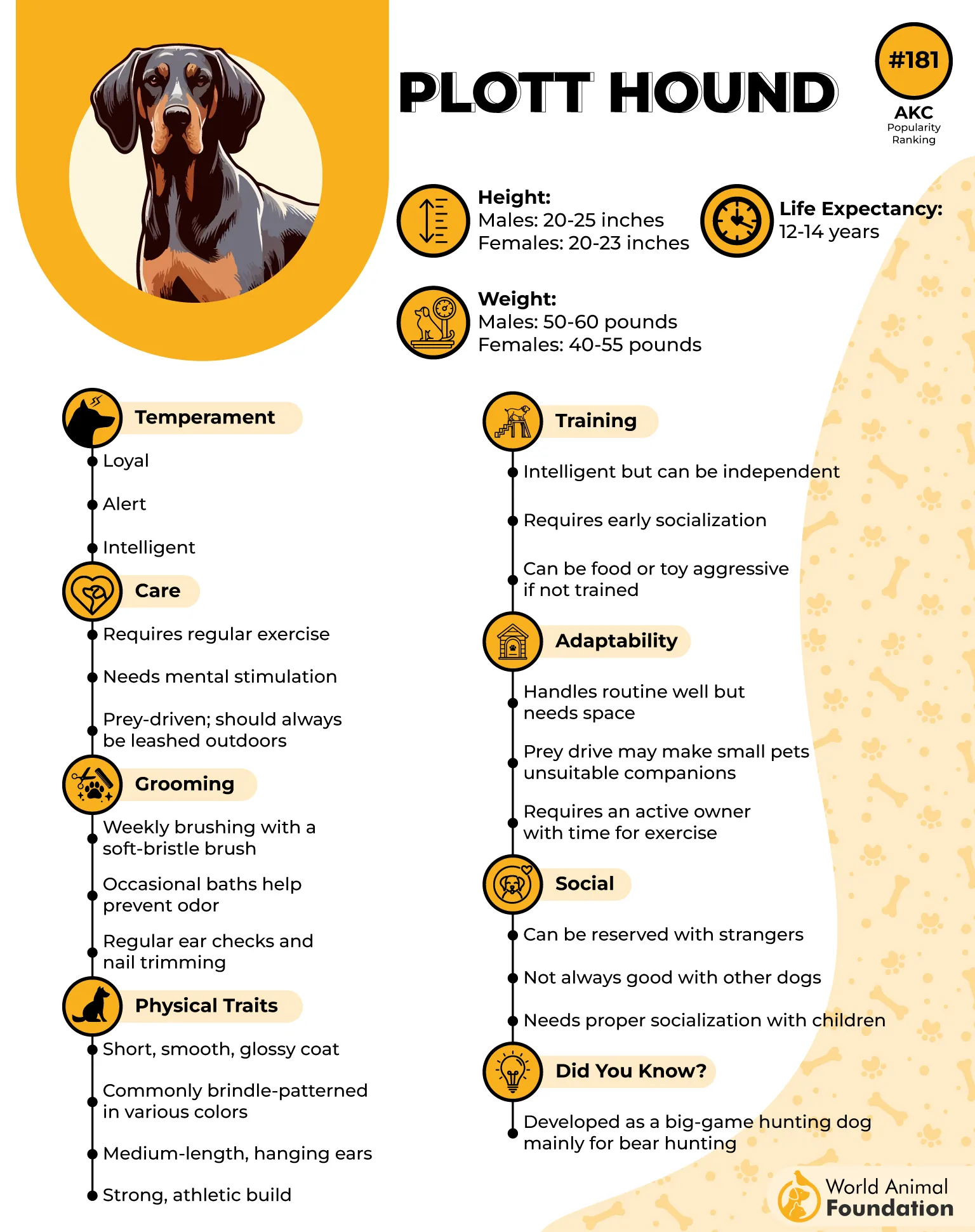
Their athletic build and endurance allow them to handle demanding outdoor work, while their intelligence helps them work independently or alongside other dogs.
Despite their fierce hunting instincts, Plott Hounds can form strong bonds with their families and are affectionate at home.
Early socialization, obedience training, and plenty of exercise are essential for keeping this energetic breed focused and well-behaved.
3. Karelian Bear Dog

The Karelian Bear Dog is a fearless northern hunter built for demanding big-game work. Originating in Finland and closely associated with the forests of Scandinavia, this sturdy, athletic breed is valued for its independence, courage, and strong hunting instincts.
Its job in the field is not simply to follow a scent but to locate game and keep it at bay, using persistent barking while maintaining contact with the hunter.
In Finland, this strong breed has been used mainly to hunt moose, while its history also includes work with bears, giving the dog its distinctive name.
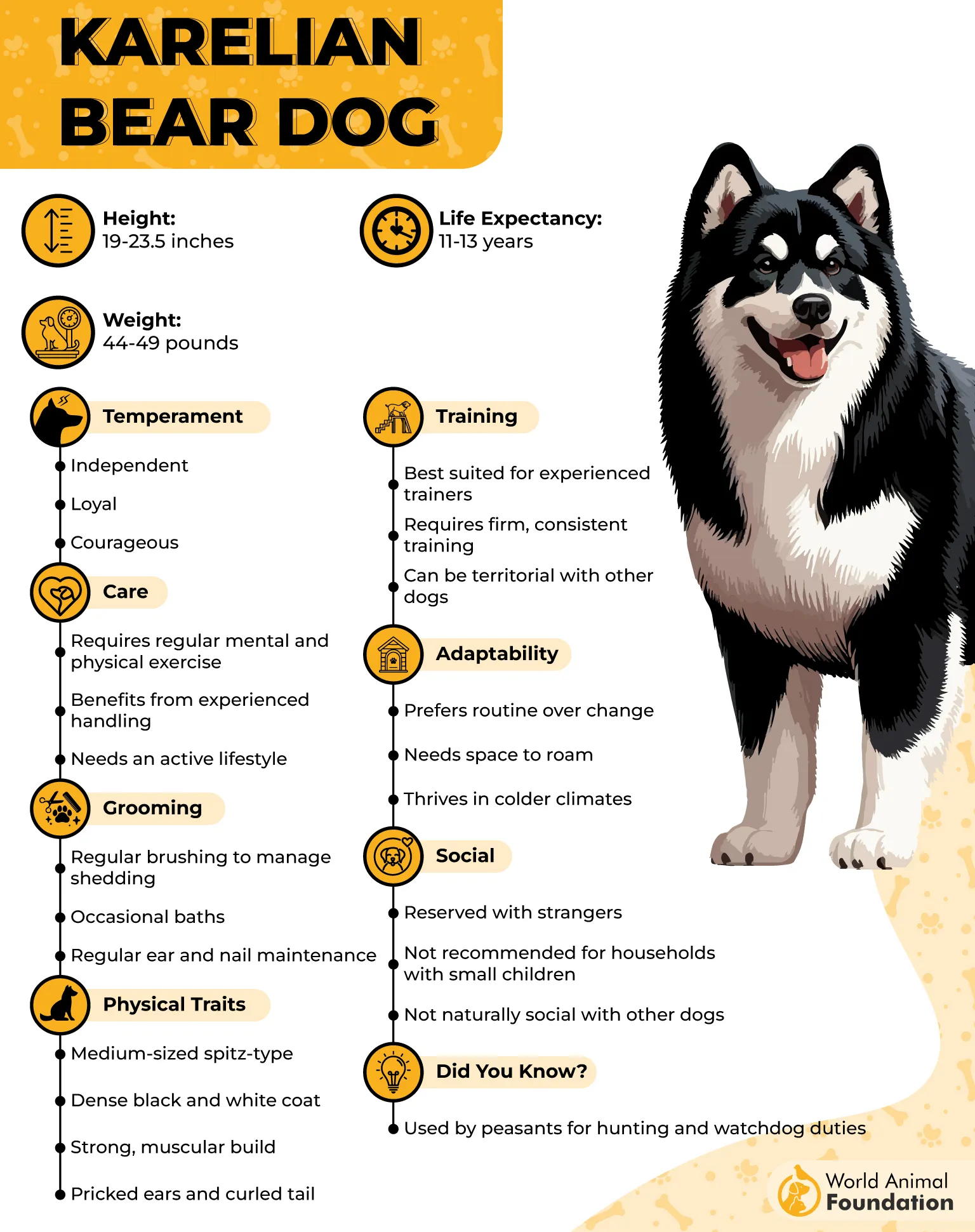
Compact yet powerful, the Karelian Bear Dog has a dense black coat with white markings and a confident, alert expression, as stated by Zooplus.
Its independent nature can make training challenging, but patient, consistent handling and early socialization are important.
This energetic breed thrives on outdoor activity and tracking work, making it best suited to experienced owners who can channel its strong instincts.
4. East Siberian Laika
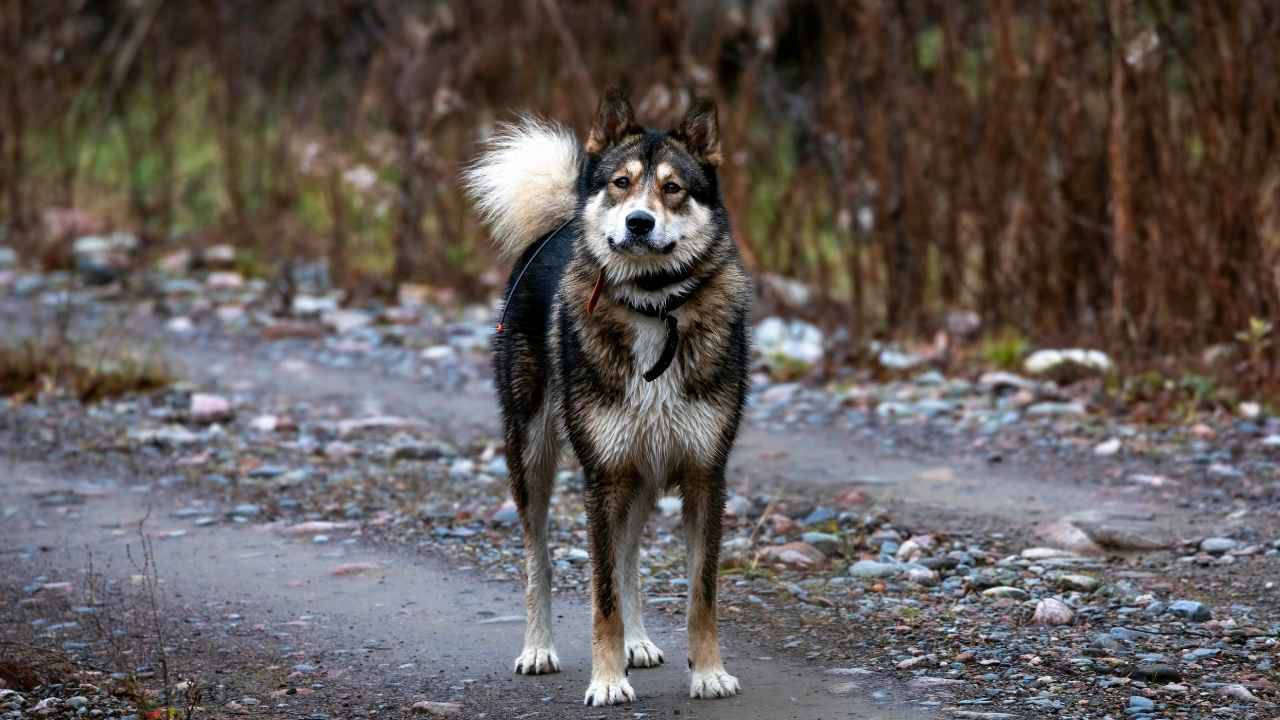
The East Siberian Laika is a tough, versatile hunting dog shaped by the demanding forests of northern Russia.
Developed to work across rugged terrain, this powerful Laika has been used to hunt everything from forest birds and squirrels to larger game such as elk, wild boar, and bear.
Its courage and independence are especially valuable when confronting challenging quarry, while its intelligence allows it to work closely with hunters without relying on constant commands.
Among the recognized Laika breeds, the East Siberian Laika is the largest and was also traditionally used for pulling sleds.
Its strong body, erect ears, bushy curled tail, and dense coat reflect its northern heritage. In the field, the breed is known for its determination and willingness to follow difficult trails.
Despite its bold hunting character, it can be calm, affectionate, and devoted to its family. For hunters seeking a capable dog with both endurance and courage, the East Siberian Laika is a formidable companion.
5. Rhodesian Ridgeback
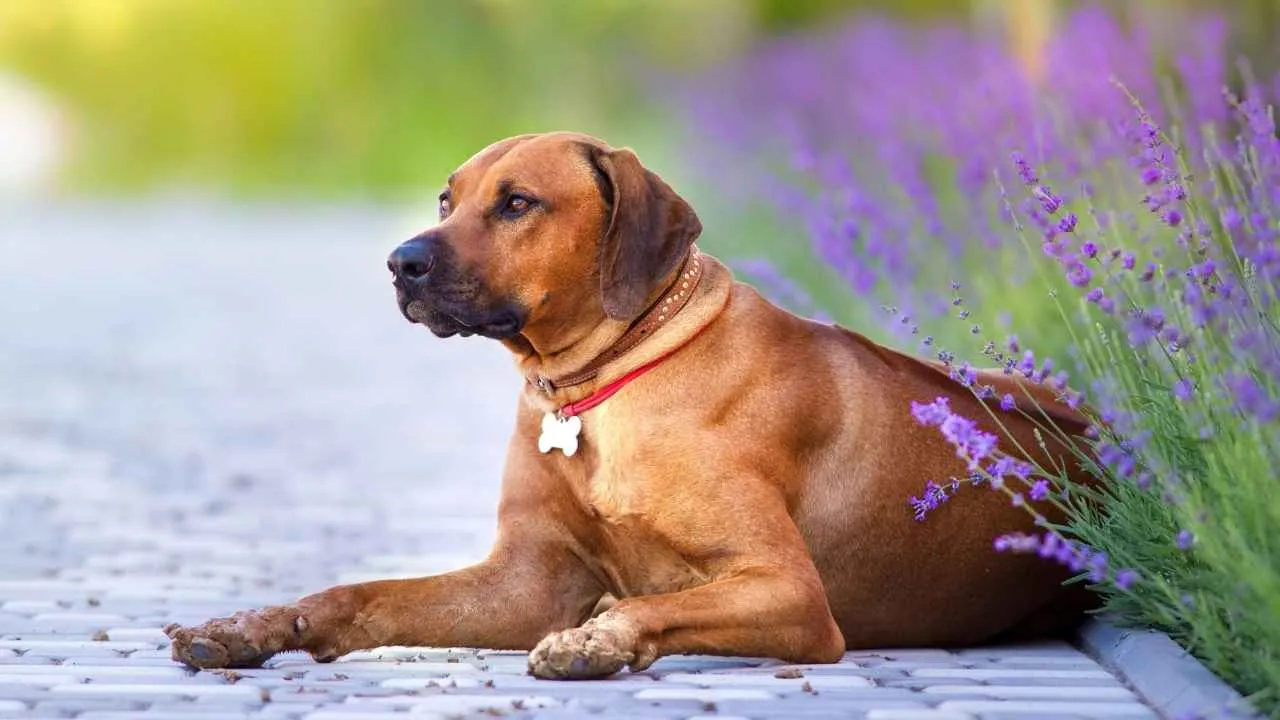
The Rhodesian Ridgeback was shaped by a demanding hunting tradition, and its history explains why it remains such a powerful working dog.
Developed in southern Africa, the breed was valued for tracking and baying large game, particularly lions and boar.
Rather than confronting a lion directly, Ridgebacks used their courage, speed, agility, and intelligence to keep the animal at bay while hunters prepared to act.
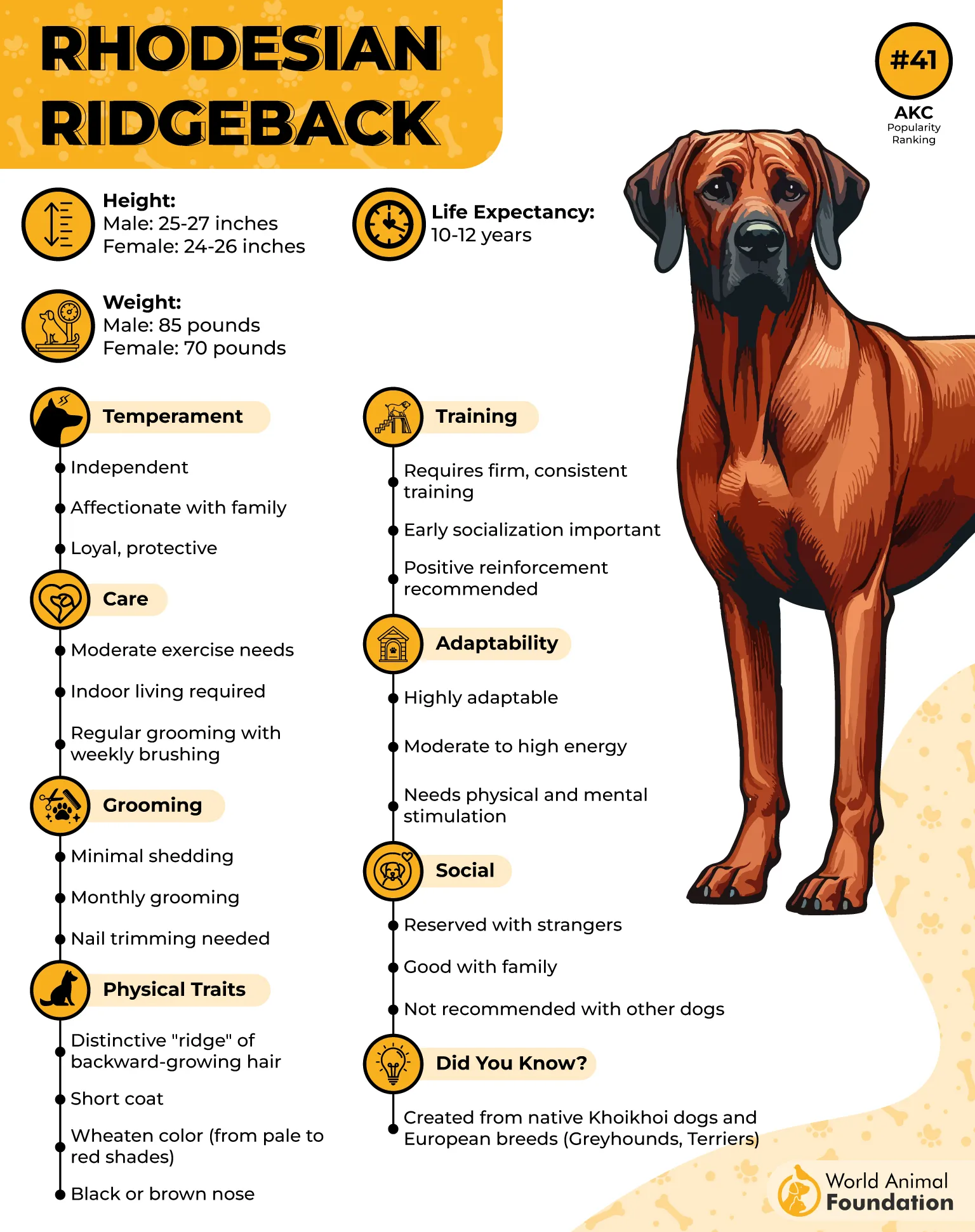
These qualities required a dog that could remain determined under intense pressure while knowing when to retreat, as explained by Lifetime Pet Cover.
The breed’s strength was not limited to lion hunting. Ridgebacks were also capable of pursuing large antelope and taking on other demanding tasks around farms and livestock.
Their athletic build gave them the speed and endurance needed for long pursuits, while their independent nature helped them make decisions in challenging situations.
Today, that fearless, self-possessed character remains one of the defining qualities of this distinctive breed.
6. Catahoula Leopard Dog
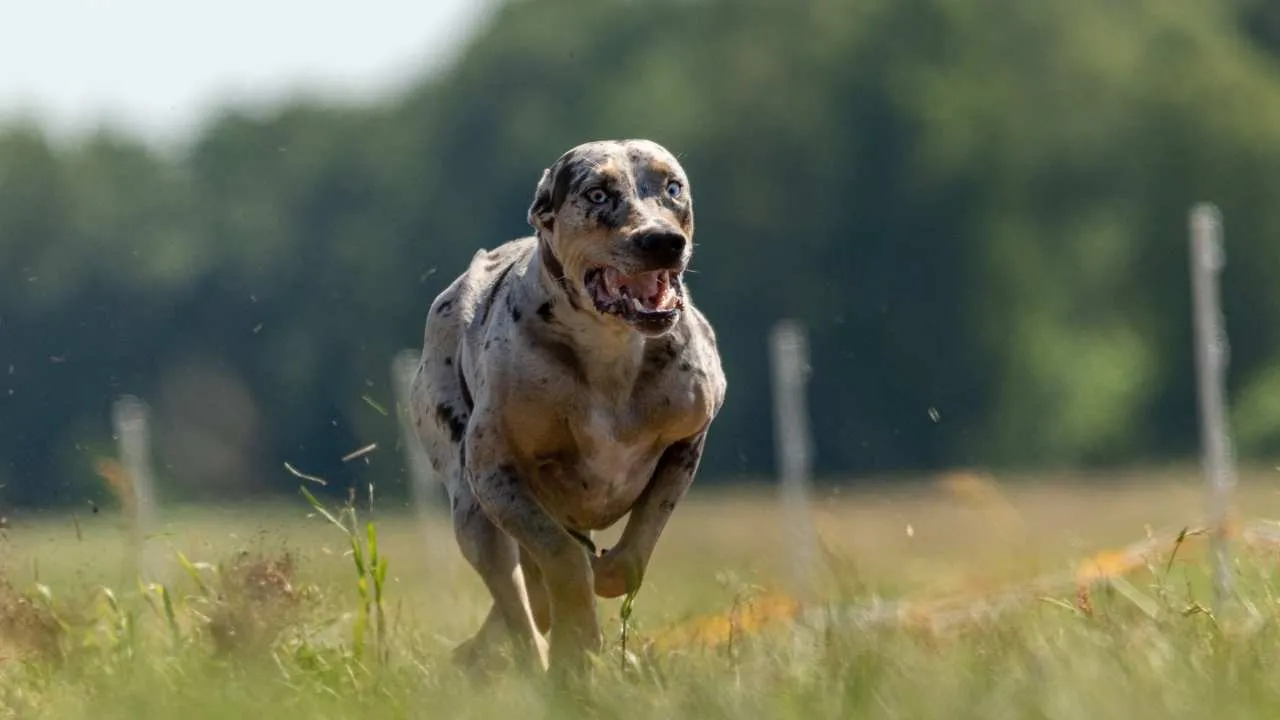
When the terrain is tough, and the game is powerful, the Catahoula Leopard Dog brings the determination of a true working dog.
Originating in Louisiana, this muscular breed was developed to track and drive wild hogs through the difficult swamps and forests of the South.
Its independent nature was an important part of the job, allowing the Catahoula to work with purpose while handling demanding conditions.
The breed’s strong body, high energy, and powerful working instincts made it especially valuable for hunting large game, with wild pigs being one of its best-known targets.
Catahoulas are also skilled scent dogs, adding another useful ability to their hunting background. Their endurance and need for both physical and mental activity reflect generations of purposeful work.
Although their striking merle, brindle, and other coat patterns catch the eye, it is their hardworking character and determination that truly define the breed as a powerful hunting partner.
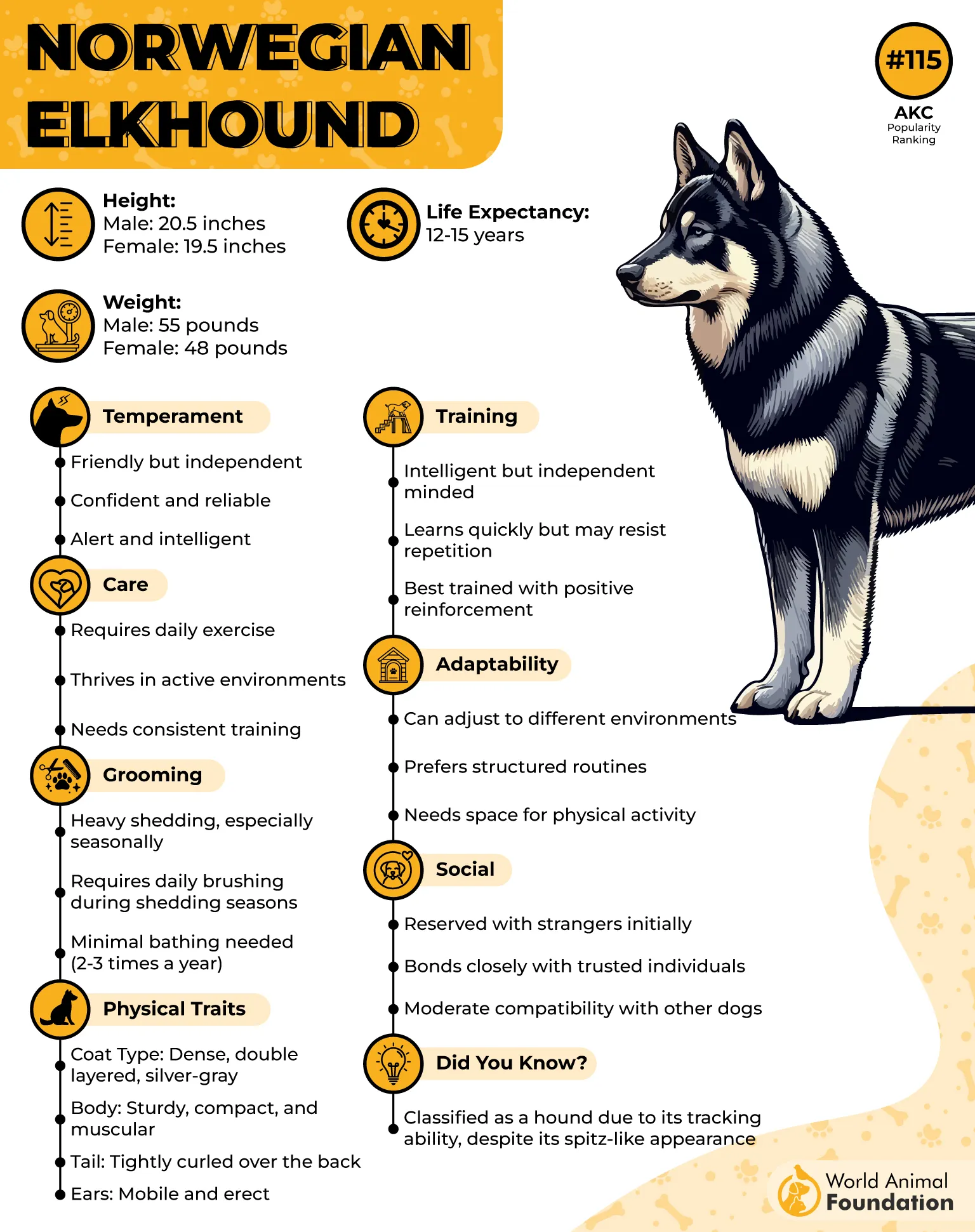
7. Norwegian Elkhound
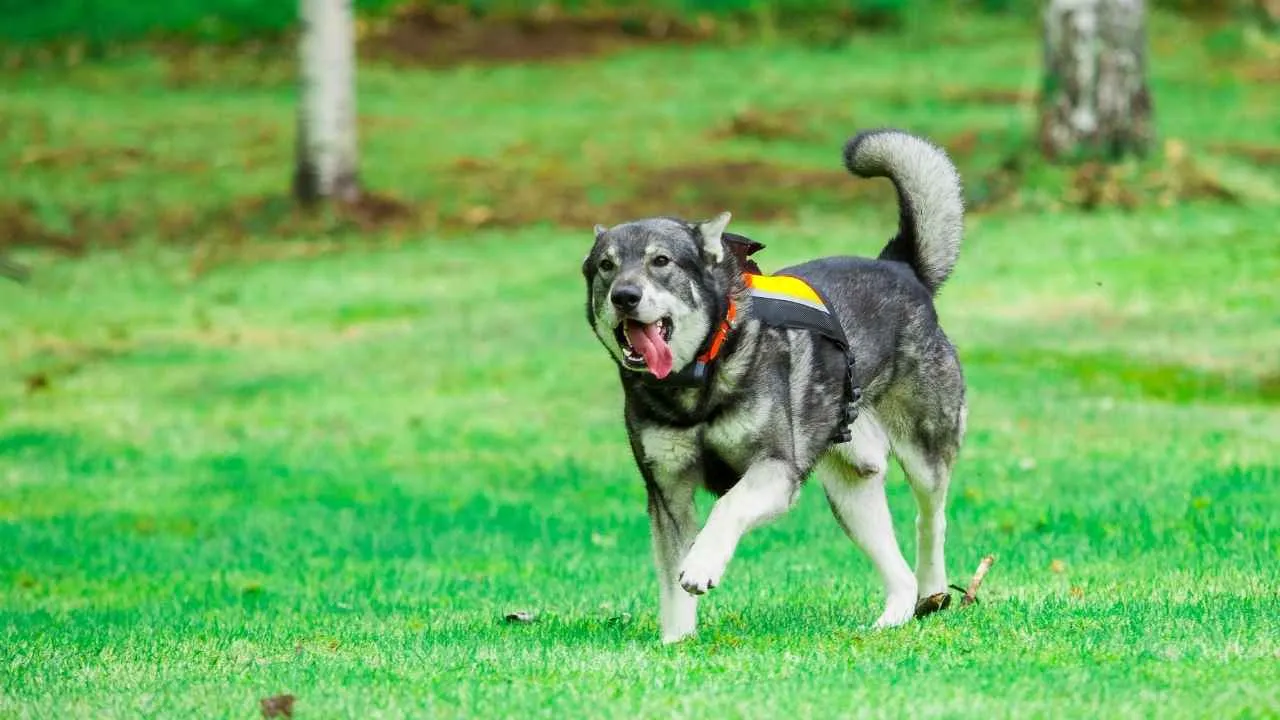
The Norwegian Elkhound may be medium in size, but its courage is anything but small. Bred in Norway to track and hold large game at bay, this hardy Spitz-type dog has the stamina, independence, and determination needed for demanding hunts.
Its original quarry included moose, known in Norway as elk, and it has also been associated with hunting other large game such as bear and wolf, according to Purina.
Rather than overpowering its quarry, the Elkhound uses its tracking ability and loud, persistent bark to keep the animal’s attention and alert hunters to its location.
In some hunting situations, it can also work on a leash, helping guide the hunter toward the quarry while remaining quiet.
Its dense, weather-resistant coat and rugged nature suit the cold forests, deep snow, and harsh conditions of its homeland.
Behind its compact build is a bold, energetic hunting dog made for challenging outdoor work.
Conclusion
Big-game hunting demands more than size and strength. The right dog needs courage, stamina, intelligence, determination, and the ability to work confidently in challenging terrain.
These breeds were shaped by demanding working roles that required many of these qualities.
Each breed brings something different to the hunt. Some excel at tracking, while others are known for holding large game at bay, driving animals, or working through difficult environments. Their histories show how closely dogs and humans have worked together for generations.
These powerful breeds are not simply defined by their physical strength. Their independence, determination, and working instincts are what make them remarkable hunting partners. For experienced handlers seeking a capable dog for demanding outdoor tasks, these breeds offer an impressive combination of power, purpose, and perseverance.
