




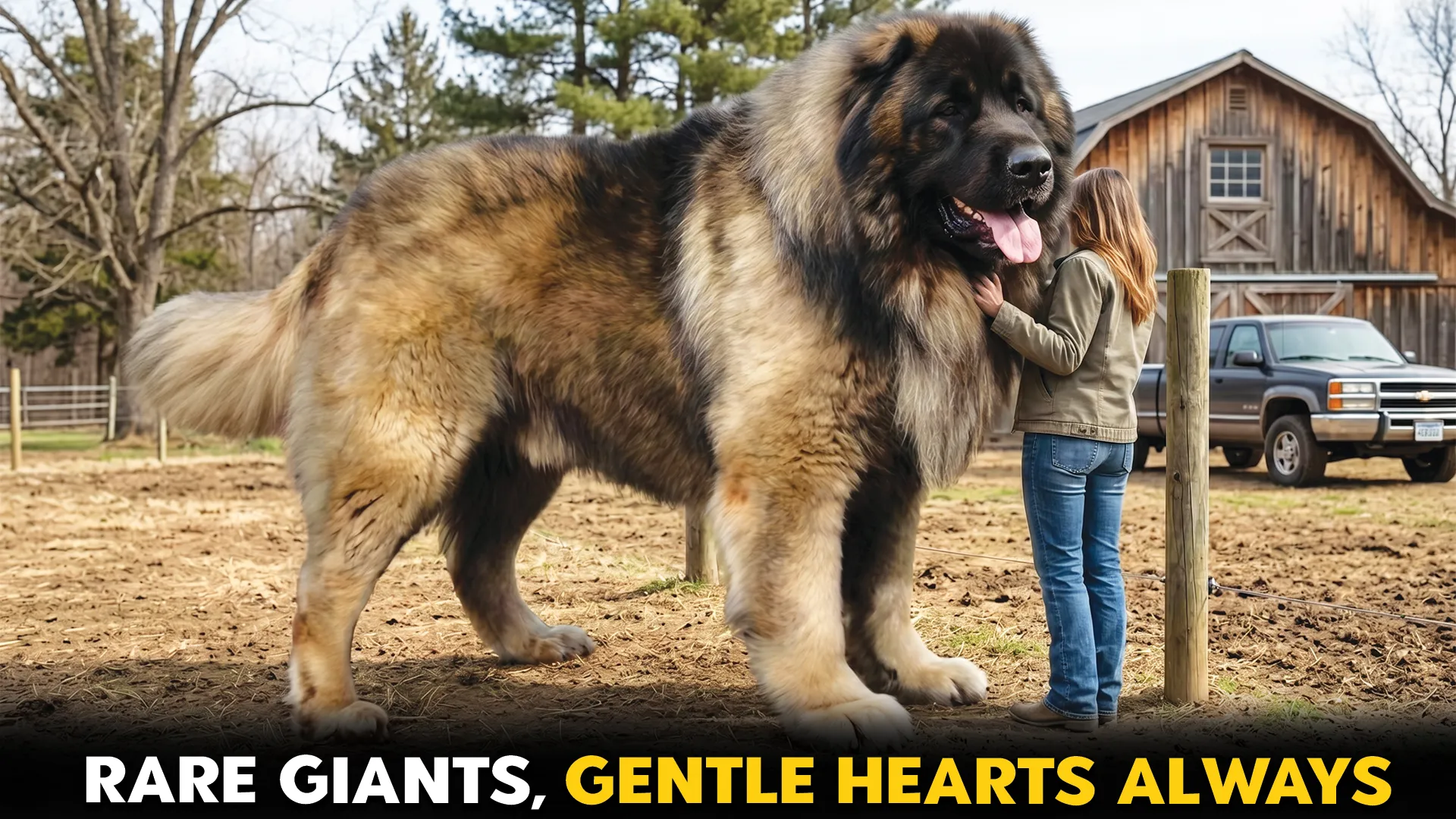
While some pet parents love small dogs, others have a special affinity for giant dog breeds. Giant dog breeds are known for their massive build and physical prowess. They are a living proof of the proverb, ‘the bigger, the better.’
Do You Know? The tallest dog in the world was a Great Dane, named Zeus. It stood 7 feet 5 inches tall at the the shoulders.
Despite their large size, giant dog breeds are incredibly loyal to their humans and form strong bonds with them. Many of them can deter intruders with their imposing presence and make excellent guard dogs.
Large dogs make loving companions, but are more prone to certain health problems compared to other members of the dogdom. They need moderate exercise, a balanced diet, and a healthy lifestyle to stay fit.
Some large dog breeds are considered very rare outside their native region. If you want to bring home a rare and impressive giant dog breed, this article is for you!
Rare and Impressive Giant Dog Breeds to Consider
1. Tibetan Mastiff
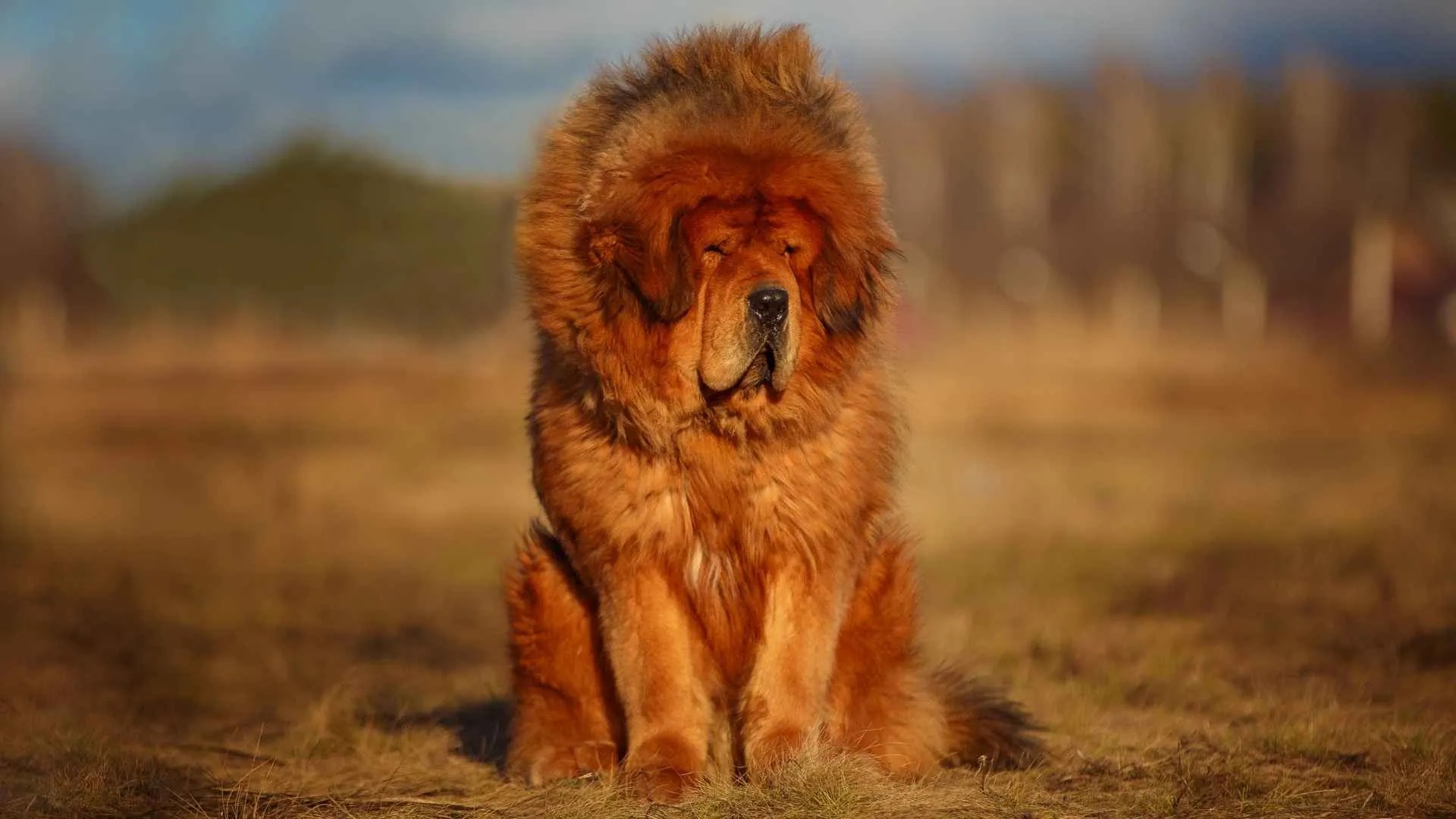
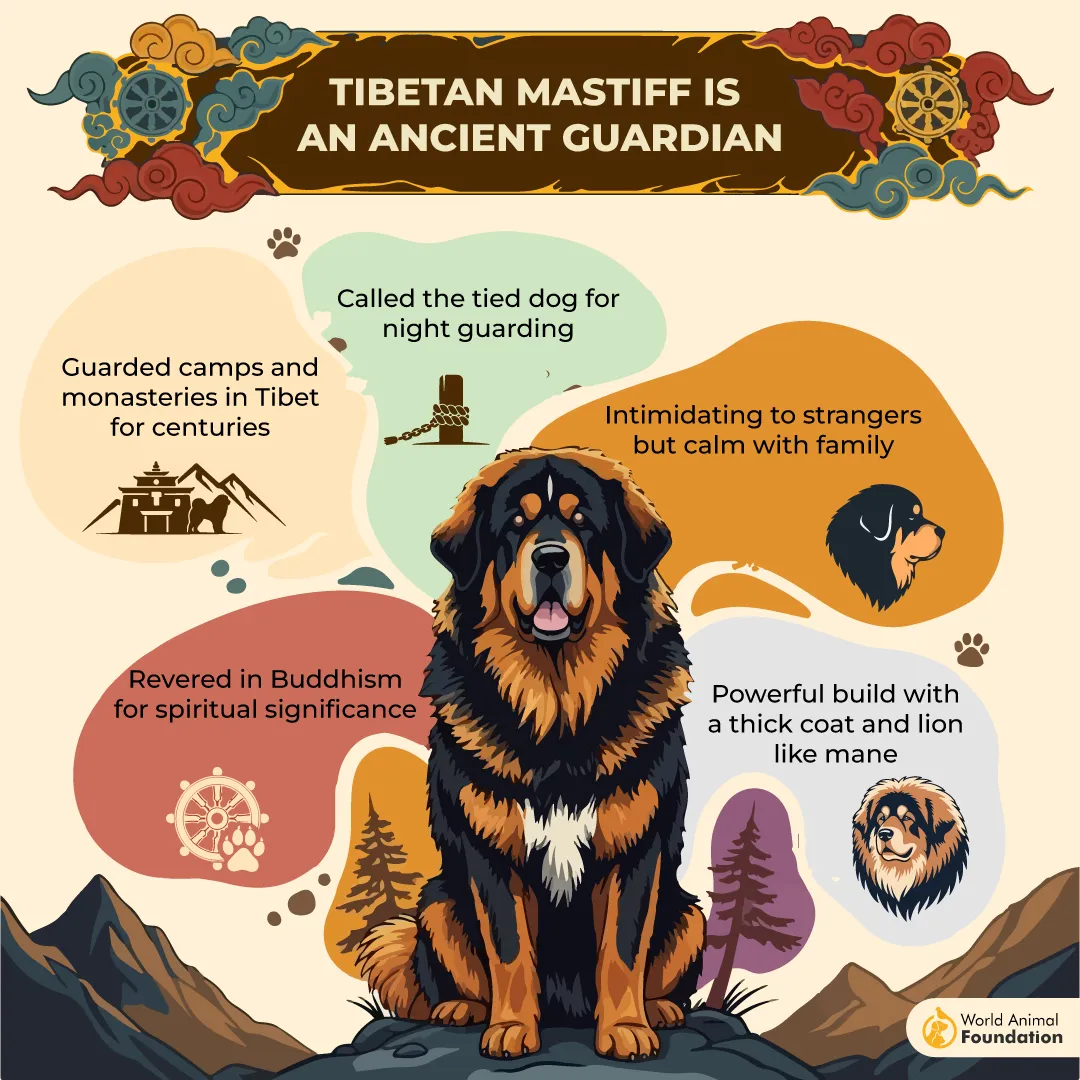
Aloof, imposing, and intimidating, Tibetan Mastiffs are the large dogs known for their protective nature and lion-like mane. They tend to be reserved towards strangers, but are incredibly loyal to their pet parents.
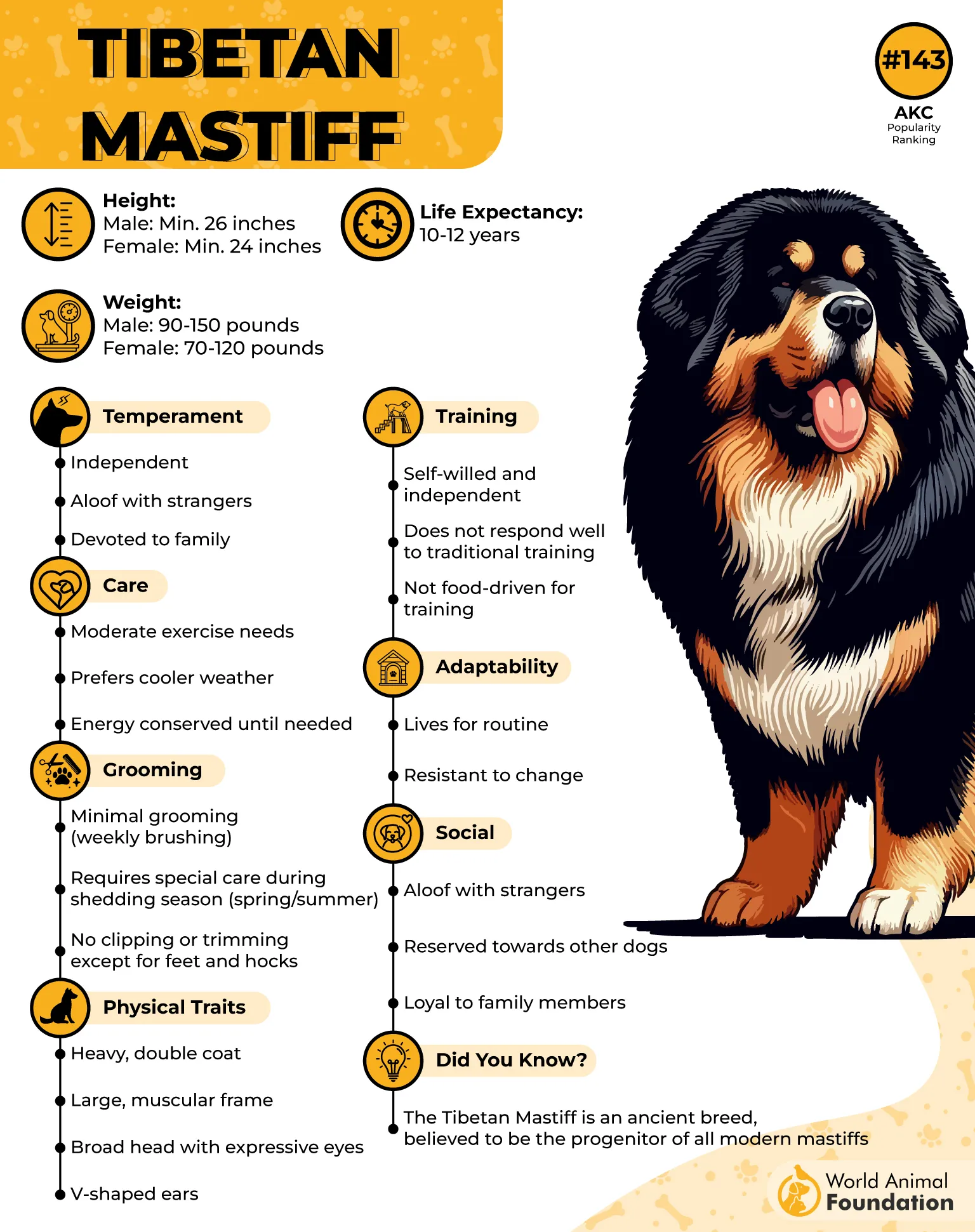
These impressive dogs are highly territorial and can scare away intruders with their mere presence. Tibetan Mastiffs make wonderful guard dogs, but are true gentle giants around their family members. These mellow and calm canines are considered a rare breed.
Tibetan Mastiffs are fairly quiet dogs, according to PetMD. However, they bark to inform their owners when they sense something unusual. They are more active at night, but sleep during the day. These athletic pooches require only moderate daily exercise to stay fit.
Early training and proper socialization are important to turn them into well-mannered family pets. They are better suited for experienced owners with large homes.
A powerful ancient guardian with a calm family side, but not a breed for every home.
✓ Pros
- Extremely loyal to family
- Strong natural guardian
- Calm and mellow at home
- Impressive lion-like appearance
- Does not need heavy exercise
! Cons
- Not ideal for first-time owners
- Can be reserved with strangers
- Highly territorial
- Needs early training and socialization
- Better suited for large homes
🎧 Dogcast
Episode 37 — Why Dogs Stay Close without Touching
If you don’t hear sound, tap the button above to enable audio.
2. Leonberger
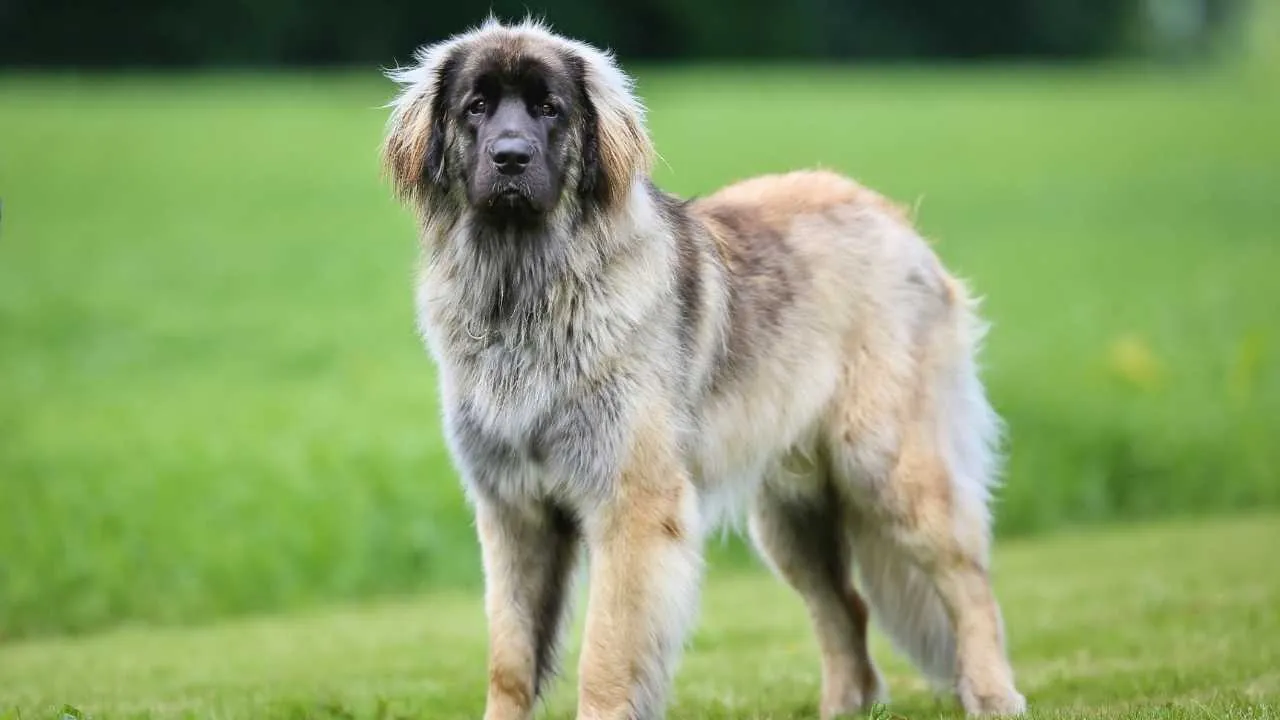
Leonbergers are relatively rare dogs that became almost extinct in the 20th century. One of the giant breeds, they are named after Leonberg, a town in Germany. Leos stand out among other members of the dogdom due to their impressive size.
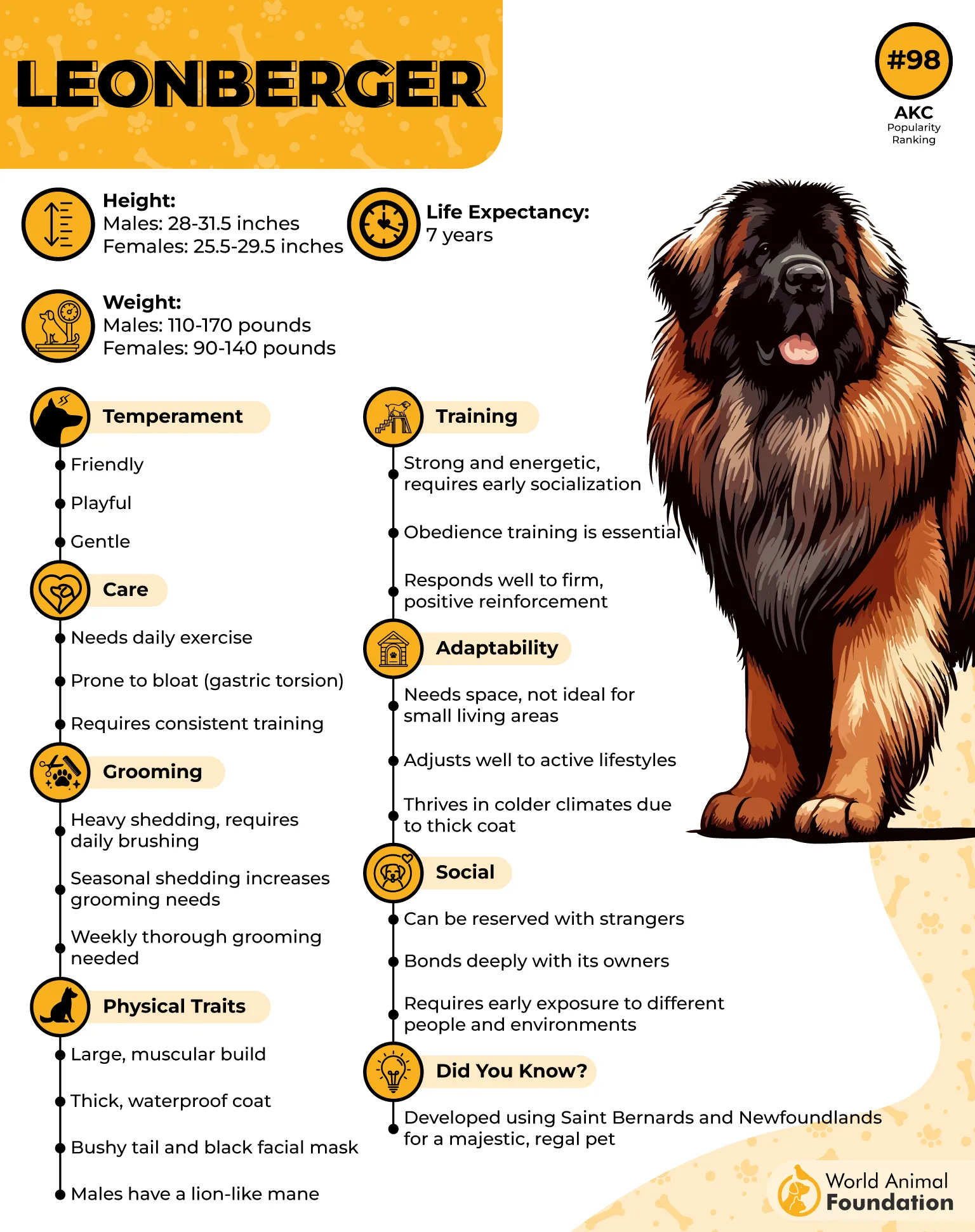
These strong, muscular, and large dogs are quite affectionate and playful with their loved ones. Well-trained Leonbergers are ‘gentle giants,’ who get along nicely with children and are amenable to other dogs.
However, thanks to their strong protective instincts and territorial nature, they are naturally wary of strangers. These calm and quiet fellows make wonderful guard dogs, swimming partners, and hiking companions. Leos also excel at pulling sleds and agility training.
WebMD suggests only an hour of daily exercise for their physical and mental stimulation. Large size makes them prone to certain illnesses such as GDV, heart disease, cancer, and joint problems.
A gentle, affectionate giant that can be wonderful for active families with enough space.
✓ Pros
- Affectionate with family
- Playful and gentle
- Good with children when trained
- Can get along with other dogs
- Great for hiking, swimming, and outdoor activities
! Cons
- Large size needs more space
- Requires regular exercise
- Can be wary of strangers
- May be prone to joint and heart issues
- Grooming and care can be demanding
3. Irish Wolfhound
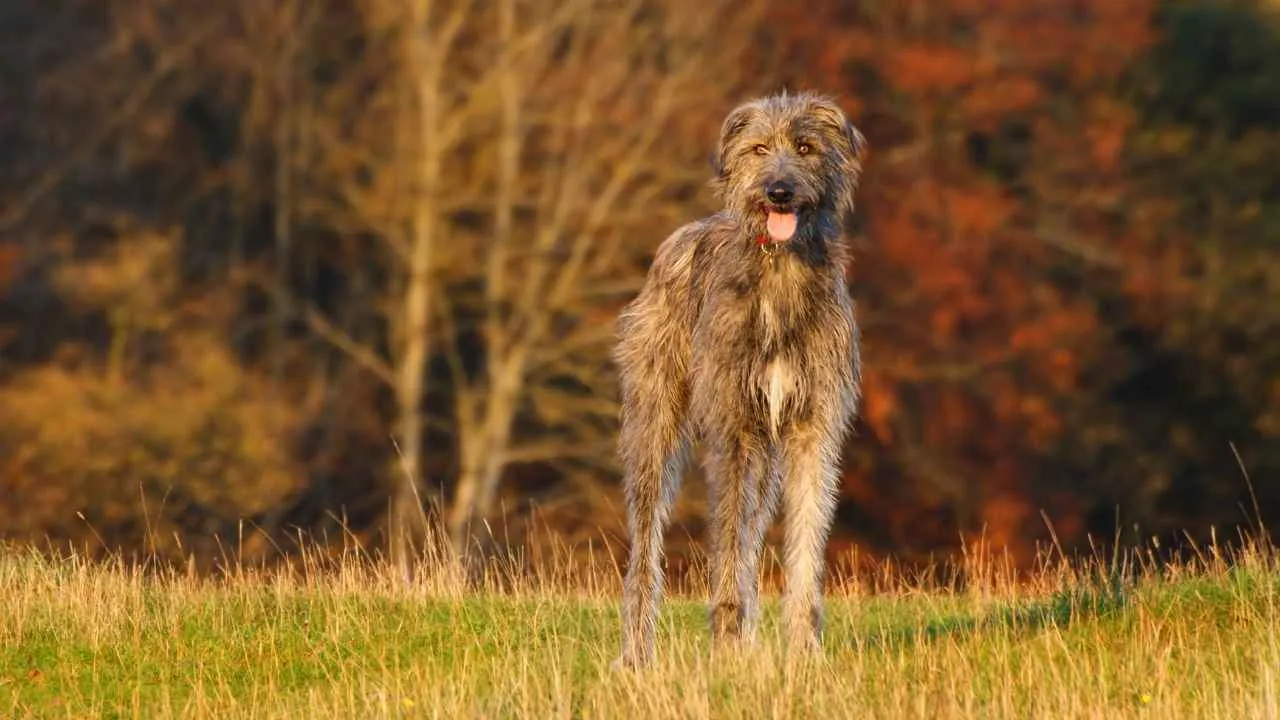
One of the tallest dog breeds, Irish Wolfhounds are graceful and athletic pups known for their substantial size. These immense and muscular hounds are capable of great speed at the gallop. Despite their large size, Irish Wolfhounds are real sweethearts.
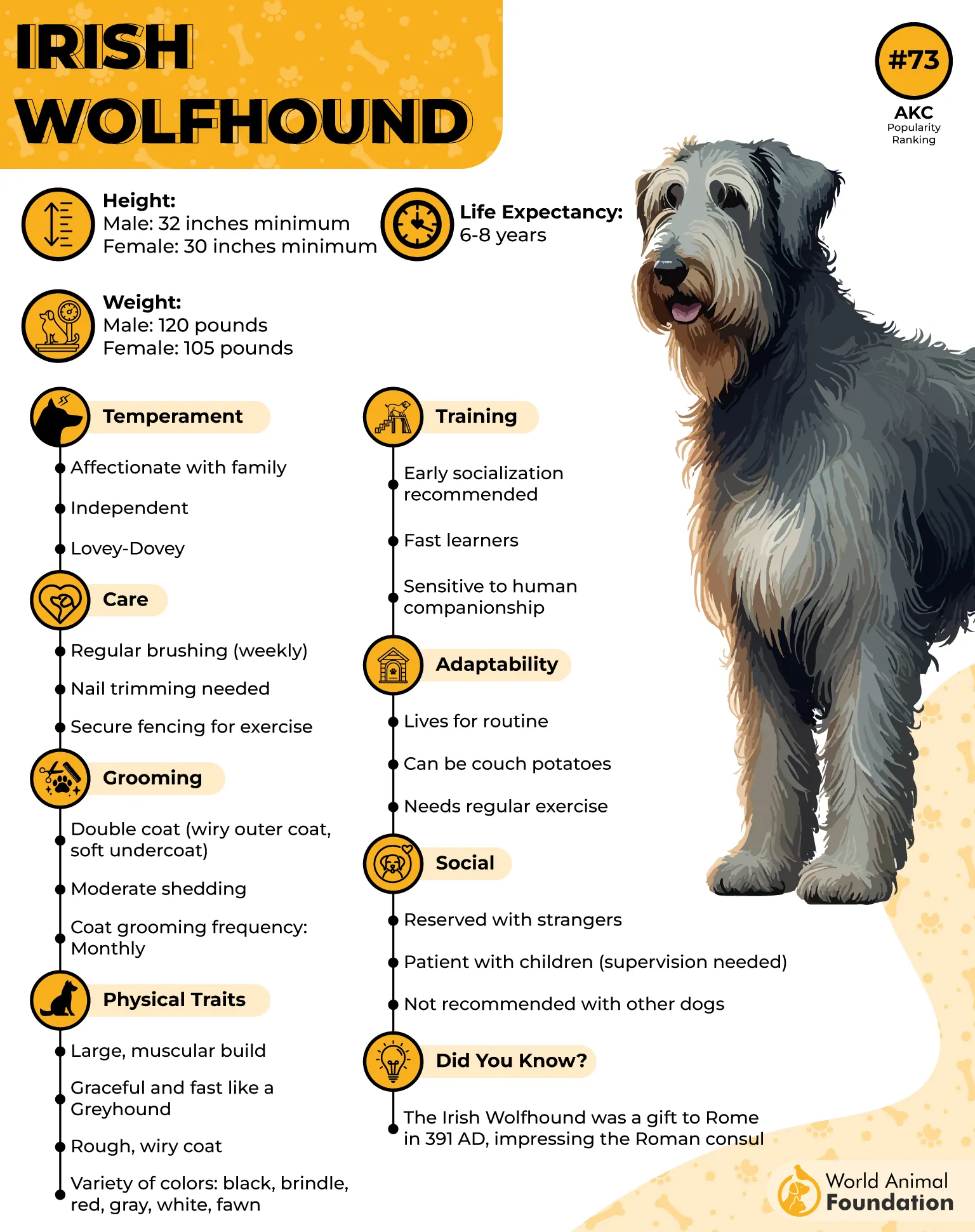
They have a gentle nature and get along nicely with the entire family. Purina mentions that their sheer size makes them unsuitable for many families. Irish Wolfhounds make ideal pets for experienced handlers who know how to deal with big dogs.
This rare dog breed has a courageous and calm demeanor. IWs were bred as hunting dogs and require regular exercise for physical and mental stimulation. They also enjoy taking part in dog sports like agility, tracking, and obedience training.
A graceful giant known for its sweet nature, but its size alone can be a serious commitment.
✓ Pros
- Gentle and sweet-natured
- Very loyal to family
- Calm and graceful personality
- Good for experienced dog owners
- Enjoys dog sports and outdoor exercise
! Cons
- Too large for many homes
- Needs regular exercise
- Not suitable for every family
- Requires experienced handling
- May not be the best choice for small spaces
4. Dogue de Bordeaux
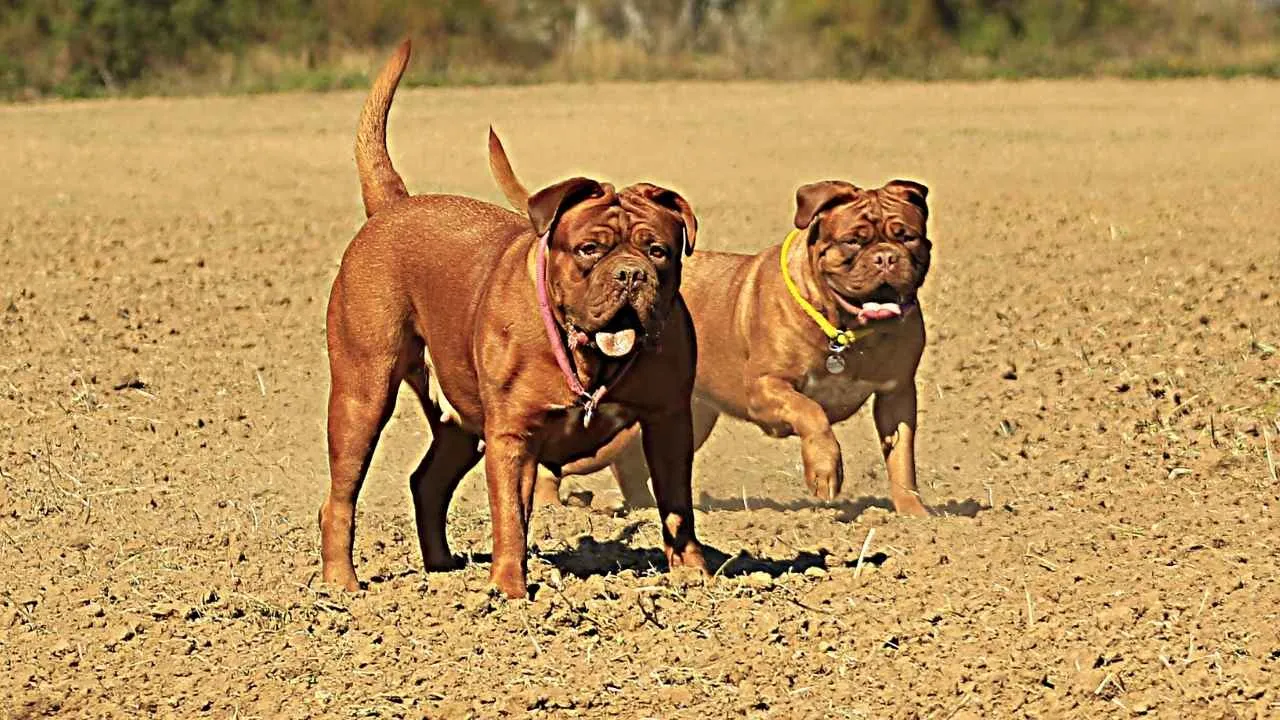
Dogue de Bordeaux are immensely powerful and large dogs. Also known as French Mastiffs, they were originally bred as working dogs who used to guard estates, protect livestock, and even hunt large game. Dogues are one of the rarest and the oldest dog breeds in the world.
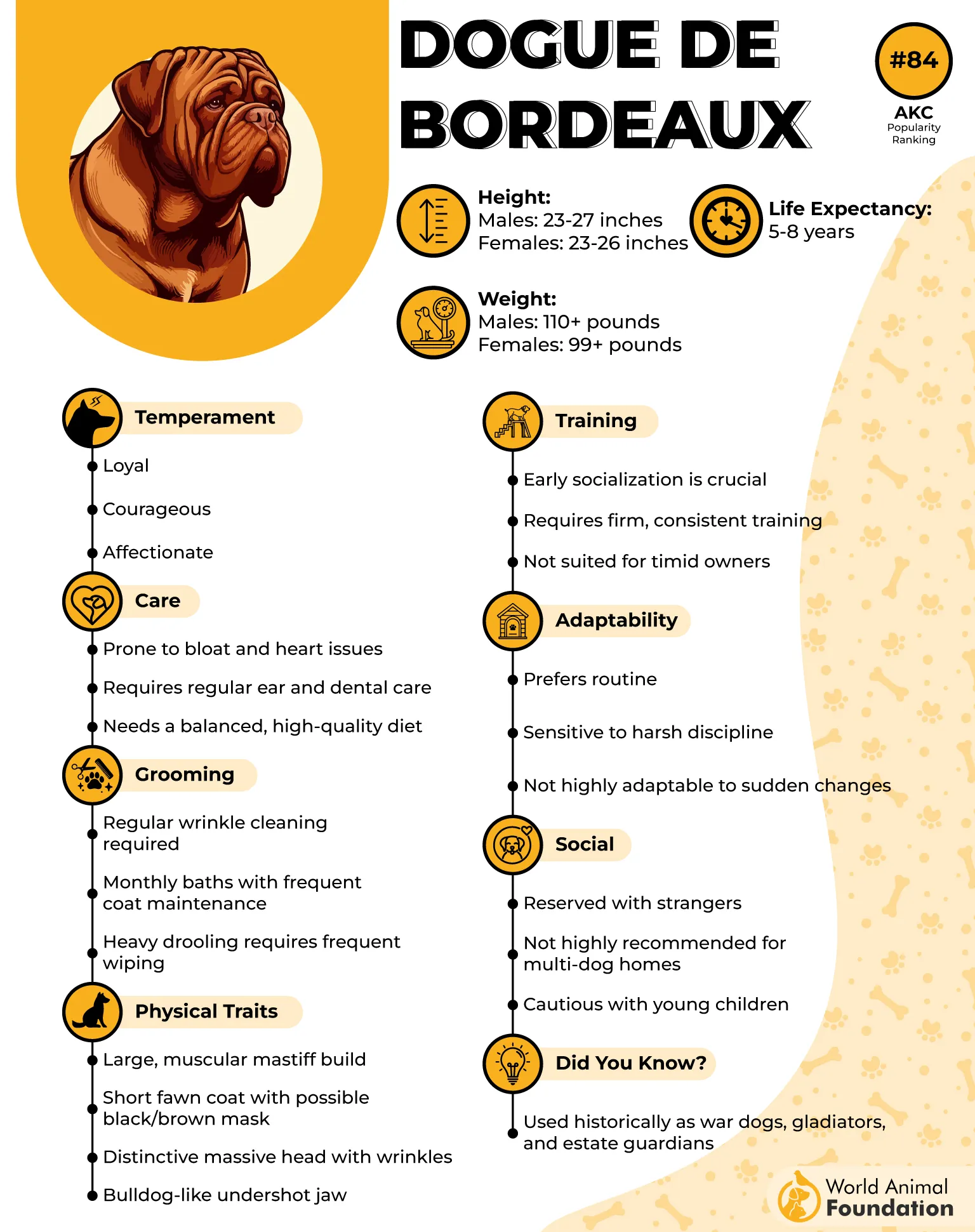
Dogues are known for their endearing and affectionate nature. Having a calm demeanor, they make loving companions for many families. However, proper training and socialization starting from a young age is a must.
These sweet and sensitive souls require regular exercise for mental and physical stimulation. However, they should not be over-exerted. Swimming is an excellent exercise for these dogs. Adult dogs can work strenuously and do jobs like pulling carts.
A strong, affectionate French Mastiff with a protective heart and a need for careful training.
✓ Pros
- Very affectionate with family
- Calm and loving companion
- Strong protective instincts
- Good working and guarding background
- Can enjoy swimming and cart-pulling activities
! Cons
- Needs proper training from a young age
- Should not be over-exercised
- Can be powerful and hard to manage without training
- May not suit inexperienced owners
- Needs regular physical and mental stimulation
5. Black Russian Terrier
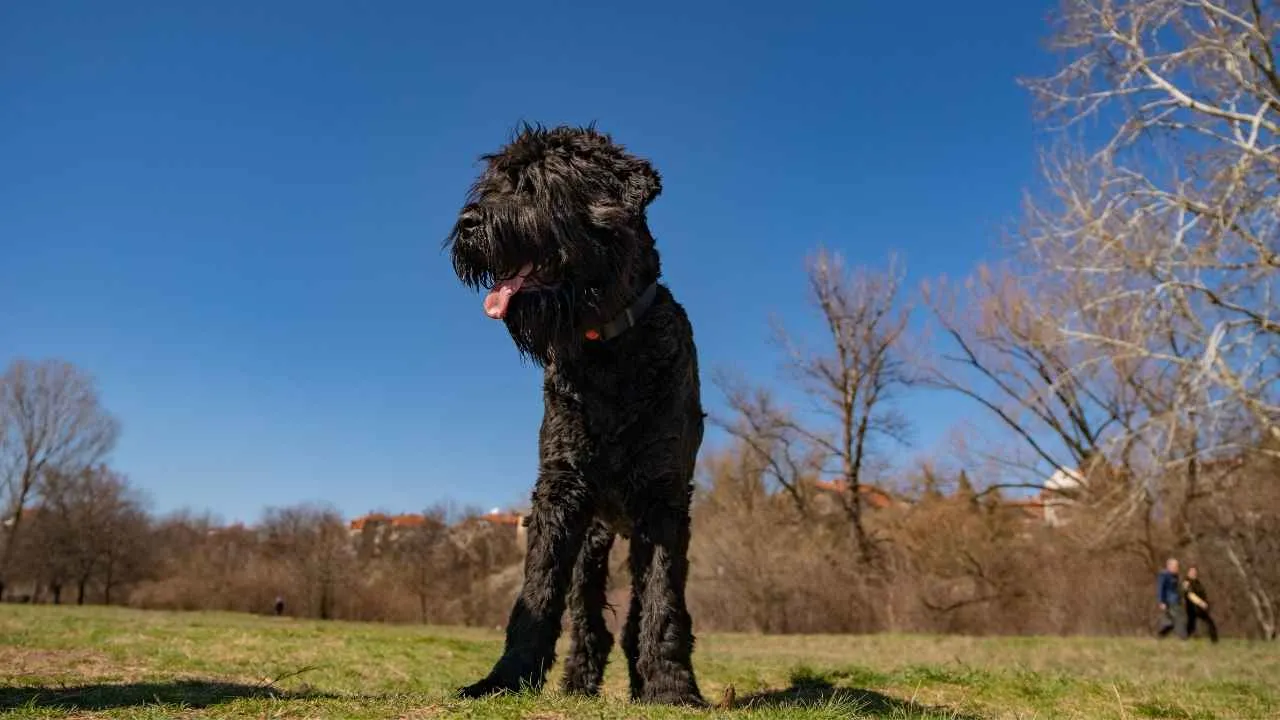
Black Russian Terriers are large and immensely powerful working dogs of heavy bone and coarse all-black coat. These giant dogs were created to patrol borders and protect their owners. Today, they make intelligent and impressive pets with proper training and socialization.
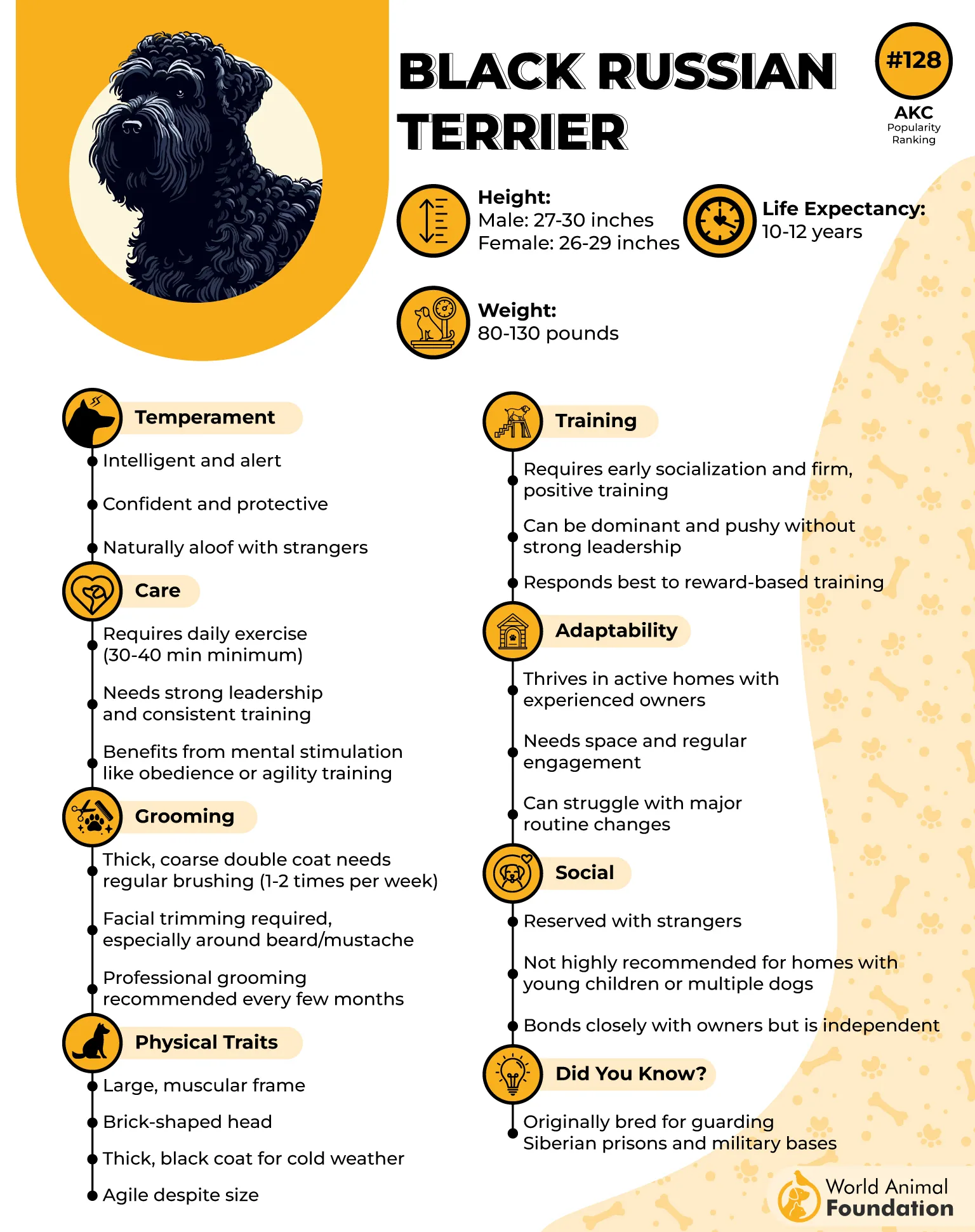
Black Russian Terriers are immensely loyal and naturally protective of their people. These fearless, determined, and calm canines exude self-assurance. These relatively rare dogs make excellent family pets and are now gaining popularity worldwide.
Black Russian Terriers require plenty of room to roam and exercise. BRTs are eager to take part in brisk walks, long runs, bike rides, swims, and hikes. They also excel at a variety of canine sports like obedience, agility, rally, and Schutzhund.
A powerful working dog with strong loyalty, confidence, and protective instincts.
✓ Pros
- Extremely loyal to family
- Naturally protective and confident
- Highly intelligent working breed
- Can excel in obedience, agility, and protection sports
- Good choice for active, experienced owners
! Cons
- Needs plenty of exercise and mental stimulation
- Requires space to move and roam
- Not ideal for inactive owners
- Needs consistent training and socialization
- Can be too strong and demanding for beginners
6. Neapolitan Mastiff
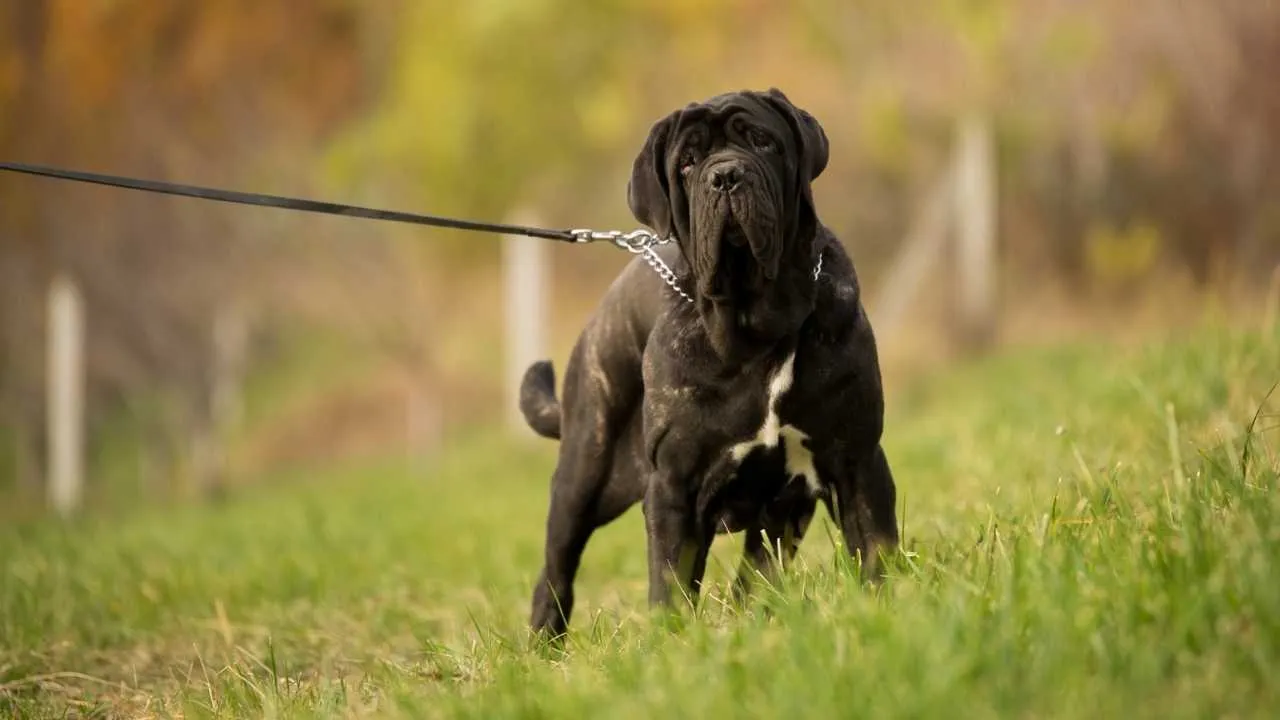
Neapolitan Mastiffs are huge and powerful guarders having an astounding appearance. They are capable of scaring away potential threats with their imposing presence. Neapolitan Mastiffs can be instantly recognized by their wrinkly skin, short fur, and floppy jowls.
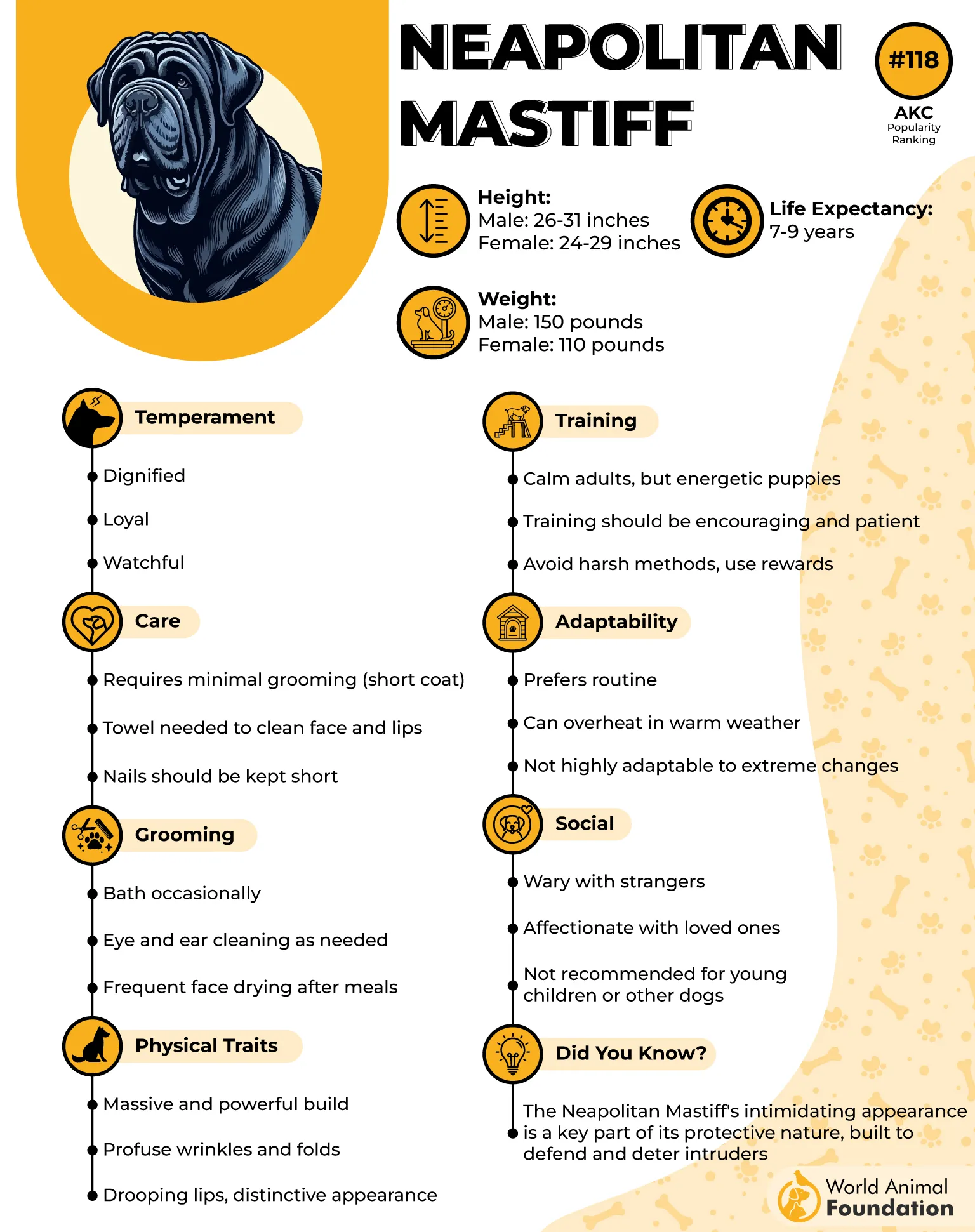
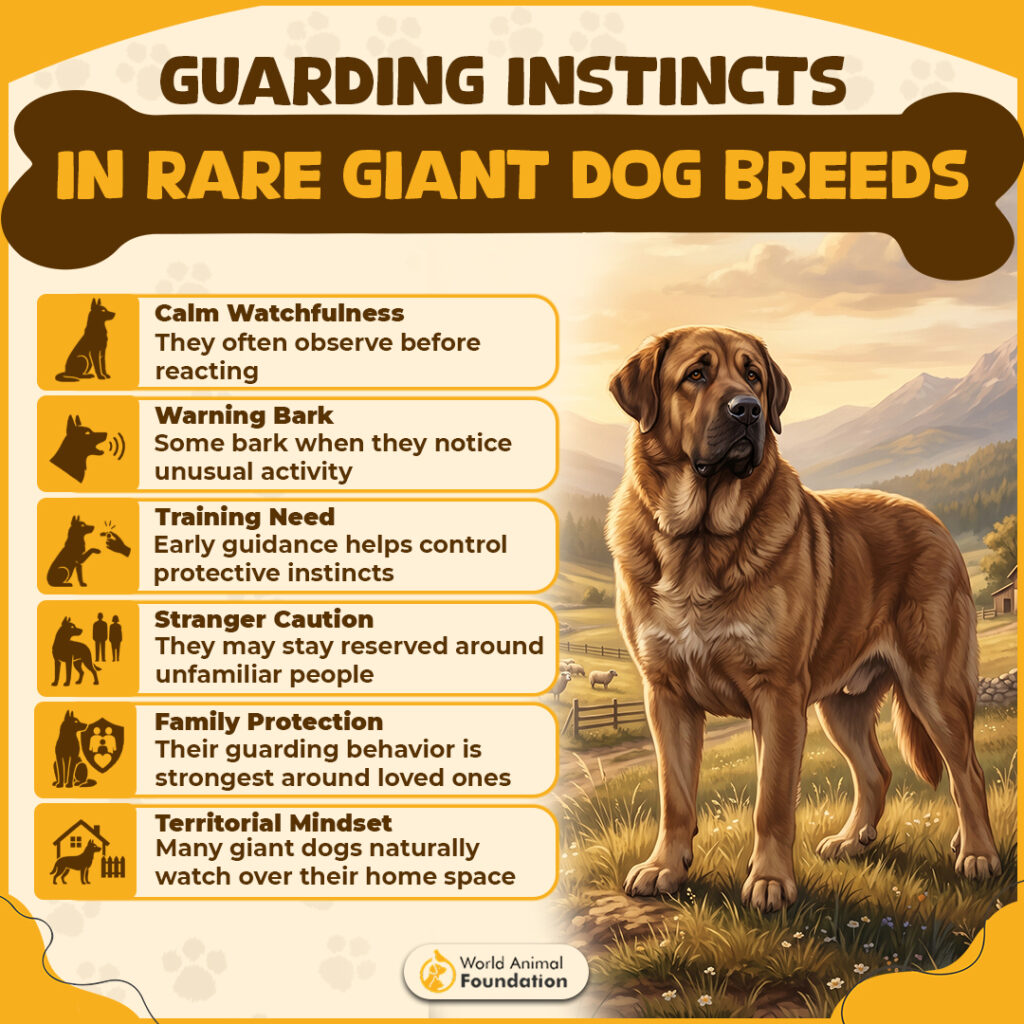
They are intensely loyal and highly protective of their people and possess territorial instincts. Thanks to these traits, Neos make wonderful guard dogs. With proper training and socialization, these giant pups also make excellent family dogs.
Relatively rare outside their native region, Neos are not very playful. In fact, they prefer curling up inside or going on walks with their humans. They need moderate daily exercise for physical and mental stimulation.
A massive, wrinkly guardian with a serious protective presence and deep family loyalty.
✓ Pros
- Very loyal to family members
- Strong natural guard dog instincts
- Impressive protective presence
- Needs only moderate daily exercise
- Can be a good family dog with proper training
! Cons
- Not a very playful breed
- Can be territorial around strangers
- Needs early socialization
- Large size can be difficult to manage
- Rare outside its native region
7. Scottish Deerhound
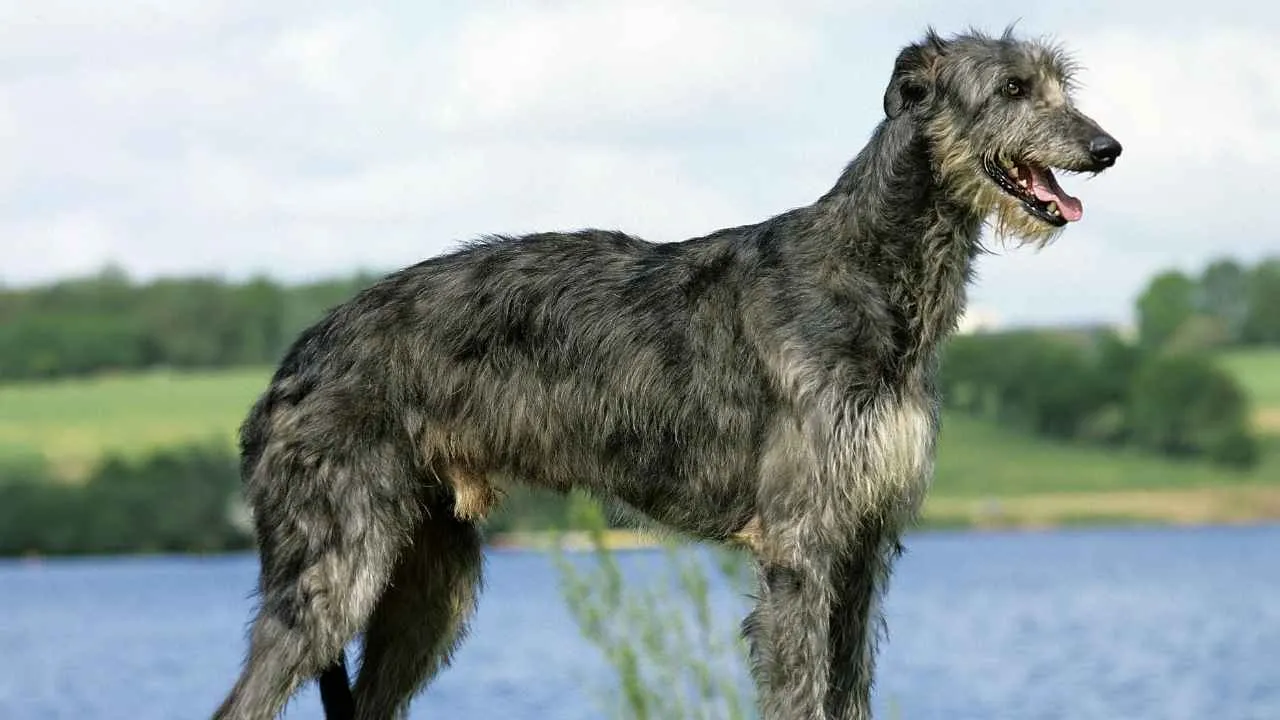
Also referred to as ‘Royal Dog of Scotland,’ Scottish Deerhounds were originally bred to hunt deer across the Scottish Highlands. They are best known for being gentle giants at home. Much rarer than a giant Panda, Scottish Deerhounds make gentle and friendly companions.
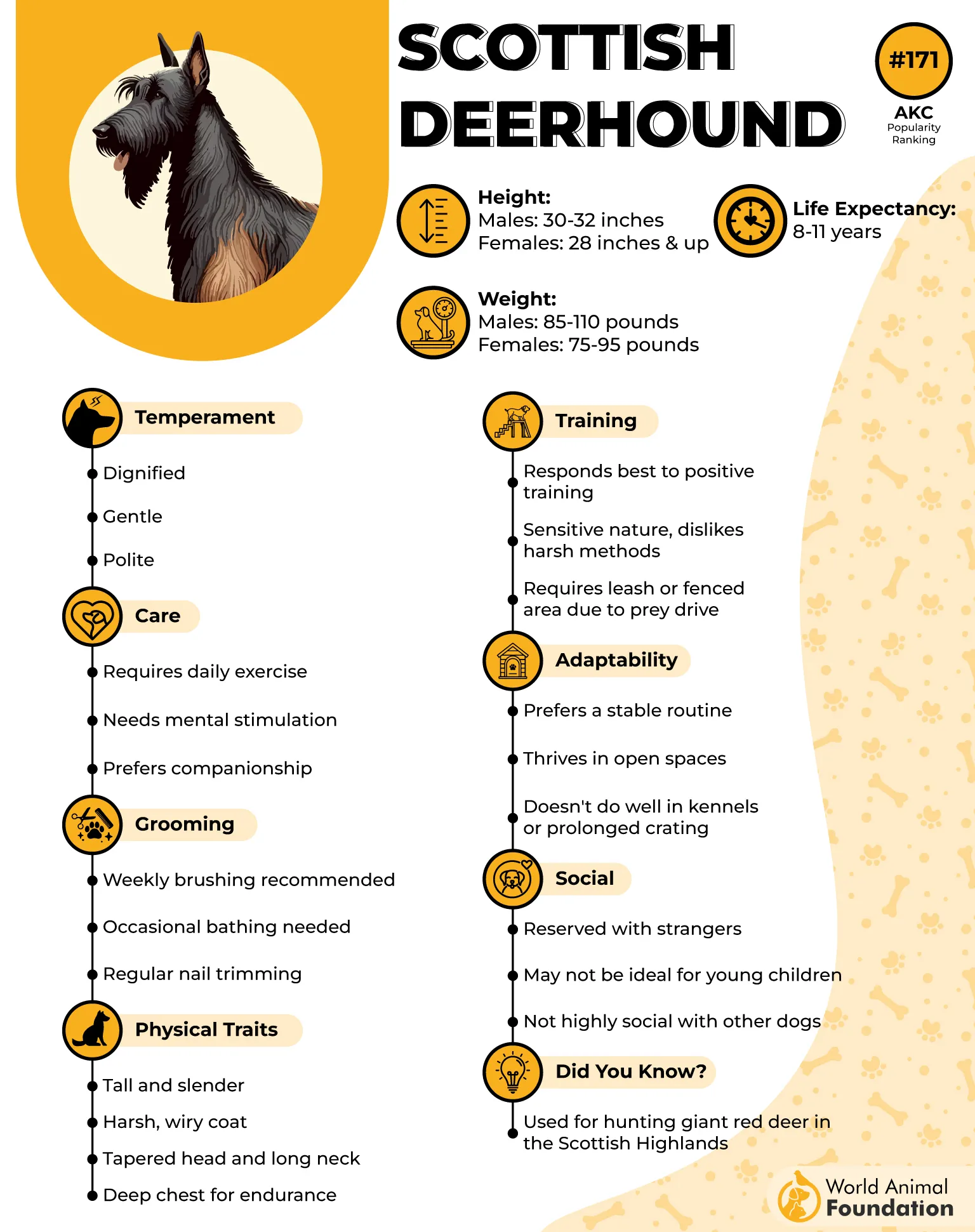
Adult dogs love to spend their time resting on a couch. Proper socialization helps them understand family life and get along nicely with children, other people, and pets. Scottish Deerhounds have a strong prey drive, which means extra vigilance may be needed around smaller pets and kids.
These large dogs thrive on gentle human companionship, regular exercise, and proper nutrition. They are very sensitive and respond best to positive reinforcement training methods. Scottish Deerhounds require at least 30 minutes of regular exercise every day.
A gentle, sensitive giant with a calm home personality and a historic hunting background.
✓ Pros
- Gentle and friendly personality
- Calm indoors and relaxed at home
- Good companion for peaceful homes
- Responds well to positive training
- Needs only moderate daily exercise
! Cons
- Has a strong prey drive
- Needs care around smaller pets
- Still requires regular outdoor exercise
- Sensitive nature needs gentle handling
- Large size may not suit every home
8. Pyrenean Mastiff
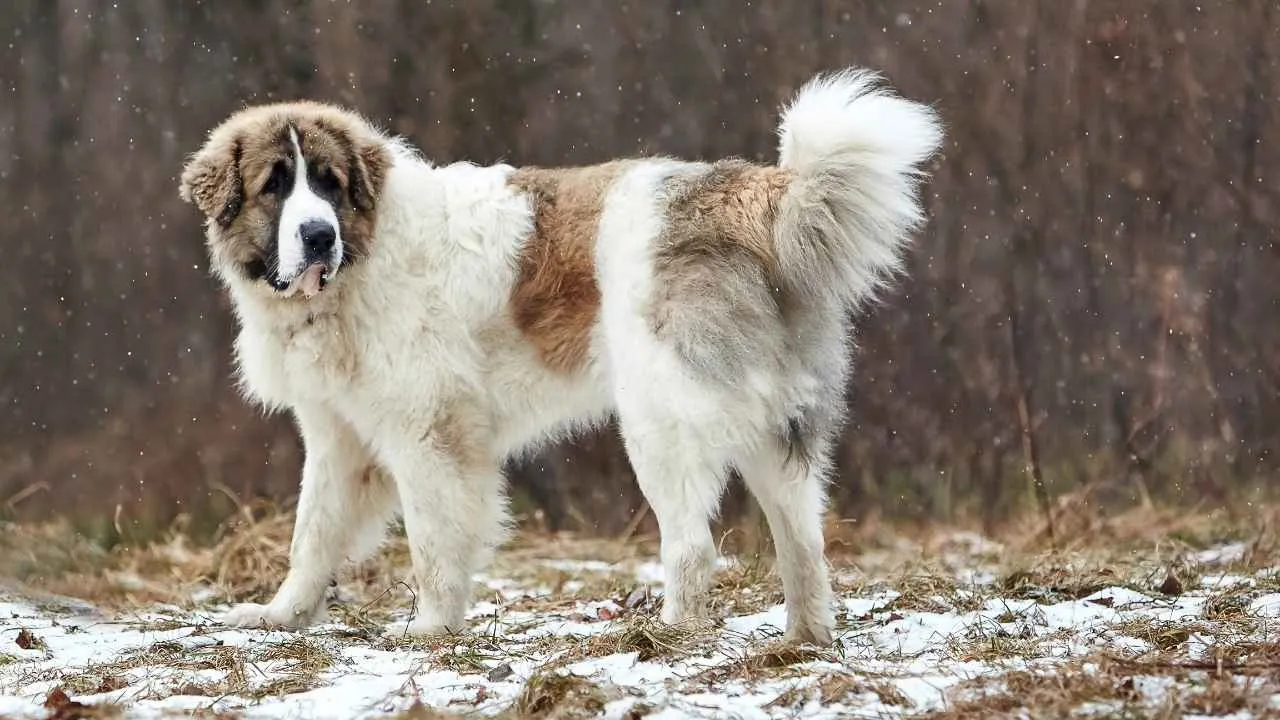
Pyrenean Mastiffs are rare giant dogs that were originally bred as livestock guardians in the Spanish Pyrenean mountains. Laid back, social, and incredibly loyal, they make excellent dogs for families with kids.
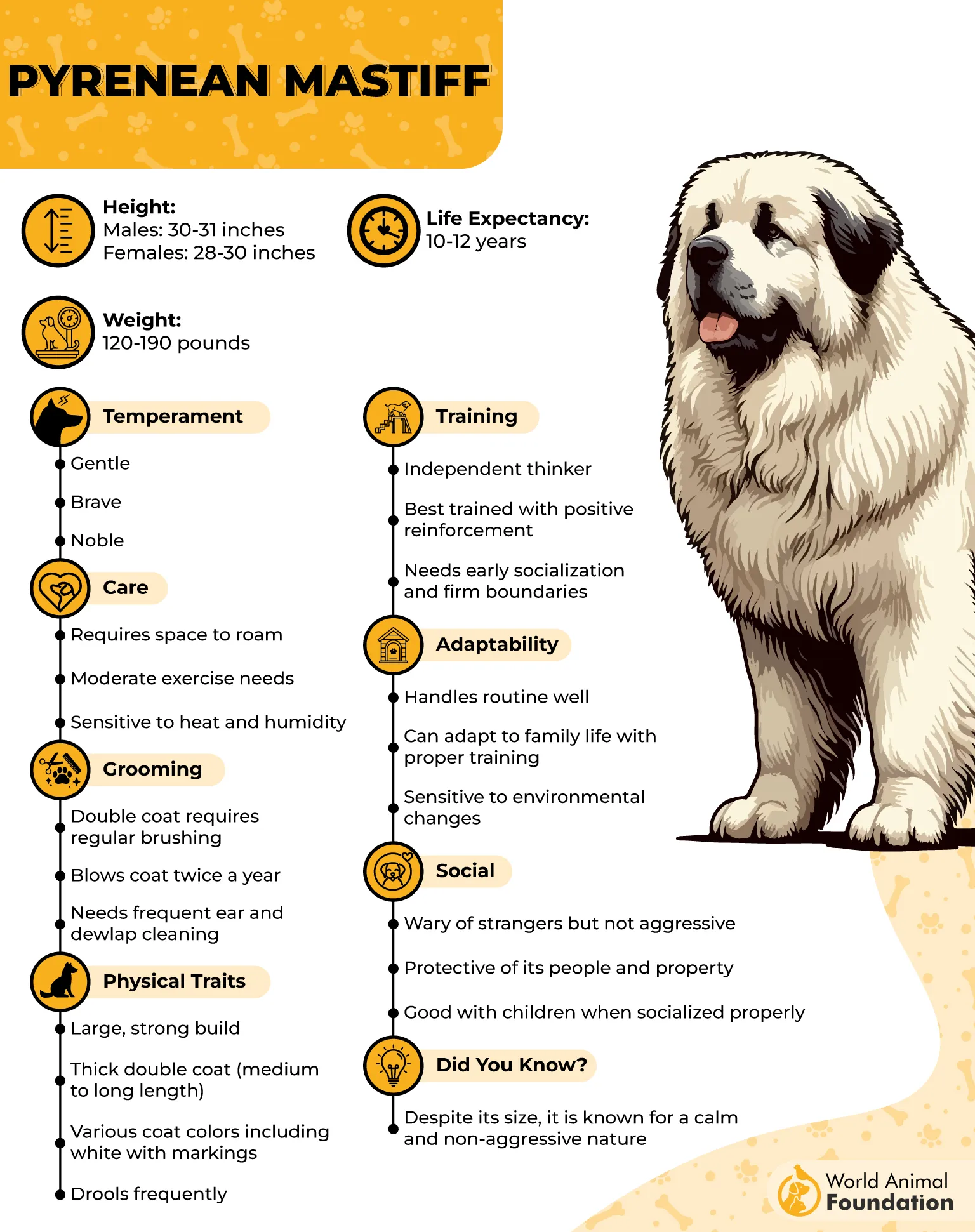
Pyrenean Mastiffs are naturally wary of unfamiliar people, but affectionate and docile towards their family members. They will inform you when someone is at the door and keep an eye on the people they don’t know. Proper socialization helps avoid undesirable incidents with strangers.
Being a large dog breed, Pyrenean Mastiffs do not require plenty of exercise to stay healthy and content. Their thick double coat is weather-resistant and requires regular brushing to manage shedding and prevent mats and tangles.
Pyrenean Mastiffs are also prone to some big dog diseases like hip dysplasia, entropion, ectropion, and gastric torsion.
A rare mountain guardian known for loyalty, calmness, and a protective nature around the home.
✓ Pros
- Loyal and affectionate with family
- Can be good with kids when trained
- Calm and laid-back personality
- Strong livestock guardian background
- Does not need excessive exercise
! Cons
- Can be wary of strangers
- Needs proper socialization
- Thick coat requires regular brushing
- Can shed heavily
- May be prone to hip issues and gastric torsion
9. Spanish Mastiff
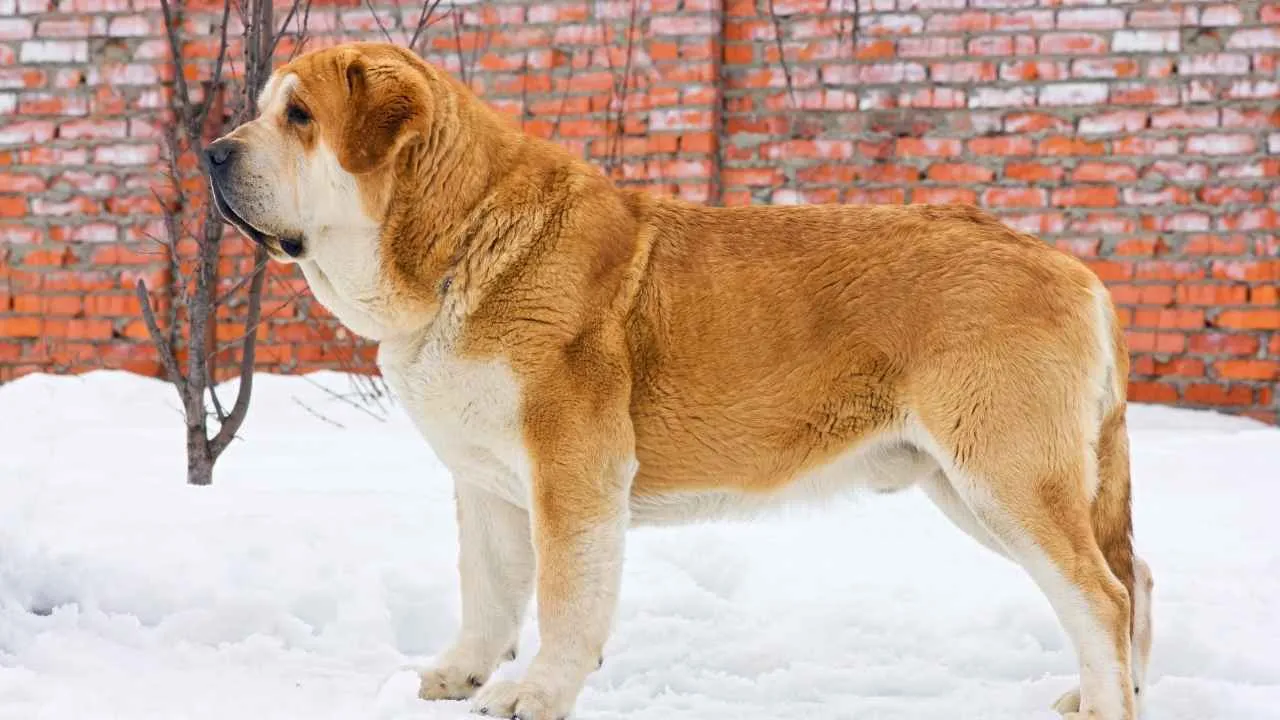
Spanish Mastiffs are incredibly intelligent and loyal, large dogs. Rare in the United States, they are quite common in their native region. Spanish Mastiffs are self-confident canines who were meant to protect sheep from wolves and other predators.
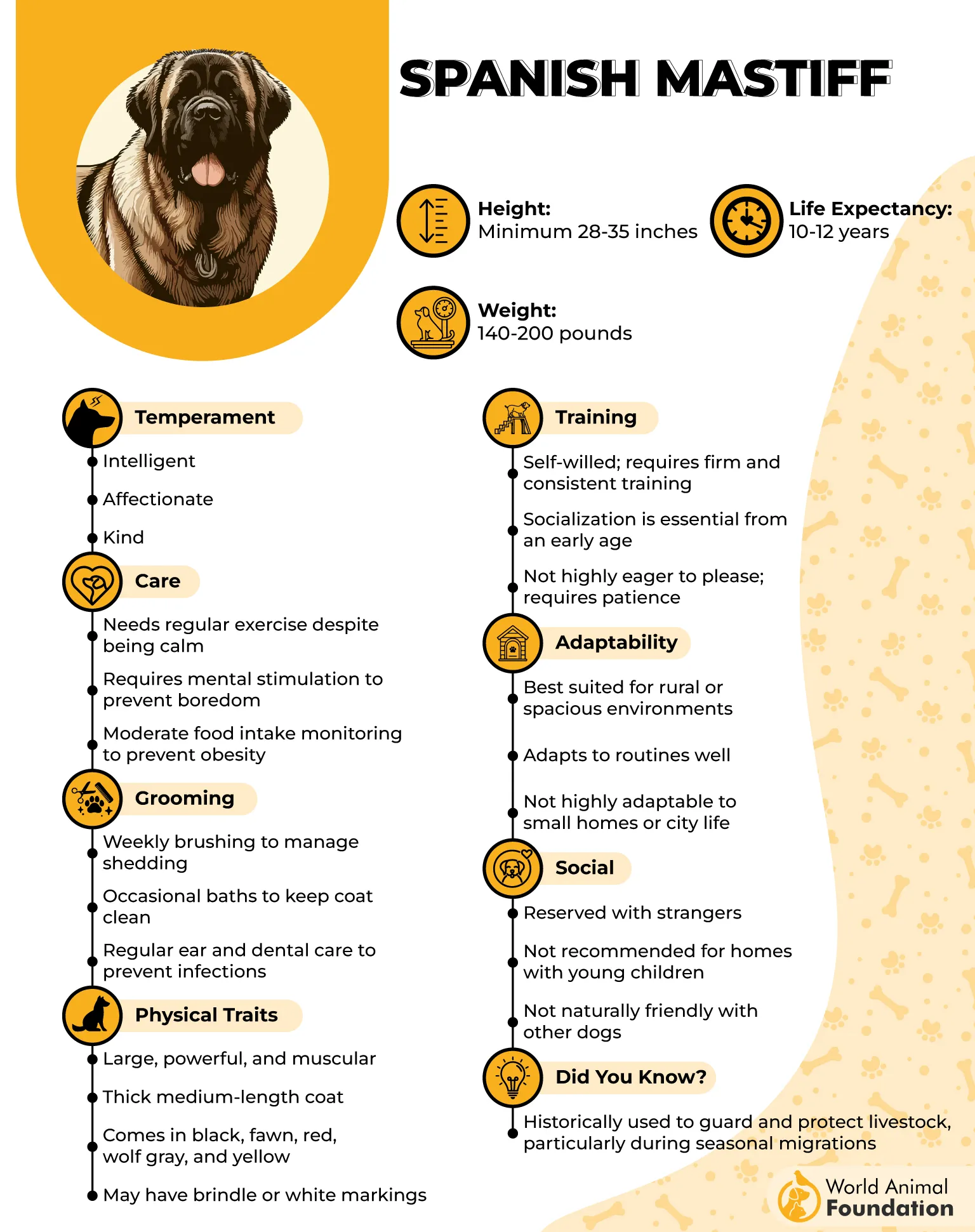
Spanish Mastiffs are highly affectionate towards their family members, but their natural guarding instincts come into action when they encounter new people. Properly trained and well-socialized dogs behave well around young children and other dogs.
One of the calmest dog breeds, the Spanish Mastiff requires moderate daily exercise for physical and mental stimulation. It enjoys outdoor activities like swimming, hiking, or retrieving balls. Dog sports like obedience, agility, and rally are also a good way to exercise them.
A calm, intelligent livestock guardian with strong loyalty and serious protective instincts.
✓ Pros
- Very loyal and intelligent
- Calm and steady personality
- Strong natural protector
- Excellent livestock guardian background
- Affectionate with family members
! Cons
- Rare in the United States
- Can be suspicious of strangers
- Needs training and socialization
- Better for experienced owners
- Requires space and moderate daily exercise
Conclusion
Giant dog breeds are loved for their massive size and larger-than-life personalities. Despite their imposing stature, they are incredibly loyal, calm, and docile towards their loved ones. However, many of them dislike strangers and do not let them enter their territory.
Some impressive giant dogs are rare outside their native region. Large dogs are usually more prone to certain illnesses compared to smaller breeds. They need moderate regular exercise, proper training, and early socialization to turn into well-mannered dogs.
