




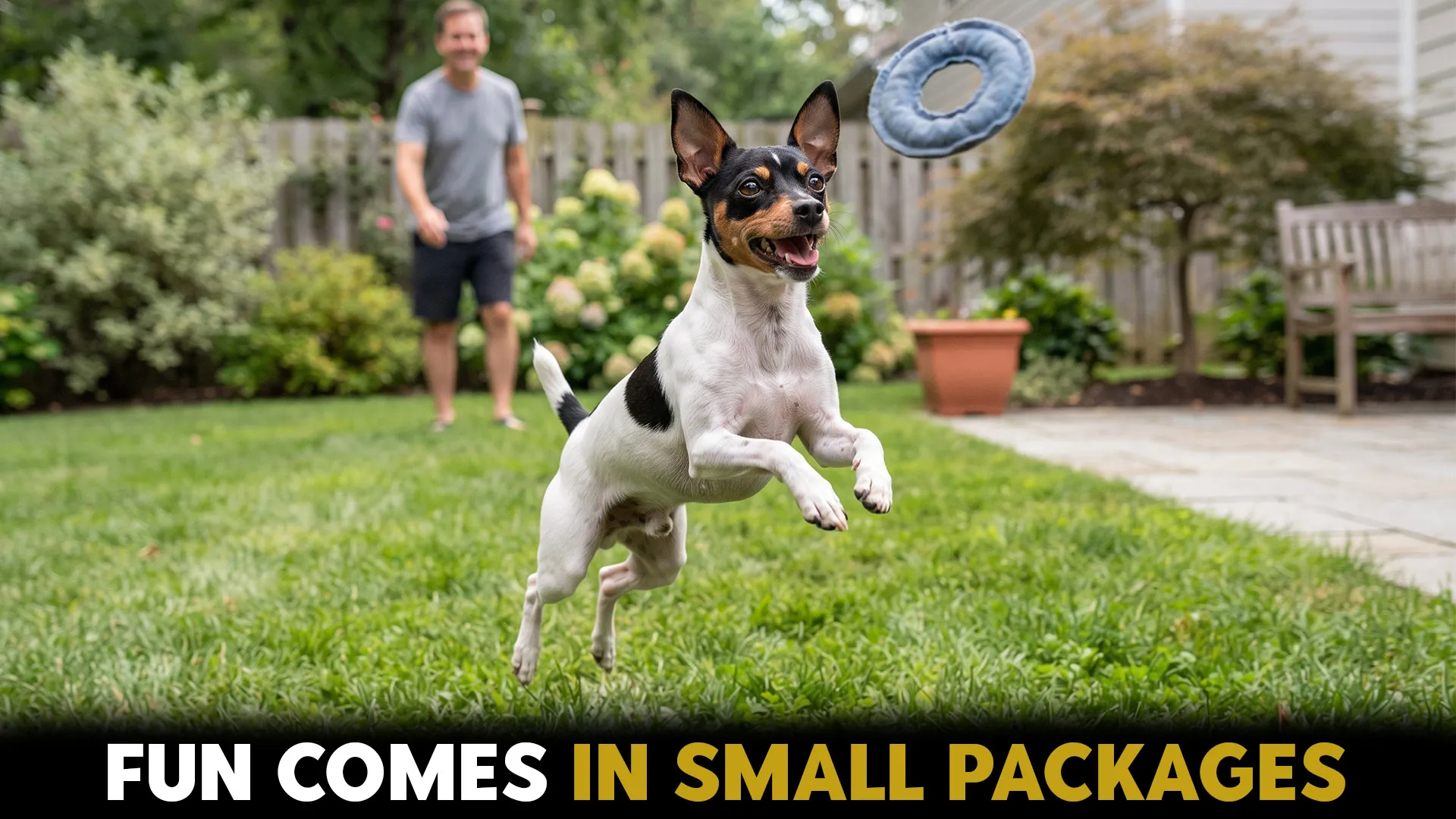
What makes a small dog truly playful? It can be the way they chase a toy, invent games from household objects, race around the room, or keep asking for another round long after you thought playtime was finished.
Small dogs can pack surprising energy into compact bodies, and several are known for enjoying interactive games, training, walks, and active family routines. Their smaller size may make indoor play easier, especially for people living in apartments or homes without large yards.
Still, playfulness varies from one dog to another, so breed tendencies are only part of the picture. Age, health, personality, and activity all affect how much fun a dog brings to the household. For anyone hoping to find a companion with a big appetite for games, the choices can be surprisingly varied.
The seven breeds ahead bring the most playful spirit to everyday life for your household and routine, too.
Key Takeaways
A small dog can have you reaching for the toy again and again, especially when playtime becomes one of the best parts of its day.
The Silky Terrier loves learning tricks and joining in on outdoor activities, while the Bichon Frise has an entertaining past that makes its playful nature even more interesting.
Jack Russell Terriers take that energy up another notch, with enough stamina for long walks, games, and activities such as agility and flyball.
The fun continues with Boston Terriers, Papillons, and Yorkshire Terriers, each bringing their own way of keeping a household lively.
Most Playful Small Dog Breeds That Are Full of Fun!
1. Silky Terrier
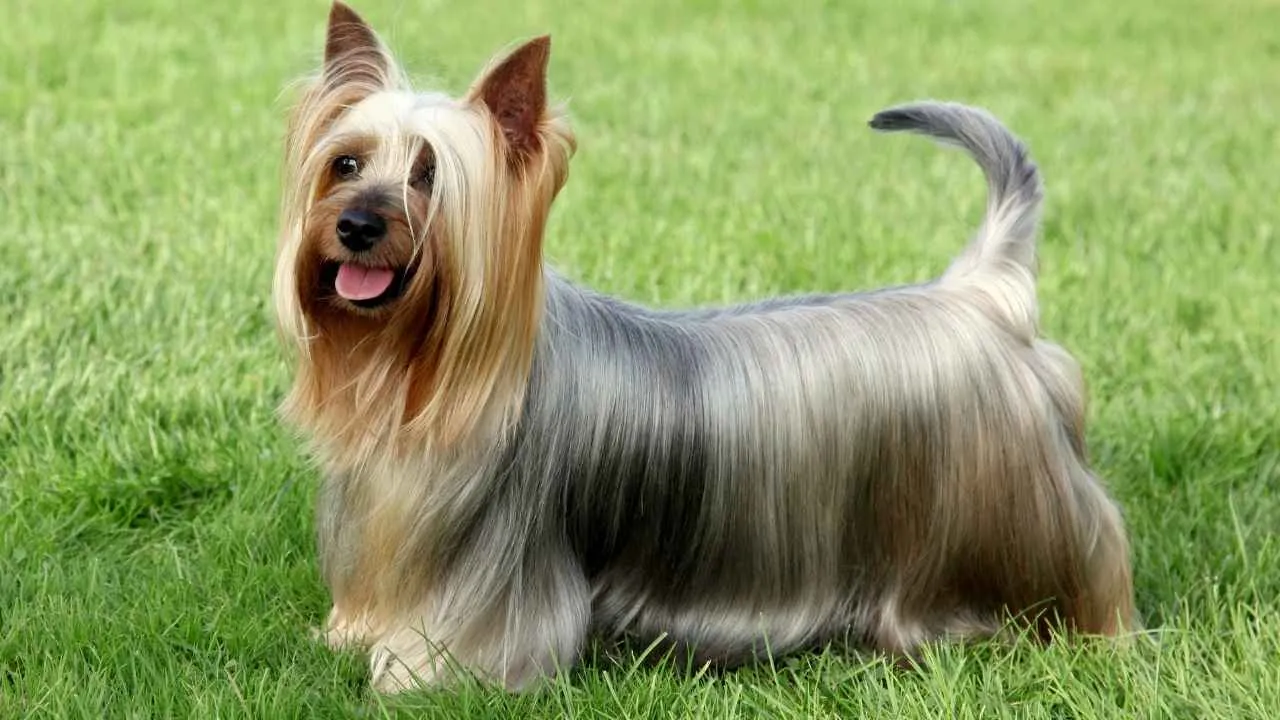
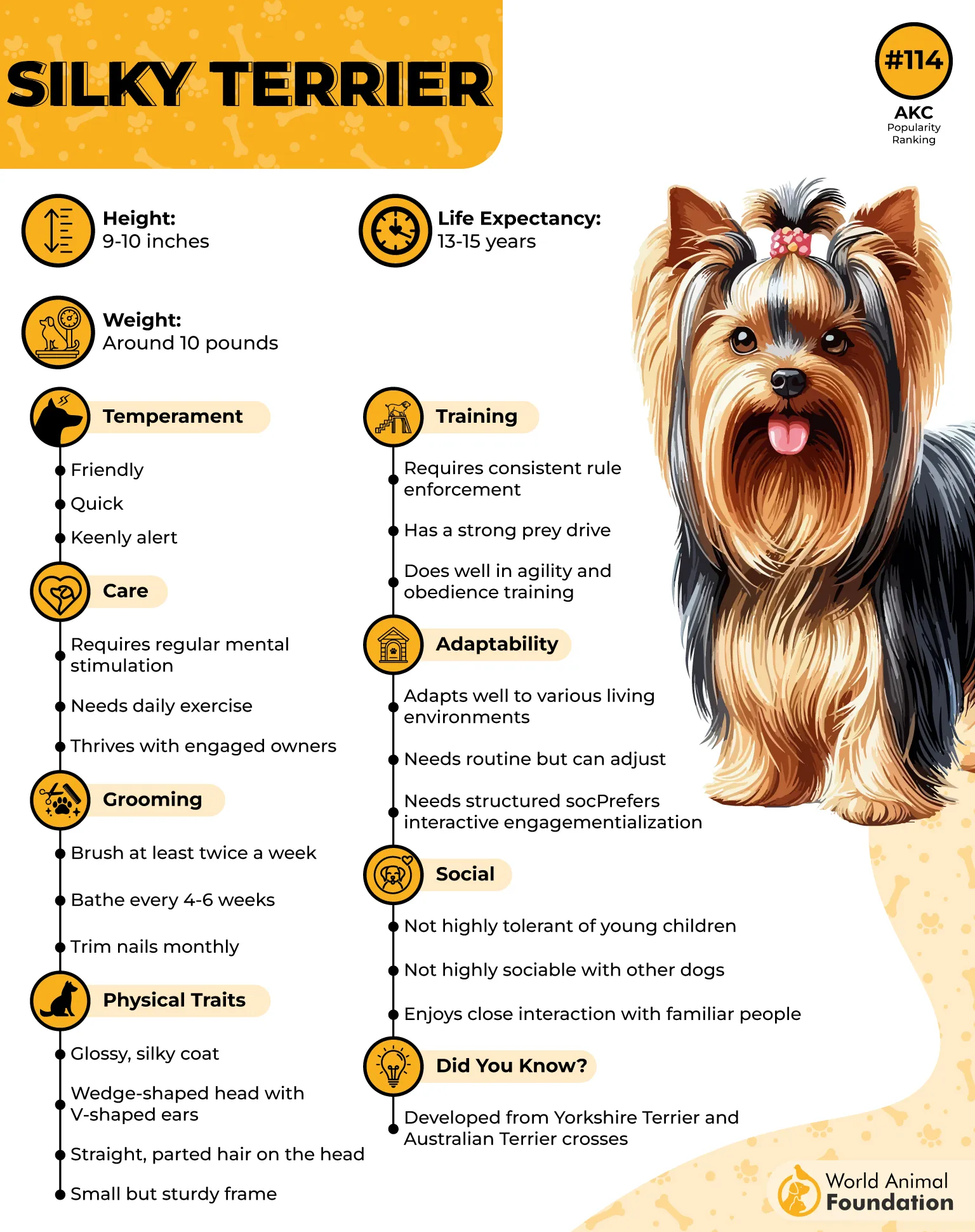
Silky Terrier was originally bred in Australia during the 1890s after Yorkshire Terriers were crossed with native Blue and Tan Australian Terriers. The pairing produced the small, long-coated dog recognized today, with its breed standard written in the early 1900s.
A Terrier With Plenty of Spark
With their playful streak, they enjoy learning tricks when treats are involved, while their traditional terrier temperament brings plenty of boldness. Without enough training and exercise, that feisty attitude can turn into stubborn behavior that is harder to manage.
The following characteristics give this little competitor extra personality:
Great playmates for gentle, considerate children
Can compete in Earthdog and barn hunt
Enjoys swimming and hiking
Always Part of the Action
Silky Terrier enjoys tagging along with its people, whether that means relaxing at home, running errands, or joining them at work. Long absences can be difficult for this breed because separation anxiety may become an issue without companionship or a planned visit during the day, as stated in Omlet.
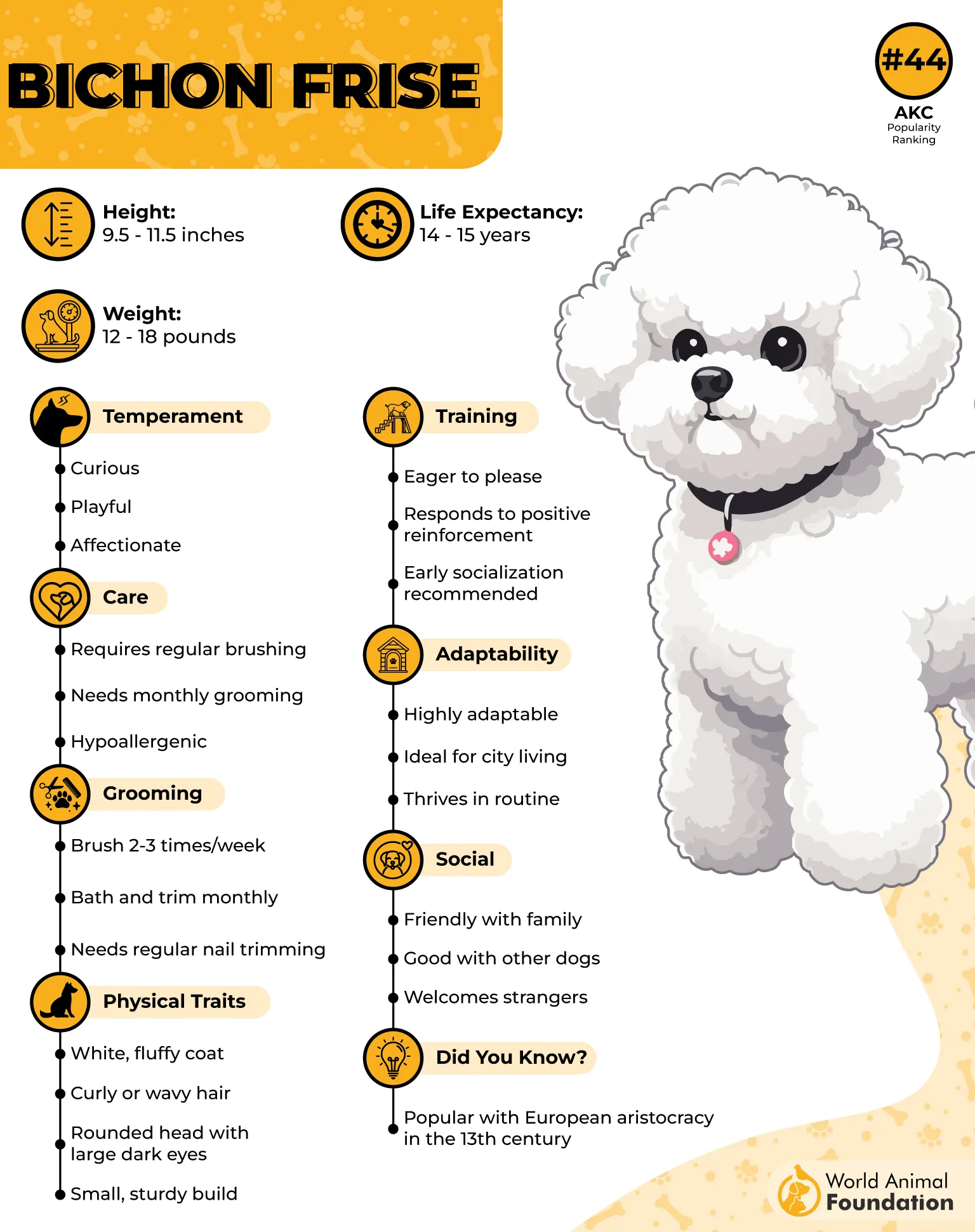
2. Bichon Frise
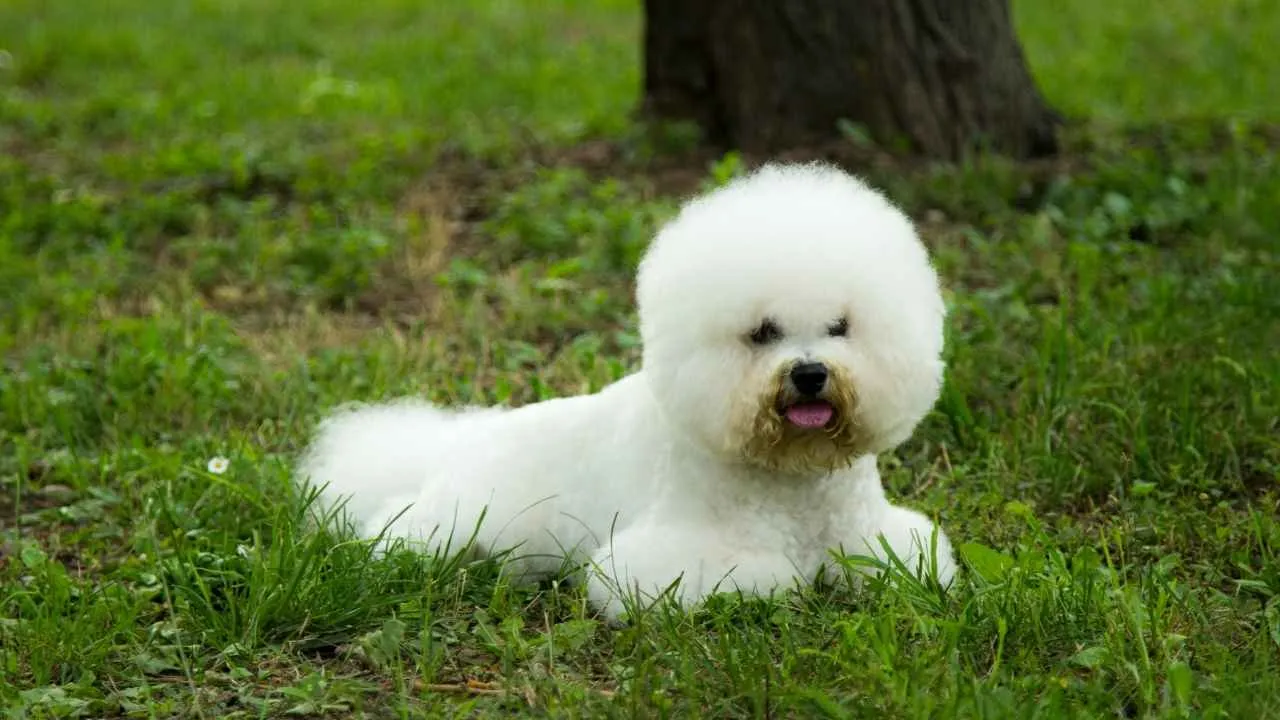
Bichon Frise developed in the Mediterranean through crosses between small white dogs and larger water dogs, eventually leading to the Barbichon group. The Tenerife type later became especially important to the breed, while sailors helped bring these dogs to Italy, where they gained wider popularity.
Born for Tricks
This small breed has a naturally playful streak that once made it a favorite among street performers, particularly when its popularity shifted away from the upper classes. That knack for entertaining fits neatly with its love of attention, games, and lively interaction.
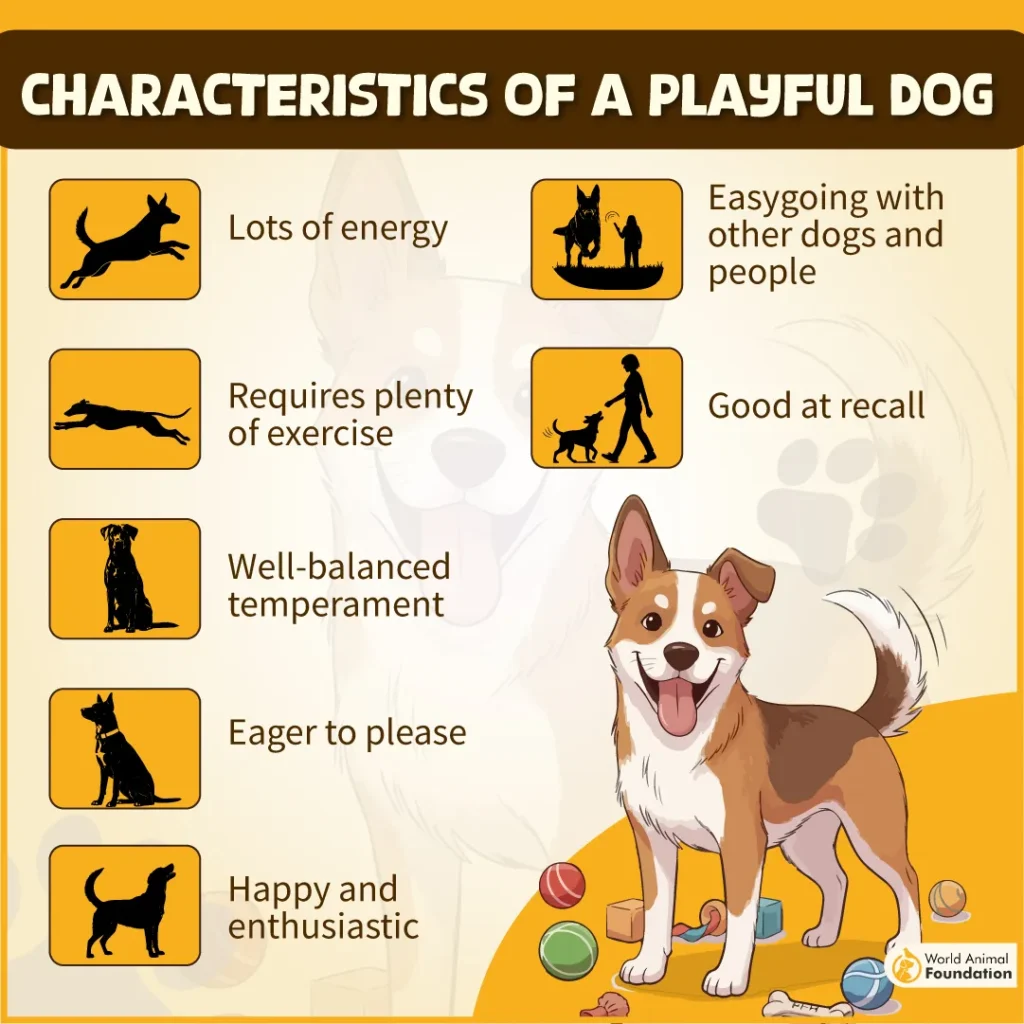
The following characteristics add some fun to the picture:
Loves to play tug-of-war
Enjoys low-key games of fetch
Keeps themselves entertained by playing indoors and in the backyard
People Person
Bichon Frise is highly social and responds closely to changes in people’s moods, which can make its reactions surprisingly expressive and easy to notice.
Early training and gentle socialization can also help it interact well with children, unfamiliar people, and other animals in different everyday settings, as VCA Hospital noted.
3. Jack Russell Terrier
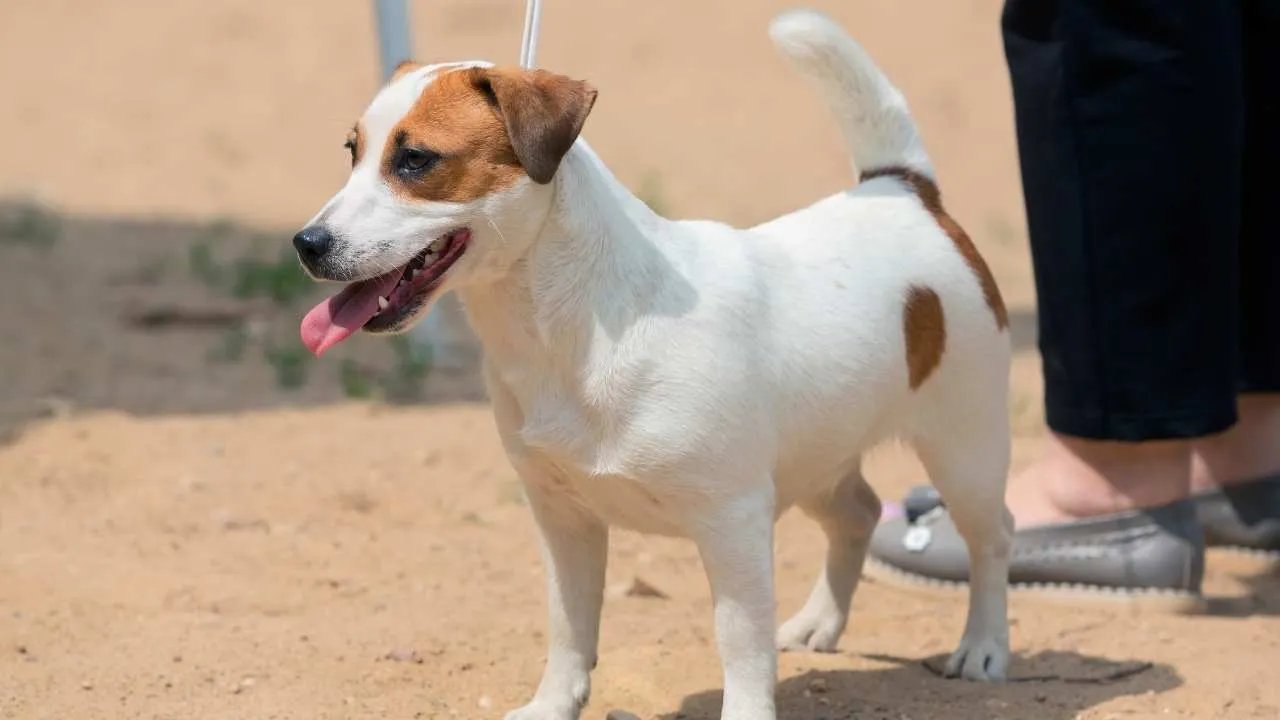
Jack Russell Terrier originated in 1800s England, developing through crosses involving the now-extinct White Terrier. Bred specifically for fox hunting, these small dogs could locate a fox, dig it out, and hold it until the hunter arrived, before later becoming valued rat catchers around farms and homes.
Big Energy, Small Frame
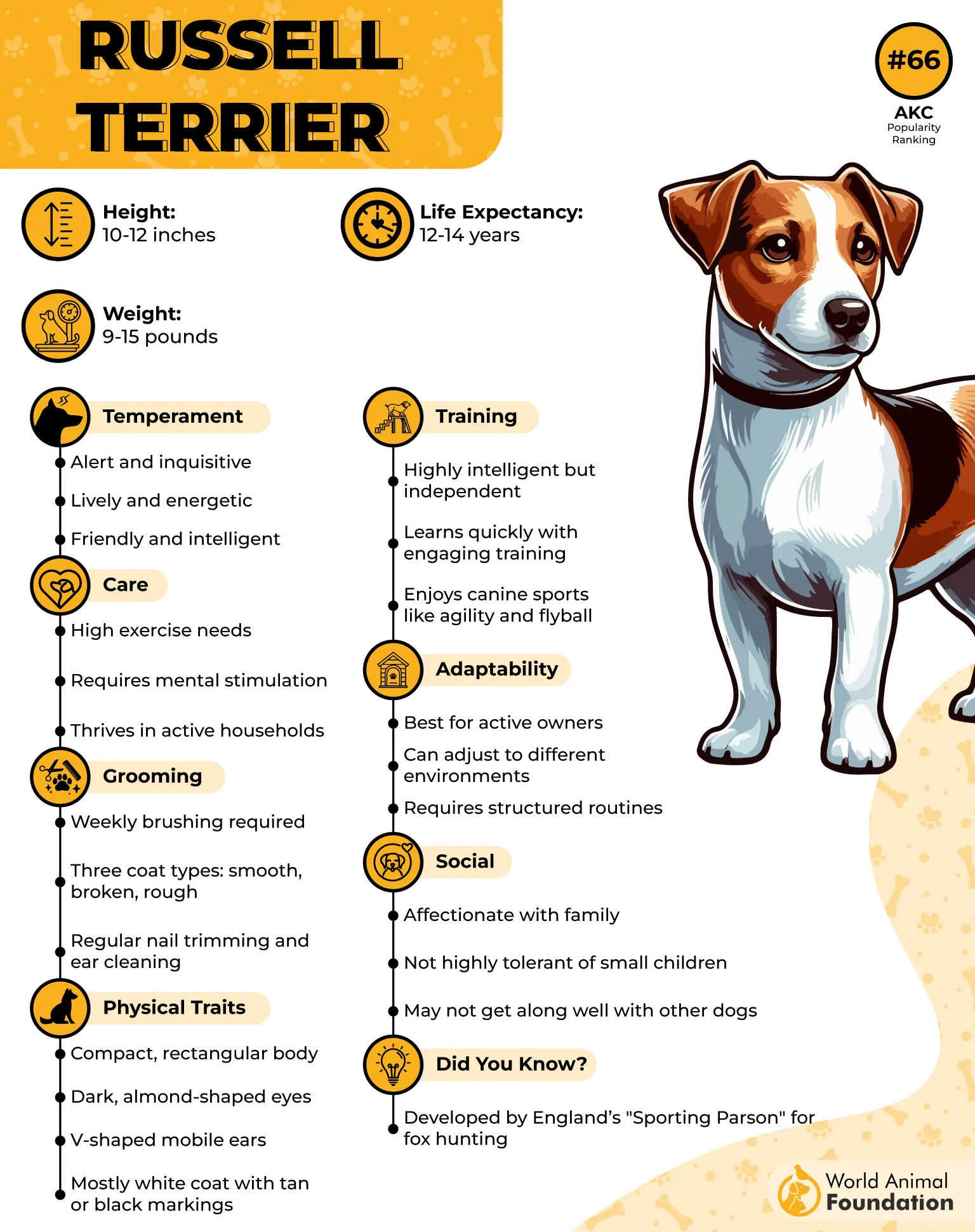
This hunting dog breed brings an intense appetite for activity to its compact build, with enough stamina for a two-hour walk followed by a short nap and another burst of energy. Hiking, running, and safe roaming in a fenced yard fit naturally into its routine.
That lively nature comes with plenty of variety:
Obedience competitions
Agility courses
Flyball and rally
Play Is Serious Business
Jack Russell Terrier enjoys toys that squeak, bounce unpredictably, hold treats, or light up as they roll, giving this energetic dog different ways to stay occupied. Proper socialization can help it interact safely with children and other dogs, while cats may trigger its strong urge to chase.
4. Boston Terrier
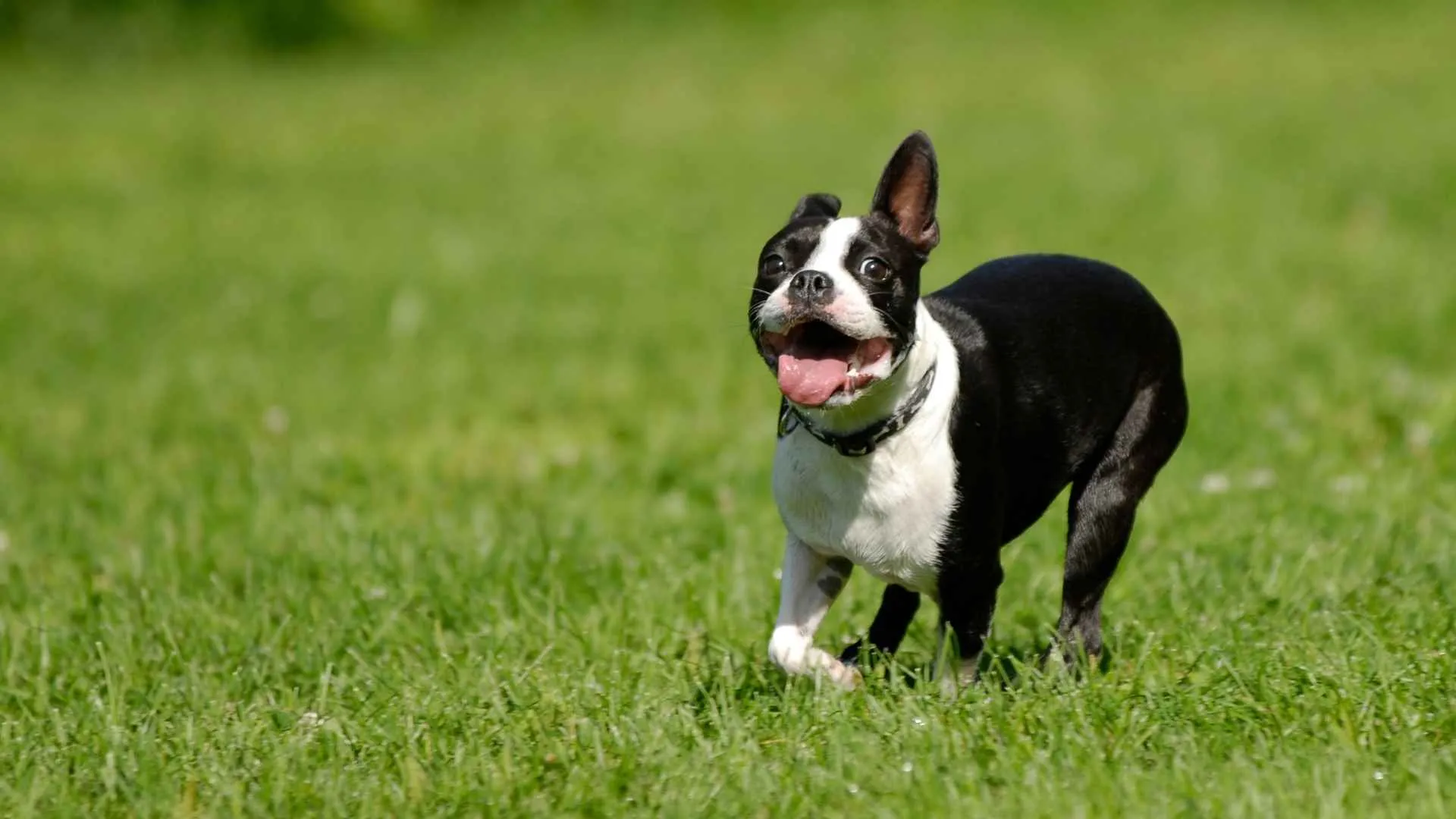
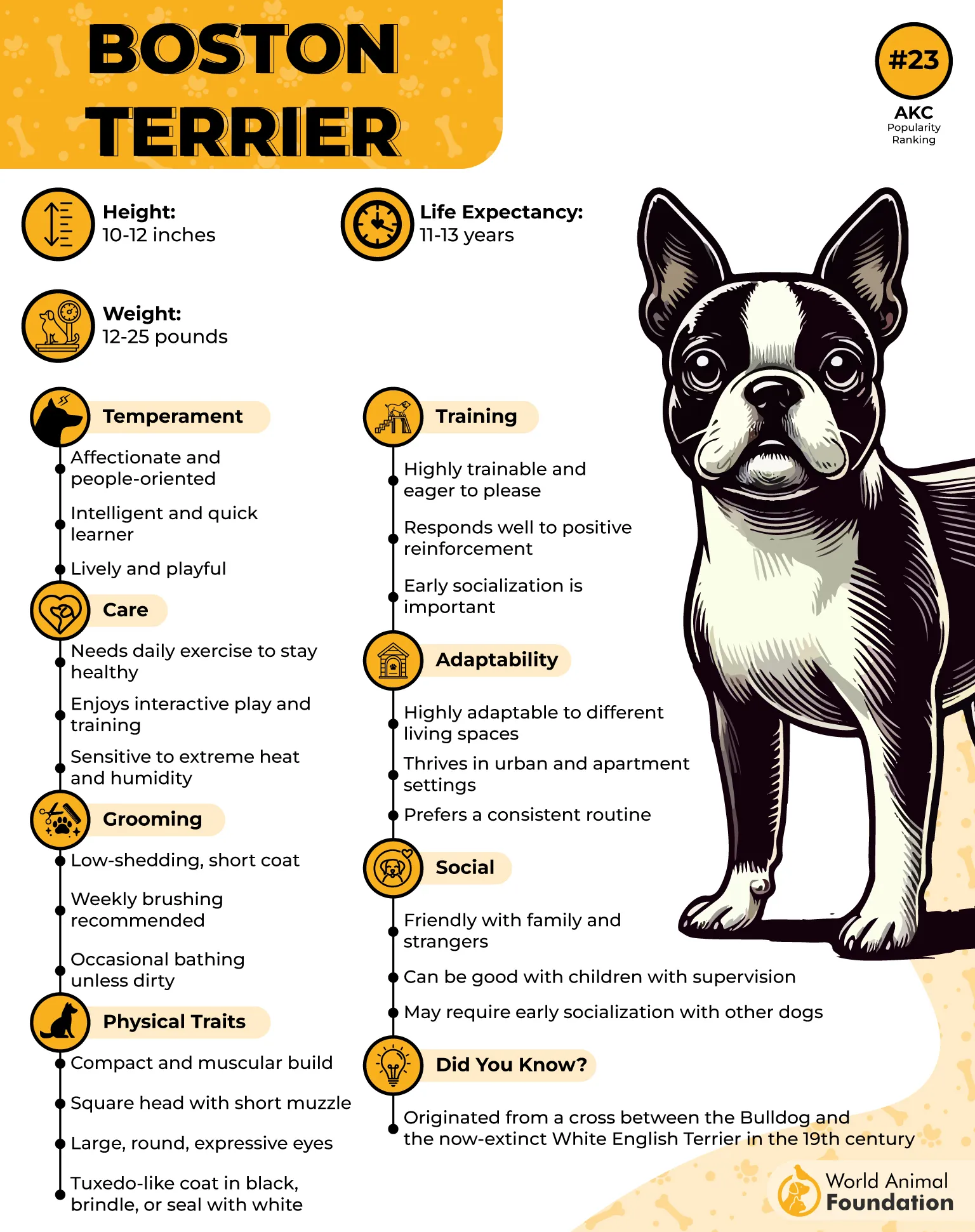
Boston Terrier began in the United States in the late 1800s through breeding between a Bull and Terrier type dog and a French Bulldog. The American Kennel Club recognized the breed in 1893, and it is classified in the non-sporting group rather than the Terrier group.
Tiny Dog, Big Energy
This little loyal dog brings a lively, playful attitude to everyday life and can turn an ordinary toy session into hours of entertainment. Their nickname, the “American Gentleman,” fits a dog that enjoys people, seeks attention, and often has a mischievous streak.
These characteristics give their playful side more personality:
Often called a little comedian
Can become closely attached to one family member
Known for snoring during sofa naps
Games With a Purpose
Boston Terriers enjoy activities that let their curiosity and quick learning work together, with obedience training, agility, and flyball offering plenty to figure out, as reported by PetMD. Puzzle toys and interactive games can also add variety when a simple walk is not enough mental engagement.
5. Papillon
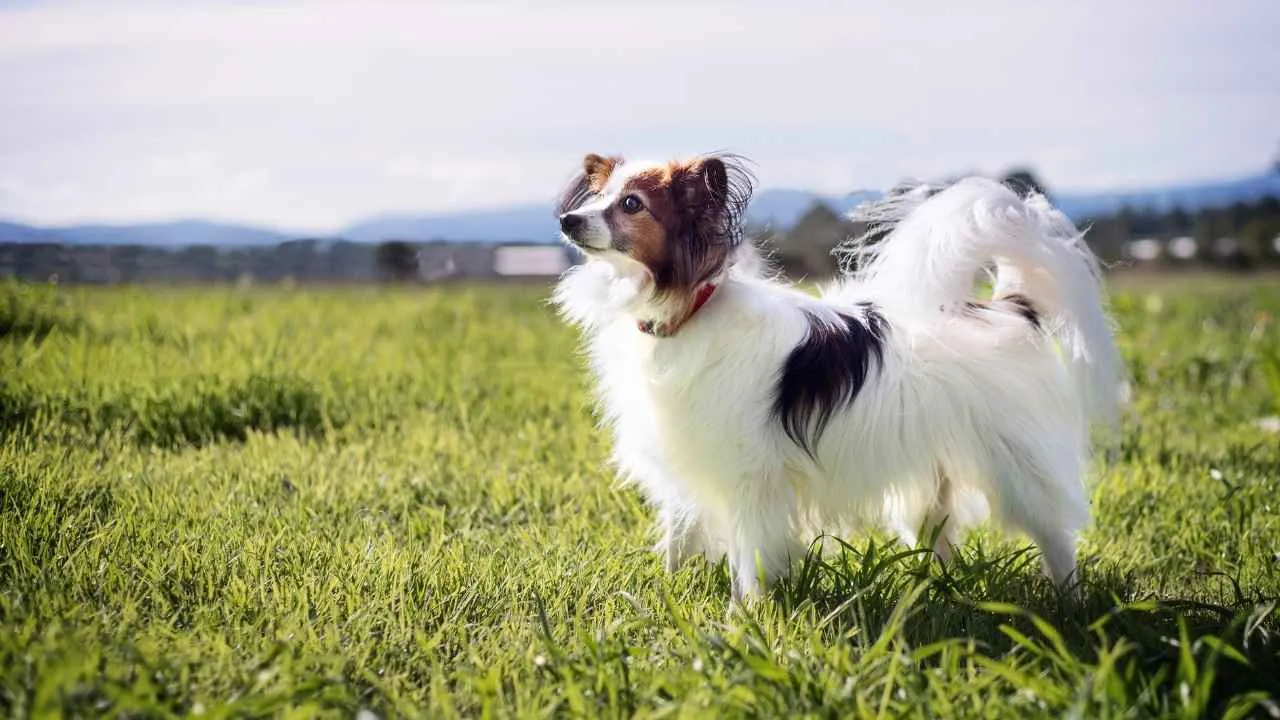
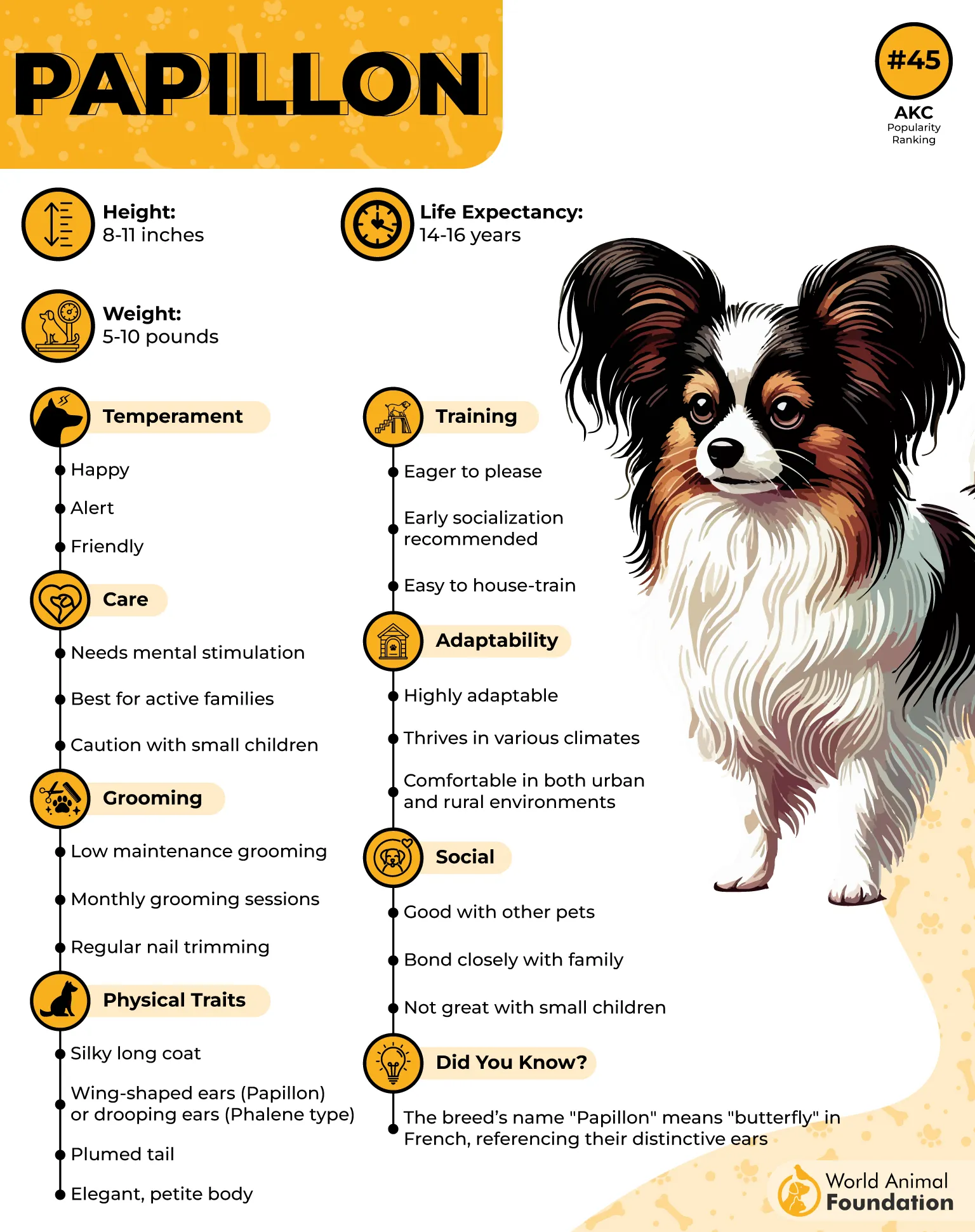
Papillon dates back centuries in France and was once favored among ladies of the court, with paintings of the breed appearing as early as the 13th century. Its name means “butterfly” in French, inspired by its upright ears, while drop-eared pups are called Phalene, meaning “night moth.”
Always Busy
As a fun-loving breed, they bring a lively spark to everyday life and enjoy being involved with people, other dogs, cats, and children. About 30 to 45 minutes of daily activity through leisurely walks, scent walks, or fetch can give this little dog a useful outlet.
A few details make its play style even more interesting:
Puzzle toys provide mental challenges
Agility trials can suit active individuals
Good recall supports off-leash training
Plenty of Personality
Papillons can be confident and outgoing with people and other animals, although early socialization helps prevent puppies from becoming overly dependent on their families. Their small, delicate build also calls for supervision around large dogs and energetic children.
6. Yorkshire Terrier
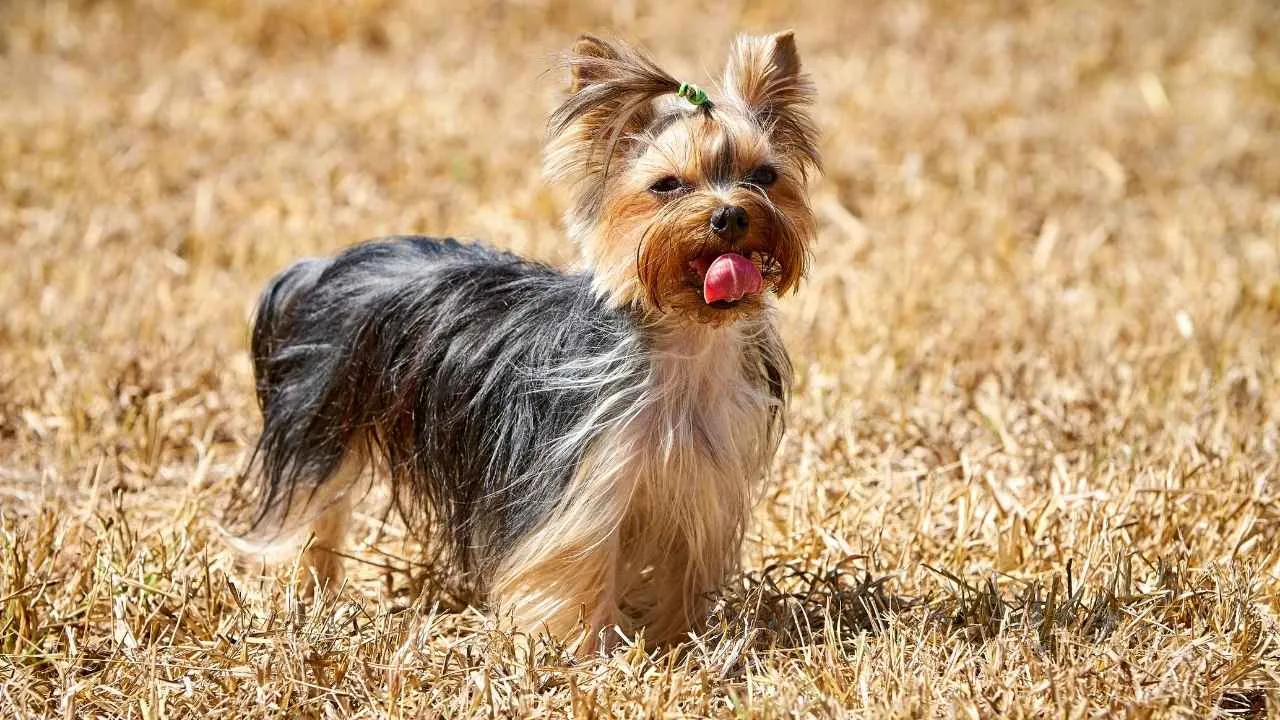
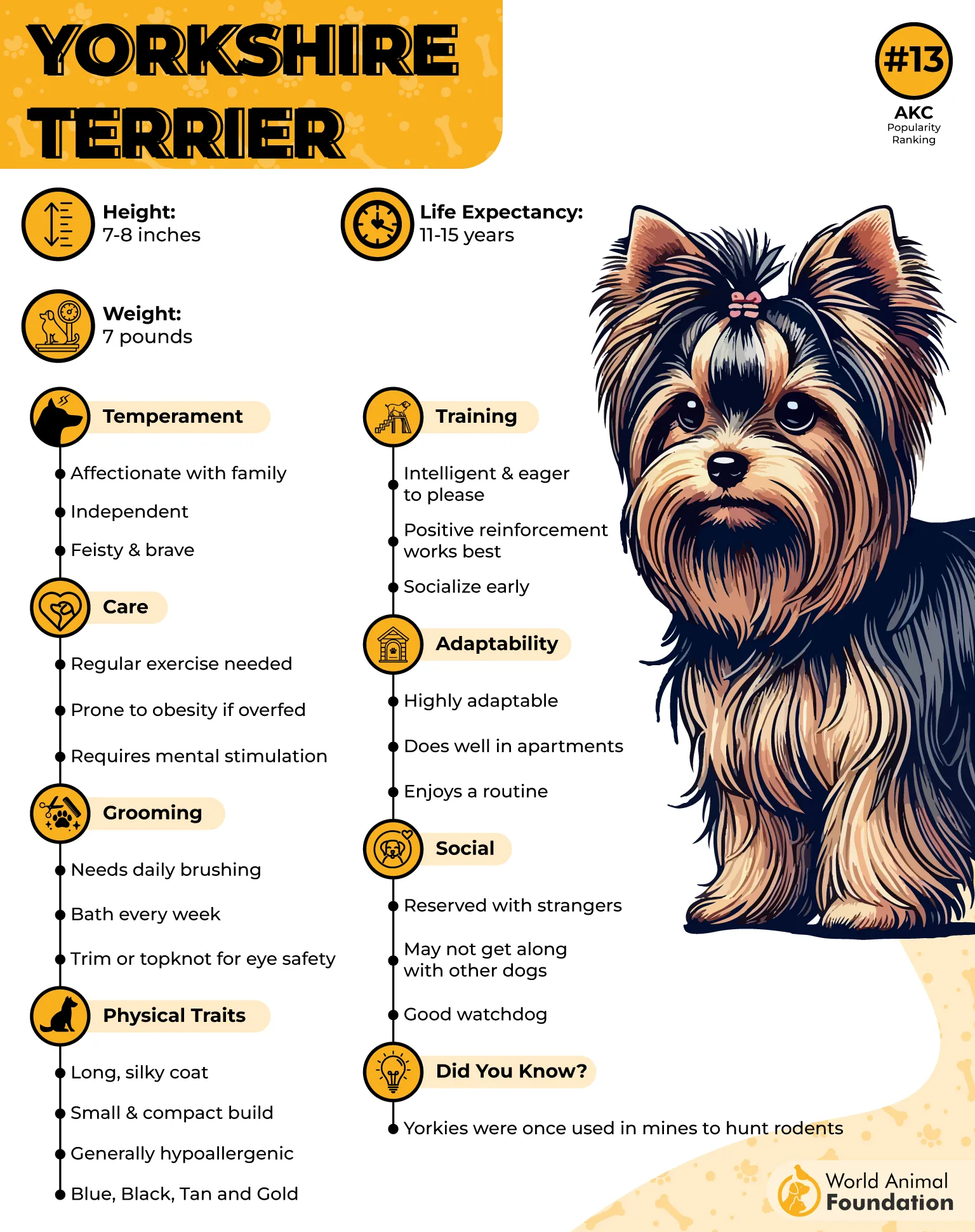
Yorkshire Terrier took shape in Yorkshire during the mid-19th century after Scottish workers brought small terriers into local cotton mills. These dogs were kept to control rats, with Waterside, Paisley, and Skye Terriers thought to have contributed to the Yorkie’s development.
Big Energy, Tiny Frame
Yorkies can do plenty of activity with respect to their small size, with two 15-minute walks enough for basic daily exercise. Puzzle toys, indoor fetch, scent work, and agility can add variety while giving this clever breed something interesting to figure out.
This is what makes their routine more engaging:
Scent work exercises their nose
Athletic Yorkies can try agility trials
Short legs need a slower walking pace
A Mischief Maker
This lap dog is playful, spunky, and confident enough to make its daily preferences very clear, from breakfast time to walks and play sessions. Early training works well because the breed is eager to please and can learn cues from around 7 or 8 weeks old.
7. Poodle
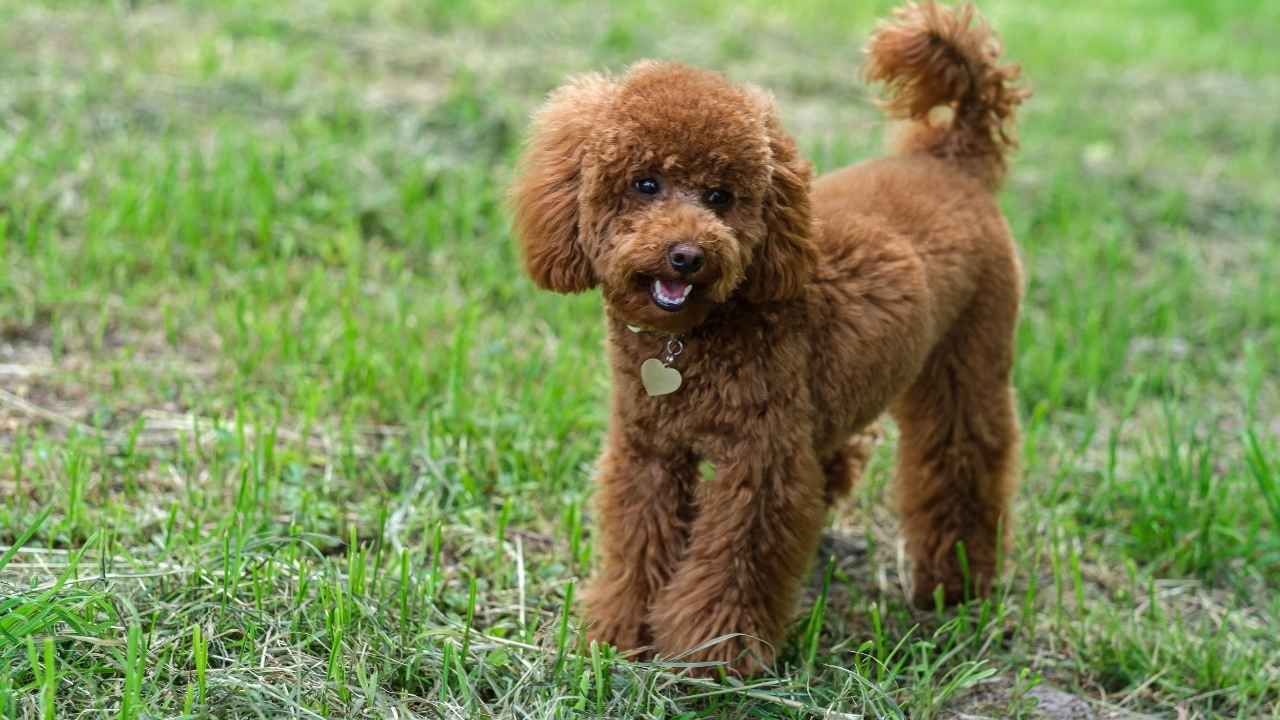
Poodle is often linked with France, yet its earlier roots likely involved curly-coated dogs from Asia that traveled into Europe with herders. Germany shaped the breed further, where its talents expanded across hunting, military work, guide duties, and circus performances.
Made for Action
With strong athletic ability and quick thinking, the Poodle has a particular talent for water work and active pursuits. Its curly coat helps provide insulation in cold water, while its history as a duck hunter adds purpose to swimming and outdoor games.
Three activities put the versatility of this small breed to good use:
Dock diving for water-loving dogs
Nose work for scent-focused games
Agility for quick, active challenges
Always Ready to Learn
This family pet is bright and intuitive, allowing it to adapt well to different people, environments, and everyday situations. Hiking, running, swimming, obedience competitions, service work, and therapy work can all give this versatile breed a meaningful and rewarding way to use its abilities.
Conclusion
An active dog can bring more energy and laughter into everyday life, but that fun comes with a need for regular activity. Games, walks, training, and interactive toys can help channel that enthusiasm while giving a dog useful ways to stay busy and get mental stimulation. Small size may make indoor play easier, but it does not always mean low exercise needs.
Pet parents should also consider age, health, temperament, and time available for daily interaction. The best small dog breed with an affectionate nature can be especially rewarding for first-time pet parents who want to form strong bonds with their companion. When those needs are covered, playtime can become one of the best parts of each day.
