




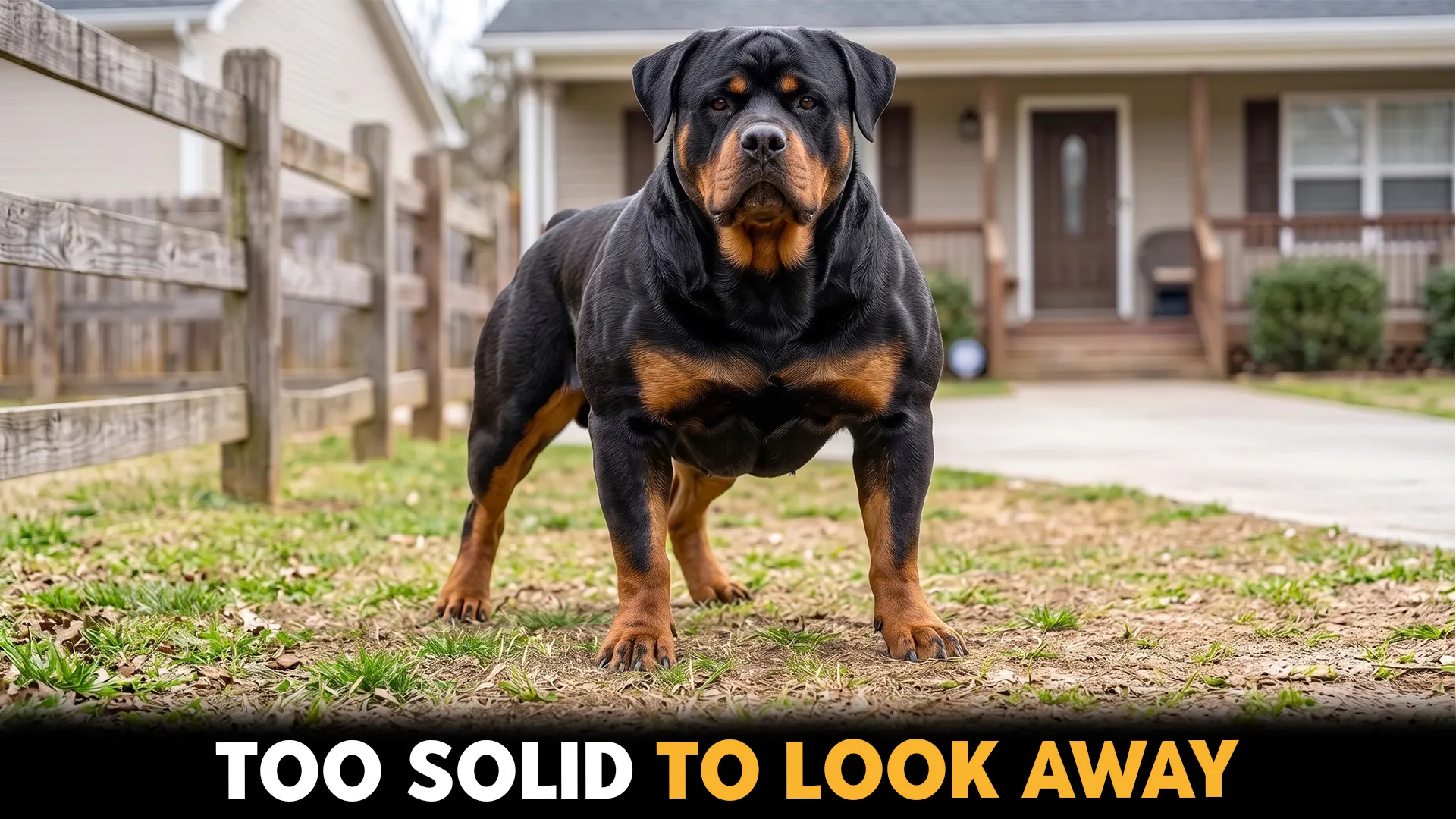
A powerful dog is more than just an impressive build. Behind those muscles is often a history of hard work, with generations of breeding shaping dogs to protect livestock, manage cattle, guard property, and navigate challenging terrain.
Their strength served a real purpose, helping them handle physically demanding tasks.
Not all muscular dogs are built alike. Some combine impressive muscle with speed and agility, while others rely on heavy bones, endurance, and the confidence to work independently.
Today, many of these hardworking dogs have become loyal companions, too. However, their strength and working instincts still come with responsibilities. Let’s explore ten muscular dog breeds and discover what makes each one so impressive.
Mighty Working Dog Breeds With Massively Muscular Builds
1. Rottweiler
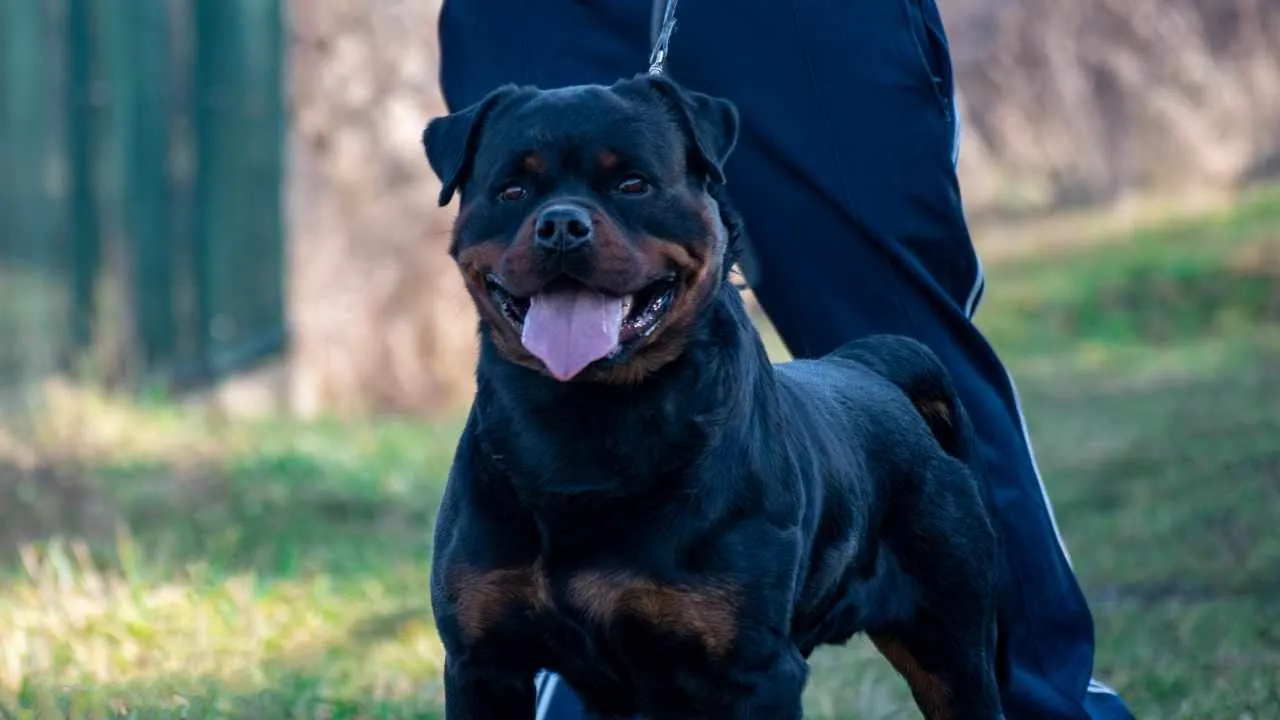
Originally descended from the mastiffs of the Roman legions, Rottweilers were developed as strong working and guardian dogs. Their broad heads, deep chests, powerful hindquarters, and sturdy frames give them an imposing appearance.
Their short, glossy black coats feature distinctive rust-to-mahogany markings. Their muscular bodies also support a steady, powerful trot.
Temperament and Personality
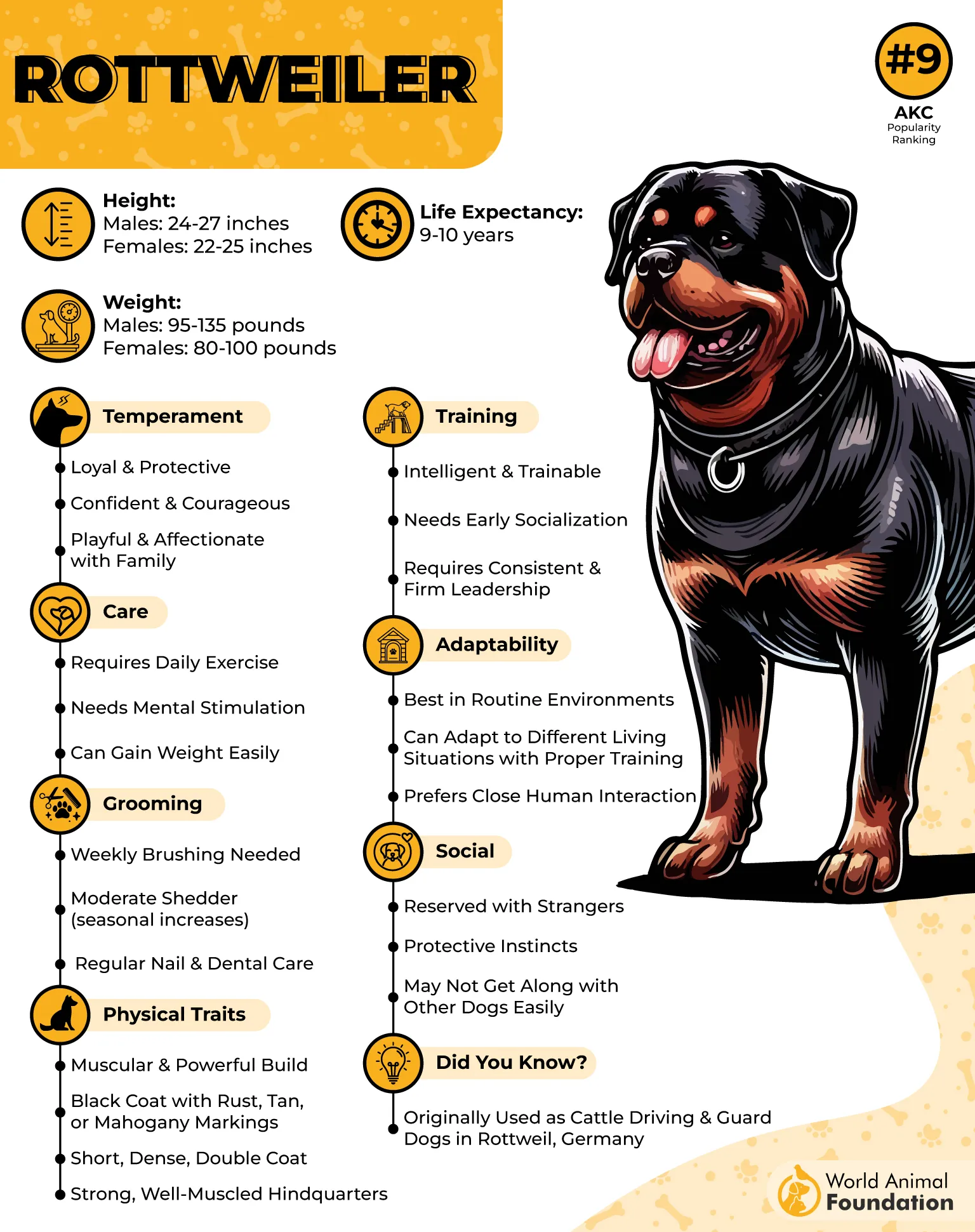
Rottweilers are loyal, courageous, intelligent, and naturally protective. They can be reserved around strangers but are often playful, affectionate, and even silly with their families.
Some enjoy cuddling and may happily climb onto their owners’ laps despite their substantial builds. They can also form close bonds with the livestock they work alongside.
Exercise, Training, and Care
Early training and socialization help manage their protective instincts and independent nature. These intelligent dogs respond well to guidance and food-based rewards but can become stubborn without consistent training.
PetMD says they need at least 60 minutes of daily exercise, mental stimulation, and regular grooming to manage their year-round shedding.
2. Cane Corso
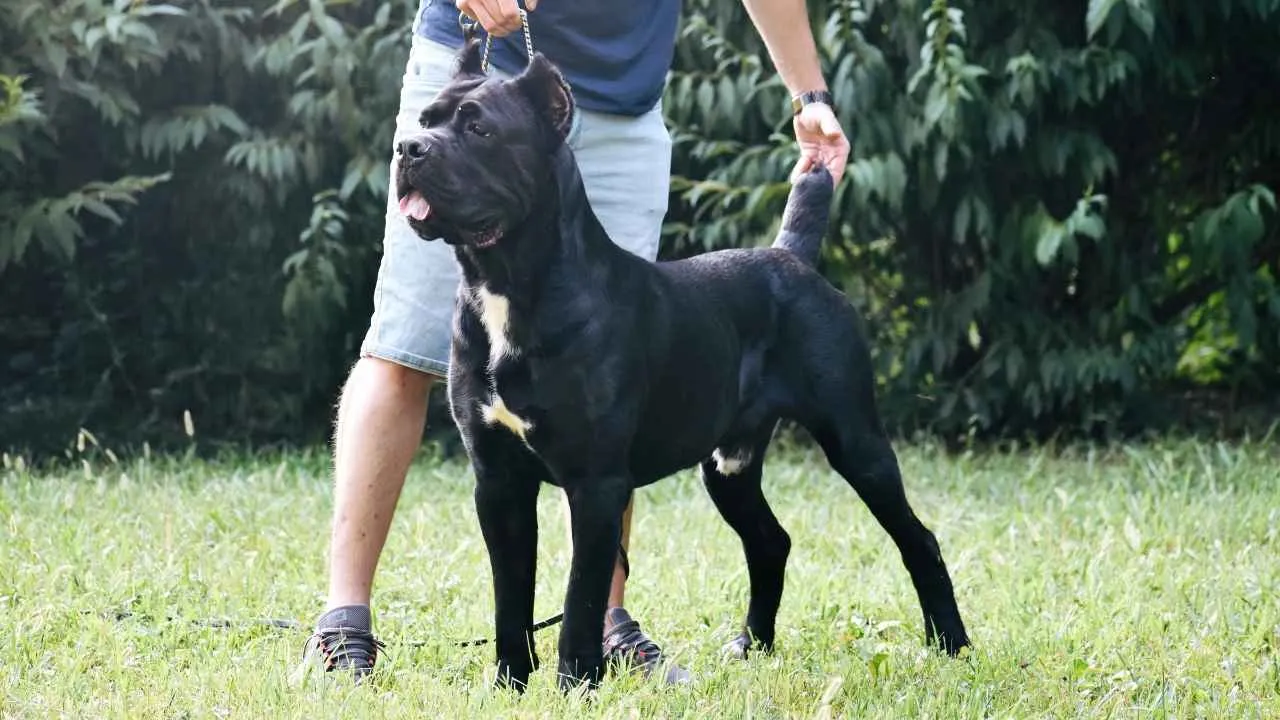
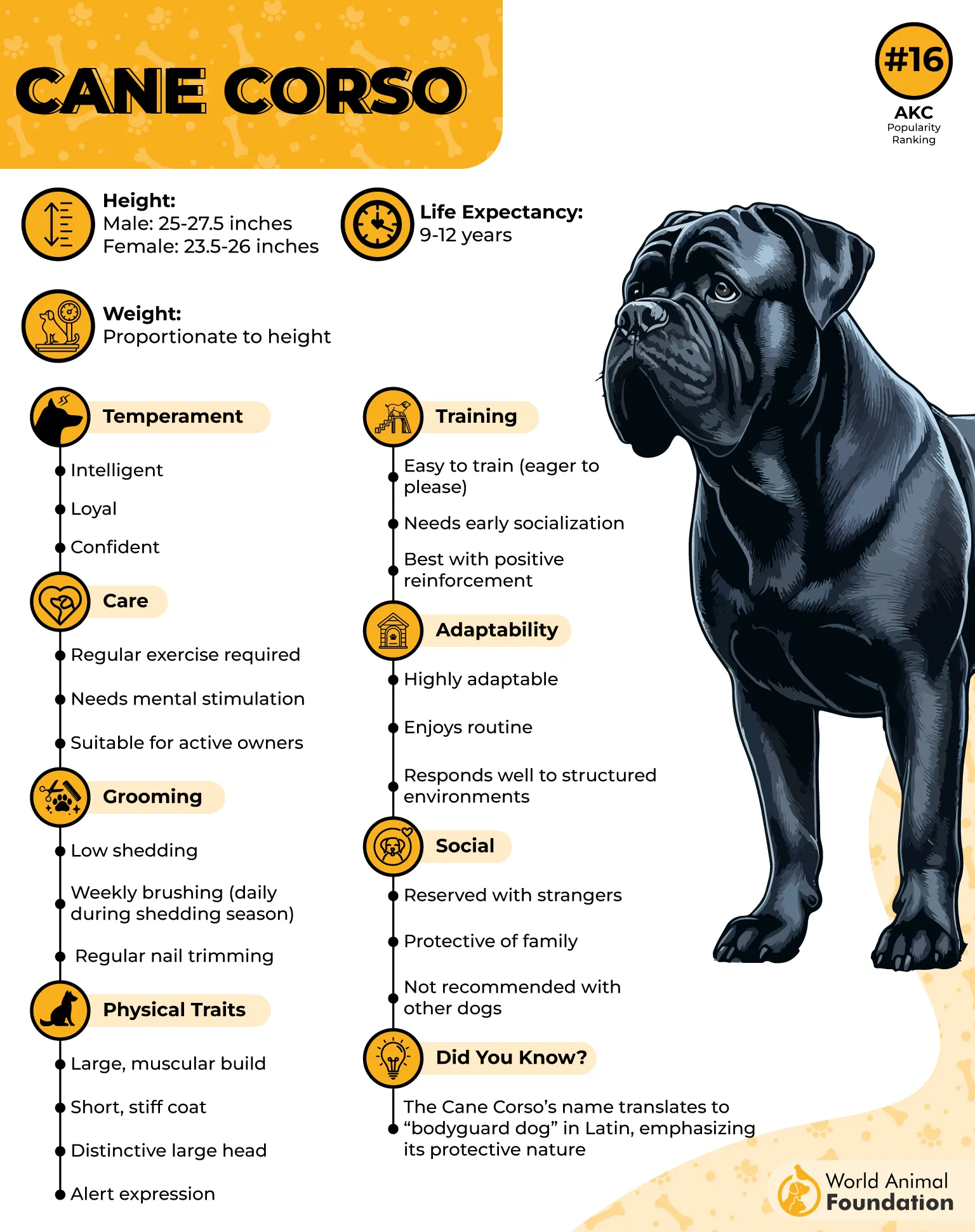
The Cane Corso, also known as the Italian Mastiff, traces its ancestry to ancient Roman times. Its name roughly translates to “bodyguard dog,” reflecting its long history as a guardian and working breed.
These powerful dogs have large heads, broad chests, bulky bodies, and well-defined muscles beneath their short, stiff coats. Their imposing appearance and alert expressions naturally deter intruders.
Temperament and Personality
Cane Corsos are intelligent, loyal, and deeply devoted to their families. Despite their intimidating appearance, they can be affectionate and eager to please. They are naturally protective and often remain calm indoors while staying alert to unfamiliar situations.
However, they can be assertive and willful, making confident leadership important. They may also take time to warm up to unfamiliar people and animals.
Exercise, Training, and Care
These dogs need early socialization and consistent positive-reinforcement training to develop balanced behavior.
They respond well to structured activities and can excel in obedience, tracking, agility, and protection sports. At least two daily walks, along with additional physical and mental activities, help keep them engaged.
3. Dogo Argentino
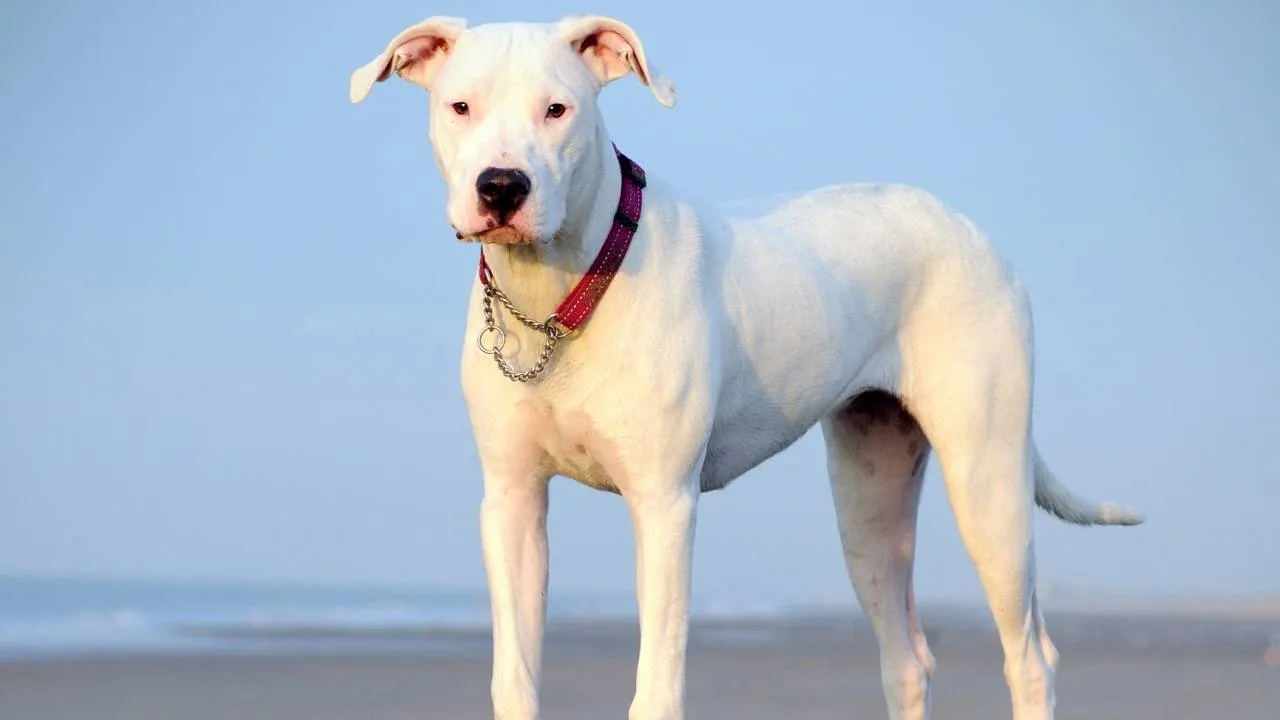
Originating in Argentina, the Dogo Argentino was developed in the 1920s for pack hunting and pursuing big game, including wild boars and pumas. This powerful, athletic breed has a large head, thick neck, deep chest, and heavily muscled hindquarters.
Its short, smooth coat is completely white, although a small dark patch near one eye is permitted. Built for demanding hunts, the Dogo combines explosive power with agility, stamina, and a strong sense of smell.
Temperament and Personality
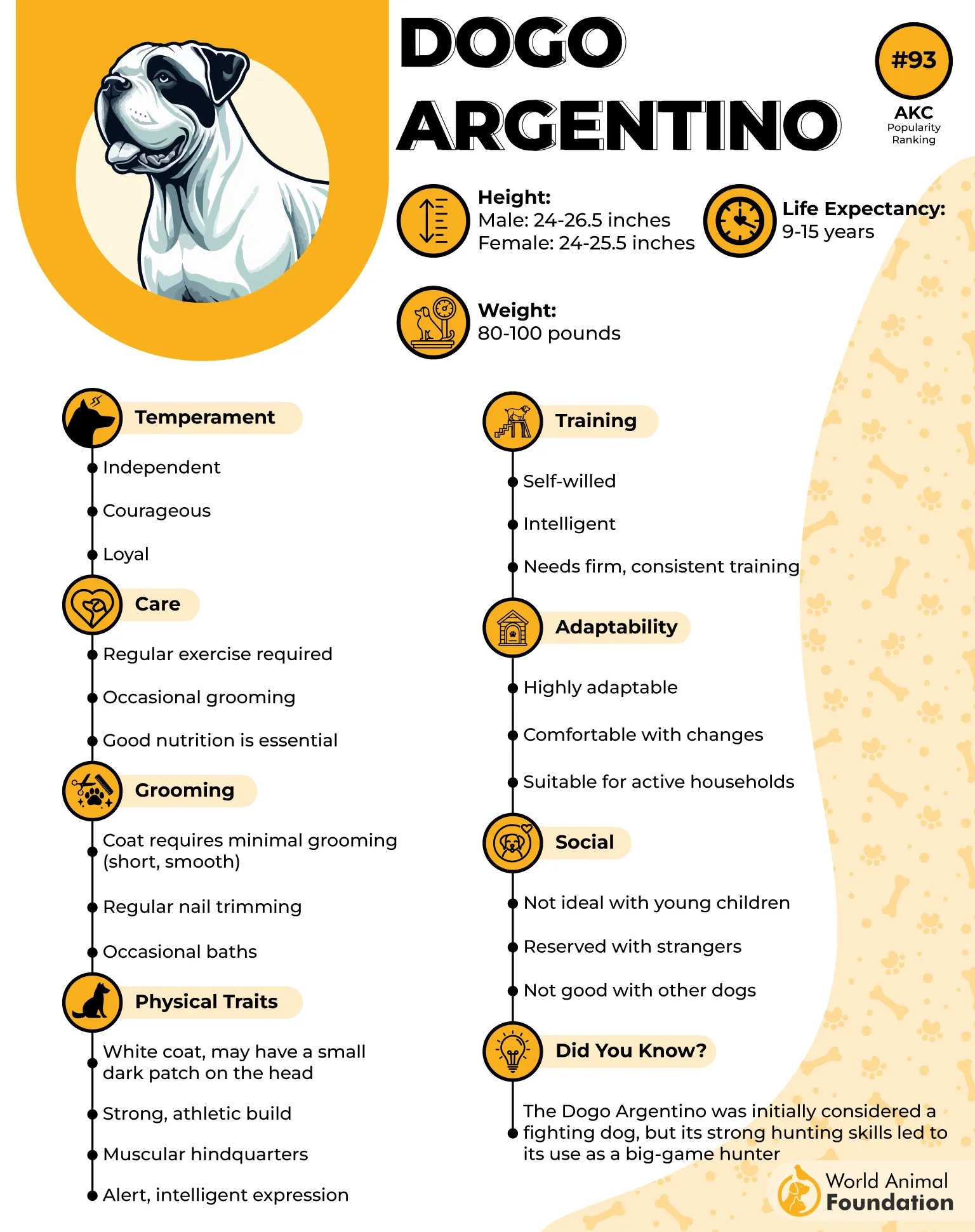
Despite their imposing appearance, Dogo Argentinos can be affectionate, gentle, and deeply devoted to their families. They are intelligent, courageous, and naturally protective, with heightened senses and an alert expression.
According to Royal Canin, they may be wary of strangers but can develop balanced behavior through early socialization. Their strong hunting instincts and determined nature also make them better suited to experienced owners.
Exercise, Training, and Care
Dogo Argentinos enjoy learning and respond well to consistent training. Their intelligence and strong sense of smell have also made them useful in police work, search and rescue, and service roles.
They need plenty of daily exercise and opportunities to stay physically and mentally active. Early socialization with people and other animals is especially important.
4. Bullmastiff
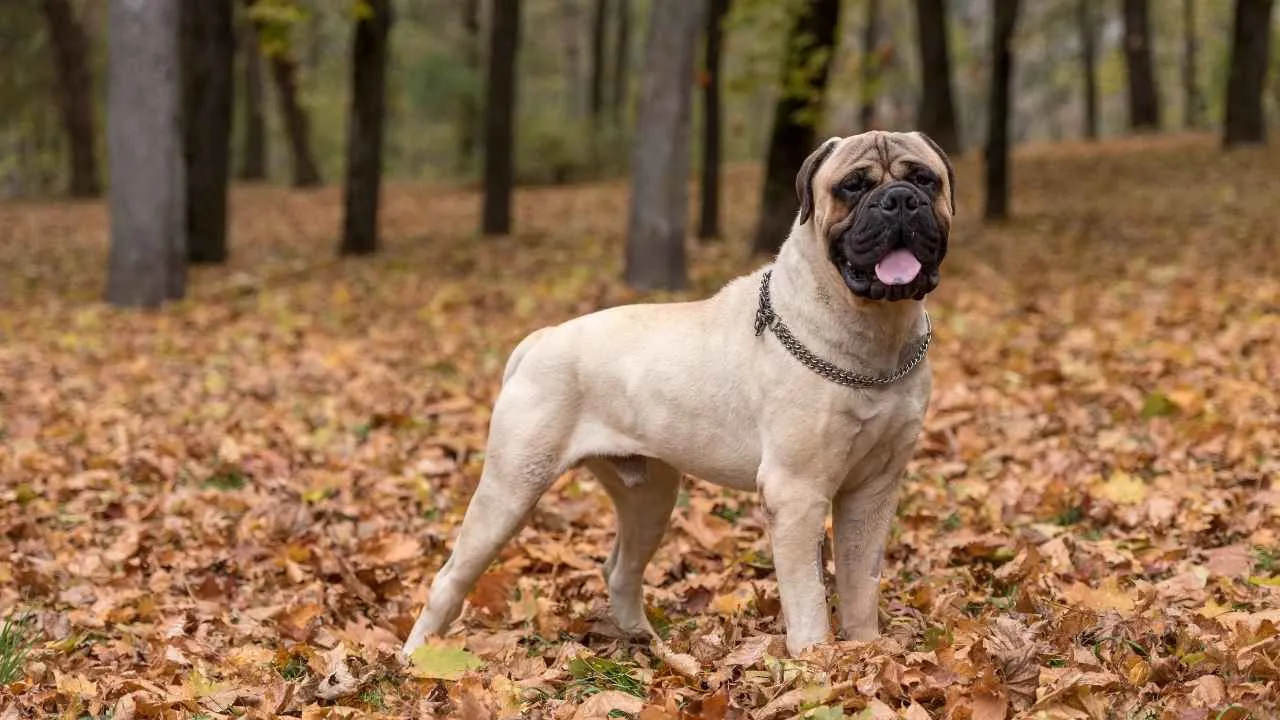
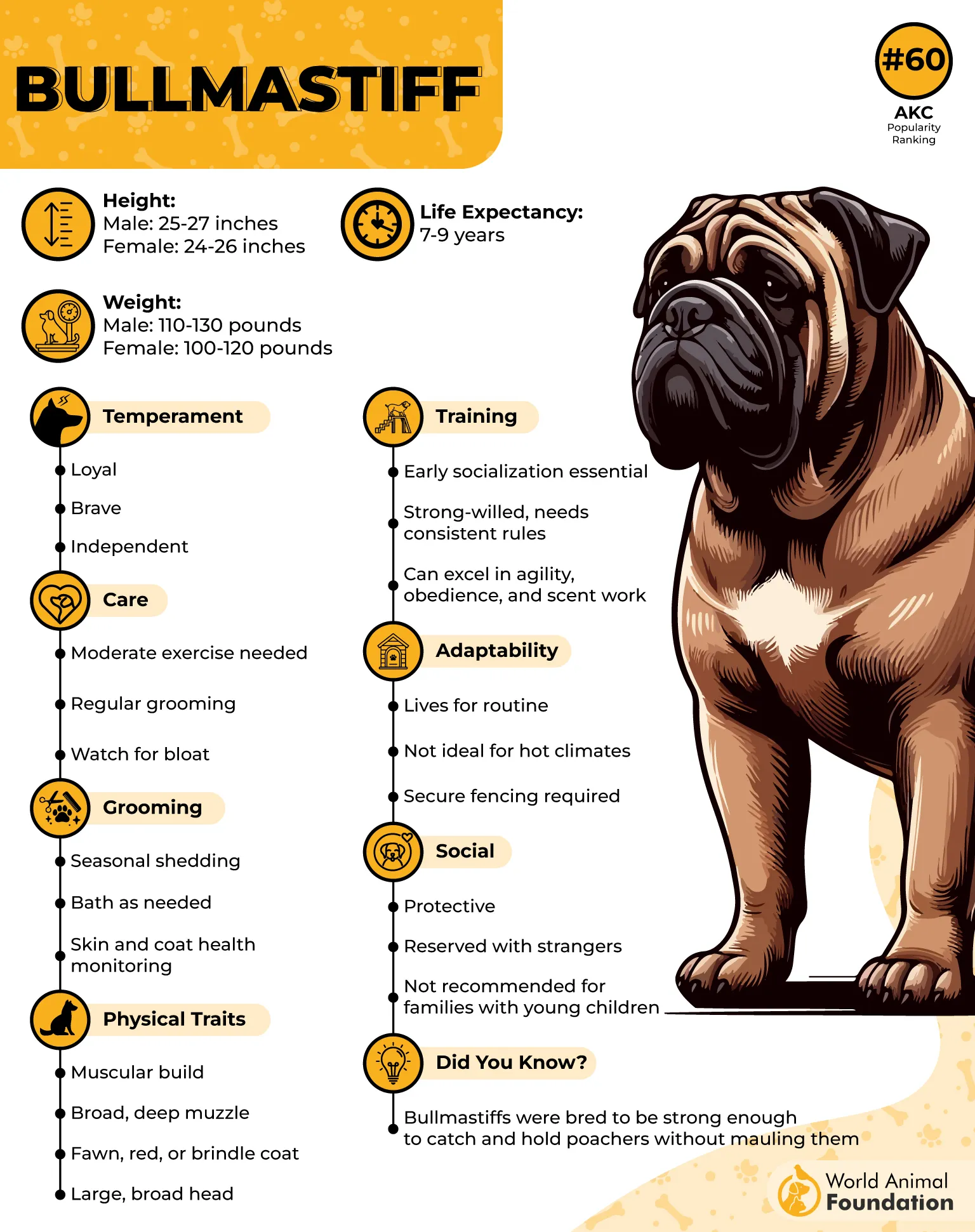
Bullmastiffs were developed in England by crossing Bulldogs and Mastiffs. They were originally used to track down and hold poachers, making strength and courage essential traits.
These large, muscular dogs have broad heads, deep muzzles, dark eyes, and high-set V-shaped ears. Their powerful frames and confident expressions give them a naturally imposing appearance.
Temperament and Personality
Despite their history as guard dogs, Bullmastiffs are affectionate, loyal, and gentle with their families. They form strong bonds with their owners and can be playful, sometimes behaving like much smaller dogs. They are generally quiet and do not bark excessively.
However, they remain alert to their surroundings and are naturally wary of strangers. They also have an independent side and prefer keeping an eye on their territory.
Exercise, Training, and Care
Consistent obedience training and early socialization are essential for managing their size and guarding instincts. They respond best to clear and consistent guidance.
Bullmastiffs enjoy human company and do not like being left alone for long periods. They can also be clumsy because of their large build, so supervision around small children and animals is important.
5. Presa Canario
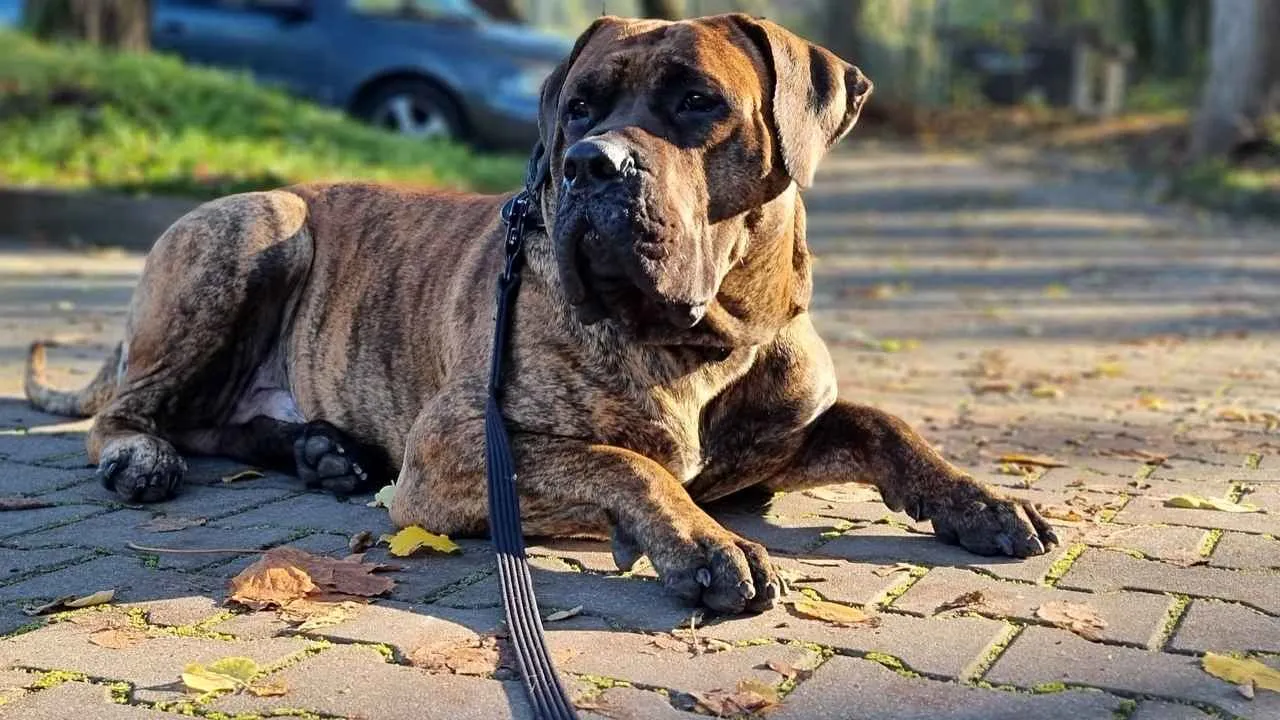
Originating from Spain’s Canary Islands, Presa Canarios were developed by crossing local cattle dogs with Mastiff-type breeds. They traditionally helped farmers herd and guard cattle, making strength and confidence important working traits.
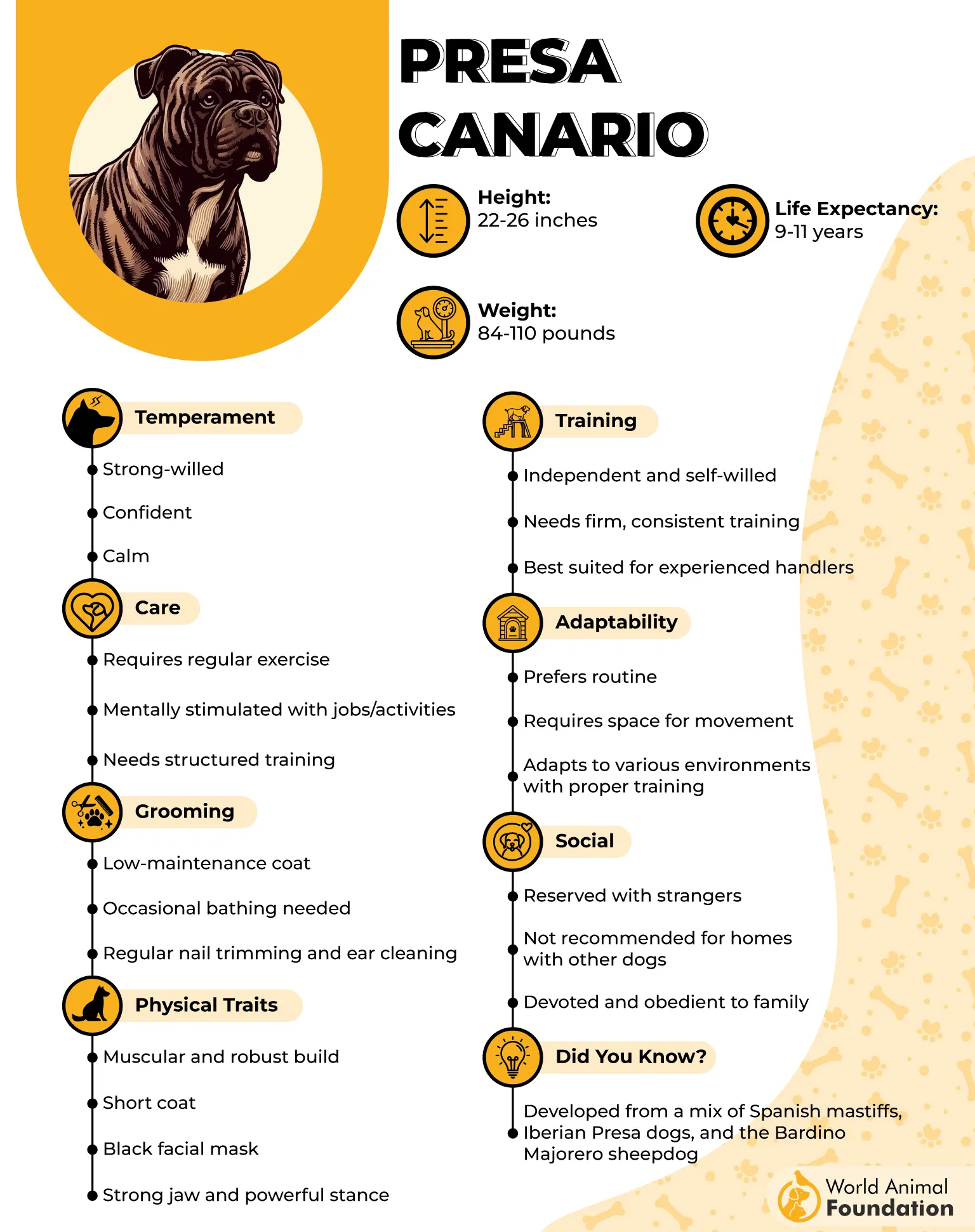
These large, muscular dogs have solid bodies, broad square-shaped heads, and a distinctive black facial mask. Their balanced build combines strength with athleticism, while their deep, low bark adds to their imposing presence.
Temperament and Personality
Despite their serious appearance, Presa Canarios can be affectionate, loyal, and devoted family companions. They are calm and self-confident but remain highly alert to their surroundings.
While generally obedient and gentle with familiar people, they can be suspicious of strangers. Their strong guarding instincts and independent nature also make them naturally protective of their territory.
Exercise, Training, and Care
Presa Canarios need early socialization and consistent training to manage their strong-willed nature and help them adjust to people and other animals. They respond best to confident, consistent guidance.
Although they are relatively low-energy dogs, daily exercise is still important for their physical and mental well-being. They also need plenty of space and attention.
6. Boerboel
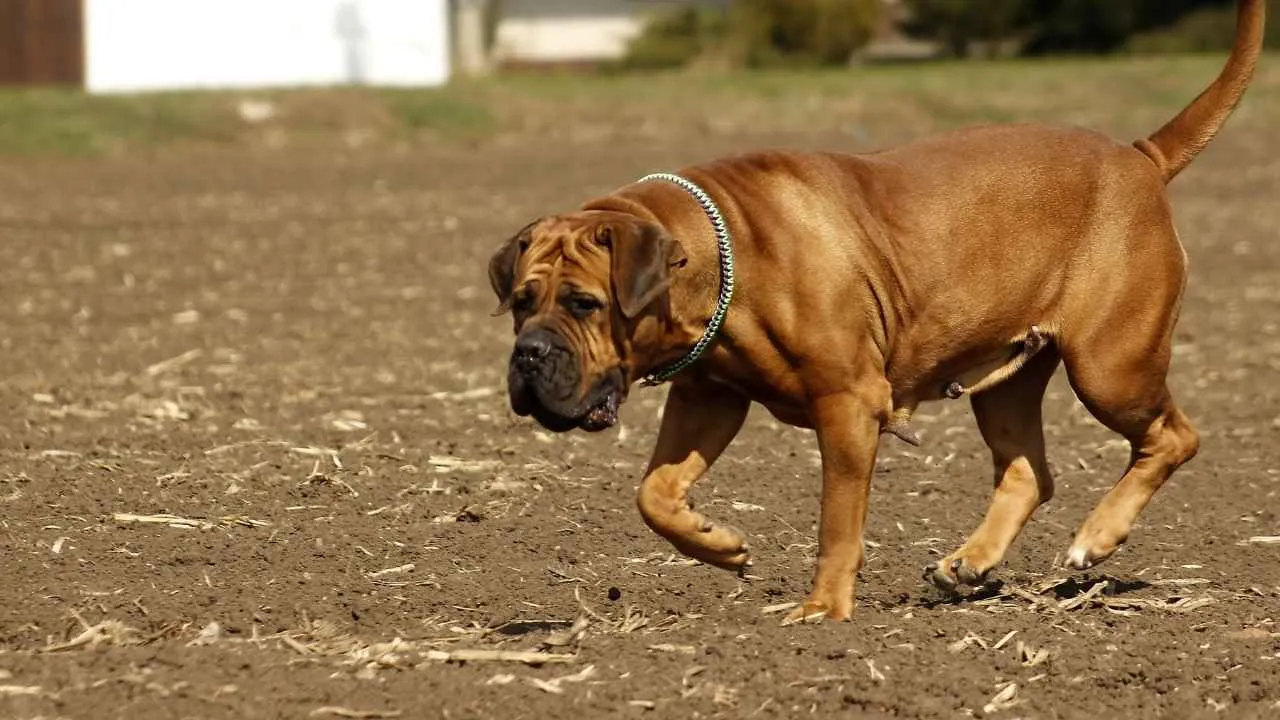
The Boerboel is a powerful working dog from South Africa, originally bred to guard remote homesteads and protect families from large predators.
Its Mastiff ancestry is visible in its broad, blocky head, powerful jaws, thick muscles, and sturdy build. Despite its imposing appearance, the Boerboel is surprisingly agile and moves with confidence.
Temperaments and Personalities
Boerboels are deeply devoted to their families and naturally protective of the people and places they love. They are confident, intelligent, and eager to learn, but can also be dominant and stubborn.
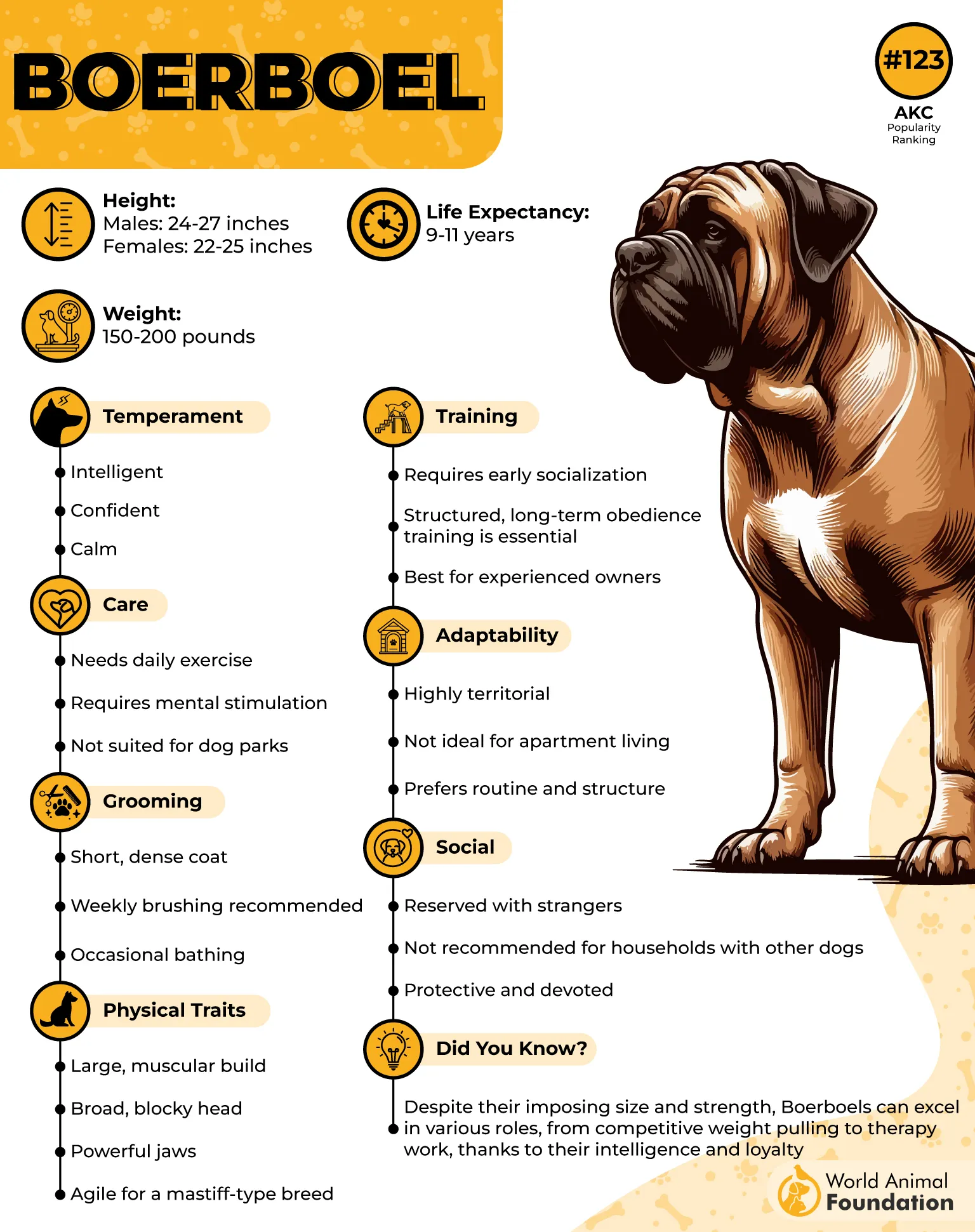
While affectionate and playful with familiar people, they tend to be reserved around strangers and may not welcome unfamiliar guests without proper introductions. They can also get along with children and other pets when introduced appropriately.
Exercise Needs, Training, and Care
Early training and consistent socialization are essential, especially before a Boerboel develops into a dominant adult.
These dogs are trainable and enjoy spending time with their families, but their size, strength, and protective nature can make them challenging for inexperienced owners. Always supervise playtime with children, as they may accidentally knock over smaller kids.
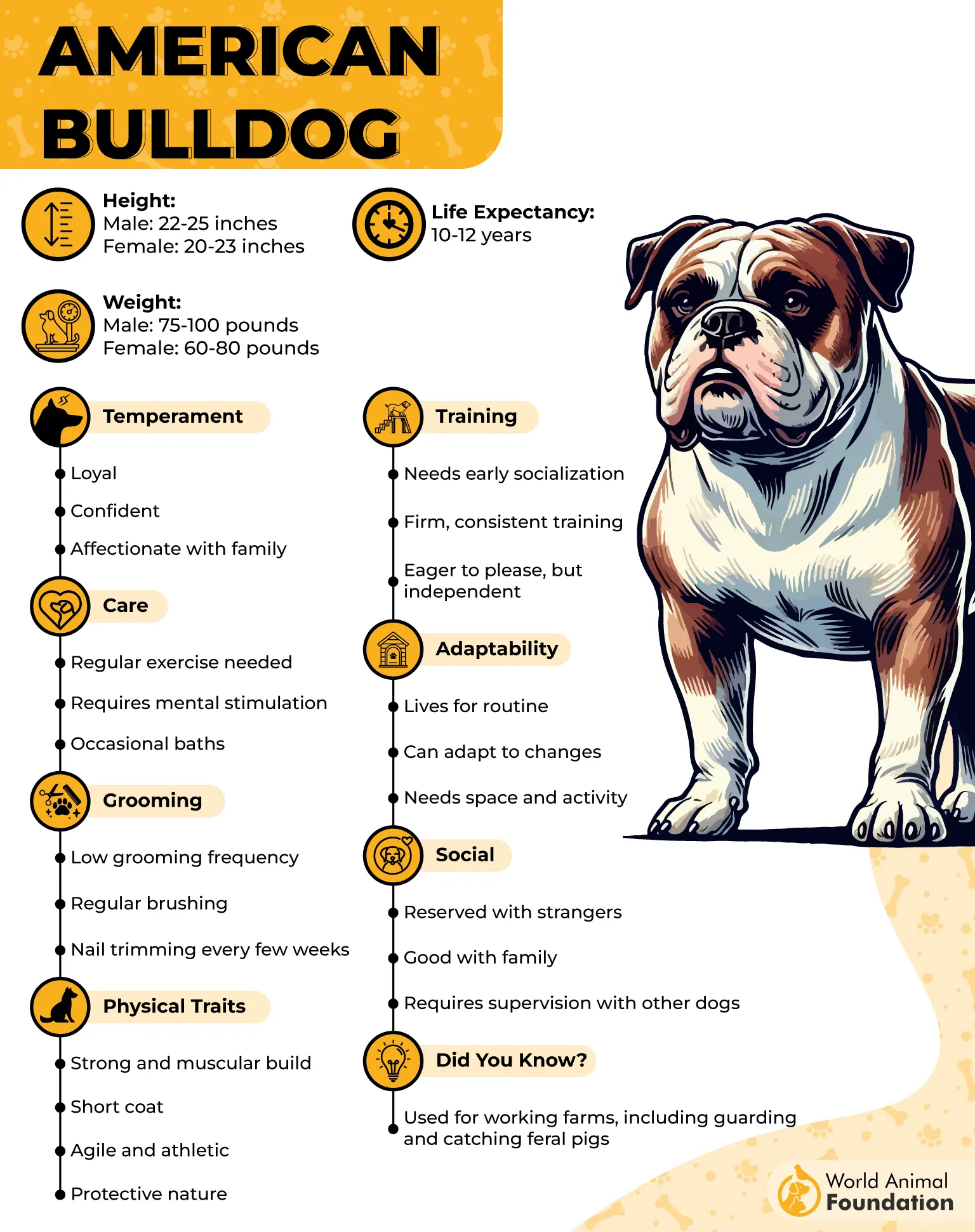
7. American Bulldog

The American Bulldog descends from the English Bulldog and arrived in the United States with immigrants during the 1800s. Farmers and ranchers relied on these versatile working dogs for guarding farms, handling livestock, and catching feral pigs.
Originally known by several names across the southern states, the breed eventually became known as the American Bulldog.
Temperaments and Personalities
Despite their serious expressions and strong appearance, American Bulldogs have a playful and often silly side. They are generally friendly, loyal, brave, and intelligent.
These dogs enjoy playing with family members and can make affectionate companions. Their bright and charming personalities also make them responsive to training once they are focused.
Exercise Needs, Training, and Care
American Bulldogs need consistent training, early socialization, and regular physical activity. They enjoy games such as tug-of-war, agility activities, and long walks, but their exercise routines should suit their pace and energy.
Their short coats are relatively low-maintenance and do not shed heavily. However, their skin needs extra attention and care
8. Boxer
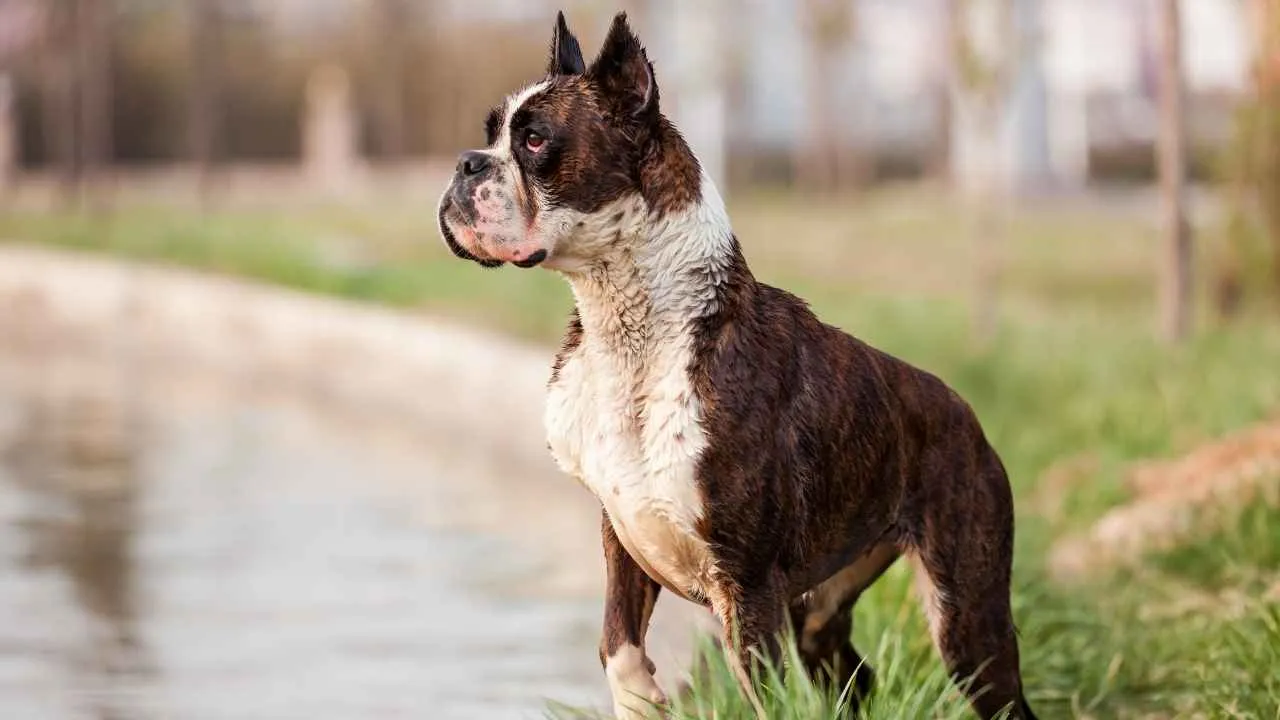
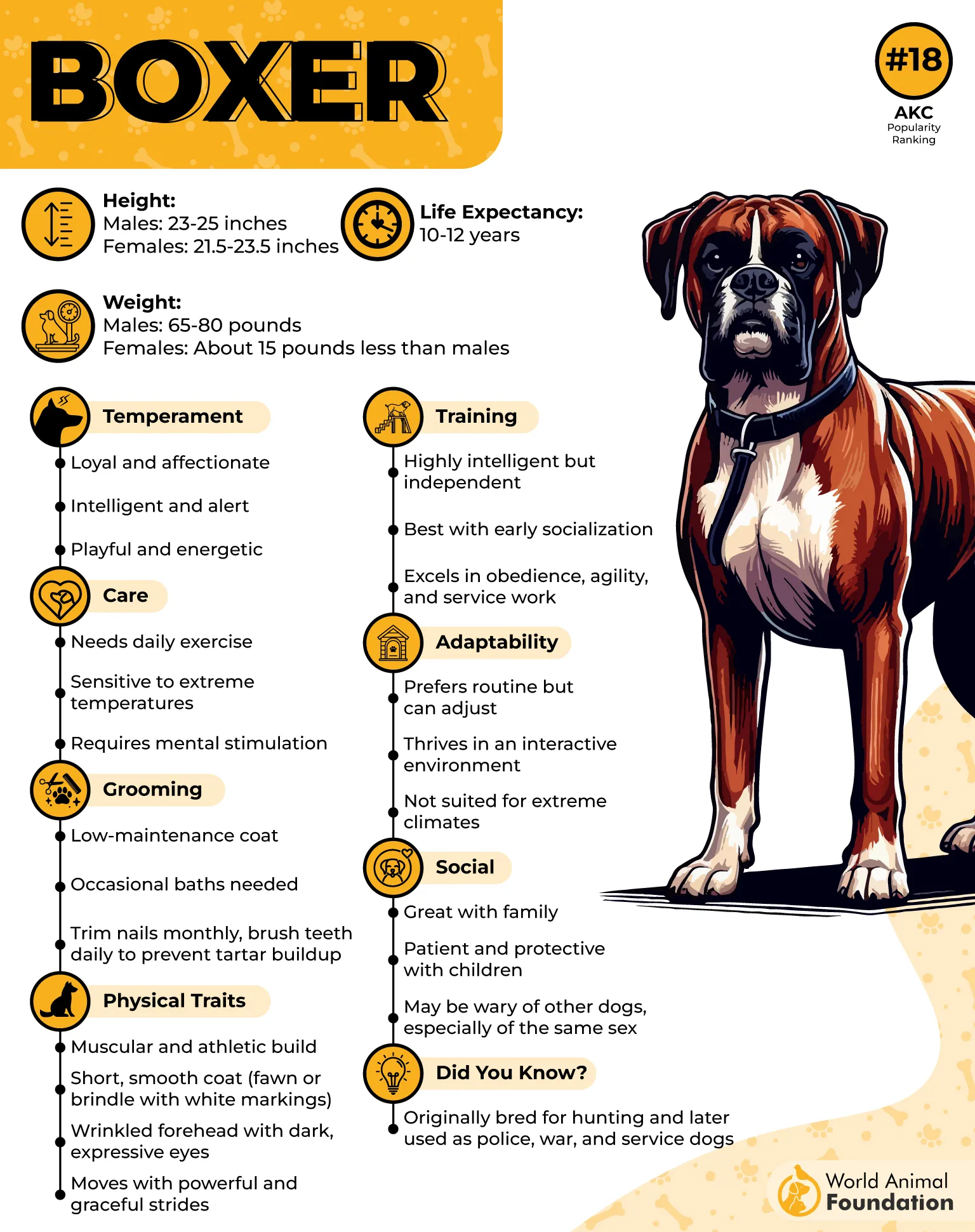
The Boxer developed from the smaller type of Bullenbeisser, a Bulldog-type dog once used for bear and bull baiting.
After these practices were banned, the breed took on roles as an escort and protection dog. Boxers have compact, muscular bodies, short, tight-fitting coats, and strong, athletic movement.
Temperaments and Personalities
Boxers are affectionate, loyal, intelligent, and naturally playful. Known for their silly antics and energetic personalities, they enjoy joining family activities and playing with children.
Their patience and protective instincts also make them devoted family guardians. They are generally confident, courageous, and alert, but may be cautious around unfamiliar people.
Exercise Needs, Training, and Care
Boxers thrive with active families who can keep them involved in regular games and activities. They respond well to training, especially when given rewards, but need confident and consistent guidance.
Early socialization with different people and animals is important to help manage their protective instincts and interactions with other dogs.
9. Doberman Pinscher
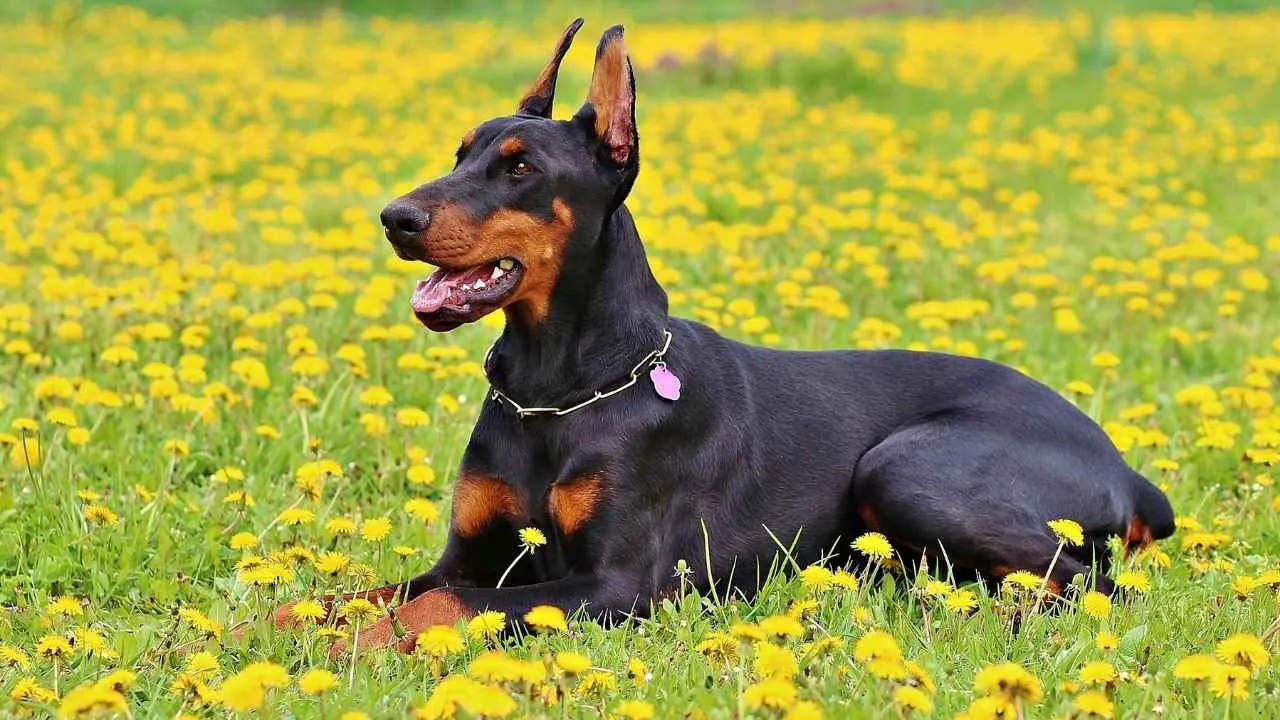
The Doberman Pinscher was developed in Germany in the late 1800s by a tax collector named Louis Dobermann.
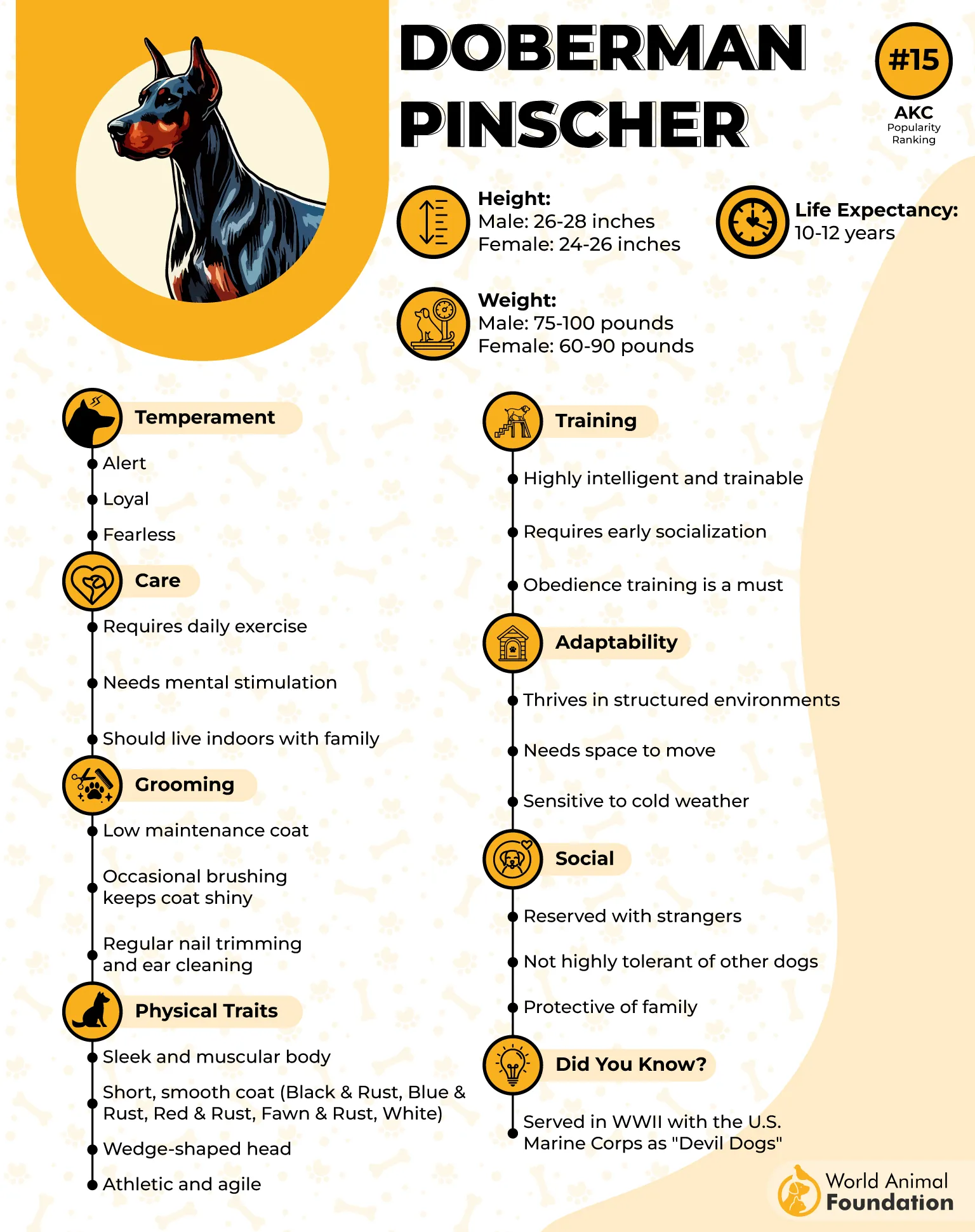
Bred for protection, the breed became known for its strength, speed, and alertness. Dobermans have sleek, muscular bodies, wedge-shaped heads, and an elegant, athletic appearance.
Temperaments and Personalities
Dobermans are loyal, intelligent, courageous, and highly protective of their families. Despite their reputation for aggression, they can be affectionate, playful, and sensitive companions who enjoy cuddling and spending time with their owners.
Purina says they can also be good with children and other pets when properly socialized. However, they may be wary of strangers and unfamiliar dogs.
Exercise Needs, Training, and Care
Dobermans need regular physical activity and mental stimulation to stay engaged. They enjoy long walks, runs, hikes, and playtime in a fenced yard.
Their intelligence makes them quick learners, but training sessions should remain interesting to prevent boredom. Early socialization and consistent training help manage their strong-willed nature and protective instincts.
10. Neapolitan Mastiff
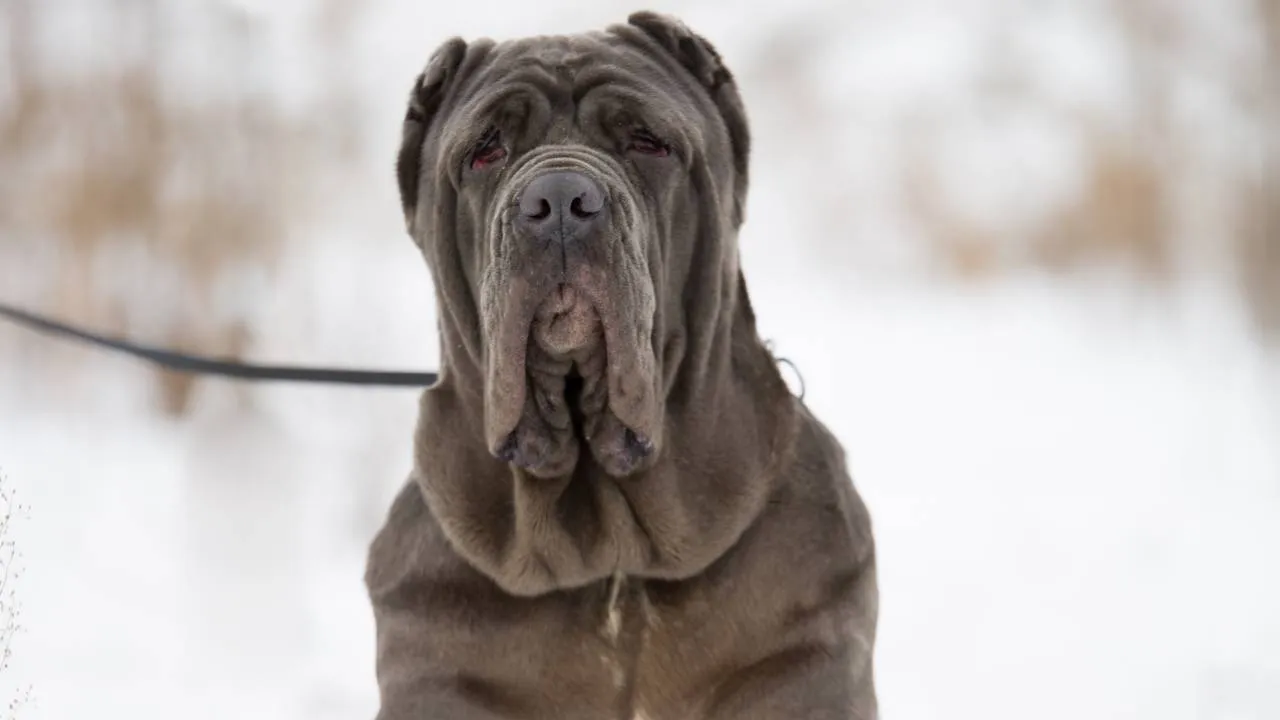
The Neapolitan Mastiff is an ancient Italian breed descended from the heavy Molosser dogs used by the Romans for guarding property, fighting, and warfare.
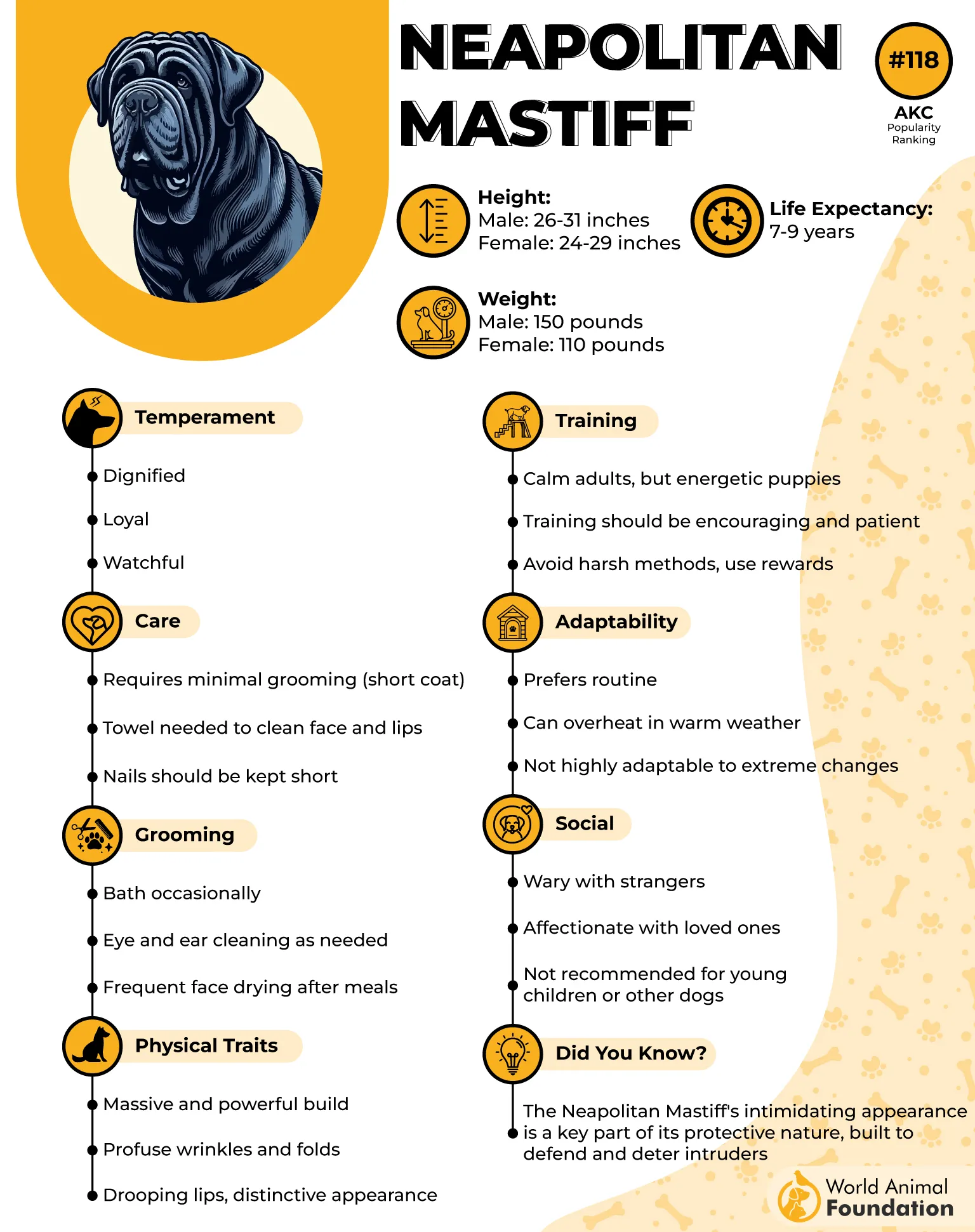
This giant working dog has a massive, muscular body, loose wrinkled skin, hanging folds, and large drooping lips. Despite its intimidating looks, the breed carries itself with dignity and has a naturally watchful presence.
Temperaments and Personalities
Neapolitan Mastiffs are loyal, intelligent, and generally calm dogs. They are affectionate and sometimes goofy with their families but tend to remain reserved around strangers.
Their protective instincts make them reliable guardians, although they are not usually aggressive unless provoked. They can live with other animals when raised alongside them, but their size and strength require care around smaller pets and young children.
Exercise Needs, Training, and Care
Neapolitan Mastiffs do not need intense exercise. Several shorter walks throughout the day are better suited to them than long, demanding activities. Puppies need careful handling while their large frames are still developing, so long walks, steep ground, and stairs should be avoided.
Training should be patient and based on positive reinforcement, with early socialization and good leash manners being important.
Conclusion
Muscular working dog breeds are known for their impressive strength, athletic builds, and protective instincts. From energetic companions to powerful guardians, each breed brings its own personality, abilities, and care requirements.
Their physical strength is only one part of what makes them special; loyalty, intelligence, and dedication are just as important.
Before choosing one of these dogs, consider your lifestyle, experience, and ability to meet its exercise, training, and socialization needs. A muscular build may be impressive, but a strong bond comes from responsible ownership, patience, and consistent care.
