




Long, flowing coats may look stunning, but they also come with a long list of responsibilities. Just like human hair, long dog fur requires frequent brushing, detangling, and grooming to stay healthy. For busy pet parents—or anyone who prefers a simpler routine—choosing a long-haired breed without the time to care for it can quickly become overwhelming for both owner and dog.
That’s where short-haired, medium-sized dog breeds truly shine. These dogs offer the perfect balance: big enough to be sturdy and versatile, yet easy to manage thanks to their low-maintenance coats.
With minimal grooming needs, reduced shedding, and simple upkeep, they’re ideal for working professionals, families, and first-time dog owners alike.
Short-haired dogs still need basic care, such as occasional brushing and regular baths, but they won’t demand hours of grooming each week. Instead, you’ll have more time to enjoy walks, playtime, and bonding—without worrying about mats, tangles, or constant fur cleanup.
We’ll explore medium-sized dog breeds with short hair and easy care, helping you find a loyal companion that fits seamlessly into your lifestyle while keeping grooming stress to a minimum.
Quick Insight: Veterinary research shows short-haired breeds are less prone to matting and skin irritation, making them ideal for owners who want an easy-care companion without sacrificing energy or affection.
Medium-Sized Dog Breeds: Short Hair and Easy Care
1. American Staffordshire Terrier
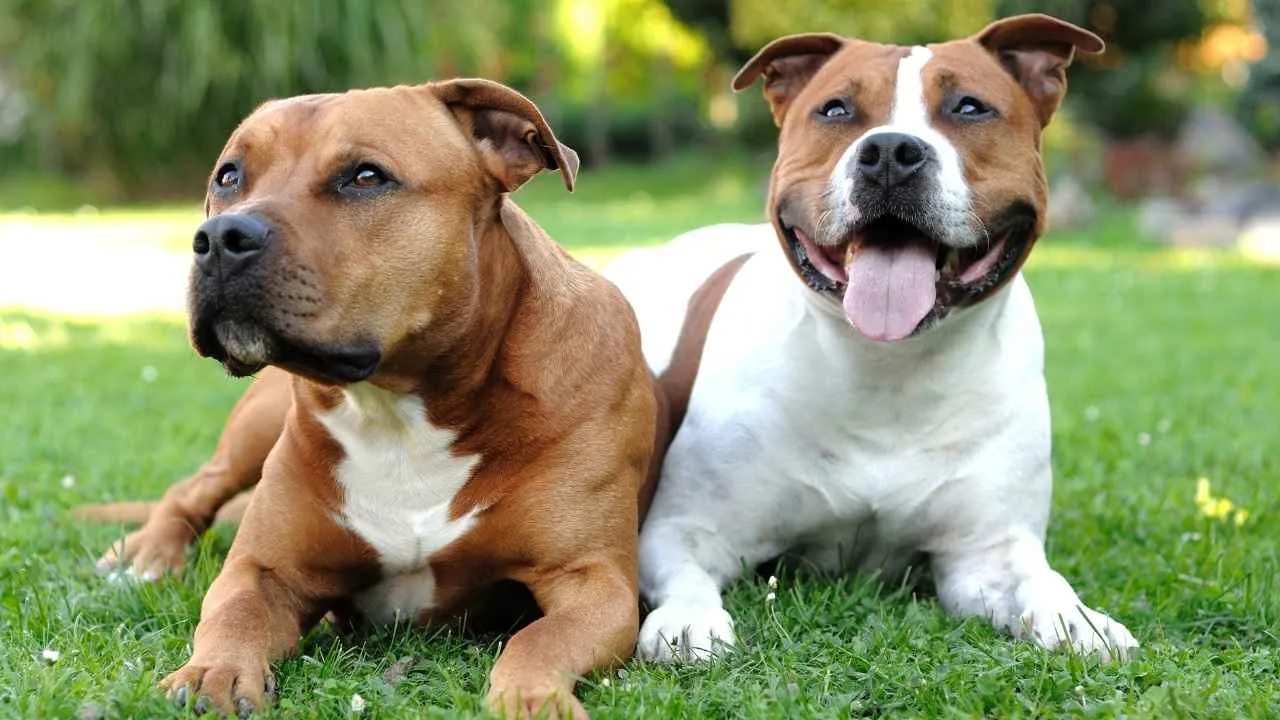
The American Staffordshire Terrier has one of those “don’t judge a book by its cover” stories—and honestly, it’s a glow-up for the ages.
Back in 18th-century England, their ancestors were sadly involved in bullbaiting, a cruel sport that has (thankfully) long been left in the past. Fast forward to today, and the modern AmStaff has fully retired from that dark chapter and reinvented itself as a world-class cuddle champion, family protector, and all-around good doggo.
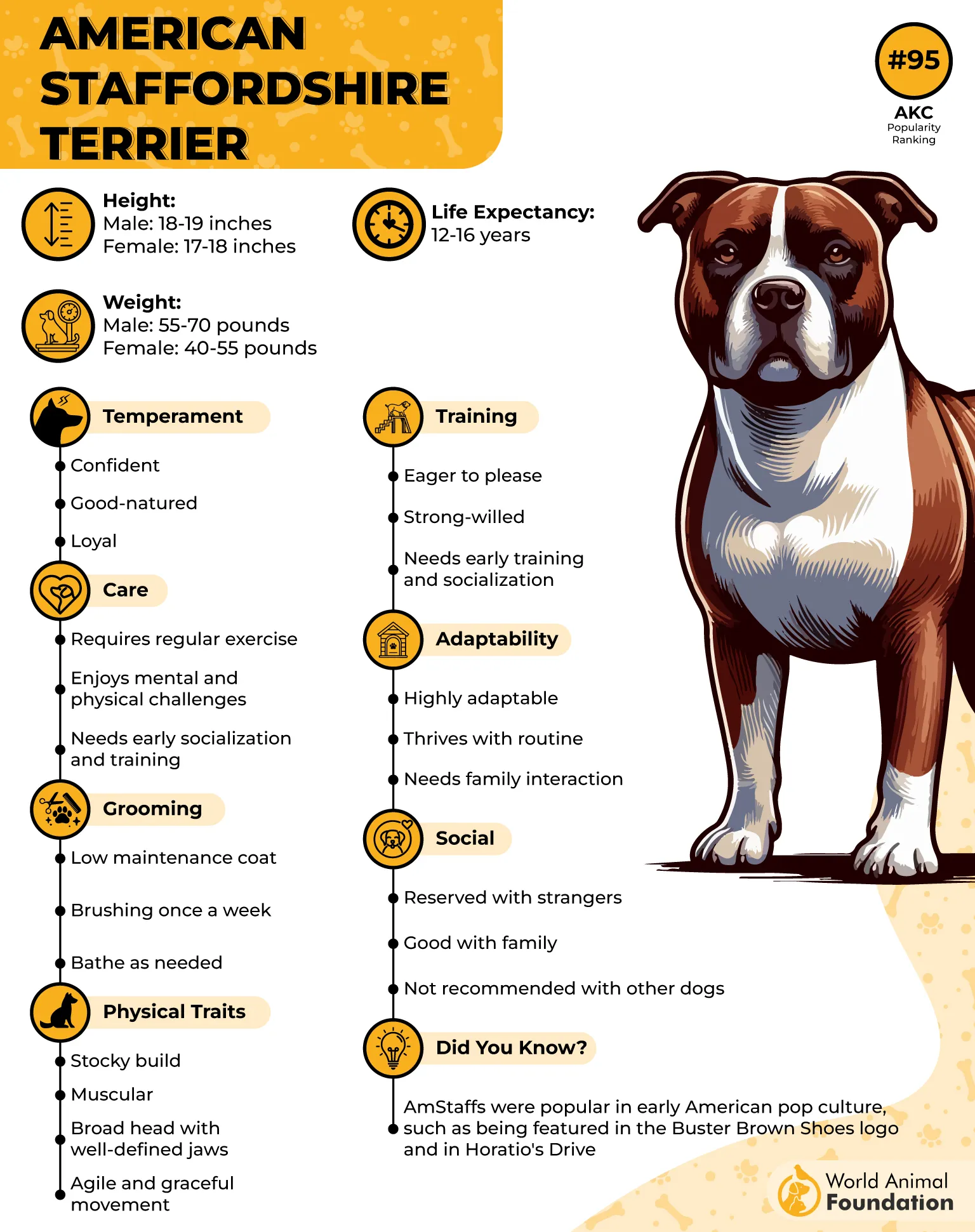
Despite their muscular build and tough-looking expression (which can scream bodyguard), AmStaffs are total softies at heart. They’re affectionate, loyal, and absolutely obsessed with their people—think “personal shadow” energy.
These dogs thrive on attention, love learning new things, and are surprisingly eager to please. Athletic and playful, they’re happiest when they can burn energy during the day and then flop dramatically onto the couch as they’ve just completed an Olympic event.
PetMD noted that when it comes to grooming, AmStaffs are refreshingly low-maintenance. Their short, single-layer coat doesn’t shed much—but don’t be fooled. Those tiny hairs have a magical ability to appear on couches, clothes, and black pants five minutes before you leave the house.
The good news? Grooming is easy. A quick brushing every few weeks and a bath every 4–6 weeks will keep them looking sleek and shiny. In short: minimal grooming effort, maximum good-looking dog.
2. Bull Terrier
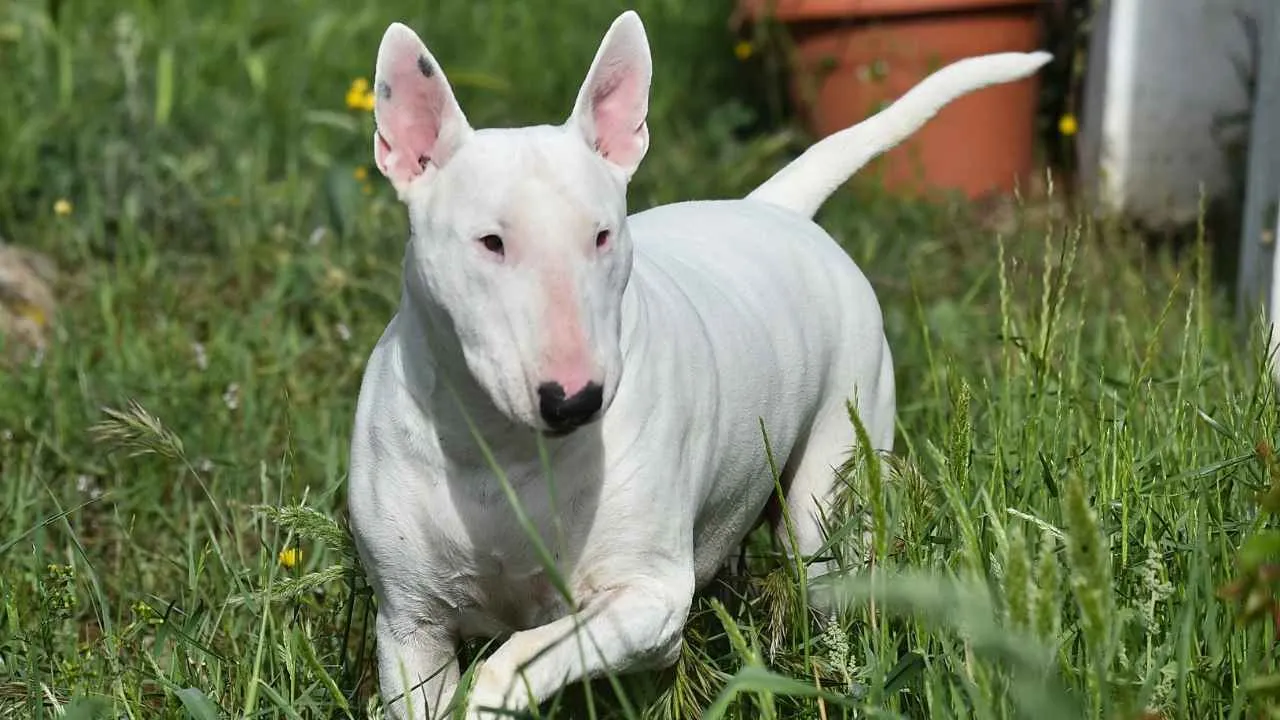
If dogs had cartoon characters, the Bull Terrier would be front and center—probably doing something chaotic, hilarious, and completely unapologetic.
Originally from England, this medium-to-large dog breed is instantly recognizable thanks to its iconic egg-shaped head and mischievous little eyes that seem to say, “I know exactly what I’m doing… and I’m going to do it anyway.”
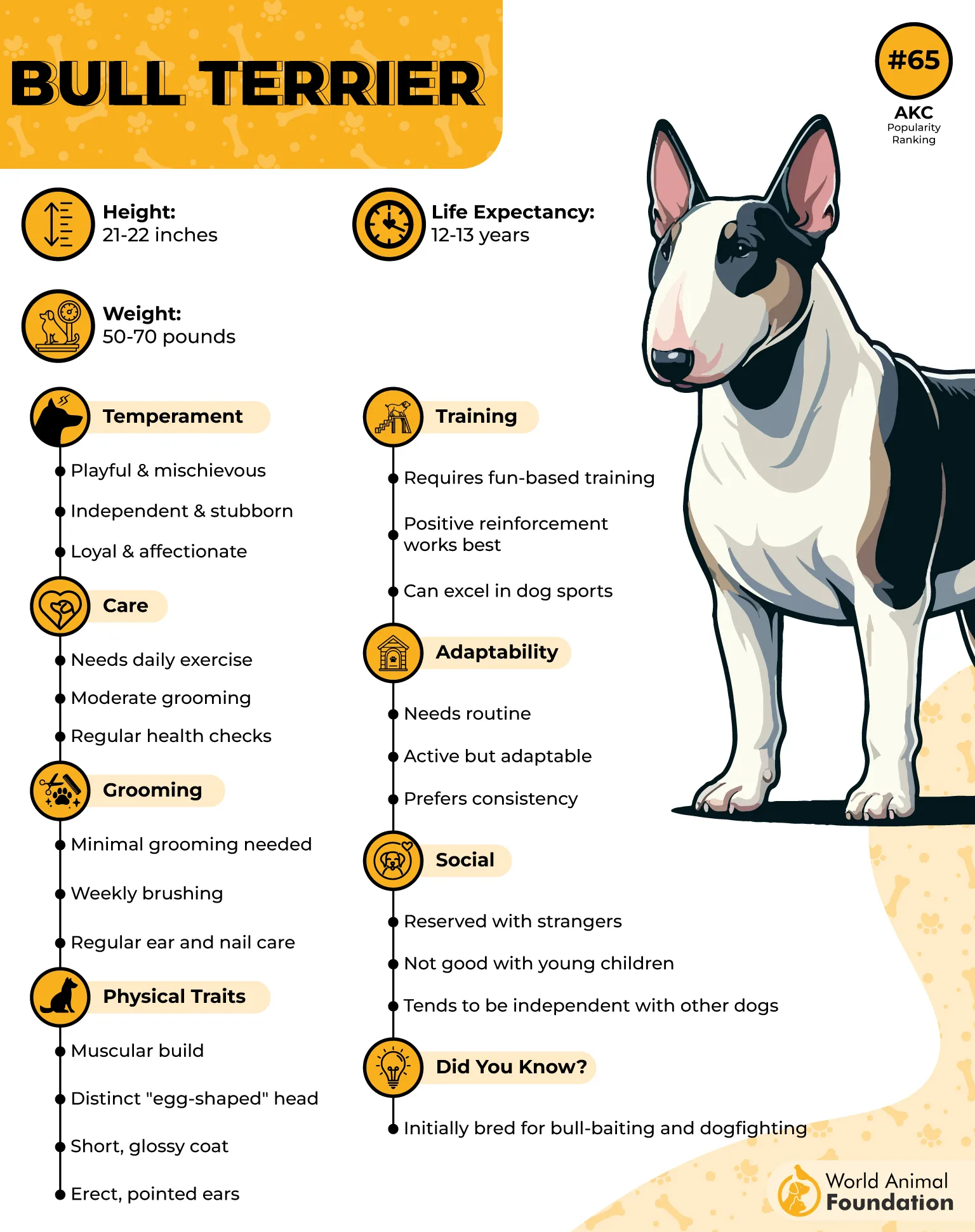
Bull Terriers are clowns in a muscle suit. They’re playful, energetic, and famously silly, and you’ll see exactly what that means. These dogs have big personalities packed into sturdy bodies, and they love entertaining their humans, whether that’s zooming around the house or striking bizarre poses that defy physics.
Grooming a Bull Terrier is refreshingly easy—no salon appointments required. Their extremely short, smooth coat is low-maintenance and beginner-friendly. A weekly brush with a soft-bristle brush or grooming mitt is enough to remove loose hair and keep their coat shiny by spreading natural skin oils.
Translation: more time playing, less time grooming. Baths are only needed occasionally, especially after they’ve found something questionable to roll in (because… Bull Terrier).
Equal parts comedian, athlete, and loyal companion, the Bull Terrier is proof that being a little weird is actually a superpower. Life with one is never boring—and your daily laugh quota will definitely be met.
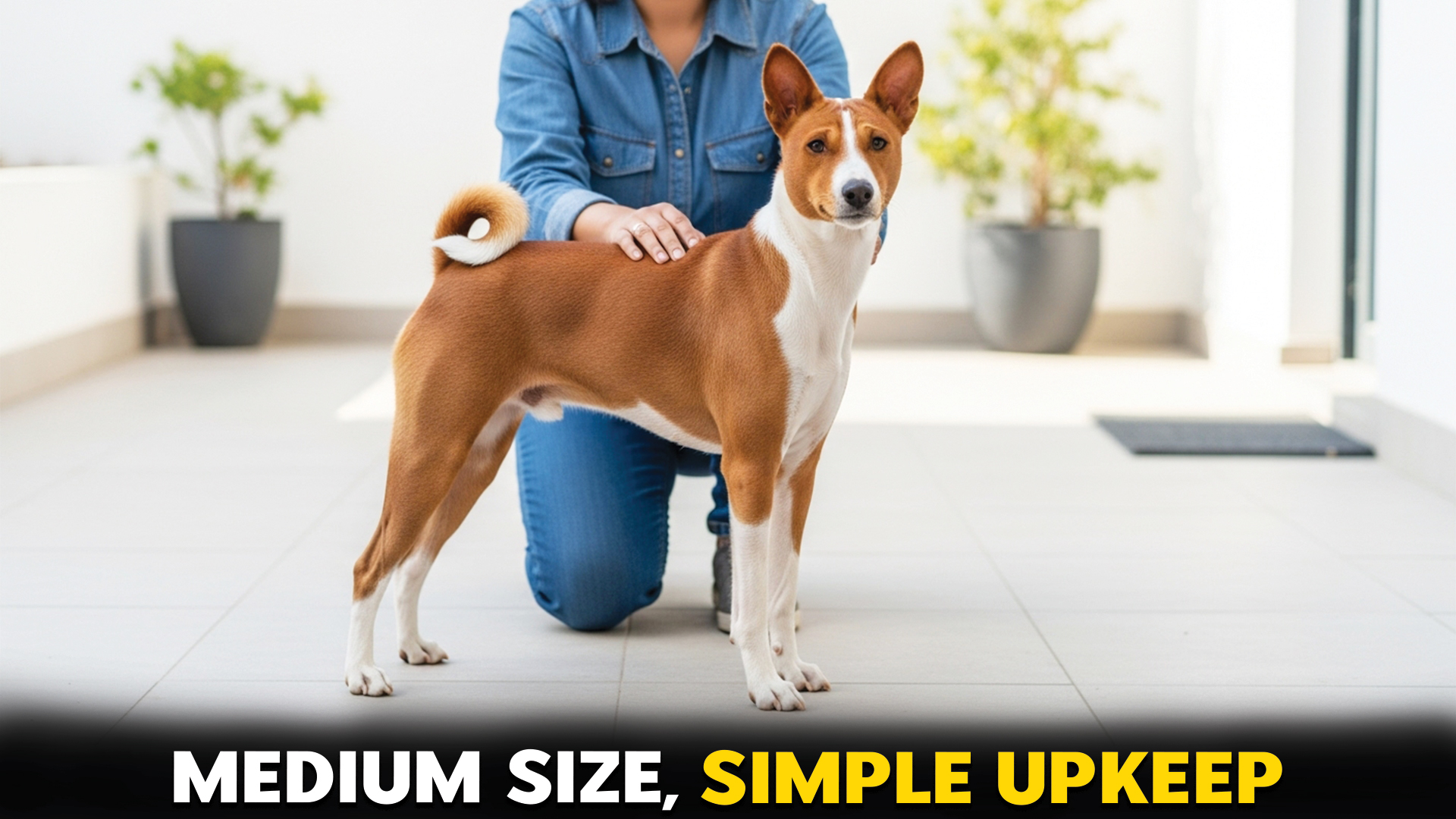
3. Basenji
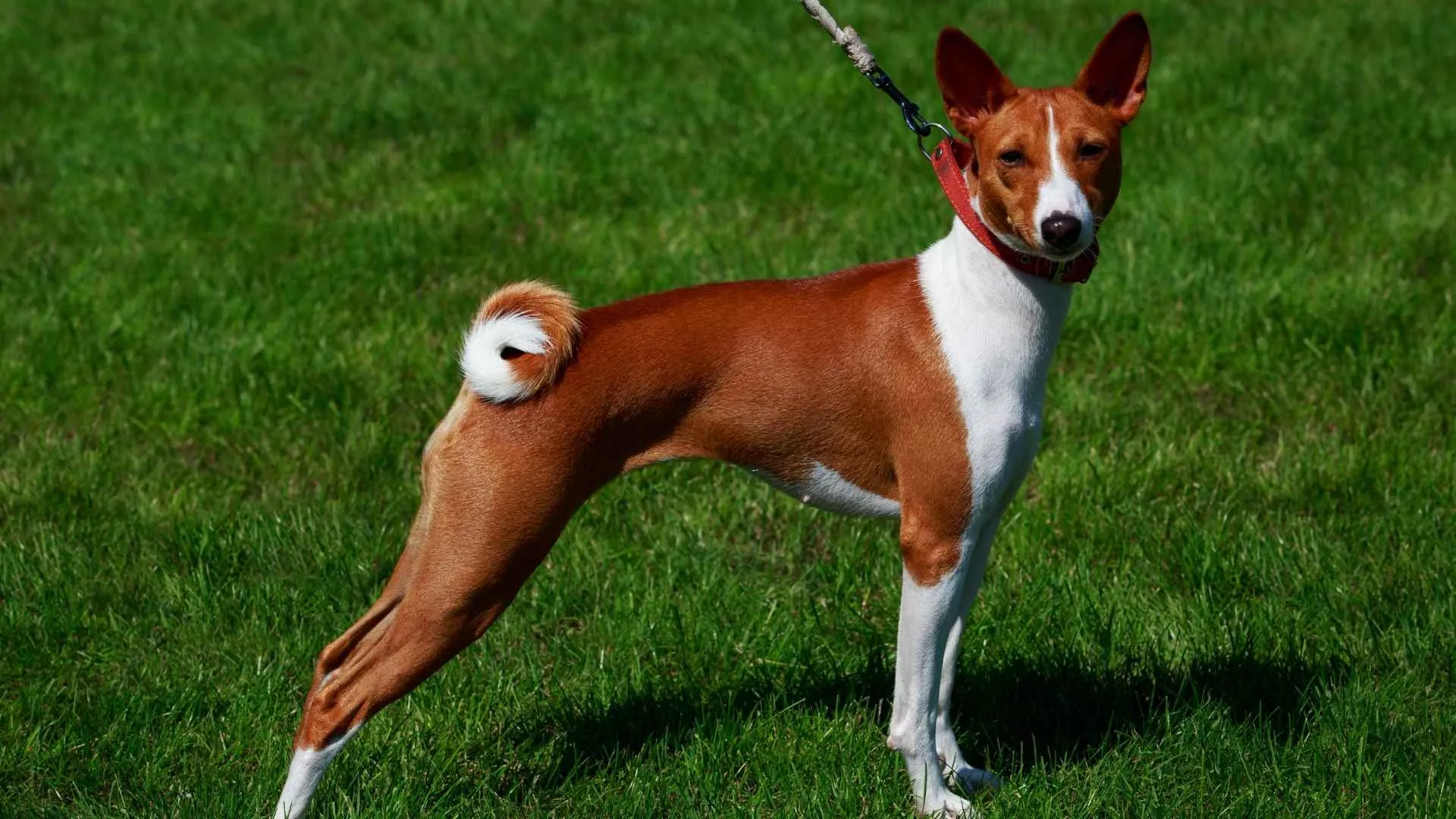
The Basenji is often described as a dog… with cat software. Loving, well-tempered, and impressively intelligent, this ancient breed is observant to the point where you may occasionally wonder if they’re silently judging you.
Basenjis are famous for their high energy levels and sharp minds, which means they thrive in homes that can keep them mentally and physically engaged. They’re best suited for households without small pets or very young children, as their curiosity and prey drive can kick in fast.
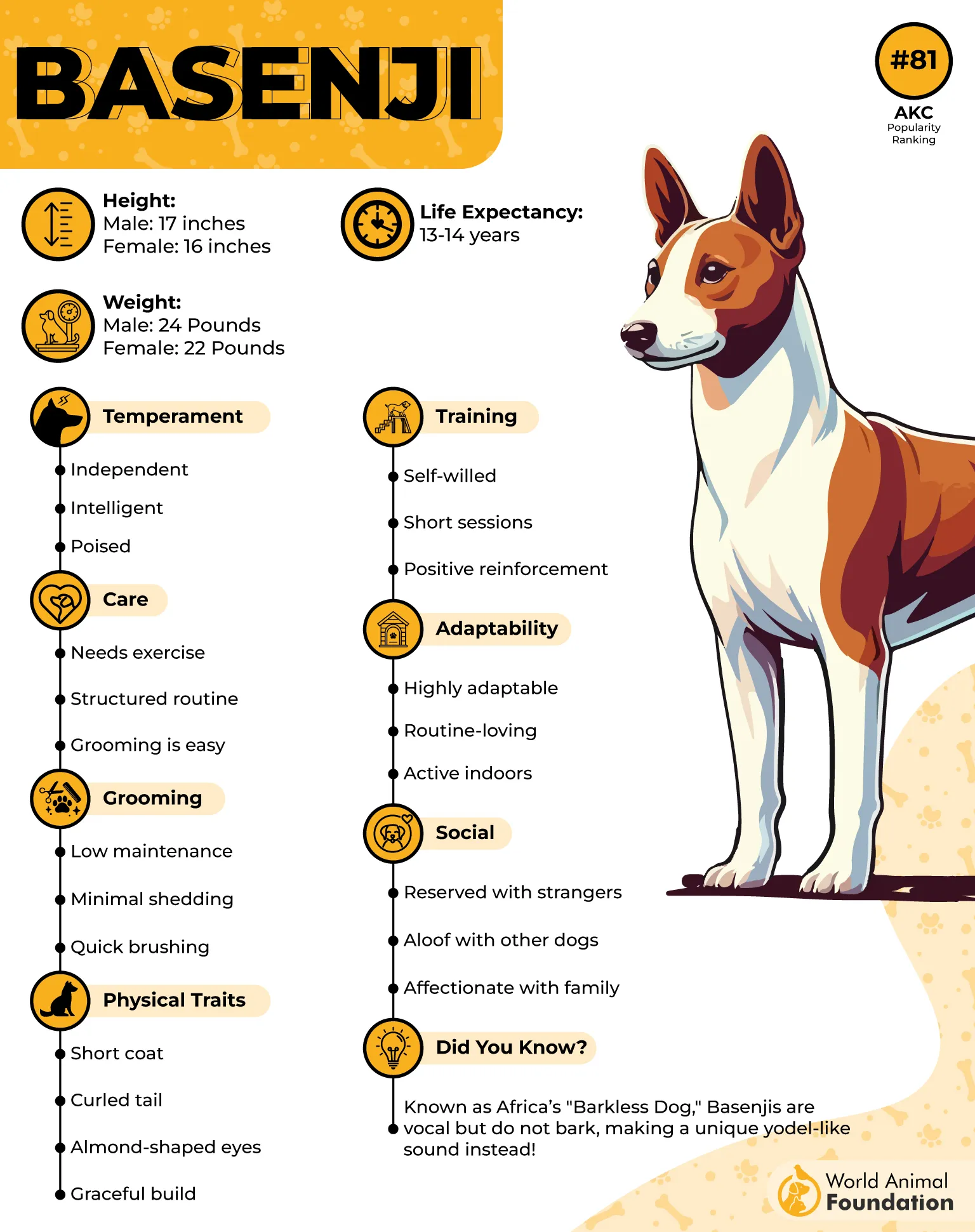
Give them space to run, puzzles to solve, and routines to master, and you’ll have a loyal companion who’s always two steps ahead. Physically, the Basenji is sleek, sturdy, and stylish without even trying.
Their short, smooth coat is low-maintenance and only needs brushing on rare occasions—basically when you remember or when they graciously allow it. Bonus: they’re known for being exceptionally clean dogs, often grooming themselves like cats. Yes, really.
Energetic, elegant, and a little mysterious, this breed is perfect for experienced dog owners who appreciate independence, intelligence, and a dog that keeps life interesting—quietly, cleverly, and on their own terms.
4. Beagle
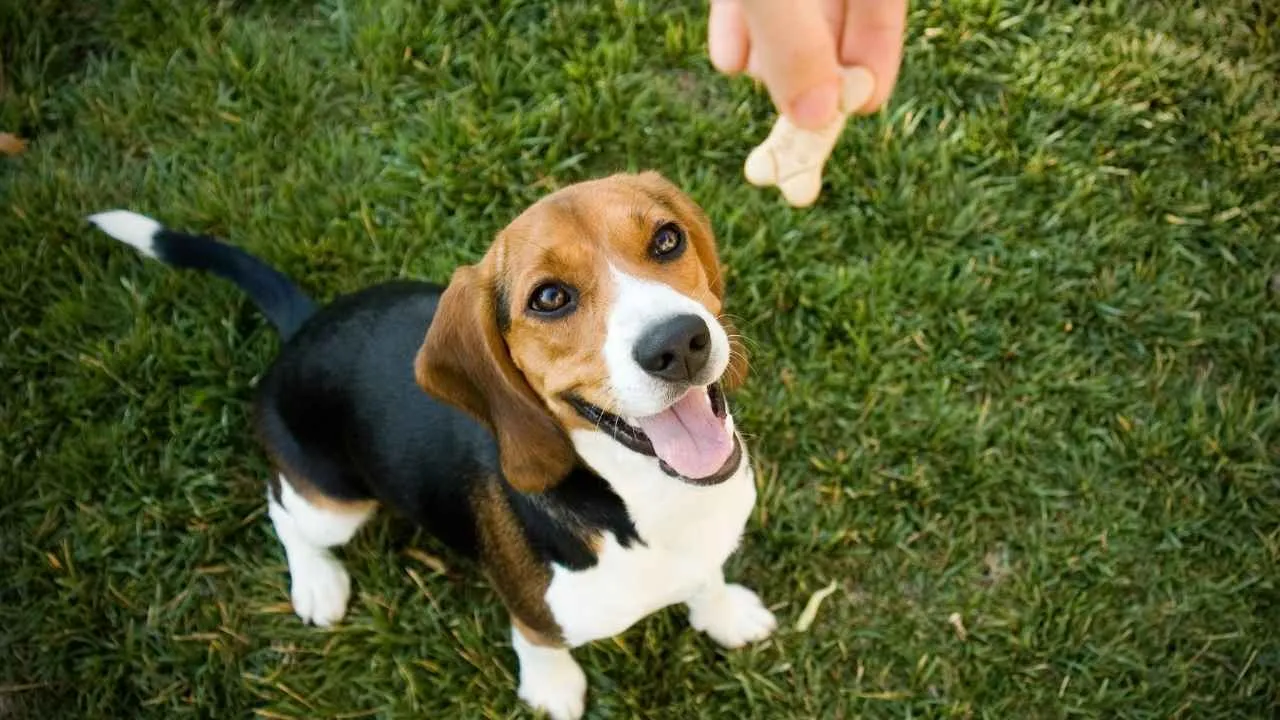
If noses had superpowers, the Beagle would be a full-blown superhero—cape optional, ears flapping. Famous for their melodic baying howl (which neighbors may lovingly refer to as “loud opinions”), Beagles were bred as hunting dogs to track rabbits through thick undergrowth and flush them out.
Originating in England, this breed takes its job seriously… even today, when that “job” might just be locating a dropped crumb three rooms away. Despite their working-dog roots, Beagles have smoothly transitioned into modern family life.
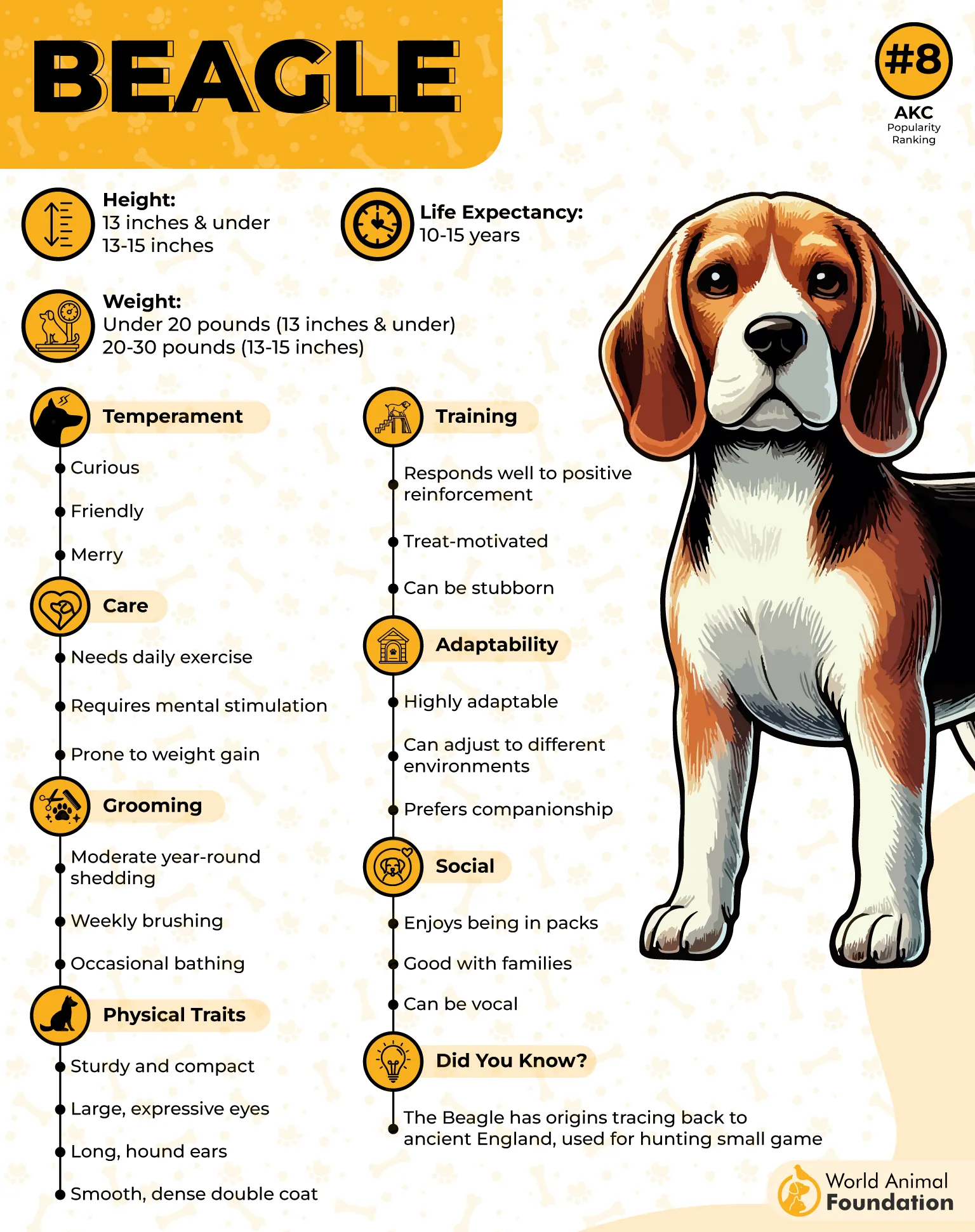
Their short, easy-to-care-for coat makes grooming a breeze, and their friendly, laidback nature means they’re affectionate with just about everyone they meet. Strangers? Friends. Kids? Best friends. Other dogs? New squad.
According to Purina, Beagles are still used for hunting but are equally popular as companion dogs—and it’s easy to see why. They’re relatively low-maintenance, needing regular exercise to burn off energy and simple grooming to stay tidy.
Just don’t underestimate that nose: once they catch a scent, the world fades away, and you may find yourself calling their name while they pretend not to hear you.
Beagles are especially ideal for families with young children thanks to their gentle temperament and playful spirit. Training can be a challenge, though—hounds are famously stubborn. The secret weapon? Treats. Lots of them. If food is involved, suddenly your Beagle is the most attentive student in class.
5. Vizsla
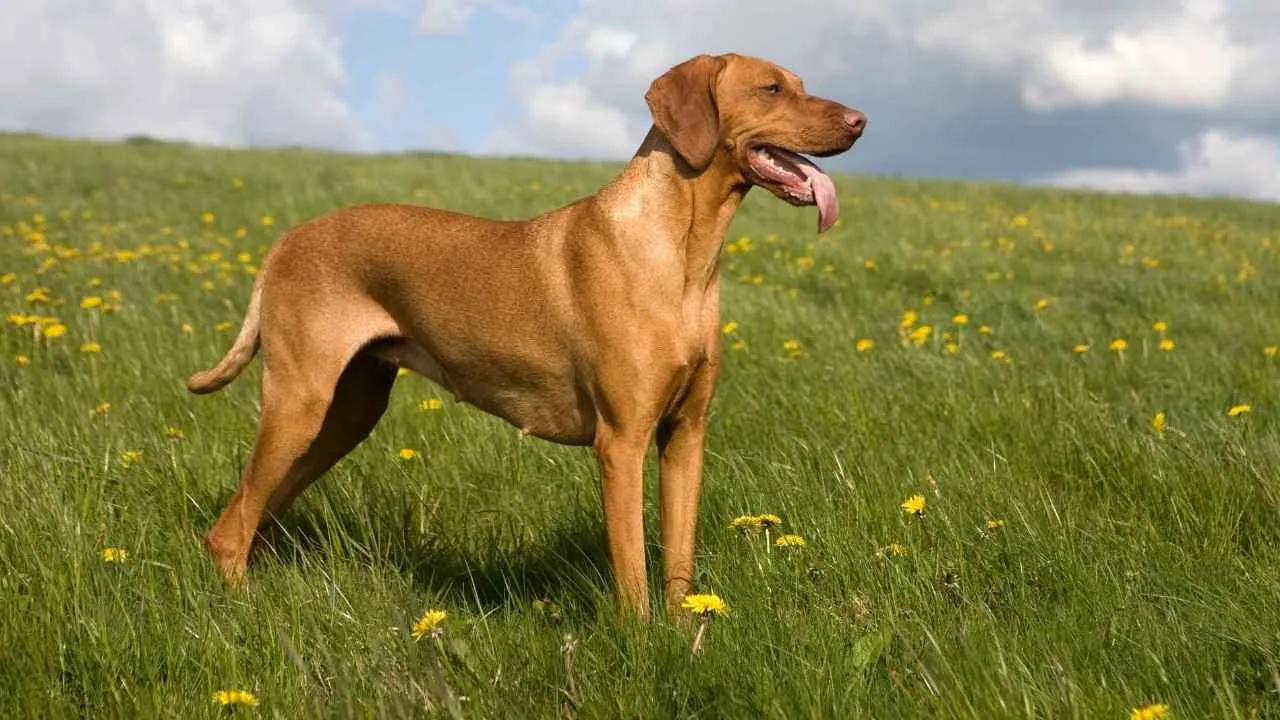
The Vizsla is what happens when an ancient hunting dog decides to become a full-time best friend. Originating centuries ago, this elegant athlete was bred to work closely with humans—and that bond is still very much alive today. Vizslas aren’t just companion dogs; they’re velcro dogs.
If you move, they move. Bathroom break? Congratulations, you have company. Highly trainable, intelligent, and deeply compassionate, the Vizsla thrives when given structure, consistent training, and plenty of interaction.
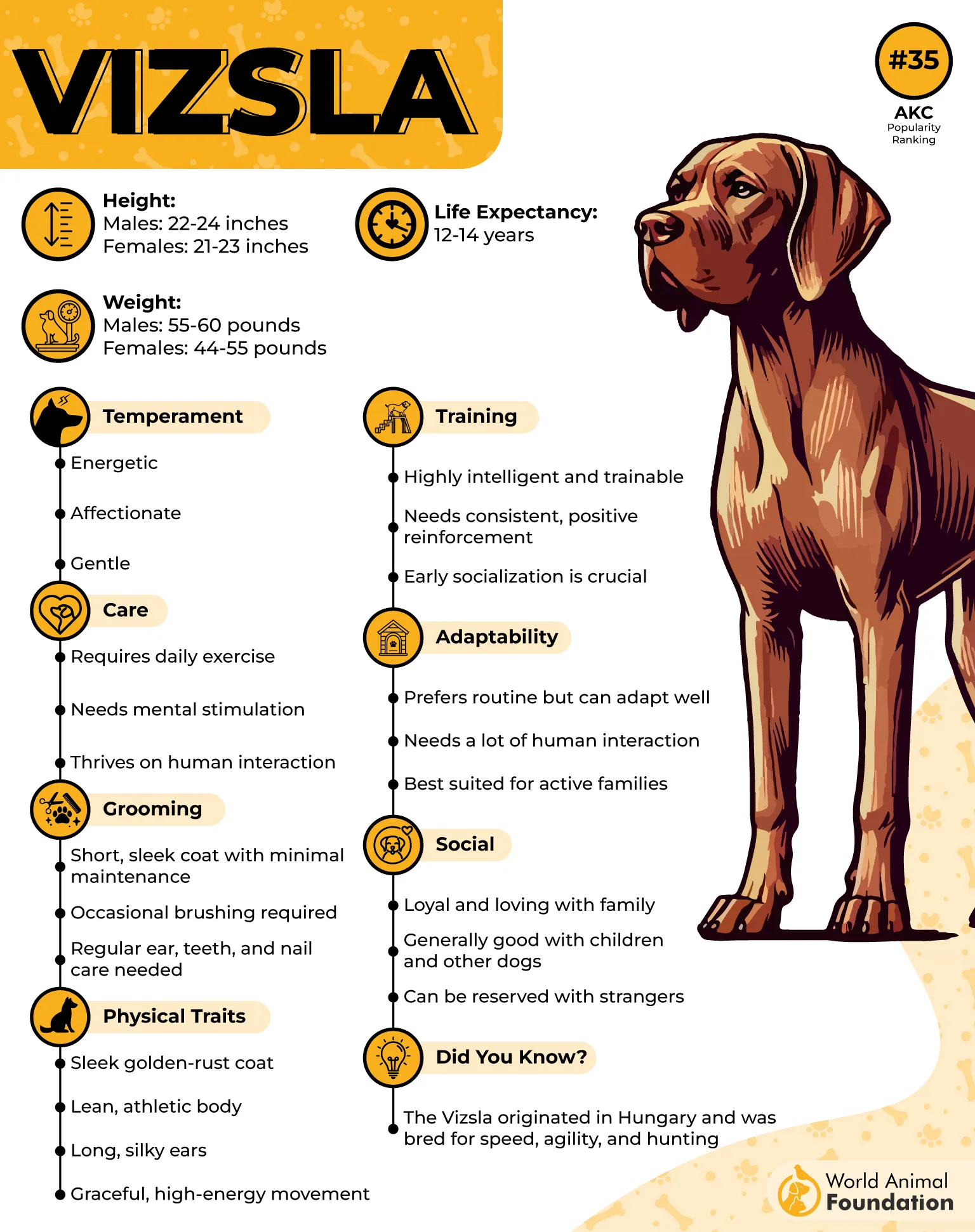
Put in the time, and the payoff is huge—this breed learns quickly and genuinely wants to make you proud. Skip the training, though, and they may invent their own hobbies (spoiler: you might not approve of those hobbies).
One of the many perks of living with a Vizsla is their low-maintenance grooming routine. Their short, sleek coat requires minimal care—no complicated brushing schedules, no fur explosions on the couch.
Your furniture will thank you, your vacuum will feel underutilized, and you’ll spend more time enjoying your dog instead of cleaning up after them.
Loyal, affectionate, and endlessly eager to please, the Vizsla is the perfect blend of athlete and cuddle buddy. Train them well, keep them active, and you’ll have a devoted companion who sticks closer than your shadow—and looks great doing it.
6. Whippet
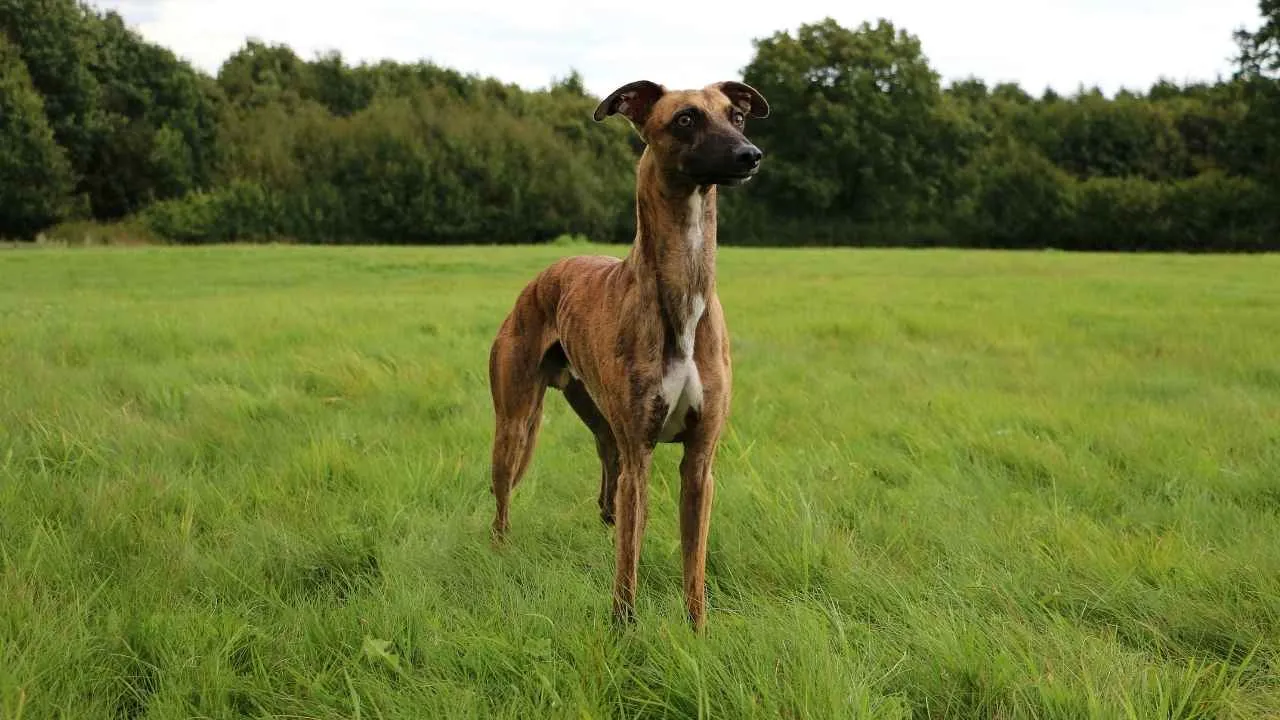
Think of the Whippet as a Greyhound that hit the “compact mode” button. Sleek, elegant, and built like a canine supermodel, this breed combines incredible speed with an impressively chill personality.
One minute they’re zooming around like a rocket on four legs, the next they’re curled up on the couch pretending they’ve never known joy outside of naps.
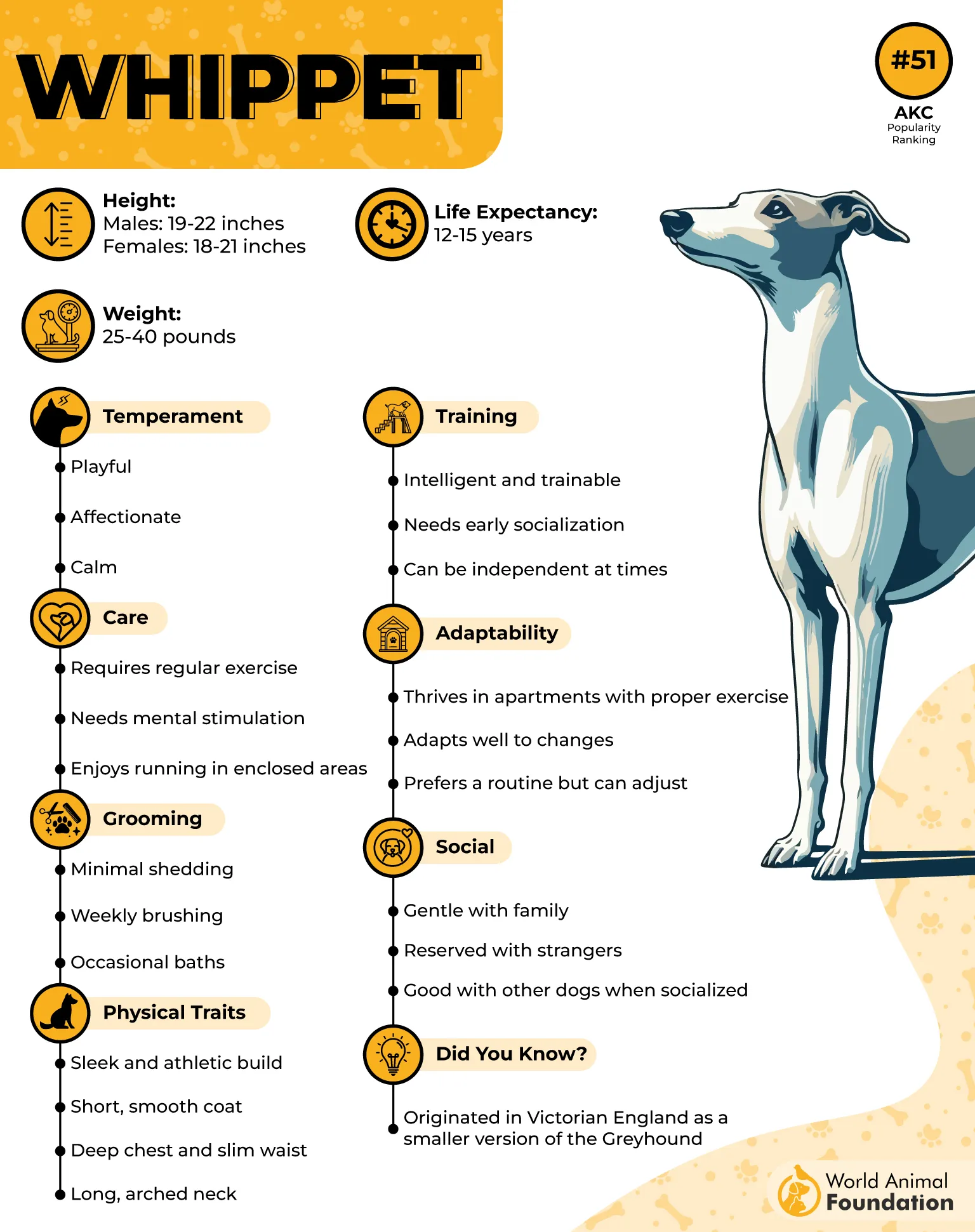
Whippets have a sheer, ultra-short coat that’s about as low-maintenance as it gets. Brushing is only needed on the rare occasion—mostly to keep them shiny and to reassure them that yes, they are still beautiful. Shedding is minimal, grooming is easy, and your lint roller won’t be working overtime.
Despite their athletic abilities, Whippets have a delicate, slender frame, so playtime should be enthusiastic but gentle. They’re not built for roughhousing or clumsy collisions, and care should be taken during high-energy games. Think “graceful sprinter,” not “wrecking ball.”
Quiet, affectionate, and surprisingly low-key indoors, the Whippet is perfect for people who want a dog that looks like it belongs on a racetrack but acts like it belongs on a luxury sofa. Fast when they want to be, calm when it counts—just don’t forget the blankets. Lots of blankets.
7. Basset Hound
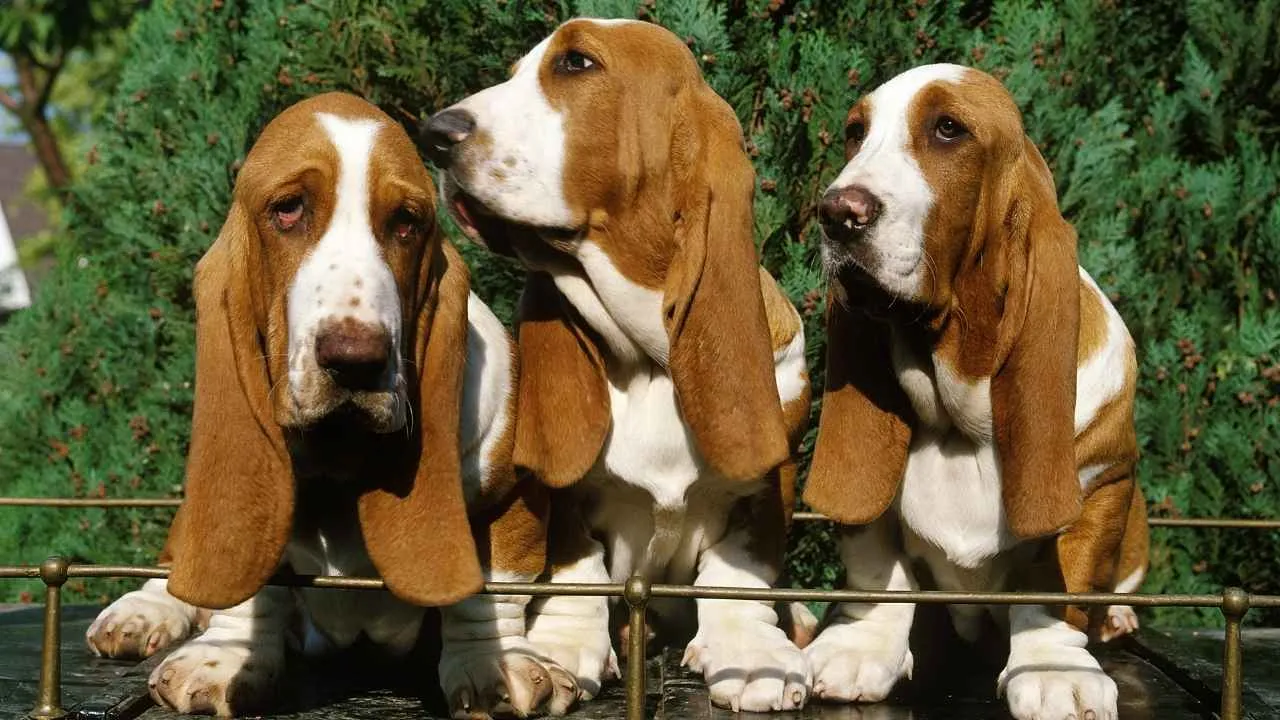
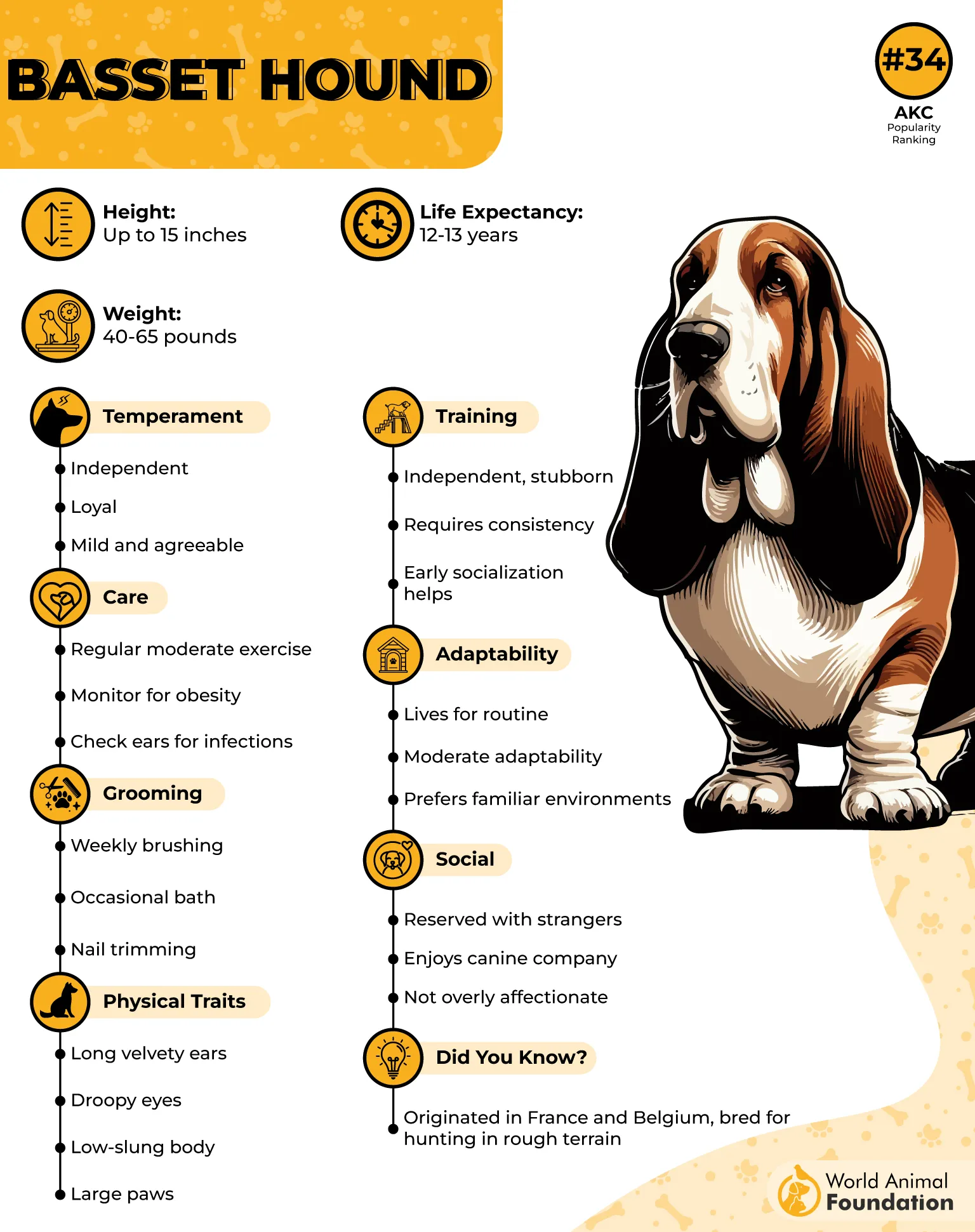
The Basset Hound is proof that slow and steady really does win hearts. With their long ears, soulful eyes, and permanently “over it” expression, these charming, medium-sized hounds are some of the most laid-back dogs you’ll ever meet.

They don’t get worked up easily—unless food is involved. Then all bets are off. Originally bred as slow, plodding hunters, Basset Hounds were designed to track scents at a relaxed pace. That trait lives on today in their love for long, leisurely walks with their humans.
They’re not in a rush, and they don’t expect you to be either. If you’re looking for a steadfast, loyal companion who enjoys your presence more than nonstop activity, the Basset is your dog.
Their smooth, short coat is surprisingly tough and dense enough to protect them during long stretches outdoors in all kinds of weather. That said, don’t let the short coat fool you—Bassets shed. A lot.
According to WebMD, regular grooming is essential to keep them comfortable and healthy. Brushing at least once a week helps remove dead hair, supports healthy skin, and slightly reduces the amount of fur that mysteriously ends up everywhere.
Occasional baths are also part of the deal. When their coat loses its shine—or when they come home smelling like “adventure” (or something worse)—it’s time for a wash. Think of it as quality bonding time… with soap.
Calm, affectionate, and wonderfully stubborn in their own quiet way, the Basset Hound is the ultimate low-energy best friend—always by your side, always on their own schedule.
Conclusion
Medium-sized dog breeds with short hair and easy care are often the perfect match for busy families and city dwellers who want a loving family dog without high maintenance. Most short-haired dog breeds only need weekly brushing with a rubber curry brush to remove loose hair, keep the coat healthy, and manage different coat types. Compared to dogs with a medium coat or long fur, short fur is far easier to maintain and rarely requires professional grooming, though basics like nail trimming and regular brushing still matter.
While sometimes a bit stubborn, early training and early socialization help them adapt well to apartment living, other pets, and active households. These dogs can thrive in smaller spaces when given daily walks, long walks when needed, proper daily exercise, and enough mental stimulation. Many short-haired do well with a busy schedule, require less food, and are more comfortable being left alone for long periods, though attention to separation anxiety is important.
