




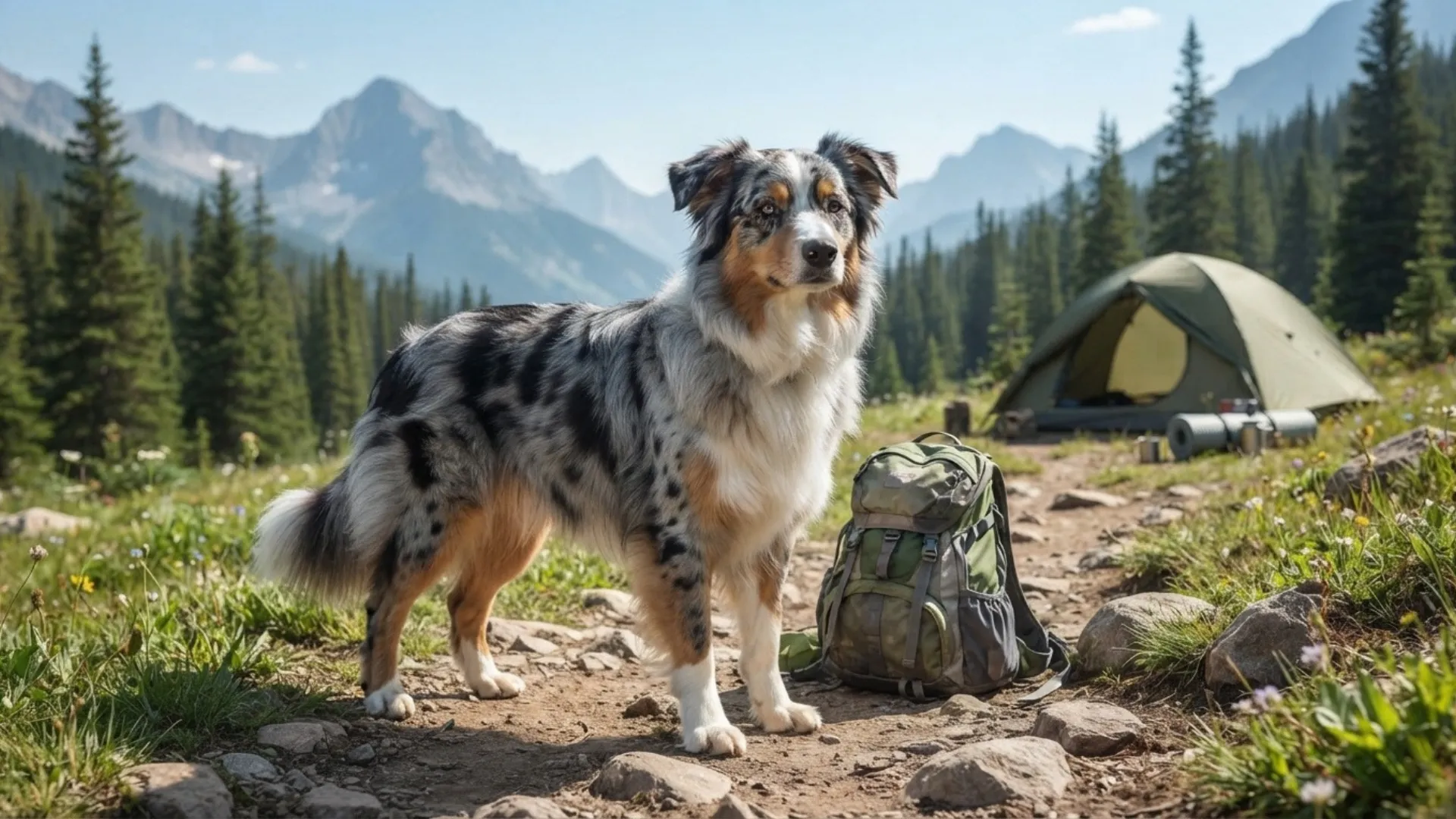
If your weekends are filled with mountain trails, forest campsites, muddy paws, tents, lakes, and ridiculously beautiful sunsets, choosing a dog with the right stamina and temperament can turn every outdoor trip into a seriously wholesome adventure.
A great backpacking dog needs more than pure energy, though, because endurance without training can become absolute trail chaos. Loyalty, responsiveness, confidence around unfamiliar environments, physical conditioning, recall training, and the ability to settle after exercise all matter when your campsite is several miles away from the nearest parking lot.
So, which dogs actually have the adventure résumé to match your hiking boots? Here are seven loyal breeds that can make excellent backpacking and camping partners when properly trained, conditioned, and matched to the environment.
Loyal Dog Breeds That Love Backpacking and Camping
1. Rhodesian Ridgeback
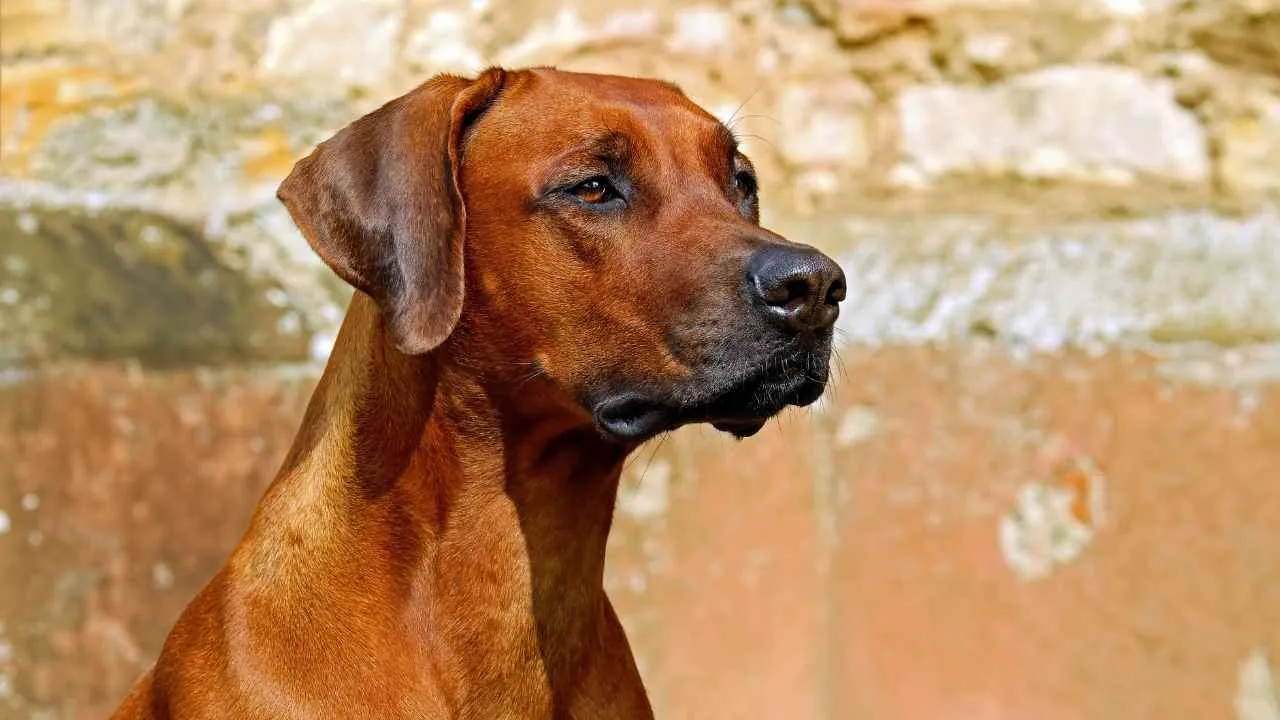
Originally developed in southern Africa as an athletic hunting hound, the breed combines strength, endurance, independence, and a famously devoted relationship with its family.
What makes the Ridgeback especially interesting for backpackers is its athletic build and willingness to cover ground. They generally need a moderate rather than nonstop level of exercise, so after a solid day outside, many adults can switch from trail athlete to professional tent lounger.
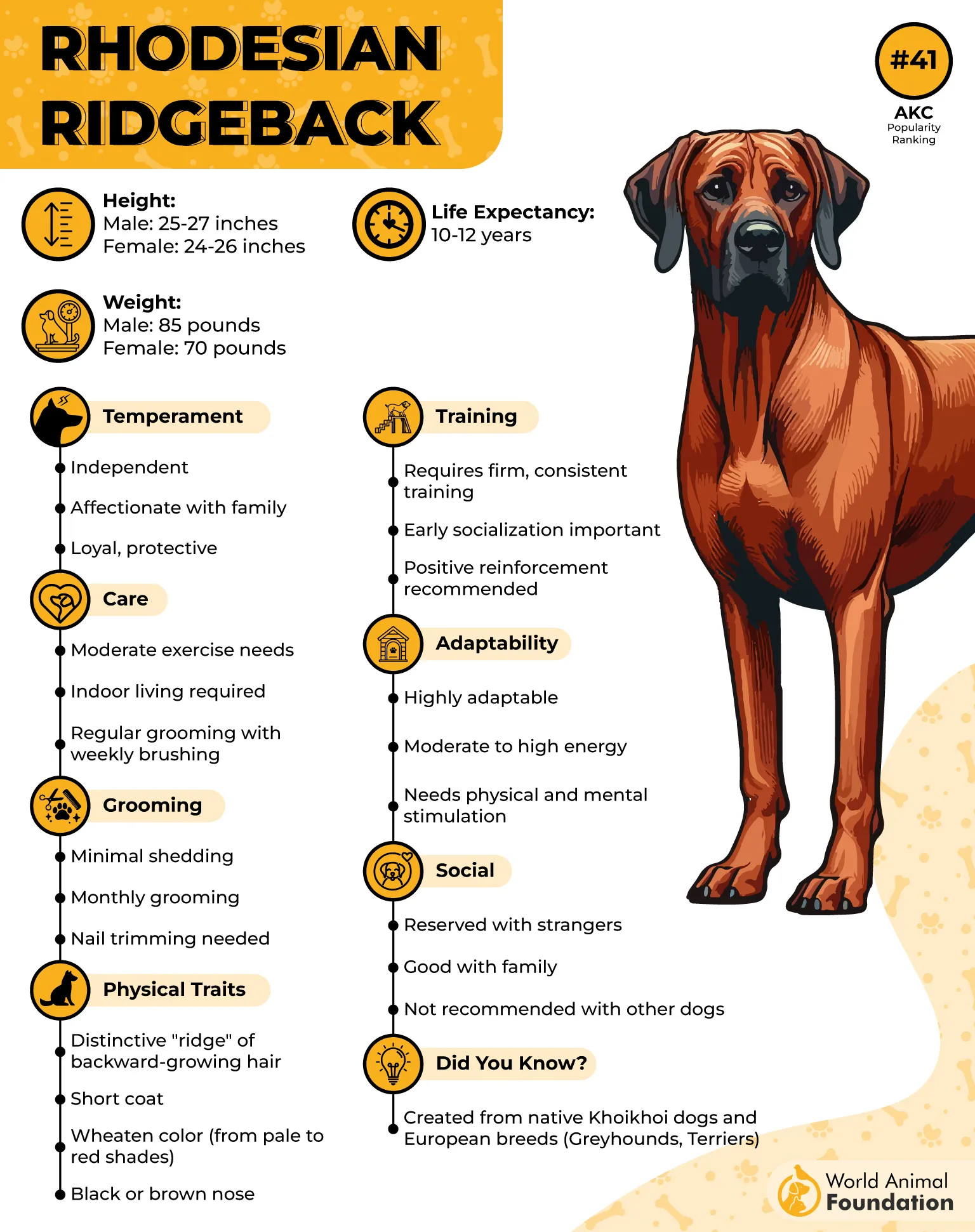
Their loyalty is another huge plus, because they tend to form deep connections with their people. Positive training, early socialization, reliable leash manners, and repeated exposure to woodland distractions should therefore happen long before you attempt a remote overnight trek.
One thing backpackers absolutely cannot ignore is prey drive. The AKC specifically warns that Rhodesian Ridgebacks have a strong prey drive and recommends keeping them safely enclosed when off leash, so wildlife-filled trails are not the place to test whether your recall training is “probably good enough.”
The Ridgeback’s short coat also means less post-hike grooming. Check paws regularly, carry sufficient water, build mileage gradually, and choose conditions that fit the individual dog rather than treating the breed’s athletic reputation like an unlimited-energy cheat code.
2. Golden Retriever
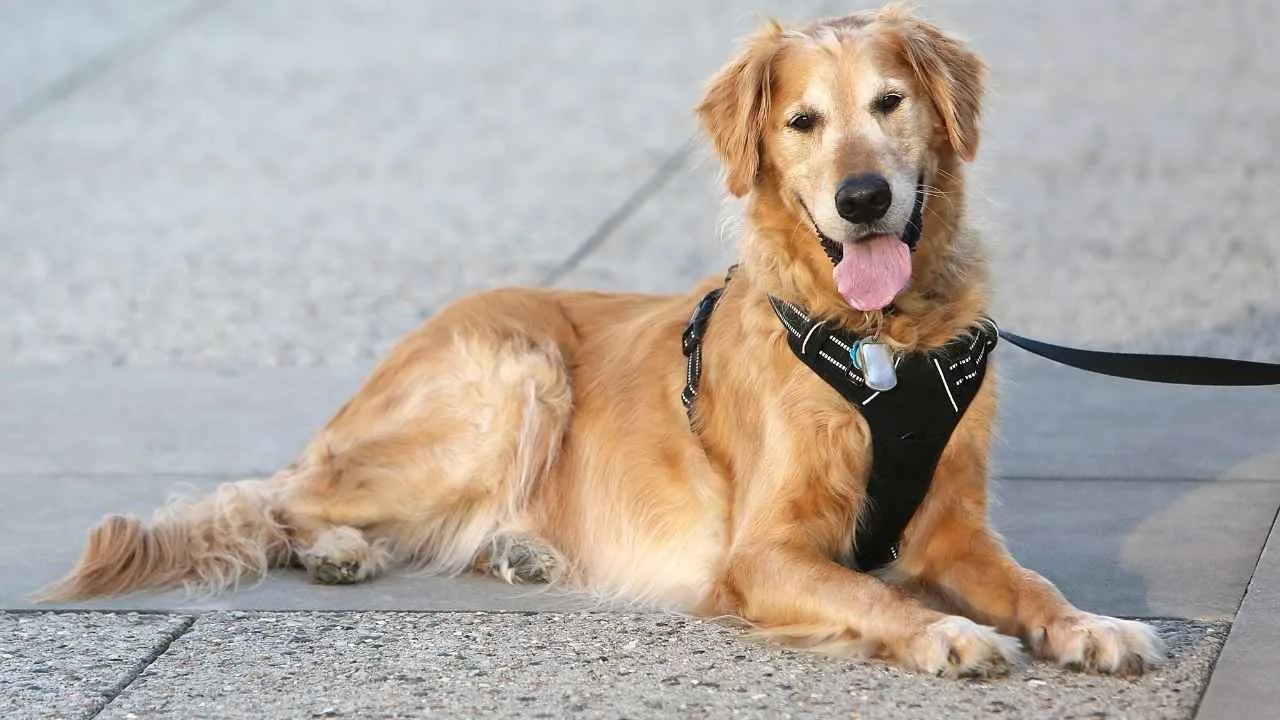
Golden Retrievers commonly enjoy hiking, swimming, running, fetch, fieldwork, and other active pursuits, making their outdoorsy reputation much more than social-media aesthetics. Their combination of trainability, enthusiasm, intelligence, and desire to cooperate is particularly useful when trails involve changing surfaces, campsite rules, wildlife encounters, water crossings, or groups of unfamiliar hikers.
Their retrieving background is another reason they often look hilariously at home around lakes and rivers. Retriever breeds were developed to locate and retrieve game while navigating rough landscapes and water, requiring athleticism, intelligence, and willingness to follow human direction.
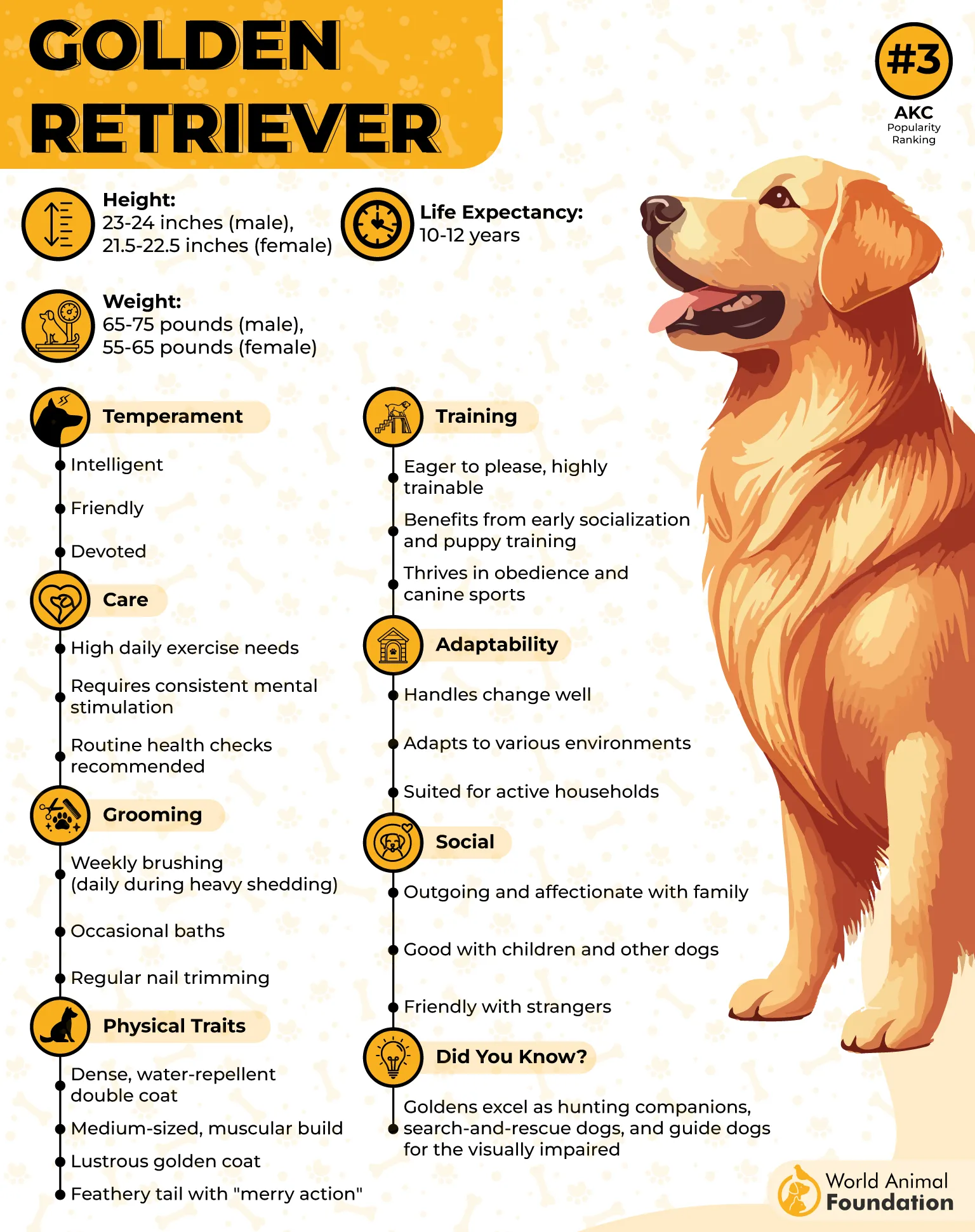
That beautiful double coat comes with a backpacker’s tax: grooming. Goldens shed year-round and more heavily during seasonal coat changes, so regular brushing matters. At the same time, camping trips add burrs, mud, seeds, twigs, and the occasional unidentified forest substance to the equation.
Young dogs need special consideration as their bodies mature, and adults need water, rest breaks, paw checks, appropriate food, and protection from excessive heat, just like other canine hikers. With proper preparation, a Golden Retriever offers one of the best combinations of loyalty, trainability, sociability, and water-loving enthusiasm.
3. Australian Shepherd
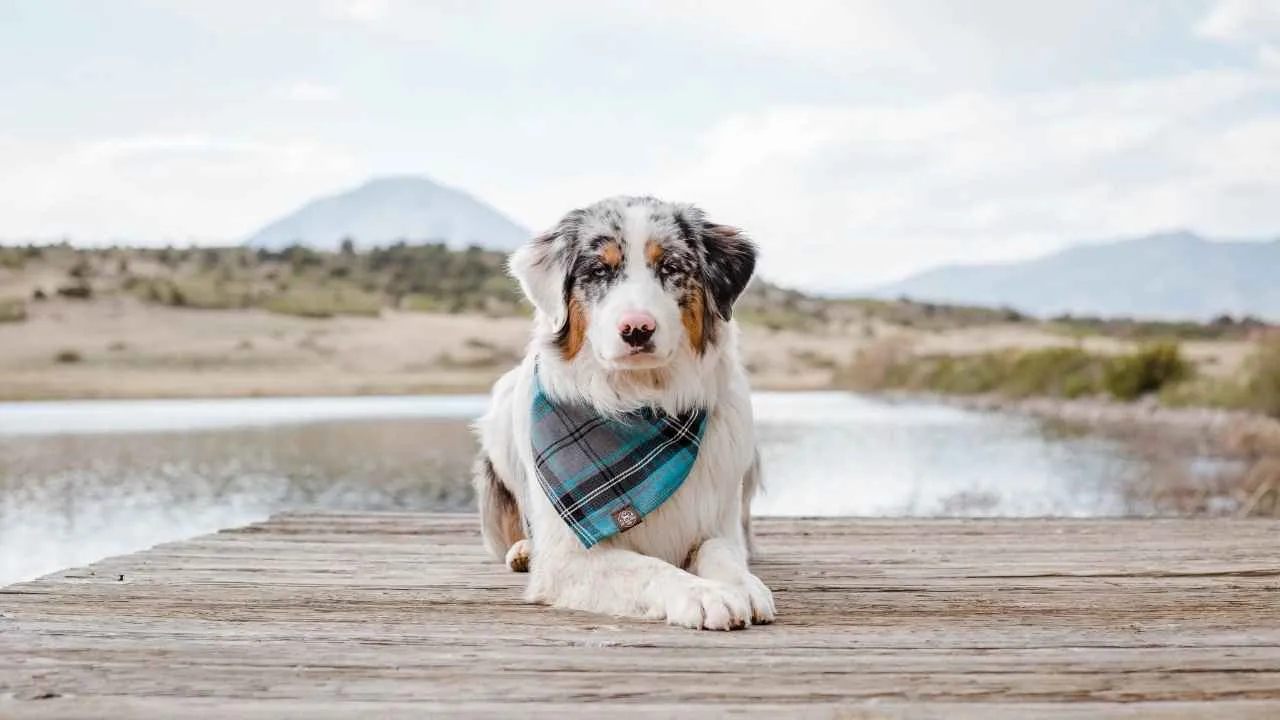
Australian Shepherds are highly intelligent herding dogs that were developed as hardworking ranch companions in the United States, despite the slightly misleading Australian name, and their history demanded agility, responsiveness, stamina, and serious mental focus. For active campers, that combination can produce a dog that views a winding mountain trail less as exercise and more as Tuesday.
They are high-energy, athletic dogs that need substantial daily exercise and specifically enjoy accompanying owners on long walks and hikes. Their nimble movement is especially handy on uneven terrain where a less agile dog might approach every fallen log like an unexpected boss battle.
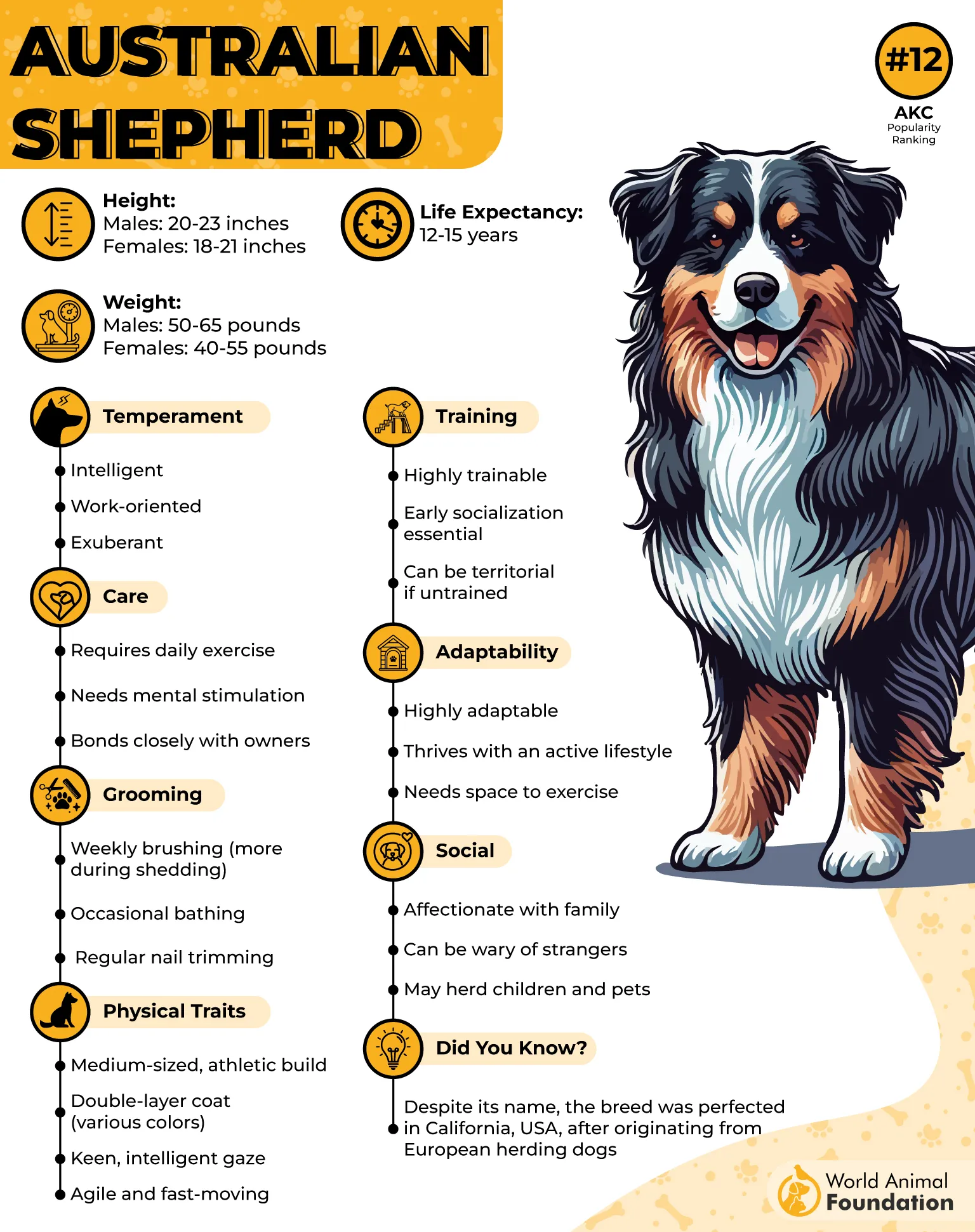
Brains are arguably an even bigger part of the Aussie package than endurance. Herding dogs were expected to pay attention, make decisions, respond to handlers, and manage moving livestock, which is why modern Aussies generally thrive when physical activity is combined with training and problem-solving.
If your camping routine includes obedience work, scent games, trail commands, structured fetch, or learning to settle quietly while you cook dinner, your Aussie will probably appreciate having responsibilities instead of the vague job title of “dog-earby.”
4. German Shepherd
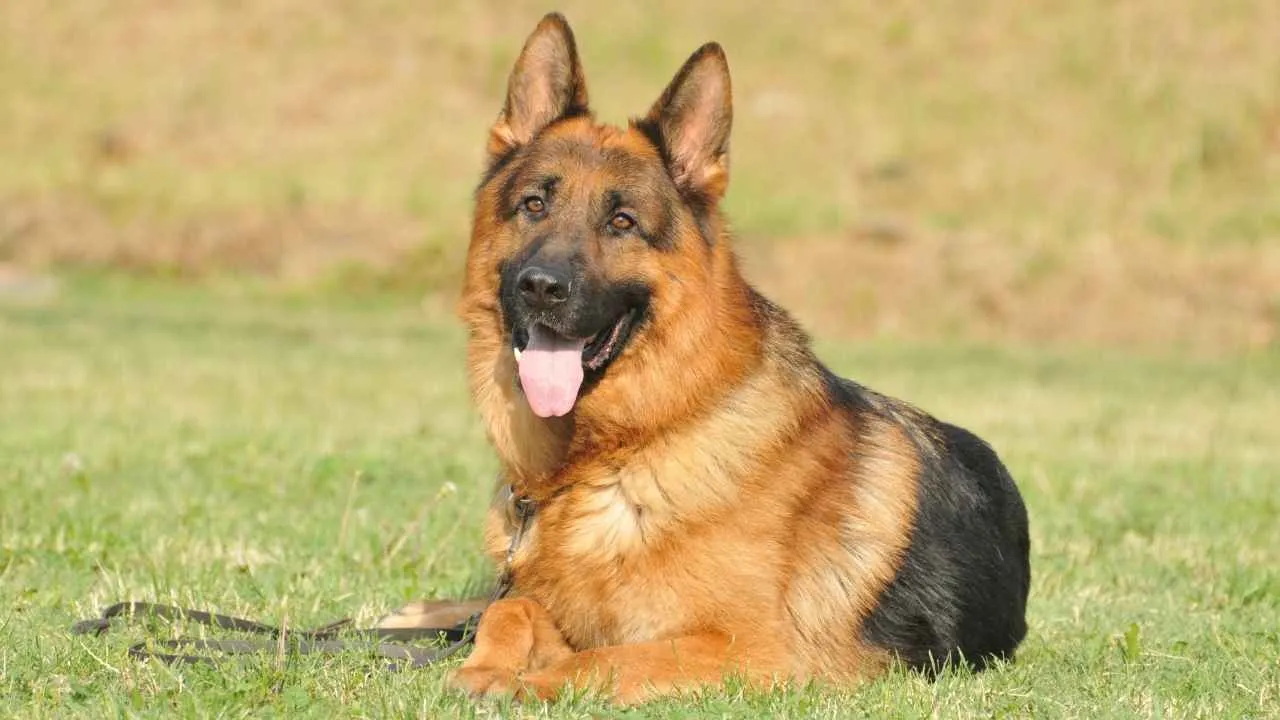
The German Shepherd Dog is a versatile working breed that combines athletic ability, intelligence, loyalty, trainability, and a strong orientation toward its handler, qualities that have led German Shepherds into roles ranging from herding and tracking to search-and-rescue and other working disciplines.
They are active, athletic animals that need plenty of physical and mental stimulation, with activities such as tracking, herding, agility, and dock diving as useful outlets. Translation: a casual five-minute stroll around the block followed by 23 hours of boredom is unlikely to impress this particular employee.
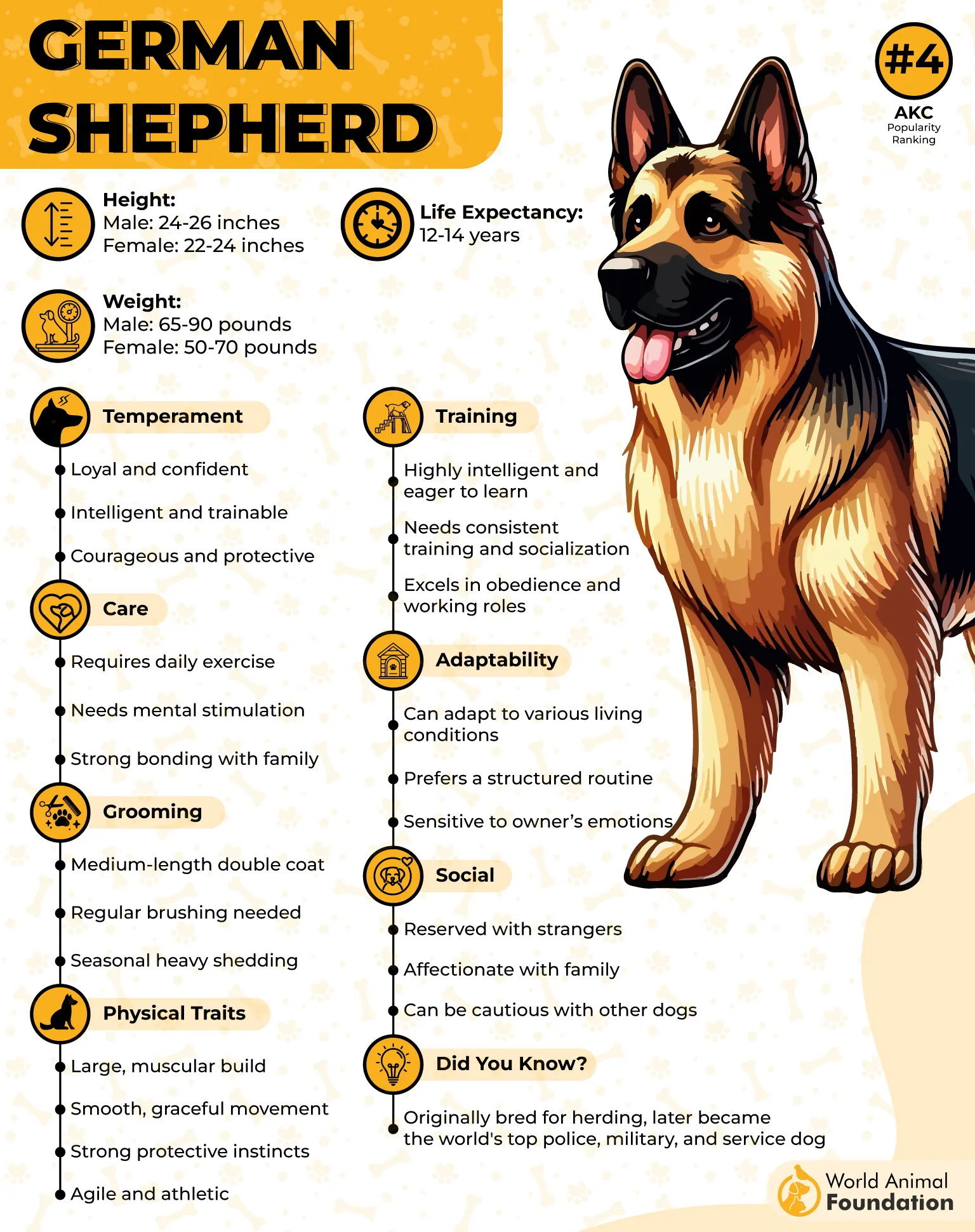
Trail obedience is where the breed can really shine. German Shepherds typically benefit from structured training and often enjoy having clear communication with their handler, which becomes incredibly useful when navigating narrow paths, passing other dogs, stopping at intersections, waiting at water crossings, or settling quietly near a tent.
Because they are relatively large, backpacking preparation deserves extra care. Build endurance over time, keep the dog lean, discuss strenuous activity with a veterinarian, and never assume willingness to continue means the body should keep going indefinitely. Paw-pad wear, joint comfort, hydration, temperature, fatigue, and terrain all matter more than hitting an arbitrary mileage target.
5. Vizsla
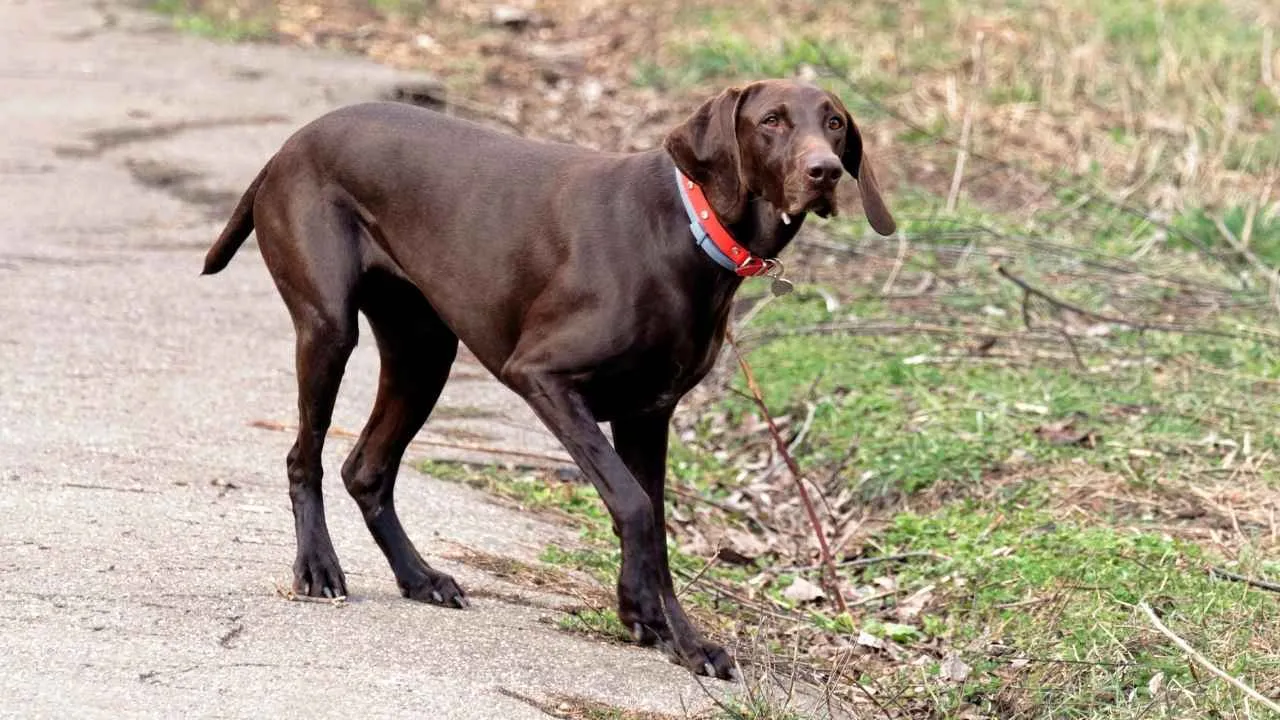
Vizslas are famously affectionate and are often nicknamed “Velcro dogs” because of the close bonds they form with their families. That personality trait, combined with a lean athletic build and substantial stamina, makes the breed almost suspiciously well designed for owners whose hobbies happen outdoors.
Vizslas were developed for long working days in the field, and modern dogs still tend to need considerable physical and mental activity. Purina describes them as energetic hunting dogs and notes that they can make excellent running or jogging companions once appropriately mature. At the same time, hiking and other active pursuits can also provide valuable outlets.
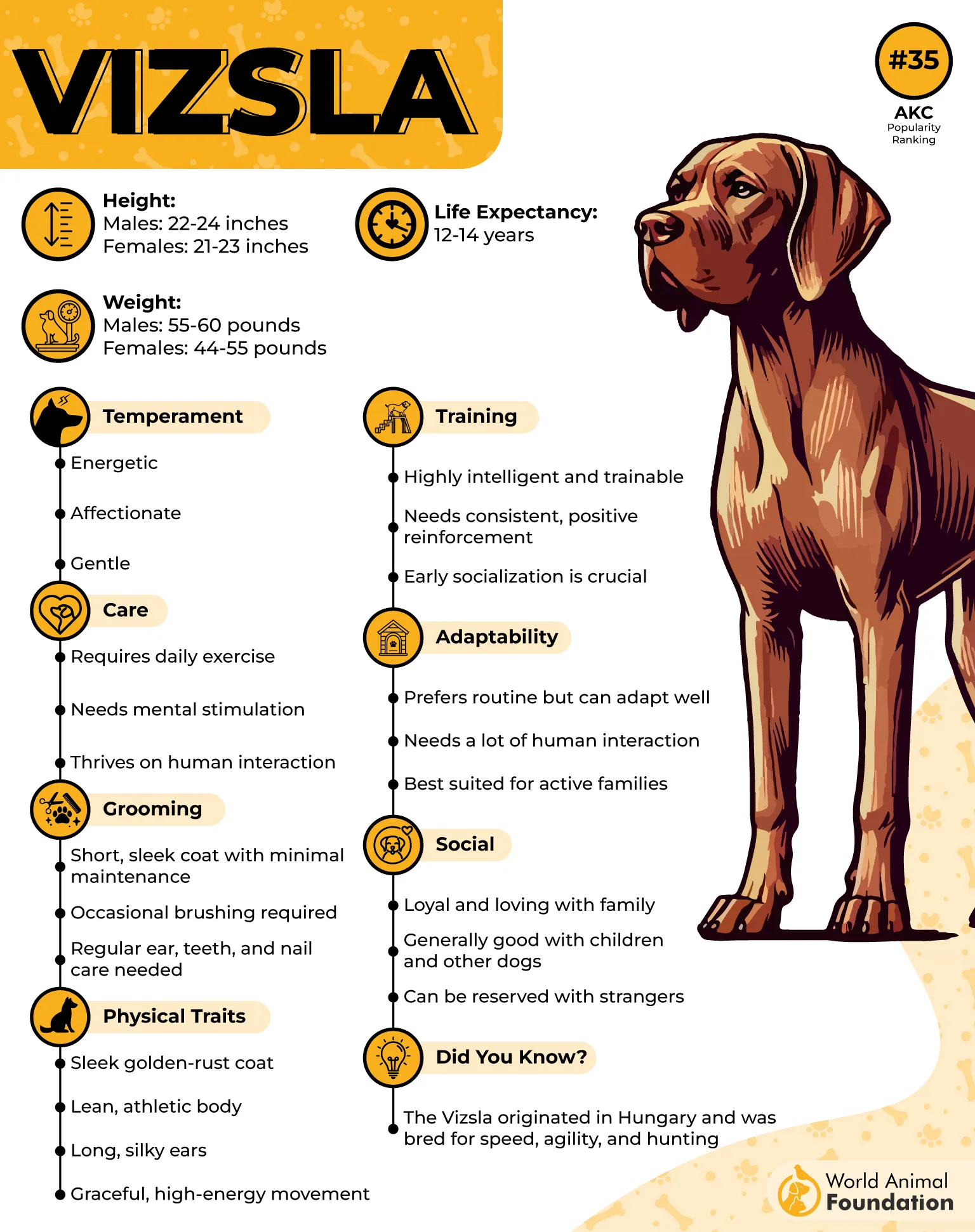
Their physical design is extremely practical for movement. Adults carry a short, sleek coat over a lean, muscular frame, making them relatively light compared with many large working breeds. They also require less coat maintenance than heavily feathered dogs.
The trade-off is that their short coat offers limited protection in severe cold. A Vizsla who looks unstoppable on a mild autumn trail may need extra insulation, a suitable sleeping setup, and more weather management on colder trips.
6. Siberian Husky
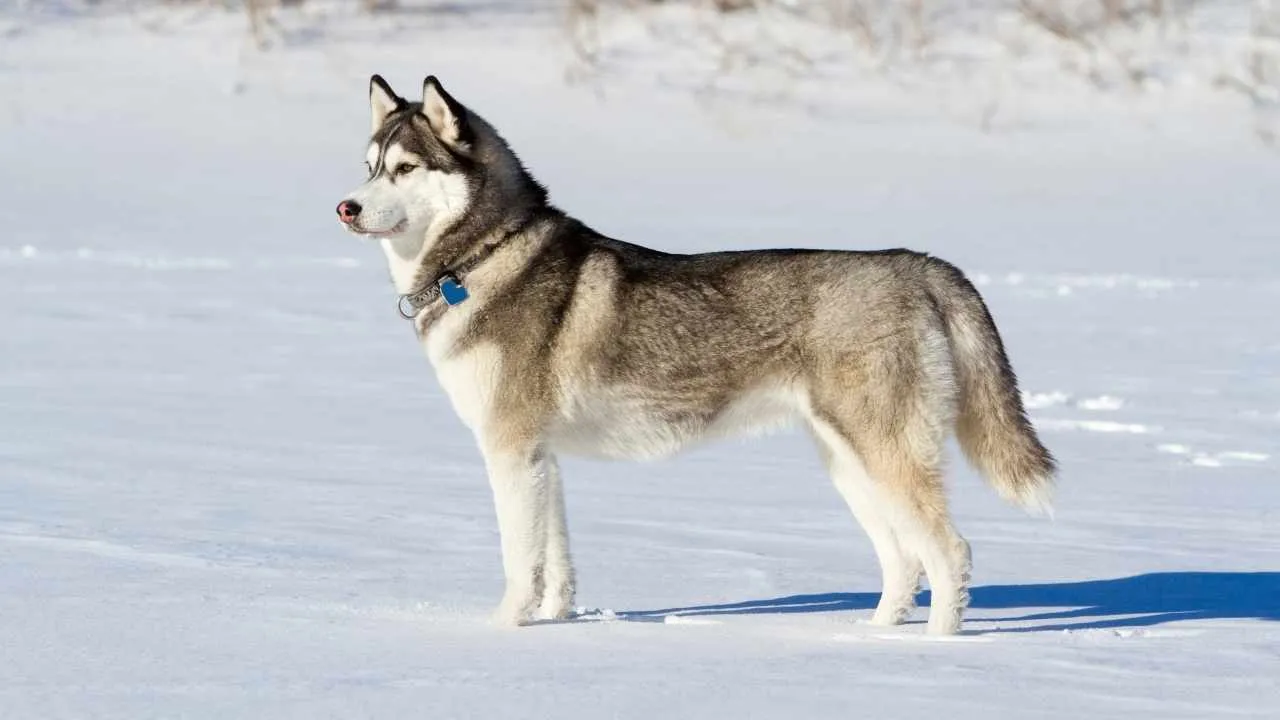
The Siberian Husky is a working breed that was developed for pulling and running. These high-energy dogs are active and athletic, happiest when they have something meaningful to do. Put one near a cool-weather trail, and you may start wondering whether you are walking the dog or whether the dog has added you to its expedition team.
Their physical endurance is obviously appealing to hikers, but climate matters enormously. They have a dense double coat and historically worked in cold environments, so cool conditions suit their design much better than hot summer hikes.
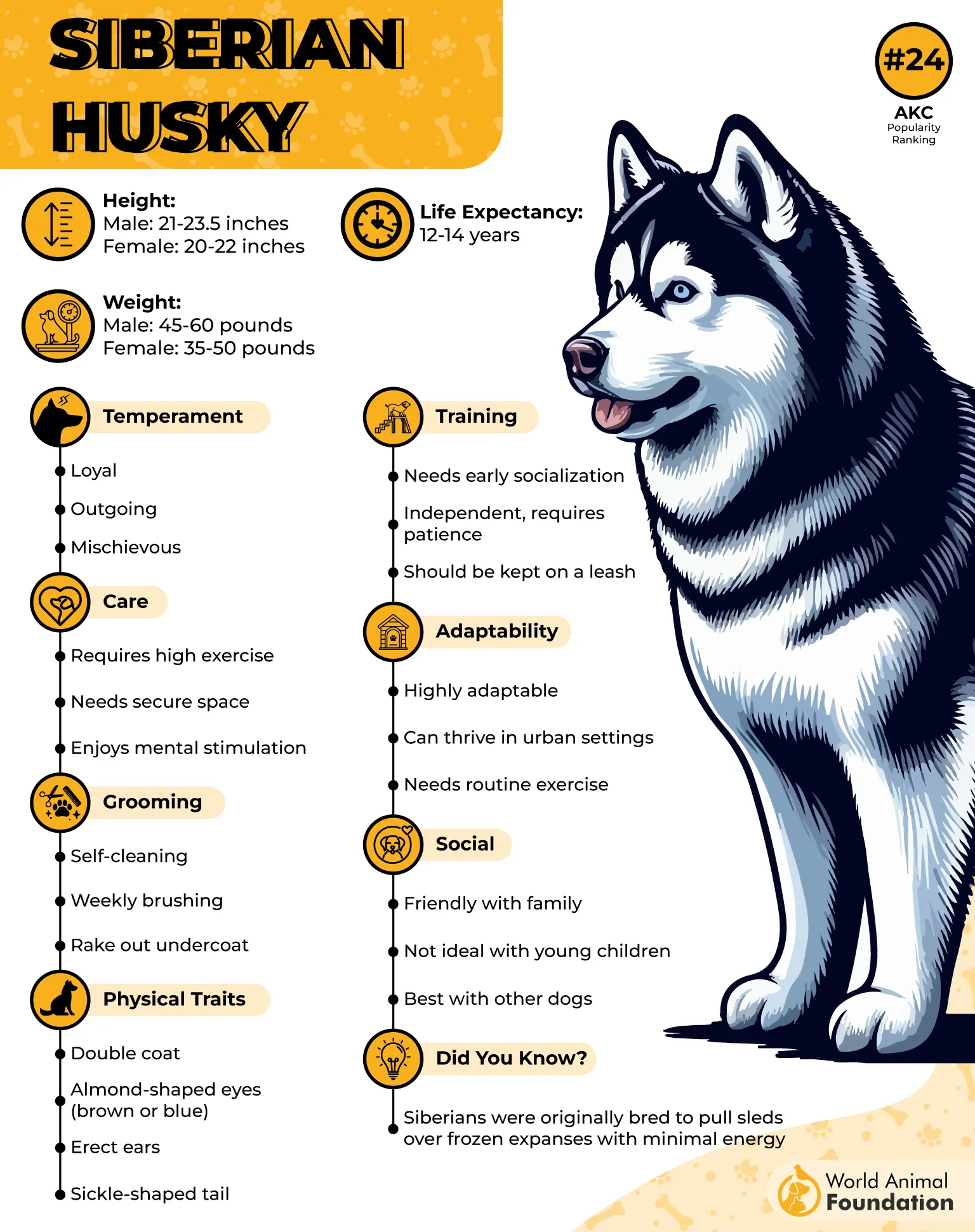
Huskies are also social dogs and often enjoy participating in family activities. Omlet describes the breed as outgoing and notes that they need companionship and regular physical activity, characteristics that can make multi-day adventures deeply rewarding for people prepared for their energy.
Leash security is necessary, as this energetic breed is a legendary runner. Owners are advised to keep them leashed, harnessed, or within securely fenced areas because their instinct to run can override the owner’s preferred itinerary.
7. Bernese Mountain Dog
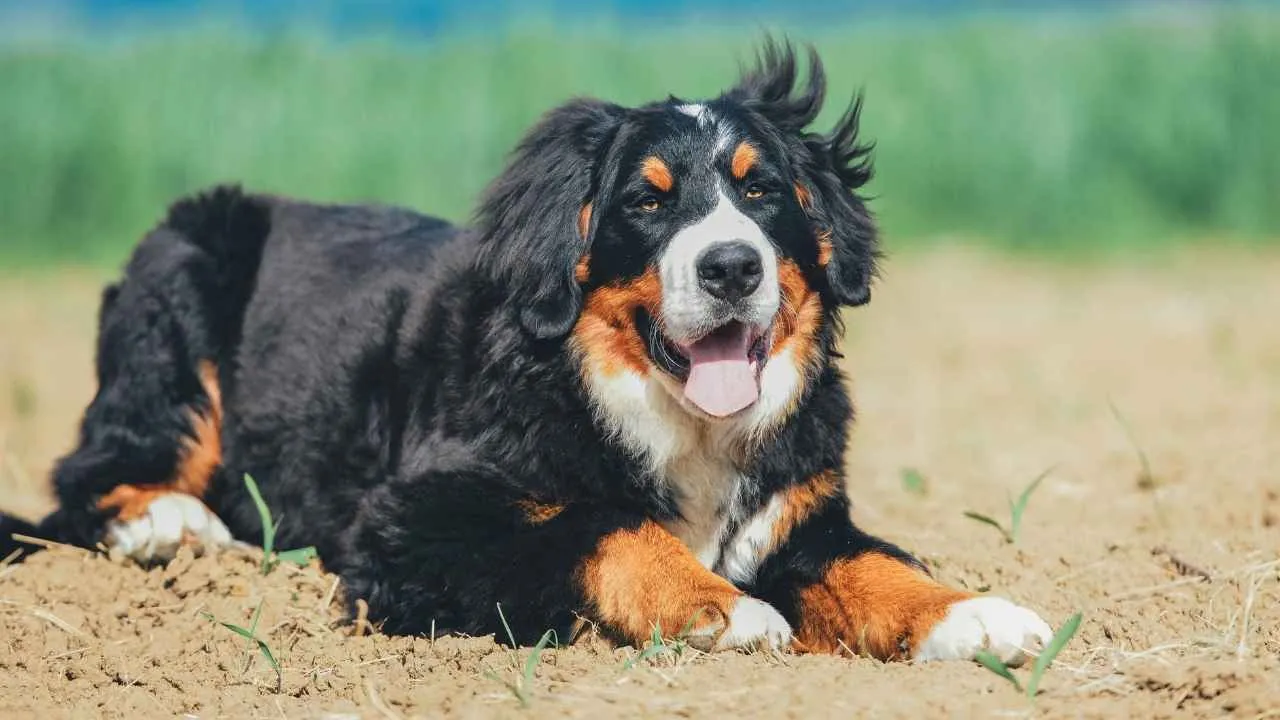
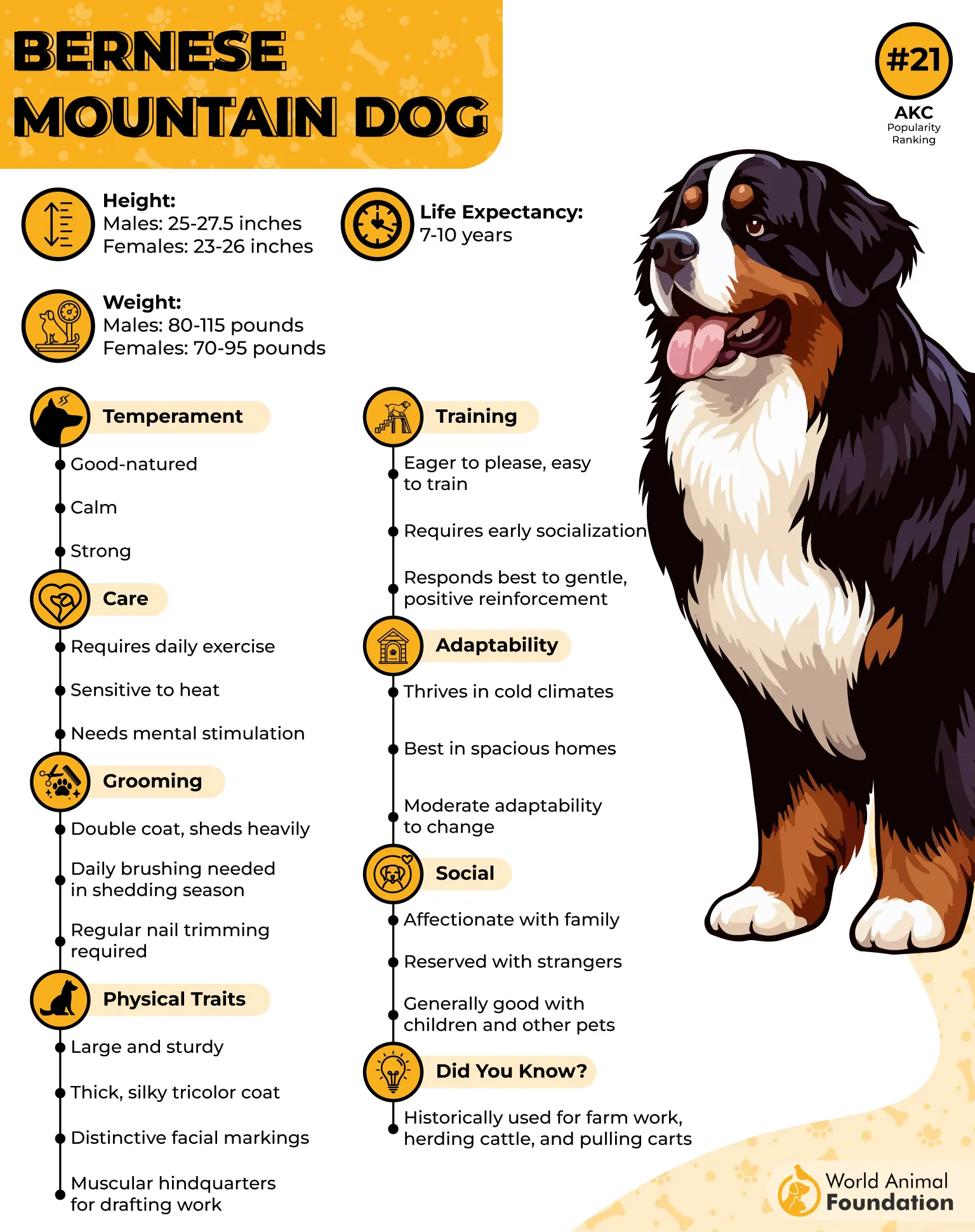
A Bernese Mountain Dog walking through a mountain campsite looks so aesthetically correct that it almost feels staged. These large Swiss working dogs were developed around farms in an Alpine environment, and their combination of strength, affectionate temperament, and substantial coat gives them a very different outdoor style from lean endurance breeds like Vizslas.
These mountain dogs enjoy the outdoors and make excellent companions for long walks, hikes, camping, and backpacking. Their working heritage included pulling and farm tasks, and some Berners still participate in drafting and carting activities today.
Introduce any dog pack gradually, fit it properly, keep it appropriately light, and use it only with a mature, healthy dog after consulting your vet.
Its glorious thick coat suits cool conditions much better than intense heat, and responsible owners should be particularly conservative as temperatures rise.
Early departures, shaded rest stops, constant access to water, shorter distances, and even cancelling a hot-weather hike can be smarter than forcing your planned mileage because the trail looked amazing on Instagram.
Conclusion
The best backpacking dog is not simply whichever breed can run the farthest. A genuinely great outdoor companion matches your climate, trail difficulty, activity level, training ability, camping style, and willingness to handle everything from hydration and grooming to paw care and wildlife management.
Before a demanding hiking or backpacking program, talk with your veterinarian and gradually increase your dog’s workload rather than going from neighborhood walks straight into mountain-marathon mode. Pack dog-safe water, food, identification, first-aid supplies, waste bags, a leash or harness, weather protection where appropriate, and enough common sense to turn around when conditions stop being safe.
