




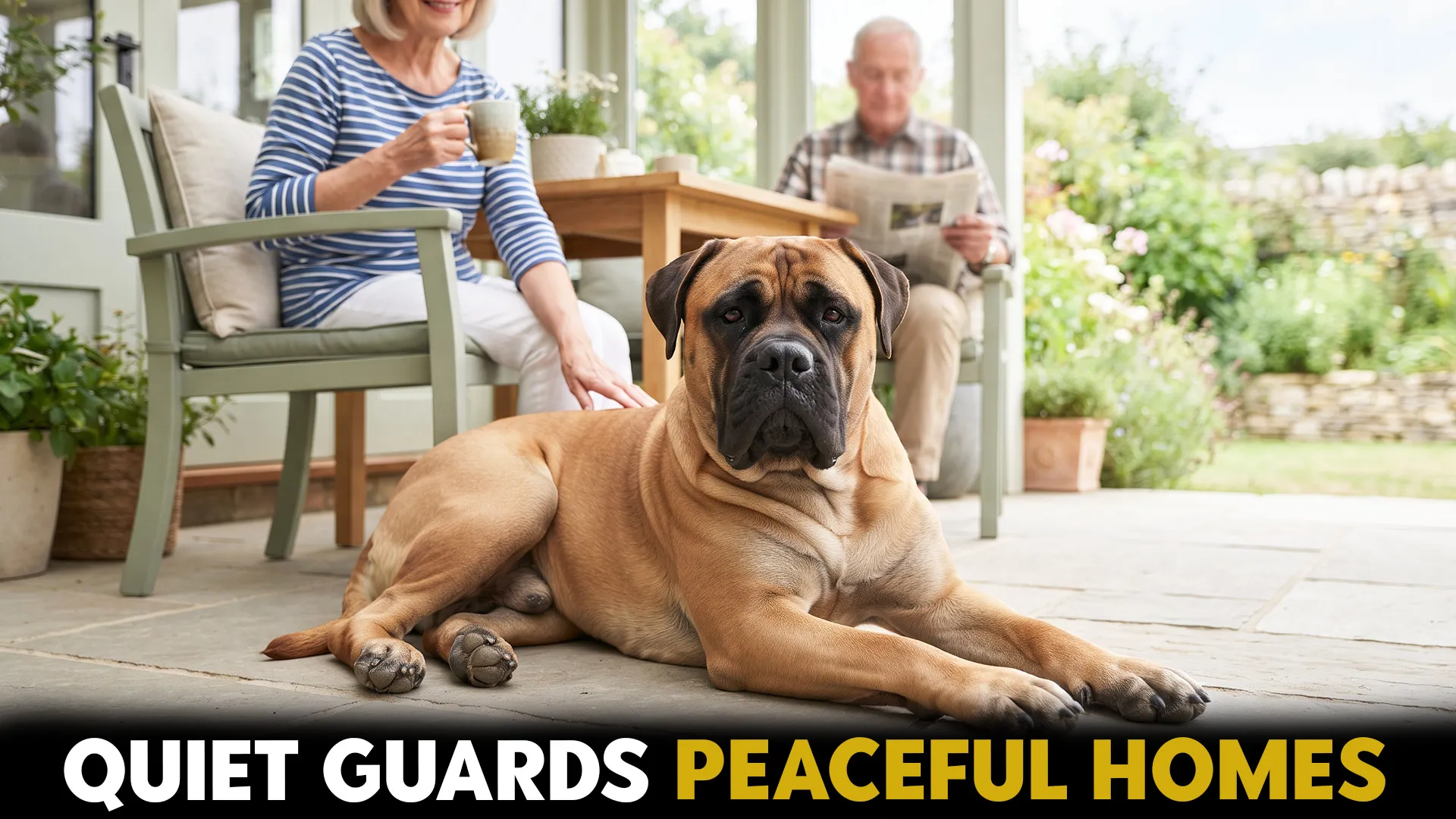
Retirement often means more time at home, a slower pace, and plenty of opportunity to enjoy a dog’s company. That said, choosing a guard dog at this stage of life does call for a bit of extra thought.
A good guard dog should absolutely alert you to unusual activity and offer solid companionship, but it also needs to match your energy level and your ability to manage a large, powerful animal day to day.
And “low-maintenance” doesn’t mean no maintenance. These dogs still need regular physical activity, mental stimulation, and grooming like routine brushing, so those needs are worth factoring in before making a decision.
Below are seven breeds that each bring their own strengths to the table, but all share a few things in common: they’re quiet, watchful, and rely on size and presence rather than aggression to deter strangers. Some lean more toward livestock-guardian instincts and tend to do best in larger homes with plenty of outdoor space.
Low-Maintenance Guard Dog Breeds Perfect for Retired Couples
1. Mastiff
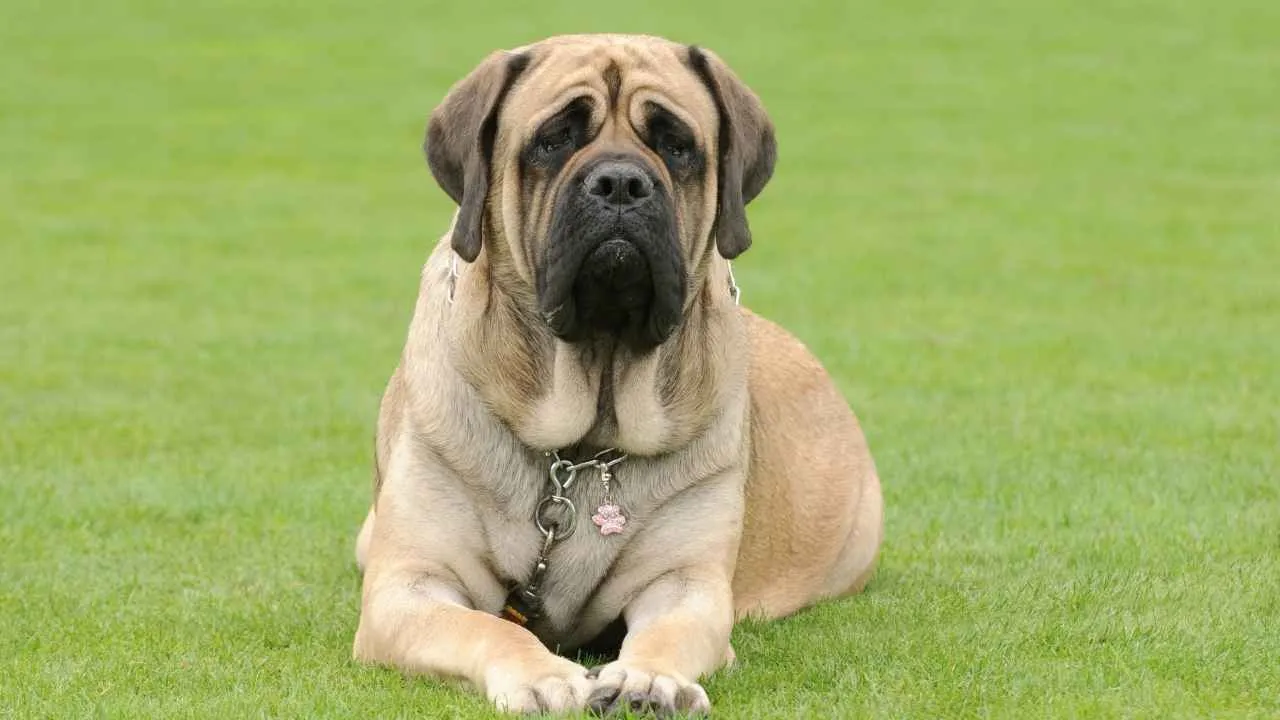
The Mastiff could be a great option if you want a dog whose sheer physical presence alone is enough to make people think twice. This breed is big, strong, loyal, and naturally protective, and the American Kennel Club describes Mastiffs as dignified and formidable protectors.
Don’t let that size fool you into expecting a hyperactive dog, though. Mastiffs actually tend to stay close to their families, calmly keeping an eye on everything happening around the home.
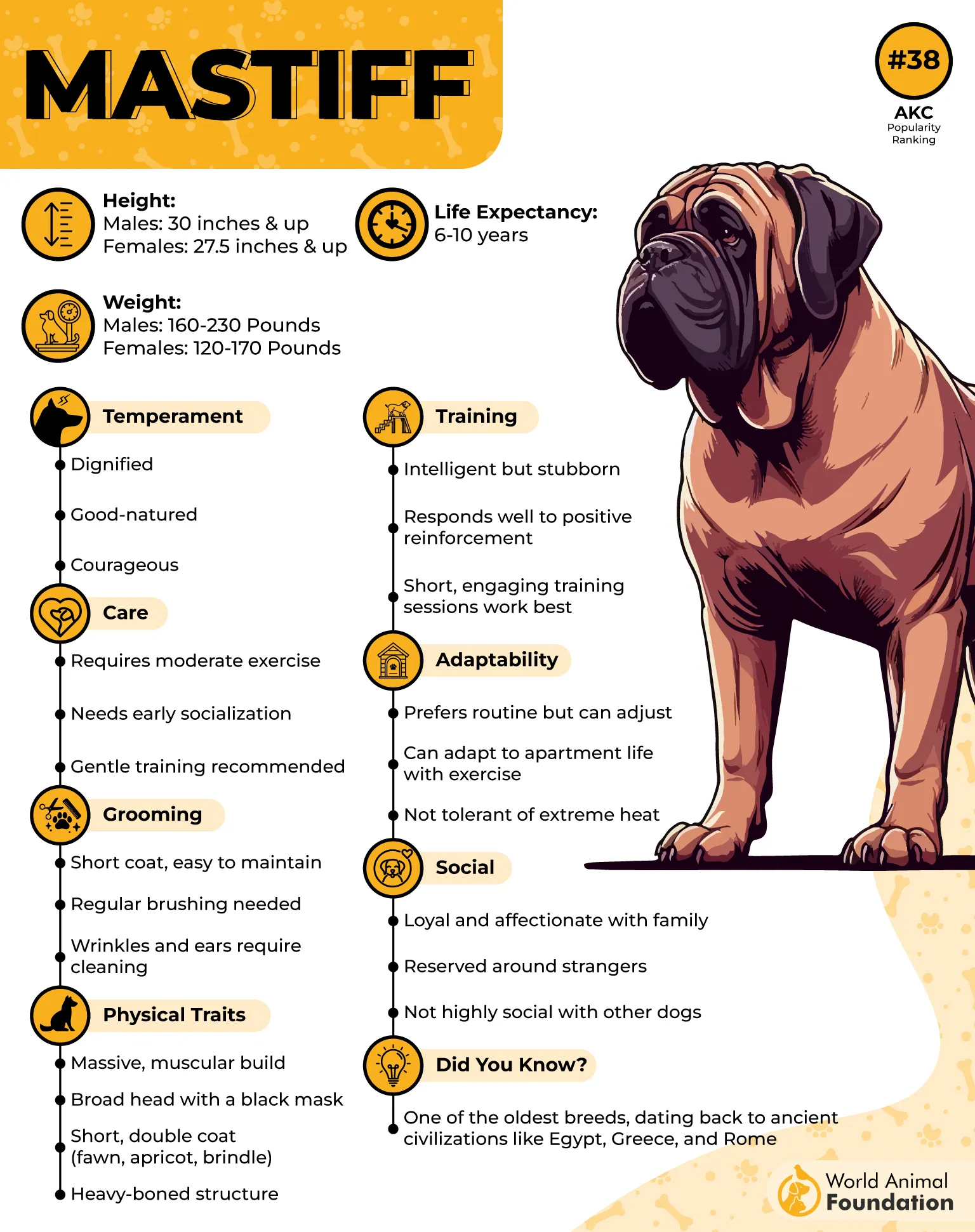
That makes them a solid choice for retired couples looking for a breed that fits a more relaxed lifestyle, since Mastiffs don’t need intense daily exercise to stay fit and happy.
The main thing to keep in mind with this gentle giant is its sheer size. Even a friendly, playful Mastiff can accidentally knock someone over without meaning to, so it’s worth considering whether you’d be able to safely manage the dog if it suddenly lunges toward another person or animal.
Best for: Couples with enough living space who want a calm, dignified household guardian.
2. Great Pyrenees
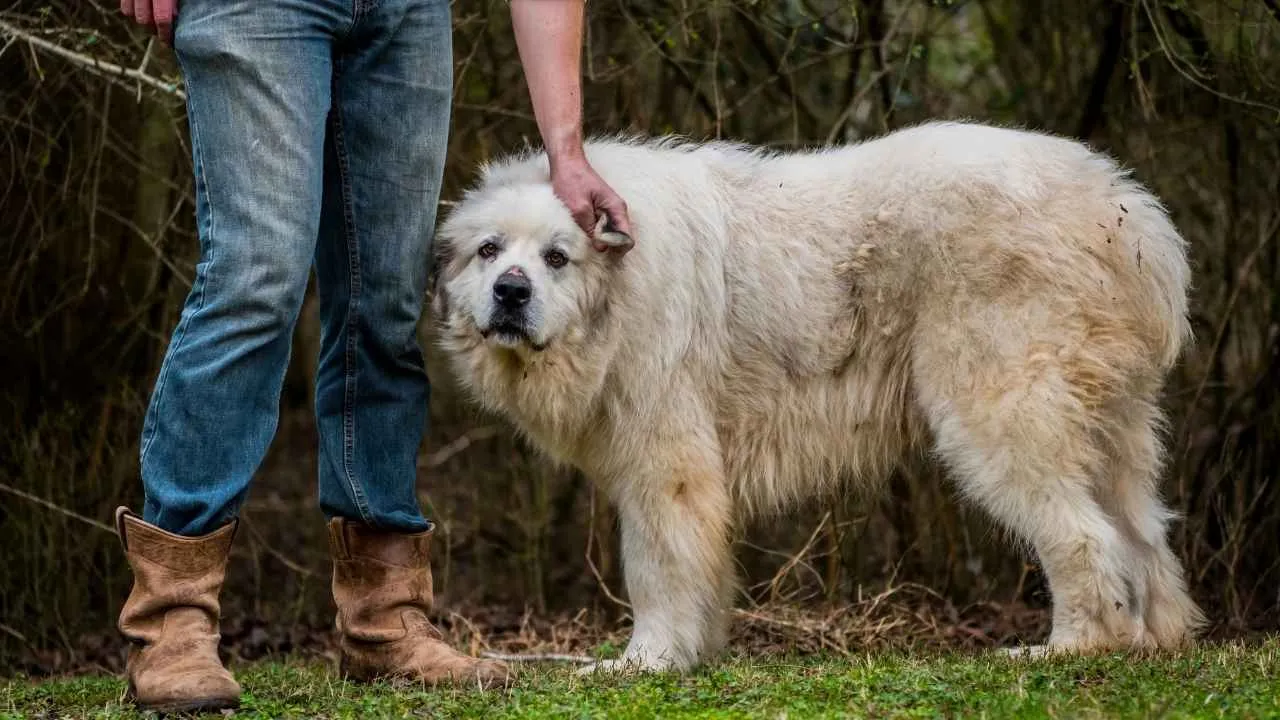
The Great Pyrenees takes a completely different approach to guarding. Bred specifically as a livestock guardian, it was built to protect flocks with minimal human direction, relying on its own judgment out in the field.
That independence shows up in its personality too. The breed is naturally alert and watchful, but because of its livestock-guardian instincts, it doesn’t need constant hands-on attention to do its job well. It also tends to be patient and fairly calm overall, which can make it appealing to families looking for a high-quality guard dog without a hair-trigger temperament.
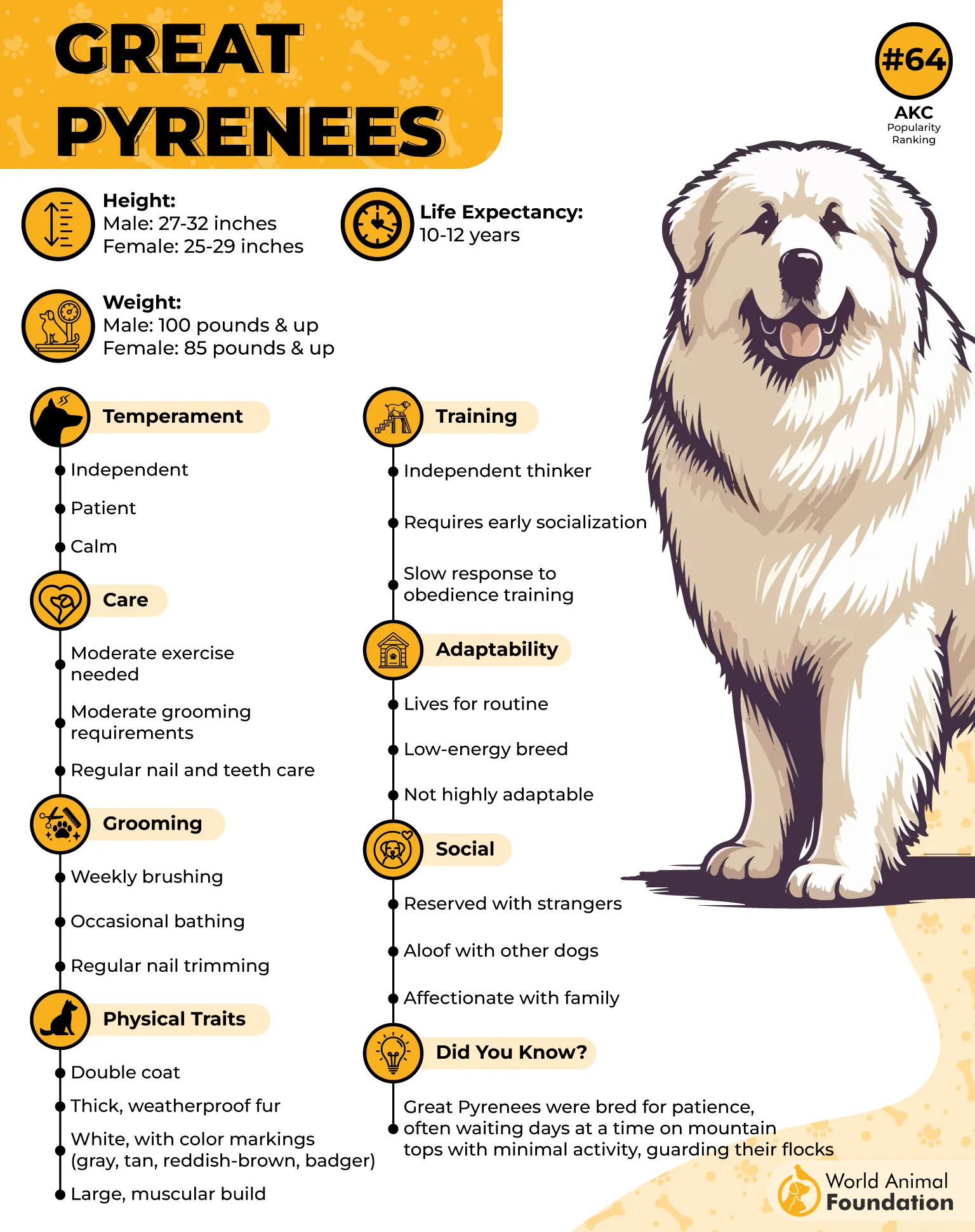
One thing worth keeping in mind, though, is the bark. Great Pyrenees are known to sound off at anything unfamiliar, especially at night, so that’s worth factoring in if you live somewhere noise could be an issue. They can also be a bit resistant to traditional obedience training, which makes early socialization and consistent training from a young age genuinely important.
Best for: Rural or suburban couples looking for a naturally alert watchdog who can handle a large, independent breed that takes its job seriously.
3. Bullmastiff
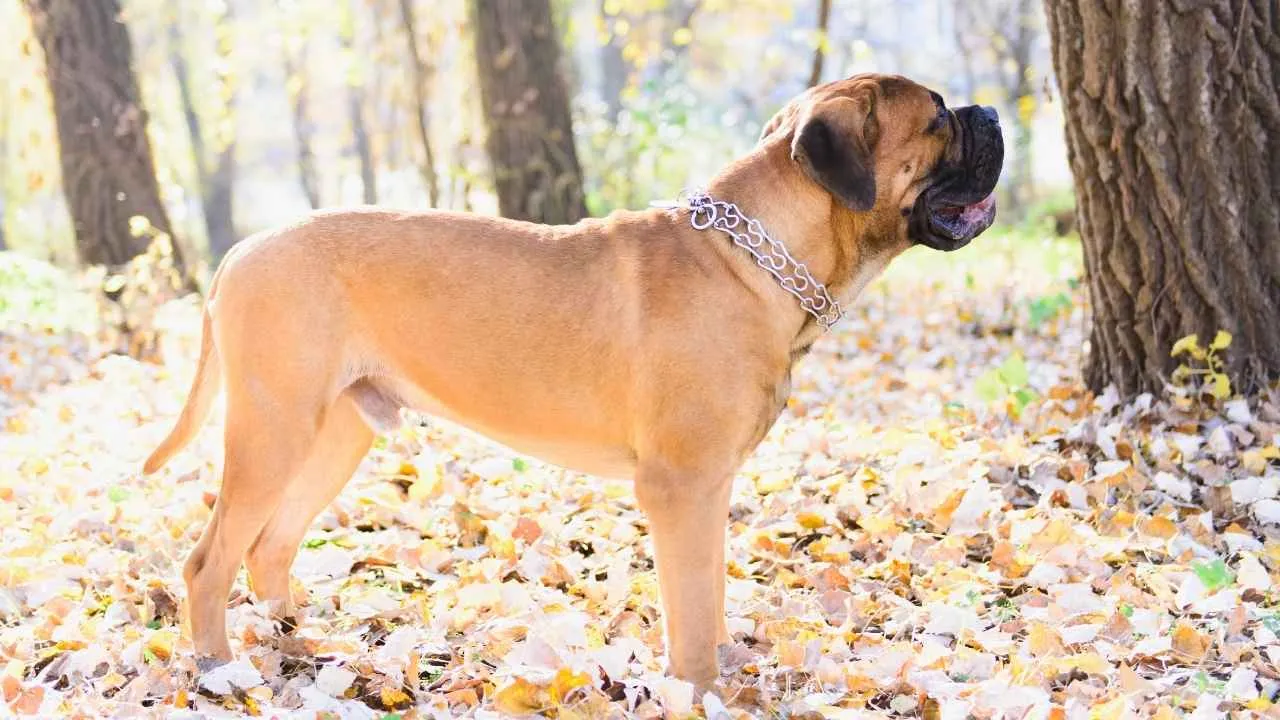
The Bullmastiff could be one of the more practical picks for owners who want a serious guard dog without the need for constant high-energy exercise.
Originally bred in England to help gamekeepers deal with poachers, the breed was designed to approach and hold intruders in place rather than chase them down over long distances, unlike a lot of other working breeds. That combination of strength and restraint really comes through in its temperament today.
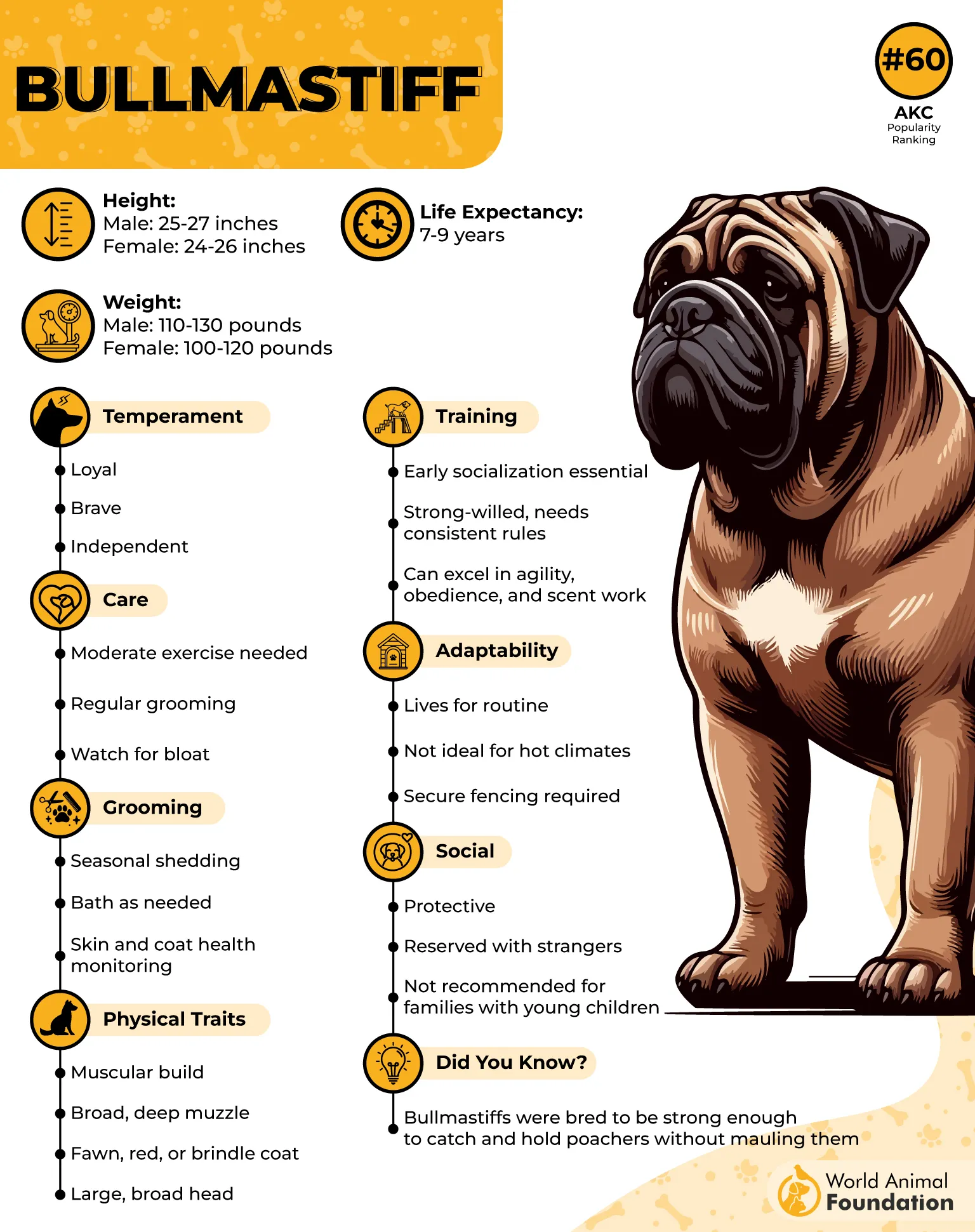
Bullmastiffs are muscular and powerful, but nowhere near as high-energy as many herding breeds. For most adults, a few short walks, some controlled play, and regular mental stimulation are more than enough to keep them satisfied.
They’re also naturally quiet and calm by nature, letting their size do most of the talking when it comes to deterring potential intruders.
Best for: Senior couples looking for a capable home protector that doesn’t demand a ton of daily activity.
4. Bergamasco Sheepdog
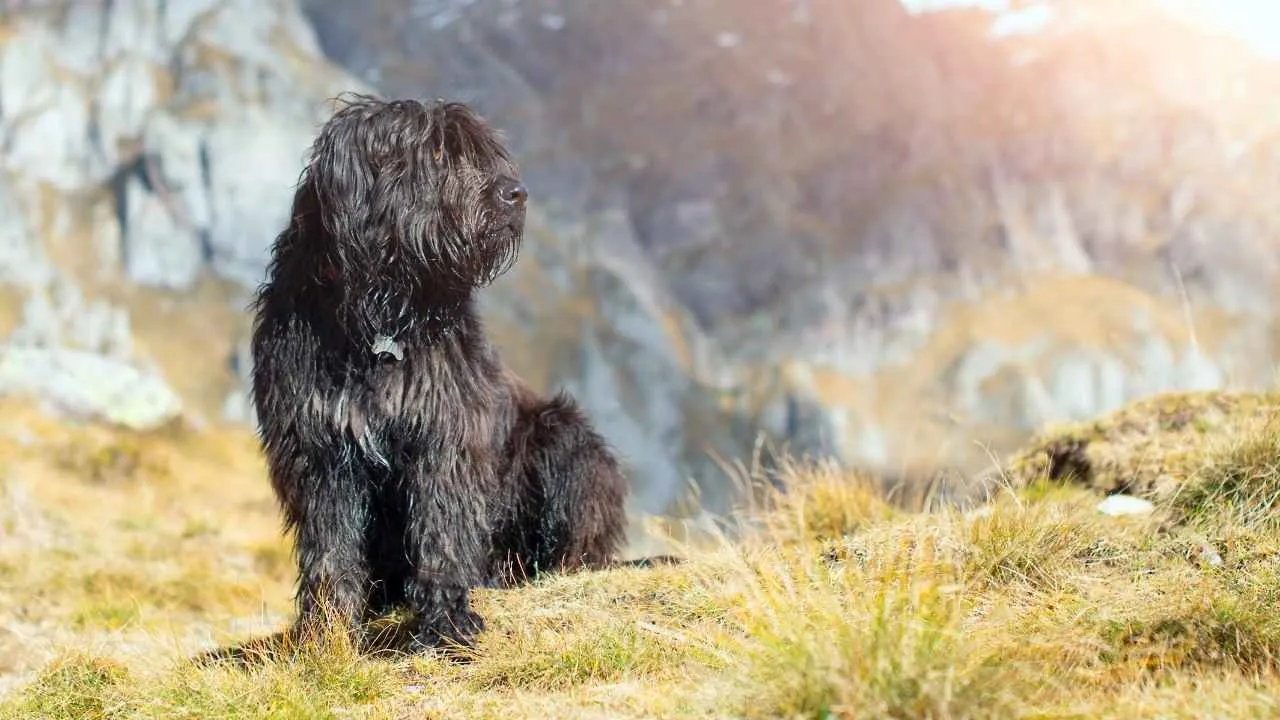
The Bergamasco Sheepdog is one of those unusual-looking breeds where the coat is definitely the standout feature. But there’s a lot more to this dog than its distinctive look.
Originally developed as a herding and working breed in the Italian Alps, the Bergamasco was built to be patient, intelligent, and reliable even in harsh weather conditions.
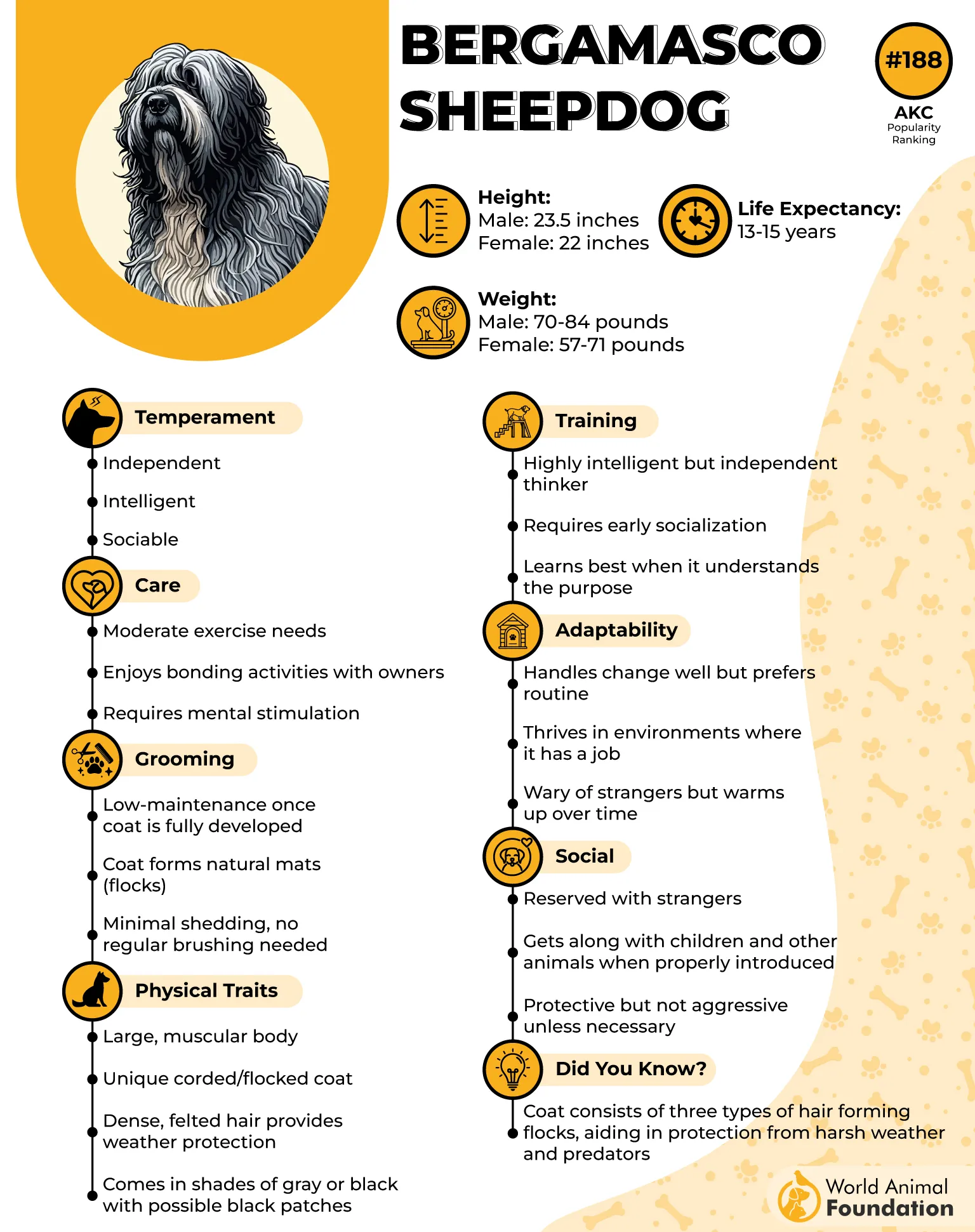
That famous corded coat looks high-maintenance, but it doesn’t actually need daily brushing like a lot of long-haired breeds do. Still, it does require proper care and shouldn’t be ignored altogether.
Described as a muscular breed by PetMD, the Bergamasco is more active than your typical low-energy companion. Retired owners should be ready to commit to daily walks and consistent mental stimulation.
On the guarding side, this breed is naturally alert and makes a solid watchdog, often picking up on unfamiliar people or activity without any special training.
Best for: Active retired couples looking for a unique watchdog with surprisingly manageable coat care.
5. Rhodesian Ridgeback
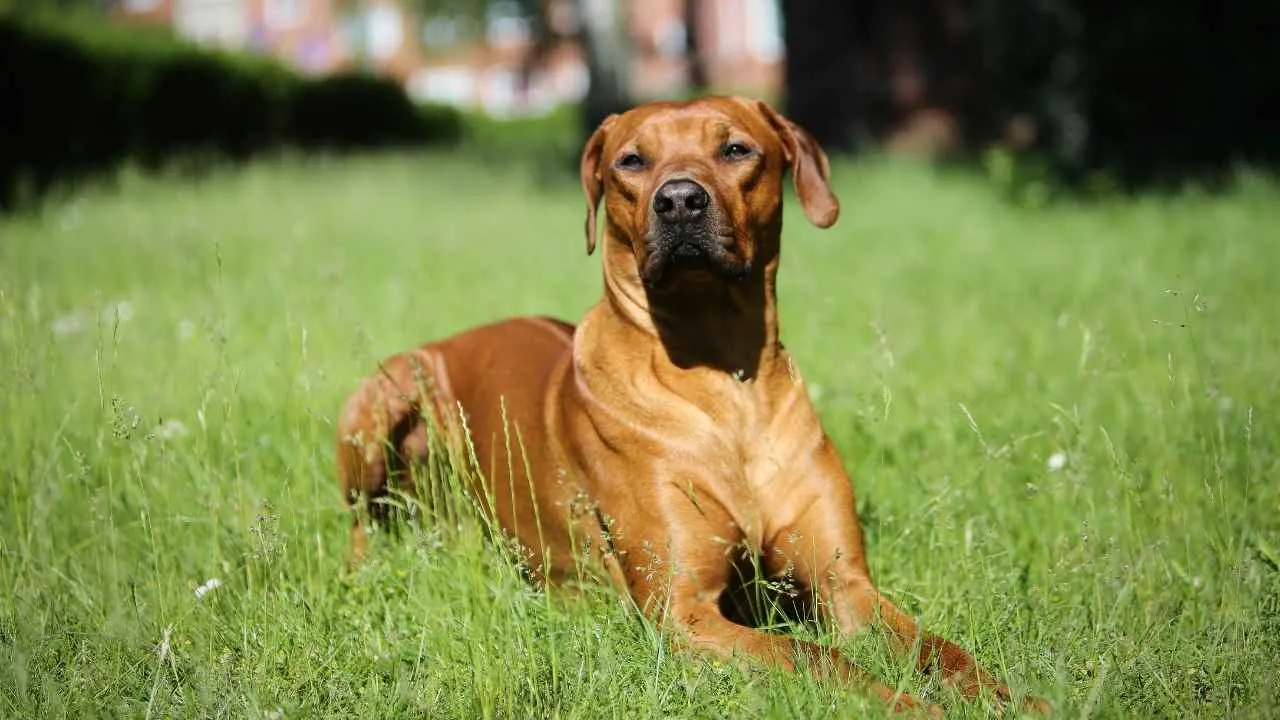
The Rhodesian Ridgeback can be a great fit for retired couples who like to stay active.
This African breed was originally developed for hunting and tracking, with a history of trailing and baying big game, even lions. These days, though, it’s just as well-loved as a devoted family companion.
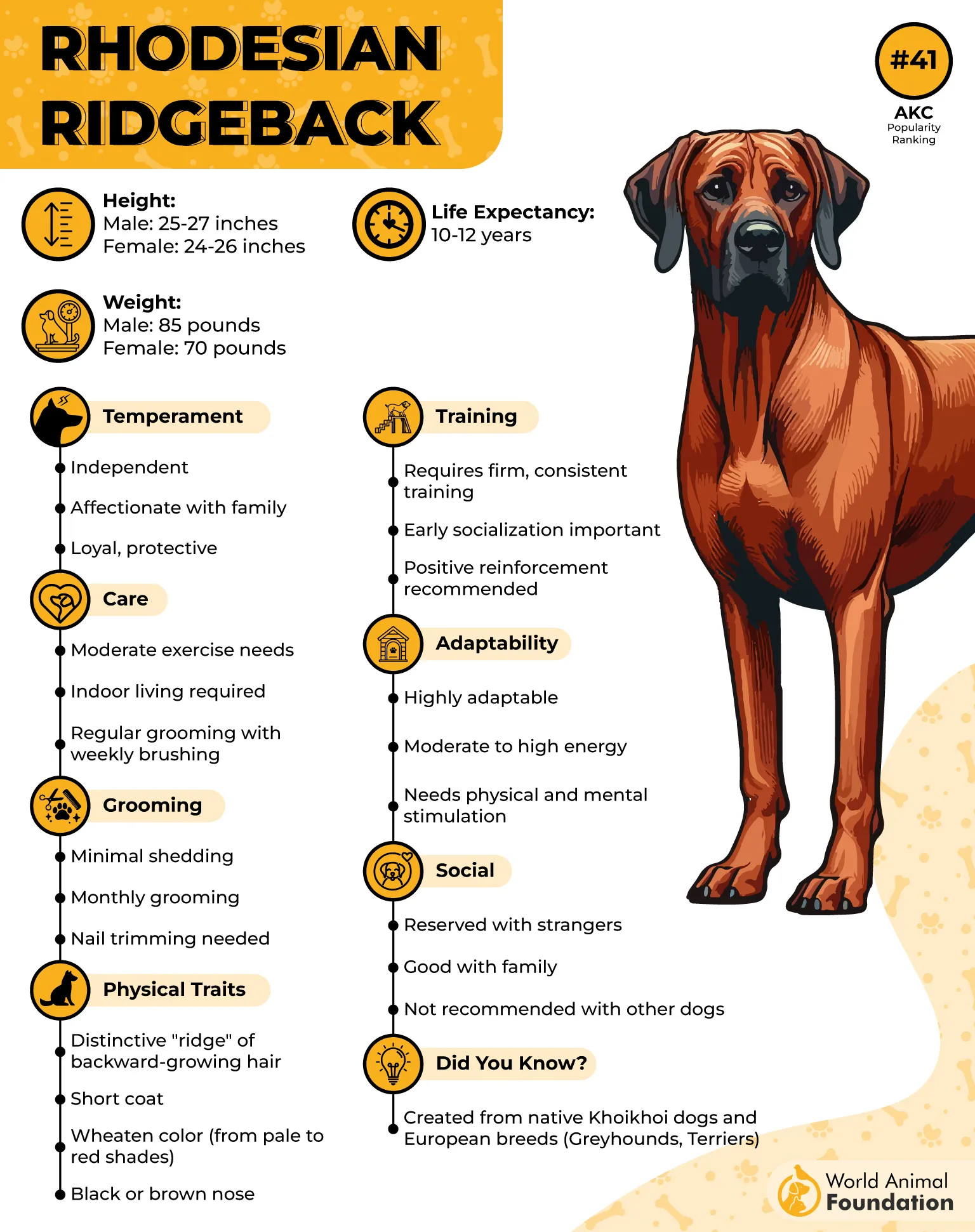
One of its easier traits to manage is its coat. Being short-haired, it doesn’t demand nearly as much grooming as thicker-coated breeds.
The bigger consideration here is exercise. Ridgebacks are an energetic breed that needs a solid amount of physical activity, and a quick walk around the block usually won’t cut it. They also tend to be independent with a strong prey drive, so reliable leash manners and recall training are essential.
Best for: Senior couples who enjoy hiking and walking and want an alert, short-coated dog by their side.
6. Kuvasz
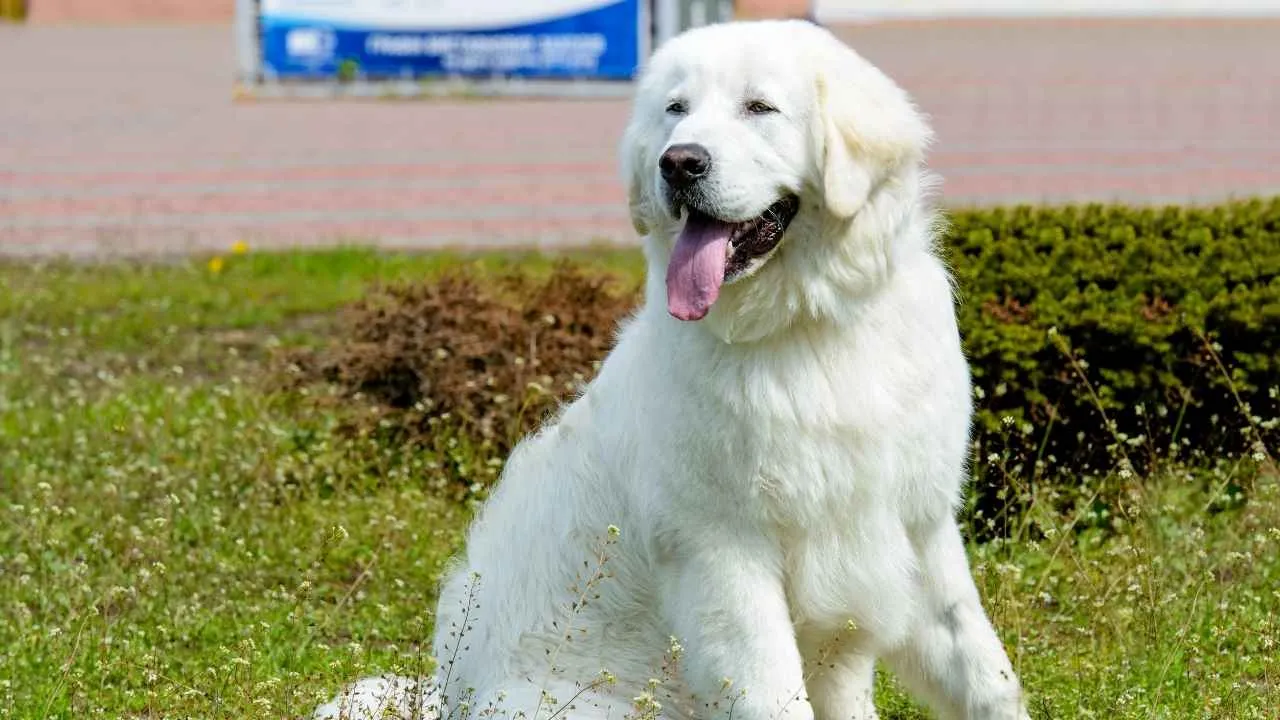
Described by Britannica as a graceful runner, the Kuvasz is a livestock guardian breed with a long history of protecting flocks and property in Hungary. It’s intelligent, independent, and extremely loyal to its family.
This breed doesn’t need constant entertainment. It’s naturally content observing its surroundings and deciding on its own whether something needs its attention.
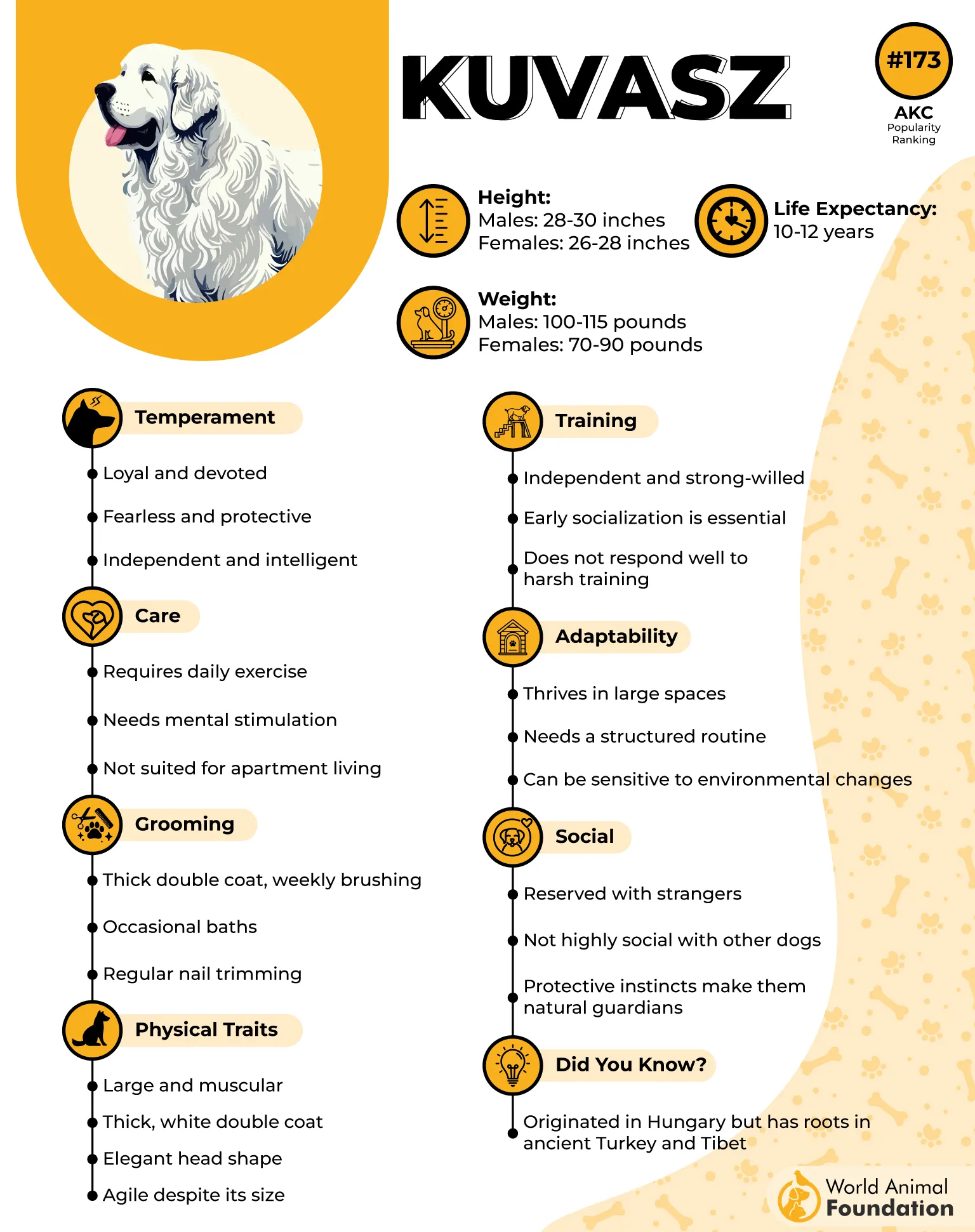
That said, the Kuvasz has a strong independent streak, and owners should go in expecting the dog to only really respond to what it’s actually been trained to do. It needs a confident handler and consistent boundaries to thrive.
Its thick white coat is another factor to plan for, requiring regular grooming and a fair amount of shedding maintenance.
Best for: Owners with enough space and some prior experience handling independent, strong-willed breeds.
7. Great Dane
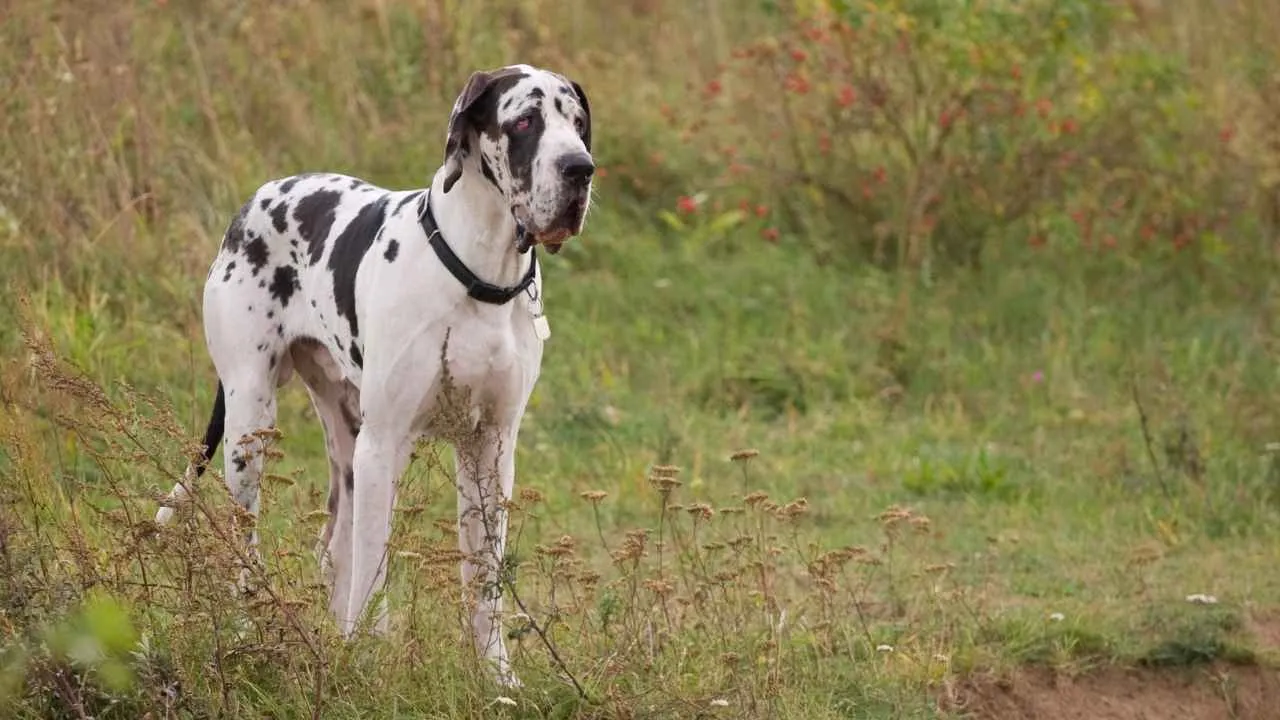
One genuine surprise on this list is the Great Dane. Once used for hunting and guarding, the breed today is far better known for its friendly, laid-back nature.
Don’t expect a fierce protector here. The Great Dane is more of a social, affectionate companion that genuinely enjoys being part of family life. That makes it a great fit for couples who want a dog that can still act as a visual deterrent simply through its size, without the intensity of a traditional guard breed.
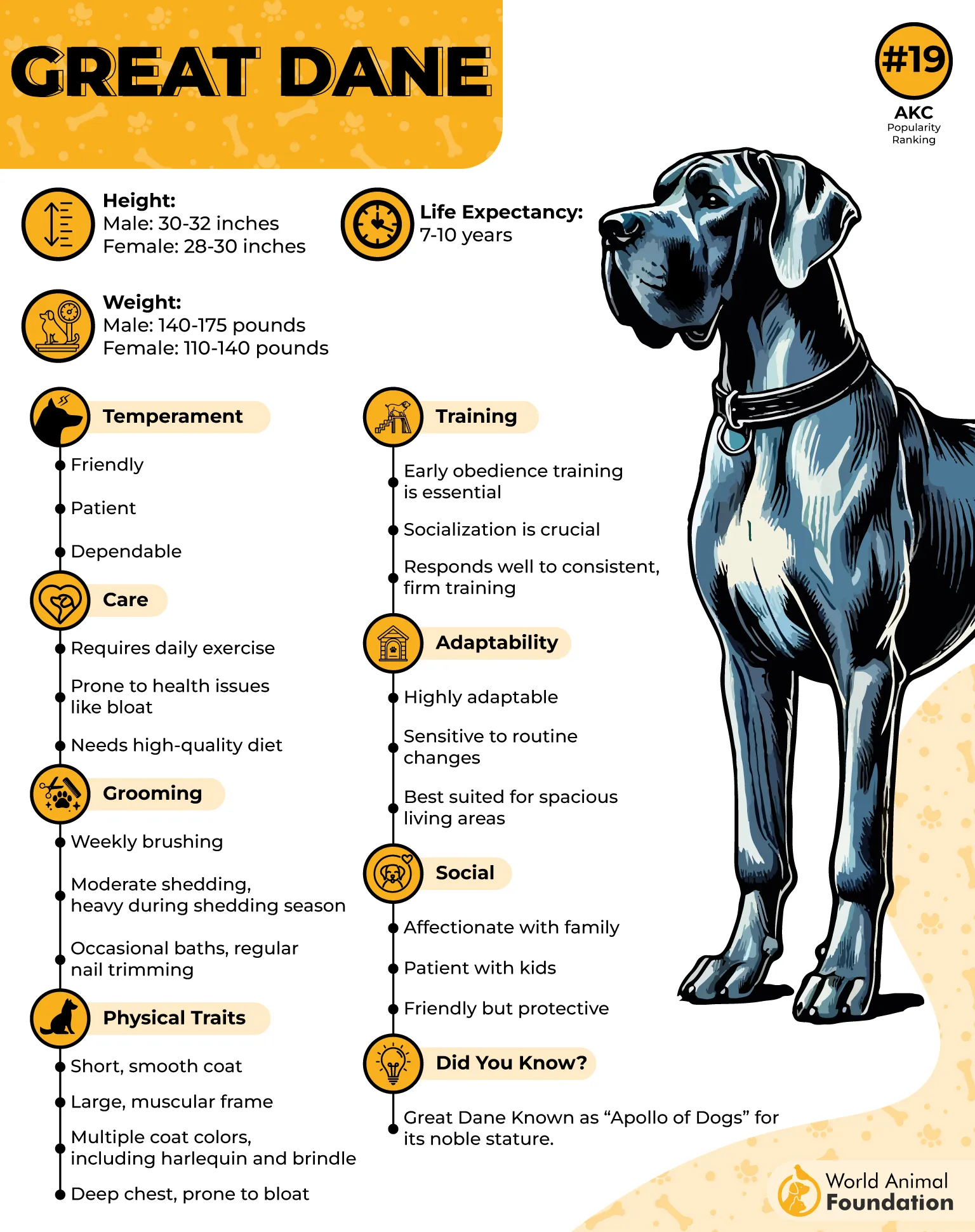
Grooming is easy thanks to its short coat, and exercise needs are fairly moderate, though as a giant breed, young Great Danes do need careful management during their growth phase to protect their joints.
Best for: Couples who want a gentle giant that isn’t territorial but still serves as a natural deterrent just by being there.
Conclusion
An ideal guard dog shouldn’t make your life harder; it should make you feel safer and more at ease.
The best dog breeds covered above represent a real range of lifestyles, from silent, large-bodied house guardians to more independent-minded “property guardians.” There’s no rule that says you need the biggest or most intimidating dog out there. A well-controlled protective instinct will always outperform sheer size when it’s paired with poor temperament, weak training, or insufficient socialization.
Before bringing a furry friend home, weigh each breed’s energy level, size, grooming needs, and guarding instincts against your own daily routine. The right dog won’t just guard your home; it’ll fit naturally into your lifestyle and make retirement feel just a little more complete.
