




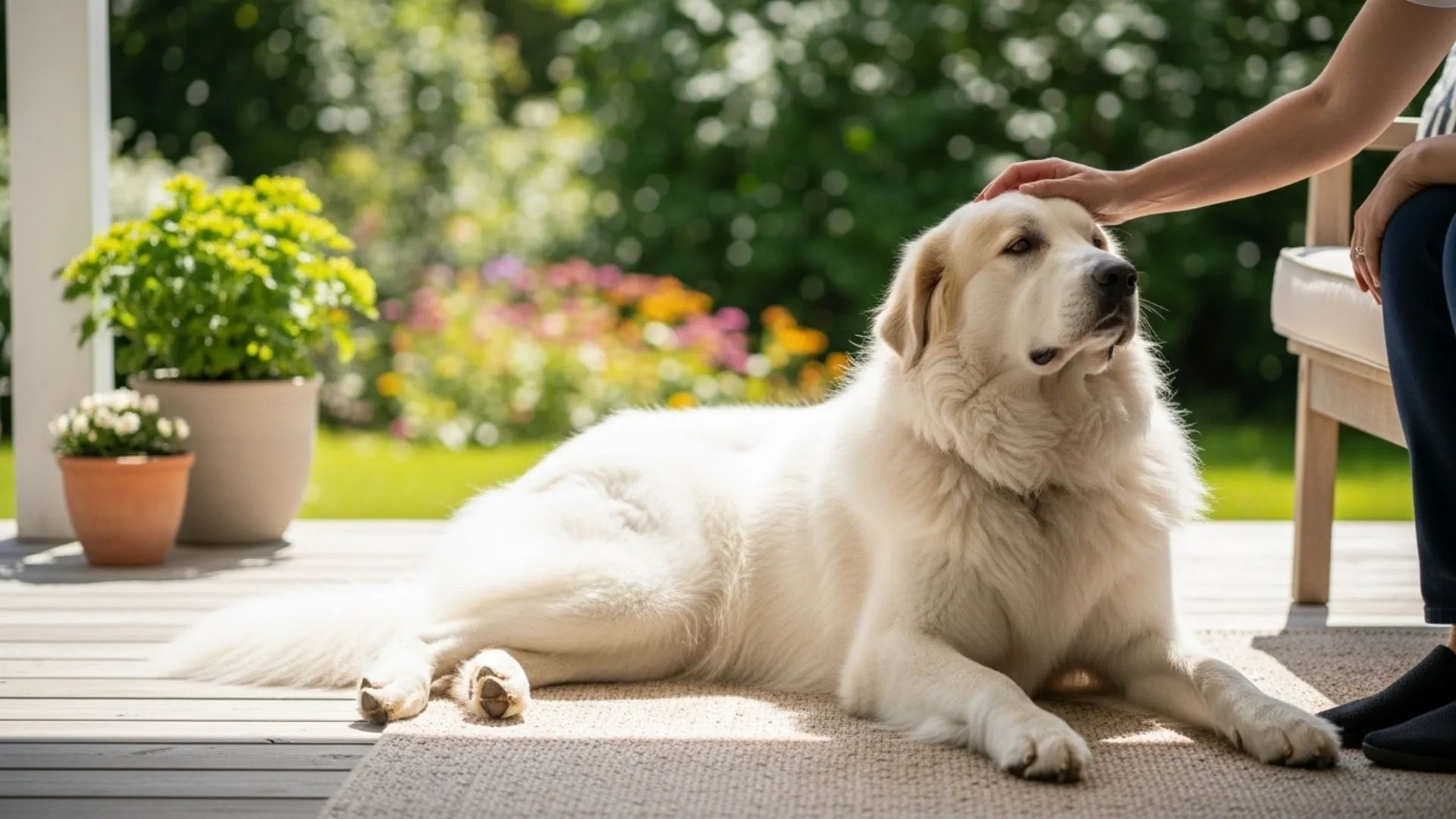
Imagine coming home after a long day and feeling completely relaxed, knowing your home still has a quiet layer of protection.
That’s what makes low-maintenance guard dogs so appealing to many homeowners—they offer companionship and security without needing constant high-energy care or attention. Instead of being aggressive, the best protectors are calm, alert, and naturally aware of their surroundings.
What most people don’t realize is that a good guard dog is not “trained to attack,” but one that is well-socialized and emotionally balanced. Dogs can easily misread unfamiliar people or everyday objects as threats, which is why training is so important.
In this article, we’ll look at low-maintenance protective dogs that are naturally protective yet easier to manage in daily life.
Key Takeaways
Calm, low-energy guard dogs that quietly protect your home without constant demands
How training and proper socialization turn strong protectors into safe, family-friendly companions
Meet breeds like the Great Pyrenees, Mastiff, and Bullmastiff that balance loyalty with low maintenance
Find the right match for relaxed living with real peace of mind and steady home security
Low-Maintenance Guard Dog Breeds for the Relaxed Homeowner
1. Great Dane
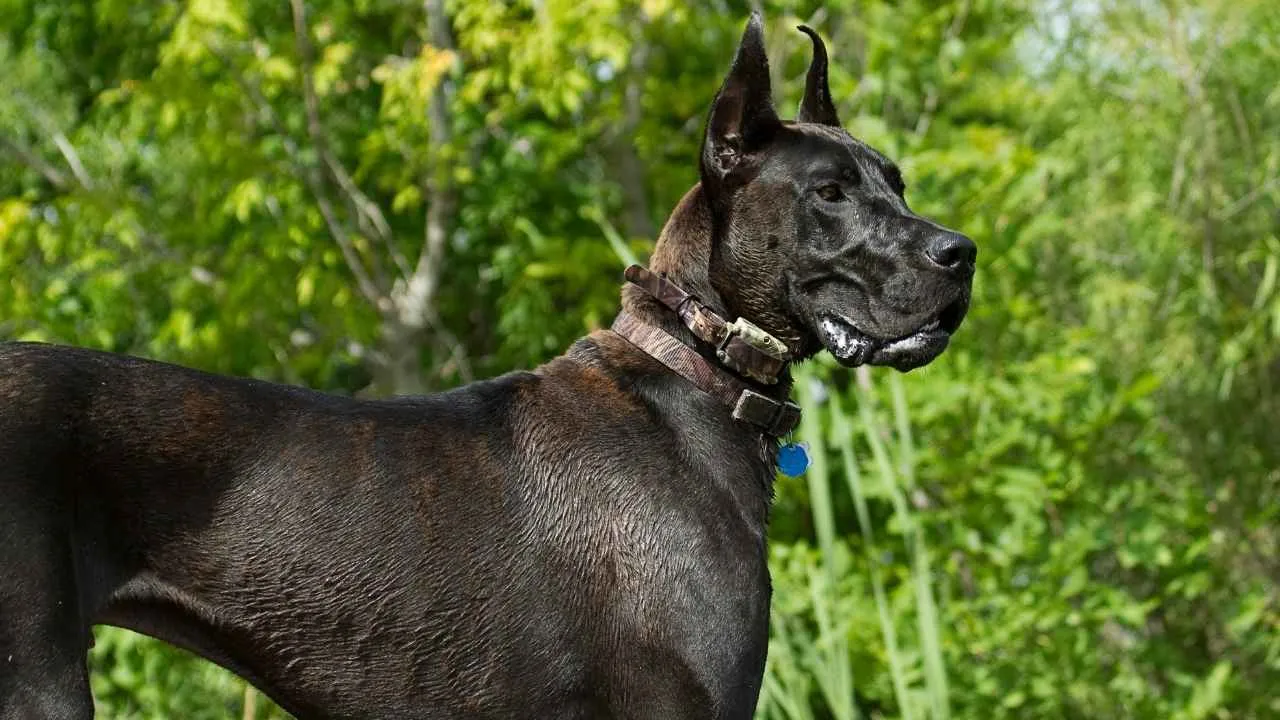
The Great Dane is often called a gentle giant, and for good reason. It is calm, friendly, and deeply affectionate with its family. Despite its soft nature, it naturally acts as a home guardian. Its size and presence alone are usually enough to make strangers think twice.
This breed is moderately playful, people-oriented, and enjoys being part of family life. It is usually good with children and can live peacefully with other pets, especially if raised together. However, some individuals may show caution or aggression toward unfamiliar dogs.
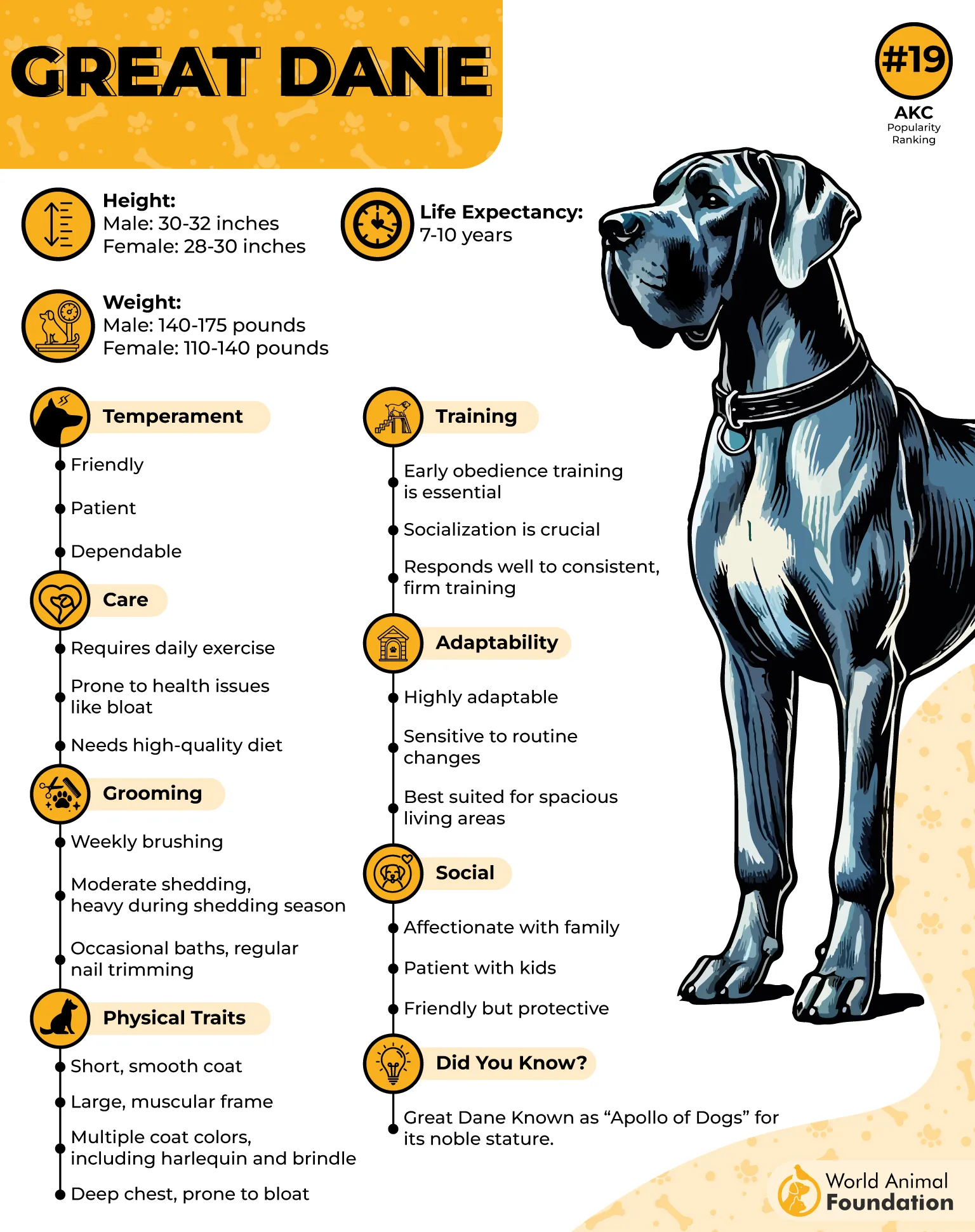
What Makes It a Low-Maintenance Guard Dog (and What Doesn’t)
This breed is considered fairly easy to train, but some dogs may be a little stubborn and slow to respond. Early obedience training is very important, especially because its strength can become hard to manage in adulthood.
While it is not highly demanding in energy compared to many working dogs, it still needs daily walks and regular activity to stay healthy and calm. It also does not like being left alone for long periods, as this can lead to separation anxiety and destructive behavior like chewing furniture or barking.
Care Needs Every Owner Should Know
Owning this breed requires preparation. It eats more food than smaller dogs, which increases care costs. It also needs enough space to move comfortably and rest properly. Health care is important too, especially because it is prone to bloat, a serious stomach condition.
Feeding smaller meals two to three times a day and allowing rest after eating can help reduce the risk. Raised food bowls are also sometimes recommended for comfort.
With consistent training, socialization, and care, this breed becomes a calm, incredibly loyal, and dependable protector—perfect for a relaxed homeowner who wants quiet security without constant high-energy demands.
2. Mastiff
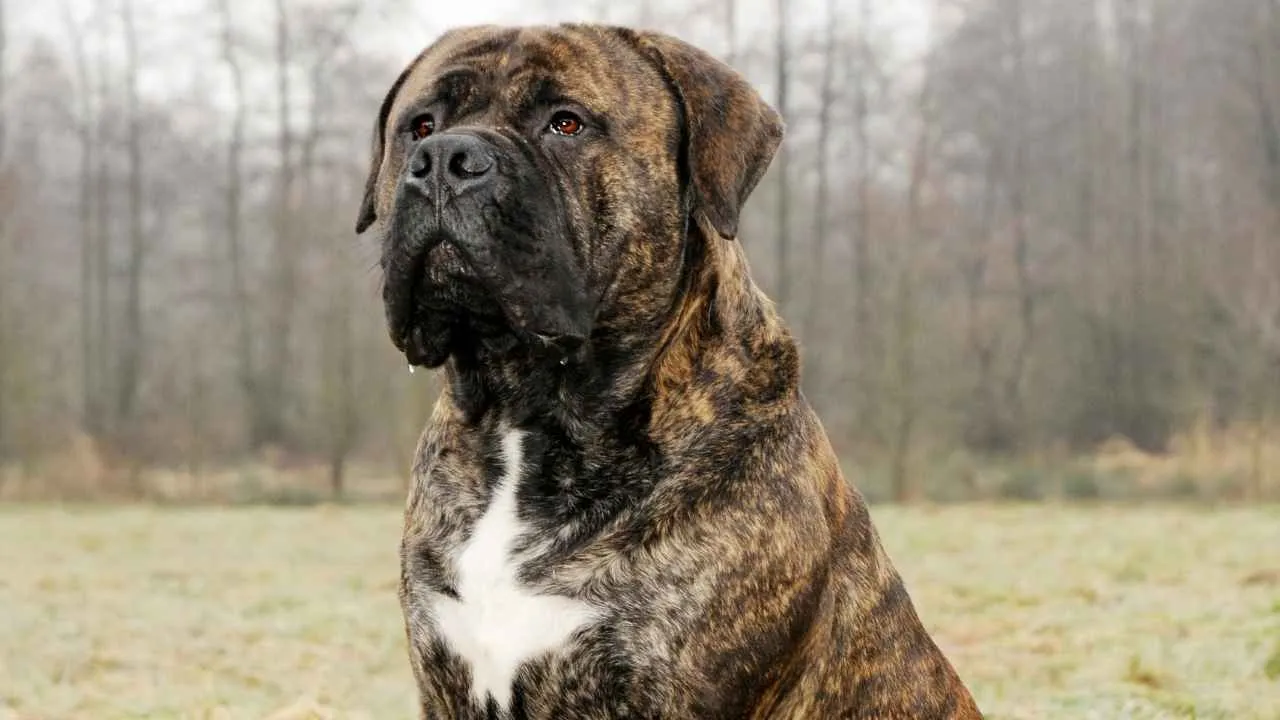
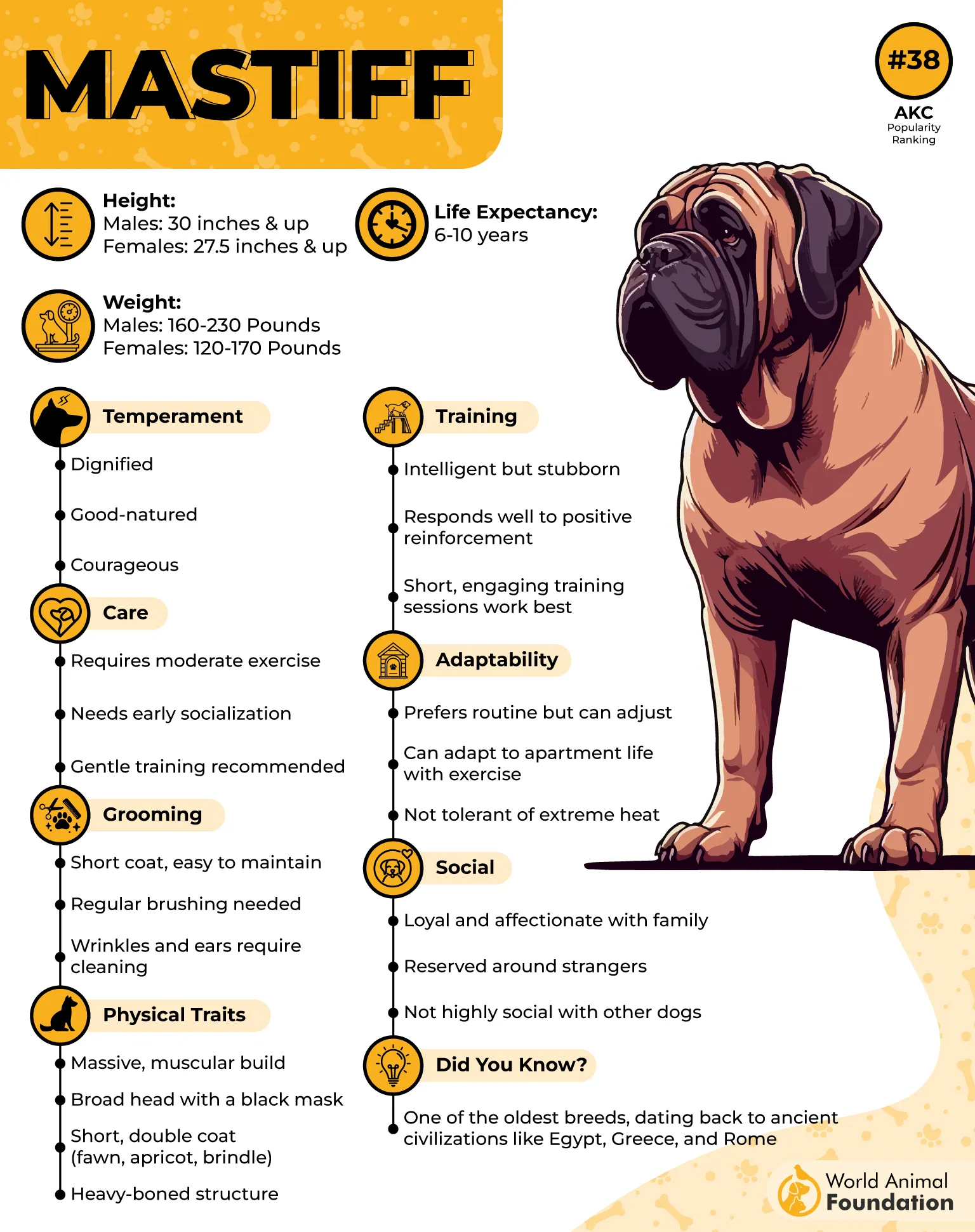
The Mastiff is a calm, dignified, and excellent guard dog that is deeply loyal to its family members. It is affectionate and gentle at home, often forming strong bonds with its owners. With older children, it is usually patient and caring.
However, due to its size and strength, it is not the best fit for homes with toddlers. This breed has strong protective instincts, so it can become wary or suspicious when unfamiliar people visit. Even then, it is not overly vocal and tends to bark only when necessary.
Natural Protector That Needs Early Training
This breed has a strong guarding background, which shows in its alert and protective nature. It naturally watches over its home and family, especially when strangers are around. Because of this, early socialization is very important.
Exposing it to different people, places, and situations during puppyhood helps it grow into a balanced and confident adult.
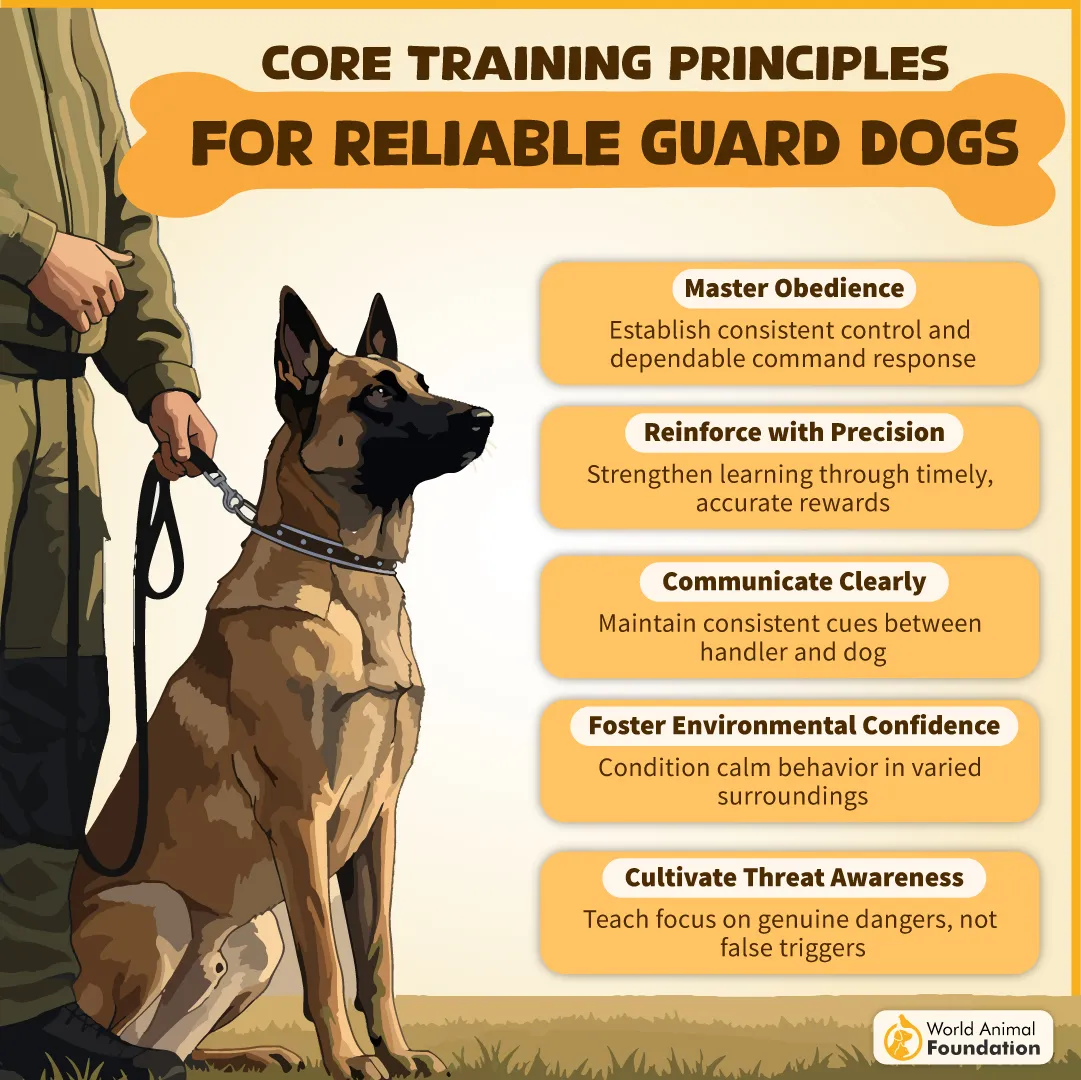
Without proper training, its natural protectiveness can become over-cautious behavior. Basic obedience training is also essential, especially for leash control and managing its strength in daily life.
Low-Energy Lifestyle with Big Responsibilities
The Mastiff is a low-energy companion and can adapt to calm households, even smaller living spaces, as long as it gets regular exercise. It is not highly active but still needs daily walks to stay healthy. Grooming is simple, requiring only weekly brushing.
However, it does come with care challenges like drooling, loud snoring, and a tendency to chew or knock over objects due to its size. It is also prone to health issues such as joint problems and gastric bloat, which require careful feeding habits and proper care.
While its lifespan is shorter compared to that of smaller dogs, a well-trained and well-cared-for Mastiff becomes a loyal, gentle, and dependable home guardian for relaxed homeowners.
3. Great Pyrenees
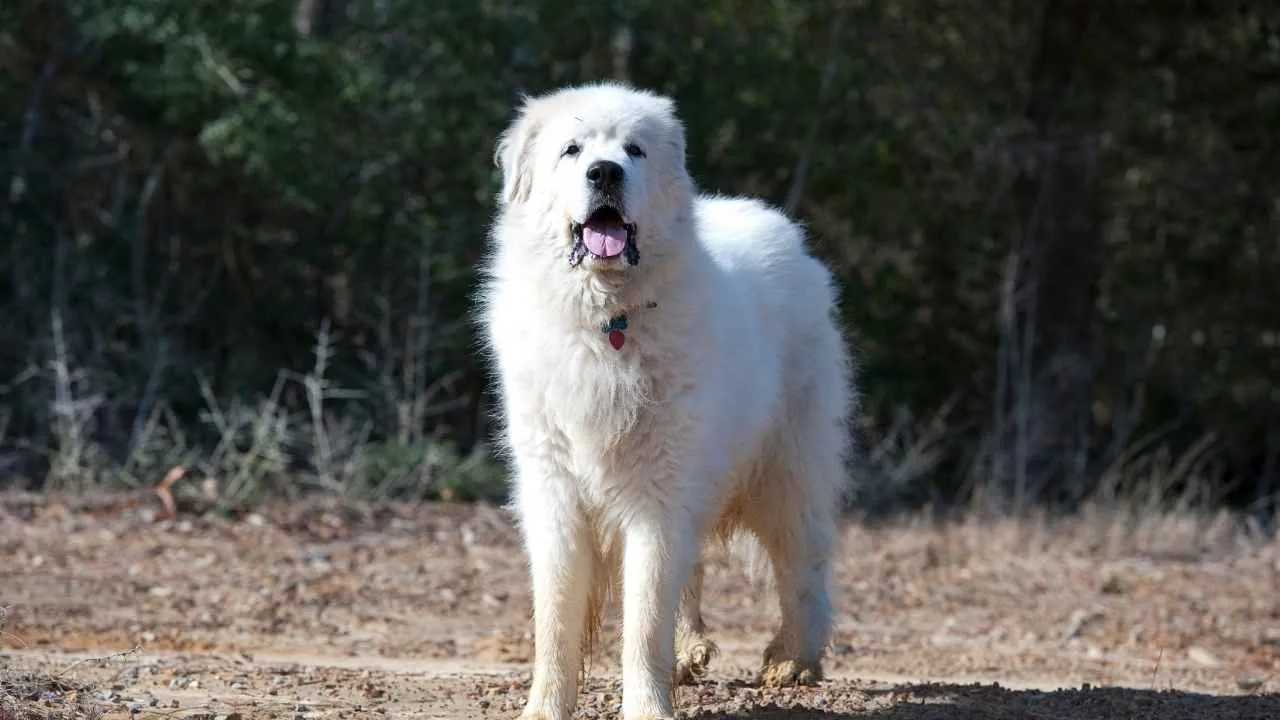
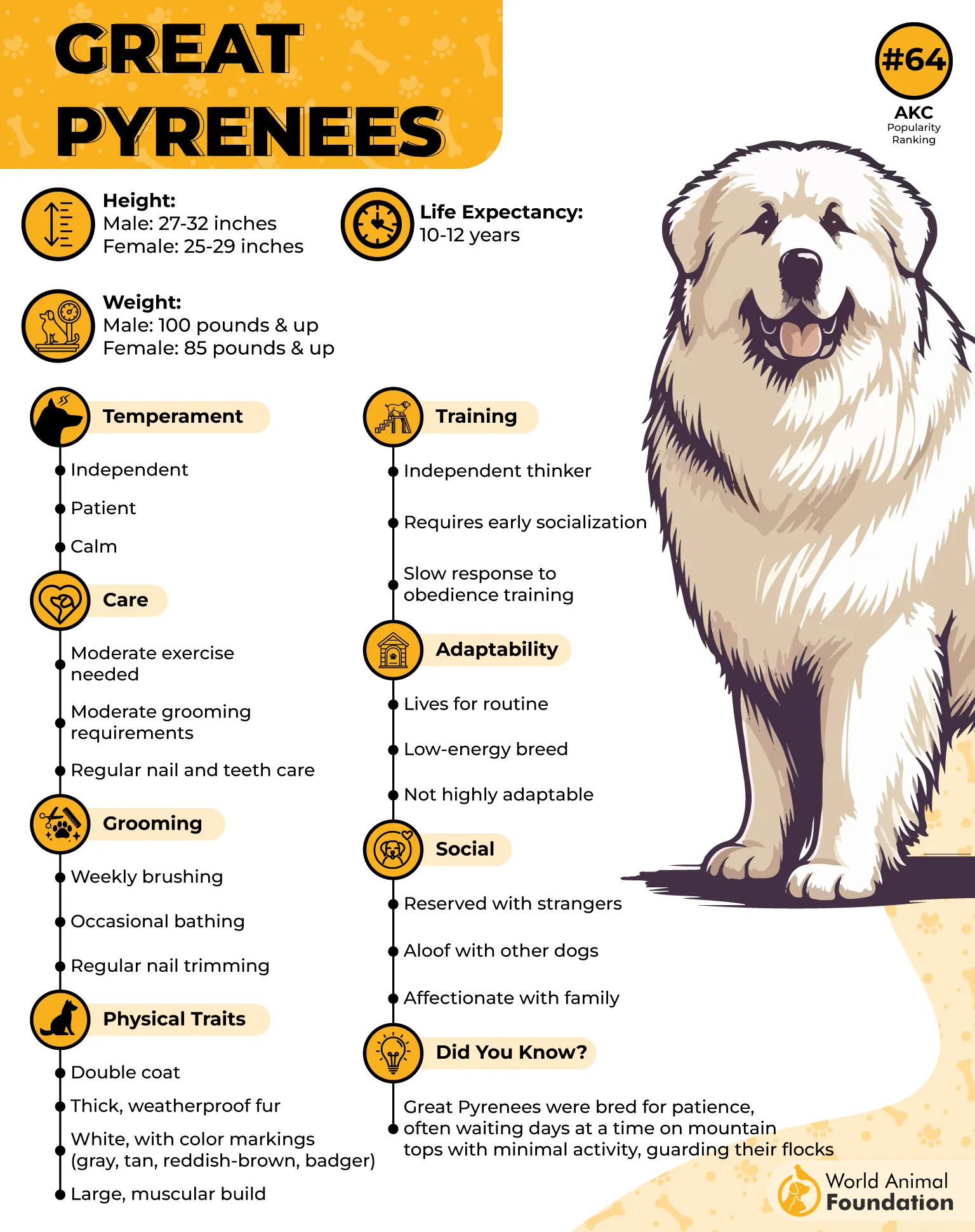
The Great Pyrenees is a calm and powerful guard dog originally bred to guard livestock in harsh mountain regions. At home, it is gentle, affectionate, and incredibly loyal to its family. It is usually calm around children and makes a dependable family companion in peaceful households.
However, due to its size and strength, supervision is important with smaller children to avoid accidental bumps. This breed is naturally alert and will protect its home if it senses a real threat, but it is not overly aggressive in daily life.
Independent Nature with Natural Guard Instincts
This breed is low-energy and does not need a highly active lifestyle. It was bred to work independently, often left alone to guard flocks, which is why it enjoys quiet time and personal space at home.
This independence can sometimes make training a bit challenging, as the dog may show a strong-willed or stubborn side. Early obedience training and consistent socialization are very important so that it learns to behave well around different people, places, and situations.
Low-Maintenance Care with Calm Living Needs
Despite its thick coat, grooming is not overly difficult. Weekly brushing is usually enough to manage shedding and keep the coat healthy, although seasonal shedding can be heavy. The breed is not highly active but still enjoys roaming and needs a secure, fenced space to stay safe.
It prefers a calm, predictable home routine and may not enjoy very busy or chaotic environments. Overall, the Great Pyrenees is a steady, low-maintenance guardian that combines quiet companionship with natural protective instincts.
4. Rhodesian Ridgeback
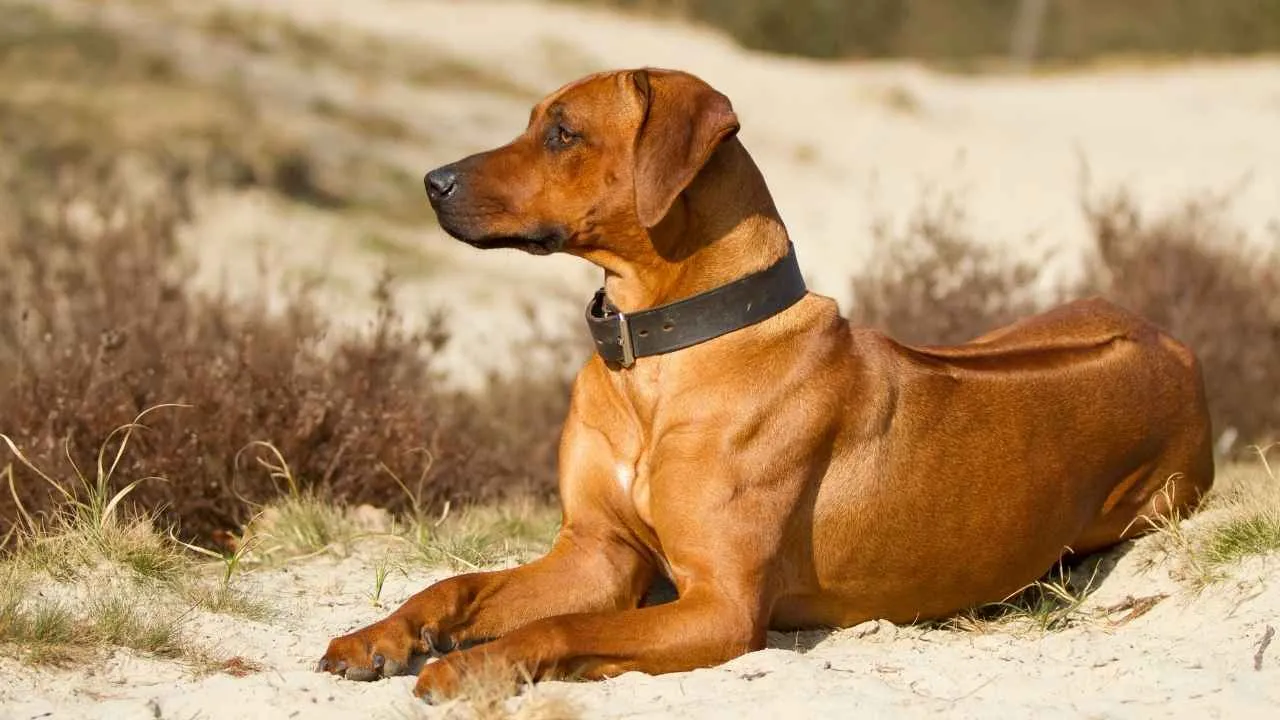
The Rhodesian Ridgeback is a loyal and affectionate guard dog that forms a strong bond with its family. It is gentle at home and often shows its love by staying close—leaning on its owner, resting at their feet, or simply sitting nearby.
While it is not naturally aggressive, it is highly reserved around strangers, as mentioned by Hill’s Pet. This makes it a naturally alert and dependable home protector.
It is also patient with children and can tolerate playful behavior, making it suitable for family life when properly socialized.
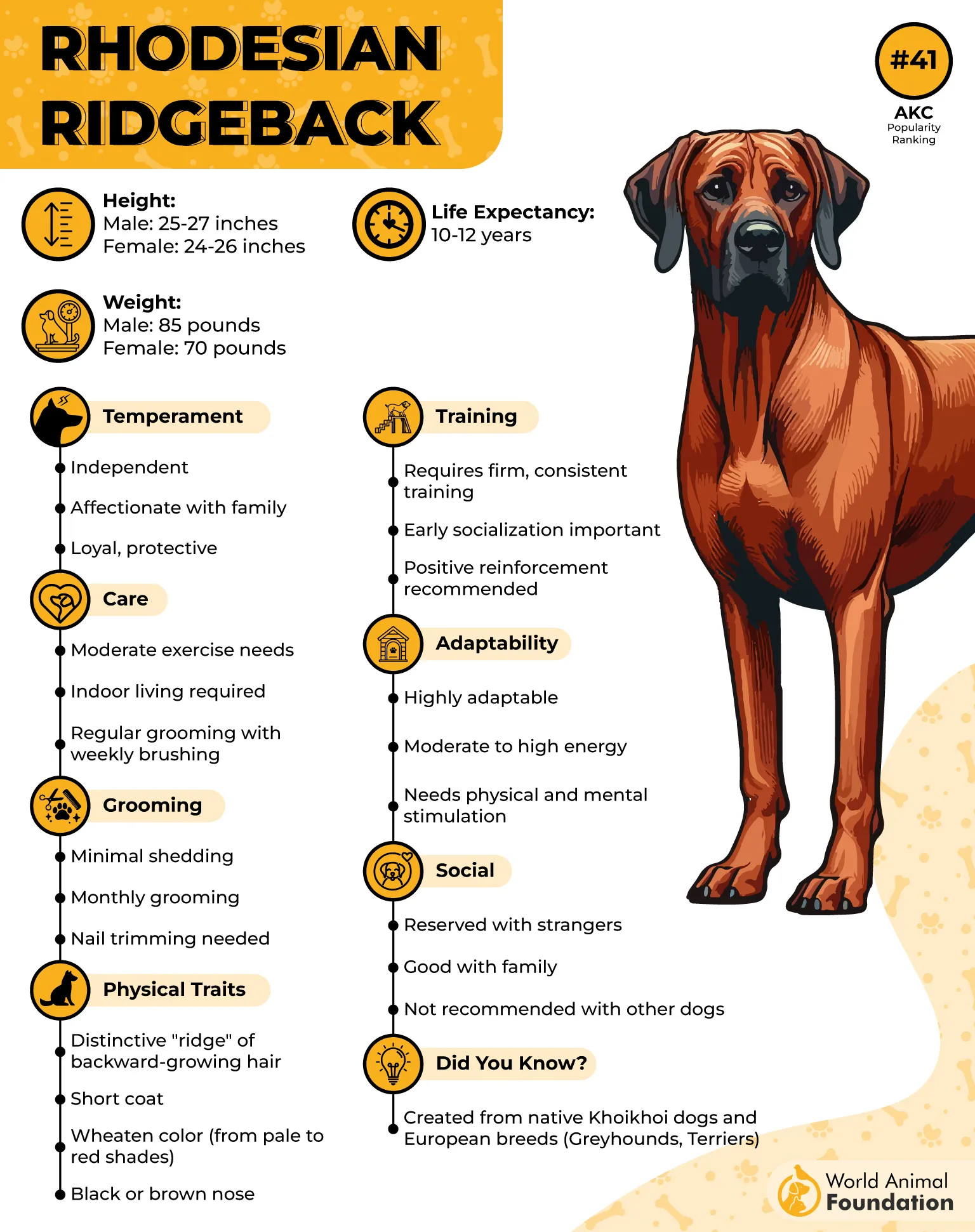
Independent Thinker with Strong Guard Instincts
This breed is intelligent, fast to learn, and highly adaptable, but it also has a strong independent streak. It was originally bred for tracking and working alone, which means it can sometimes be stubborn or strong-willed.
Because of this, it is better suited for experienced owners who can provide firm but fair training. Early socialization is essential to help it stay balanced around strangers and other animals.
It is naturally wary of unfamiliar people and may show protective behavior if it feels its family is being approached too closely. Its deep bark also makes it an effective natural alarm system for the home.
Low Maintenance Care with Active-Minded Needs
The Rhodesian Ridgeback is relatively low-maintenance in grooming. A weekly brushing is usually enough to keep its short coat clean and healthy, along with occasional baths. Nail care is important, as overgrown nails can cause discomfort and affect movement.
Although it enjoys relaxing at home, it is also a strong and active breed that benefits from regular exercise and mental stimulation. Without enough activity, it can become restless.
5. Newfoundland
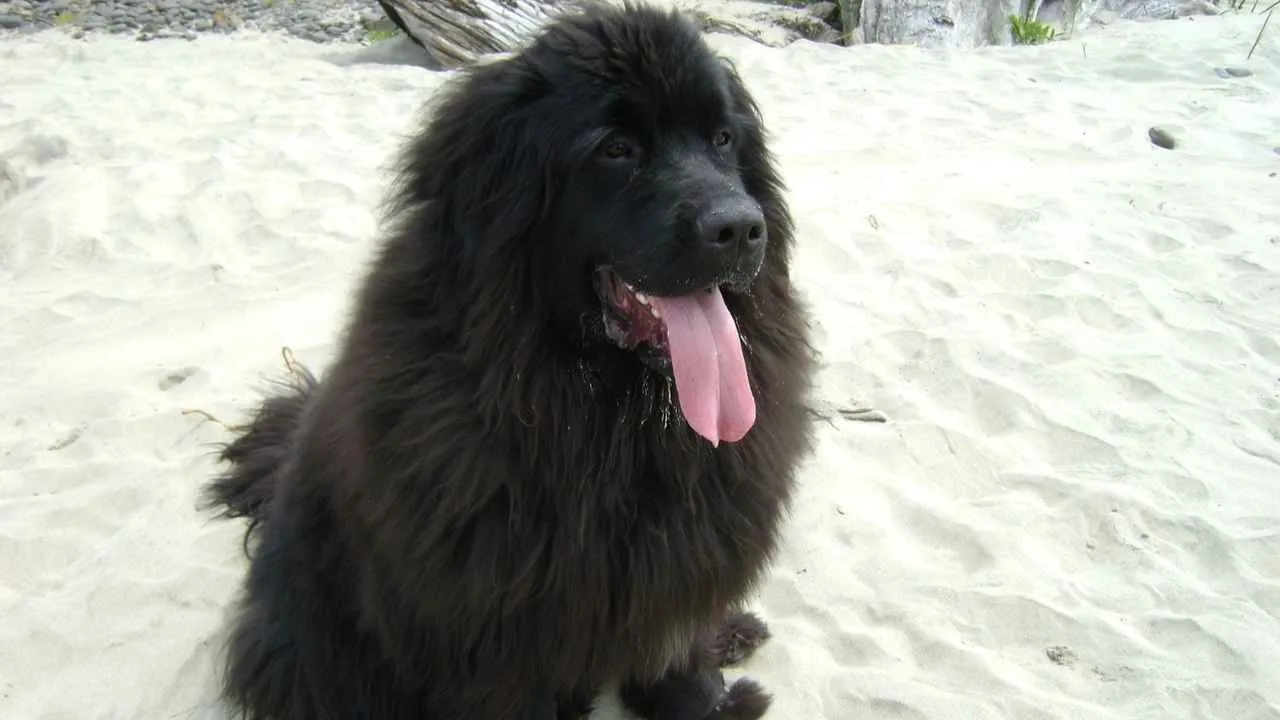
The Newfoundland is a sweet-natured and calm guard dog that looks intimidating but is naturally gentle and loving. It is especially affectionate with children and usually gets along well with other pets, making it a strong family companion.
Despite its size and deep bark, it is not aggressive by nature and is often friendly even toward strangers. However, it remains alert and will protect its home if it senses real danger. It also dislikes being left alone for long periods and thrives in a calm, family-centered environment.
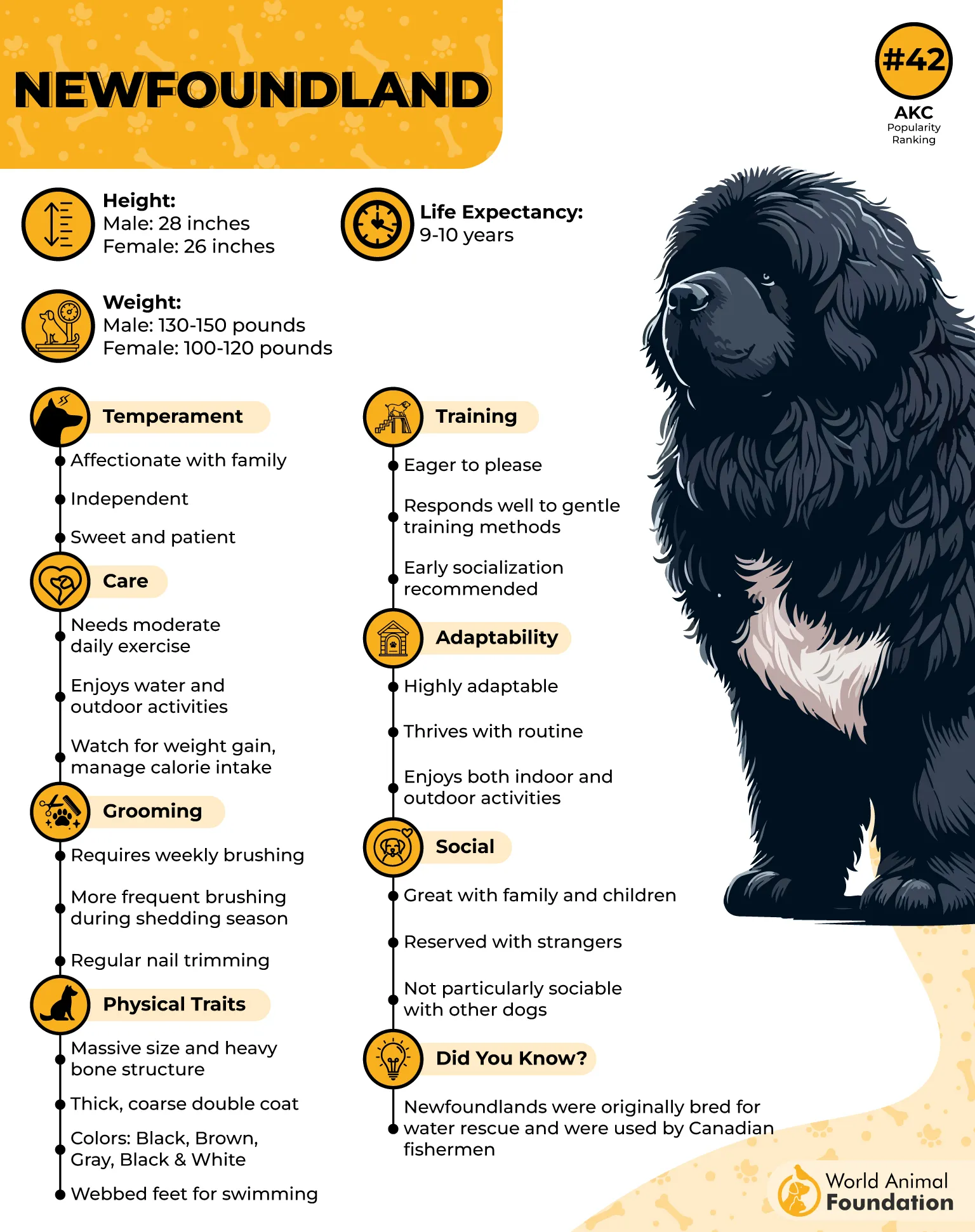
Calm Temperament with Working-Dog Strength
This breed is intelligent, patient, and eager to please, which makes training relatively easy with positive reinforcement. It was originally a working dog, so it still enjoys having tasks, outdoor walks, and even swimming for mental and physical stimulation.
While it does not require intense exercise, it still needs around an hour of low-impact activity daily to stay healthy and prevent weight gain.
Early socialization is important so that it grows into a confident and well-mannered adult. Without proper engagement, it may develop separation anxiety or boredom-related behavior.
Low-Maintenance Care with High Responsibility
The Newfoundland has a thick, water-resistant coat that needs regular care. Brushing a few times a week helps manage shedding, and more frequent grooming is needed during heavy shedding seasons. It also requires routine nail trimming, ear cleaning, and occasional baths to stay healthy.
Although generally low-energy, it needs enough space to move comfortably and does best in cooler climates. It is prone to obesity, so portion control is important.
6. Kuvasz
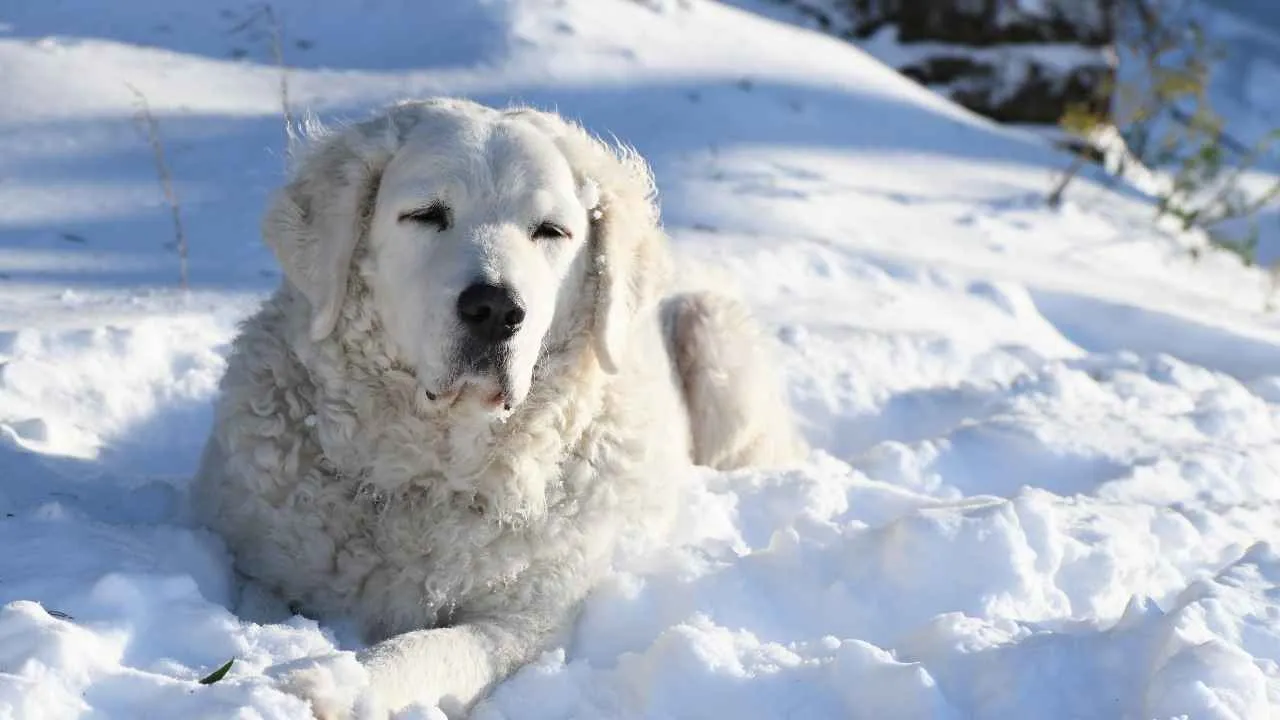
The Kuvasz is a large, powerful guard dog known for its elegant white coat and alert, noble expression. Despite its impressive presence, it is not overly bulky but moves with agility and confidence.
It was originally bred as a livestock guardian, which explains its strong protective instincts and independent nature. At home, it is deeply loyal to its family and can be gentle and protective with children when properly raised.
However, it is naturally cautious around strangers and does not immediately trust unfamiliar people or animals.
Highly Protective but Not a Beginner-Friendly Dog
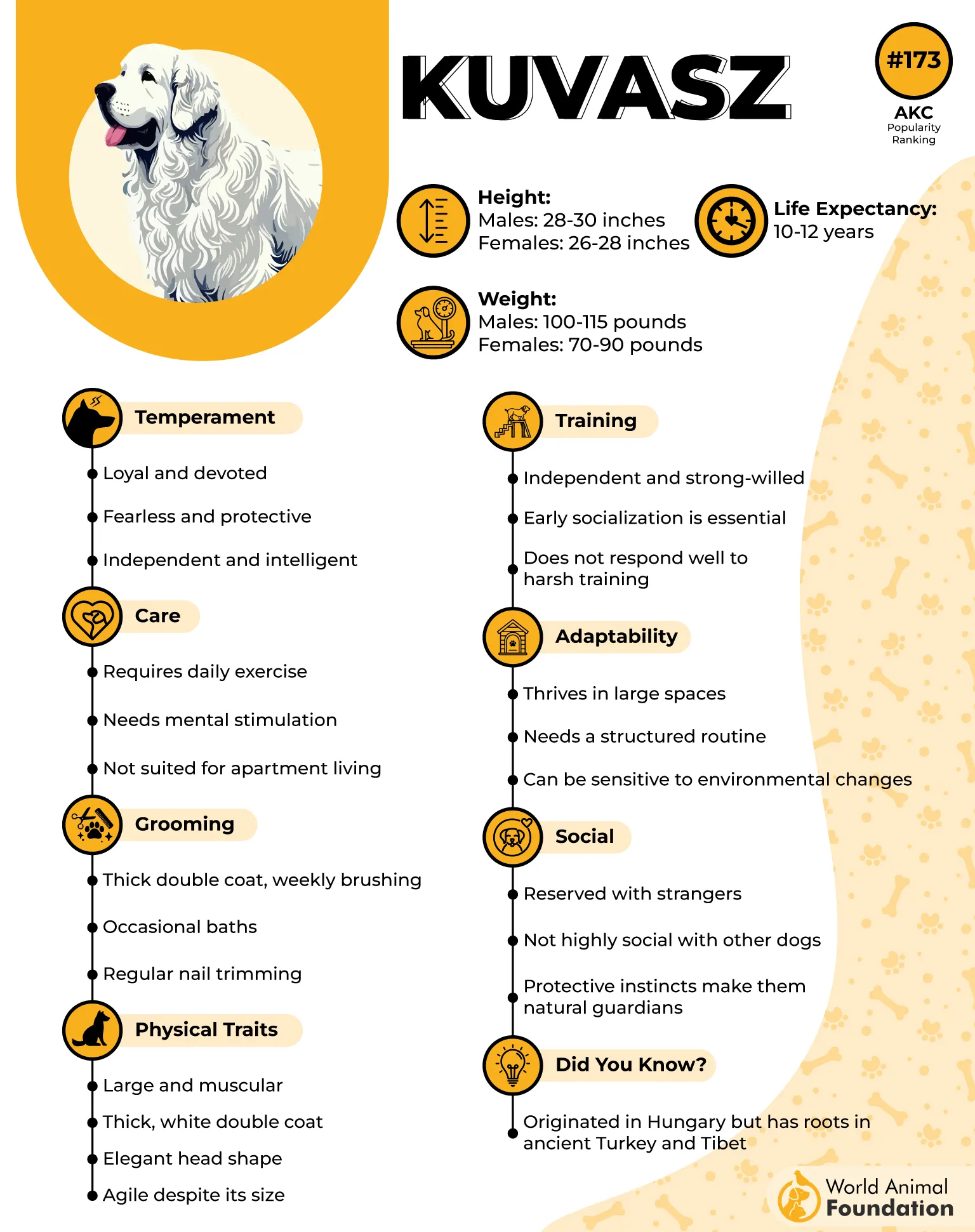
This breed is intelligent, independent, and capable of making its own decisions, which can make training challenging for inexperienced owners. It requires firm, consistent guidance along with early and continuous socialization.
Without proper training, it may become overly suspicious, roam, or develop unwanted behaviors like excessive barking or digging. While it can adapt to family life, it is best suited for experienced dog owners, according to WebMD.
Some individuals may show stronger protective or aggressive tendencies if not properly managed, making structure and boundaries essential from a young age.
Low Feeding Needs with High Responsibility Care
The Kuvasz is an “easy keeper,” meaning it requires relatively less food compared to its size. Its thick double coat is weather-resistant and sheds heavily during seasonal changes, so regular brushing is important to keep it clean and healthy.
Grooming needs are moderate, increasing during shedding periods. This breed is naturally athletic in youth but becomes calmer with age, needing less intense exercise later in life. However, it still requires enough mental and physical stimulation to avoid boredom-related behaviors.
7. Bullmastiff
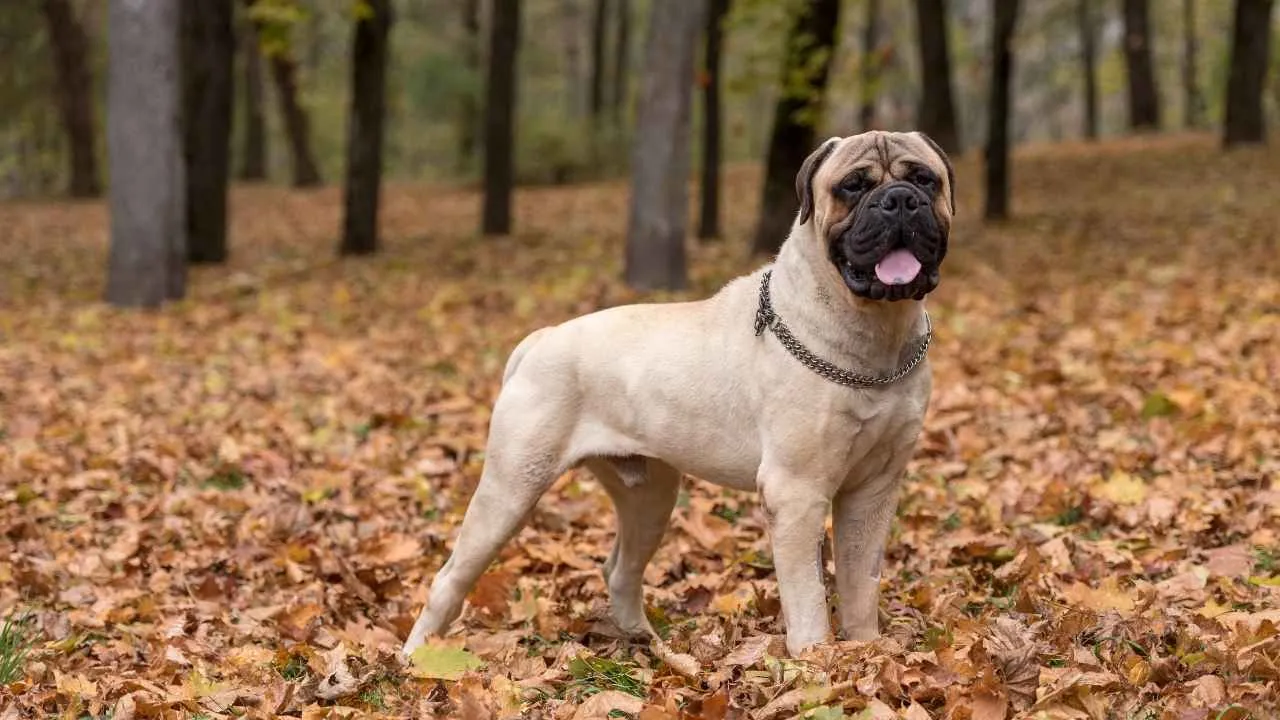
The Bullmastiff is a loyal, affectionate, and calm guard dog that forms a strong bond with its family. It is gentle with children and can be a loving household companion when properly trained.
However, due to its large and powerful build, supervision is always important around kids to avoid accidental knocks or bumps. PetMD mentions that this breed is naturally reserved with strangers and may take time to warm up to new people.
Despite this, it is not overly vocal and usually only barks to alert its family when something seems unusual.
Protective Instincts That Need Early Guidance
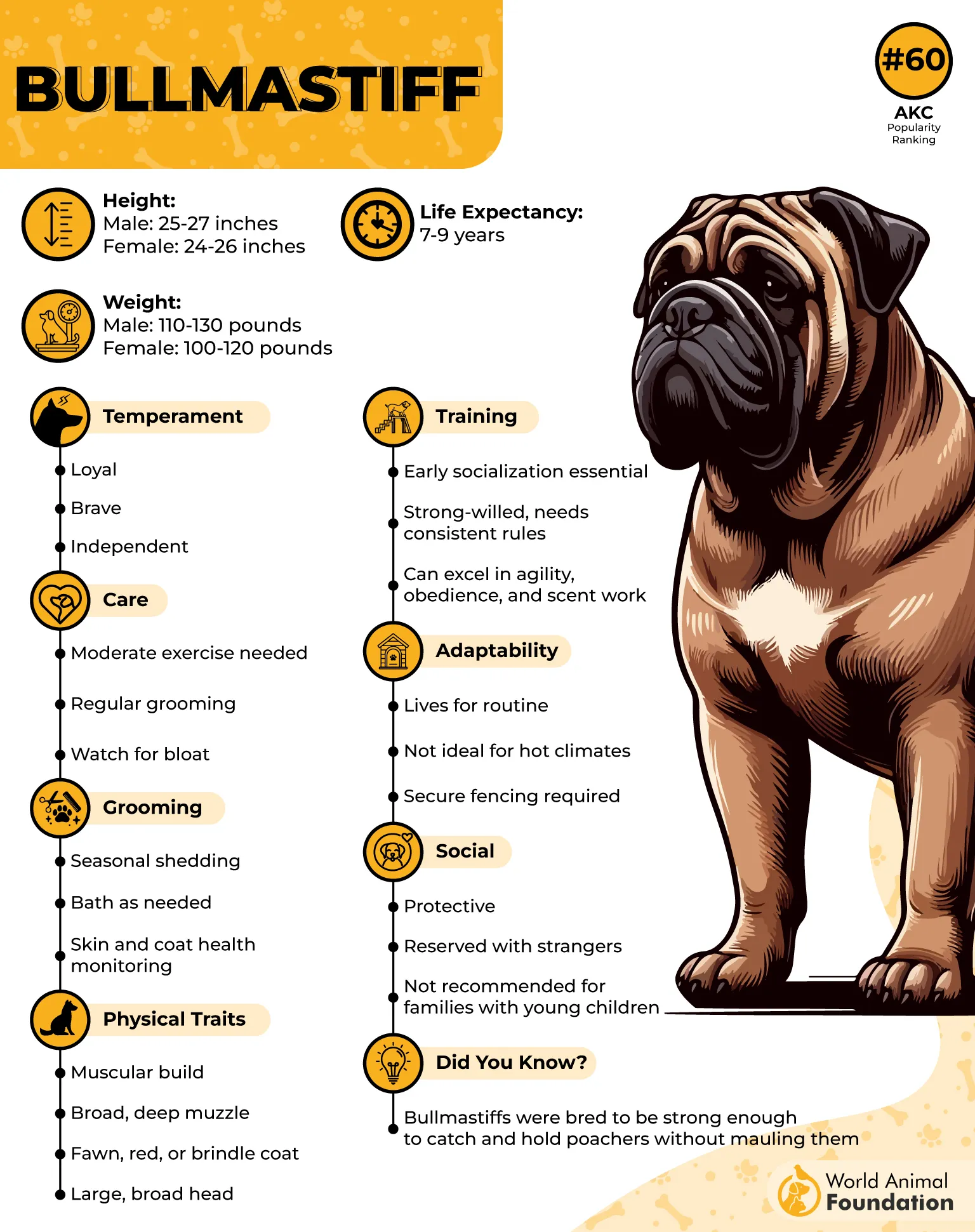
This breed was originally developed as a guardian, which is why it is naturally watchful and protective of its home. It is intelligent and learns quickly, making training easier when started early. However, it can become strong-willed as it matures, so consistent obedience training is essential from puppyhood.
Early socialization is especially important to help it stay calm and confident around unfamiliar people and situations. Without proper training, its size and strength can become difficult to manage, especially in busy households.
Low Maintenance Coat with Real Care Needs
The Bullmastiff has a short, dense coat that is easy to maintain and sheds very little, making grooming simple. However, it does come with some common challenges, such as drooling and snoring, which owners should be prepared for. It is a quiet breed overall, known for barking only when necessary.
Like many giant dogs, it has a shorter lifespan, usually around 8 to 10 years. Overall, the Bullmastiff is a steady, low-energy protector that suits relaxed homeowners who want a calm but dependable guard dog with minimal grooming demands and strong family loyalty.
Conclusion
Choosing a low-maintenance guard dog is really about finding the right balance between calm companionship and natural protection.
Each breed has its own strengths, but all share one common trait: a quiet instinct to protect the people they love without needing constant high-energy care.
A well-raised guard dog becomes more than a protector—it becomes part of the family’s daily rhythm, offering both comfort and quiet security. Take your time, invest in early training, and you’ll end up with a companion that makes your home feel safer without making life more complicated.
Looking for protection dogs? You can also check out the German Shepherd, Belgian Malinois, Cane Corso, Doberman Pinscher, and Tibetan Mastiff.
