




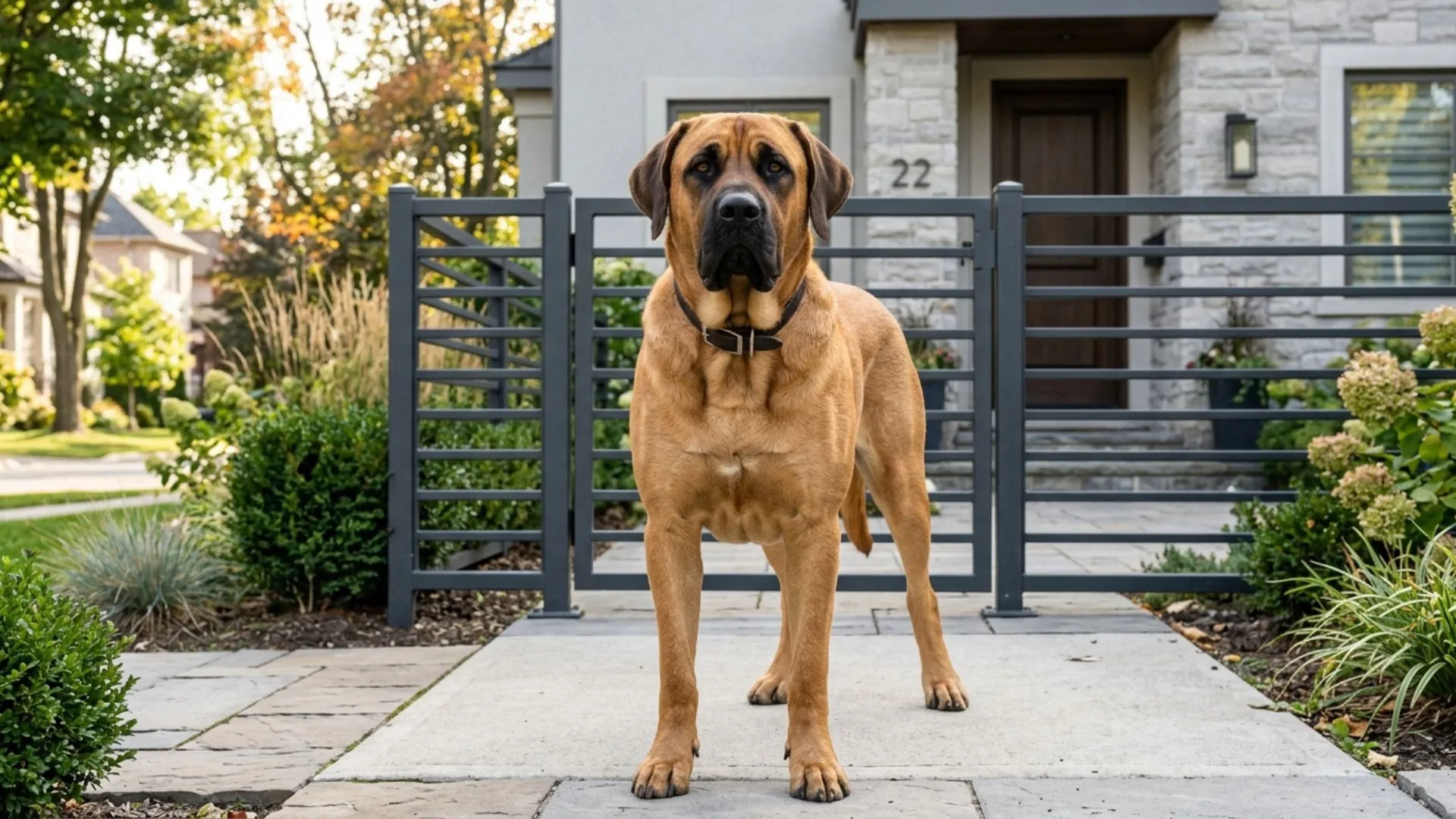
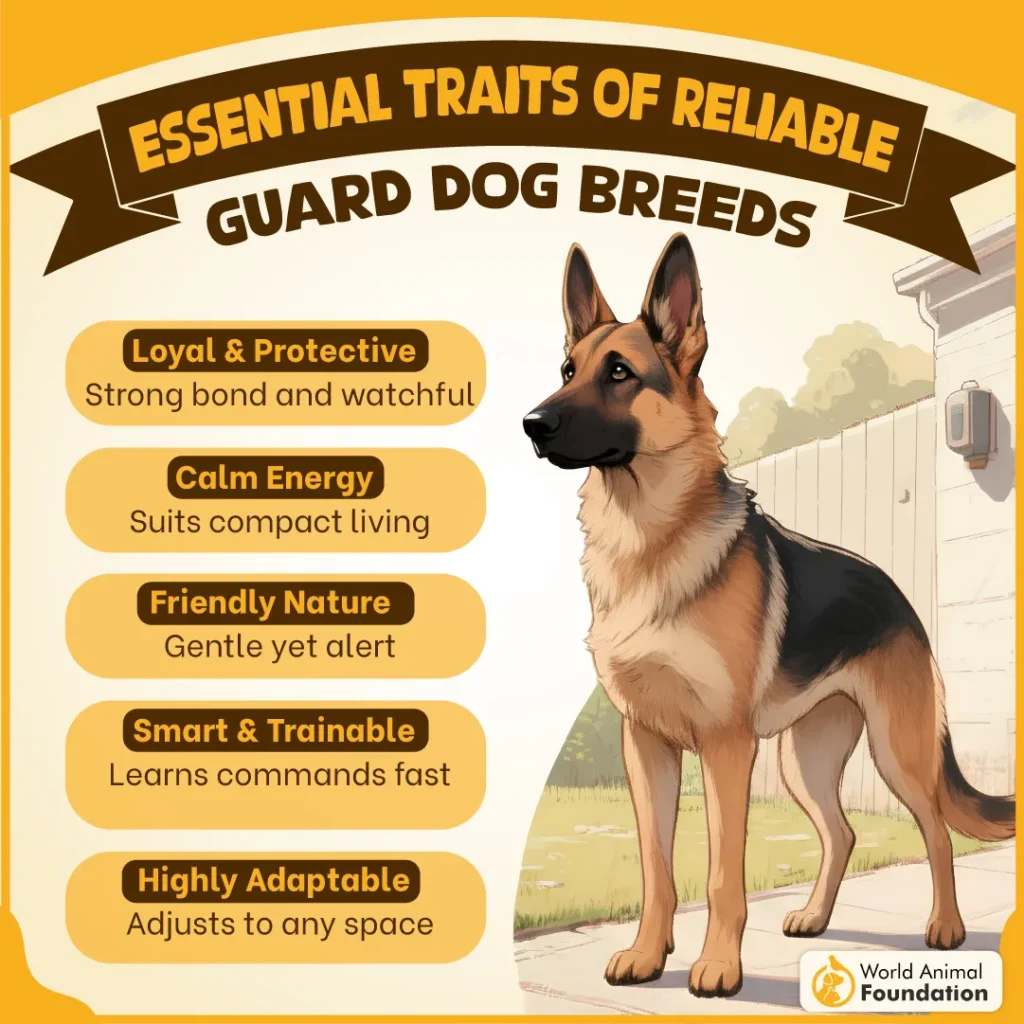
A lot of people say they want a guard dog. What they actually want is a dog that looks at a stranger and thinks:
“ABSOLUTELY NOT.”
Without requiring six hours of daily exercise, advanced tactical training, and enough mental stimulation to qualify for a government job.
But some protection dogs are incredible.
Your German Shepherds, Doberman Pinschers, and Belgian Malinois.
Amazing dogs.
Dogs that will happily reorganize your entire schedule if their needs are not met.
Not everybody wants that.
Some people want a loyal companion, a furry friend, and a family dog that protects the house, loves the kids, and doesn’t need constant attention every waking second.
We have rounded up seven such properly trained protection dogs with strong attachments and protective instincts.
Low-Maintenance Guard Dog Breeds for Easy Living
1. Bullmastiff
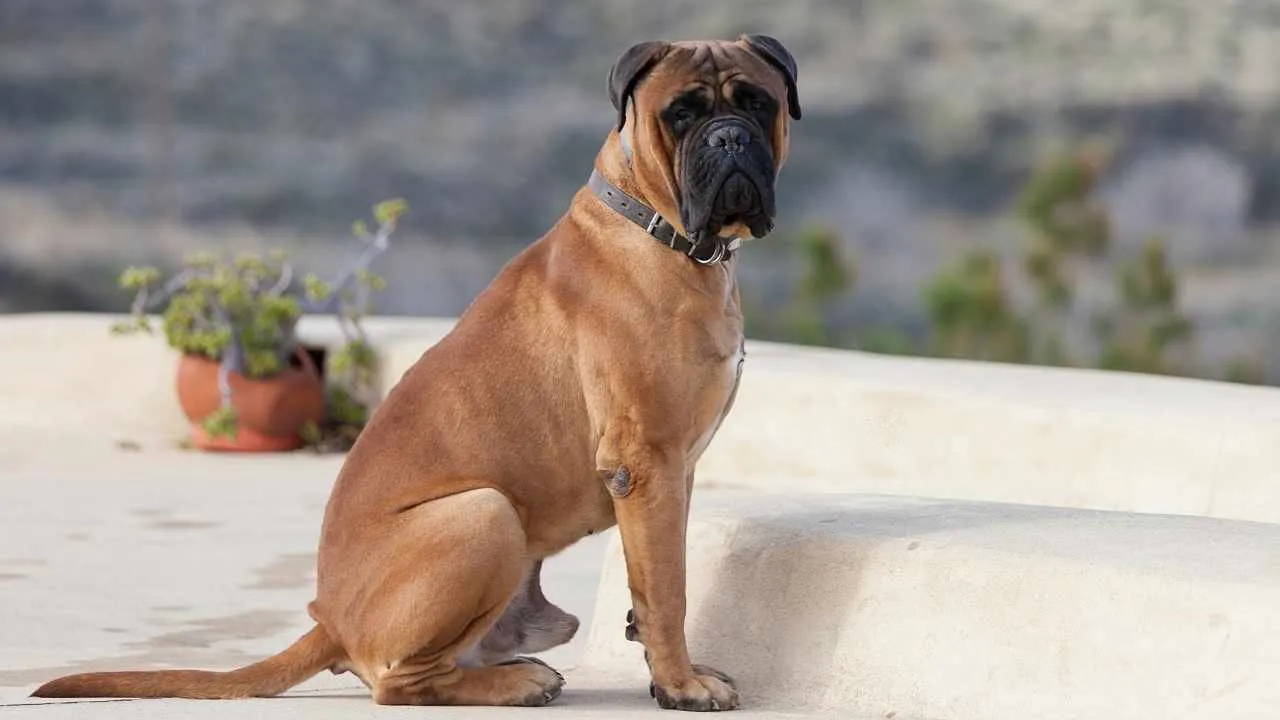
The Bullmastiff’s security strategy is incredibly simple.
EXIST!
That is it.
A full-grown Bullmastiff standing in your front yard tends to answer a lot of questions before they are even asked.
These Mastiff dogs were originally bred to protect large estates from poachers. They combined strength, confidence, and protective instincts into one massive package.
And the package is MASSIVE! More than other dogs.
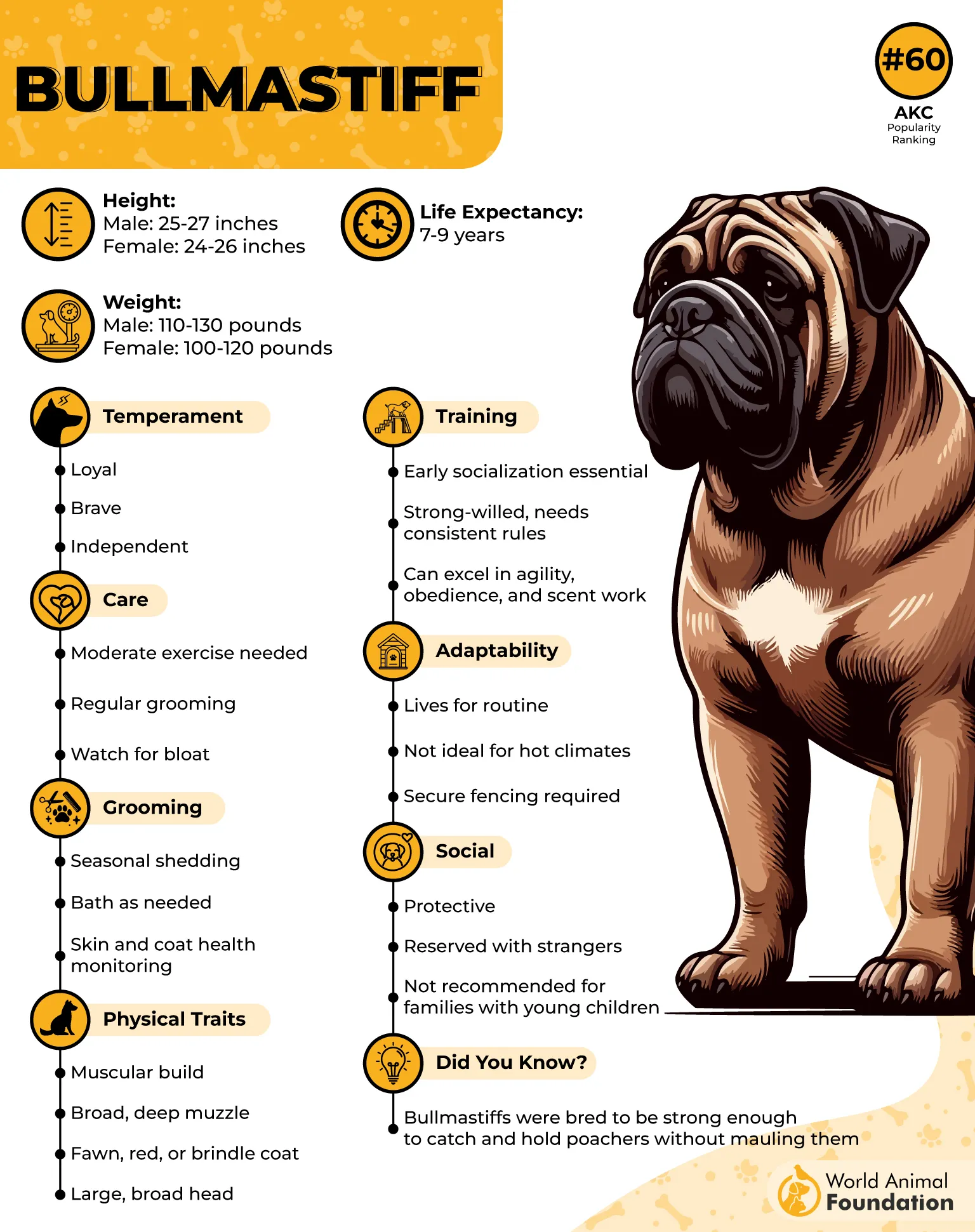
The Bullmastiff is one of the best guard dogs for families who want protection without constant chaos.
Unlike many energetic dogs, Bullmastiffs are surprisingly calm dogs.
They enjoy regular exercise and daily walks, but they are not looking to run a marathon before breakfast. According to the American Kennel Club, brisk walks and outdoor play are this breed’s favorites.
Their short coat means low-maintenance grooming. Weekly brushing is usually enough to keep things under control.
These dogs form deep bonds with family members and become incredibly loyal over time.
They are naturally wary of strangers without being unnecessarily aggressive.
That balance matters a lot because the right guard dog should know the difference between a threat and your neighbor borrowing a ladder.
2. Great Dane
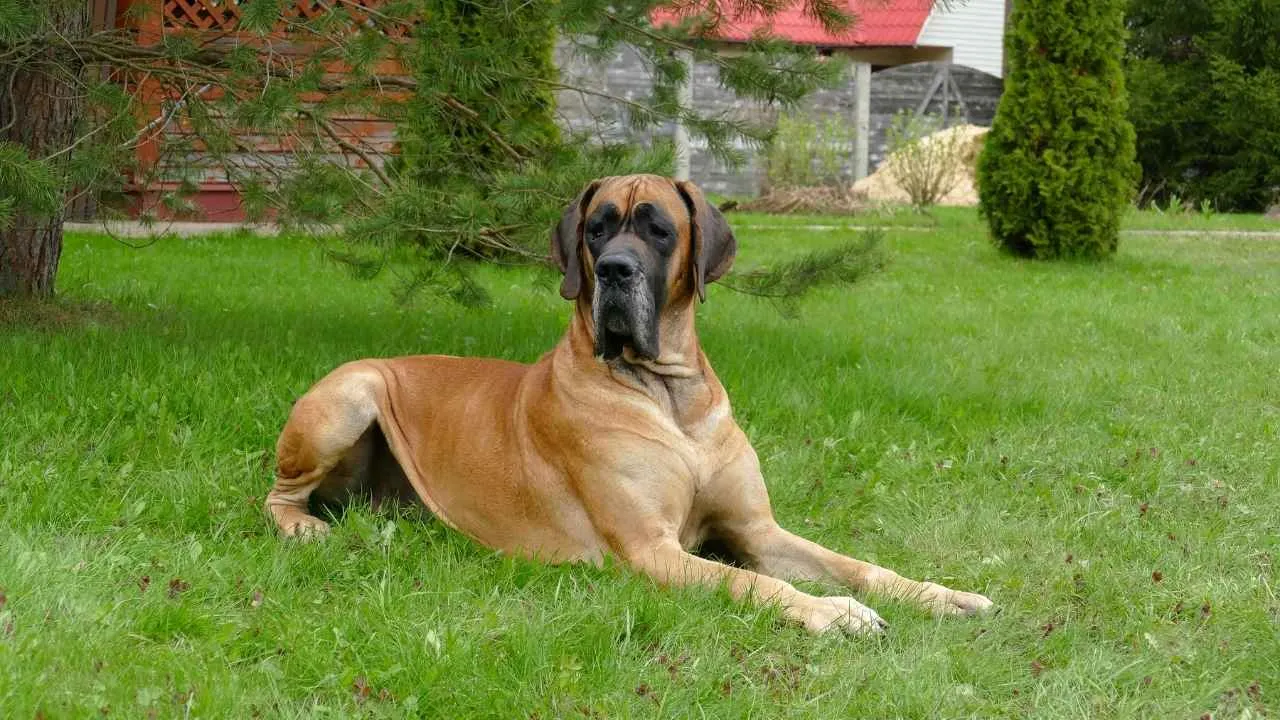
The Great Dane is technically a dog.
Technically.
In practice, it is a horse with house privileges.
Everything about this breed is large. Paws. Head. Appetite. The ability to knock things off the tables while simply existing.
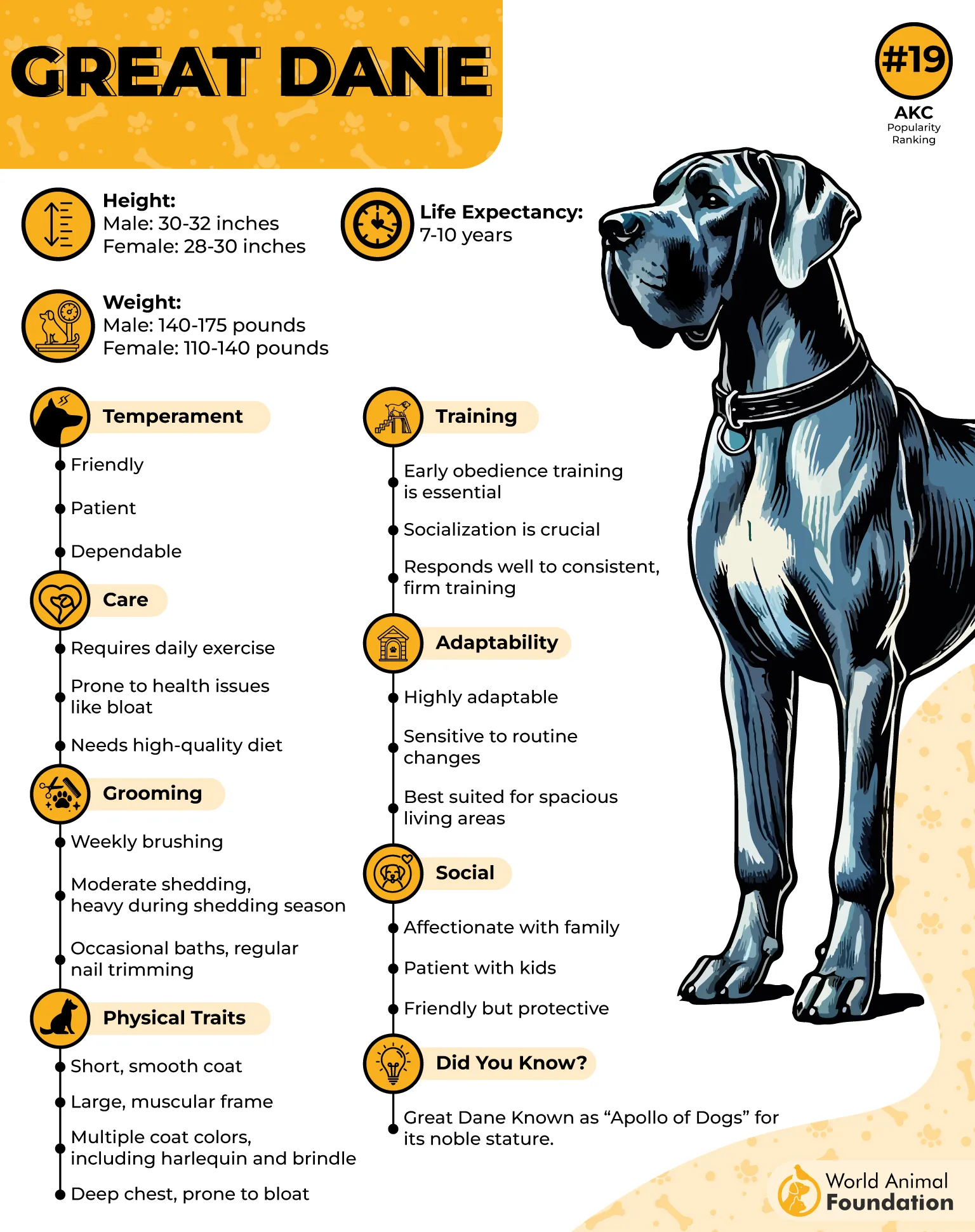
The Great Dane is one of the gentle giants of the dog world. Really, they are one of the tallest dogs around, with an average height of 32 inches.
Its commanding presence alone makes most strangers think twice. Despite their intimidating size, Great Danes are affectionate, deeply devoted, and gentle around family.
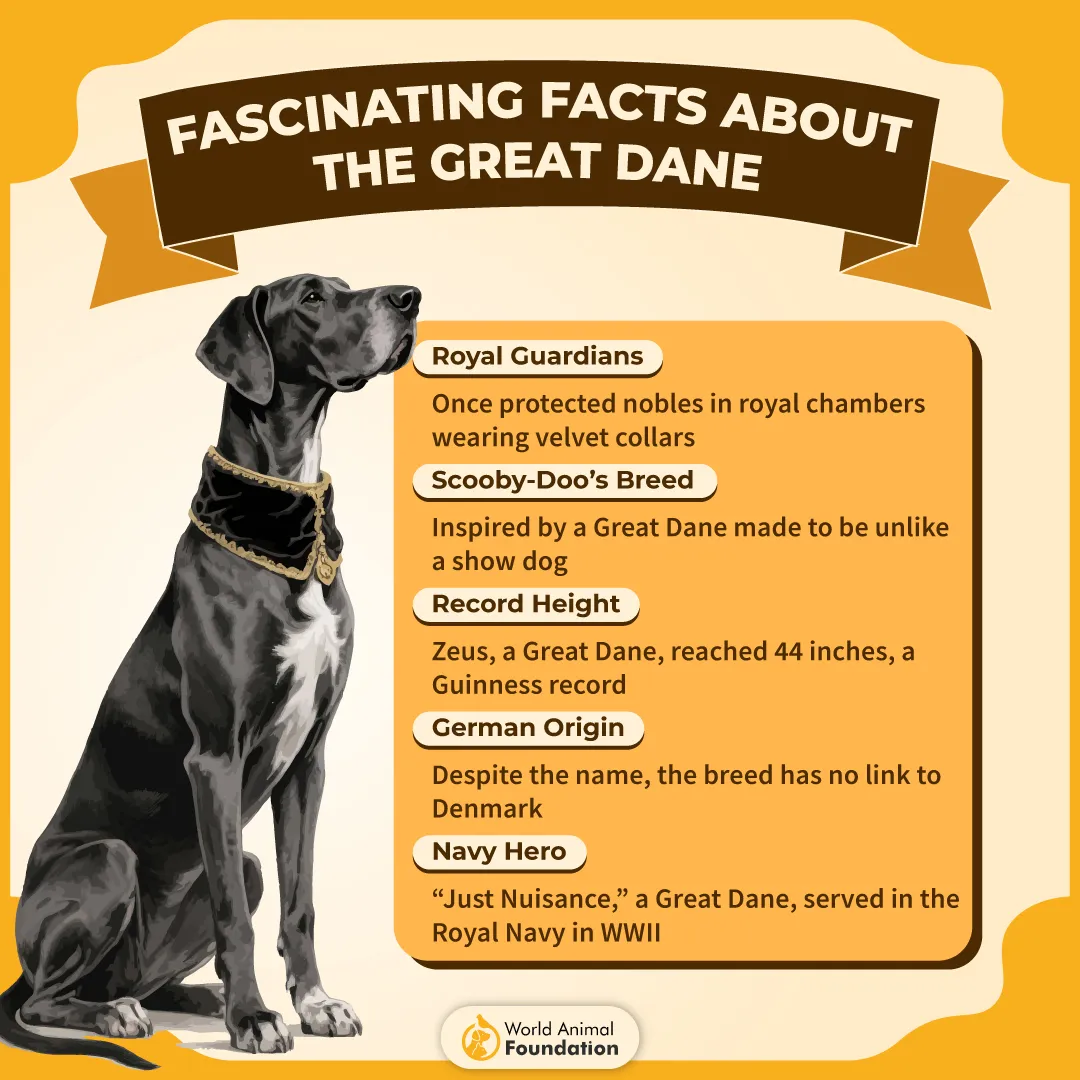
Their short coat needs very little grooming compared to many guardian breeds. No frequent grooming sessions or complicated maintenance routines. All you need is regular brushing and proper care.
These dogs enjoy moderate daily exercise but are generally much calmer than people expect. Britannica recommends 1 hour of interactive play or walking each day.
A properly trained Great Dane becomes both a loving companion and a natural protector.
3. Saint Bernard
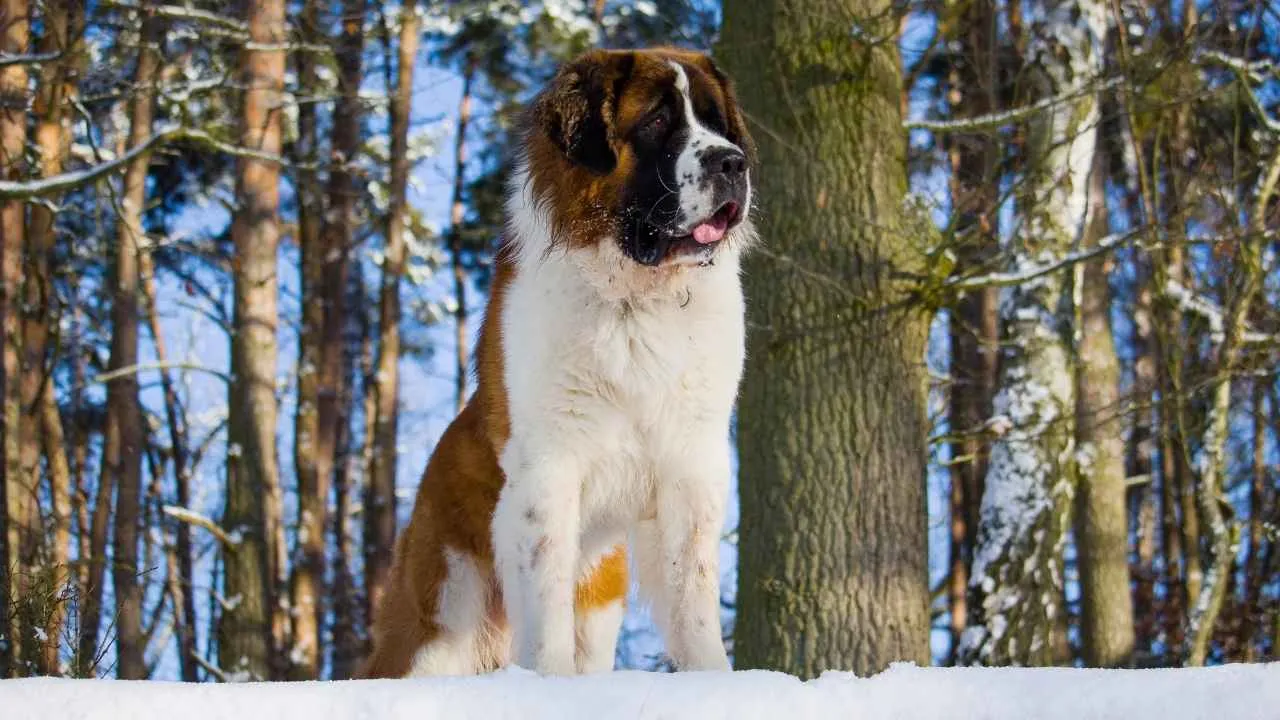
The Saint Bernard looks like it should be carrying emergency supplies through a snowstorm.
And historically, that is pretty close to what these fluffy, large dogs used to do.
But beneath all that size is one of the sweetest dogs you will ever meet. As the Royal Kennel Club says, they are “sweet nanny dogs”.
Unless somebody threatens its family.
Then things change.
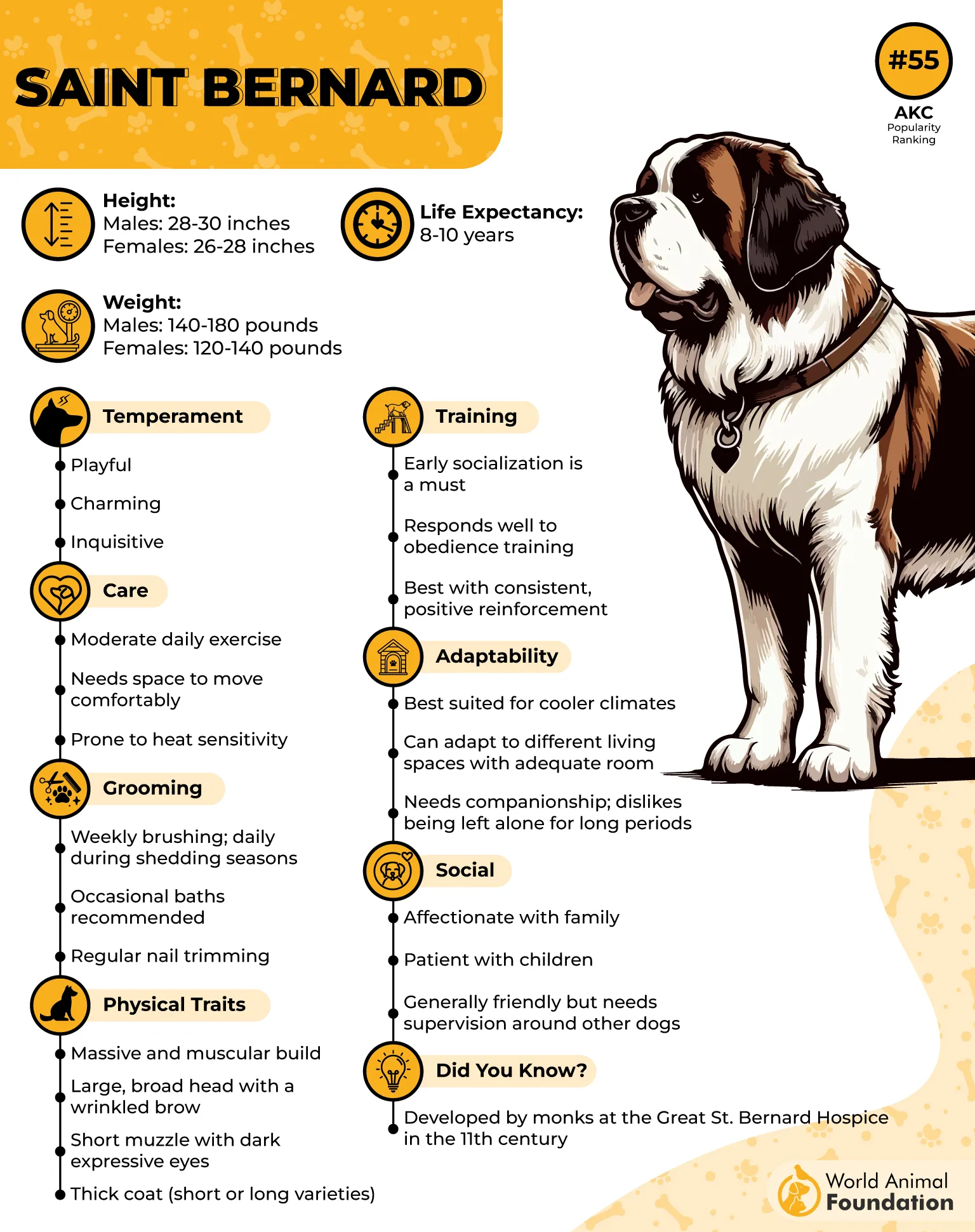
Saint Bernards were initially bred for rescue work in the Swiss Alps. That history created a breed that is calm, intelligent, and deeply loyal.
Their protective instincts come naturally.
Their coat needs some grooming, but not nearly as much as some people assume. Yes, drooling, slobbering, and heavy shedding are some things you can’t ignore. But the sweetness of these fluffy big dogs is just too much.
Weekly brushing keeps things manageable.
St. Bernards enjoy family activities and regular exercise, though they are not high-energy dogs.
They love their humans, love naps, and take guarding responsibilities seriously.
4. Great Pyrenees
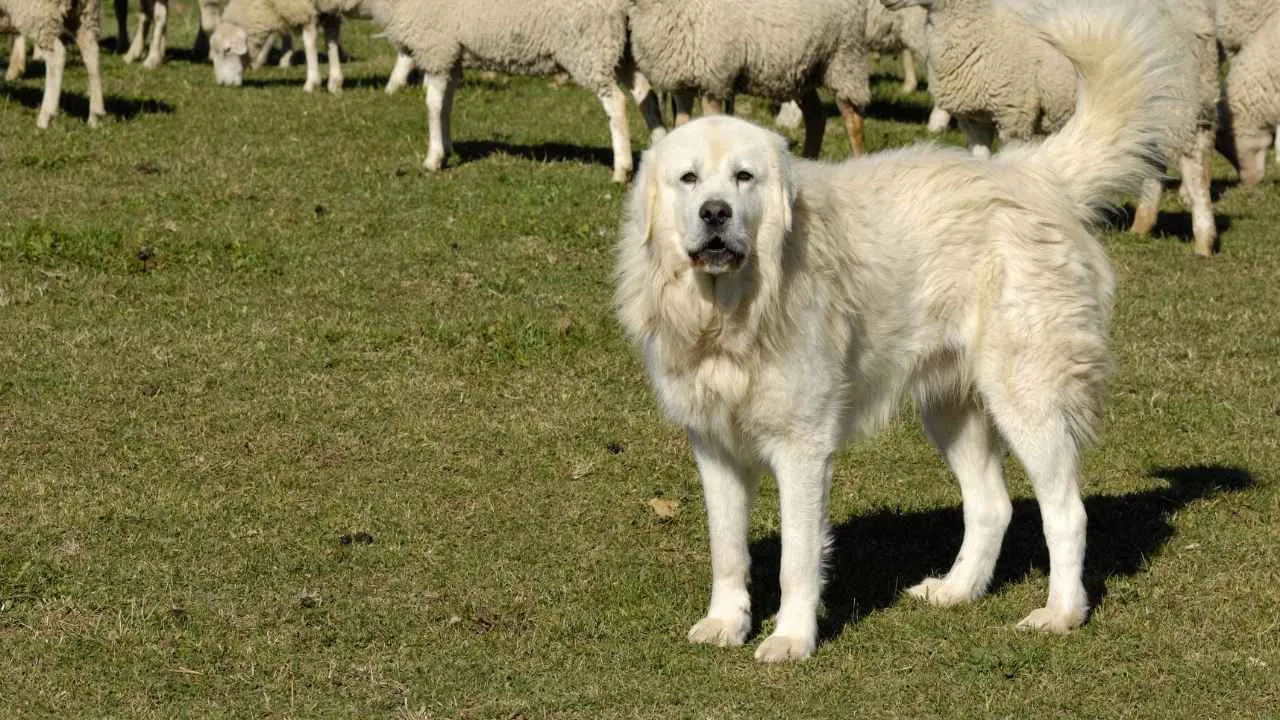
The Great Pyrenees has been judging strangers for centuries.
Professionally.
These dogs were originally bred as flock guardians, protecting sheep from wolves and predators in harsh mountain environments.
Without supervision, instructions, or a human constantly explaining things.
Yes, these beautiful white dogs are this intelligent.
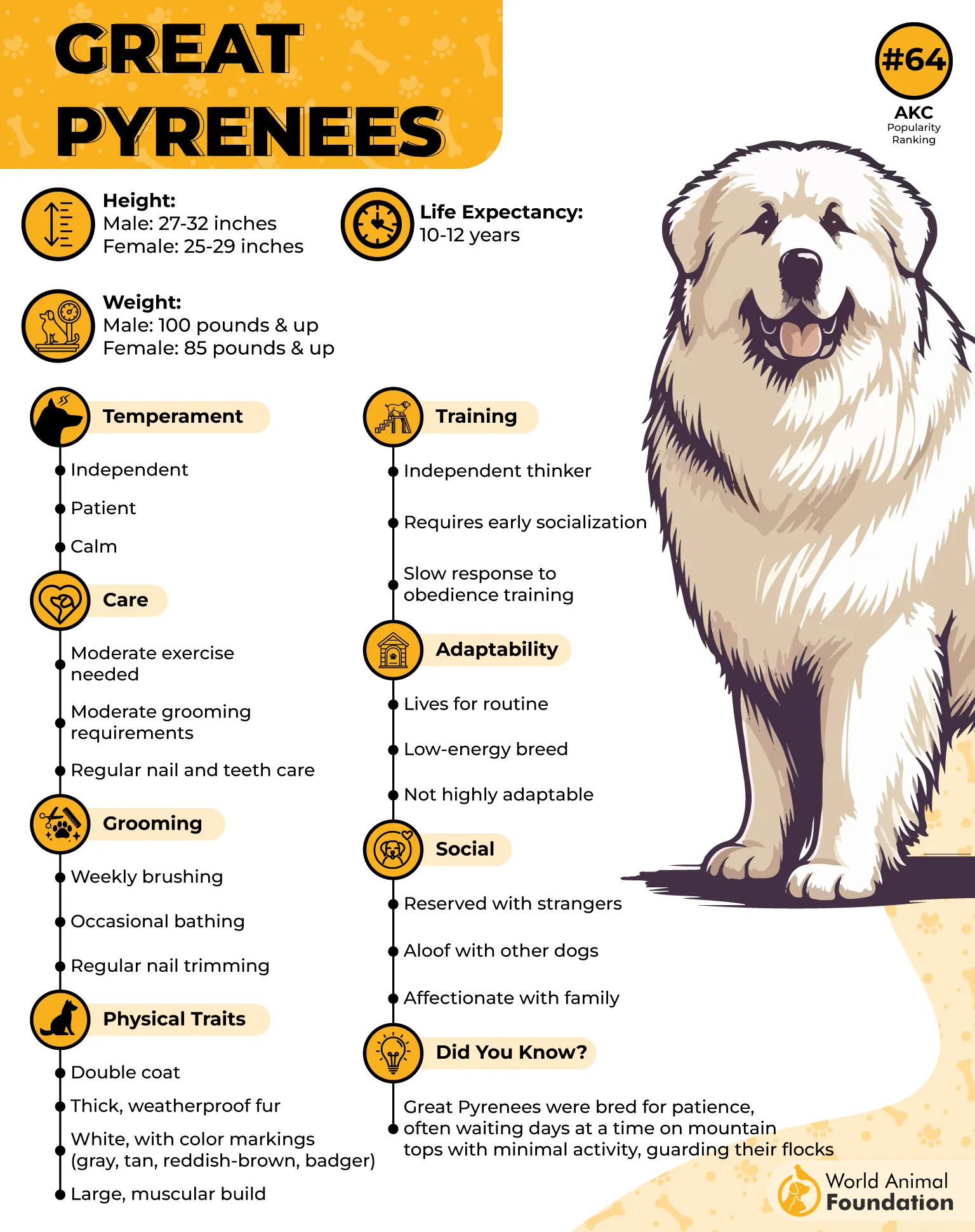
The Great Pyrenees remains one of the most respected guardian breeds in the world.
This dog’s natural instinct to protect is deeply ingrained.
These dogs are naturally wary of strangers and unfamiliar people, but affectionate with family and other animals they trust.
They have a calm confidence that makes them excellent guard dogs.
Their thick coat needs weekly brushing, but surprisingly, it is not the grooming nightmare people expect.
Certainly less demanding than many long-coated breeds that require more frequent grooming.
The Great Pyrenees is protective without being overbearing. Ultimately, they are loving family pets with an affectionate nature.
5. Newfoundland
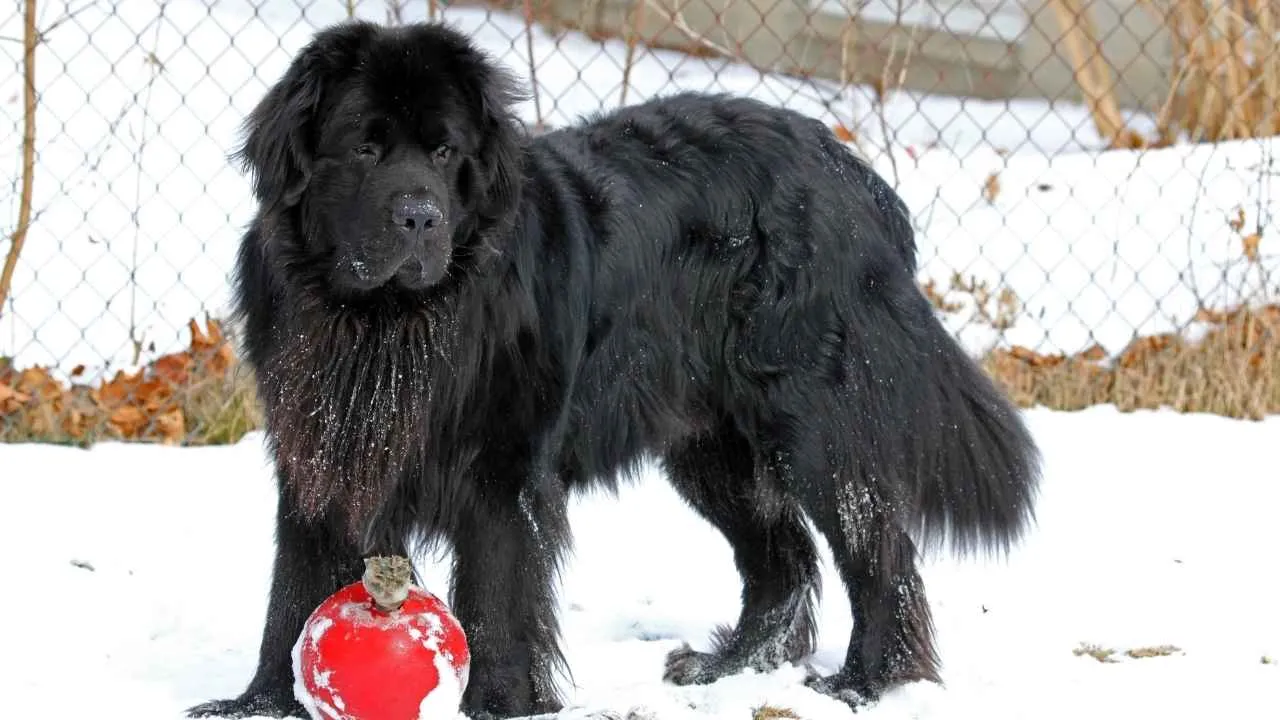
At first glance, the Newfoundland looks like a giant teddy bear.
A very large teddy bear.
One capable of pulling a boat through water if necessary.
Because that actually happened.
These water dogs were originally bred as working dogs to help fishermen and perform rescue tasks. That explains why they are both powerful and unbelievably sweet.
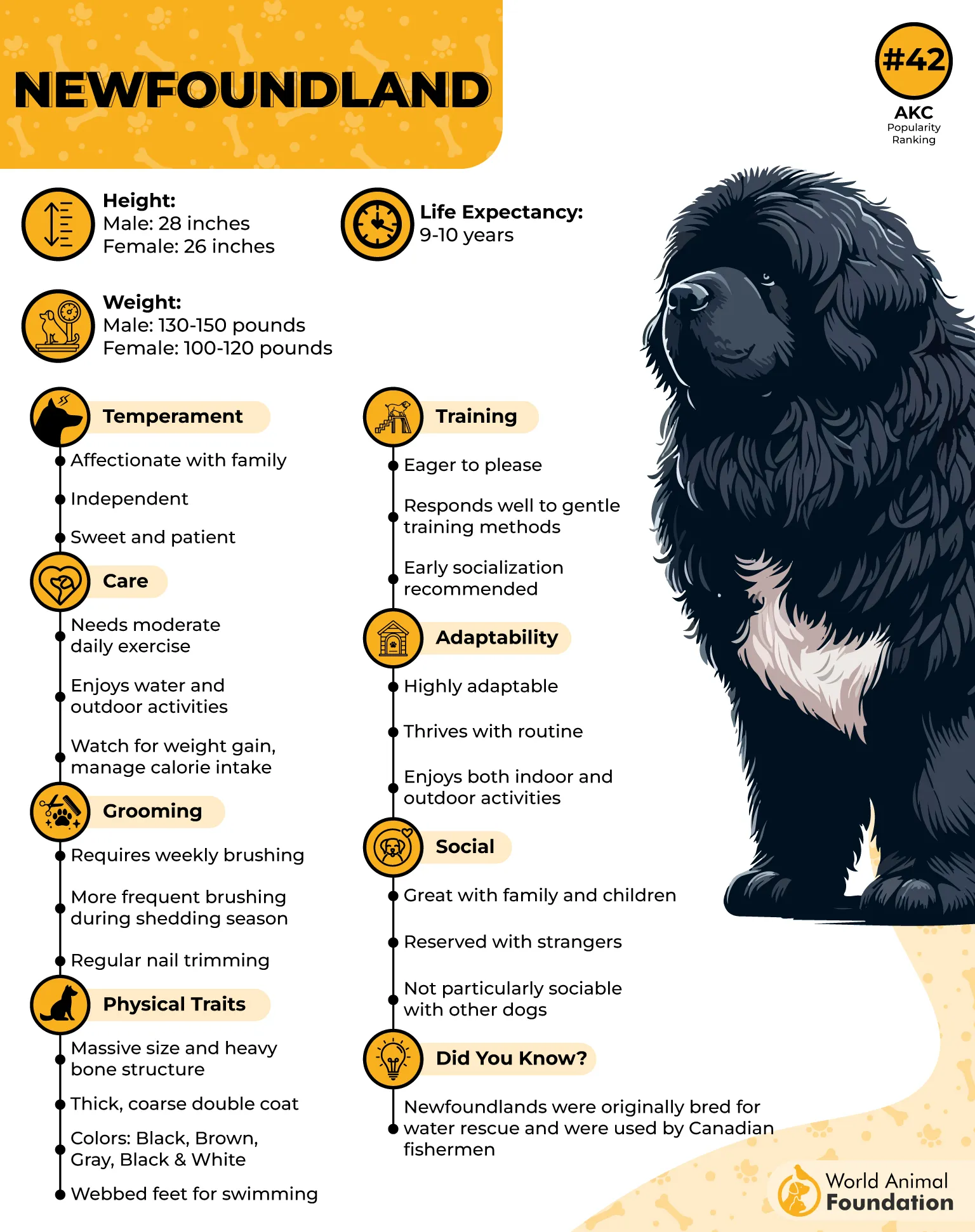
Newfoundland dogs are known for their affectionate nature and balanced temperament.
They adore family life. They are patient with children and gentle with family members. And they are protective when the situation calls for it.
Unlike some personal protection dogs that rely on intimidation, Newfoundlands rely on presence.
And trust us.
There is plenty of presence.
Their coat needs regular brushing, but their easygoing personalities more than make up for it. These gentle companions form strong bonds with their humans and become deeply loyal dogs over time.
6. Broholmer
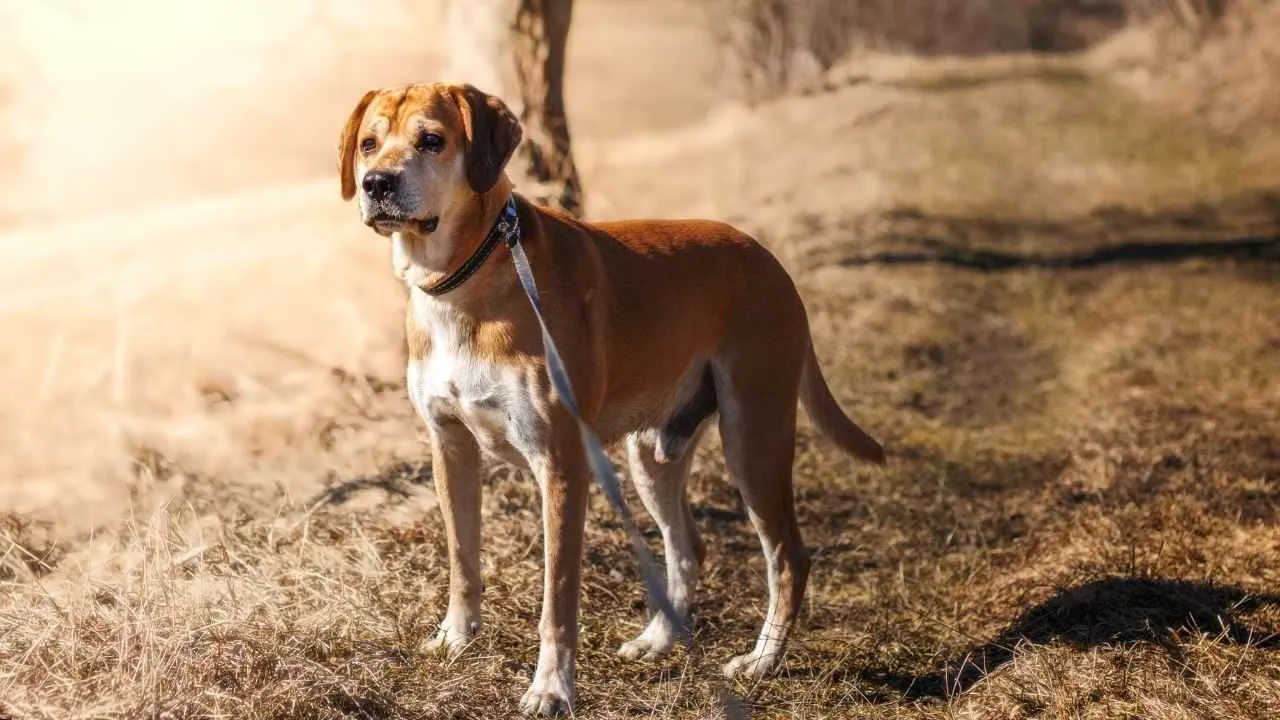
The Broholmer is not nearly as famous as a German Shepherd or Belgian Malinois.
But maybe it should be. It has a resounding bark and confident walk.
It quietly does everything people want from a family guard dog.
Without demanding center stage.
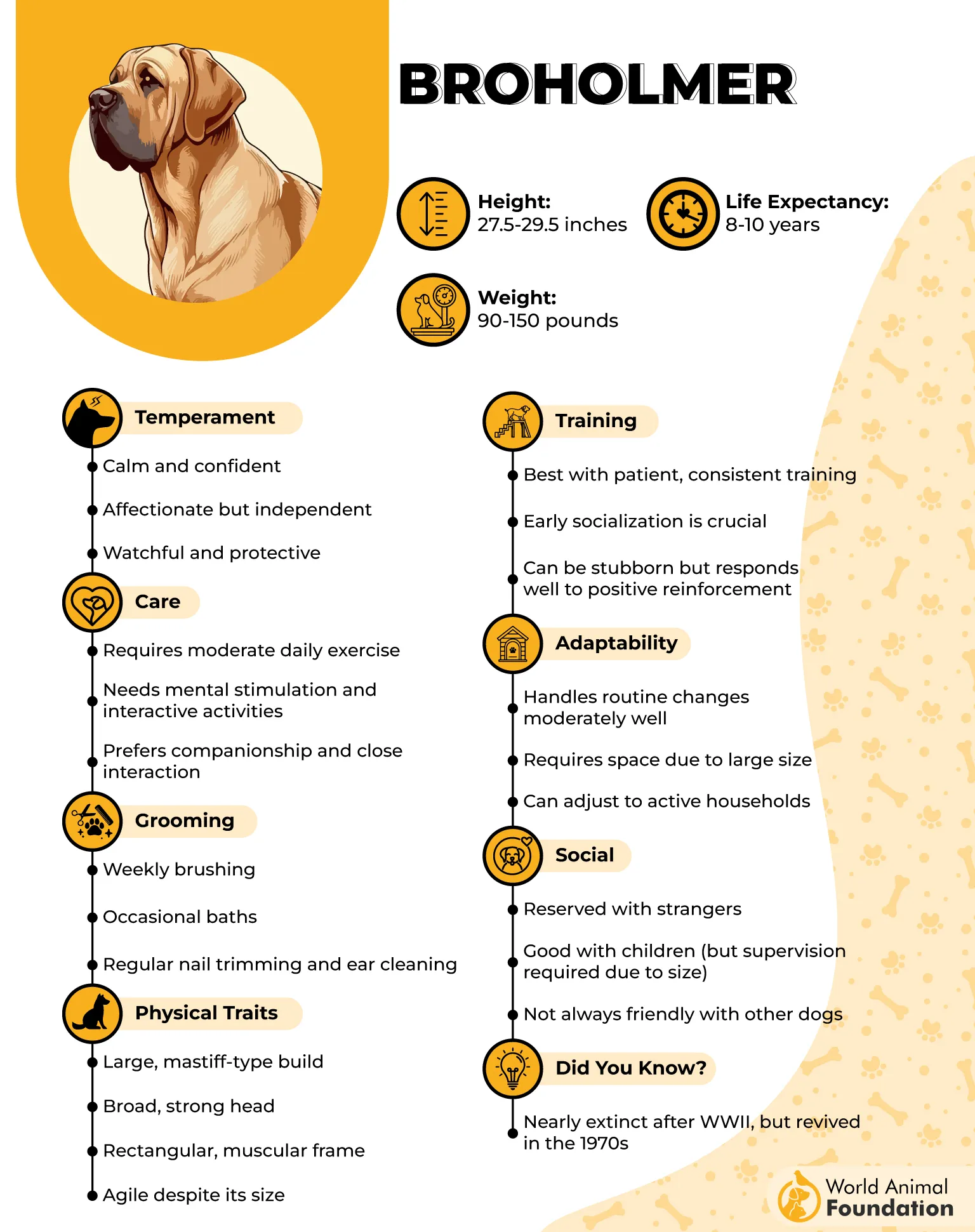
The Broholmer was originally bred to guard estates and large properties. Its protective instincts remain strong today. These dogs are highly alert, highly intelligent, and observant, but they are not constantly looking for conflict.
Their short coat makes grooming refreshingly simple.
Weekly brushing.
Done.
Compared to breeds that need more grooming, the Broholmer is remarkably easy to maintain.
Proper socialization and consistent training are important from an early age.
When properly trained, these muscular dogs become loving family pets with excellent protective abilities.
Calm, confident, and reliable.
Three qualities every great guard dog should have.
7. Rafeiro do Alentejo
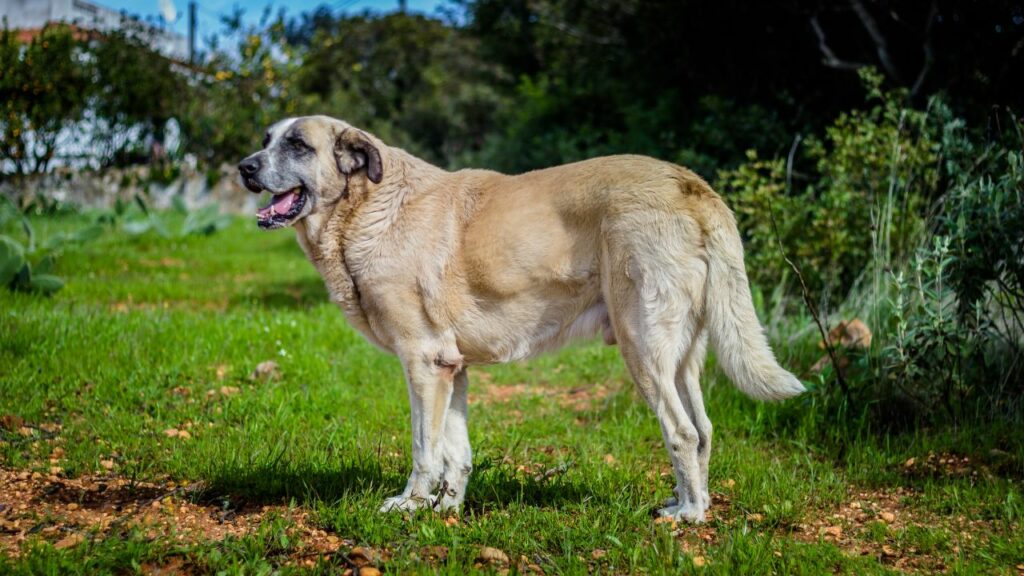
The Rafeiro do Alentejo sounds like a breed that should come with dramatic movie music.
It deserves it.
This massive Portuguese guard dog was developed to protect livestock and property across vast rural landscapes.
That job required intelligence, patience, and a healthy amount of suspicion.
The Rafeiro do Alentejo is a guarding breed that seems to notice everything.
Even things you missed.
These dogs are highly trainable and naturally protective of loved ones. They form strong bonds with their families and become extremely loyal companions. Their coat needs moderate maintenance and regular brushing, but nothing excessive.
They enjoy daily exercise, long walks, and enough mental stimulation to prevent behavioral issues. Plus, they are not for first-time dog owners.
After proper training, they become fierce protectors and dependable guardians.
The kind of dog that would rather prevent problems than create them.
Which is exactly what you want in your right breed.
Conclusion
The best guard dogs are not always the loudest, or the fastest, or the most intimidating.
Sometimes the best guard dog is simply the one that fits your lifestyle.
These low-maintenance guard dog breeds for easy living offer a perfect balance between protection and companionship.
Of course, no dog becomes a properly trained protection dog by accident. Proper training, positive reinforcement, proper socialization, and regular exercise are important.
Even naturally protective dogs need guidance. Many dog breeds already come equipped with many of the traits people are looking for.
Protective instincts, loyalty, confidence, a strong attachment to family, and enough common sense not to turn every squirrel into a national security threat.
Choose the right dog that is non-aggressive. Provide proper care. Build trust.
And enjoy life with a fiercely loyal protector that also happens to be an amazing companion.
That is a pretty great deal if you ask me.
