




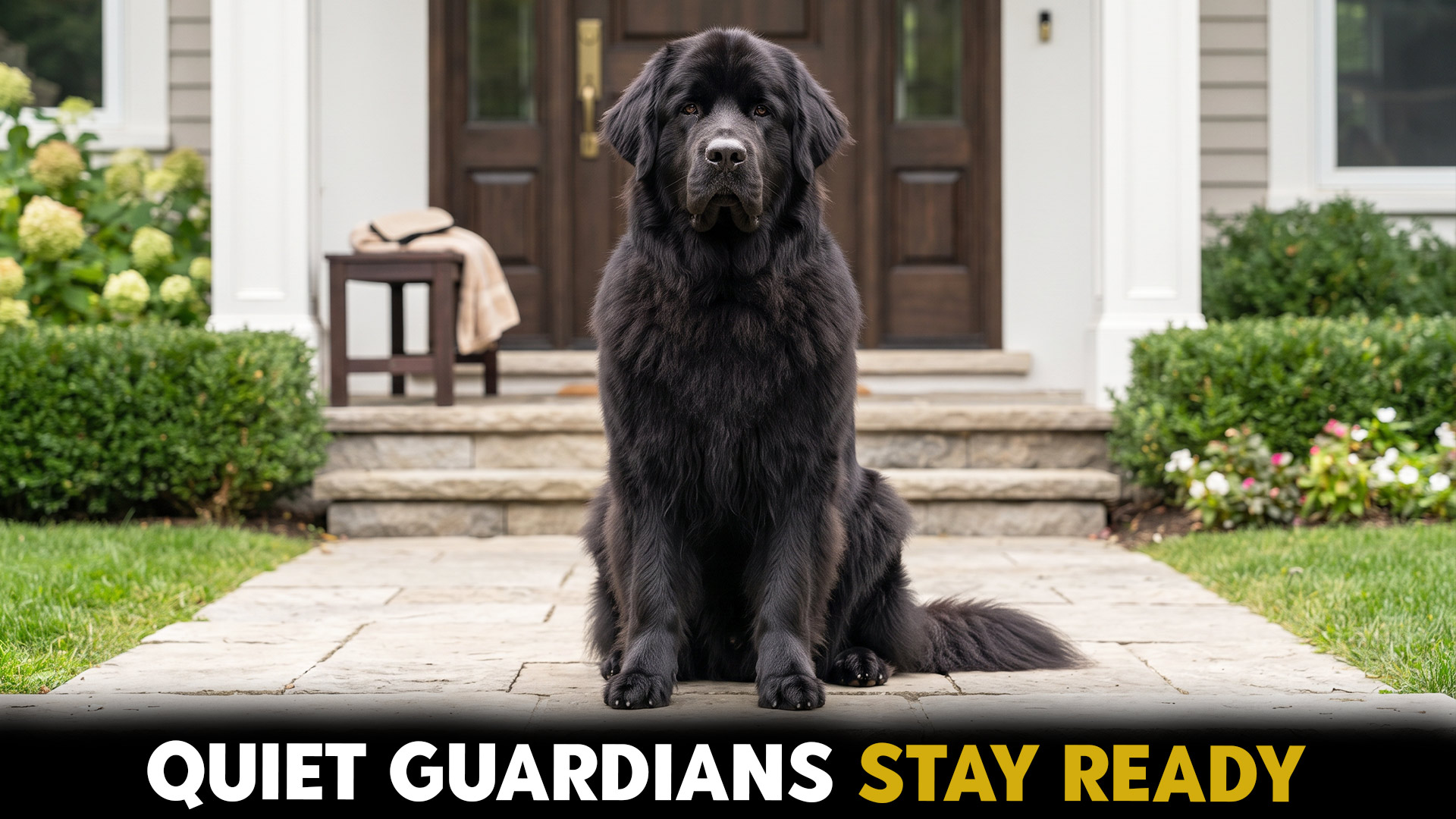
A good guard dog doesn’t need to spend all day playing neighborhood security alarm. Some dogs are naturally watchful, steady, and imposing without turning every little noise into a five-alarm situation, which makes them a great fit for families who want extra peace of mind without living with a constantly on-edge dog.
The seven breeds on this list range from short-coated giants with simple grooming needs to powerful guardians whose calm presence alone speaks volumes. Breeds like the Bullmastiff and Mastiff are known for their protective instincts and relatively low-maintenance coats, while the Broholmer is a lesser-known option with a calm, watchful temperament.
Just keep in mind that “low-maintenance” never means “no work.” Even gentle giants need training, socialization, exercise, and responsible, ongoing care.
Low‑Maintenance Guard Dog Breeds for Calm Home Security
1. Bullmastiff
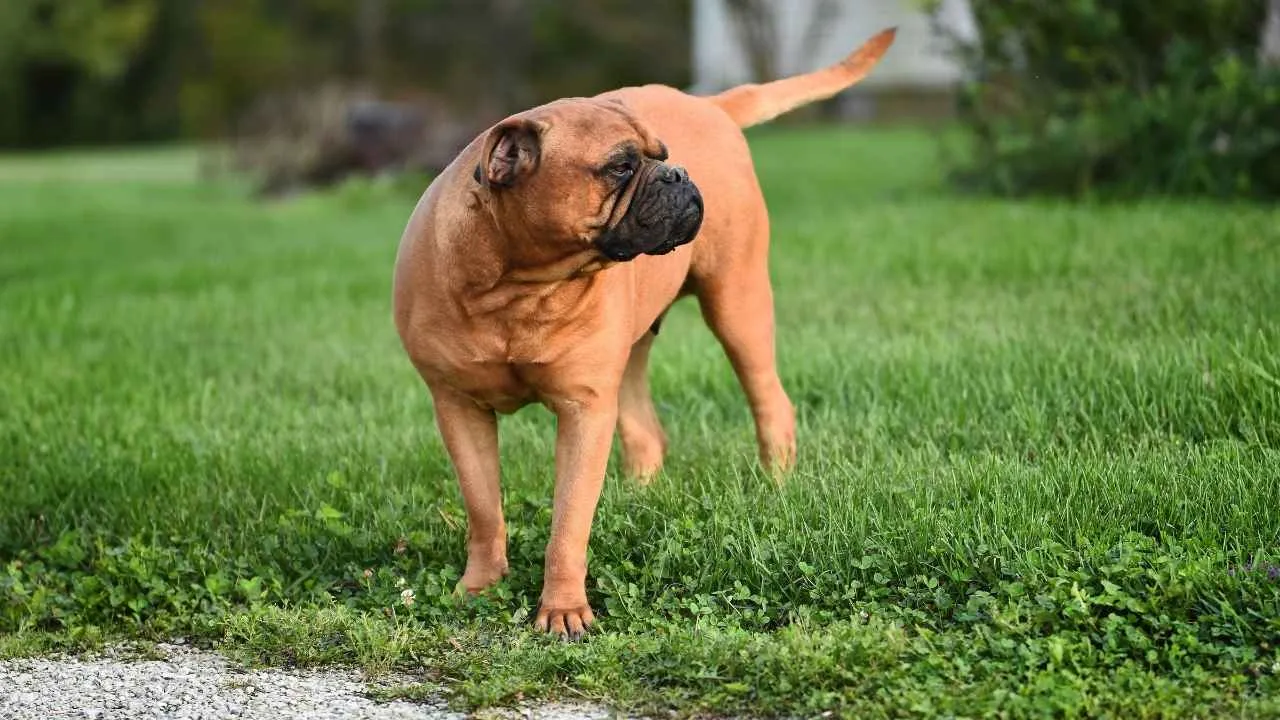
In the 19th century, poachers would often turn violent to escape gamekeepers, so the Mastiff and Bulldog were crossed to create a breed with the power and bravery needed to work alongside them. That’s part of why it’s sometimes called the “Gamekeeper’s Night Dog,” according to Orvis.
The Bullmastiff has a short, smooth coat that lies close to the skin and offers some protection from harsh weather. It comes in three colors, red, fawn, or brindle, and grooming needs are fairly minimal: weekly brushing, monthly baths, and regular ear cleaning to prevent wax buildup.
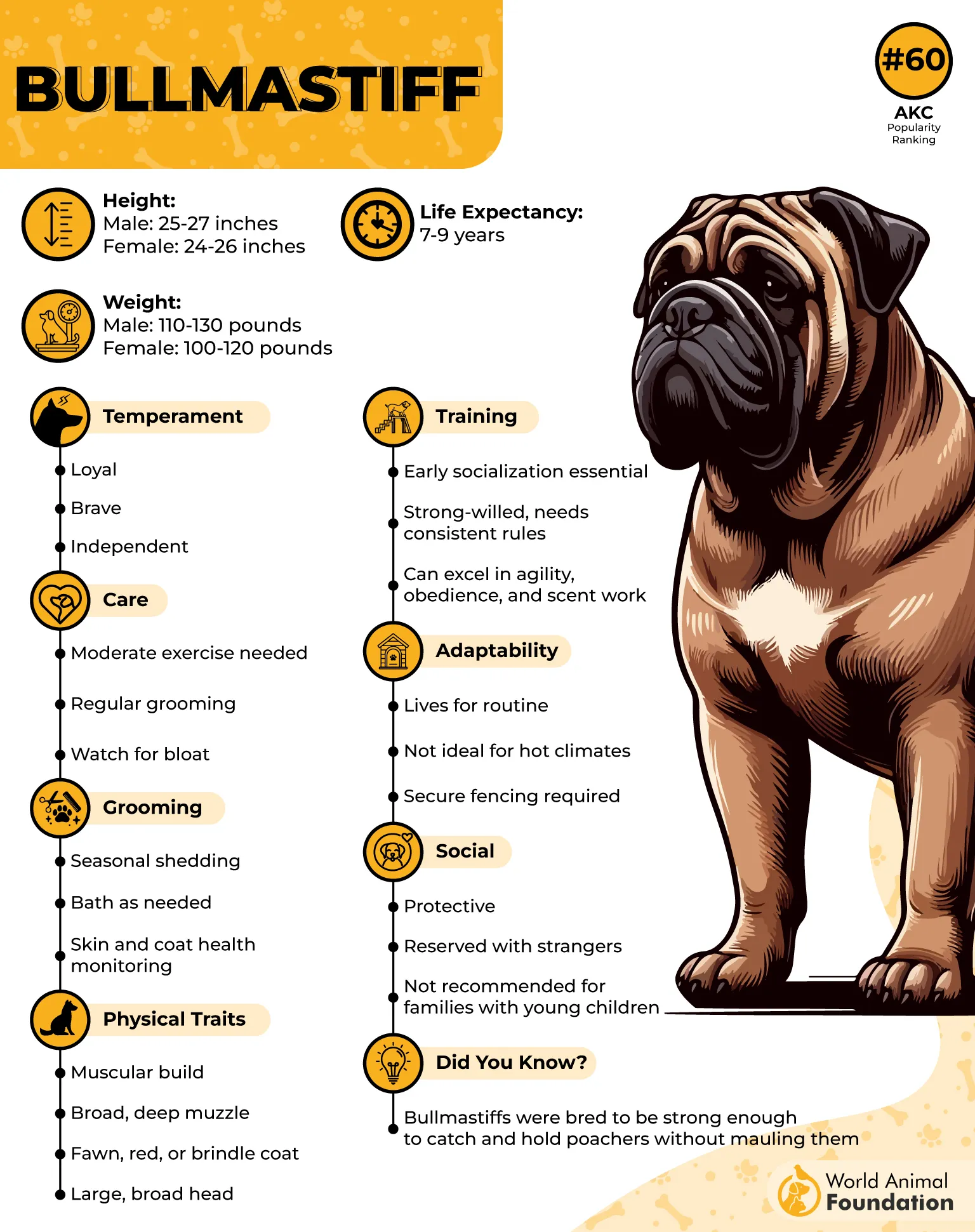
Regular exercise and mental stimulation matter too; think mid-length daily walks, running, hiking, and some indoor playtime.
Generally gentle in temperament, the Bullmastiff can show a stubborn streak if provoked. Its strong prey drive means it may not be safe around small animals, and it tends to be wary of strangers. Naturally attentive to its territory, it often follows quietly if it notices anything out of the ordinary.
2. Great Dane
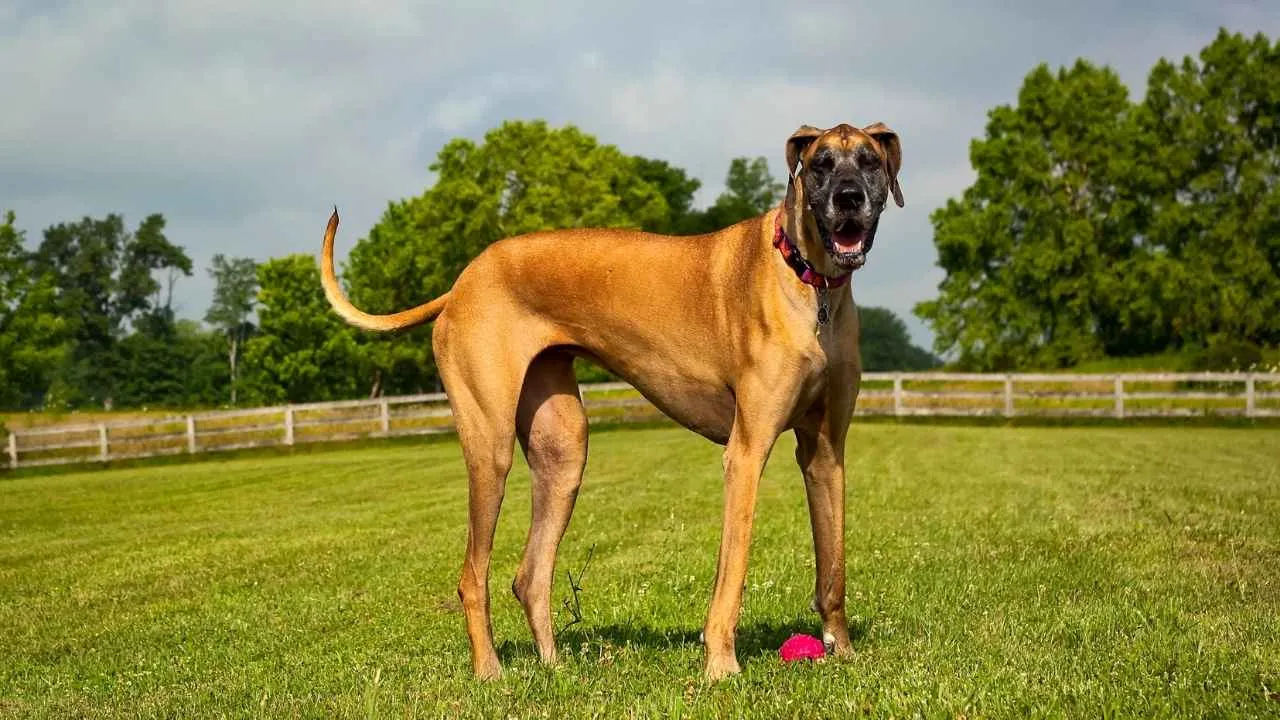
Originally bred in Germany, this breed is thought to have descended from the English Mastiff and Irish Wolfhound, initially developed as a hunting dog. Over time, its hunting role faded, and today it’s much better known as a watchdog and family guardian.
It has a short, thick coat that needs fairly basic grooming: weekly brushing (daily during shedding season in spring and summer), baths once or twice a month, and routine ear cleaning and nail trims every couple of weeks.
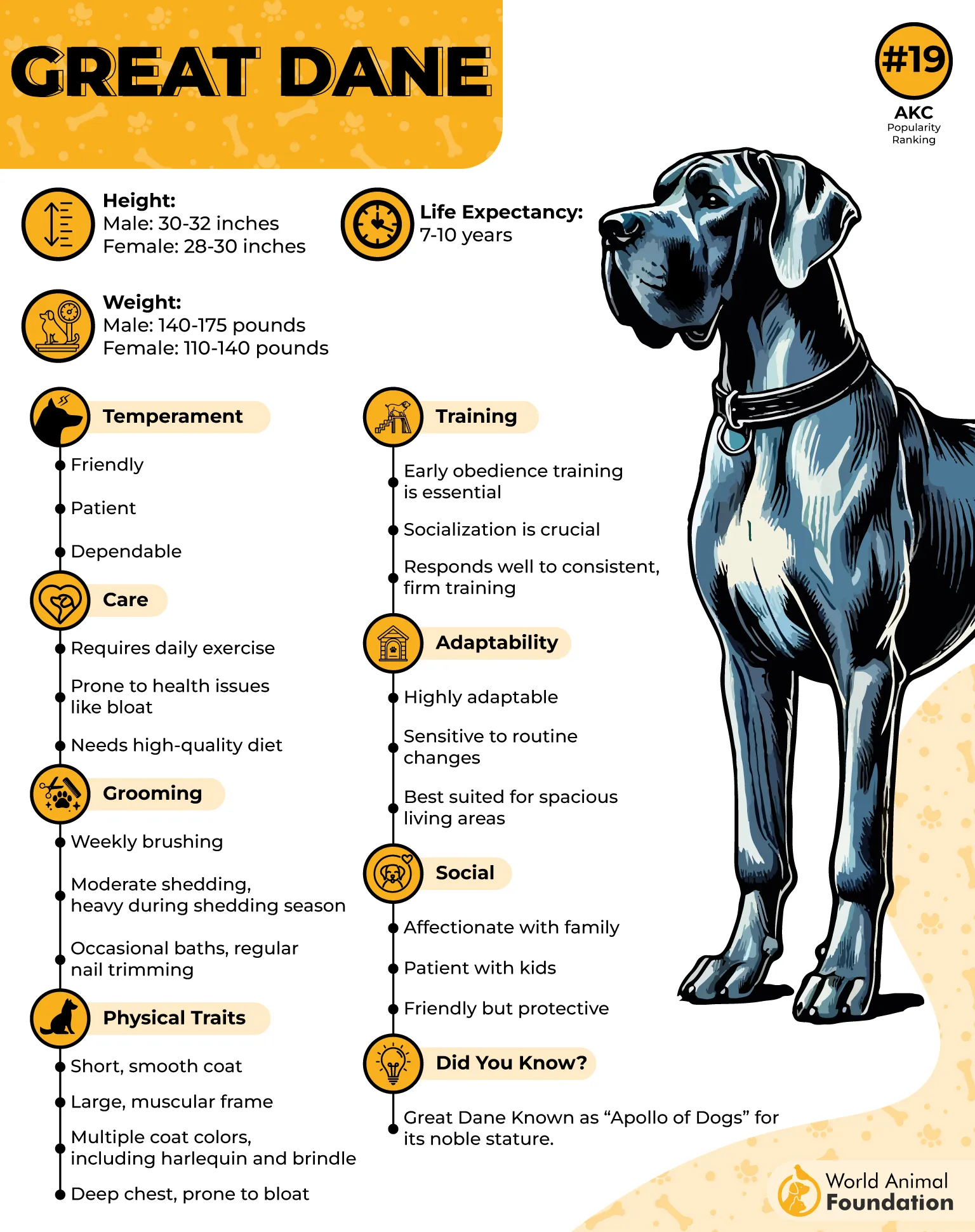
This breed also excels at dog sports and needs 1–2 hours of daily exercise, though puppies should avoid intense exercise until they’re around 18 months old.
An excellent guard dog, it forms deep bonds with its family. Its powerful bark is quick to alert owners to potential threats or unfamiliar visitors, and it relies on sharp sight and hearing to detect danger without turning aggressive.
3. Mastiff
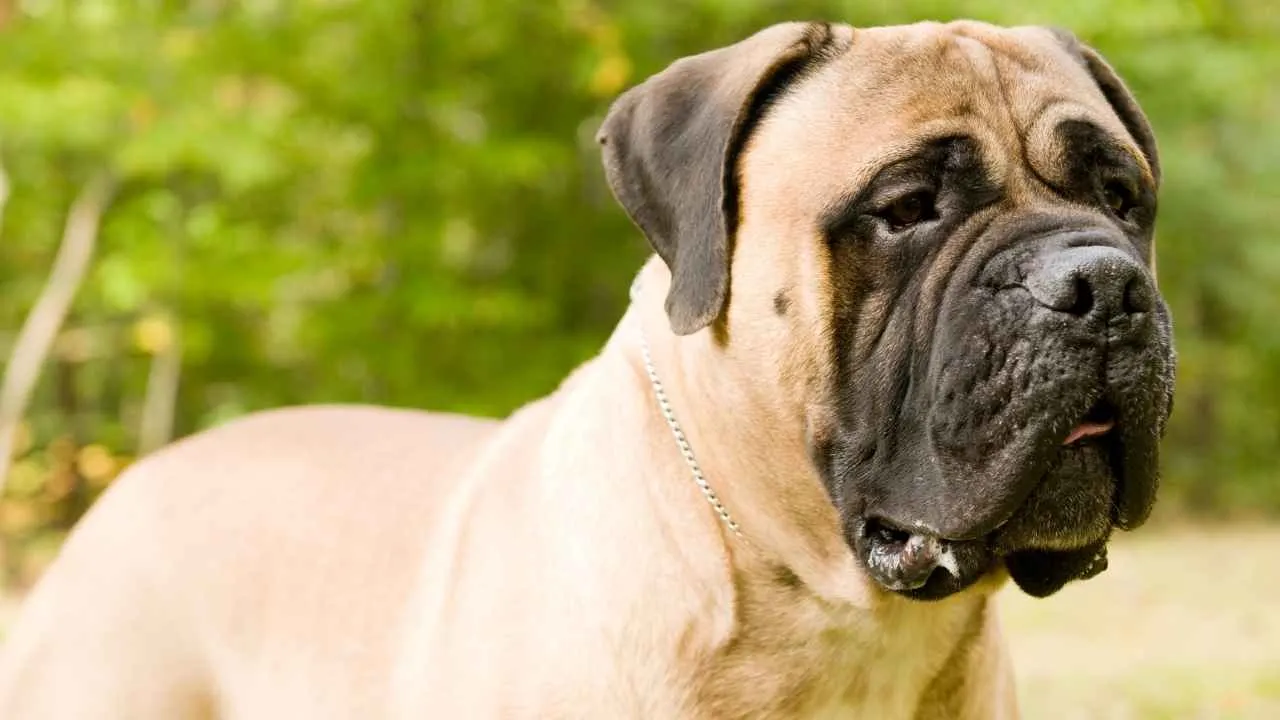
This large breed’s history stretches back roughly 3,000 years across Europe and Asia. Originally used as a guard dog, it also served in hunting, warfare, and unfortunately, blood sports like lion-baiting, bull-baiting, and bear-baiting.
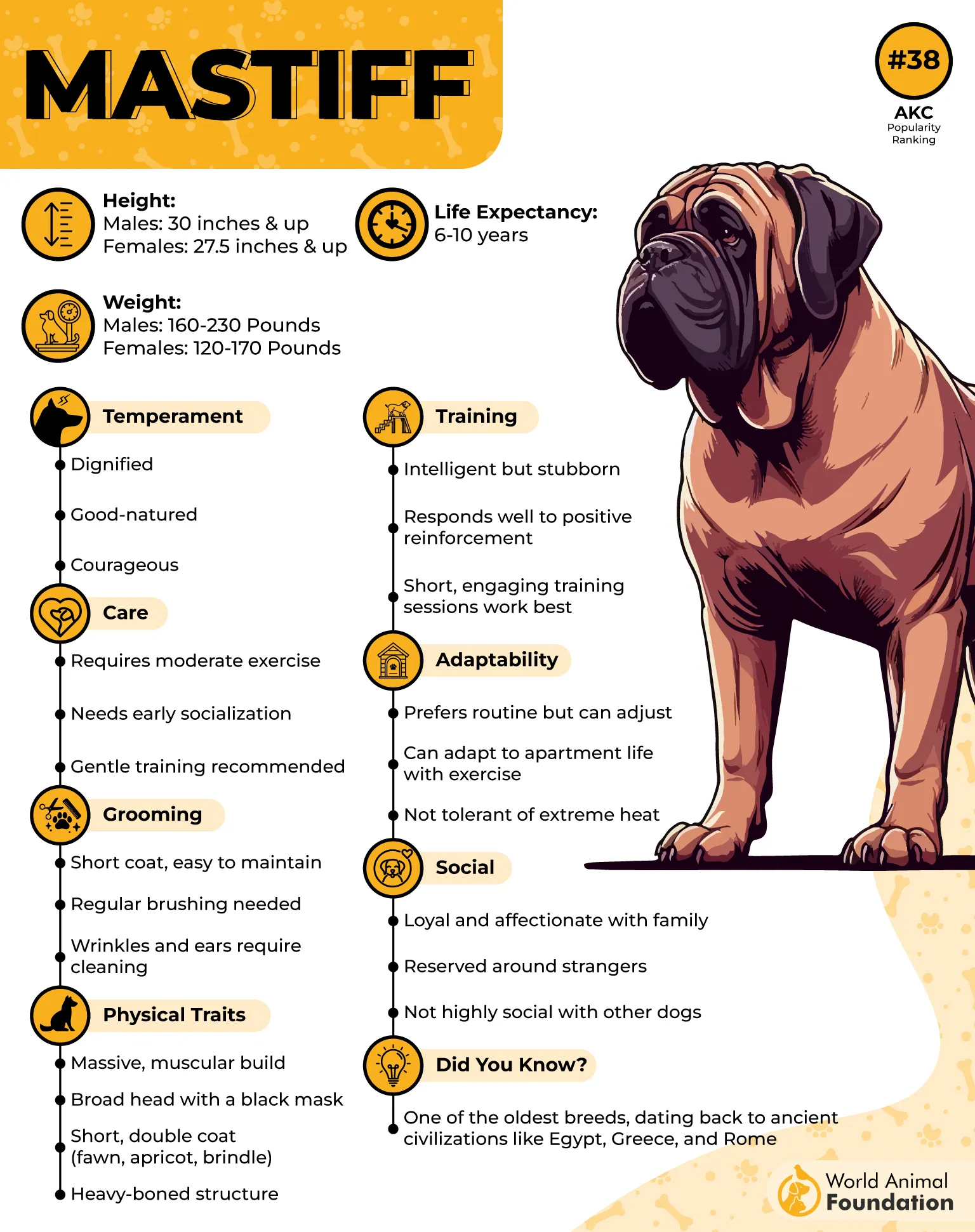
This protective breed has a short, coarse topcoat over a dense undercoat, typically in apricot, brindle, or fawn. They are calm, loving dogs that are gentle with their family and do not bark without a good reason. Their large size can scare away strangers, but early training is important so they are easier to handle.
While generally friendly and easygoing, it can be standoffish and wary around strangers, so encouraging guarding or threatening behavior isn’t recommended. It may also show some aggression toward other dogs of the same sex.
4. Newfoundland
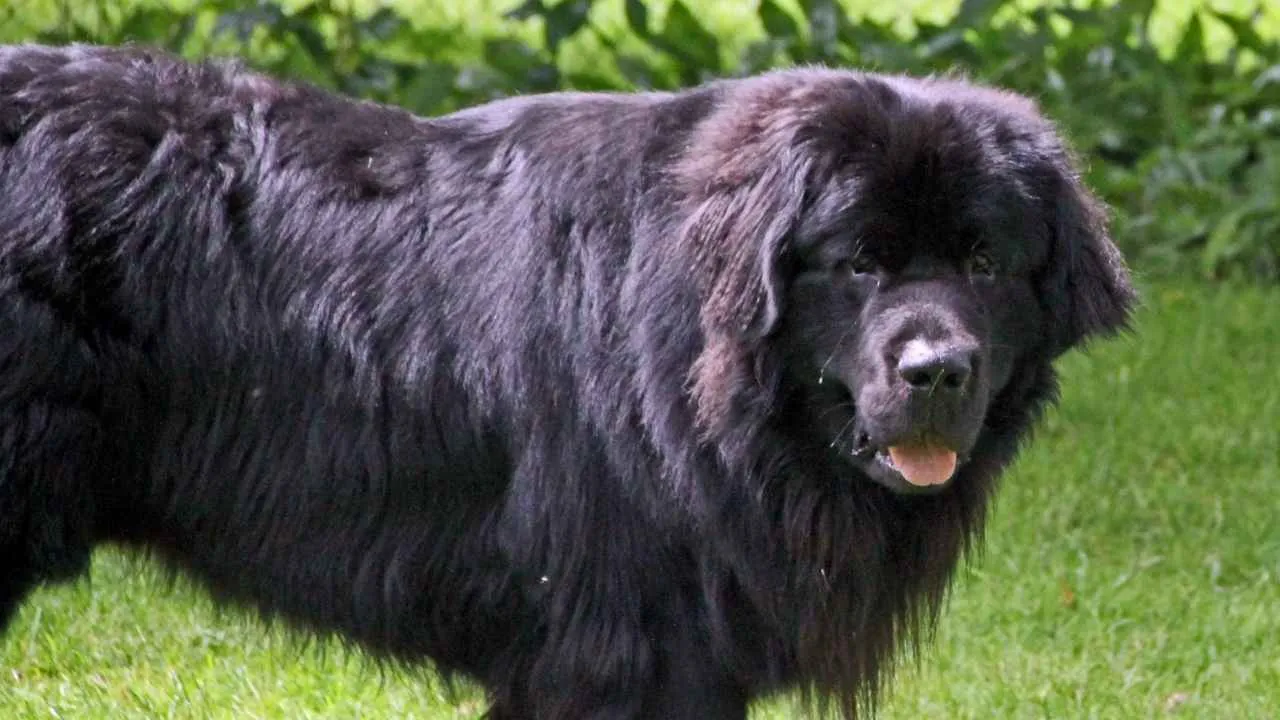
This large working breed was developed in Canada to work alongside fishermen in Newfoundland. It excels at water rescue thanks to its thick double coat, strong swimming ability, muscular build, and webbed paws, with enough power to handle rough tides and ocean waves.
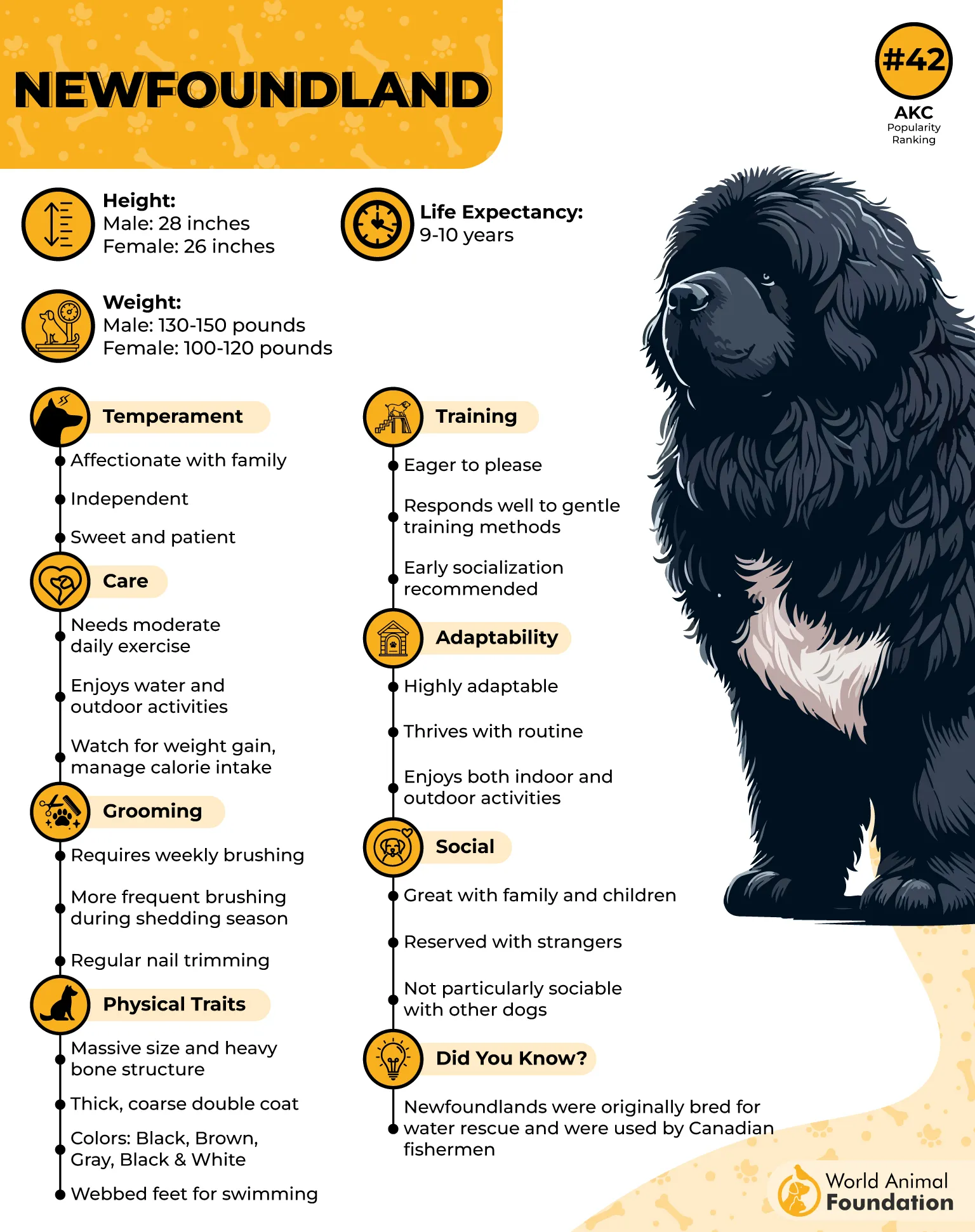
Its oily, thick, waterproof double coat protects it from freezing water and cold winds, though it does drool quite a bit and sheds heavily on a yearly basis, so regular upkeep is important. Weekly brushing helps prevent matting, clear out dead hair, and spread natural oils evenly through the coat.

With a bull-like neck, broad snout, stout legs, and a sturdy bone structure, this breed can look genuinely intimidating to strangers. At home, though, its forgiving, patient nature makes it a wonderful “nanny dog” around kids.
5. Saint Bernard
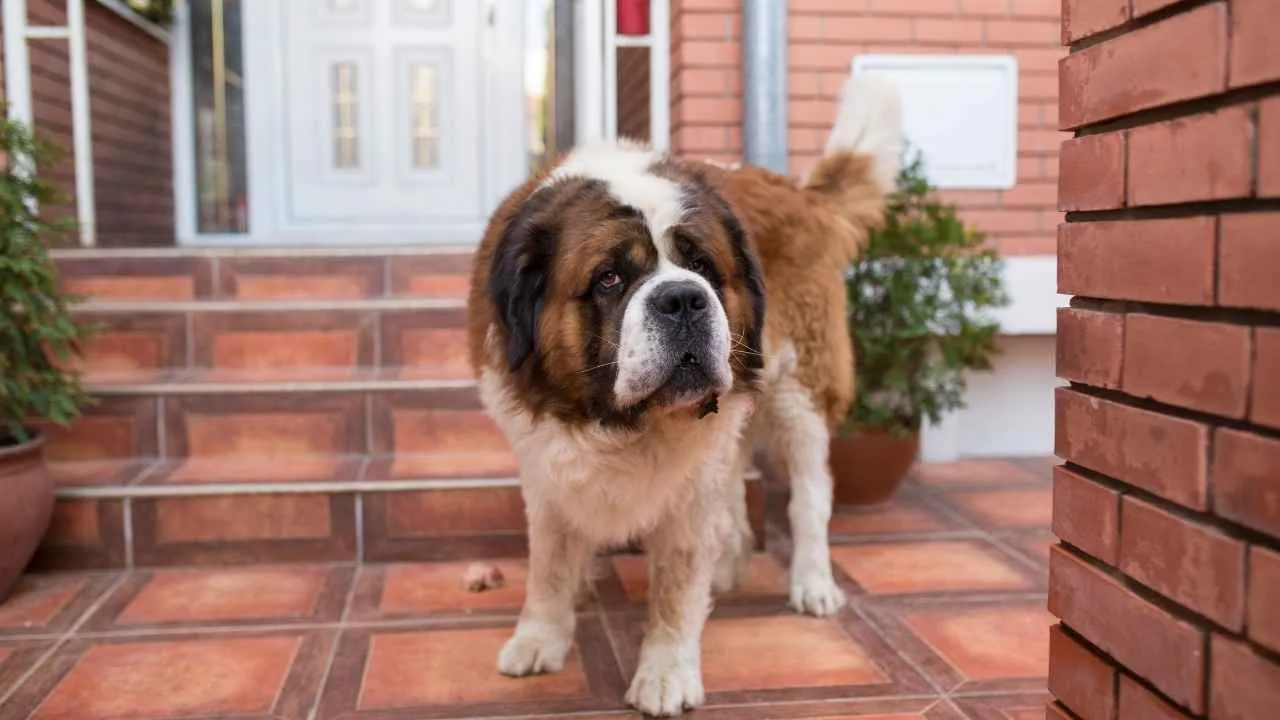
This breed’s history traces back to the 11th century, when Archdeacon Bernard de Menthon arrived at the Great St. Bernard Pass and helped establish the Great St. Bernard Hospice for travelers.
By the 17th century, the hospice had begun keeping short-haired, gentle dogs to protect the grounds and the people there, which eventually gave rise to the Saint Bernard we know today, according to the UKC.
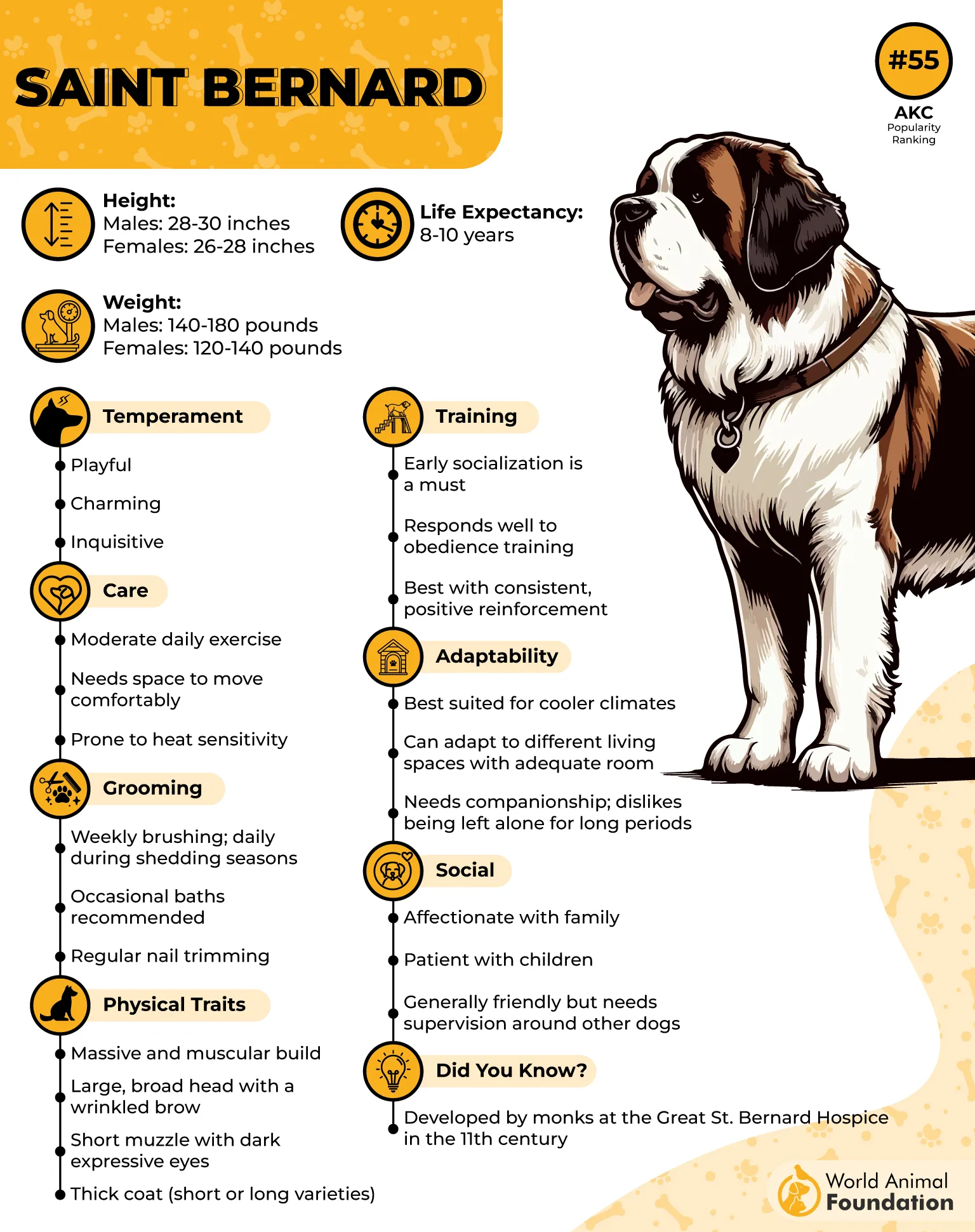
Despite its massive size, the Saint Bernard needs about an hour of daily exercise, think off-leash training, brisk walks, cart pulling, sledding, or swimming. Both longhaired and shorthaired varieties need regular grooming too, around 2–3 brushing sessions a week using a rubber brush or grooming mitt.
This gentle giant has a natural instinct to look out for children and stay alert to its surroundings, always keeping an eye on the safety of its people. Rarely aggressive, it typically only barks to alert its owner to a potential threat.
6. Great Pyrenees
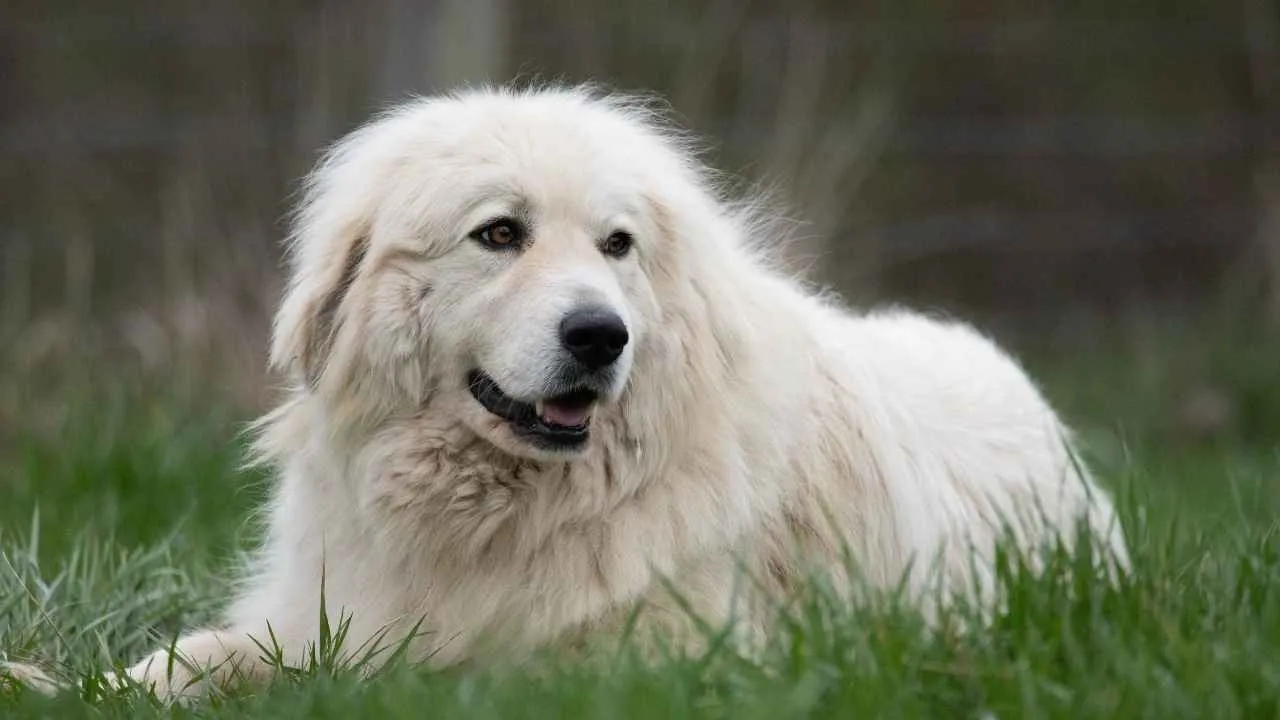
Originating in the Pyrenees Mountains between France and Spain, the Great Pyrenees traces its roots all the way back to the Bronze Age. Originally bred to herd and guard sheep and livestock, the breed eventually found its way into French palaces, where it served as a trusted guard dog.
The AKC states that this large breed has a bright white double coat, a long, flat outer layer over a dense, woolly undercoat, with a thick ruff around the neck and shoulders.
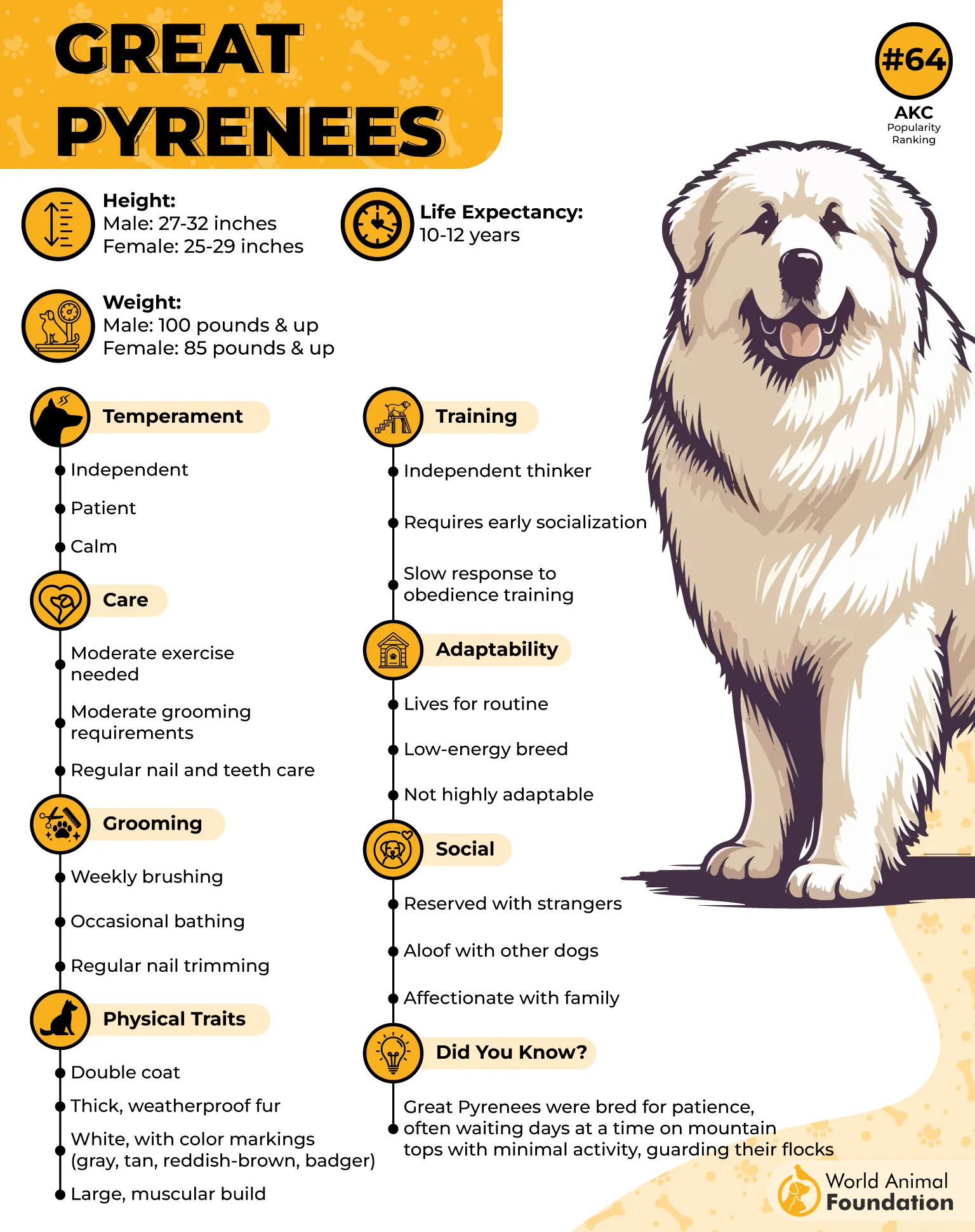
It can also show reddish-brown, badger, tan, or gray markings. The coat is naturally dirt-resistant and fairly tangle-free, needing brushing about 3–4 times a week with a slicker or rake brush, plus a monthly bath.
Gentle by nature, the Great Pyrenees still carries its guard-dog instincts, staying alert to its surroundings, barking to signal a potential threat, and sometimes even physically placing itself between its owner and an intruder to protect the family.
7. Broholmer
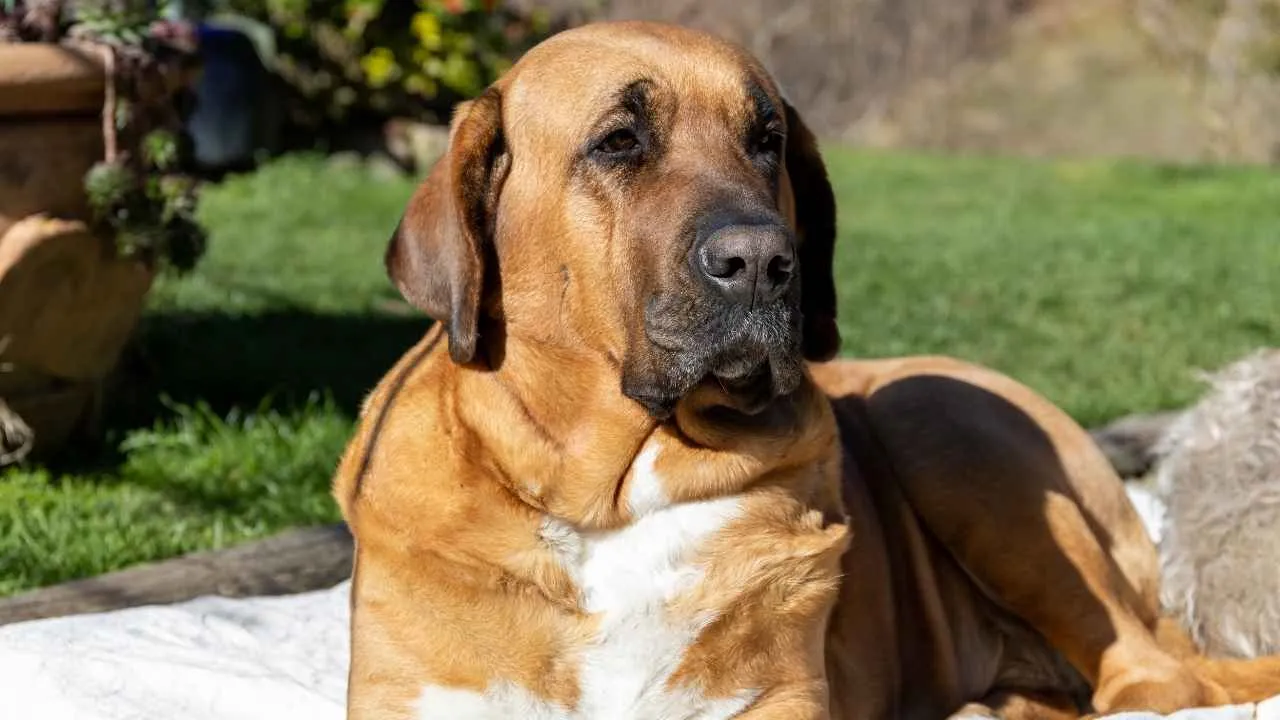
This large Molosser breed was developed in Denmark by crossing local German dogs with the English Mastiff. Its numbers declined sharply after World War II. Originally bred as a protection dog for wealthy estates, it’s now much better known as a loving family dog.
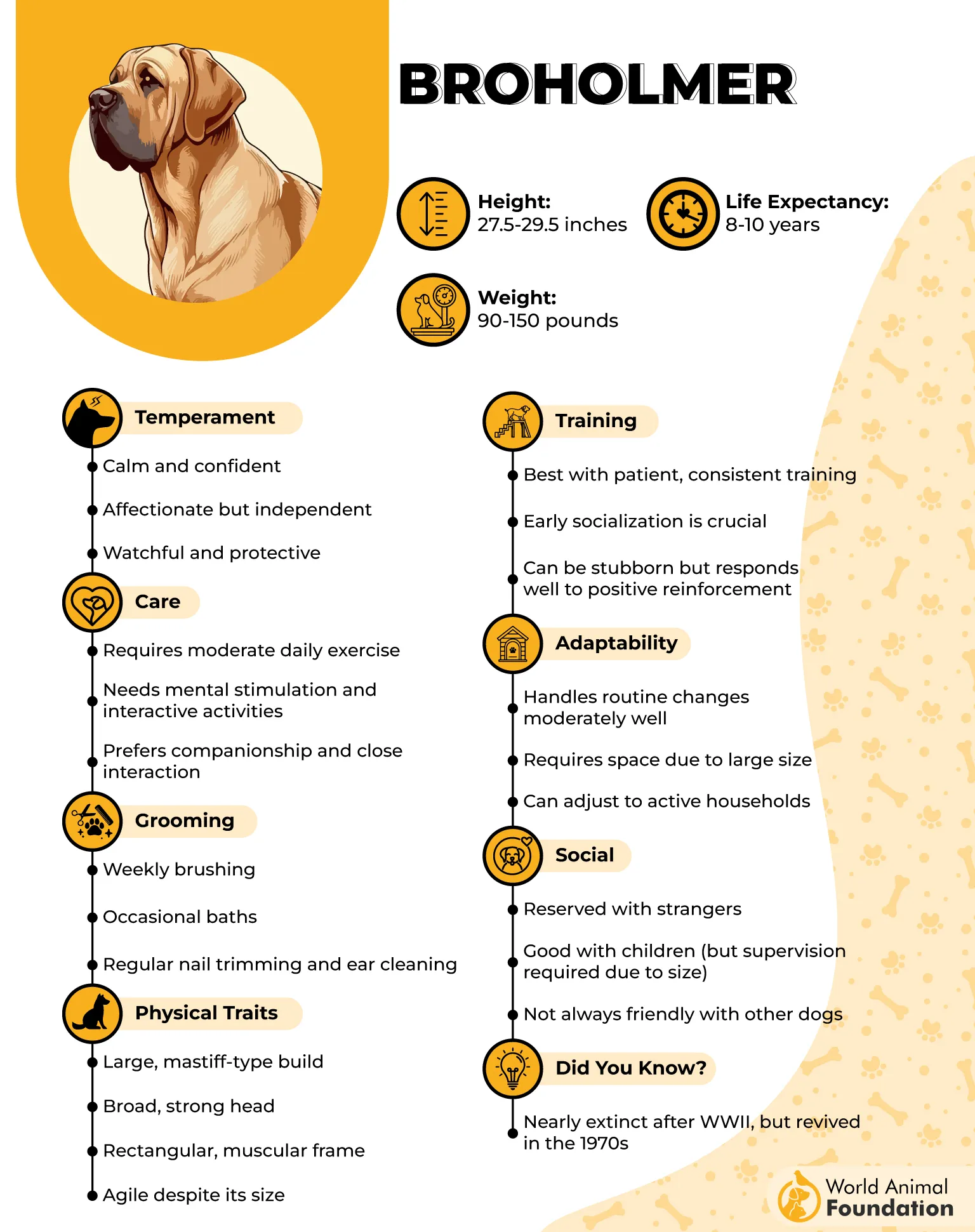
High-spirited by nature, this breed thrives on outdoor fun, catching frisbees, playing hide-and-seek, fetching balls, and tug-of-war. Grooming needs are fairly light: occasional baths, weekly brushing, and regular dental cleaning. It can be prone to weight gain, so a high-quality diet is important for keeping it healthy.
Wary of strangers but affectionate with family, this breed also has an independent streak that can tip into stubbornness, so early socialization and proper training really aren’t optional.
Conclusion
Choosing a low-maintenance guard dog is really about finding the right balance. You want a dog that can notice something unusual, stay close to its family, and provide a reassuring presence without making everyday life feel like a military operation. The bullmastiff, great dane, mastiff, newfoundland, saint bernard, great pyrenees, and broholmer each bring a different personality to that role. Some are especially relaxed indoors, while others are more naturally territorial or independent.
None should be chosen simply because they look intimidating. Their size, exercise needs, grooming, training, requirements, and temperament all matter. A well-socialised dog is far more enjoyable to live with than one encouraged to be suspicious of everyone. In the end, the best home guardian is not the toughest dog on the block. It is the one that fits your household and can protect it responsibly.
