




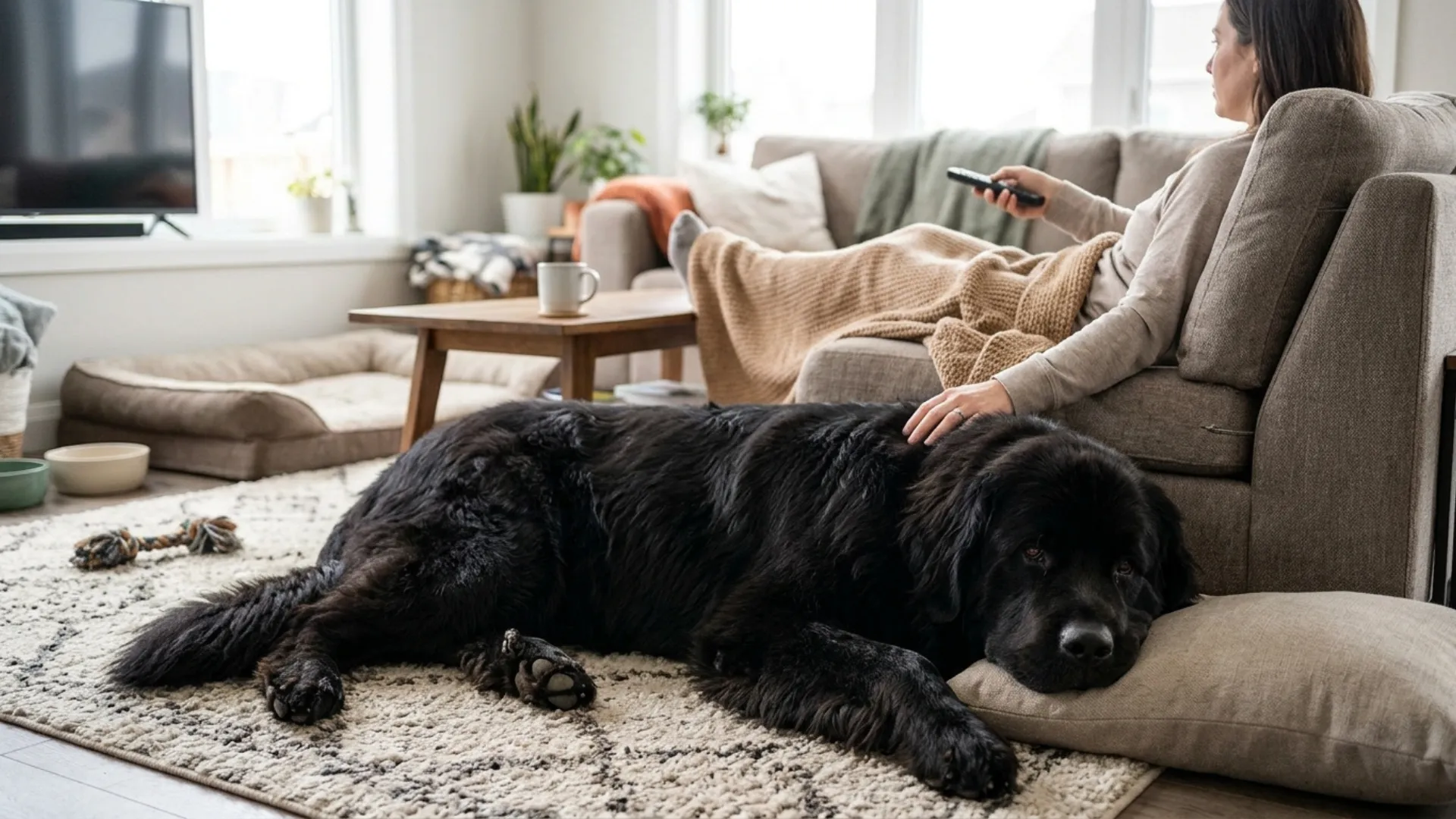
Not every dog owner has hours to spend on grooming, training, and endless games of fetch. Sometimes, you just want a loving companion who enjoys a relaxed lifestyle and doesn’t turn your already busy day into an even bigger responsibility.
If you’re someone who loves dogs but prefers a slower pace, finding a low-maintenance breed could make all the difference.
The good news is that some dogs are naturally easier to care for than others. They may have simple grooming needs, moderate exercise requirements, or a calm temperament that makes everyday life a little easier.
We’ve rounded up seven low-maintenance dog breeds that offer plenty of companionship without demanding too much from your day. So, if you’re ready for a furry friend who appreciates the simple things in life, keep reading!
Low‑Maintenance Dog Breeds for the Lazy Pet Lover
1. Great Dane
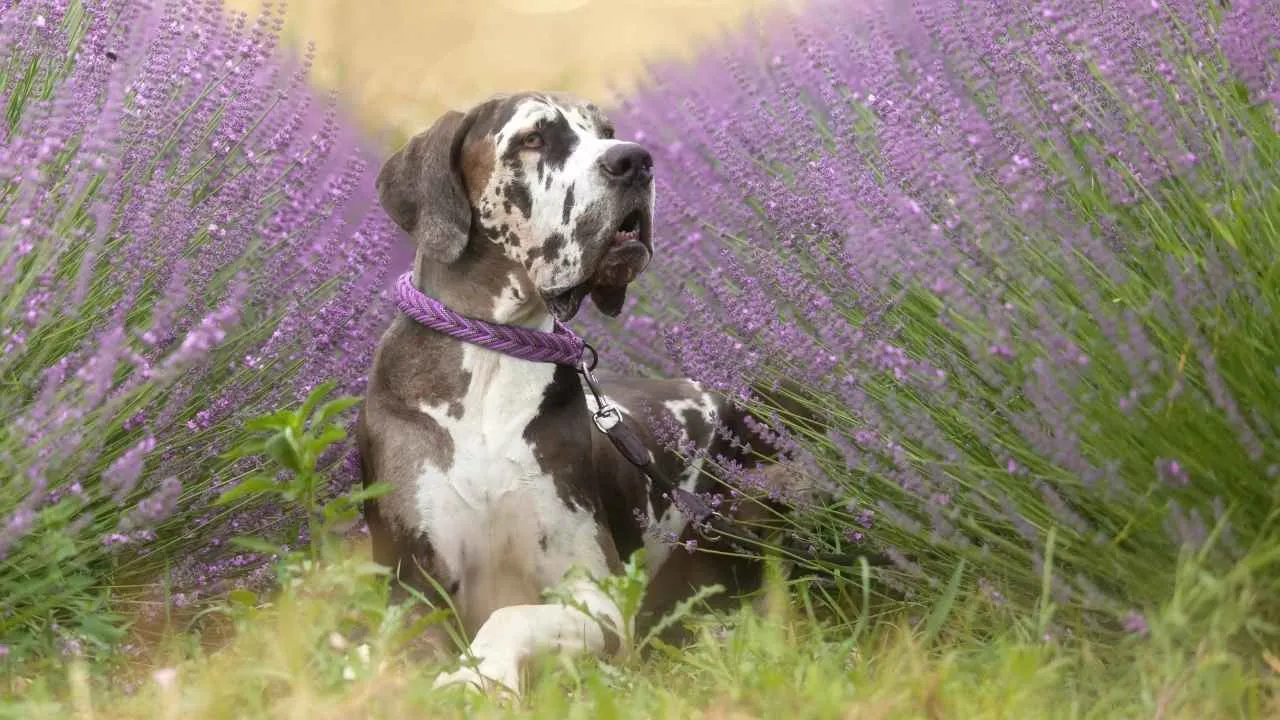
Known as the gentle giants of the dog world, Great Danes have an impressive appearance but a surprisingly sweet personality. Originally bred in Germany during the 1800s to hunt wild boars and guard estates, these dogs are now loved for their affectionate and family-friendly nature.
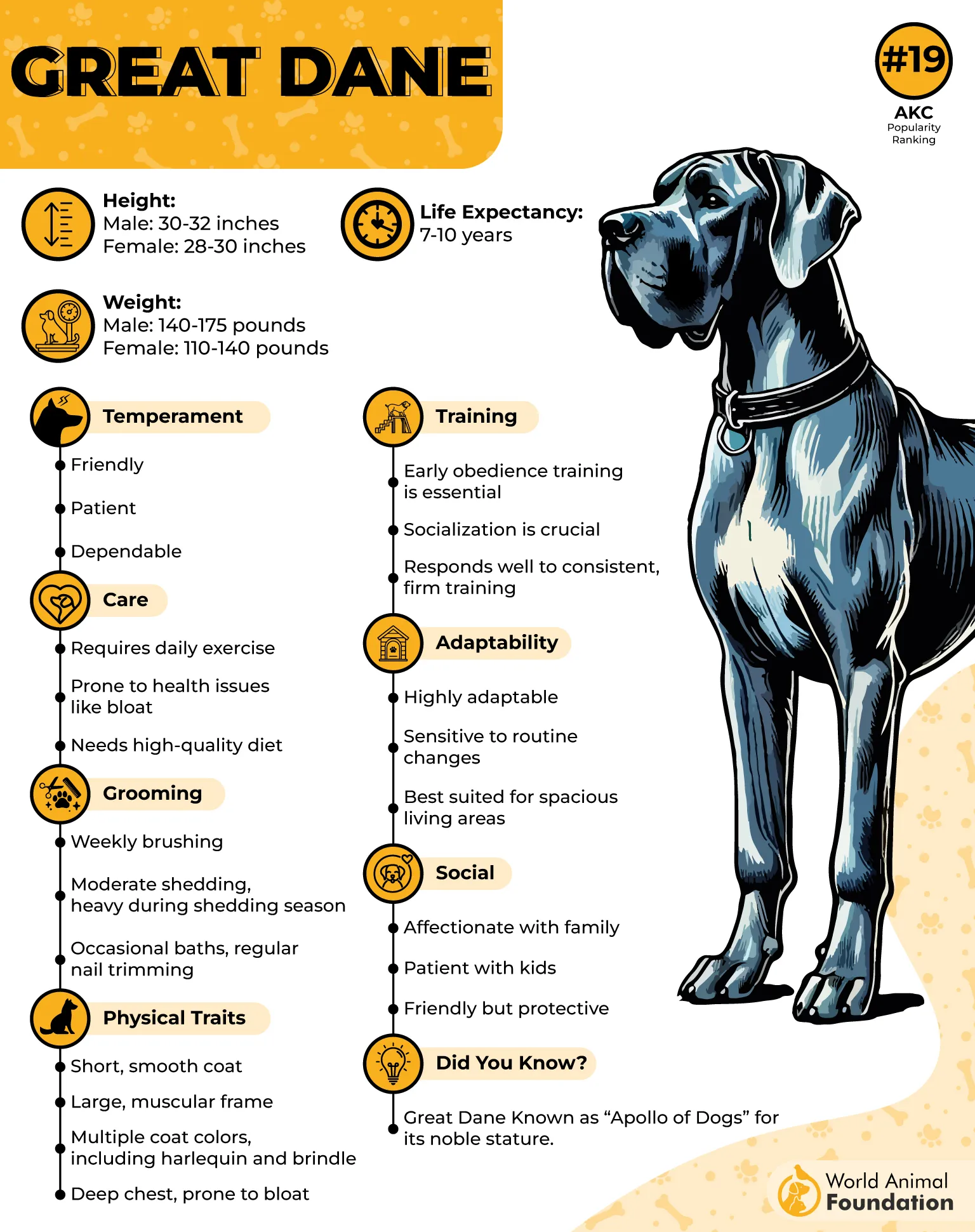
Great Danes enjoy being around their families and love attention. They are people-pleasers and generally easy to train, although some can be stubborn learners. Their protective instincts also make them alert home guardians.
According to Hill’s Pet, they usually get along with children and other pets, especially when raised together. Early socialization and obedience training are important because of their strength and natural confidence.
Care and Grooming Needs:
Great Danes have short coats that need brushing once a week. They shed moderately, so regular brushing helps keep loose hair under control.
Their grooming needs are fairly simple, and occasional baths are enough unless they get particularly dirty or smelly.
They are moderately playful and enjoy family activities, but their large size means they need plenty of space. Their average lifespan is around 7–10 years.
2. Mastiff
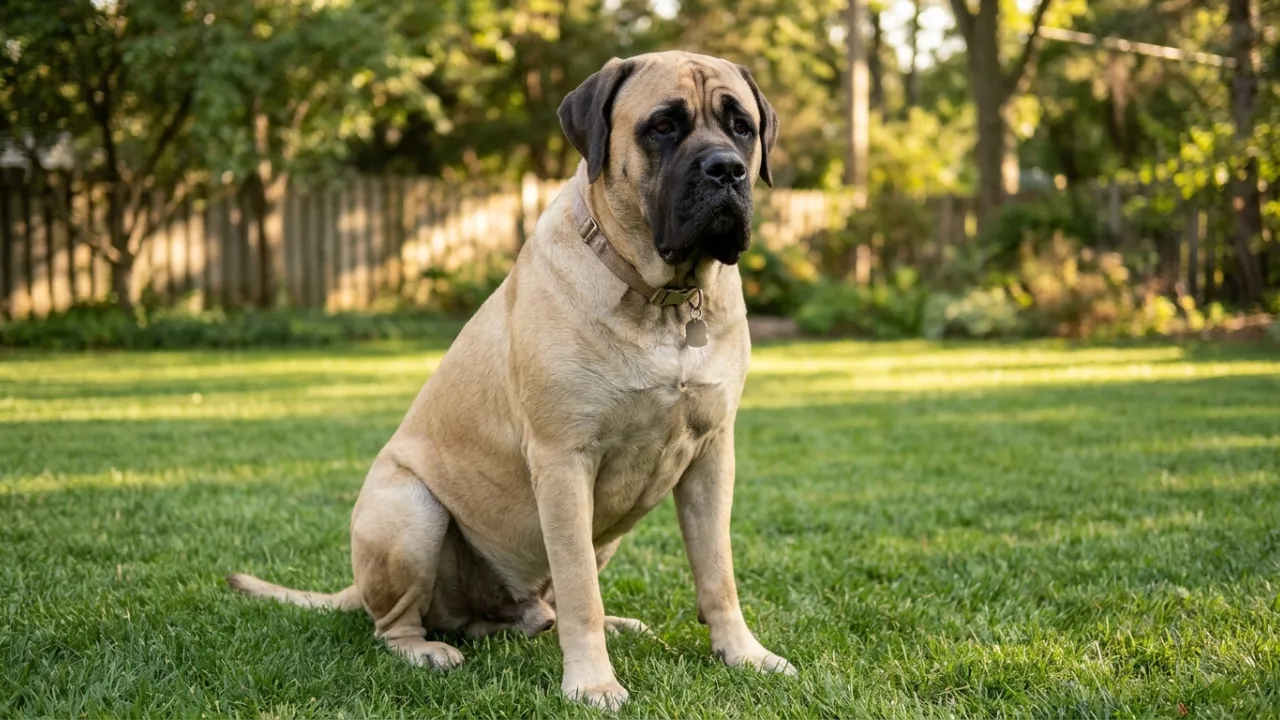
With their massive build and serious expressions, Mastiffs may look intimidating at first, but they are gentle and affectionate companions.
Also known as Old English Mastiffs, these ancient dogs have a history dating back thousands of years. They were originally used for hunting and guarding in Europe. Today, they remain loyal family companions with strong protective instincts.
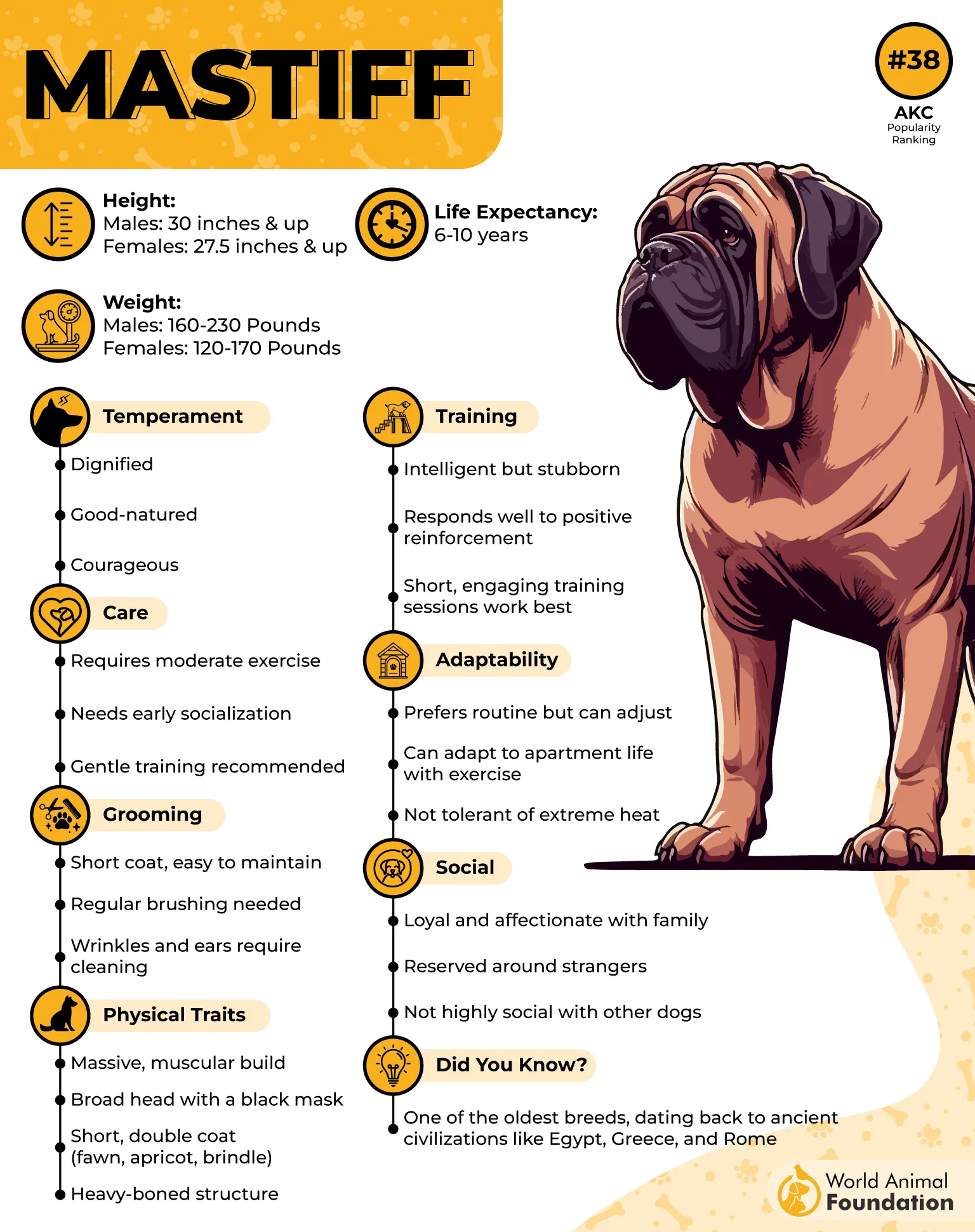
Mastiffs are calm, dignified, and loving toward their families. They enjoy relaxing at home and generally have low energy needs, making them suitable for a laid-back lifestyle.
However, they can be wary of strangers and protective when visitors arrive. They are usually patient with older children but are not recommended for homes with toddlers because of their size.

Care and Grooming Needs:
Mastiffs have short, dense coats that need weekly brushing to manage moderate shedding. Occasional baths are usually enough.
Their biggest grooming challenge is drooling. Keep a towel nearby to clean their faces and wipe drool from furniture and floors.
They don’t need intense daily exercise, but their large size means they benefit from extra space at home. Like many giant breeds, they also have relatively short lifespans.
3. Newfoundland
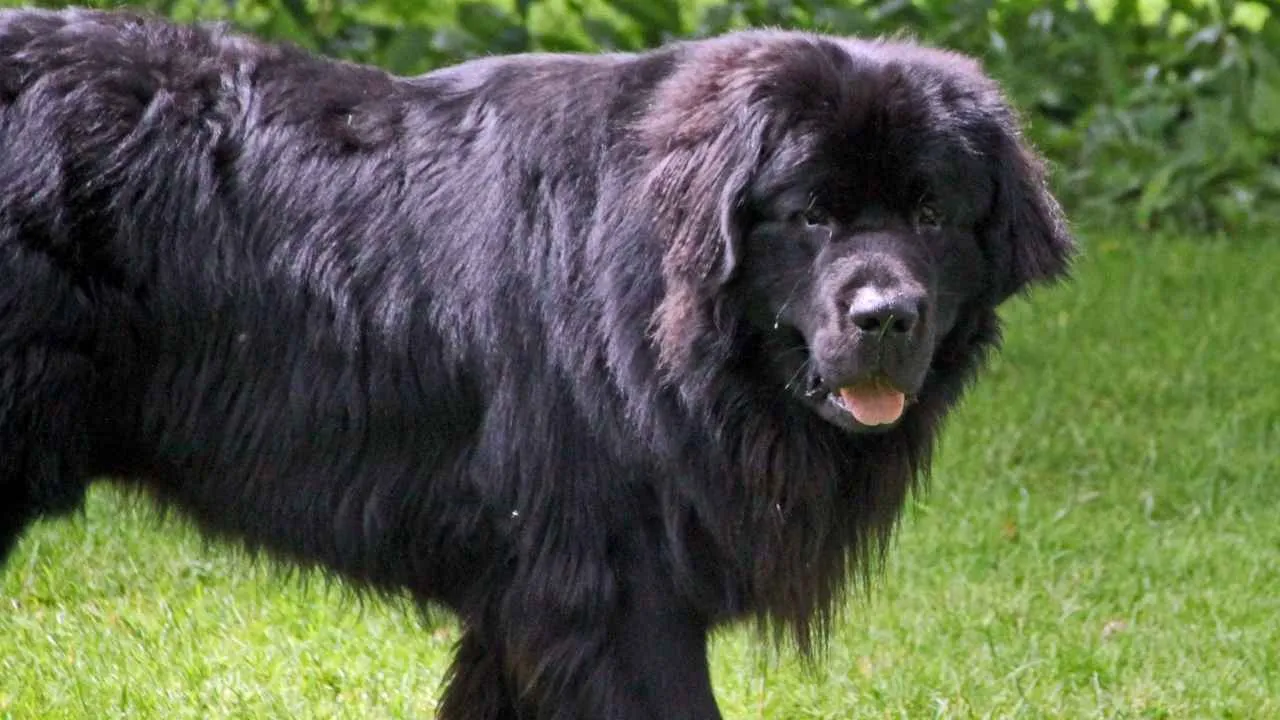
Newfoundlands are large working dogs known for their sweet nature and gentle personalities. Originally bred as working dogs, they are strong swimmers thanks to their webbed feet and water-resistant double coats.
Often called “nanny dogs,” they are especially patient with children and form strong bonds with their families. Omlet says they are rarely aggressive toward strangers and other dogs.
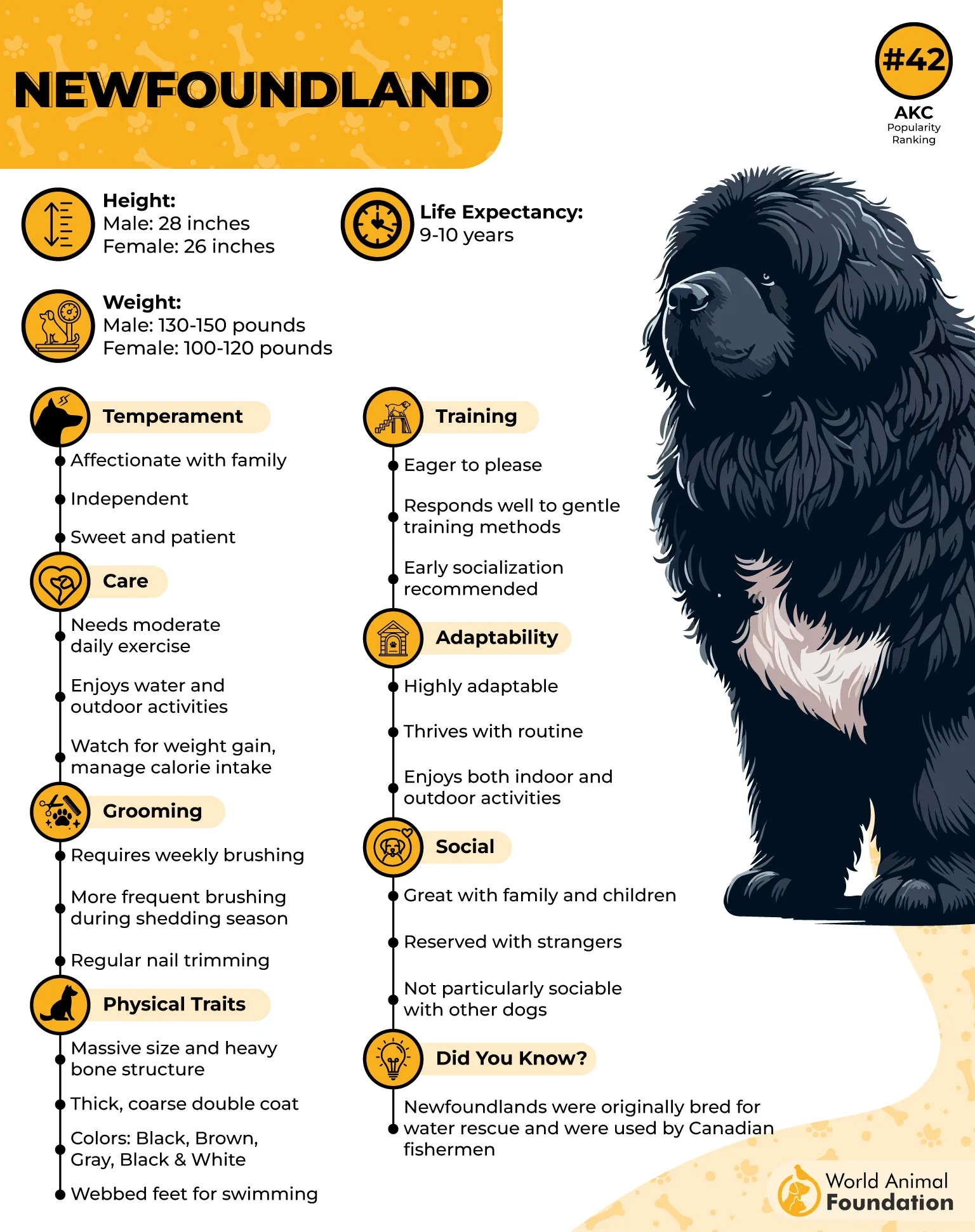
Despite their size, Newfoundlands are calm, affectionate, and sometimes quite lazy. They enjoy relaxing at home but still need daily activity and quality time with their owners. They are intelligent, obedient, and respond well to gentle training.
Early leash training is important because they become very strong as they grow. They also love swimming and may become protective if they sense their families are in danger. Without enough attention, they can develop boredom or separation anxiety.
Care and Grooming Needs:
Newfoundlands have thick double coats that shed throughout the year, with heavier shedding twice a year. Brush them at least once or twice a week to prevent matting and remove loose fur.
Monthly baths are generally enough, but their coats need extra care after swimming. Occasional trimming may also be needed.
They drool quite a bit, so keep a towel nearby for quick cleanups. They need moderate exercise, such as a good daily walk or a swim.
4. Clumber Spaniel
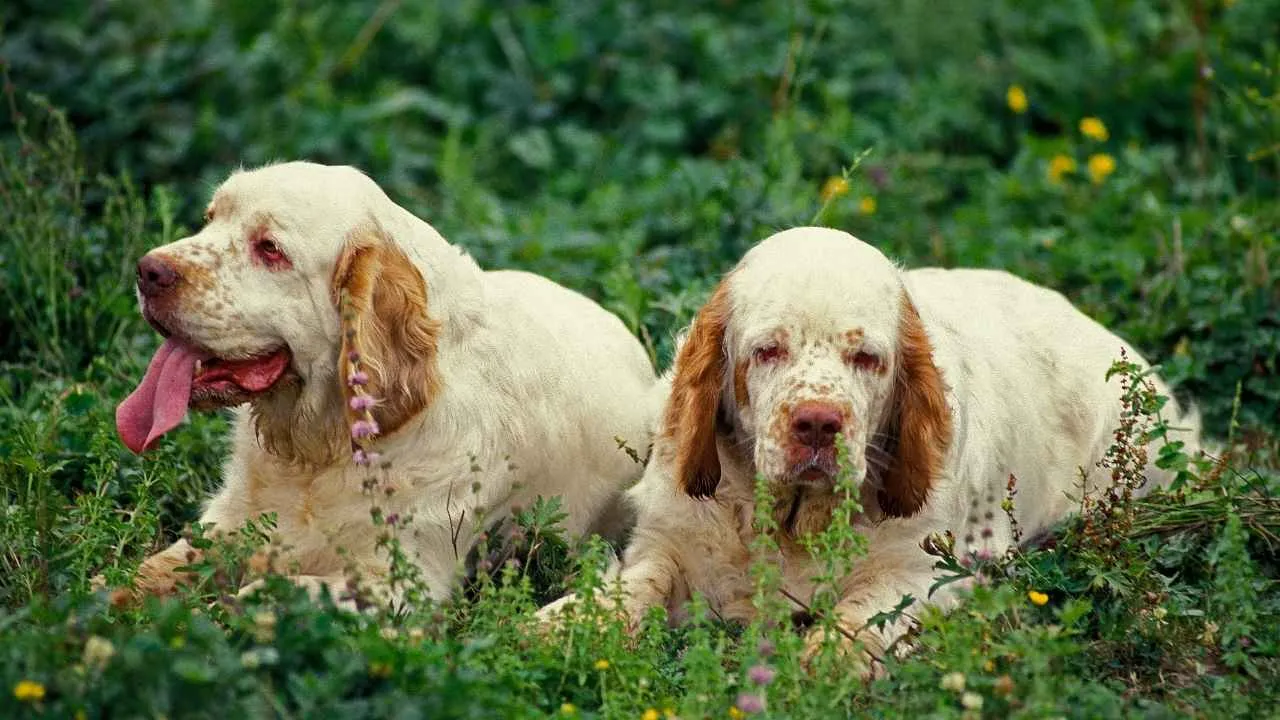
Originally developed as hunting companions in 18th-century England, Clumber Spaniels were valued for their ability to retrieve game and work through thick undergrowth.
Their sturdy build and distinctive white coats with lemon or orange markings make them easy to recognize. Despite their hunting background, they are gentle, loyal, and enjoy spending time with their families.
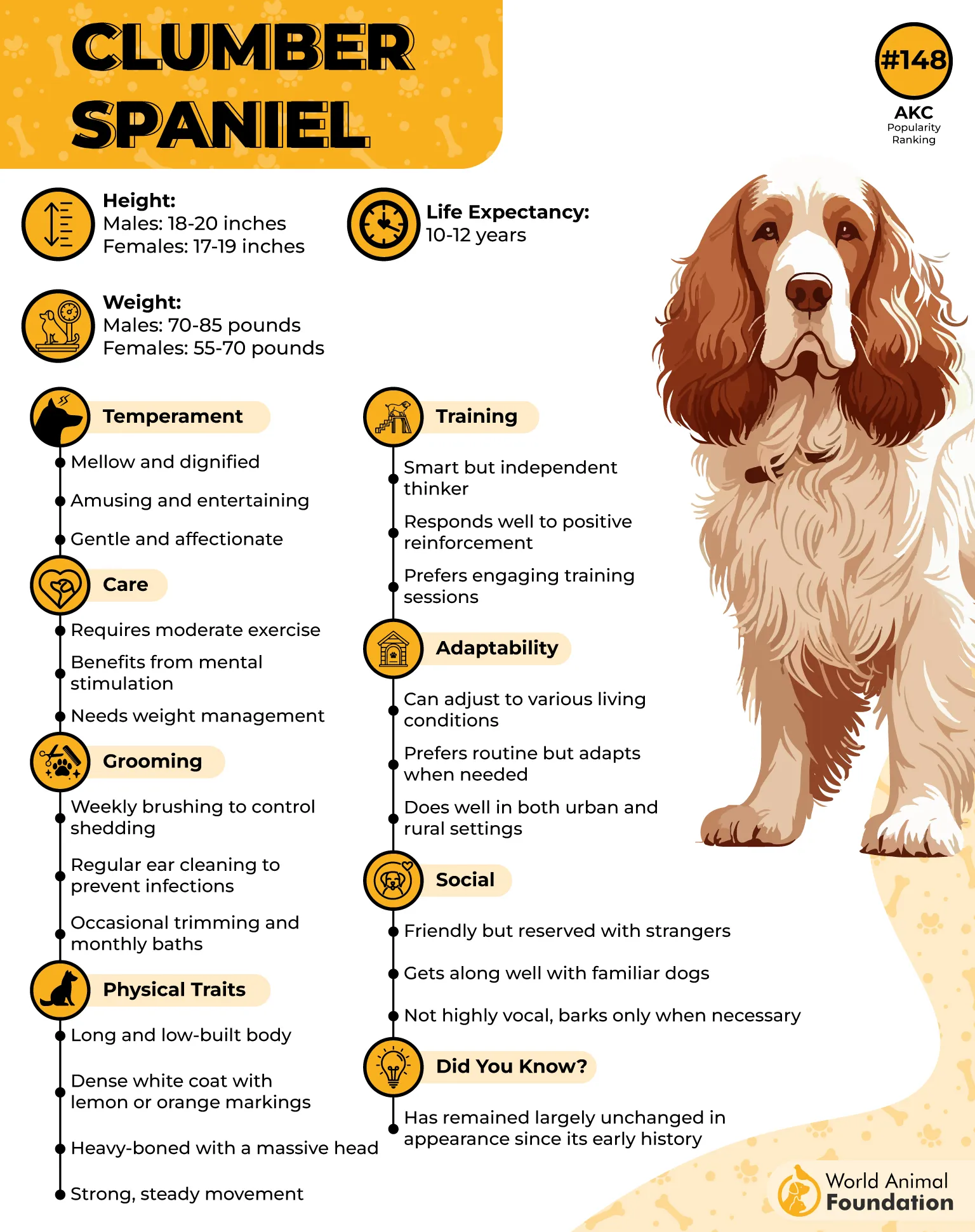
These dogs are intelligent, easygoing, and eager to please. They respond well to consistent, positive training and can be suitable for first-time owners. Clumber Spaniels enjoy outdoor activities such as swimming and fetching, but they generally prefer daily walks over intense exercise.
They get along well with children and other animals, although they can be slightly wary of strangers. They also have a strong sense of smell and may follow interesting scents when outdoors.
Care and Grooming Needs:
Their dense coats need brushing at least two to three times a week to remove loose hair and prevent tangles. Pay extra attention to their ears, chest, legs, and abdomen.
Regular baths every six to eight weeks help keep their coats clean. They also need regular checks for ticks and fleas after spending time outdoors.
Clumber Spaniels shed moderately and may drool and snore. They enjoy outdoor activities but need only moderate daily exercise.
5. Italian Greyhound
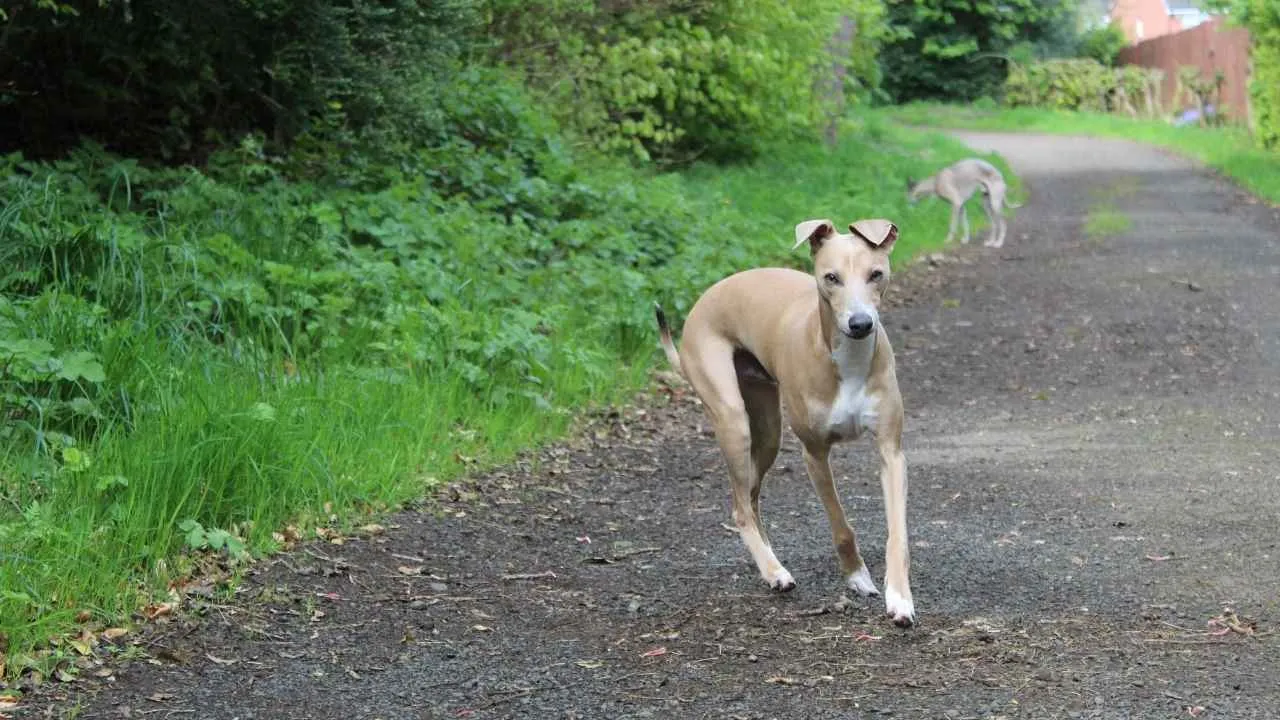
Italian Greyhounds are elegant little dogs with affectionate personalities and surprisingly playful sides. They resemble miniature Greyhounds and have a long history as hunting and companion dogs, dating back to ancient Egypt and Rome.
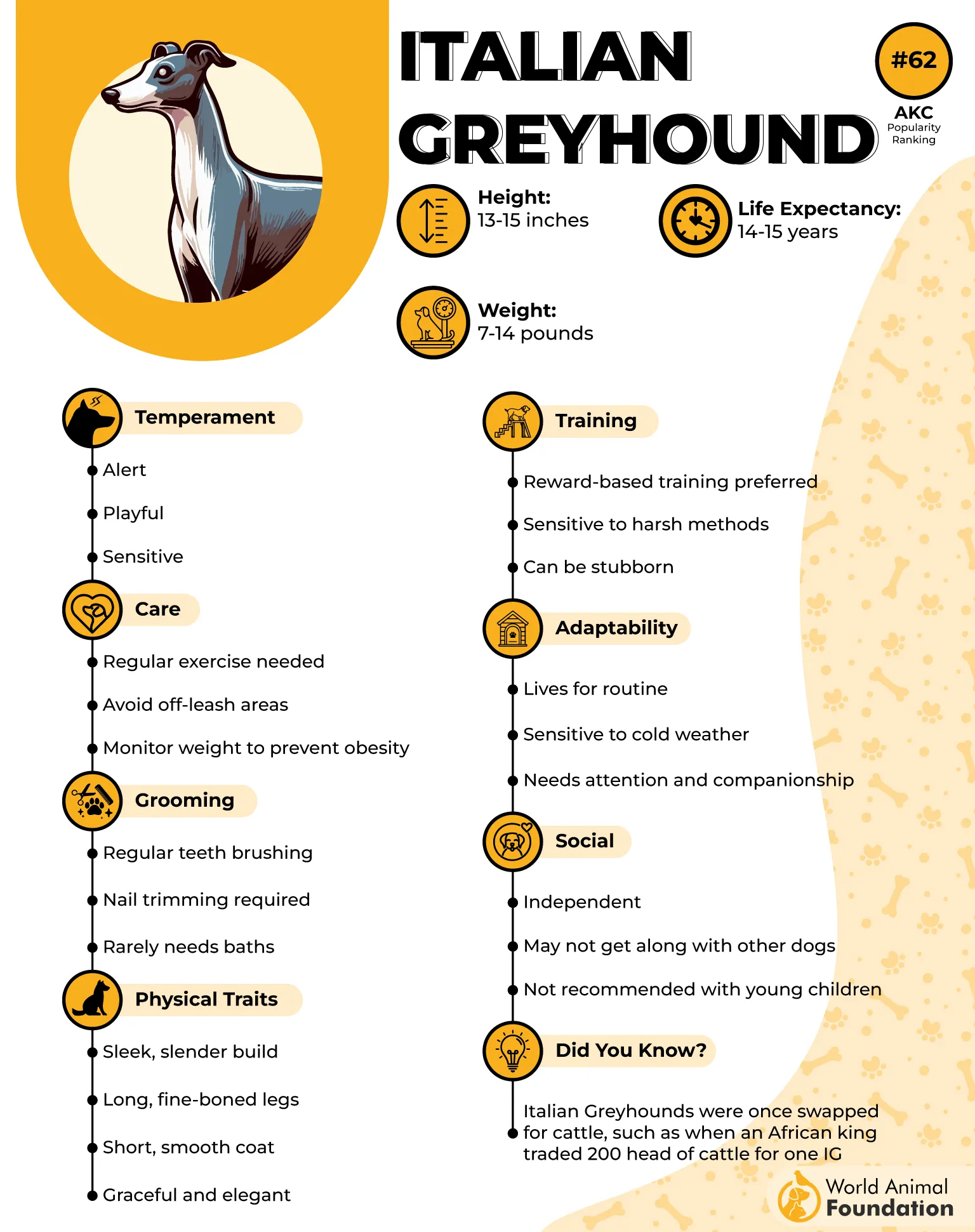
Originally bred to chase small game, they still have a strong instinct to pursue anything that catches their attention. These dogs love attention and enjoy spending most of their time close to their owners. They are gentle, sensitive, and often form especially strong bonds with one person, as Purina notes.
Although they enjoy lounging on the couch, they also have sudden bursts of energy and need regular exercise and a safe, enclosed space to run. Italian Greyhounds can be shy around strangers, so early socialization helps them adjust to new people and situations.
Care and Grooming Needs:
Their short, fine coats require minimal grooming, making brushing and general coat care simple.
Italian Greyhounds struggle with cold weather because of their thin coats and low body fat. Dog sweaters or coats help keep them warm during colder days.
They adapt well to apartments and smaller homes. Regular exercise, affection, and a comfortable resting place help keep them happy.
6. Pug
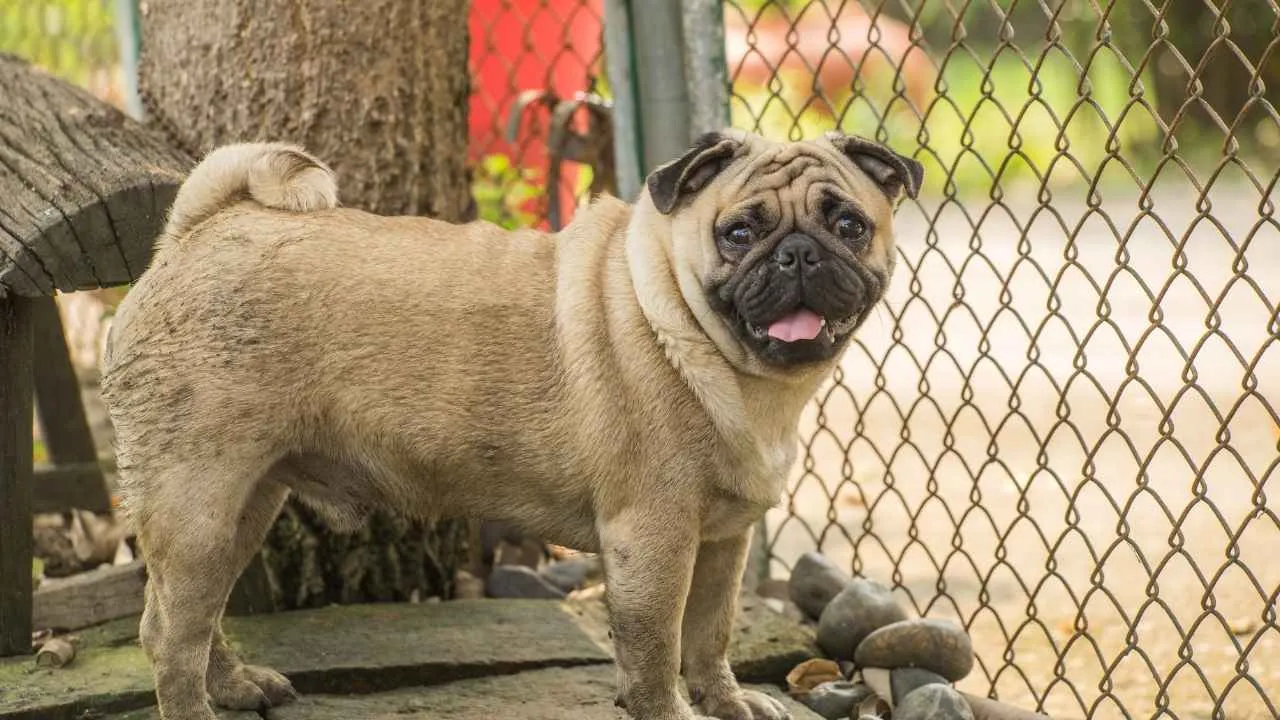
Pugs are small dog breeds with big personalities and a long history as royal companions. Originally from China, they were once favorites among emperors and later became popular with European royalty.
Their wrinkled faces, large expressive eyes, and curled tails give them a distinctive appearance. Despite their small size, Pugs are full of character and love making their owners laugh.
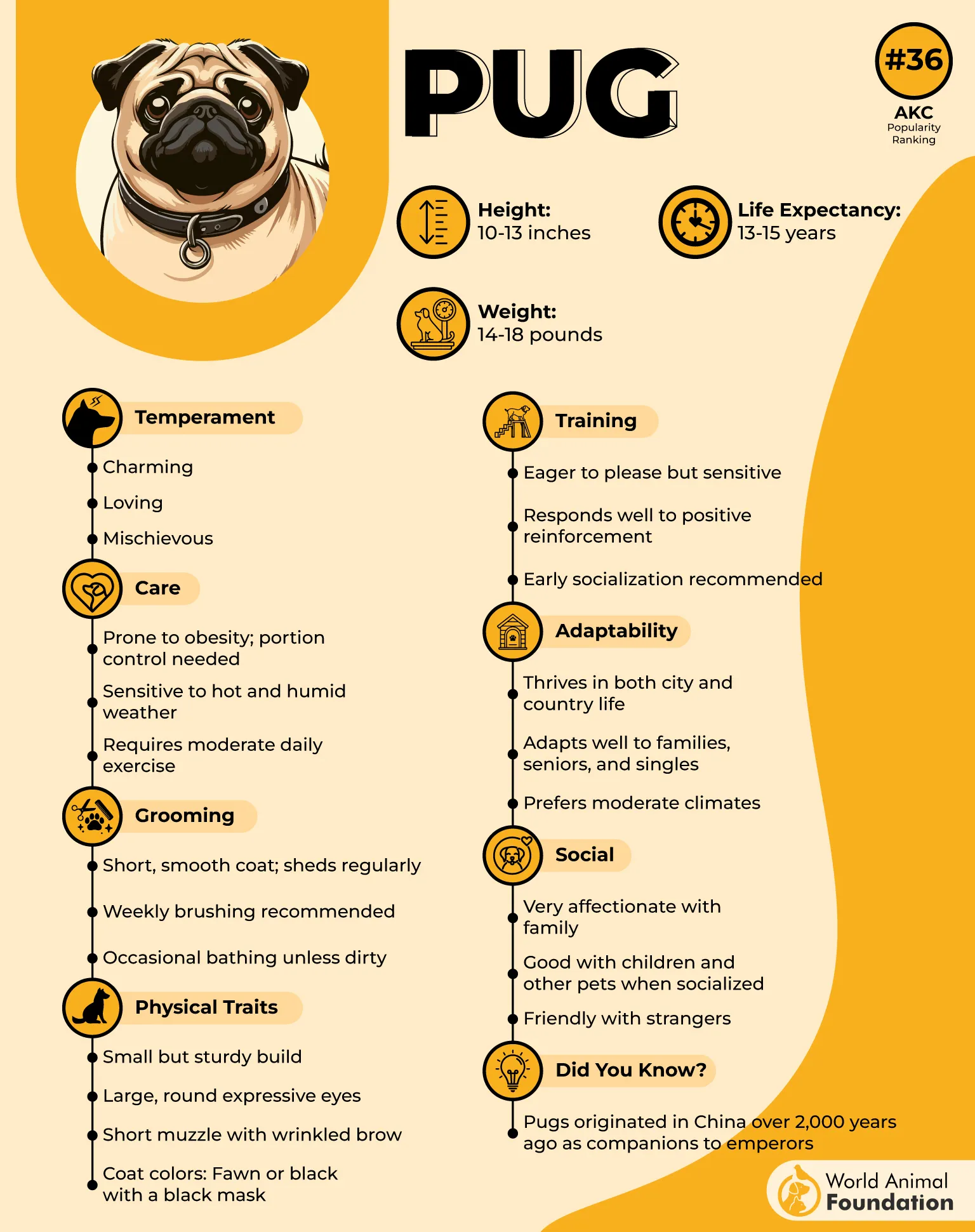
Pugs are affectionate, playful, and happiest when spending time with their families. They enjoy cuddling on the couch, playing indoors, and being included in everyday activities.
Their friendly nature makes them suitable for families with children and other pets. They are also relatively quiet and make good apartment companions. Positive reinforcement and early socialization help them learn good behavior.
Care and Grooming Needs:
Pugs have short coats but shed moderately throughout the year, with heavier shedding in spring and fall. Brush them several times a week to manage loose hair.
They need only moderate exercise, such as a few short walks of 15–20 minutes each. Avoid intense activity, especially in hot weather, as their flat faces make breathing and cooling down more difficult.
Their facial structure can cause loud snoring, noisy breathing, and excess gas.
7. Japanese Chin
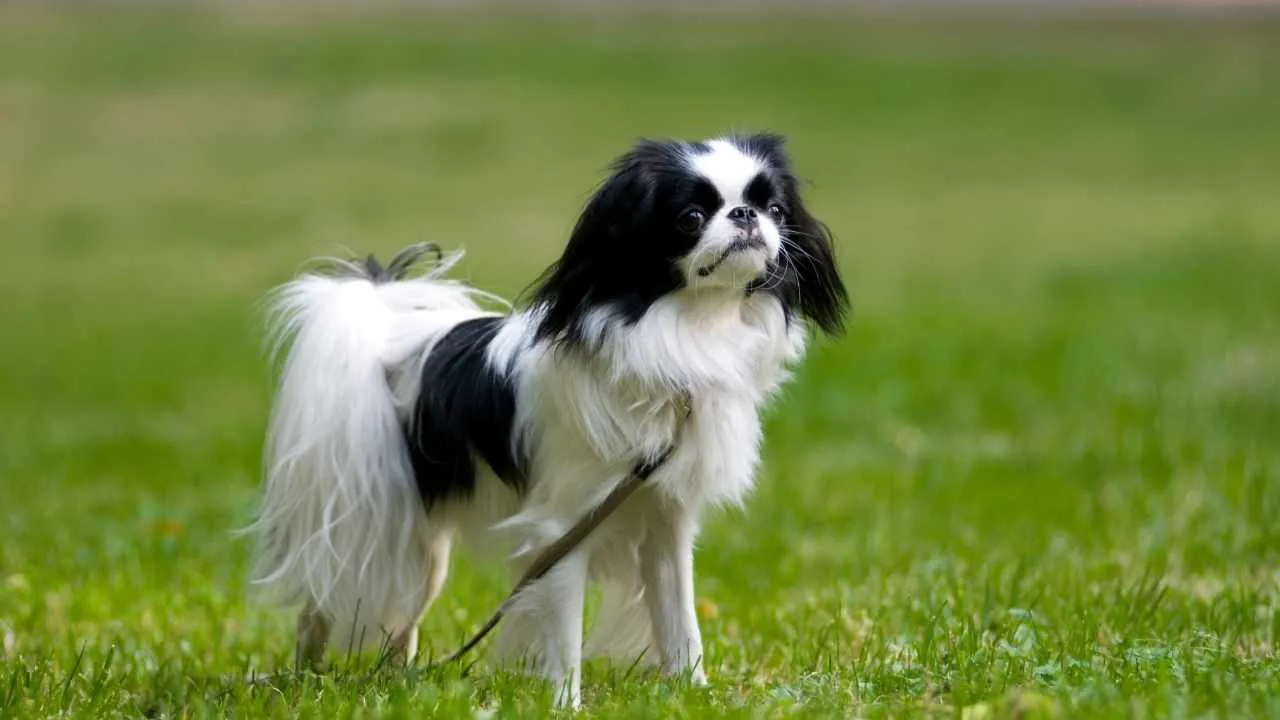
Japanese Chins are elegant little companions known for their silky coats, expressive eyes, and cat-like personalities. Despite their name, their origins are often linked to China, although they became closely associated with Japanese royalty and nobility.
These dogs were treasured as royal companions and diplomatic gifts. Their graceful appearance and quiet nature still make them popular indoor pets.
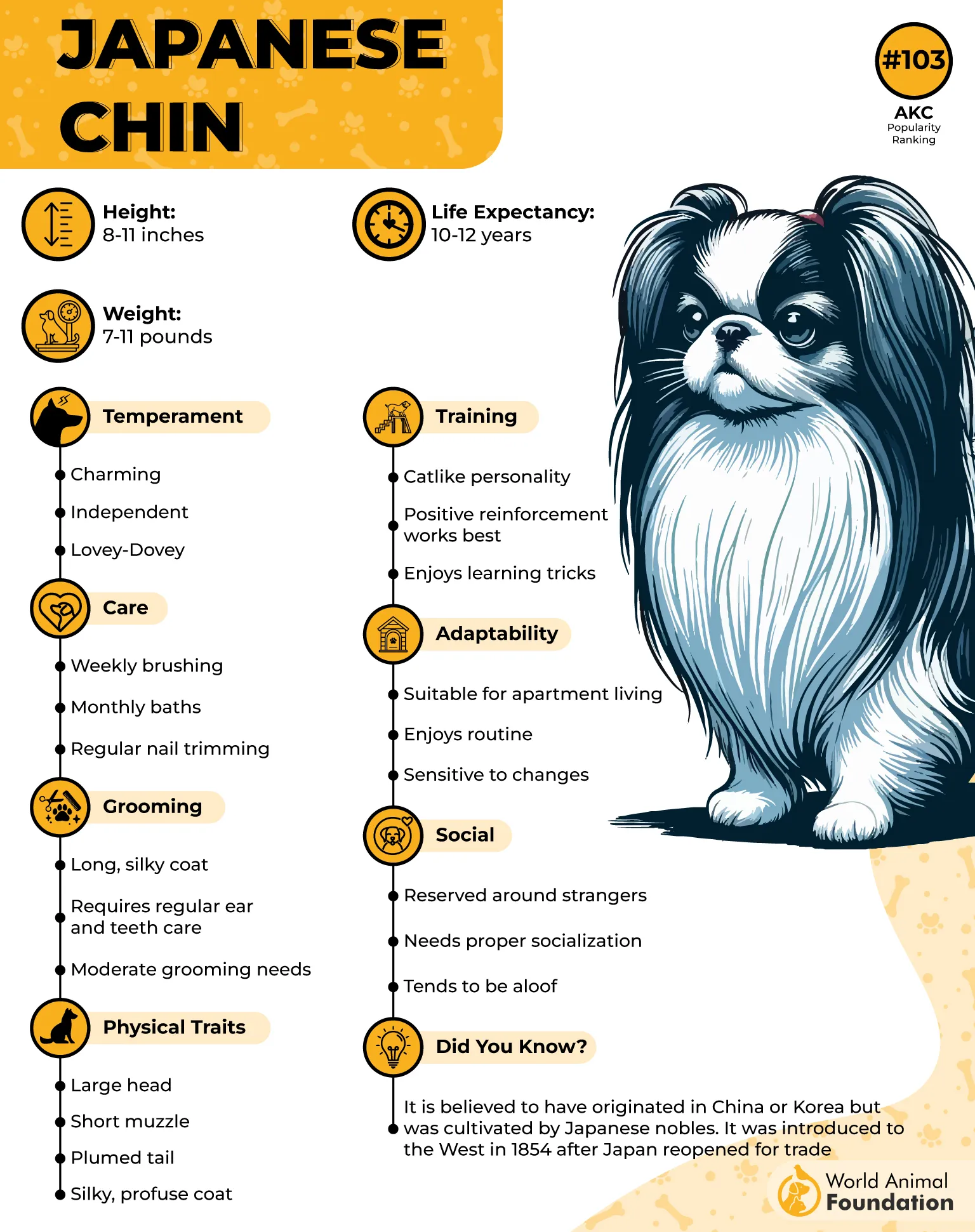
Japanese Chins are affectionate, intelligent, and full of character. They enjoy sitting on their owners’ laps, following them around the house, and playing occasional games. They are generally quiet and don’t need intense exercise, making them suitable for apartment living.
However, they love human company and can struggle when left alone for long periods. They respond well to positive training and enjoy learning tricks.
Care and Grooming Needs:
Their silky, single-layer coats need brushing two to three times a week to prevent tangles. Pay special attention to the hair behind their ears.
Occasional baths help keep their coats clean. Regular ear and dental care is also important.
Around 30 minutes of daily exercise, along with mental stimulation, is usually enough.
Conclusion
Choosing a low-maintenance dog doesn’t mean giving up on affection, loyalty, or companionship. Some are happy with relaxed walks and plenty of couch time, while others enjoy occasional play and outdoor adventures. The key is finding a dog whose needs fit comfortably into your daily routine.
Before bringing a furry friend home, consider their temperament, exercise requirements, grooming needs, and health concerns.
Remember, even the easiest dogs need love, attention, and proper care. Take your time, choose a breed that suits your lifestyle, and you’ll have a companion who makes even your laziest days a little brighter!
