





Living in an apartment with a dog can be wonderful, but barking can quickly become an issue when neighbors are just a wall away. Thin walls, busy hallways, and city noise make a naturally quiet dog a much easier fit for urban living.
But low barking isn’t the only thing that matters. Apartment dogs also need to handle smaller spaces, unfamiliar sounds, people coming and going, and less outdoor access. A calm temperament, regular exercise, and enough mental stimulation can help them settle comfortably at home.
No dog is completely silent, and even quiet dogs may bark when excited, bored, or anxious. Still, choosing a low-barking breed and providing proper training can make apartment life much more peaceful for everyone. Let’s take a look at some of the best apartment dogs!
Key Takeaways
Meet 10 low-barking breeds that can make apartment life quieter and easier.
See why French Bulldogs, Whippets, and Pugs stand out for urban-dwelling owners.
Compare exercise, training, grooming, and care needs before choosing.
Find the right balance between a quiet dog and your daily routine.
Top Low‑Barking Dog Breeds for Urban Apartment Living
1. French Bulldog

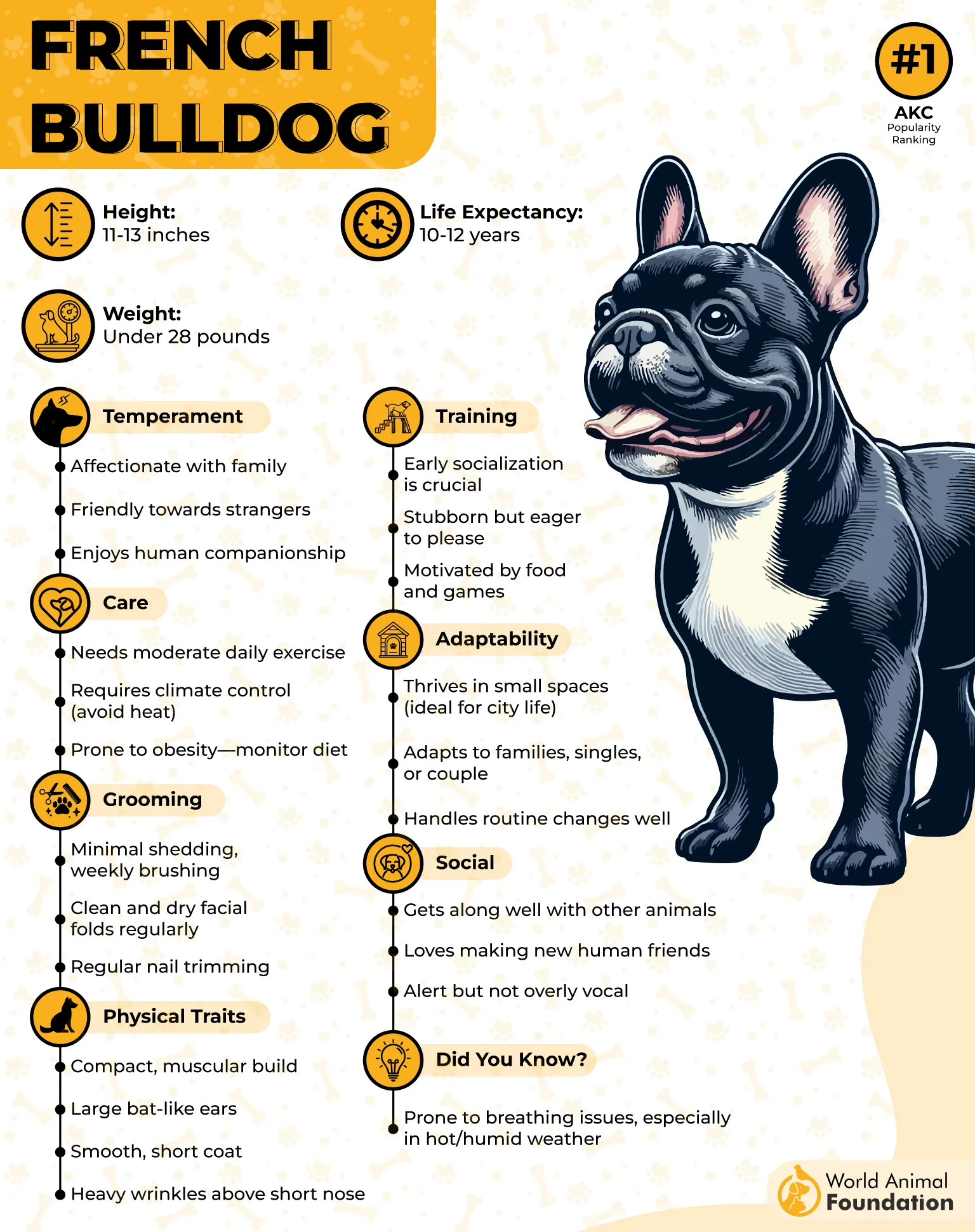
French Bulldogs, also called Frenchies, are small, easygoing companions known for their playful and affectionate nature. Developed in France in the late 1800s, they came from crosses between small native dogs and small Toy Bulldogs, as mentioned by Britannica.
Their bat-like ears, flat faces, and compact bodies give them a distinctive look. They are also neither frequent barkers nor fighters, making them a good fit for quieter apartment homes.
Temperament and Apartment Living
Frenchies enjoy both playtime and relaxing with their families. They have moderate energy levels and can meet their exercise needs in an apartment with short daily walks and indoor games. They usually get along well with people and other pets when properly socialized.
They can be stubborn during training, but positive reinforcement and fun activities can help keep them engaged.
Care Needs
French Bulldogs need protection from heat and humidity because their short-nosed build makes cooling difficult. Their facial wrinkles should be kept clean and dry, while weekly brushing helps maintain their short coat.
They should not be left alone near pools or other water because they cannot swim well. Frenchies can also have breathing, overheating, allergy, back, and other health concerns linked to their body structure, so regular veterinary care is important.
2. Whippet

Whippets are sleek, gentle sighthounds known for their speed and surprisingly calm nature. They originated in Northern England and were developed as fast hunting dogs.
Despite their athletic build, these dogs are happy to spend long hours relaxing with their families. Most importantly for apartment dwellers, Whippets are naturally quiet and rarely bark.

Temperament and Apartment Living
Whippets balance short bursts of intense running with plenty of downtime indoors. They can live happily in apartments as long as they get regular walks, play sessions, and safe opportunities to sprint.

They are friendly and playful but can also be sensitive, so calm homes and early socialization suit them well. Their strong chase instinct means they should stay on a leash outside or in a secure, tall fenced area.
Care and Exercise Needs
Whippets have short, smooth coats that need little grooming beyond weekly brushing. Their thin skin and coat can make them sensitive to cold and wet weather.
Regular ear checks are also important. Training should begin early and work best with positive reinforcement.
3. Japanese Chin

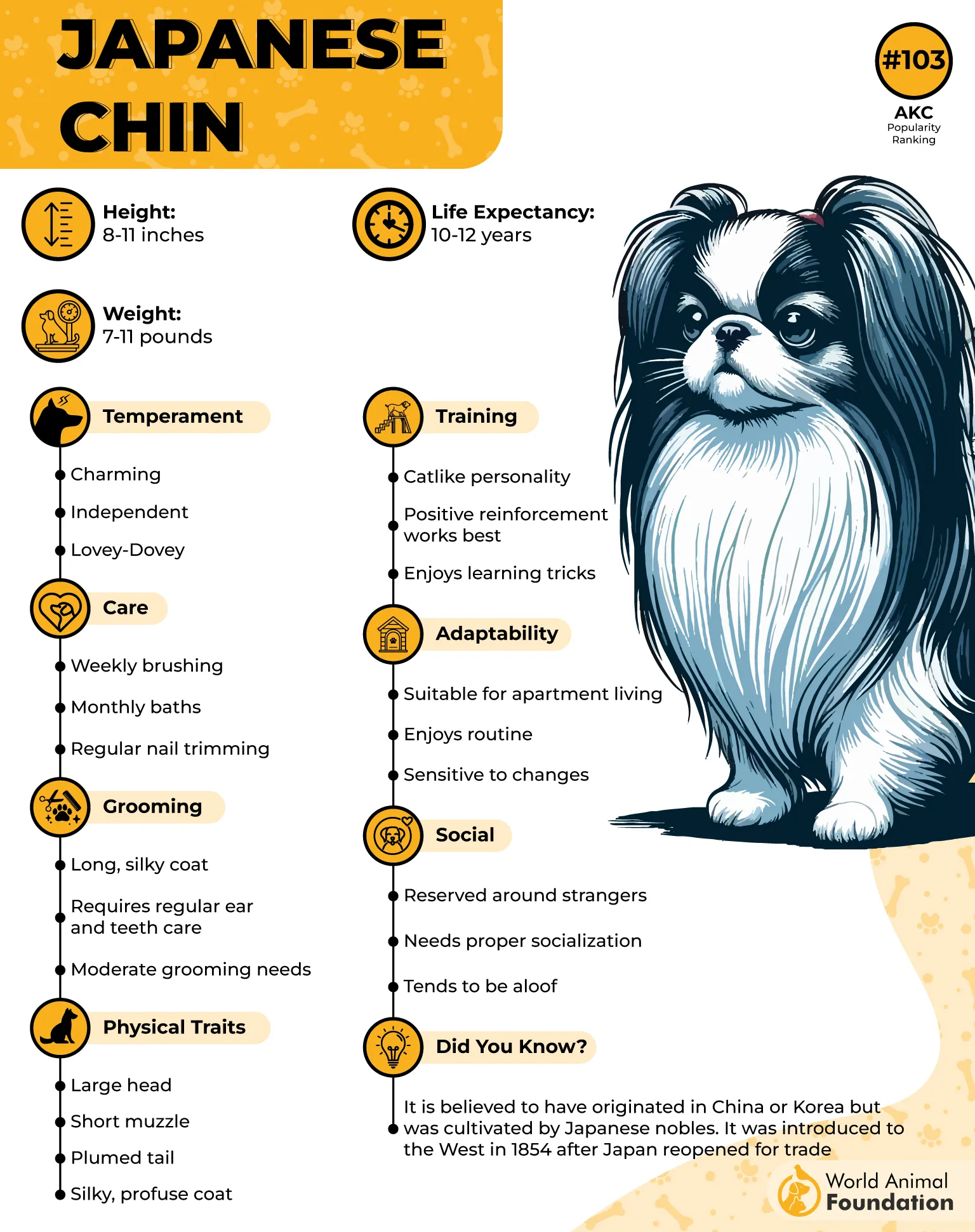
Japanese Chins are elegant, affectionate toy dogs that make excellent indoor companions. Their history is old and somewhat unclear, with roots linked to China and Japan. They were kept by Buddhist monks and gifted to nobility, later becoming familiar sights in Imperial palaces.
With their silky coats, broad heads, short muzzles, and wide-set eyes, these small dogs have a distinctive look and a calm, cat-like personality.
Temperament and Apartment Living
Japanese Chins are playful, intelligent, and very attached to their families. They do not tend to bark a lot, although they may alert their owners to strangers or unfamiliar sounds. Their moderate energy needs can be met with a short daily walk and some playtime.
They adapt well to apartments and can be happy without a backyard. PetMD says they can develop separation anxiety when left alone for long periods.
Care and Training
Their silky coats are fairly easy to maintain with brushing once or twice a week and occasional baths. Japanese Chins can be reserved around strangers, so early socialization is helpful. They respond best to short, fun training sessions with praise and treats.
Their eyes should be monitored for changes, and their ears can be cleaned regularly to help keep them healthy.
4. Bolognese

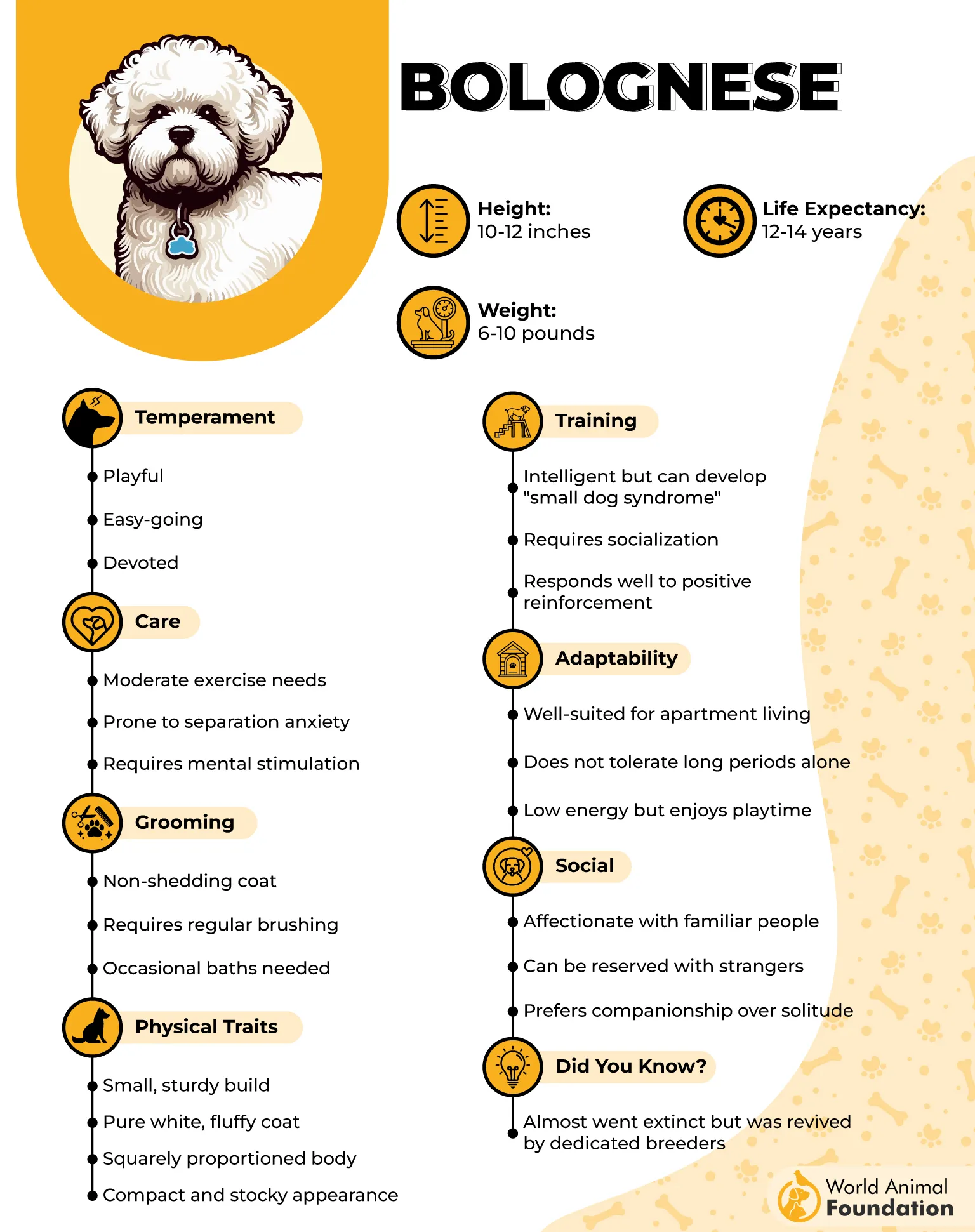
Bolognese dogs are small, fluffy companions with a history that goes centuries back. Originating in the Italian city of Bologna, they were treasured by Italian nobility and often given as gifts to wealthy families.
Their calm, affectionate nature made them popular lap dogs, and they were also featured in Renaissance art. Today, they remain relatively rare but are closely related to other Mediterranean breeds such as the Maltese, Havanese, and Bichon Frise.
Temperament and Apartment Living
Bolognese dogs are calm, loving, and not especially talkative compared with some small breeds. They usually do not bark excessively, but they will alert their family to unfamiliar people or sounds.
Their low energy needs make them well suited to indoor living, with a couple of short walks and some playtime usually enough. They enjoy cuddling and human company but can become unhappy when left alone for long periods.
Training and Care
These intelligent dogs are eager to please and respond well to praise, treats, and consistent positive training. Early socialization can help with their occasional shyness around strangers and help them get along with children, cats, and other dogs.
Their fluffy, wavy coat needs frequent brushing to prevent mats, while their floppy, hairy ears need regular checks. They are generally healthy, though patellar luxation, dental problems, eye issues, and tear staining can occur.
5. Coton De Tulear

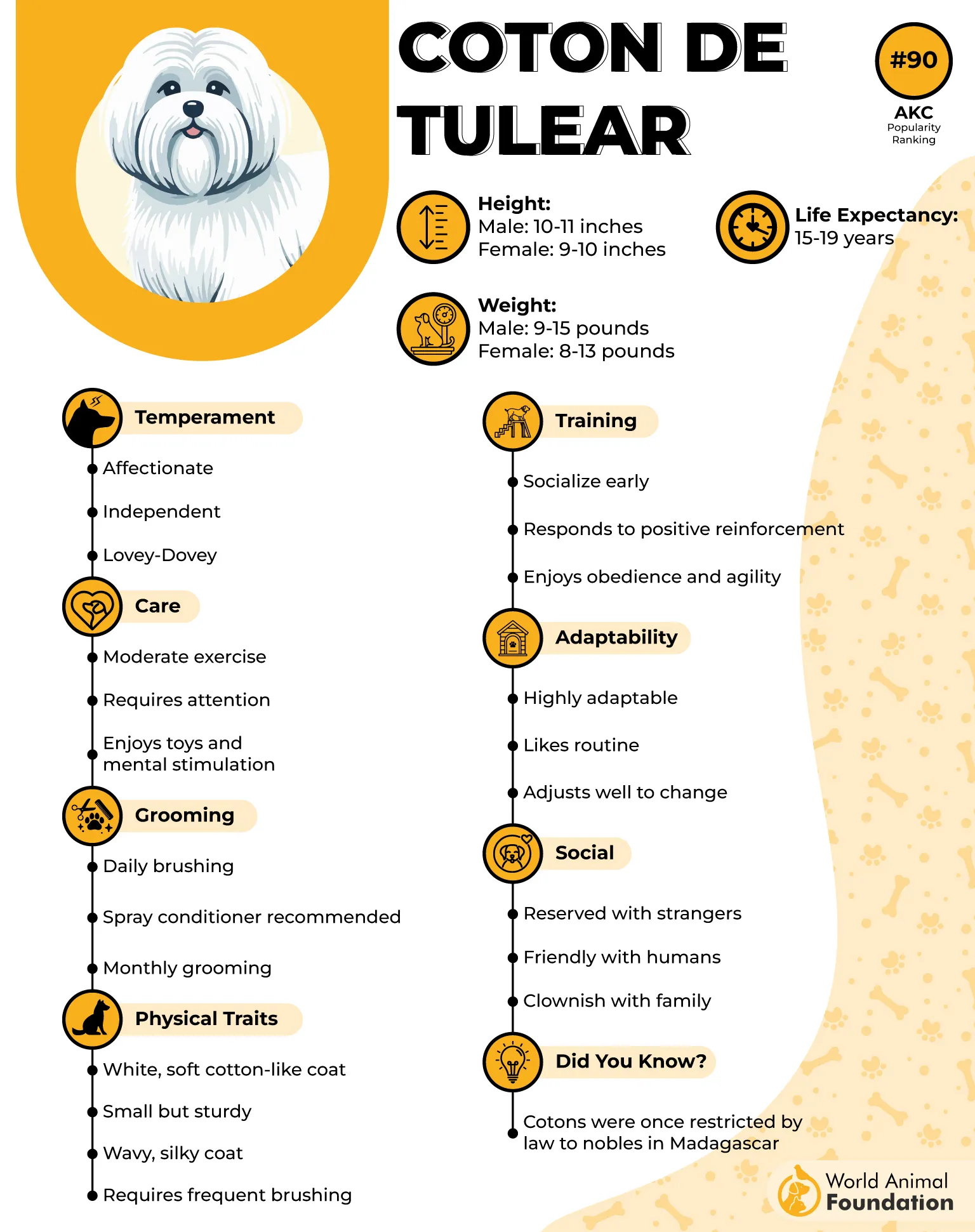
Coton de Tulear dogs are cheerful, affectionate companions from Madagascar, where the breed was named after the port city of Tulear.
Their exact history is unclear, but they likely arrived by ship centuries ago and later became favorites of local nobility and the Royal court. Their fluffy, cotton-like coat and easygoing nature have made them popular family companions.
Temperament and Apartment Living
Coton de Tulears are playful, friendly, and adaptable, making them comfortable in apartments and houses alike.
They need daily walks and playtime but are not overly hyper or demanding. They can bark at strange noises or surprising movements, and may become noisy when left alone.
Early socialization and training can help manage this alert behavior, while plenty of human company helps prevent separation anxiety.
Training and Grooming
These people-pleasing dogs are generally easy to train when sessions are short, positive, and fun. They enjoy games, praise, cuddles, and activities such as fetch, agility, swimming, and obedience training.
Their fluffy coat needs frequent brushing, often three to four times a week or daily to prevent mats, along with regular baths and occasional professional grooming. Tear stains and ear buildup also need regular attention.
6. Pug

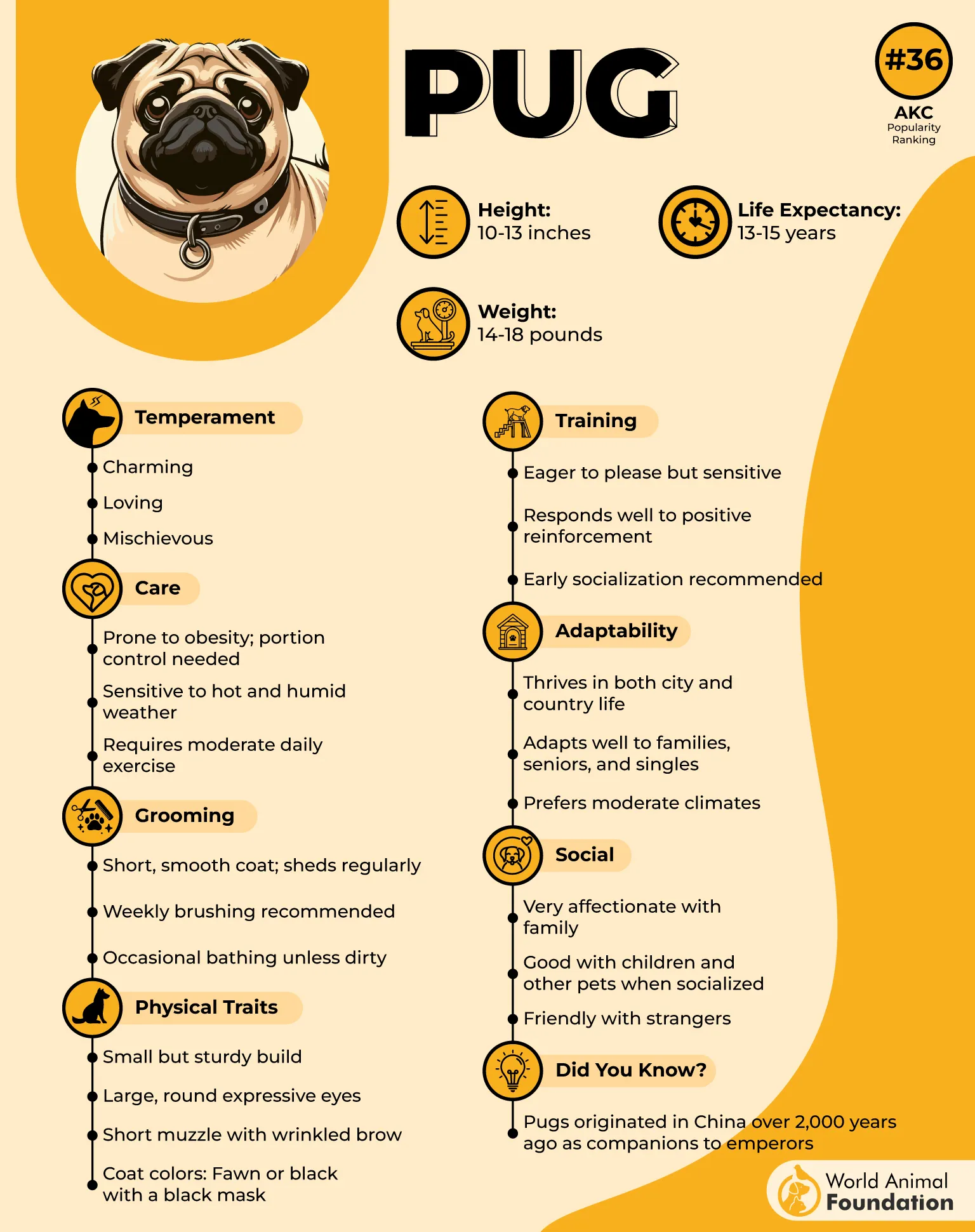
Pugs are cheerful, affectionate companion dogs with a long history as royal favorites. They likely originated in China and later reached Holland through Dutch trading ships before becoming closely linked with the House of Orange.
Their short muzzles, large round heads, wrinkled faces, curled tails, and expressive eyes give them their distinctive look. They are playful and confident without being hyperactive.
Temperament and Apartment Living
Pugs are fairly laid-back and are not usually given to extensive barking, making them a good fit for apartment life. Their moderate exercise needs can be met with leash walks, gentle play, and time indoors.
They enjoy people, usually get along well with children and other pets, and are happy to be part of family activities. Their friendly nature means they may greet newcomers rather than act like serious watchdogs.
Care and Health
Pugs have short, dense coats that need regular brushing, while their facial wrinkles should be gently cleaned and dried. Their short muzzles make breathing and cooling difficult, so they need careful protection from hot and humid weather.
They are also prone to obesity, so their diet and exercise should be monitored. Their prominent eyes can be easily injured, and they may snore or develop serious breathing problems related to their flat-faced structure.
7. Clumber Spaniel
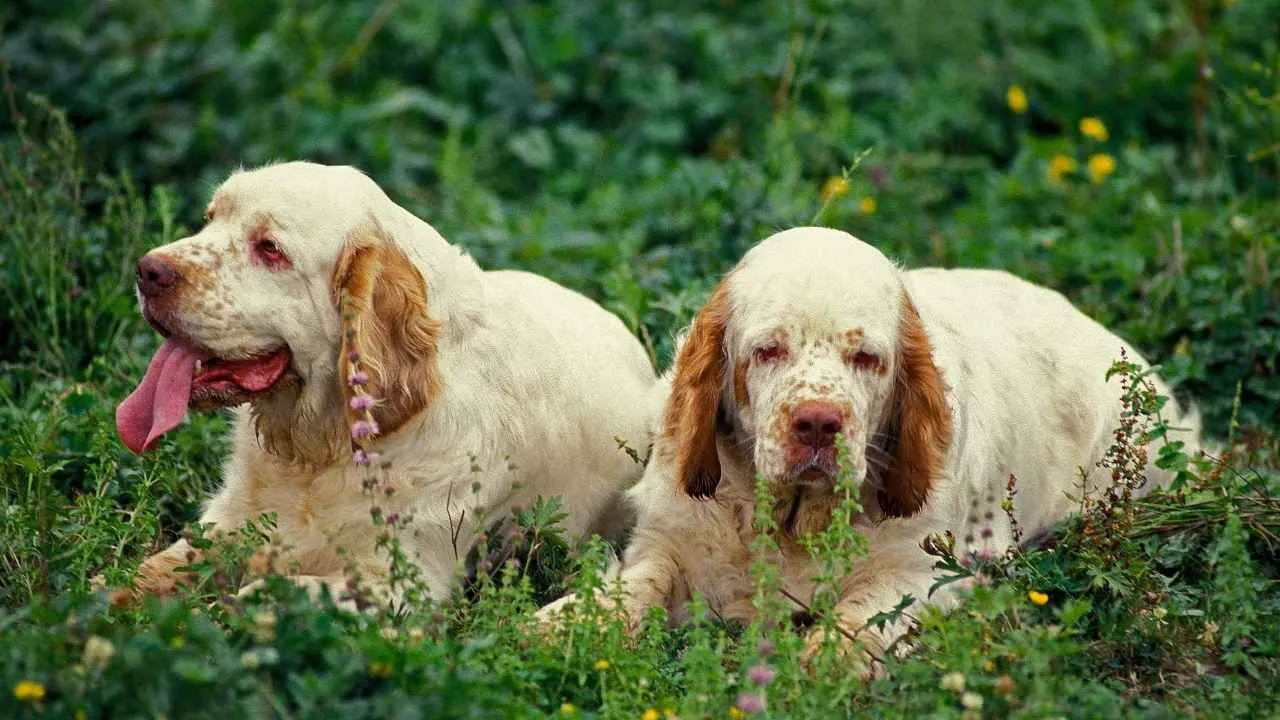
Clumber Spaniels are gentle, affectionate dogs with a long history as hunting and retrieving companions. The breed originated in France and was later associated with Clumber Park in England, where British nobility favored them.
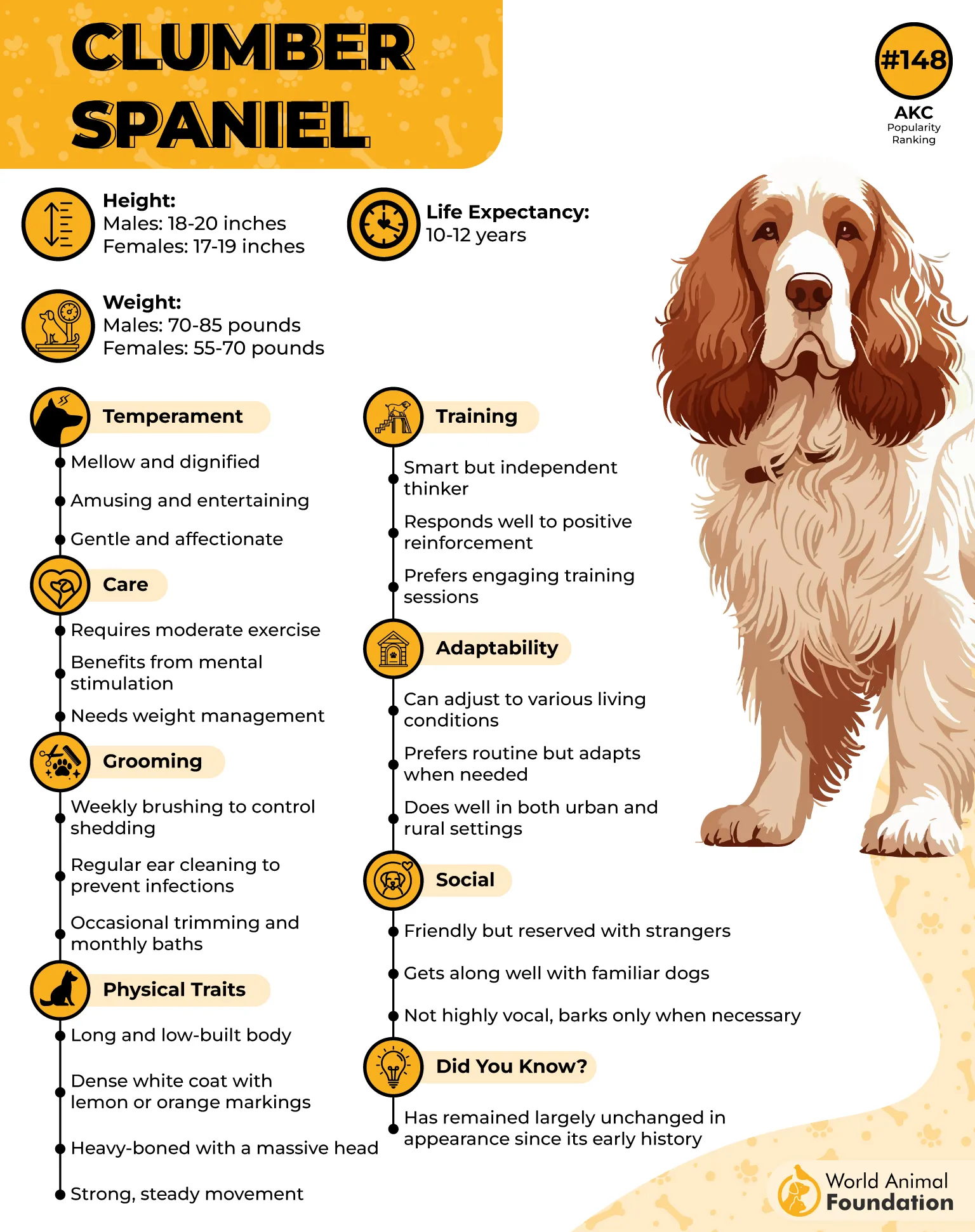
Known for their heavy build, deep-set eyes, and dense white coat with lemon or orange markings, Clumbers have a calm nature despite their sporting background.
Temperament and Apartment Living
Clumber Spaniels are laid-back, loyal, and not prone to excessive barking, making them quieter companions at home. They enjoy being close to their families and can get along well with children and other pets when properly socialized.
They need regular walks, play, and mental stimulation, although they can adjust to a quiet home life. Their size and love of outdoor activities can make apartment living less suitable if regular exercise is difficult to provide.
Training and Care
These intelligent dogs can be independent and willful, so training should be consistent, gentle, and positive. Short, varied sessions and activities such as nose work, fetch, swimming, and obedience games can keep them interested.
Their dense coat needs brushing at least two or three times a week, especially around the feathered areas, and regular bathing helps keep it clean. Their ears also need frequent attention because they can be prone to infections.
8. Boston Terrier

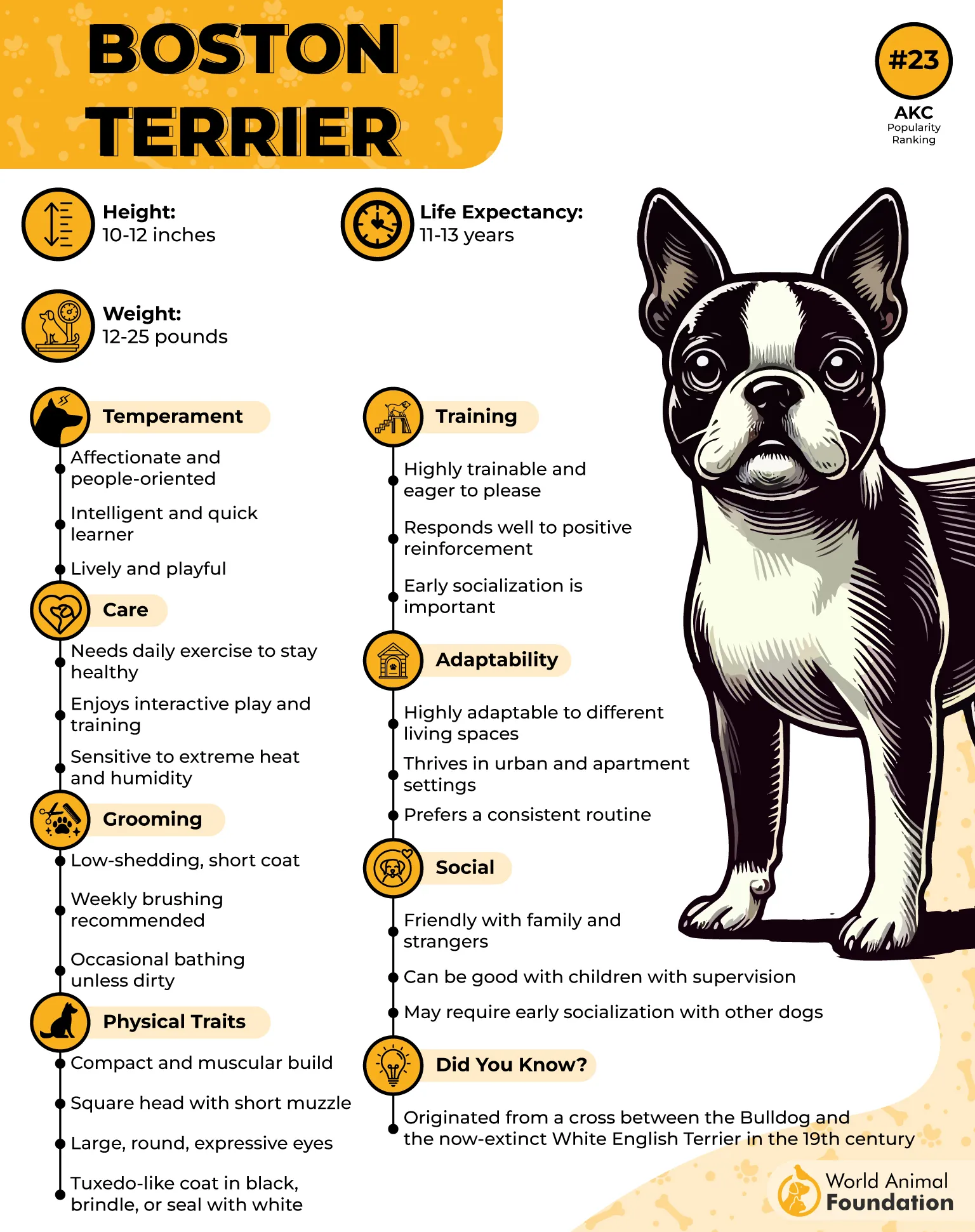
Boston Terriers are cheerful, good-natured companions with a history that began in Boston in the late 1800s. Developed by crossing Bulldogs and White English Terriers, they became known as the “American gentleman” of dogs.
Their short, smooth coat, compact build, and friendly personality make them well suited to life indoors.
Temperament and Apartment Living
Bostons are playful, affectionate, and generally get along well with people and other pets, including cats when raised together. They need regular activity, but a few short games of fetch or moderate walks are better than long, vigorous exercise sessions.
They are usually quiet, although they may bark when someone unexpectedly knocks at the door. Their playful nature also means they enjoy spending time with their families.
Training and Care
Boston Terriers are intelligent and can be trained well, although they may sometimes be stubborn about following commands. Their short coat needs only occasional bathing and brushing or rubbing with a grooming mitt, and shedding is minimal.
Because of their short faces, they can overheat easily and should also be protected from extreme cold. They are house dogs rather than outdoor dogs and should always be on a leash or in a secure fenced area when outside.
9. Basenji
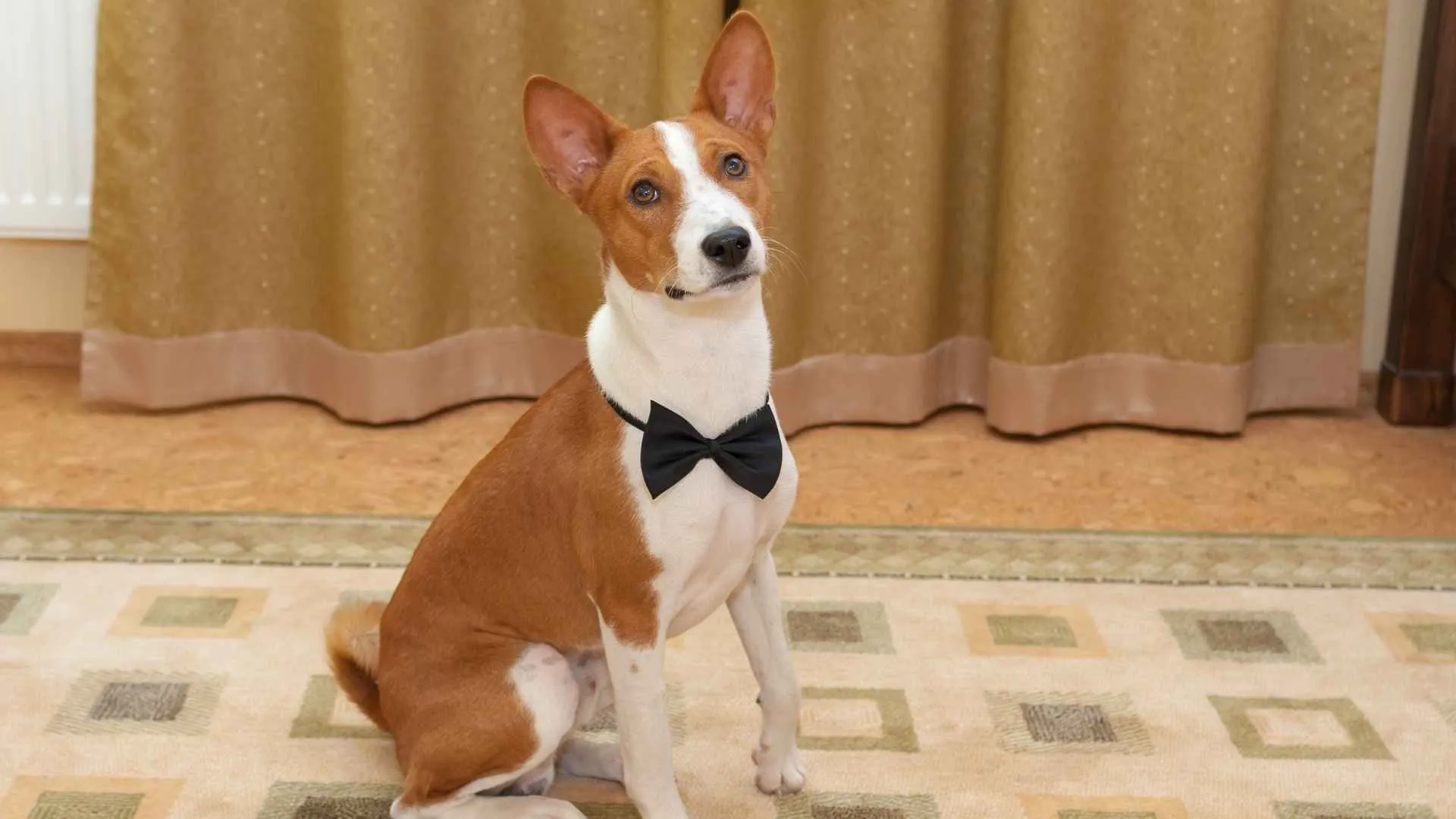
Basenji Dogs are an ancient African breed with a history that stretches back thousands of years. Cave paintings in Libya depict Basenji-type dogs alongside humans as hunting companions.
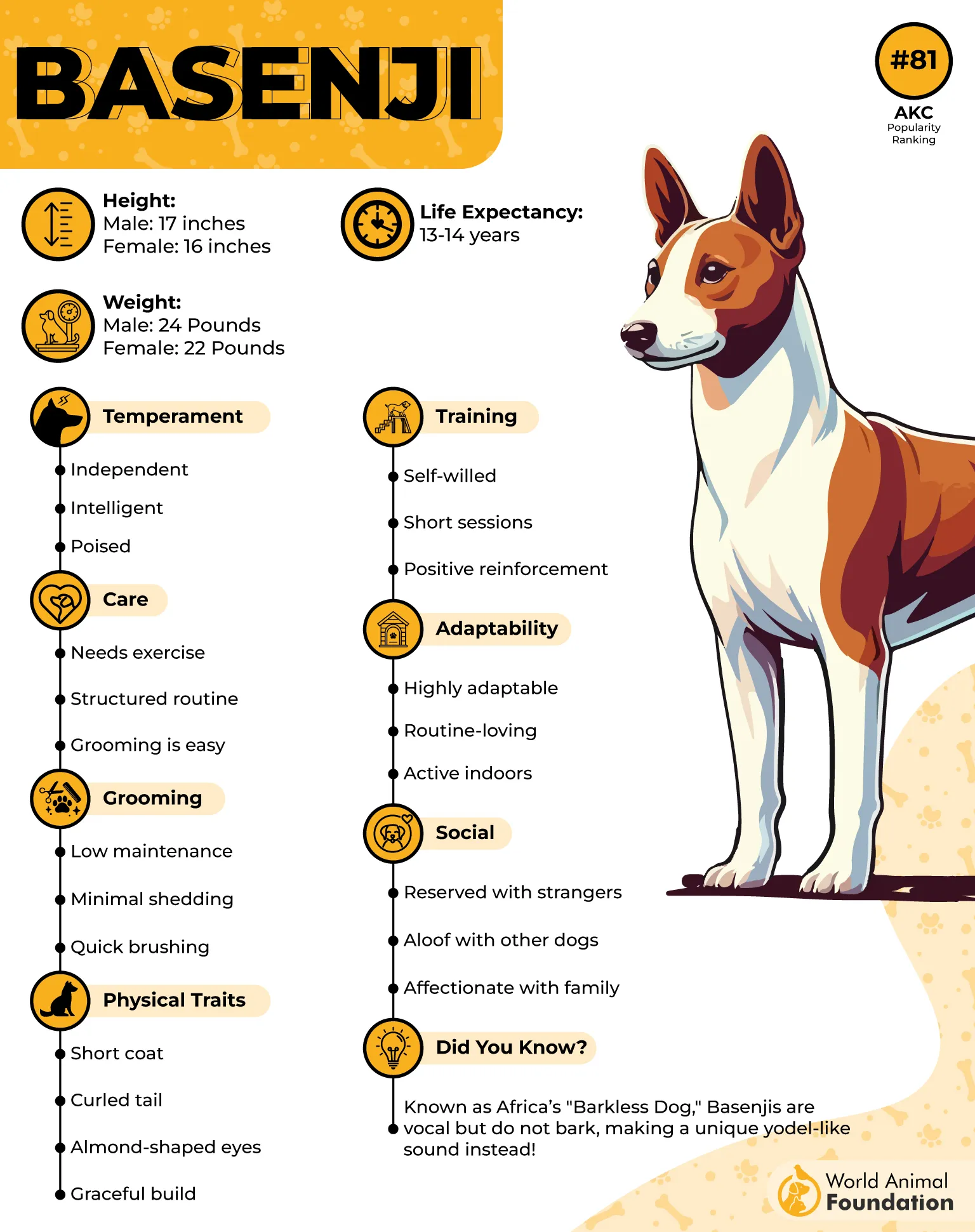
Known as the “barkless dog,” the Basenji is usually very quiet but has a distinctive yodel-like sound when it does decide to speak up.
Temperament and Apartment Living
Basenjis are intelligent, energetic, and independent, with a personality often compared to a cat. They can be affectionate and devoted to their families but may be reserved around strangers.
Their quiet nature can suit apartment living, but they need plenty of daily exercise, play, and mental stimulation. Without enough activity, they can become bored and destructive.
Training and Care
Basenjis can be stubborn and easily distracted, so short, fun training sessions with positive reinforcement work best. Their strong prey drive means they should be kept on a leash or in a secure fenced area outdoors.
They are also excellent self-groomers and need very little coat care, with occasional brushing usually enough. Early socialization and consistent training are important to help them adjust well to people and their surroundings.
10. Pekingese

Pekingese dogs are ancient Chinese companions with a long history in the Imperial court. They were treasured as luxury “sleeve dogs” and became closely associated with royalty and Buddhism.
Today, these affectionate and loyal dogs are known for their dignified nature, laid-back home life, and strong watchdog instincts.
Temperament and Apartment Living
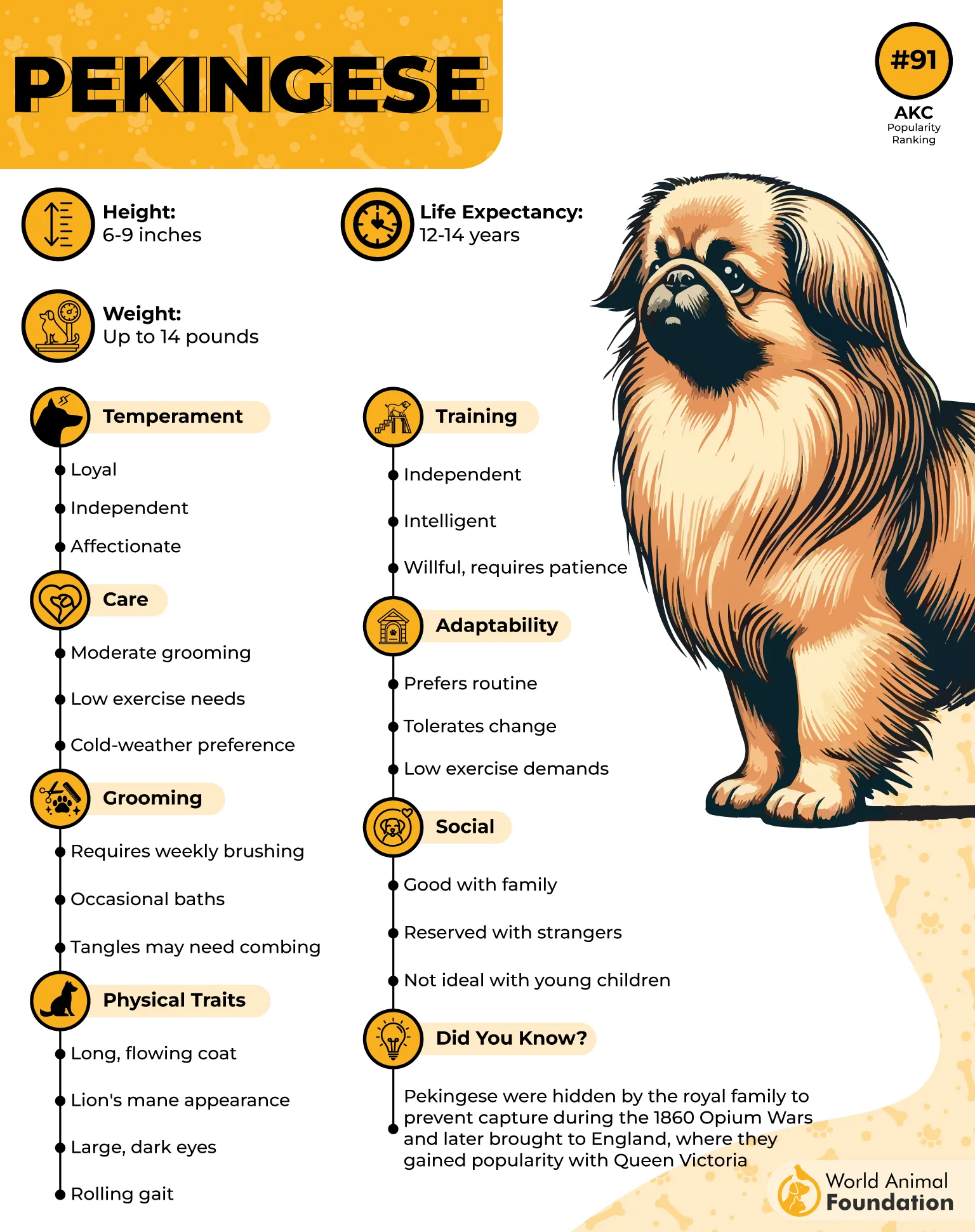
Pekingese can adapt well to indoor living because they need little exercise and are happy with a short romp indoors or outdoors. They are devoted to their families but can be aloof with strangers.
However, their alert nature means they may bark strongly when they notice something unusual. Early socialization can help reduce barking around unfamiliar people and situations.
Training and Care
These intelligent dogs can be independent and strong-willed, so patient training with positive reinforcement works best. Their long, thick double coat needs frequent brushing to prevent tangles, while the facial folds and large eyes also require regular cleaning.
According to Hill’s Pet, Pekingese do not handle hot or humid weather well because of their short faces, so they should be kept cool and comfortable indoors.
Conclusion
Choosing a quiet dog can make apartment living much easier, especially when neighbors are close by. From relaxed companions like French Bulldogs and Pugs to naturally quiet breeds like Whippets and Basenjis, each dog has its own exercise, training, and care needs to consider.
Before bringing one home, think beyond barking and choose a breed that fits your daily routine and living space. With the right match, regular exercise, early training, and plenty of companionship, apartment life can be comfortable and peaceful for both you and your dog.
