




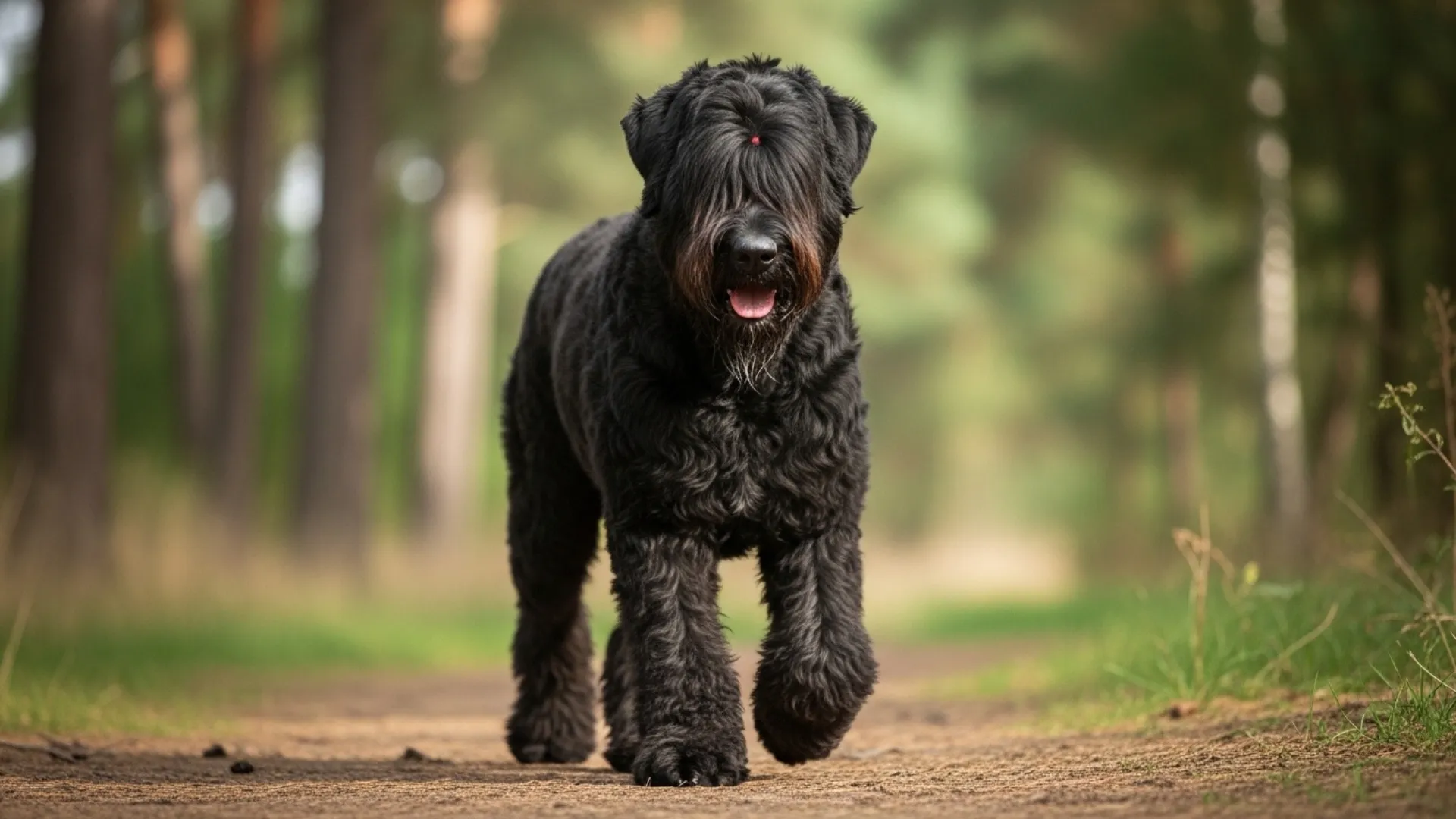
Giant dog breeds often capture attention because of their sheer size, but many lesser-known giants offer something even more valuable—unmatched loyalty. These dogs are not just physically impressive; they are deeply devoted companions that form strong emotional bonds with their families.
While popular breeds like Great Danes and Saint Bernards get much of the spotlight, several rare giants remain underrated despite their remarkable traits. Understanding these breeds can help potential owners discover a perfect companion that fits both their lifestyle and expectations.
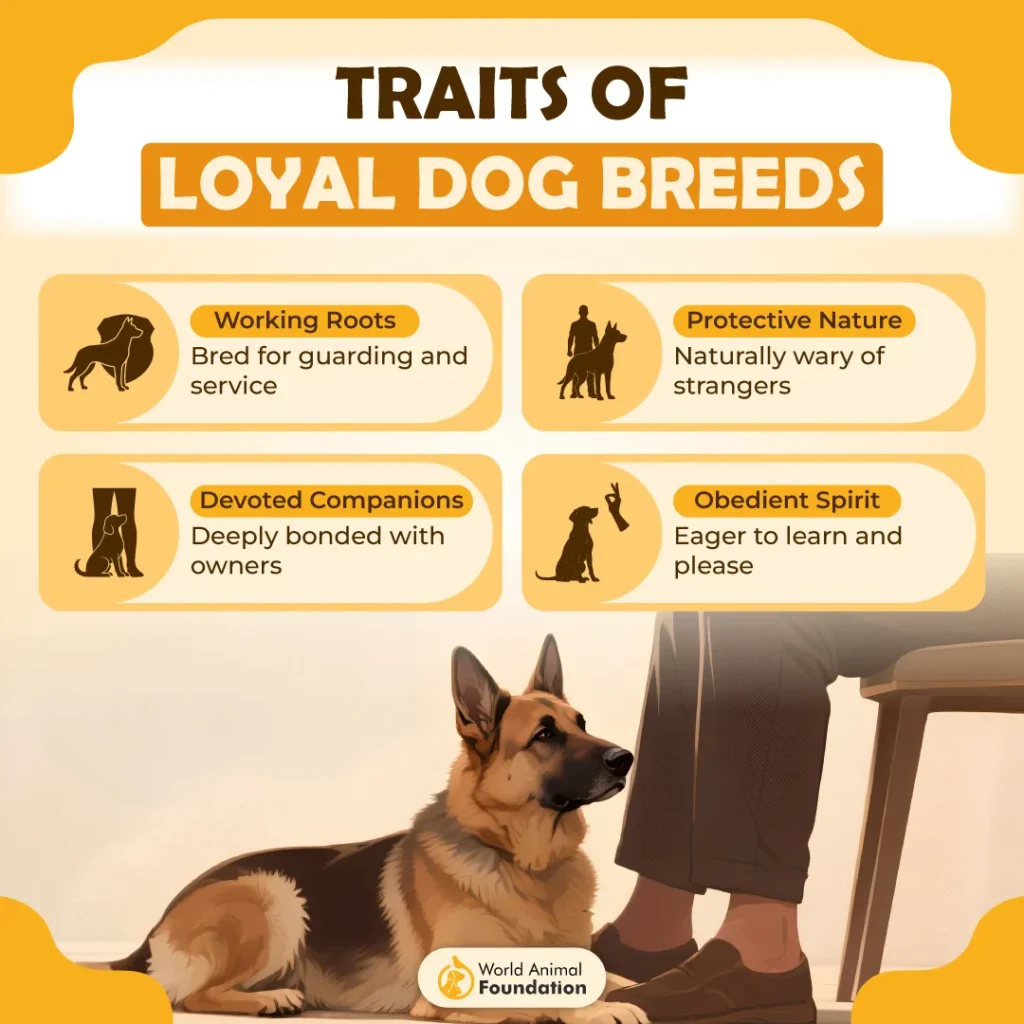
Loyalty in giant breeds often stems from their historical roles as guardians, herders, and working dogs. Many of these dogs were bred to protect livestock, property, and families, which explains their natural protective instincts.
However, loyalty also comes with responsibility, as these breeds require proper training, socialization, and space to thrive. Their size alone means they are not suitable for every home, especially apartments or inexperienced owners. Choosing one of these breeds requires commitment, patience, and a clear understanding of their needs.
This guide explores seven lesser-known giant dog breeds that stand out for their devotion and character.
Lesser-Known Giant Dog Breeds with Unmatched Loyalty
1. Leonberger
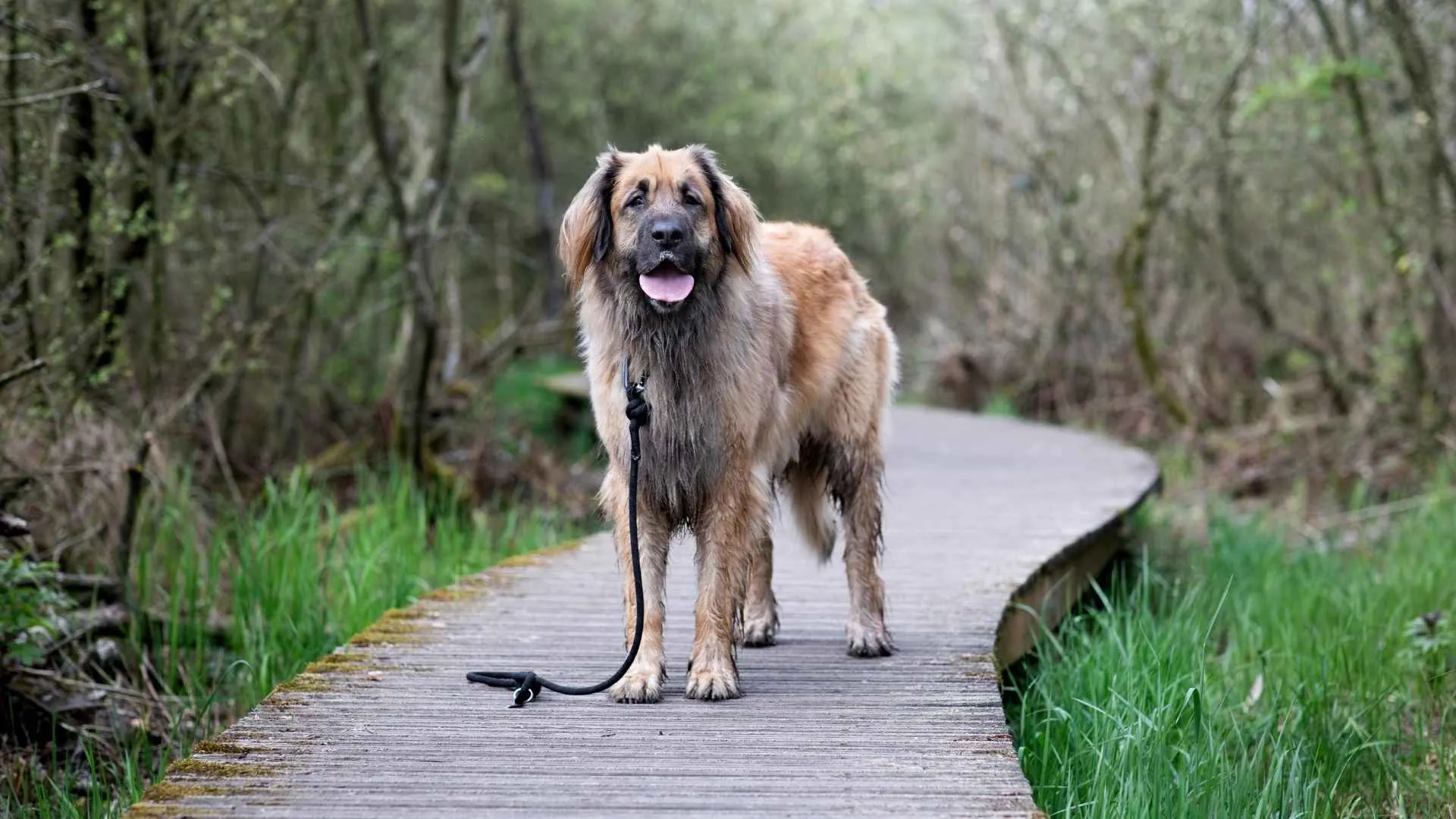
The Leonberger is a majestic giant breed that originated in Germany and was bred to resemble a lion. This breed was historically favored by European royalty due to its striking appearance and calm temperament.
Despite their imposing stature, they are incredibly gentle and affectionate with their families. Their friendly nature makes them excellent companions rather than aggressive guard dogs.
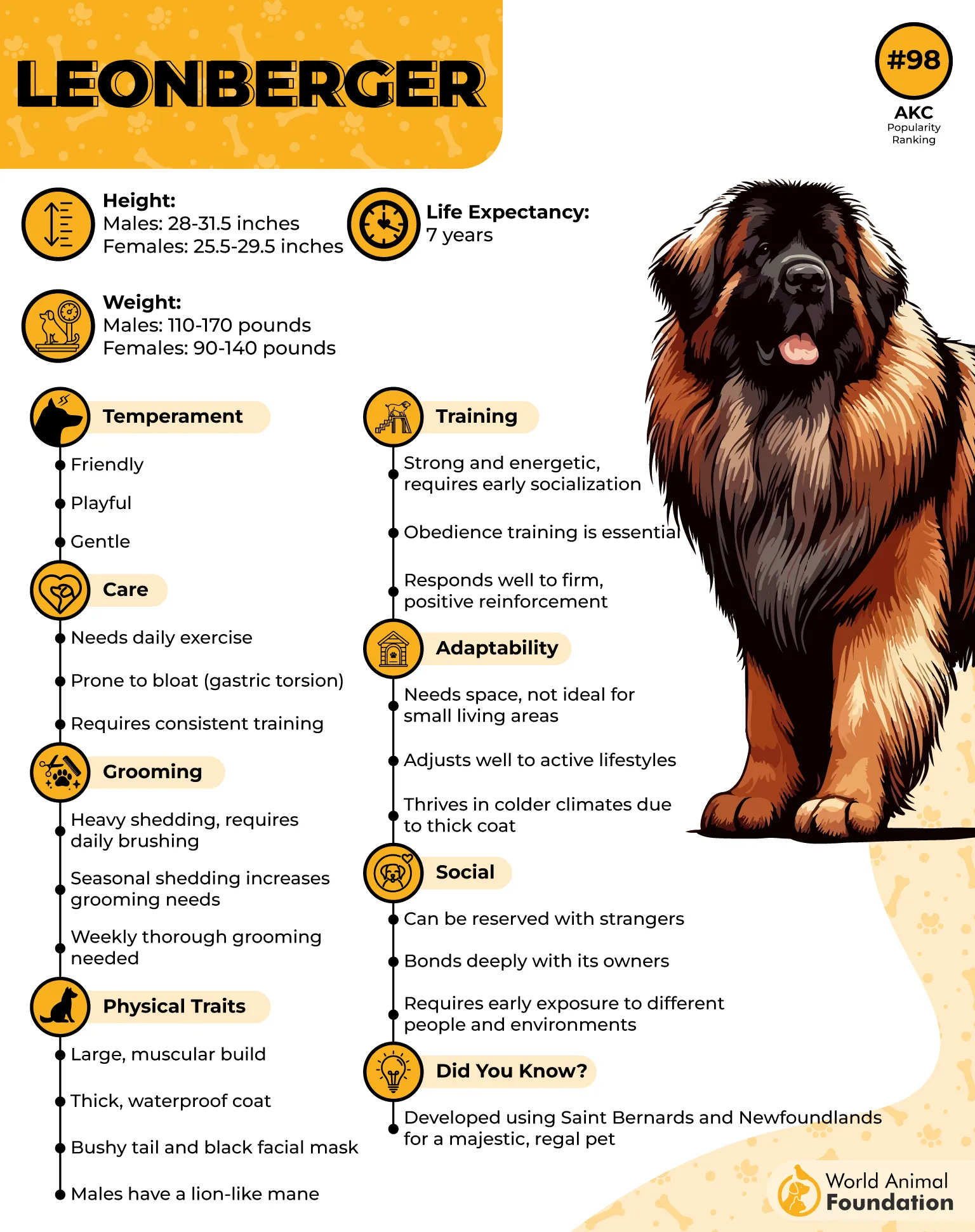
Leonbergers are highly intelligent and versatile, often excelling in roles such as water rescue and therapy work. Their natural swimming ability and strength make them particularly effective in rescue operations.
They are also known for their patience, as per Purina, which allows them to interact well with children and other pets. However, their intelligence means they require consistent mental stimulation to stay engaged. Without proper activity, they may become bored and develop undesirable behaviors.
Grooming a Leonberger requires dedication because of its thick double coat, which sheds heavily throughout the year. Regular brushing is essential to prevent matting and maintain coat health. Their large size also means higher food and healthcare costs compared to smaller breeds.
While their lifespan is relatively short at around seven years, their companionship is deeply rewarding. Owners who can meet their needs will find a loyal and loving family member.
2. Tibetan Mastiff
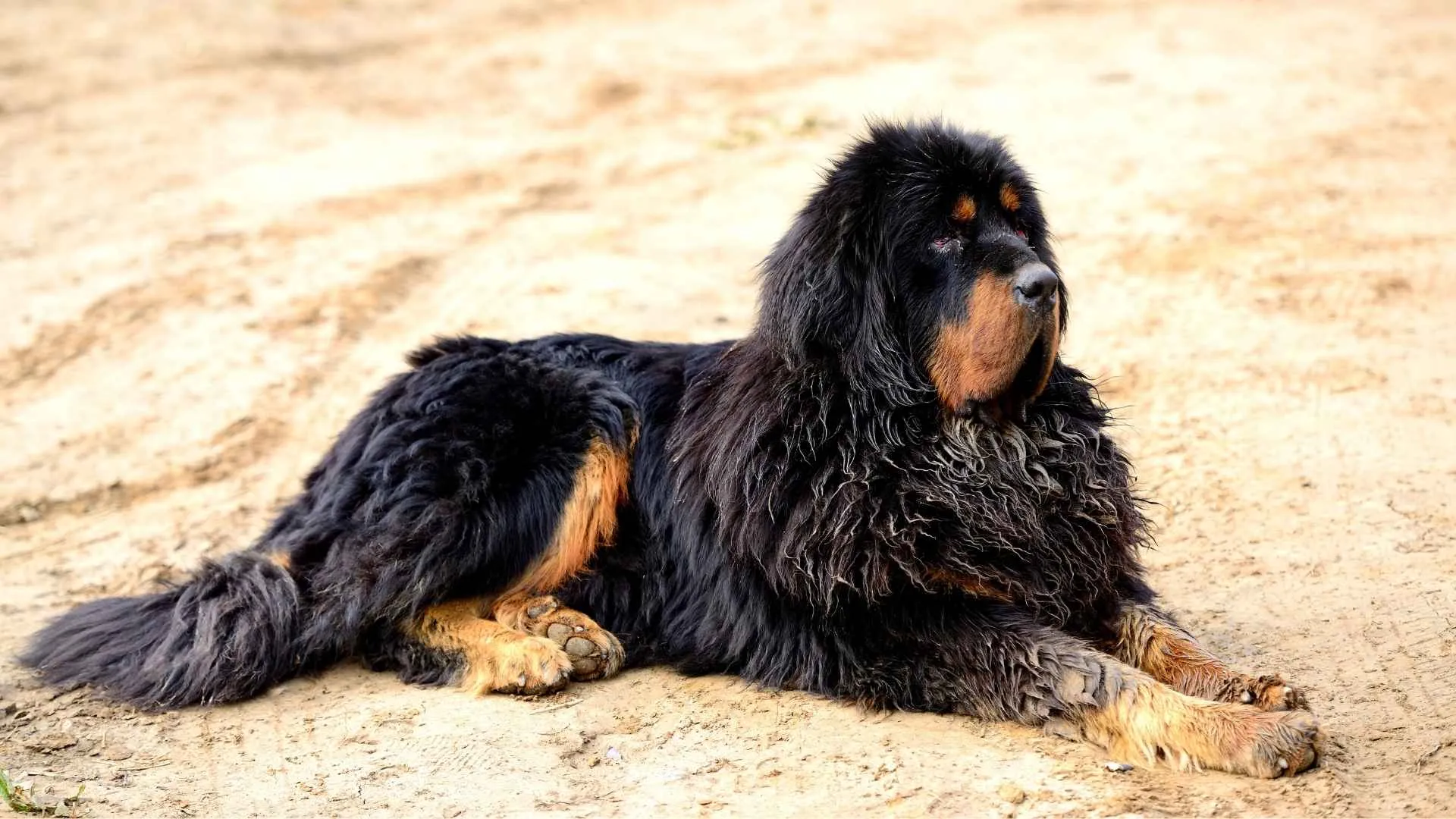
The Tibetan Mastiff is an ancient guardian breed known for its independence and protective instincts. Originally bred to guard livestock in the Himalayas, these dogs are naturally wary of strangers and highly territorial.
Their imposing appearance and deep bark make them effective deterrents against intruders. However, their independent nature can make them challenging to train. They are best suited for experienced dog owners who understand strong-willed breeds.
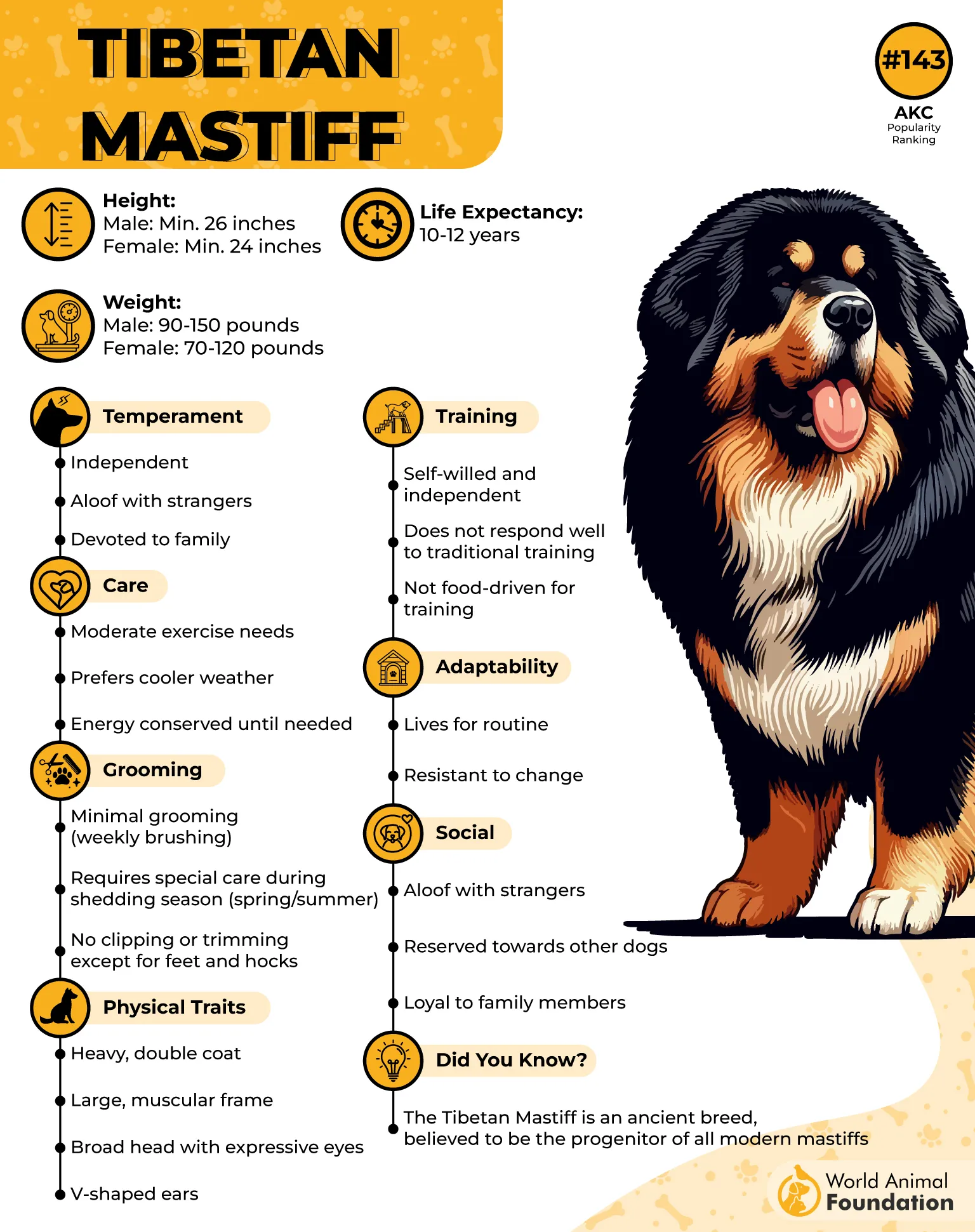
These big dogs are not overly energetic and do not require intense daily exercise. Instead, they prefer moderate activity combined with a secure environment where they can observe their surroundings. Their guarding instincts are particularly strong at night, often leading to increased alertness and barking.
This nocturnal behavior is a trait carried over from their historical role as nighttime protectors. Owners should be prepared to manage this tendency, especially in residential areas.
Despite their aloofness with strangers, these Mastiffs are deeply loyal to their families. They form strong bonds and are highly protective of those they trust. Early socialization is crucial to ensure they can differentiate between normal interactions and real threats.
Their thick coat requires seasonal grooming, although they are relatively low-maintenance outside shedding periods. With proper handling, they become devoted and reliable companions.
3. Irish Wolfhound
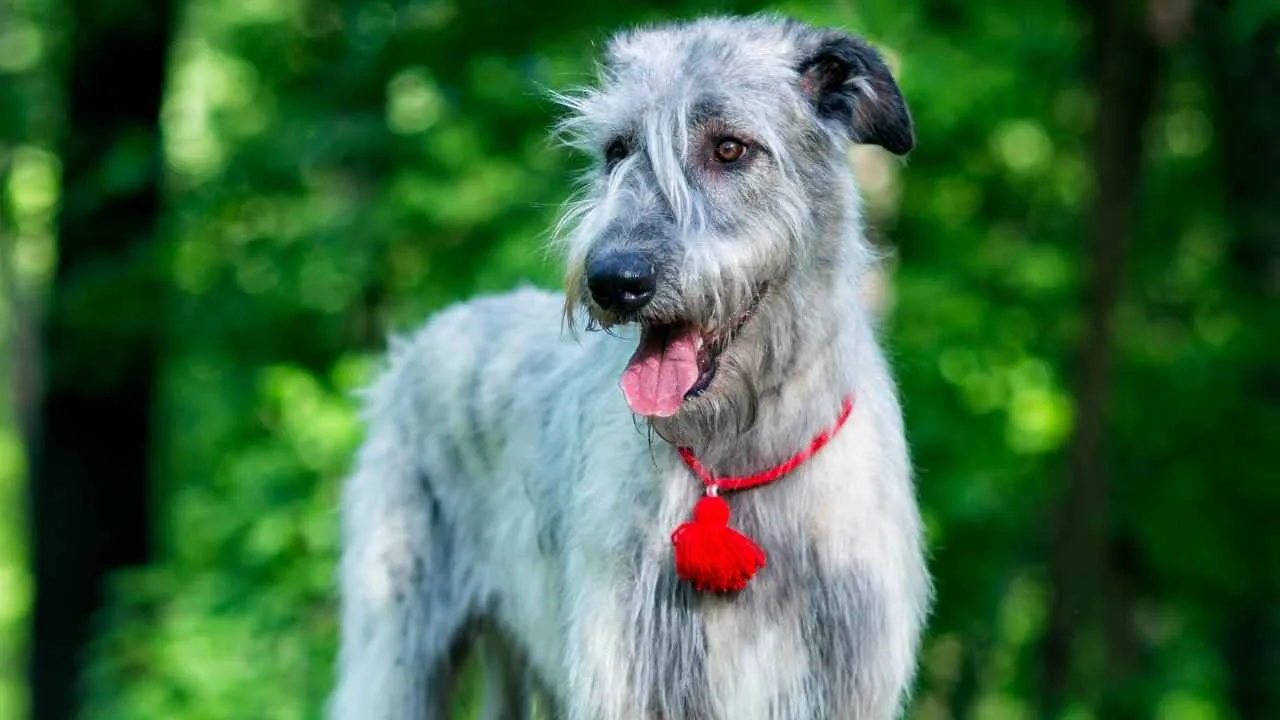
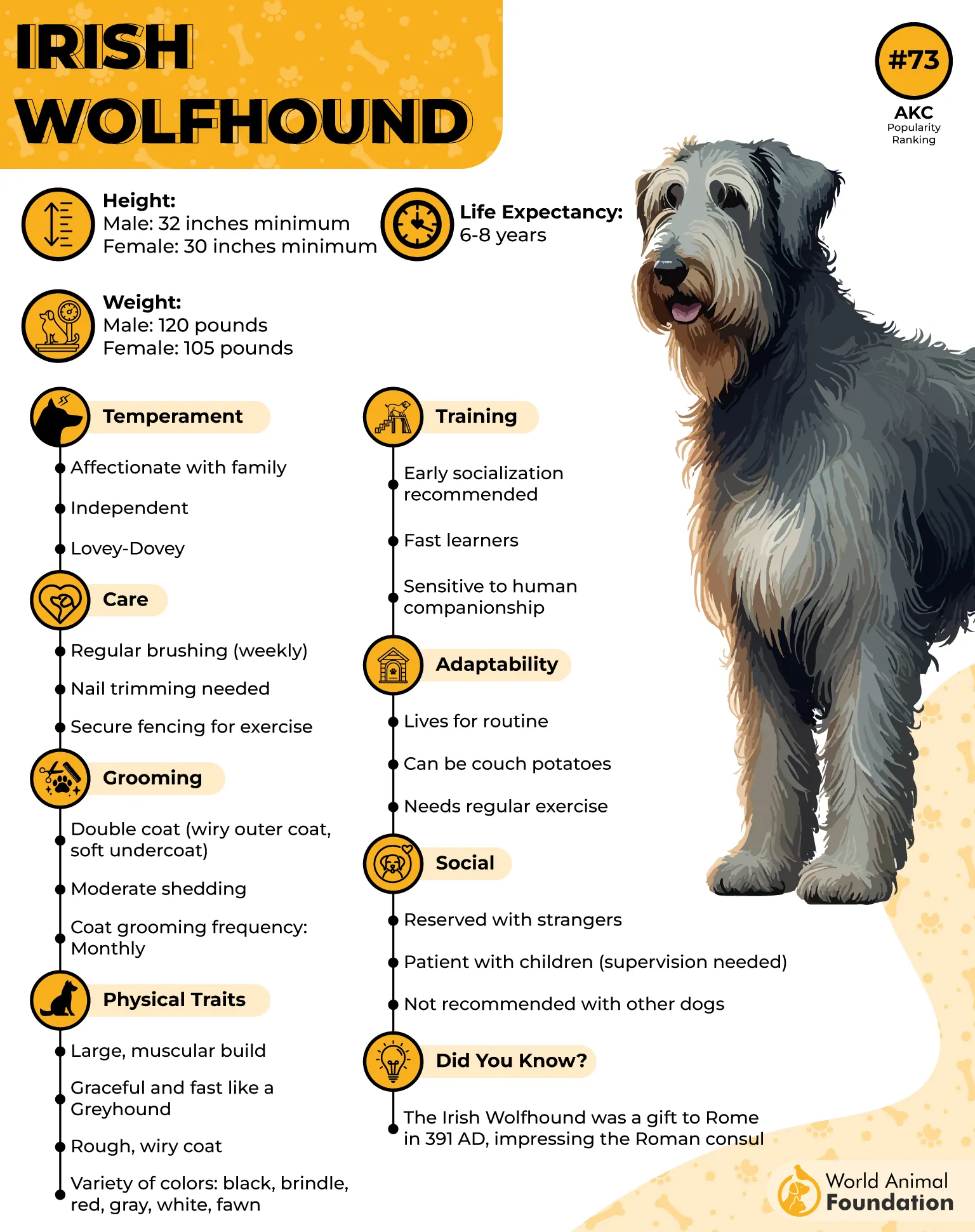
The Irish Wolfhound is widely recognized as one of the tallest dog breeds in the world. Historically used for hunting wolves and large game, these dogs combine strength with remarkable speed. Despite their hunting background, they are known for their calm and gentle temperament.
Irish Wolfhounds are affectionate and enjoy spending time with their families. Their peaceful nature makes them excellent companions in quiet households.
These dogs have moderate energy levels and require regular but not excessive exercise. Daily walks and space to move around are usually sufficient to keep them healthy. However, their strong prey drive means they should only be off-leash in secure areas.
This dog with an innate calm nature is often described as a true “gentle giant.”
They are naturally calm, laid-back, and affectionate with their families, says the Royal Kennel Club. Irish Wolfhounds enjoy lounging and are not overly reactive or aggressive. Despite their hunting background, they are शांत and friendly in home environments. Their calm demeanor makes them one of the best giant breeds for peaceful households.
These incredibly loyal dogs have relatively short lifespans, often ranging from 6 to 8 years. Their large size makes them prone to certain health conditions, including heart issues and bloat. Proper diet and careful exercise routines can help reduce these risks.
Despite their size, they are often described as gentle giants with a loving nature. Their loyalty and calm demeanor make them cherished companions.
4. Caucasian Shepherd Dog
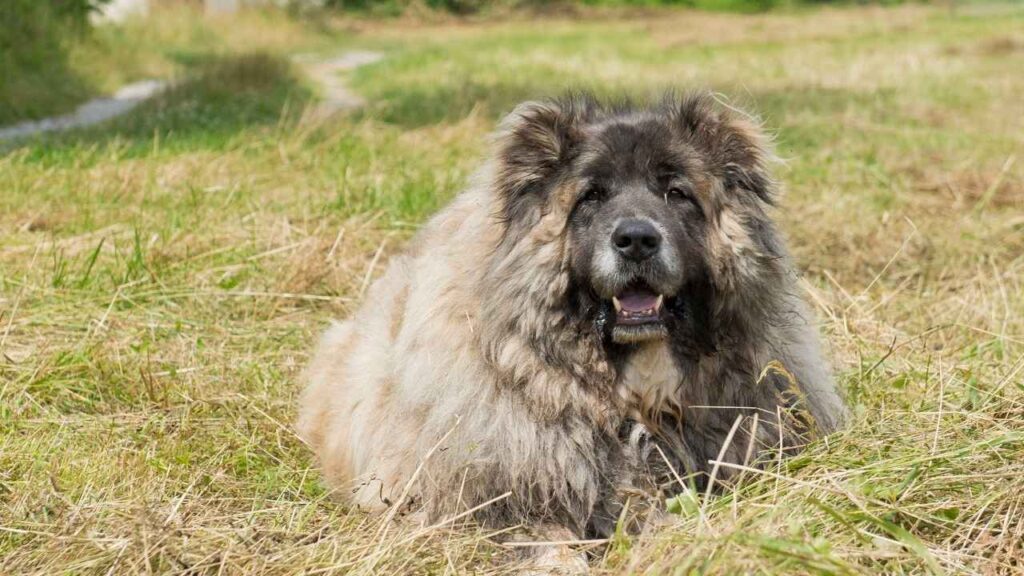
The Caucasian Shepherd Dog is a powerful guardian breed originally developed in the Caucasus Mountains. These dogs were bred to protect livestock from predators such as wolves and bears.
As a result, they possess strong protective instincts and a natural distrust of strangers. Their imposing size and fearless nature make them highly effective guard dogs. However, they require experienced handling due to their independence.
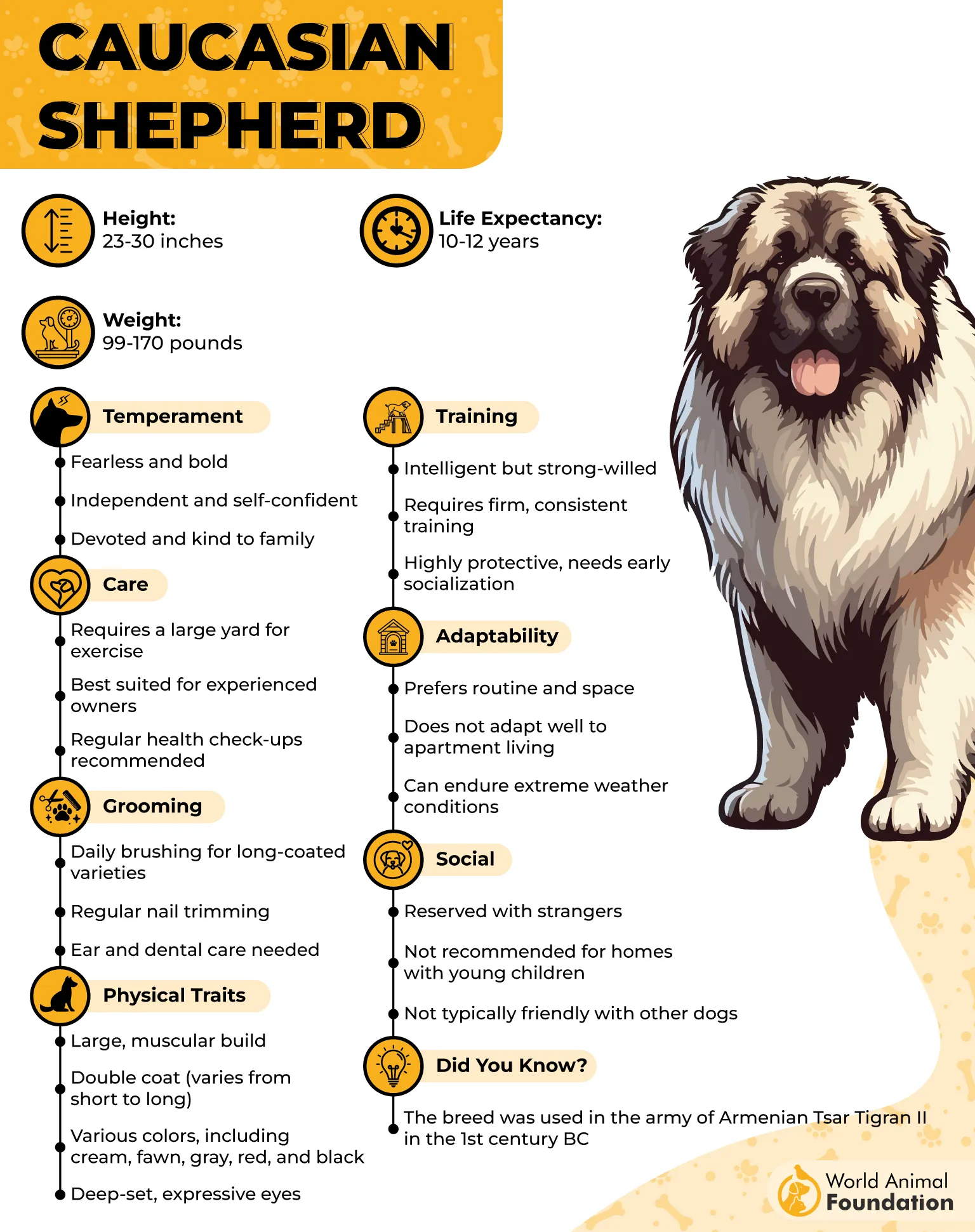
These Shepherd dogs are best suited for homes with ample space and secure fencing. They are not ideal for families with small children or multiple pets due to their dominant tendencies. Early training and socialization are essential to ensure they develop balanced behavior.
Without proper guidance, they can become overly protective or aggressive. Owners must establish clear leadership to manage their strong personalities.
Despite their tough exterior, these dogs are deeply loyal to their families. They form strong bonds and are highly devoted to protecting their loved ones. Their thick coat requires regular grooming, especially in colder climates where it becomes denser.
While they are not overly energetic, they still need regular activity to stay healthy. With the right environment, they become reliable and steadfast companions.
5. Black Russian Terrier
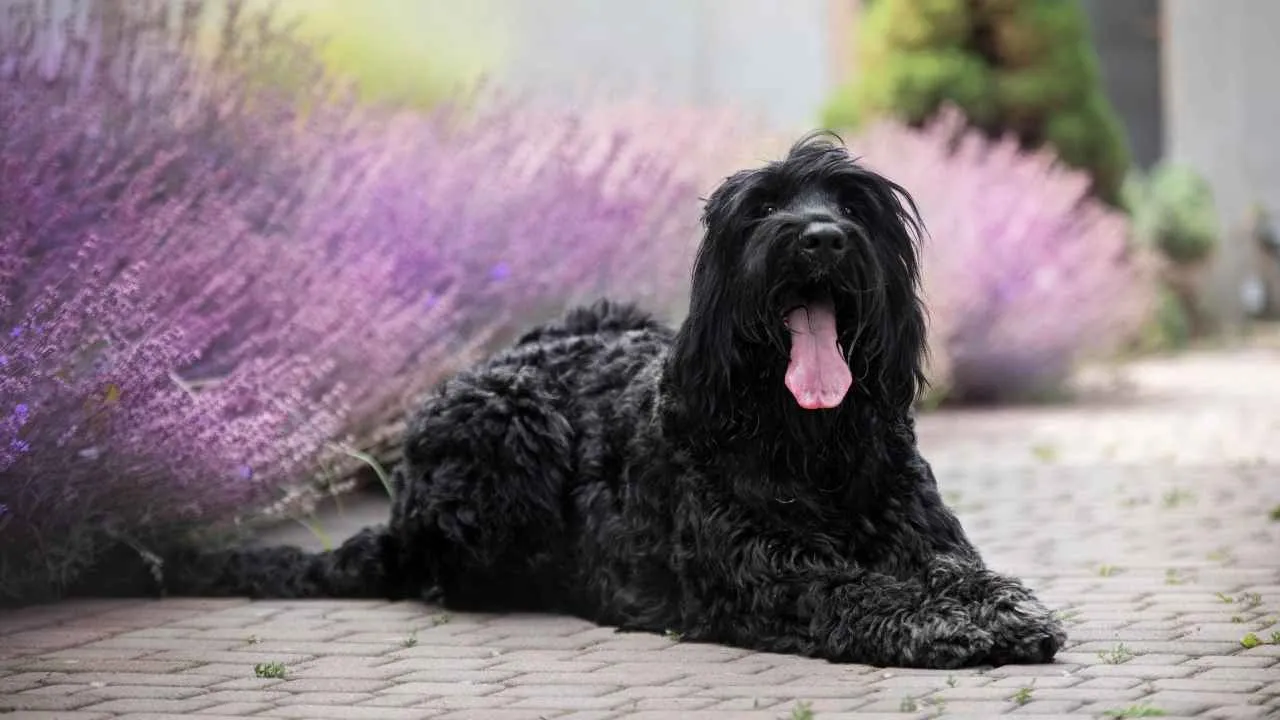
The Black Russian Terrier is a robust and intelligent breed developed for military and working purposes. Known for its strength and endurance, this breed excels in guarding and protective roles. They are highly trainable but require consistent and firm leadership.
Their intelligence allows them to learn complex tasks quickly, making them versatile working dogs. However, their independent streak means training must be structured and consistent.
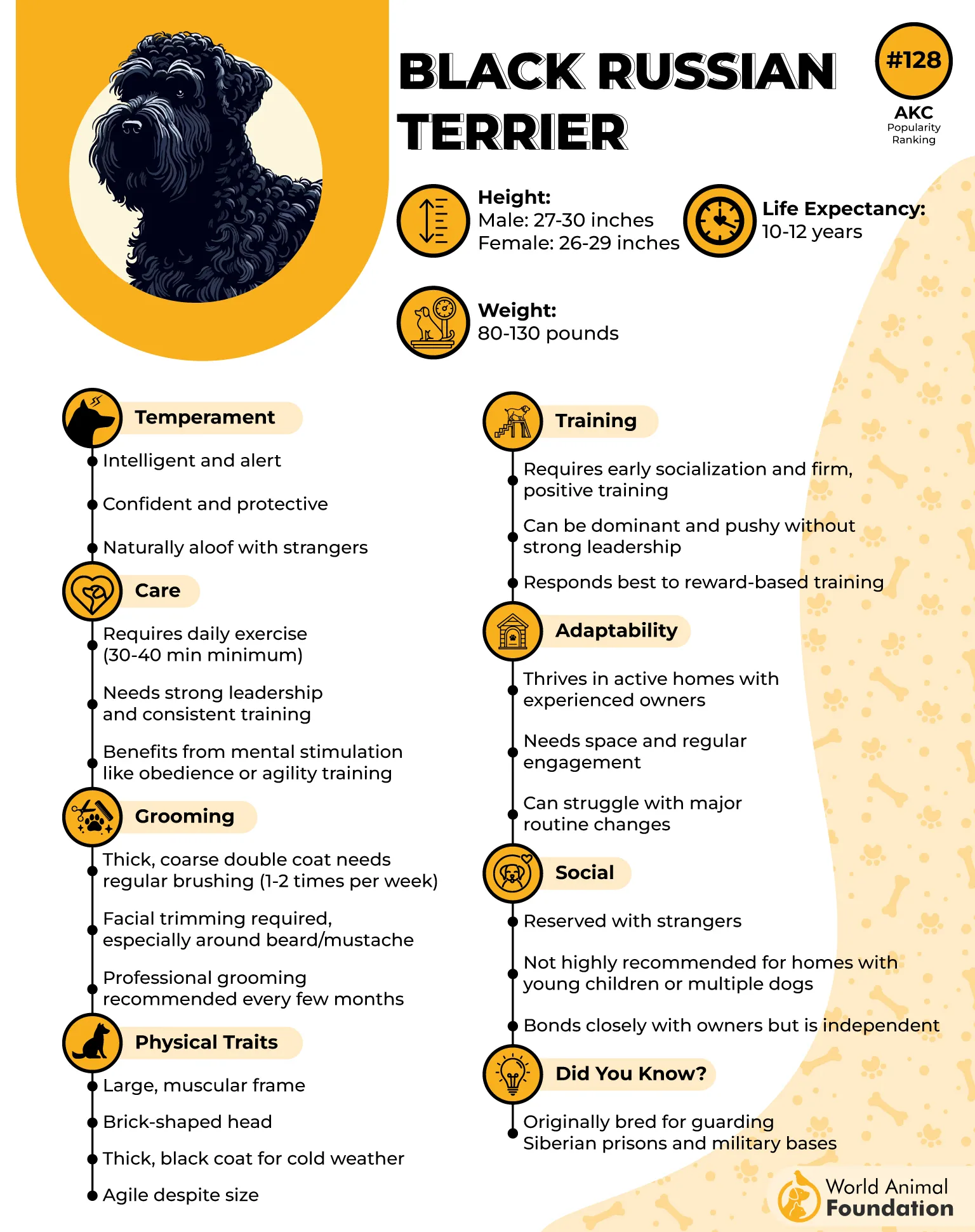
Black Russian Terriers are deeply loyal and form strong bonds with their families, says PetMD. They are generally good with children but should be supervised due to their size and strength. Their protective instincts make them excellent watchdogs, though they can be wary of strangers.
Early socialization helps ensure they remain confident and well-adjusted. With proper training, they become calm and dependable companions.
Their dense double coat requires regular grooming to prevent matting and maintain cleanliness. Brushing and trimming are necessary to keep their coat in good condition. They also require regular exercise and mental stimulation to avoid boredom.
Activities like obedience training and agility can help keep them engaged. Owners who invest time in their care will be rewarded with a loyal and capable dog.
6. Dogue de Bordeaux
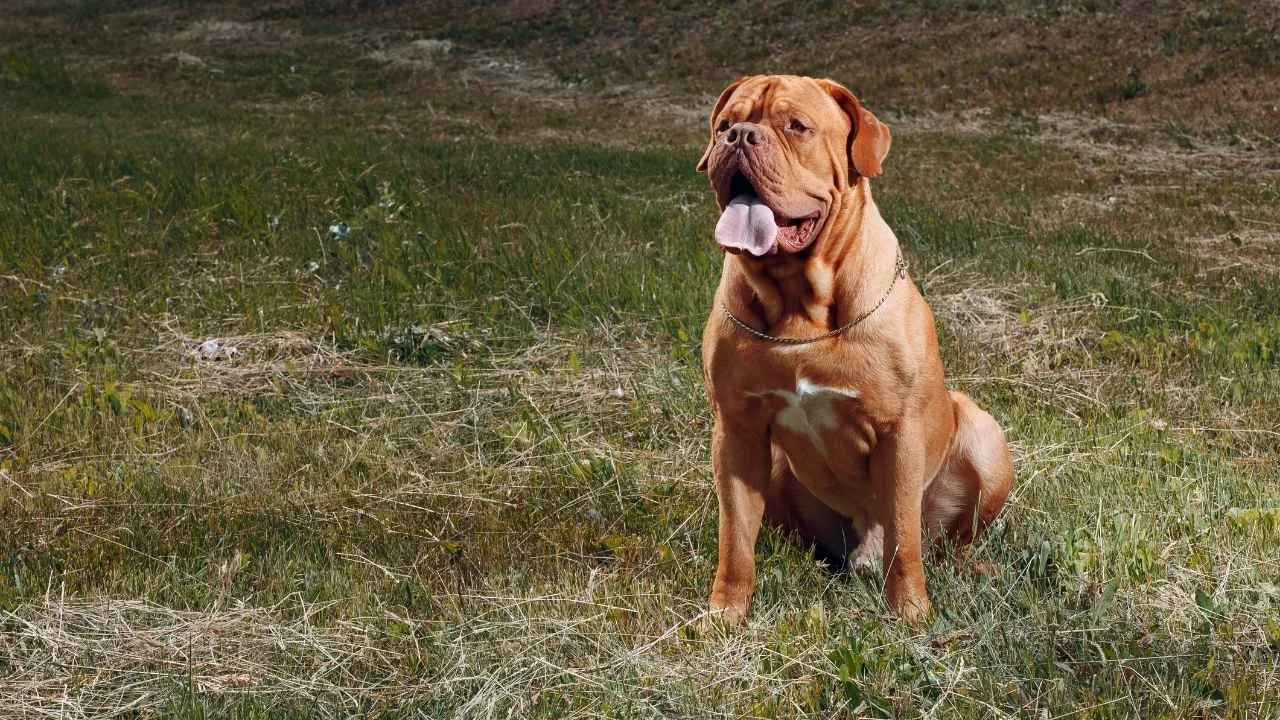
The Dogue de Bordeaux is a powerful French mastiff known for its muscular build and protective nature. Historically used for guarding and hunting, this breed has a long and rich heritage. Despite their intimidating appearance, they are affectionate and form strong bonds with their families.
Their loyalty makes them excellent companions and watchdogs. However, they require early socialization to manage their wariness of strangers.
These dogs are relatively low-energy compared to other giant breeds. They enjoy short walks and relaxed time at home with their owners.
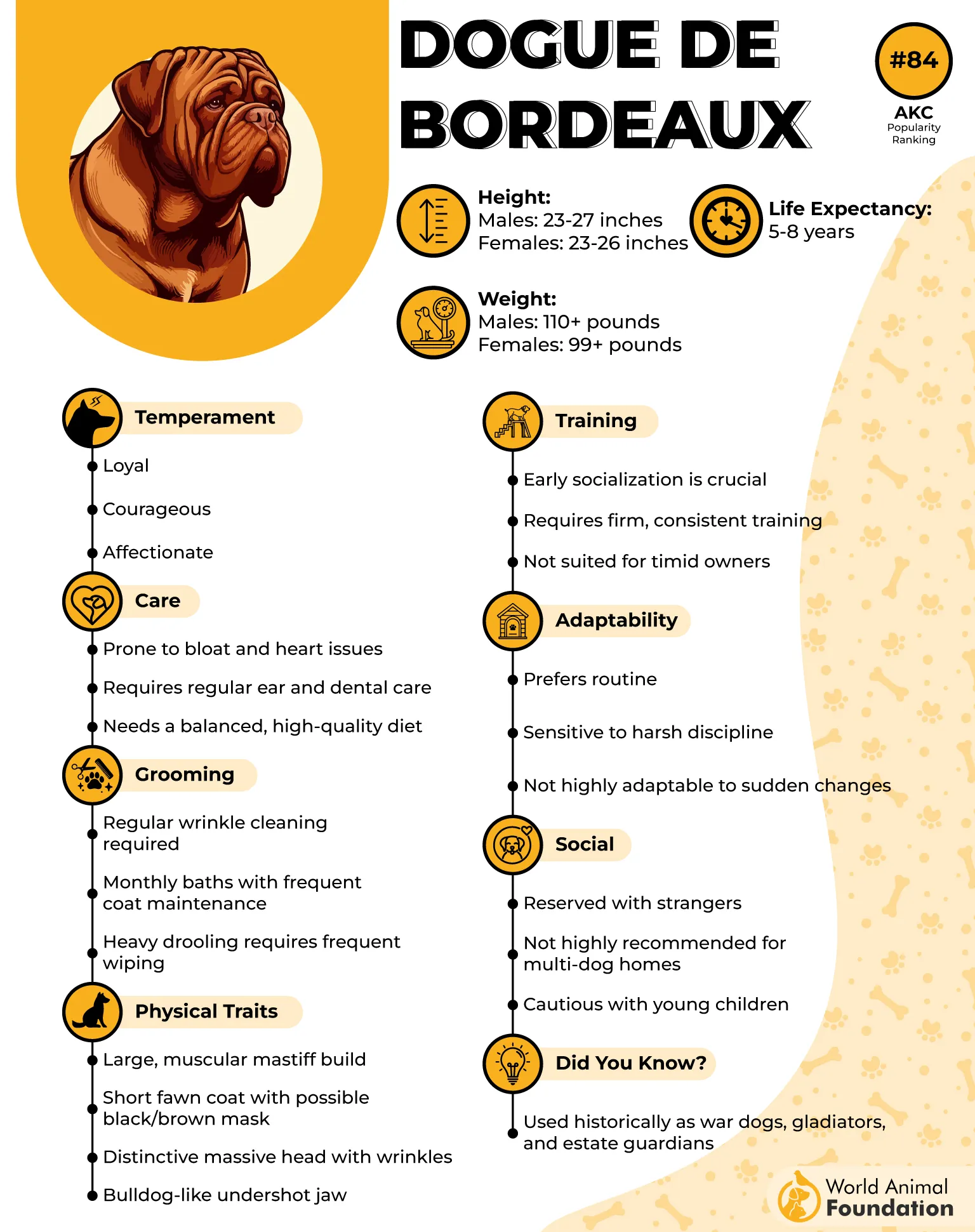
However, their strength means they must be properly trained to ensure good behavior. Without guidance, they can become stubborn or difficult to handle. Consistent training helps shape them into well-mannered pets.
Dogue de Bordeaux dogs require moderate grooming, mainly focused on maintaining their short coat and cleaning skin folds. Their health should be monitored closely, as they are prone to certain conditions common in large breeds.
They typically have shorter lifespans, often around 5 to 8 years. Despite this, their affectionate nature makes them deeply cherished by their owners. They are loyal companions that thrive in a loving environment.
7. Spanish Mastiff
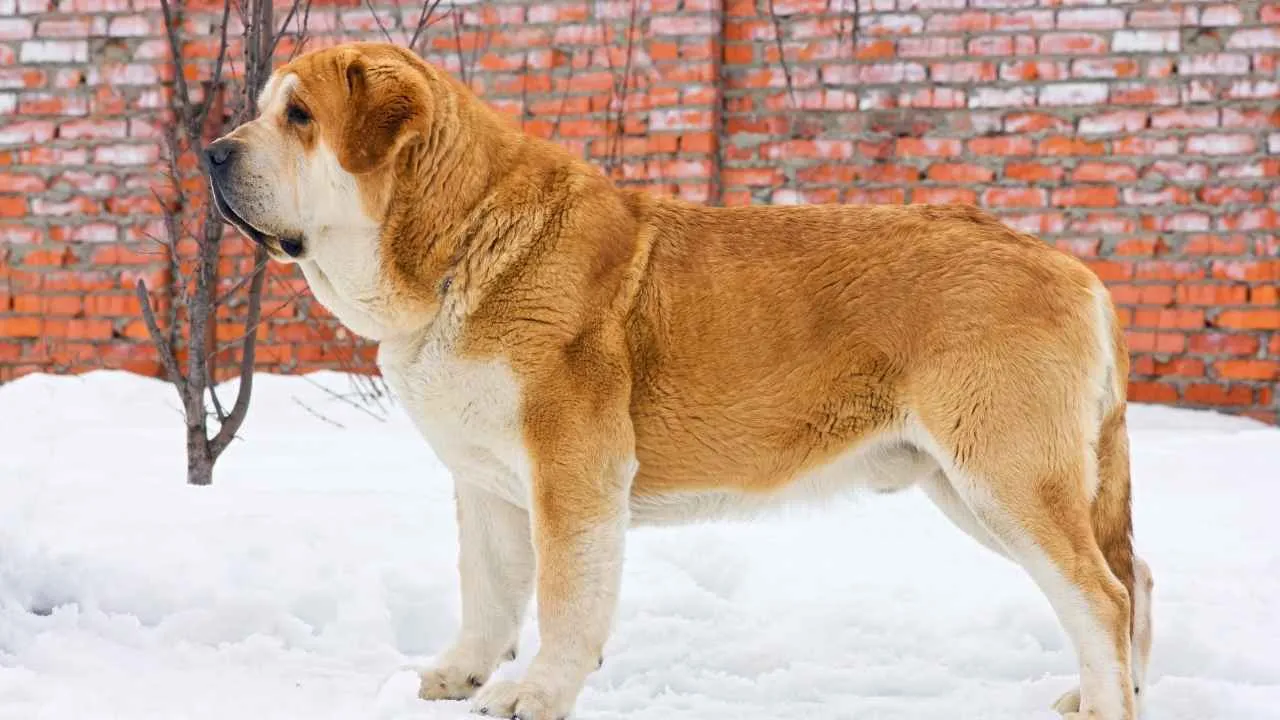
The Spanish Mastiff is a traditional livestock guardian known for its calm and protective temperament. These dogs were historically used to protect sheep from predators during long migrations. Their independence and intelligence allowed them to work with minimal supervision.
Today, they are valued for their loyalty and gentle nature with their families. Despite their size, they are often calm and composed.
Spanish Mastiffs are not highly energetic and do not require intense daily exercise. They are content with moderate activity and plenty of rest. However, their protective instincts make early socialization essential.
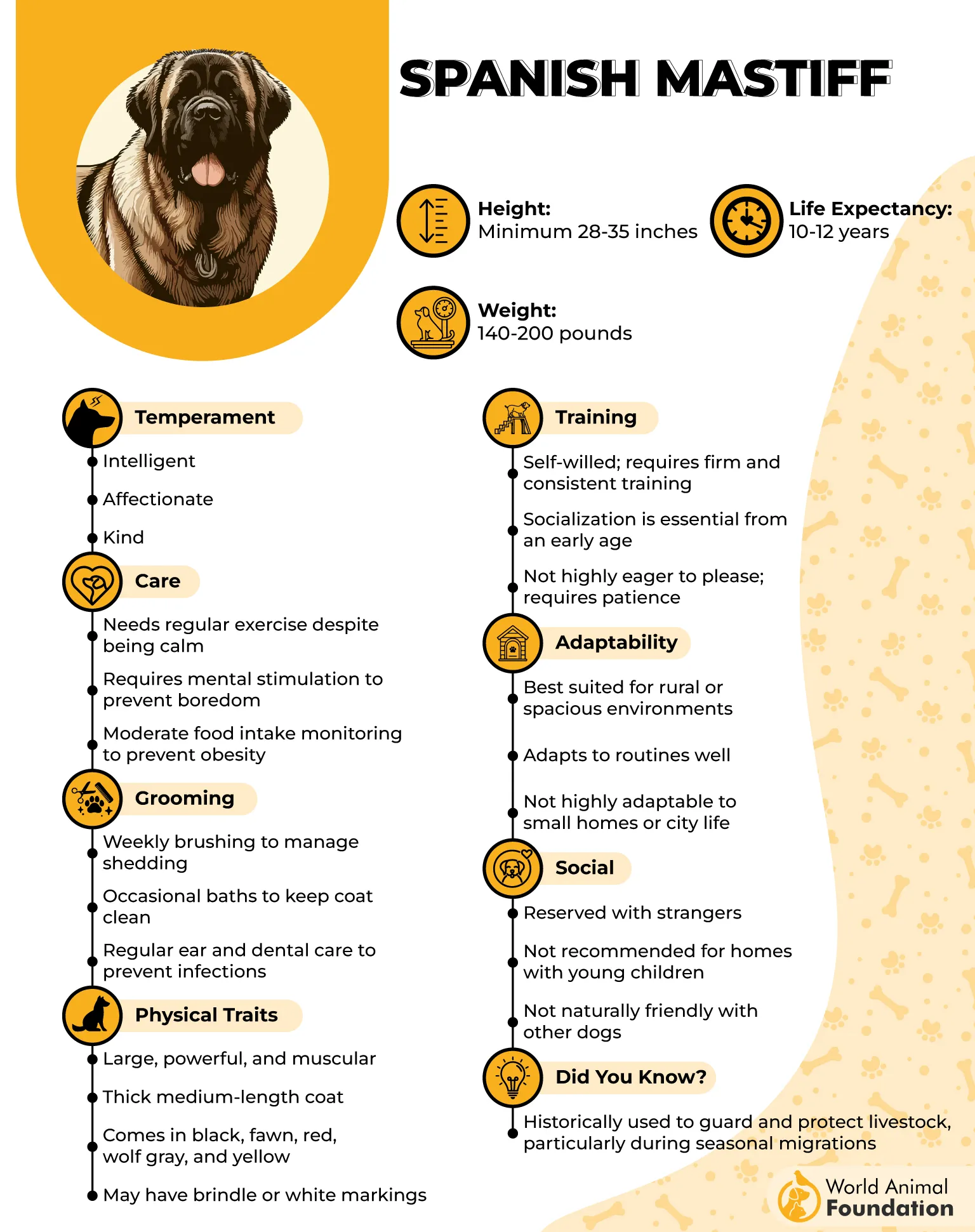
They need to learn how to interact appropriately with strangers and other animals. Proper training helps them become well-balanced companions.
Their thick coat requires regular grooming, especially in colder climates where it becomes denser. While they are affectionate with their families, they can be aloof with strangers. This trait makes them effective watchdogs without being overly aggressive.
They are best suited for experienced owners who understand large guardian breeds. With the right care, they are loyal and dependable companions.
Conclusion
These seven giant breeds highlight the incredible diversity within lesser-known dogs that offer unmatched loyalty. From the gentle Leonberger to the fiercely protective Tibetan Mastiff, each breed brings unique qualities to the table.
Their histories as working and guardian dogs shape their behavior and needs today. Understanding these traits is essential for providing the right environment. Choosing the right breed ensures a fulfilling relationship for both owner and dog.
Ultimately, these lesser-known giant breeds prove that loyalty comes in many forms. Whether you seek a calm companion or a vigilant protector, there is a breed that fits your needs. Investing time and effort into their care will result in a strong and lasting bond.
