




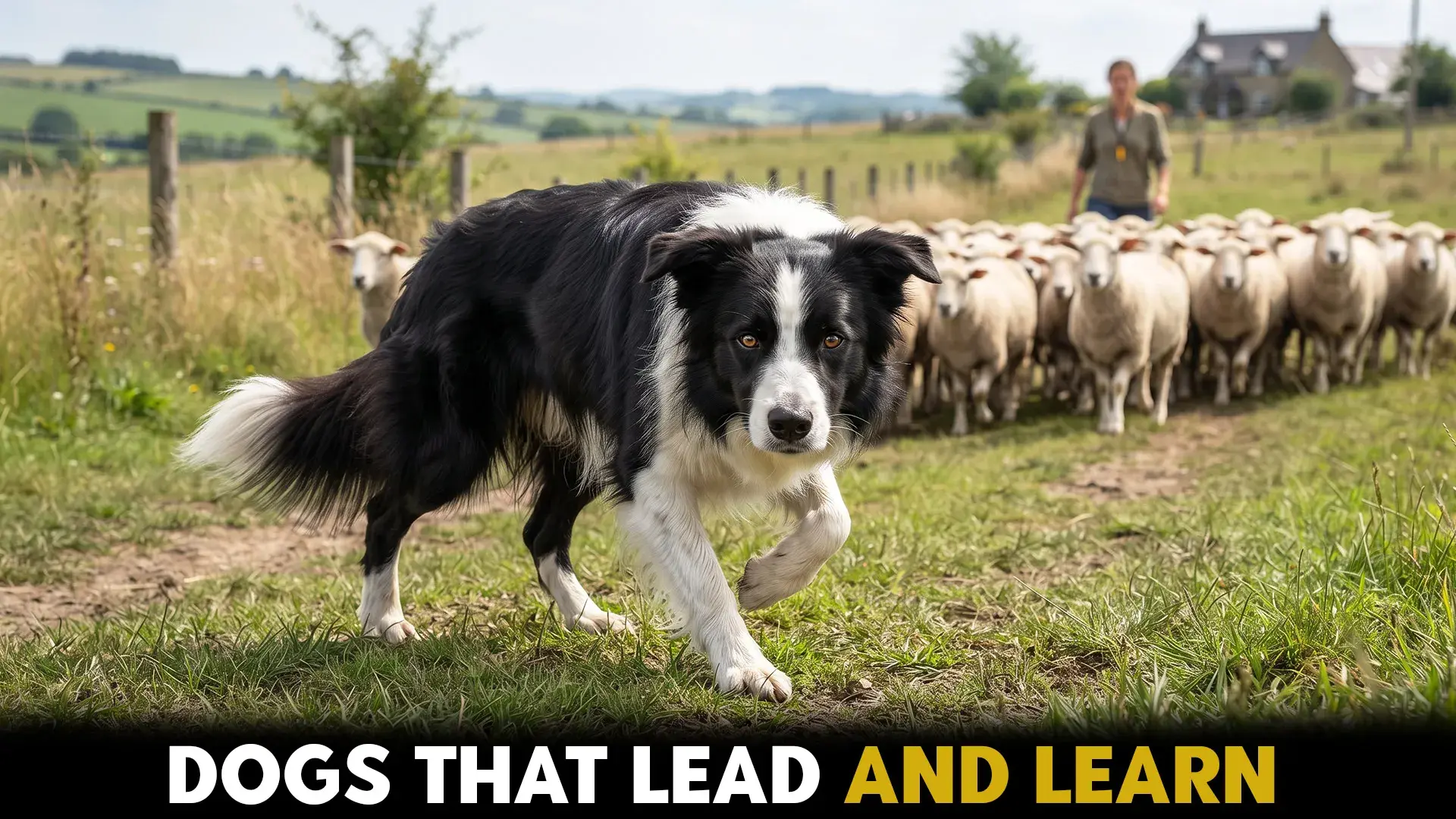
There is a reason herding dogs have remained valuable long after farming reduced the need for traditional livestock work. Their ability to understand movement, follow directions, and work with remarkable persistence has made them useful far beyond pastures.
Many were bred to spend hours on their feet, monitor animals closely, and make decisions without constant hands-on guidance from a person. That combination created dogs with strong working drives and impressive problem-solving ability.
Herding behavior can range from gathering and controlling a flock to driving animals toward a specific destination, depending on the dog’s original purpose. Physical build matters too, since working across fields and uneven ground requires endurance and agility.
In the following article, you will explore legendary herding breeds and the working abilities, instincts, and characteristics that helped secure their place in canine history.
Key Takeaways
A Border Collie can influence the movement of sheep from a distance using nothing more than its intense gaze and precise movements.
Australian Shepherds took on sheep and cattle work for more than a century, while German Shepherds brought strength, courage, and careful judgment to livestock work.
The Australian Cattle Dog had an especially demanding job, covering huge distances and using controlled nips to keep cattle moving in the right direction.
The rest of this list reveals even more fascinating working styles, including a small Welsh breed that once handled cattle, geese, chickens, sheep, and ponies.
Legendary Dog Breeds for Herding: Traits and Training
1. Border Collie
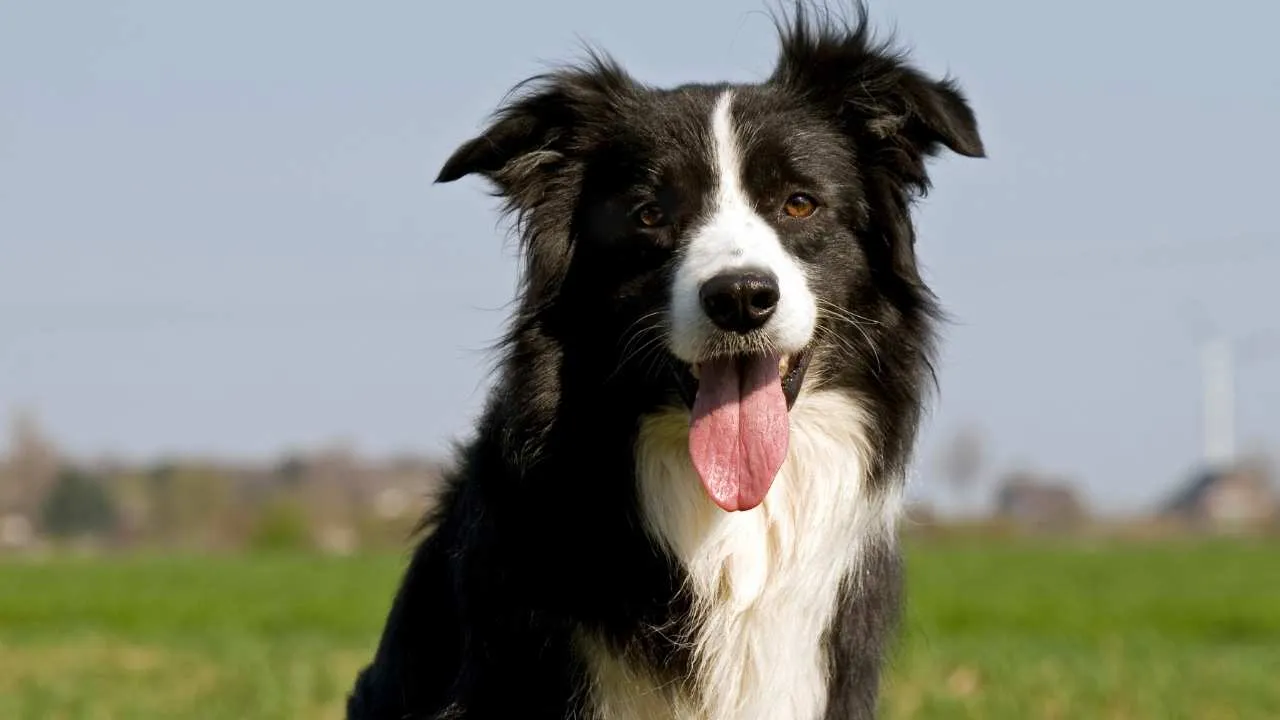
Border Collie came from the borderlands between England and Scotland, with records of the breed dating to the 18th century. Shepherds valued these dogs for guiding flocks across steep, rugged terrain, using their intense “eye” to control sheep from a distance, according to WebMD.
The Working Eye
Border Collie can fix its gaze on livestock and use that concentrated stare to influence where the flock goes. This unusual herding technique works alongside quick reactions and independent problem-solving, giving the dog an active role in managing animals.
These working details make the system more precise:
“Come By” directs clockwise circling
“Away” sends the dog counter-clockwise
“That’ll Do” ends the work session
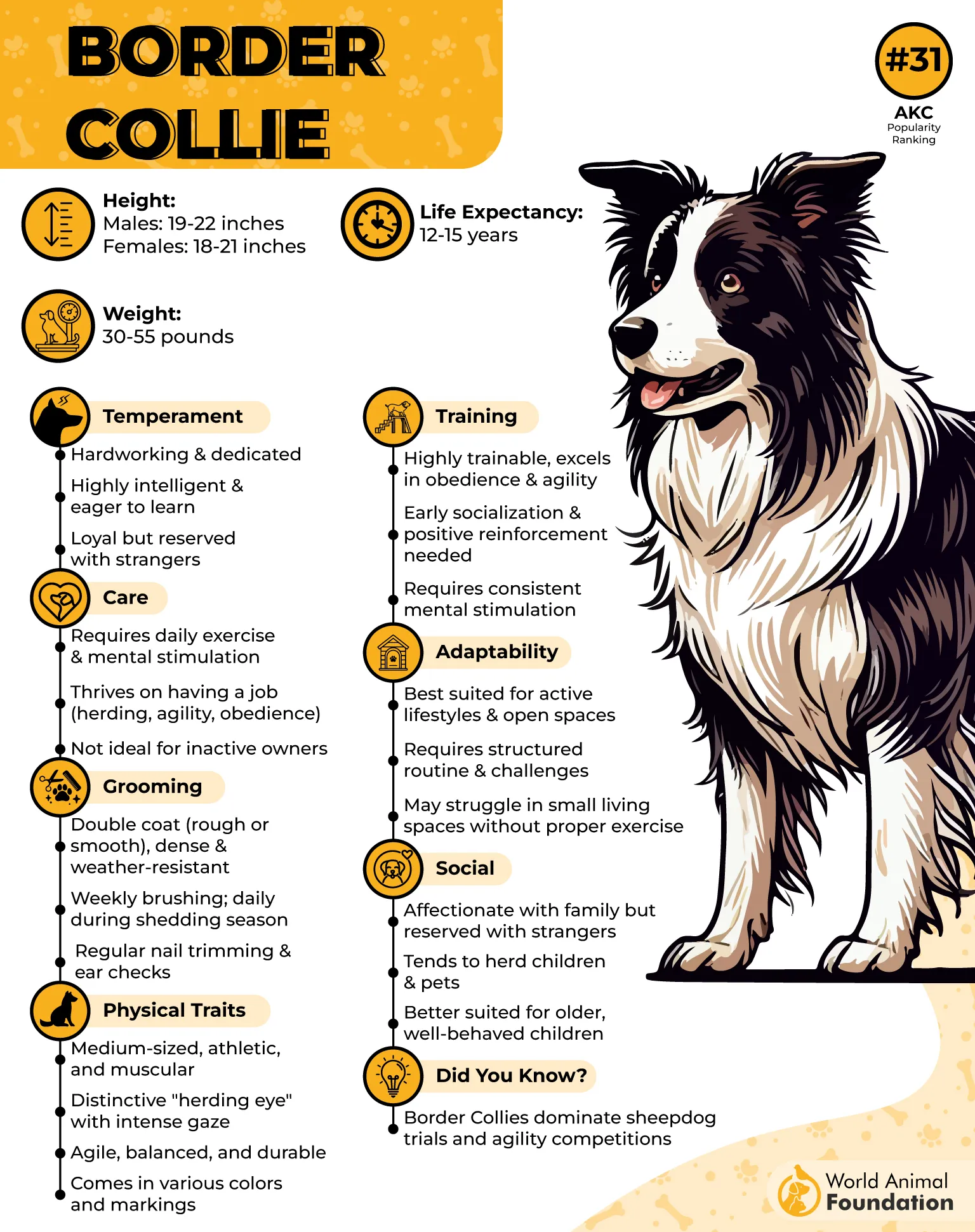
A Mind That Keeps Learning
These herding dog breeds can learn new behaviors after only a few repetitions, making short, focused training sessions especially productive. Agility, nose work, tracking, mantrailing, and obedience give this highly observant breed different problems to solve.
2. Australian Shepherd
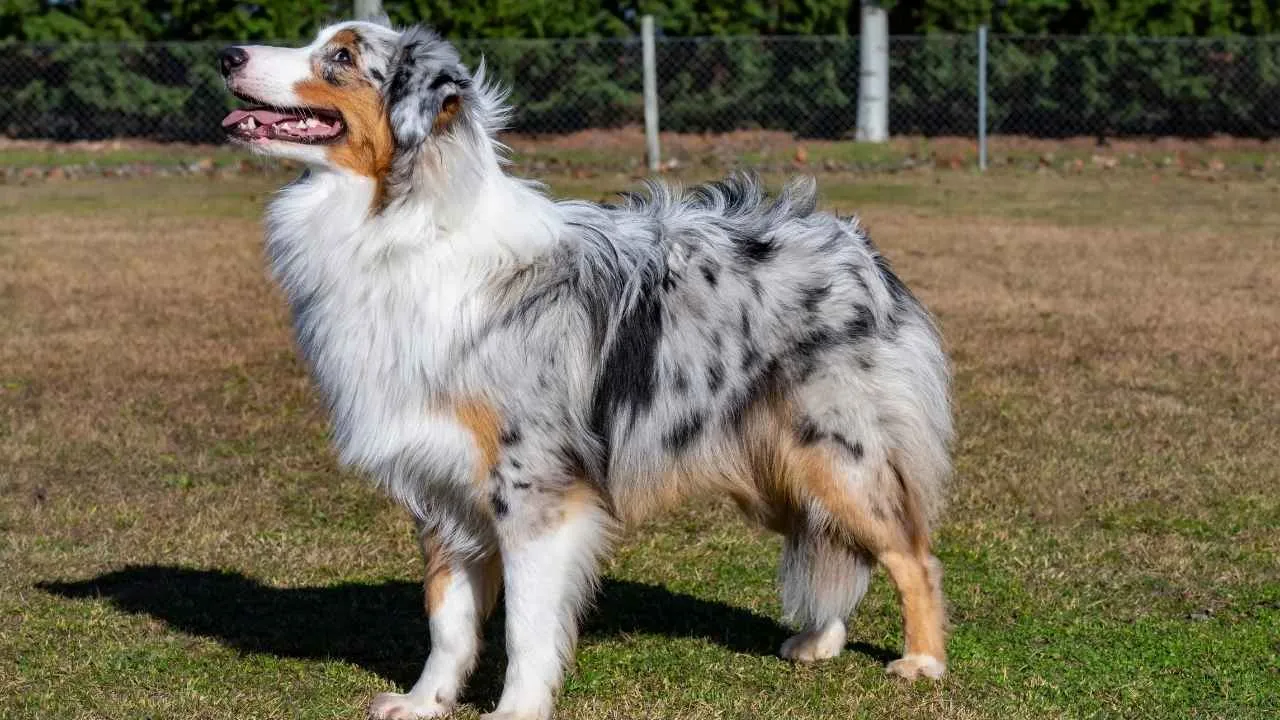
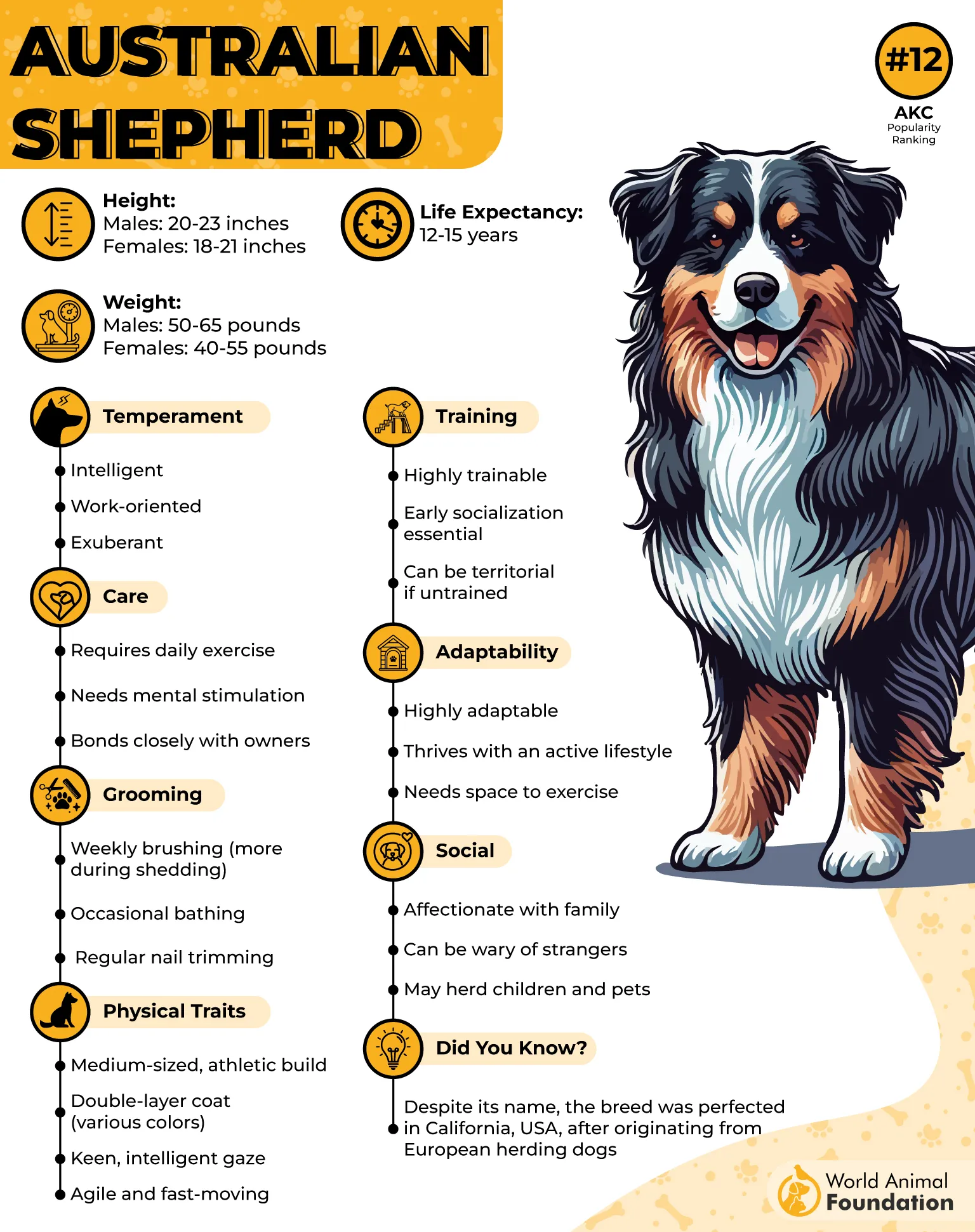
Australian Shepherd is an American herding breed with an unusual name, linked to sheep brought from Australia and Basque shepherds from the Pyrenees who arrived in the United States with small blue merle dogs. By the late 1800s and early 1900s, these dogs were being used for serious farm work.
A Cattle-Smart Worker
Aussies have worked with sheep for more than a century, while their ability to handle cattle has made them useful beyond a single type of livestock, as per ASCA. Its working purpose also meant practical ability mattered more than appearance when the breed was being shaped.
A closer look at its working style reveals:
Uses “walk up” to approach livestock from behind
“Away” directs the herd toward the right
“Come bye” sends the herd toward the left
Herding Takes Structure
Australian Shepherd training can begin with a small flock in a controlled pen, using a 20- to 30-foot-long leash before gradually increasing freedom.
Early work may use chickens because they are less intimidating than cattle, with verbal and whistle commands introduced before off-leash sessions.
3. German Shepherd
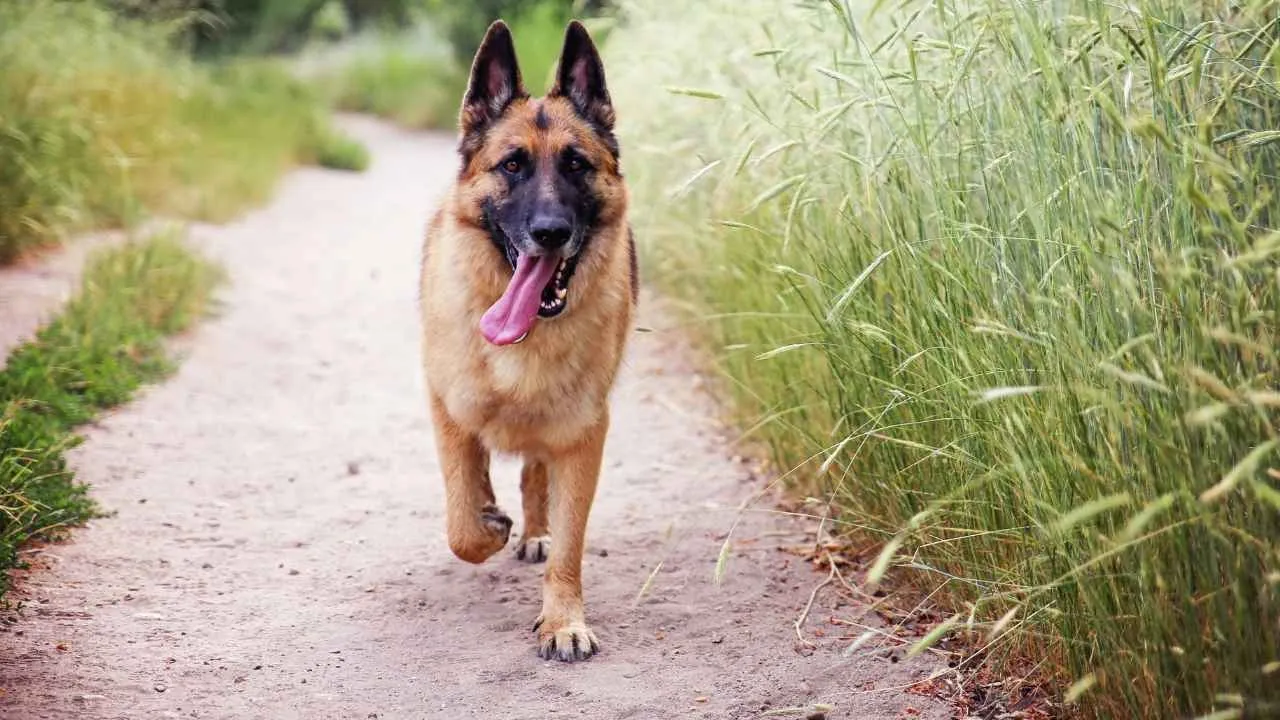
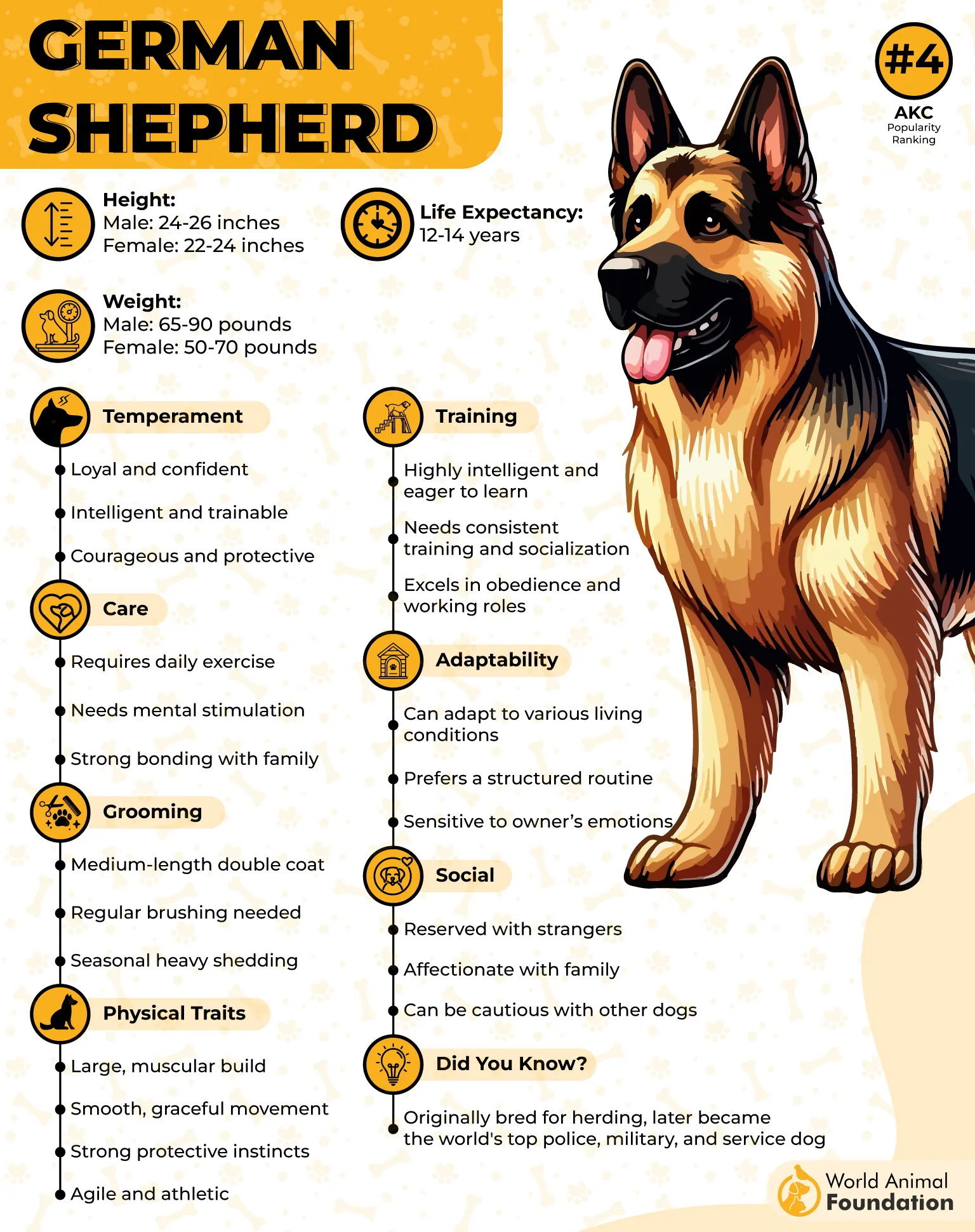
German Shepherd originated in Germany through efforts to create a capable flock guardian and herding dog, with later breeding placing greater emphasis on intelligence and courage. The breed was also called the Alsatian and Shepherd Dog, with its name changing after World War I.
Working With Livestock
They can combine physical control with careful judgment when working sheep, goats, or ducks, while responding closely to their handler. Herding tests assess whether a dog can fetch or drive livestock, giving its natural working instincts a structured setting.
The main traits of their work include:
Pen and field boundary patrols
Calm pressure around livestock
Directional commands at a distance
Starting Young
The puppies of this large breed can begin learning through structured toy games that turn chasing into controlled responses. Early visits to supervised livestock facilities also help them become familiar with pens, animals, sounds, and activities while learning to listen to their handler.
4. Australian Cattle Dog
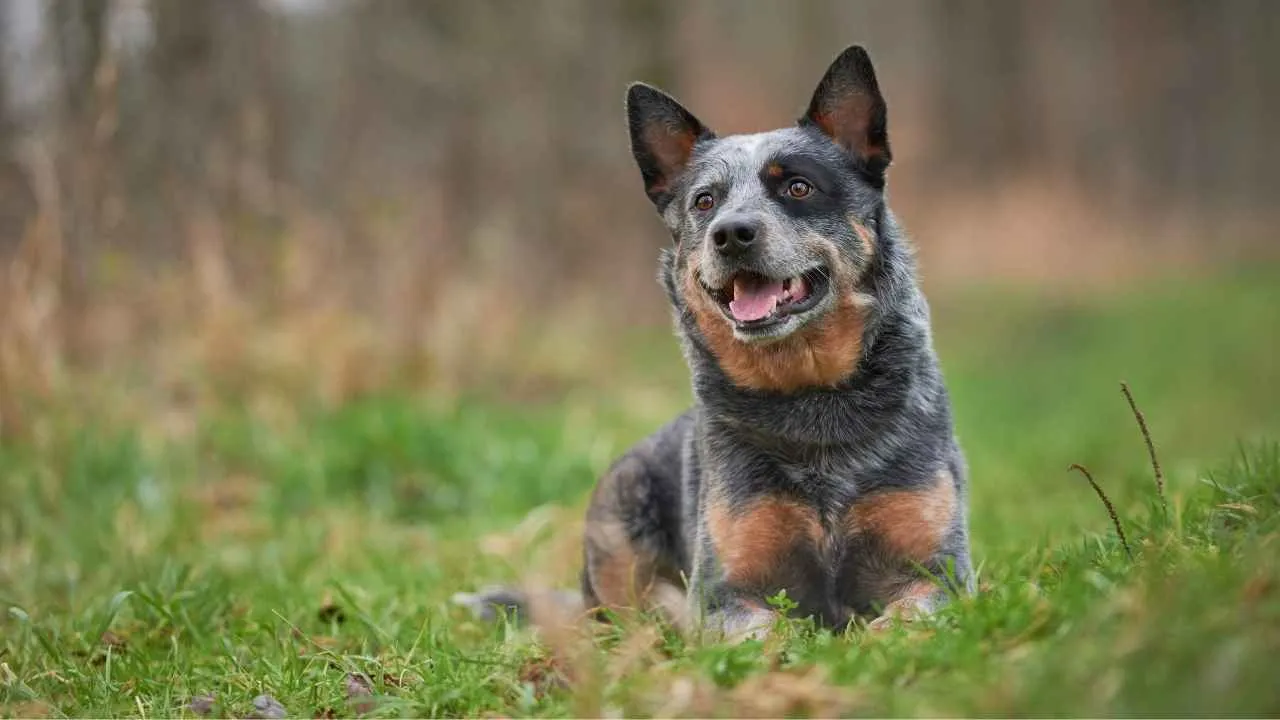
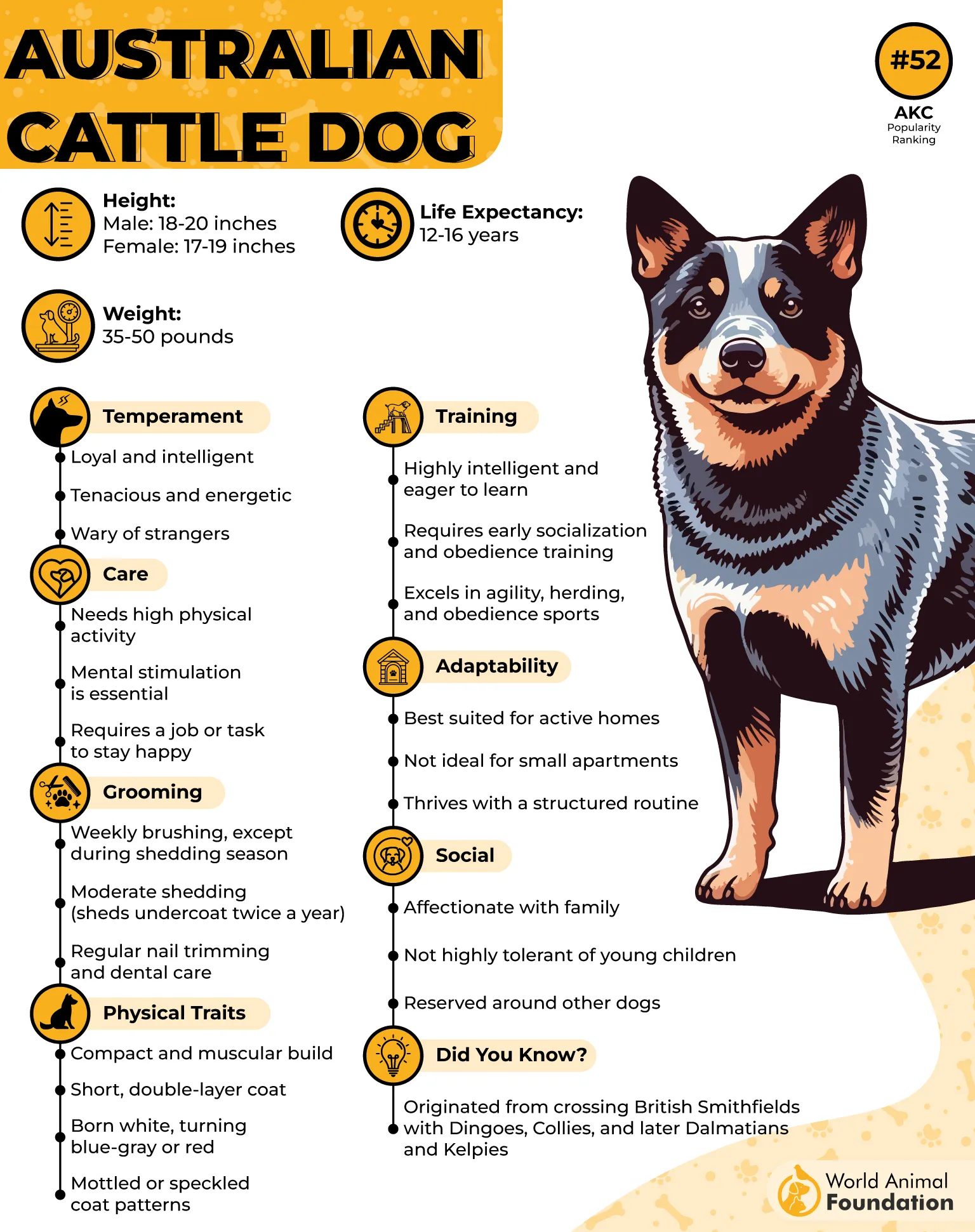
Australian Cattle Dog emerged in 19th-century Australia when cattle grazing expanded across vast areas and workers needed a dog capable of covering long distances. In 1840, Hall crossed Blue Merle Highland Collies with tame Dingoes, producing the dogs known as Hall’s Heelers.
A Precise Herding Style
ACD worked cattle through dense, difficult terrain by using controlled nips to direct animals toward the desired path. That job demands serious obedience, so training begins with reliable responses to commands such as “come” and “lie down.”
A practical progression includes:
Exposure to livestock during daily chores
Long-rope work around the herd
Short sessions with close observation
Training With Purpose
Australian Cattle Dog can progress from basic commands to directional cues such as “come bye,” “walk on,” and “away” during controlled practice. Waterfowl can provide an intermediate group for learning these signals before introducing a small group of suitable livestock.
5. Pembroke Welsh Corgi
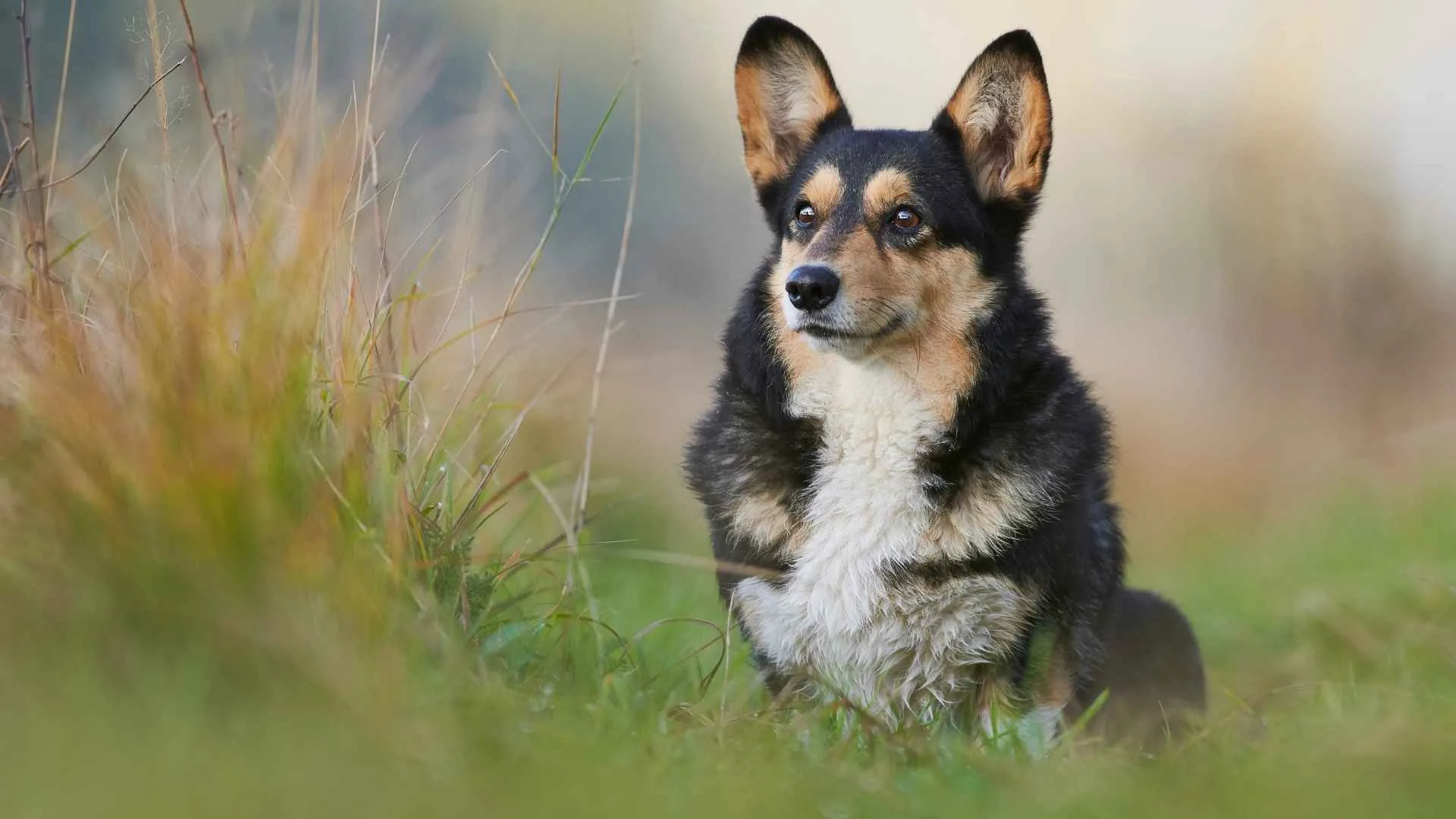
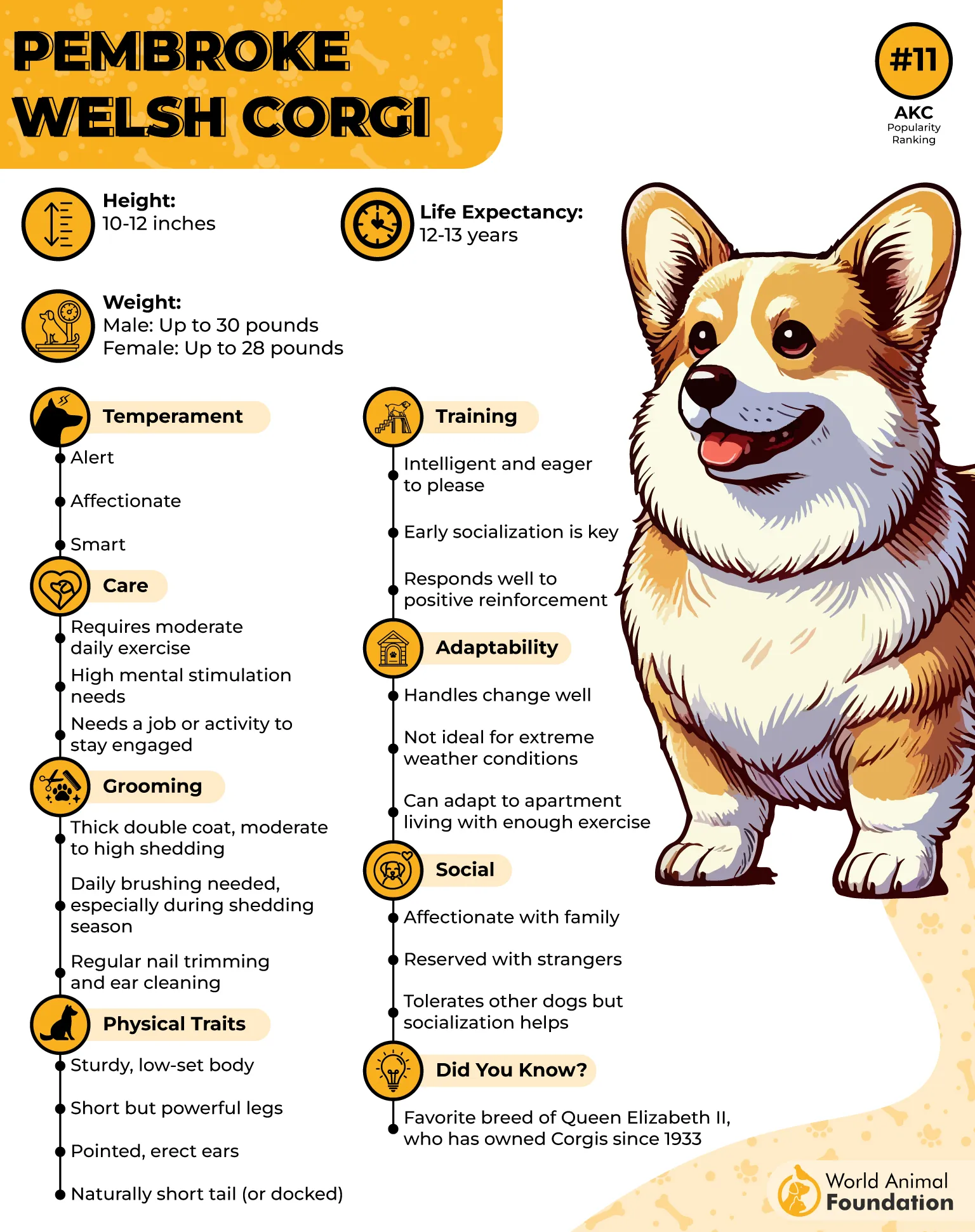
Pembroke Welsh Corgi has roots in Welsh farm life, with records of Welsh cattle dogs dating back to the 1100s. By the 1800s, Corgis were well documented, and their Spitz-family connection was reflected in features such as pointed ears, a pointed muzzle, and thick fur.
A Busy Farm Job
This breed handled cattle, gathered geese and chickens, herded sheep and ponies, and guarded farms. Their short stature suited close work around livestock, while their intelligence made training especially important for controlling their strong urge to bark.
Three details add useful context:
Learns to distinguish everyday sounds
Benefits from clear barking boundaries
Responds to self-control and “quiet” training
A Determined Student
Pembroke Welsh Corgi is intelligent enough to learn household rules, though its independent streak can make consistency especially important, as PWCCA noted. Demand barking for food, toys, or attention also needs firm boundaries so the dog does not decide when those interactions happen.
6. Shetland Sheepdog
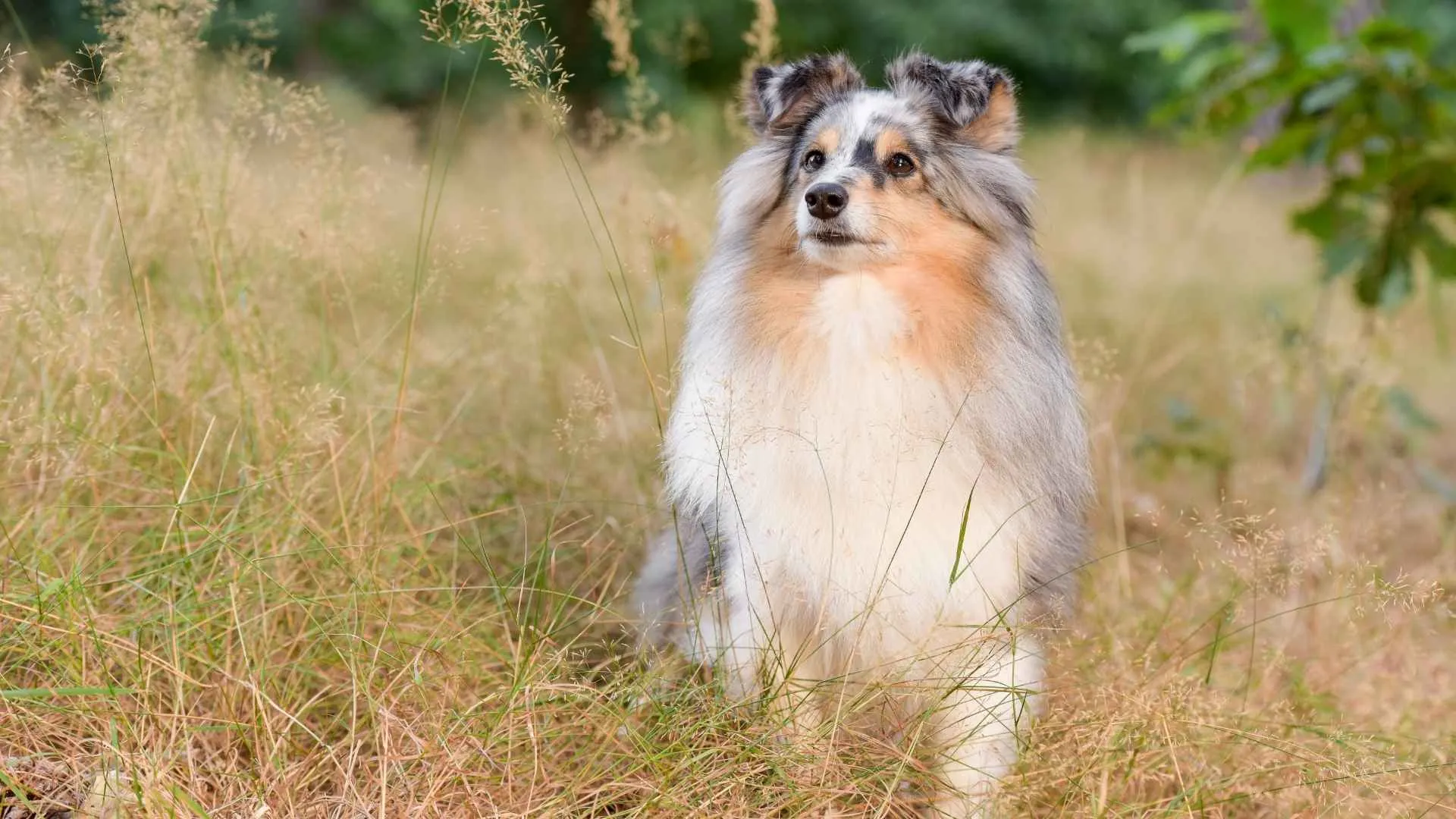
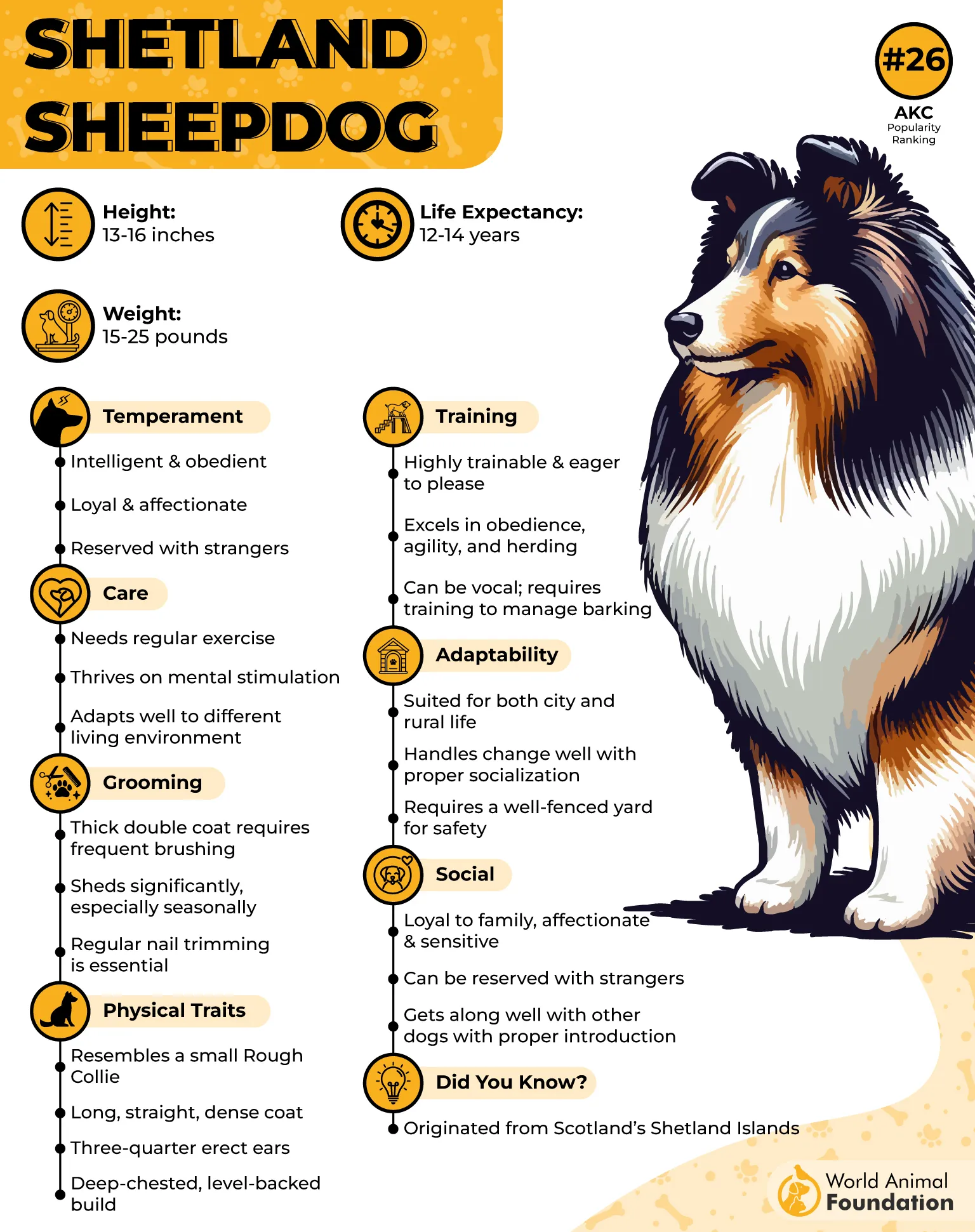
During the 1800s, the Shetland Sheepdog took shape on Scotland’s Shetland Islands through the influence of local herding dogs and Collies. Smaller livestock suited the limited vegetation, leading shepherds to favor a compact working dog that could handle flocks across the islands.
A Different Herding Style
Shelties use movement, vocalization, and close presence to direct sheep, poultry, and ducks, rather than relying heavily on the intense eye used by Border Collies. Their intelligence and strong work ethic also make them quick to learn structured commands.
Three details help explain how its working style is handled:
Basic commands begin at 8–12 weeks
Herding instinct tests begin around 6–12 months
Livestock work progresses from lead control to voice and hand signals
Herding Meets Teamwork
This loving companion can work with chickens, ducks, sheep, and cattle on small farms when properly trained through a herding club. Rally offers another structured outlet, with competitions involving 10 to 20 stations that test tasks such as pivots, weaving, jumping, and responding to commands.
7. Belgian Malinois
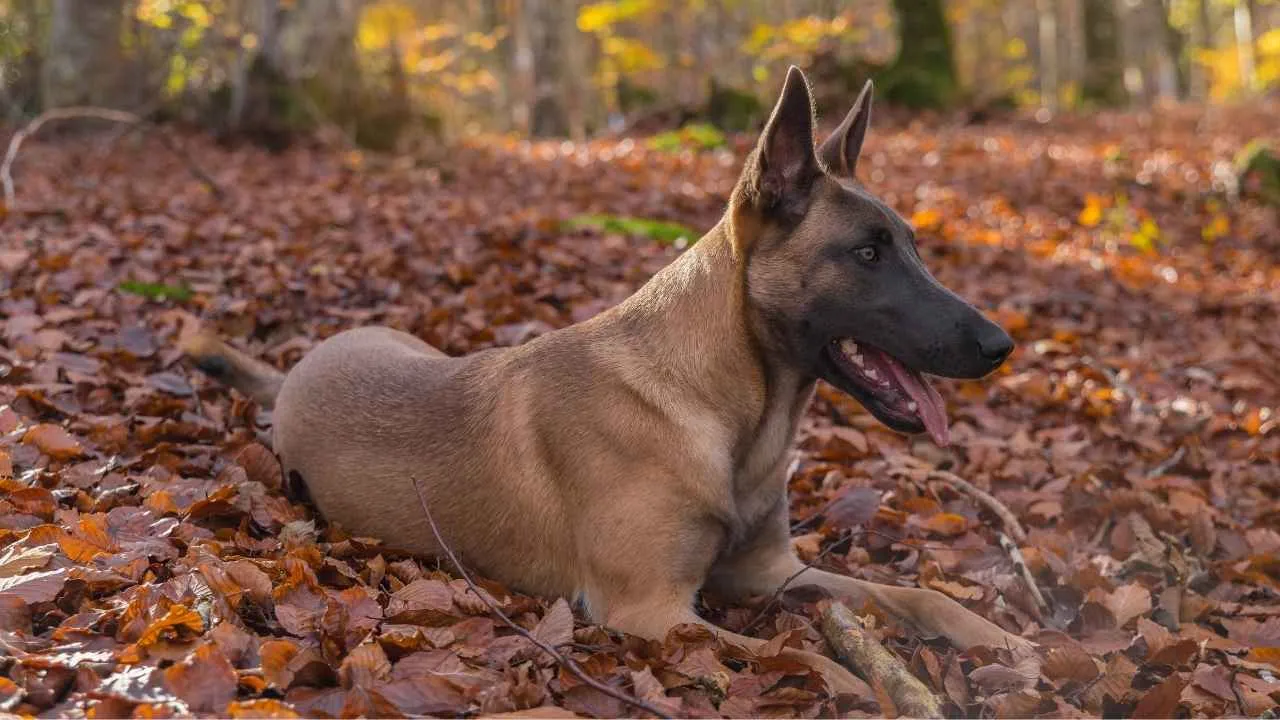
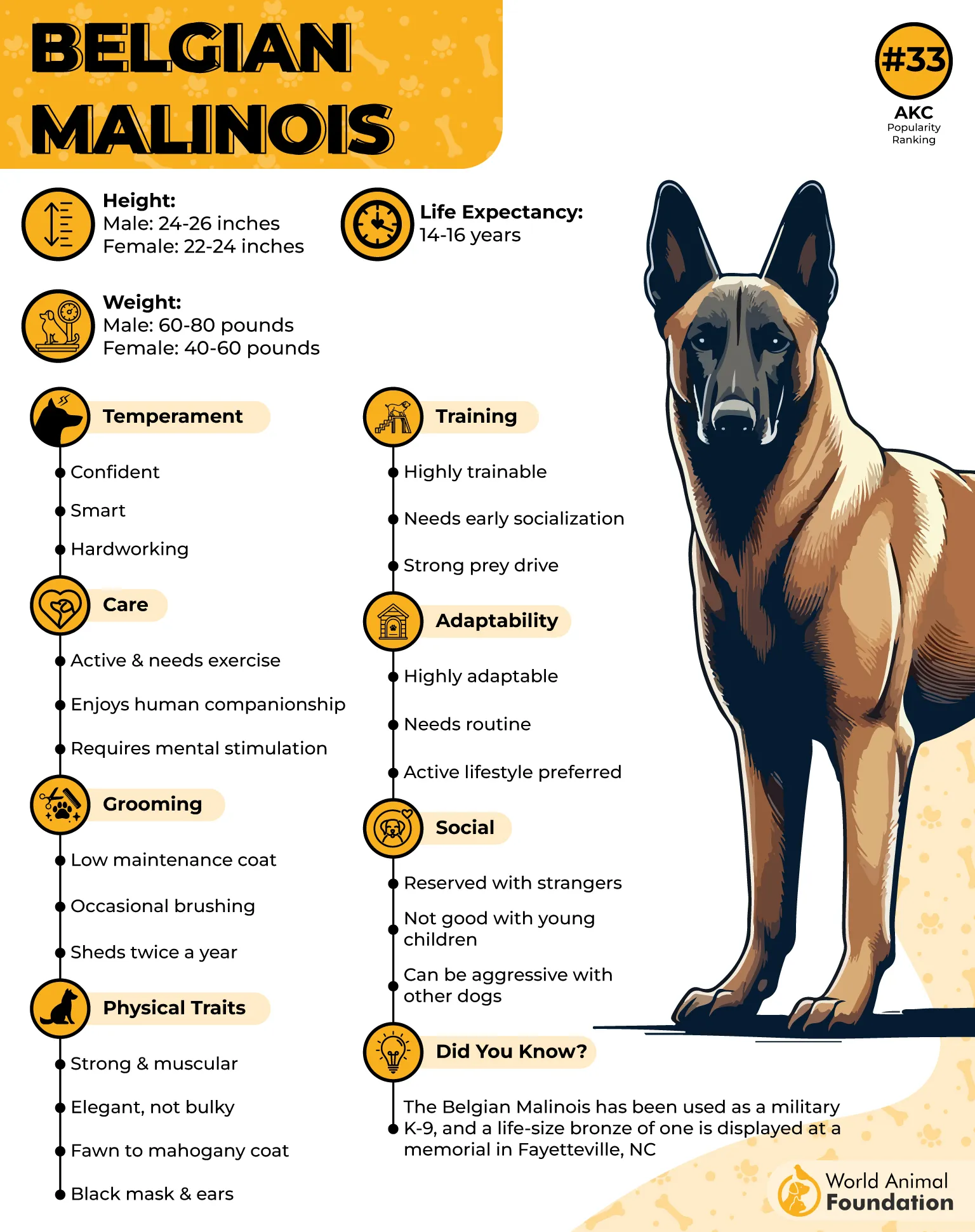
Belgian Malinois began as a sheep and livestock herder in Belgium, with serious breeding efforts taking shape in the late 1800s. By the 1950s, its intelligence and guarding ability had also gained attention in military and police work, adding a new chapter to its working role.
A Herding Mind at Work
This athletic animal has a strong instinct to chase, circle, and control moving animals, which can also lead it to herd children or pets without proper guidance. Its speed, intense focus, and quick reactions make early control of these instincts especially important.
A few working details put that instinct into perspective:
Uses circling to control livestock
Can redirect chasing into tug games
Enjoys agility and advanced obedience
Training With Purpose
Belgian Malinois learns rapidly and responds well to reward-based training delivered in short, frequent sessions. Recall, stopping, directional cues, leash skills, and impulse control give its intensity clearer boundaries during demanding work.
Conclusion
Herding dogs were shaped for work that required more than physical strength. Reading livestock, responding to direction, controlling movement, and staying focused for long periods all demanded intelligence and discipline. Those qualities still influence how these dogs behave today, whether they work on farms or take part in organized herding activities.
Training should match the individual dog, with early socialization, clear commands, controlled livestock exposure, and positive reinforcement helping build reliable responses. Owners also need to provide enough physical and mental activity outside of herding work. With the right structure, these working dogs can turn natural instincts into focused, useful skills.
