




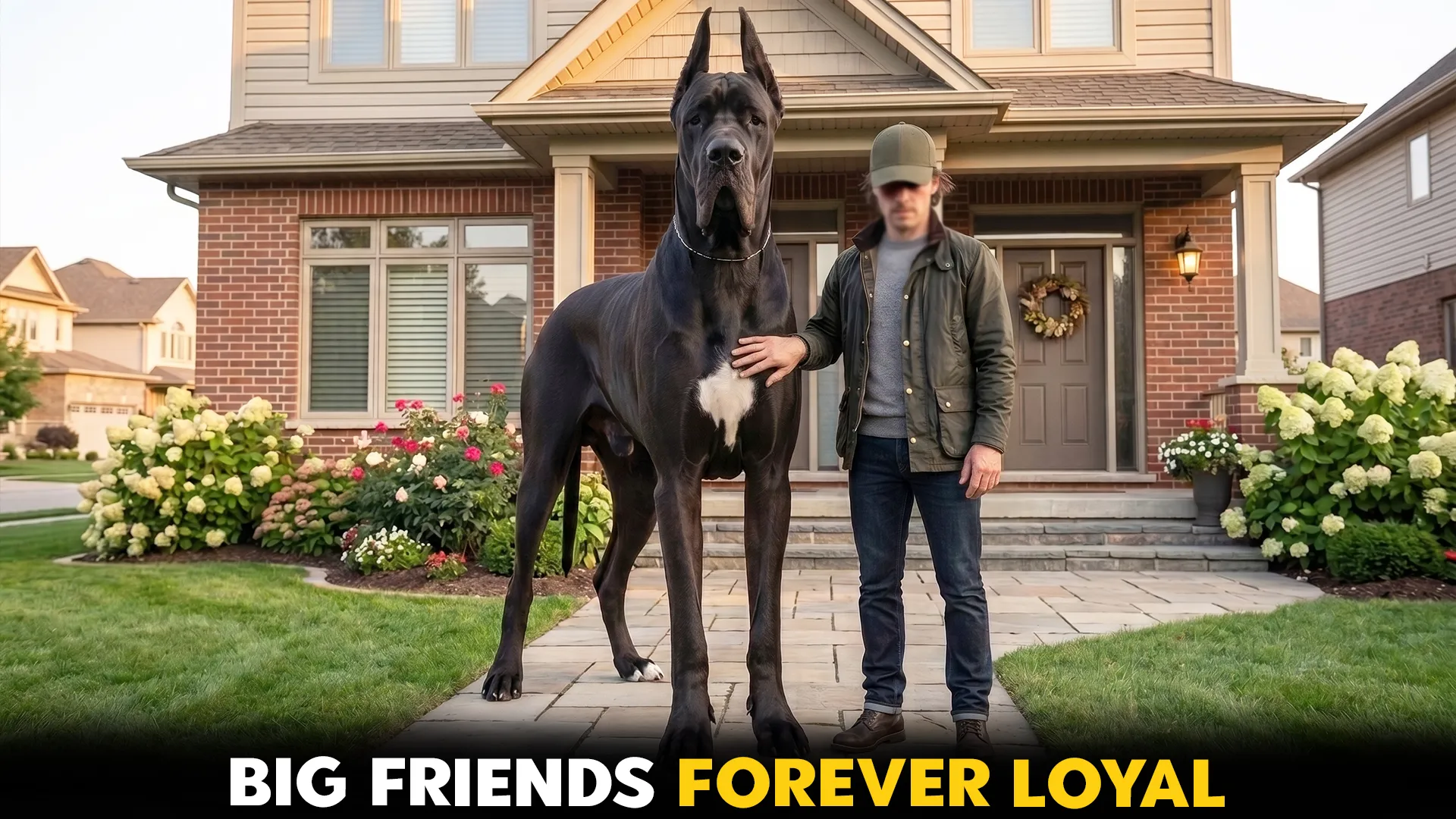
Some of the biggest dogs in the world also have the kindest hearts. Their towering size may stop you in your tracks, but once you spend a few minutes with them, you quickly realize they are often just oversized cuddle buddies.
It is a classic case of “Do not judge a book by its cover.” From patiently watching over children to standing faithfully beside their owners, these gentle giants have earned a special place in countless homes.
Even celebrities like Chris Evans, known for his dogs, often remind fans that a dog’s character matters far more than its appearance. As the saying goes, “A dog is the only thing on earth that loves you more than it loves itself.”
In this guide, we will explore nine of the largest dog breeds that prove loyalty, kindness, and courage can come in very big packages.
Largest Dog Breeds Known for Their Gentle and Loyal Nature
1. Great Dane
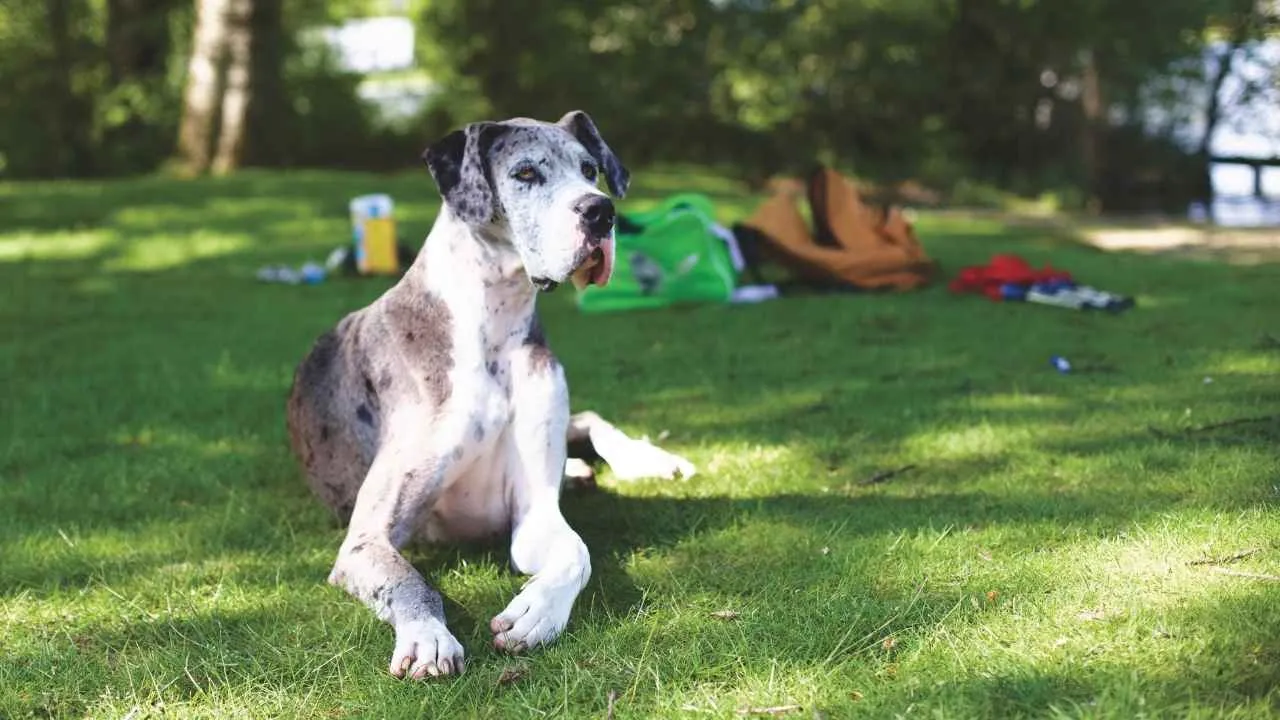
This large mastiff-type dog breed was developed in Germany as a sighthound. It descended from the hunting dogs of the Middle Ages, which were used to hunt large game, such as wild boars, bears, and deer. It was also used as a guardian dog for German nobility, according to Wikipedia.
Also, the tallest dog breed to ever exist, the Zeus, stood 44 inches tall. It physically leans its massive body against the owners or tries to curl up on their laps to grab attention. Though it welcomes guests happily, it is a natural watchdog and acts as a protector between the owner and the family.
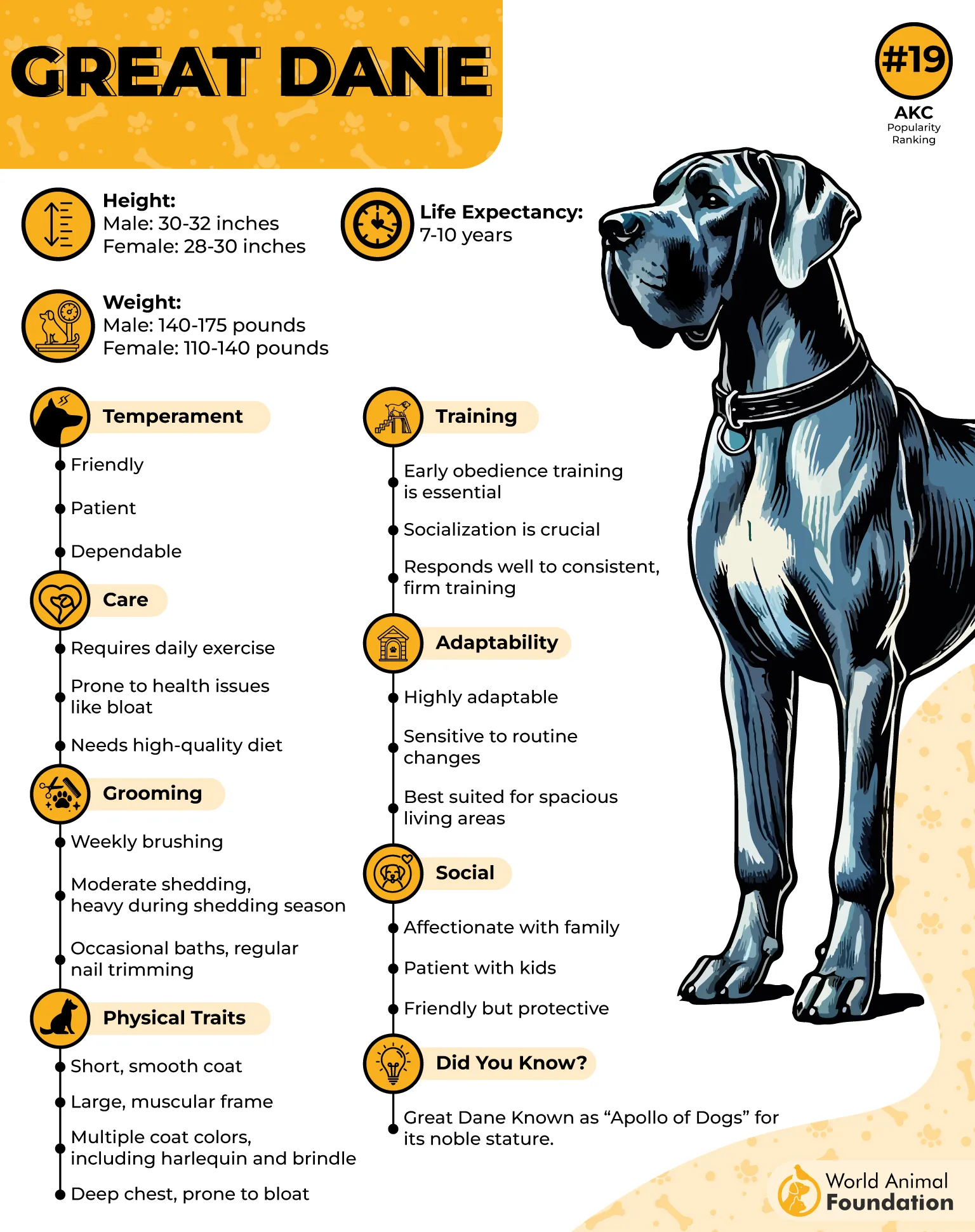
This gentle giant is usually calm indoors and tends to be a lap dog despite its massive size. It needs regular exercise for 1-2 hours for physical and mental stimulation: obedience training, moderate-paced walks, and indoor play.
2. Saint Bernard
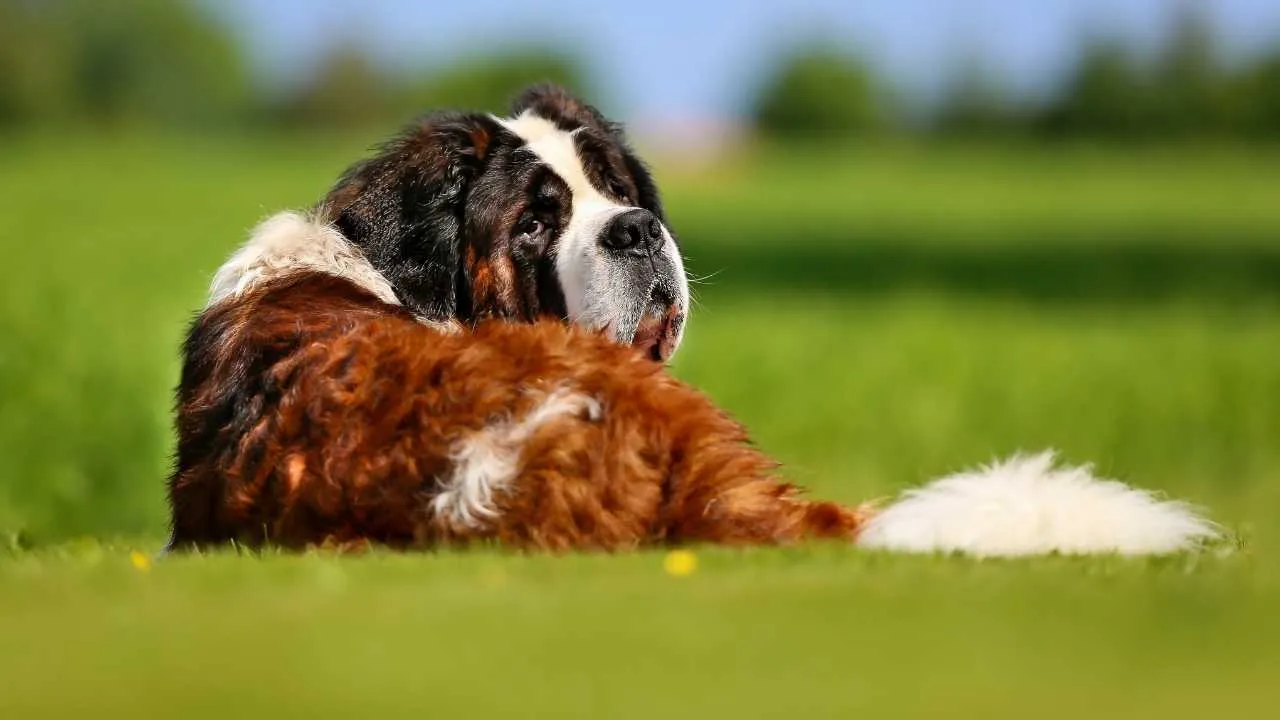
The history of this giant dog breed dates back to 1707, when the monks of Saint Bernard Pass Hospice between Switzerland and Italy developed this breed as a rescue dog for travelers trapped in snow. The ancestors of the Roman Molossian dogs, that were used to pull carts.
The breed has the natural ability to read human emotions and facial expressions. It offers a comforting nuzzle or sits next to sad/anxious family members. It rarely becomes aggressive and reacts only when it feels threatened. This large dog breed tends to press its massive body weight against your legs.
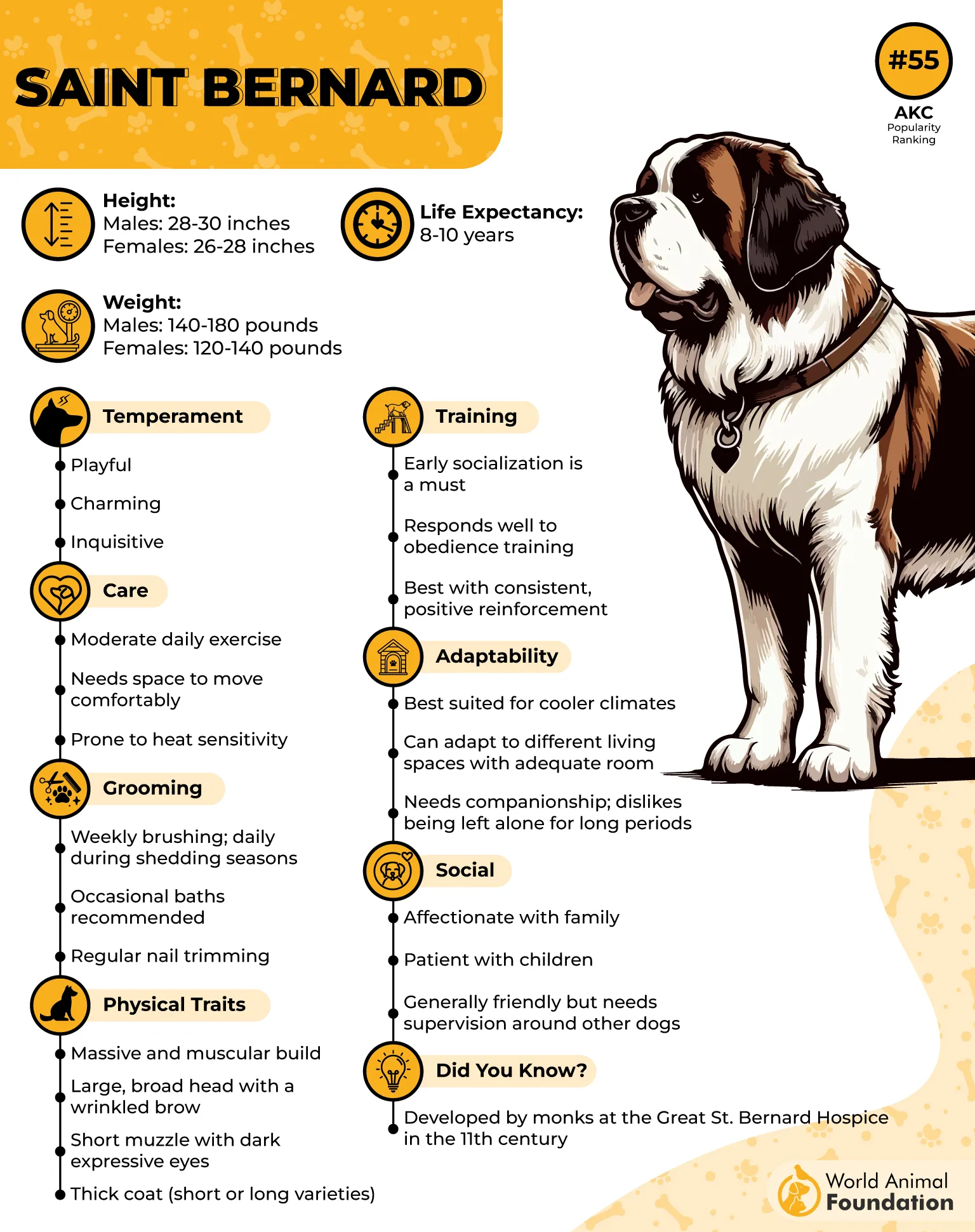
The sheer strength and size allow it to assist and stabilize handlers while walking or standing. It requires moderate exercise daily (30-45 minutes): leisure walks, gentle indoor play, and soft fetching. Avoid high-impact exercise for puppies because of the growing plates.
3. Mastiff
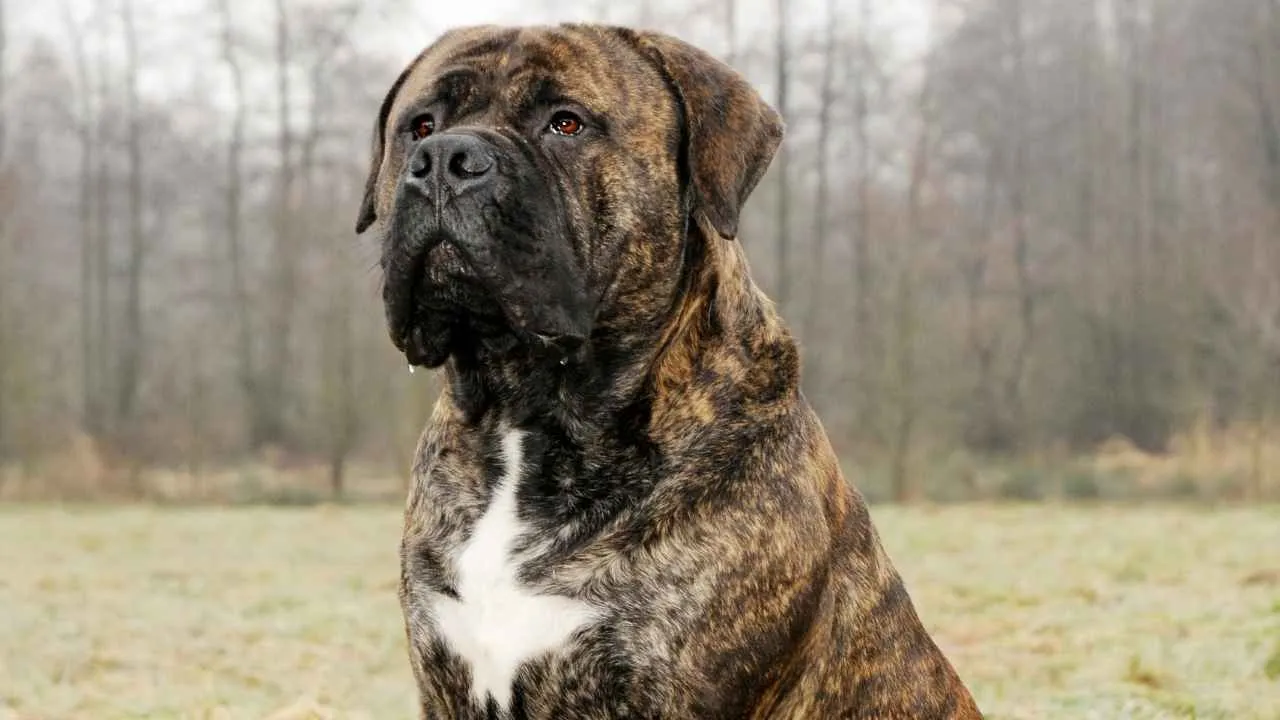
This powerful dog is one of the largest dog breeds with a short coat, a low-set tail, and large feet. The history dates back 3,000 years in European and Asian records, where it was used as a guard dog. It has also been used as a war dog, hunting dog, and in blood sports.
The breed sees its human family as a ‘pack,’ forming strong bonds with all the members. The intimidating presence is enough to deter intruders. It is also used as a Psychiatric Service Dog, providing deep pressure therapy by resting its heavy paws or head on the patient.
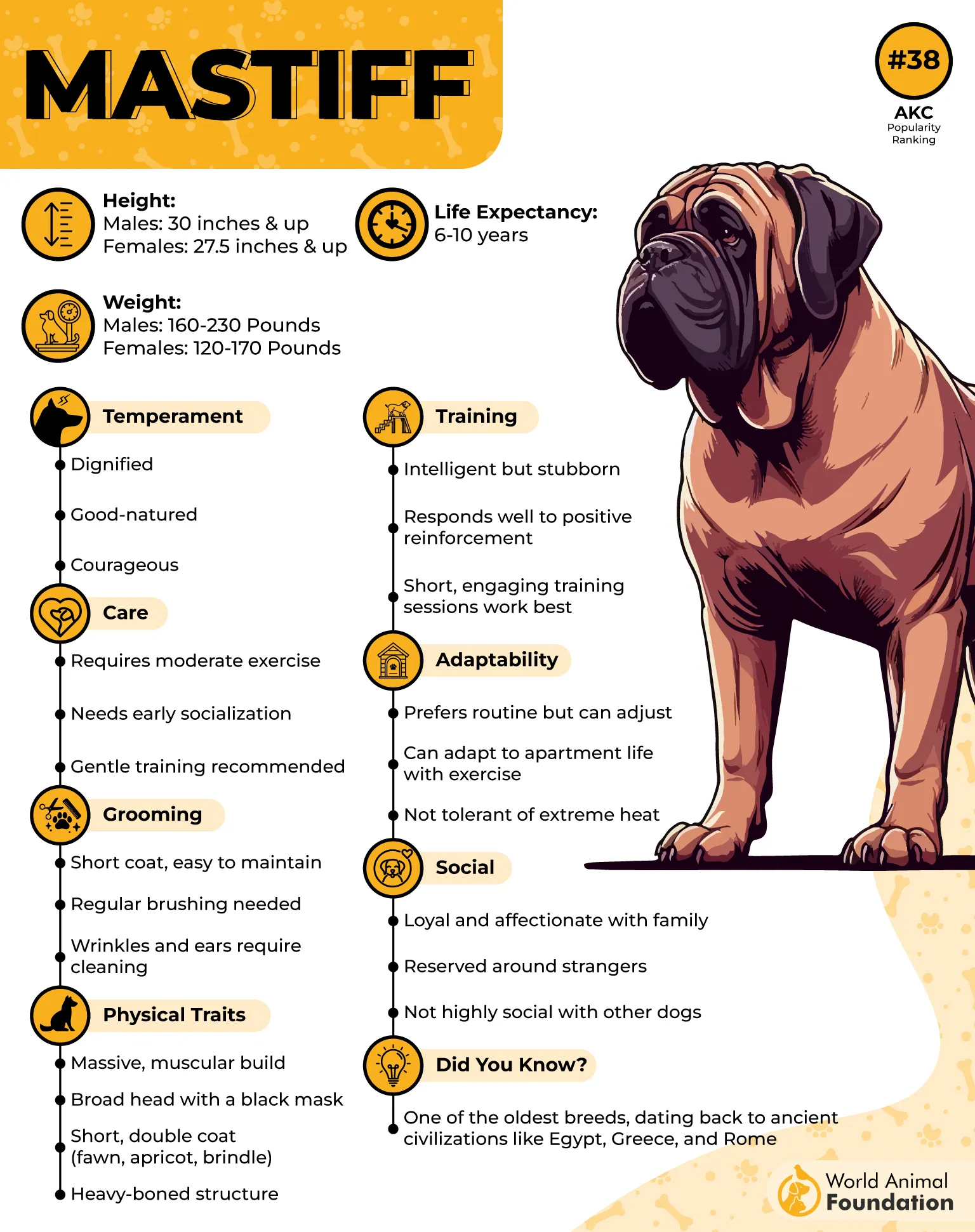
The dog is naturally aloof with strangers and uses vocal alerts, a death stare, and physical interference to neutralize a threat. It needs daily exercise for 30-60 minutes. Since the breed grows rapidly, puppies should not be exposed to jumping and running because of developing joints. Adults (18+ months) should have 2-3 walks, secured yard play, and mind-challenging games.
4. Newfoundland
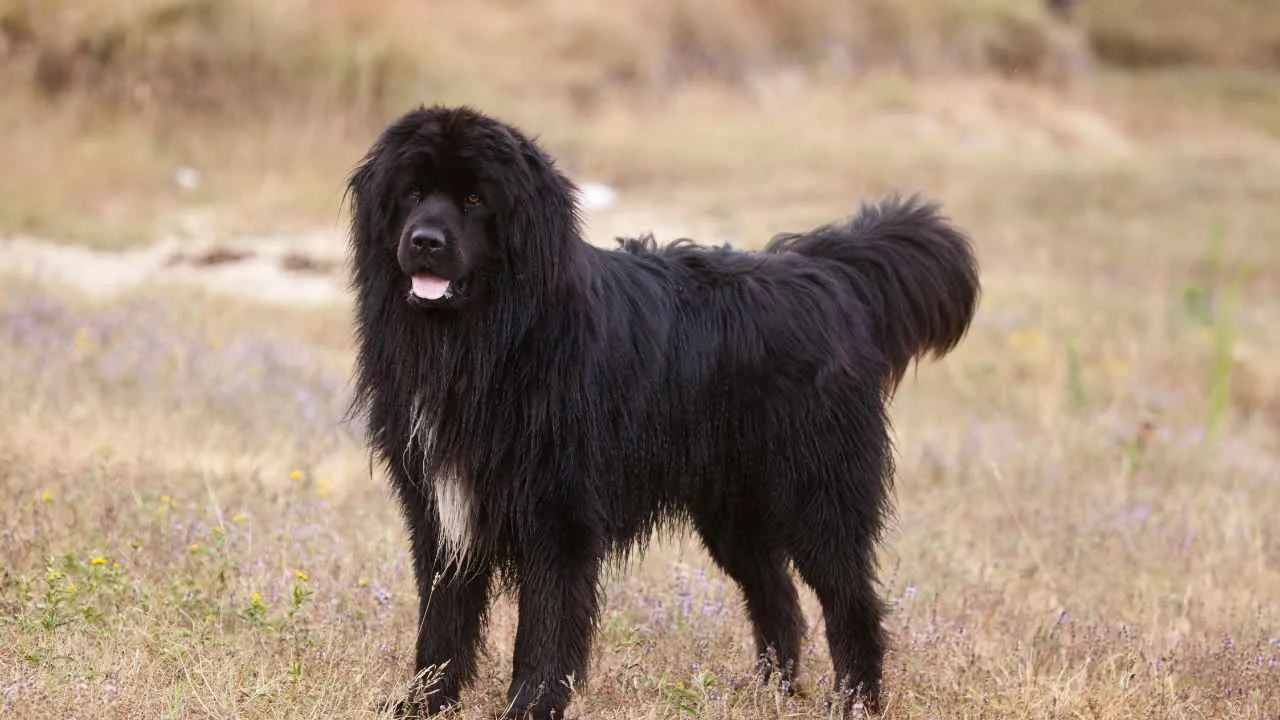
Originally bred in Newfoundland, Canada, the breed shares its DNA with the Saint Bernard and the Mastiff. The breed developed with the Portuguese Fishermen’s Mastiffs in the 16th century and was primarily used to haul nets, swim, and pull carts for the fishermen, as per Omlet.
Since it was bred as a rescue dog, it has deep tolerance and an affectionate nature, making it a perfect nanny dog for children. It prefers to stay close to the family rather than wander. While not being aggressive, it barks and paces to alert the owners of dangers (such as a fire or pool accident).
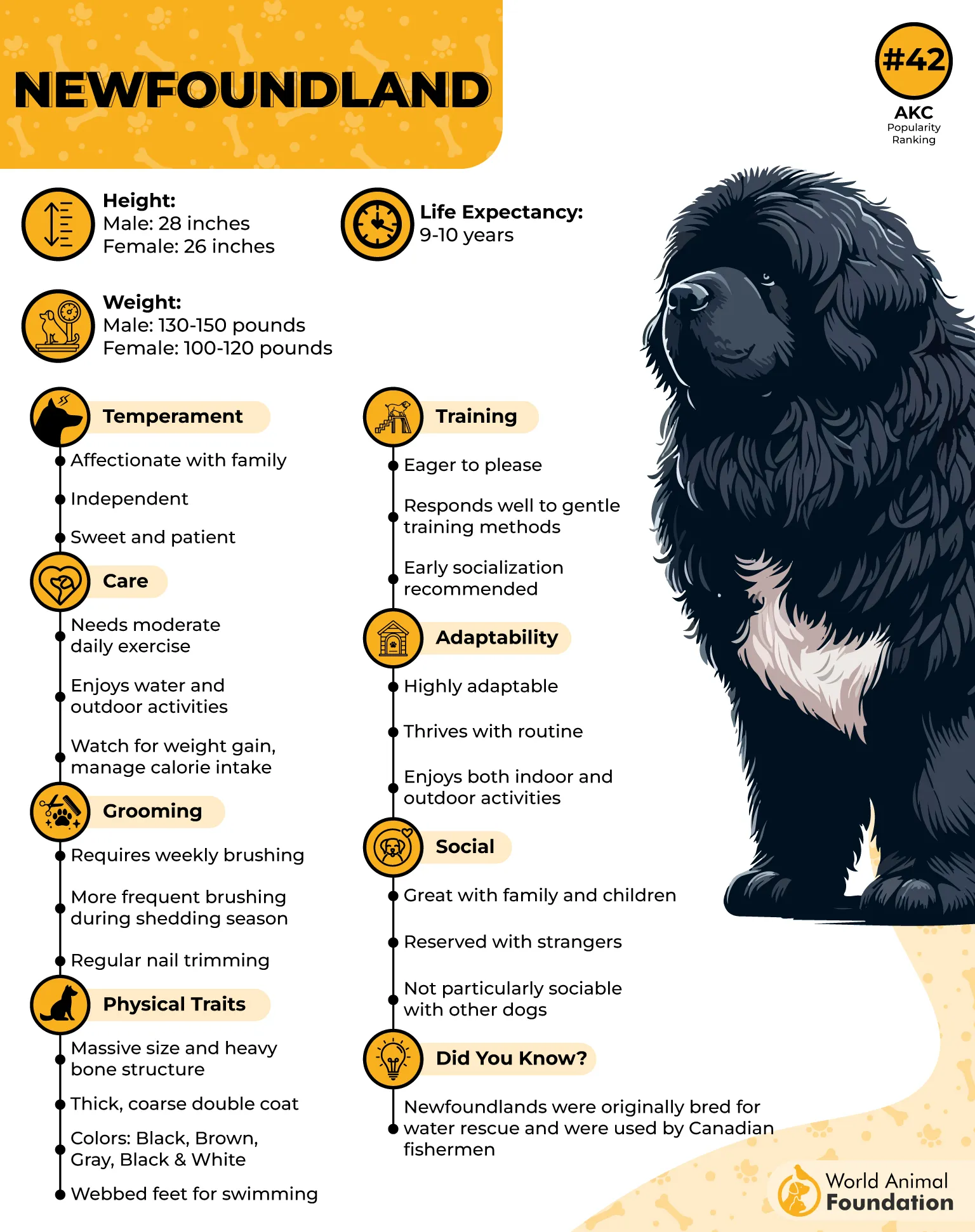
It has a thick double coat and webbed feet, designed to save lives in water. The massive build helps in carting, sledding, and hauling firewood. An adult dog (2-7 years) needs moderate exercise for 30-60 minutes: swimming, brisk walks, and drafting.
5. Leonberger
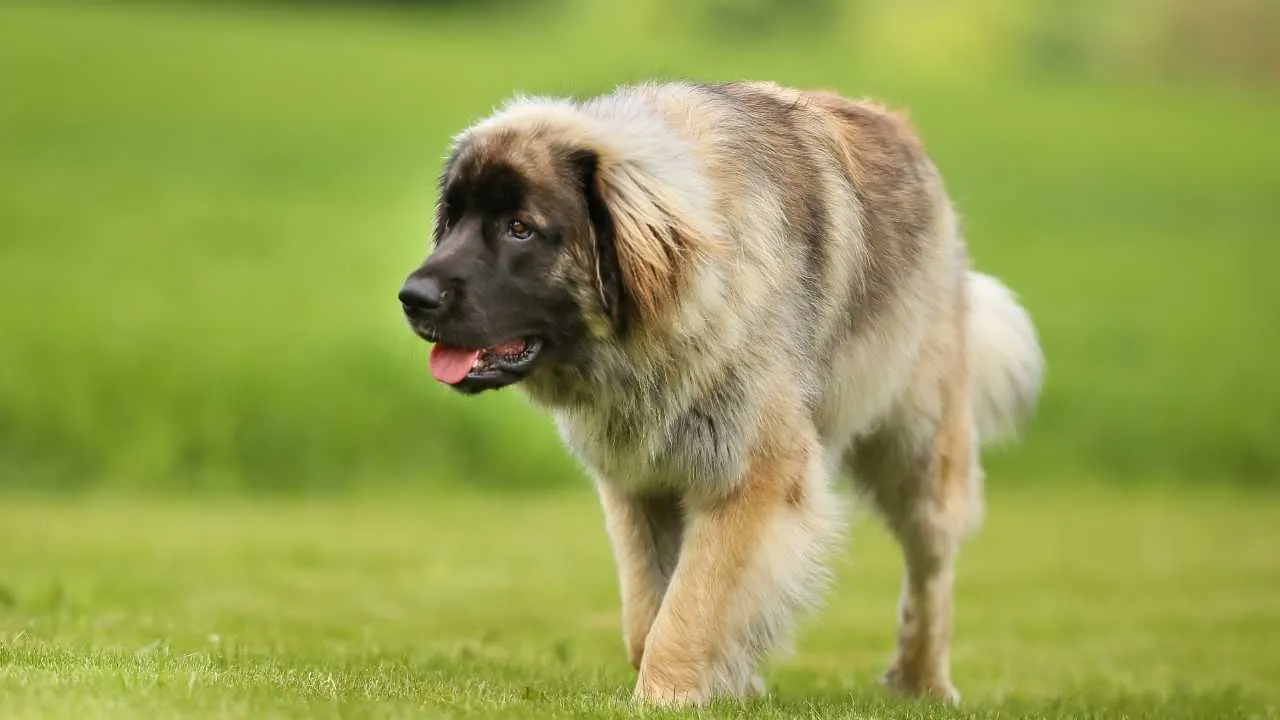
Originating in Germany, this reddish-golden dog was developed in the 17th century by crossing Newfoundlands, Saint Bernards, and Great Pyrenees to produce a breed that resembles a lion. This big dog breed became popular among the European royalty because of its gentle temperament.
The giant breed instantly recognizes when the owner is feeling sad, sick, or stressed, and stays firm by their side till the ‘storm passes.’ Since it possesses guard dog ancestry, it naturally protects its home, people, and favorite objects.
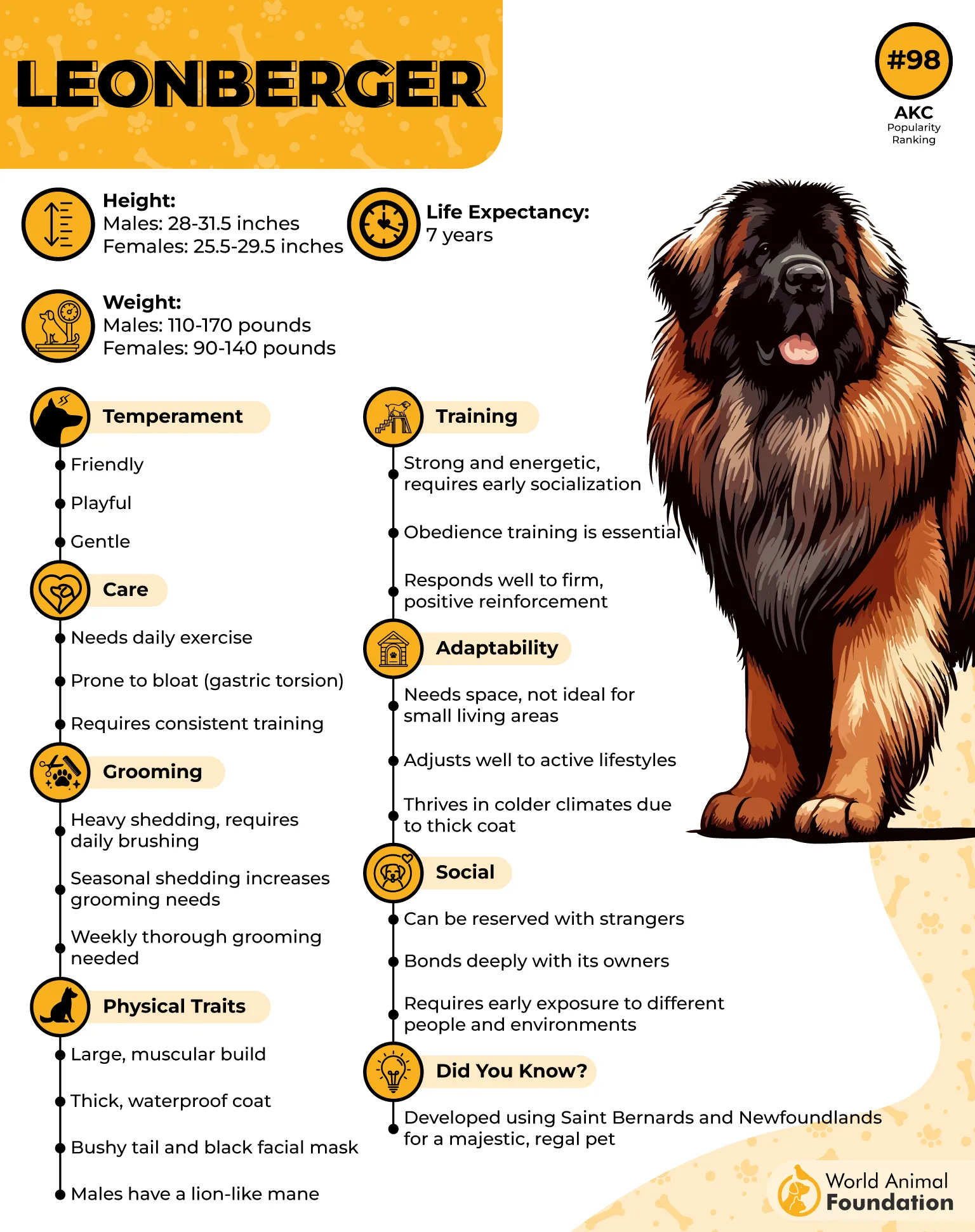
It has a strong sense of smell and stamina, making it a perfect SAR dog. This excellent family dog needs daily exercise for 1-2 hours: hiking, swimming, walking, carting, and agility, followed by positive reinforcement and proper socialization.
6. Great Pyrenees
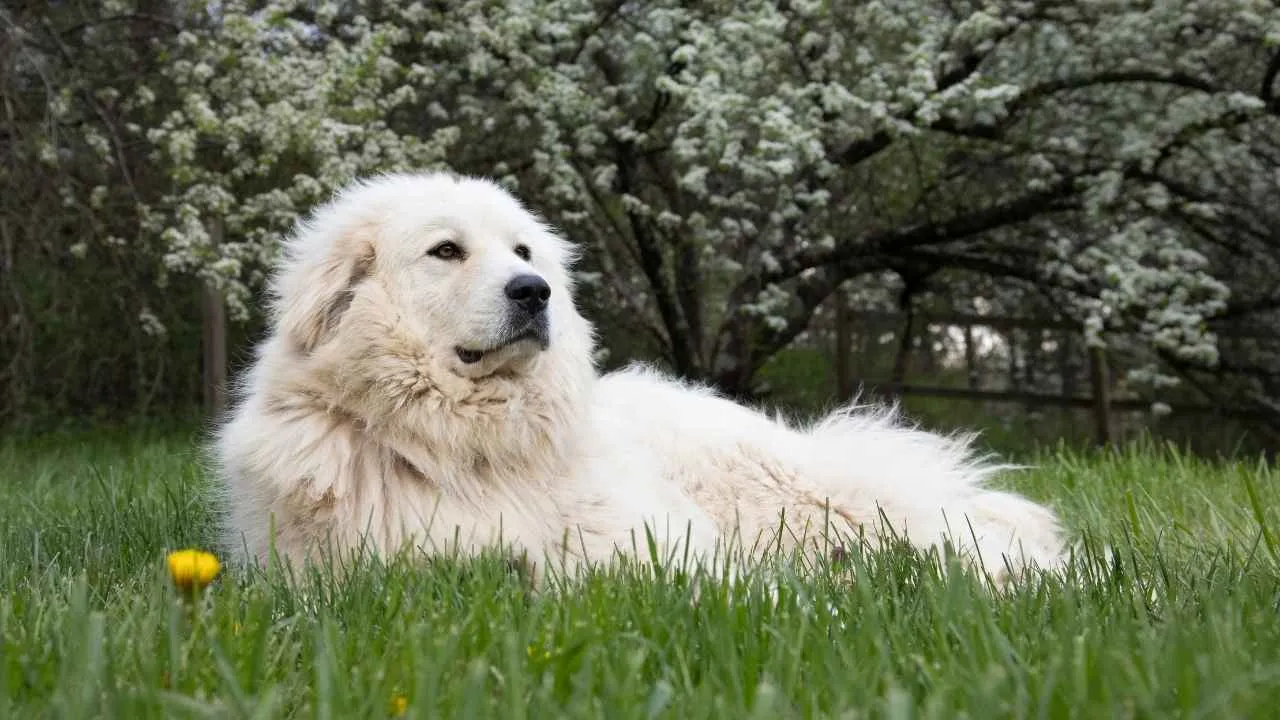
The French dog was developed as a livestock guard dog and was known as a Patou. It was used to protect the livestock from dangerous wild predators, such as wolves and bears. It protects its family by instinctively patrolling territory, serving as a vigilant watchdog, and forming deep, nanny-like bonds with children.
Being a nocturnal breed, it stays a couch potato during the day and works at night. It tends to work independently and does its job without human supervision. It prioritizes de-escalating the situation rather than attacking.
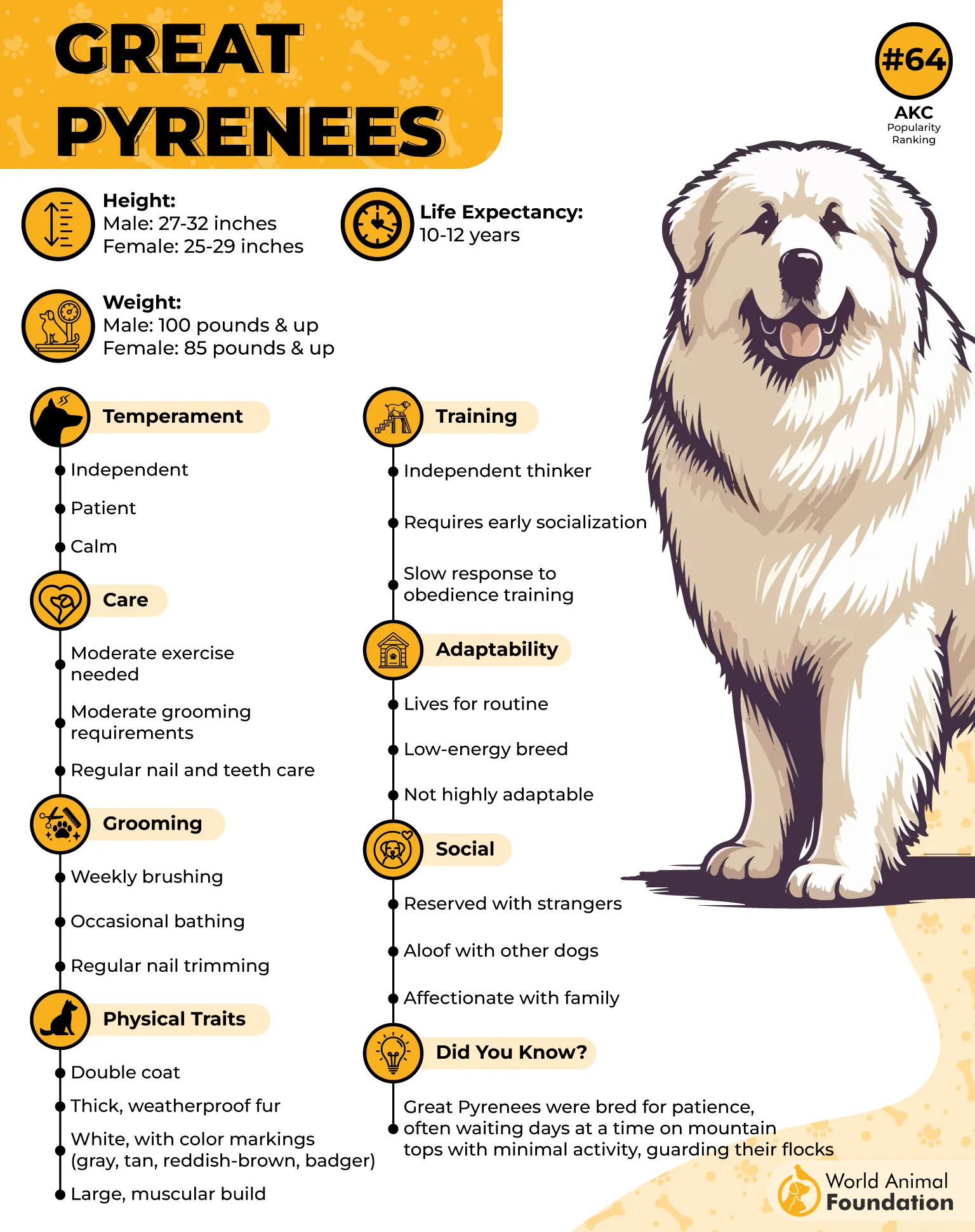
Because of its friendly and patient nature, it also provides emotional comfort, anxiety relief, and tactile therapy in hospitals, nursing homes, and disaster relief settings. It requires regular exercise for 30-60 minutes daily: scent work, brisk walks, interactive puzzle toys, and mental stimulation.
7. Rafeiro do Alentejo
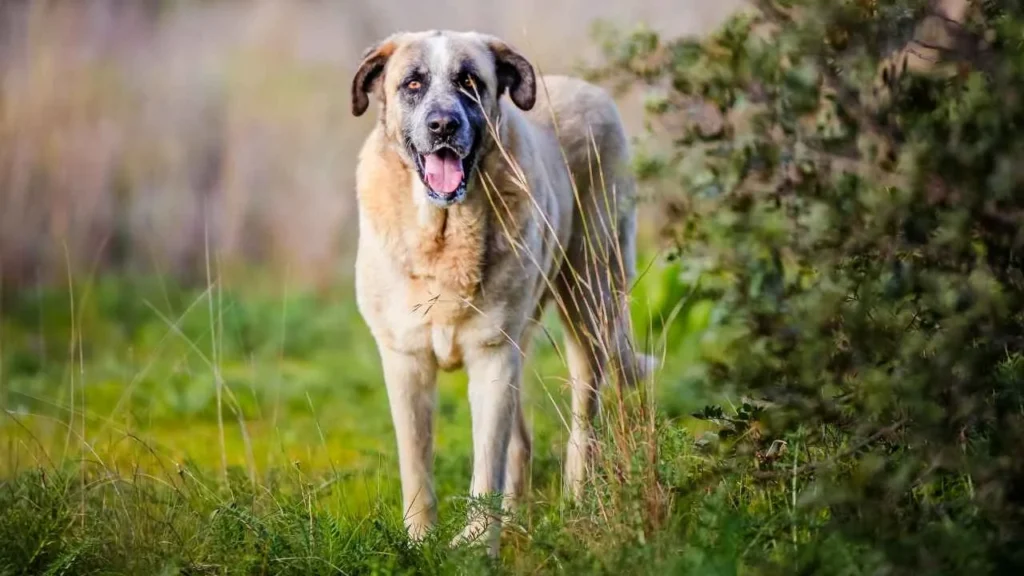
This Portuguese livestock guardian is known for its loyalty and nocturnal behavior, since it was historically used to protect migrating sheep and expensive rural estates. It is a descendant of the large, Molosser-type flock guardian dogs and the ancient Tibetan Mastiffs.
It silently assesses the environment and only reacts when it perceives a real threat to its territory. It is kept as a family pet and forms a deep bond with children because of its affectionate and gentle nature. It has a resonant bark and a high-alert expression, making it a perfect protection dog.
This independent livestock breed needs at least 1-1.5 hours of daily exercise: split the long walks into 2-3 sessions, free roaming, gentle jogging, and fetching. Over-exertion can lead to musculoskeletal damage.
8. Kuvasz
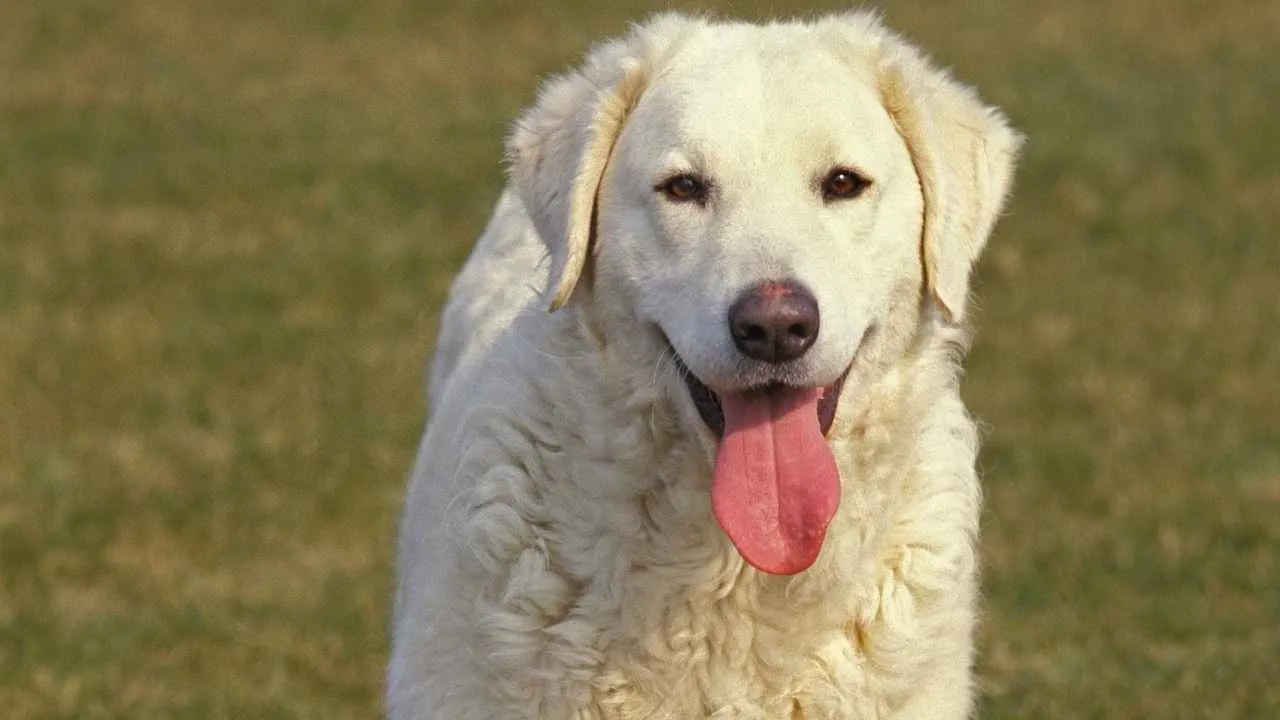
This flock guardian dog was originally bred in Hungary and was kept by the royalty as a guard dog centuries ago. The Magyar people brought their watchdogs from Siberia to this region and used them as watchdogs. Thus, the modern-day breed has retained its watchful instincts, says PetMD.
The great family dog used to protect livestock without human supervision, making it an independent dog that can watch over vast territories easily. Though loving, it does not need constant attention. It has self-sacrificing devotion and comes between the owner and the intruders in a life-threatening situation.
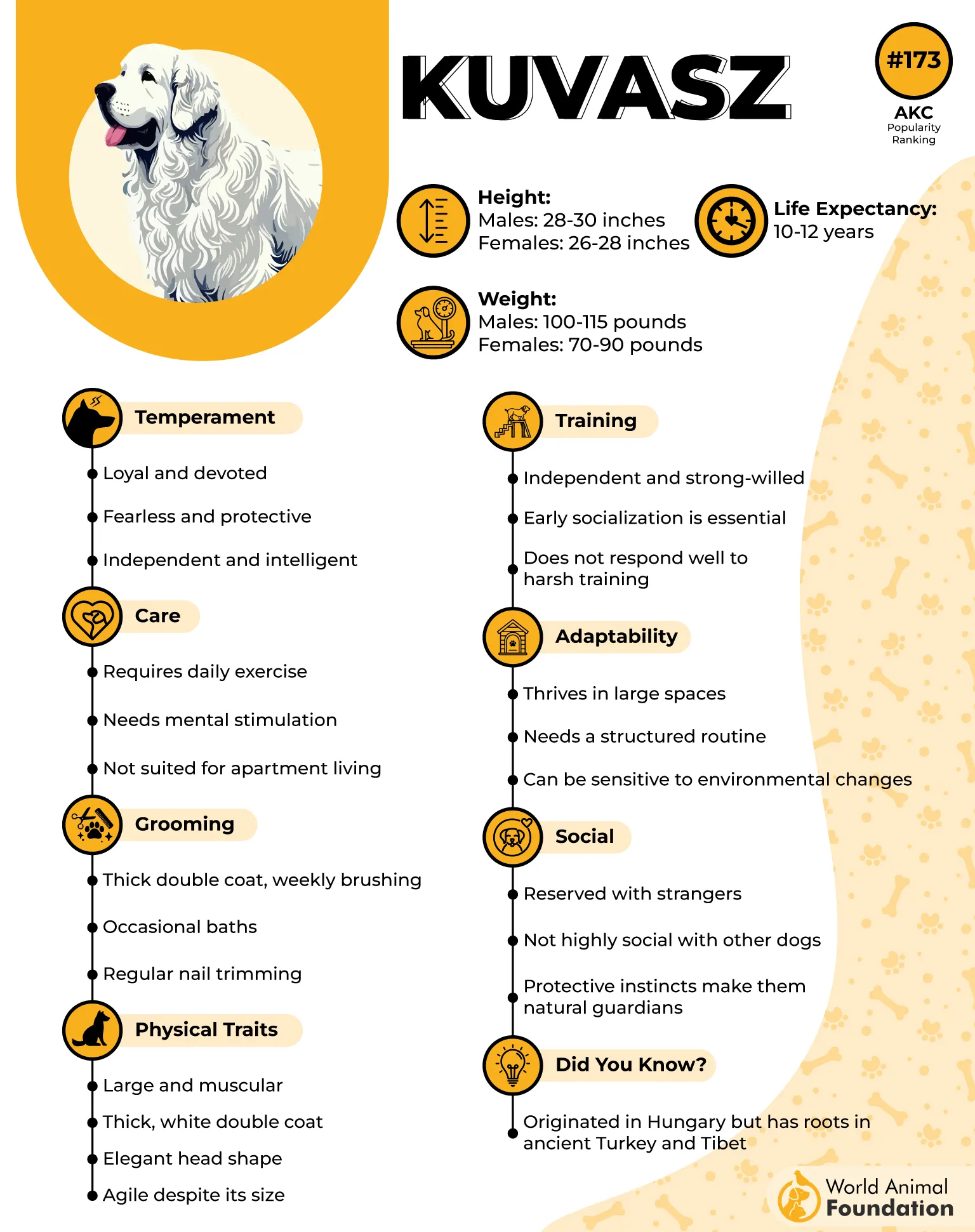
This highly intelligent working dog needs low-to-moderate exercise for 60-90 minutes: hiking, jogging, patrolling, and brisk walks. Adopt positive reinforcement and early socialization to avoid destructive behavior, such as chewing and digging.
9. Pyrenean Mastiff
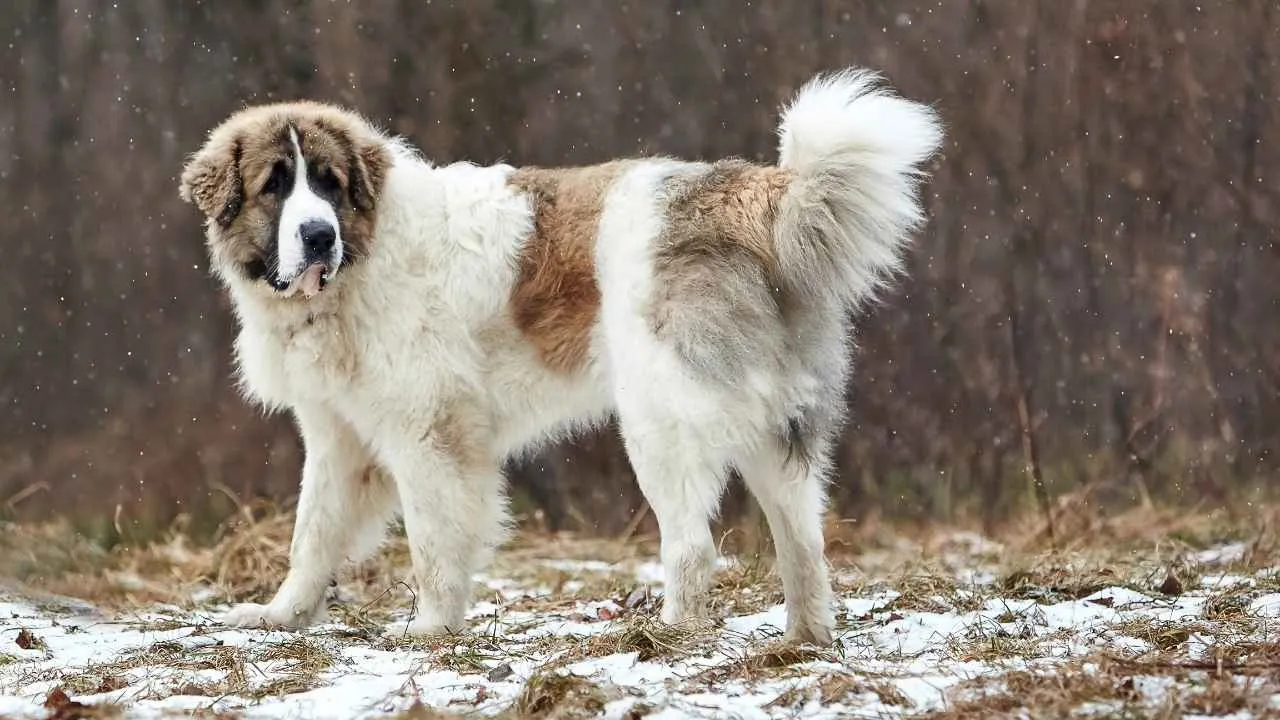
This large dog breed was originally developed in north-eastern Spain as a livestock guardian. It was primarily used to protect flocks during the annual transhumance to high summer pasture in the Pyrenees. This is one of the rarest dog breeds with a medium-length coat that comes in white patches of colors.
It has a laid-back, even-tempered, and docile nature. Since it was bred to guard rather than hunt, it has a low prey drive, which means it can live peacefully with other pets in the same household. Being incredibly perceptive, it can differentiate between friend and foe.
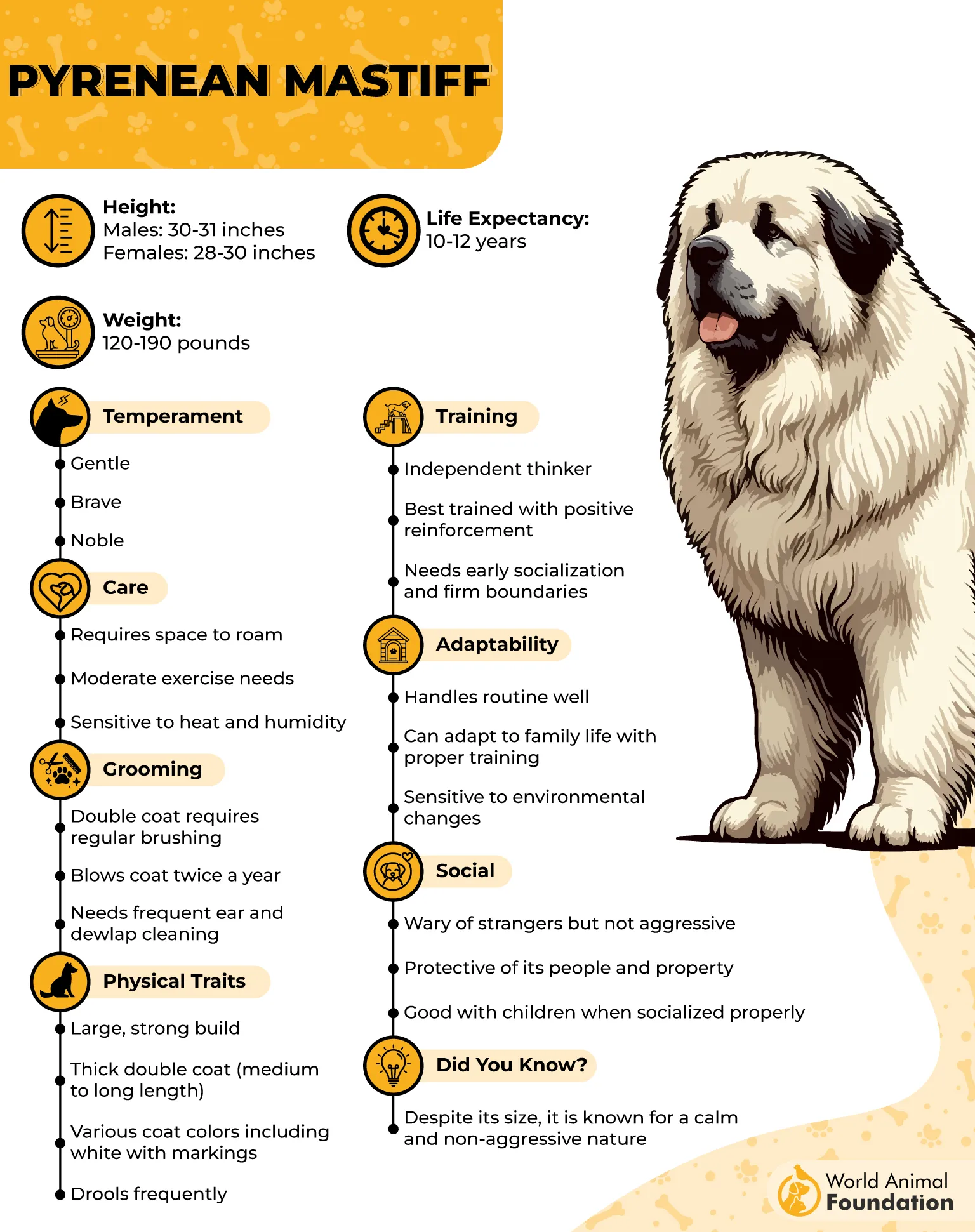
The breed needs 1-2 hours of low-to-moderate exercise: gentle hikes, neighborhood walks, strolls, nose work, and mental enrichment. Because of its heavy coat, it is prone to overheating. Always make sure it has access to shade and fresh water.
Conclusion
Living with a giant dog is a unique experience. They take up plenty of space on the couch, leave behind giant paw prints, and somehow believe they are lap dogs no matter how much they weigh.
Yet, their unwavering loyalty, calm nature, and deep affection make every extra inch worth it. Before bringing one home, remember that these dogs need proper training, regular veterinary care, balanced nutrition, and enough room to move comfortably.
Choose a breed that matches your lifestyle rather than simply falling in love with its size. When cared for with patience and respect, these gentle giants become more than pets; they become trusted companions, devoted guardians, and cherished members of the family for many unforgettable years.
