




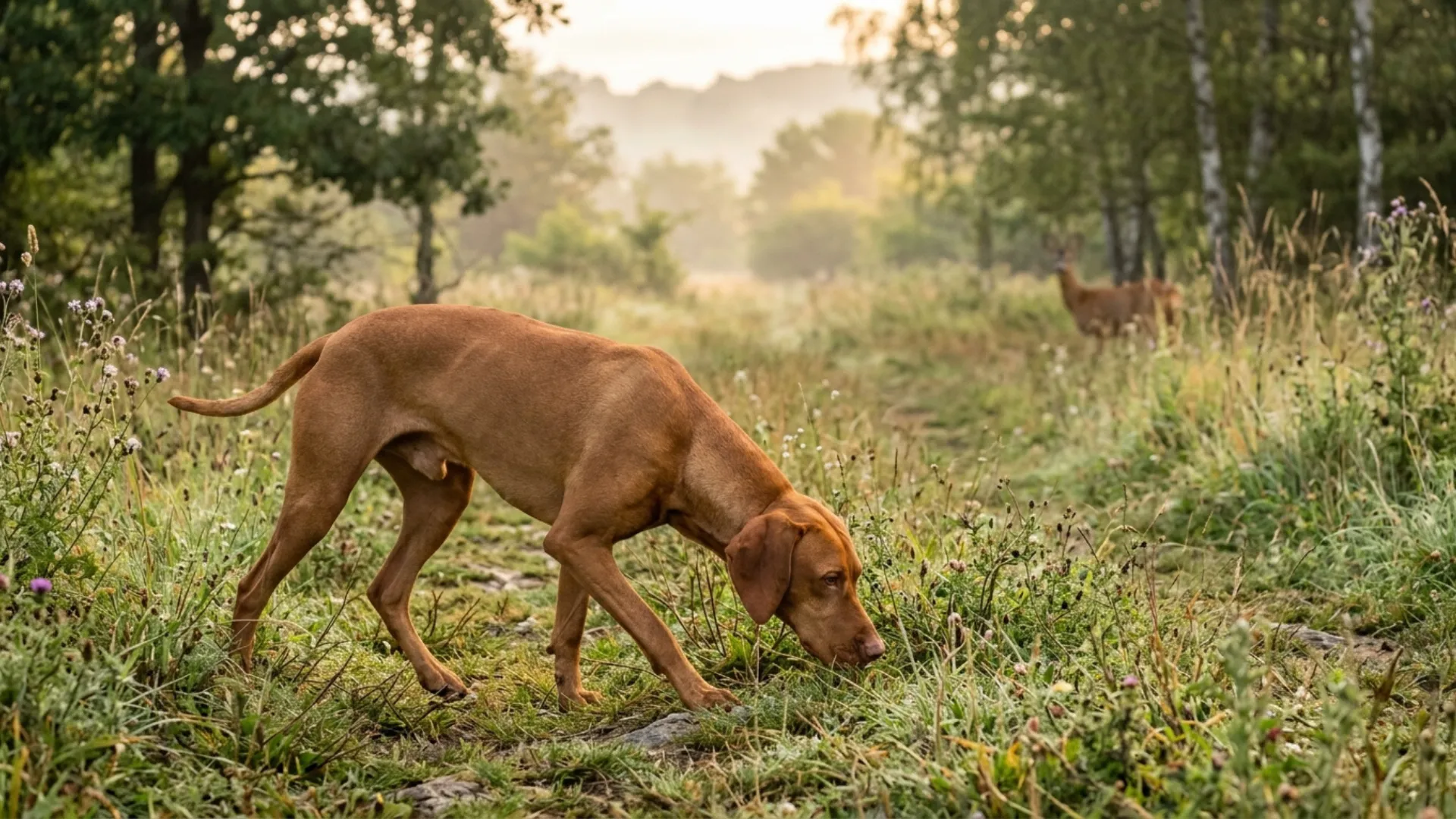
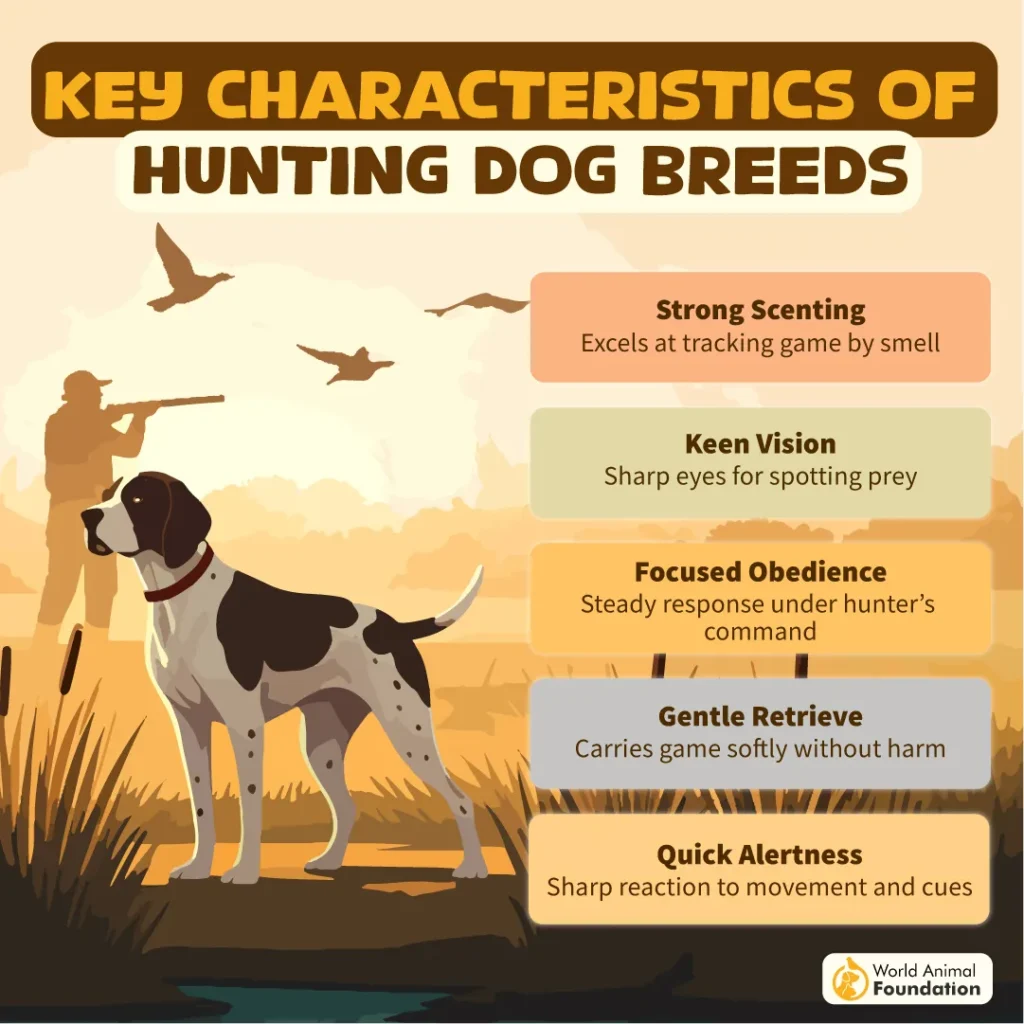
Tracking wildlife requires more than speed or strength; it demands a dog with an exceptional nose, sharp senses, stamina, and the focus to follow elusive scents across challenging terrain. For hunters, the right canine partner can transform a demanding outing into a more rewarding experience.
Generations of selective breeding have produced dogs with specialized abilities for locating, tracking, flushing, and retrieving game. Their intelligence and willingness to work alongside handlers also make proper training essential for turning instincts into reliable field skills.
Many dog owners have used some form of training method with their pets. For hunting enthusiasts, investing that effort can help develop a capable and dependable tracking companion suited to both the demands of wildlife pursuit and life beyond the field.
Ideal Dog Breeds for Tracking Wildlife and Hunting
1. German Shorthaired Pointer
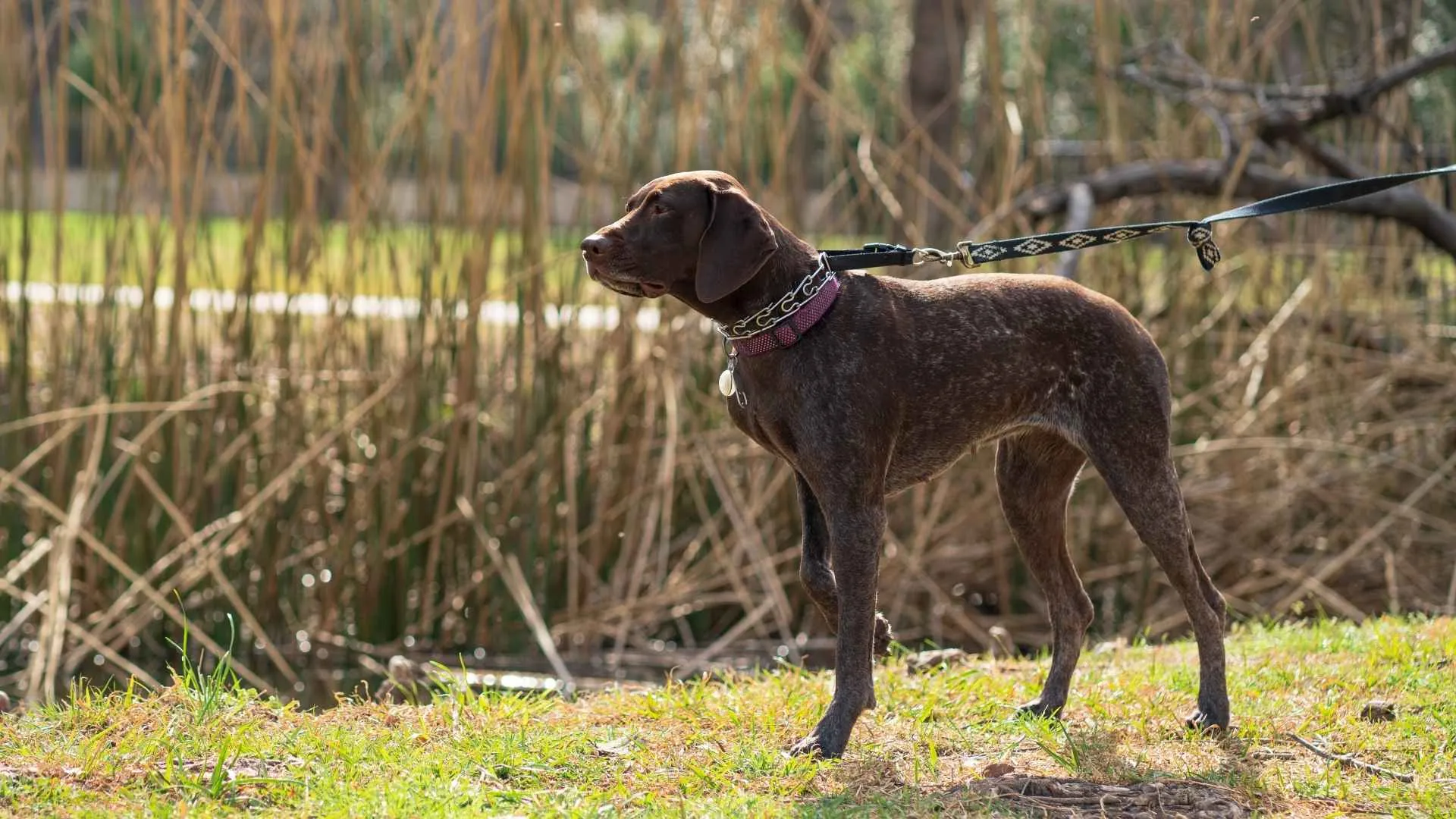
The German Shorthaired Pointer is a versatile hunting breed built for endurance, speed, and varied terrain. Its keen nose and strong hunting instincts help it locate game efficiently, while its natural retrieving ability allows it to transition smoothly between finding and recovering birds.
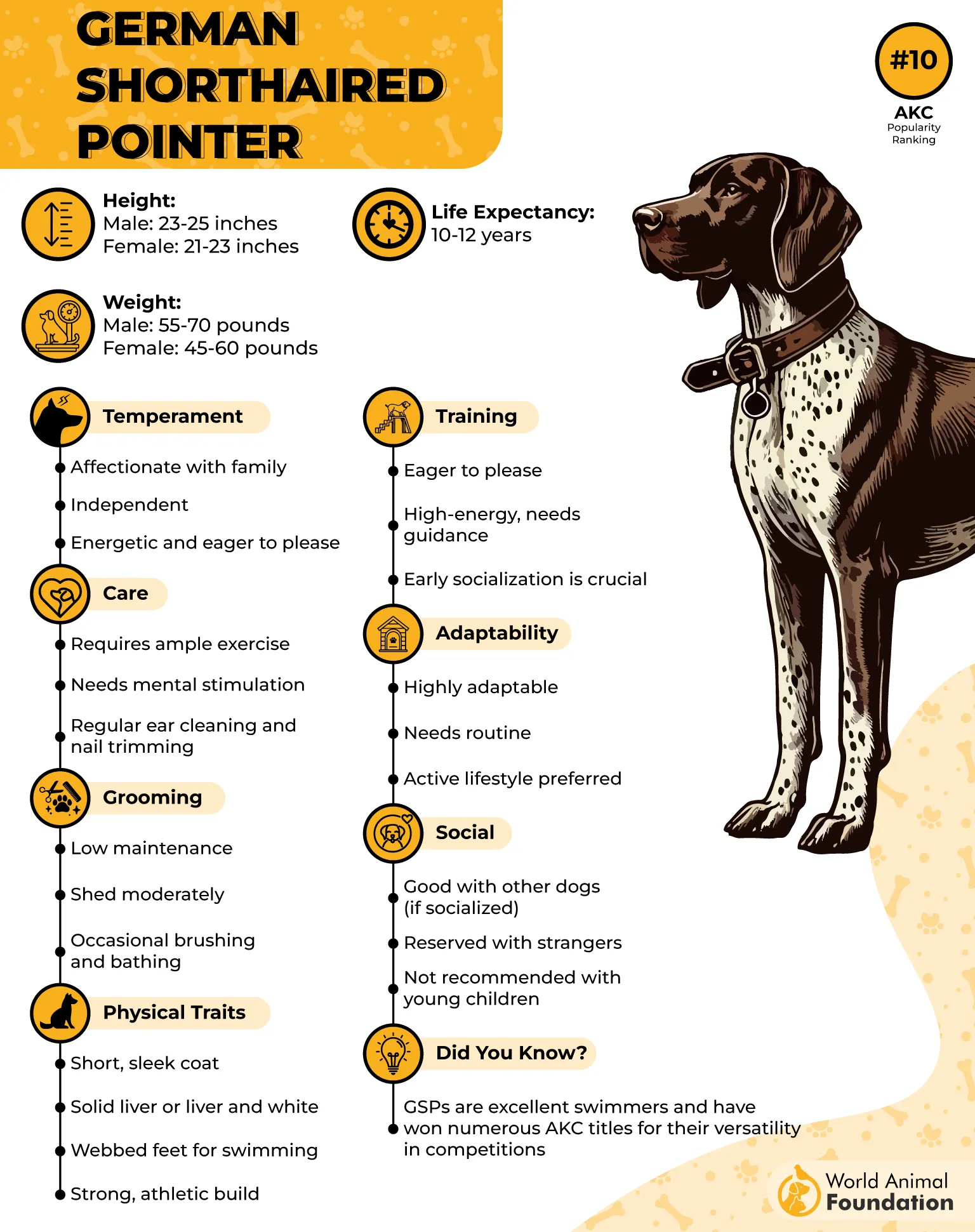
Highly energetic, the GSP thrives when given purposeful work and plenty of physical activity. Its strong prey drive can make close supervision important around smaller animals, while regular exercise and mental challenges help prevent boredom and destructive habits.
How This Breed Stands Out
Versatile field worker: Excels across different terrain while adapting readily to demanding hunting tasks.
Natural retrieving instinct: Combines its strong nose with an eagerness to locate and recover game.
2. Weimaraner
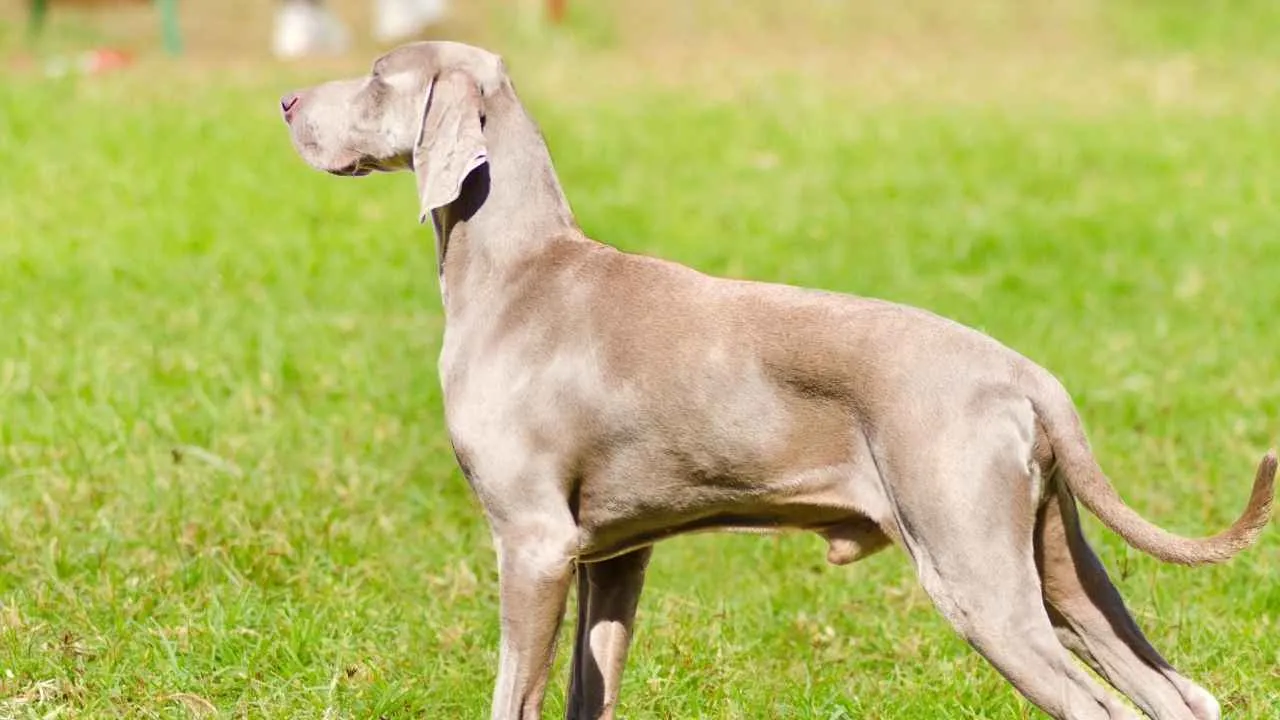
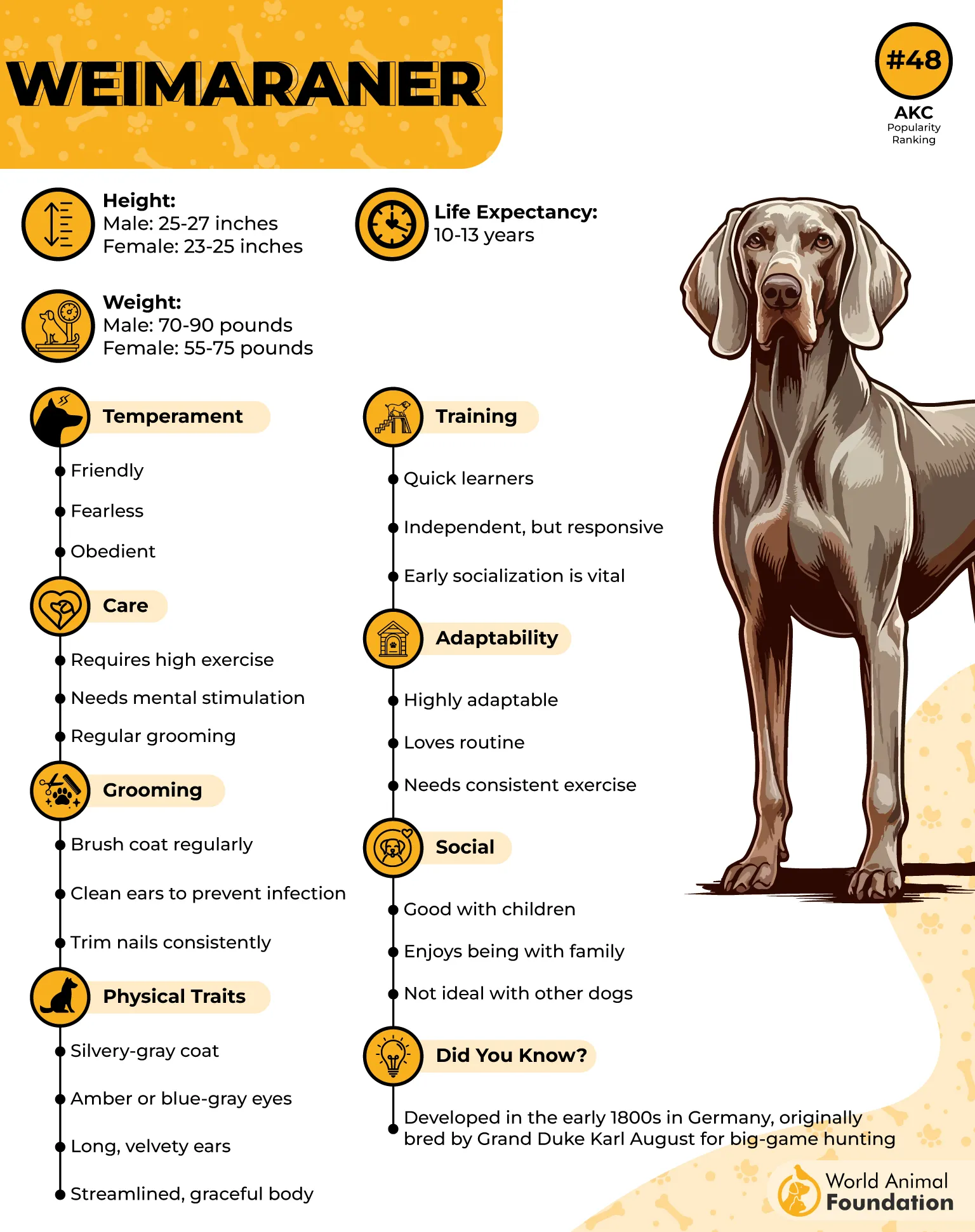
The Weimaraner is a sleek German hunting breed valued for its intelligence, trainability, and strong working drive. Its athletic build and stamina make it well suited to demanding hunts, while its short coat requires relatively little grooming during active outdoor work.
According to PetMD, a well-bred Weimaraner typically has a solid blue-gray or silver-gray coat, with some dogs showing a small white marking on the chest.
Naturally affectionate and eager to stay involved with its family, the Weimaraner needs substantial daily exercise and mental stimulation. A lack of activity can lead to destructive behavior, so running, scent games, and structured training are useful outlets.
How This Breed Stands Out
Strong water confidence: Its athletic nature and enthusiasm for activity support capable work around water.
Endurance-focused hunter: High stamina and a strong desire to work help it remain engaged during extended hunting sessions.
3. Plott Hound
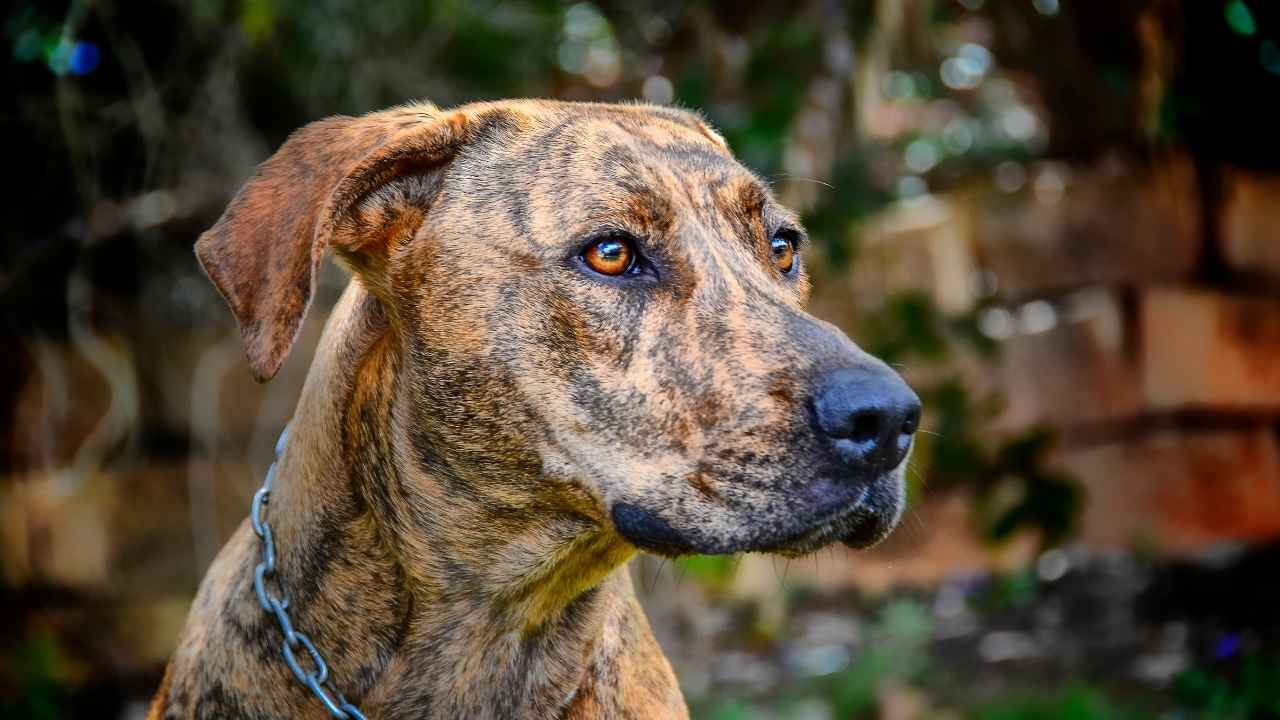
The Plott Hound is a rugged scent hound renowned for determination, courage, and stamina in demanding hunting conditions. Originally developed for pursuing large game, it can track, chase, and tree quarry through challenging terrain while maintaining impressive focus on the trail.
According to WebMD, Plott Hounds generally get along well with children and other dogs, but interactions should still be supervised.
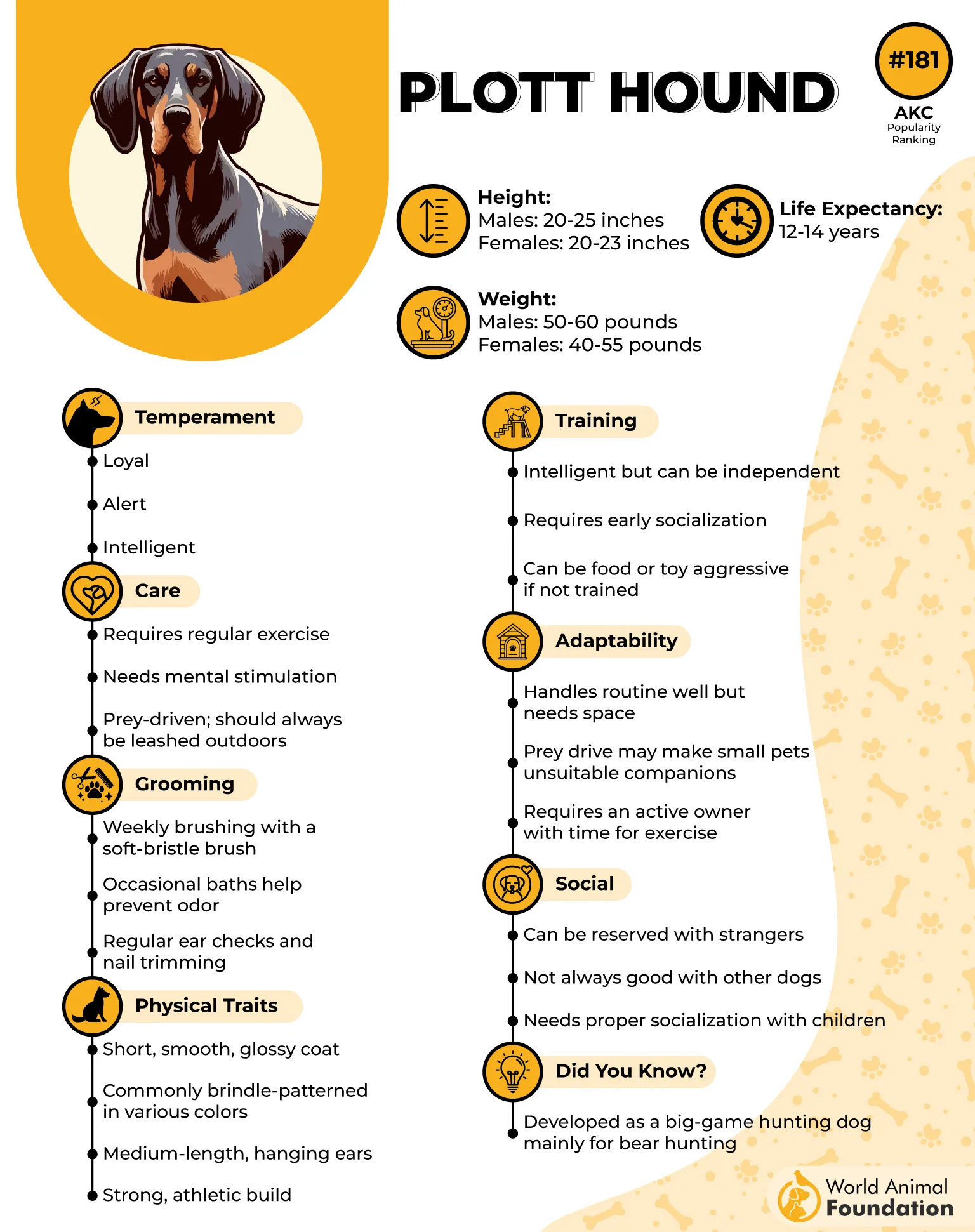
Despite its serious working attitude, the Plott can be affectionate and loyal with its family. Its athletic build and high energy require vigorous daily activity, whether through long walks, running, or purposeful outdoor work. Because of its strong prey drive, secure fencing and leash control are important when the dog is not actively hunting.
How This Breed Stands Out
Determined tracking ability: Its persistent nose and focused hunting nature help it follow challenging scent trails over rugged ground.
Rugged outdoor stamina: Strong endurance and agility allow it to remain active during demanding, extended hunts.
4. Vizsla
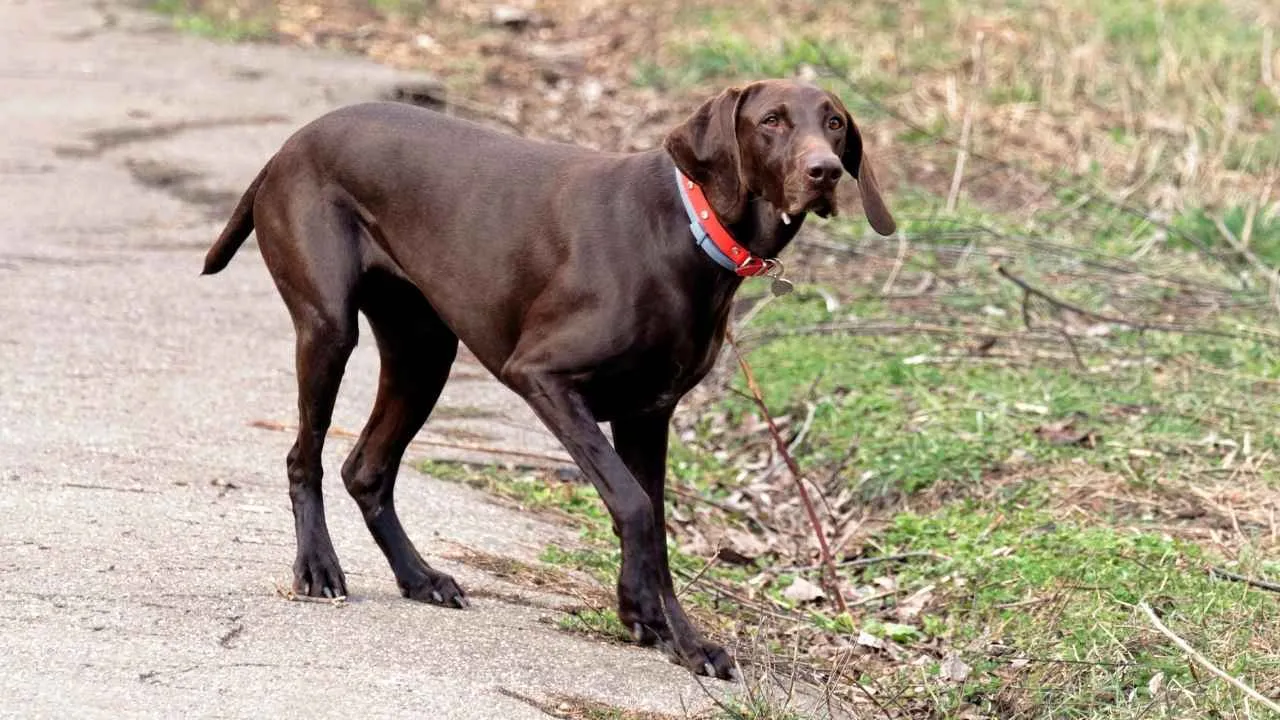
The Vizsla is a Hungarian hunting breed known for its athleticism, keen tracking ability, and close-working style. Its rust-colored coat and agile build suit demanding fieldwork, while its natural tendency to remain near its handler allows it to respond quickly to direction during a hunt.
According to Orvis, the breed has a graceful stride and impressive speed, along with an intelligent nature that supports its hunting abilities.
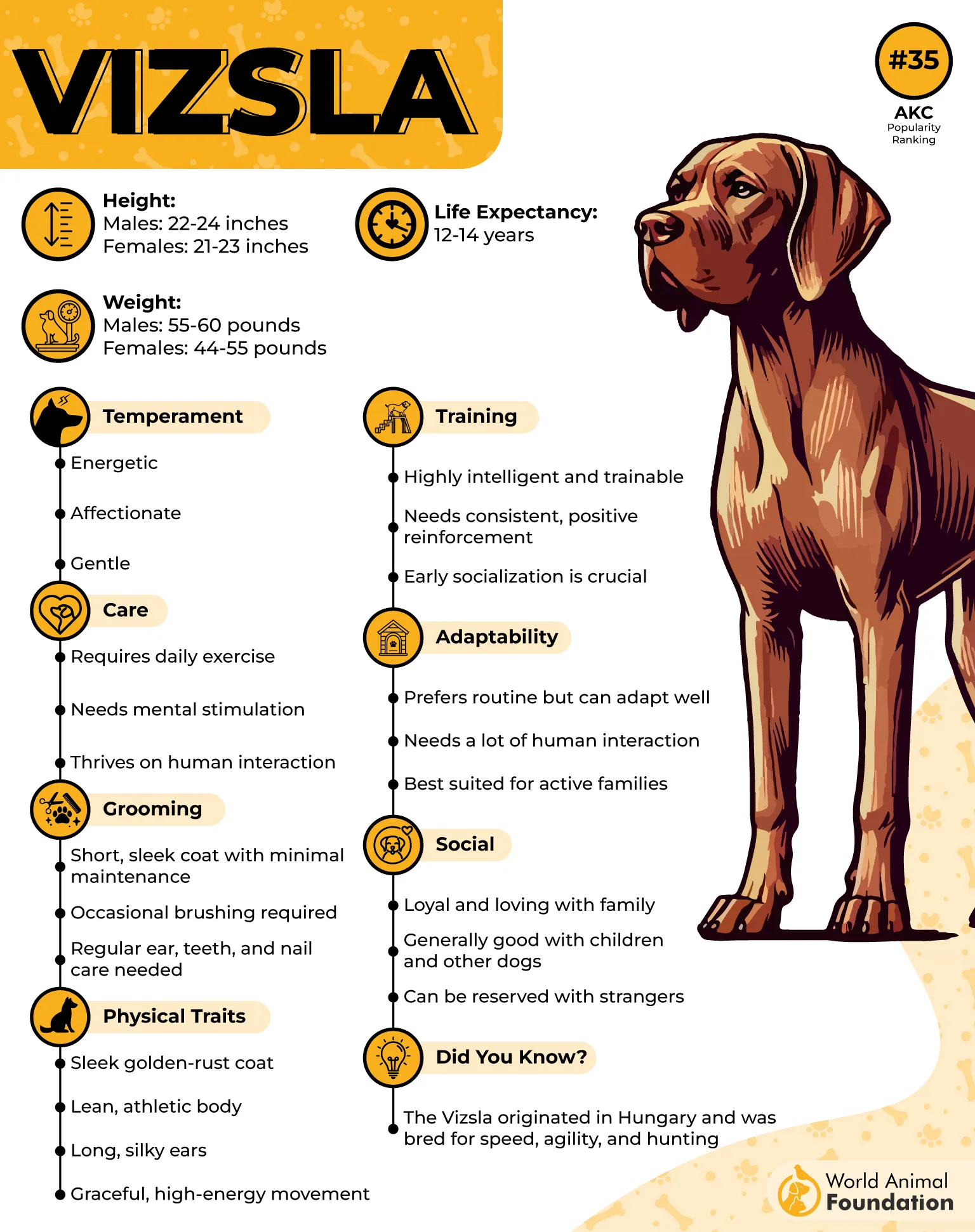
Highly energetic and people-oriented, Vizslas thrive when they can work alongside their owners regularly. They are generally sociable with people and other dogs, although early socialization helps develop reliable manners around other pets. Their retrieving ability is especially valuable, as they can carry game with a gentle mouth without damaging it.
How This Breed Stands Out
Gentle-mouth retrieval: Its soft carrying style allows it to retrieve birds while minimizing damage to the game.
Close partnership with hunters: Vizslas naturally stay connected to their handlers and respond attentively to human direction.
5. Treeing Walker Coonhound
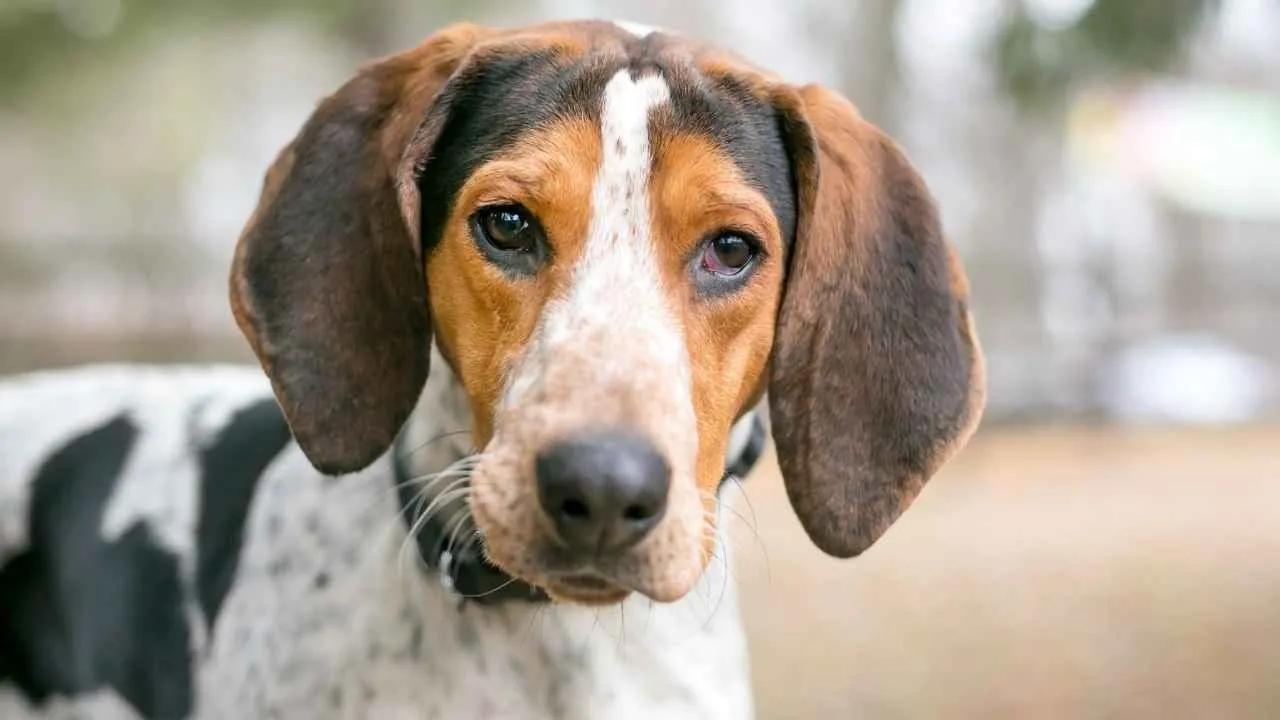
The Treeing Walker Coonhound is a swift, athletic scent hound bred to track raccoons and other game across extensive woodland. Its exceptional nose allows it to follow challenging trails, while its stamina helps it maintain the pursuit over long distances.
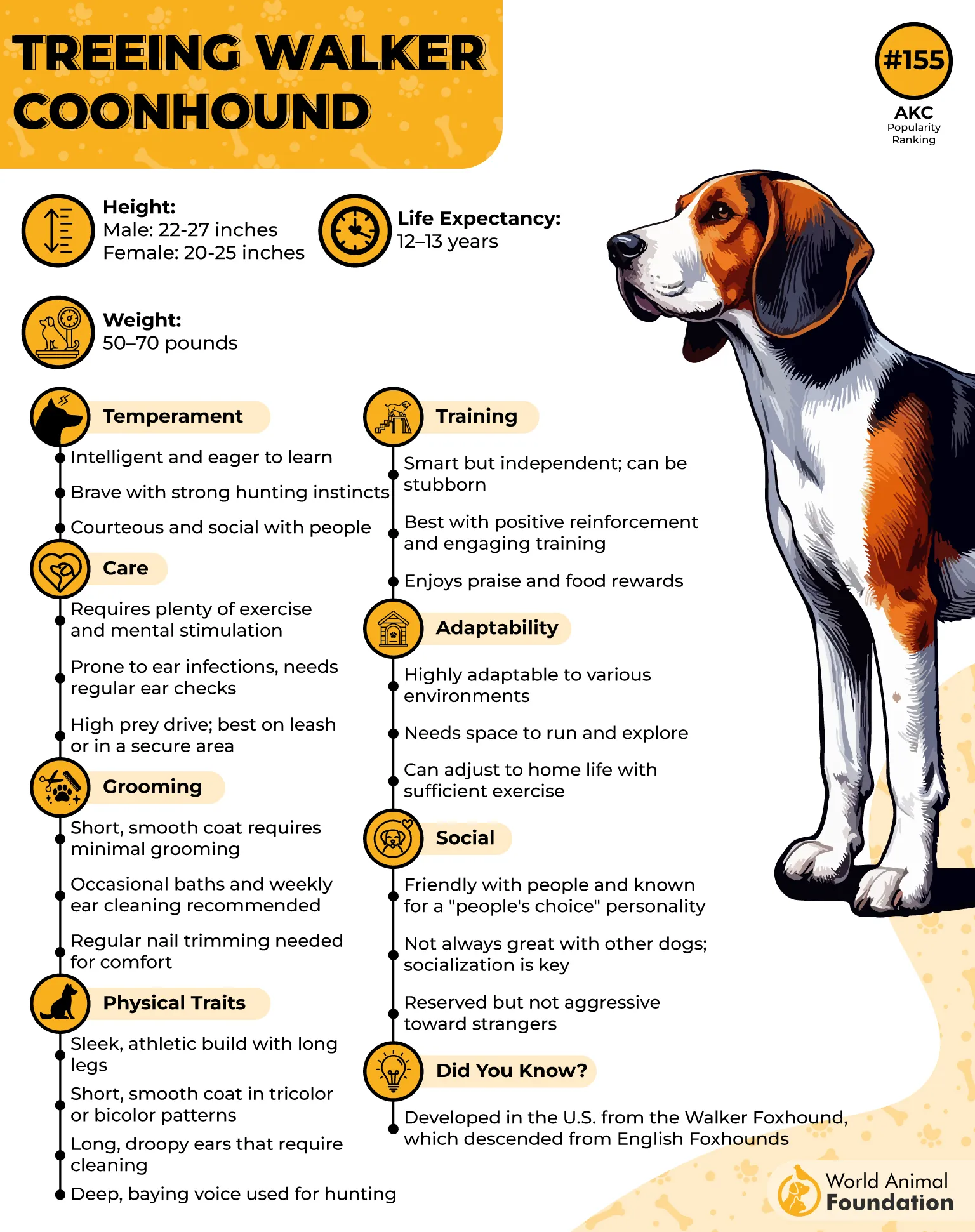
Once the quarry is located, this determined hound uses its distinctive bay to signal its position and keep the game treed until the hunter arrives. Intelligent and energetic, it needs vigorous daily exercise and mentally engaging activities when not working in the field.
How This Breed Stands Out
Exceptional scent trailing: Its powerful nose helps it follow complex scent trails across large areas.
Fast, agile movement: A streamlined athletic build allows it to cover woodland terrain quickly while maintaining pursuit.
6. Mountain Cur
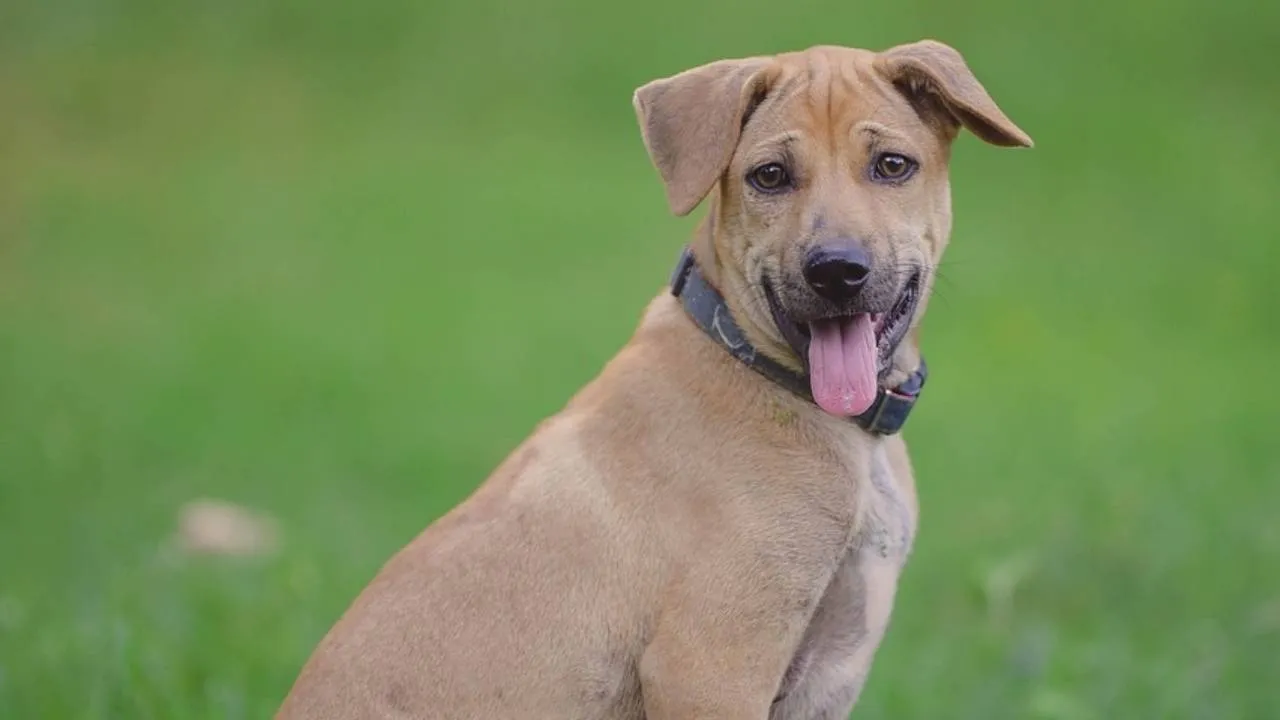
The Mountain Cur is a rugged American hunting breed built for demanding terrain and challenging game. Strong, agile, and tenacious, it can navigate rocky ground and uneven landscapes while maintaining focus on the trail. Its history as a working companion to pioneers also shaped its dependable nature in the field.
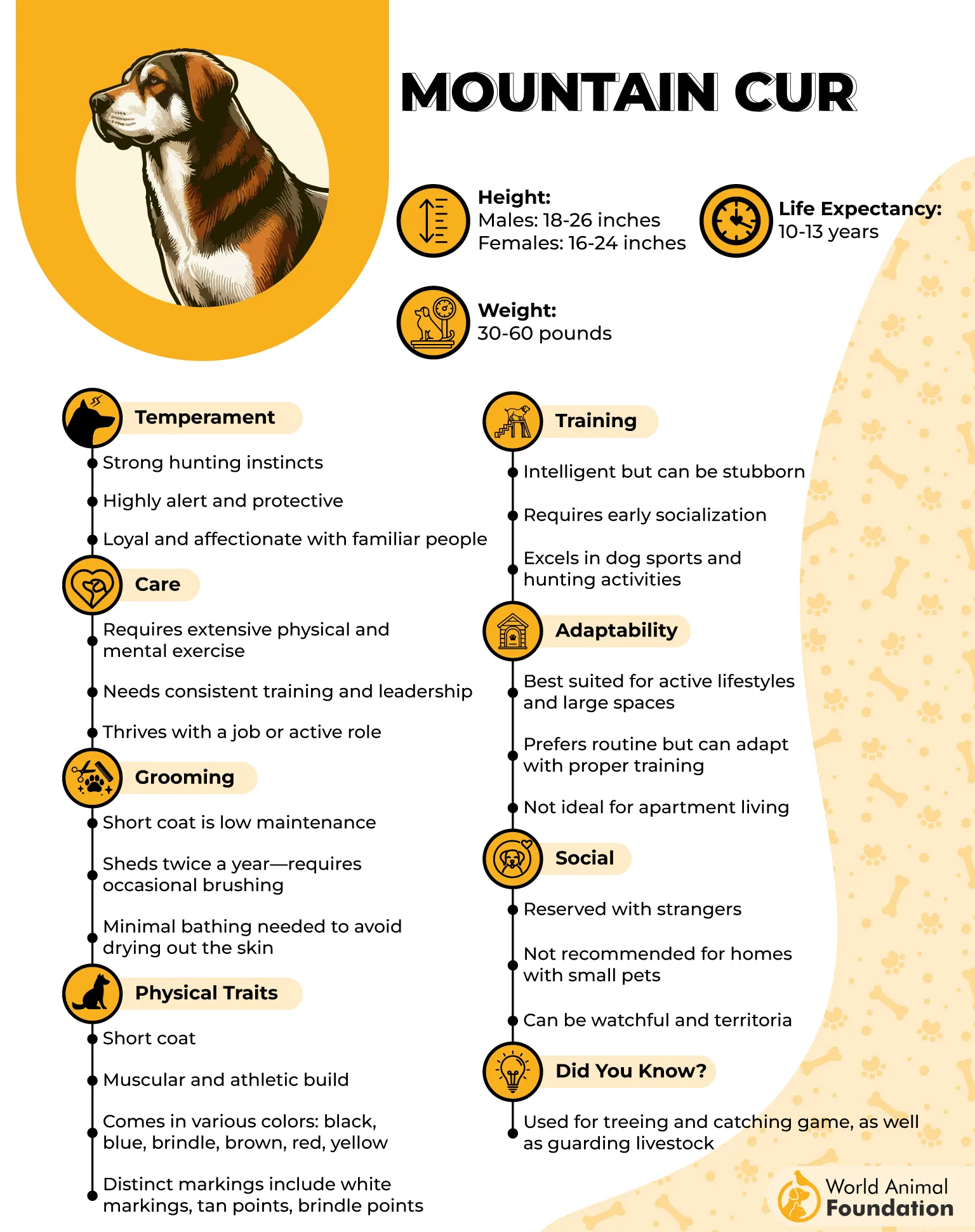
Intelligent and eager to please, the Mountain Cur forms a close bond with its family and takes its work seriously. It likes having a job to do and tends to enjoy outdoor work beyond hunting, including a long hike. It can be cautious around unfamiliar people, but remains bold and dependable when working.
How This Breed Stands Out
Strong treeing instincts: Its natural ability to track and drive game into trees makes it valuable for hunting work.
Tough terrain adaptability: A sturdy, athletic build helps it remain effective across rugged and uneven landscapes.
7. American Foxhound
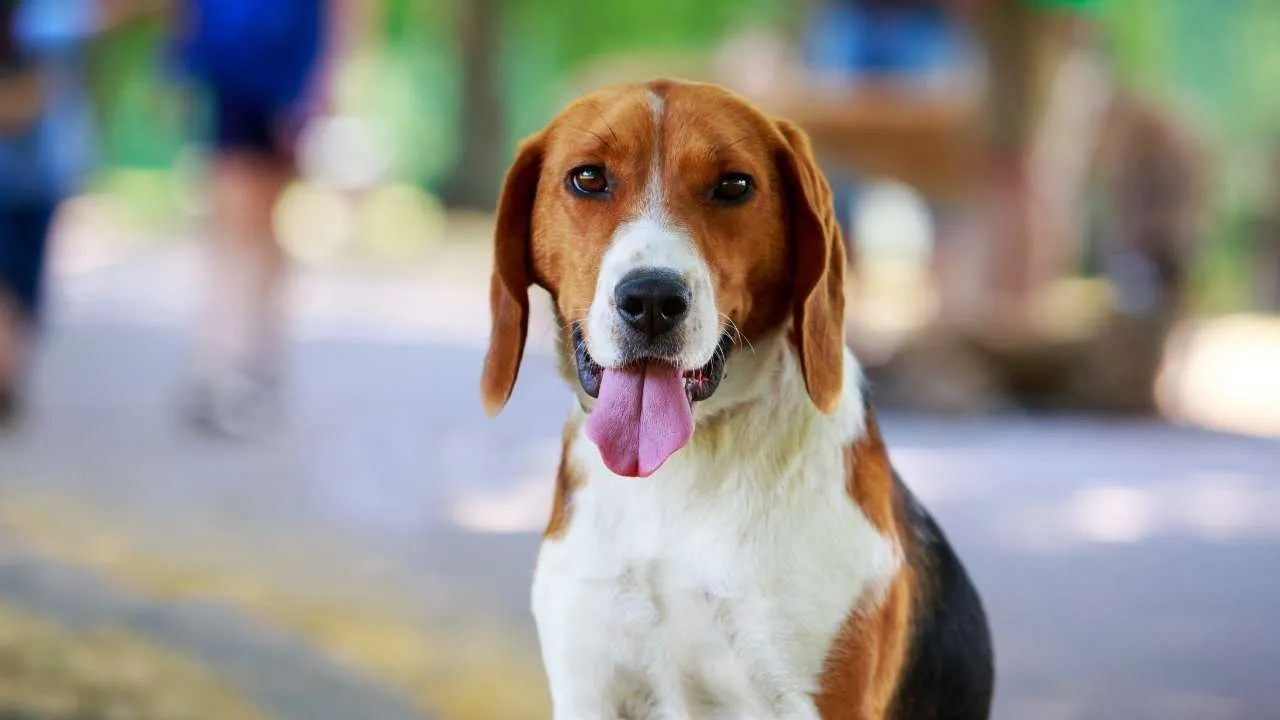
The American Foxhound is a sleek, endurance-driven scent hound developed for long pursuits across open country. Its strong nose, speed, and determination allow it to follow trails for extended distances, while its athletic build supports demanding outdoor work.
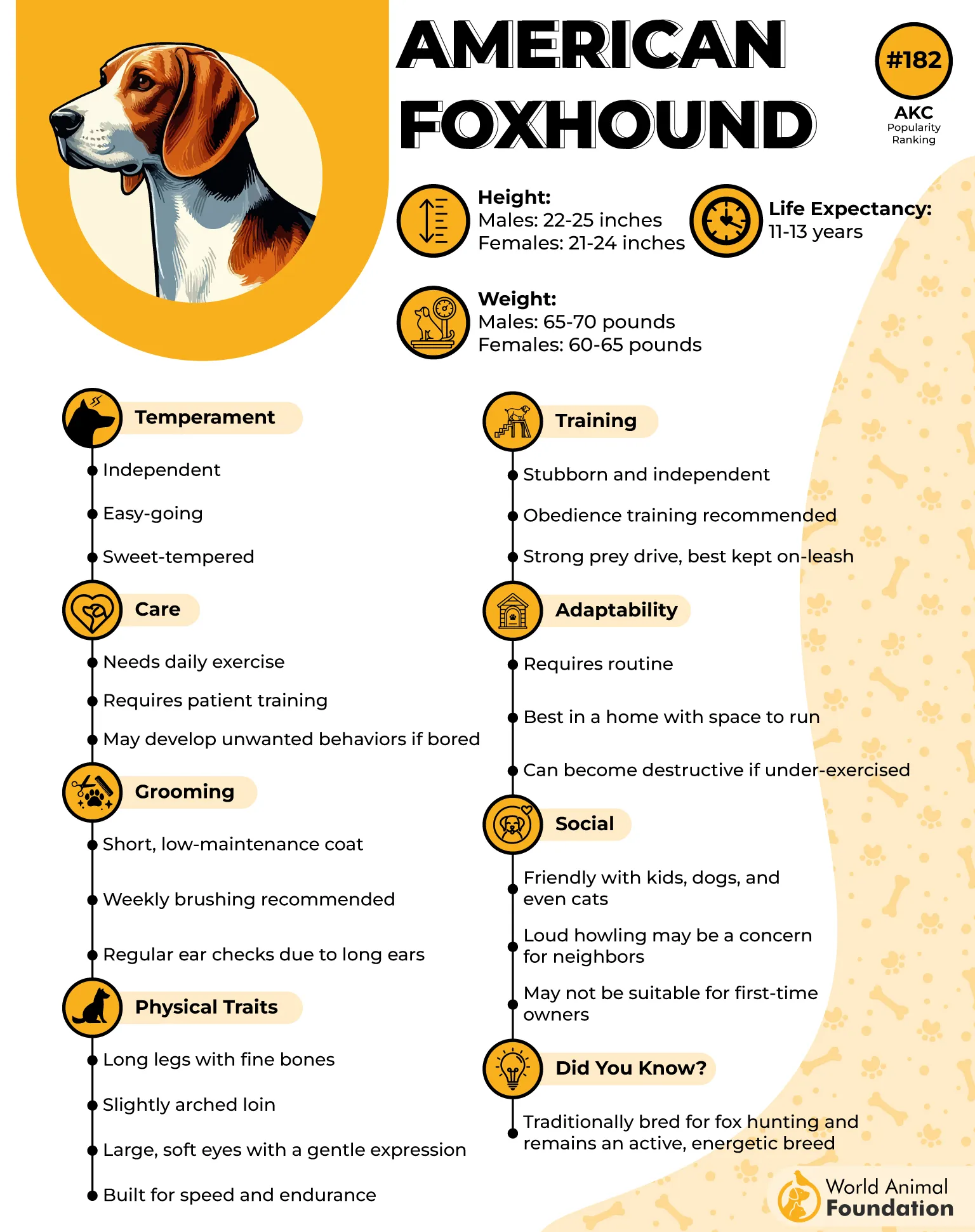
Despite its hunting intensity, this breed is generally gentle, social, and good-natured with families and other animals. However, its independent streak and powerful prey drive require consistent training and plenty of daily exercise.
How This Breed Stands Out
Remarkable running stamina: Its lean, athletic build supports prolonged movement during demanding hunts.
Long-distance scent pursuit: A powerful nose enables the breed to follow intriguing trails across wide areas.
Conclusion
Choosing the right hunting dog depends on the type of terrain, game, and tracking work you expect it to handle, whether that means bird work or using a tracking dog to recover wounded deer. These breeds offer a range of strengths, from scent tracking and retrieving to endurance and field versatility.
Some tracking dogs can follow trails that are days old, with Bloodhounds often setting the benchmark for that level of scenting ability.
German Shorthaired Pointers and Weimaraners bring athleticism, intelligence, and versatility to demanding hunts. Plott Hounds and Mountain Curs stand out for their determination, stamina, and ability to work through rugged landscapes.
Vizslas excel when working closely with their handlers, while Treeing Walker Coonhounds combine speed with impressive scenting skills. American Foxhounds are built for sustained pursuits and long-distance tracking.
Whatever your hunting style, a successful partnership requires proper training, regular exercise, mental stimulation, and responsible handling. It also helps to have a dog ready when recovery work cannot wait, and blood-tracking laws vary by state.
