




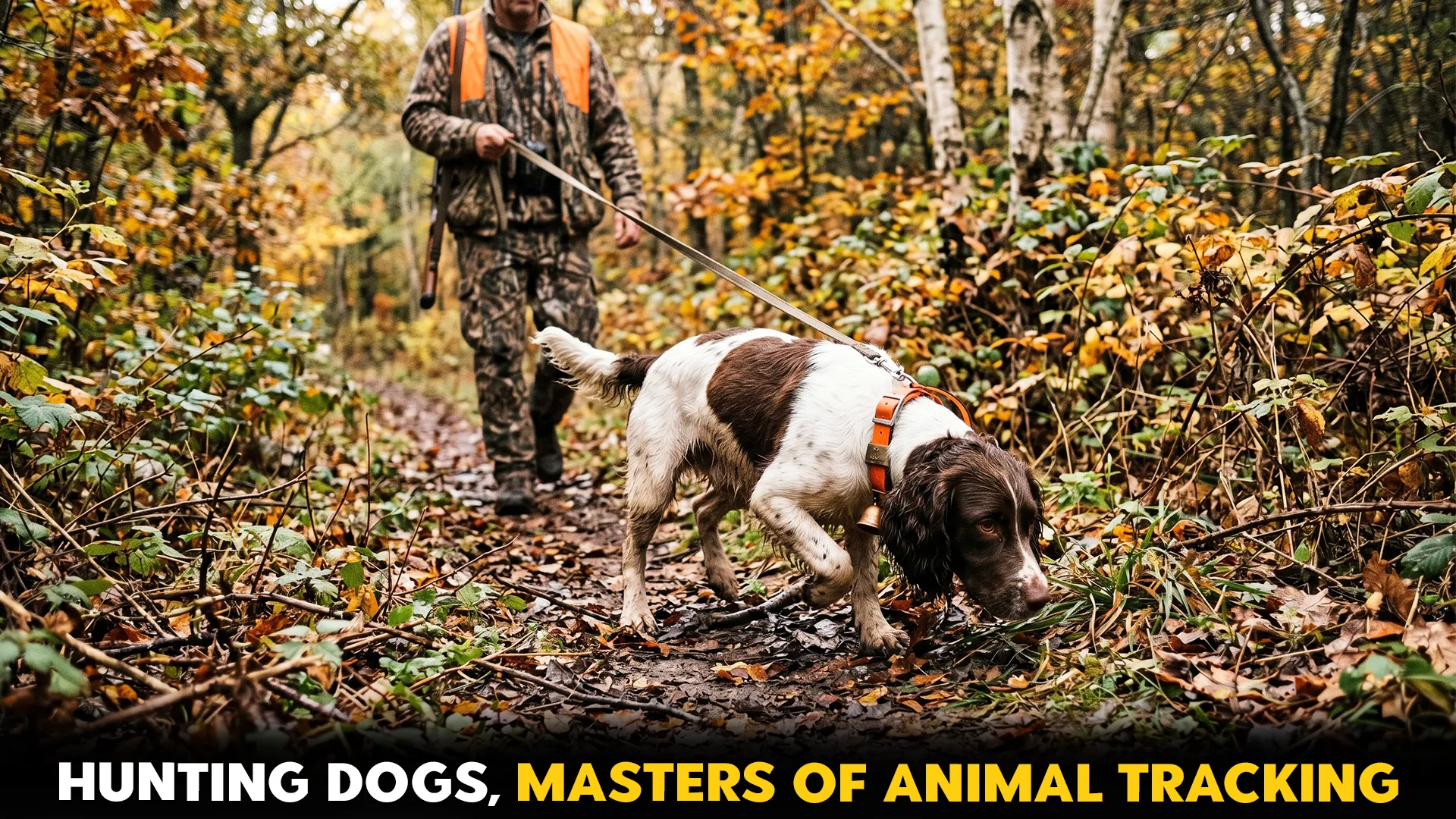
One of the most challenging aspects of hunting is tracking animals. It requires a trained dog to follow invisible scent trails, interpret subtle environmental changes, and stay focused on a target over long distances and time periods.
True tracking goes beyond basic scent work. It involves understanding how scent behaves, how it shifts with the wind, settles on vegetation, or gradually fades over time.
Not all hunting dogs are equal when it comes to tracking ability. While some breeds rely heavily on their powerful sense of smell, effective tracking dogs also combine intelligence, problem-solving skills, physical endurance, and emotional resilience. Some specialize in following “cold trails” that are hours old, while others excel in fast-paced tracking of fresh trails.
The following are 9 of the best hunting dog breeds known for tracking wounded animals and small game. Each breed offers unique strengths in terrain adaptability, prey type, and tracking style, making them highly valuable in recovery and field hunting situations.
Ideal Dog Breeds for Tracking Animals on the Hunt
1. Beagle
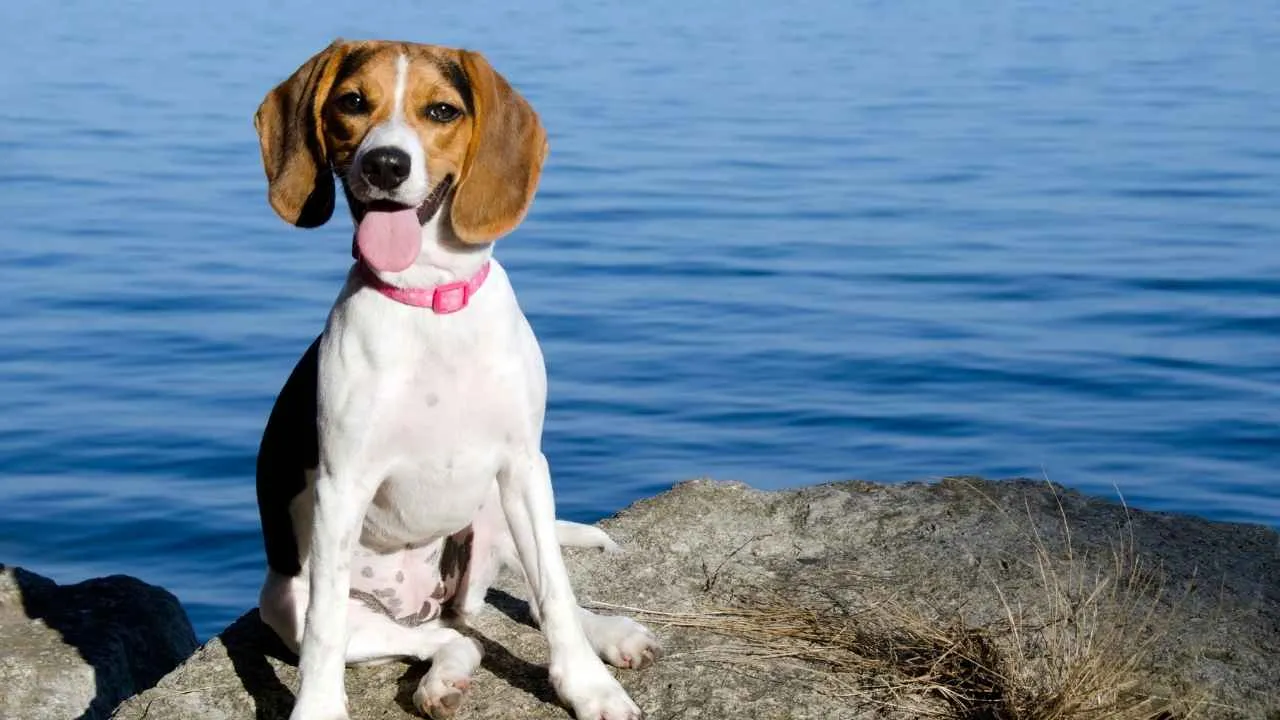
The Beagle is one of the most refined ground-scent tracking experts, known for its precision, patience, and methodical hunting style rather than speed. Its instincts are finely tuned for analyzing scent trails in detail, allowing it to break down complex paths into clear, usable information. With an exceptional sense of smell, the Beagle can isolate a specific target scent even in environments filled with overlapping trails.
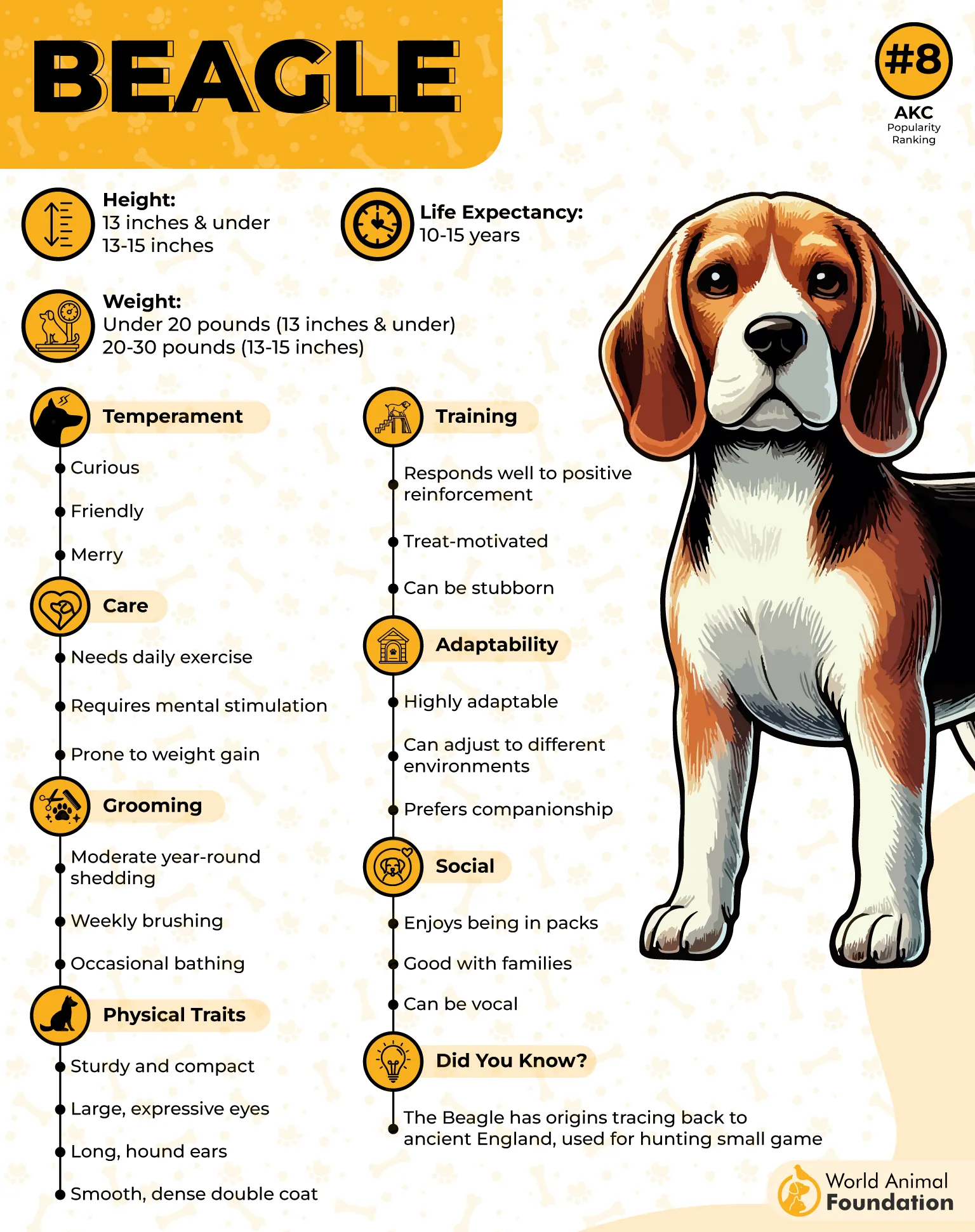
This hunting dog breed excels in several tracking situations, including:
Following faint, low-intensity scent particles close to the ground
Reconstructing broken trails after temporary loss of scent
Tracking effectively in wet weather, where scent adheres to surfaces
Continuing a trail even after environmental disturbances
Working efficiently in pack tracking scenarios
One of the Beagle’s most distinctive traits is its problem-solving behavior when it loses a scent. Instead of abandoning the trail, it carefully circles the last known area to relocate the scent path, making it highly reliable in difficult tracking conditions.
Unlike explosive sprinters, the Beagle relies on steady endurance, allowing it to follow trails over long distances without tiring quickly. This makes it especially well-suited for extended hunts that require patience, focus, and consistent tracking ability.
2. Treeing Walker Coonhound
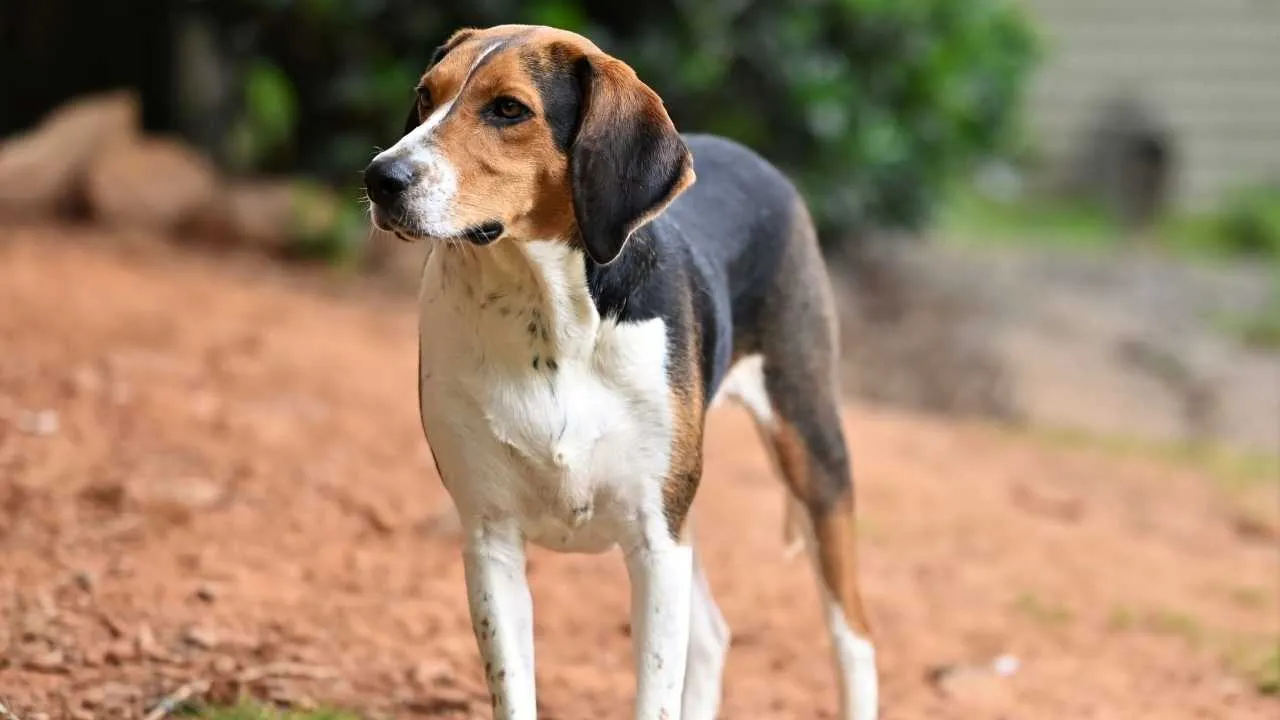
This hunting dog breed is built for dynamic performance, where speed and accuracy work together in balance. Unlike more methodical trackers, it is especially skilled at reading fresh scent trails in real time and adjusting its pace based on the intensity of the scent and the movement of its prey.
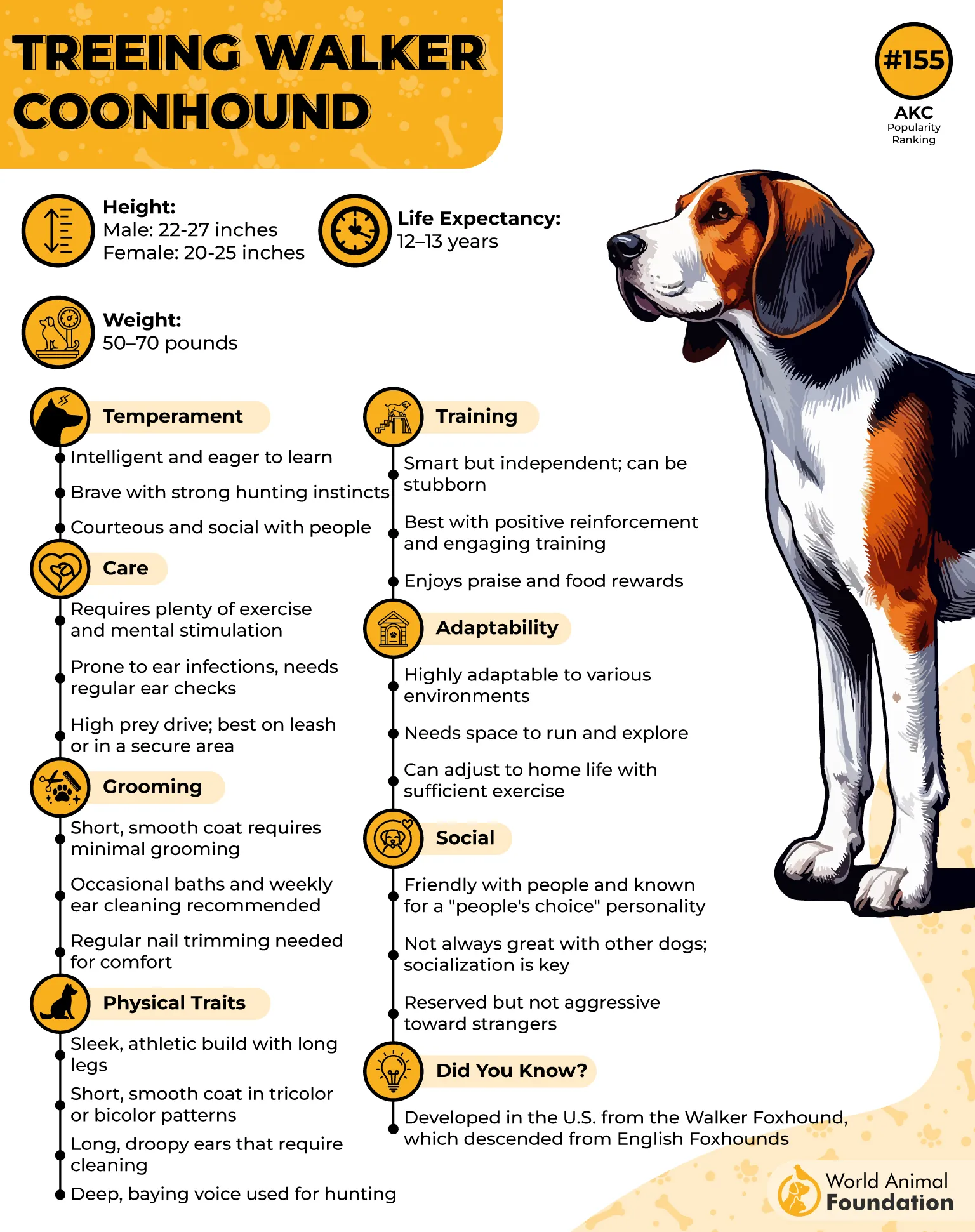
This breed excels in several hunting situations, including:
Originally bred for tracking and treeing raccoons
Following moving prey across varied and challenging terrain
Communicating location and progress through vocalization
Transitioning smoothly from tracking on the ground to treeing game
Maintaining strong directional focus even in highly distracting environments
One of its greatest strengths is its rapid trail interpretation. It not only follows scent but also quickly evaluates direction and freshness, allowing it to close the distance more efficiently than many other hunting breeds.
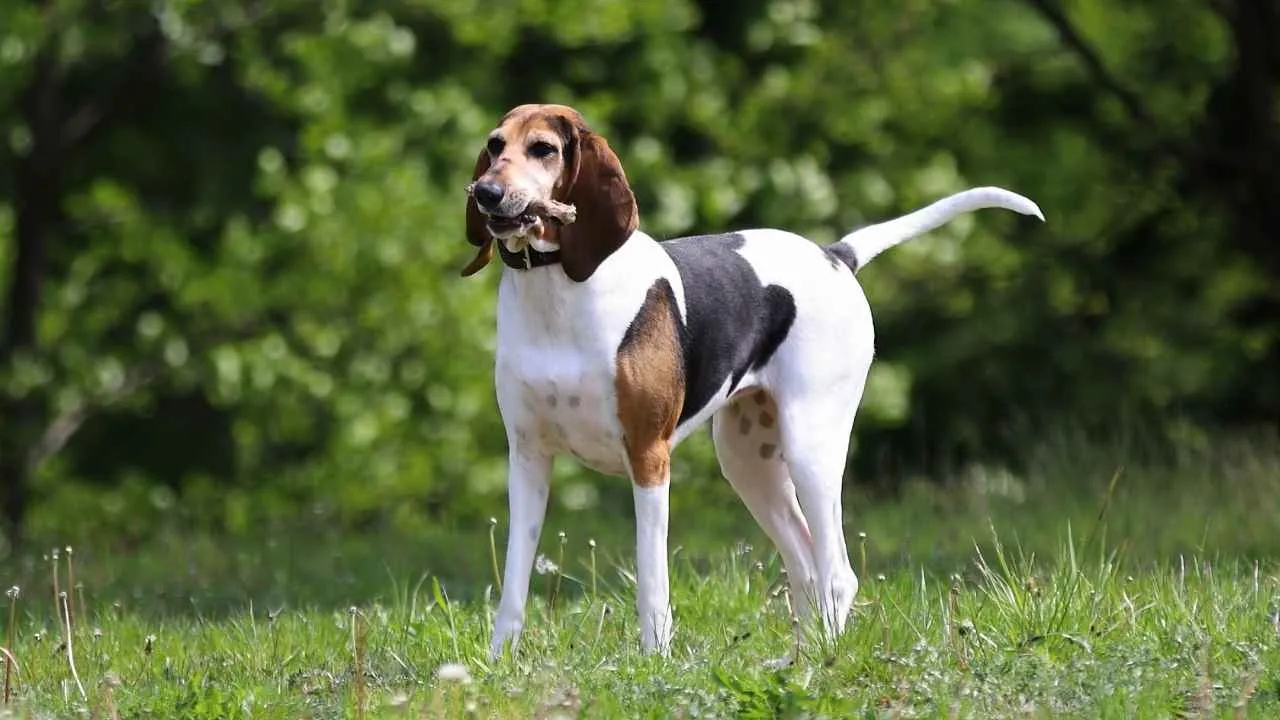
In addition, this breed has a distinctive and functional vocal style. Even in low-visibility conditions, hunters can track its movement through sound, making it highly effective in dense terrain and night hunts.
3. American Foxhound
This hunting dog breed is built for long-distance tracking in open terrain. Rather than focusing on pinpoint precision, its strength lies in coverage, consistency, and exceptional stamina, allowing it to maintain a steady pursuit over vast areas.
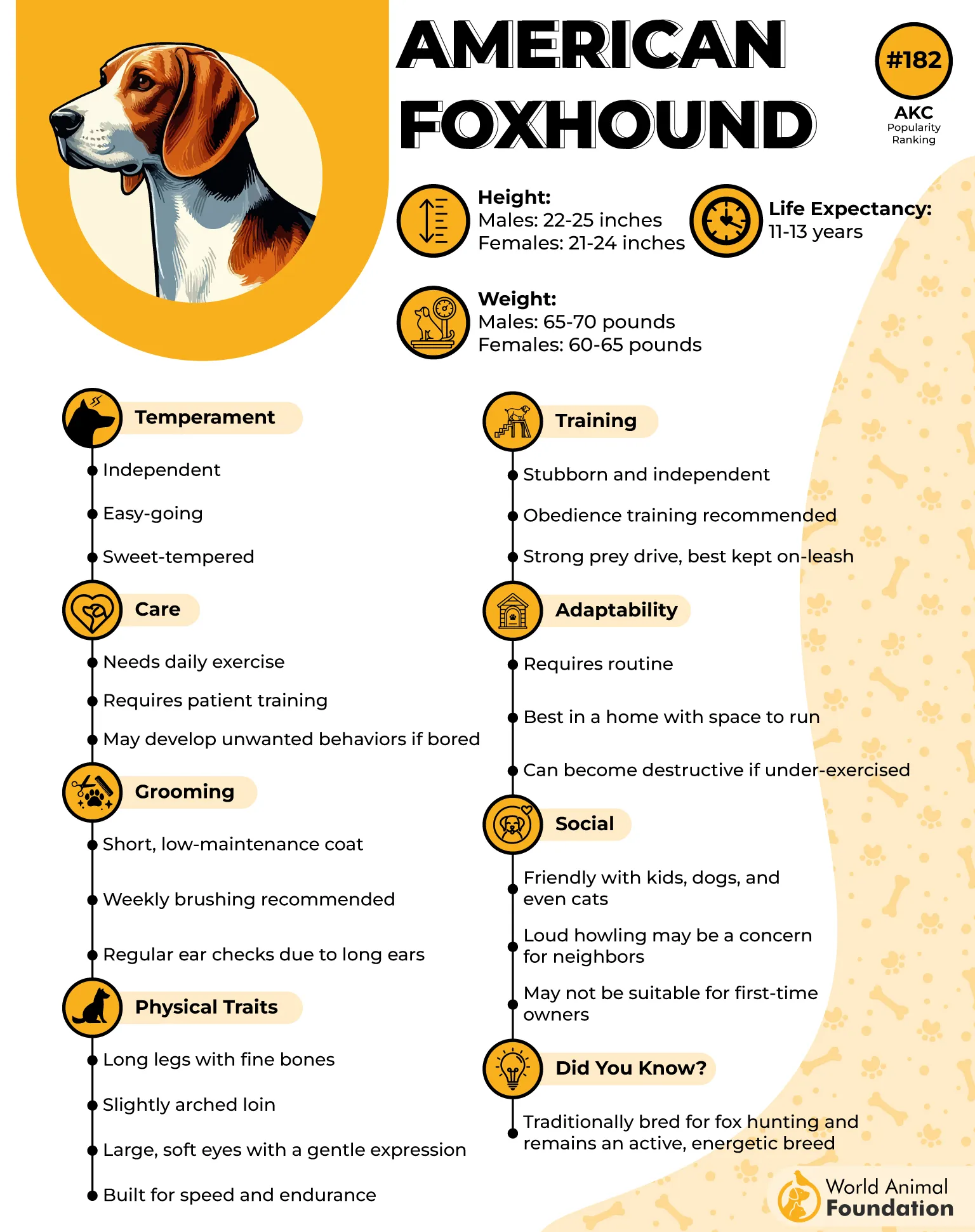
This breed excels in several hunting situations, including:
Maintaining a consistent rhythm throughout long hunts over many miles
Tracking scents across open fields, plains, and rolling terrain
Working in coordinated packs to expand the search area efficiently
Conserving and managing energy for extended endurance hunts
The Foxhound is commoly used in hunts where the goal is to locate and follow game over large distances rather than isolate a single precise trail.
Its strong lung capacity and endurance allow it to run continuously with remarkable ease, a trait that is rare among many large-scale hunting dogs. This makes it especially effective in traditional pack hunting scenarios that demand both stamina and coordination.
4. Basset Hound
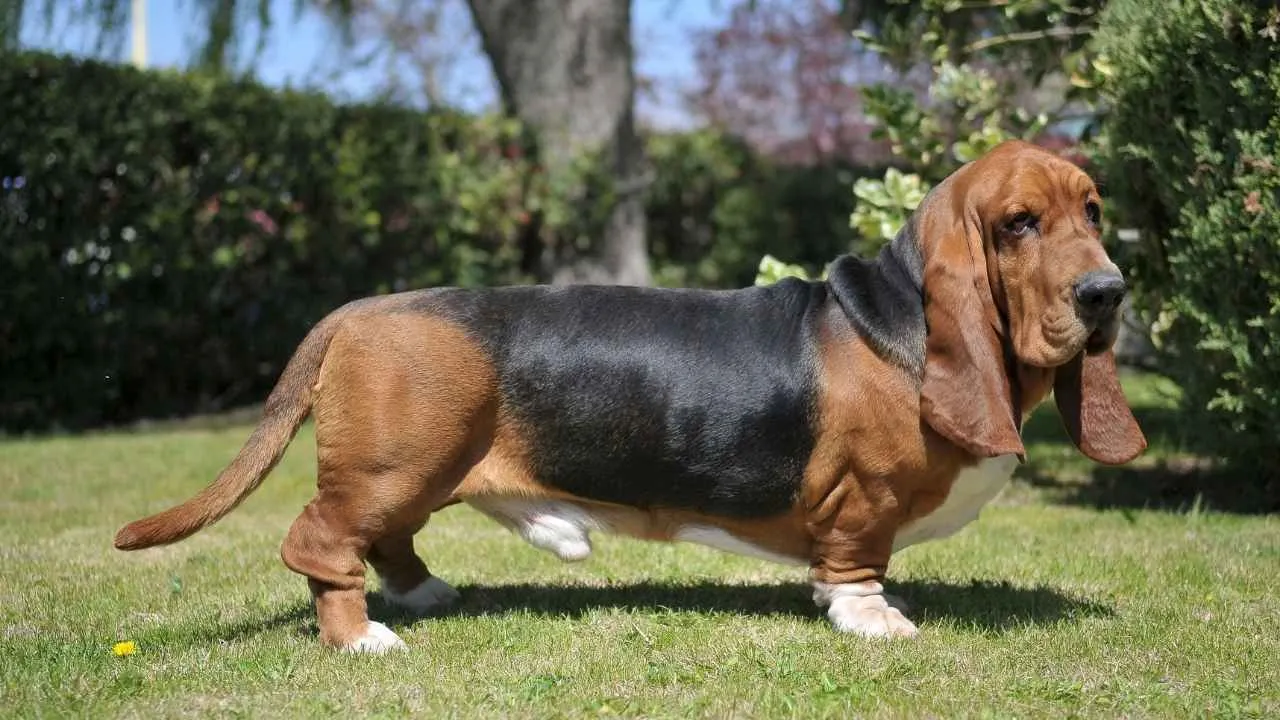
According to Purina, the Basset Hound is an exceptional scent hound used for tracking small game as well as medium-sized game, including deer. Along with its strong hunting abilities, its calm and friendly temperament also makes it a reliable family companion, giving it a unique balance of versatility in both field work and home life.
Its entire physical structure is built for scent tracking. The great family dog breed’s short legs keep it close to the ground, while its long ears help trap and funnel scent particles toward its nose, enhancing its tracking efficiency.
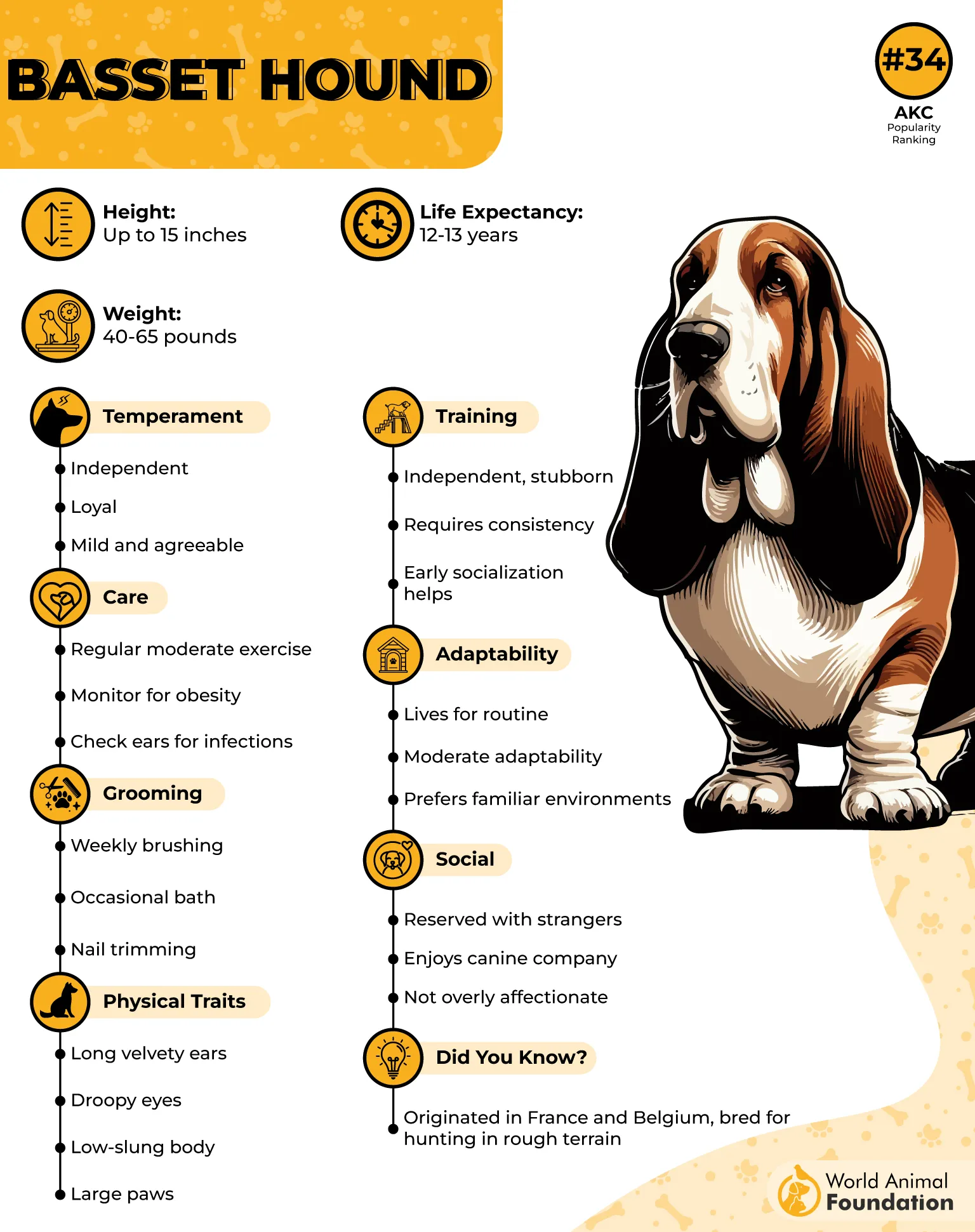
The Basset Hound particularly excels in:
Following cold or aged scent trails
Navigating through thick shrubs without losing the scent path
Maintaining focus over long tracking periods
Detecting subtle variations in scent intensity
Working at a slow, methodical pace to ensure tracking accuracy
Due to its strong work ethic and steady approach, the Basset Hound remains consistent even under pressure. While faster breeds may overshoot or lose a trail, this hound carefully and systematically works through each step of the scent path.
This makes it especially valuable for tracking wounded game, where scents can be faint, irregular, or difficult to follow. Its slower pace is not a limitation but an advantage in precision-based tracking situations.
5. Weimaraner
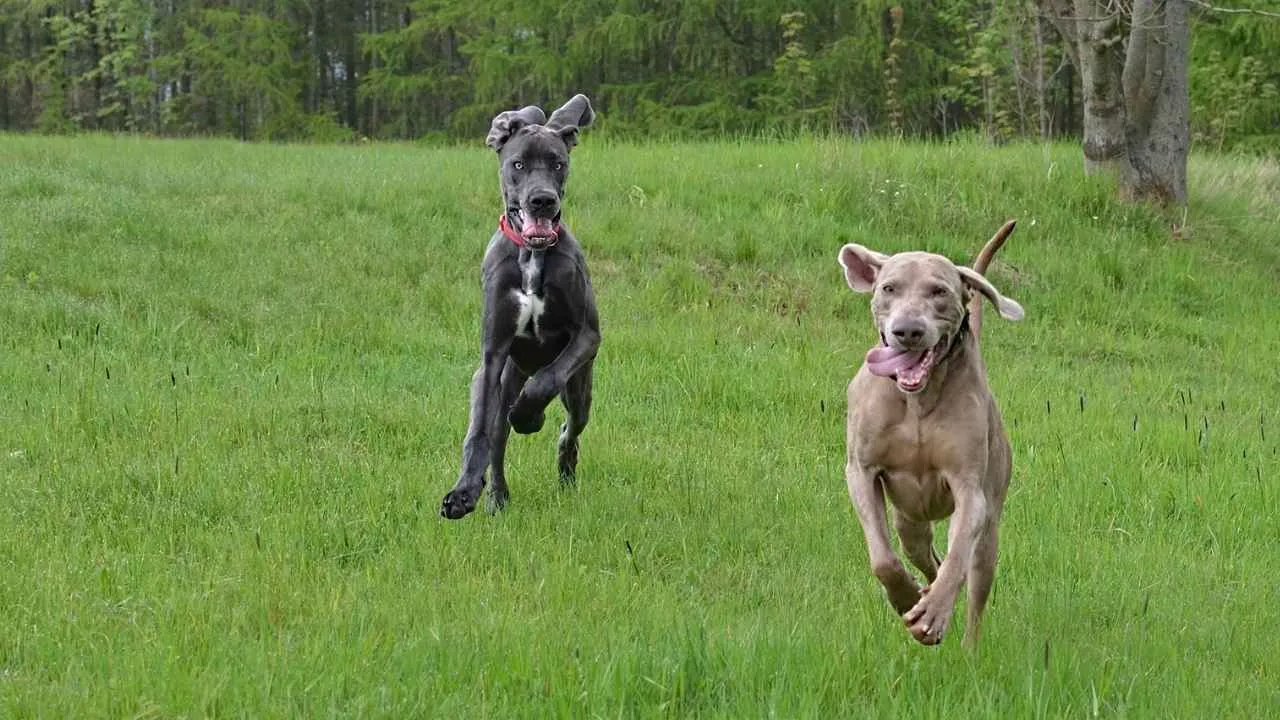
The Weimaraner is a versatile, multi-dimensional hunting dog that combines scent tracking, speed, and strong spatial awareness. Known for its powerful prey drive, it has historically been used to hunt larger game such as rabbits and even bears.
Unlike pure scent hounds that rely primarily on smell, the Weimaraner is highly flexible, using a combination of sight, scent, intelligence, and instinct to track and respond in the field.
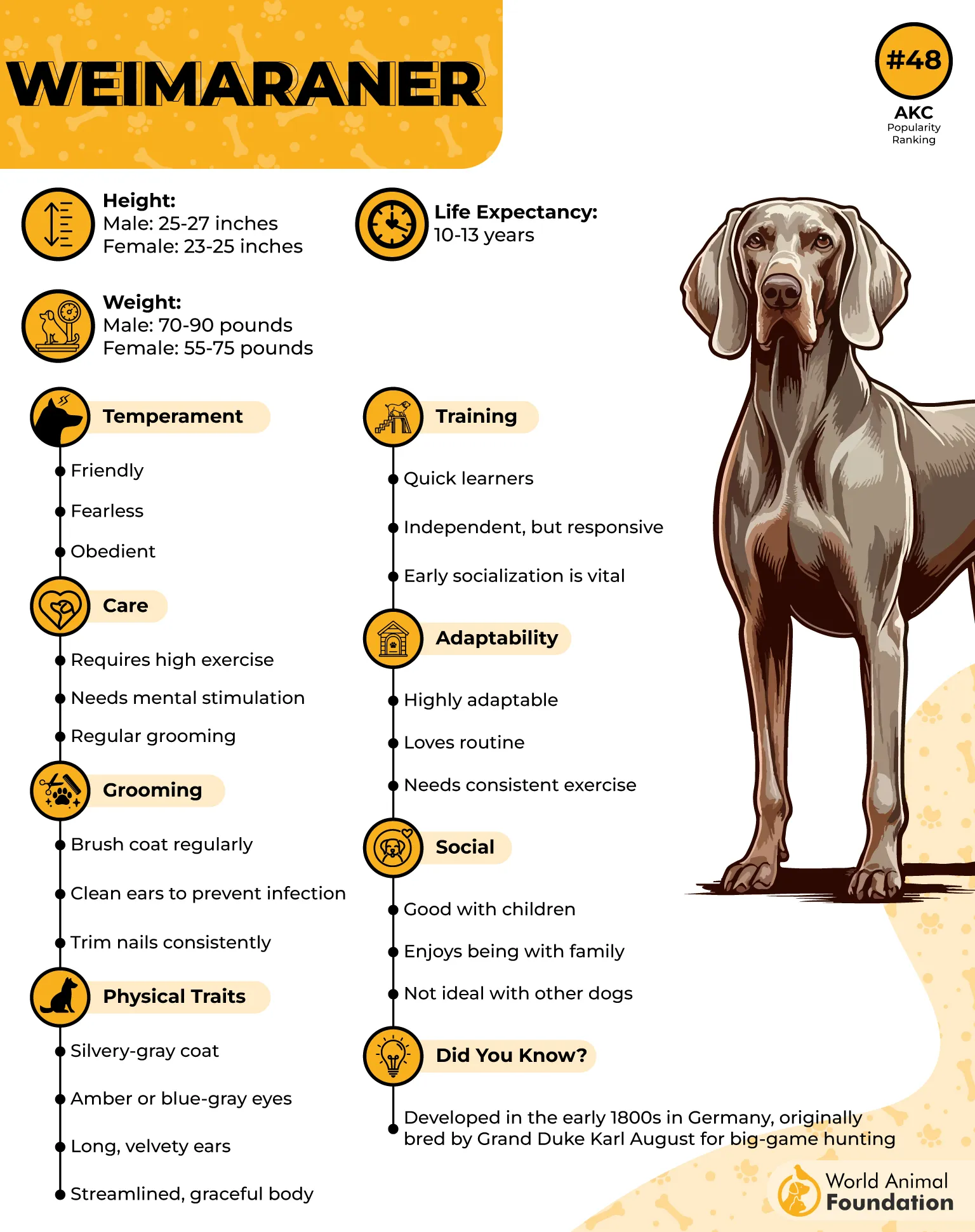
Its key abilities include:
Following medium-strength scent trails across varied terrain
Adjusting speed to maintain contact with a moving scent
Staying aware of environmental changes while tracking
Switching seamlessly between tracking, pointing, and retrieving
Responding quickly to handler commands and direction
One of the Weimaraner’s greatest strengths is adaptability. It can shift between slow, careful tracking and fast-paced pursuit depending on the situation.
This flexibility makes it especially effective in hunts where conditions change, such as shifting weather or mixed terrain, where both endurance and quick reaction are essential.
6. English Springer Spaniel
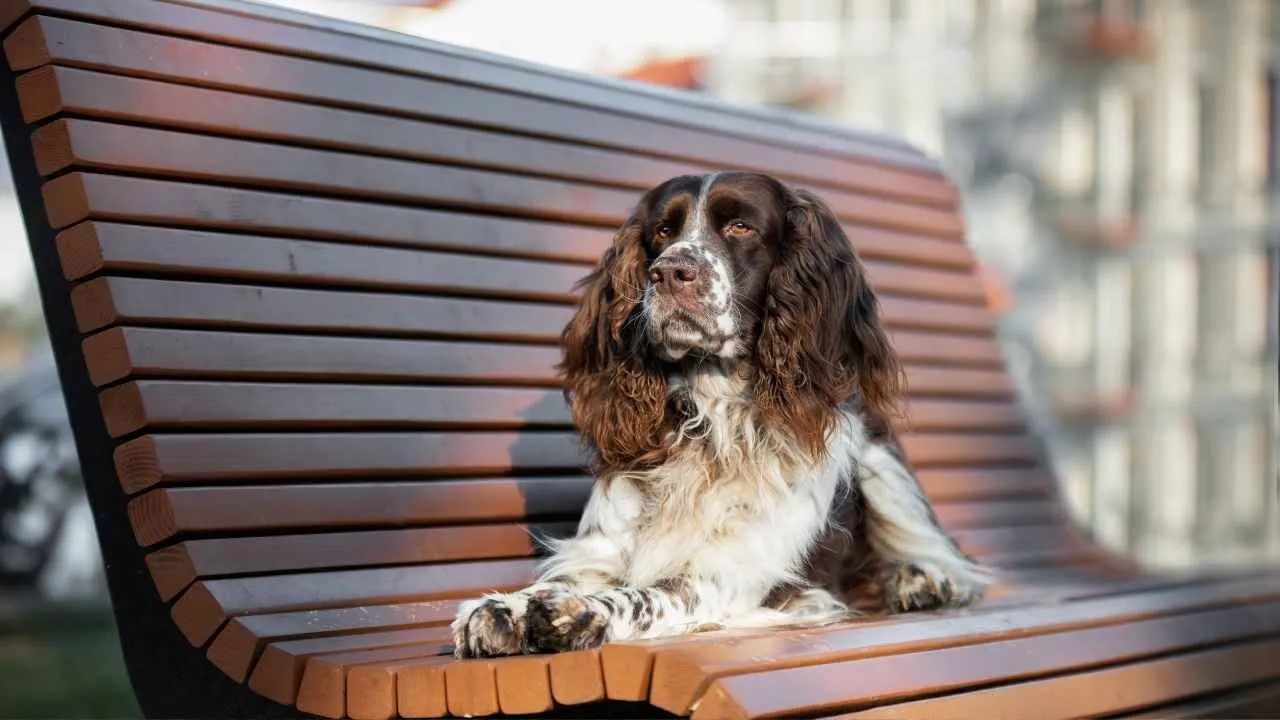
According to the Continental Kennel Club, this playful and amiable hunting dog becomes completely focused and business-like once it enters the field. It is a close-range tracker, especially effective in dense or obstructed environments where precision and coordination with the handler are essential.
Working in close partnership with the hunter, it excels in controlled tracking situations that require accuracy rather than wide-ranging pursuit.
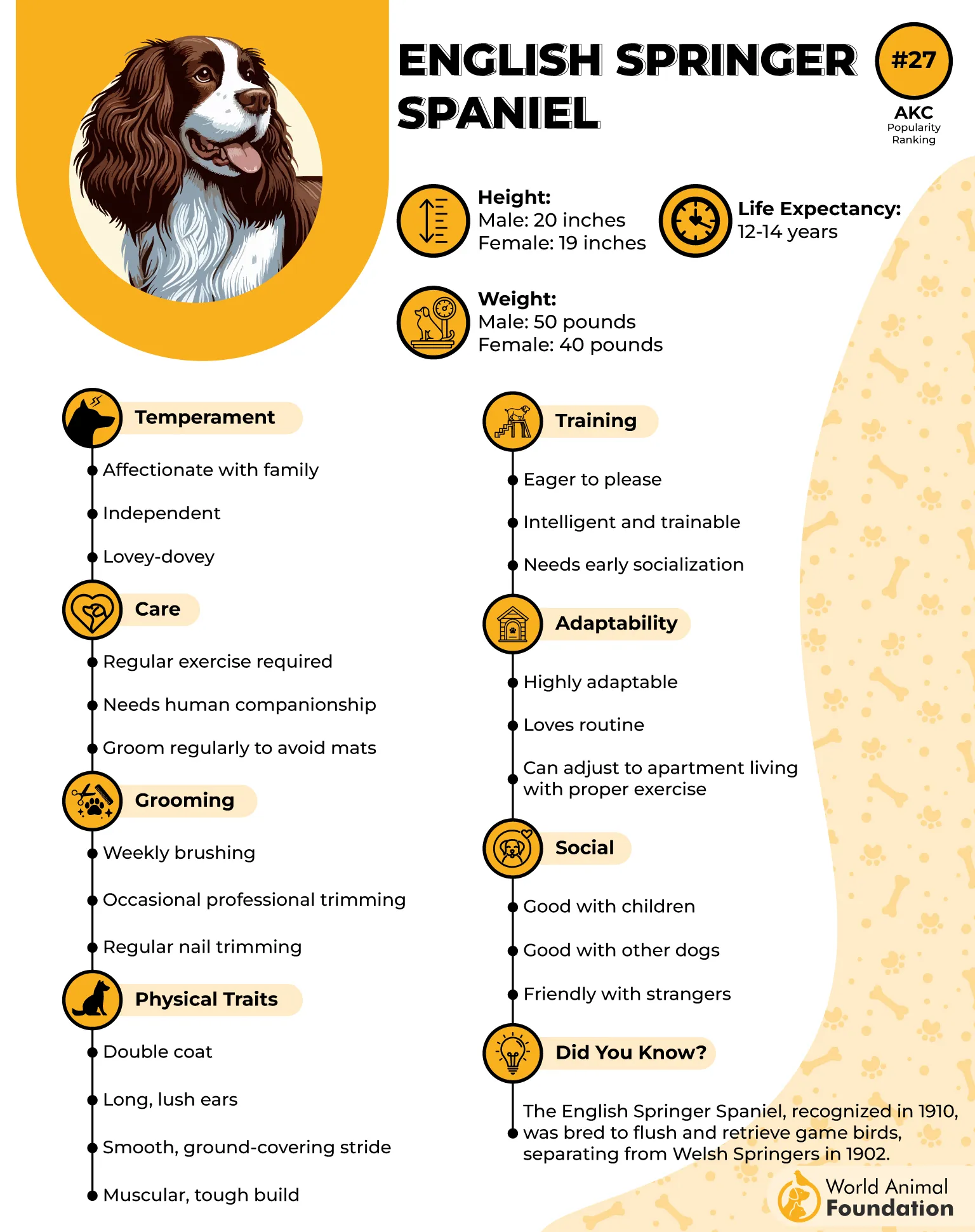
This breed is especially proficient in:
Detecting fresh scent trails in dense vegetation
Working in structured, methodical search patterns
Operating within a limited hunting radius
Flushing birds and game from thick cover
Maintaining focus while navigating obstacles
Springer Spaniels are highly effective hunting companions in environments such as forests, marshes, and other areas where scent is concentrated in dense vegetation. Their compact size allows them to move easily through tight spaces without losing agility or balance, while their sharp senses help them locate and flush out game efficiently.
They are also highly responsive and easier to guide in the field compared to more independent or stubborn hunting breeds, making them excellent partners for coordinated hunting work.
7. Brittany
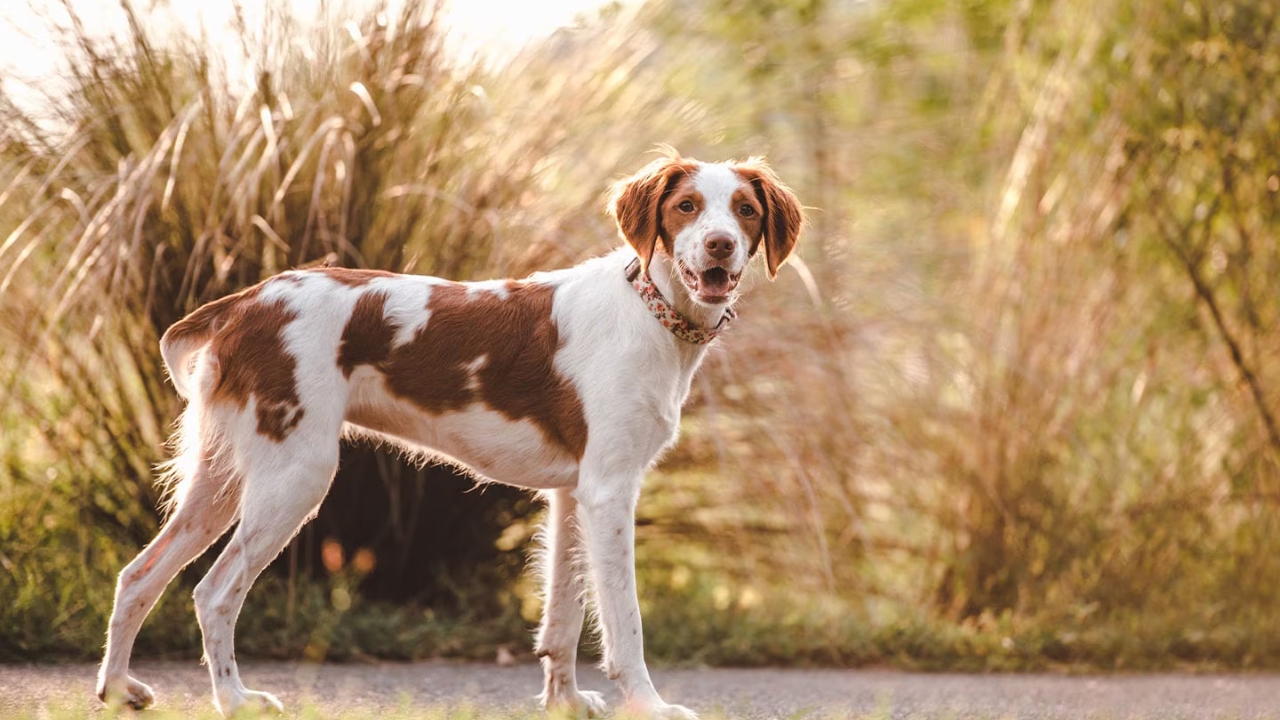
The Brittany is a dynamic and intelligent breed known for its speed, wide-ranging coverage, and high responsiveness in the field. It is especially well-suited for environments that require fast, efficient tracking over large areas, making it a popular choice for upland bird hunting and similar pursuits.
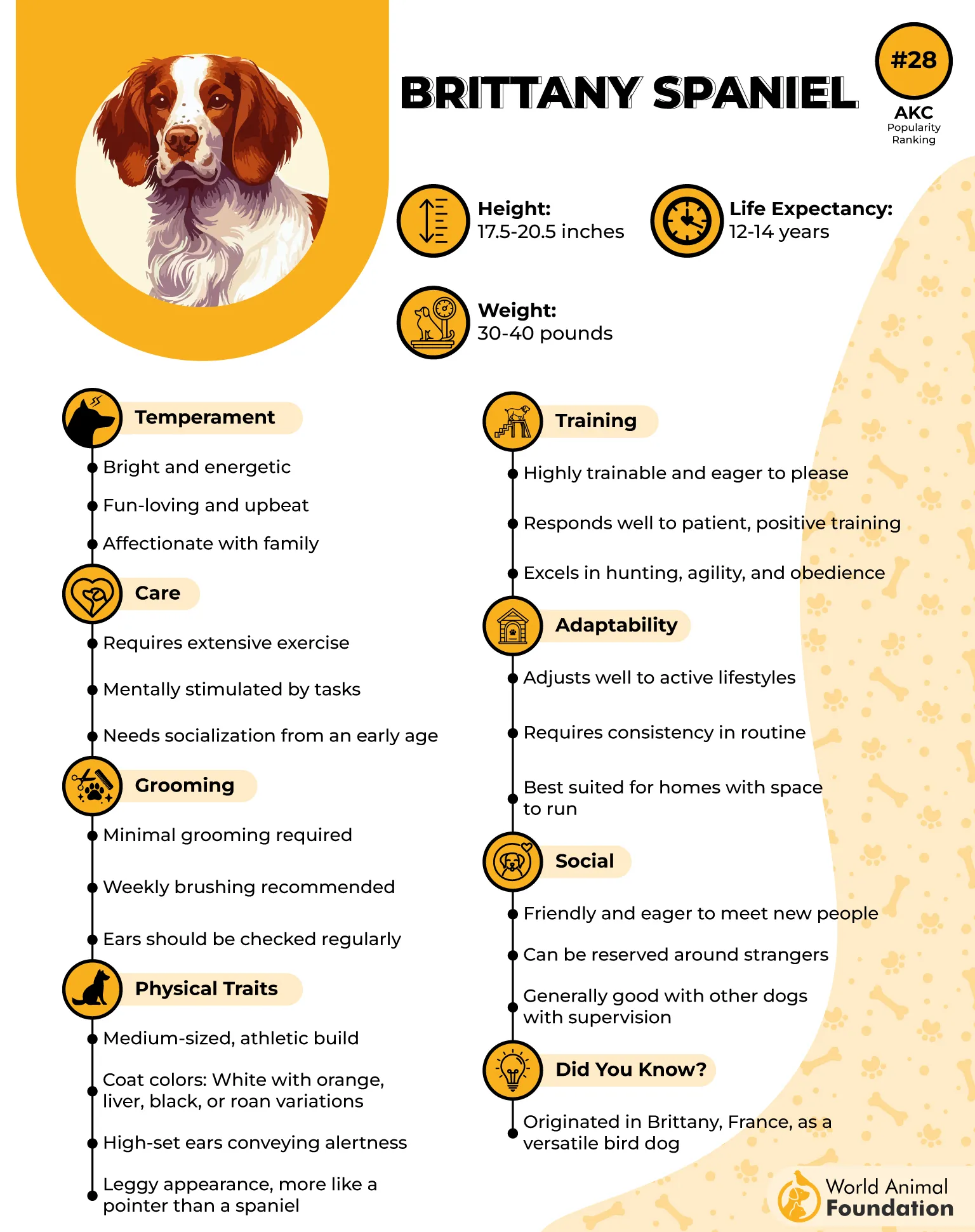
This breed excels in several key hunting abilities, including:
Quickly detecting and locating fresh scent trails
Covering long distances efficiently during hunts
Transitioning smoothly between tracking and pointing behaviors
Maintaining high energy levels throughout extended hunting sessions
Reacting quickly to changes in scent direction or intensity
One of Brittany’s most notable traits is its explosive responsiveness. As soon as it picks up a scent, it reacts instantly and locks onto the trail with strong focus and intensity. This makes it especially effective in fast-paced hunting scenarios that demand quick movement and decision-making.
However, due to its high energy and enthusiasm, the Brittany requires structured, consistent training to keep its excitement well-managed. Without proper guidance, its drive can lead to overexcitement, so steady training and clear direction are essential for balanced performance in the field.
8. Boykin Spaniel
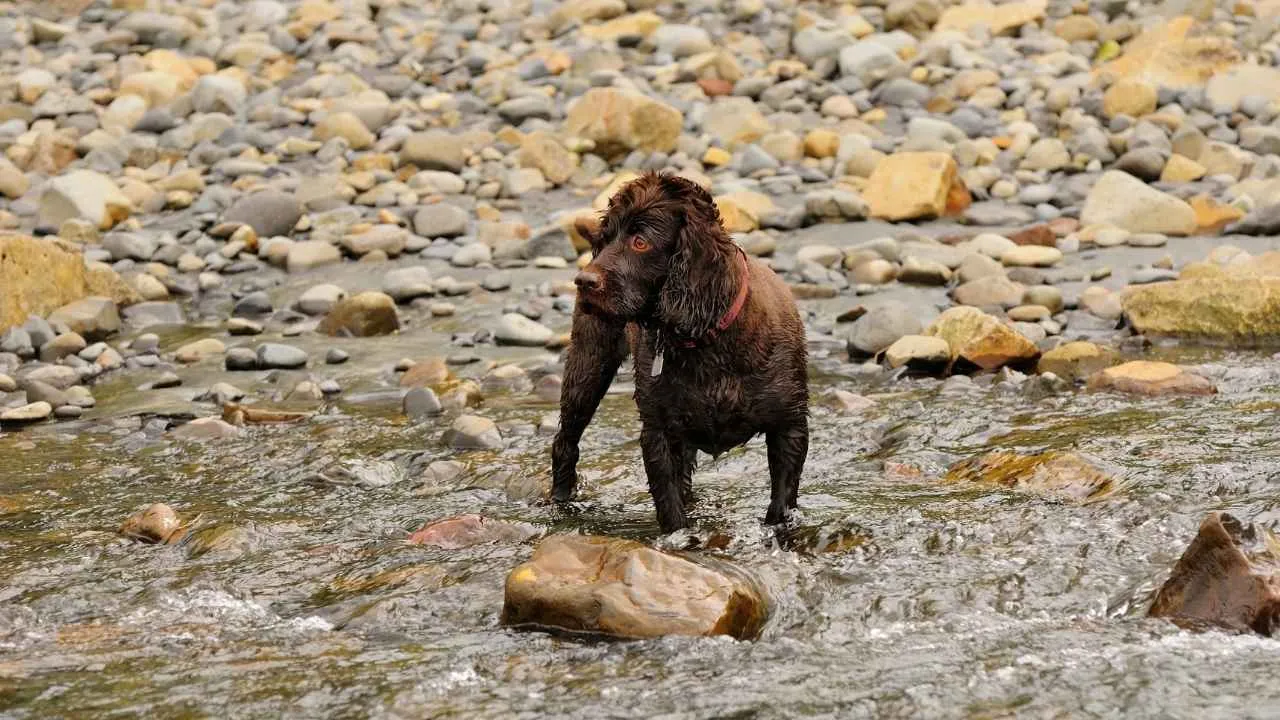
This hunting dog breed is built to track across rugged terrain, especially in challenging environments such as wetlands, marshes, and dense forests. Its compact size allows it to move efficiently through difficult ground conditions without being slowed down by mud, water, or uneven terrain.
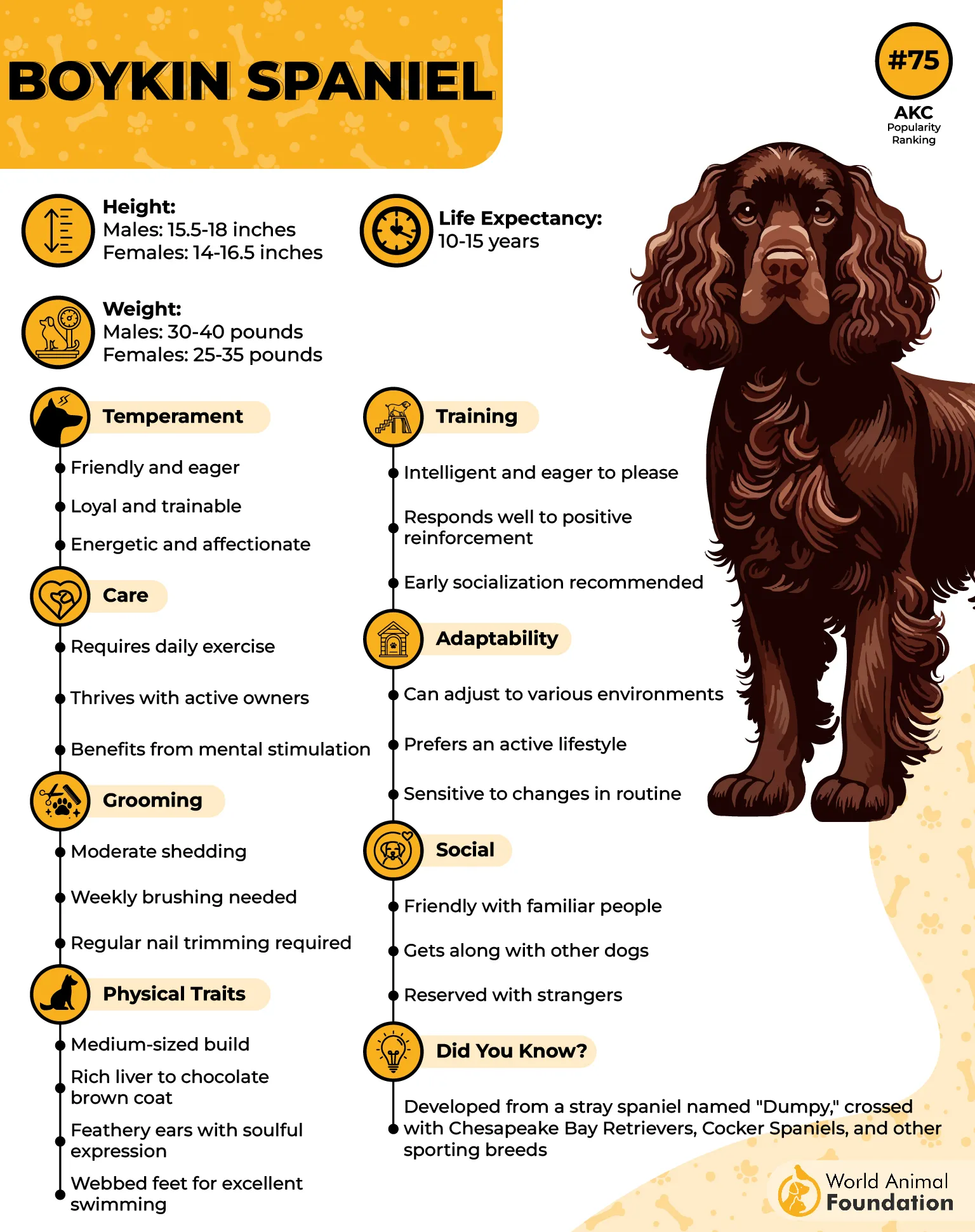
This breed is especially proficient in:
Tracking in muddy, swampy, or waterlogged environments
Reacquiring scent in wet or unpredictable conditions
Blood tracking and hunting birds, as well as larger game such as wild boar
Maintaining focus and stability on uneven or unstable ground
According to VCA Animal Hospitals, Boykin Spaniels thrive with regular exercise and plenty of affection, which helps support their physical health and emotional well-being.
One of the breed’s greatest strengths is its adaptability to different environments. It performs especially well in areas where scent conditions are inconsistent, such as near water. Its water-resistant coat also helps protect it from heavy moisture, allowing it to stay light, agile, and mobile in the field.
This combination of versatility, endurance, and environmental adaptability makes it one of the most reliable breeds for multi-terrain tracking and hunting work.
9. Pharaoh Hound
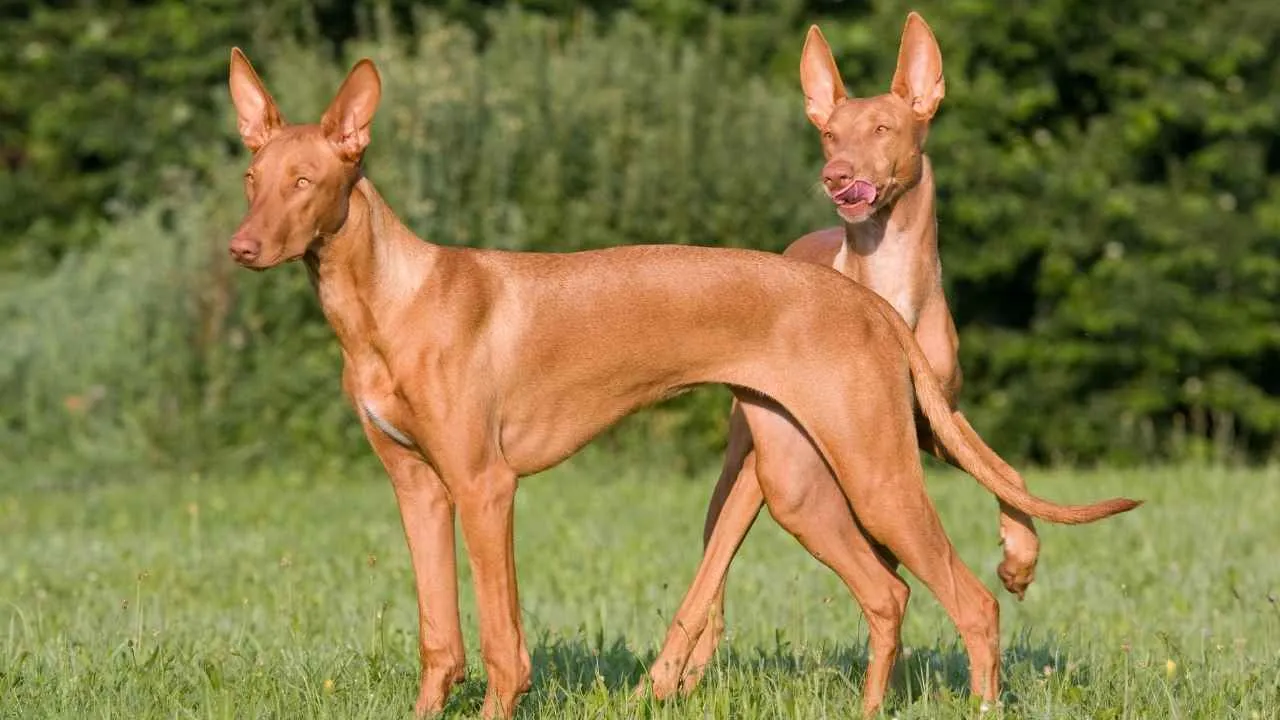
The Pharaoh Hound is unlike traditional tracking breeds, as it uses a dual tracking system—relying on both scent and exceptional vision. Instead of following scent trails close to the ground, this breed hunts with its head raised in a scanning posture, combining visual cues with olfactory information to locate and track prey more efficiently.
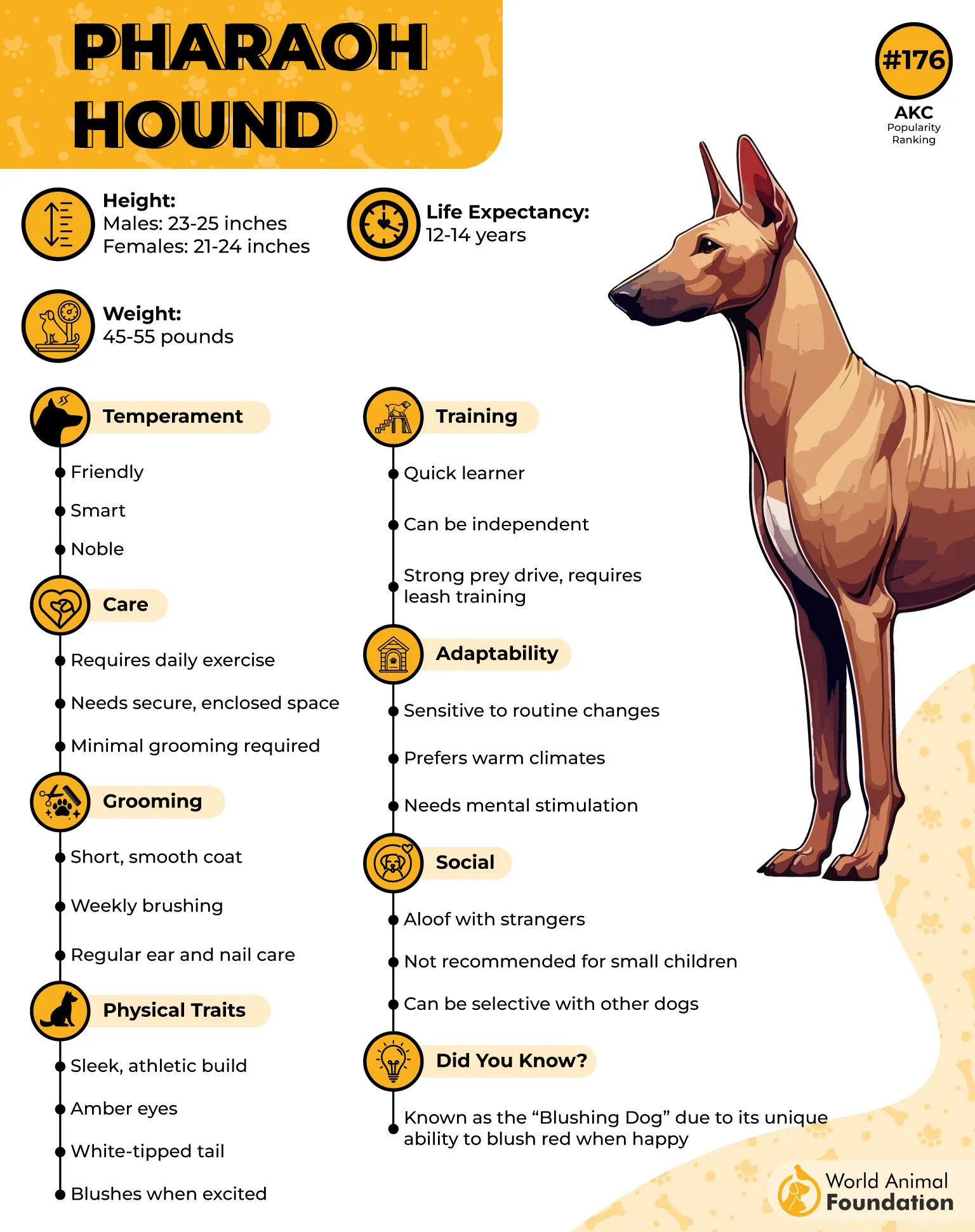
This breed is especially proficient in:
Tracking in open, dry environments where scent disperses quickly
Combining visual and scent information to identify targets faster
Reacting instantly to sudden movement changes
Maintaining agility during high-speed pursuit
One of the Pharaoh Hound’s key advantages is its ability to track effectively even in low-scent conditions, where many traditional scent hounds struggle—especially in hot or dry weather when scent fades rapidly. Its reliance on both sight and smell gives it a significant advantage in such environments.
Lightly built and highly agile, this breed can change direction quickly while maintaining speed over distance without tiring easily, making it highly effective in fast, open-field hunting scenarios.
Conclusion
Tracking dogs are not just tools, but highly specialized companions that bring instinct, intelligence, and stamina to the hunt.
Choosing the right hunting dog depends on factors such as the terrain, hunting style, and the specific expectations of the handler. When properly bred, trained, and matched to the environment, these dogs do more than simply follow a trail—they learn, interpret, and understand it, becoming true partners in the field.
