




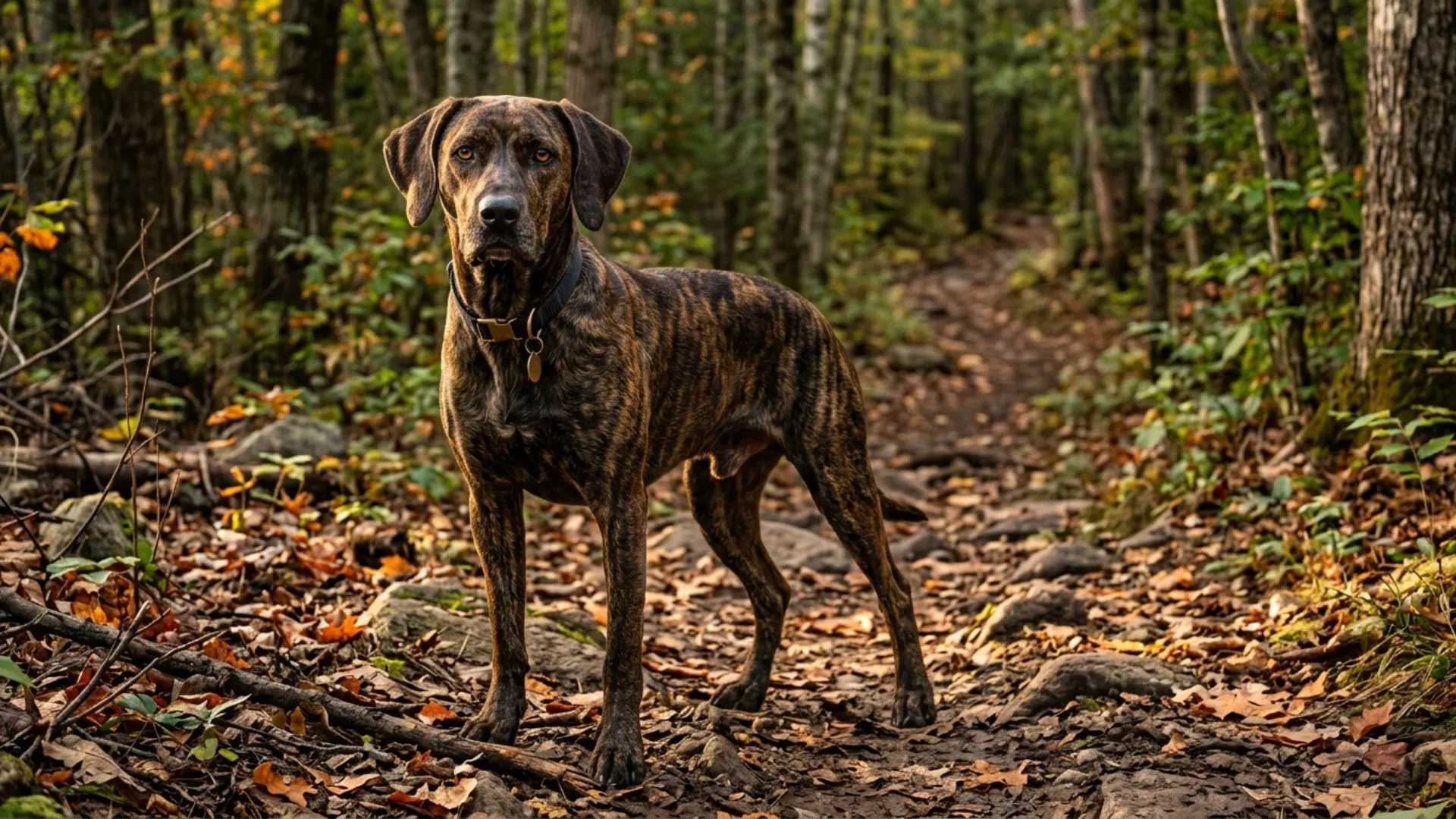
A great hunting dog does not just run through the woods looking dramatic and photogenic. The real magic is in the nose, the focus, the stamina, and that wild little moment when the dog suddenly knows exactly where the trail went.
Tracking is not one single skill, either. Some dogs follow ground scent like tiny forensic experts, some work air scent with their heads high, and some combine tracking, pointing, flushing, and retrieving like they downloaded the deluxe hunting package.
That is why different hunting breeds shine in different terrains, weather conditions, and game situations.
Dogs can be incredible hunting partners, but responsible handling protects wildlife, landowners, other hunters, and the dog itself. Now let’s meet the tracking legends who bring nose, nerve, and a whole lot of personality to the hunt.
Top Hunting Dog Breeds With Exceptional Tracking Skills
1. Labrador Retriever
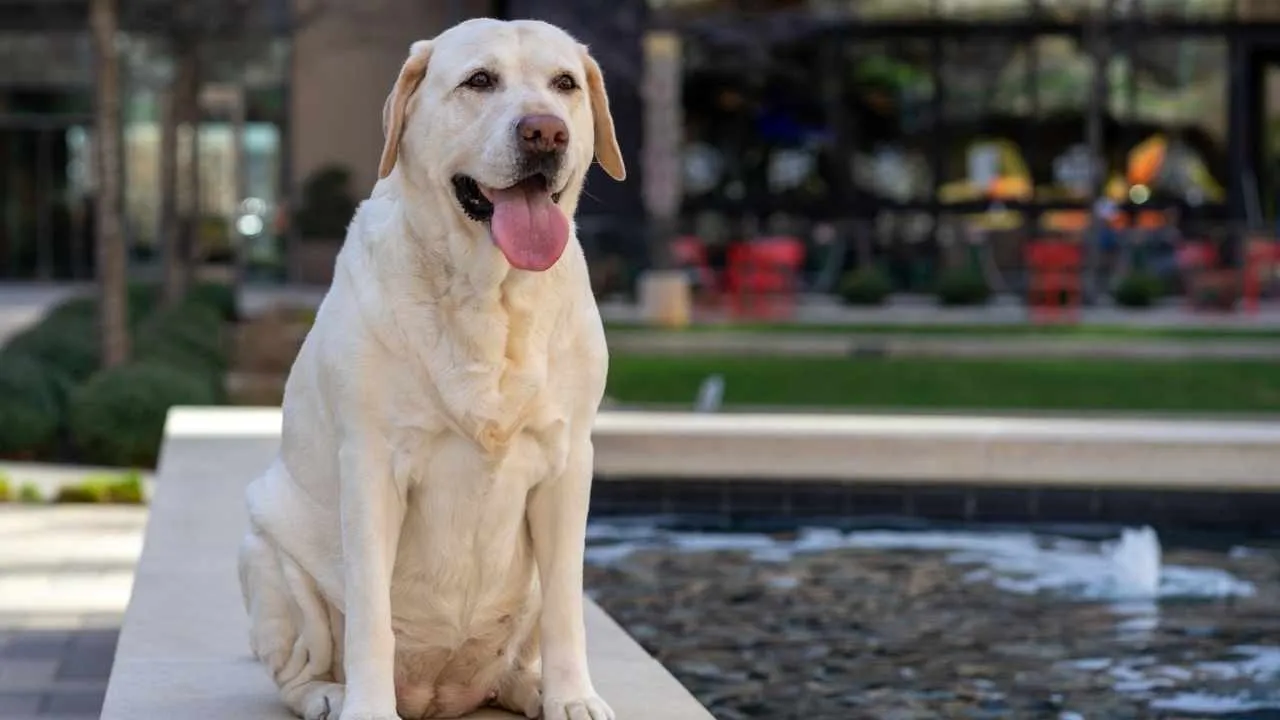
The Labrador Retriever is the friendly athlete who can go from family couch potato to field professional in record time. Labs were developed as retriever dogs, especially for waterfowl work, but their strong noses also make them useful tracking partners. They bring a rare combo of scent ability, trainability, and emotional stability.
In the field, WebMD says this dog usually works in a practical, cooperative manner. This breed tends to stay connected to its handler, which is a huge advantage when tracking requires control rather than chaos. A Lab may not have the dramatic bay of a hound, but it often makes up for that with focus and reliability.
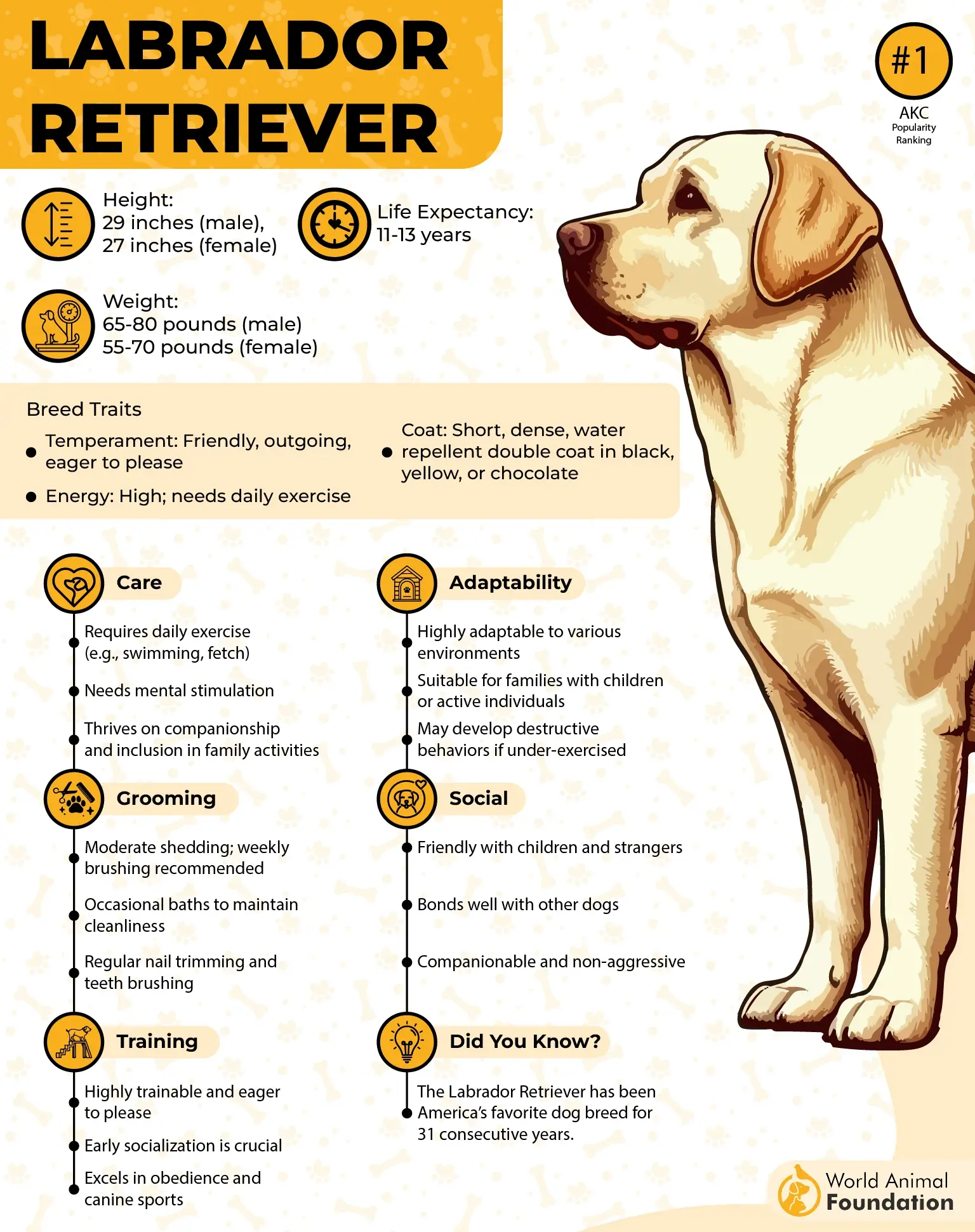
They are especially strong when tracking birds, locating downed game, and following scent through wet or mixed terrain. Their dense coat, strong body, and love of water make them comfortable in marshes, ponds, muddy fields, and cold conditions.
That is why so many hunters trust these bird dogs for long, wet, messy days outside.
They can be very enthusiastic, especially when young. A puppy or teenage Lab may charge into training as if every bird, stick, and leaf were personally important. Calmness, steadiness, and impulse control are just as important as scent work for this breed.
Their dense double coat helps protect them in cold, wet conditions. With consistent training, the Labrador Retriever becomes a dependable tracking buddy with heart, hustle, and serious field sense.
2. American Foxhound
The American Foxhound is built for distance, speed, and that classic hound soundtrack echoing through open country. This breed was developed for foxhunting, so it has a strong nose, long legs, and serious endurance. In tracking work, it shines when the trail stretches far and the terrain demands staying power.
American Foxhounds are not usually clingy field workers. They were bred to follow scent with confidence, which means they can think independently as they move across land. That independence is useful in hunting, but it also means training must be consistent from the beginning.
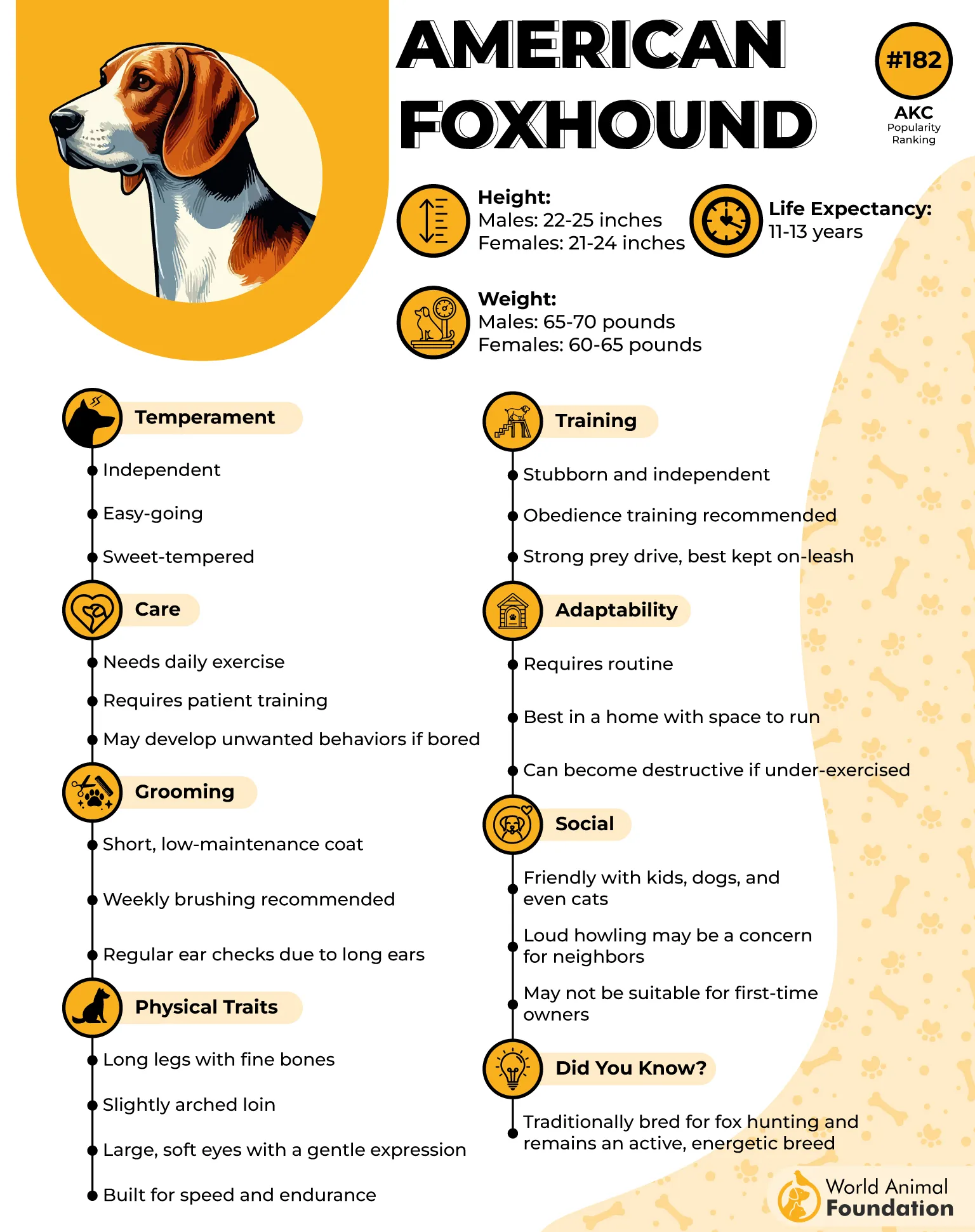
This breed can handle long trails better than many heavier dogs. Its lean frame and athletic stride allow it to cover ground efficiently without tiring too quickly. Hunters who work larger properties or open terrain often appreciate that kind of range.
Once an American Foxhound is locked onto a trail, casual commands may not be enough to pull it back. Long-line work, whistle training, and strong field manners are essential.
People who love American Foxhounds often describe them as sweet, social, and musical, which is a polite way of saying they may sing the song of their people. They are not ideal for lazy homes or noise-sensitive neighbors. For active hunters, though, this breed brings classic scent-hound stamina and old-school tracking energy.
3. Beagle
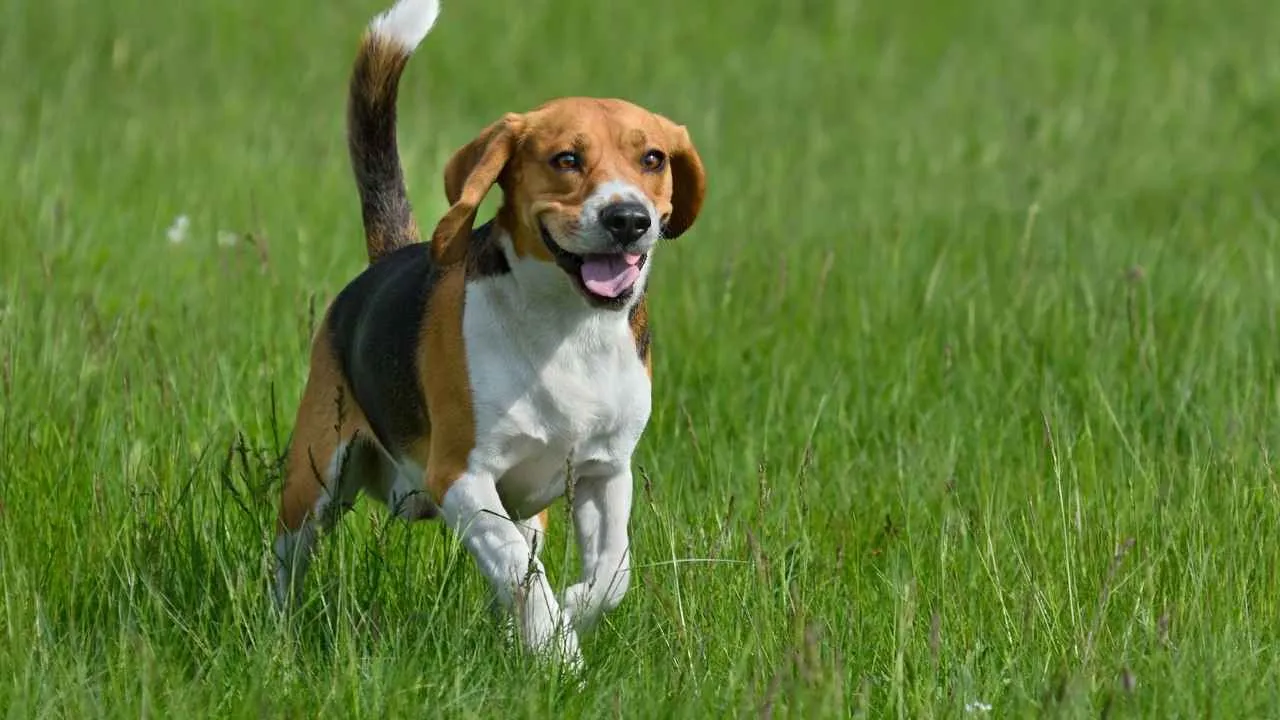
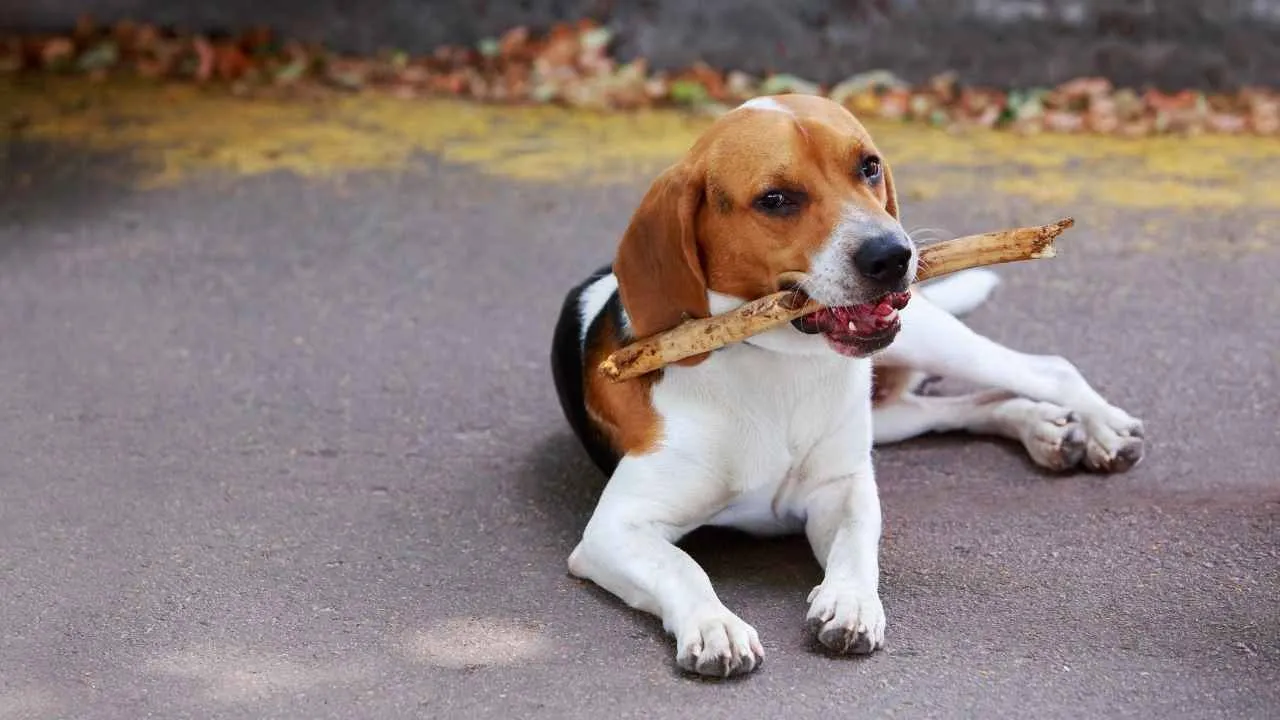
The Beagle is small, adorable, and absolutely not playing around when the nose hits the ground. This breed was developed for hunting small game, especially rabbits, but its scenting ability is legendary beyond its size. A Beagle tracks like a tiny detective with snacks on its mind and a mission in its soul.
One of the Beagle’s biggest strengths is its persistence. When it finds a trail, it often follows with steady, determined energy that feels way bigger than its body. That makes it useful in brushy areas where compact size can actually be an advantage.
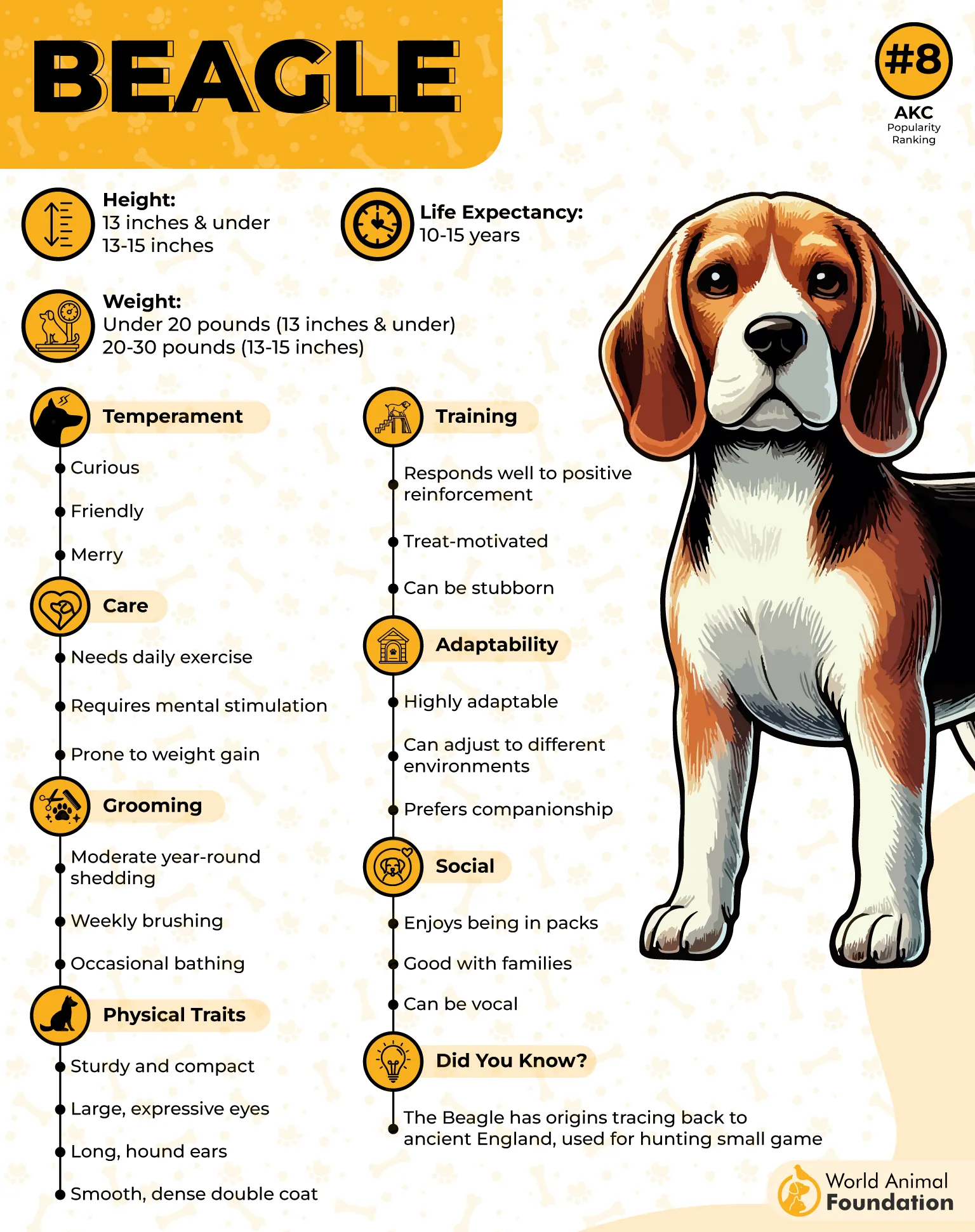
They are also known for their pack-friendly nature. They often work well with people and other dogs, which has made them popular in hunting groups. Their voice is clear and expressive, so handlers can often tell when the trail gets exciting.
They can be stubborn, most funnily and frustratingly. If the nose says one thing and the human says another, the Beagle may hold a full committee meeting and side with the nose. Training needs patience, rewards, repetition, and secure handling.
Many Beagle owners say these dogs are affectionate at home and intense outdoors. That balance makes them lovable companions as well as capable trackers. For hunters who want a compact breed with huge scent drive, the Beagle is a little dog with major field credibility.
4. Golden Retriever
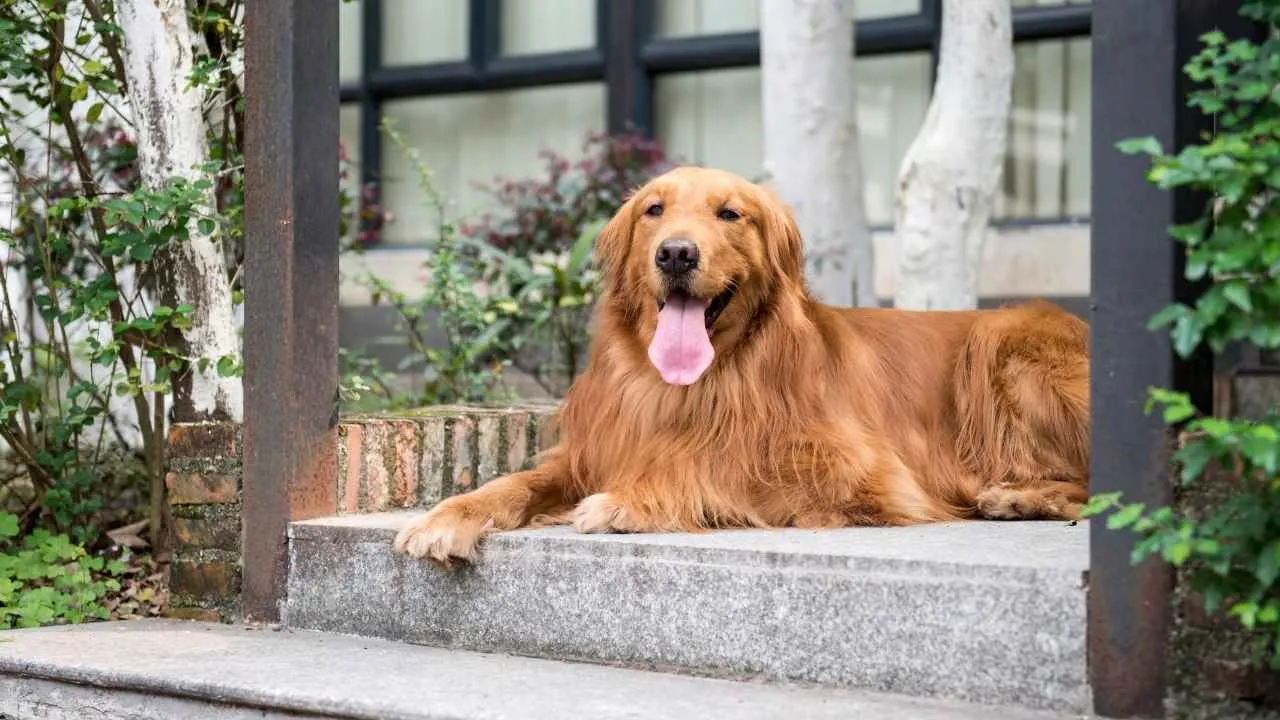
The Golden Retriever brings sunshine energy to the hunting world, but do not mistake sweetness for softness. This breed was developed as a capable gundog for retrieving game, especially in wet and rugged conditions. Goldens combine scent ability, cooperation, and a strong desire to work with people.
A Golden often tracks in a thoughtful, handler-friendly style. It may not be as intense as a Bloodhound or as loud as a coonhound, but it brings steadiness and trainability. That makes it especially useful for hunters who value control and teamwork.
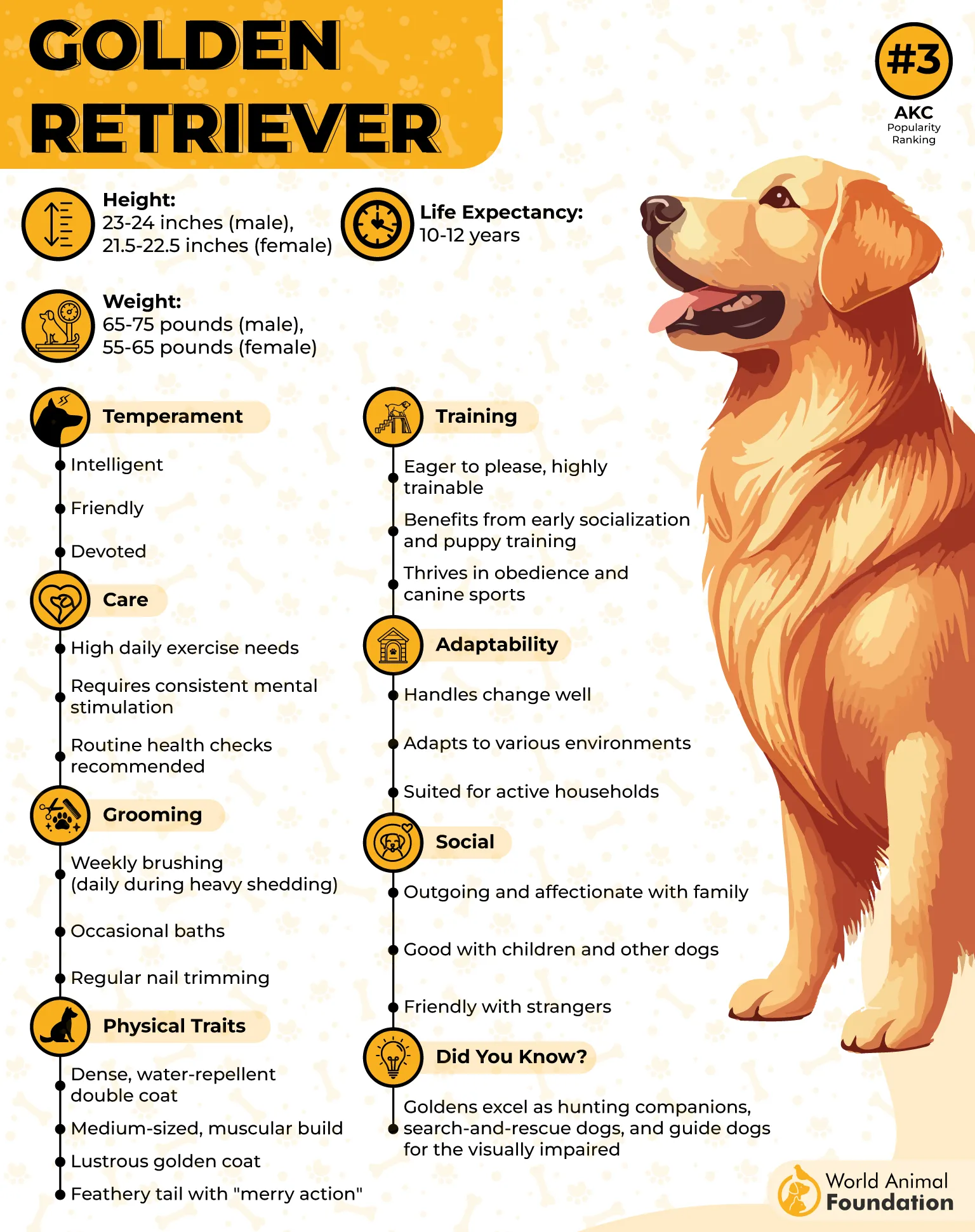
Showsight Magazine mentions that these hunting companions are strong in bird hunting, retrieving, and locating game in grass, marsh, and woodland edges. Their soft mouths help them carry birds without damaging them, a classic retriever skill. Their love of water also makes them useful in duck and upland settings where conditions change quickly.
Goldens can be playful, social, and easily distracted by people, dogs, or exciting smells. A young Golden may want to greet everyone before remembering it has a job. Steadiness drills, recall, and calm focus training help turn that happy energy into field reliability.
Owners often love Goldens because they work hard without losing their gentle personality. They are trainable, affectionate, and usually very responsive to praise. For hunters who want a capable tracker that also fits beautifully into family life, the Golden Retriever is a strong choice.
5. German Shorthaired Pointer
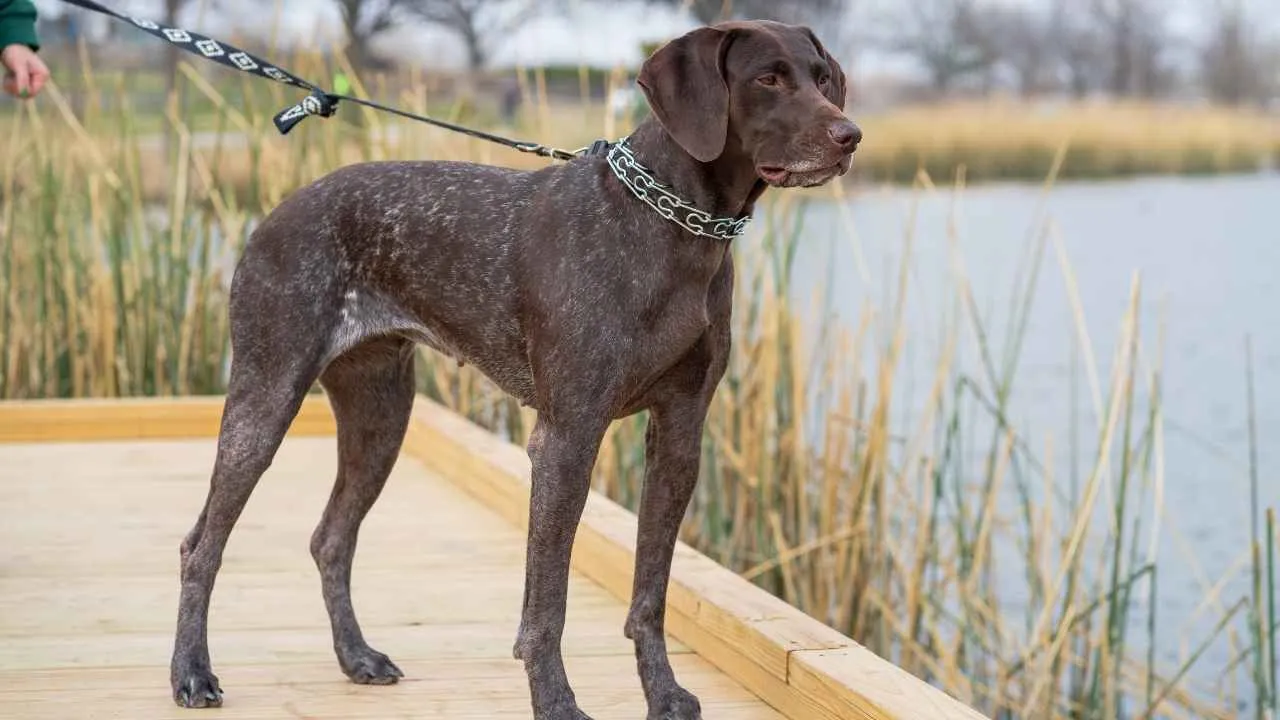
The German Shorthaired Pointer is the hunting dog equivalent of a high-performance sports car with a nose. This breed is fast, athletic, intelligent, and built for versatile field work. It can point, track, retrieve, search, and basically make lazy dogs feel underqualified.
GSPs are especially useful because they do not rely on only one hunting skill. They can use scent to locate game, freeze into a point, and then transition into retrieving when needed. That versatility makes them popular with hunters who pursue different game in different landscapes.
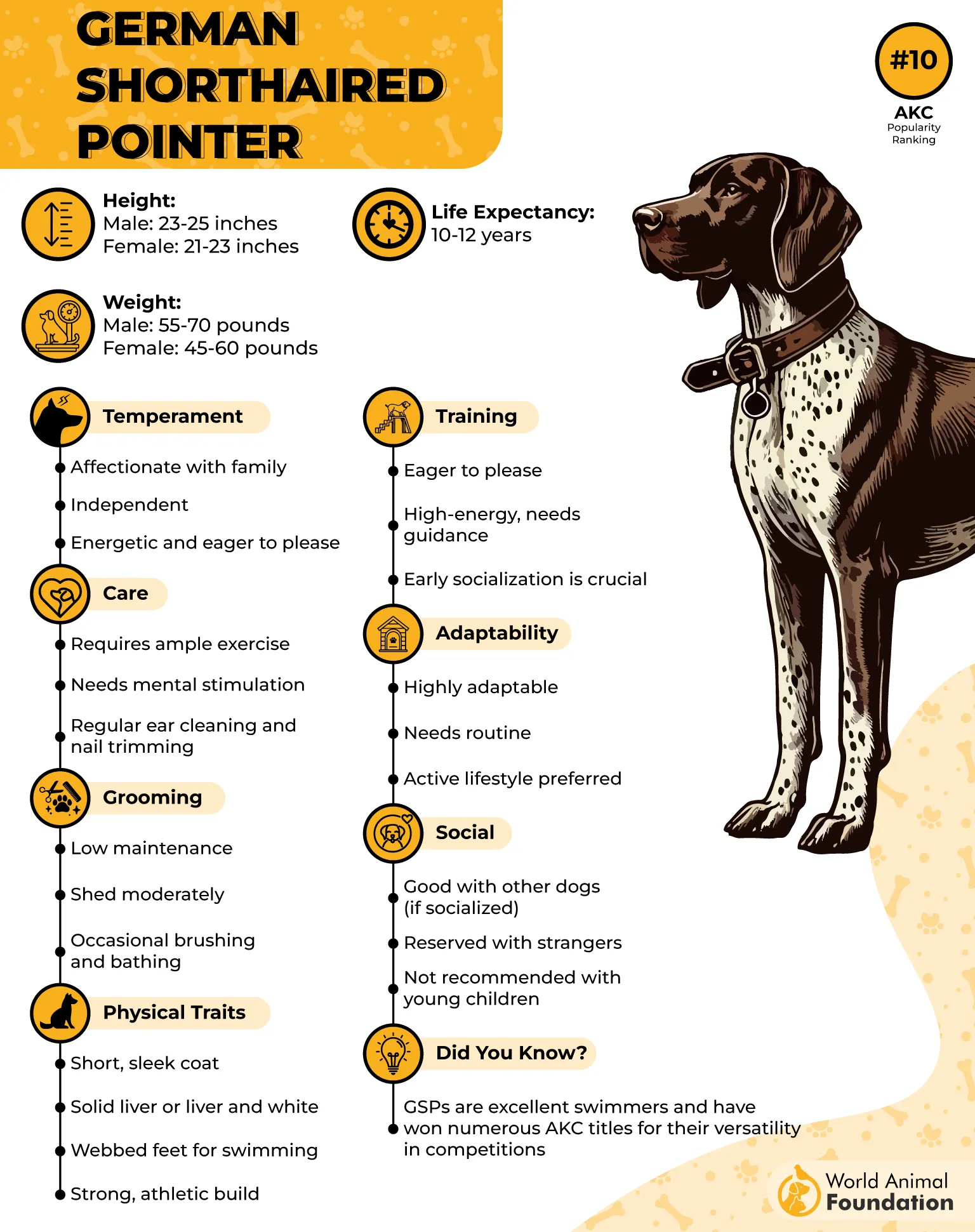
In tracking, this Pointer dog often works with energy and range. It can cover fields, brush, woods, and upland terrain with impressive speed. They are great for hunting birds such as pheasants, quail, and grouse. Fast, smart, athletic, and works well across different terrain.
Without enough exercise, training, and mental work, a GSP may become restless, jumpy, or creatively destructive. This is not a dog for someone who thinks one short walk counts as an adventure.
Hunters often describe GSPs as intense in the field and goofy at home. They can be affectionate, silly, and deeply bonded with their people when their needs are met. For active handlers, the German Shorthaired Pointer is a tracking, pointing, retrieving machine with personality for days.
6. Weimaraner
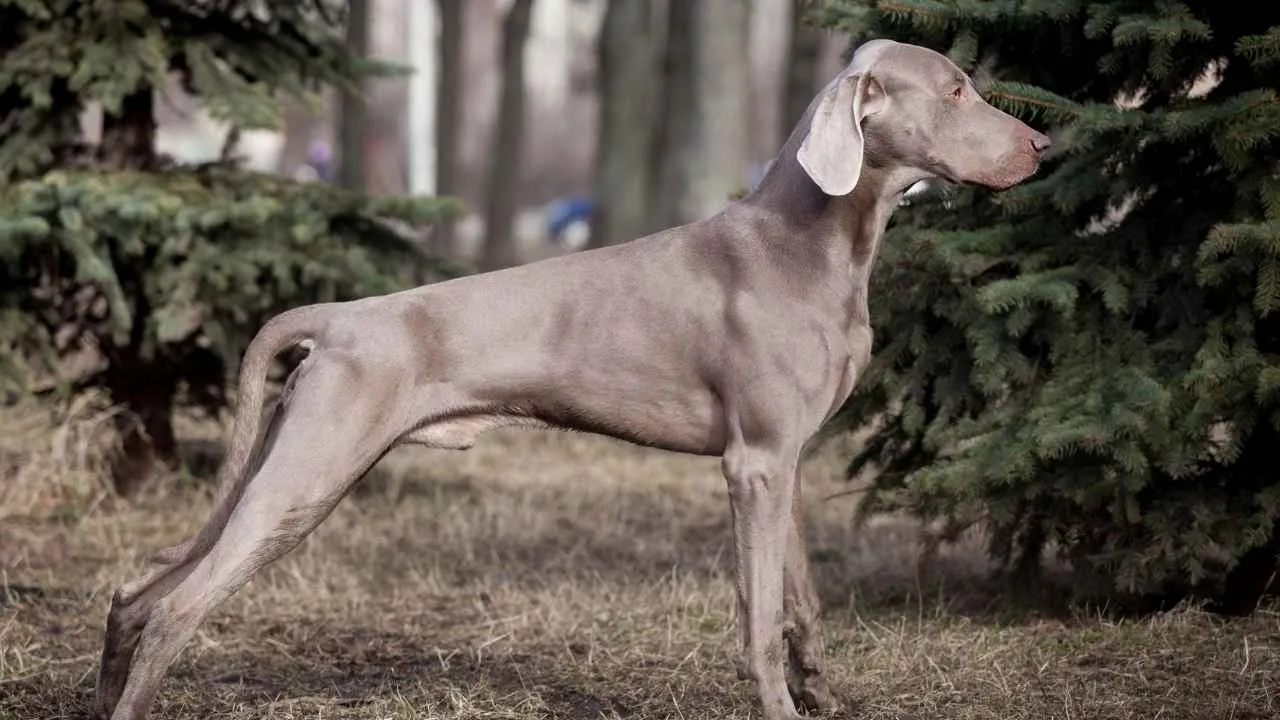
The Weimaraner is sleek, silver, intense, and fully aware that it looks like a hunting dog designed by a luxury car company. Its tracking ability comes from a mix of nose power, athleticism, courage, and handler attachment.
Weimaraners often work with a strong focus when well-trained. They are energetic and smart, which means they can pick up field routines quickly. Their background gives them a natural ability in pointing, tracking, and retrieving.
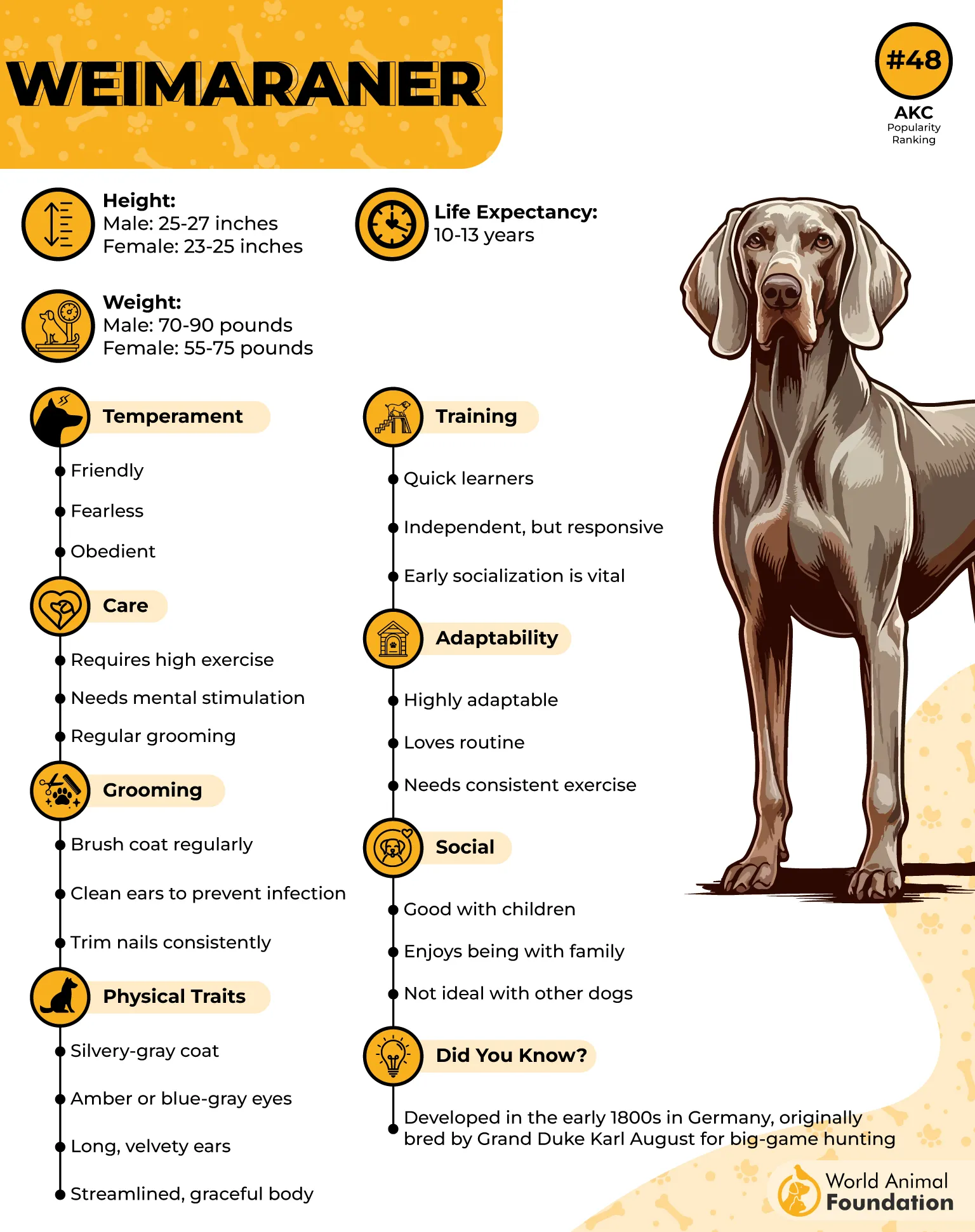
This breed, with an impressive sense of smell, can be useful in rough terrain because it has stamina and a strong body. It can move through fields, woods, and uneven ground with confidence. Its short coat is easy to maintain, although it may need protection in harsh cold or heavy brush.
They are often called “Velcro dogs” because they bond closely and may dislike being left out. If bored or undertrained, they can become anxious, pushy, or destructive.
For hunters who want a close-working, athletic, and stylish field partner, the Weimaraner can be an excellent choice. It needs structure, daily activities, and positive training to keep the mind busy. When its energy is well guided, this breed moves with drive, elegance, and serious determination.
7. Bloodhound
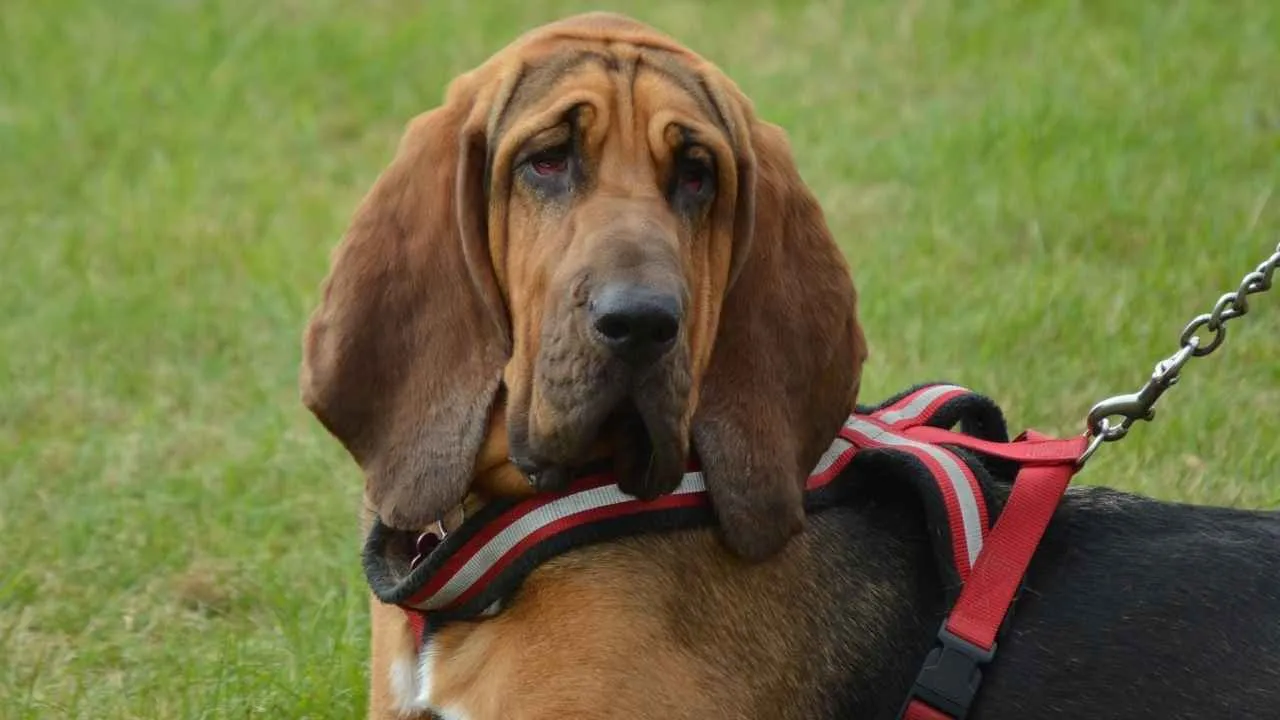
The Bloodhound is the tracking legend, the nose icon, the dog that makes scent work look like ancient wizardry. This breed is famous for following human and game scents over long distances and in difficult conditions.
Its loose skin, long ears, and heavy build all support its scenting style. The ears help sweep scent toward the nose, while the skin around the face may help trap scent particles. The result is a dog that can become almost hypnotically focused on a trail.
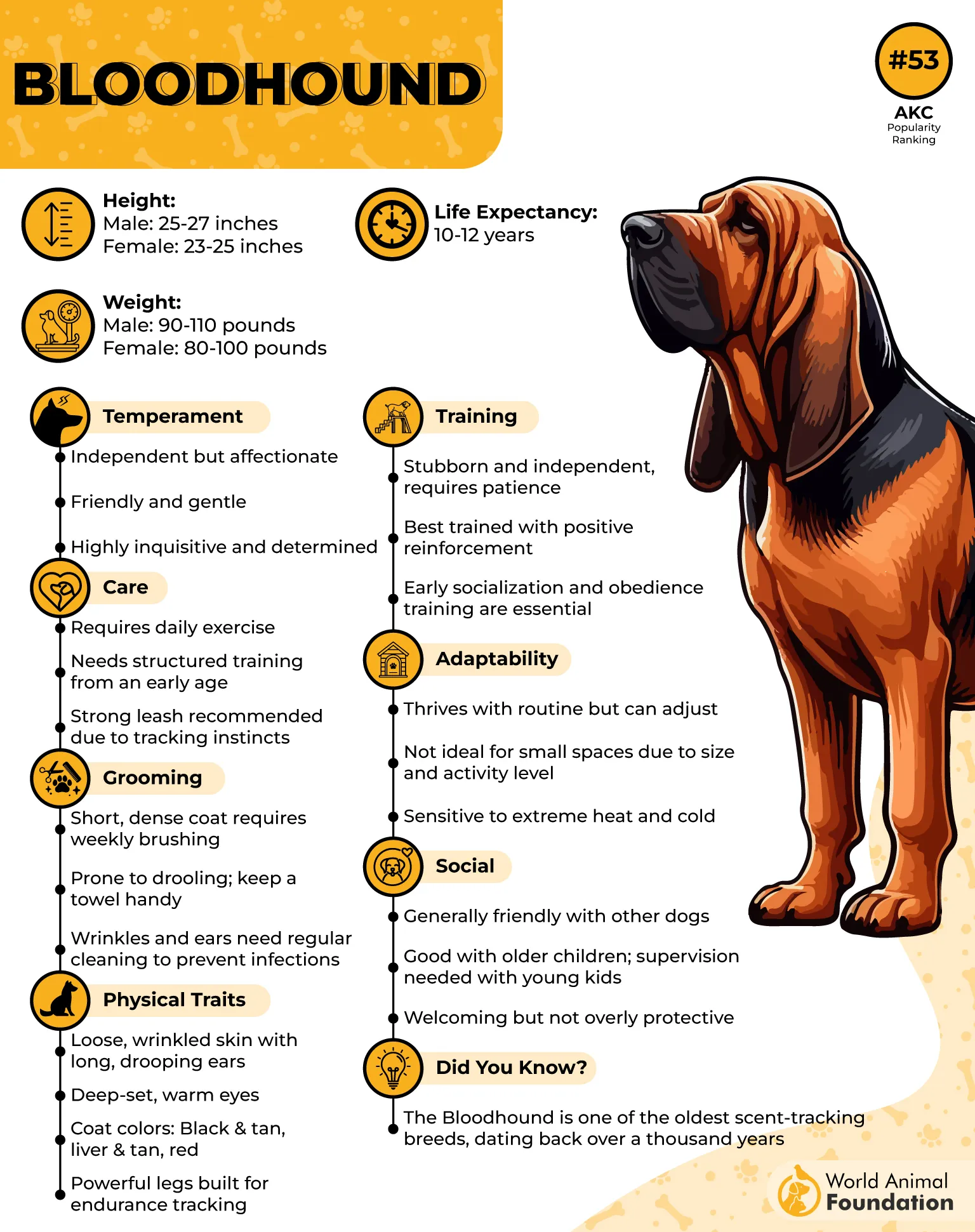
Purina says this dog has an impressive sense of smell!
In hunting and recovery work, they are valued for patience and scent accuracy. They are not always the fastest dogs, but they can be incredibly persistent. That makes them useful when the scent trail is older, broken, or complicated.
It is unmatched for wounded game in cold trails, long scent lines, and difficult recovery work. If the animal has traveled far or the scent is several hours old, this dog is a top choice.
The Bloodhound’s nose can overpower everything else. When this dog is trailing, it may act as if the entire universe has narrowed to one smell. Handlers need strong leash skills, patience, and safe tracking setups because a Bloodhound can pull hard when committed.
Real handlers often say Bloodhounds are gentle, affectionate, and comically stubborn. They can drool, wander, and ignore casual commands when scent is involved. But if you want a breed built around exceptional tracking, the Bloodhound is in a class of its own.
8. Bluetick Coonhound
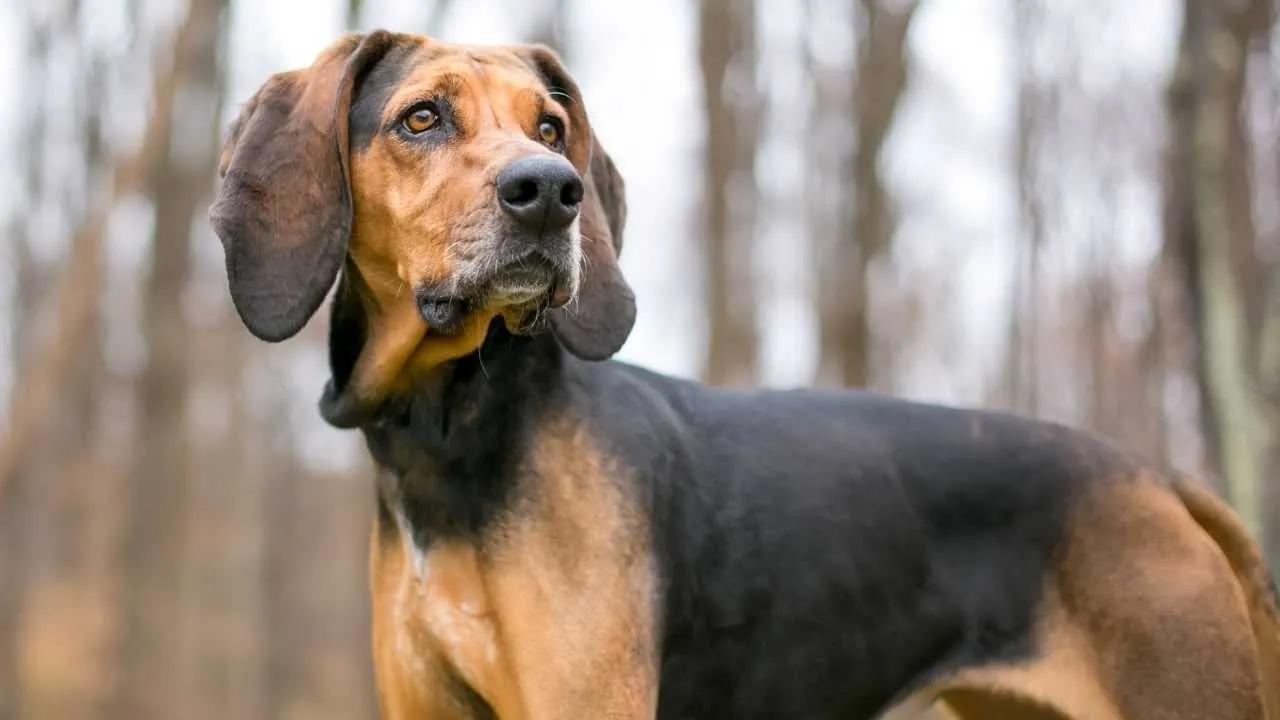
The Bluetick Coonhound is loud, stylish, speckled, and born to follow scent through dark woods like it has a personal contract with the trail. It brings a mix of determination, voice, and cold-nose talent.
They are known for their ability to work on older or colder scent trails. That means they may be able to follow a scent that is not fresh and obvious. For hunters, this can be useful when the game has moved through an area hours earlier.
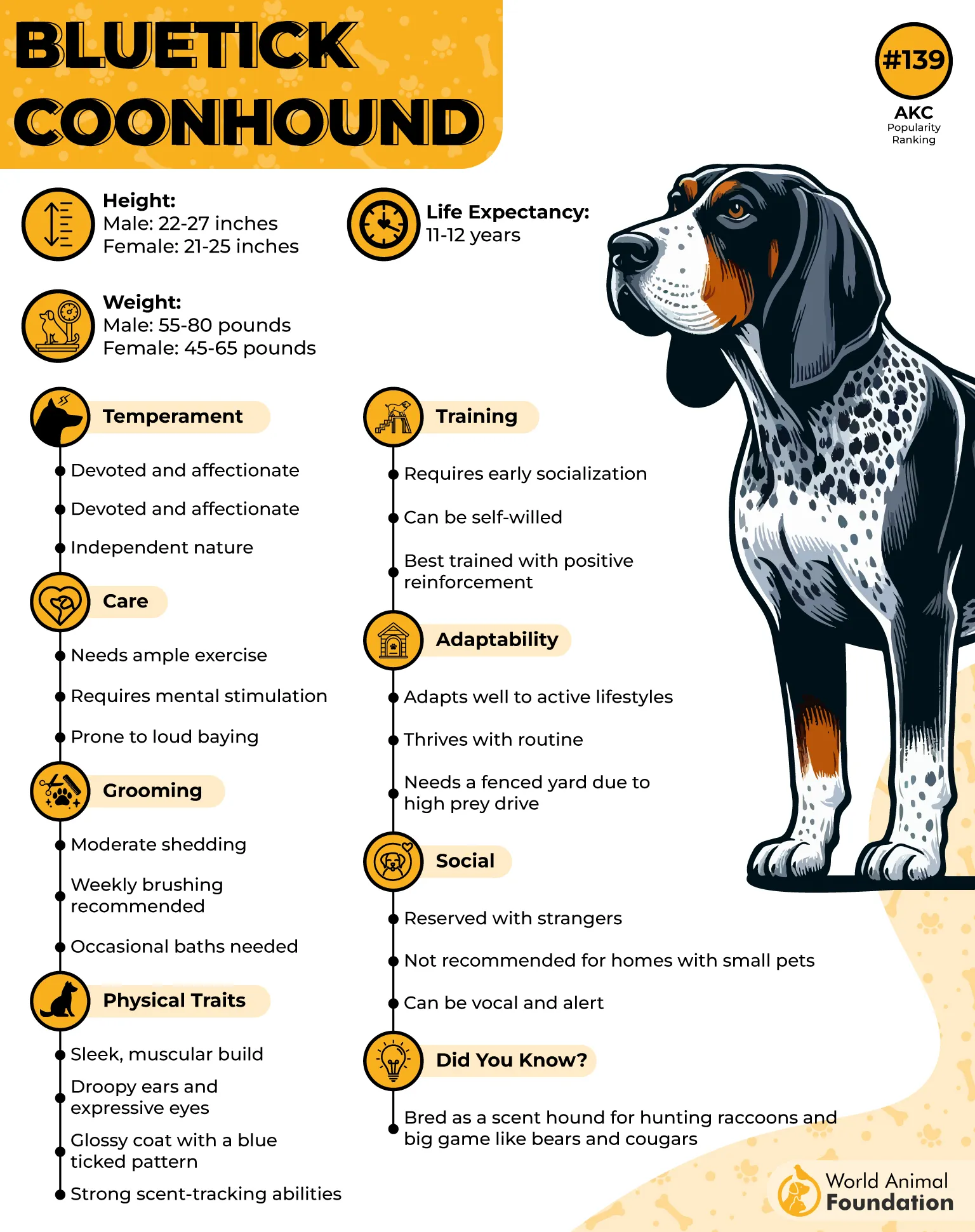
This breed often works with a strong voice, giving hunters audio updates from the woods, says UKC Dogs. That classic bawl or bay can tell a handler when the dog is trailing, checking, or excited. In dense cover, that sound can be more useful than sight.
Their independence comes from Blueticks being bred to trail with serious commitment. They may not constantly look back for approval, which can surprise people used to retrievers. Training should focus on recall, handling, and controlled scent work before expecting polished field performance.
Owners often describe them as affectionate, funny, and stubborn in equal measure. They can be mellow indoors after exercise, but their hunting switch is very real. For tracking enthusiasts who love traditional hound work, the Bluetick Coonhound brings a big voice, a big nose, and a big personality.
9. Plott Hound
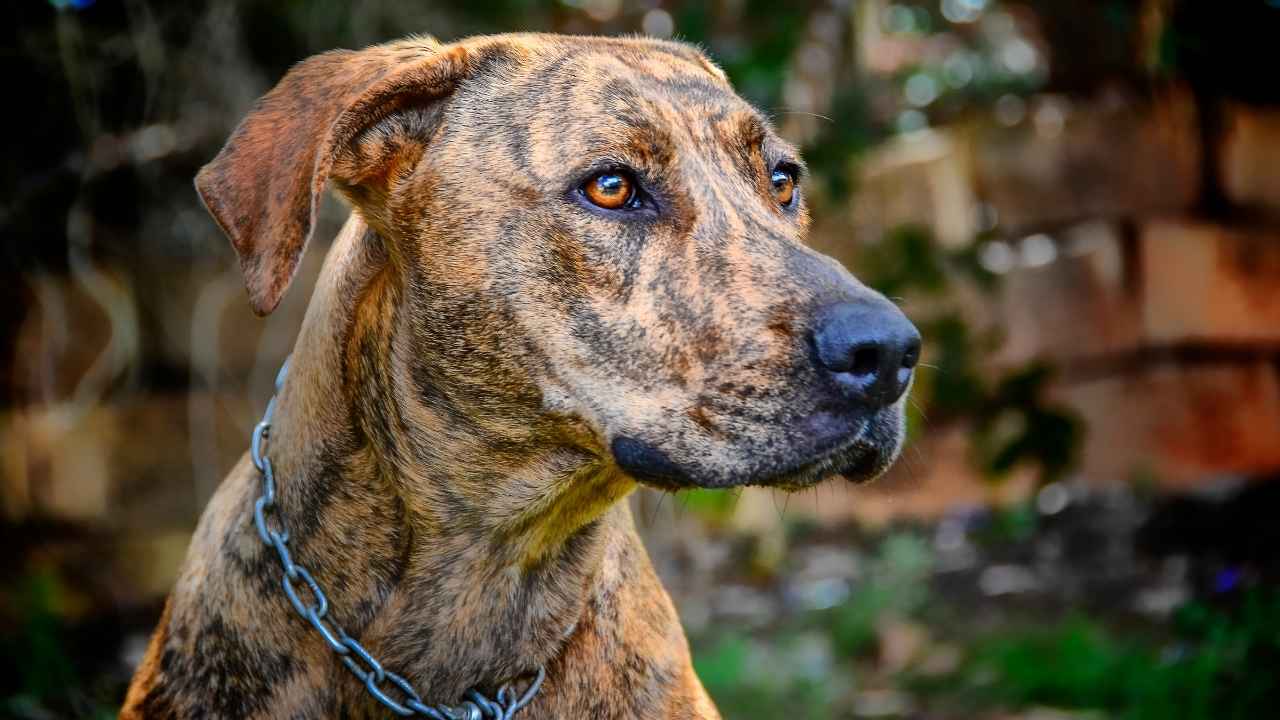
The Plott Hound is rugged, fearless, and built for hunters who respect grit. Unlike many coonhounds with English foxhound roots, the Plott has German boarhound ancestry. That history helped shape a tough, determined dog with serious big-game hunting energy.
These hounds are known for courage and stamina in rough country. They can work steep hills, thick woods, and challenging terrain with a no-nonsense attitude. Their tracking style is bold, committed, and physically powerful.
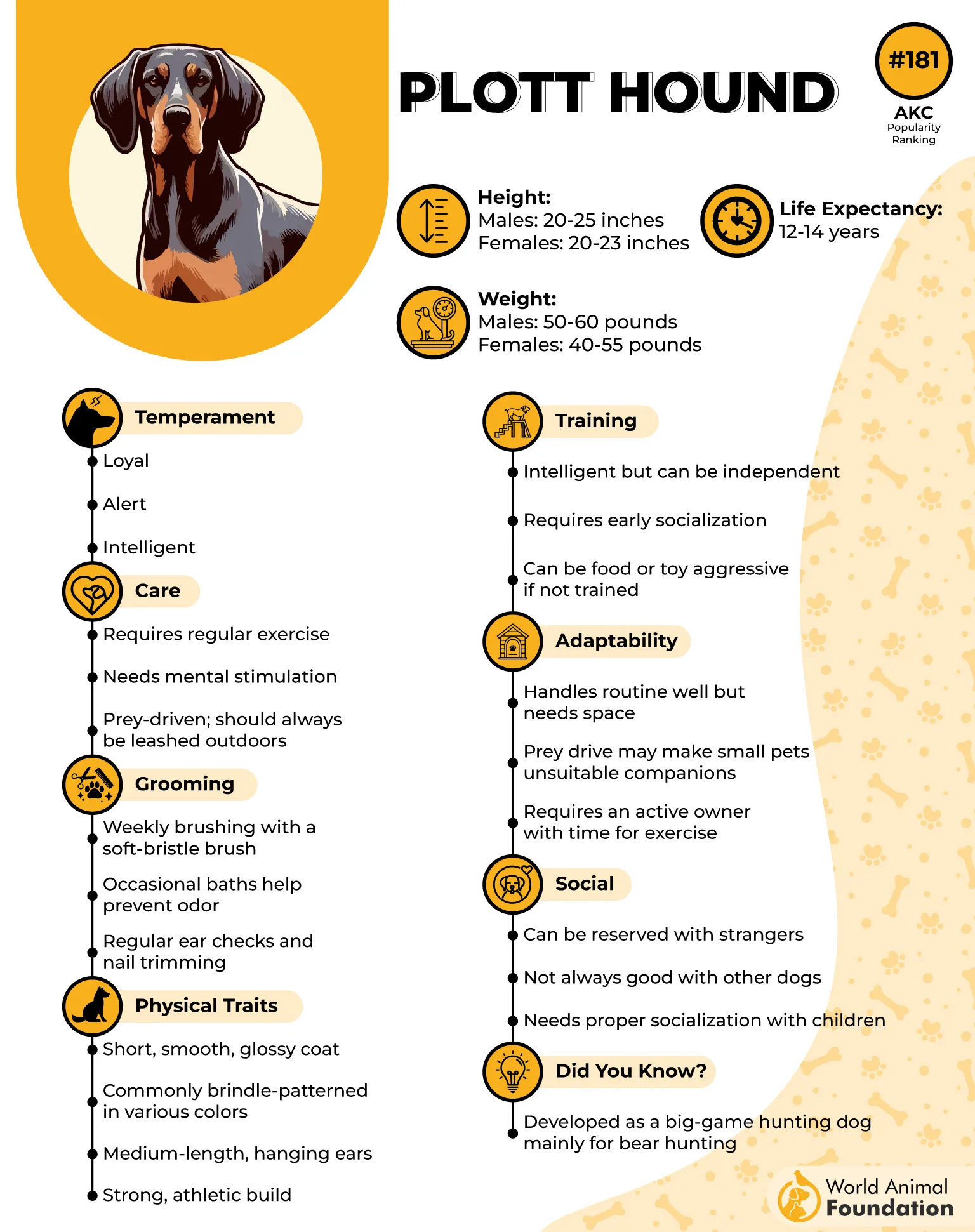
This breed is especially valued by hunters who need a dog that will not quit easily. Plotts can follow scent with intensity and keep pushing when conditions become difficult. They are not delicate field ornaments; they are working dogs with serious drive.
However, these active dogs need experienced handling. Their confidence and prey drive can be too much for owners who skip training or underestimate them. Obedience, socialization, leash control, and calm field handling are very important.
At home, a well-exercised dog can be loyal and steady with its family. In the field, it becomes focused, vocal, and determined. For hunters who want exceptional tracking mixed with toughness, the Plott Hound is a powerful choice.
Conclusion
Tracking dogs are not all built the same, and that is what makes this topic so fun. Some breeds are scent hound specialists that follow trails with booming confidence, while others are versatile sporting dogs that combine tracking with pointing, flushing, or retrieving.
Each breed has a different style, but all of them prove that tracking is part instinct, part training, and part pure canine obsession.
The real secret is not just picking a famous breed. It is building trust, practicing scent work, conditioning the body, respecting local hunting rules, and giving the dog enough real-world experience to become reliable. With proper training and care, a great hunting dog does more than track game; it becomes a loyal outdoor partner that makes every hunt feel sharper, smarter, and way more memorable.
