




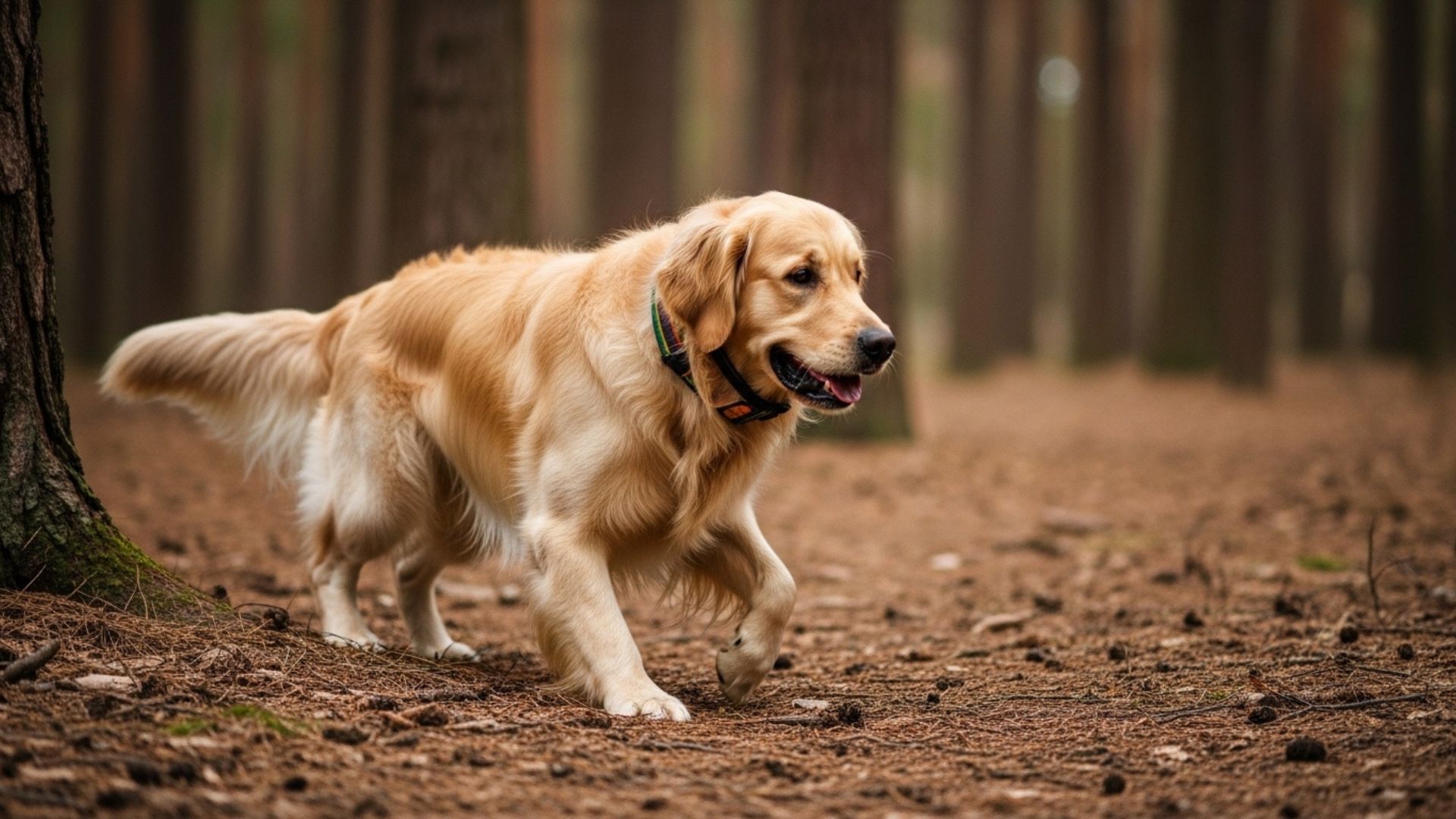
Ever seen your dog lower its head and lock its gaze on a scent trail? Well, your hunting companion is on duty.
The best hunting dog breed can turn a confusing stretch of forest into a clear and readable story: when did the characters pass through, what paths did they follow, and what might be their next stop?
But here is the difficult part: not every hunting dog can do all the tasks. You need to select a hunting breed based on your requirements.
Handling them is also a big task for you: early and controlled training, maintenance, and structured food routines must be followed to make your scent hounds happy.
In this article, we shall discuss 7 good hunting dog breeds for tracking specific animals. Pick your “main target”, and start looking for a hunting dog breed. A Bluetick Coonhound and a Pharaoh Hound may be both hunting breeds, but they have totally different approaches. Let’s get to know the best ones here:
Top Hunting Dog Breeds for Tracking Specific Animals
1. Bluetick Coonhound
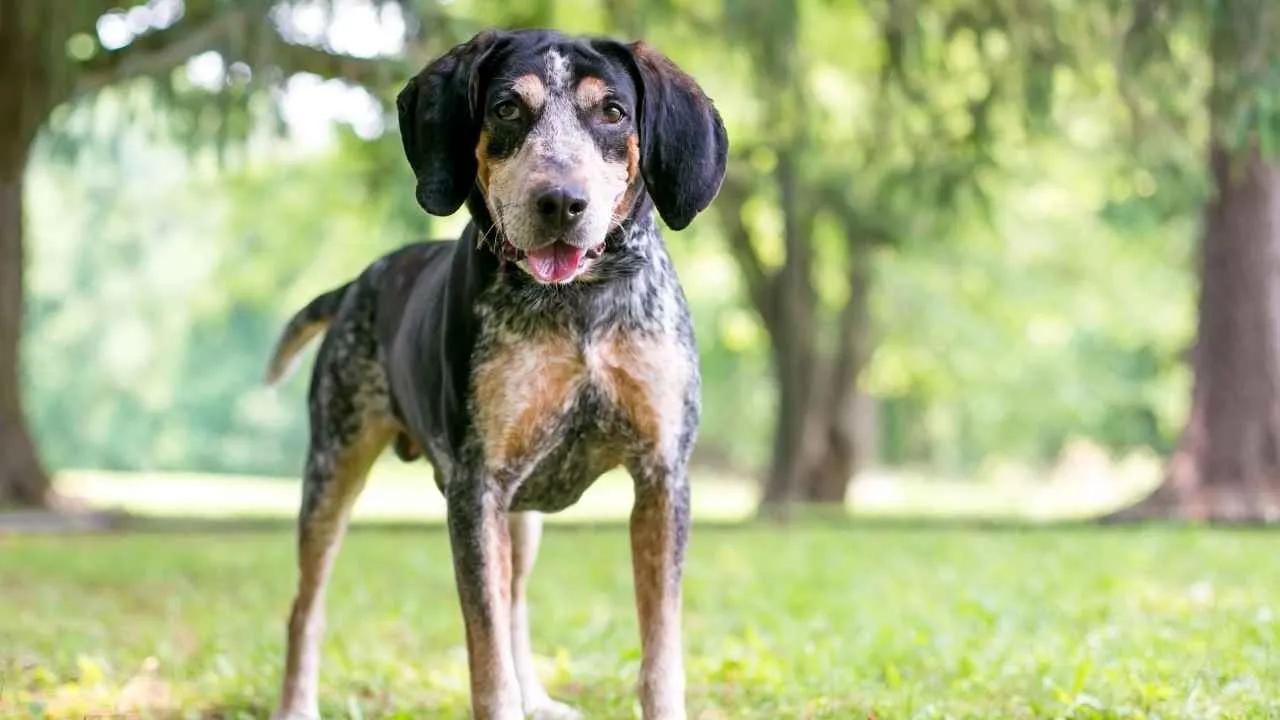
This unpredictable breed may look half asleep and lazy under the shade at one moment, but flip a switch the moment they sense a quarry. They are athletic, sleek, and built for night work.
What They Track Best
This breed is a classic nocturnal hunter with sharp focus. This focus helps them pursue quarry in a heartbeat. This instinct works best when they are trained consistently, or they will get bored easily.
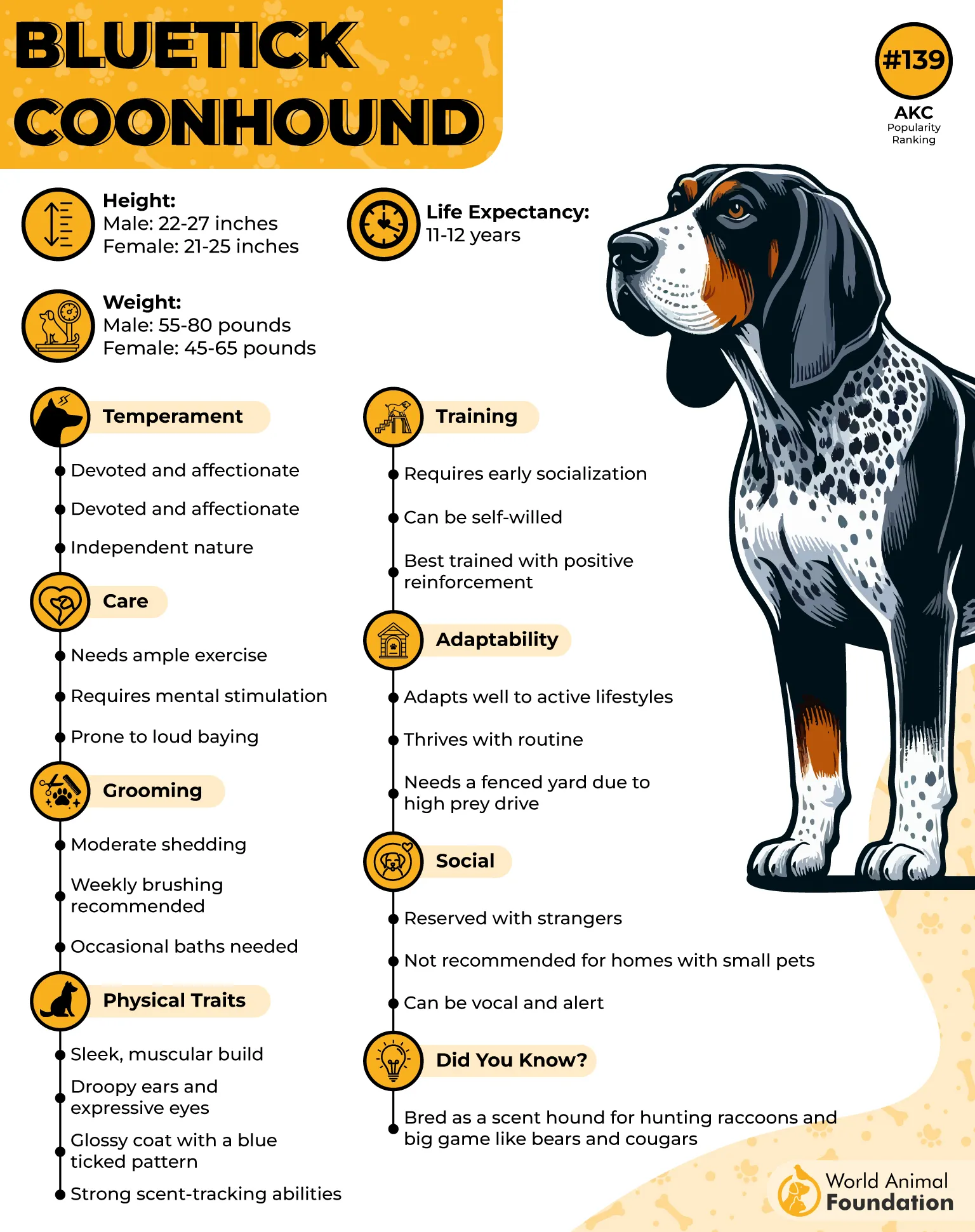
The ” Music of The Night” Factor
Bluetick Coonhounds bond deeply to the person who provides them. Left unattended and underemployed, these energetic dogs may become a problem to you and your neighbors with their loud and mournful music.
However, when provided with enough physical and mental stimulation, its bawling, baying, and chopping style of barks can turn into soothing music for the hunters, according to the American Kennel Club.
Quick Snapshot
Movement: Tracking/agility, long leash walks, and fenced-yard play
Training: Reward-based learning, early socialization
Grooming: This dog has a short, glossy coat, so weekly brushing is enough, plus occasional baths.
Watch outs: Ear infections, bloat risks, and loud vocalizing
Best Target: Nocturnal quarry trails
2. Black And Tan Coonhound
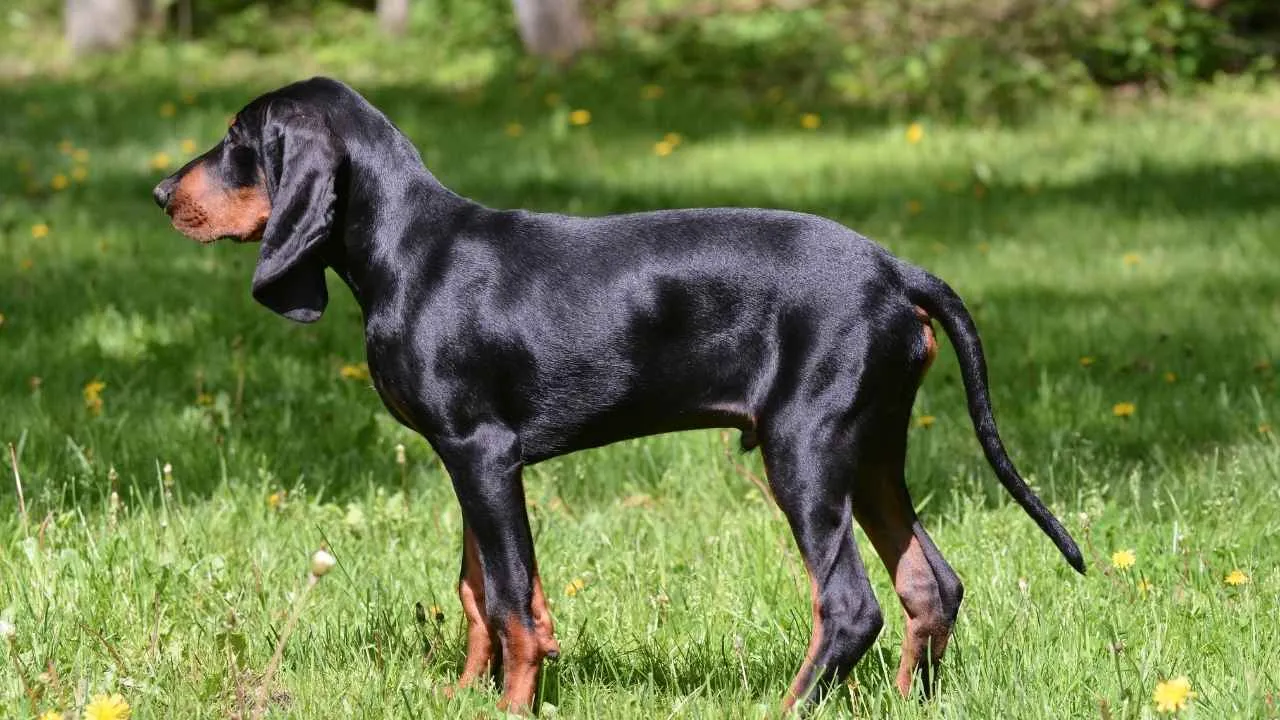
These hunting dogs remain calm indoors till they smell their target outside. They have an extraordinary ability to track scents at long distances.
Ancestral History
This dog was bred specifically for hunting raccoons and bears. This new hunting dog is a crossbreed of Black And Tan Virginia Foxhound and Bloodhounds, hence they trail with their nose to the ground, but at a faster speed, as per PetMD.
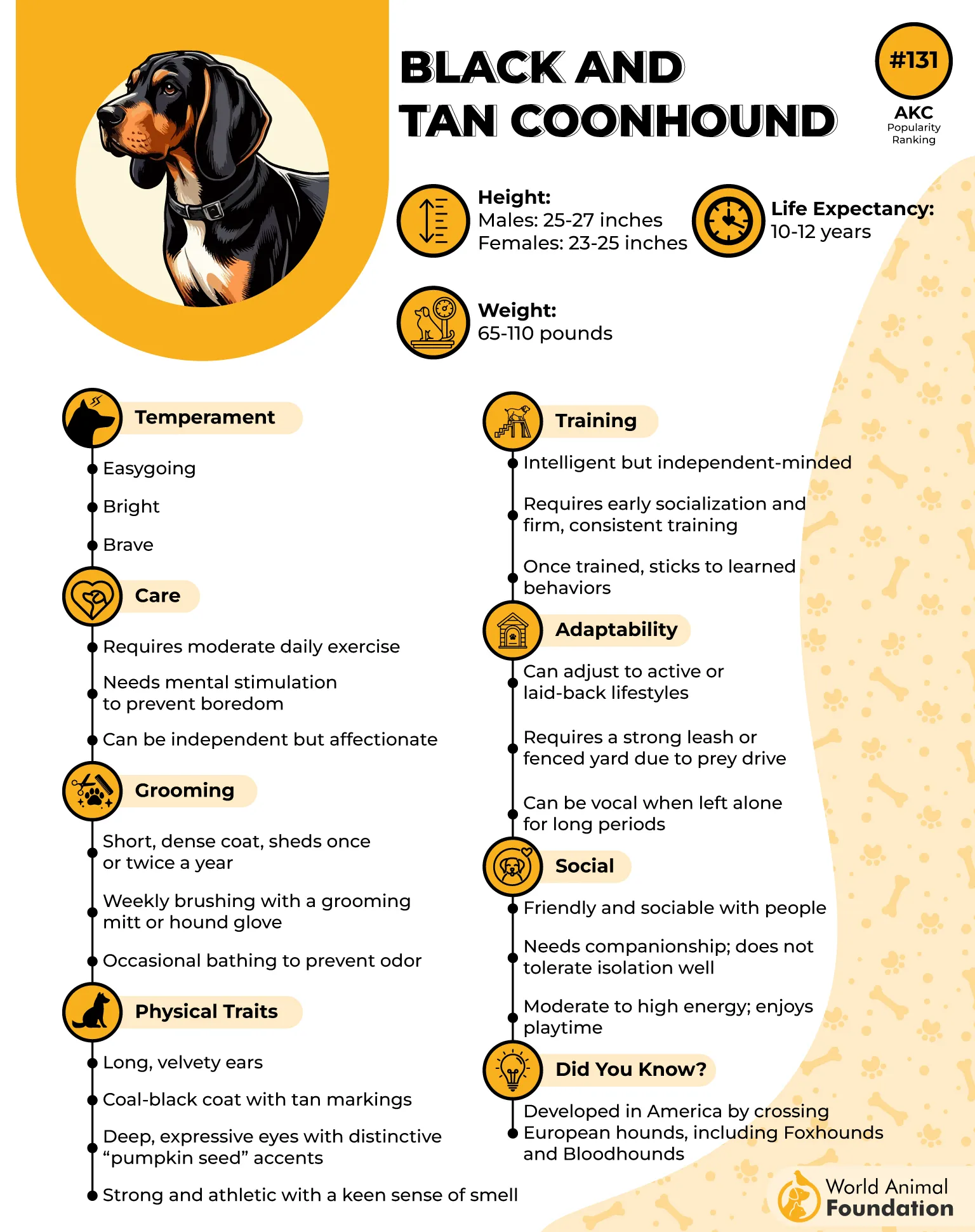
The Leash And Fence Rule
Leashing these dogs is not an option; it is a compulsion. These hunting birds have a strong sense of smell, so they follow their targets as if “it owes them money”.
Quick Snapshot
Movement: Outdoor adventures, regular walks, and scent plays
Training: Reward-based, consistent, and patient
Grooming: Brushing required twice a week, regular ear checkups
Watch outs: Digging when bored, baying, wandering on scents, and GDV risks
Best Target: Opossums, raccoons
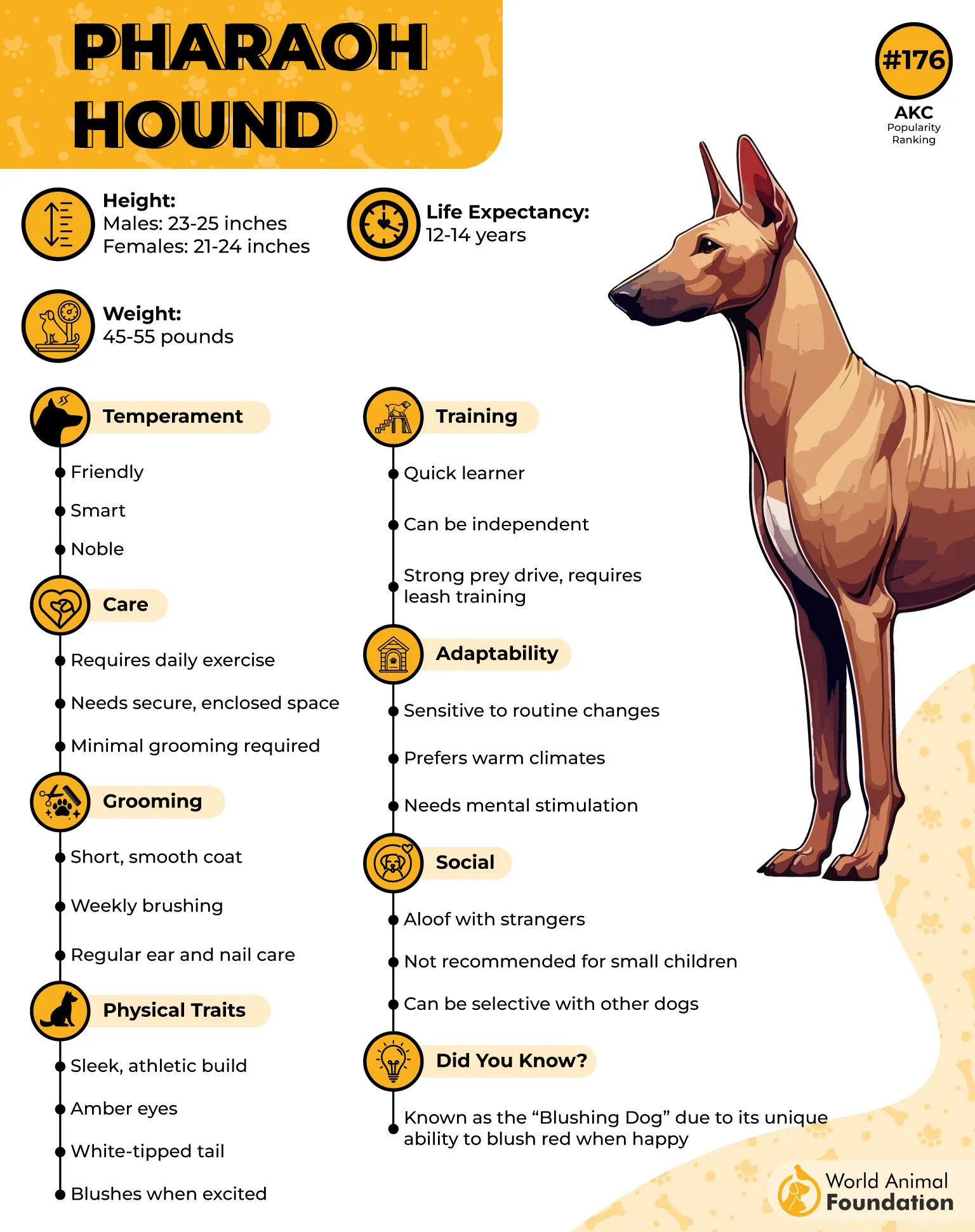
3. Pharaoh Hound
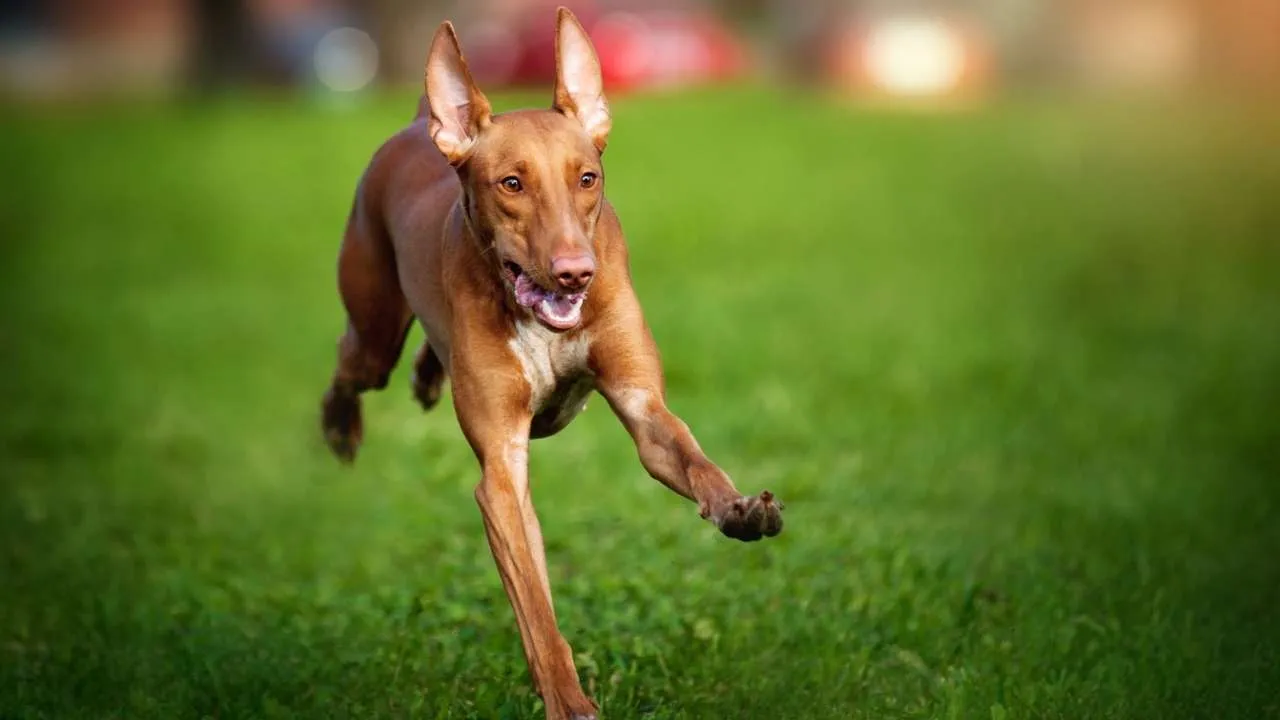
The origin of this graceful and athletic hunting dog breed traces back to Egypt. Pharaoh Hounds have a very adorable trait of blushing in happiness, turning their nose and ears bright pink.
The Friendly Hunter Surprise
They are sighthounds, so sight and speed are their weapons for hunting. Their sleek build fits the chase-style, so the rabbit is the perfect fit.
Care And Performance Effect
They need to be leashed since they are not really obedient. Whenever this hunting dog breed finds itself in a “free situation”, they run off to hunt, hang out with other dogs, and sometimes they may never return.
They can not withstand cold temperatures, so adequate prevention must be taken.
Quick Snapshot
Movement: Regular walks, running in secured spaces, and lure coursing
Training: Fun sessions, positive training, and off-leash only when needed
Grooming: Minimal requirements: nail trims, ear cleaning, and weekly wipe down
Watch outs: Sensitive to cold temperatures, potential cataracts, and GDV risks and high prey chase
Best Target: Rabbits (sight-based chase)
4. Treeing Walker Coonhound
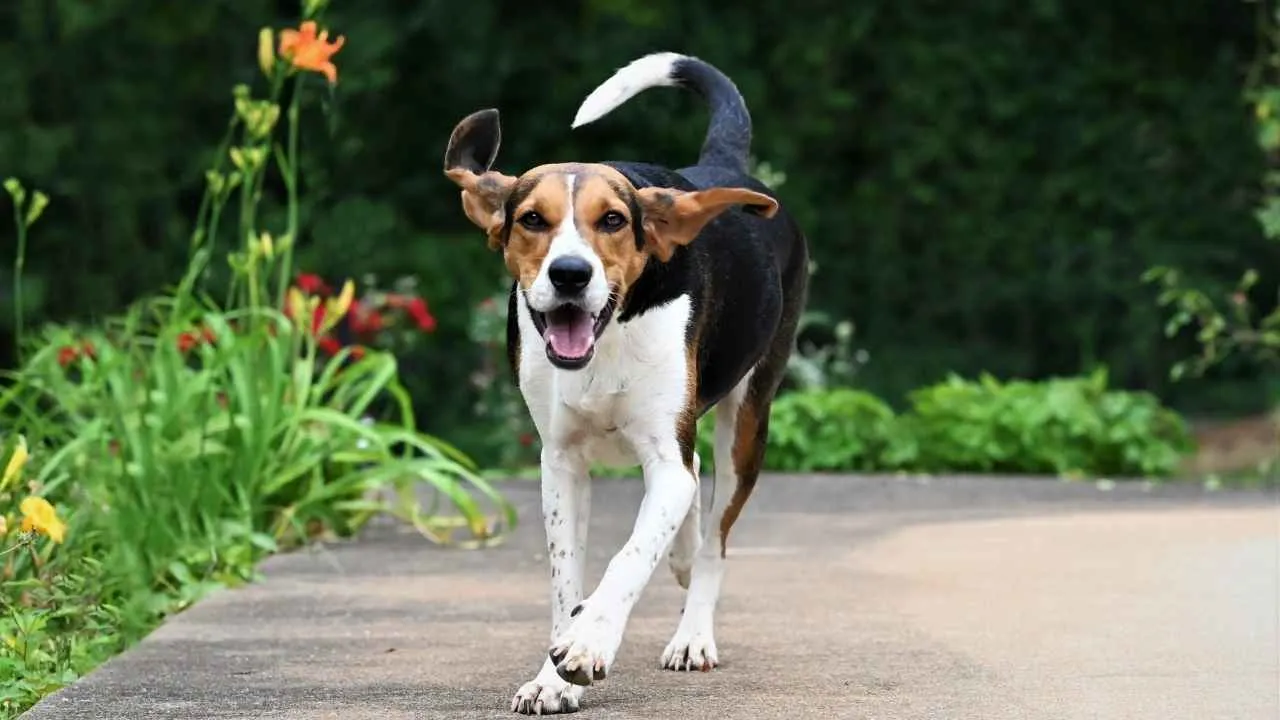
Famous for its clear voice and speed, this dog breed is widely used in coon hunting. This breed is a gentle, intelligent, and high-energy family dog.
Recognizable Trail Voice
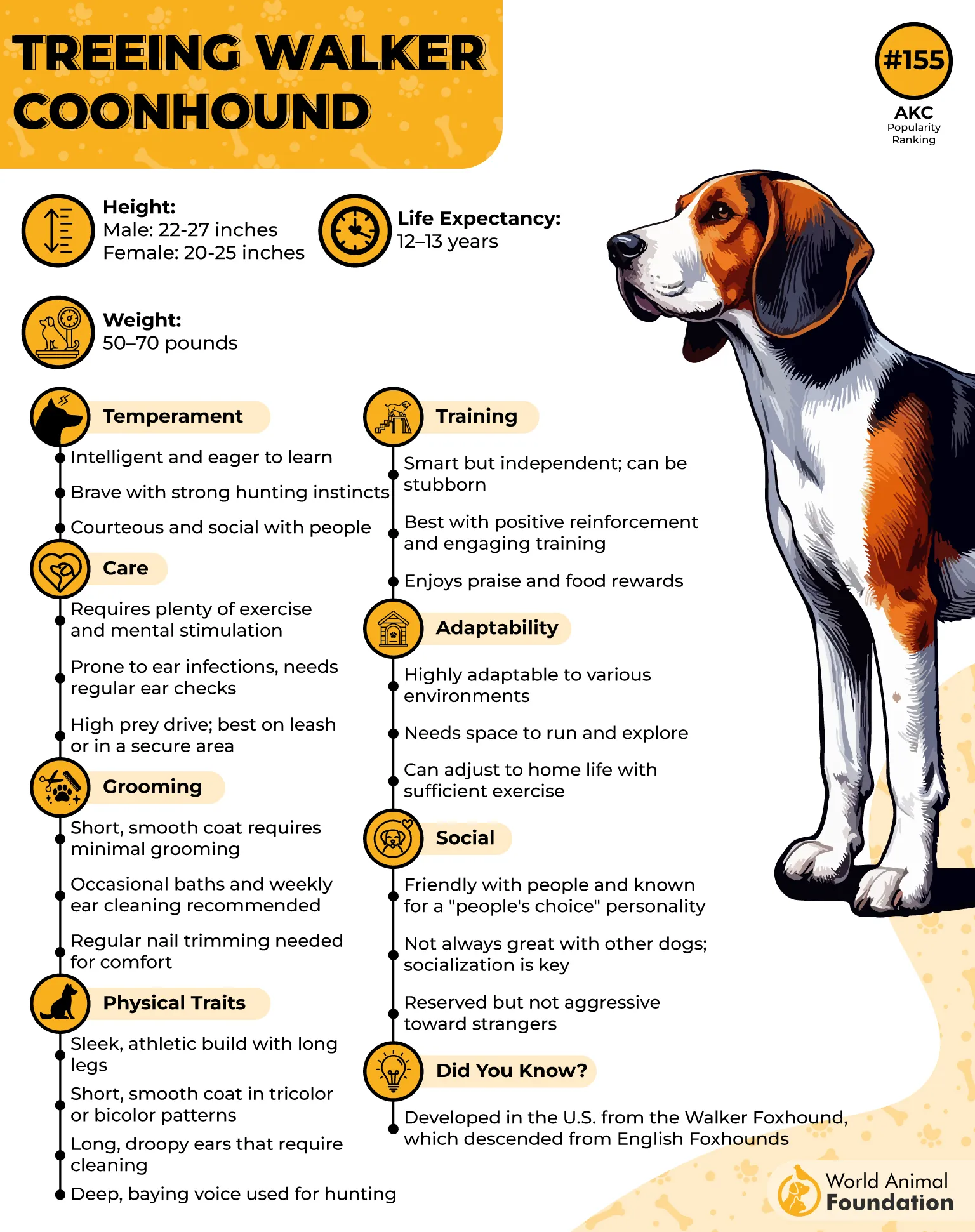
These hunting companions have been bred since the mid-16th century for the isolated games in the forests and to help the hunters track the target. Their primary focus is raccoons, but they also enjoy hunting squirrels, bears, deer, opossums, cougars, and bobcats.
The Working Home Reality
They bond deeply with the families who respect their presence. Interestingly, this hunting dog breed can also be adopted as a family pet.
Quick Snapshot
Movement: Purposeful activities, proper training, long hunts
Training: Consistency is the key: outlet first and then obedience
Grooming: Minimal requirement; short and dense coat, weekly brushing
Watch outs: Regular training required, loud voice, do well with space, and purposeful training
Best Target: Treeable games (bear, cougar, and deer hunting), raccoons
5. Redbone Coonhound
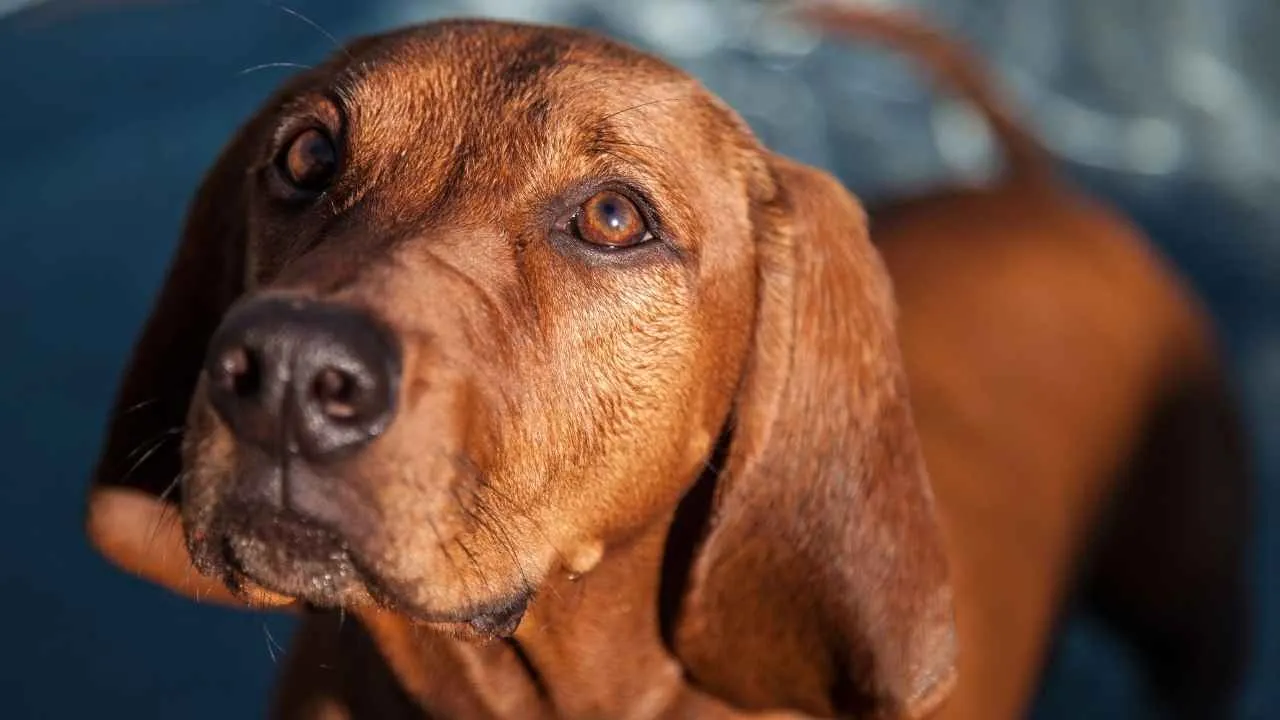
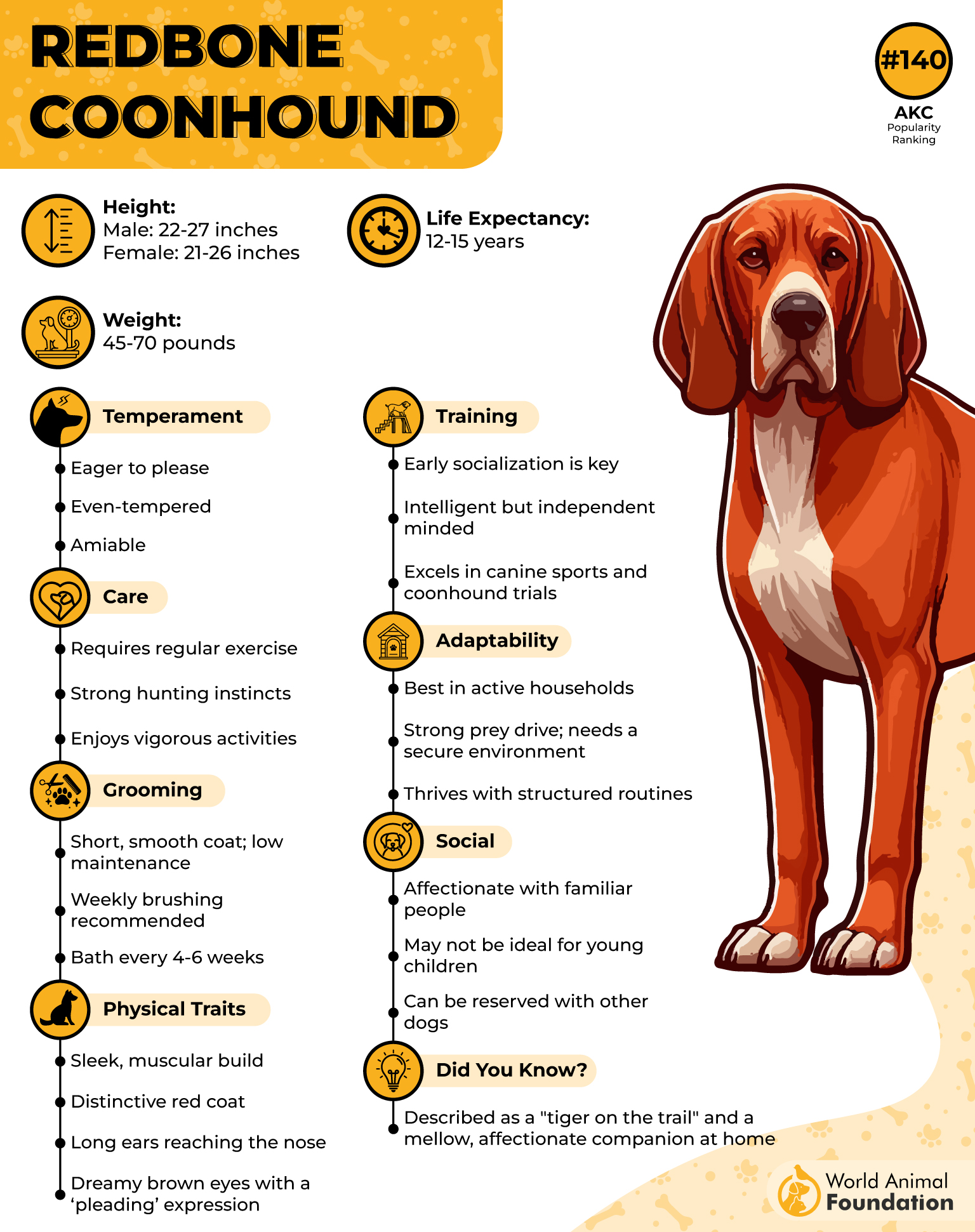
Redbone Coonhound has a well-proportioned and muscular structure. These hunting dogs usually prefer small game, such as raccoons, squirrels, and opossums, etc. However, they are also capable of hunting other animals with big game, such as bears and cougars.
The Off-Leash Warning
If they remain unleashed in a public space, they can disappear in no time, since they have a “follow the nose” instinct. Their strategy is three wild game, where they chase the target, and then the hunter shoots.
Regular Day Care Tips
This hunting dog breed is normally healthy, but to ensure long hunts for a greater period of time, parasite control support, regular ear checks, and dental care are recommended.
Quick Snapshot
Movement: These active dogs enjoy hard activities: biking, running, and hiking
Training: Sports work and early training
Grooming: Minimal requirement: bath after every 4-6 weeks, weekly brushing because they have a short, smooth coat
Watch outs: Weight gain, ear care, off-leash chase
Best Target: Classic coonhound scent trailing
6. Beagle
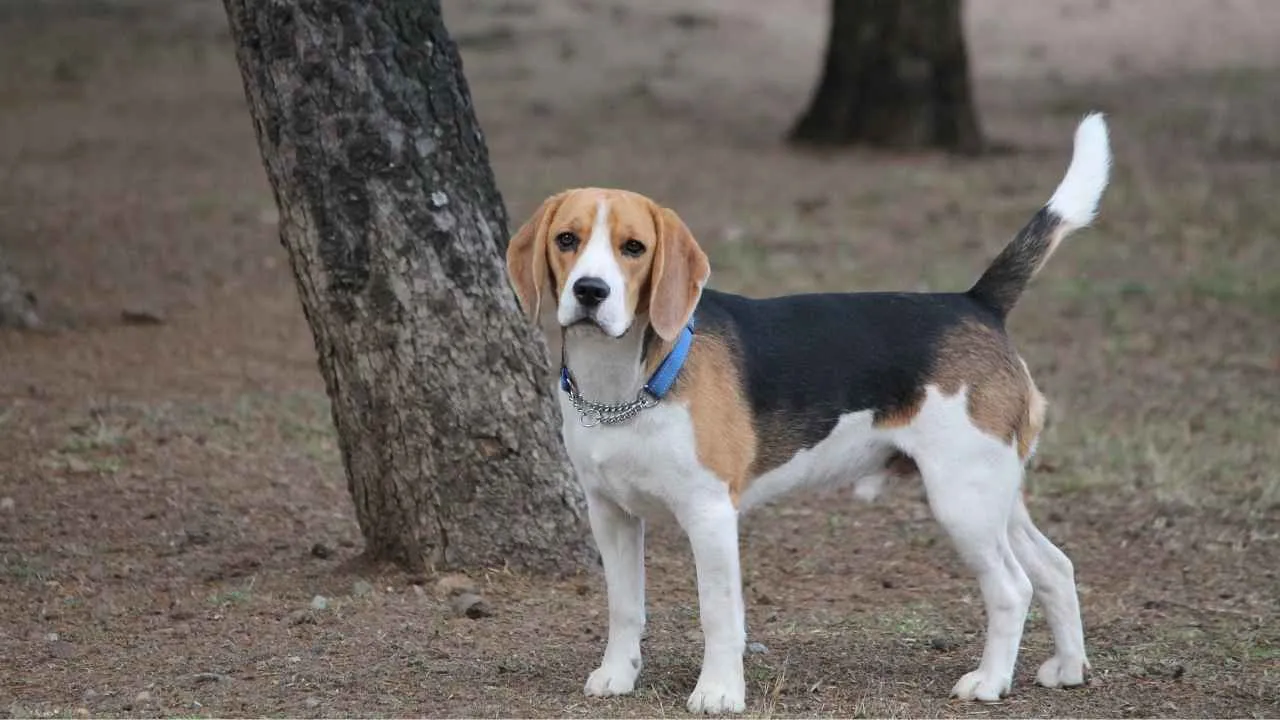
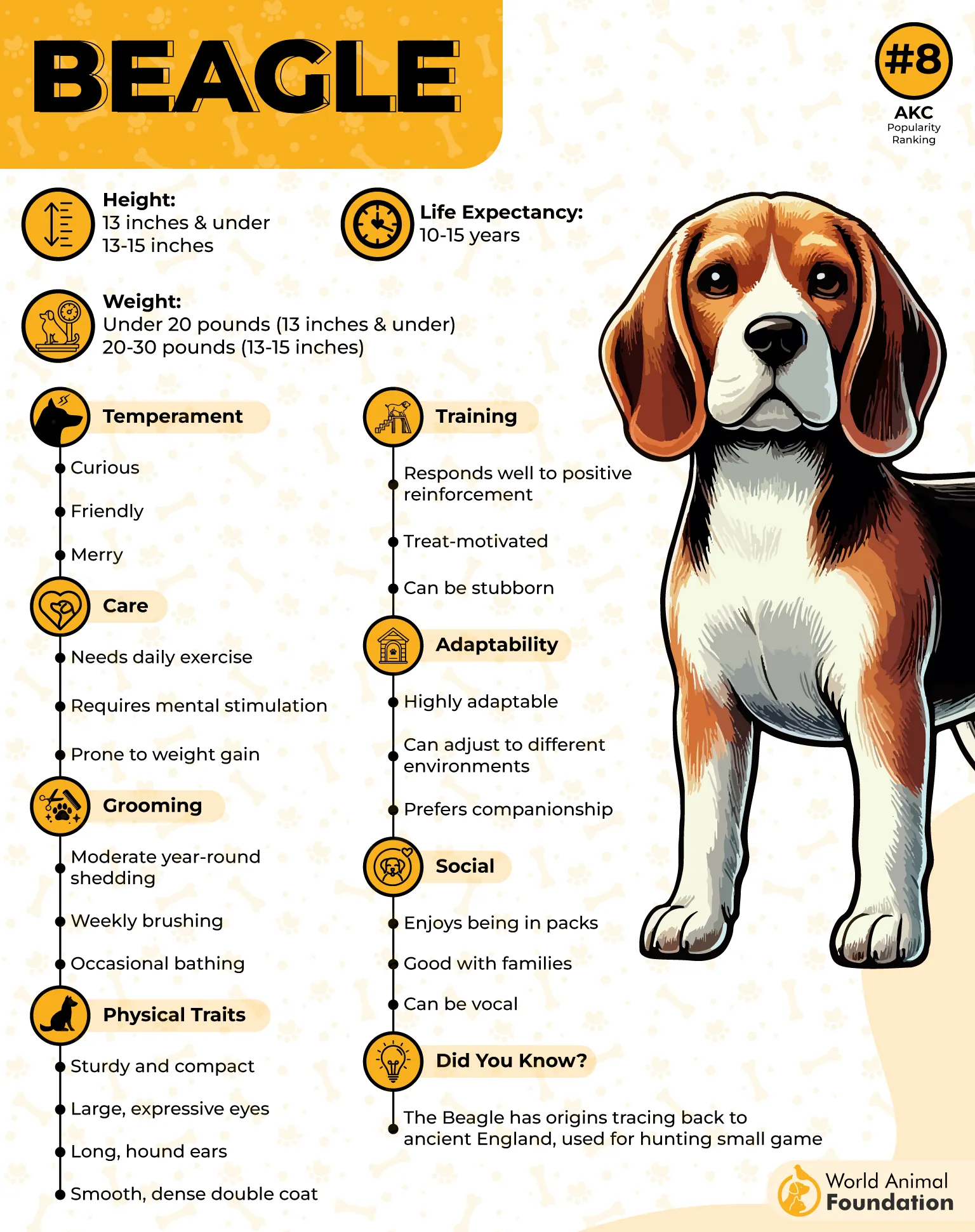
They are small to medium hounds that can be adjusted in compact homes. But you should not confuse their small size with “low effort breed”. These hunting dogs are eager to please and highly social, making them great family dogs.
The “Sniff First, Listen Later” Issue
Beagles’ noses are pointed, so their keen sense of smell makes them one of the best choices for scent hounds. They do well with firm and fun training with manageable distractions.
Regular Day Care Tips
They require daily activity for almost an hour, both mental and physical. Boredom brings loud barkings and rude behaviors. This breed almost disappeared in England during World War I.
However, some breeders became interested in this hunting dog breed during World War II, and they revived it in England again, as Wikipedia highlights.
Quick Snapshot
Movement: Scent games, fenced-yard running, daily walks
Training: Engaging sessions and leash skills
Grooming: Regular teeth brushing, ear cleaning, and nail trims
Watch outs: PRA/epilepsy/thyroid issues, digging, loud baying, food stealing
Best Target: Ground-scent trails and rabbits
7. Golden Retriever
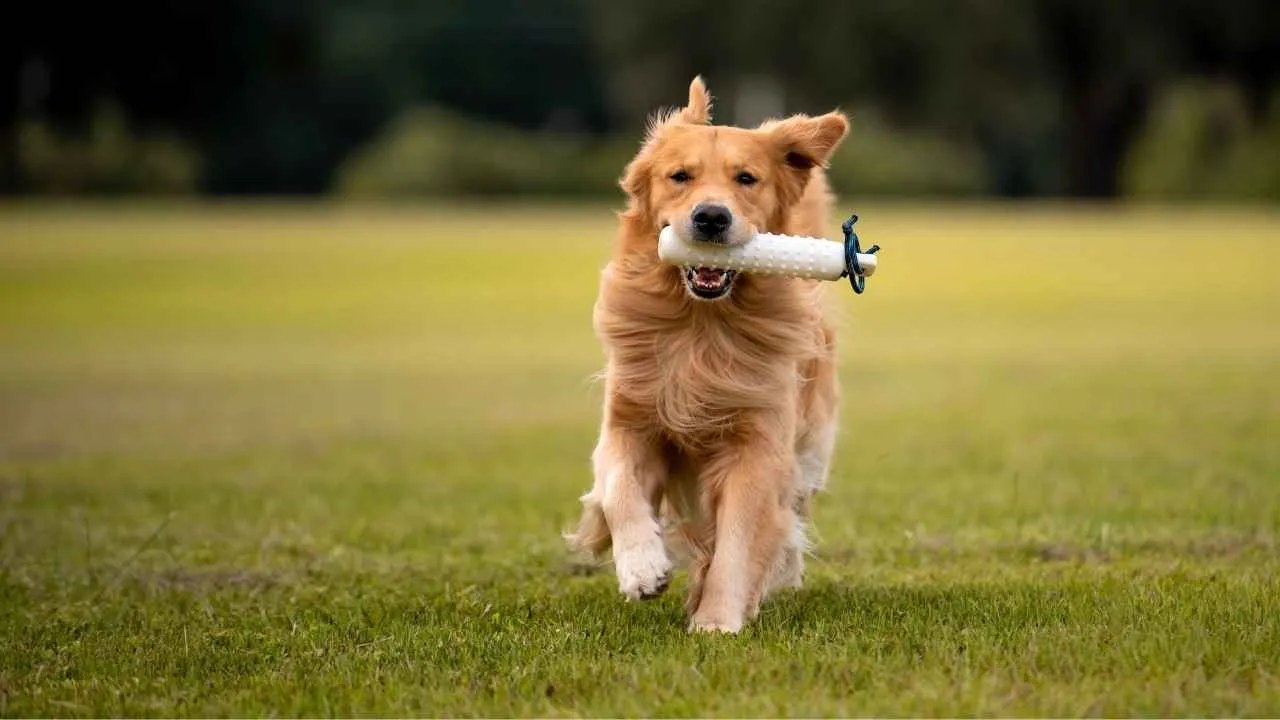
They are not like traditional “rack and tree” hunting-style dogs. But they are good hunting partners with their reliable retrieving skills.
Known As A Trusted Friend
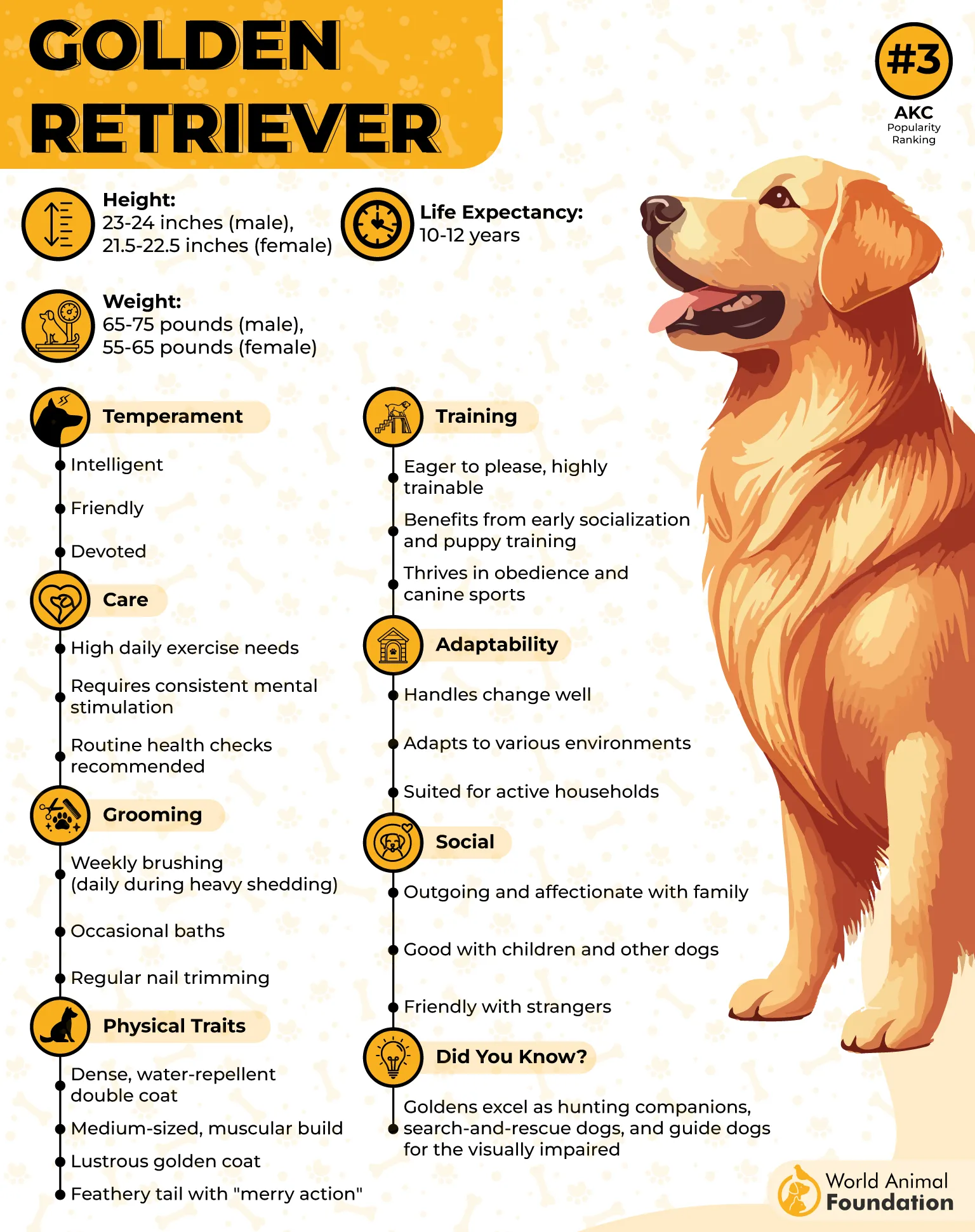
They love to socialize. Goldens are people-centered, do well with other pets, and are easy to train with early socialization. These waterfowl hunting dogs are joyful and bring this fun-life approach to adulthood.
Healthy Body Habits
If you do not provide them with a daily workout routine, they will find their own entertainment that you certainly will not like. They have a medium coat but shed heavily. So brushing should be a part of a daily grooming routine.
Quick Snapshot
Movement: Tracking wounded games, hunts, runs, obedience, and agility
Training: Early socialization (7 weeks-4 months ideally)
Grooming: Double coat: brushing twice a week (daily when shed heavily)
Watch outs: Weight gain, elbow/hip dysplasia, eye diseases
Best Target: Field work support and waterfowl hunting
Conclusion
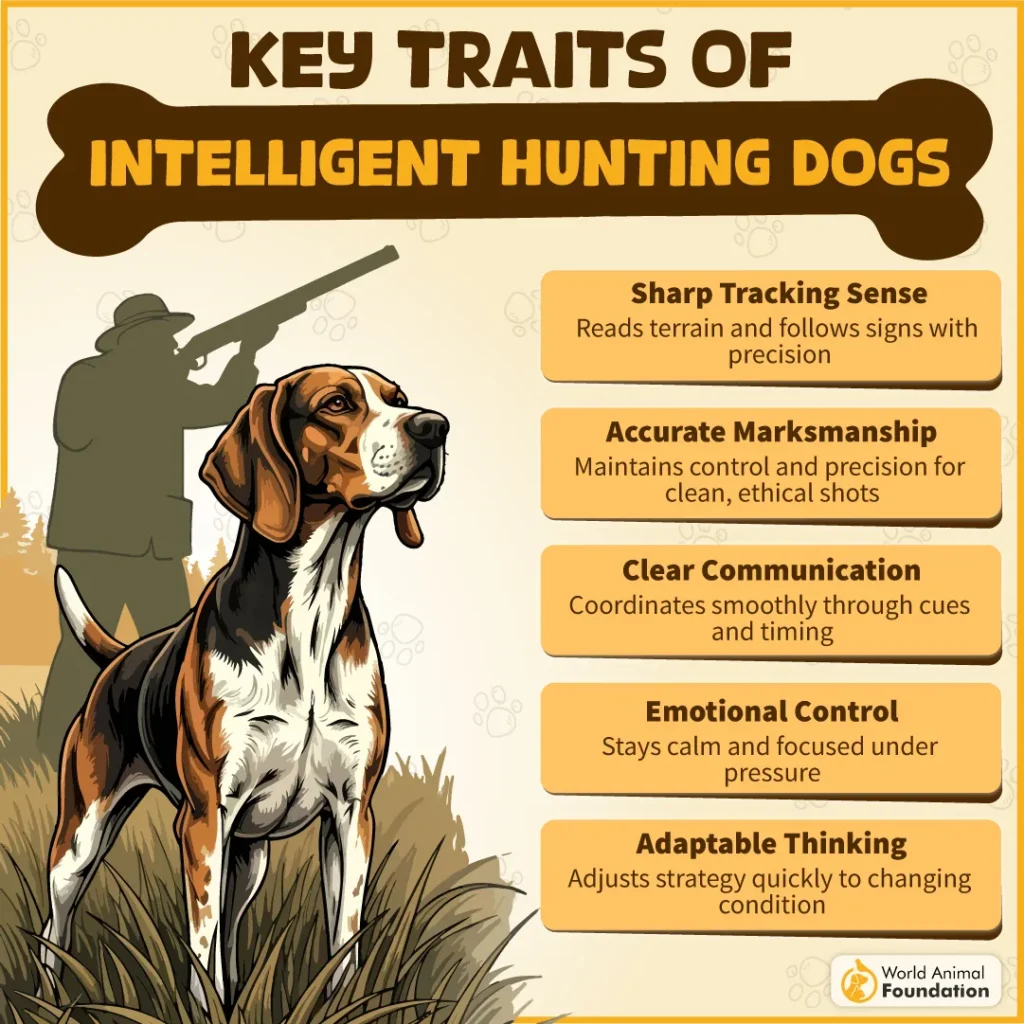
Choosing the right hunting dog breed depends entirely on understanding your specific needs.
Different hunting breeds are developed for different tasks, from tracking and pointing to flushing or retrieving, so identifying your target game and hunting environment is essential. Even after selecting the right breed, consistent training and proper grooming must be maintained to ensure peak performance and long-term health.
A breed’s hunting style often reflects its drive, focus, and working temperament. The best hunting dog is not only skilled in the field but also forms a strong bond with its owner.
Beyond its working abilities, a well-trained hunting companion offers loyalty, protection, and companionship, making it both a capable partner and a valued member of the family.
